
This post may contain affiliate links. Please see our disclosure policy.
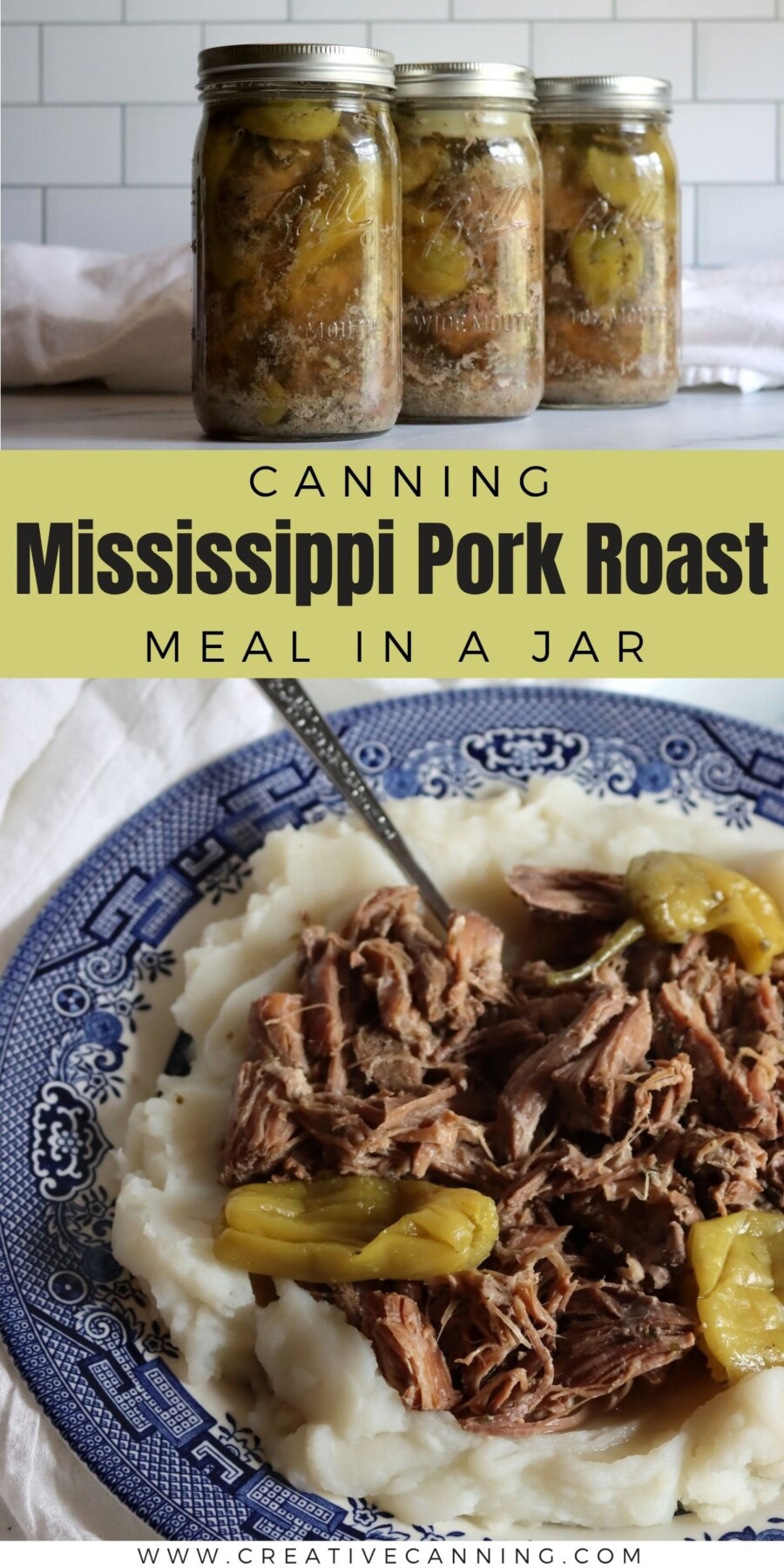
Canning Mississippi pork roast puts a slow cooker classic on your pantry shelf, with pork shoulder, ranch herbs, and plenty of tangy pepperoncini. The canner does the long, slow cooking for you. Open a jar, melt in a little butter, and you’ve got tender pork over mashed potatoes in about ten minutes.
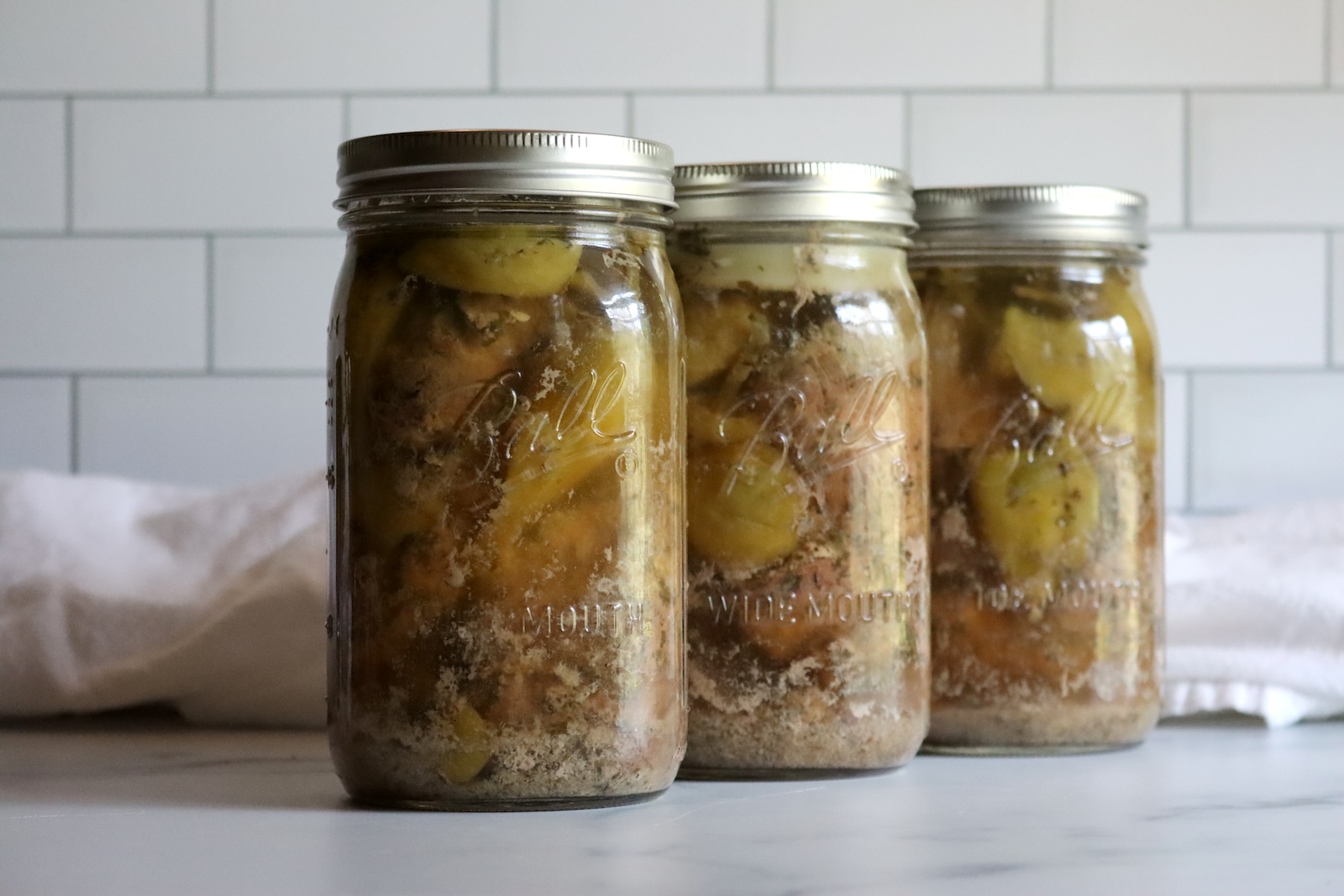
Table of Contents
- Notes from My Kitchen
- Quick Look at the Recipe
- Choosing the Best Cut for Mississippi Pork Roast
- Ingredients for Mississippi Pork Roast
- Mississippi Pork Roast Variations
- How to Make Mississippi Pork Roast for Canning
- Canning Mississippi Pork Roast
- Altitude Adjustments
- Tips for Success
- Serving Ideas for Mississippi Pork Roast
- Storage and Shelf Life
- Yield Notes
- Canning Mississippi Pork Roast FAQs
- Meal in a Jar Canning Recipes
- Canning Mississippi Pork Roast Recipe
- Pork Canning Recipes
This recipe has been reviewed for safety and accuracy by a Master Food Preserver certified through the University of Cornell Cooperative Extension.
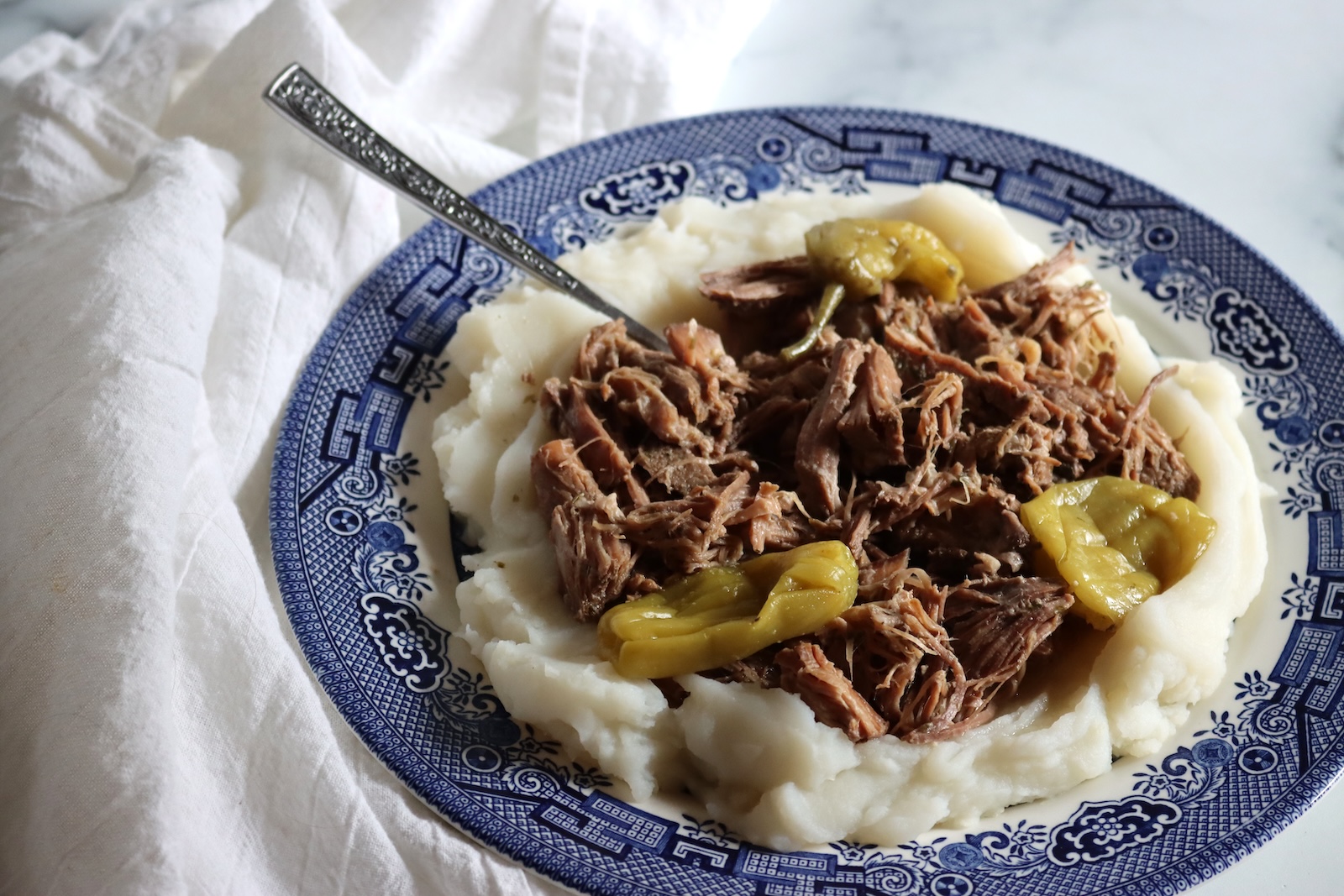
Mississippi pork roast is about as simple as a roast gets. It’s a pork shoulder with a handful of pepperoncini and ranch-style seasonings for amazing flavor. Everything goes in the slow cooker until the meat falls apart.
The peppers and ranch seasoning give it a tangy, savory flavor that a plain pork roast doesn’t have.
I adapted the recipe for pressure canning, and the canner gives you the same tender meat and rich flavor that you’d get in a long slow cook, but it’s ready to heat and eat on your pantry shelf.
It’s the same idea as my pot roast in a jar, with a lot more tang.
It’s one of my meal in a jar canning recipes that turn a canner load into ready-made dinners. If you’ve got more pork in the freezer, there are plenty of pork canning recipes to work through next.
Notes from My Kitchen

One pork shoulder and one jar of pepperoncini make a batch, with nothing left over on the counter. The pepperoncini brine keeps the pork from tasting flat, which plain canned meat sometimes does. The dill and parsley carry the ranch flavor, and since we’re canning, I’m not using the buttermilk powder that this recipe usually adds, but you won’t miss it. A little extra pepper brine gives you that same tang.
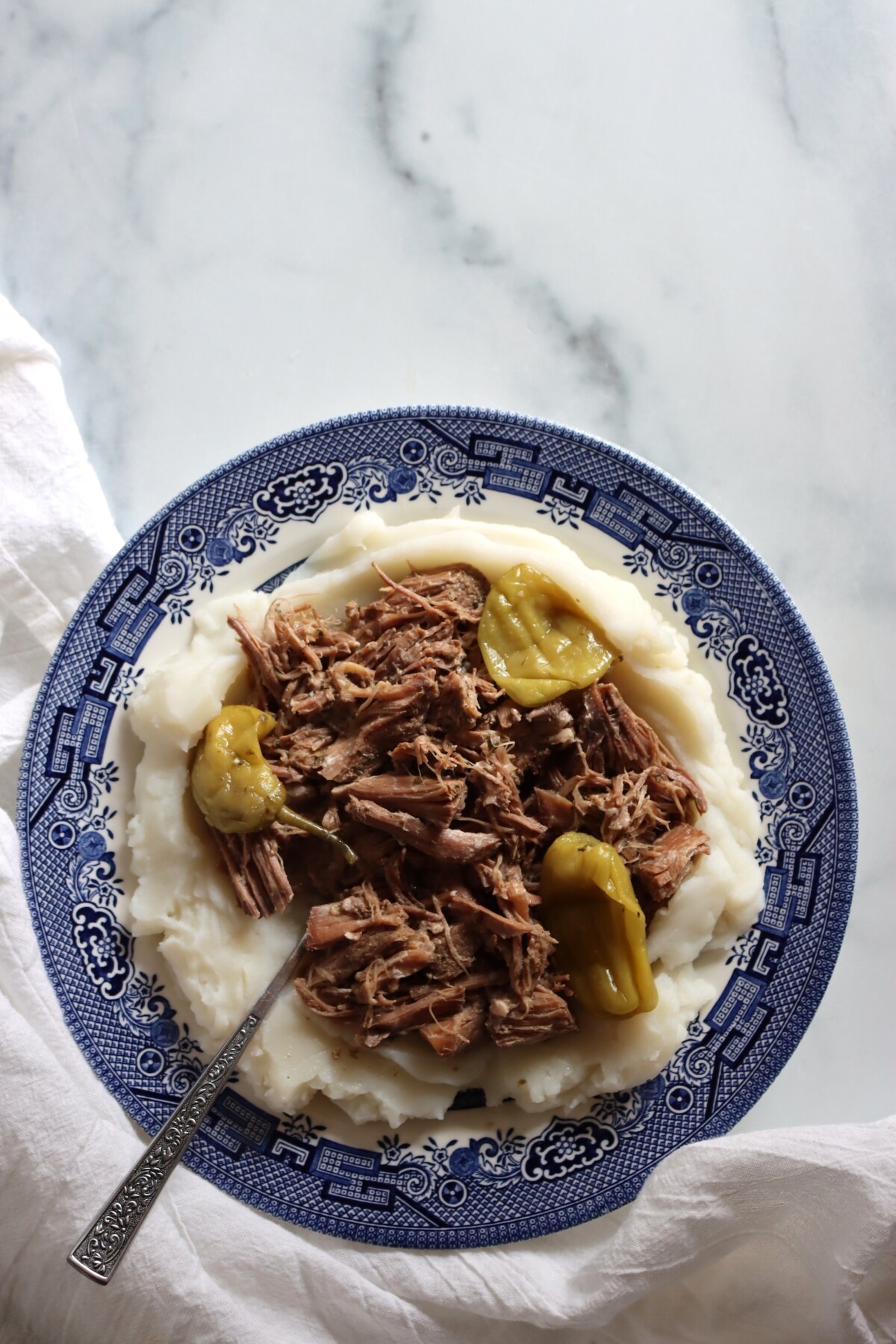
I can it in quarts, and a jar is dinner for two. My husband likes his piled on a bun with extra peppers, and the kids want theirs over mashed potatoes with gravy. Either way, it’s on the table in ten minutes, which on a Tuesday in February is worth a lot.
Quick Look at the Recipe
- Recipe Name: Canning Mississippi Pork Roast
- Recipe Type: Meal in a Jar Canning Recipe (hearty pack)
- Canning Method: Pressure Canning
- Pack: Raw pack
- Prep Time: About 30 minutes
- Cook Time: About 10 minutes, to bring the broth to a boil
- Canning Time: 75 minutes for pints, 90 minutes for quarts
- Yield: About 3 quarts or 6 pints
- Jar Sizes: Pints or quarts
- Headspace: 1 inch
- Ingredients Overview: Pork shoulder, sliced pepperoncini and their brine, beef broth, and dried herbs and spices for the ranch seasoning
- Safe Canning Recipe Source: Built on the raw-pack chipotle beef taco meat recipe in The All New Ball Book of Canning and Preserving, which uses the same 75 and 90-minute times as the University of Alaska Fairbanks Cooperative Extension hearty soup guidelines
- Difficulty: Easy
- Similar Recipes: Canning Mississippi pork roast works a lot like other pressure-canned meals in a jar, such as canning pot roast in a jar and canning chipotle beef taco meat. If you buy pork in bulk, try canning pork, canning pork in spicy broth, and canning pork ribs.
Choosing the Best Cut for Mississippi Pork Roast
Boneless pork shoulder is the cut to use, sold as pork butt, Boston butt, or picnic shoulder. It’s marbled and full of connective tissue, and that’s what you want here. Ninety minutes under pressure breaks all of it down, and what comes out of the jar shreds with a fork.
It’s also usually the cheapest pork in the case, which keeps a shelf of dinners affordable. Skip the lean cuts, since loin and sirloin come out dry and stringy after a long process. There’s more on the different cuts in my guide to canning pork.
Trim off the fat cap and any big pads of hard fat before you cube the meat. Too much fat can work its way onto the rim and interfere with the seal. It also leaves a thick, greasy cap on top of the finished jar.
Cut the trimmed meat into 2-inch cubes. That size drops through the jar opening without forcing and still holds its shape through the long process.
Ingredients for Mississippi Pork Roast
Mississippi pork roast is usually made with two seasoning packets, ranch and au jus, and neither one belongs in a canning jar.
Ranch mix is made with buttermilk powder, which is dairy, and au jus mix is thickened with cornstarch. So dried herbs bring the ranch flavor, and beef broth stands in for the au jus. The gravy gets thickened when you heat it up.
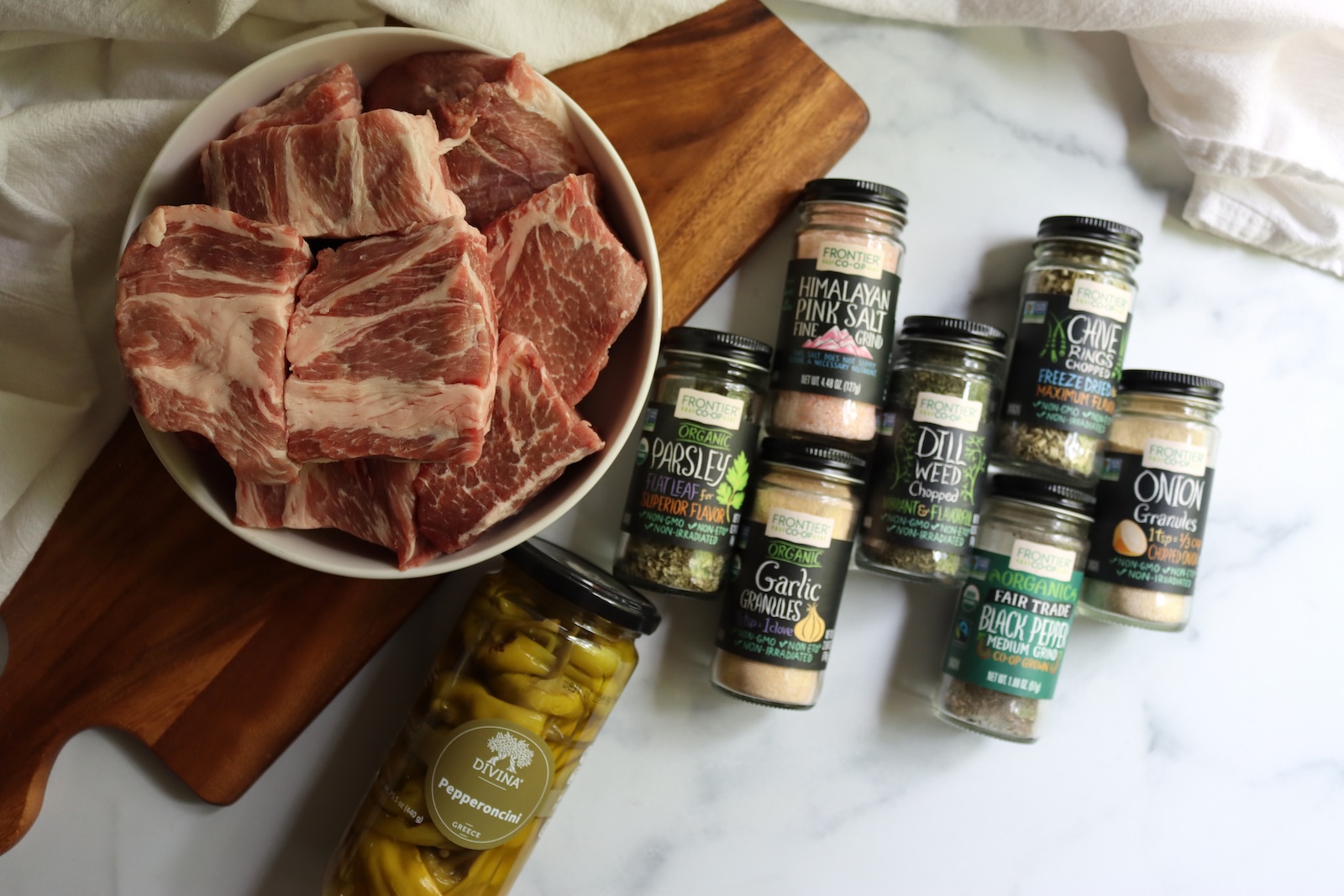
- Pork shoulder: The body of the meal. Trim off the fat cap and any bone, and cut the meat into 2-inch cubes.
- Sliced pepperoncini: This is where the tang comes from. Buy them sliced in a jar, or slice whole ones yourself, and save the brine. They’re mild, with more tang than heat. They count as a pepper by volume, which keeps this inside the hearty meal protocol. If you’d like to put up your own, my pickled banana peppers are the closest match, and there are more in my pepper canning recipes.
- Pepperoncini brine: A little of the liquid from the pepper jar goes into each jar. It carries most of the tang, and the vinegar in it brightens the pork without making the meal taste pickled. Leave it out and the jars taste noticeably duller.
- Beef broth: This stands in for the au jus packet, and it goes in boiling to fill the gaps around the raw meat. Homemade or store-bought both work, and so does plain water. I use my canning beef broth, and canning pork broth is a good match too if that’s what’s on the shelf.
- Dried parsley, chives, and dill weed: These three are the ranch flavor. Dill is the one people recognize, parsley carries the green herb background, and chives give it the onion note ranch dressing has. Use dill weed rather than dill seed, since seed tastes like pickles.
- Onion powder and garlic powder: The savory base of any ranch mix. They dissolve into the broth in a way fresh onion doesn’t.
- Salt and black pepper: Season to taste, since neither one affects safety. Start low if you’re using salted store-bought broth, because the pepperoncini brine brings salt of its own. I use canning salt, and there’s more on why in my guide to pickling salt and its substitutions.
Two things stay off the list on purpose. Butter is dairy, and dairy never goes in a canning jar.
Flour and cornstarch are too dense to let heat move through the jar during processing. The butter and the thickener both go in on the stove when you reheat it, which is where they were doing their work in the slow cooker version anyway.
Mississippi Pork Roast Variations
For a classic Mississippi pot roast, use beef chuck in place of the pork shoulder, pound for pound. The times don’t change.
The peppers swap at equal volume. Banana pepper rings taste about the same, and sliced pickled jalapeños make it hotter. Use pickled peppers, as that’s what gives you the right flavor. You can also leave the peppers out and make up the space with more broth.
These changes are covered in my article on safe changes to canning recipes.
The herbs and spices are yours to adjust, since they aren’t what makes the jar safe.
The processing time and pressure are the safety control, and neither one can be shortened or lowered. This is a low-acid meal, so it can’t be water bath canned at all. Thickeners, dairy, pasta, and rice stay out of the jar and go in at serving.
If you’d rather design your own meal, use the extension-tested Choice Meal in a Jar protocol. It uses the same 75- and 90-minute times.
How to Make Mississippi Pork Roast for Canning
This is a raw pack, so nothing gets browned and nothing gets simmered. You mix the cold meat and seasoning in a bowl, fill the jars, and pour boiling broth over the top. The canner does the cooking.
Read the steps through once before you start, since a raw pack moves quickly once the broth is boiling. If you’re new to putting up meat, my beginner’s guide to canning meat covers the basics.
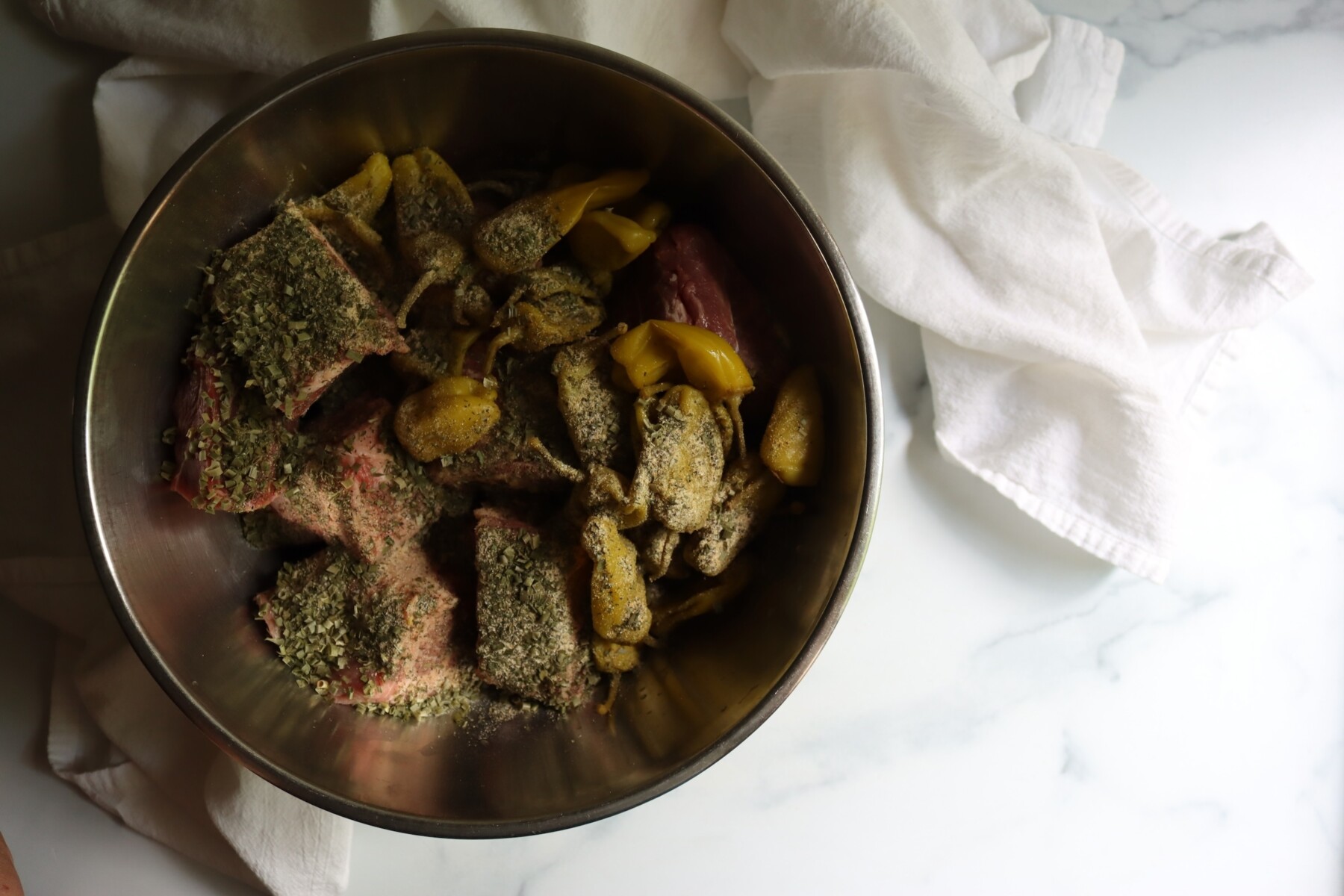
Start by measuring the dried parsley, chives, dill weed, onion powder, garlic powder, salt, and pepper into a large bowl. That’s your ranch packet, rebuilt without buttermilk powder.
Trim the fat cap off the pork shoulder, cut out the bone if it has one, and cut the meat into 2-inch cubes. Drain the pepperoncini and save the brine. Add the pork and peppers to the bowl and mix with a big spoon or clean hands until the seasoning is spread through.
Take your time with the mixing. Nothing simmers together afterward to even out the seasoning, so every jar tastes like what went into it.
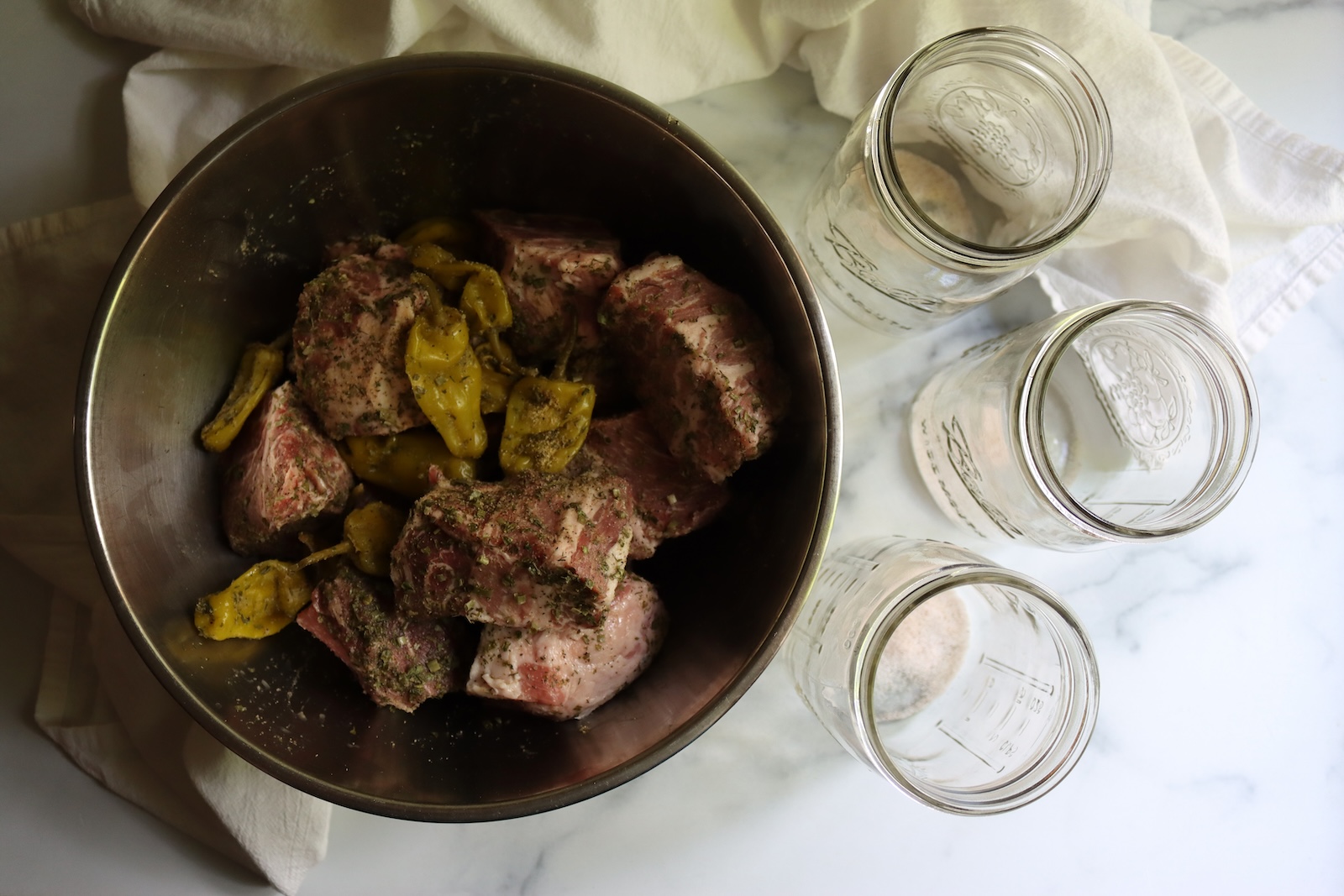
Get your pressure canner on the stove with the amount of water your manual calls for, usually 2 to 3 inches. This is a raw pack going into room-temperature jars, so keep that water just warm, around 140 degrees.
Don’t let it simmer, since cold jars going into a very hot canner can break. Put the broth on to boil at the same time.
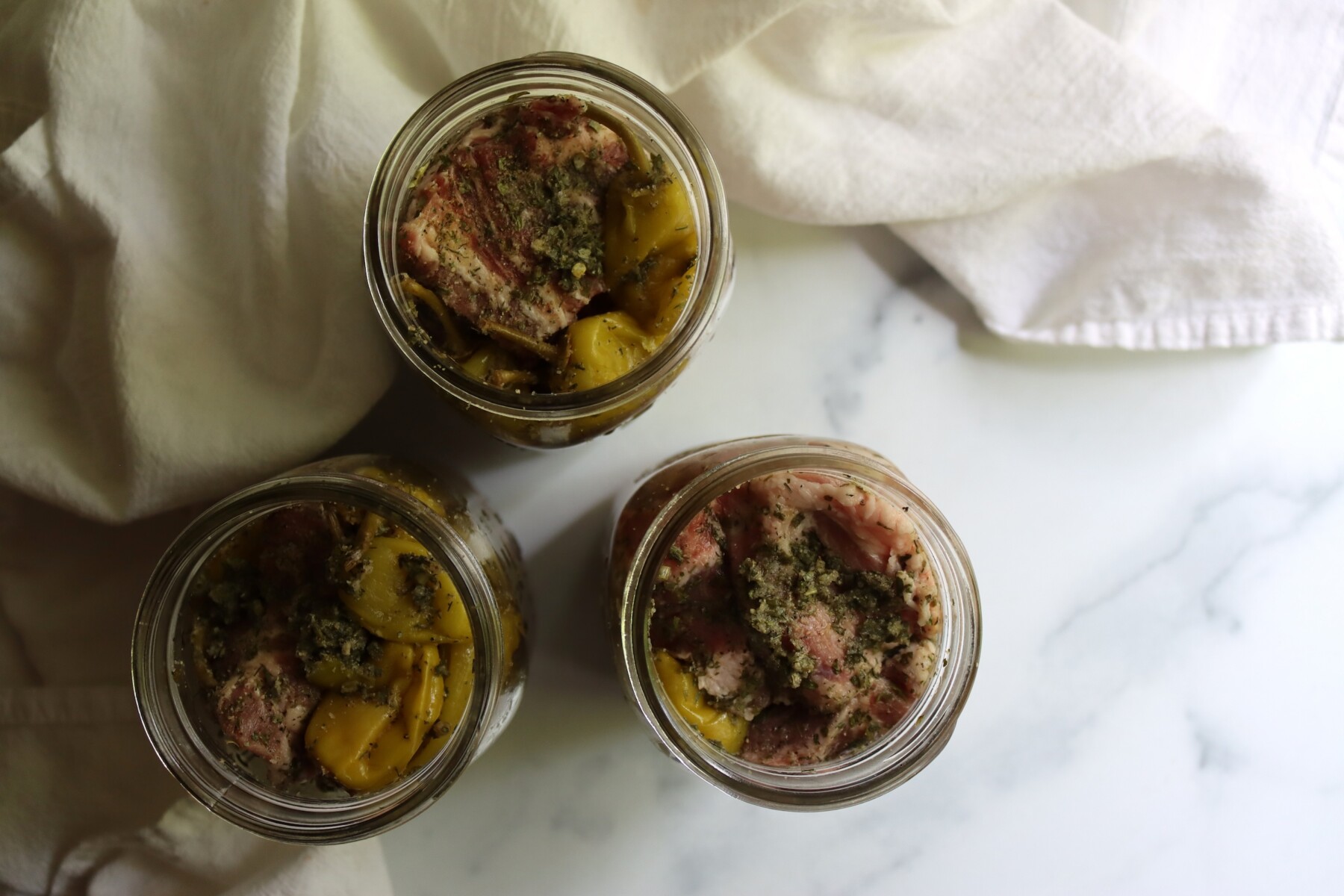
Pack the seasoned pork and peppers into the jars, dividing them evenly and filling to 1 inch of headspace without pressing down hard. You want the jars full of solids, but not jam-packed, so the boiling broth can work down between the pieces. Spoon the reserved brine into the jars, dividing it evenly too.
Pour the boiling broth over the top until it just covers the meat, keeping that same 1 inch of headspace. A canning funnel keeps the rims clean while you pour. Run a bubble tool around the inside of each jar, check the headspace again, and top up with more broth if it dropped.
Wipe the rims with a clean, damp cloth, set the canning lids on, and screw the bands down fingertip tight. Work quickly enough that the broth is still hot when the last jar goes into the canner.
Canning Mississippi Pork Roast
Load the jars into the canner with a jar lifter and lock the lid. Let the canner vent a steady stream of steam for a full 10 minutes before you add the weight or close the petcock.
Then bring it up to 10 pounds pressure in a weighted gauge canner or 11 pounds in a dial gauge canner. Adjust for altitude with the chart below.
Process pints for 75 minutes or quarts for 90 minutes, holding the pressure steady the whole time. If it drops below your target, bring it back up and start the timer over from the beginning.
When the time’s up, turn off the heat and let the canner come down to zero pressure on its own. Don’t force it to cool.
Wait 5 minutes after it reads zero, then take the lid off and leave the jars in the canner another 10 minutes. Lift them out onto a towel-lined counter and let them cool undisturbed for 24 hours.
Altitude Adjustments
With pressure canning, the canning time is always 75 minutes for pints and 90 minutes for quarts, at any altitude. Only the pressure changes as you go up. Here are the altitude adjustments for pressure canning Mississippi pork roast.
For dial gauge pressure canners:
- 0 to 2,000 feet: 11 lbs pressure
- 2,001 to 4,000 feet: 12 lbs pressure
- 4,001 to 6,000 feet: 13 lbs pressure
- 6,001 to 8,000 feet: 14 lbs pressure
For weighted gauge pressure canners:
- 0 to 1,000 feet: 10 lbs pressure
- Above 1,000 feet: 15 lbs pressure
Tips for Success
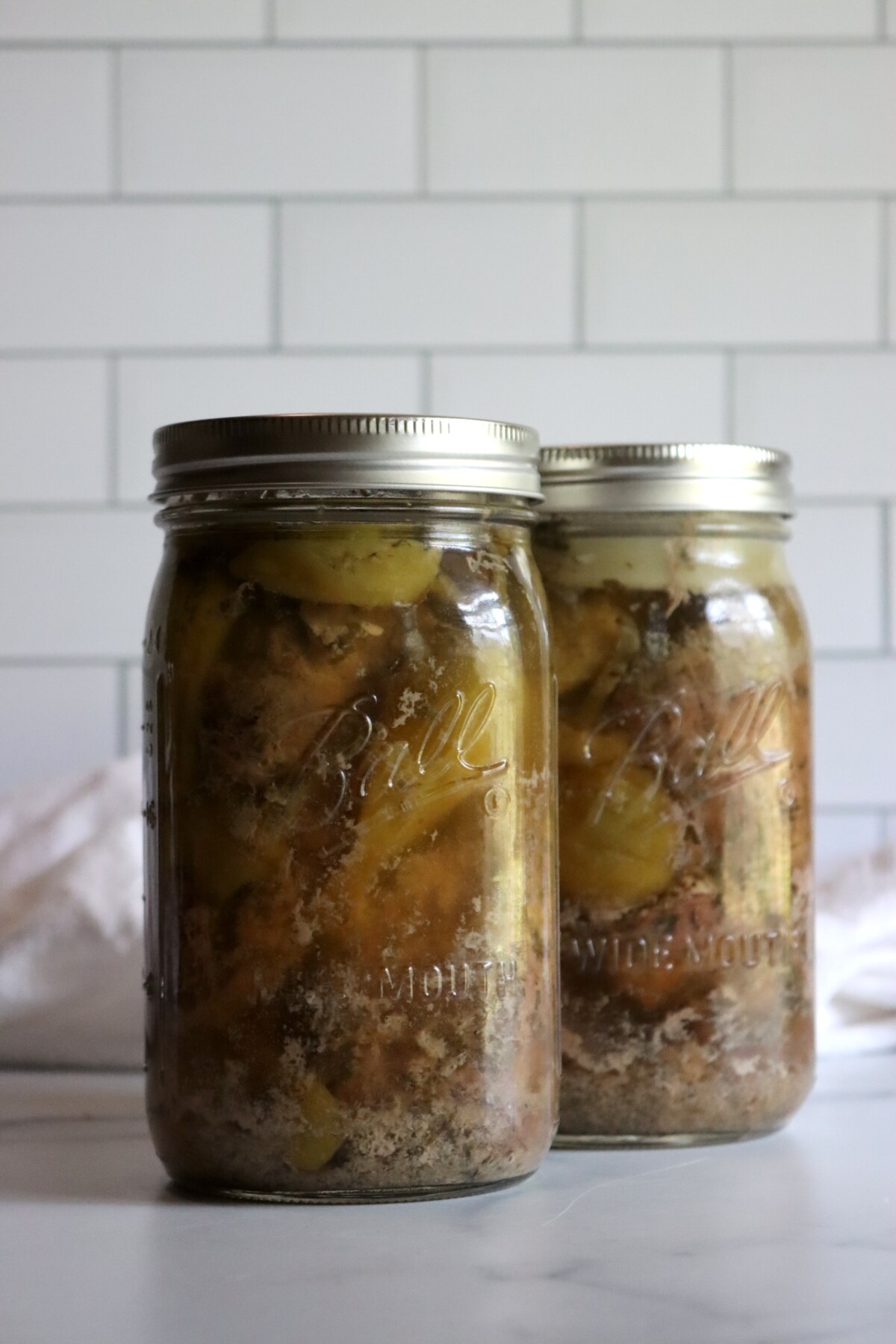
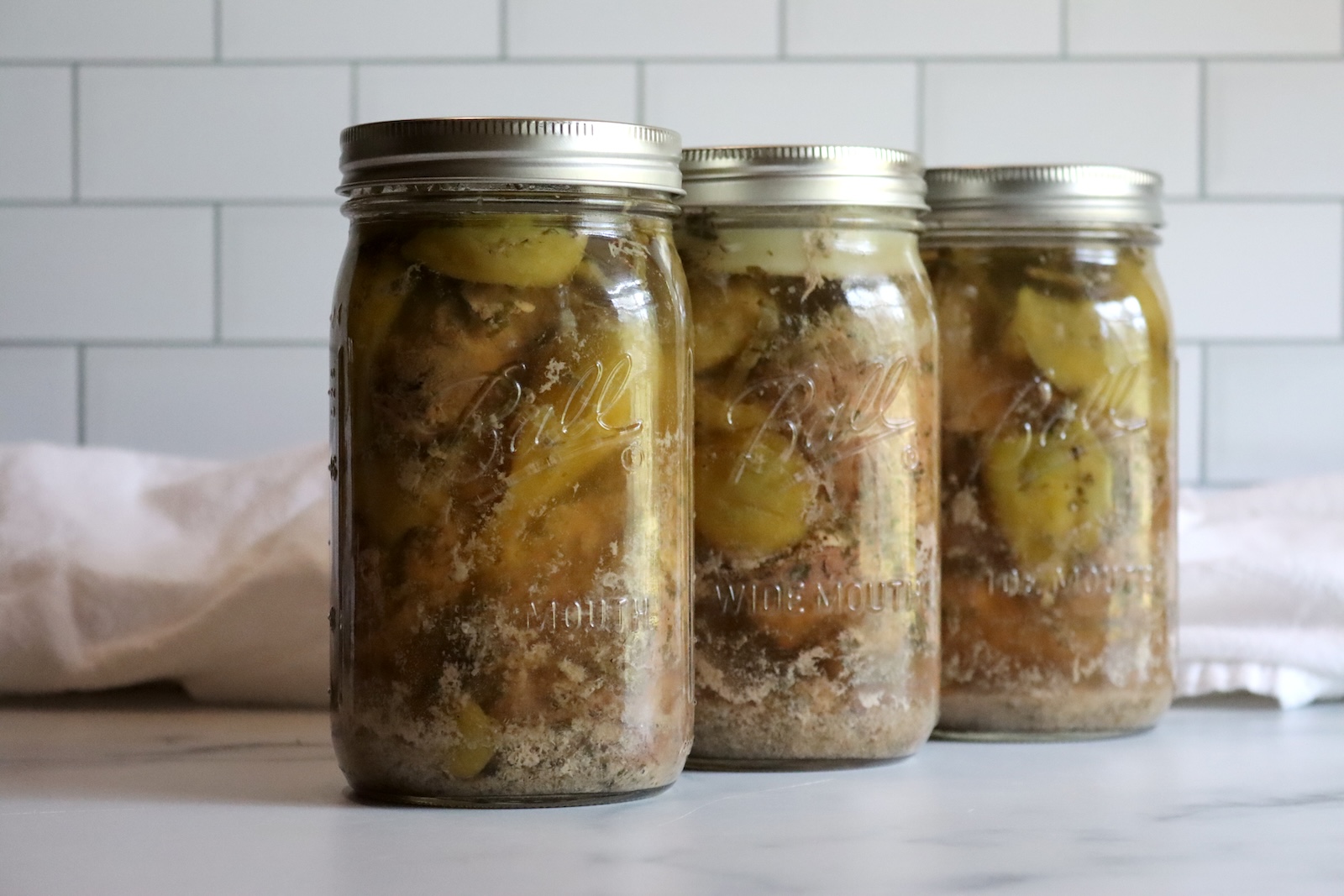
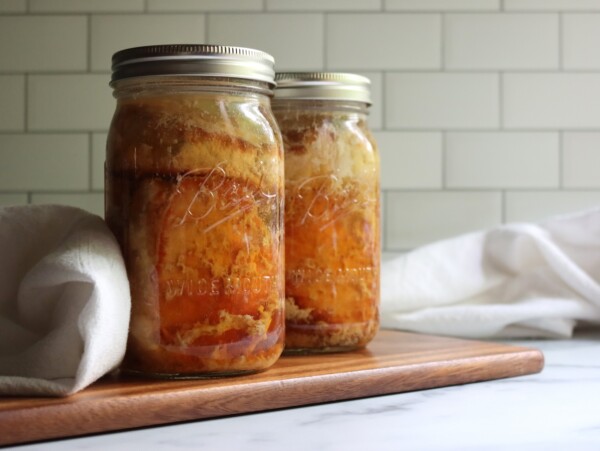
Expect the jars to look different after processing. Raw-packed meat shrinks in the jar, so the pork settles and there’s more broth showing on top than when it went in. That happens with every raw pack, and it doesn’t mean anything went wrong.
Go easy on the salt. Store-bought broth and pepperoncini brine both carry salt, and you can always add more at serving, but you can’t take it out.
Serving Ideas for Mississippi Pork Roast
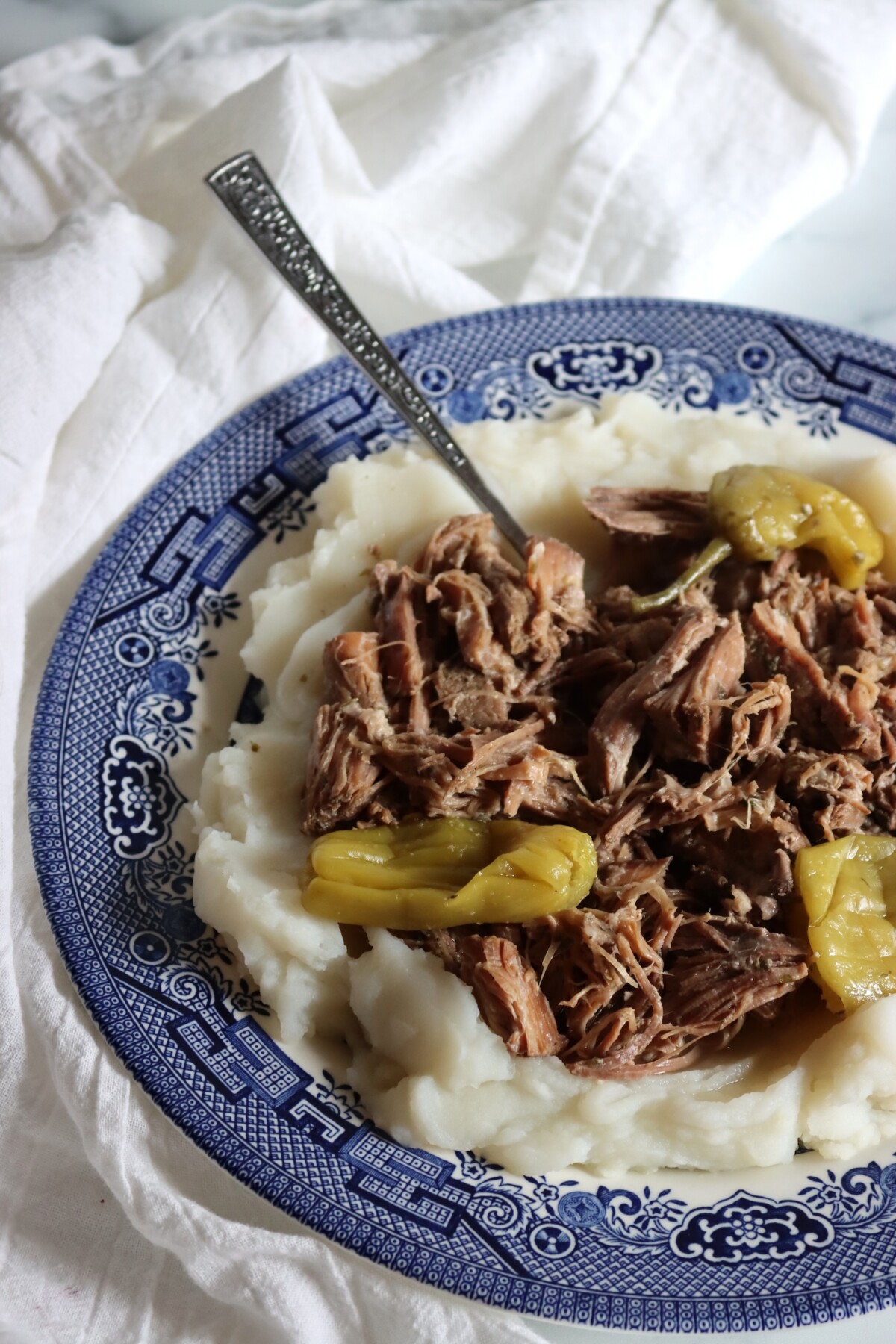
This is where a thin jar turns back into Mississippi pork roast. Empty a jar into a saucepan and bring it to a gentle simmer.
Stir in a few pats of butter until they melt into the broth. That’s the stick of butter from the original recipe, going in where it belongs.
Shred the pork against the side of the pan with a spoon, and it falls apart on its own. For gravy, whisk a spoonful of flour or cornstarch into a little cold water. Stir it in as the pan simmers and give it about 5 minutes to thicken.
As for what to serve with Mississippi pork roast, mashed potatoes are the classic, with a few peppers on every plate. Egg noodles and rice work just as well. Left thin, it makes a fast sandwich on a soft roll, and it works in tacos or on a baked potato bar too.
If you like dinner coming off the pantry shelf, it keeps good company with my canning sloppy joe filling and canning chipotle beef taco meat. There are 50 more meal in a jar recipes to keep the shelf stocked, too.
Storage and Shelf Life
After the jars have sat undisturbed for 24 hours, take the bands off and check every seal. Press the center of each lid, and it should be firm and slightly concave, with no give at all.
Taking the bands off matters, because a band can hold an unsealed lid in place and hide a jar that never sealed.
Any jar that didn’t seal goes in the fridge to be eaten within a few days. You can also reprocess it with a new lid for the full time, as long as you catch it within 24 hours.
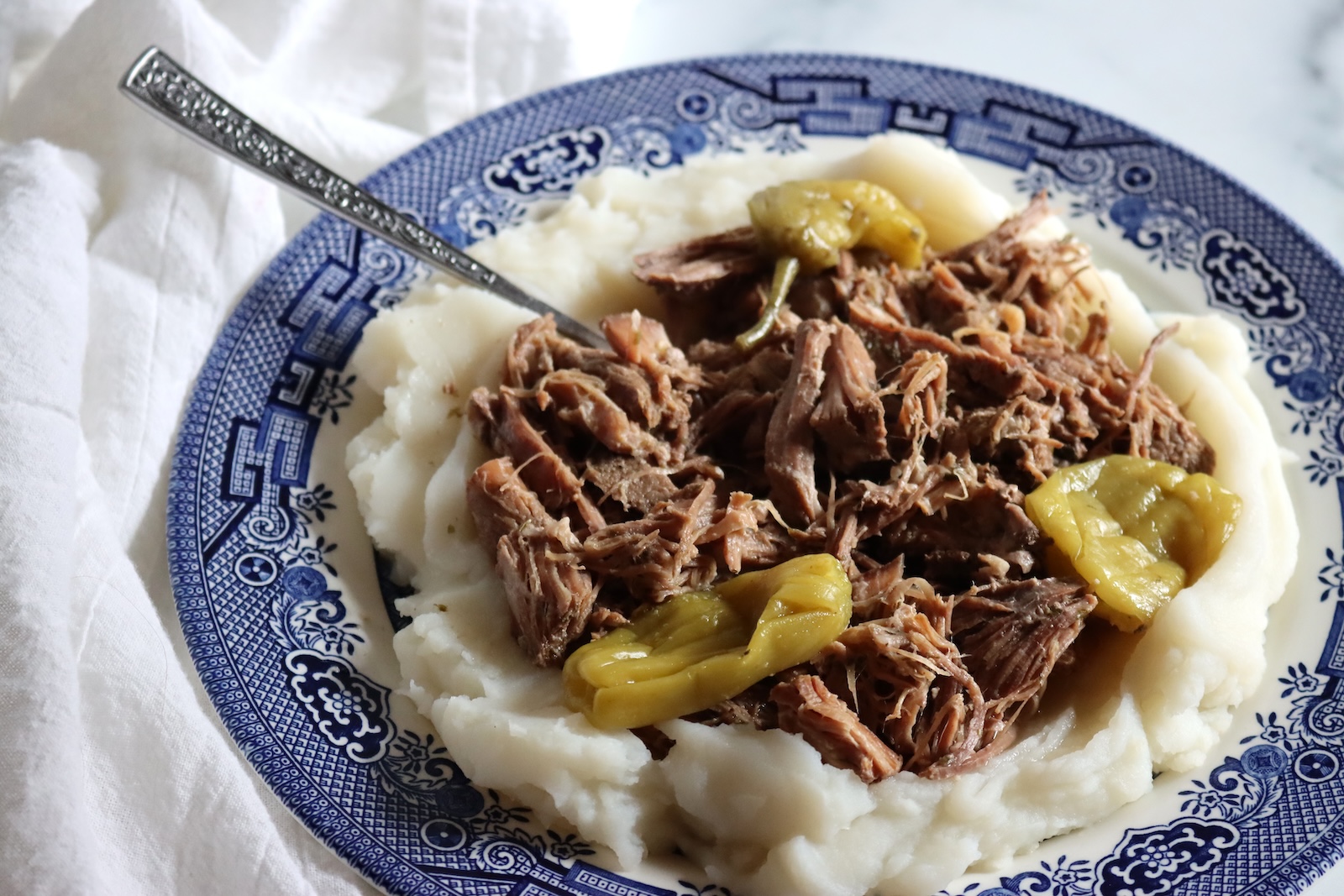
Wipe the sealed jars, label them with the contents and date, and store them without bands in a cool, dark place. They hold their quality best for 12 to 18 months, and they stay safe well past that as long as the seal holds. Once a jar is open, refrigerate it and use it within 3 to 4 days.
Yield Notes
This batch is built around one pork shoulder and one jar of peppers. It takes 3 3/4 pounds of pork after the fat cap and bone come off, which is roughly a 5 pound boneless shoulder as purchased, or a 7 pound bone-in one.
The peppers come from one 15 ounce jar of sliced pepperoncini, which gives about 1 1/2 cups of well-packed peppers after draining and 3/4 cup of brine.
Together they fill about 3 quarts or 6 pints, and a quart is dinner for two. The exact count depends on how much you trim and how loosely you pack.
If your shoulder runs small and the last jar is light on solids, top it up with more hot broth rather than shorting the other jars.
The recipe halves and doubles cleanly, and the processing time stays the same for any batch size.
The smallest load a pressure canner can take is 2 quarts or 4 pints.
Canning Mississippi Pork Roast FAQs
Whether it’s spicy, and what can and can’t go in the jar, are the big questions with this one.
No. Mississippi pork roast is a low-acid meal, so a water bath canner doesn’t get hot enough to make it shelf stable. The pepperoncini and their brine don’t acidify the jar anywhere near enough to change that. You need a pressure canner for safe jars.
No. Pepperoncini are mild peppers, and they bring more tang than heat. If you’d like it hotter, swap some of the pepperoncini for sliced pickled jalapeños at the same volume. Red pepper flakes in the seasoning work too.
I wouldn’t. Ranch packets are made with buttermilk powder, and dairy isn’t canned. The dried herbs and spices in this recipe give you the same flavor without putting milk solids in the jar. If you’d like the packet flavor exactly, stir a little ranch mix into the pan when you reheat a jar.
Not to this recipe. Adding vegetables changes what’s in the jar, and the processing time is based on the recipe as written. If you’d like potatoes and carrots in the jar, my canning pot roast in a jar already has them. You can also cook fresh ones and serve them alongside.
Sealed jars keep their best quality for 12 to 18 months in a cool, dark place. They stay safe well past that as long as the seal holds. Store them with the bands off so a failed seal can’t hide. Refrigerate after opening and use within 3 to 4 days.
Meal in a Jar Canning Recipes
More dinners you can pull straight off the pantry shelf.
If you tried this Canning Mississippi Pork Roast recipe, or any other recipe on Creative Canning, leave a ⭐ star rating and let me know what you think in the 📝 comments below!
And make sure you stay in touch with me by following on social media!
Canning Mississippi Pork Roast
Equipment
- Canning Jars, Lids and Bands
- Bubble remover
- Large glass or stainless steel bowl
Ingredients
- 3 3/4 lbs boneless pork shoulder, trimmed weight, see notes
- 1 1/2 cups sliced pepperoncini, well packed, drained
- 3/4 cup pepperoncini brine, reserved from the jar
- 1 1/2 Tbsp dried parsley
- 1 Tbsp dried chives
- 1 Tbsp onion powder
- 1 1/2 tsp dried dill weed
- 1 1/2 tsp garlic powder
- 1 1/2 tsp black pepper
- 1 1/2 tsp canning and pickling salt, or to taste
- 2 cups beef broth, boiling, plus more for topping up
Instructions
- Prepare the pressure canner, jars, lids, and bands. Because this is a raw pack going into room-temperature jars, keep the canner water just warm, around 140 degrees, rather than simmering.
- Bring the beef broth to a boil.
- Combine the parsley, chives, onion powder, dill weed, garlic powder, pepper, and salt in a large bowl.
- Trim the fat cap and any bone from the pork shoulder and cut the meat into 2-inch cubes.
- Drain the pepperoncini, saving the brine.
- Add the pork and drained peppers to the bowl and mix until the seasoning is spread evenly through everything.
- Pack the pork and peppers into the jars, filling them with solids to 1 inch headspace without pressing down hard.
- Divide the pepperoncini brine evenly between the jars.
- Pour boiling broth over the solids to cover, keeping 1 inch headspace.
- Remove air bubbles, top up with broth if the level dropped, wipe the rims clean, and apply lids and bands fingertip tight.
- Load the jars into the canner, lock the lid, and vent a steady stream of steam for 10 minutes before bringing it to pressure.
- Process at 10 lbs pressure in a weighted gauge canner or 11 lbs in a dial gauge canner, pints for 75 minutes or quarts for 90 minutes, adjusting for altitude (see notes).
- Turn off the heat and let the canner return to zero pressure on its own. Wait 5 minutes, remove the lid, and leave the jars in the canner another 10 minutes.
- Lift the jars out and let them cool undisturbed for 24 hours. Check the seals, remove the bands, label, and store in a cool, dark place.
Notes
- 0 to 2,000 feet: 11 lbs
- 2,001 to 4,000 feet: 12 lbs
- 4,001 to 6,000 feet: 13 lbs
- 6,001 to 8,000 feet: 14 lbs
- 0 to 1,000 feet: 10 lbs
- Above 1,000 feet: 15 lbs
Nutrition
Nutrition information is automatically calculated, so should only be used as an approximation.
Pork Canning Recipes
More ways to put up a shoulder, a loin, or a whole half hog.

Find the perfect recipe
Searching for something else? Enter keywords to find the perfect recipe!

Great recipe
Thanks so much! So glad you enjoyed it.