This post may contain affiliate links. Please see our disclosure policy.
Safe canning recipe changes let you put your own twist on tested recipes without putting anyone at risk. Maybe you want to cut the sugar in your jam, swap the hot peppers in your salsa for something milder, or tuck a clove of garlic into your dill pickles. There’s research-backed guidance that spells out exactly which tweaks hold up and which ones quietly turn a safe jar into a dangerous one.
Once you understand the handful of rules behind that guidance, you can get creative with your preserves and still sleep easy knowing every jar on the shelf is safe to open.
Table of Contents
- Quick Reference
- Understanding Why Recipe Changes Matter
- Fruits and Fruit Sauces
- Jams and Jellies
- Tomatoes
- Required Acidification (Non-Negotiable)
- Pickles and Relishes
- Salsa
- Plain Vegetables
- Meat and Poultry
- Pressure Canning Seasoning Adjustments
- What You Can Never Safely Change
- Never, In Any Recipe
- Finding Reliable Canning Recipes
- A Note About Jar Sizes
- Notes from My Kitchen
- Safe Canning Recipe Change FAQs
- Sources
- More Canning Guides
This guide has been reviewed for safety and accuracy by a Master Food Preserver certified through the University of Cornell Cooperative Extension.
I’ll be honest with you: I can for my own babies. My little ones are my treasures, and when I tell you I don’t mess around with safe canning, I mean it. Every single jar of pasta sauce, every batch of apple butter, every quart of chicken soup that goes into my pantry follows tested recipes from trusted sources.
I wouldn’t recommend anything to you that I wouldn’t confidently put into their tiny hands. That’s the standard I hold myself to, and it’s the standard behind every piece of advice I share here on Creative Canning.
That said, I understand the pull to make a recipe your own. You might want a lower-sugar homemade jam, or you can’t stand cilantro and want it gone from your salsa, or you’re eyeing a pepper relish and wondering if your garden jalapeños can stand in for the bell peppers. Food scientists have looked hard at questions exactly like these, and the answers are clearer than you might expect.
I’ve pulled together the published guidance on modifying canning recipes from the USDA Complete Guide to Home Canning, the National Center for Home Food Preservation, and the extension services at Penn State, Wisconsin-Madison, North Dakota State, and several other universities, and compiled it into one place so you can customize with confidence (and while keeping your pantry stores both safe and delicious).
This list covers all types of canning, including both pressure canning recipes and waterbath canning recipes.
Quick Reference
Here’s the short version. Every one of these changes is safe only when you’re working within a tested recipe of the type listed, not as a free pass across the board.
Generally Safe (within a tested recipe):
- Reduce or eliminate salt where it’s added for flavor (canned fruit, tomatoes, pickles, and all pressure-canned foods), but never in fermented foods like sauerkraut or crock pickles
- Reduce sugar in canned fruit, salsa, quick-process pickles, and pressure-canned foods (sugar in jams and jellies follows its own rules below)
- Change the type of dried herb or spice, or add a reasonable amount of dried seasoning, to a tested recipe (garlic and onion don’t count here, since they’re low-acid vegetables, not spices)
- Substitute 5% cider vinegar for 5% white vinegar, and the other way around
- Substitute lemon or lime juice measure for measure in place of vinegar in tested recipes, but not the other way around. Citrus juices are more acidic than vinegar.
- Swap hot peppers for sweet, or sweet for hot, measure for measure, in a tested salsa or pepper recipe
- Swap peppers for onions, or onions for peppers, in equal measure, in a tested salsa recipe
- Use red, white, or yellow onions interchangeably
- Step down to a smaller jar than the recipe specifies, using the processing time the recipe lists for the larger jar
- Add one clove of garlic or one small dried hot pepper per jar to a tested pickle recipe
Never Safe:
- Add flour, cornstarch, or other thickeners before canning
- Add more low-acid vegetables than a recipe specifies
- Reduce or leave out the acid (vinegar, lemon juice, lime juice, or citric acid)
- Use a larger jar size than the recipe provides a time for
- Skip the acid when canning tomatoes
- Use an untested method like oven or water bath canning for low-acid foods
Understanding Why Recipe Changes Matter
To know which changes are fine and which ones aren’t, it helps to understand what makes a canning recipe safe to begin with. It comes down to two things working together: the pH (acidity) of what’s in the jar, and the heat process used to seal it.
Almost every change you might make pushes on one of those two levers, so once you can see which lever you’re touching, the rules stop feeling arbitrary.
Why pH Matters
Foods with a pH of 4.6 or below are high-acid foods, and that acidity is doing real work. It keeps the spores that cause botulism from germinating, which is why high-acid foods can be safely processed in a boiling water bath canner or an atmospheric steam canner at around 212°F.
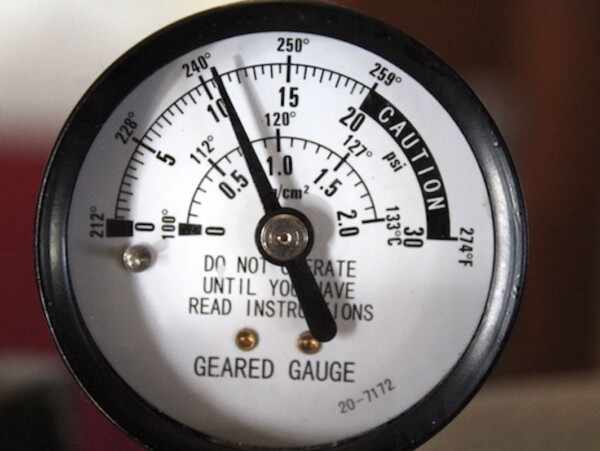
Foods with a pH above 4.6 are low-acid, and they don’t have that built-in protection. They have to be pressure canned at 240°F to 250°F to destroy the more heat-resistant spores. There’s no workaround here. No amount of extra time in a water bath canner reaches the temperature a pressure canner does.
This is why pH changes matter so much. Adding extra onions to your salsa dilutes the acid coming from the tomatoes and vinegar, and cutting the lemon juice in a tomato recipe can nudge the pH right past that 4.6 line. Knowing which changes move the pH (and which ones leave it alone) is most of the battle.
Heat Penetration
The processing times in a tested recipe are calculated around how fast heat travels to the center of the jar, and a surprising number of things affect that.
Here’s what changes how quickly the middle of the jar comes up to temperature:
- Density and thickness of the food. Sugar, salt, and starch all change how thick a product is and how heat moves through it. Starchy lima beans take longer to heat through than porous green beans.
- Size, shape, and temperature of the pieces. Heat reaches the center of a cucumber slice faster than the center of a whole cucumber, and a jar of raw-packed meat heats differently than hot-packed meat.
- Size and shape of the jar. Both affect how heat reaches the middle, which is the reason you can’t just grab a bigger jar and tack on a few minutes.
Thickeners like flour and cornstarch slow heat penetration dramatically, which is exactly why they’re off the table before canning. Add them when you open the jar and finish the food for the table instead.
Fruits and Fruit Sauces
Sugar in canned fruit helps hold color, firms up the texture, and adds flavor, but it isn’t doing anything for safety in plain canned fruit. That gives you room to play.
You May:
- Replace half (or all) of the sugar with honey, maple, or agave. It shifts the flavor, but it’s perfectly safe, since the sugar was never the thing keeping plain canned fruit safe. Replacing all the sugar with honey may impact the setting in some jam/jelly recipes, and it can dramatically impact flavor, but it’s not a safety issue.
- Reduce or eliminate the sugar entirely. You can can fruit in water or unsweetened juice. Just know that water-packed fruit can taste flat, lose color faster, and soften, and it spoils more quickly once the jar is open, so plan to use it within a few days of opening.
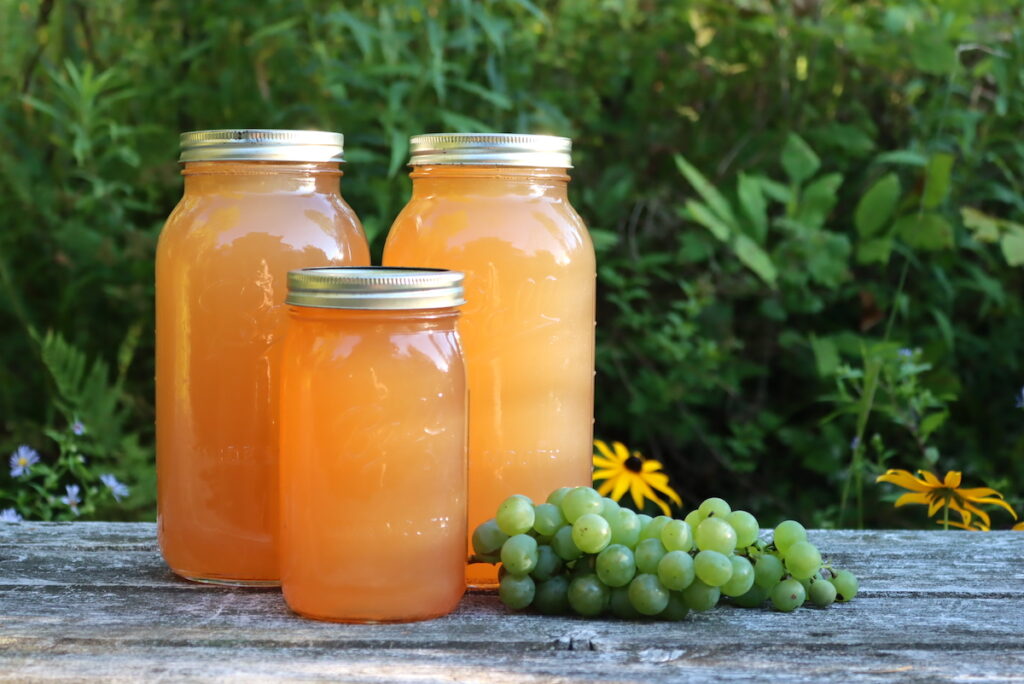
- Swap the sugar syrup for a light juice like white grape juice, pineapple juice, or apple cider for a gentler, more natural sweetness.
Sugar Substitutes
There are no tested recipes for canning with sucralose, stevia, or other sugar substitutes. They don’t bring sugar’s preservative qualities to the jar, and they can shift flavor oddly during storage.
If you want to use a substitute, stir it in after you open the jar rather than before canning.
Low-Acid Fruits
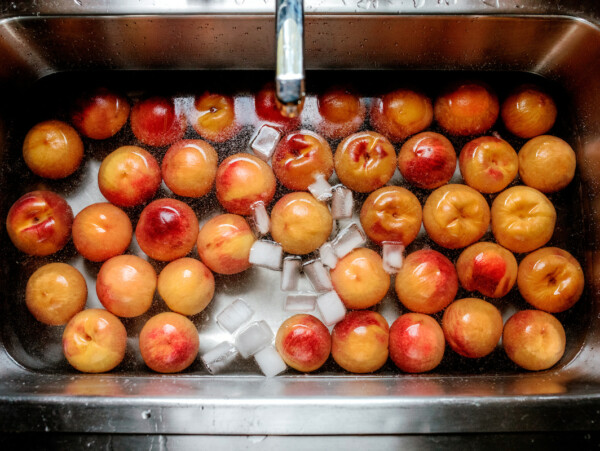
There are no tested recipes for safely canning white-fleshed peaches or white nectarines at home, because the “white” versions of these fruits tend to run much lower in acid. If you have them, freezing or refrigerator preserves are the way to go.
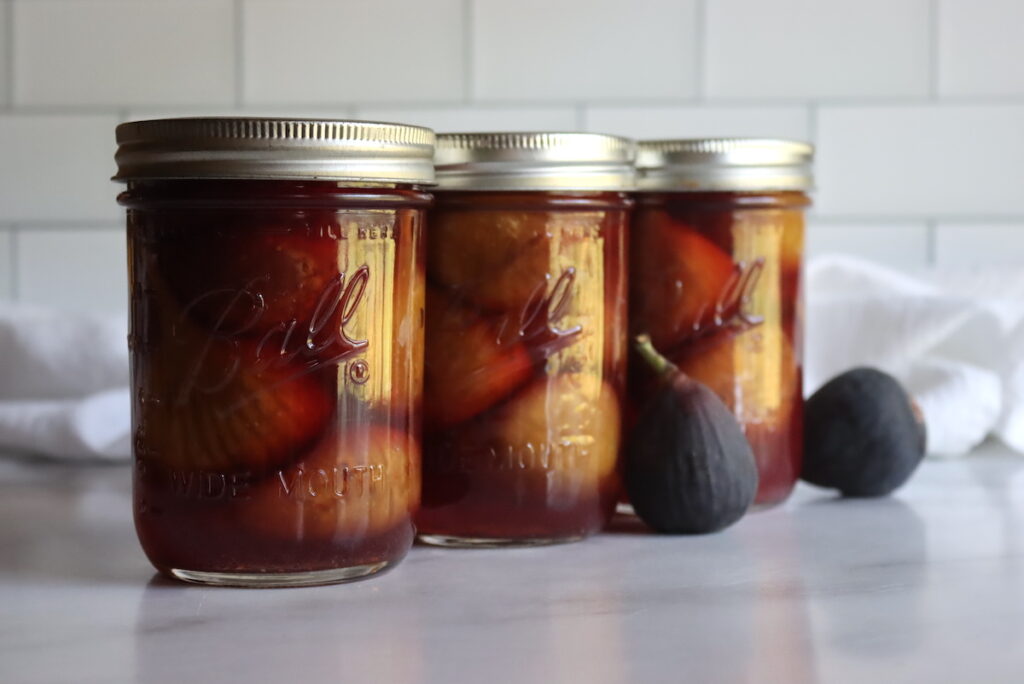
The same caution applies to other low-acid fruits like mango, elderberry, persimmon, banana, and melon, which either lack tested home canning recipes or need special handling. Some low-acid fruits, like figs and Asian pears, do have tested instructions, but only with added bottled lemon juice to bring the acidity up to a safe level.
Jams and Jellies
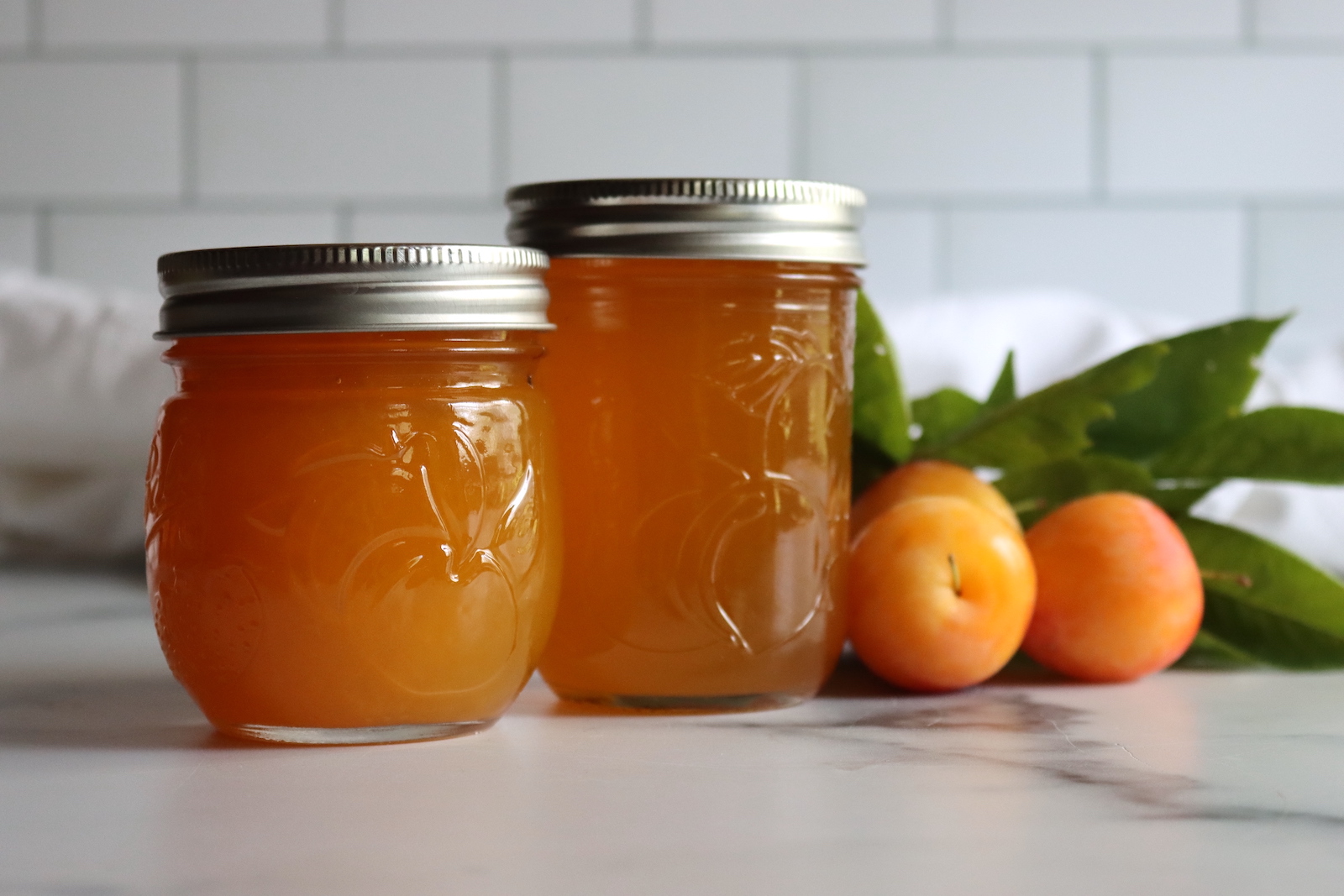
Jams and jellies go into a boiling water or steam canner, and the pectin, acid, and sugar all work together to build the gel. There’s flexibility here, but it’s more specific than with plain fruit because you’re balancing set as well as safety.
You May:
- Add a small amount (a teaspoon or less) of an herb or other flavoring to a fruit jam or jelly. This is how you end up with basil strawberry jam or vanilla cherry jelly.
- Substitute peaches for nectarines, or apples for pears, and vice versa. They have similar acidity and sugar, so they trade places cleanly. (Asian pears are the exception, and are not interchangeable with regular pears.)
- Use unsweetened frozen-and-thawed fruit, or canned fruit, in place of fresh. Skip pre-sweetened fruit. For accuracy, measure frozen fruit before thawing, and drain canned fruit before measuring.
- Use honey in place of some of the sugar. In a recipe made with pectin, replace up to 1 cup of sugar with 1 cup of honey for every 6-pint batch, and adjust the liquid to match. In a no-added-pectin recipe, honey can replace up to half the sugar, and you decrease the liquid by the amount of honey you add. Going all the way to honey or maple, though, can throw off the set and lead to scorching, so I’d keep it to a partial swap for quality. (All honey/maple isn’t a safety issue, so feel free to try it knowing it may not turn out.)
- Use regular pectin bought in bulk. Use 6 tablespoons of bulk regular powdered pectin for every individual box the recipe calls for.
If you’re working toward lower sugar, it’s worth reaching for a recipe built around it from the start, like a low-sugar strawberry jam made with a pectin designed for less sugar, rather than cutting the sugar in a standard recipe and hoping it sets.
A couple of rules worth holding to:
- Match your recipe to your pectin. Pectin comes in different forms (liquid, powdered) and types (regular, low-sugar, no-sugar), and recipes are developed around a specific one. Don’t sub one type for another without following the instructions written for each.
- Don’t double a jam or jelly batch. When you double it, the heating times and temperatures drift from the original, and you often end up with syrup instead of a set. If you need more, make multiple batches.
Tomatoes
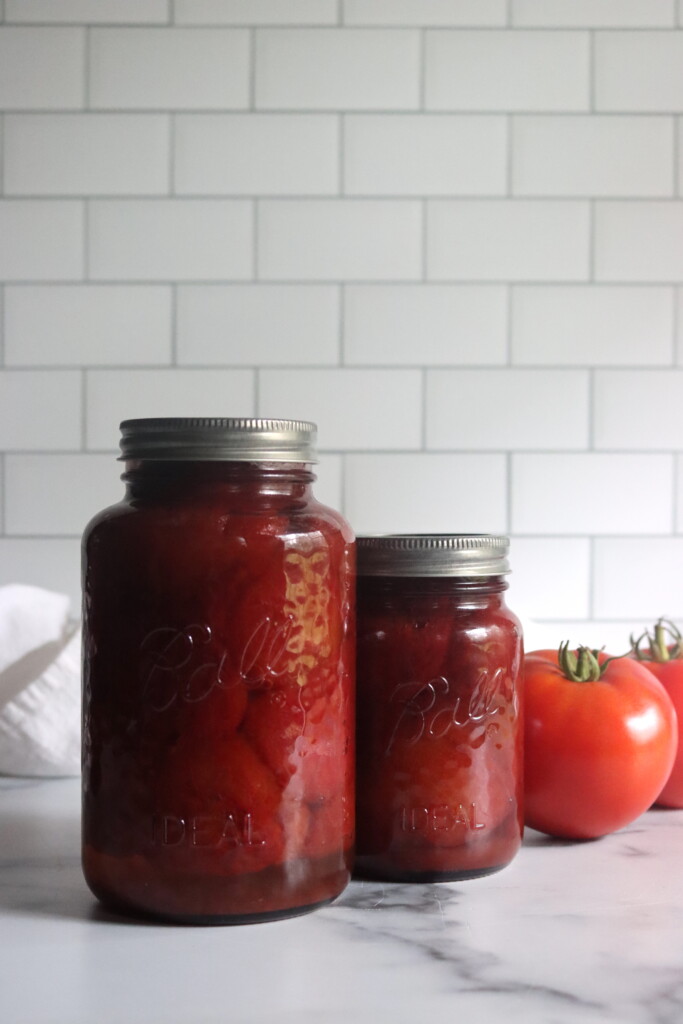
Tomatoes are their own special case, because they sit right on the line between high-acid and low-acid. The average tomato lands around 4.6 pH, but that wobbles with variety, ripeness, and growing conditions, which is why the rule is the same for everyone.
Required Acidification (Non-Negotiable)
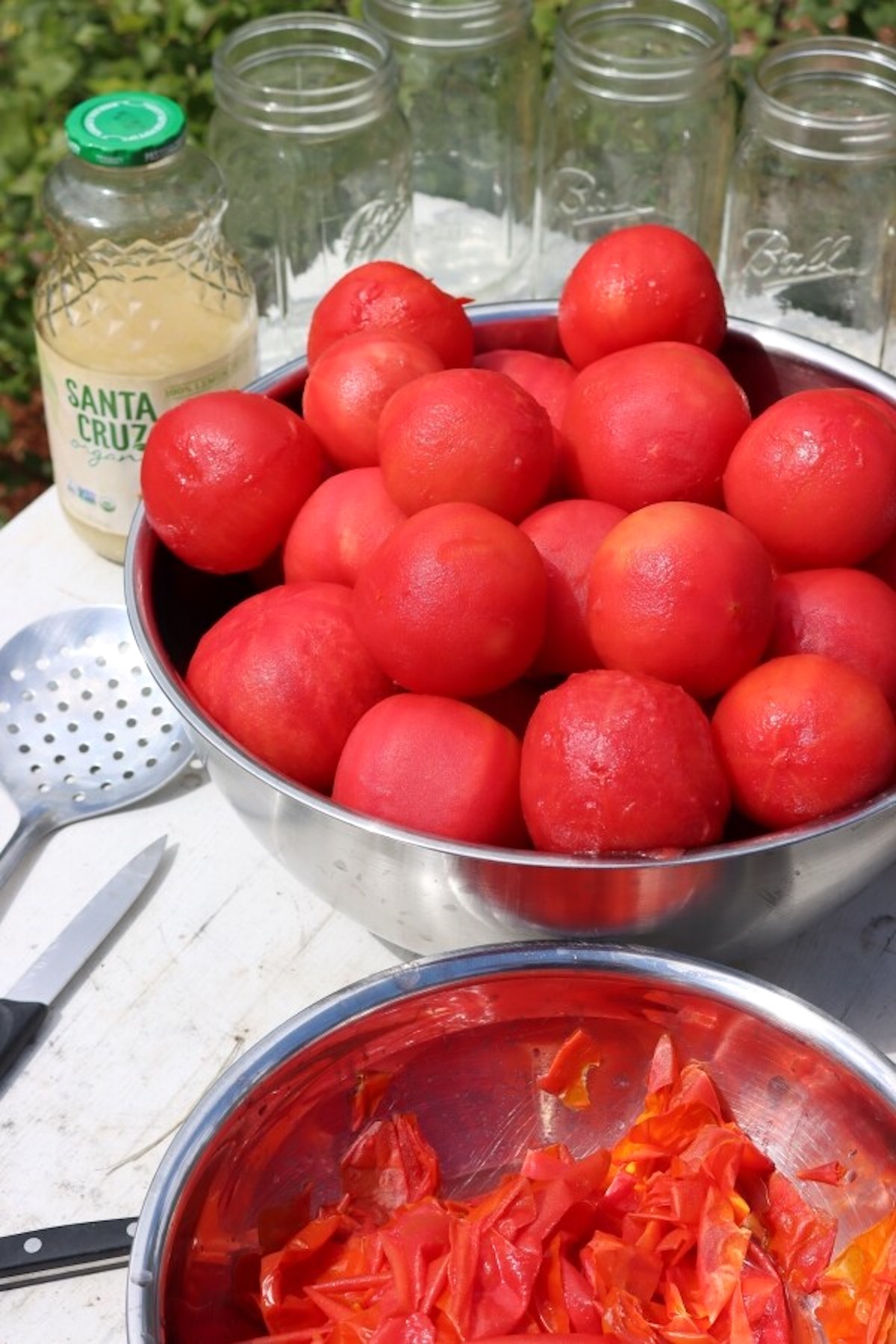
Every batch of home-canned tomatoes has to be acidified, no exceptions:
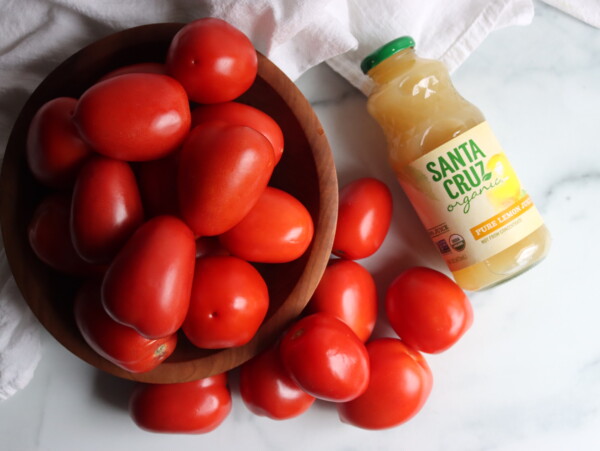
- Per pint: ¼ teaspoon citric acid OR 1 tablespoon bottled lemon juice
- Per quart: ½ teaspoon citric acid OR 2 tablespoons bottled lemon juice
This holds whether you’re using a boiling water canner or a pressure canner. The processing times were all developed with that added acid already in the jar.
You May:
- Add a little sugar to soften any flavor change from the lemon juice. Citric acid doesn’t usually change the taste much, which is why a lot of canners reach for it instead.
- Reduce or eliminate the salt in a tested tomato recipe. Salt is there for flavor, not safety.
For Safety, You May Not:
- Add low-acid ingredients like peppers, onions, or celery to a tomato product unless a tested recipe specifically calls for them. If you want chunky tomatoes with vegetables, find a recipe built that way.
- Thicken with flour or cornstarch to make a condensed soup. Thickening slows the heat and makes the product unsafe. If you want it thicker, strain your canned tomatoes or thicken at the stove when you’re serving.
Kitchen Tip: When you’re running pints and quarts of tomatoes together in the same canner load, process the whole load for the quart time.
Pickles and Relishes
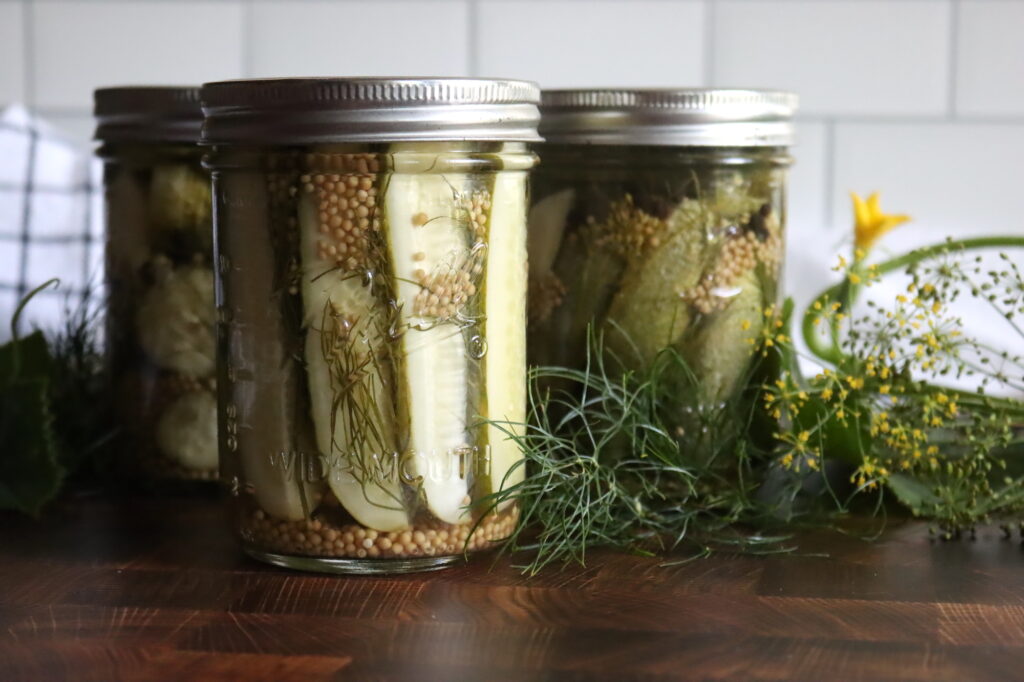
Pickles and relishes are processed in a boiling water or steam canner, and the vinegar is what makes them safe. As long as you leave that acid alone, you have a fair bit of room.
You May:
- Reduce the sugar or salt in a tested quick-process pickle recipe. This applies to quick pickles only.
- Trade 5% cider vinegar for 5% distilled white vinegar, and the reverse. They carry the same acidity. Cider vinegar will darken light-colored vegetables and shift the flavor a touch, while white keeps things looking bright. Be extra careful when substituting other types of vinegar, as they’re often not standardized to 5% acidity. Rice vinegar, for example, often has a much lower acidity. Check the label carefully to substitute wine vinegar, balsamic, malt vinegar, or other types, and never use vinegar that’s not labeled with an acidity percentage or is labeled below 5%. Never use homemade vinegar (you can’t count on its acidity).
- Tuck a clove of garlic or a small dried hot pepper into each jar in any tested pickle recipe, without changing the processing time.
- Use zucchini or summer squash in place of cucumber in any approved relish recipe. You can also use English or grocery-store cucumbers in place of pickling cucumbers, though they tend to soften and the quality may not be as good.
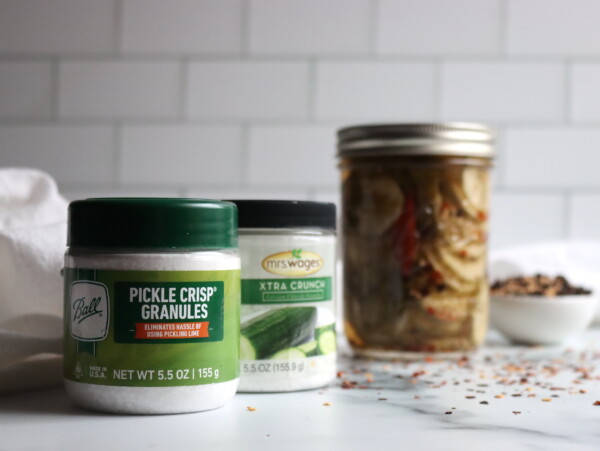
- Add calcium chloride (sold as Pickle Crisp) for crunch. Skip pickling lime unless the tested recipe calls for it, and if you do use it, follow every rinsing step exactly.
The one exception, for fermented products: you may not change the amount or type of salt for fermented vegetables like sauerkraut or true crock dill pickles. In fermentation, the salt concentration controls which bacteria grow, so it’s doing a safety job, not a flavor one.
Kitchen Tip: If you’re watching sodium, you don’t have to ferment with less salt. A quick rinse in a colander cuts the sodium in finished sauerkraut by 30% to 40%, so you can lighten it up at serving time instead. And if you have a beloved pickle recipe that isn’t safe for canning, refrigerate it. Fridge pickles keep for a couple of weeks.
Salsa
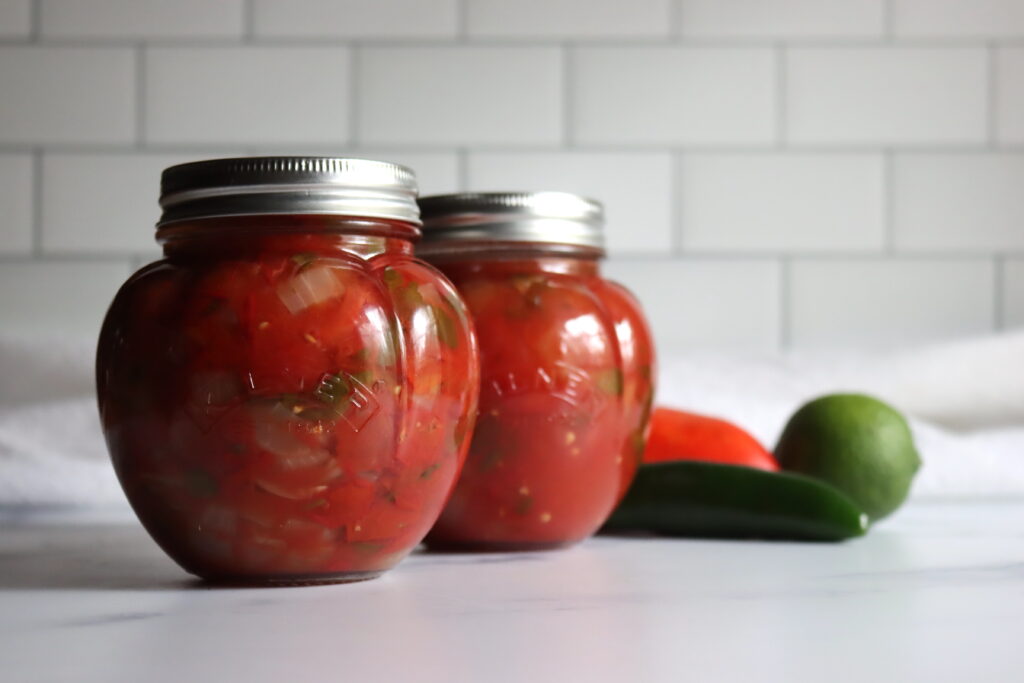
Salsa is a mix of high-acid ingredients (tomatoes or fruit) and low-acid ones (peppers, onions, garlic), and that combination makes it one of the trickier things to can safely. Improperly canned salsa has been behind plenty of food poisoning cases, so this is a section to read closely.
One thing up front: there are no approved recipes for canning salsa in jars larger than a pint.
You May:
- Trade sweet peppers for hot, or hot for sweet, measure for measure. If a recipe calls for 2 cups of jalapeños and you want it milder, use 2 cups of bell peppers instead.
- Swap peppers for onions, or onions for peppers, in equal measure. As long as you trade one for the other cup for cup, the total amount of low-acid vegetables stays the same, so the acid balance holds.
- Use red, white, and yellow onions interchangeably, measure for measure.
- Adjust the dry seasonings to taste. You can change the type of dried herb or spice, and add a reasonable amount (a teaspoon here or there), since dried spices don’t move the acidity. This is where you tune the flavor without touching safety.
- Reduce or eliminate the sugar or salt in any tested salsa recipe.
- Reduce the low-acid ingredients like onion, celery, or green pepper. (You just can’t add more than the recipe calls for.)
- Substitute tomatillos for tomatoes as long as the total stays the same, and you can use green (unripe) tomatoes in any tomatillo recipe the same way.
- Use any tomato variety or color, red, yellow, orange, purple, or green, as long as it’s not from a dead or frost-killed vine.
- Swap the acid one way or the other, as long as you keep the acidity up. Bottled lemon and lime juice are more acidic than 5% vinegar, so you can use them in place of vinegar measure for measure. You can also go the other direction and use vinegar in place of bottled lemon or lime juice, as long as you use twice as much vinegar to make up the difference in acidity. Bottled lemon and lime juice can also stand in for each other measure for measure.
For Safety, You May Not:
- Thicken salsa before canning, with cornstarch, flour, or anything else (including extra tomato paste the recipe doesn’t call for).
- Add corn or black beans, or swap them in for peppers or onions. These low-acid additions move the pH too far.
- Sneak in low-acid ingredients as “seasoning.” A teaspoon or two of dried spice won’t change safety, but you can’t add large amounts of garlic or onion (fresh or powdered) or pile in fresh herbs. That adds low-acid material and dilutes the acid that’s keeping the salsa safe.
- Reduce the total amount of acid (vinegar, lemon, or lime juice). If the salsa tastes too tart, add a little sugar rather than cutting the acid.
- Reduce the tomatoes. They’re carrying the base acidity of the whole recipe.
Kitchen Tip: If you want a salsa with more vegetables, more heat, or less acid than a tested recipe allows, refrigerate or freeze it instead. Fridge salsa keeps about two weeks. And if your canned salsa turns out thinner than you like, just strain it before serving.
Plain Vegetables
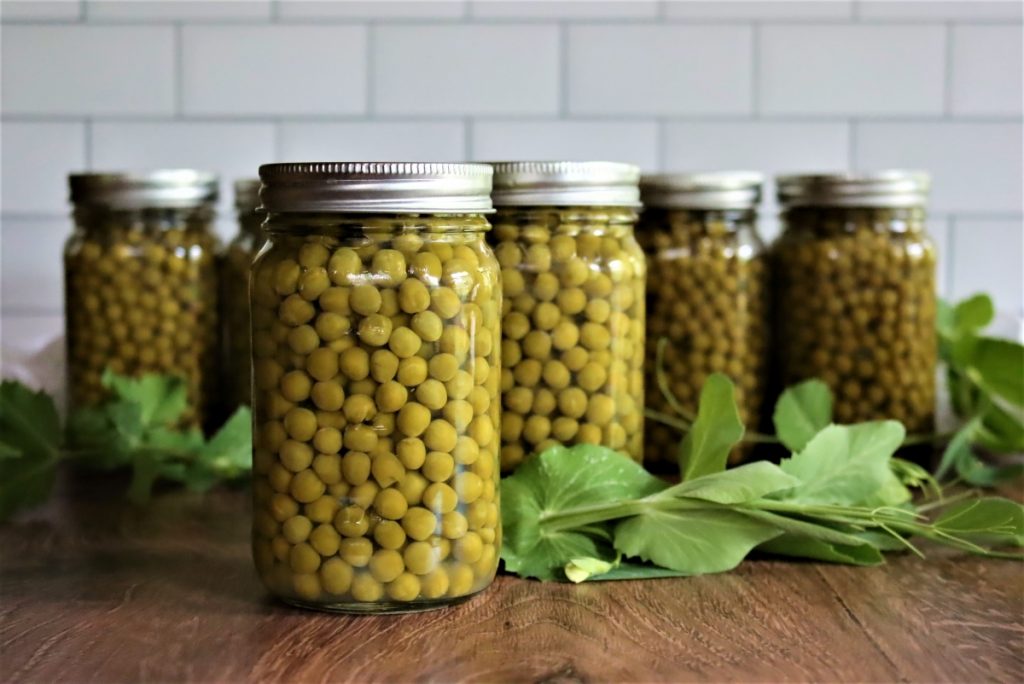
Vegetables are low in acid, so they go in a pressure canner, and the rules for changing them are reasonably short.
You May:
- Build vegetable mixtures, as long as there’s a tested recipe for each vegetable in the mix, and you process whichever one has the longest time. Canning green beans with carrots, for instance, means processing for the longer of the two.
- Add a little garlic (up to 1 clove per jar) to canned vegetables, without changing the processing time.
- Reduce or eliminate the salt, which is there for flavor.
For Safety, You May Not: thicken canned vegetables or soups with flour or cornstarch, or add rice, pasta, or other starches. Thickening a low-acid vegetable product gives you an unsafe jar.
For the best results, I’d actually steer away from vegetable mixtures when you can. The vegetable with the shorter time gets over-processed and turns mushy waiting on the longer one. Freezing mixed vegetables, or canning them separately and combining at serving, keeps the texture a lot nicer.
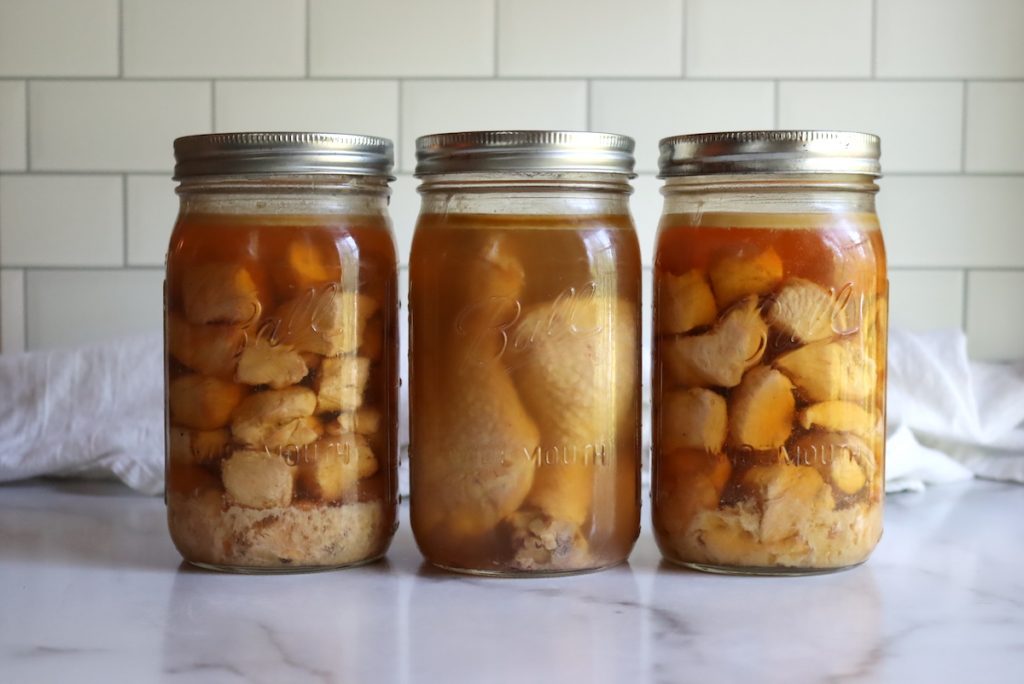
Meat and Poultry
Meat is low in acid and has to be pressure canned, and the safe modifications are pretty limited.
You May add one of the following without changing the processing time:
- 1 teaspoon per pint or 2 teaspoons per quart of dried seasoning, onion, or garlic
- 1 tablespoon per pint or 2 tablespoons per quart of fresh seasoning, onion, or garlic
For Safety, You May Not:
- Add meat to a recipe that doesn’t allow it. Don’t add meat to a spaghetti sauce, for example, unless you’re using a tested recipe written to include it.
- Add thickeners like flour, cornstarch, rice, pasta, or barley.
- Add fat to canned meat.
Add the meat to sauces, or thicken your soups and stews, when you’re getting the food ready for the table. You get all the flexibility you want, just on the back end instead of in the jar.
Pressure Canning Seasoning Adjustments
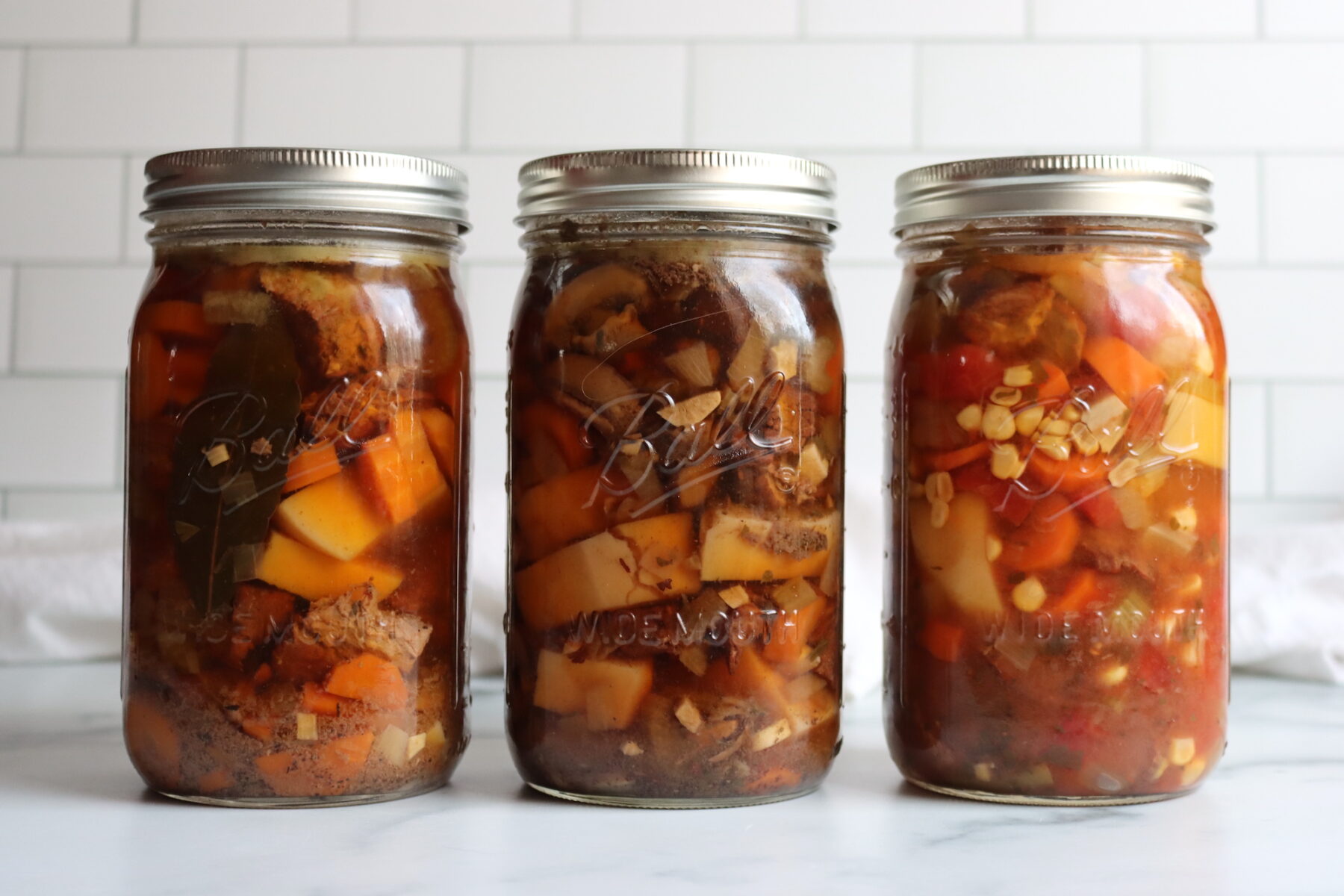
For all the low-acid foods that go through a pressure canner (vegetables, meats, soups, and meals in a jar), a few seasoning guidelines hold across the board.
Salt in pressure canning is for flavor and a little color retention, not preservation, so you can increase it, decrease it, or leave it out entirely. I tend to go light, since you can always add more at the table but you can’t take it back out. You’re also not limited to canning salt. Any pure salt works, as long as the label lists only salt. If it lists iodine or anti-caking agents, pick a different one, since those can cloud the brine or throw off the color and flavor.
Sugar, like salt, is about flavor and color here, not safety. Increase it, decrease it, eliminate it, or swap in honey, maple syrup, or brown sugar as you like.
Herbs and seasonings have a bit more nuance. You can safely add a reasonable amount of dried herbs and spices to a pressure-canned recipe, and if a recipe calls for fresh herbs you can use dried instead (figure about a third as much dried as fresh). What you don’t want to do is go the other way and pile in extra fresh herbs where a recipe calls for dried, since the added moisture changes the product.
One more note on sage: it has a habit of turning bitter during processing and storage, so use a light hand or leave it out and add it when you serve.
What You Can Never Safely Change
Some lines don’t move, no matter what you’re canning. Here’s the list I’d never cross, and I’d encourage you not to either.
Never, In Any Recipe
- Invent a canning recipe without basing it on a tested formulation. Without testing, there’s no way to know how long it needs to process or whether the pH is safe for the method.
- Add thickeners (flour, cornstarch, arrowroot, and so on) unless a recipe specifically calls for one and names the type. They slow the heat and can leave the center underprocessed. ClearJel is the only thickener approved for canning, and only in specific recipes like pie fillings.
- Add extra low-acid vegetables to salsa, tomato products, or other recipes. They dilute the acid and can make the jar unsafe.
- Reduce or leave out the acid (vinegar, lemon juice, lime juice, or citric acid). It’s there for safety, not just tang.
- Use a larger jar than the recipe provides a time for. Processing times are tied to a specific jar size, and adding minutes doesn’t make a bigger jar safe.
- Water bath a low-acid food. No amount of extra time reaches the temperature a pressure canner does.
- Skip acidifying tomatoes, even when pressure canning. The times were built around the added acid.
- Cool a pressure canner under running water. The time calculations count on the residual heat during a normal cool-down, so rushing it underprocesses the food and can make jars lose liquid or break.
- Use untested methods like oven canning, dishwasher canning, or processing in a pressure cooker (rather than a pressure canner).
Finding Reliable Canning Recipes
The simplest way to stay safe is to start from a tested recipe in the first place. These groups run their recipes through university labs before publishing them:
- National Center for Home Food Preservation (nchfp.uga.edu)
- USDA Complete Guide to Home Canning (free online through NCHFP)
- So Easy to Preserve (University of Georgia Cooperative Extension)
- State Cooperative Extension Services (search for your own state’s)
And be wary of recipes from social media, general food blogs that don’t cite a tested source, cookbooks published before 1994, and the community cookbook with grandma’s recipe. They may have worked for years without anyone getting sick, but “no problem yet” isn’t the same as tested.
Every recipe on Creative Canning is based on tested guidance, so you can know that the recipes I share here follow strict safety standards.
A Note About Jar Sizes
You can always go smaller than a recipe calls for, using the processing time for the size listed. If a recipe is written for pints, half-pint or 4-ounce jars are fine, processed for the pint time.
What you can’t do is size up unless the recipe gives a time for the larger jar. A pint recipe can’t simply be stretched to quarts with a few extra minutes, because heat doesn’t travel into a bigger jar that predictably, and the result could be unsafe.
One more thing worth knowing: no tested canning recipes call for jars larger than a quart, with the exception of a few juices tested in half-gallon jars, namely apple cider and grape juice.
Notes from My Kitchen

I know these rules can feel restrictive, especially if you’ve been canning for years and never once had a jar go wrong. But here’s the part that keeps me careful: the most dangerous bacteria in canning don’t announce themselves. An underprocessed jar can look, smell, and even taste completely normal right up until someone gets sick. That’s the whole reason the guidelines exist.
What I’ve come to appreciate, after a lot of seasons putting up food, is how much freedom actually lives inside the rules. I can make my grandmother’s vegetable soup by pressure canning the vegetables and broth and stirring the noodles in when I reheat it. I can make a low-sugar jam with a pectin built for it. I can dial the heat in my salsa to exactly what my family likes. The boundaries aren’t there to box you in. They’re there so the creative part stays safe, and there’s a lot more room to play than it looks like at first. Can safely, friends.
Safe Canning Recipe Change FAQs
Yes, in most recipes. Sugar is there for flavor, color, and texture rather than safety in canned fruit, tomatoes, quick pickles, and pressure-canned foods, so you can reduce it, leave it out, or replace up to half of it with honey. Jams and jellies are the exception, since the sugar works with the pectin and acid to set the gel. For lower sugar, use a recipe and a pectin made for less sugar rather than cutting the sugar in a standard recipe. Going all honey can affect how a jam sets, but it is not a safety problem.
There are no tested recipes for canning with stevia, sucralose, monk fruit, or other sugar substitutes. They do not provide the preservative or texture qualities of sugar and can change flavor during storage, so they are not recommended in the jar. If you want to use one, stir it in after you open the jar, or for jam choose a recipe built around a no-sugar-needed pectin.
Yes, with one rule about direction. Bottled lemon and lime juice are more acidic than 5% vinegar, so you can use them in place of vinegar measure for measure and stay safe. To go the other way and use vinegar in place of bottled lemon or lime juice, use twice as much vinegar to keep the acidity up. Use only bottled lemon or lime juice rather than fresh, choose vinegar labeled 5% acidity, and never reduce the total amount of acid a recipe calls for.
No. You can add up to one clove of garlic per jar to a tested pickle recipe or to canned vegetables, and a measured amount of fresh or dried garlic to canned meat, without changing the processing time. But garlic should not be added to jams, jellies, canned fruit, tomato products, or salsa beyond what a tested recipe already calls for, because it adds a low-acid ingredient that can affect safety.
Yes, in most recipes. Salt is added for flavor in canned fruit, tomatoes, quick pickles, and all pressure-canned foods, so you can reduce or eliminate it freely. The one exception is fermented foods like sauerkraut and crock dill pickles, where the salt concentration controls which bacteria grow and is part of what keeps the food safe. There, leave the salt as written and cut sodium by rinsing before serving instead.
Sources
Every guideline here comes from published guidance from reputable sources, mainly university extensions and the National Center for Home Food Preservation. The specific references I used include:
- USDA Complete Guide to Home Canning, Revised 2015
- National Center for Home Food Preservation
- Play it Safe! Safe Changes and Substitutions to Tested Canning Recipes. FN2102, North Central Food Safety Extension Network, Revised March 2024
- Penn State Extension: Let’s Preserve Series
- University of Wisconsin-Madison Extension: Safe Substitutions in Home Canning
- South Dakota State University Extension: Modifying Canning Recipes
- Michigan State University Extension: Altering Canning Recipes
More Canning Guides
Find the perfect recipe
Searching for something else? Enter keywords to find the perfect recipe!