
This post may contain affiliate links. Please see our disclosure policy.
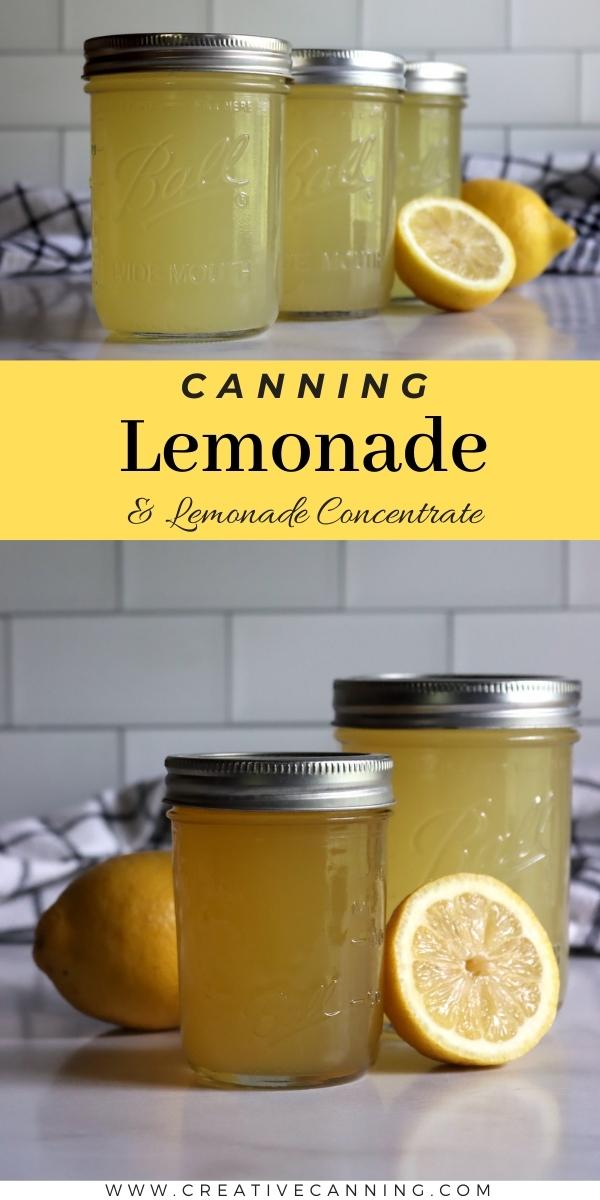
Canning lemonade is a simple way to keep fresh-tasting lemonade on the pantry shelf, ready to pour over ice the moment the weather turns hot. Store the jars in the pantry, and you have a cool drink waiting for you anytime you want one.
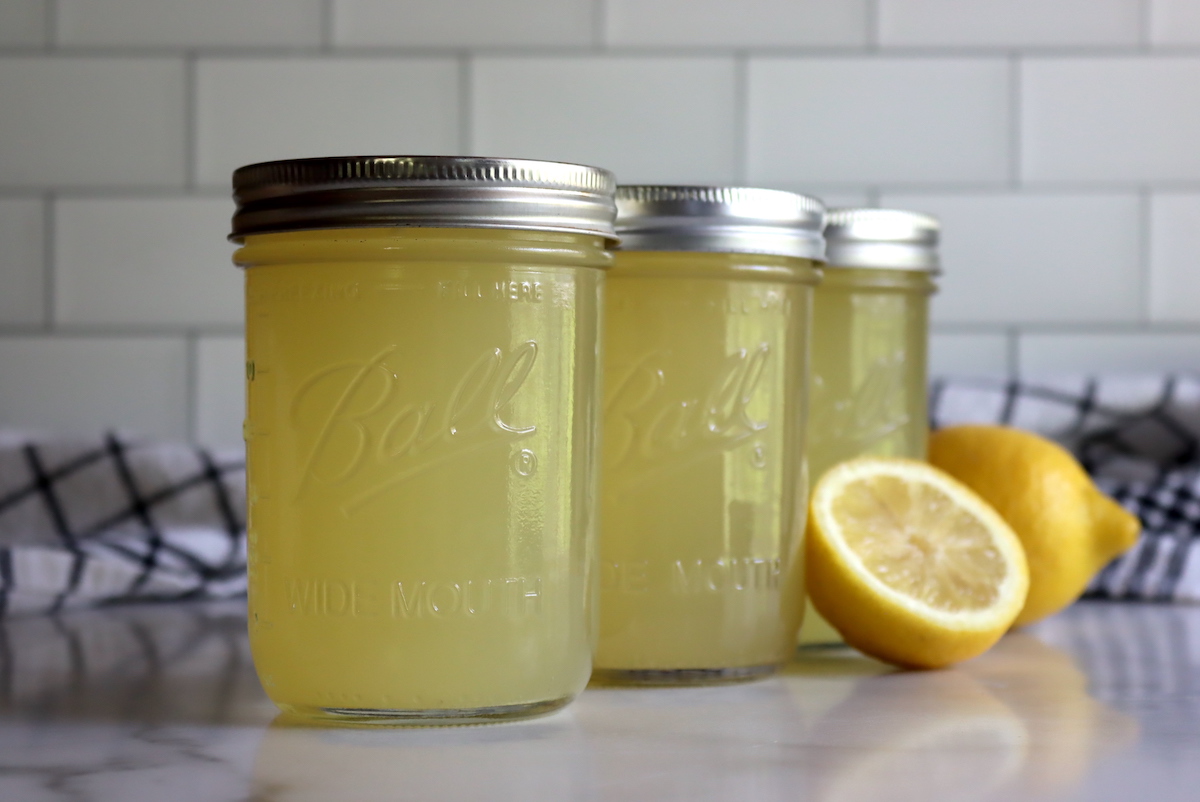
Table of Contents
- Notes from My Kitchen
- Quick Look at the Recipe
- Lemonade Ingredients
- Adjust the Ratio to Your Taste
- Yield Notes
- How to Make Lemonade for Canning
- Canning Lemonade
- Waterbath Canning Altitude Adjustments
- Serving Ideas
- Lemonade Canning FAQs
- Lemon Canning Recipes
- Canning Lemonade (& Lemonade Concentrate) Recipe
- Drink Canning Recipes
This recipe has been reviewed for safety and accuracy by a Master Food Preserver certified through the University of Cornell Cooperative Extension.
Homemade lemonade tastes so much better than store-bought powders and concentrates, but it is a chore to make when you just want a cold drink right now. When I have been working all afternoon out in the garden, and I come in looking for something refreshing, I do not want to be melting sugar on the stove and juicing lemons. Putting it up ahead of time solves that, and it sits right alongside my other lemon canning recipes on the shelf.
The timing works out nicely, too. Even if I had the patience to make a fresh batch in the middle of summer, lemon season runs through the winter, and the harvest peaks in January.
By canning lemonade now, I can take those fresh winter lemons and carry their flavor forward into my summertime kitchen, with the taste of just-made lemonade at a moment’s notice.
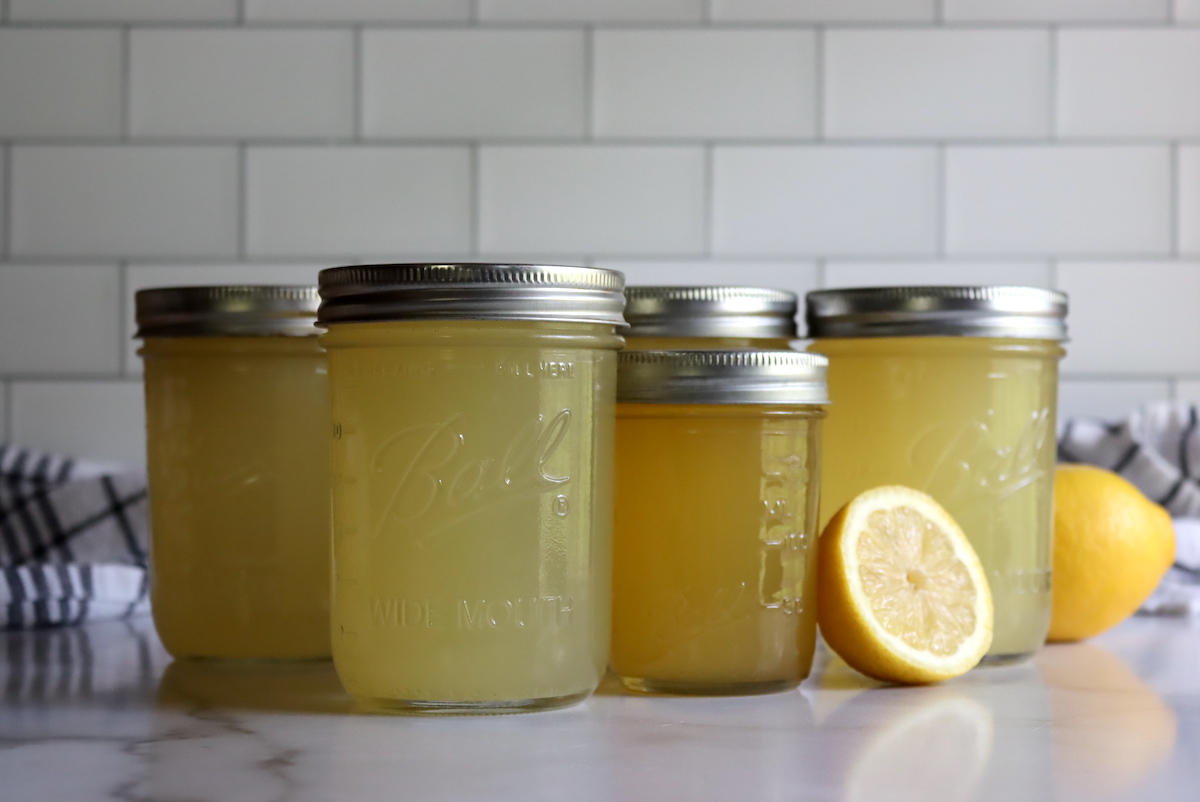
You can put this up two ways: ready-made lemonade that pours straight from the jar, or lemonade concentrate that you dilute with water when you are ready to drink it. The concentrate is the more compact option, and it belongs to the wider family of lemonade concentrate canning recipes on the site, from strawberry lemonade concentrate to rhubarb lemonade concentrate.
This is the plain, no-fruit version that the rest of those recipes build on. There is no puree to strain and nothing to dilute the lemon, so the canning is quick and the process is the same whether you fill your jars with finished lemonade or with concentrate. The only difference between the two is when you add the water, before canning or after.
Notes from My Kitchen

I tend to put up the ready-made version more often than the concentrate. I love having a single cold pint waiting in the refrigerator in the middle of a hot day. I keep plenty of jars on hand, and I do not mind canning a little extra water along with the lemonade, since I am already storing water in jars for emergencies anyway. We keep around 50 quarts of plain canned water in the basement for power outages and the times the well pump is down, so a few jars of lemonade for the same shelf feels like no trouble at all.
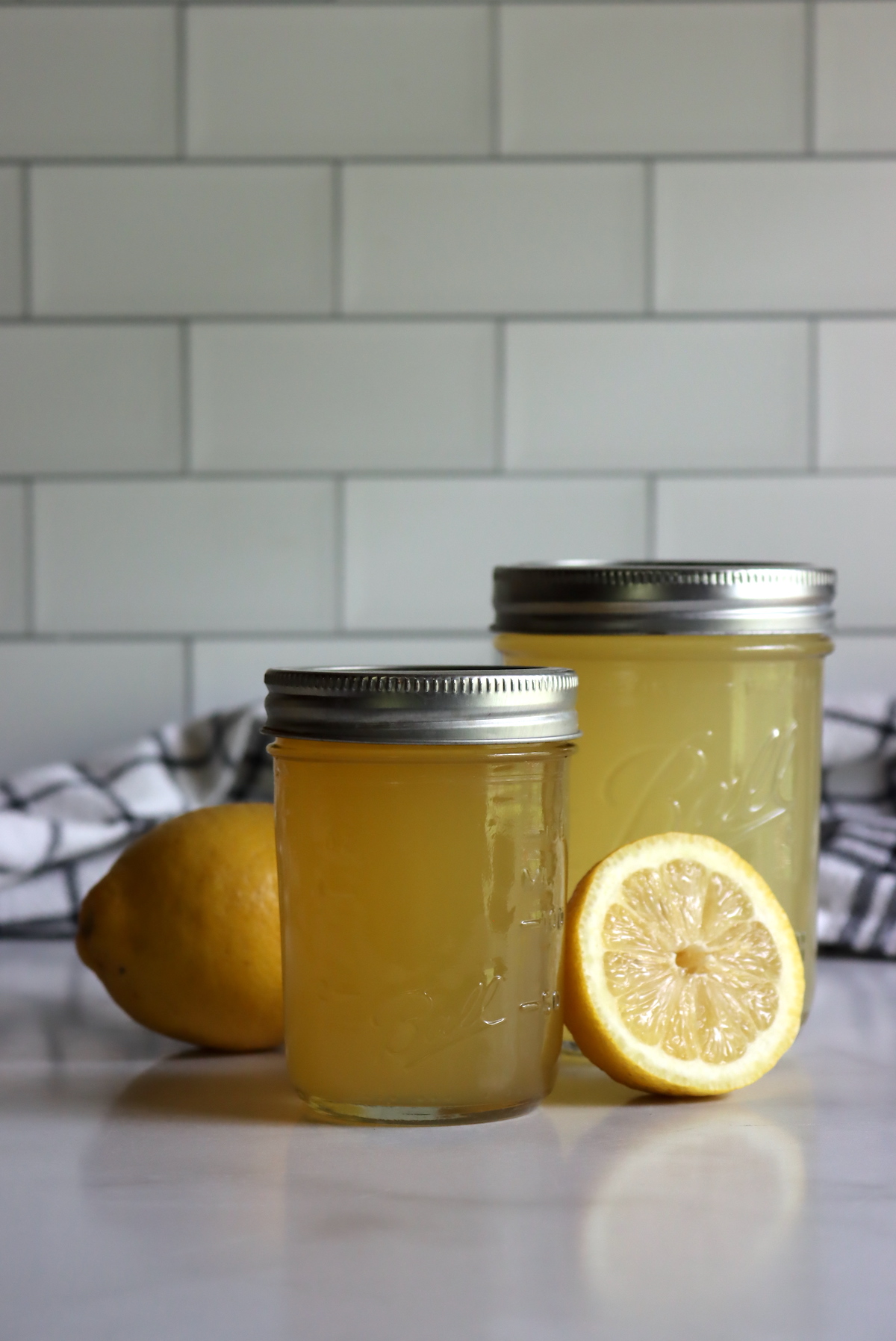
If you are canning for a crowd or short on shelf space, the concentrate is the way to go. A single half-pint jar makes a couple of pints of fresh lemonade once you stir it into cold water, so it stores a lot of drinks in a small jar. Either version pours into a glass in seconds, which is the whole point of putting it up in the first place.
This is a lemon canning recipe, but you can make the same thing with limes for canned limeade. Just swap lime juice in for the lemon, the same way you would for any other lime canning recipe, and follow the full instructions for canning limeade.
Quick Look at the Recipe
- Recipe Name: Canning Lemonade (and Lemonade Concentrate)
- Recipe Type: Lemonade and Concentrate
- Canning Method: Waterbath Canning
- Prep/Cook Time: About 30 minutes
- Canning Time: 10 minutes
- Yield: Varies with batch size, about 4 pints of lemonade per cup of lemon juice. See Yield Notes
- Jar Sizes: Half Pint, Pint, or Quart
- Headspace: 1/4 inch
- Ingredients Overview: Fresh lemon juice and sugar (plus water for ready-made lemonade)
- Safe Canning Recipe Source: Canning times consistent with National Center for Home Food Preservation guidance for acidified fruit drinks
- Difficulty: Easy! The lemons are juiced and strained, the sugar is stirred in and warmed through, and then it is ladled into jars for processing
- Similar Recipes: The process is similar to the fruit-based concentrates, including Strawberry Lemonade Concentrate and Plum Lemonade Concentrate, and you can put up the lime version with Canning Limeade.
Lemonade Ingredients
This recipe comes down to two ingredients, three if you count the water for ready-made lemonade, and each one is doing a job. The lemon juice carries all the flavor and the acidity, the sugar balances the tartness, and the water (for the ready-made version) brings it to drinking strength.
- Lemon Juice: The flavor and the acid. Fresh juice gives the fullest lemonade flavor, and it is also what makes the recipe safe to can.
- Sugar: Sweetens the lemonade and balances the sharp lemon. It is there for flavor, not preservation.
- Water: Only for ready-made lemonade. Skip it entirely if you are canning concentrate.
Most canning recipes call for bottled lemon juice, but this one is written for fresh. Fresh lemon juice tastes far better, and the recipe is built so the mixture is acidic enough to can with it. Bottled juice is standardized for acidity and works in a pinch, but it can turn bitter and take on a tinny taste in storage, so fresh is the better choice here whenever you can manage it.
Adjust the Ratio to Your Taste
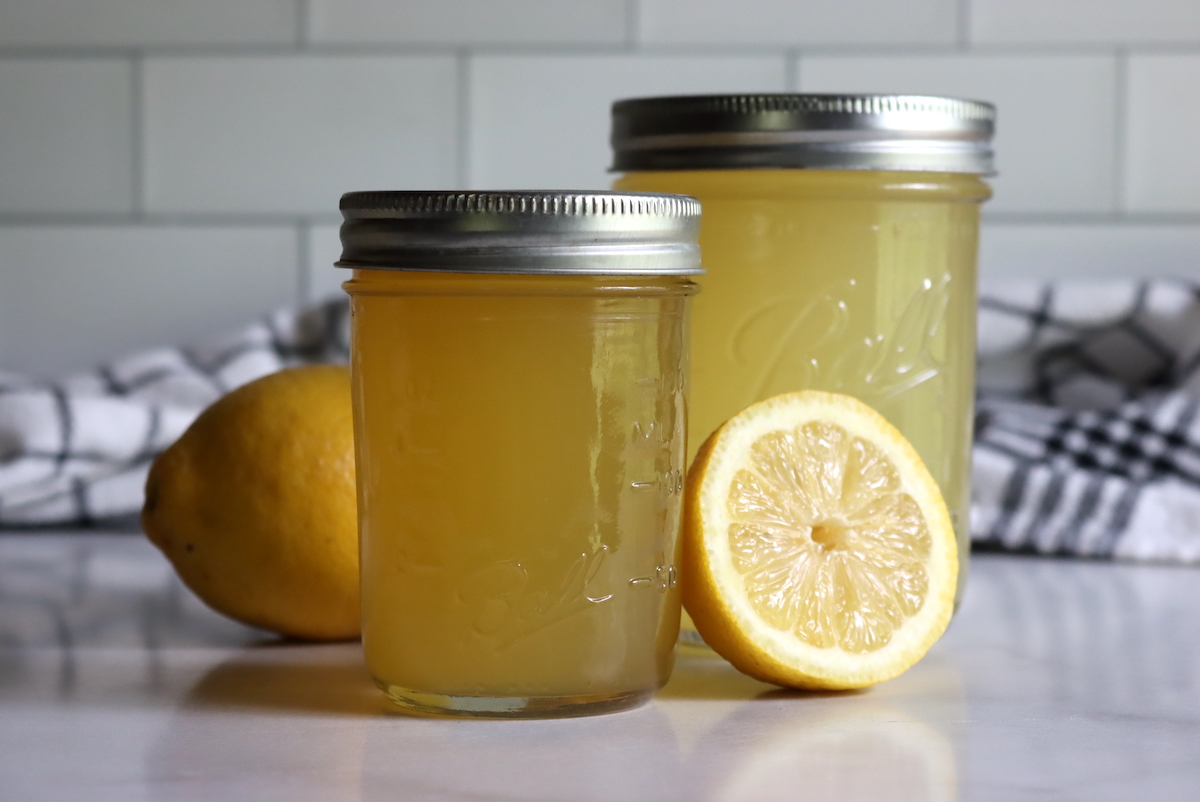
Lemonade is personal, so treat the sugar as yours to move. It is not needed for preservation, so increase it, decrease it, or swap in honey or maple syrup to suit your taste. The lemon juice is different. It is the acid that makes this safe to can, so do not reduce it below 1/4 cup of fresh lemon juice per pint jar (2 tablespoons per half pint, or 1/2 cup per quart). You can always add more lemon for a tarter drink, but that minimum is a safety floor, not a suggestion.
Everything that goes into the jar needs to be strained to a clear liquid before canning. The lemon pulp can turn bitter during processing, and seeds and zest have no place in the jar, so dissolve the sugar into the strained juice and run it through a fine mesh sieve so nothing solid goes in.
Yield Notes
This is a ratio recipe, so scale it to however many lemons you have, keeping the lemon juice and sugar in equal parts. A base batch of concentrate uses:
- 1 cup fresh lemon juice (from 4 to 5 lemons)
- 1 cup sugar
One cup of each makes about 1 1/2 cups of concentrate. Scale it up in equal parts as your lemons allow: 2 cups of each makes about 3 cups of concentrate (enough for a pint jar and a half pint), and 4 cups of each makes about 6 cups, around 3 pints. At 1 part concentrate to 3 parts water, that 1 1/2 cups of concentrate reconstitutes into about 3 pints of lemonade.
For ready-made lemonade, use the same equal parts of lemon juice and sugar, then add 6 cups of water per cup of lemon juice. One cup of each plus 6 cups of water fills about 4 pints. That makes a slightly lighter lemonade than reconstituting the concentrate at 1 to 3, so mix it to the strength you like.
How to Make Lemonade for Canning
Once the lemons are juiced, the rest moves quickly. The same steps make both the concentrate and the ready-made lemonade, and the only thing that changes between them is whether you stir in water before the jars go into the canner.
Juice and Strain the Lemons
Juice the lemons, then run the juice through a fine-mesh sieve to take out the seeds and pulp. The pulp can make home-canned lemonade bitter over time, so strain it well before you measure. Once it is strained, measure the juice so you know how much sugar to add.
Infuse the Sugar with Lemon Zest (Optional)
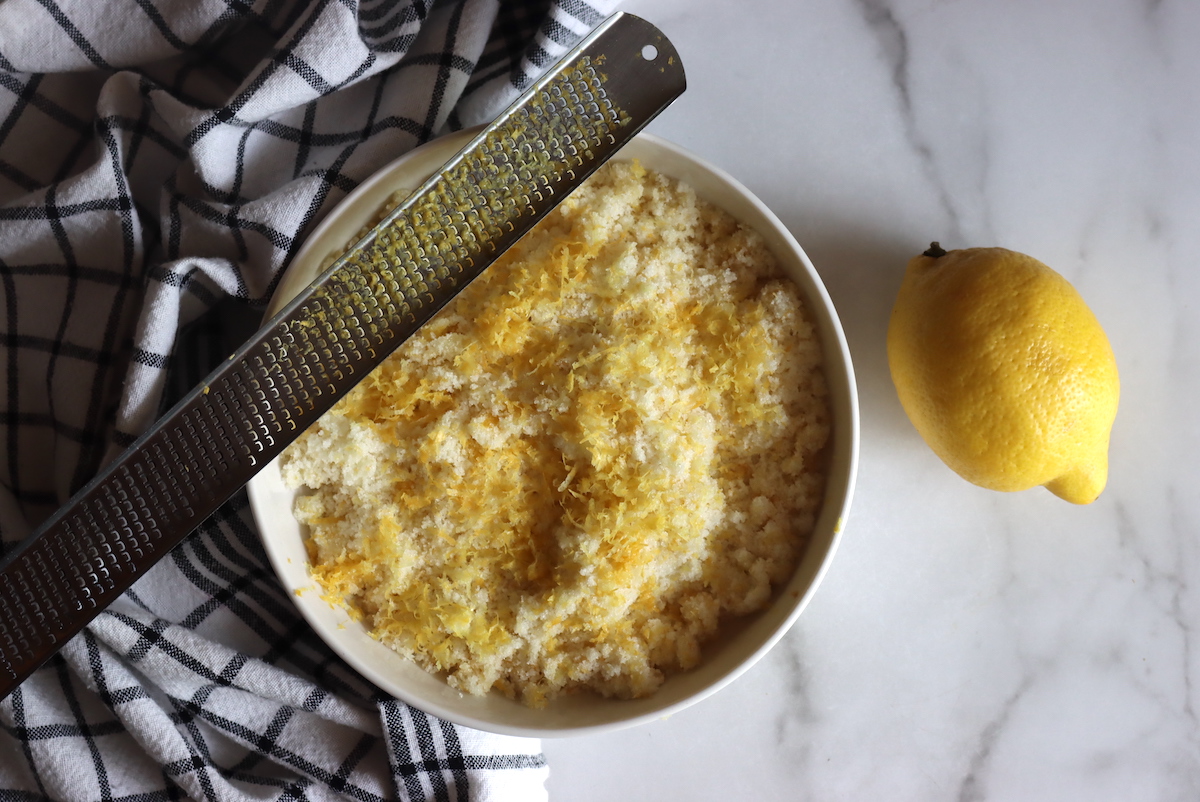
For a deeper lemon flavor without extra tartness, zest the lemons (organic if you can) into the sugar before you start, stir, and let it sit for an hour or two. Lemon zest holds a lot of lemon oil, and the sugar pulls that flavor right in. You do need to strain the zest back out before canning, and the simplest way is to dissolve the infused sugar into the lemon juice, then strain the whole mixture so no solids go into the jars.
Heat the Lemonade
Strain the sugar and lemon juice together into a saucepan (adding the water now if you are making ready-made lemonade), and warm it gently, stirring often, until the sugar is fully dissolved and the mixture reaches around 190 degrees F. Keep it at a bare simmer and do not let it boil. Boiling sets the natural pectin in the lemon juice, which can cause cloudy clumping in the jars. It is still safe to drink if that happens, it just looks odd, so hot but not boiling is what you are after.
Canning Lemonade
Whether you are canning finished lemonade or concentrate, the instructions and the process times are the same. As a reminder before you fill jars, do not use less than 1/4 cup of fresh lemon juice per pint, or 1/2 cup per quart, so the mixture stays acidic enough to can safely.
Prepare a water bath canner, jars, lids, and rings before you begin. The canner should be preheated for a hot pack and simmering at around 180 to 190 degrees F when the jars go in. Lemonade and concentrate can both be canned in half pints, pints, or quarts.
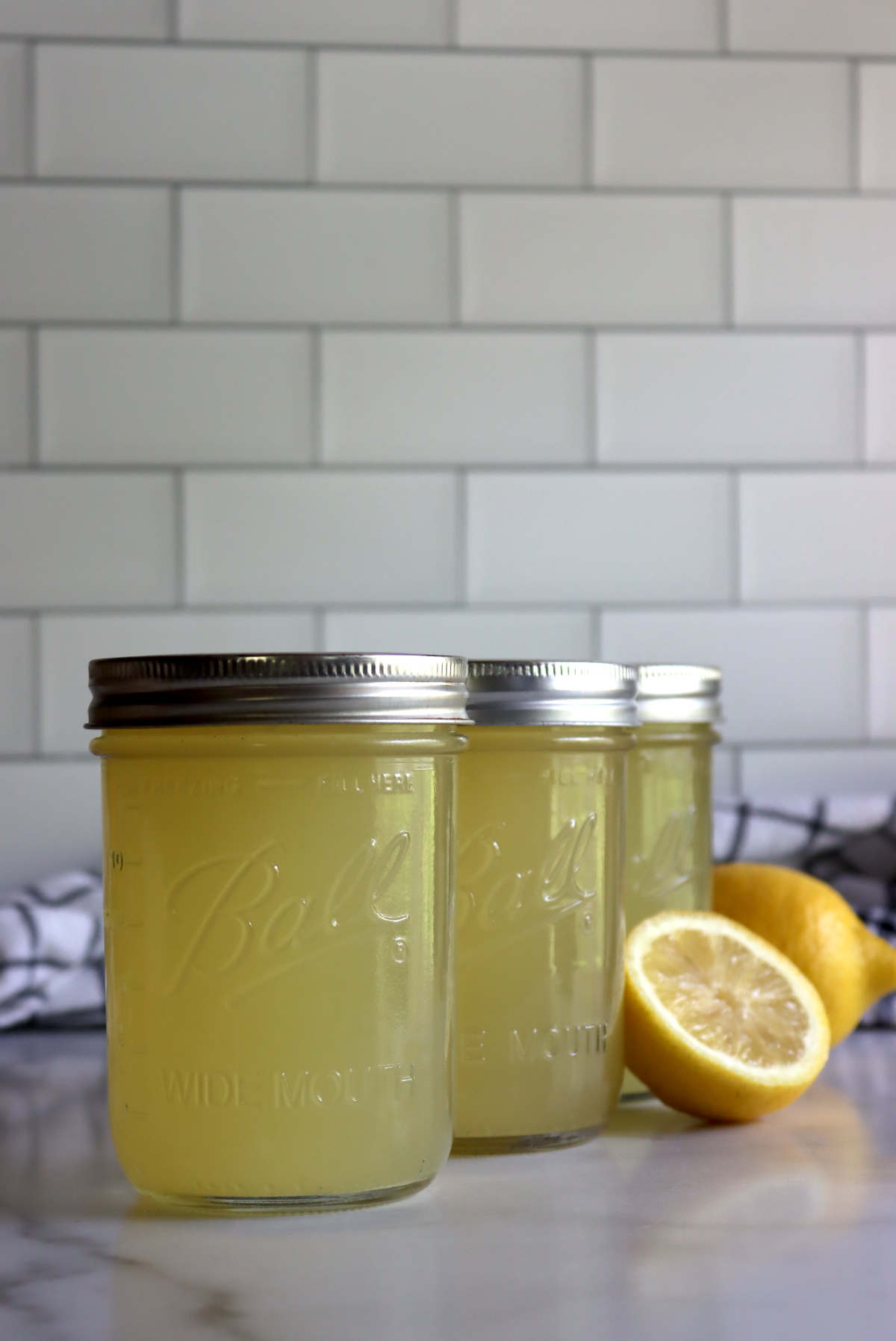
Ladle the hot (but not boiling) lemonade into prepared jars, leaving 1/4 inch headspace. Wipe the rims, seal with two-part canning lids to fingertip tight, and load the jars into the canner. Process half pints, pints, and quarts for 10 minutes below 1,000 feet in elevation, adjusting for altitude as below.
When the time is up, turn off the heat and let the jars sit in the canner for 5 minutes before lifting them out. Set them on a towel to cool undisturbed for 12 to 24 hours, then check the seals. Store any unsealed jars in the refrigerator, keep the sealed jars in the pantry, and refrigerate after opening.
(This same recipe can also be frozen in freezer-safe jars with 1 inch of headspace.)
Waterbath Canning Altitude Adjustments
The altitude adjustments for water bath canning Lemonade are as follows:
- For Under 1,000 Feet in Elevation – 10 minutes for half pints, pints, and quarts
- For 1,001 to 6,000 Feet in Elevation – 15 minutes for half pints, pints, and quarts
- Above 6,000 Feet in Elevation – 20 minutes for half pints, pints, and quarts
Once the jars are sealed and shelf-stable, all that is left is turning the concentrate back into lemonade.
Serving Ideas
If you canned ready-made lemonade, just chill a jar and pour it over ice. For concentrate, mix 1 part concentrate with 3 parts cold water. The simplest way is to pour a pint of concentrate into a half gallon mason jar, which holds 4 pints, and fill it the rest of the way with cold water, then serve over ice. A half-pint jar makes about 2 pints, and you can mix it stronger or weaker to taste.
From there it is a base to play with. Stir the lemonade or diluted concentrate into sparkling water for a fizzy version, mix it half and half with brewed iced tea for an Arnold Palmer, freeze it into popsicles for the kids, or use it as the sour element in a summer cocktail. A jar of concentrate also makes a nice small gift from the pantry.
Lemonade Canning FAQs
A half pint (1 cup) jar of concentrate makes about 2 pints of finished lemonade, and a full pint jar makes a half gallon. Mix 1 part concentrate with 3 parts cold water, then adjust to taste. The simplest way is to pour a pint into a half gallon mason jar and top it off with cold water.
Yes. The process and the canning times are exactly the same. For ready-made lemonade you add about 6 cups of water per cup of lemon juice before canning, so it pours straight from the jar. It uses more jars and shelf space than concentrate, but it is ready to drink with no mixing.
You can, but fresh is better here. This recipe is written so the mixture is acidic enough to can with fresh lemon juice, and fresh tastes far cleaner. Bottled juice is standardized for acidity and works in a pinch, but it can turn bitter and tinny in storage, so reach for fresh whenever you can.
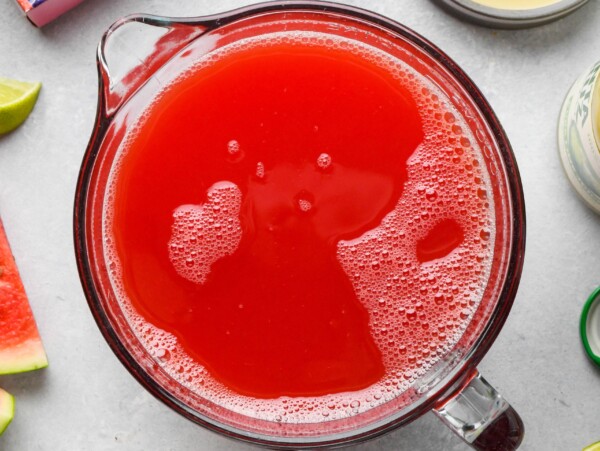
This plain recipe is the starting point for a whole shelf of fruit lemonades. Many canning books add fruit puree, like the well-known strawberry lemonade concentrate, though once you add puree the canning time runs longer and it is not tested in jars larger than pints. Adding fruit juice instead of puree works with this same recipe, provided the juice is acidic enough to can on its own, so berry, cherry, and other high-acid juices are good choices, while low-acid juices like watermelon are not.
For more ideas, browse the full set of lemonade concentrate canning recipes, or look at other ways to preserve lemons over on Practical Self Reliance.
Lemon Canning Recipes
If you tried this Canning Lemonade recipe, or any other recipe on Creative Canning, leave a ⭐ star rating and let me know what you think in the 📝 comments below!
And make sure you stay in touch with me by following on social media!
Canning Lemonade (& Lemonade Concentrate)
Equipment
- Fine Grater or Microplane
- Canning Jars, Lids and Bands
Ingredients
Lemonade Concentrate Ratio
- 1 cup lemon juice
- 1 cup sugar
Lemonade Ratio
- 1 cup lemon juice
- 1 cup sugar
- 6 cups water, do not increase beyond this dilution
Instructions
- Prepare a water bath canner, jars, and lids before beginning.
- Optional: zest the lemons into the sugar, stir, and let sit about an hour for deeper lemon flavor. The zest must be strained back out before canning, so dissolve the infused sugar into the lemon juice and strain the mixture before filling jars. Use organic lemons if using the zest.
- Juice the lemons. Strain the juice through a fine mesh sieve to remove all pulp and seeds, then measure.
- Combine the strained lemon juice and sugar in equal parts. For ready-made lemonade, add the water now as well.
- Warm the mixture gently on the stove, stirring until the sugar dissolves, until it reaches about 190 degrees F. Do not boil.
- Strain again if needed so the mixture is a clear liquid with no solids, then ladle the hot (but not boiling) lemonade into prepared jars, leaving 1/4 inch headspace. Seal with two-part lids to fingertip tight.
- Process half pints, pints, and quarts for 10 minutes below 1,000 feet in elevation, adjusting for altitude (see notes).
- Turn off the heat and leave the jars in the canner 5 minutes, then remove and cool on a towel for 12 to 24 hours.
- Check seals. Refrigerate any unsealed jars for immediate use. Store sealed jars in the pantry and refrigerate after opening.
Notes
Nutrition
Nutrition information is automatically calculated, so should only be used as an approximation.
Looking to put up more than just lemonade? These other drink canning recipes are worth a look.
Drink Canning Recipes
Find the perfect recipe
Searching for something else? Enter keywords to find the perfect recipe!

Great recipe thank you Ashley.
Thanks so much, glad you enjoyed it! Happy canning!
Our lemon tree fruits in the winter so I made a few jars of this after I had frozen a lot of lemon juice and made marmalade. Now that it’s getting hot again I made some and it’s so delicious! Just the right amount of sweetness. I’m so glad I came across this recipe. I’ll be sure to make more jars next year.
Perfect!
Hi! How long would it be good in the fridge once open and mixed? A week or 2?
Yes, a week or two in the fridge. Possibly longer because of the high sugar content.
Do you know if it’s still safe to can if I infuse lavender?
You can infuse lavender, yes, that’s fine. But it will need to be completely strained out before canning. Enjoy!
I have made several batches using this recipe this season using meyer lemons. Has a tad different flavor that is really delicious!
Lovely!
https://creativecanning.com/canning-lemonade/
In the recipe, you say it’s okay to use lemon zest, but you don’t say how much you should use. I wouldn’t want to add too much and have it be bitter.
Do you use the lemon zest? If so, how much do you use?
Thank you in advance for your answer.
Lemon zest (just the very outside part of the lemon, not the white part) gives extra lemon flavor and really makes the flavor pop, but it’s completely optional. When I make plain lemonade, I use the zest of a few of the lemons, mixed in with the sugar and let it sit for a little while, and then I strain it out later. Dissolve the sugar in the lemon juice, but then strain it before it goes into the jars for canning (in this strawberry lemonade recipe, you’d have to do that before you add the strawberry pulp). It allows the lemon oil from the zest to infuse into the sugar, but then it’s strained out (so no bitterness or odd texture). I haven’t done it when making strawberry lemonade, because there’s so much great flavor in there from the strawberries it really doesn’t need it. I generally only do that extra step with plain, but it’d be good in this recipe too, if you’re willing to do the extra step of straining before you mix in the strawberry pulp.
I am making this recipe for the third time today now that lemons are still in season. Delicious and very easy! I’ve also made the strawberry lemonade concentrate. Excellent with a splash of vodka! 😊
So glad to hear it!
What is your ratio for reconstituting the concentrate? Is it the 1 cup to 6 cups ratio? Just double checking. I’m totally doing this as long as I can find some decent priced lemons in Iowa!
Everyone’s lemonade tastes are a bit different, and my husband like’s his more concentrated, and I like mine less, but for “normal” lemonade, you’d use 1 pint of lemonade to 3 pints water. That’s 2 cups concentrate to 6 cups water. I usually just pour a pint into a half gallon mason jar, then fill the rest up with cold water and it’s just right. Enjoy!
What’s the recipe for using it ? How much water do you add?
Lemonade strength really comes down to personal taste. Around here, my husband likes it on the strong side and I prefer it a bit more diluted. For what I’d call regular lemonade, I use 1 pint concentrate to 3 pints water. In smaller terms, that’s 2 cups concentrate plus 6 cups water. Most of the time I just add a pint to a half-gallon jar and fill the rest with cold water.
Hello. I made this recipe and the jars have settled for a while now. I’ve noticed a separation at the top and a more clear liquid at the bottom. I strained the juice using a sieve. Do you think it will be ok to store in my pantry? Thx
Separation is normal, and that’s just some of the natural fruit pectin settling out at the bottom. Totally fine. Just give it a shake or stir well when serving. That pectin sets in the heat of the canner, and so it went right through your strainer as liquid before it went into the jars. This doesn’t happen with all lemons, it just depends on your particular fruit.
what’s the shelf life
The jars will be safe to eat so long as they’re sealed (if canned properly). That said, quality starts to degrade after about 12-18 months, so you’ll want to use it within a year or so for best flavor.
Hey I am thinking about making!! About how many pint cans does one batch make?
One batch makes about 5 to 6 pints in my experience. Ball Canning lists the yield at 7 pints, but I always get closer to 5 and a bit.
Can you use a pressure canner to make this? If so, how?
If you want to process this in a pressure canner, you can, but it’s not strictly required. You can use your pressure canner as a waterbath canner to make this. But I imagine you’re specifically asking about canning it at pressure. If I was going to do that, I’d do 5 lbs pressure for 8 minutes. Be aware that the lemon juice will probably discolor at pressure, and it may look brown in the jars. Best of luck!
Hello! When prepping the jars to can, do I have to sterilize the jars by boiling them empty first, or is simply washing them with hot soapy water enough?
The NCHFP ruled that any canning recipe that’s processed for 10 minutes or longer doesn’t require sterilization of jars. Making sure they’re clean with hot soapy water is just fine for almost every canning recipe (including this one). There are some canning recipes out there for jams and jellies that are 5 minutes and with those, you do need to sterilize your jars. Or, do as I do, and just process them for 10 minutes instead and skip the messy sterilization step.
Would it still be safe to can if flavor syrups are added? I own a lemonade business and have recently been approached by a local store to sell our lemonade bottled/canned. I use torani syrup in some of my lemonade. I have been searching for a recipe that will allow the lemonade to be safe and good to sit in the fridge for more than a few days. a bonus if we can make our flavored lemonades.
Congratulations!
If you’re selling commercially, you might be asked by your local regulators to test the pH of your products to ensure that they’re below a pH of 4.6 for each batch. Many places require below a pH of 4.2 because in tropical conditions, or if something’s left in a hot car for a long time by accident, you need a bit more acidity. Anyhow, check into that, but a home pH tester isn’t that big a deal, and only takes a second to use once you get the hang of it.
But as to your question on Torani syrup, looking at their website, here’s what I can find for ingredients:
Pure cane sugar, water, natural flavors, sodium benzoate (to preserve freshness), potassium sorbate (to preserve freshness), citric acid.
All of that would be perfectly fine for canning. Check the individual labels on each flavor and make sure there’s nothing too crazy in there, but I cant imagine what they’d put in there that wouldn’t be fine for canning.
I made the concentrate and canned it in half pint jars. About how much water should I add back per jar?
Since you canned the concentrate in half-pint jars, each jar holds about 1 cup of concentrate. For a regular, everyday lemonade, I’d mix one half-pint jar with about 3 cups of cold water. That gives you a nice balanced lemonade that’s not too strong and not too diluted.
My family loves lavender lemonade. Could I make the lavender simple syrup and add it to the lemon juice and then still prepare as a concentrate?
Yup, that’d work just fine. Just make sure you don’t reduce the amount of lemon juice that ends up in each jar and it’ll can just fine.
Hi, I started in September, a little here and there. Today, I used your lemonade recipe. I had enough to fill 3 quart jars and 2 pint jars. I thought I would try to water bath all five together. Two of my quart jars seem to have broken. This has never happened to me before. What do you think happened? I might have had the lemonade at more of an inch space—was that it? Thank you for your input.
Assuming the jars weren’t damaged/chipped, what causes jars to break is thermal shock. My guess is the liquid in the quarts cooled too much before it went into the canner and the canner was already at a boil when you added them. To prevent this, make sure everything’s at a similar temperature when it goes into the canner (ie. the liquid is all very hot going into the jars) and the canner is only at a low simmer when you add the jars in (around 180F).
I am looking forward to making this, especially with no sugar or a sugar substitute. I don’t recall if you mentioned that non-organic lemons really need to be scrubbed in that may be one of the problems that people are getting with sediment in their lemon juice.
I really enjoy your site Ashley, Thank you
I am intrested to know if it is safe for me to use lemon basil in this concentrate. I would still use the lemon juice and the sugar, but would like to know if it’s safe if while the concentrate is heating up, can I add the lemon basil to it and let it steep and then strain it out before canning it. I love the flavor of lemon basil lemonade. And I have a ton of it in my garden.😊
Yup, that’s totally fine, just be sure to strain everything out but you can steep herbs in it as it’s heating up without issue. Just don’t decrease the amount of lemon juice, as you say. Enjoy!
Hi there! I made this lemonade concentrate a few months back. The color has now deepened and gone cloudy, but it smells great, and the seal was very tight when I opened it. Have you encountered this before?
Sometimes the pectin in the lemon juice can cause it to get cloudy, it just depends on your lemons. If the jars are sealed and it smells good you should be fine.
Wow. I have done a little canning years ago but nothing since the. I really enjoy lemonade so I look forward to canning some for summer. Thank you for sharing and your advice.
You’re quite welcome!
I have made lemonade with a lavender simple syrup to make lavender lemonade. Would the lavender simple syrup be safe to can?
If you use it to sweeten the lemonade in place of sugar (which I think is what you’re asking), then yes, that should be fine for canning provided you use the same proportions here and don’t reduce the total lemon juice in a batch size. The acidity in the lemon juice is what makes this safe for canning.
The lavender simple syrup isn’t safe to can on it’s own as it will have a neutral pH, but you can use a herbal syrup in place of sugar in this canning recipe.
Could you use limes instead of lemons? Or a mix of both?
Yes!
Is it safe to do limes in place or lemons, or do a mix of both?
Yup!
If I have frozen lemon cubes, can I thaw those and then can lemonade?
Yup, that should work just fine.
Hello. Once canned, how long is the concentrate shelf-stable?
It is safe to eat indefinitely, so long as it’s still sealed and was properly canned to begin with. After about 12-18 months, canned goods start to degrade and lose quality, especially if they’re exposed to light. But in terms of spoilage, it should last a very long time.
Would you give some direction on canniing Water? I would love to have someon hand for an emergency.
Yes indeed! I have directions for canning water on my other site here: https://practicalselfreliance.com/canning-water/
I’ll work on getting a post up here too, so it’s easier to find.
I strained it before putting in jars but it appears fine solids made it through the sieve that I see settling now that it is canned. Is that going to cause and issue?
No, that’s totally fine. You could even can whole sections of lemon in there without issue, really. At least safety wise.
Even if you filter it really well, you’re usually going to see sediment at the bottom because lemons are high in pectin, and that can precipitate out when they’re canned.
My juice turned brown in the canner, did I do something wrong?
Hmmm…maybe? I’m not honestly sure what might have caused that? My best guess is that the sugars caramelized in the canner. Did you use raw sugar or organic sugar? They have some molasses content that might have caused that.
I know a lot of recipes call for bottled lemon because with fresh lemons you can’t be sure they have a consistent ph level. Does that not matter here because the base ingredient is acidic?
Excellent question! In this recipe you can use fresh lemons because they’re so darn acidic. You don’t need that level of standardization when you’re working with this much lemon juice. (And it tastes a lot better with fresh.)
Can sugar substitutes be used?
The sugar is not there as a preservative, just for flavor, so you can substitute anything that’s safe for canning.
I would like to can Saville orange aide
You can do that if you do it as a concentrate (but probably not as prepared juice). Seville oranges (pH 3) are less acidic than lemons (pH 2), so you’d need to put them up as just juice (or juice and sugar), and then dilute to serve.