
This post may contain affiliate links. Please see our disclosure policy.
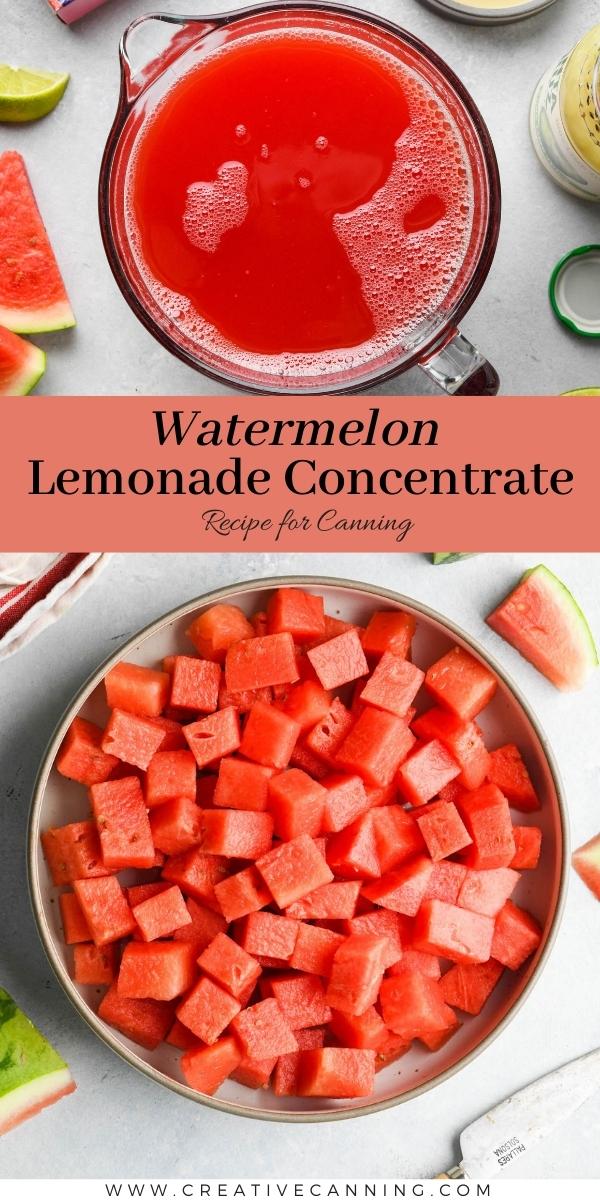
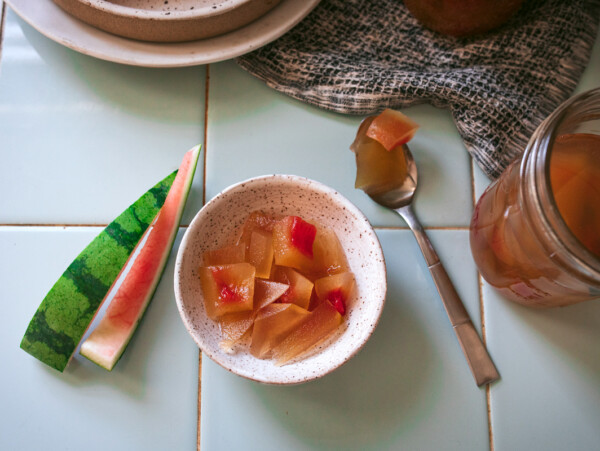
Watermelon lemonade concentrate captures the taste of peak-summer watermelon in a jar you can open on the darkest winter day. A single jar from the pantry turns into a pitcher of watermelon lemonade whenever you want that fresh summer flavor back.
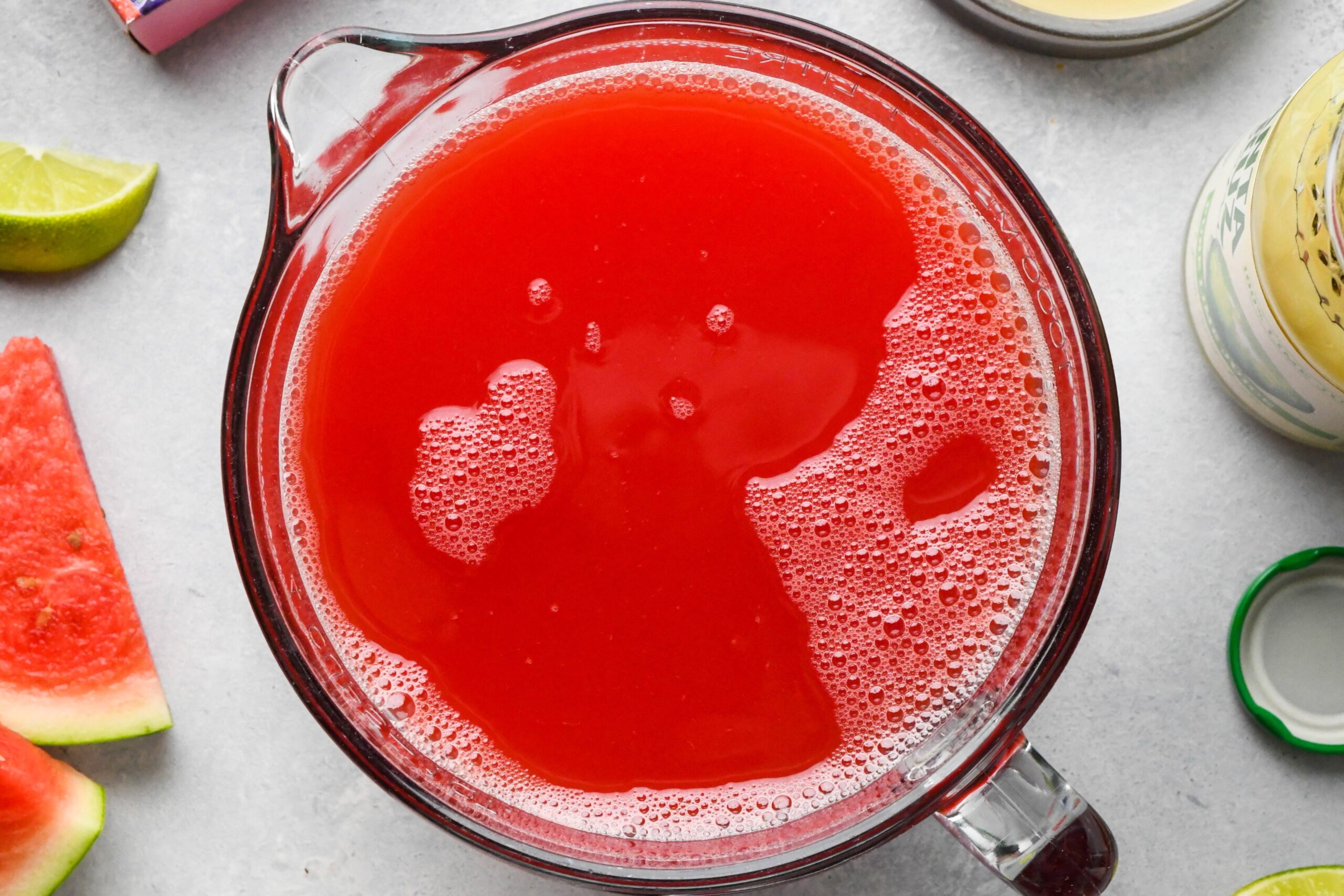
Table of Contents
- Notes from My Kitchen
- Quick Look at the Recipe
- Is Watermelon Safe for Canning?
- Watermelon Lemonade Concentrate Ingredients
- Adjust the Ratio to Your Taste
- Yield Notes
- How to Make Watermelon Lemonade Concentrate
- Canning Watermelon Lemonade Concentrate
- Waterbath Canning Altitude Adjustments
- Serving Ideas
- Watermelon Lemonade FAQs
- Melon Canning Recipes
- Watermelon Lemonade Concentrate Recipe
- Drink Canning Recipes
This recipe has been reviewed for safety and accuracy by a Master Food Preserver certified through the University of Cornell Cooperative Extension.
Enjoying summery flavors over the course of winter is one of the reasons I love canning seasonal produce, and this concentrate is a way to put up one of the most fleeting flavors of all. Watermelon doesn’t show up in many watermelon canning recipes, since it’s low in acid, but a drink concentrate is one of the ways it works beautifully.
This homemade watermelon lemonade concentrate is something different from the usual jams and pickles, and whether you’re in the mood for a single glass or a whole pitcher, it’s packed with the taste of watermelon picked at peak ripeness.
It’s one of more than a dozen lemonade concentrate canning recipes on the site, alongside high-acid versions like strawberry lemonade concentrate and blueberry lemonade concentrate. Watermelon is the one that needs a little extra care, because it’s low in acid and relies on the added lemon juice to be safe to can.
You make it by pureeing and straining fresh watermelon into juice, then combining that juice with bottled lemon juice and sugar. The lemon does double duty here, giving the drink its lemonade tang and, more importantly, the acidity that makes it safe for the water bath canner.
This lemonade concentrate recipe follows the same logic as the tested Bernardin recipe for watermelon jelly, including extra lemon juice for both flavor and to ensure canning safety. Don’t reduce the lemon juice or increase the amount of watermelon!
Notes from My Kitchen

Canning seasonal produce so I can taste summer in the middle of winter is one of the things I love most about putting food up, and watermelon might be the most surprising thing to find on the shelf. A jar of this on a gray February afternoon brings the whole summer back.
One medium watermelon, or a couple of small ones, gives me enough juice for a batch, and if there’s extra, I drink it over ice with a squeeze of lemon. A single pint of the concentrate makes a half-gallon of watermelon lemonade, so a few jars go a long way.
Quick Look at the Recipe
- Recipe Name: Canning Watermelon Lemonade Concentrate
- Recipe Type: Fruit Drink Concentrate
- Canning Method: Waterbath Canning
- Prep/Cook Time: About 30 minutes
- Canning Time: 15 minutes
- Yield: About 6 pints
- Jar Sizes: Half Pint, Pint or Quart
- Headspace: 1/4 inch
- Ingredients Overview: Watermelon juice, bottled lemon juice (not optional) and sugar
- Safe Canning Recipe Source: Acidified per Bernardin’s tested Zesty Watermelon Jelly, with the acid here running well above the tested ratio
- Difficulty: Easy! Once you have the juice, everything is quickly heated and ladled into jars for processing
- Similar Recipes: The process is similar to other fruit-based lemonade concentrates, including Strawberry Lemonade Concentrate, Blueberry Lemonade Concentrate, Plum Lemonade Concentrate, and Cherry Limeade Concentrate.
Is Watermelon Safe for Canning?
Watermelon has a pH of around 5.2 to 5.6, which makes it too low in acid to can on its own. For any food to be safe in a water bath canner, it needs a pH of 4.6 or lower, and watermelon sits well above that line, so it can’t simply be canned by itself.
The fix is to add plenty of acid, and that’s exactly what the bottled lemon juice does here. This recipe uses a generous amount, enough to carry the concentrate well below 4.6 and past the acid level in Bernardin’s tested watermelon jelly.
That’s why the lemon juice is not optional and shouldn’t be reduced, and why it needs to be bottled rather than fresh, since bottled juice has a reliable, consistent acidity that fresh-squeezed can’t guarantee.
Watermelon Lemonade Concentrate Ingredients
This recipe uses just a few ingredients, but each one matters, and one of them matters for safety, not just flavor. The watermelon brings the fruit flavor and body, the bottled lemon juice provides both the lemonade tang and the acidity that makes the concentrate safe to can, and the sugar balances the tartness.
- Watermelon Juice: Provides the main flavor and body, pureed and strained from fresh watermelon
- Bottled Lemon Juice: Gives the lemonade flavor and, more importantly, the acidity that makes this low-acid fruit safe to can. Use bottled, and don’t reduce the amount
- Sugar: Sweetens the concentrate and balances the sharp lemon flavor
Use bottled lemon juice for this recipe, not fresh, and don’t reduce the amount. Watermelon is low in acid on its own, so the bottled lemon juice is what brings the concentrate into a safe range for water bath canning, and bottled juice has a steady, consistent acidity that fresh-squeezed lemons don’t guarantee. Santa Cruz Organic is a good one. Bottled lime juice works in the same amount if you’d rather make a watermelon limeade.
Adjust the Ratio to Your Taste
Unlike the other fruit concentrates, the lemon juice here is doing a safety job, not just a flavor one. Watermelon is low in acid, so the bottled lemon juice is what makes this safe to can, and that amount should not be reduced. The sugar, on the other hand, is only there for flavor, so raise or lower it however you like to suit your taste.
Cutting back the sugar changes only the taste and the body of the finished drink, not its safety. The watermelon and lemon are what keep it in a safe range, so leave those as written and adjust the sweetness to your liking.
Yield Notes
A “batch” of watermelon lemonade concentrate uses:
- 6 cups watermelon juice, well strained (from about 1 medium watermelon)
- 4 cups bottled lemon juice (do not reduce)
- 6 cups sugar
That should make a canner batch of about 6 pints. (See notes on yields)
How to Make Watermelon Lemonade Concentrate
You’ll make the watermelon juice first, then turn it into a concentrate and can it while it’s hot.
Make the Watermelon Juice
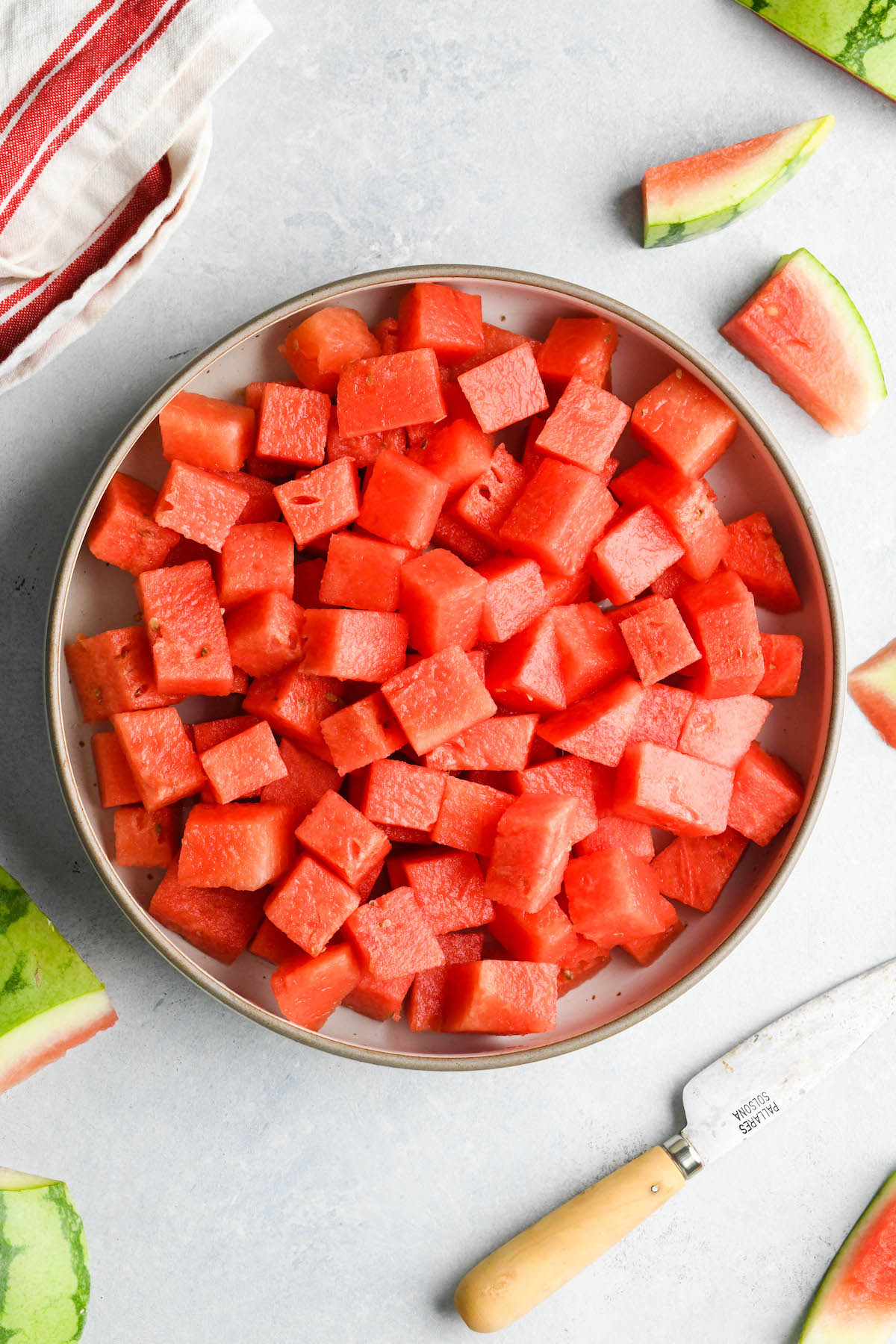
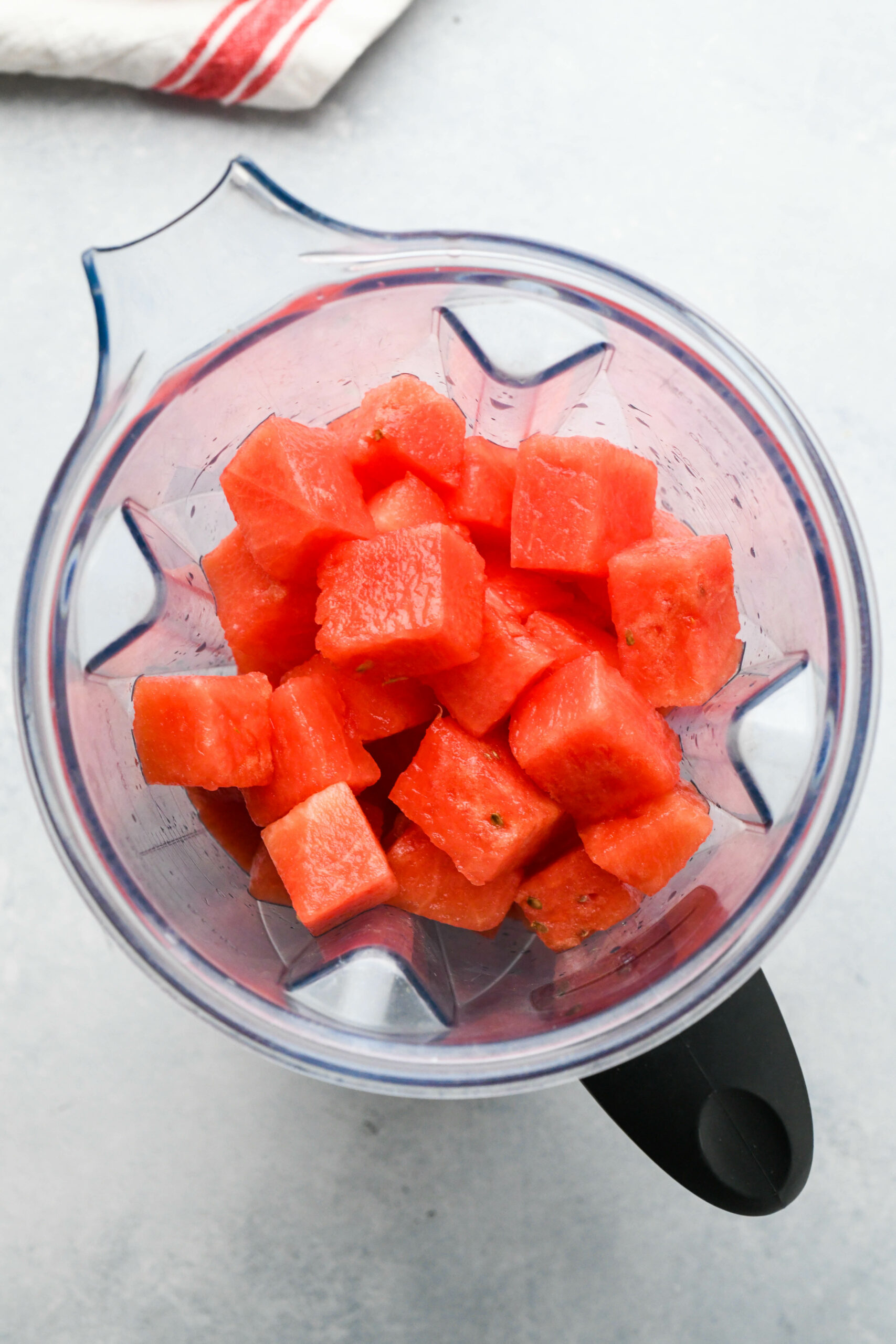
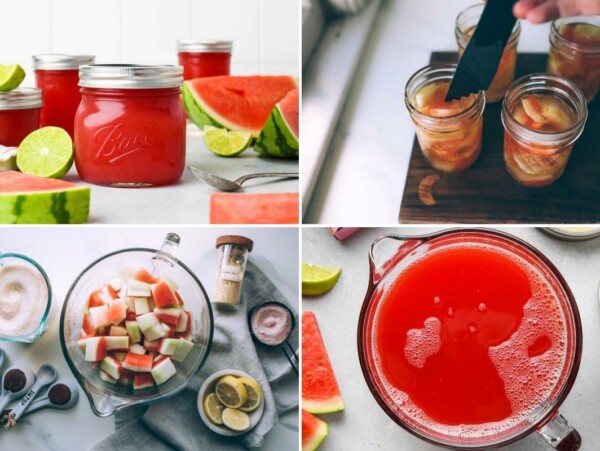
Cut the watermelon into large chunks and puree it in a blender. Don’t worry about the seeds or about getting it perfectly smooth, since the next step catches anything left behind.
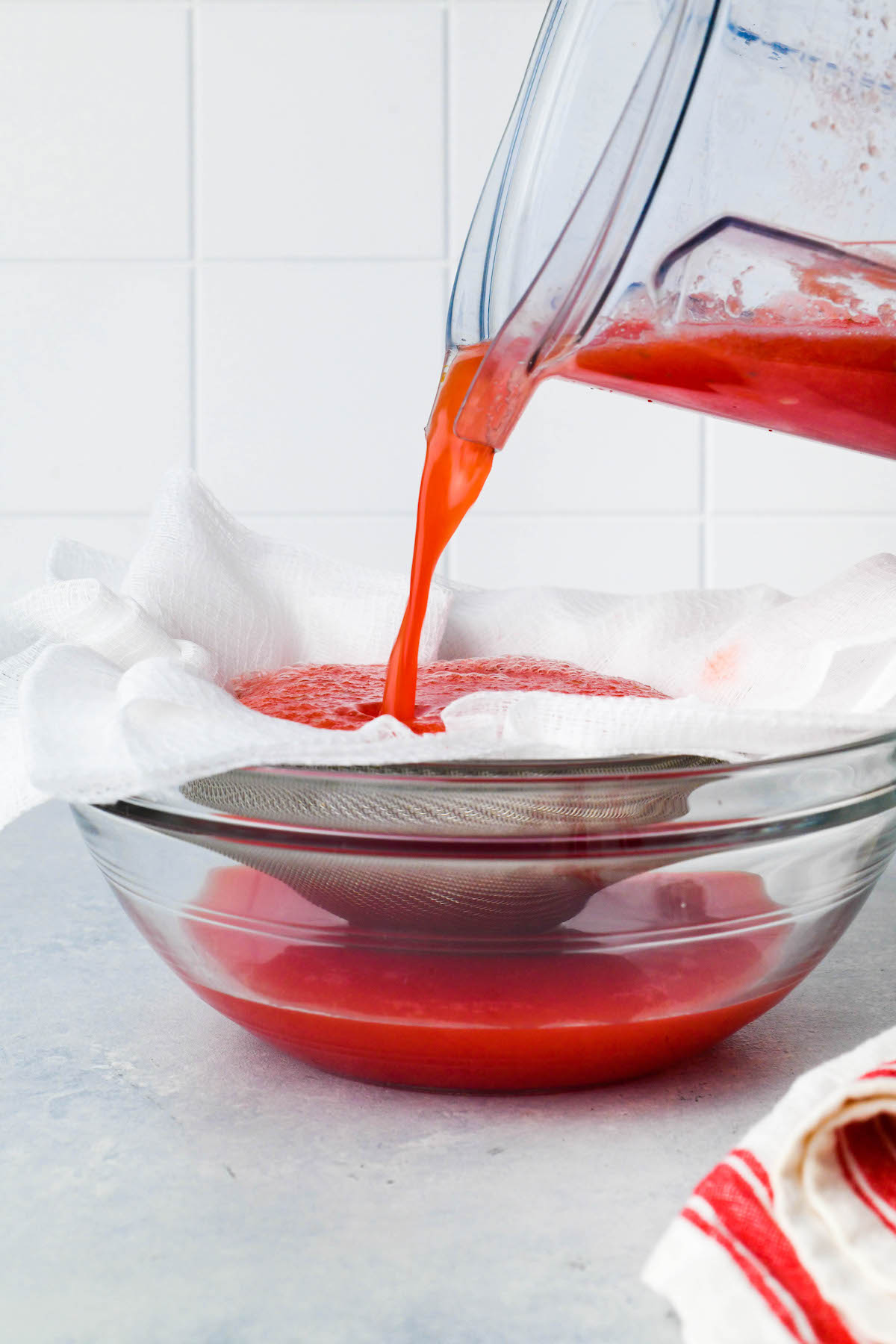
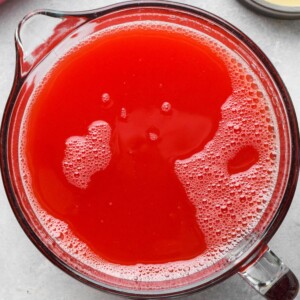
Pour the puree through a fine-mesh sieve lined with cheesecloth to strain out the seeds and pulp, and measure out the watermelon juice you need.
One medium watermelon, or two small ones, usually gives enough, and any extra juice is good over ice with a squeeze of lemon.
Heat the Concentrate
Combine the watermelon juice, bottled lemon juice, and sugar in a large pot. Stir to start dissolving the sugar, then heat the mixture over medium-high heat, stirring often, until the sugar has fully dissolved and it reaches 190 degrees F. Do not let it boil, which can set some of the pectin in the lemon juice. It comes up to temperature quickly, so a thermometer helps you catch it.
Canning Watermelon Lemonade Concentrate
Once the concentrate is acidified with the bottled lemon juice, it’s safe to process in a boiling water bath like the other lemonade concentrates.
Prepare a water bath canner, jars, lids, and rings before you begin filling jars. Keep the jars hot until needed.
Ladle the hot concentrate into prepared jars, leaving 1/4 inch headspace. Wipe the rims, adjust the lids, and load the jars into the canner. Process the jars for 15 minutes (half pints, pints, and quarts are all the same), adjusting for altitude.
When the processing time is complete, turn off the heat and let the jars sit in the canner for 5 minutes before removing them. Set them on a towel to cool undisturbed for 12 to 24 hours. After cooling, check seals and store any unsealed jars in the refrigerator. Properly sealed jars can be stored in the pantry, and you should refrigerate after opening.
Because watermelon is low in acid, the safety of this recipe comes from the added bottled lemon juice rather than the fruit itself. With that acid in place, it processes like the other high-acid concentrates, and the times are the same for half pints, pints, and quarts. Do not can this in half-gallon jars; the largest size jar allowable is a quart.
(This exact same recipe could also be frozen in freezer-safe jars with appropriate 1” headspace.)
Waterbath Canning Altitude Adjustments
The altitude adjustments for water bath canning Watermelon Lemonade Concentrate are as follows:
- For Under 1,000 Feet in Elevation – 15 minutes for half pints, pints, and quarts
- For 1,001 to 6,000 Feet in Elevation – 20 minutes for half pints, pints, and quarts
- Above 6,000 Feet in Elevation – 25 minutes for half pints, pints, and quarts
Once the jars are sealed and shelf-stable, all that is left is turning the concentrate back into lemonade.
Serving Ideas
To reconstitute, mix 1 part concentrate with 3 parts water. For a 1-pint jar, you’d add 3 pints of water. For simplicity, you can just add a pint to a half-gallon mason jar, which holds 4 pints, and then fill it up the rest of the way with cold water.
That gives you a watermelon lemonade that’s strong but not too strong, and you can adjust to your own tastes. Watermelon flavor is delicate, so if it tastes light to you, mix the next glass with less water. It’s also good with sparkling water for a fizzy version, poured over plenty of ice, or with a squeeze of fresh lemon or lime to serve.
Watermelon Lemonade FAQs
A pint jar (2 cups) of watermelon lemonade concentrate makes about 1/2 gallon (8 cups) of prepared lemonade. Mix 1 part concentrate with 3 parts water, then adjust to taste. That’s 2 cups concentrate with 6 cups water. Watermelon flavor is delicate, so use a little less water if you’d like it stronger.
Yes, the watermelon is pureed and then strained through a cheesecloth-lined sieve to remove the seeds and pulp before it goes into the concentrate. Straining gives a smooth juice, which is what you want for a clean lemonade.
No. Watermelon is low in acid, so the bottled lemon juice is what makes this concentrate safe to can, and bottled juice has a reliable, consistent acidity that fresh-squeezed lemons can’t guarantee. Use bottled lemon juice, or bottled lime juice for a watermelon limeade, and don’t reduce the amount called for.
If you’re looking for other ways to put up summer melons, there are more watermelon canning recipes to try, like watermelon rind pickles.
Melon Canning Recipes
If you tried this Watermelon Lemonade Concentrate recipe, or any other recipe on Creative Canning, leave a ⭐ star rating and let me know what you think in the 📝 comments below!
And make sure you stay in touch with me by following on social media!
Watermelon Lemonade Concentrate
Equipment
- Canning Jars, Lids and Bands
Ingredients
- 6 cups watermelon juice, puréed and strained*
- 4 cups bottled lemon juice, Don't use fresh
- 6 cups sugar
Instructions
- Before you start, prepare a water bath canner and bring the water up to a simmer, and wash your jars and lids in hot soapy water. Keep the jars hot until you fill them so they do not crack when they meet the hot concentrate. There is no need to sterilize, since the jars are processed for more than 10 minutes.
- Make the watermelon juice. Cut the watermelon into large chunks and puree it in a blender, seeds and all. Pour the puree through a fine-mesh sieve lined with cheesecloth to strain out the seeds and pulp, and measure out the watermelon juice you need.
- Combine the watermelon juice, bottled lemon juice, and sugar in a large pot. Stir well so the sugar begins to dissolve before the mixture heats up. Use bottled lemon juice and the full amount called for, since that acid is what makes this low-acid fruit safe to can.
- Heat the mixture over medium-high heat, stirring often, until the sugar has fully dissolved and it reaches 190°F. Do not let it boil, which can set some of the pectin in the lemon juice. A thermometer takes the guesswork out of it.
- Ladle the hot concentrate into your prepared jars, leaving 1/4 inch of headspace. Run a bubble tool or thin spatula around the inside of each jar to release trapped air, then wipe the rims with a clean damp cloth.
- Center a lid on each jar and screw the band down to fingertip tight. Load the jars into the canner, making sure they are covered by an inch or two of water.
- Bring the canner to a full rolling boil, then process for 15 minutes, adjusting the time for your altitude (see notes). Start timing only once the water reaches a full boil.
- When the time is up, turn off the heat and let the jars sit in the canner for 5 minutes before lifting them out. That short rest keeps the liquid from siphoning out.
- Set the jars on a towel and leave them undisturbed for 12 to 24 hours. Do not retighten the bands while they cool, and you may hear them ping as they seal.
- After cooling, check the seals by pressing the center of each lid. A sealed lid will not flex. Store sealed jars in the pantry, and move any that did not seal to the refrigerator to use first.
Notes
Nutrition
Nutrition information is automatically calculated, so should only be used as an approximation.
Looking to put up more than just melons? These other drink canning recipes are worth a look.
Drink Canning Recipes
Find the perfect recipe
Searching for something else? Enter keywords to find the perfect recipe!

Do you think it’s safe to use bottled lime juice instead of lemon juice? Or even a half lime, half lemon combination? I prefer limeade over lemonade.
Yes, you can always use bottled lime in place of bottled lemon. Bottled lime is actually slightly more acidic, and you can use it in any canning recipe in place of bottled lemon. We love limeade too!
This was delicious out of the pot. I canned it and separated. Is that normal?
Yes, that’s completely normal! The fruit pulp settles to the bottom of the jar and the clearer juice rises to the top. It happens with pretty much every canned lemonade concentrate, usually after a while on the shelf, but some separate faster than others. Just give the jar a good shake before you open it and mix it up, it comes back together quickly and serves beautifully. So glad you enjoyed it!
We tried the recipe and it was ok but we were wondering how to get a stonger watermelon taste?
The flavor really comes down to the watermelon itself. Some melons are sweet and full of flavor, and others taste mostly like water, so the finished concentrate will only be as good as the melon you start with. You can’t add more watermelon to the recipe without throwing off the acid balance, so your best bet next time is choosing a really ripe, flavorful melon (look for a creamy yellow spot where it sat on the ground and one that feels heavy for its size). You can also use a little less water when you mix it up to serve. Good luck with the next batch!
Tastes great but mine smells like sulfur. What did I do wrong?
That’s a new one, but I don’t think you did anything wrong! Sulfur smells in watermelon almost always trace back to the melon itself rather than the process. Overripe watermelon starts to ferment on the inside, and that produces sulfur compounds well before the flesh looks visibly bad. Cooking can concentrate those aromas too, so a melon that smelled fine on the counter can turn eggy in the pot. Extra-ripe late season melons are the usual culprits.
If it’s just a faint whiff and the flavor is good, it should mellow in the jar. But if the smell is strong or gets worse over time, I’d trust your nose over the calendar. When in doubt, throw it out. Next batch, aim for a ripe but firm melon with crisp flesh and you shouldn’t run into it again. Happy canning!
Just curious- how would real lemons affect this recipe?
Good question! For canning, I’d stick with the bottled lemon juice this recipe calls for. Watermelon is low-acid (pH around 5.2 to 5.6), so it isn’t safe to can on its own, and this recipe relies on the lemon juice to bring the pH down into the safe range. Bottled lemon juice is standardized for acidity, while fresh lemons vary quite a bit from one to the next, so even with the big amount of lemon in this recipe, fresh juice doesn’t give you the guaranteed acidity that keeps it safe on the shelf.
That said, there is quite a bit of lemon in this recipe, and it’s almost certainly enough for safe canning no matter how variable they are. Fresh is probably fine…but still, I always recommend bottled when the original fruit isn’t acidic enough for canning on its own.
Fresh lemons would taste a little brighter, no question, so if that’s what you’re after, I’d make a fresh batch and keep it in the fridge or freezer instead of water bath canning it. Hope that helps!
If using the concentrate to make lemonade, what is the ratio of concentrate to water when reconstituted?
For reconstituting it into lemonade, I’d use about 1 part concentrate to 3 parts water as a good starting point. That gives you a classic lemonade flavor that’s sweet but still nicely tart.
So, for example, 1 cup concentrate would be mixed with about 3 cups water. A half-pint jar would take roughly 3 cups water, and a pint jar would take about 6 cups water. You can always tweak it a little from there if you prefer your lemonade stronger or lighter.
Can this be done without the sugar and using citrus acid instead of lemon juice?
The sugar is optional, for flavor. Yes, you can use citric acid, the thing is, there is A LOT of lemon juice in this recipe which gives it a lemonade flavor (and adds way more acidity than is strictly required for canning). There is an appropriate amount of lemon juice that will make watermelon juice safe for canning, but I don’t know what that amount would be. If you added an equivalent amount of citric acid in place or lemon juice (1 tsp citric acid equals 1/4 cup lemon juice, so you’d need 16 tsp), I don’t think the result would be palatable.
This sounds delicious. I just want to make sure I follow the directions correctly…this is calling for bottled (concentrate) lemon juice, not fresh lemon juice?
Yes, this particular recipe requires you to use bottled lemon juice instead of fresh.
Can you tell me how much water to add to pint and half pint jars of the concentrate?
For a good everyday lemonade, I’d start with 3 parts water to 1 part concentrate.
That means for a half-pint jar, add about 3 cups of water. For a pint jar, add about 6 cups of water. That’s usually just right for a normal lemonade, at least to my taste.
Of course, you can adjust from there depending on how strong you like it. If you prefer a more concentrated lemonade, use a little less water. If you like it lighter, add a bit more. But 3 cups water for a half pint and 6 cups water for a pint is a great starting point.
Hi, I just made this lemonade and limeade versions. In the post you say 1 part concentrate to 1.5 water but to others you suggest 1 part concentrate to 3 parts water. Just want to get clarification before I give them out to others.
Thanks for catching that, and sorry for the mix-up. The correct ratio is 1 part concentrate to 3 parts water. So 1 pint of concentrate plus 3 pints of water fills a half gallon jar or pitcher. I’ve now fixed that error in the recipe card. Go with 1 to 3 and it’ll come out right. You can nudge it slightly stronger or weaker to taste from there, but 1 to 3 is the intended dilution. Enjoy, and thanks for double-checking before sharing!
Hi! Thanks for sharing this recipe, it sounds delicious and I’m anxious to try it! We have so many watermelons coming in, and I would love to have a way to preserve some of it. Can you tell me if this is a tested recipe (i.e., from the Ball Blue Book, or a cooperative extension website, etc?)? Thanks so much!!
This recipe uses the NCHFP’s recommendations for canning fruit purees, and there is more than enough lemon juice added to ensure a safe pH for canning. This exact recipe has not been specifically tested, but it follows NCHFP guidance and has been reviewed by an extension certified master food preserver.