
This post may contain affiliate links. Please see our disclosure policy.
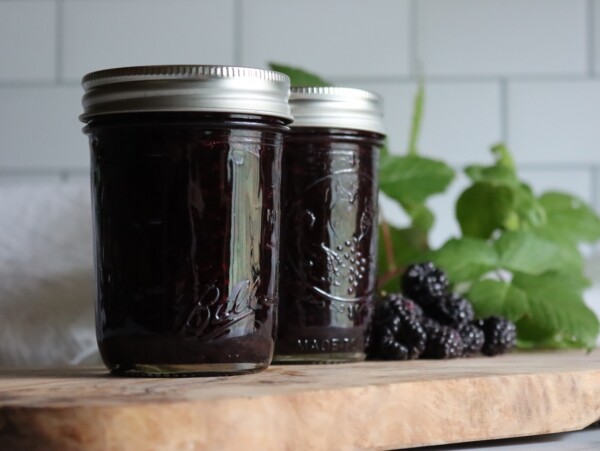
Canning berry juice is a simple way to pack a lot of berry flavor into a jar, and it’s a quick way to put up a bumper crop of summer berries.

Sometimes in the peak of summer, the crops come in faster than you can get them put up, but it’s a shame to let fresh fruit go to waste. Sure, you can pop berries into the freezer, but you only have so much freezer space.
Canning berry juice preserves the flavor (and nutrition) of fresh summer berries without taking up a lot of space. It’s also quick and easy, which helps in the busy summer season.
This tested recipe for canning berry juice works with all manner of soft summer fruits, including:
- Blackberries
- Blueberries
- Currants
- Dewberries
- Gooseberries
- Huckleberries
- Loganberries
- Mulberries
- Raspberries
- Strawberries
Berry Juices Not Safe for Canning
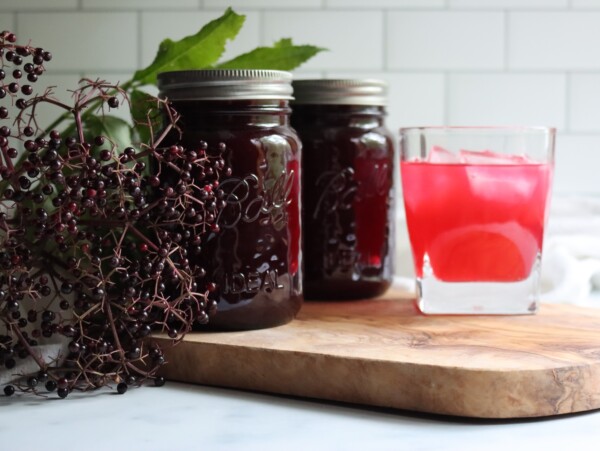
Elderberry juice is the exception. Elderberries aren’t acidic enough to can on their own, and there are no current safe guidelines for canning the juice. The elderberry juice process in the Ball Complete Book of Home Preserving, with added lemon juice, is old guidance.
Freeze elderberry juice instead, in ice cube trays or freezer containers. Here’s how I make elderberry juice from fresh or dried berries.
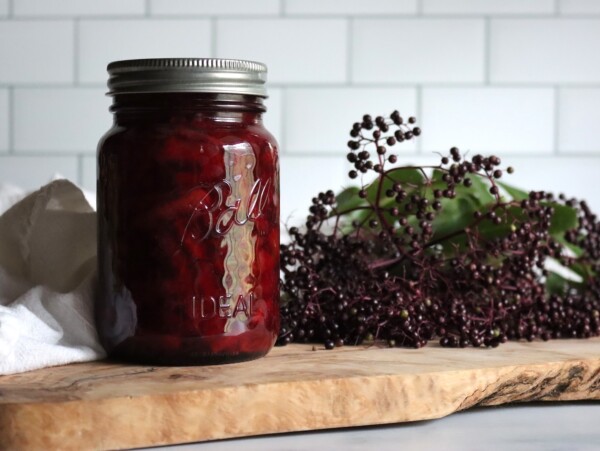
For the pantry shelf, can elderberries as elderberry jelly or old-fashioned elderberry jam. Both rely on a very high sugar ratio instead of acid, so don’t cut the sugar. My elderberry marmalade keeps the same full sugar. If you’d like an elderberry drink on the shelf, elderberry lemonade concentrate gets its acid from bottled lemon juice.
Making Berry Juice
If you happen to have a countertop juicer, you could use that, but I don’t think they extract quite as much flavor as the stovetop does (or a steam juicer). The main benefit to that type of juicer is that it keeps the juice raw, but we’re canning here, so it’s not necessary.
Start by preparing the fruit. If there are tops (as with strawberries) remove them, and remove any stems or other foreign material. Place the fruit in a saucepan with a bit of water.
Generally, you want about 1/2 cup of water per quart of berries.
Simmer the berries, mashing them occasionally with a potato masher, until they’ve released their juice and completely fallen apart. This happens quickly, and you should only cook them for about 5 to 10 minutes.
Be careful not to cook them too long, especially with high pectin fruit. You’ll quickly make jam with currants and gooseberries, so I’d suggest starting with double the water for those and only cooking those for about 5 minutes (vigorously mashing as you go).
With lower pectin berries, like strawberries, you have a bit more leeway in cook times.
Strain the pulp through a jelly bag, or a fine-mesh strainer lined with a double layer of dampened cheesecloth.

I tend to use a steam juicer whenever possible, really anytime I’m making more than a few cups of juice. It saves the trouble (and mess) of straining through cheesecloth. It also doesn’t activate the pectin like simmering in a pot would, so it’s the better option for high pectin fruits (like currants, gooseberries, and wild blackberries).
Even with low pectin fruits, it’s faster and less messy.
Berry Juice Yield
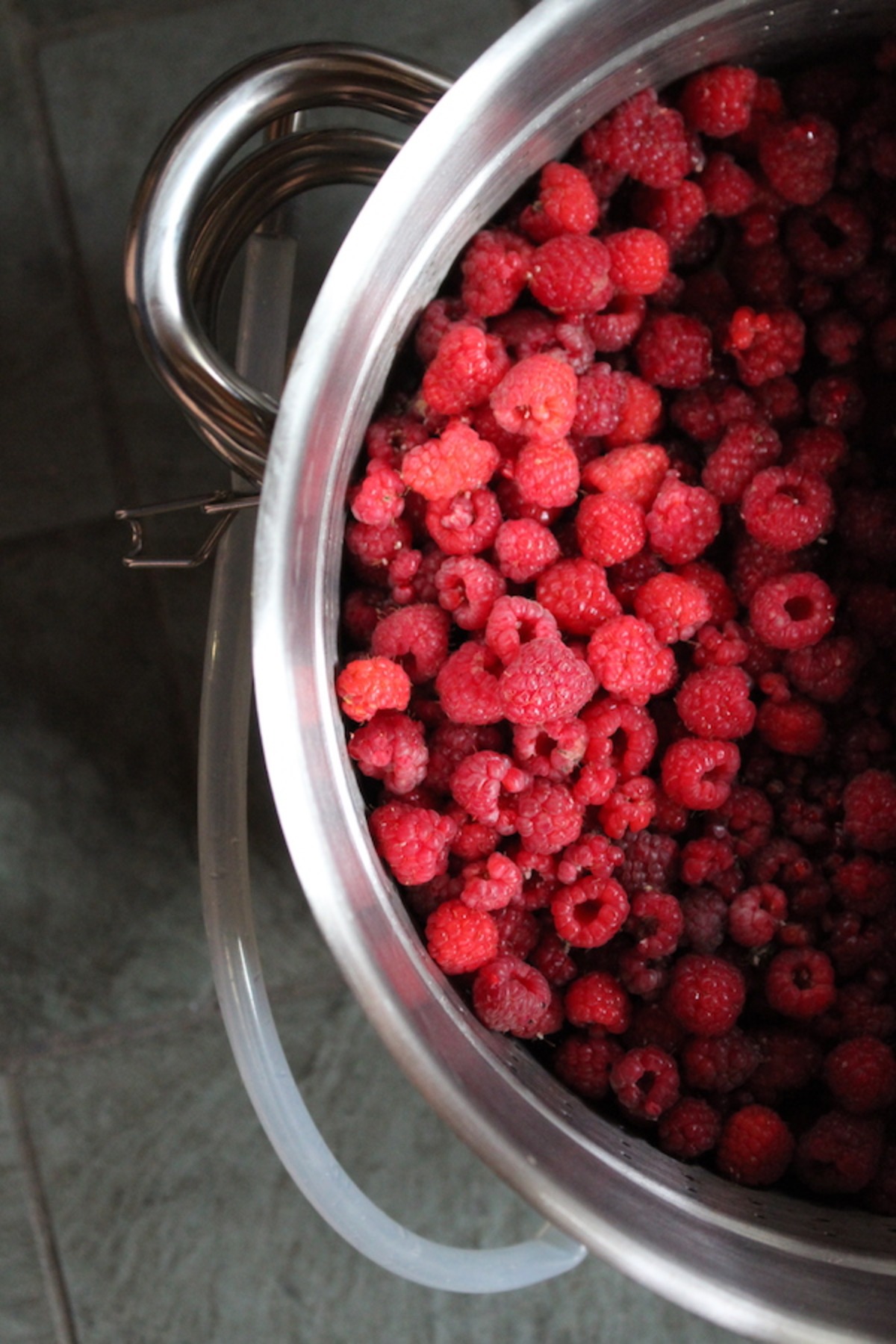
As a general rule, it takes about 2 to 4 cups of most berries (plus 1/2 cup water) to make a cup of juice extracted on the stovetop using the method outlined above. You can get a slightly better yield, and with less mess, if you use a steam juicer.
Freezing the fruit before juicing also helps increase yield, as freezing breaks down the pectin and pops cell walls.
The Ball Book of Home Canning has a bit more guidance on exact yields based on the berry, and it actually gives them as part of its “berry jelly” recipe on page 106. Extracting a specific amount of juice is the first step to making berry jelly, so that makes sense.
When simply canning juice, exact yields are less important because you just can whatever you get. Still, it’s nice to be able to plan ahead.
For each cup of juice, you’ll need the following amounts of fruit:
- Blackberries ~ 2 1/2 cups of berries
- Blueberries ~ 2 to 3 cups of berries (they’re highly variable in terms of juice)
- Raspberries ~ 3 to 3 1/2 cups of berries
- Strawberries ~ 3 1/4 to 3 1/2 cups chopped fruit (from 1 quart fresh)
- Currants (red or black) ~ 1 pound stemmed fruit, red currants yield more juice
There is a lot of variation depending on growing conditions, but this gives you a general idea.

Canning Berry Juice
Now that you have your berry juice filtered and ready to go, it’s time for canning. If you’re not familiar with canning, please read my beginner’s guide to water bath canning before beginning.
These canning instructions come from the “Canning Berry Juice” recipe on page 189 of the Ball Complete Book of Home Preserving. You can use this same recipe with blackberries, blueberries, raspberries and the other berries on the list, but not with elderberries.
They suggest, “For average sweetness, add 1 to 2 cups (250 to 500 ml) of sugar for each 16 cups (4 L) of juice.”
Adding sugar is completely optional, but as you can see it amounts to about 1/4 to 1/2 cup per quart of juice or 1 to 2 tablespoons per cup of juice. I don’t add sugar to most types of juice, and I tend to sweeten when I use them if necessary.
Personally, I only think sugar is necessary with very tart fruits, like gooseberries, currants, and maybe very tart raspberries.
Start by preparing a water bath canner, along with jars, lids, and rings. The canner should be barely simmering (180 F) for a hot pack.
Heat the strained juice to about 190 degrees F over medium-high heat, but do not boil. Turn down the heat to low and keep the juice at 190 F for 5 minutes. Add sugar if using, and stir to dissolve.
Ladle the hot juice into prepared jars, leaving 1/4 inch headspace. Apply canning lids and screw-on rings to fingertip tight.
Process half pints, pints and quarts for 15 minutes in a water bath canner. Above 6,000 feet in elevation, increase the canning time to 20 minutes.
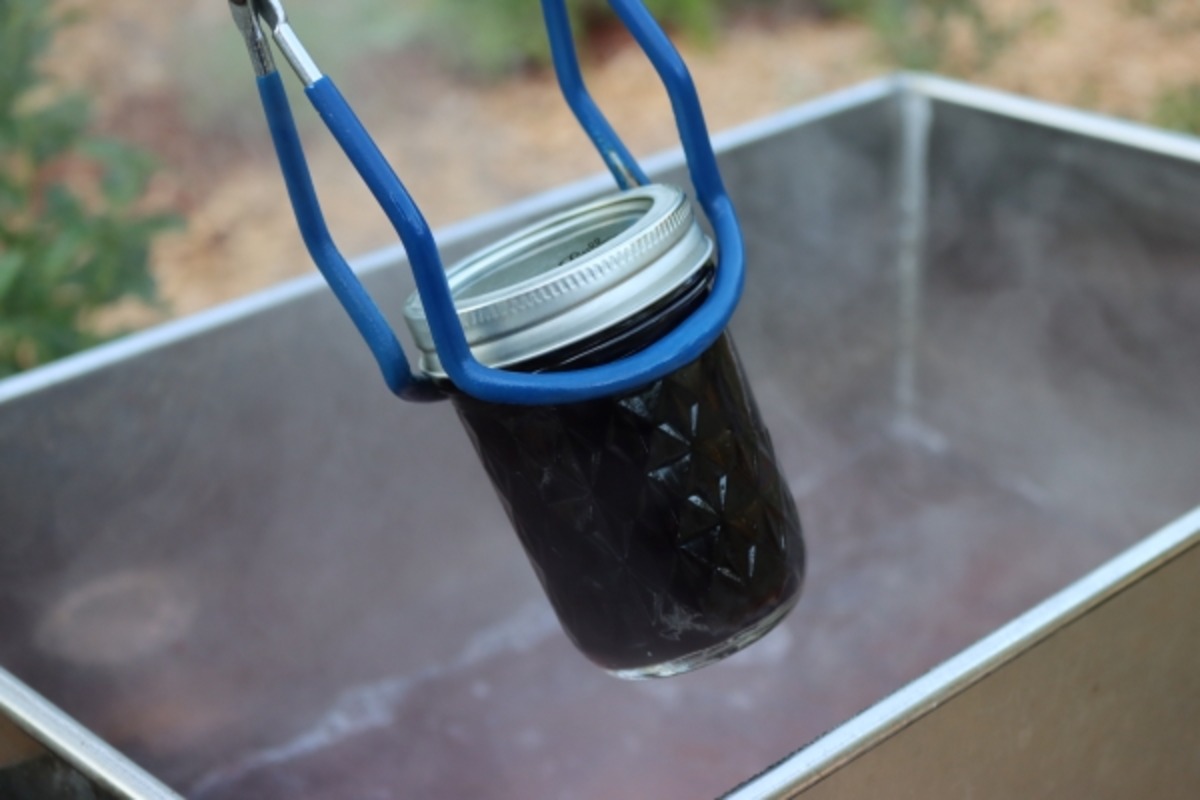
After the canning time has completed, turn off the heat, take the lid off the canner, and leave the jars in the water for 5 minutes to help prevent siphoning. Then use a jar lifter to move the jars to a towel on the counter to cool.
Check seals after 24 hours and store any unsealed jars in the refrigerator for immediate use. Properly canned and sealed jars of berry juice will maintain peak quality on the pantry shelf for 18+ months. Refrigerate after opening.
Using Berry Pulp
I found that often the berry pulp is still quite flavorful even after the juice is extracted, and it seems like a shame to just toss it. (This is less often the case when you use a steam juicer, they get every last bit of flavor out of the fruit much more efficiently.)
You can do a second extraction if you’d like, just add a bit more water and simmer again, and then strain.
You can also use the leftover pulp to make a berry jam, though I’d suggest using no more than half pulp in any recipe, and use fresh fruit for the other half. My mixed berry jam recipe works really well with leftover berry pulp, just use it in place of half of the fresh fruit.
You can also use the pulp to make fruit butter. Ball Canning developed a recipe for blueberry butter that uses the pulp after making blueberry juice.

If you’re looking for specific recipes for canning various types of berry juice, I have recipes posted for a few already:
You can also turn berry juices into lemonade concentrates, like Strawberry Lemonade Concentrate and Blueberry Lemonade Concentrate.

Canning Berry Juice
Equipment
- Canning Jars, Lids and Bands
Ingredients
- 4 quarts fresh berries, see notes
- 2 cups water, more for currants and gooseberries, see notes
- sugar, optional, see notes
Instructions
Extracting Berry Juice
- Wash the berries and remove any stems (or hull strawberries).
- Place the fruit in a pot with the water. For high pectin fruit like currants and gooseberries, double the water.
- Bring to a simmer over medium heat and cook, mashing often with a potato masher, until the fruit falls apart and releases its juice, about 5 to 10 minutes. Cook currants and gooseberries only about 5 minutes, or they’ll start to gel.
- Strain through a jelly bag or a fine mesh strainer lined with a double layer of dampened cheesecloth.
Canning Berry Juice
- Prepare a water bath canner, jars and lids, with the canner water at about 180 degrees F for a hot pack.
- Heat the strained juice to about 190 degrees F over medium-high heat, but don’t let it boil. Turn the heat to low and hold the juice at 190 degrees F for 5 minutes. Stir in the sugar to dissolve, if using.
- Ladle the hot juice into hot jars, leaving 1/4 inch headspace. Apply the lids and bands fingertip tight.
- Process half pints, pints or quarts in a boiling water bath canner for 15 minutes, adjusting for altitude (see notes).
- Turn off the heat, take the lid off the canner, and let the jars sit in the water for 5 minutes before lifting them out.
- Cool the jars for 12 to 24 hours, then check the seals. Refrigerate any jar that didn’t seal, and store sealed jars in a cool, dark place.
Notes
- 0 to 6,000 feet: 15 minutes
- Above 6,000 feet: 20 minutes
Nutrition
Nutrition information is automatically calculated, so should only be used as an approximation.
Ways to Preserve Berries
Looking for more ways to preserve fresh summer berries?


Thanks so much for your instructions. I am picking 3-5 gallons of blackberries every three days and will do so for a couple of more weeks. I have a food mill that I use to make tomato sauce and it works perfectly with blackberries. I strain the juice to get the pulp out. My wife and I love good juice as part of breakfast.
I especially thank you for the comments on use of the leftover pulp. I do plan on using it for jelly. I’m also wanting to see if my Mom can use the pulp along with a few fresh berries for a pie. Because of high blood sugar, I don’t add any sugar to the juice and it tastes fine. Obviously will have to add some to the pie. Thanks again.
Wonderful!
I have made and canned several different juices and jams from your site, all of them have been delicious and have been given as gifts for family and friends. I did a blueberry juice last summer I picked, and it was fantastic (wished I wouldn’t have shared the juice 🙁 . I was thinking about using store bought frozen blueberries, at least until I can pick some fresh ones. If using frozen blueberries, do they need to be thawed first and will they still be acidic enough or should I add citric acid to make the juice safe for water bath canning to make shelf stable?
Have you used a steam juicer, for elderberries or blueberries? I don’t seem to get much juice.
I haven’t actually used it for either of those. I love my steam juicer for cherries, raspberries and currants, and those produce a lot of juice with it.
Can I use frozen mixed berries for this? I will not be canning it. I just need the concentrate.
Yes, you can use frozen berries (even if canning).
Is it okay to mix the fruit? I have lots of mulberries and blueberries
Yes, you can mix any of the berries on the list provided they’re each individually safe for canning.