This post may contain affiliate links. Please see our disclosure policy.
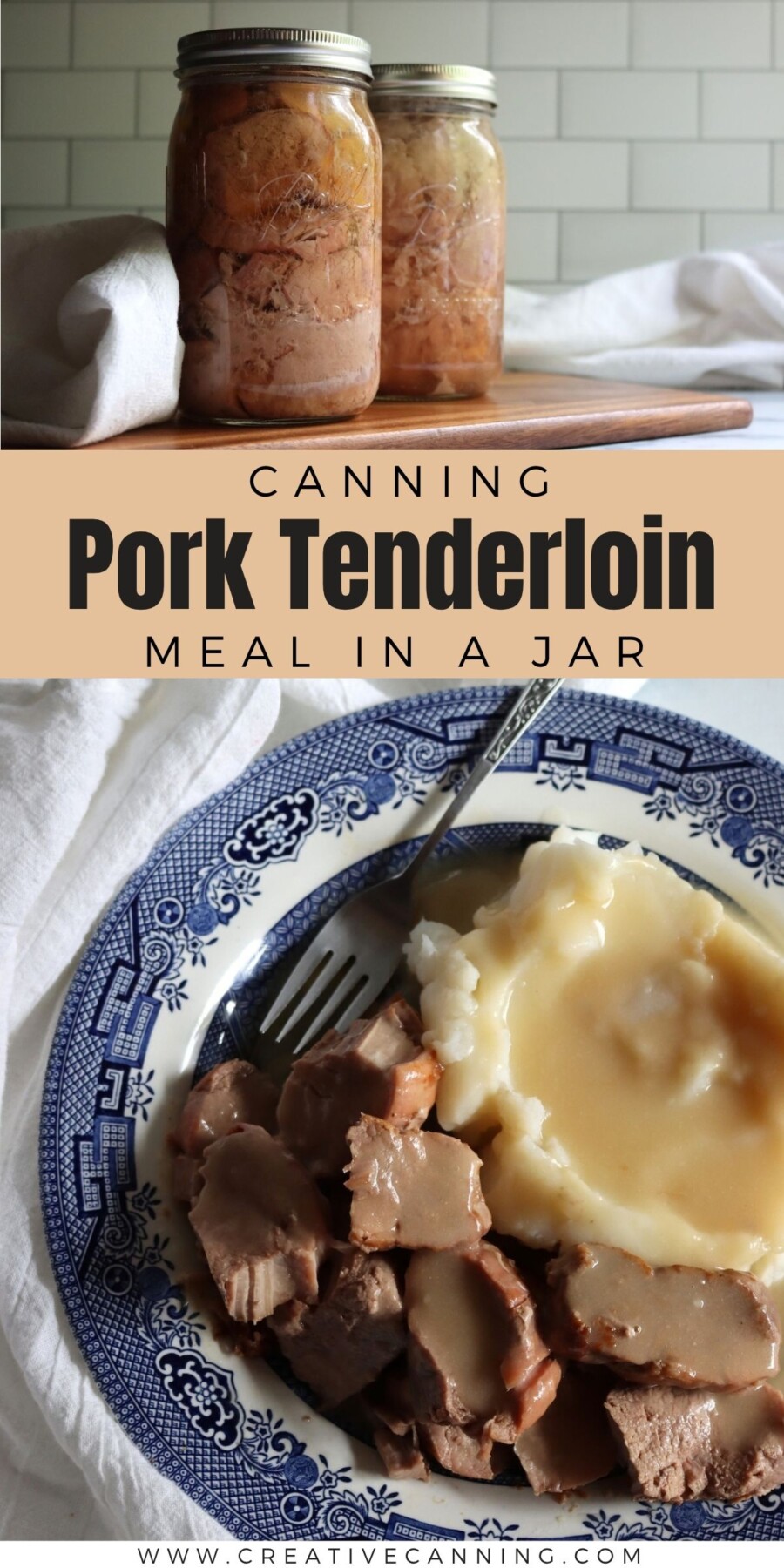
Canning pork tenderloin turns the leanest cut on the pig into jars of pork medallions that only need reheating. Stores sell it as a premium cut, but it’s the cheapest pork I can buy most weeks. Heat a jar in gravy, and dinner’s ready in minutes.
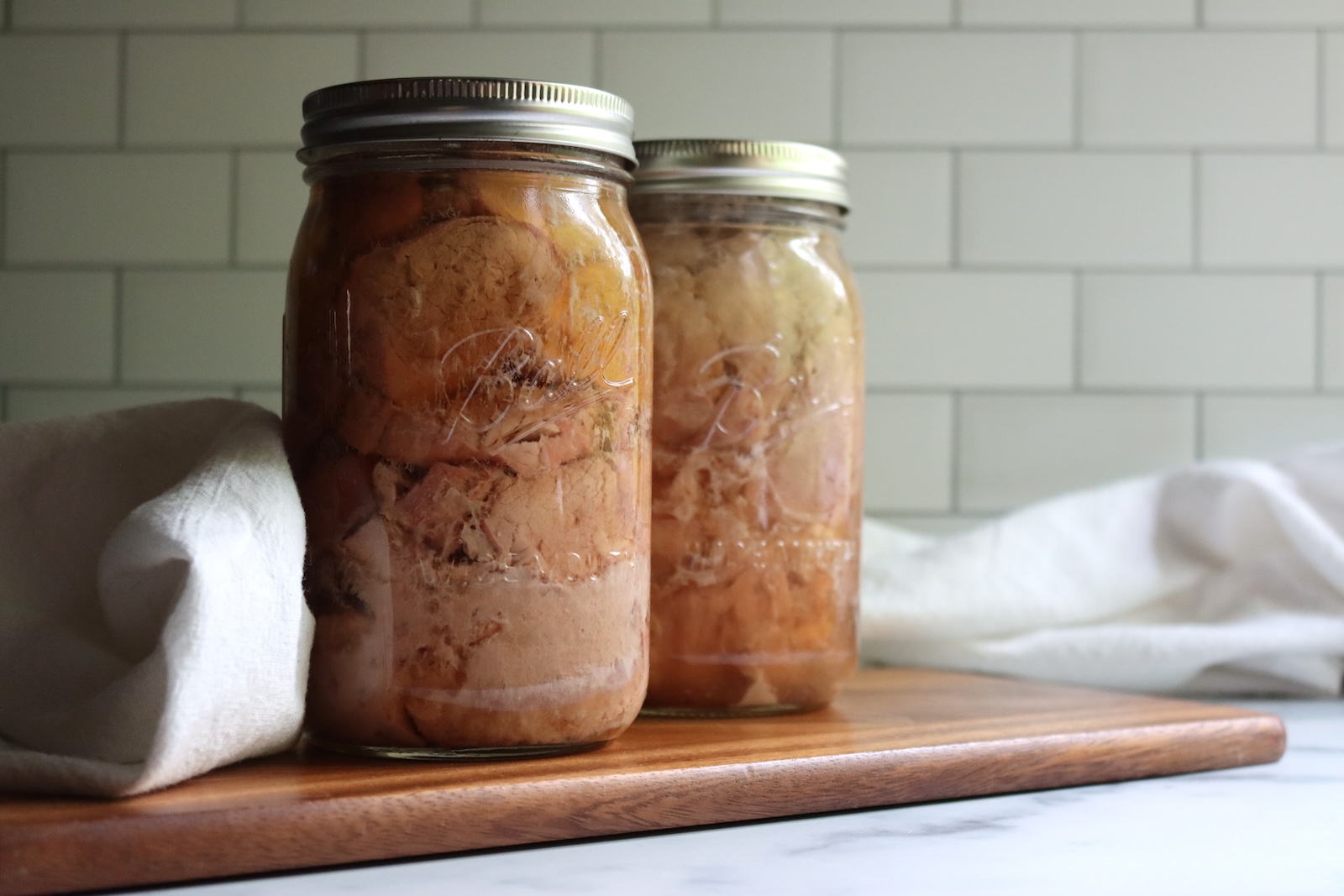
Table of Contents
- Notes from My Kitchen
- Quick Look at the Recipe
- Choosing Pork Tenderloin for Canning
- Preparing Pork Tenderloin for Canning
- Ingredients for Canning Pork Tenderloin
- Safe Substitutions
- How to Hot Pack Pork Tenderloin
- How to Raw Pack Pork Tenderloin
- Altitude Adjustments
- Hot Pack vs. Raw Pack Pork Tenderloin
- Ways to Use Canned Pork Tenderloin
- Storage and Shelf Life
- Yield Notes
- Canning Pork Tenderloin FAQs
- Pork Canning Recipes
- Canning Pork Tenderloin Recipe
- More Pressure Canning Meat Recipes
This recipe has been reviewed for safety and accuracy by a Master Food Preserver certified through the University of Cornell Cooperative Extension.
Ground pork runs 8 to 10 dollars a pound at my store. Tenderloin, the cut that’s supposed to cost more, keeps showing up at 2 dollars a pound. When it does, I buy all of it, and canning is how I keep it without handing over half the freezer.
Pork is low acid, so you have to pressure can it, and there’s no water bath version. If you’re new to pressure canning, start with my pressure canning for beginners guide. Water bath canning only works for high-acid foods like jams and pickles.
The process comes from the pork tenderloin recipe in the Ball Blue Book Guide to Preserving. It’s one of the few tested recipes for a single cut instead of for meat in general.
If you’ve got other cuts to put up, my canning pork recipe uses shoulder in chunks. There’s a whole list of pork canning recipes too, with ribs, sausage, and a few full meals in a jar.
Notes from My Kitchen

Tenderloin used to be too expensive to think about canning, but for some reason I keep finding it as the cheapest meat anywhere. The Ball Blue Book has a recipe just for it, so I tried it both ways, raw pack and hot pack.
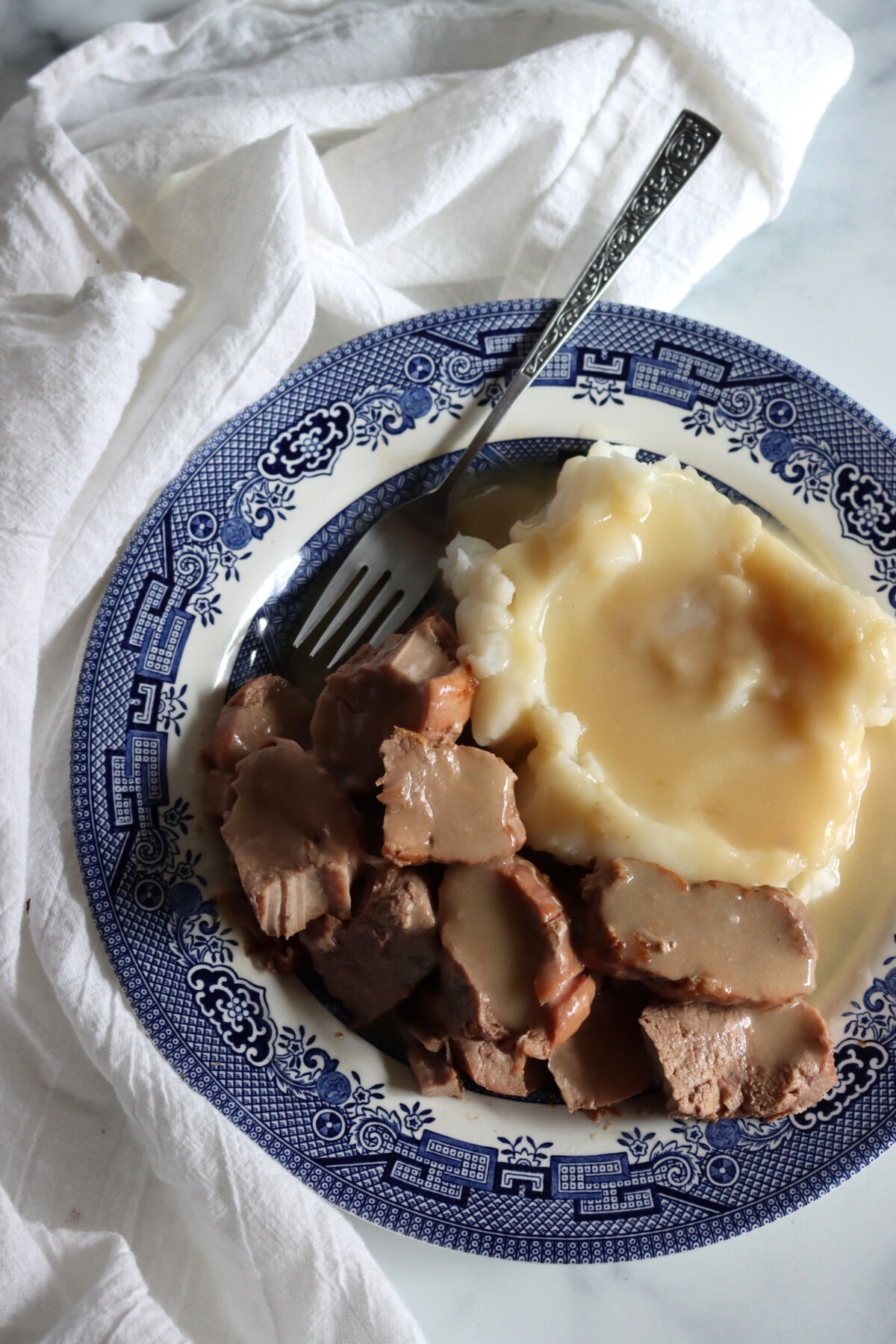
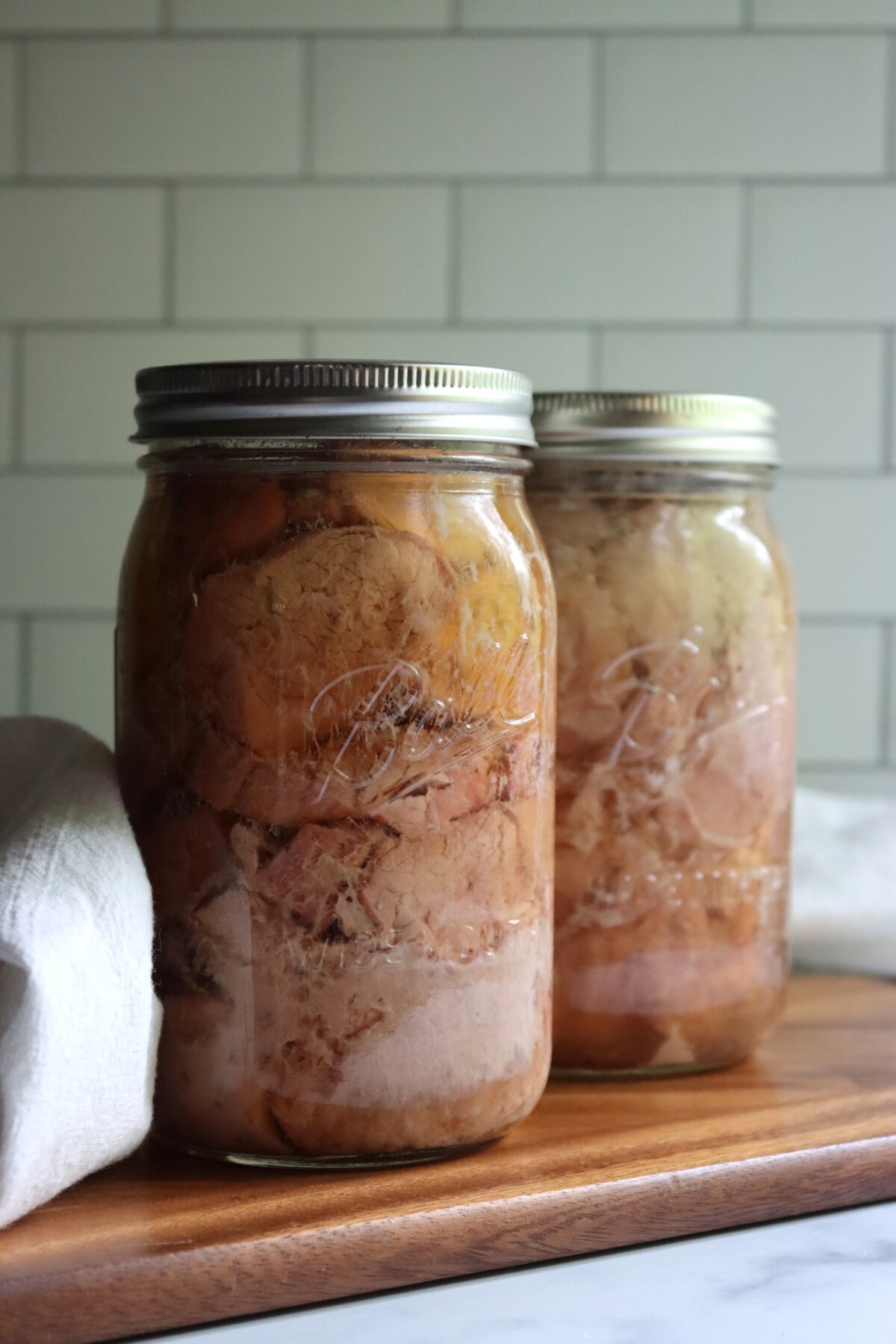
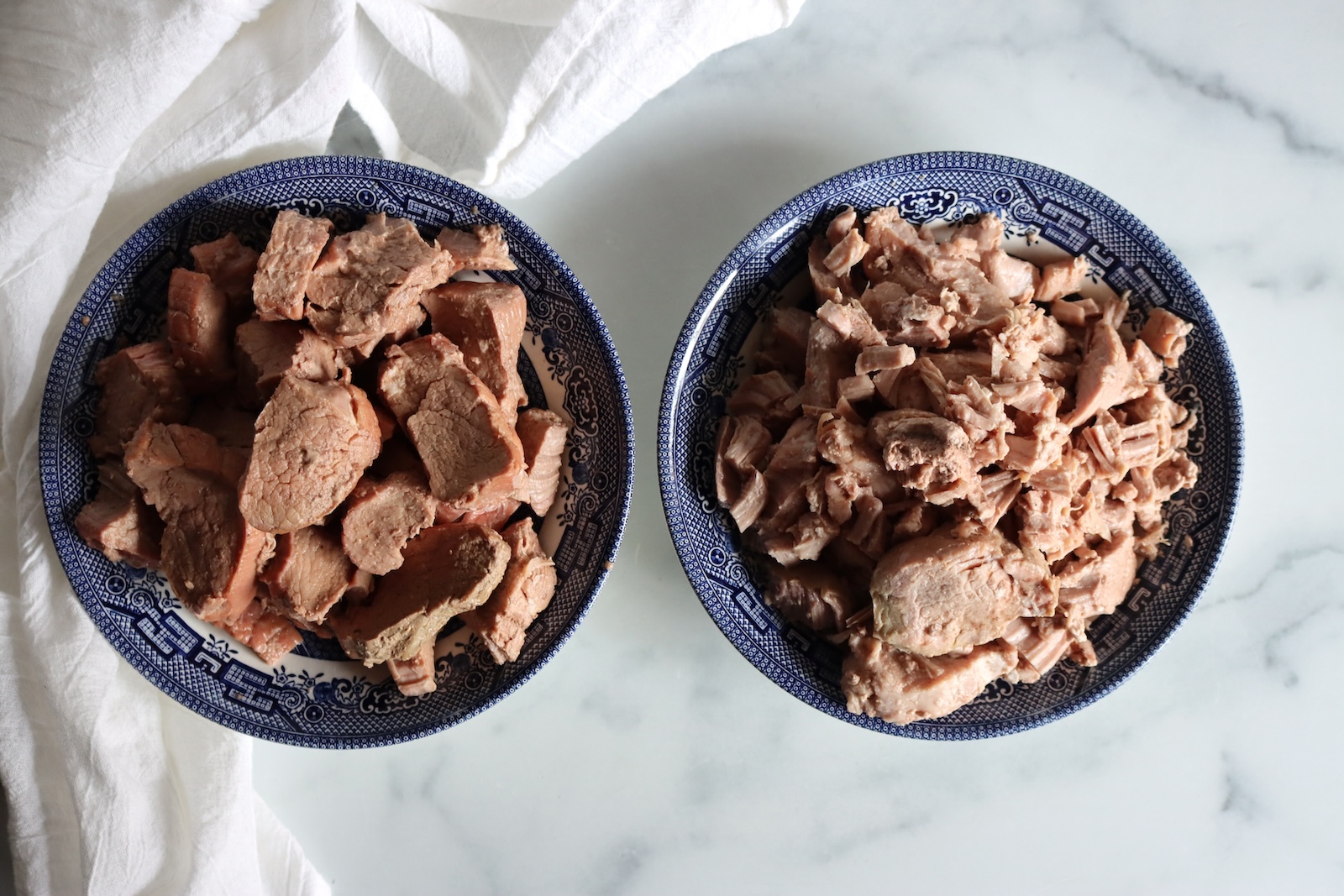
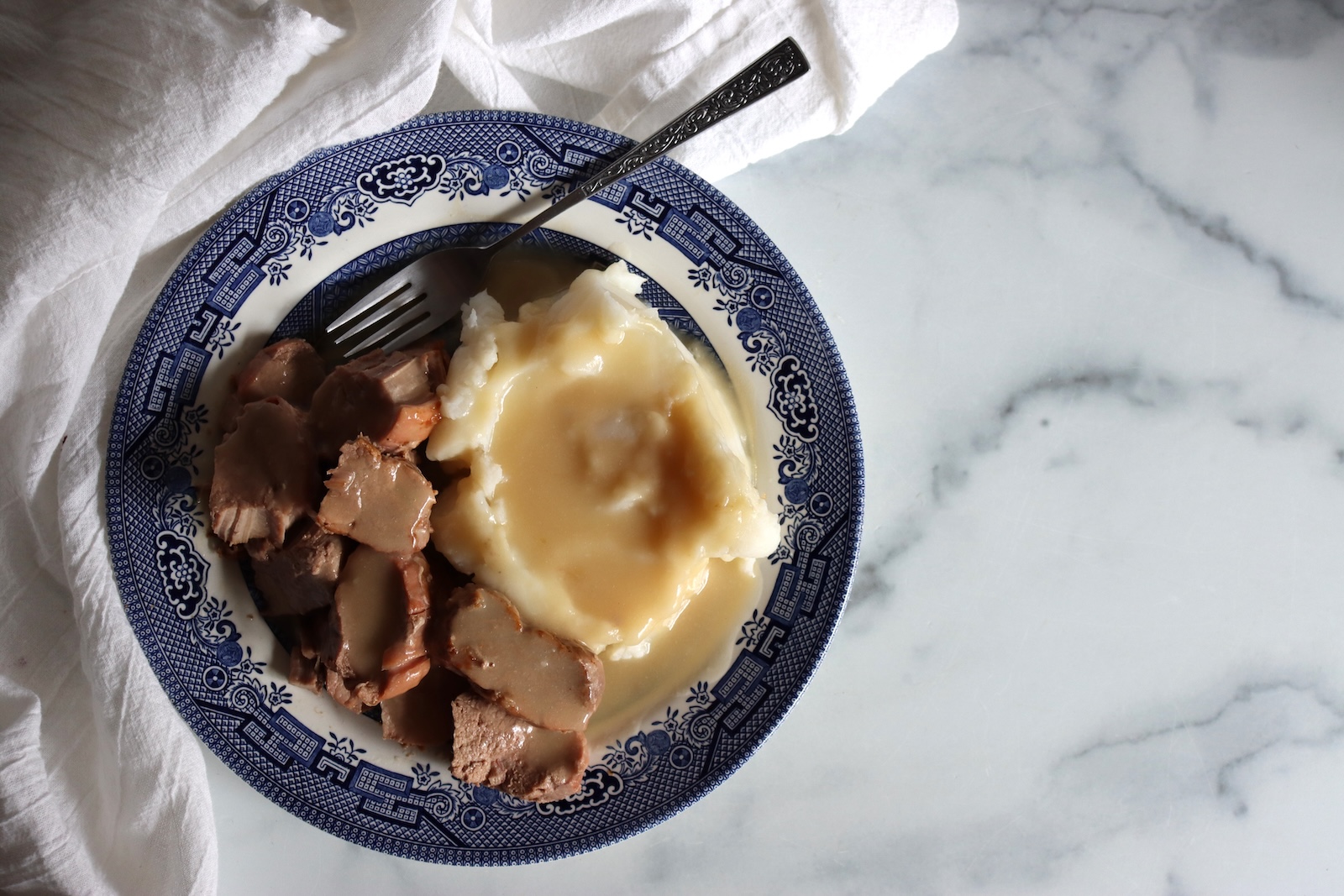
The hot pack was much better. Those slices held together as actual tenderloin medallions, enough for a real meal with gravy and potatoes. The raw pack fell apart as it came out of the jar and looked more like shredded pork.
Personally, I’m still a fan of shoulder. I like rich, slow-cooking cuts, whether I’m canning or just making dinner on a weeknight. What can I say, I’m just not a lean-cuts kinda girl.
Still, this came out better than I expected, and it works well if you’re looking for a leaner option. Just make sure you hot pack it.
Quick Look at the Recipe
- Recipe Name: Canning Pork Tenderloin
- Recipe Type: Pork Canning Recipe
- Canning Method: Pressure Canning
- Prep Time: About 45 minutes for a full canner load
- Cook Time: 20 minutes to roast for a hot pack, 10 minutes to heat the liquid for a raw pack
- Canning Time: 75 minutes for pints, 90 minutes for quarts
- Yield: 7 quarts or 9 pints per canner load
- Jar Sizes: Pints or quarts
- Headspace: 1 inch
- Ingredients Overview: Pork tenderloin, broth or water, and optional salt
- Safe Canning Recipe Source: Ball Blue Book Guide to Preserving, 38th edition. The USDA Complete Guide to Home Canning, Guide 5, gives the same times.
- Difficulty: Easy
- Similar Recipes: Canning pork shoulder in chunks, canning pork ribs, and canning sausage
Choosing Pork Tenderloin for Canning
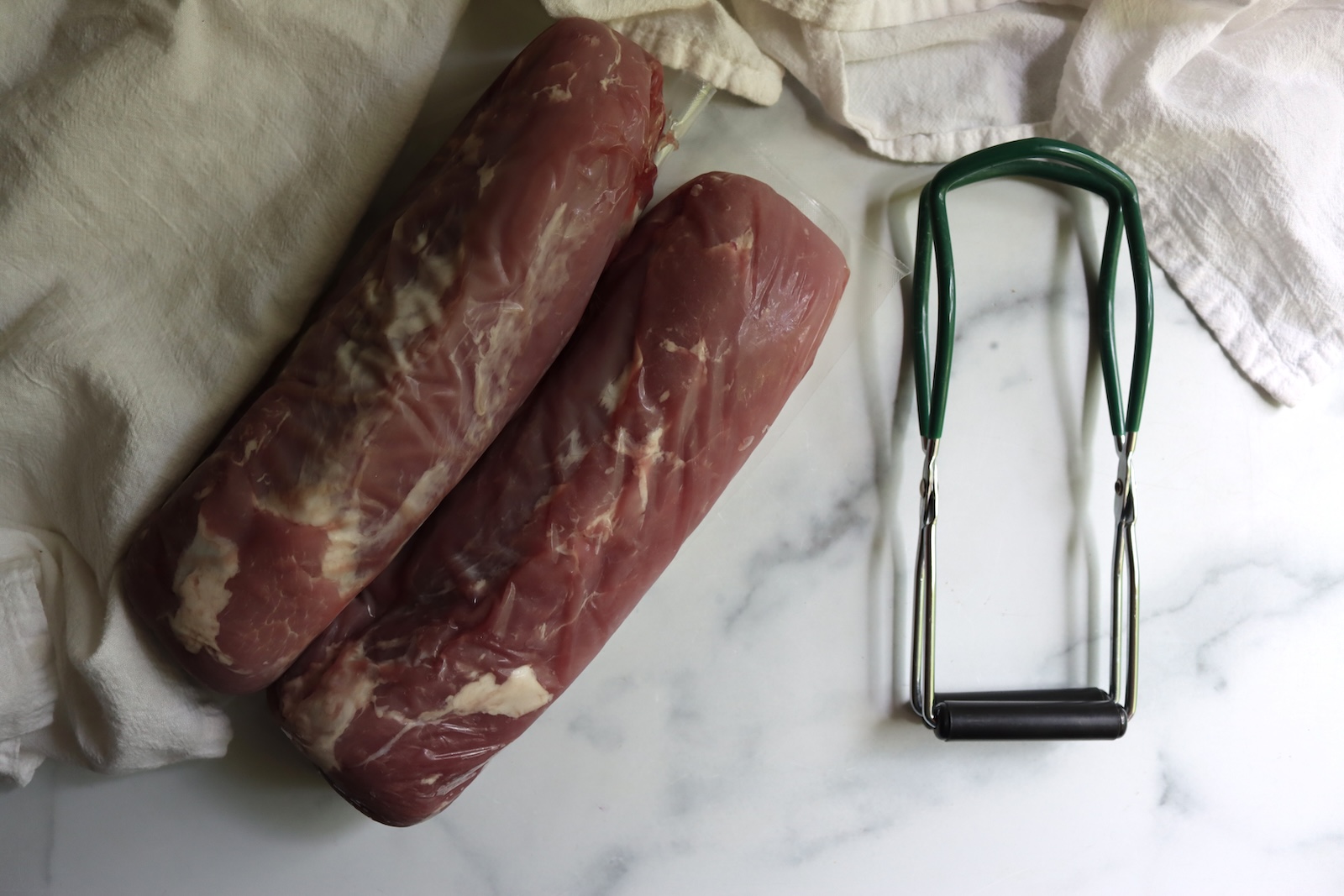
Tenderloin is the small muscle that runs along the inside of the spine, and it isn’t the same thing as pork loin. One tenderloin weighs about a pound to a pound and a half and tapers to a point at one end. A loin roast is several times that size and comes off the back.
Buy it plain. A lot of tenderloin comes pre-marinated in a flavored solution, and there’s no knowing what’s in that brine or how its thickeners behave in a jar. Skip anything cured or smoked too, since there’s no tested canning process for cured pork.
A full canner load is a lot of meat to buy at once, so this is a sale-price project. I keep the trimmings and the tapered tails in a bag in the freezer for stock.
If you’re raising your own pigs, you can see how much of each cut comes off a carcass in my guide to estimating pork yield.
Preparing Pork Tenderloin for Canning
Every tenderloin has a strip of silverskin down one side. It’s the shiny silver-white membrane, and it never softens, no matter how long it’s under pressure. Slide a thin knife under one end, angle the blade slightly up, and pull it off in a strip or two.
Trim off any surface fat while you’re in there. Extra fat can give stored jars a strong flavor, and it can get onto the rim and keep a lid from sealing.
Keep every piece 1/2 to 1 inch thick, which is the cut size the tested recipe calls for. For the hot pack, I roast the tenderloins whole and slice them into medallions afterward. For the raw pack, I cut them into chunks right away.
Even pieces heat at the same rate. The tapered tail won’t give you even pieces, so cut it in half lengthwise or set it aside for supper.
Work with well-chilled meat. It slices clean when it’s cold and drags when it’s warm. Keep it in the fridge until the canner is hot and the jars are ready to fill.
Ingredients for Canning Pork Tenderloin
The ingredient list is short: the pork, something hot to cover it, and salt if you want it.
- Pork tenderloin: Fresh and plain. Trim off the silverskin and surface fat first. Pork loin and boneless chops slice the same way and process for the same time, so a mixed load is fine.
- Broth or water: Whatever you cover the meat with. Broth makes a noticeably better jar than water on a cut this lean, so it’s what I use. Home-canned pork broth is the obvious one, and chicken broth is a good second choice. Plain water is fine if that’s what you have.
- Salt: Optional, and for flavor only. I like Redmond’s Real Salt in meat and meal in a jar recipes because it tastes better, and a cloudy brine isn’t an issue here the way it is in pickles. Canning and pickling salt like Morton canning and pickling salt works too.
Nothing else goes in the jar. That means no flour, cornstarch, or gravy mix, no dairy, no oil, and nothing cured. Thickeners change how heat moves through a jar, and the tested time assumes plain meat in plain liquid.
The gravy comes later, once the jar is open.
Safe Substitutions
Salt in or out is up to you, at 1/2 teaspoon per pint or 1 teaspoon per quart. Pints or quarts both work with the matching time. Raw pack and hot pack both have tested times, and broth or plain water works as the liquid.
Pork loin and boneless chops swap straight in at the same slice size and time.
You can add dry seasoning in small amounts, up to 1 teaspoon per pint or 2 teaspoons per quart of dried seasoning, including dried onion or garlic. That’s the limit the University of California Master Food Preservers give for plain canned meat. Garlic powder and paprika are the two I use most, and onion powder, black pepper, cumin, chili powder, and dried oregano all work.
Skip sage, which turns bitter in a jar. You can read more in my article on safe canning recipe changes.
What you can’t do: water bath it, shorten the time, drop the pressure, thicken the liquid, add oil or dairy, or use cured pork like bacon or ham. Sauce it when you open the jar, not before!
How to Hot Pack Pork Tenderloin
This is the method I’d use. The tenderloin roasts whole until it’s a third to halfway done, and those slices hold together through the canner as actual medallions.
Get your pressure canner going with the water your manual calls for, and keep your jars warm. If you’re salting, put the salt in the empty jars first. It’s the easiest way not to forget it, and forgetting it is the mistake I make.
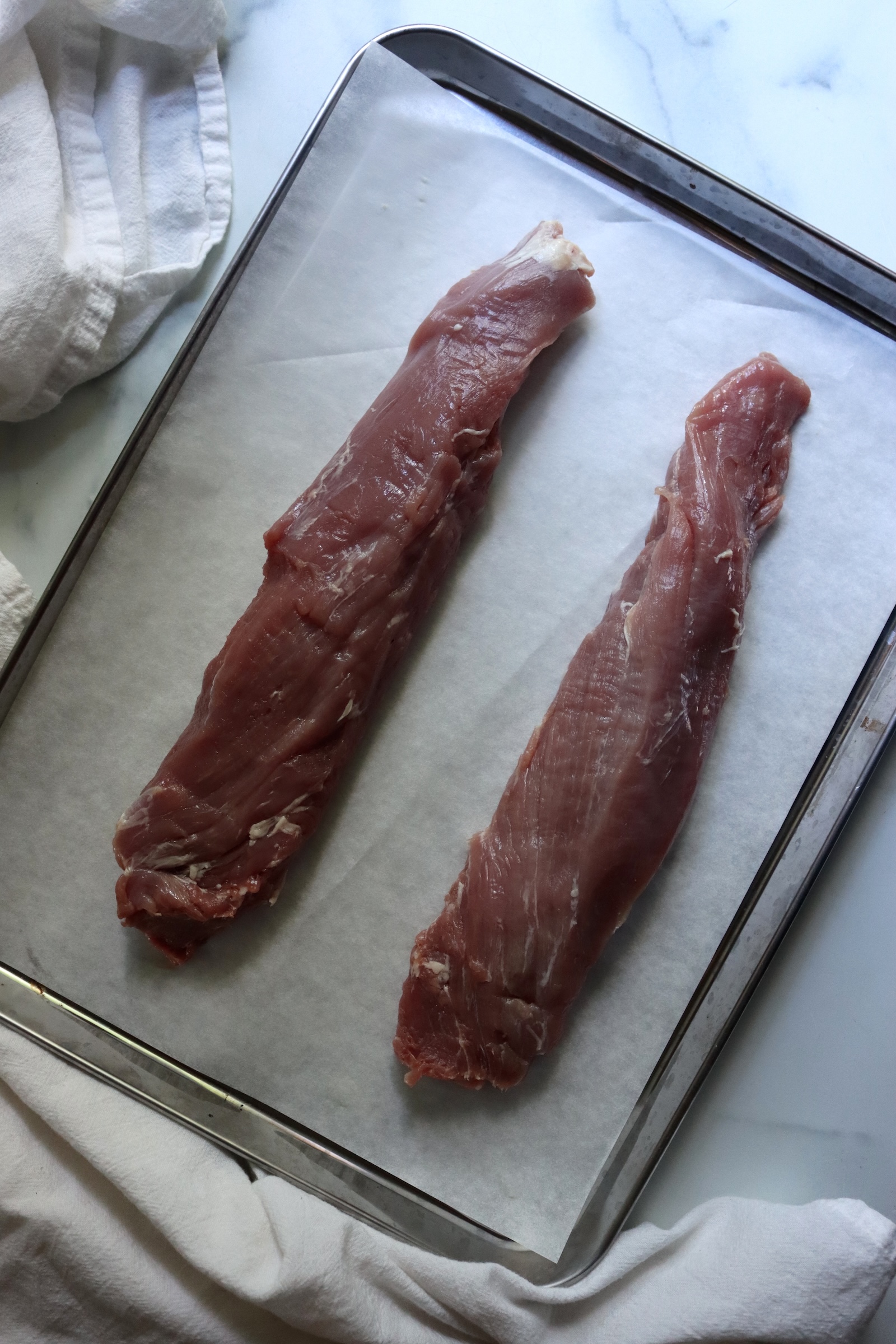
- Trim the silverskin and surface fat off the tenderloins, and lay them whole on a rimmed baking sheet.
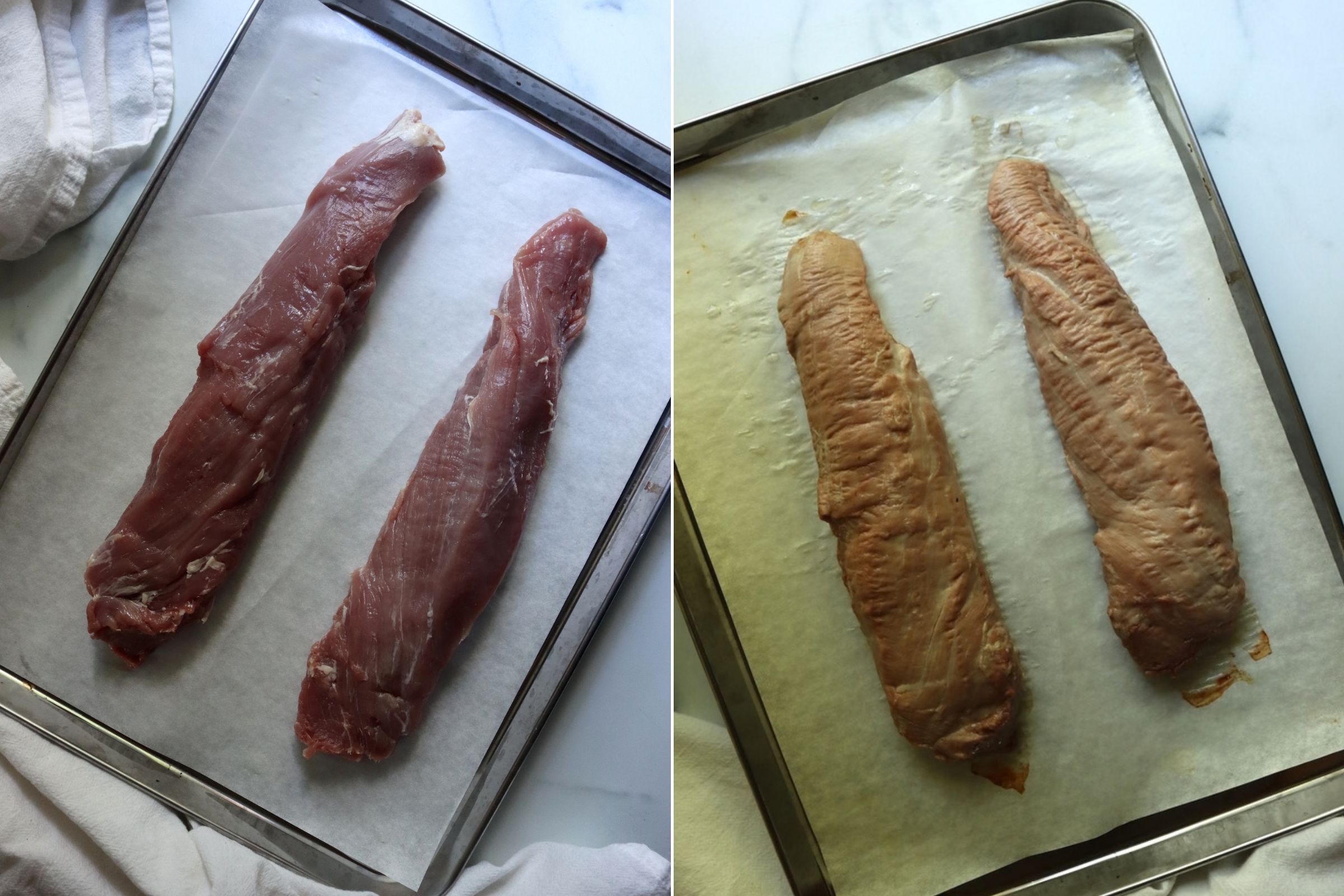
- Roast them until they’re a third to halfway done, so the outside sets and browns while the middle stays raw. Don’t cook them through. Tenderloin isn’t a juicy cut, and I didn’t get any pan juices from mine, so plan on broth.
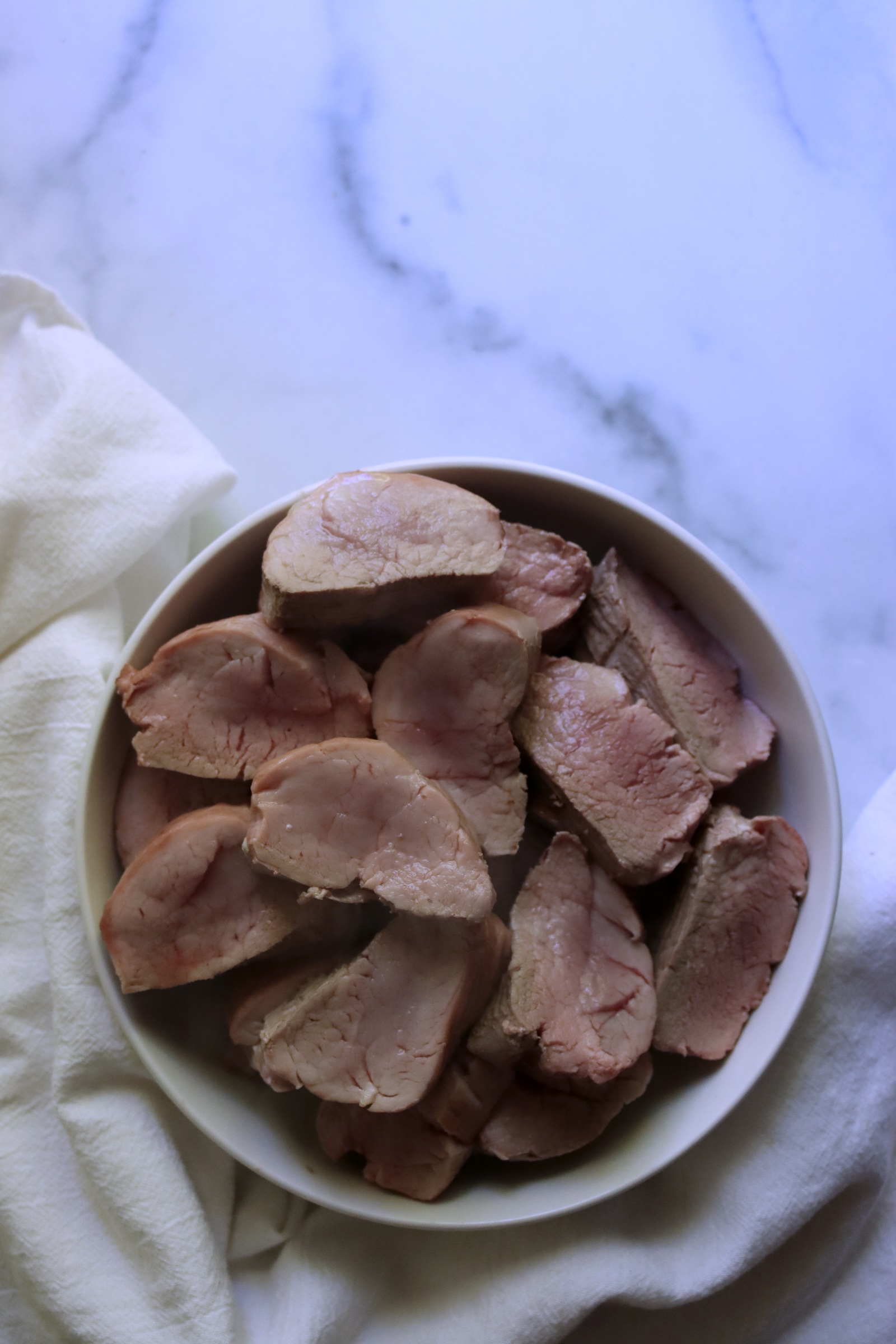
- Slice the roasted tenderloin crosswise into medallions 1/2 to 1 inch thick. The centers will still be pink, and the canner finishes cooking them.
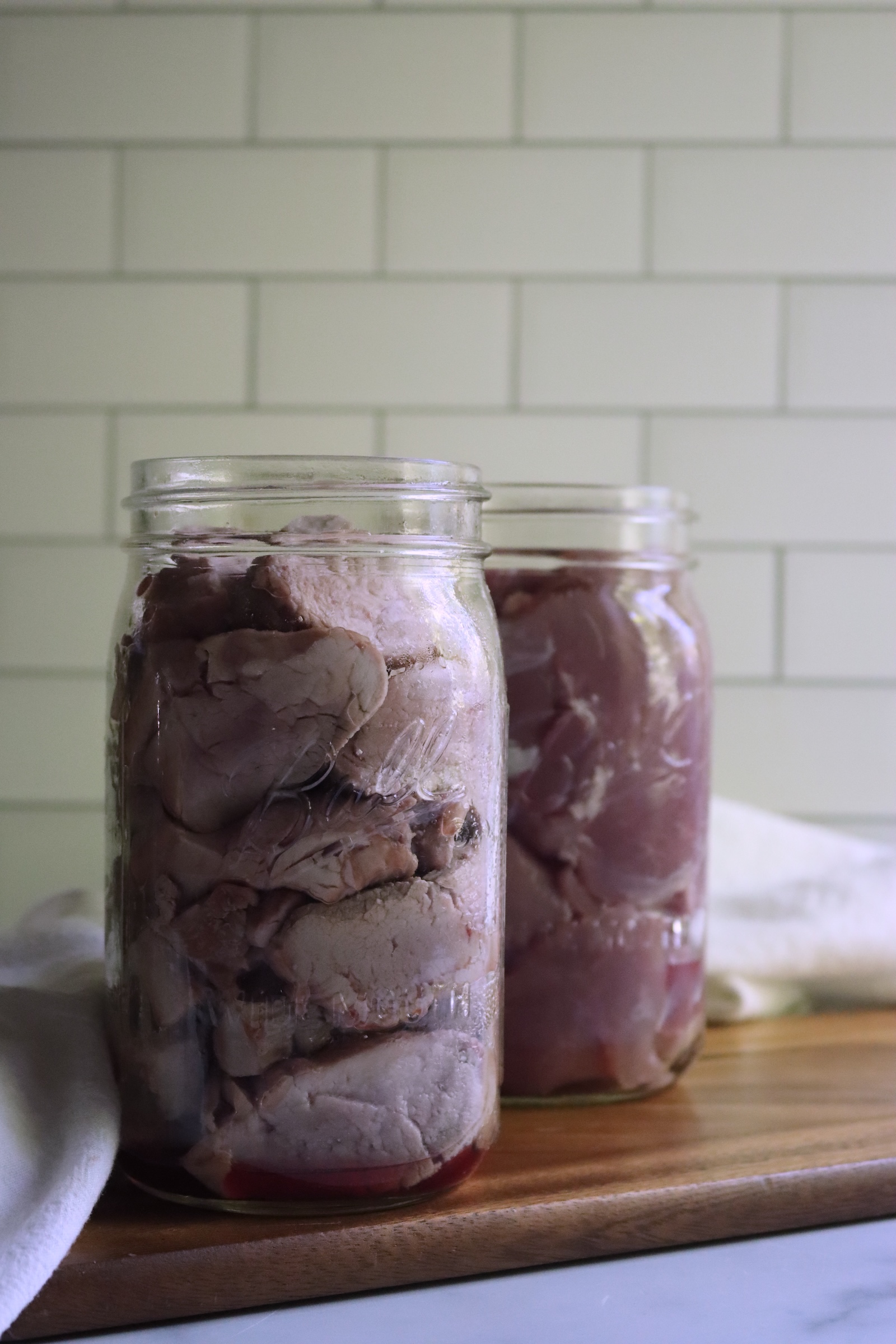
- Pack the hot slices into warm jars with a canning funnel, leaving 1 inch of headspace, and cover them with boiling broth to that same 1 inch. Roasted slices take a lot more broth than a raw pack, so keep plenty hot. Run a bubble tool around the jar, wipe the rims, and put the lids on fingertip tight.
If you’d rather skip the oven, the raw pack is quicker.
How to Raw Pack Pork Tenderloin
Raw pack is the faster of the two, and it’s the one to use when you’ve bought more meat than you have day left. It comes out tender enough to fall apart as it leaves the jar, so plan on using it like shredded pork.
Ball has you ladle hot liquid over the raw pack, while the USDA’s general meat directions say to pack it dry. Both process at the same 75 and 90 minutes. I follow Ball on a cut this lean, since it doesn’t give off enough juice to cover itself, and meat above the liquid loses quality in storage.
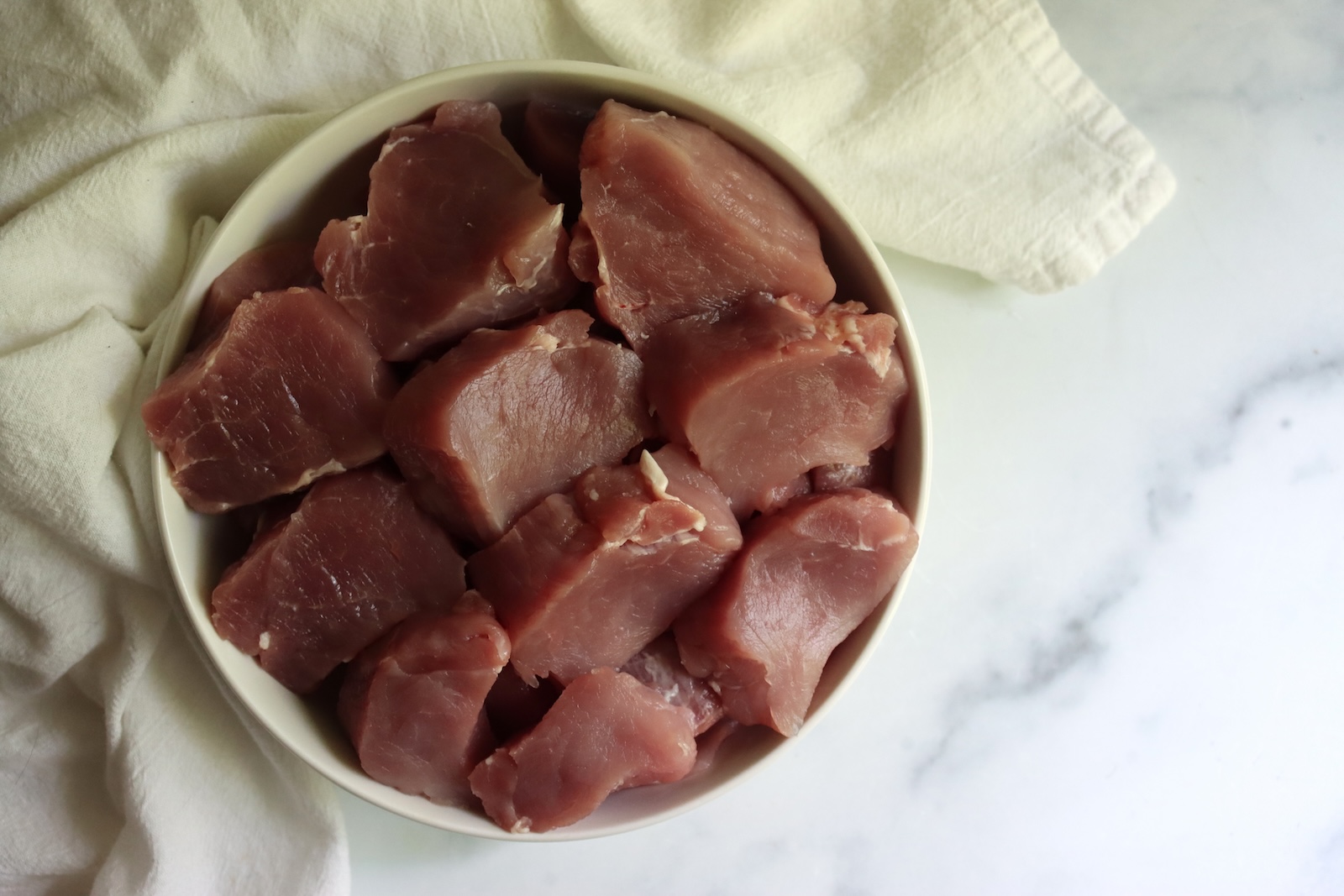
- Cut the trimmed raw tenderloin into chunks 1/2 to 1 inch thick, and salt the empty jars if you’re using it.
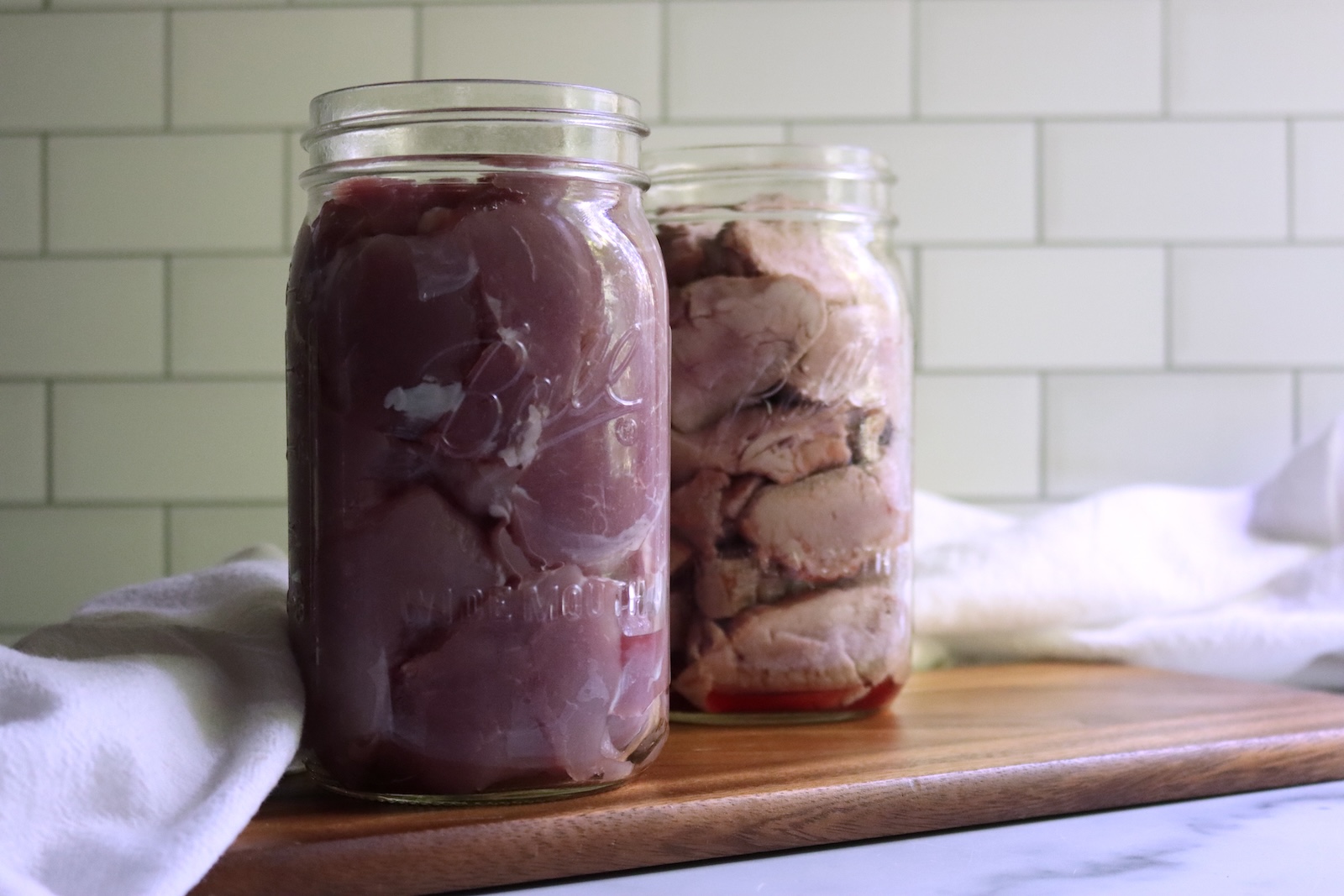
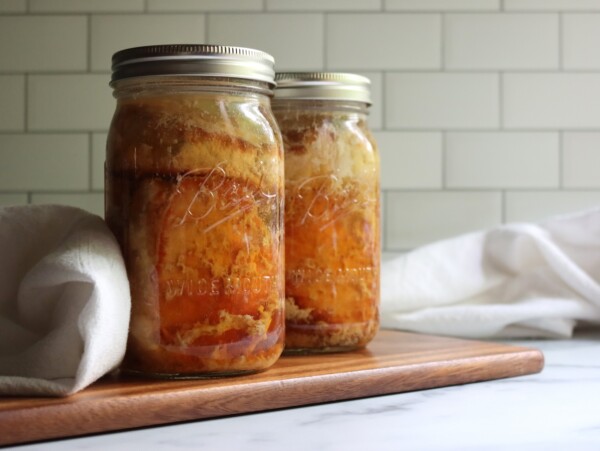
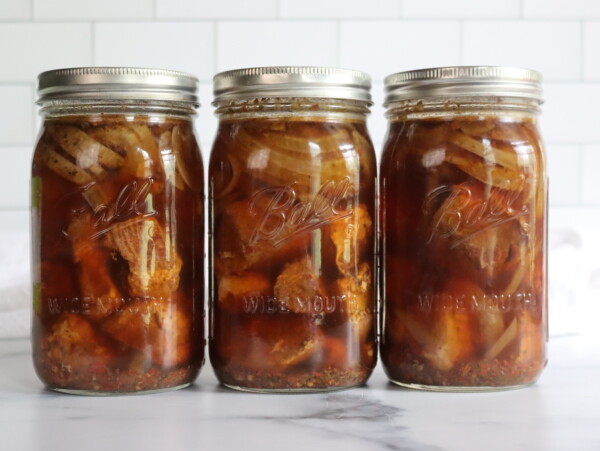
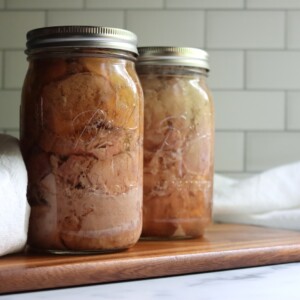
- Pack the raw pieces into warm jars to 1 inch headspace without mashing them down. Ladle boiling broth into the gaps, keeping that 1 inch, then run a bubble tool around the jar, wipe the rims, and put on the lids. Once they’re canned, the two packs look almost the same in the jar (raw pack on the right).
Pork goes in a pressure canner, dial gauge or weighted gauge. A water bath canner can’t get hot enough for a low-acid food, and there’s no tested water bath process for meat at any jar size.
No pressure canner? Freeze it instead.
Load the jars onto the rack, check the water level against what your canner’s manual says, and fasten the lid. Let steam vent in a steady stream for a full 10 minutes before you add the weight or close the petcock. Start the timer once it comes up to pressure.
Process pints for 75 minutes or quarts for 90 minutes, at 10 pounds pressure in a weighted gauge canner or 11 pounds in a dial gauge canner, adjusting for altitude with the chart below.
When the timer goes off, turn off the heat and let the canner come down to zero pressure on its own. Don’t run it under water, and don’t lift the weight early.
Wait 5 minutes after it reads zero, then take the weight off or open the petcock, unfasten the lid, and open it away from you. Leave the jars in the canner another 10 minutes before you lift them out with a jar lifter.
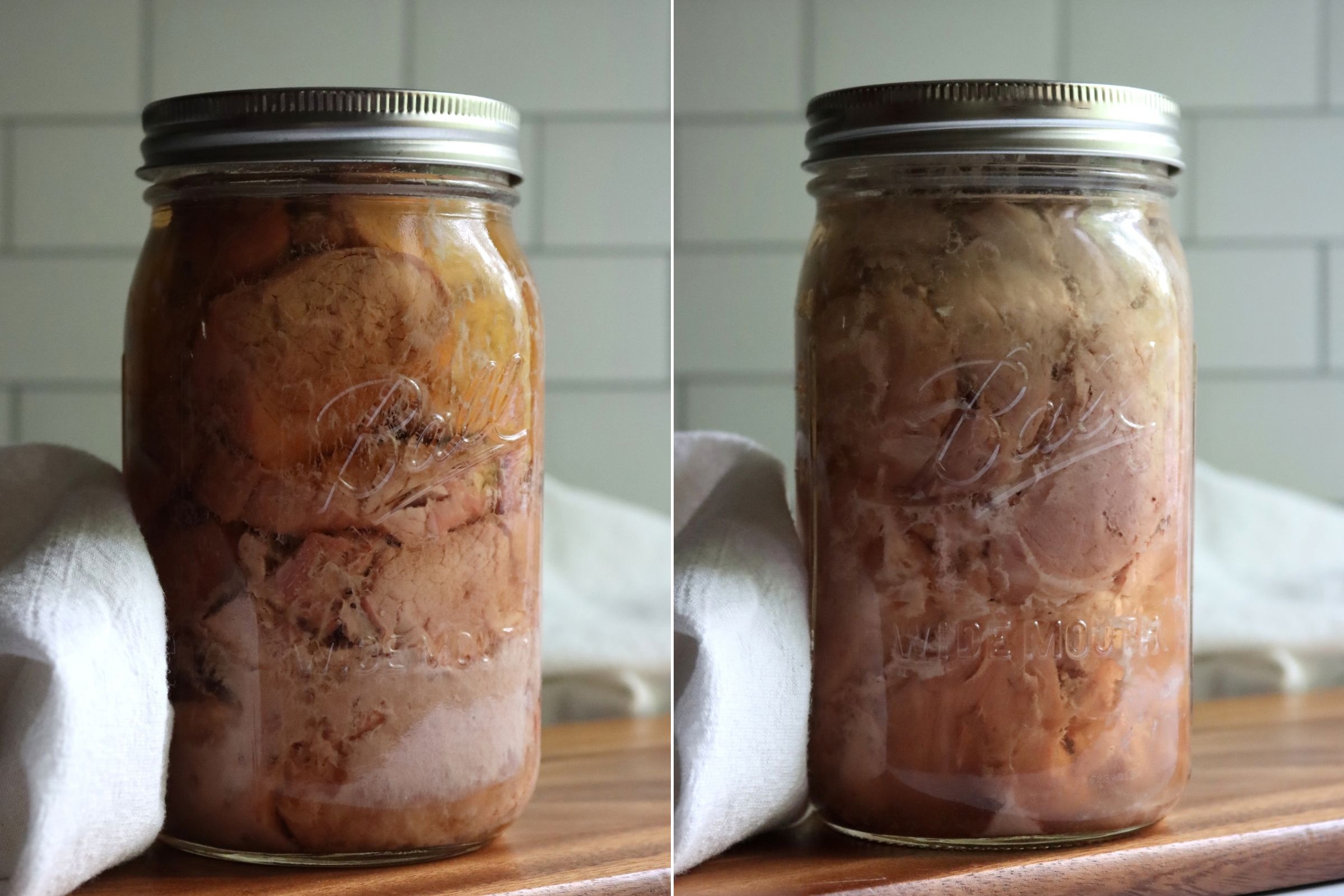
Set them on a towel with an inch of space around each one, somewhere out of a draft, and leave them 12 to 24 hours. A little fat floating at the top and cloudy liquid underneath are both normal in a meat jar.
Altitude Adjustments
With pressure canning, the canning time is always 75 minutes for pints and 90 minutes for quarts, at any altitude. Only the pressure changes as you go up, and here are the altitude adjustments for pressure canning.
For dial gauge canners:
- 0 to 2,000 feet: 11 lbs pressure
- 2,001 to 4,000 feet: 12 lbs pressure
- 4,001 to 6,000 feet: 13 lbs pressure
- 6,001 to 8,000 feet: 14 lbs pressure
For weighted gauge canners:
- 0 to 1,000 feet: 10 lbs pressure
- Above 1,000 feet: 15 lbs pressure
Hot Pack vs. Raw Pack Pork Tenderloin
In the jar, the two packs look almost the same. The difference shows up when you open them.
The hot-packed slices came out whole and held up in gravy for a real sit-down dinner. The raw pack fell apart into shreds as I poured it out, which is fine for tacos but not much like tenderloin.
Ways to Use Canned Pork Tenderloin
The canner cooks the meat through, so everything from here is reheating. Drain a jar and keep the liquid, since it’s the start of a good gravy.
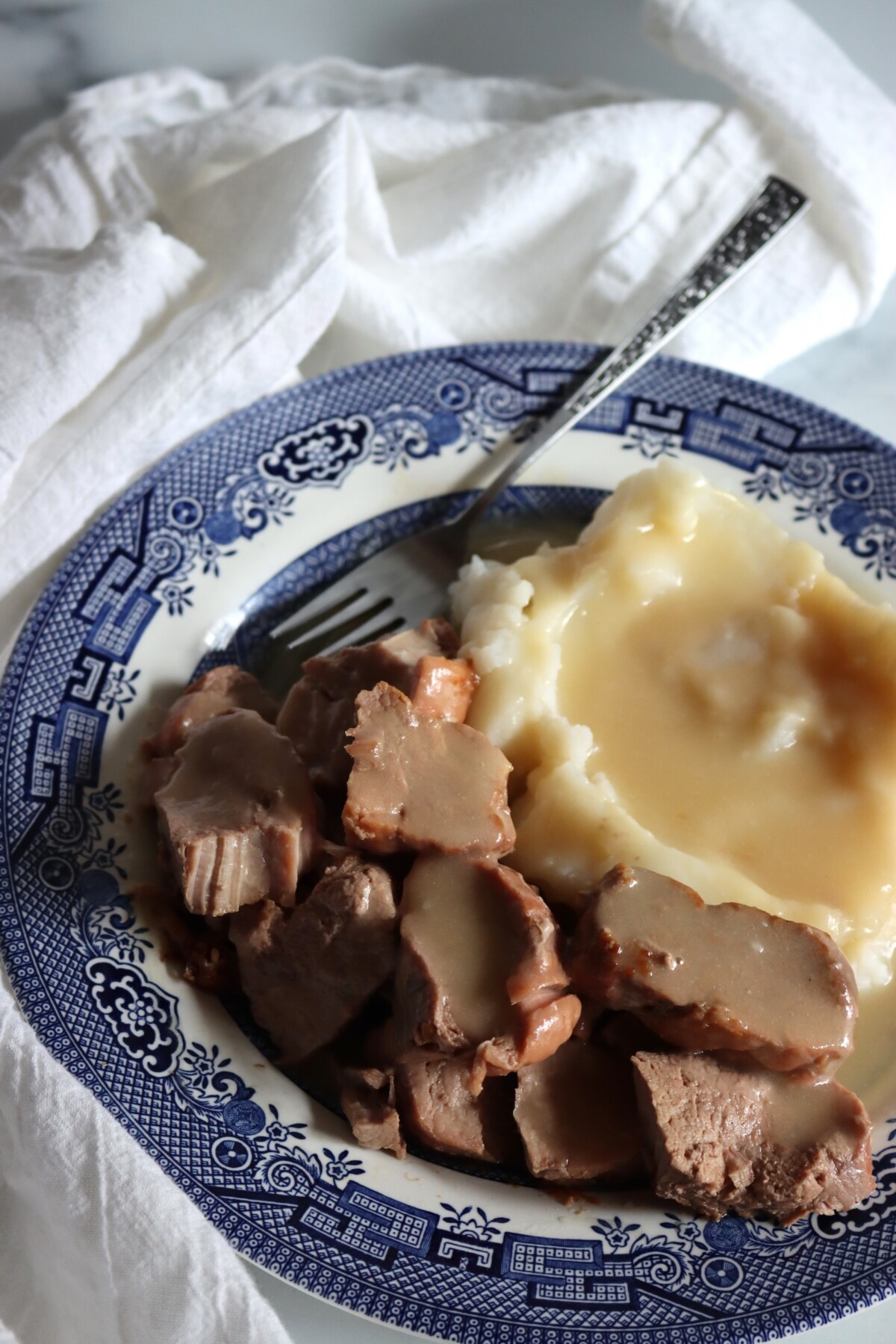
Hot-packed medallions are the jars for a sit-down dinner. Make a gravy from the jar liquid, warm the medallions in it, and serve them over potatoes, which is the meal I made with my first jars.
Add a jar from my list of potato canning recipes, and the whole dinner comes off the pantry shelf.
Raw-packed jars come out closer to shredded pork, so use them where shreds belong. Warm them in salsa for tacos, in barbecue sauce for sandwiches, or in coconut milk and curry paste over rice.
If you’d rather can the sauce with the meat, pork in spicy broth and canning vindaloo curry both go into the jar sauced.
Either pack drops into fried rice, ramen, pozole, and bean soups at the end of cooking, jar liquid and all. Add it in the last few minutes, since it’s tender already and a long simmer just breaks it down.
Storage and Shelf Life
Once the jars have cooled, press the center of each lid. A sealed lid curves down and doesn’t move or click. Take the rings off before you store them, because a ring can hold a failed lid in place and hide a jar that never sealed.
Label the jars and store them somewhere cool, dark, and dry. Canned pork is best within a year and stays good for about two. It’s safe past that as long as the seal holds, but the texture keeps softening.
Put any jar that didn’t seal in the fridge and eat it within a few days. You can also reprocess it with a new lid for the full time, as long as you catch it within 24 hours. Once you open a sealed jar, refrigerate it and use it within three or four days.
There are more than 30 meat canning recipes in my beginner’s guide to canning meat.
Yield Notes
Two pounds of trimmed tenderloin fills a quart, and 1 pound fills a pint. Tenderloins run a little over a pound each, and the store packs them in pairs, so one package fills one quart jar almost exactly.
Trimming costs about ten percent. I lost about half a pound off four and a half pounds of tenderloin. So 7 quarts takes around 16 pounds as purchased, and 9 pints takes about 10.
The liquid changes more than the meat does. Budget about 1/4 cup a quart for a tight raw pack and about a cup a quart for a hot pack, and keep extra hot broth on hand.
Halve it or double it freely. The only minimum is what your canner needs to run, usually 2 quarts or 4 pints.
Canning Pork Tenderloin FAQs
Most questions about canned tenderloin come down to the canner, the pack, and how long the jars keep.
No. Pork is low acid, and a water bath canner doesn’t get hot enough to make meat safe on the shelf. There’s no tested water bath process for any meat at any jar size, and processing it longer in boiling water doesn’t fix that. It needs a pressure canner. If you don’t have one, freeze the tenderloin instead.
Hot pack it if you want slices. I canned it both ways, and the hot-packed medallions held together well enough for a real meal with gravy and potatoes. The raw pack fell apart as it came out of the jar and looked more like shredded pork. Both process 75 minutes for pints and 90 for quarts, so it’s a texture choice. If you want shredded pork, you’re better off canning pork shoulder.
It comes out firmer and leaner than canned pork shoulder, which has fat and collagen that a tenderloin doesn’t. Firm isn’t the same as dry, and the jar liquid keeps it moist as long as the meat stays covered, which is another reason to pack it in broth. I serve the hot-packed slices in gravy.
Yes, in small amounts. Dry seasoning is fine up to 1 teaspoon per pint or 2 teaspoons per quart. Garlic powder and paprika are the two I use most, and onion powder, black pepper, cumin, chili powder, and dried oregano all work. Skip sage, which turns bitter in a jar. What can’t go in is anything that thickens or coats: flour, cornstarch, gravy mix, oil, butter, dairy, or a bottled sauce with thickener in it.
Sealed jars in a cool, dark cupboard are best within a year and stay good about two. They’re safe longer than that as long as the seal holds, and the texture just softens. Store them with the rings off so a failed seal shows itself, and refrigerate an opened jar and use it within three or four days.
Pork Canning Recipes
More ways to fill the shelf with pork.
If you tried this Canning Pork Tenderloin recipe, or any other recipe on Creative Canning, leave a ⭐ star rating and let me know what you think in the 📝 comments below!
And make sure you stay in touch with me by following on social media!
Canning Pork Tenderloin
Equipment
- Canning Jars, Lids and Bands
- Bubble remover
- Large saucepan
Ingredients
- 16 lbs pork tenderloin, as purchased, see notes
- boiling broth or water, see notes
- salt, optional, 1 tsp per quart or 1/2 tsp per pint
Instructions
- Trim the silverskin and any surface fat off each pork tenderloin, working with well-chilled meat.
- Bring the broth or water to a boil, then reduce it to a simmer and keep it hot.
- Add salt to each empty jar if you are using it.
- For a hot pack, roast the whole tenderloins until they are 1/3 to 1/2 done, then slice them crosswise into even rounds 1/2 to 1 inch thick.
- For a raw pack, cut the trimmed tenderloins into even pieces 1/2 to 1 inch thick.
- Pack the slices into warm, clean jars, leaving 1 inch headspace, without pressing them into a solid mass.
- Ladle the hot liquid over the meat, keeping 1 inch headspace.
- Release trapped air bubbles, top up the liquid if the level dropped, wipe the rims and threads clean, and apply two-piece lids until fingertip tight.
- Load the jars into the pressure canner, fasten the lid, and vent a steady stream of steam for 10 minutes before adding the weight or closing the petcock.
- Process at 10 pounds pressure in a weighted gauge canner or 11 pounds in a dial gauge canner, quarts for 90 minutes or pints for 75 minutes, adjusting for altitude (see notes).
- Turn off the heat and let the canner return to zero pressure on its own.
- Wait 5 minutes, then remove the weight or open the petcock, unfasten the lid, and open it away from your face.
- Leave the jars in the canner for 10 minutes, then lift them onto a towel-lined counter with space between them and let them cool undisturbed for 12 to 24 hours.
- Check the seals, remove the rings, label the jars, and store them in a cool, dark place.
Notes
- 0 to 2,000 feet: 11 lbs
- 2,001 to 4,000 feet: 12 lbs
- 4,001 to 6,000 feet: 13 lbs
- 6,001 to 8,000 feet: 14 lbs
- 0 to 1,000 feet: 10 lbs
- Above 1,000 feet: 15 lbs
Nutrition
Nutrition information is automatically calculated, so should only be used as an approximation.
More Pressure Canning Meat Recipes
More meat for the pressure canner.
Find the perfect recipe
Searching for something else? Enter keywords to find the perfect recipe!