
This post may contain affiliate links. Please see our disclosure policy.
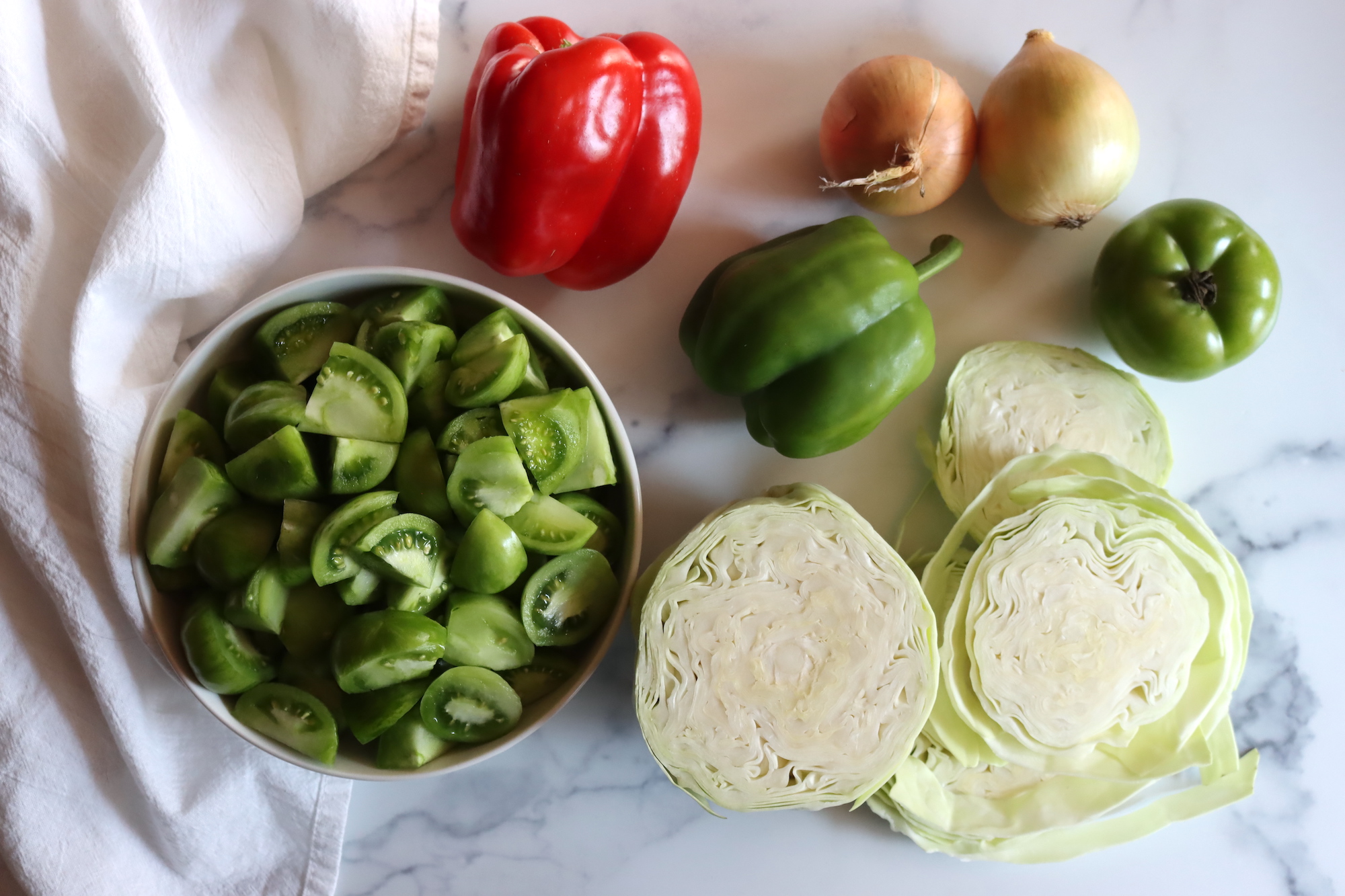
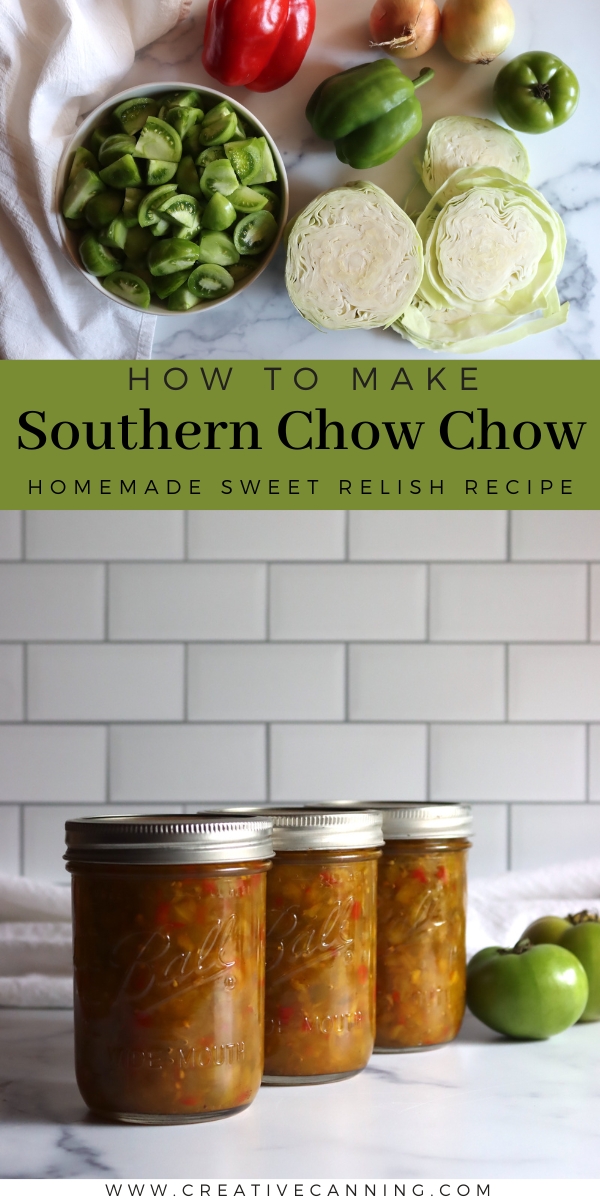
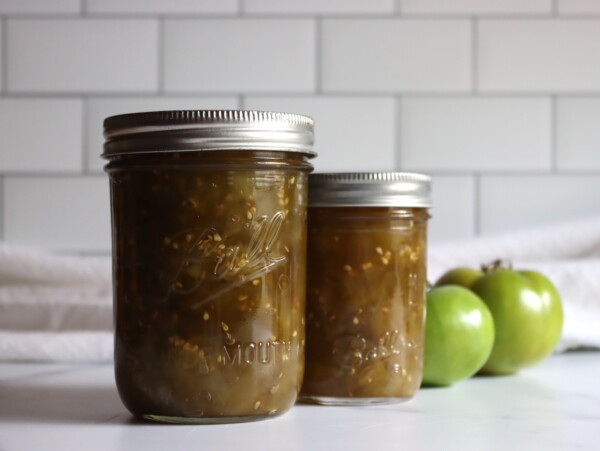
Southern chow chow is an old-fashioned green tomato relish, chopped fine and packed in a sweet, tangy mustard brine. It goes on hot dogs, burgers, beans, and fried chicken, and it’s the first thing I make when the frost is coming.
It’s my favorite relish I’ve ever made, and I’ve tested dozens by now. The reviews say I’m not the only one.
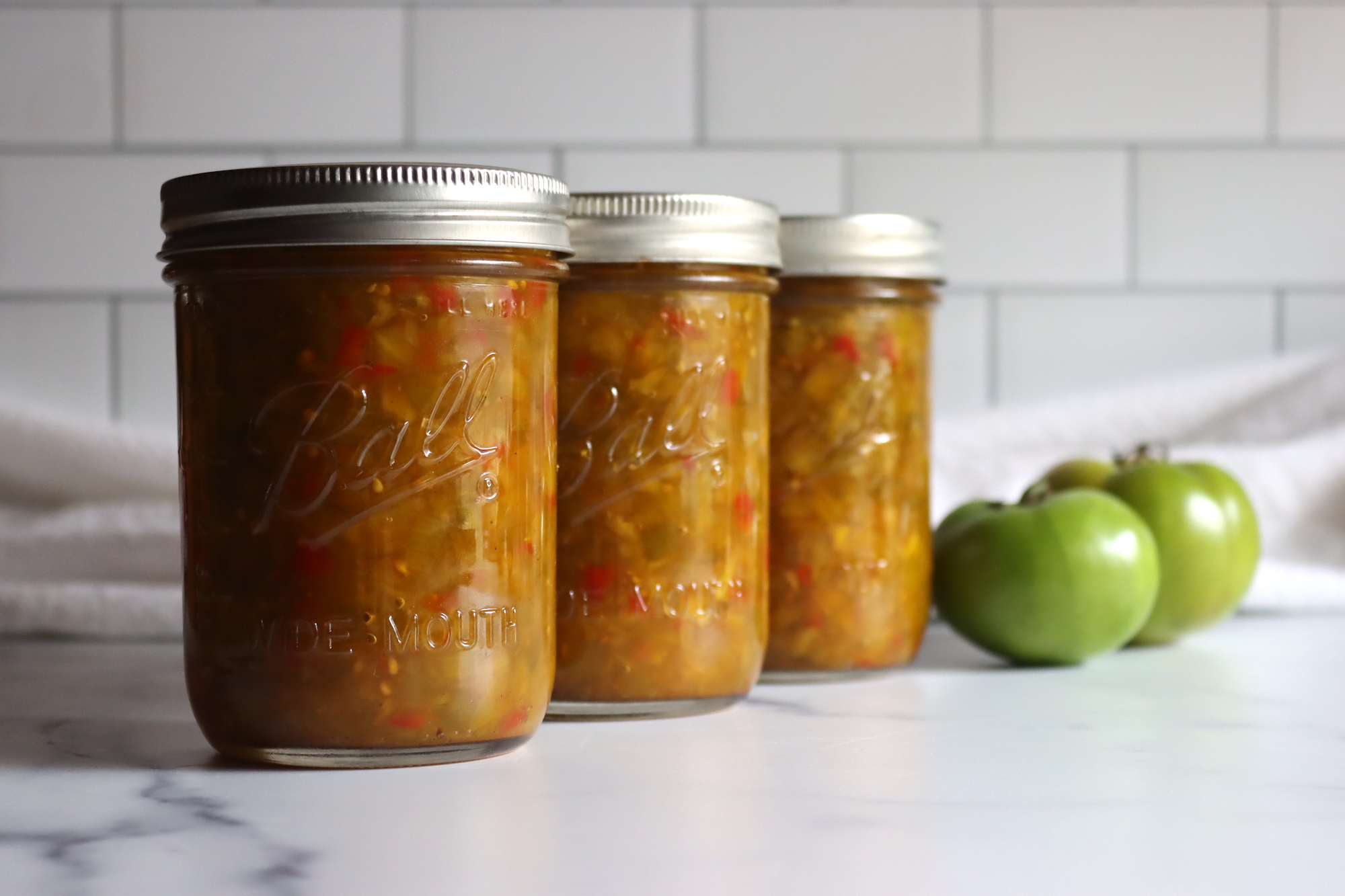
Table of Contents
- Notes from My Kitchen
- Quick Look at the Recipe
- Types of Chow Chow (or Piccalilli)
- Choosing Green Tomatoes for Chow Chow
- Ingredients for Southern Chow Chow
- Brine Strength and Substitutions
- How to Make Southern Chow Chow
- Canning Southern Chow Chow
- Altitude Adjustments
- Tips for the Best Southern Chow Chow
- Ways to Use Southern Chow Chow
- Storage and Shelf Life
- Yield Notes
- Southern Chow Chow FAQs
- Green Tomato Canning Recipes
- Southern Chow Chow Relish Recipe
- Relish Canning Recipes
This recipe has been reviewed for safety and accuracy by a Master Food Preserver certified through the University of Cornell Cooperative Extension.
Chow chow is a Southern staple that turns the last of the tomato patch into something you actually want on the table. This version is built on green tomatoes and cabbage, with dry mustard, celery seed, and turmeric as the traditional time-tested seasoning mix.
The flavor is sweet and sharp at the same time, and it holds its texture in the jar because the vegetables are salted and drained the night before. That one step is the difference between good chow chow and a soggy one. If you want to see how the regional versions compare, I have a whole roundup of chow chow and piccalilli recipes.
This one is adapted from The Complete Book of Pickling. It’s a close cousin to two Ball recipes: the chow chow relish in the Ball Blue Book, and the piccalilli relish in the Ball Complete Book of Home Preserving. The vegetables and the method are nearly identical across all three.
What sets this one apart is the spice blend, which is more traditional in southern communities, and a higher vinegar ratio than the Blue Book chow chow. The acid ratio and the processing time both fall within National Center for Home Food Preservation guidelines for water bath canned relishes.
Notes from My Kitchen

I’ve tested dozens of chow chow recipes by now, and six of the regional versions have their own posts on this site. This is the one I keep coming back to. It’s my favorite relish I’ve made, and I don’t hand that out lightly.
It’s a two-day recipe and I still make it every single year, which is about the highest compliment I give a canning recipe. The green tomatoes come out of the same frost-eve harvest as the pickled green tomatoes, so it all gets done in one long week in October.
Quick Look at the Recipe
- Recipe Name: Southern Chow Chow
- Recipe Type: Relish Canning Recipe
- Canning Method: Water Bath Canning
- Prep Time: About 30 minutes, plus an overnight salt soak
- Cook Time: About 1 hour
- Canning Time: 10 minutes for half pints and pints
- Yield: About 3 pints, or 6 half pints
- Jar Sizes: Quarter pints, half pints, or pints
- Headspace: 1/2 inch
- Ingredients Overview: Green tomatoes, cabbage, bell peppers, onion, cider vinegar, sugar, and pickling spices
- Safe Canning Recipe Source: Adapted from The Complete Book of Pickling, a close cousin to the chow chow relish in the Ball Blue Book, with acid ratio and process time inside NCHFP guidelines for relishes
- Difficulty: Easy, though it runs across two days
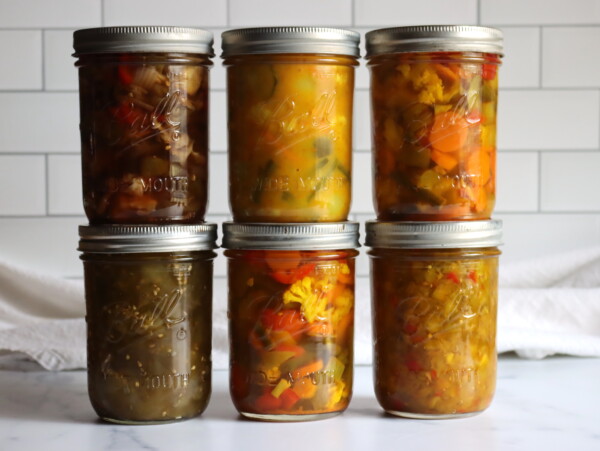
- Similar Recipes: Milder and simpler is Canadian chow chow, chunkier is Amish chow chow. For a cucumber version, try sweet pickle relish.
Types of Chow Chow (or Piccalilli)
Southern chow chow is its own distinct thing. It’s finely chopped, sweet and tangy, built on green tomatoes and cabbage, with dry mustard and turmeric carrying the flavor. Every region has its own version though, and they’re different enough that it’s worth knowing which one you’re making before you commit a bushel of tomatoes to it.
Canadian green tomato chow chow pares the whole thing back to green tomatoes and onions, which makes it the simplest of the family and the best one for a huge harvest. New England piccalilli keeps the cabbage and green tomatoes but cuts them in bigger chunks and sweetens them with brown sugar and warm spices.
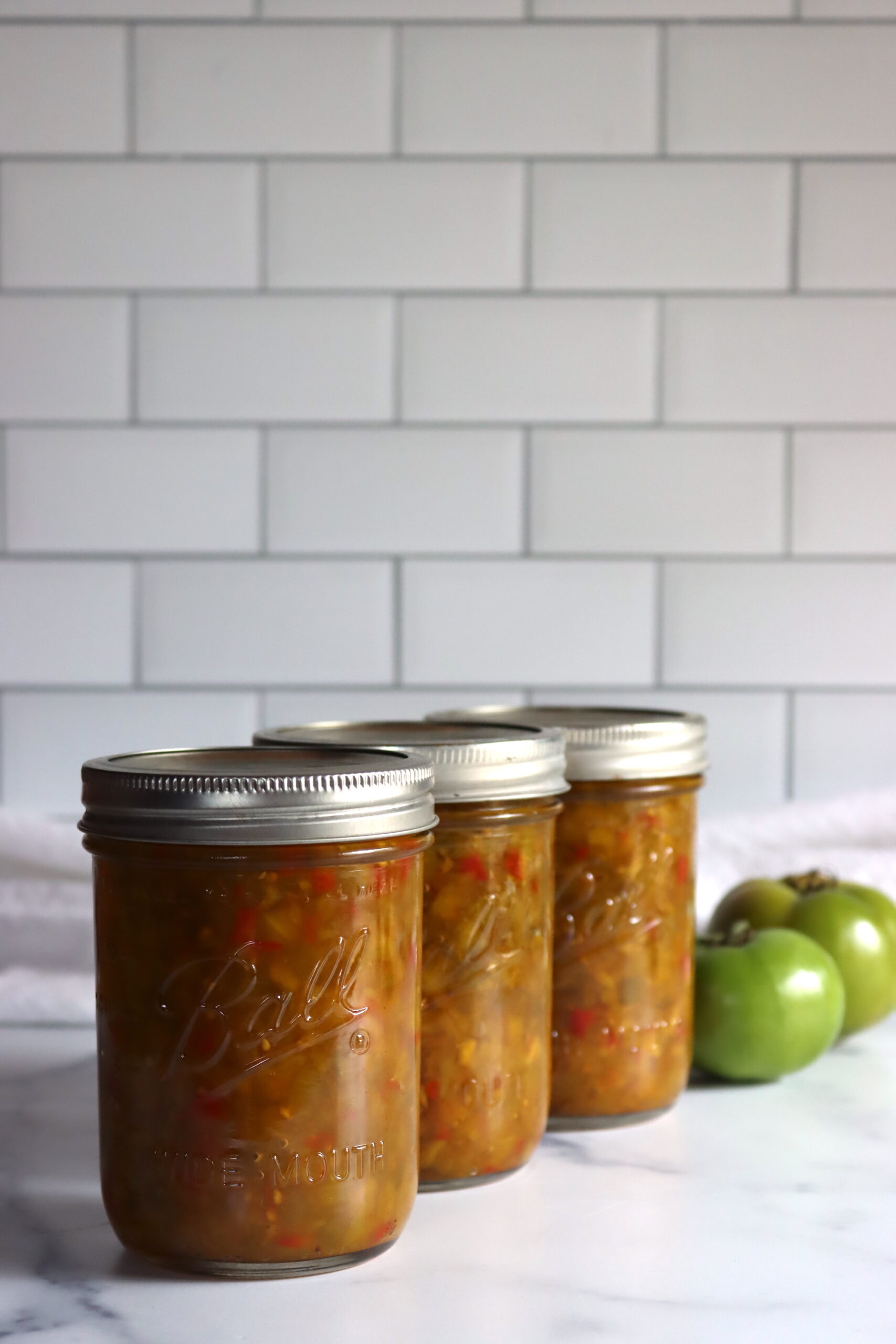
Amish chow chow is a different animal entirely, closer to a jardiniere than a relish, with cauliflower, beans, carrots, and corn left in big pieces. And British piccalilli is where the whole family started: a thick mustard pickle rather than a chopped relish, sharp and bright yellow.
There are more regional versions than there are recipes for them, including Tennessee, Appalachian, Midwestern, Chicago, and Pacific Northwest styles. I’ve laid out how they differ in the full chow chow and piccalilli roundup.
Choosing Green Tomatoes for Chow Chow
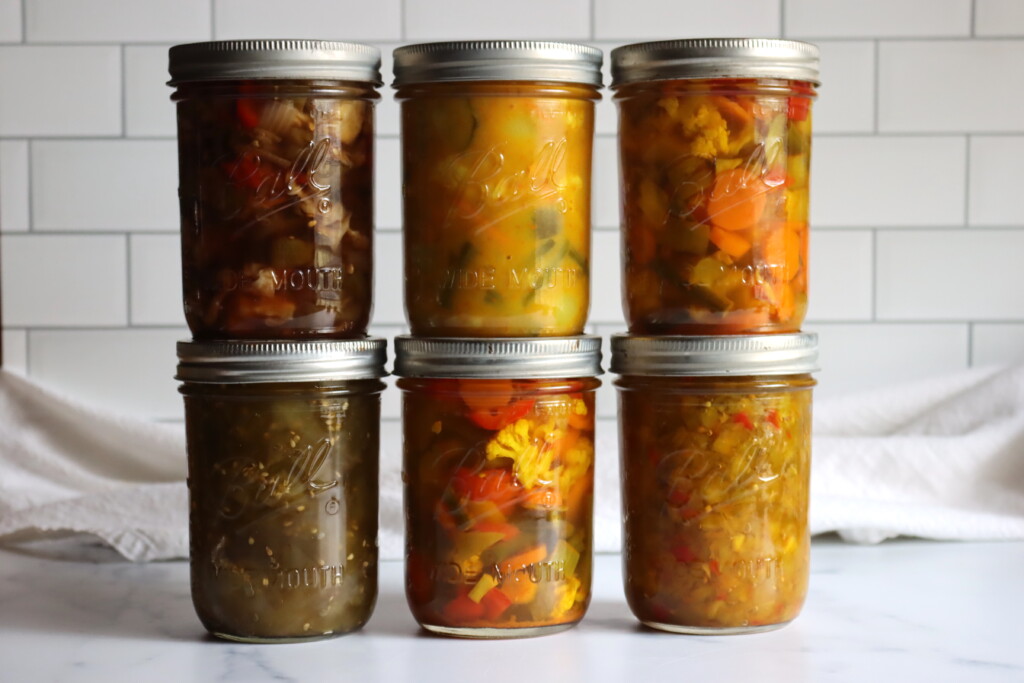
Use tomatoes that are still fully green and firm. Some varieties are green when they’re ripe, and those are good eating but wrong for this. You want fruit that’s still properly unripe, because that’s where the tartness and the firm texture come from. If you have more than this recipe takes, there are plenty of other green tomato canning recipes to work through.
Cabbage is the other half of the base. Cabbage on its own isn’t safe to can, apart from canning sauerkraut, but it’s fine in a tested relish where there’s enough vinegar to pickle everything in the jar.
Ingredients for Southern Chow Chow
This is a long ingredient list for a short recipe. Most of it is vegetables, and the rest is the brine they cook in.
Full amounts are in the recipe card at the bottom of the post. What matters up here is what each part does and where you have room to move.
- Green Tomatoes: Firm and fully unripe, chopped fine. They’re the backbone of the flavor and they hold their texture better than a ripe tomato ever would.
- Cabbage: Green cabbage, chopped fine. It softens into the relish and stretches the batch.
- Bell Peppers: A mix of green and red. The red is mostly for color, and a jar with both looks the way chow chow is supposed to look.
- Onion: Any yellow or sweet onion, chopped as fine as the rest.
- Pickling Salt: For the overnight soak only. Use pickling or canning salt rather than table salt, since iodine and anti-caking agents cloud things up. Morton canning and pickling salt is what I keep on the shelf.
- Water: Enough to cover the vegetables in the bowl for the soak. It gets drained off and doesn’t go in the jars.
- Cider Vinegar: Apple cider vinegar at 5 percent acidity. It’s the safety control and it’s most of the flavor, so it doesn’t get cut.
- Sugar: Plain granulated. Chow chow is a sweet relish, and the sugar is what separates it from a plain pickle.
- Dry Mustard, Celery Seed, Turmeric, and Allspice: The mustard gives it the bite, the turmeric gives it the color, and the celery seed and allspice fill in behind. My homemade pickling spice is a good backup if you’re short one.
The salt doesn’t stay in the finished relish. You rinse it back off in the morning, which is why the ingredient list looks saltier than the jars taste.
Brine Strength and Substitutions
The vinegar is the safety control here, the same as in any pickle. The sugar and the spices are flavor, so those you can move around to suit yourself.
The vegetables are flexible within their own type. Swap hot peppers for sweet, or green for red, as long as the total pepper volume stays the same. Same with the cabbage: red or savoy both work, but keep it cabbage.
What doesn’t work is trading across types, adding vegetables on top of the recipe, or cutting the vinegar to make room for extras. The tested volume of each vegetable is what the process time was built around.
Just don’t reduce the vinegar!
I was looking for a recipe that was close to the ingredients in Mrs. Renfro’s mild chow chow, and this recipe fit the bill. I prepared it exactly as written and boy oh boy! It was not identical in flavor to the one I mentioned, it was better! We like to use it as a topper for our spaghetti.
How to Make Southern Chow Chow
Everything gets chopped fine and even, about 1/4 inch. You can do that with a knife, but the tool that changed relish season for me is the Breville Sous Chef food processor, which dices instead of just chopping. You feed the vegetables in whole, and it hands back an exact dice at whatever size you set it to.
I make a lot of relish, and that machine paid for itself the first season on time savings alone. Even dice is most of what makes a good relish, and getting it without standing at a cutting board for an hour is worth every bit of the counter space. If you’re using a standard food processor instead, pulse it rather than letting it run, or you’ll end up with slush.
Plan on two days. The chopping and the soak happen on the first day, the cooking and the canning on the second. Day two runs about an hour and a half, and most of that is a slow simmer you stir now and then.
Salt Soak the Vegetables
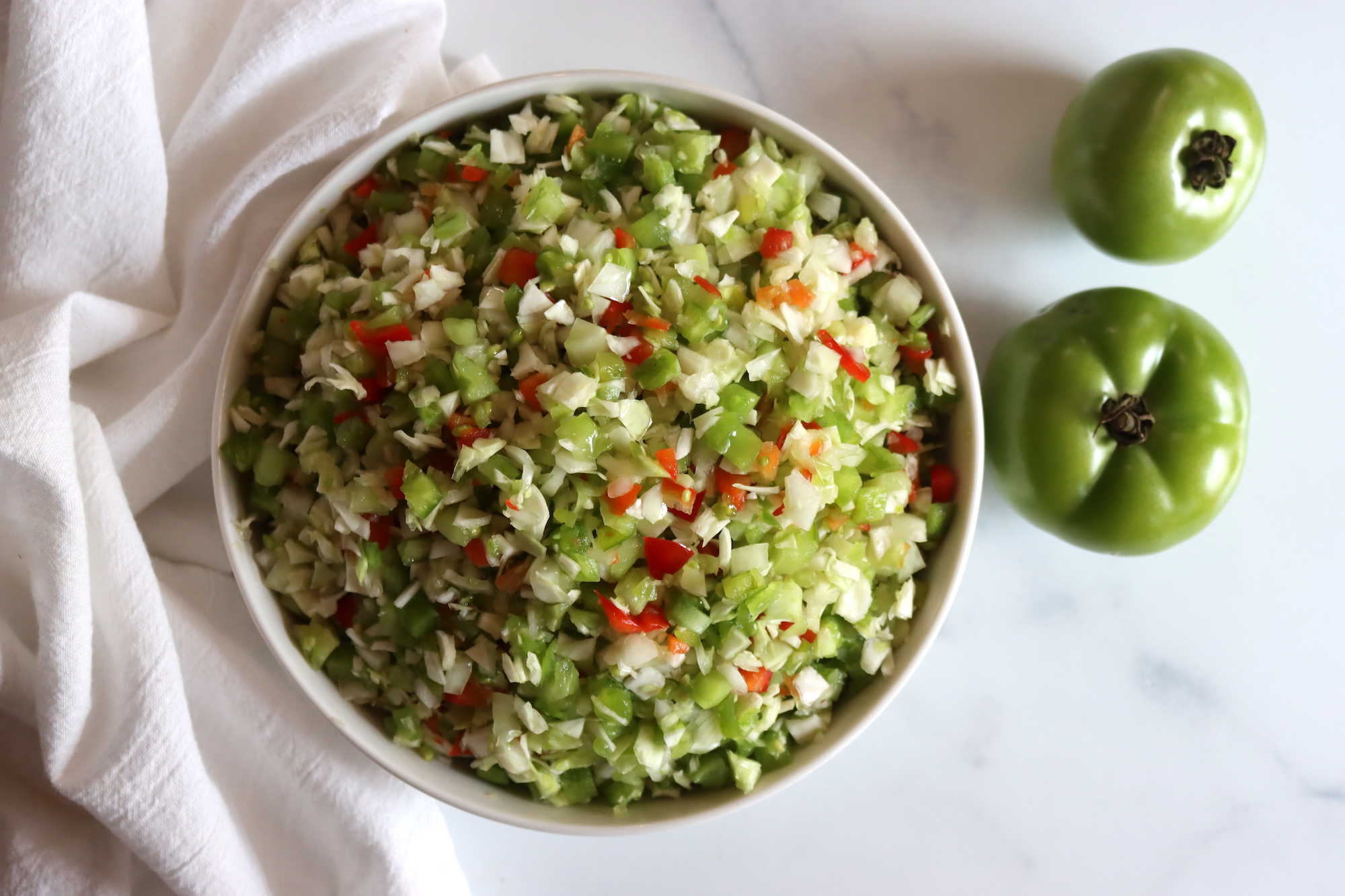
Put the chopped vegetables in a large non-reactive bowl, mix the salt through them, and add cold water to cover them by an inch. Set a plate on top to hold everything under the brine, cover the bowl, and leave it somewhere cool for 8 to 18 hours. Overnight is easiest.
In the morning, drain the vegetables and rinse them well, then drain again and squeeze the water out. I work in batches in a colander and press hard. Don’t skip any of it. The soak pulls water out so the finished relish isn’t soggy, and the rinse takes the salt back off so the jars don’t taste of it.
Cook and Fill the Jars
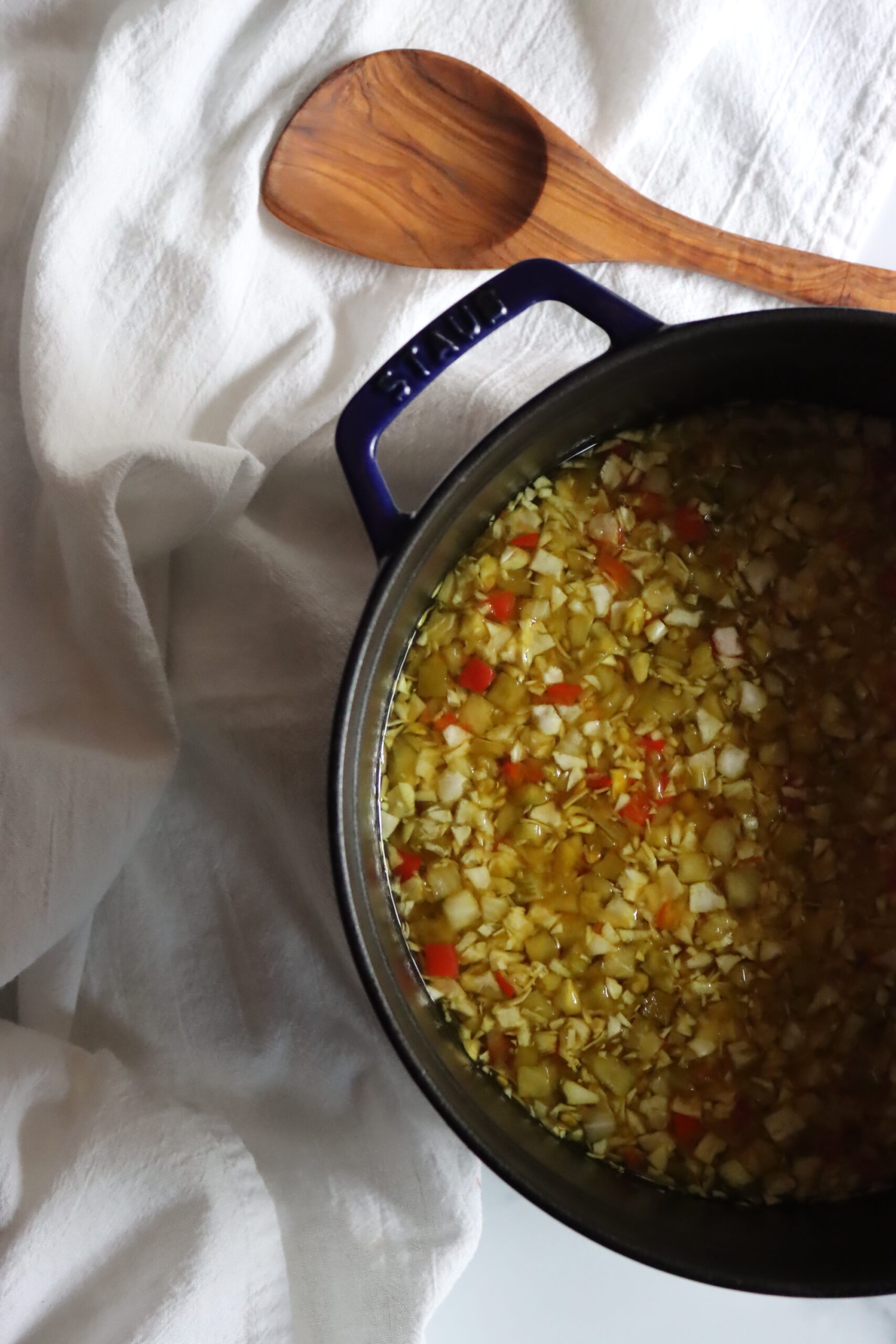
Combine the sugar and the spices in a large pot and gradually whisk in the vinegar. Bring it to a boil over medium heat, stirring often, until the sugar dissolves. Turn the heat up, add the drained vegetables, and bring it back to a boil.
Then turn it down and let it boil gently for about 45 minutes, stirring often. It’s done when the vegetables have gone translucent and the mixture has thickened. That long slow boil is what turns chopped vegetables into relish, and it’s where the yield comes from, so don’t cut it short.
Pack the hot relish into hot jars, leaving 1/2 inch headspace. A wide mouth canning funnel saves a lot of wiping here, since chopped relish goes everywhere. Work the bubbles out with a chopstick, top up if the level drops, then wipe the rims and cap with two-part canning lids.
Canning Southern Chow Chow
Get your water bath canner heating before you start the brine, so it’s ready when the jars are full. If this part is new to you, my guide to water bath canning for beginners walks through the whole setup.
Process half pints and pints for 10 minutes, starting the timer when the water comes back to a full rolling boil. Adjust the time for your altitude using the chart below.
When the time is up, turn off the heat and let the jars stand in the canner 5 minutes before you lift them out. That rest keeps the brine from siphoning out as they come up. Move them to a towel on the counter and leave them alone for 12 to 24 hours.
Check the seals the next day. Anything that didn’t seal goes in the refrigerator to eat first. Label the sealed jars and put them somewhere cool and dark.
Altitude Adjustments
Water boils at a lower temperature as you go up in elevation, so the jars need longer in the canner. Use these times for chow chow:
- 0 to 1,000 feet: Half pints and pints 10 minutes
- 1,001 to 6,000 feet: Half pints and pints 15 minutes
- Above 6,000 feet: Half pints and pints 20 minutes
Start the timer once the water is back to a full rolling boil, not when the jars go in.
Tips for the Best Southern Chow Chow
Chop fine, and chop evenly. This is the one place the recipe rewards patience. Uneven pieces give you a relish that’s mush in one spoonful and crunch in the next.
Drain harder than you think you need to. Press the vegetables down in the colander and let them sit a few minutes before they go in the pot. Water left in the vegetables waters down the brine and gives you a loose relish.
Ways to Use Southern Chow Chow
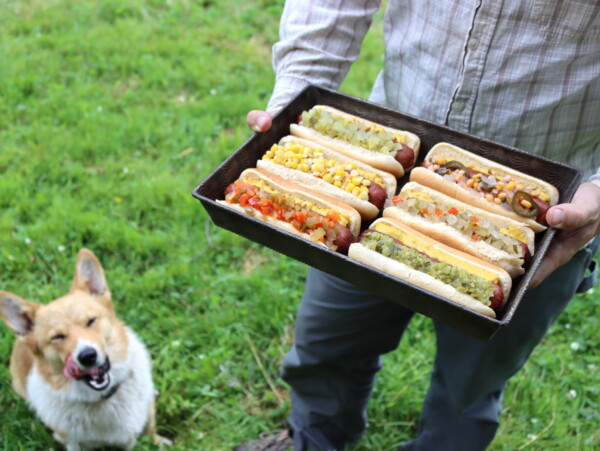
Most jars here end up on hot dogs and burgers. It’s also the traditional partner for a bowl of pinto or navy beans with cornbread, which is how it earned its place in the first place. One reader puts it on spaghetti, which I didn’t see coming and now recommend.
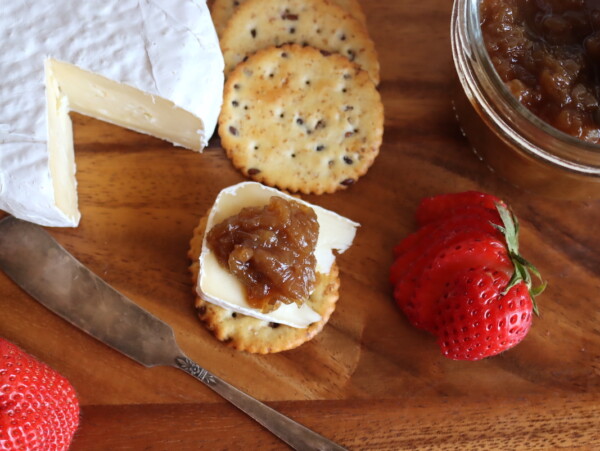
Spoon it over fried chicken or pulled pork, stir it into potato salad or deviled eggs, or set it on a cheese board next to something sharp. It’s sweeter than classic pickle relish, so it does more than just add vinegar to whatever it lands on. If you’re still swimming in tomatoes after this, my sister site has a long list of green tomato recipes for the fresh eating side.
Storage and Shelf Life
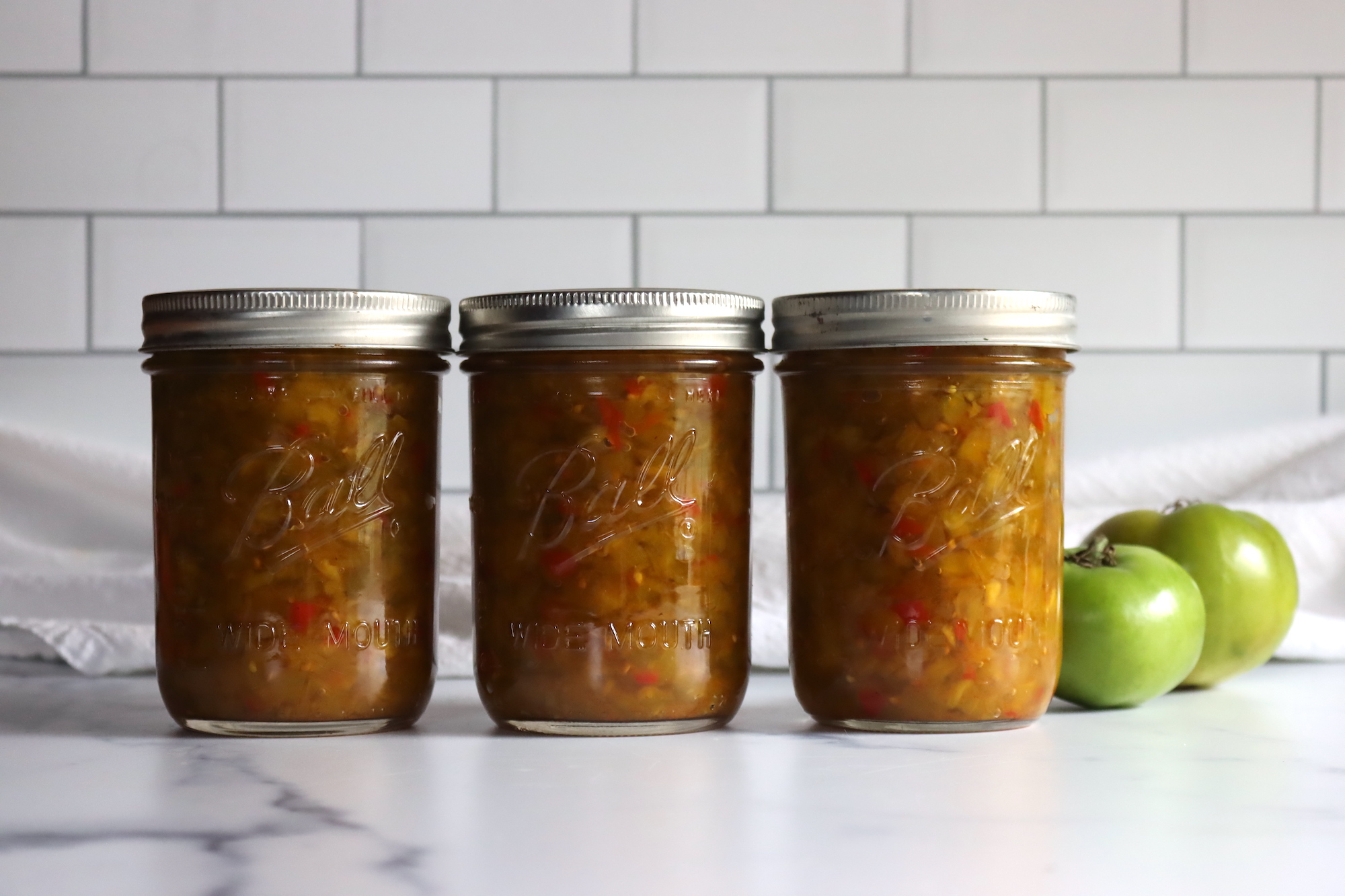
Sealed jars hold their quality for about a year on the pantry shelf, and they stay safe past that as long as the seal is good. Store them cool and dark with the bands off. Refrigerate after opening.
Wait two weeks before you open the first jar. Chow chow made yesterday tastes like salty vegetables in vinegar. Chow chow that’s sat a couple of weeks tastes like chow chow.
Any jar that didn’t seal goes straight in the refrigerator and keeps a couple of months there.
Yield Notes
This makes about 3 pints, or 6 half pints. You start with 11 cups of chopped vegetables and they cook down by more than half during the 45 minute simmer, which is where that yield comes from.
It doubles cleanly if you have the tomatoes for it. Quarter pint jars are worth doing for gifts, and they process for the same 10 minutes as half pints.
Southern Chow Chow FAQs
There are years of reader questions on this one, so here are the ones that come up most.
You cannot reduce the vinegar. It’s what makes the relish safe to can, so it stays exactly as written. Vegetables can be swapped within their own type, hot peppers for sweet or red cabbage for green, as long as that vegetable’s total volume stays the same. What you can’t do is trade across types, add vegetables on top of the recipe, or cut the vinegar to make room for them.
No. Green tomatoes are almost never peeled in canning recipes. I tried peeling them once for a green tomato soup and learned why: they’re nearly impossible to peel while they’re still green. Green tomatoes follow tomatillo guidance for canning instead of tomato guidance, so they’re not peeled.
It’s 1/4 cup of canning salt mixed through the chopped vegetables, with enough water to cover. Don’t worry about getting it exact. The salt’s job is to pull water out rather than to season, and you rinse most of it back off in the morning.
Yes. Swap some of the bell pepper for jalapeño rather than adding it on top, so the vegetable total stays the same. A couple of seeded, finely diced jalapeños or other hot peppers give it a real kick without changing the ratio.
Stick with quarter pints, half pints, and pints. Relish is a dense pack and the tested times are for the smaller jars, so there’s no process time for quarts.
Green Tomato Canning Recipes
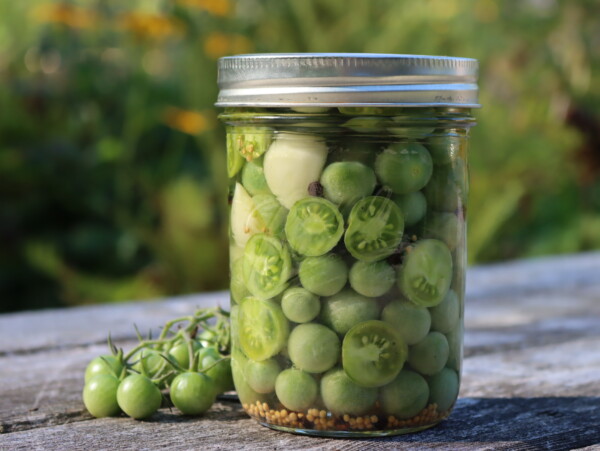
Chow chow is one of many ways to deal with a bucket of green tomatoes.
If you tried this Southern Chow Chow recipe, or any other recipe on Creative Canning, leave a ⭐ star rating and let me know what you think in the 📝 comments below!
And make sure you stay in touch with me by following on social media!
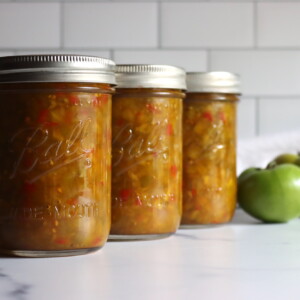
Southern Chow Chow Relish
Equipment
- Canning Jars, Lids and Bands
Ingredients
Vegetables (Day 1)
- 4 cups green tomatoes, chopped fine
- 4 cups green cabbage, chopped fine
- 2 cups bell peppers, green and red, chopped fine
- 1 cup onion, chopped fine
- 1/4 cup pickling salt
- Water, enough to cover the vegetables
Brine (Day 2)
- 2 1/2 cups apple cider vinegar, 5% acidity
- 2 cups granulated sugar
- 1 tbsp dry mustard
- 2 tsp celery seed
- 1/2 tsp ground turmeric
- 1/4 tsp ground allspice
Instructions
Day 1
- Chop the green tomatoes, cabbage, bell peppers and onion into fine, even pieces, about 1/4 inch. A food processor works well, but pulse it rather than letting it run.
- Mix the salt through the chopped vegetables in a large non-reactive bowl and add cold water to cover them by 1 inch. Set a plate on top to weigh the vegetables down, cover, and let stand somewhere cool for 8 to 18 hours.
Day 2
- Prepare a water bath canner, jars and lids.
- Working in batches, drain the vegetables and rinse them well. Drain again and squeeze out the excess liquid, then set aside in the colander to keep draining.
- Combine the sugar and spices in a large pot and gradually whisk in the vinegar. Bring to a boil over medium heat, stirring often, until the sugar dissolves.
- Increase the heat, add the drained vegetables and return to a boil, then reduce the heat and boil gently, stirring often, for about 45 minutes, until the vegetables are translucent and the mixture is slightly thickened.
- Pack the hot relish into hot jars, leaving 1/2 inch headspace. Remove air bubbles, adjust the headspace, wipe the rims and cap with two-part canning lids.
- Process half pints and pints in a boiling water bath canner for 10 minutes, adjusting for altitude (see notes).
- Turn off the heat and let the jars stand 5 minutes, then cool them undisturbed for 12 to 24 hours before checking seals.
Notes
- 0 to 1,000 feet: 10 minutes
- 1,001 to 6,000 feet: 15 minutes
- Above 6,000 feet: 20 minutes
Nutrition
Nutrition information is automatically calculated, so should only be used as an approximation.
Relish Canning Recipes
There’s a relish for just about everything coming out of the garden.
Find the perfect recipe
Searching for something else? Enter keywords to find the perfect recipe!

What if I add a seedless small fine-diced jalapeno or two for spiciness, or maybe a pinch or two of my little dried seedless Thai peppers, ground? Anyone tried that? Or would it clash with your recipe?
Either one would work nicely. For the jalapeños, just swap them in for part of the bell peppers, keeping the total volume of peppers the same so the acid balance stays right. A pinch or two of your ground dried Thai peppers is fine to add as is, since dried spices don’t affect the safety of the recipe. Enjoy!
I need to know the processing time for pint jars for chowchow where’s all the processing times for all of this stuff
The processing time is listed in three separate places in the recipe card (times at the top, in the step by step instructions and in the recipe card notes with altitude adjustments). It’s also listed twice in the post body. Did you see the printable recipe card? It has everything you need. In any case, the processing time is 10 minutes below 1,000 feet in elevation. For higher elevations, see the recipe card notes.
I was looking for a recipe that was close to the ingredients in Mrs. Renfros mild chow chow. This recipe fit the bill. I prepared exactly as written and boy oh boy! This was not identical in flavor as the one I mentioned, it was better! Exactly what I was looking for. We like to use it as a topper for our spaghetti.
Side note, I did not have ground mustard so I used about half a tablespoon of mustard seed which worked out perfectly.
Thank you for sharing your wonderful recipe.
Wonderful! I’m so glad you like it!
Tonight is my batch 3. Very tasty and easy to make. All three are satisfying. Thank you Ashley for Southern chow chow .
So glad to hear it!
Vegetable are soaking overnight, however I didn’t read all fore hand preparation. So I added half ripe tomatoes. So I’ll be canning my relish later today. Hope they turn out okay. And they are not chopped fine. Do you have any advice for me at this point before I start the cooking and canning process?
I think it’ll still come our reasonably good, but the flavor will be quite different than a traditional southern chow chow. I would continue on with it as written, just make sure everything it pre-cooked in the vinegar so that it’s all thoroughly pickled before it goes into the jars. Your yield may be higher, as large pieces don’t pack into jars as well, meaning you may need more vinegar to cover it all in the jars. I’d add an extra half cup of vinegar to the brine to make sure you have enough (and have a bit extra on the side incase you need more vinegar to top off jars). Best of luck with it!
This sounds wonderful. Are skins left on the tomatoes? Thank you!
Yes, they are left on the green tomatoes. Unlike red tomatoes, green tomatoes are almost never peeled in canning recipes. I was curious why, and I did try to peel them for a green tomato soup recipe I made a while back…and I learned why! They’re nearly impossible to peel when green, or at least mine were. Enjoy!
I really like the way your measurements are in cups, not a medium onion or tomatoes. A medium size to one person maybe different to another. My husband like hot chow chow so I added jalapeños. We eat it on a bowl of navy beans.
Nice! Yes, that is frustrating to me too when recipes aren’t specific. This chow chow recipe was my favorite of all the ones I tried. I bet it’s good on beans!
I’m excited to try this recipe. My Mom made Chow Chow and this is similar to the recipe she used.
This one is my absolute favorite relish I’ve made to date (and I’ve tested dozens thus far). Enjoy!
The overnight salt soak, is there a measurement for that… too salty, not salty enough…?
Yes, it’s 1/4 cup of canning salt. You mix that into the chopped veggies with enough water to cover, then let it soak overnight. Don’t worry about getting it exactly right for saltiness though. The salt’s job here is to pull moisture out of the vegetables so the relish isn’t soggy, not to season it. After the soak you drain, rinse well, and drain again, which washes most of the salt back off. The actual flavor comes from the vinegar, sugar, and spice brine. So as long as you rinse thoroughly, it won’t come out too salty or too bland. Hope that helps!
I love it!