
This post may contain affiliate links. Please see our disclosure policy.
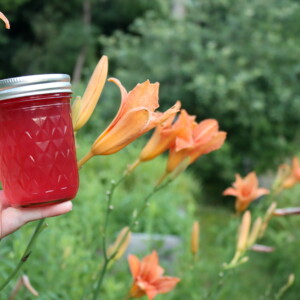
Daylily jelly is a delicious way to capture the sweet, floral flavor of summer daylilies in a preserve you can enjoy year-round. These beautiful orange flowers that pop up in gardens and along roadsides every summer are completely edible, and turning them into jelly is a fun shelf-stable project you can share with friends and family.
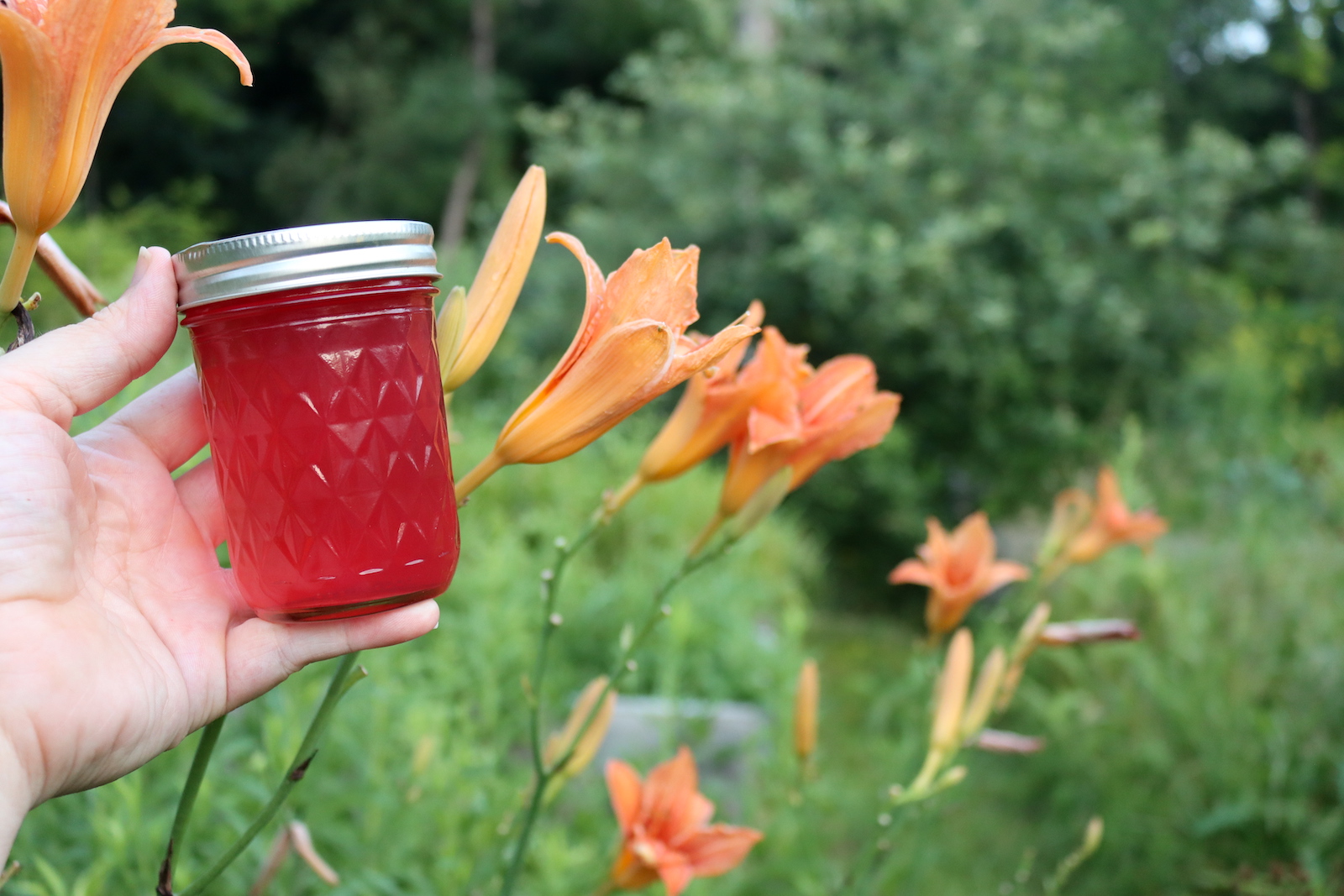
Table of Contents
- Notes from My Kitchen
- Quick Look at the Recipe
- What Does Daylily Jelly Taste Like?
- Identifying and Harvesting Daylilies
- Ingredients for Daylily Jelly
- Low Sugar Options
- How to Make Daylily Jelly
- Canning Daylily Jelly
- Altitude Adjustments
- Ways to Use Daylily Jelly
- More Ways to Use Daylilies
- Daylily Jelly FAQs
- Flower Jelly Recipes
- Daylily Jelly Recipe
- Jelly Recipes
This recipe has been reviewed for safety and accuracy by a Master Food Preserver certified through the University of Cornell Cooperative Extension.
Many people don’t realize that daylilies are edible flowers, and you can eat them root to blossom.
While foragers often treasure the tubers (they taste a bit like fingerling potatoes), the flowers are a wonderful starting point for most people because they’re so easy to harvest. You can enjoy daylily flowers fresh out of hand, toss them into salads, stuff them like squash blossoms, or preserve them as a delicate floral jelly. In Chinese cooking, dried daylily petals are known as “golden needles” and have been enjoyed for centuries in dishes like moo shu pork and hot-and-sour soup.
Making daylily jelly is quite similar to other flower jelly recipes, including borage jelly and clover jelly, both of which share that same sweet, delicate, herbal character. The process is simple: you’re essentially making a floral tea and then setting it with pectin. The lemon juice both brightens the flavor and makes the jelly safe for canning.
Notes from My Kitchen

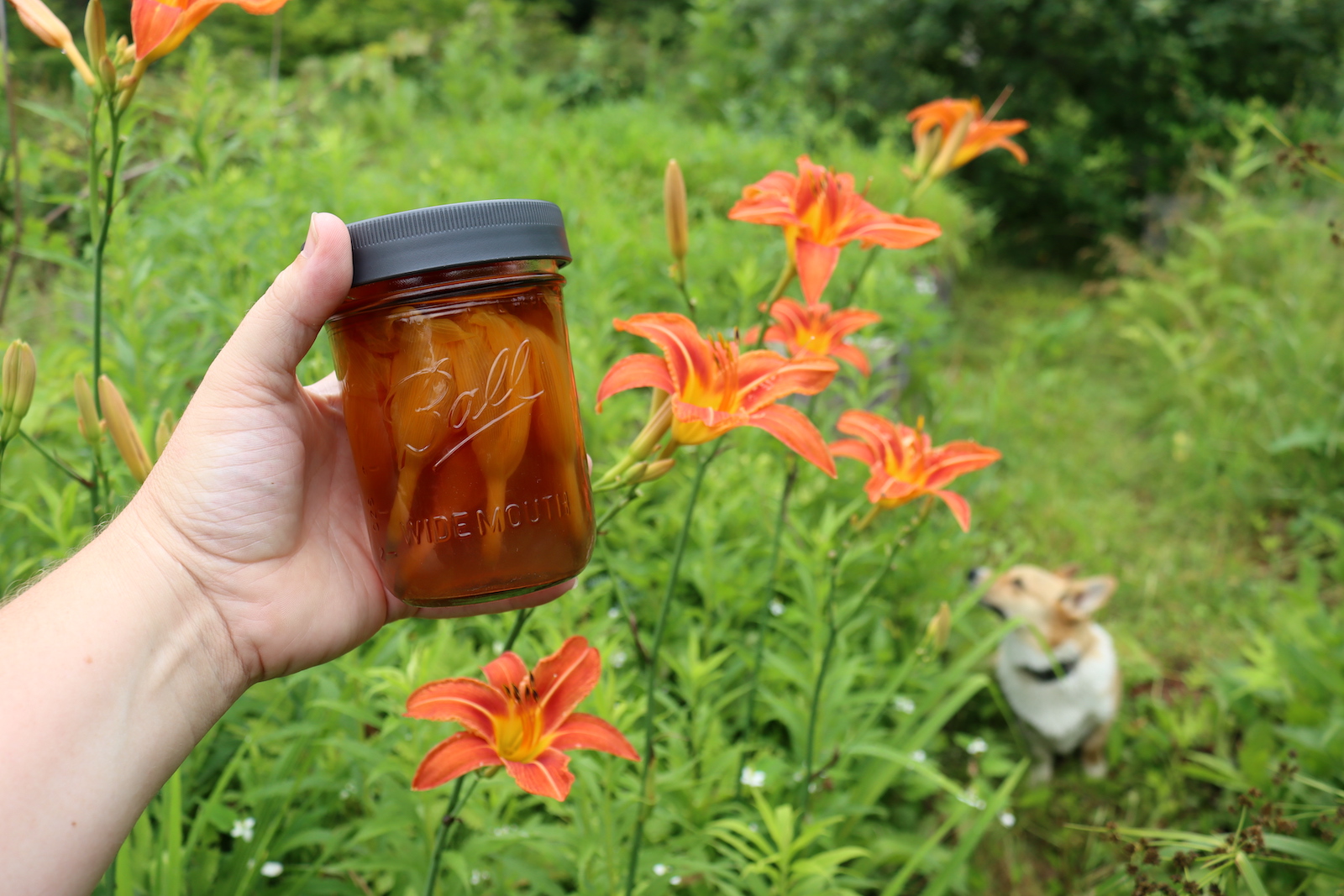
The first time I made daylily jelly, I was struck by how different it tasted from the more intensely floral jellies like lilac jelly or rose jelly. The flavor is much more subtle, with those interesting vegetal notes of fresh peas and cucumber that make it feel almost refreshing. It’s a perfect jelly for people who find some flower jellies too perfumy.
This batch makes about 5 to 6 half-pint jars, which is a nice amount for keeping some for yourself and having a few to give away. My kids think it’s magic that we can turn flowers into something spreadable for their toast.
Quick Look at the Recipe
- Recipe Name: Daylily Jelly
- Recipe Type: Flower Jelly Recipe
- Canning Method: Water Bath Canning
- Prep/Cook Time: 30 Minutes
- Canning Time: 10 Minutes
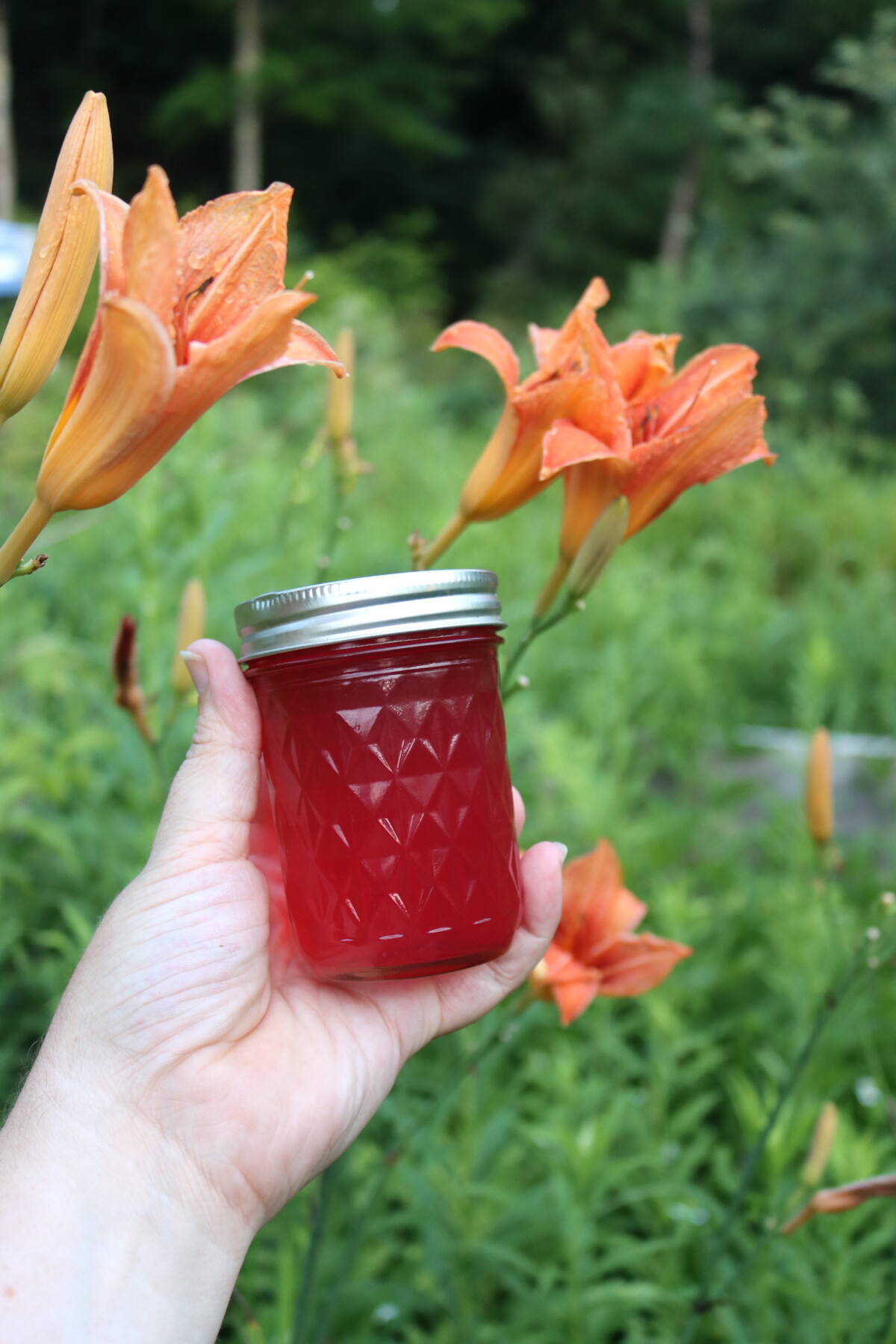
- Yield: 5 to 6 half-pint jars
- Jar Sizes: Quarter Pint, Half Pint, or Pint
- Headspace: 1/4 inch
- Ingredients Overview: Daylily flowers, water, lemon juice, sugar, and pectin
- Difficulty: Easy! You’re basically making a quick tea and setting it with pectin.
- Similar Recipes: The process is very similar to making other summer floral jellies, including Chamomile Jelly, Elderflower Jelly, Bee Balm Jelly, Nasturtium Jelly, or Dandelion Jelly.
What Does Daylily Jelly Taste Like?
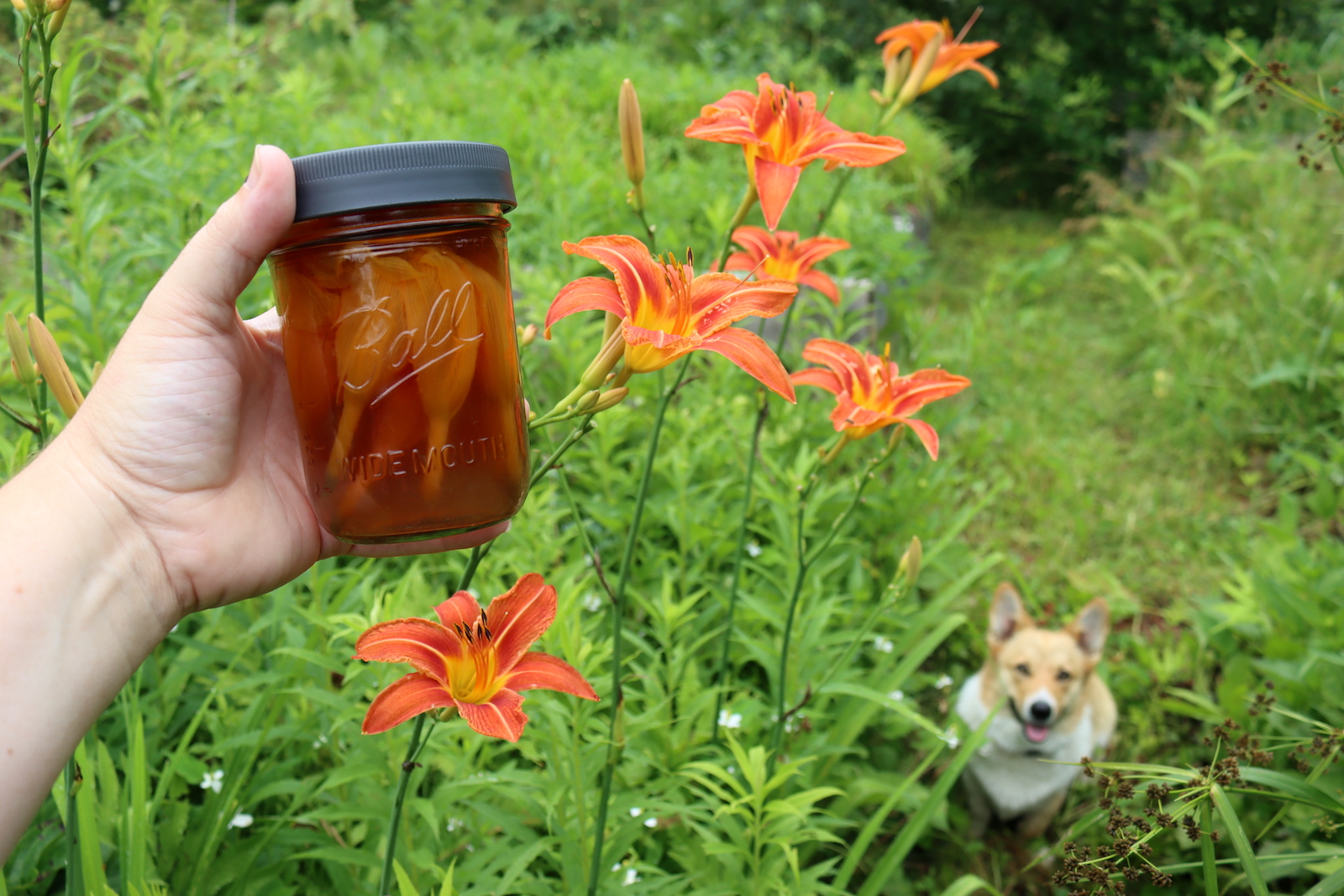
Daylily jelly has a flavor that’s sweet and delicate with mild herbal undertones. You’ll notice notes reminiscent of fresh sweet green peas and cucumber, with a gentle floral sweetness that lingers. It’s quite similar in character to borage jelly or clover jelly, making it perfect for spreading on toast, biscuits, or scones.
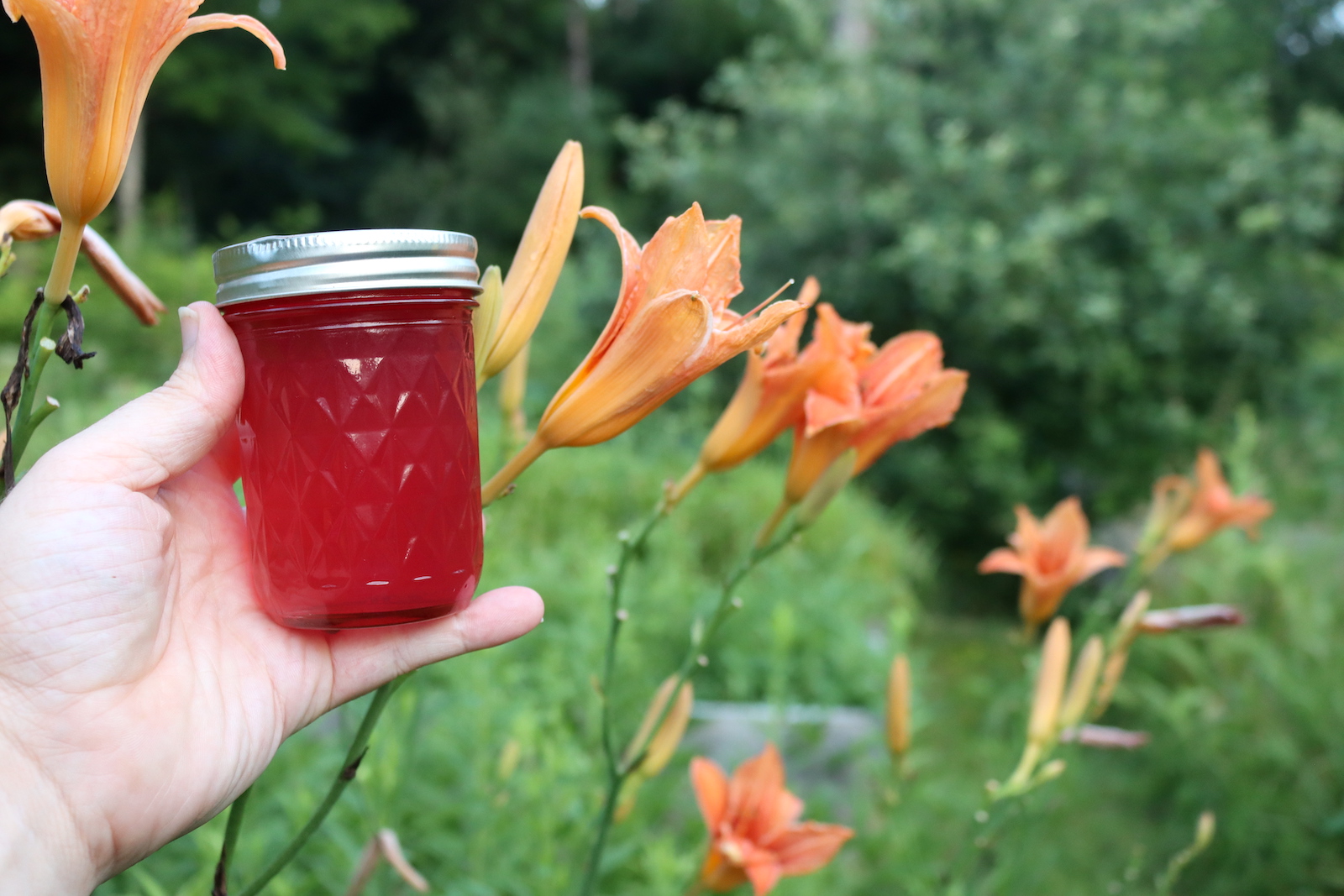
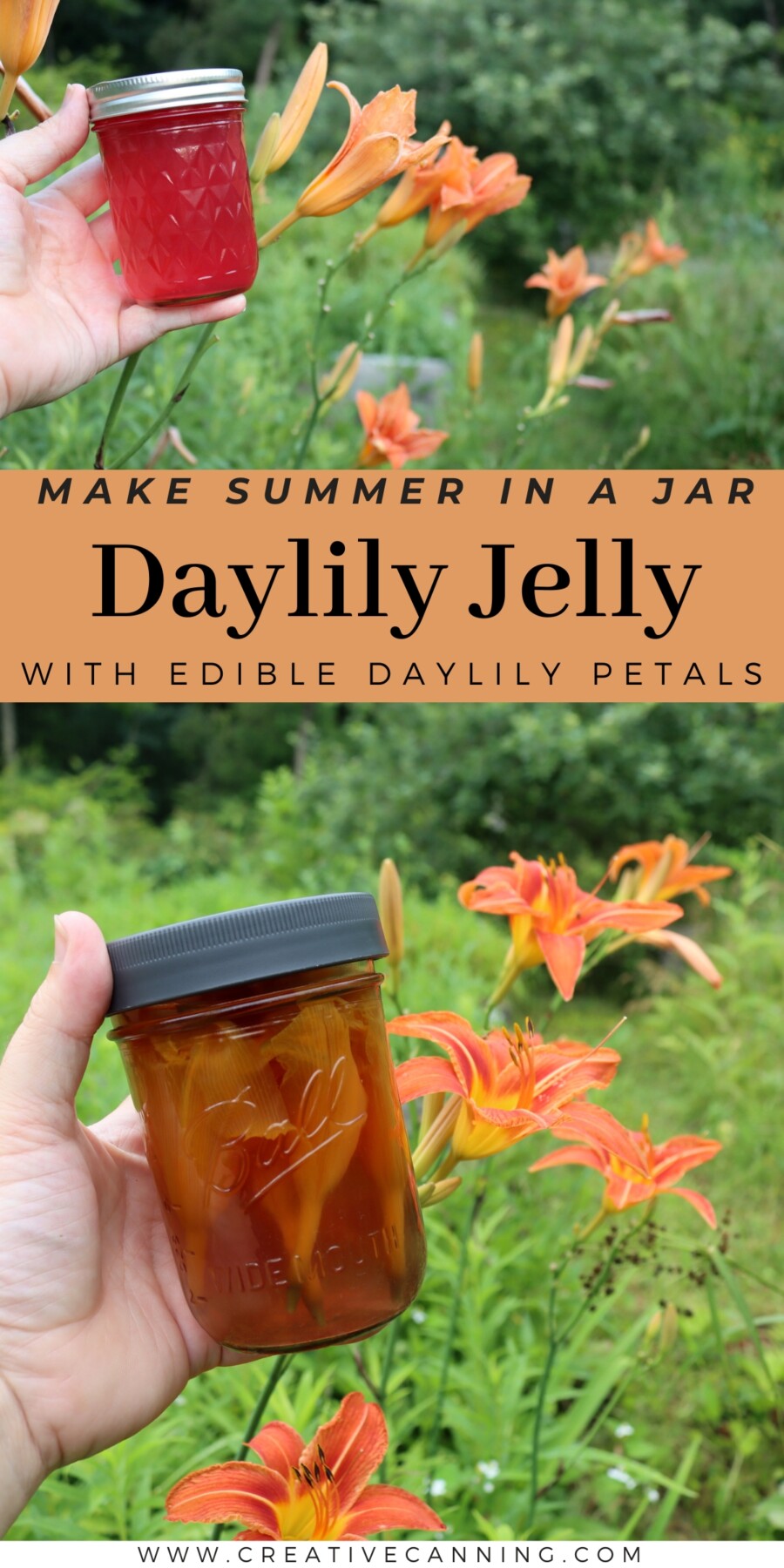
The finished jelly has a beautiful golden-orange hue that brings a bit of summer sunshine to your pantry shelf.
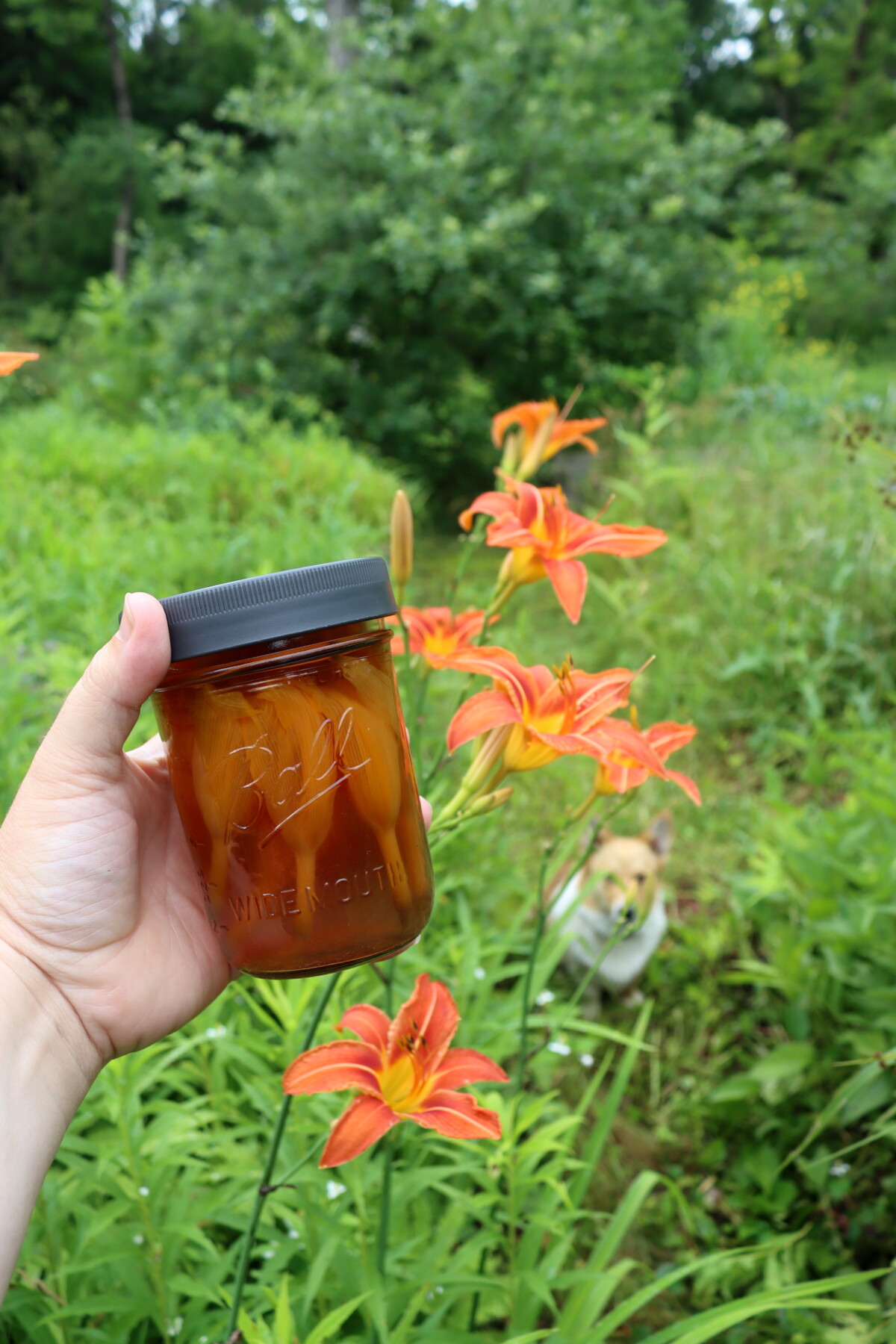
Identifying and Harvesting Daylilies
Important Safety Note: Daylilies (Hemerocallis fulva) are NOT the same as true lilies (Lilium species). True lilies, like Easter lilies and florist lilies, have spiky leaves all the way up the flower stalk and grow from bulbs. Some true lilies are toxic. Daylilies have long, strap-like leaves that grow only from the base of the plant, leafless flower stalks, and grow from tubers (not bulbs). If you’re not 100% sure of your identification, do not harvest.
The common orange daylily (Hemerocallis fulva) is the safest choice for foraging. While there are thousands of cultivated varieties, some of which may also be edible, traditional foraging wisdom sticks with the orange “ditch lily” that has naturalized throughout North America. You’ll find them along roadsides, in abandoned lots, around old farmsteads, and in gardens.
As the name suggests, each individual flower only blooms for one day. Harvest the flowers in the morning after the dew has dried but before they begin to wilt in the afternoon heat. Pick fresh, fully open flowers that look bright and healthy.
Some people do experience mild digestive sensitivity to daylilies, particularly when eaten raw. As with any new food, try a small amount first and wait a day to see how your body responds before harvesting a large batch for jelly.
Ingredients for Daylily Jelly
Daylily jelly uses the same basic formula as other flower jellies: fresh edible flowers steeped into a tea, then set with sugar, pectin, and a bit of lemon juice for balance and safety.
- Daylily Flowers: Use only flowers from daylilies you have positively identified as Hemerocallis fulva. Harvest from clean locations that have not been sprayed with herbicides or pesticides. Pull the petals away from the green base of the flower (the sepals), as the green parts can sometimes add a bitter note to the finished jelly.
- Water: Use clean filtered water if your tap water has a strong chlorine taste, which can affect the delicate floral flavor.
- Lemon Juice: The lemon juice serves several important purposes. It balances the sweetness of the sugar, bringing out the floral notes of the daylilies. It also helps the pectin set properly and lowers the pH of the mixture to make it safe for canning. Use bottled lemon juice, which holds a steady acidity that fresh lemons don’t. For a more neutral flavor you can swap in citric acid powder at about 1 teaspoon in place of the 1/4 cup of lemon juice.
- Sugar: Regular powdered pectin needs a good amount of sugar to gel, so this recipe follows the current Sure Jell ratio of 5 cups sugar to 4 cups of daylily tea for an old-fashioned jelly that sets dependably. If you’d rather cut the sugar back, there’s a lower-sugar option in the note just below.
- Pectin: Use regular powdered pectin (like Sure Jell) for this recipe, which is dependable and produces consistent results.
Low Sugar Options
If you’d prefer a less sweet jelly, reach for Sure Jell low sugar pectin instead and drop the sugar to as little as 1 to 2 cups. With Pomona’s Universal Pectin, bump the lemon juice up to 1/2 cup, since Pomona’s doesn’t include the added citric acid that most other pectins do.
Pomona’s is a 2-part low sugar pectin that comes with calcium water and behaves a little differently, so follow the mint jelly directions on the box. If it’s your first time using it, it’s worth reading through how to use Pomona’s pectin first.
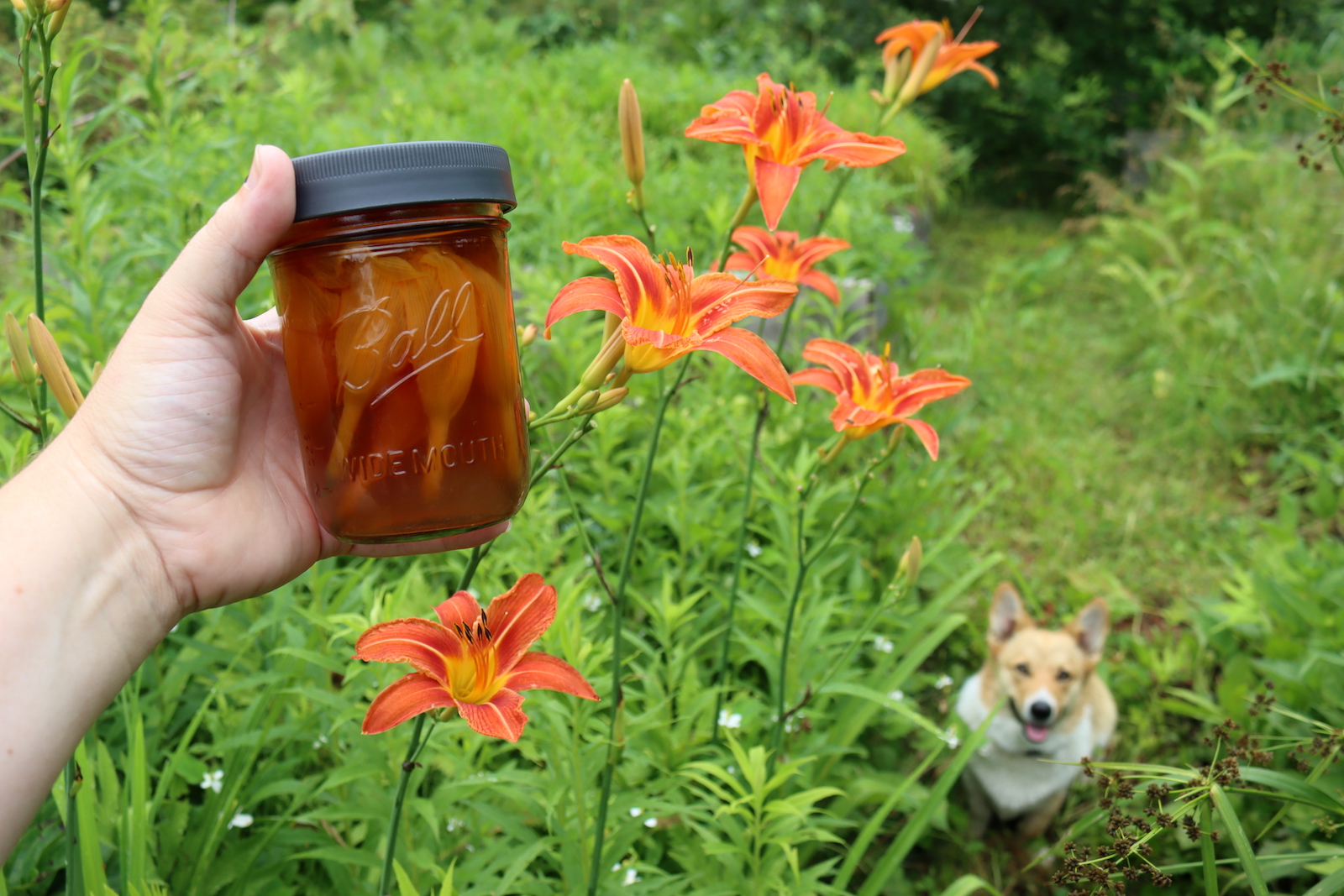
How to Make Daylily Jelly
This is an incredibly easy recipe, where you make a simple floral tea and set it with pectin. Just make sure you don’t skip the lemon juice, it’s important for taste and preservation.
Most of the time here is hands-off while the petals steep, so have your jars and lids ready before you start. That way you can move quickly once the jelly comes up to its boil.
Prepare the Daylily Flowers
Start by harvesting and preparing 4 cups of fresh daylily petals. Pull the petals away from the green sepals at the base of each flower, and give them a gentle rinse to remove any insects or debris. I usually pick them directly into a quart mason jar, which makes measuring easy and provides a heatproof vessel for the next step.
Make the Daylily Tea
Pour 4 cups of boiling water over the daylily petals and allow them to steep for about 15 to 20 minutes. The water will take on a beautiful golden color as it extracts the flavor from the flowers. Strain the daylily tea through a fine mesh sieve or cheesecloth into a saucepan or jam pot. Squeeze the petals gently to get all the flavorful liquid out.
Add Lemon Juice and Pectin
Add 1/4 cup of lemon juice to the daylily tea. (The lemon juice balances the sweetness, helps the pectin set, and makes the jelly safe for canning. Don’t skip it even if you’re not canning.) Bring the mixture to a boil over medium-high heat.
Once boiling, add one box of powdered pectin and stir until completely dissolved. Allow the mixture to boil for 1 full minute with the pectin.
Add the Sugar
After 1 minute, add 5 cups of sugar. (Do NOT add the sugar before or at the same time as the pectin, or the jelly won’t set.) Stir until the sugar is completely dissolved, then bring the mixture back to a full rolling boil for 1 minute.
Remove from heat and immediately ladle the hot jelly into prepared jars, leaving 1/4 inch headspace.
Canning Daylily Jelly
Canning is optional, but it’s a wonderful way to preserve this seasonal treat for year-round enjoyment or gift-giving. If not canning, allow the jars to cool completely at room temperature, then store in the refrigerator for up to a few weeks or in the freezer for up to 6 months.
To can daylily jelly, prepare your water bath canner, jars, and lids before you start making the jelly. After ladling the hot jelly into jars (leaving 1/4 inch headspace), wipe the rims with a clean, damp cloth. Place the 2-part canning lids on the jars and tighten until fingertip tight.
Process in a boiling water bath canner for 10 minutes. Remove the jars and let them cool undisturbed on a towel for 24 hours. Check seals, and store any unsealed jars in the refrigerator for immediate use. Properly canned and sealed jars will maintain quality on the pantry shelf for 12 to 18 months. Refrigerate after opening.
Altitude Adjustments
For water bath canning, processing times increase at higher elevations:
- 0 to 6,000 feet: 10 minutes
- Above 6,000 feet: 15 minutes
Ways to Use Daylily Jelly
This delicate floral jelly is lovely on warm biscuits or scones, especially with a bit of butter. Try it on toast or English muffins for a taste of summer at breakfast. It pairs beautifully with soft cheeses like goat cheese or cream cheese and makes a charming addition to a cheese board or charcuterie spread.
Daylily jelly also makes a thoughtful homemade gift, especially for friends who appreciate edible flowers or foraged foods.
More Ways to Use Daylilies
Looking for other ways to enjoy these abundant summer flowers?
- Raw in salads: The petals add color and a subtle sweetness.
- Stuffed and fried: Like squash blossoms, daylily flowers can be filled with soft cheese and battered for frying.
- Dried: In Chinese cooking, dried daylily petals (“golden needles”) are used in soups and stir-fries.
- Fresh eating: Pinch off the stem end and suck out the sweet nectar for a simple summer treat.
Daylily Jelly FAQs
The common orange daylily (Hemerocallis fulva) is the safest and most widely documented edible variety. While many of the thousands of cultivated varieties may also be edible, traditional foraging wisdom sticks with the orange ditch lily. Do not confuse daylilies with true lilies (Lilium species), some of which are toxic.
Fresh flowers give the most flavor and color in daylily jelly. Dried flowers could be used, but you would need to experiment with quantities and steeping times, and the flavor may not be as bright.
The most common reasons jelly doesn’t set are adding the sugar at the same time as the pectin (add pectin first and boil for 1 minute before adding sugar), boiling the finished jelly for too long (over 5 minutes), or trying to double the batch size. Check out the jelly troubleshooting guide for more tips.
No, the lemon juice is required. It balances the flavor, helps the pectin set properly, and lowers the pH to make the jelly safe for canning. Even if you’re making a refrigerator preserve, the lemon juice really improves the flavor.
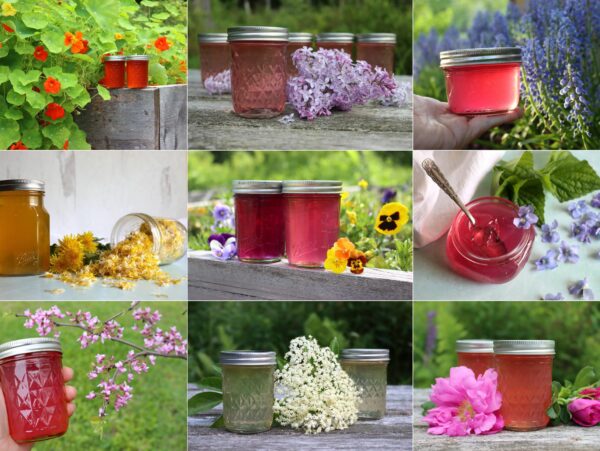
Flower Jelly Recipes
If you tried this Daylily Jelly recipe, or any other recipe on Creative Canning, leave a ⭐ star rating and let me know what you think in the 📝 comments below!
And make sure you stay in touch with me by following on social media!
Daylily Jelly
Equipment
- Canning Jars, Lids and Bands
Ingredients
For the Daylily Tea
- 4 cups fresh daylily flower petals, pulled from the green sepals
- 4 cups water
For the Jelly
- 4 cups daylily tea, strained
- 1/4 cup bottled lemon juice, or 1 teaspoon citric acid
- 1 box powdered pectin, 1.75 oz regular Sure Jell, or 6 Tbsp bulk or 6 Tbsp Bulk Pectin
- 5 cups sugar, see notes for low sugar option
Instructions
- Harvest daylily flowers and pull the petals away from the green sepals at the base of each flower. Rinse gently to remove any debris.
- Place the petals in a heatproof container (a quart jar works well) and pour the boiling water over them. Steep 15 to 20 minutes.
- Strain the tea into a saucepan or jam pot through a fine mesh strainer or cheesecloth, squeezing the petals gently to extract the liquid.
- Add the lemon juice and bring to a boil over medium-high heat. Whisk in the powdered pectin until dissolved, and boil hard for 1 full minute.
- Add the sugar, stirring to dissolve. (Do not add the sugar at the same time as the pectin, or before it, or the jelly won’t set.) Return to a full rolling boil for exactly 1 minute, then skim off any foam.
- Ladle into prepared jars, leaving 1/4 inch headspace. Wipe rims, center lids, and apply bands fingertip-tight.
- Process in a boiling water bath for 10 minutes (15 minutes above 6,000 feet). Cool undisturbed 12-24 hours and check seals. Or, to skip canning, cool completely and store in the refrigerator for a few weeks or the freezer up to 6 months.
Notes
Nutrition
Nutrition information is automatically calculated, so should only be used as an approximation.
Jelly Recipes
Find the perfect recipe
Searching for something else? Enter keywords to find the perfect recipe!

Super easy to make, very tasty.
So glad you like it!
This Recipe was super fun and easy to make! It was my first ever time making Jelly and it went perfectly, this recipe is awesome and very user friendly! And with flowers from my very own garden no less, how fun! I can’t recommend it highly enough! This stuff is delicious! Thank you Ashley!
I’m so glad you like it!