
This post may contain affiliate links. Please see our disclosure policy.
Clover jelly is a simple floral jelly with a flavor that catches most people off guard. Just about anyone can gather a basket of wild clover blossoms and turn them into a soft, sweet jelly that tastes far more interesting than a roadside weed has any right to.
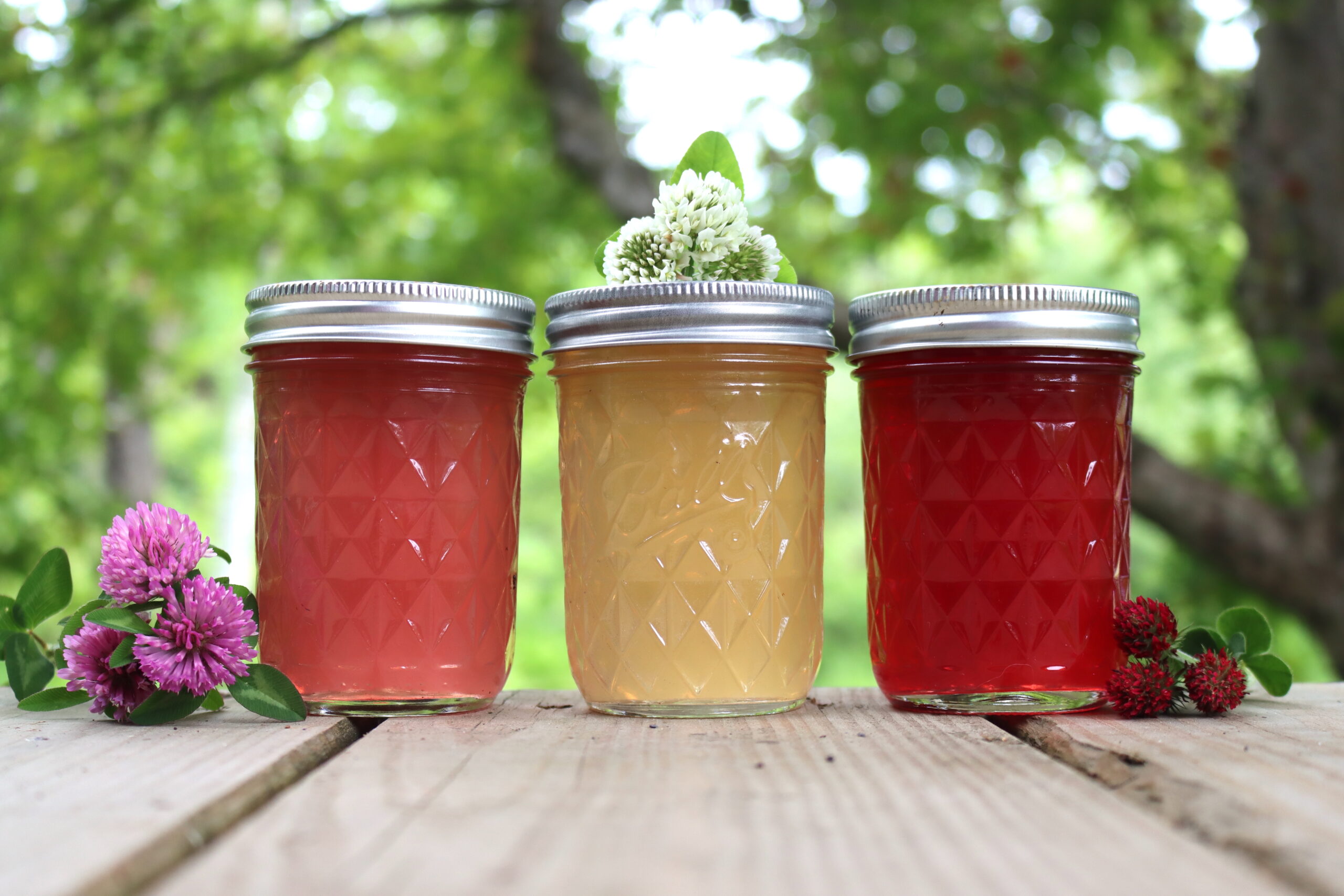
Table of Contents
- Notes from My Kitchen
- Quick Look at the Recipe
- What Does Clover Jelly Taste Like?
- Identifying and Harvesting Clover
- Ingredients for Clover Jelly
- Low Sugar Options
- How to Make Clover Jelly
- Canning Clover Jelly
- Altitude Adjustments
- Ways to Use Clover Jelly
- Clover Jelly FAQs
- Flower Jelly Recipes
- Clover Jelly Recipe
- Jelly Canning Recipes
This recipe has been reviewed for safety and accuracy by a Master Food Preserver certified through the University of Cornell Cooperative Extension.
Floral jellies are a fun thing to put up, especially with little ones in tow, and the flavors never cease to surprise me. Clover is a good place to start, since it grows just about everywhere and asks for nothing more than a clean patch and an afternoon.
Believe it or not, a lot of a fruit’s flavor is tied up in its color, and edible flowers carry many of the same color compounds in their petals. A wild violet jelly tastes surprisingly like fresh spring berries, because those tiny blooms share pigments with raspberries and blueberries.
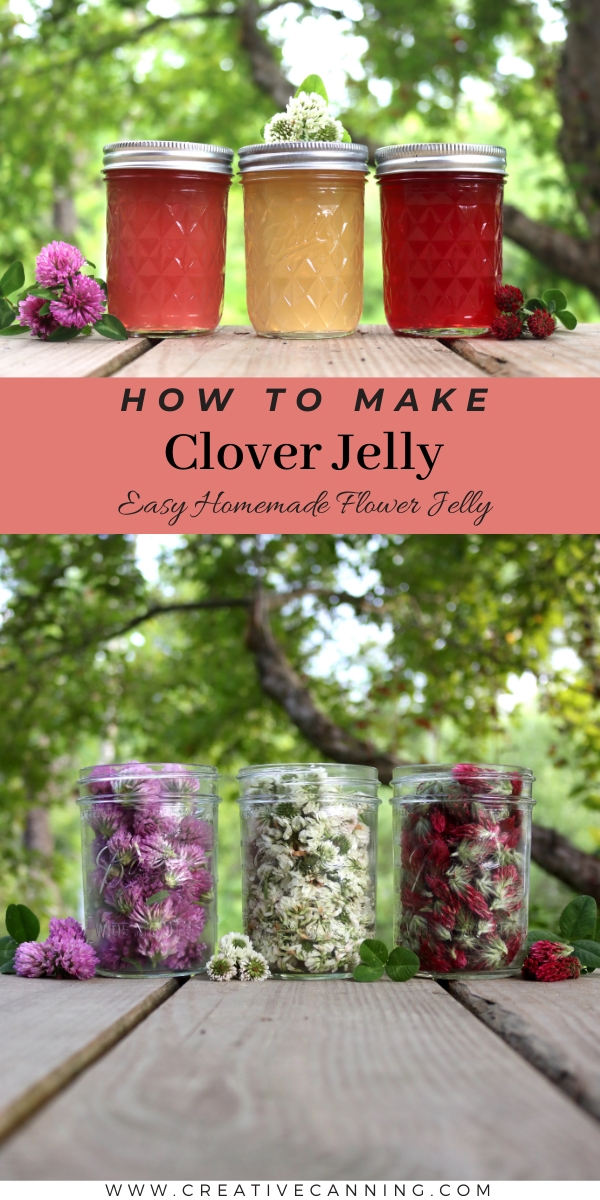
Clover flowers come in a range of colors, and the color you pick carries right through into the finished jelly, so a single recipe can give you several different “flavors” depending on the blossoms in your basket.
Notes from My Kitchen

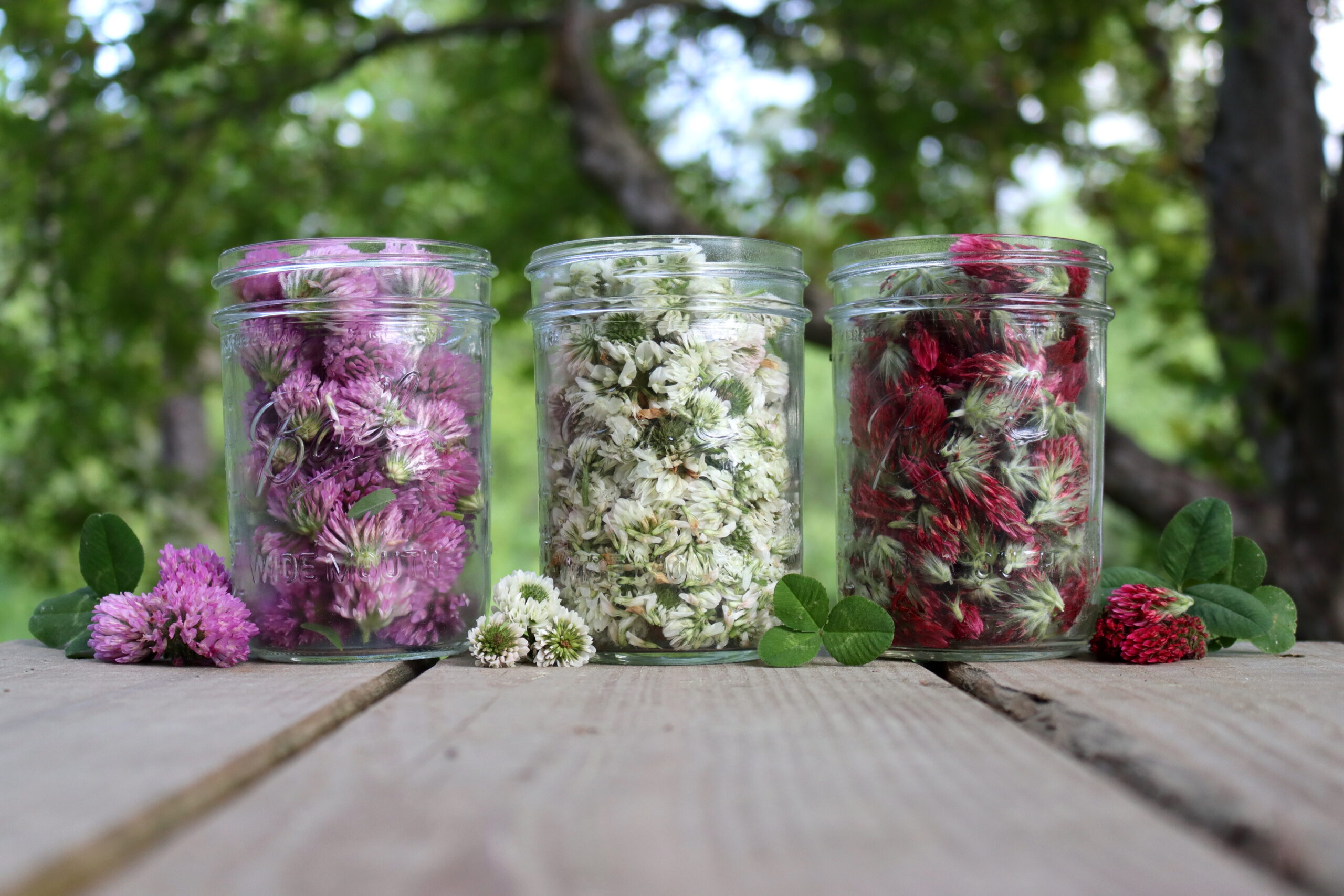
We have red, white, and crimson clover all coming up across our land, so one summer I set out to make a batch of each just to see how they’d differ. Picking clover is the kind of slow, low-stakes job that’s easy to hand off to little ones, and we filled jars together over a couple of lazy afternoons.
What surprised me was how distinct the three turned out. I’d half expected them all to taste like mild grass, and instead I got plum, pineapple, and something uncannily close to red currant out of three weeds growing in the same field. Not bad for a handful of lawn flowers.
Quick Look at the Recipe
- Recipe Name: Clover Jelly
- Recipe Type: Flower Jelly Recipe
- Canning Method: Water Bath Canning
- Prep/Cook Time: 30 Minutes (including steeping)
- Canning Time: 10 Minutes
- Yield: 5 to 6 half-pint jars
- Jar Sizes: Quarter Pint, Half Pint, or Pint
- Headspace: 1/4 inch
- Ingredients Overview: Clover blossoms, water, lemon juice, sugar, and pectin
- Difficulty: Easy! You’re basically making a floral tea and setting it with pectin.
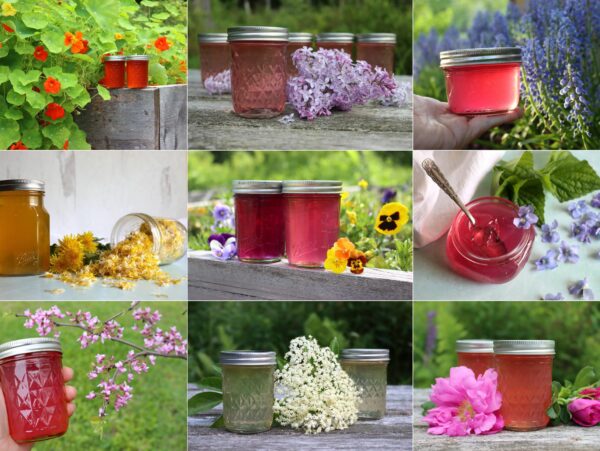
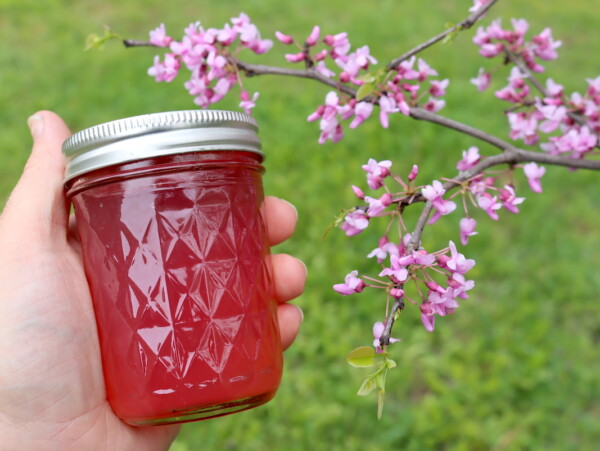
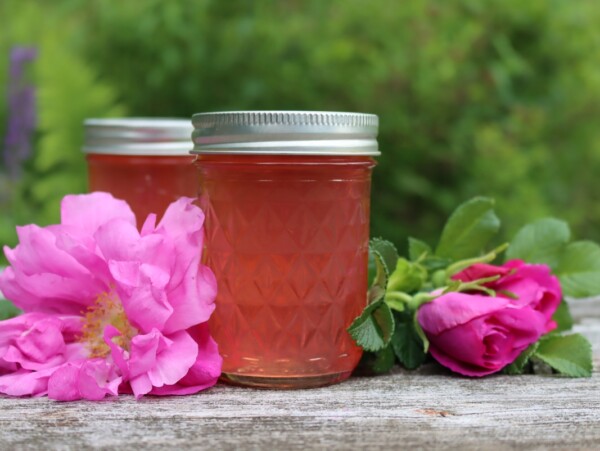
- Similar Recipes: The process is very similar to other wild-foraged floral jellies, including Dandelion Jelly, Violet Jelly, and Redbud Jelly. If you have a meadow full of blooms, it’s worth working through the whole list of flower jelly recipes.
What Does Clover Jelly Taste Like?
The color of the clover flower, and therefore the species, is what determines the flavor. To keep my own eyes from biasing me, I roped my husband and daughter into a blind taste test. They didn’t know they were tasting clover jelly, and I had them keep their eyes closed so the colors in the jars couldn’t tip them off.
Even working blind, the three were easy to tell apart, and here’s how they broke down:
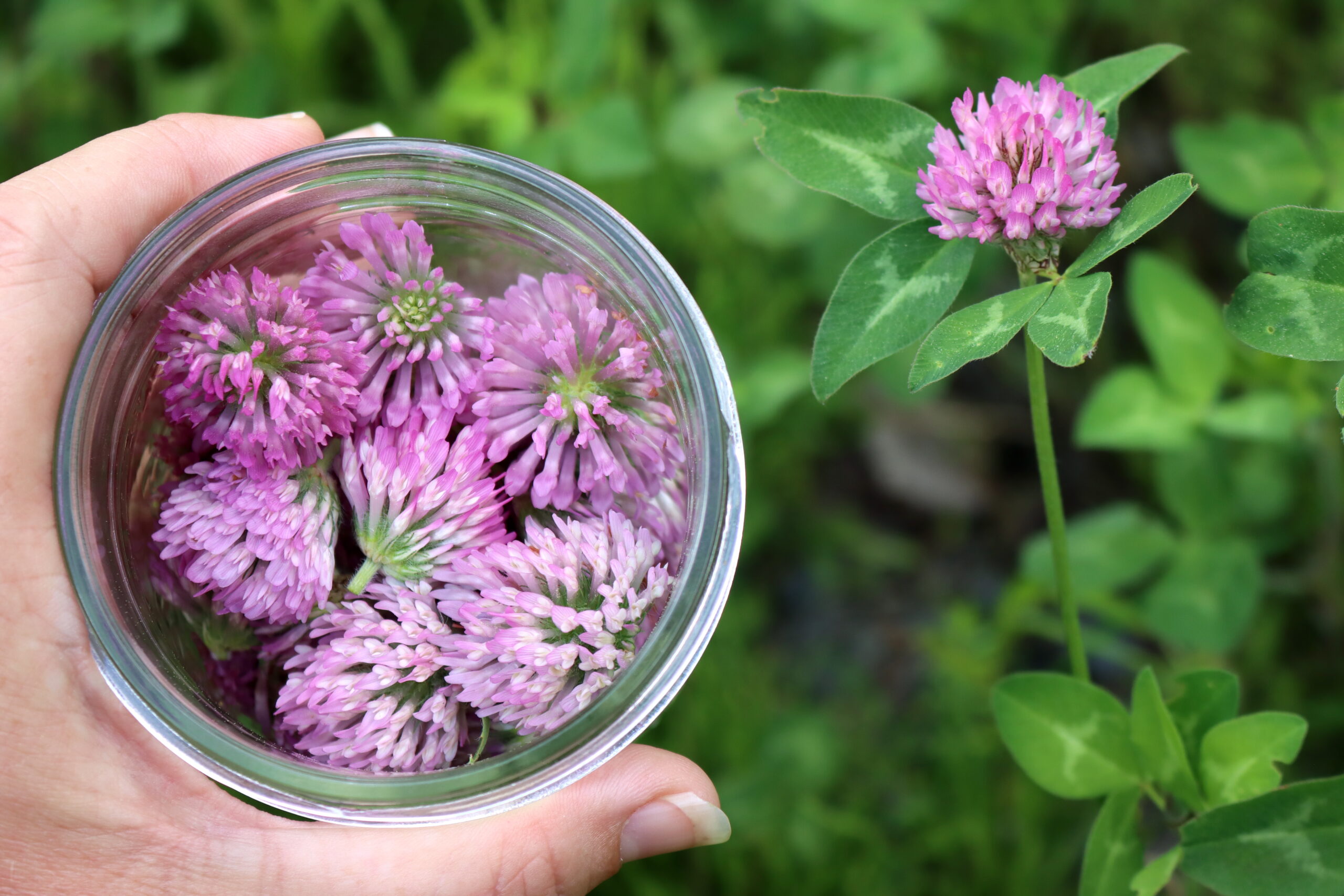
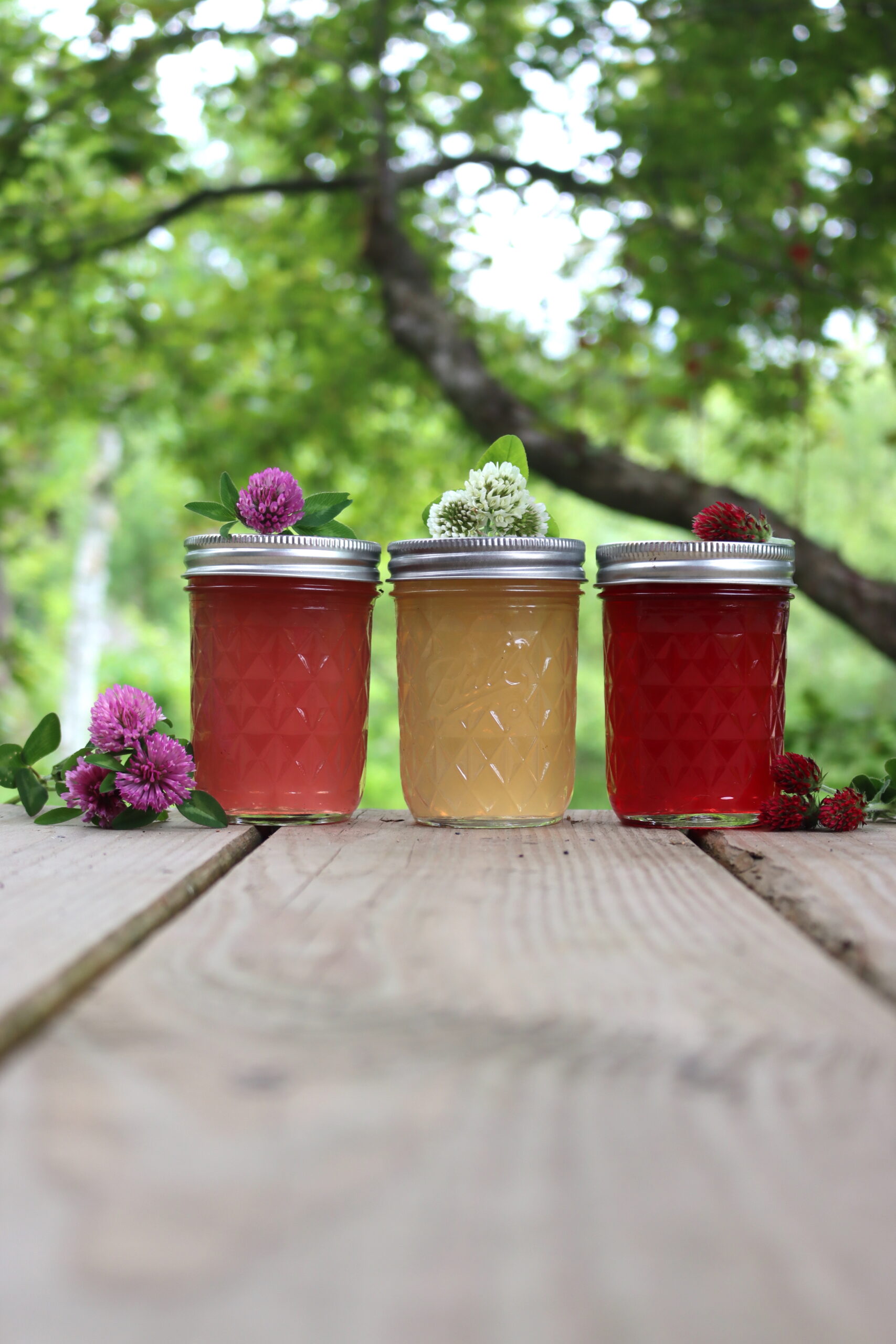
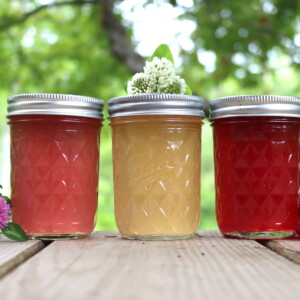
- Red clover (which is really more pink) makes a pink jelly that tastes like fresh plums with floral notes.
- White clover leans tropical, a bit like pineapple, with something extra going on that’s hard to put your finger on.
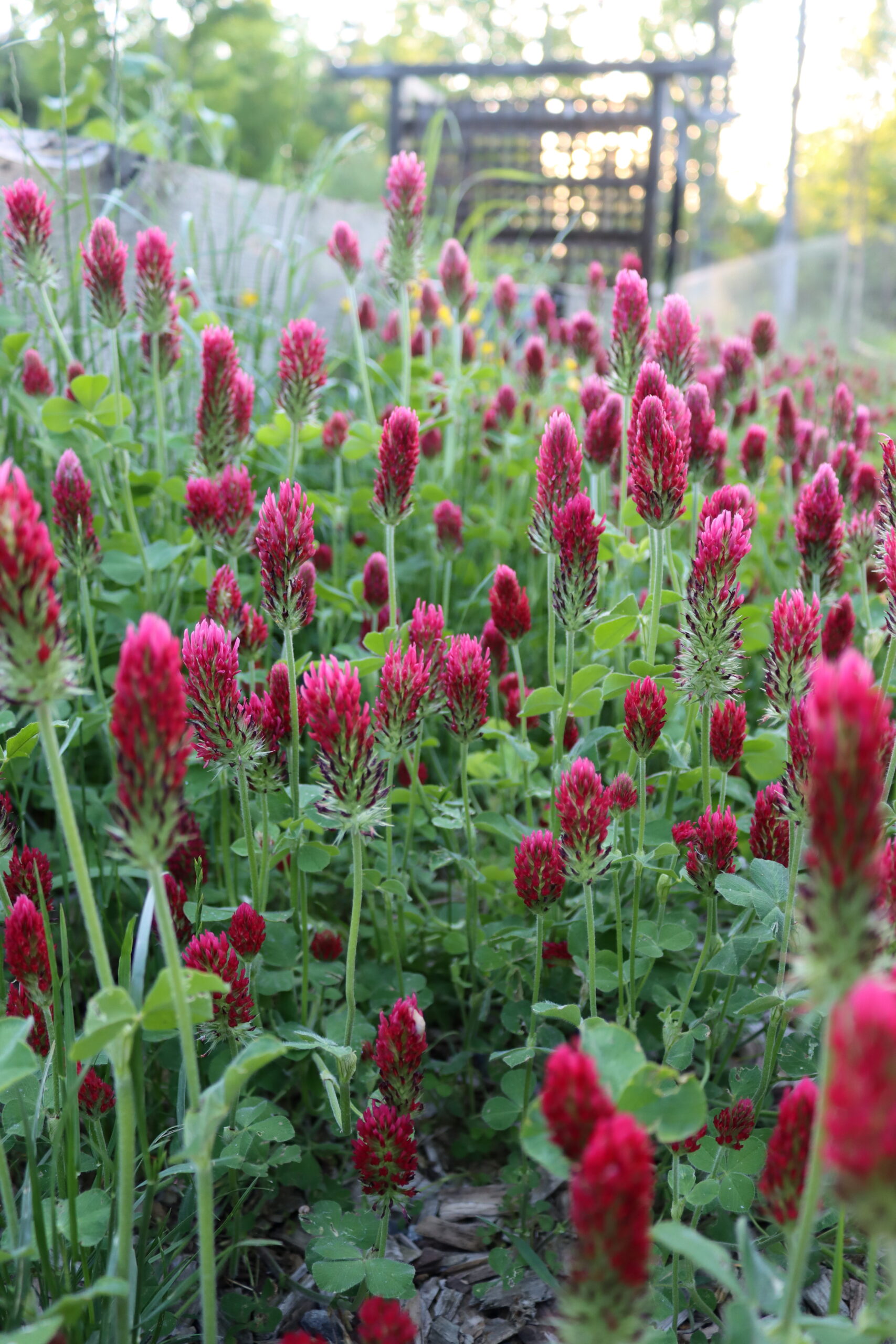
- Crimson clover tastes almost exactly like red currant jelly.
I agreed with both of their guesses, which says something, because the flavors really do come across as plum, pineapple, and red currant. The crimson clover was the most striking of the three. The currant note was so strong, and the color so close, that I’m not sure I could pick it out from a jar of my homemade red currant jelly in a lineup. Not bad from a wildflower.
I made this last year, and most of it went to my best friend’s family, who really liked it. I foisted an extra jar off on my neighbor as thanks for letting me harvest his lot, and he’s a little obsessed. He finished his portion recently and has checked with me multiple times to see if I’m making more this year!
Identifying and Harvesting Clover
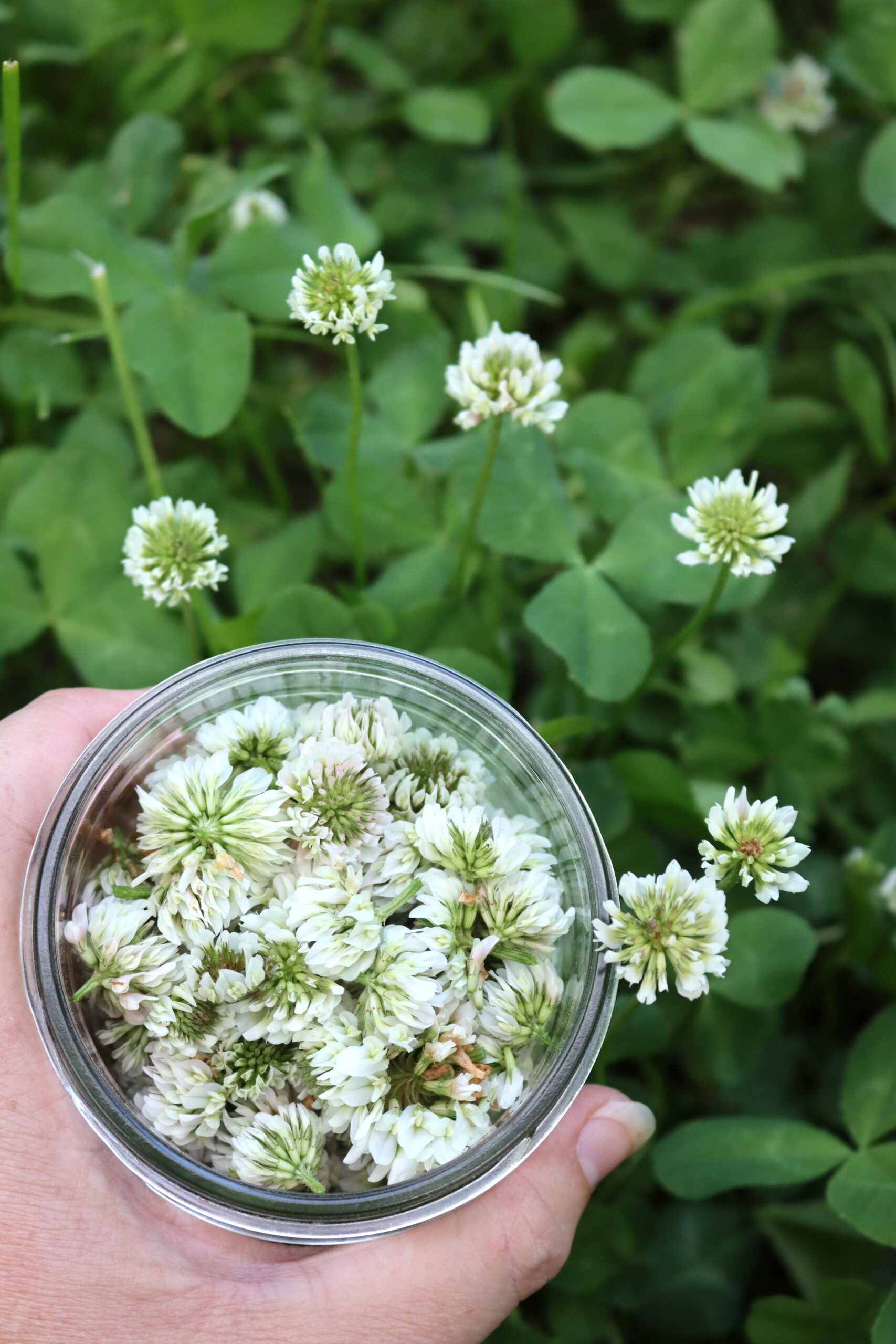
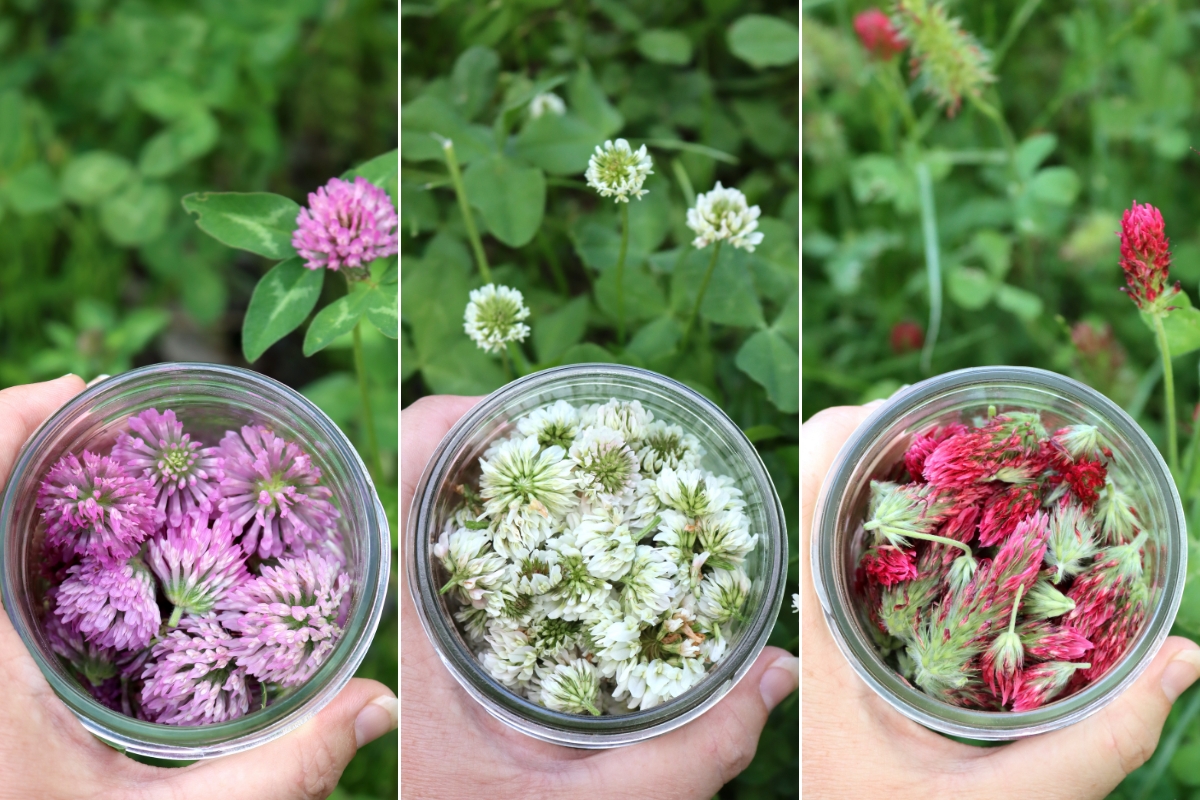
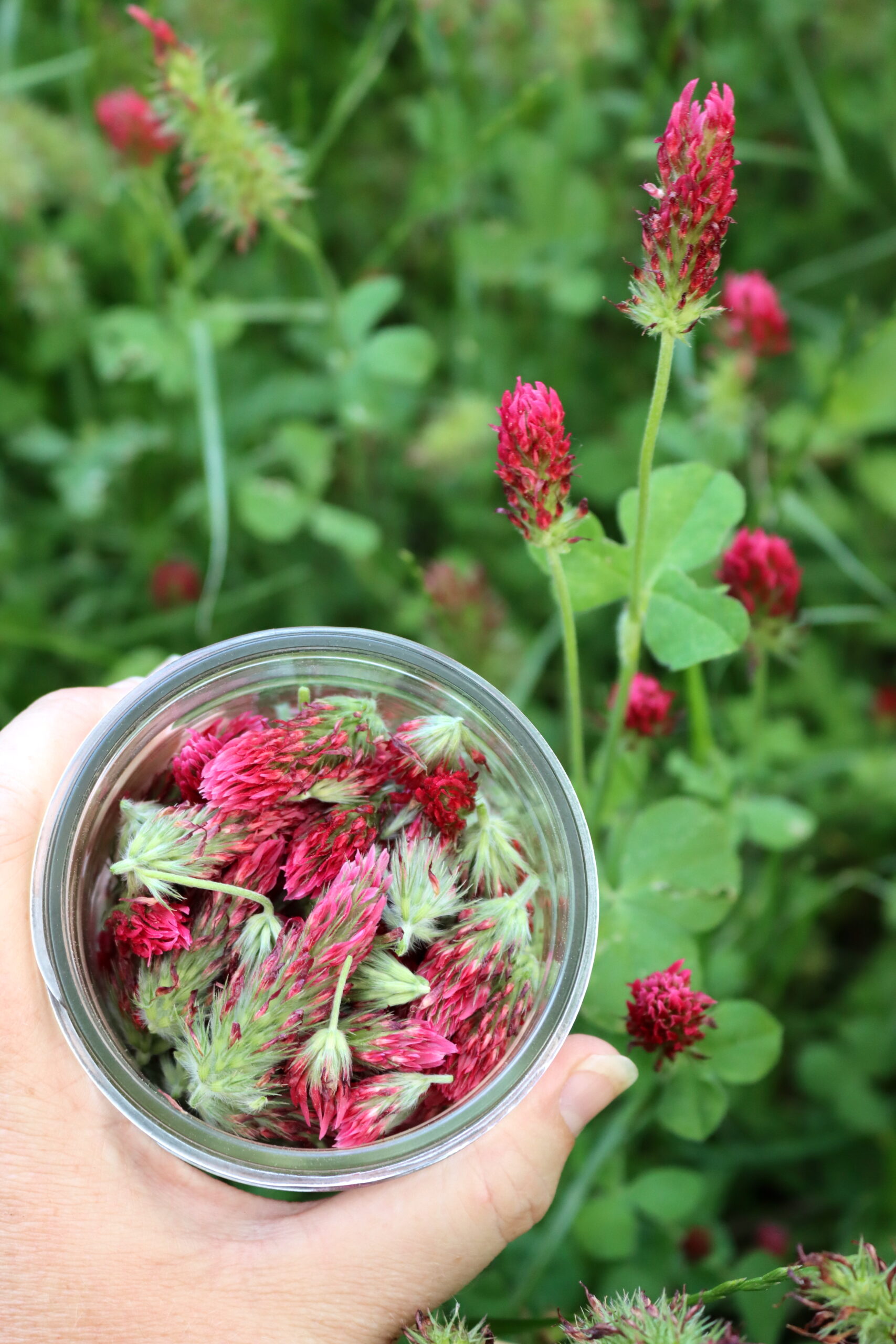
The clovers used for jelly are the true clovers in the Trifolium family, and the three I reach for are red clover (which blooms a dusty pink), white clover (the small white heads scattered through most lawns), and crimson clover (a deep red cover crop). All three carry the familiar rounded flower head and the three-part leaves clover is known for.
Don’t confuse true clover with sweet clover (Melilotus), which is a much taller plant with tiny flowers strung along a spike rather than gathered into a round head. It’s a different plant and isn’t what you want here, so stick with the low, round-headed clovers you’d recognize from a lawn or field.
Find a clean patch to harvest from, well away from roadsides, ditches, runoff, and anywhere that gets sprayed or sees regular dog traffic. For a full batch using a whole box of pectin, you’ll want about 4 cups of clover blossoms, and a half batch comes together with just 2 cups (use half the box of pectin, roughly 3 Tablespoons, and save the rest for another recipe). I like to pick straight into a quart jar, since it holds just about the right amount and drops neatly into the next step.
Ingredients for Clover Jelly
Clover jelly uses the same basic formula as other flower jellies: fresh edible blossoms steeped into a tea, then set with sugar, pectin, and a bit of lemon juice for balance and safety.
- Clover Blossoms: Red, white, and crimson clover all work, and each brings its own flavor, so use a single type or a mix. Pick fully open heads from a clean, unsprayed spot, and pull the blossoms free of any tough stems before steeping.
- Water: Use clean filtered water if your tap has a strong chlorine taste, since that can muddy the delicate clover flavor.
- Lemon Juice: The lemon juice does a few jobs at once. It tempers the sweetness so the floral notes come through, it helps the pectin set, and it lowers the pH enough to make the jelly safe for canning. Reach for bottled lemon juice, which holds a steady acidity that fresh lemons don’t. For a more neutral flavor, you can swap in citric acid powder at about 1 teaspoon in place of the 1/4 cup of lemon juice.
- Sugar: Regular powdered pectin needs a good amount of sugar to gel, so this recipe follows the current Sure Jell ratio of 5 cups sugar to 4 cups of clover tea for an old-fashioned jelly that sets dependably. If you’d rather cut the sugar back, there’s a lower-sugar option in the note just below.
- Pectin: This recipe is built around regular powdered pectin, such as Sure Jell, which is reliable and gives a consistent set.
Low Sugar Options
If you’d prefer a less sweet jelly, reach for Sure Jell low sugar pectin instead and drop the sugar to as little as 1 to 2 cups. With Pomona’s Universal Pectin, bump the lemon juice up to 1/2 cup, since Pomona’s doesn’t include the added citric acid that most other pectins do.
Pomona’s is a 2-part low-sugar pectin that comes with calcium water and behaves a little differently, so follow the mint jelly directions on the box. If it’s your first time using it, it’s worth reading through how to use Pomona’s pectin first.
How to Make Clover Jelly
Making clover jelly isn’t much different from making any other flower jelly. You steep the blossoms into a tea, set it with pectin and sugar, and add a little lemon juice along the way. Don’t skip that lemon, even if you’re not planning to can, since it does the double duty of balancing the sugar and keeping the jelly safe on the shelf.
The whole thing comes together in well under an hour of active work, and most of that is hands-off while the clover steeps. Have your jars and lids ready before you start so you can move quickly once the jelly hits its boil.
Prepare the Clover Blossoms
You’ll need 2 to 4 cups of fresh blossoms, depending on whether you’re making a half or full batch. I like to pick straight into a quart jar, since it holds about the right amount and makes the next step easy.
Pull the flower heads free of any stems and leaves, which can turn the tea a little bitter, and give them a quick rinse to chase out any insects. There’s no need to fuss over a bit of green calyx at the base of each head.
Make the Clover Tea
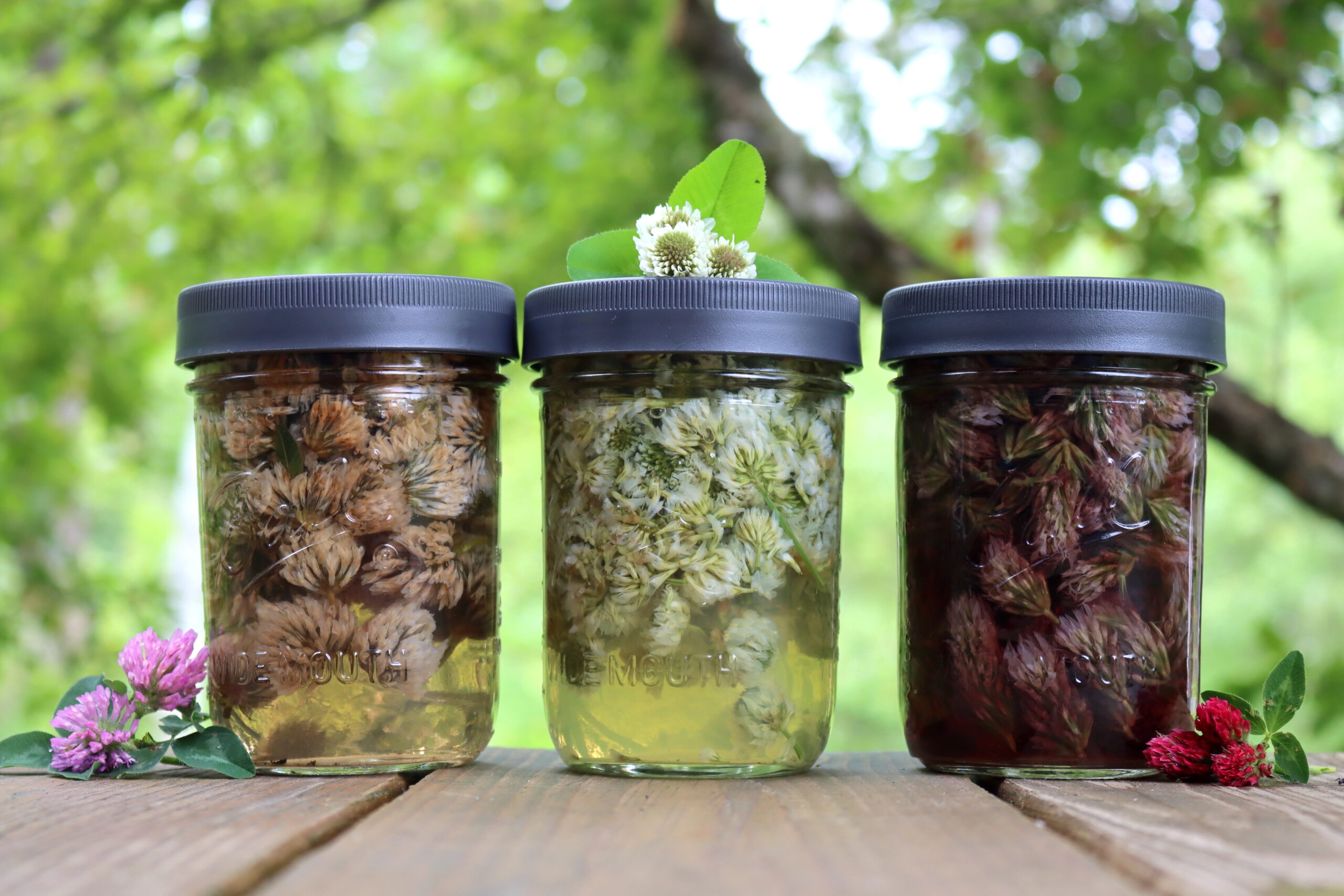
Bring 4 cups of water to a boil and pour it right over the blossoms (a quart jar packed with clover is about perfect). Push the flowers down so they’re fully submerged, then let them steep for 15 to 20 minutes.
Strain the tea through a fine mesh strainer, pressing gently on the spent blossoms to draw out every bit of color and flavor. You should have right around 4 cups of clover tea. If you come up a little short, top it off with water to bring it back to 4 cups.
Add Lemon Juice and Pectin
Pour the clover tea into a jelly pot and stir in 1/4 cup of lemon juice. (The lemon balances the sweetness, helps the pectin set, and makes the jelly safe for canning, so don’t skip it even if you’re keeping these in the fridge.) Bring the mixture up to a boil over medium-high heat.
Once it’s boiling, whisk in one box of powdered pectin until it’s completely dissolved, and let it boil hard for 1 full minute. Adding the pectin before the sugar is what lets the jelly set, so hold that order.
Add the Sugar
After that minute, add 5 cups of sugar all at once. (Do not add the sugar before or at the same time as the pectin, or the jelly won’t set up.) Stir until the sugar is completely dissolved.
Bring the jelly back to a full rolling boil for exactly 1 minute, then pull it off the heat and skim away any foam with a spoon. Immediately ladle the hot jelly into prepared jars, leaving 1/4 inch headspace.
Canning Clover Jelly
Canning is optional. If you’d rather not, let the jars cool completely on the counter and tuck them into the refrigerator for a few weeks, or the freezer for up to 6 months in freezer-safe jars.
For shelf storage, I like to run the jars through a water bath canner so the jelly keeps at room temperature year-round. Make sure you’ve used the full amount of lemon juice, since that acidity is what makes water bath canning safe. Have your canner, jars, and lids prepped before you start the jelly. After ladling into jars (leaving 1/4 inch headspace), wipe the rims with a clean, damp cloth, set the lids, and tighten the bands to fingertip tight.
Process in a boiling water bath canner for 10 minutes, adjusting for altitude as needed. Let the jars cool undisturbed on a towel for 24 hours, then check the seals. Refrigerate any that didn’t seal and use them first. Properly canned and sealed jars will maintain quality on the pantry shelf for 12 to 18 months. Refrigerate after opening.
Altitude Adjustments
For water bath canning, processing times increase at higher elevations:
- 0 to 6,000 feet: 10 minutes
- Above 6,000 feet: 15 minutes
Ways to Use Clover Jelly
Clover jelly works anywhere you’d reach for a soft fruit jelly. Spread it on warm toast, biscuits, or scones, swirl a spoonful into plain yogurt or oatmeal, or use it as the filling in thumbprint cookies and layer cakes. It also holds its own on a cheese board next to a mild brie or a sharp cheddar.
Because the color and flavor shift with the blossoms you pick, a row of pink, gold, and deep red jars makes a pretty gift set. You can play with the flavor a bit too. A drop of vanilla or almond extract suits the red-currant character of crimson clover, a pinch of warm spice plays up the plum notes in red clover, and bottled lime juice can stand in for the lemon in a white clover batch for a more tropical lean (it’s just as acidic, so the jelly stays safe to can). If you’d rather skip the boxed pectin altogether, clover’s mild flavor infuses nicely into a batch of white currant jelly, which brings its own natural pectin to the set.
Clover Jelly FAQs
The color of the blossom drives the flavor. Red clover (which is really more pink) sets up a pink jelly that tastes like fresh plum with floral notes, white clover leans tropical and reads a lot like pineapple, and crimson clover comes out tasting almost exactly like red currant. You can also pick a mix and let the colors and flavors blend.
Pick the flower heads when they’re in full bloom, ideally on a dry morning after the dew has burned off. Choose a clean spot well away from roadsides, runoff, and anywhere that gets sprayed or sees pet traffic, and give the blossoms a quick rinse to clear out any insects before you steep them.
The most common reasons jelly doesn’t set are adding the sugar at the same time as the pectin (add pectin first and boil for 1 minute before adding sugar), boiling the finished jelly for too long (over 5 minutes), or trying to double the batch size. If it doesn’t set after 24-48 hours, enjoy it as a floral syrup or read through my guide on troubleshooting jelly set.
Yes, but you’ll need to use a low-sugar pectin like Sure-Jell Low Sugar or Pomona’s Universal Pectin and follow the package instructions for mint jelly. If you use Pomona’s, increase the lemon juice to 1/2 cup, since it doesn’t contain the added citric acid that other pectins do. The yield will be lower with reduced sugar.
Flower Jelly Recipes
If you tried this Clover Jelly recipe, or any other recipe on Creative Canning, leave a ⭐ star rating and let me know what you think in the 📝 comments below!
And make sure you stay in touch with me by following on social media!
Clover Jelly
Equipment
- Canning lids and bands
Ingredients
For the Clover Tea
- 2 to 4 cups fresh clover blossoms, red, white, or crimson, de-stemmed
- 4 cups water
For the Jelly
- 4 cups clover tea, strained
- 1/4 cup bottled lemon juice, or 1 teaspoon citric acid
- 1 box powdered pectin, 1.75 oz, regular, such as Sure-Jell original or 6 Tbsp bulk pectin
- 5 cups granulated sugar
Instructions
- Bring the water to a boil and pour it over the clover blossoms, pushing them down until fully submerged. Steep for 15 to 20 minutes.
- Strain the tea through a fine mesh strainer, pressing gently on the blossoms. Measure the strained tea, adding water if needed to reach the full amount called for.
- Pour the clover tea into a large pot and stir in the lemon juice. Bring to a boil, then whisk in the powdered pectin until completely dissolved. Boil hard for 1 full minute.
- Add all the sugar at once and stir to dissolve. Return to a full rolling boil and boil hard for exactly 1 minute, then remove from heat and skim off any foam. (Do not add the sugar before or with the pectin, or the jelly won’t set.)
- Ladle hot jelly into prepared jars, leaving 1/4 inch headspace. Wipe rims clean, center lids, and apply bands fingertip-tight.
- Process in a boiling water bath for 10 minutes, adjusting for altitude. Turn off the heat and let jars rest 5 minutes before removing. Cool undisturbed 12-24 hours before checking seals.
Notes
Nutrition
Nutrition information is automatically calculated, so should only be used as an approximation.
Jelly Canning Recipes
Find the perfect recipe
Searching for something else? Enter keywords to find the perfect recipe!

Forgot to comment at the time, but I made this last year! The majority went to my best friend’s family, and I foisted an extra jar off on my neighbor as thanks for blanket permission to harvest from his lot. Everybody really liked it! (Actually, my neighbor finished his portion recently and is a little obsessed, I think. He was raving about it and checked with me multiple times to see if I was making more of it this year, haha.)
I mostly just use white clover since it’s 99% of what grows around here, though I try and make sure to get a fair amount that have matured to a vibrant pink. For another batch last year, I decided to throw in the very small number of woodland strawberries (F. vesca) I managed to get my hands on, and it ended up being my favorite batch of the year.
Tried making this year’s first round yesterday, but misremembered the ratio for the lemon juice and mistakenly added ¼ cup (!!!!!) so I’m not sure how or IF that’s going to turn out.
These days I’m actually recommending 1/4 cup of bottled lemon juice for better flavor (and 1/2 cup with Pomona’s pectin because it doesn’t contain citric acid in the powder), and I’m slowly updating my recipes. So you’re ahead of the curve and I’m sure it’s going to be delicious!
Hello from Michigan! I made the red clover jelly this morning! It looks and smells delicious, but it hasn’t set yet, how long can it take to set? Thank you
Angie
With pectin, jelly can take up to 72 hours to set. Give it a bit of time.
Thank you, Ashley, for responding. I can’t wait to give it a try! It looks amazing!
can u mix the diffrernt clovers together and i make beuty berry jelly its basically the same recipe as clover
Yes, you can mix the colors together however you’d like.
Great Recipe!
My first ever attempt at making jelly and it was delish and had a great smooth texture! I used four cups of clover infusion and 3 cups of sugar with a low sugar pectin. VERY PLEASED!
Wonderful!