
This post may contain affiliate links. Please see our disclosure policy.
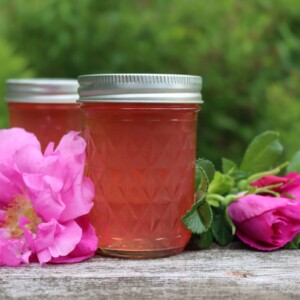
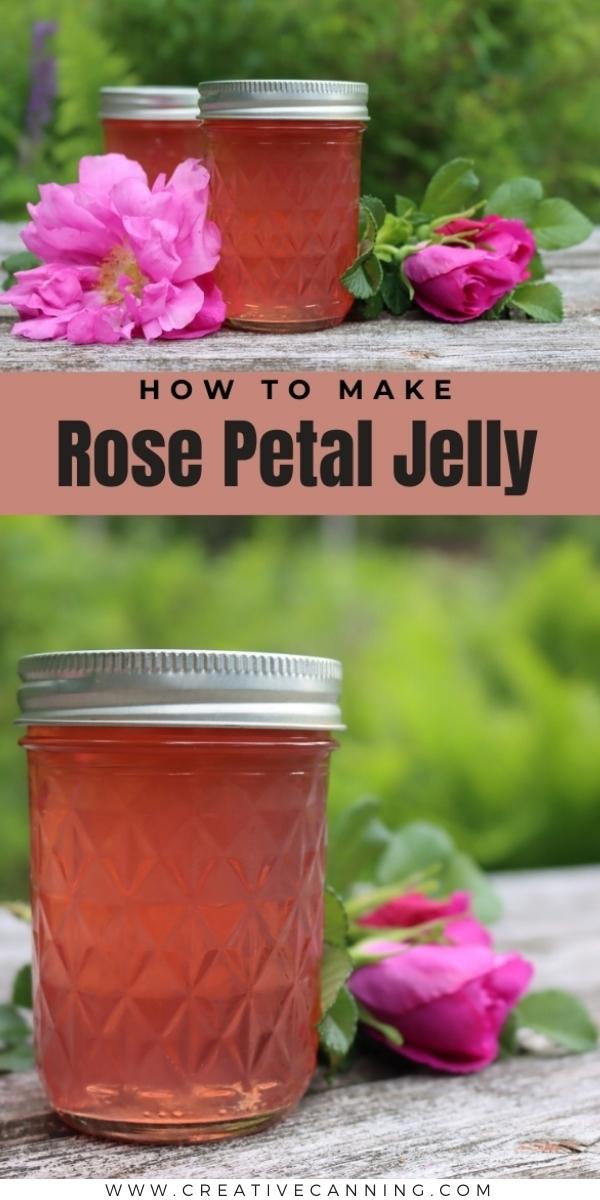
Rose petal jelly captures the sweet scent of summer roses in an easy-to-make preserve you can enjoy year-round. It’s a soft, pink-hued jelly that tastes the way a fragrant rose smells, and it makes a lovely gift or a special spread for scones and soft cheese.
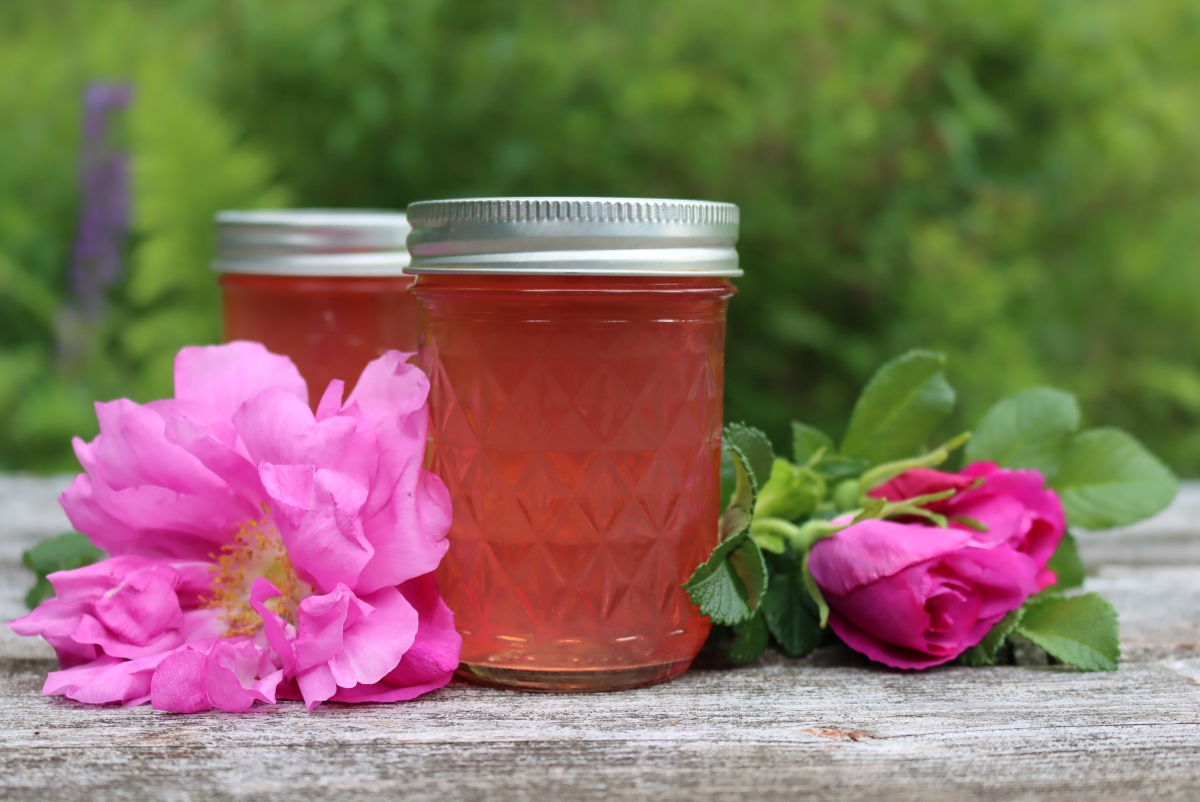
Table of Contents
- Notes from My Kitchen
- Quick Look at the Recipe
- What Does Rose Petal Jelly Taste Like?
- Choosing and Harvesting Rose Petals
- Ingredients for Rose Petal Jelly
- Low Sugar Options
- How to Make Rose Petal Jelly
- Canning Rose Petal Jelly
- Altitude Adjustments
- Ways to Use Rose Petal Jelly
- Rose Petal Jelly FAQs
- Flower Jelly Recipes
- Rose Petal Jelly Recipe
- Jelly Canning Recipes
This recipe has been reviewed for safety and accuracy by a Master Food Preserver certified through the University of Cornell Cooperative Extension.
Rose petals carry one of the loveliest scents in the garden, and turning them into jelly is a way to keep that fragrance on hand long after the blooms have faded. Roses have been called the queen of flowers for good reason, and they make a soft, pink addition to a shelf of homemade flower jellies.
This recipe sounds fancier than it is. Once you’ve gathered enough petals to fill a quart jar, the rest of the ingredients are ones you probably already keep on hand if you make jam or jelly with any regularity, and it comes together in about the same time as any other floral jelly.
Notes from My Kitchen

There’s something about rose petal jelly that feels celebratory, like a bit of early summer caught in a jar. My daughter has always been partial to my floral jellies, and this one is no exception.
When she graduated from kindergarten, I made her a batch to mark the day and handed it to her at pickup on her last day. A kindergarten “graduation” might not sound like much, but we make a point of celebrating milestones big and small around here, and to a little one, a first graduation gift is a big deal. This one came with a little extra love folded in.
Quick Look at the Recipe
- Recipe Name: Rose Petal Jelly
- Recipe Type: Flower Jelly Recipe
- Canning Method: Water Bath Canning
- Prep/Cook Time: 30 Minutes (including steeping)
- Canning Time: 10 Minutes
- Yield: 5 to 6 half-pint jars
- Jar Sizes: Quarter Pint, Half Pint, or Pint
- Headspace: 1/4 inch
- Ingredients Overview: Rose petals, water, lemon juice, sugar, and pectin
- Difficulty: Easy! You’re basically making a floral tea and setting it with pectin.
- Similar Recipes: The process is very similar to other edible garden flower jellies, including Peony Jelly, Tulip Jelly, and Pansy Jelly. If you grow flowering shrubs too, it’s worth a look at Lilac Jelly and Forsythia Jelly.
What Does Rose Petal Jelly Taste Like?
Rose petal jelly tastes the way a fragrant rose smells, soft and perfumed, with a delicate sweetness and a faint hint of fruit. If you’ve had rose water or Turkish delight, it lives in that family, though gentler and more jam-like. The flavor rides almost entirely on the petals’ fragrance, so a strongly scented rose makes a far more flavorful jelly than a pretty but odorless one.
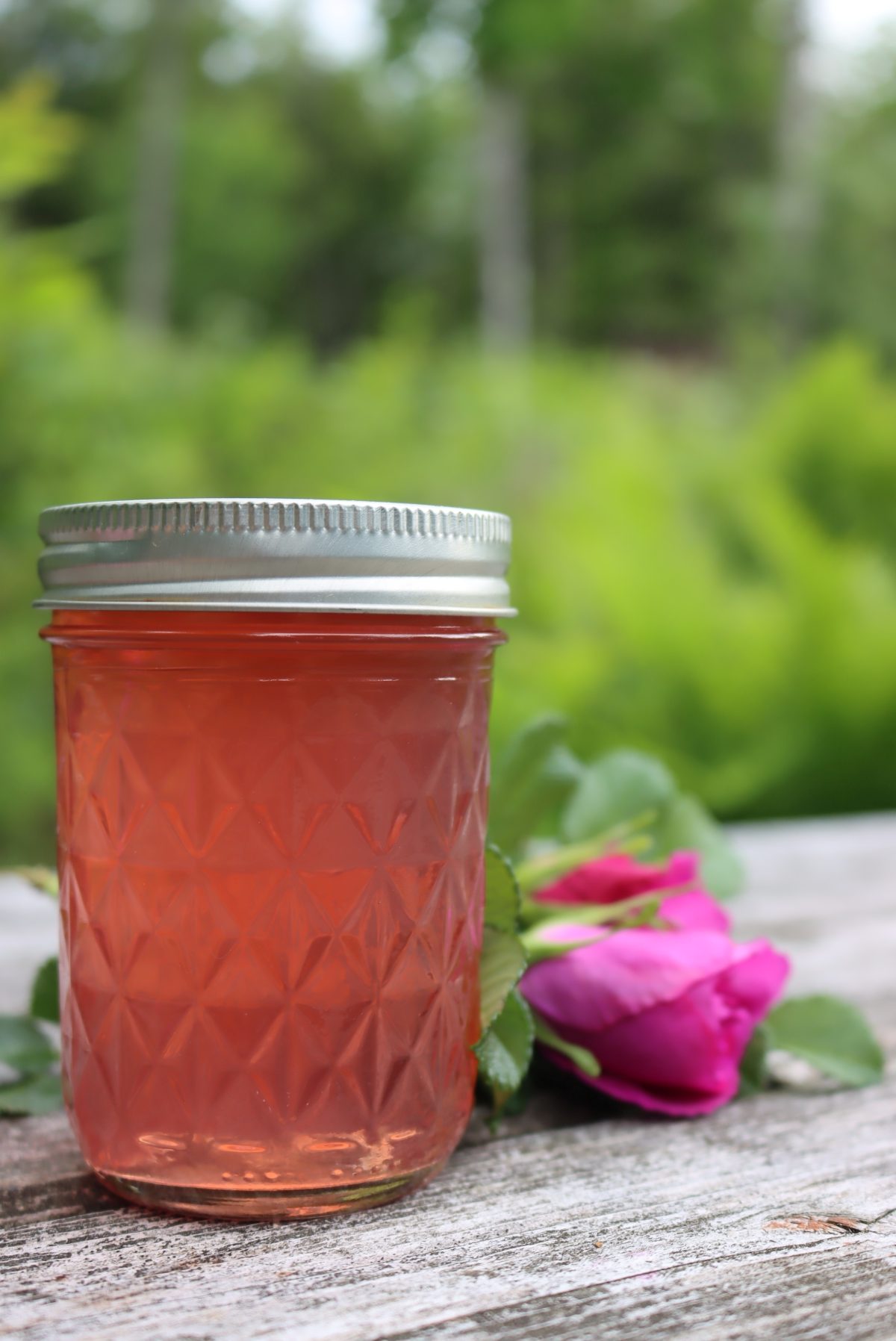
In the jar it sets up a soft pink, though that color is mostly the work of the lemon juice. The rose tea on its own looks pale and a little drab, and it isn’t until the acid goes in that the pinks brighten and the jelly takes on its blush. Deeper red and pink roses give a richer color than pale or white ones.
Wonderful. Amazing!! I have used this about 5 times now, and it has always come out! Hands down, my favorite jelly. Try it you will not be disappointed!!!
Choosing and Harvesting Rose Petals
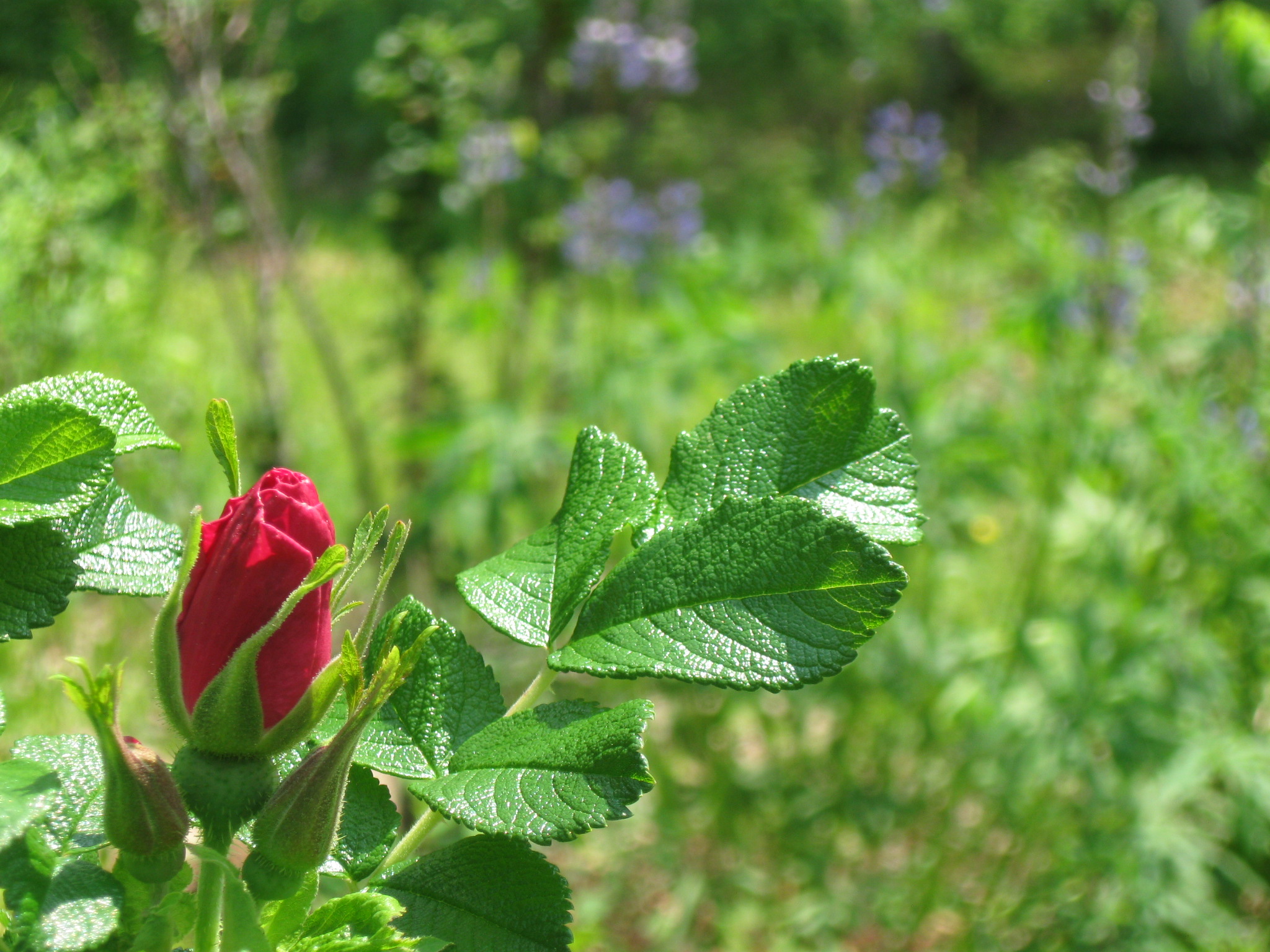
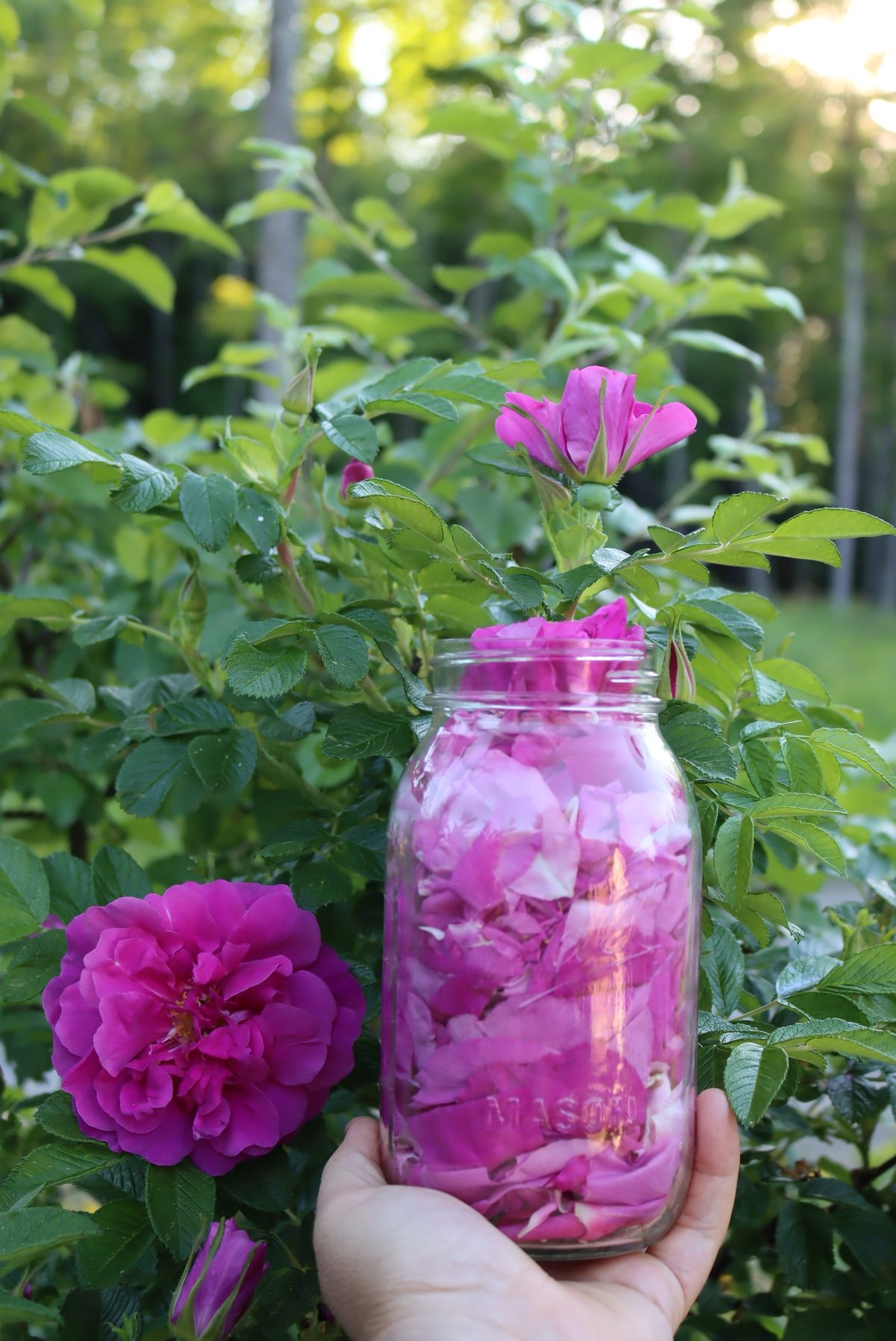
Any edible rose that hasn’t been sprayed will work, and fragrance is the thing to look for, since the jelly tastes the way the petals smell. Heavily scented types like old garden roses and rugosas give the most flavor, while many modern hybrid teas are bred more for looks than scent. Skip florist roses entirely, since they’re almost always treated with chemicals not meant for eating.
If you’re picking your own, gather the petals later in the day once the bees have had their turn at the blossoms. The flowers will still be fragrant, and leaving them to be pollinated first means you’ll have rose hips to forage come fall. Pull the petals free, pick out any dirt or insects, and pinch off the pale heel at the base of each petal, which carries a bitter note.
No rose bushes of your own? Ask around the neighborhood, since a jar of finished jelly makes a fair trade for a bowl of petals, or buy food-grade rose petals from a supplier like Mountain Rose Herbs. You’ll want enough petals to loosely fill a quart jar, about 4 cups, for a batch.
Ingredients for Rose Petal Jelly
Rose petal jelly uses the same basic formula as other flower jellies: fresh edible petals steeped into a tea, then set with sugar, pectin, and a bit of lemon juice for balance and safety.
- Rose Petals: Use clean, unsprayed petals from the most fragrant roses you can find, since flavor follows scent. Pinch off the bitter pale base of each petal, and use the petals only.
- Water: Use clean filtered water if your tap has a strong chlorine taste, since that can muddy the delicate rose flavor.
- Lemon Juice: The lemon juice does a few jobs at once. It brightens both the flavor and the color (rose tea is pale until the acid goes in), it helps the pectin set, and it lowers the pH enough to make the jelly safe for canning. Use bottled lemon juice, which holds a steady acidity that fresh lemons don’t. For a more neutral flavor you can swap in citric acid powder at about 1 teaspoon in place of the 1/4 cup of lemon juice.
- Sugar: Regular powdered pectin needs a good amount of sugar to gel, so this recipe follows the current Sure Jell ratio of 5 cups sugar to 4 cups of rose tea for an old-fashioned jelly that sets dependably. If you’d rather cut the sugar back, there’s a lower-sugar option in the note just below.
- Pectin: This recipe is built around regular powdered pectin, such as Sure Jell, which is reliable and gives a consistent set.
Low Sugar Options
If you’d prefer a less sweet jelly, reach for Sure Jell low sugar pectin instead and drop the sugar to as little as 1 to 2 cups. With Pomona’s Universal Pectin, bump the lemon juice up to 1/2 cup, since Pomona’s doesn’t include the added citric acid that most other pectins do.
Pomona’s is a 2-part low sugar pectin that comes with calcium water and behaves a little differently, so follow the mint jelly directions on the box. If it’s your first time using it, it’s worth reading through how to use Pomona’s pectin first.
How to Make Rose Petal Jelly
Making rose petal jelly runs like any other flower jelly. You steep the petals into a tea, set it with pectin and sugar, and add lemon juice along the way. Don’t skip that lemon, since it balances the sweetness, brightens the color, helps the set, and lowers the pH enough to keep the jelly safe on the shelf, so it goes in even if you’re not canning.
Most of the time here is hands-off while the petals steep, so have your jars and lids ready before you start. That way, you can move quickly once the jelly comes up to its boil.
Prepare the Rose Petals
Work through the blossoms and remove any dirt or debris, picking off the pale bitter heel at the base of each petal as you go. You’ll need about 4 cups of fresh petals, which is roughly a quart jar packed loosely full.
A quart mason jar or a 4-cup measuring cup makes an easy way to gauge the amount. Give the petals a quick rinse if they need it, especially when you’ve picked them yourself.
Make the Rose Tea
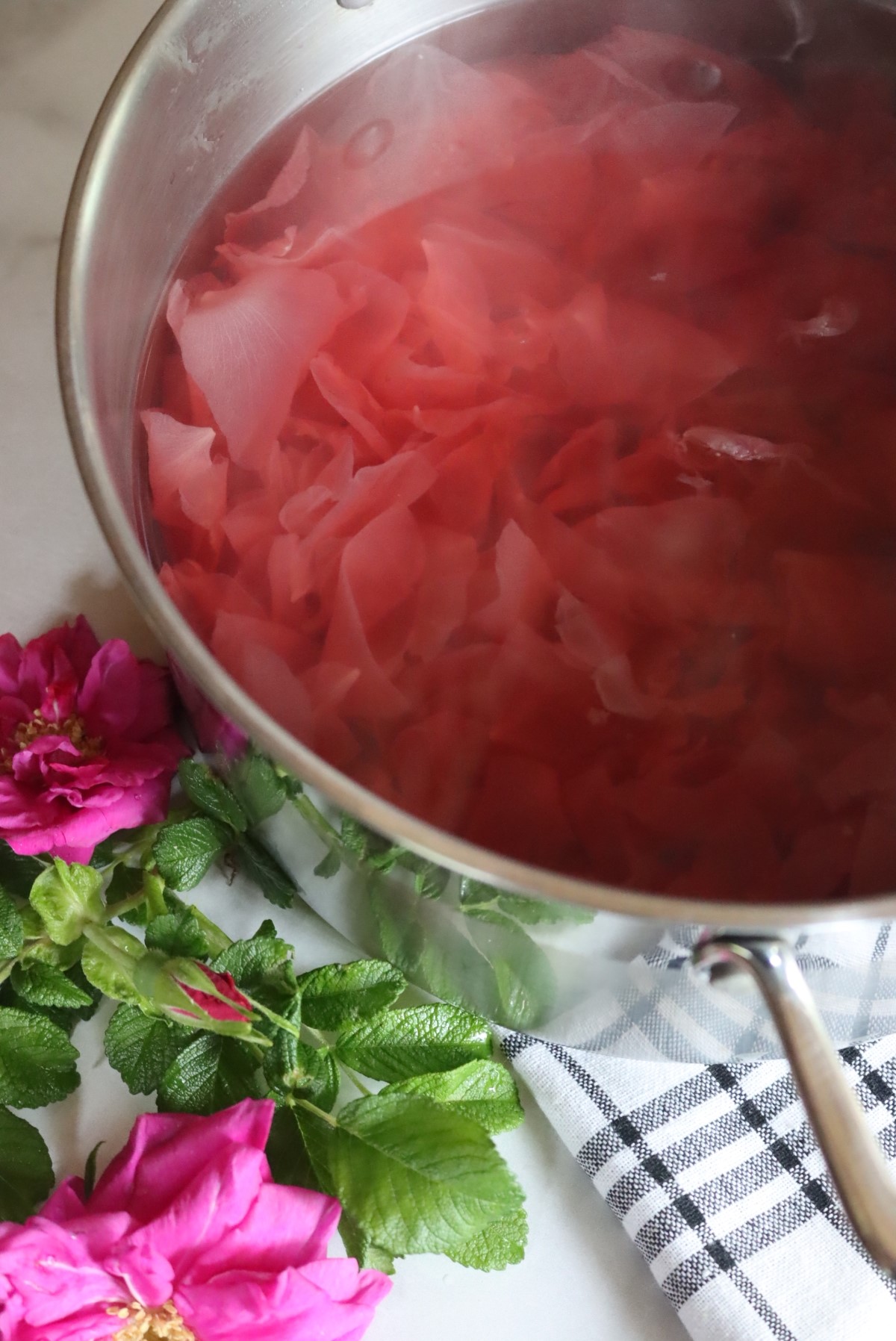
Cover the petals with 4 cups of boiling water and let them steep for 10 to 15 minutes, until the water has fully taken on their flavor and fragrance. Push the petals down so they stay submerged while they steep.
Strain the tea through a fine mesh strainer into a saucepan or jam pot, pressing gently on the petals to draw off all the liquid. You’re aiming for about 4 cups of rose tea. If you come up short, top it off with water to bring it back to 4 cups.
Add Lemon Juice and Pectin
Stir 1/4 cup of lemon juice into the rose tea. (Along with making the jelly safe to can, the lemon balances the sugar and brightens the pale tea to a soft pink, so don’t leave it out even if these are headed for the fridge.) Bring the mixture up to a boil over medium-high heat.
Once it’s boiling, whisk in one box of powdered pectin until it’s completely dissolved, and let it boil hard for 1 full minute. The pectin goes in before the sugar, which is what lets the jelly set, so hold that order.
Add the Sugar
After that minute, add 5 cups of sugar all at once. (Do not add the sugar before or at the same time as the pectin, or the jelly won’t set up.) Stir until the sugar is completely dissolved.
Bring the jelly back to a full rolling boil for exactly 1 minute, then pull it off the heat and skim away any foam with a spoon. Immediately ladle the hot jelly into prepared jars, leaving 1/4 inch headspace.
Canning Rose Petal Jelly
Canning is optional. If you’d rather not, let the jars cool completely on the counter and tuck them into the refrigerator for a few weeks, or the freezer for up to 6 months in freezer-safe jars.
For shelf storage, I like to run the jars through a water bath canner so the jelly keeps at room temperature year-round, which also makes it travel well as a gift. Make sure you’ve used the full amount of lemon juice, since that acidity is what makes water bath canning safe. Have your canner, jars, and lids prepped before you start the jelly. After ladling into jars (leaving 1/4 inch headspace), wipe the rims with a clean, damp cloth, set the lids, and tighten the bands to fingertip tight.
Process in a boiling water bath canner for 10 minutes, adjusting for altitude as needed. Let the jars cool undisturbed on a towel for 24 hours, then check the seals. Refrigerate any that didn’t seal and use them first. Properly canned and sealed jars will maintain quality on the pantry shelf for 12 to 18 months. Refrigerate after opening.
Altitude Adjustments
For water bath canning, processing times increase at higher elevations:
- 0 to 6,000 feet: 10 minutes
- Above 6,000 feet: 15 minutes
Ways to Use Rose Petal Jelly
Rose petal jelly is lovely spread on warm scones or toast, and it pairs especially well with soft, tangy cheeses like fresh goat cheese, or with nothing more than good butter. A spoonful brightens plain yogurt, and it makes a pretty filling for thumbprint cookies or a layer cake.
It also makes a thoughtful gift, whether as a hostess present at a summer gathering or a jar of summer handed over in the dead of winter. If you’d like to do more with your rose harvest, you can turn the petals into rose petal wine or mead, and there are plenty of other edible rose recipes worth a look.
Rose Petal Jelly FAQs
Any edible rose that hasn’t been sprayed will work, and fragrance is the thing to look for, since the jelly tastes the way the petals smell. Strongly scented old garden roses and rugosas give the most flavor, while many hybrid tea roses are bred more for looks than scent. Avoid florist roses, which are almost always treated with chemicals not meant for eating.
That’s normal. The rose infusion looks pale and a little drab on its own, and the color only brightens once the lemon juice goes in. The acid shifts the rose pigments and turns the tea, and the finished jelly, a soft pink. Deeper-colored roses give a richer final color than pale or white ones.
The most common reasons jelly doesn’t set are adding the sugar at the same time as the pectin (add pectin first and boil for 1 minute before adding sugar), boiling the finished jelly for too long (over 5 minutes), or trying to double the batch size. If it doesn’t set after 24-48 hours, enjoy it as a floral syrup or read through my guide on troubleshooting jelly set.
Yes, but you’ll need to use a low-sugar pectin like Sure-Jell Low Sugar or Pomona’s Universal Pectin and follow the package instructions for mint jelly. If you use Pomona’s, increase the lemon juice to 1/2 cup, since it doesn’t contain the added citric acid that other pectins do. The yield will be lower with reduced sugar.
Flower Jelly Recipes
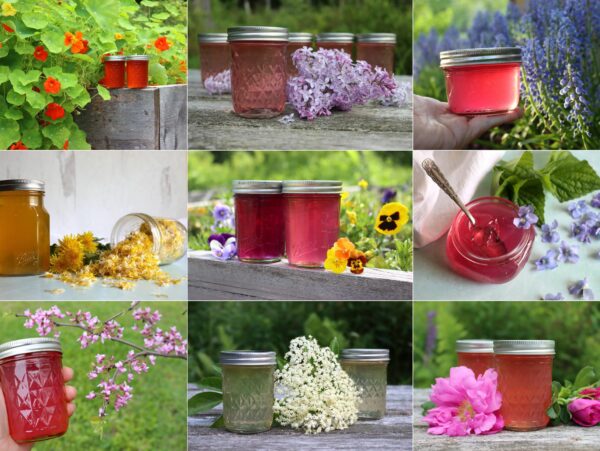
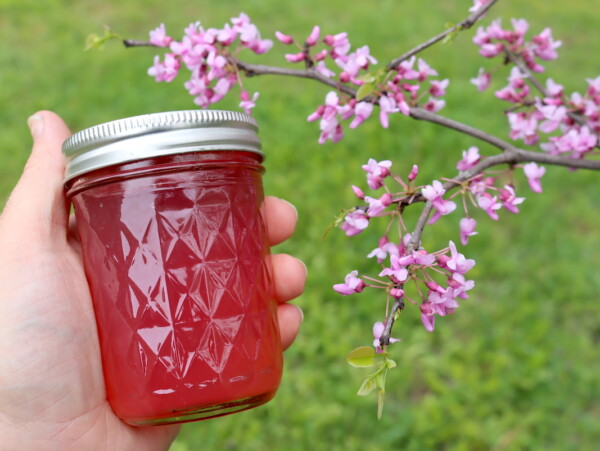
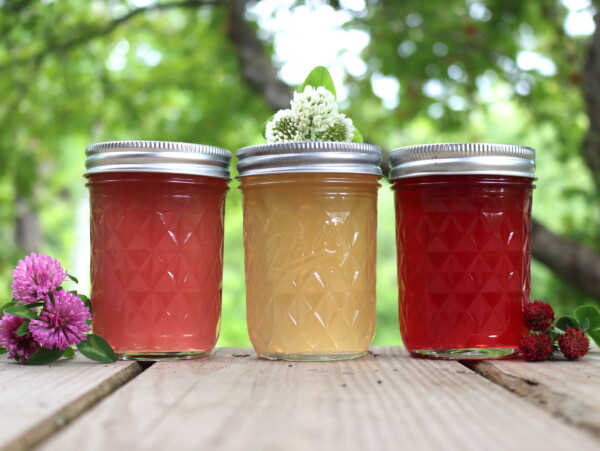
If you tried this Rose Petal Jelly recipe, or any other recipe on Creative Canning, leave a ⭐ star rating and let me know what you think in the 📝 comments below!
And make sure you stay in touch with me by following on social media!
Rose Petal Jelly
Equipment
- Canning Jars, Lids and Bands
Ingredients
For the Rose Tea
- 4 cups fresh rose petals, clean, unsprayed, pale heels removed
- 4 cups water
For the Jelly
- 4 cups rose tea, strained
- 1/4 cup bottled lemon juice, or 1 teaspoon citric acid
- 1 box powdered pectin, 1.75 oz, regular, such as Sure-Jell original or 6 Tbsp bulk pectin
- 5 cups granulated sugar
Instructions
- Add the rose petals to a heatproof container, such as a quart jar or a large measuring cup.
- Cover the petals with the boiling water and let them steep for 10 to 15 minutes.
- Strain the tea through a fine mesh strainer into a saucepan or jam pot, then stir in the lemon juice.
- Bring the tea and lemon juice to a boil, then whisk in the powdered pectin until dissolved and boil hard for 1 full minute. (The jelly won’t set if the pectin and sugar are added at the same time.)
- Add all the sugar at once and stir to dissolve. Return to a full rolling boil and boil hard for exactly 1 minute, then remove from heat and skim off any foam.
- Ladle hot jelly into prepared jars, leaving 1/4 inch headspace. Wipe rims clean, center lids, and apply bands fingertip-tight.
- Process in a boiling water bath for 10 minutes, adjusting for altitude. Turn off the heat and let jars rest 5 minutes before removing. Cool undisturbed 12-24 hours before checking seals.
Notes
Nutrition
Nutrition information is automatically calculated, so should only be used as an approximation.
Jelly Canning Recipes
Find the perfect recipe
Searching for something else? Enter keywords to find the perfect recipe!

This is my second year making rose petal a gift from a neighbor in Vt. This rose almost crawls along the ground and it’s been with me for some 30 years.
I left the petals in the finished jelly, and it adds a wonderful dimension of texture.
Thank you sooooooo much
Lovely!
I have a question, how long does the tea last in the fridge? I steeped and strained my petals late Friday night and then our electricity went out for 48 hours and I forgot about my jelly on Monday. Is it still safe to finish the jelly today Tuesday June 24th?
The tea is good for several days in the refrigerator (but maybe not if your power was out). It’s going to depend on how cool it stayed. If it was actually at refrigerator temperature, you can make the tea 3 to 5 days in advance without issue.
It stayed generally cool
this was fun. I can’t wait to make catalpa jelly.
Be sure to check to make sure that they’re edible flowers first, I’m not sure about those.
Another great recipe! You’ve got me making jellies out of everything in my yard now. lol
I can read and follow this recipe. This is going to be my favorite recipe. Thank you for sharing. My redbud jelly turn out perfect!.
I’m so happy it turned out for you!
Wonderful. Amazing!! I have used this about 5 times now and it has always came out! Hands down my favorite jelly. Try it you will not be disappointed!!!
So glad you enjoyed it!
Overall great! I had to adjust a lot because I used dried rose petals so the ratio of flower petals to water was much different. Thanks so much for this fabulous idea!
Yes, dried rose petals are much more concentrated in flavor than fresh ones! You’d want quite a bit less, maybe half as much by volume?
Loved this idea. The note re liquid pectin would have been more helpful up front and not an afterthought.
My jelly turned out delicious and the color was just gorgeous! I followed the recipe for the low sugar jelly. I used the 4 cups of petals and used low sugar sure gel and added 3 cups of sugar along with the lemon juice. It turned out to be one of my favorite new projects this spring! Thank you!
Wonderful! I’m so glad you enjoyed it!