
This post may contain affiliate links. Please see our disclosure policy.
Chokecherry jelly is a classic wildcrafted preserve that’s both practical and deeply rooted in tradition. If you’re lucky enough to have chokecherries growing nearby, take the time to turn them into something truly special. Whether you’re stocking the pantry or sharing a taste of the wild with friends, this bold jelly is always a conversation starter.
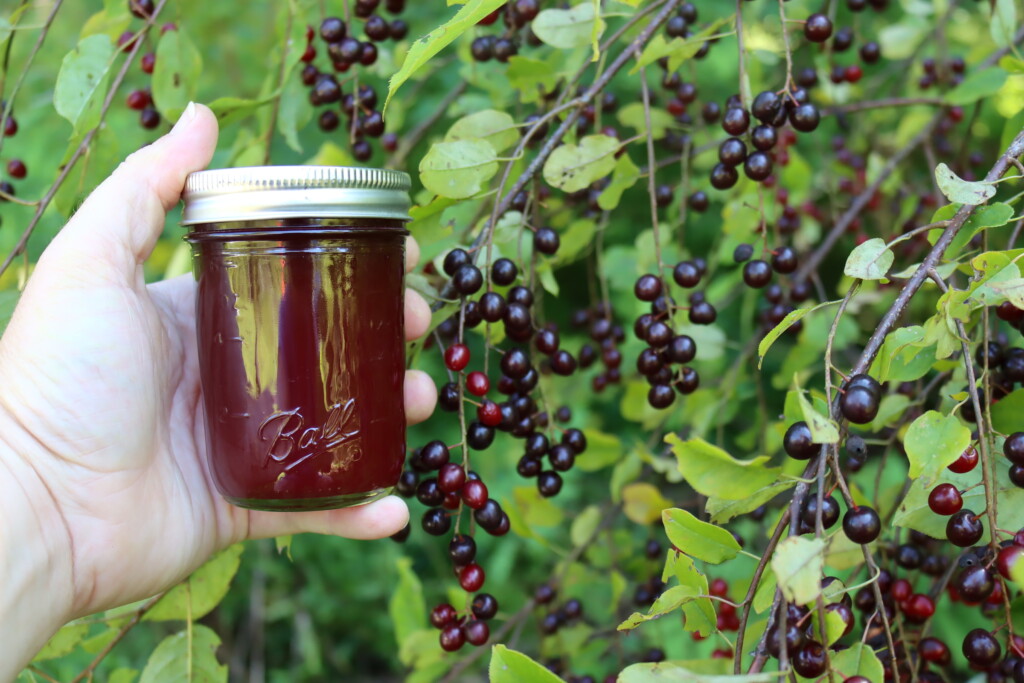
Chokecherry jelly is an old-fashioned preserve with deep roots in North American food traditions. Long before it became a staple in rural kitchens, chokecherries were gathered in abundance by Indigenous peoples across the continent and used in everything from sauces to pemmican. While most people consider the raw fruit is far too astringent to eat off the bush, a bit of cooking and sugar transforms it into something truly special—bold, tart, and rich in color.
For modern homesteaders and foragers, making chokecherry jelly is as much about the experience as it is the final product. It’s an excuse to spend a few quiet hours outdoors, harvesting a wild native fruit that still grows abundantly in many regions.
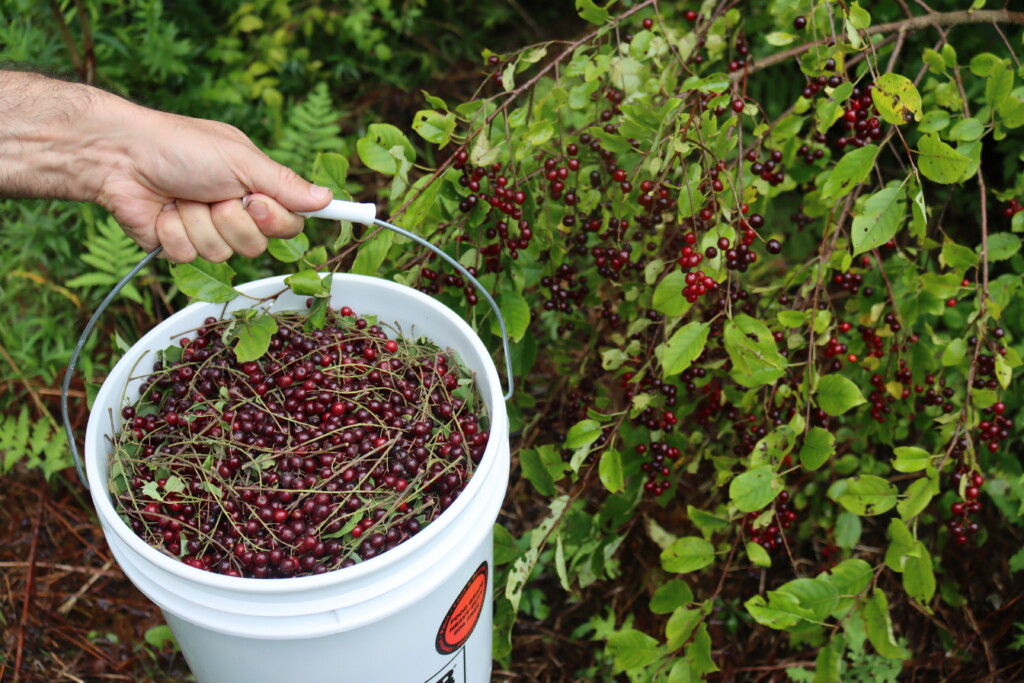
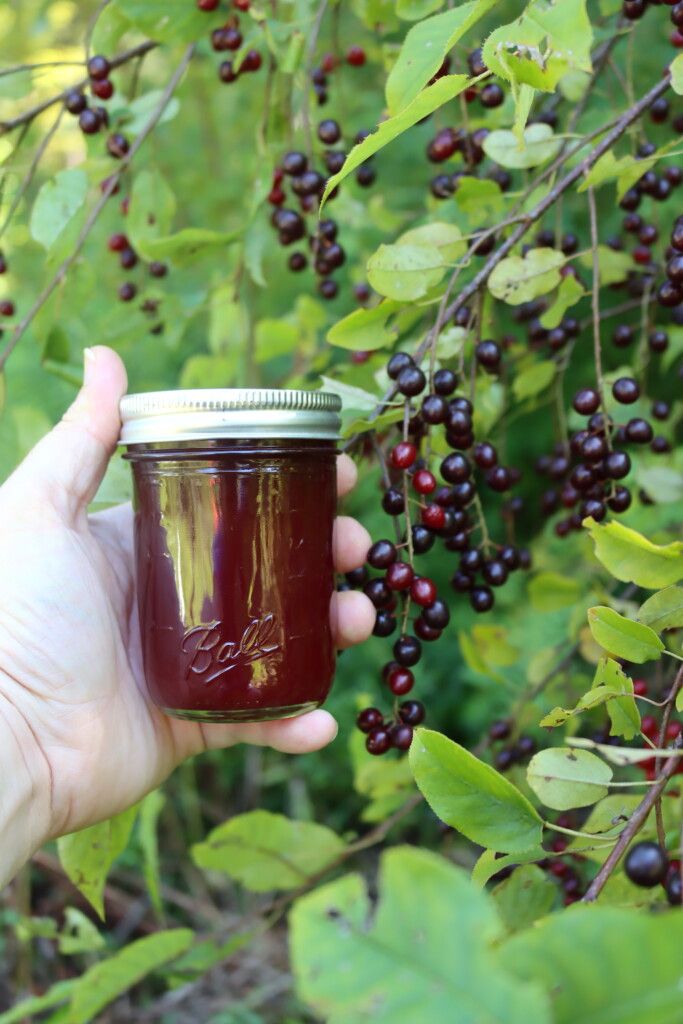
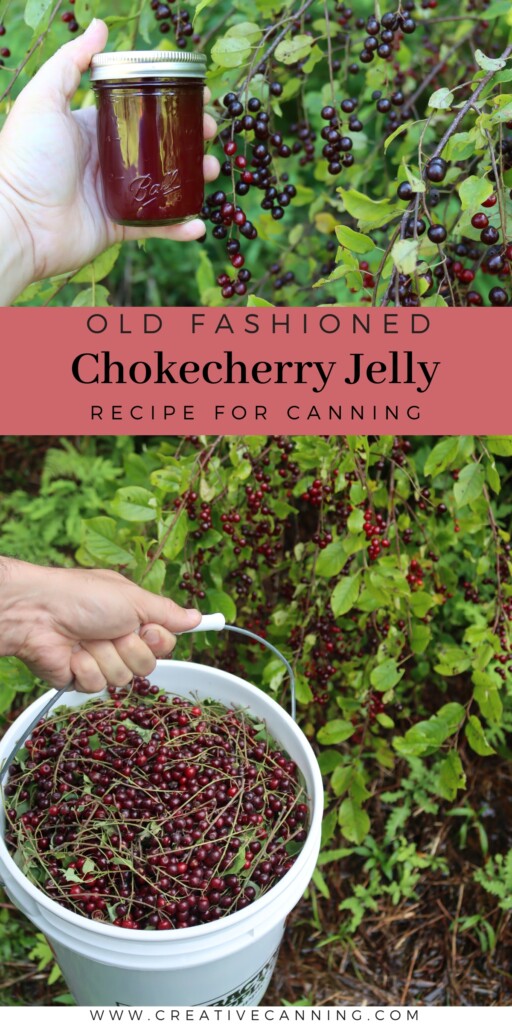
Chokecherries are easy to identify, and you can harvest them by the bucketload from just a few bushes.
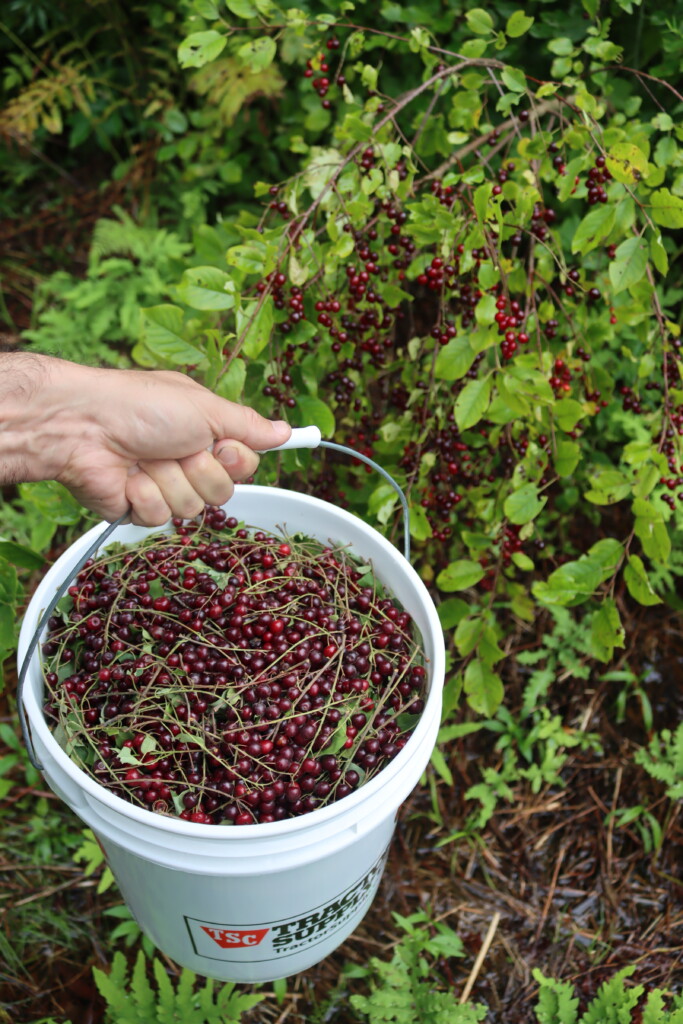
The jelly itself is easy to make with just a few ingredients, and it captures the essence of late summer in each ruby-red jar. Whether you’re stocking your pantry or simply carrying on a seasonal tradition, chokecherry jelly is one of those time-honored recipes that connects you to both the land and the people who came before.
Ingredients for Chokecherry Jelly
To make chokecherry jelly, you only need three basic ingredients: chokecherry juice, sugar, and powdered pectin. The amounts are easy to remember and scale, but one batch is designed to use exactly one box of standard pectin and fill about 6 half-pint jars.
- 4 cups chokecherry juice – This takes about 2 to 2½ pounds of fresh chokecherries, or roughly 7 to 9 cups of whole fruit (stemmed).
- 4 cups granulated sugar – Just enough to balance the tartness of chokecherries without overpowering their wild flavor.
- 1 box powdered pectin – Use the full box for jelly that sets firm, or reduce to half (or none) if you’d rather make syrup.
This is a flexible recipe that lets the unique flavor of chokecherries shine. If you’re using a low-sugar pectin, you can adjust the sugar to your liking—but standard pectin requires a 1:1 ratio of juice to sugar for a proper set.
This particular recipe is a simple recipe using boxed pectin, but it’s sometimes possible to make chokecherry jelly without added pectin. It’s trickier to get it to set, but if you’d like, I have separate instructions for making chokecherry jelly without added pectin.
Since they’re generally considered a “moderate” pectin fruit, results can be mixed without added pectin, and it’s a shame to waste all that harvesting effort just to have it not set. That’s why I’m putting out this more foolproof recipe.
How to Make Chokecherry Juice
Before you can make jelly, you’ll need to extract juice from the chokecherries. You can do this with or without special equipment, depending on what you have on hand.
Steam Juicer Method
If you have a steam juicer, this is by far the easiest way. Load the washed chokecherries into the juicer basket, add water to the base, and let the steam do the work. The juice will collect in the center chamber and can be drained off clean and ready to use.
Stovetop Method
No steam juicer? No problem. Place 7 to 9 cups of fresh chokecherries (about 2 to 2½ pounds) in a large stockpot and add about 3 cups of water—just enough to cover the fruit. Bring it to a boil, then reduce the heat and simmer (covered) for 15 to 20 minutes until the fruit is soft and the juice has been released.
Strain the mixture through a jelly bag or a colander lined with cheesecloth. Don’t squeeze the pulp or your jelly may turn cloudy—just let it drain slowly for a couple of hours.
You’ll need 4 cups of juice for one batch of jelly. If you have extra, you can freeze it for future batches or use it to make syrup.
How to Make Chokecherry Jelly
Once you’ve extracted the juice—either with a steam juicer or by simmering and straining the fruit—you’re ready to move on to jelly making. Be sure to measure your juice carefully; you’ll need exactly 4 cups for one full batch.
Start by pouring the chokecherry juice into a deep, heavy-bottomed pot. Stir in the entire box of powdered pectin and bring the mixture to a full rolling boil over high heat, stirring occasionally to prevent sticking. Once it reaches a boil you can’t stir down, add the sugar all at once and stir to dissolve completely.
Return the pot to a hard boil and continue boiling for one full minute, stirring constantly. The mixture should foam up significantly during this step, so make sure your pot isn’t filled more than halfway to avoid boil-overs.
After one minute, remove the pot from the heat and immediately ladle the hot jelly into prepared jars, leaving ¼ inch headspace. Wipe the rims, apply two-part lids, and process in a boiling water bath canner for 10 minutes (adjusting for elevation).
Let the jars cool undisturbed for 12 to 24 hours. The jelly will continue to set as it cools, and may take up to two days to reach its final consistency. Once sealed, the jars can be stored in the pantry for 12 to 18 months.
Altitude Adjustments for Canning Chokecherry Jelly
The standard water bath processing time for chokecherry jelly is 10 minutes at elevations up to 6,000 feet. If you live above 6,000 feet, increase the processing time to 15 minutes to ensure a safe seal and proper preservation. Start timing once the water returns to a full rolling boil, and always use tested recipes when canning at high altitude.
Making Chokecherry Syrup Instead
If you prefer syrup—or if your jelly doesn’t set—you can easily turn this recipe into chokecherry syrup by reducing or omitting the pectin. Use half a box of pectin for a thin, pourable syrup or skip it altogether for a more traditional wild fruit syrup. Bottle and store in the refrigerator, or process in canning jars just like the jelly.
Tips for Working with Wild Chokecherries
- Don’t eat them raw: Chokecherries contain compounds in their pits and leaves that can be toxic if consumed in large amounts raw. The flesh is fine when cooked, and straining out the solids avoids any issue.
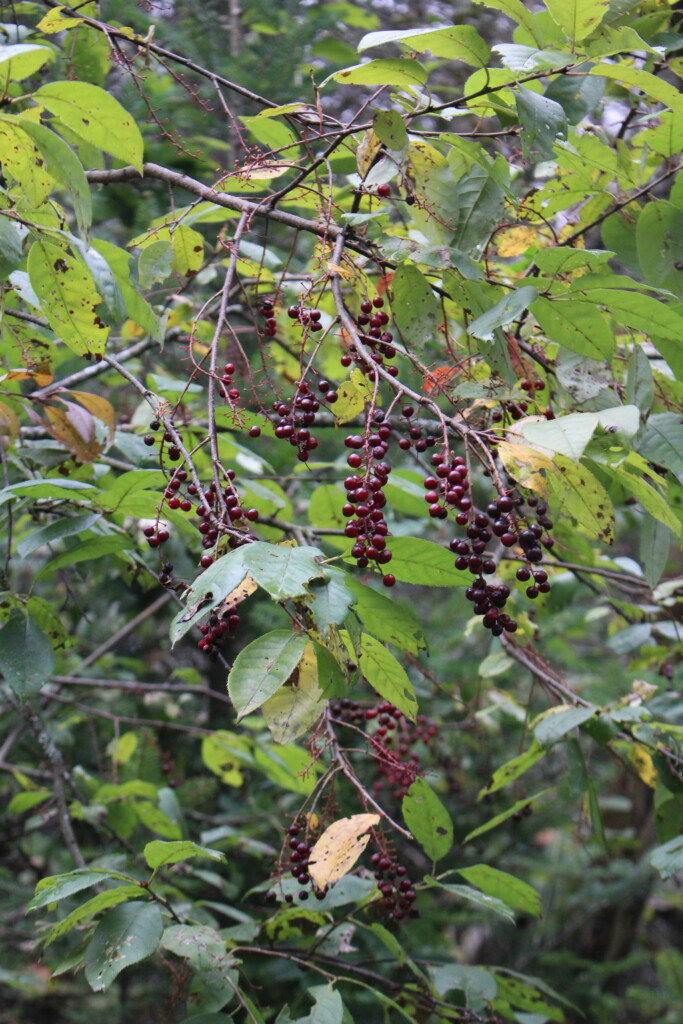
- Harvest ripe fruit only: Fully ripe chokecherries are deep purple to black. Red or under-ripe ones will be extremely astringent and contribute bitterness.
- Double check your ID: Chokecherries can be confused with similar-looking wild fruits like buckthorn, black nightshade and pokeweed. Always positively identify any wild plant before consuming.
Serving Suggestions
Chokecherry jelly is delicious on toast, of course, but it also pairs beautifully with sharp cheese, grilled meats, or even as a glaze for wild game. Its bold, tannic flavor cuts through rich foods and adds complexity to simple dishes.
Chokecherry Jelly
Equipment
Ingredients
- 4 cups chokecherry juice, from about 2 to 2½ pounds chokecherries, or 7 to 9 cups stemmed
- 4 cups granulated sugar
- 1 box powdered pectin, 1.75 ounce box, or 6 Tbsp if using bulk pectin, use full box for jelly; half or none for syrup
Instructions
- Prepare jars and canner by sterilizing jars and bringing a boiling water bath canner to temperature.
- Combine juice and pectin in a large, deep saucepan. Stir to dissolve and bring the mixture to a rolling boil over high heat and boil hard for 1 minutes. (If you're making chokecherry syrup instead of jelly, you can skip the pectin or only use half as much for a thinner, pourable preserve.)
- Add sugar all at once and stir constantly. Return to a hard boil and cook for exactly 1 minute.
- Remove from heat and immediately ladle the hot jelly into sterilized jars, leaving ¼ inch headspace. Wipe rims, apply two-part lids, and process in a boiling water bath canner for 10 minutes (adjust for altitude).
- Let cool undisturbed for 12 to 24 hours. Check seals before storing.
Notes
Chokecherry Syrup
If you prefer syrup instead of jelly, you can reduce the pectin to half a box or omit it entirely. For a no-pectin version, simply simmer the juice and sugar together until the mixture thickens slightly, then jar and process as usual. Jelly made with full pectin may take up to 48 hours to fully set. Store sealed jars in a cool, dark place for up to 18 months.Altitude Adjustments for Canning Chokecherry Jelly
The standard water bath processing time for chokecherry jelly is 10 minutes at elevations up to 6,000 feet. If you live above 6,000 feet, increase the processing time to 15 minutes to ensure a safe seal and proper preservation. Start timing once the water returns to a full rolling boil, and always use tested recipes when canning at high altitude.Nutrition
Nutrition information is automatically calculated, so should only be used as an approximation.
Wild Foraged Preserves
If you enjoy preserving wild fruits, chokecherry jelly is just the beginning. Try making a batch of wild grape jelly for a bold, tangy spread that’s perfect for fall. Elderberry jelly is another seasonal favorite, with rich flavor and immune-boosting properties.
For something a bit more tart and traditional, red currant jelly adds bright color and zip to everything from toast to roast meats.
You might also enjoy hawthorn jelly, made from foraged hawthorn berries in early autumn, or dandelion jelly, a springtime treat with a mild, honey-like flavor that captures the essence of wildflowers in a jar.
Each of these jelly recipes uses foraged or homegrown ingredients, and they’re a great way to stock your pantry while making the most of what nature offers.

Thanks for replying. Turns out it has to do with the altitude and barometric pressure where we live. The juice:sugar ratio needs to be completely different because of where we live. 3,438 feet above sea level. Good news is we were able to fix it!
I’m glad you got it to set! For anyone else canning at elevation, altitude doesn’t change the juice-to-sugar ratio. It changes the temperature where jelly sets. Jelly gels at 8°F above the temperature water boils where you live. At sea level that’s 220°F, but at around 3,400 feet water boils near 206°F, so your jelly point is closer to 213 or 214°F. Cooking to 220°F up there will overcook it. The easiest way to handle both altitude and the weather is to boil a pot of water that day, check the temperature, and add 8°F. You’ll also want to add 5 minutes to the water bath time anywhere above 1,000 feet.
What do you suggest if the consistency after 24 hours isn’t what we expected? Followed it exactly but still somewhere in between a syrup and a jelly?
Give it another day or two before you worry. Pectin jellies can take up to 48 hours to fully set, and some keep firming up for a week or so. If it’s still loose after that, you can remake it with more pectin using the steps at the end of my jelly troubleshooting guide: https://creativecanning.com/troubleshooting-jelly-set/ Or just call it chokecherry syrup. It’s wonderful on pancakes! Good luck with the batch!
When you use the steamer process can you pour about a cup of. Water to get more juice. When you throw the steamed chokecherries I can still see juice. Or can you press them to get a little more juice.
Yes to both! Pouring about a cup of water over the fruit near the end will rinse out some of that leftover juice. It dilutes the juice slightly, but that’s about the same as the stovetop method, which simmers the fruit in water anyway. You can also press the steamed fruit gently to get more out. Pressing will make your jelly a little cloudier, but it’ll still taste just as good. Just press gently and don’t crush the pits, since that’s where the compounds you don’t want in your jelly are. Either way, measure out exactly 4 cups of juice for the batch. Happy canning!
My jelly turned out perfect!! It was so easy with only three ingredients. Thank you.
I’m so glad to hear it!
This turned out great! Not overly sweet, just right & set up nicely. I added 1 tablespoon of lemon juice. I appreciated that you tell us how much juice to use in the recipe. Many other recipes tell you how many pounds of fruit but not the amount of juice.
The directions are very simple and straightforward.
Lovely! So glad it turned out for you!
Great recipe. Turned out as stated. The cleaning of the cherries and juicing them was a longer process but I would do it again. Thanks
So glad you liked it!
We my niece and a I followed your recipe ,we used 1/2 the sugar and our chokecherry jelly is like syrup.
Is it just because of the sugar amount that it didn’t thicken ?
You can only reduce the sugar if you use a low sugar pectin. Full sugar pectin requires at least a 1:1 ratio of juice to sugar to set.
You can find more info on troubleshooting jellies that didn’t set here: https://creativecanning.com/troubleshooting-jelly-set/
My chokecherry jelly did not thicken up,can I redo it by cooking and adding more pectin?
Yes, you can re-make it. There are instructions for remaking it with more pectin at the end of this guide to troubleshooting jelly set: https://creativecanning.com/troubleshooting-jelly-set/