
This post may contain affiliate links. Please see our disclosure policy.
Thistle jelly is a surprisingly delicate preserve that transforms wild thistle blossoms into a sweet, honeyed spread. It’s a charming way to make peace with one of the most invasive weeds in your garden, and the bees will thank you for leaving a few flowers behind.
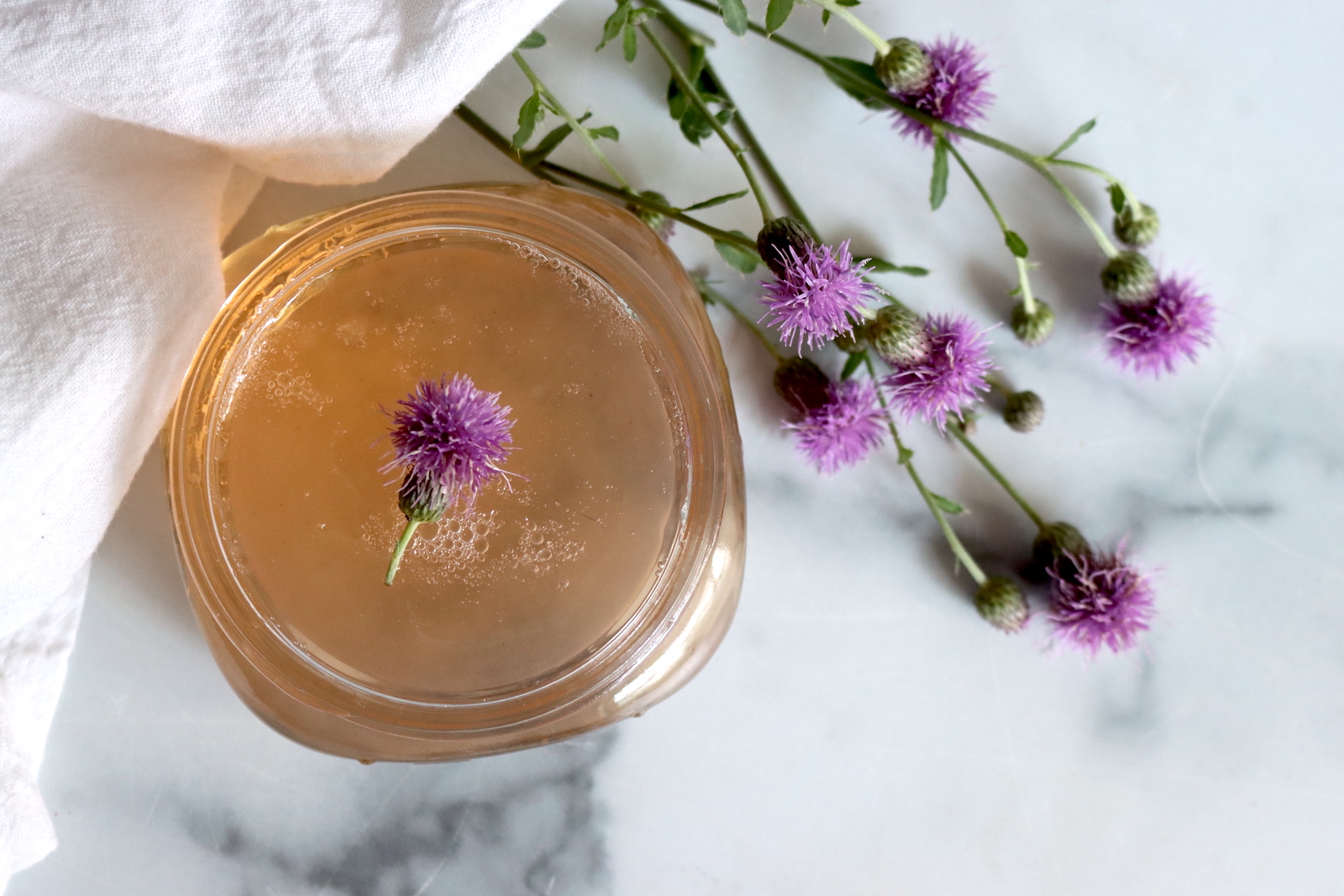
Table of Contents
- Notes from My Kitchen
- Quick Look at the Recipe
- What Does Thistle Jelly Taste Like?
- Identifying and Harvesting Thistle
- Ingredients for Thistle Jelly
- Low Sugar Options
- How to Make Thistle Jelly
- Canning Thistle Jelly
- Altitude Adjustments
- Ways to Use Thistle Jelly
- Thistle Jelly FAQs
- Flower Jelly Recipes
- Thistle Jelly Recipe
- Jelly Canning Recipes
This recipe has been reviewed for safety and accuracy by a Master Food Preserver certified through the University of Cornell Cooperative Extension.
I first came across the idea for thistle blossom jelly while flipping through a print copy of Enchanted Living magazine. They featured a recipe from Gather Victoria, and the whole concept felt magical, like something straight out of a fairy tale. I couldn’t stop thinking about it, because we have no shortage of Canada thistle growing here on our homestead.
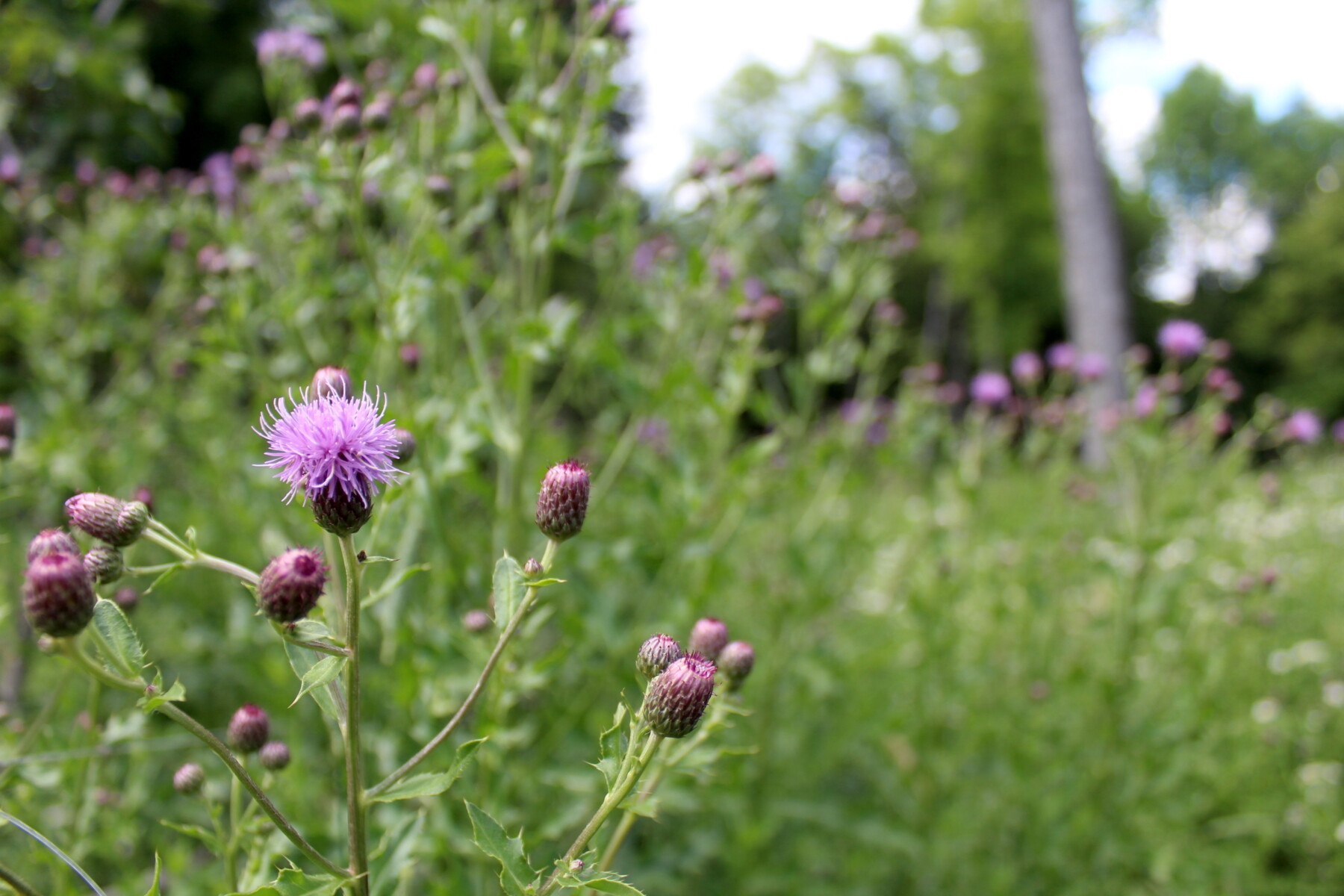
Canada thistle is notoriously invasive and spreads through both wind-dispersed seeds and an aggressive root system. The spines are intimidating, but the blossoms themselves are sweet, soft, and absolutely irresistible to pollinators. Harvesting the flowers before they go to seed is a satisfying way to help control the spread while putting those pretty purple blooms to good use.
If you don’t have Canada thistle, you can use any edible thistle variety including bull thistle, milk thistle, blessed thistle, or meadow thistle. They’re all members of the same family and produce edible flowers with a similar sweet, mild flavor. Just look for fresh blooms that are still brightly colored and haven’t started turning fluffy with seeds.
Notes from My Kitchen

The bees are absolutely obsessed with our Canada thistle, and I can understand why once I tasted this jelly. All that sweetness they’re gathering translates into a delicate, honeyed flavor that’s similar to clover jelly but with a slightly more complex floral note. Harvesting requires patience (and good gloves), but the flowers themselves aren’t nearly as spiky as the leaves and stems.
I love knowing that every blossom I harvest is one less seed head spreading through the pasture. The finished jelly is a pale golden color with a lovely shimmer, and it makes a wonderful gift for anyone who appreciates wild foraged foods.
Quick Look at the Recipe
- Recipe Name: Thistle Jelly
- Recipe Type: Flower Jelly Recipe
- Canning Method: Water Bath Canning
- Prep/Cook Time: 90 Minutes (including steeping)
- Canning Time: 10 Minutes
- Yield: 5 to 6 half-pint jars
- Jar Sizes: Quarter Pint, Half Pint, or Pint
- Headspace: 1/4 inch
- Ingredients Overview: Thistle blossoms, water, lemon juice, sugar, and pectin
- Difficulty: Easy! You’re basically making a floral tea and setting it with pectin.
- Similar Recipes: The process is very similar to making other wild-foraged floral jellies, including Fireweed Jelly, Dandelion Jelly, Clover Jelly, Black Locust Flower Jelly, and Violet Jelly.
What Does Thistle Jelly Taste Like?
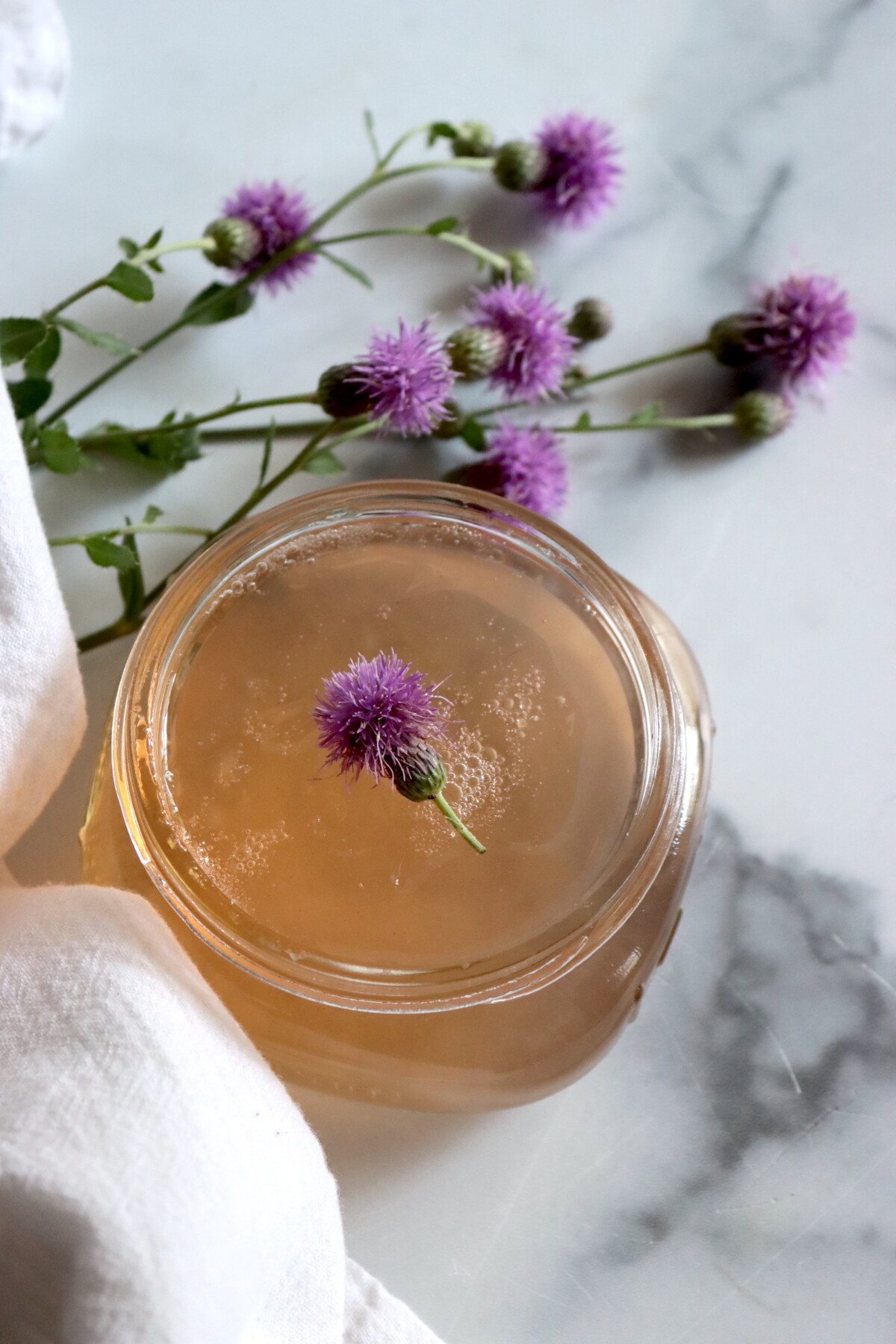
Thistle jelly has a delicate, sweet flavor with honeyed floral notes. The taste is mild and pleasant, not at all what you’d expect from such a prickly plant. It’s quite similar in character to clover jelly or borage jelly, with that same gentle sweetness that bees seem to love.
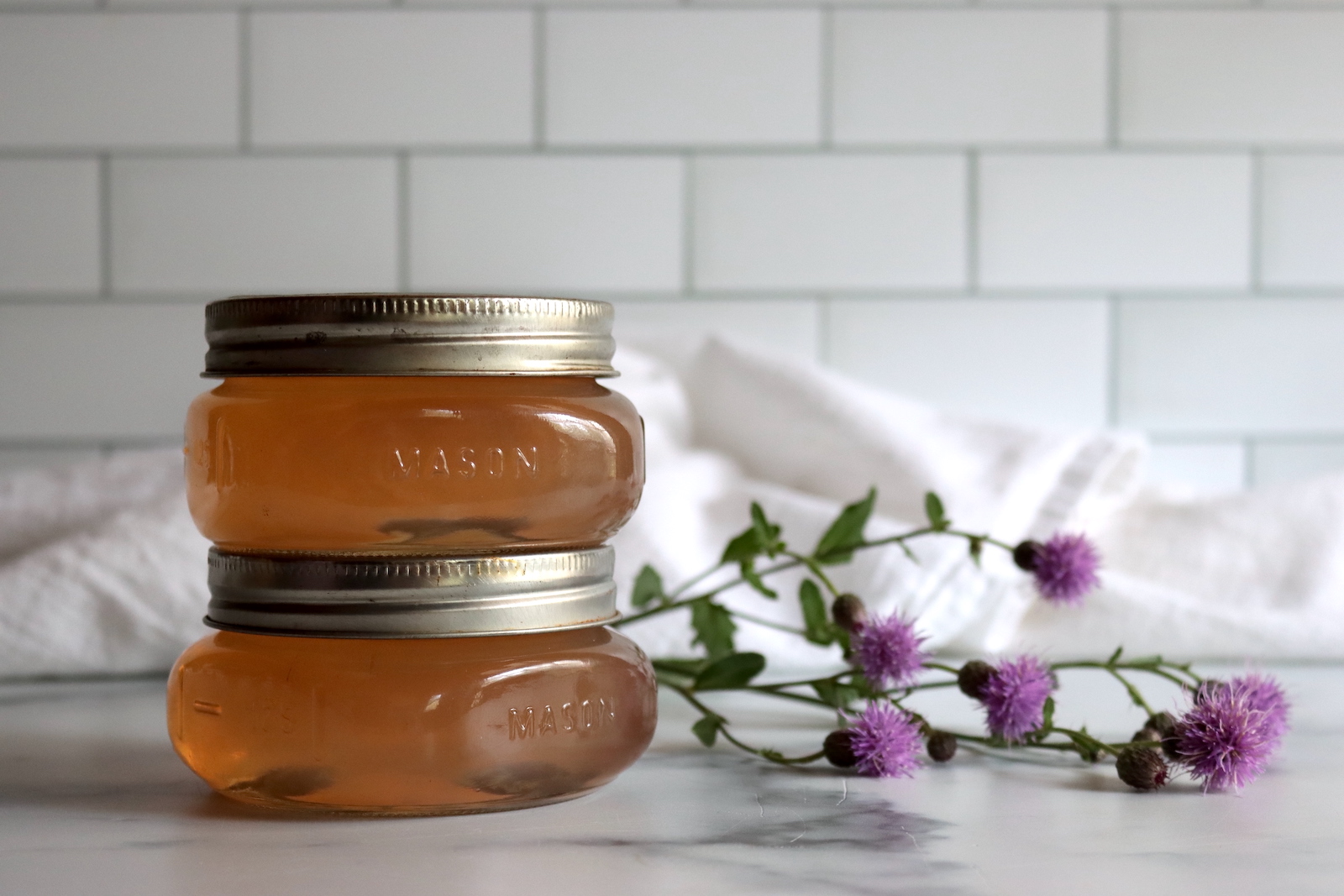
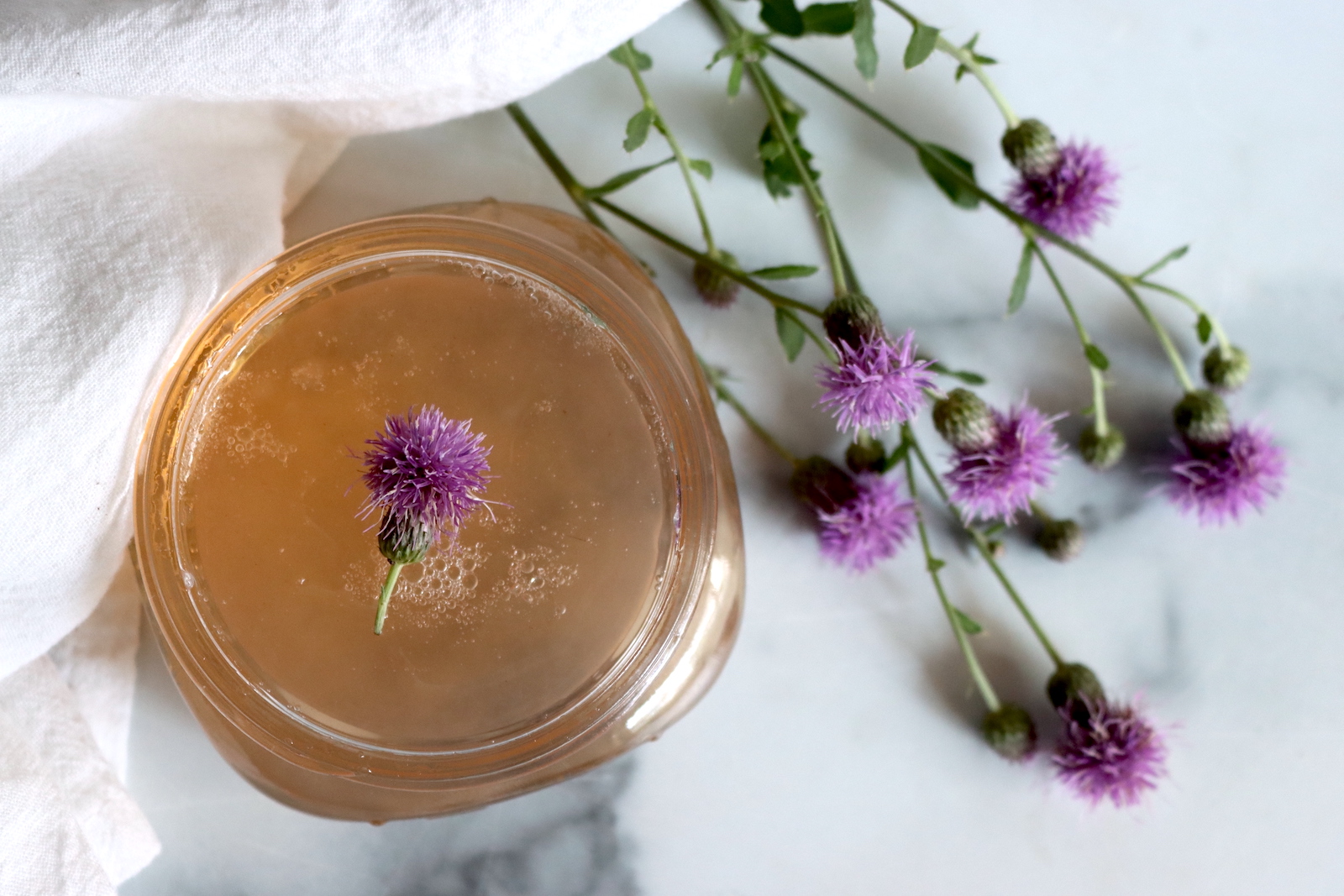
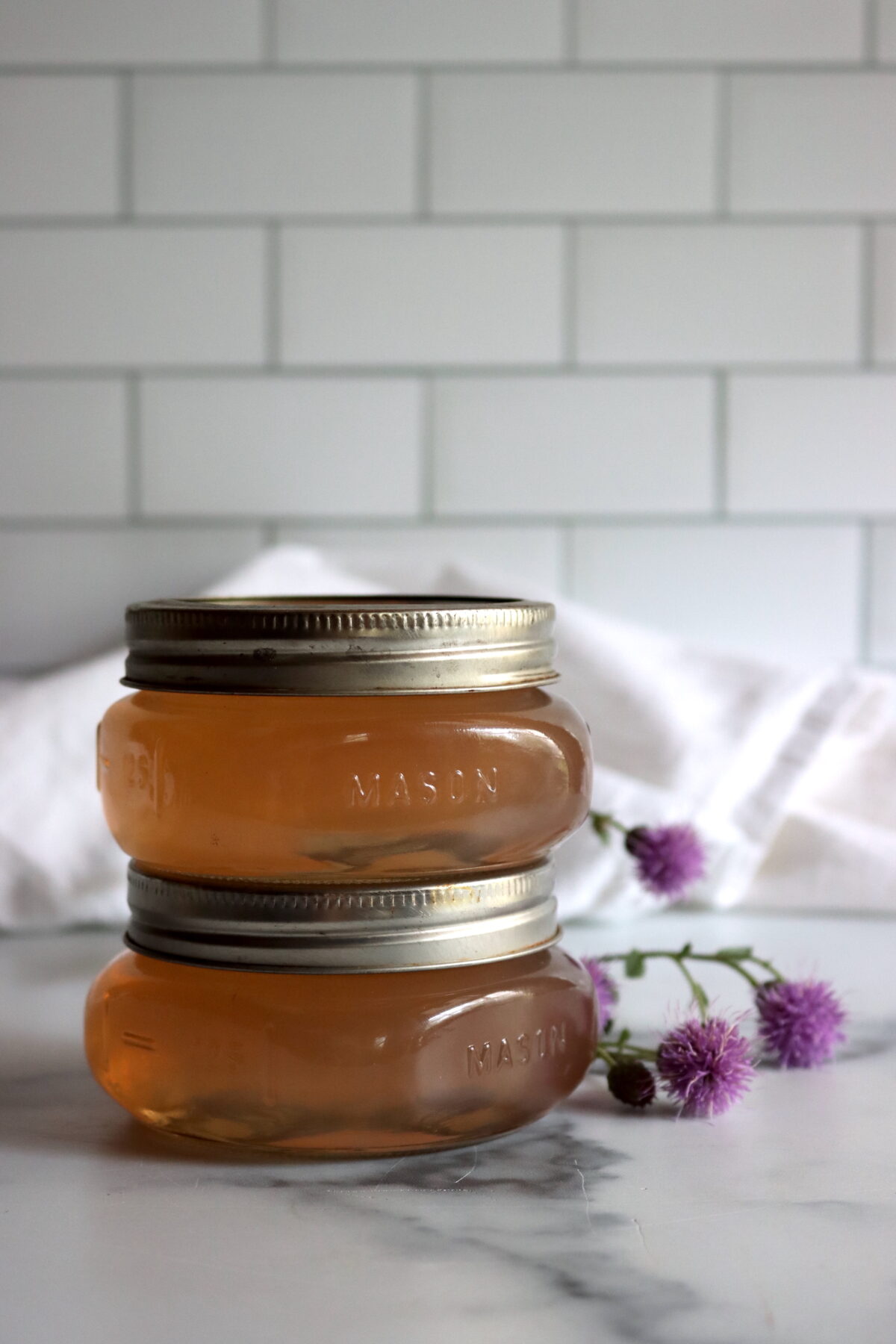
The finished jelly has a beautiful pale golden color with a subtle shimmer that looks lovely in the jar and even prettier when the light catches it on your breakfast table.
Identifying and Harvesting Thistle
All thistles in the Cirsium genus are edible, including Canada thistle (Cirsium arvense), bull thistle (Cirsium vulgare), milk thistle (Silybum marianum), blessed thistle (Cnicus benedictus), and meadow thistle. Canada thistle is the most common variety here in the Northeast, and it’s incredibly invasive, making it an ideal candidate for foraging.
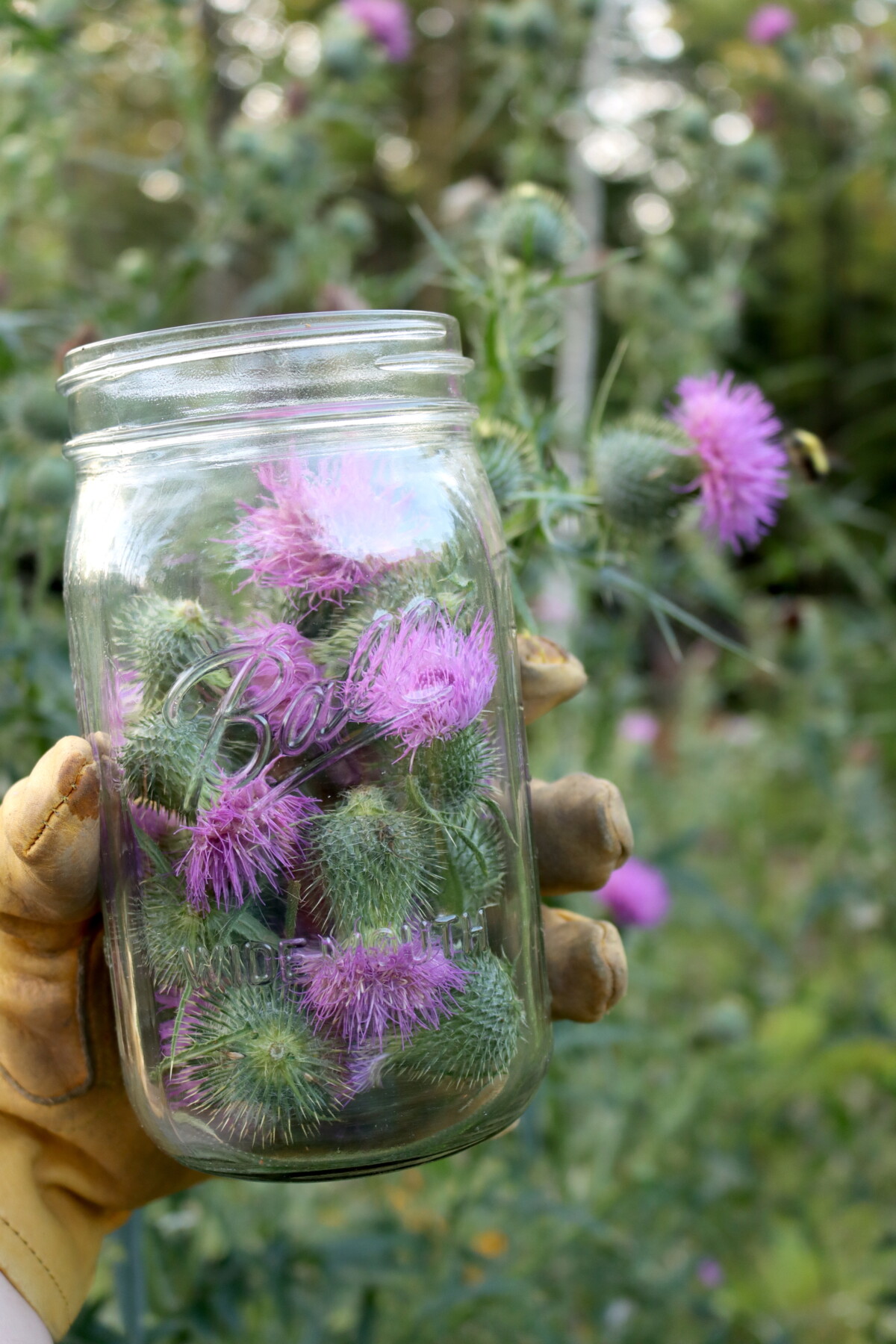
Wear gloves when harvesting, though the flower petals themselves are much softer than the spiny leaves and stems. Look for flowers that are freshly opened with brightly colored petals. Avoid any that have started to fade or develop fluffy seed heads. You’ll need about 2 cups of tightly packed blossoms to yield enough tea for this recipe.
Harvest in the morning after the dew has dried, and give the blossoms a gentle rinse to remove any small insects. The bees really do love these flowers, so you may need to be patient and wait for a break in the pollinator traffic.
Ingredients for Thistle Jelly
Thistle jelly uses the same basic formula as other flower jellies: fresh edible flowers steeped into a tea, then set with sugar, pectin, and a bit of lemon juice for balance and safety.
- Thistle Blossoms: Use any edible thistle variety including Canada thistle, bull thistle, milk thistle, blessed thistle, or meadow thistle. Harvest blossoms that are freshly opened and still brightly colored, avoiding any that have begun to fade or turn fluffy. Focus on the soft, downy petals and include a few whole flower heads for color and a stronger infusion.
- Water: Use clean filtered water if your tap water has a strong chlorine taste, which can affect the delicate floral flavor.
- Lemon Juice: The lemon juice serves several important purposes. It balances the sweetness of the sugar, bringing out the floral notes. It also helps the pectin set properly and lowers the pH of the mixture to make it safe for canning. Use bottled lemon juice for consistent acidity.
- Lemon Juice: The lemon juice serves several important purposes. It balances the sweetness of the sugar, bringing out the floral notes. It also helps the pectin set properly and lowers the pH of the mixture to make it safe for canning. Use bottled lemon juice for consistent acidity. Prefer a more neutral, less citrusy flavor? You can swap in about 1 teaspoon of citric acid powder for the 1/4 cup of lemon juice.
- Pectin: Use regular powdered pectin (like Sure Jell) for this recipe, which is dependable and produces consistent results.
Low Sugar Options
Want a less sugary jelly? Reach for a low-sugar pectin like Sure Jell low sugar pectin or Pomona’s Universal Pectin, which let you drop the sugar to as little as 1 to 2 cups. If you go with Pomona’s, raise the lemon juice to 1/2 cup, since it’s the one pectin here without added citric acid built into the powder.
Pomona’s also comes with a separate calcium packet and works a little differently from the boxed powders, so follow the mint jelly directions that come with it. If you haven’t used it before, my guide on how to use Pomona’s pectin walks through the steps.
How to Make Thistle Jelly
This is an incredibly easy recipe, where you make a simple floral tea and set it with pectin. The steeping time is a bit longer than some flower jellies to extract the most flavor from the blossoms. Just make sure you don’t skip the lemon juice, it’s important for taste and preservation.
Prepare the Thistle Blossoms
Start by harvesting about 2 cups of tightly packed fresh thistle blossoms. Wear gloves when harvesting, though the flower petals themselves are much softer than the spiny leaves and stems. Give the blossoms a gentle rinse to remove any small insects (the bees really do love these flowers).
You can pluck just the soft petals or include some whole flower heads for a stronger infusion and more color.
Make the Thistle Tea
Bring 4 cups of water to a boil, then remove from heat and let it cool for a minute or two. Add the thistle blossoms and push them down into the water until fully submerged. Cover and steep for at least one hour, or up to overnight in the refrigerator for a stronger infusion. The water will take on a beautiful color as it extracts the flavor from the flowers.
Strain the tea through a fine mesh strainer or jelly bag, pressing gently on the blossoms to extract all the liquid. You should have approximately 4 cups of thistle tea. If you’re short, add a bit of water to make up the difference.
Add Lemon Juice and Pectin
Add 1/4 cup of lemon juice to the thistle tea. (The lemon juice balances the sweetness, helps the pectin set, and makes the jelly safe for canning. Don’t skip it even if you’re not canning.) Bring the mixture to a boil over medium-high heat.
Once boiling, add one box of powdered pectin and stir until completely dissolved. Allow the mixture to boil for 1 full minute with the pectin.
Add the Sugar
After 1 minute, add 5 cups of sugar. (Do NOT add the sugar before or at the same time as the pectin, or the jelly won’t set.) Stir until the sugar is completely dissolved, then bring the mixture back to a full rolling boil for 1 minute.
Remove from heat and skim off any foam with a spoon. Immediately ladle the hot jelly into prepared jars, leaving 1/4 inch headspace.
Canning Thistle Jelly
Canning is optional, but it’s a wonderful way to preserve this seasonal treat for year-round enjoyment or gift-giving. If not canning, allow the jars to cool completely at room temperature, then store in the refrigerator for up to a few weeks or in the freezer for up to 6 months.
To can thistle jelly, prepare your water bath canner, jars, and lids before you start making the jelly. After ladling the hot jelly into jars (leaving 1/4 inch headspace), wipe the rims with a clean, damp cloth. Place the 2-part canning lids on the jars and tighten until fingertip tight.
Process in a boiling water bath canner for 10 minutes. Remove the jars and let them cool undisturbed on a towel for 24 hours. Check seals, and store any unsealed jars in the refrigerator for immediate use. Properly canned and sealed jars will maintain quality on the pantry shelf for 12 to 18 months. Refrigerate after opening.
Altitude Adjustments
For water bath canning, processing times increase at higher elevations:
- 0 to 6,000 feet: 10 minutes
- Above 6,000 feet: 15 minutes
Ways to Use Thistle Jelly
This delicate floral jelly is lovely on warm biscuits or scones, especially with a bit of butter. Try it on toast or English muffins for a taste of summer at breakfast. It pairs beautifully with soft cheeses like brie or fresh goat cheese and makes a charming addition to a cheese board or charcuterie spread.
Thistle jelly also makes a thoughtful homemade gift, especially for friends who appreciate wild foraged foods or anyone who might be amused by the idea of eating a thistle.
Thistle Jelly FAQs
Yes, all thistles in the Cirsium genus are edible and you can use Canada thistle, bull thistle, milk thistle, blessed thistle, meadow thistle, or any other variety. Just make sure the blossoms are fresh and brightly colored, not faded or going to seed.
Wearing gloves is recommended, but the flower petals themselves are soft and not spiky. The spines are concentrated on the leaves, stems, and outer bracts. Focus on harvesting just the soft, downy petals and you’ll encounter fewer prickles.
The most common reasons jelly doesn’t set are adding the sugar at the same time as the pectin (add pectin first and boil for 1 minute before adding sugar), boiling the finished jelly for too long (over 5 minutes), or trying to double the batch size. If it doesn’t set after 24-48 hours, enjoy it as a floral syrup or read through my guide on troubleshooting jelly set.
Yes. Swap in a low-sugar pectin such as Sure-Jell Low Sugar or Pomona’s Universal Pectin and follow the mint jelly directions on the package. With Pomona’s, bump the lemon juice up to 1/2 cup, because unlike other pectins it doesn’t include added citric acid. Expect a smaller yield when you cut the sugar.
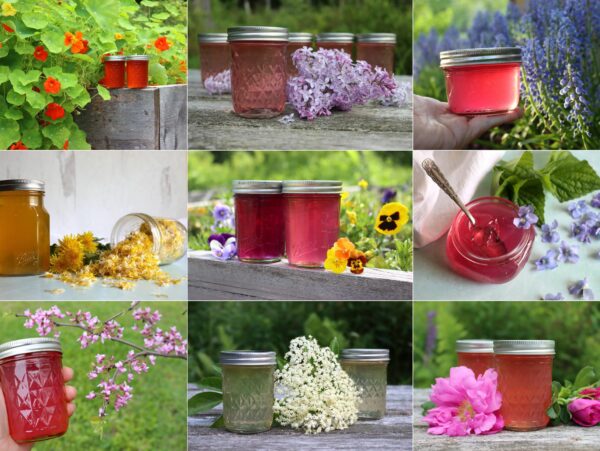
Flower Jelly Recipes
If you tried this Thistle Jelly recipe, or any other recipe on Creative Canning, leave a ⭐ star rating and let me know what you think in the 📝 comments below!
And make sure you stay in touch with me by following on social media!
Thistle Jelly
Equipment
- Canning Jars, Lids and Bands
- Fine Mesh Strainer or Jelly Bag
- Large saucepan
Ingredients
For the Thistle Tea
- 2 cups fresh thistle blossoms, tightly packed
- 4 cups water
For the Jelly
- 4 cups thistle tea, strained
- 1/4 cup bottled lemon juice, or 1 tsp citric acid powder
- 1 box powdered pectin, 1.75 oz, such as Sure-Jell original, or 6 Tbsp if bulk pectin
- 5 cups granulated sugar
Instructions
- Bring the water to a boil. Remove from heat and let cool for 1-2 minutes. Add the thistle blossoms and push them down until fully submerged. Cover and steep for at least 1 hour or overnight in the refrigerator.
- Strain the tea through a fine mesh strainer or jelly bag, pressing gently on the blossoms. Measure the strained tea, adding water if needed to reach the full amount called for in the ingredients.
- Place the thistle tea in a large pot and add the lemon juice. Whisk in the powdered pectin until completely dissolved. Bring to a full rolling boil over high heat, stirring constantly.
- Add all the sugar at once and continue stirring. Return to a full rolling boil and boil hard for exactly 1 minute. Remove from heat and skim off any foam.
- Ladle hot jelly into prepared jars, leaving 1/4 inch headspace. Wipe rims clean, center lids, and apply bands fingertip-tight.
- Process in a boiling water bath for 10 minutes, adjusting for altitude. Turn off heat and let jars rest 5 minutes before removing. Cool undisturbed for 12-24 hours before checking seals.
Notes
Nutrition
Nutrition information is automatically calculated, so should only be used as an approximation.
Jelly Canning Recipes
Find the perfect recipe
Searching for something else? Enter keywords to find the perfect recipe!
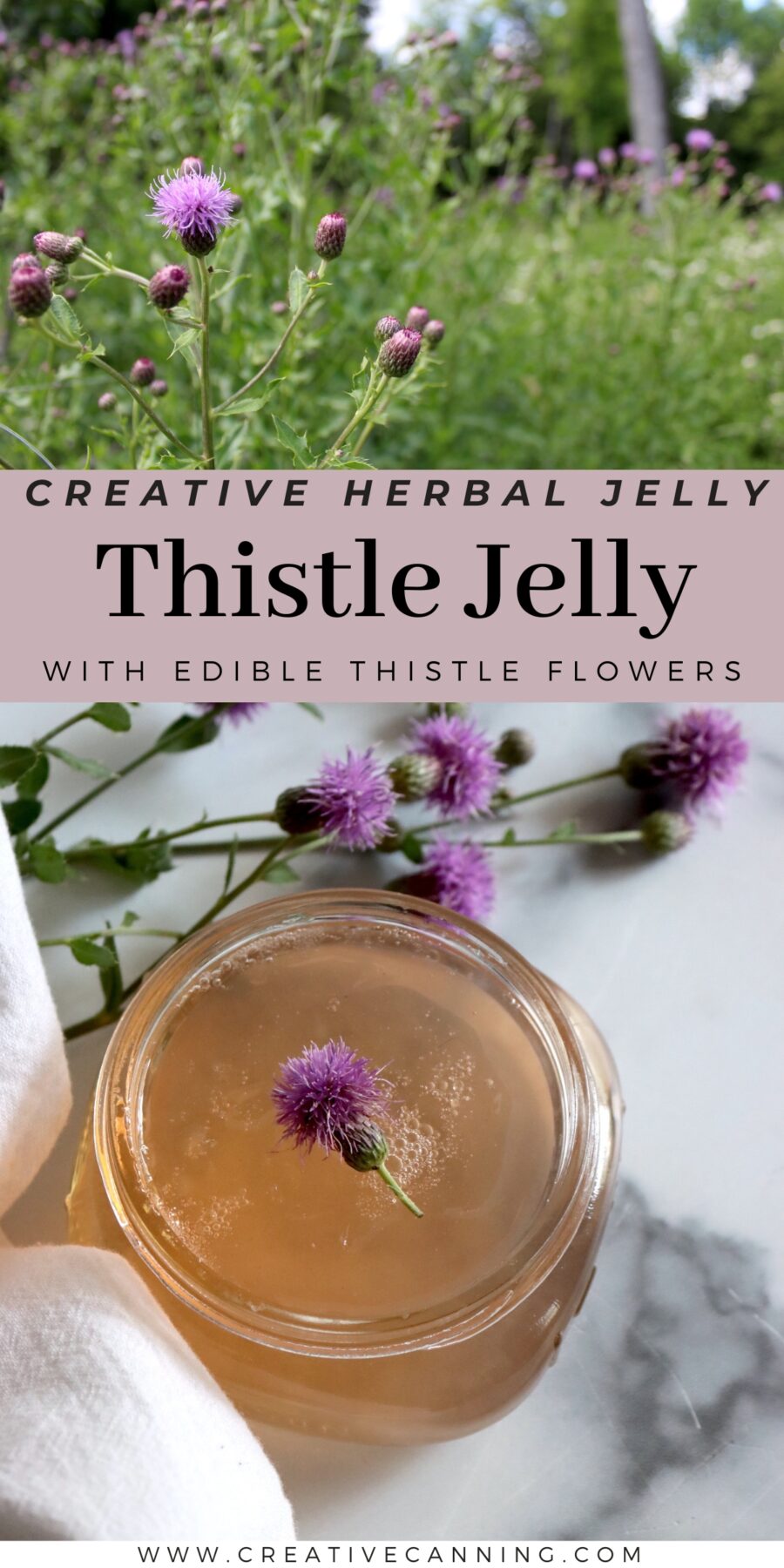

I was skeptical that a weed this prickly could turn into something I’d actually want on my toast, but thistle jelly won me over. It sets up soft and honeyed, a little like clover, and the pale gold color is so pretty in the jar. We’ve been spreading it on biscuits all week, and it makes a fun gift for anyone who gets a kick out of the idea of eating a thistle. Worth the patience it takes to gather the blossoms.