
This post may contain affiliate links. Please see our disclosure policy.
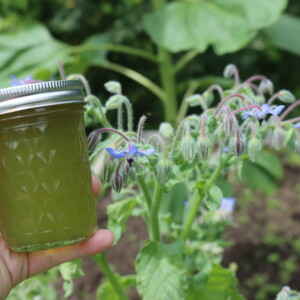
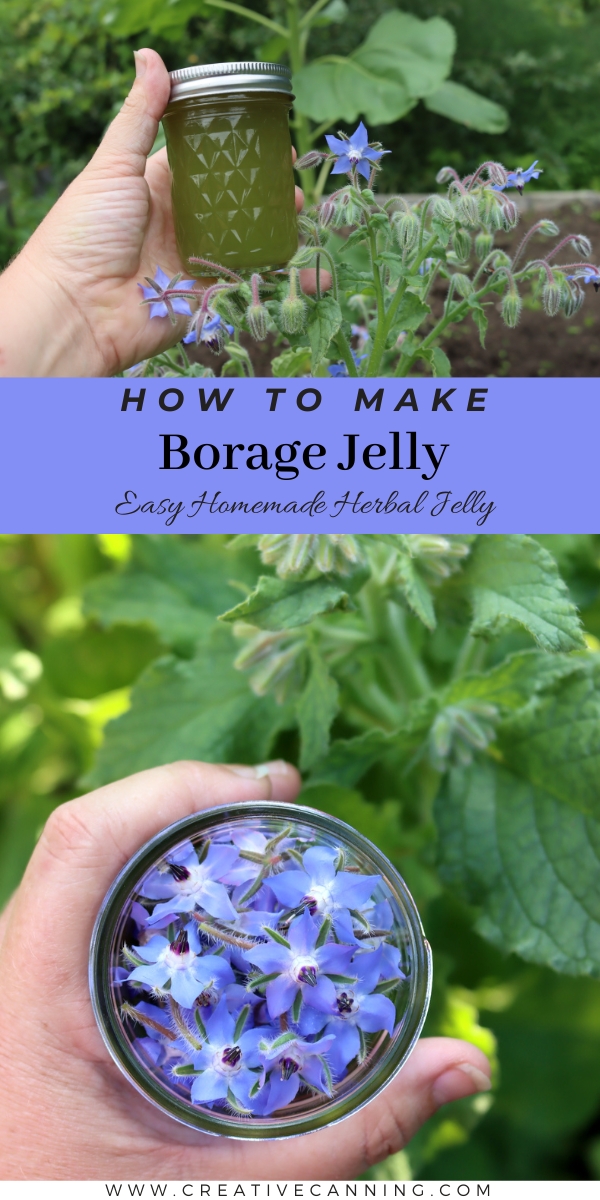
Borage jelly is a fun herbal jelly with a sweet cucumber flavor that’s perfect on spring biscuits.
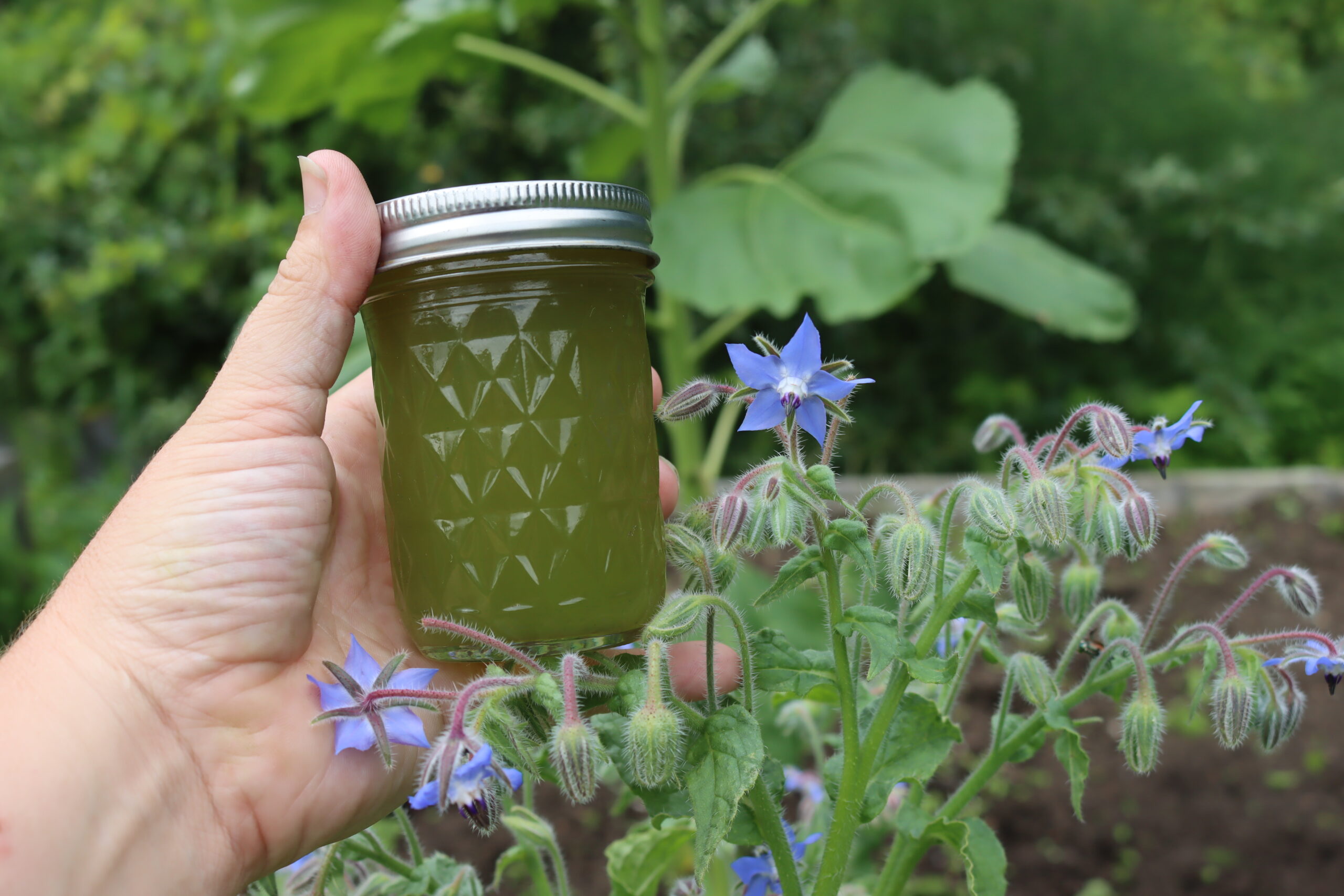
Herbal jellies are just another fun way to enjoy your herb garden. In past years, we’ve enjoyed lemon balm jelly, sunny calendula jelly, and even spicy savory chive blossom jelly.
Why not borage jelly?
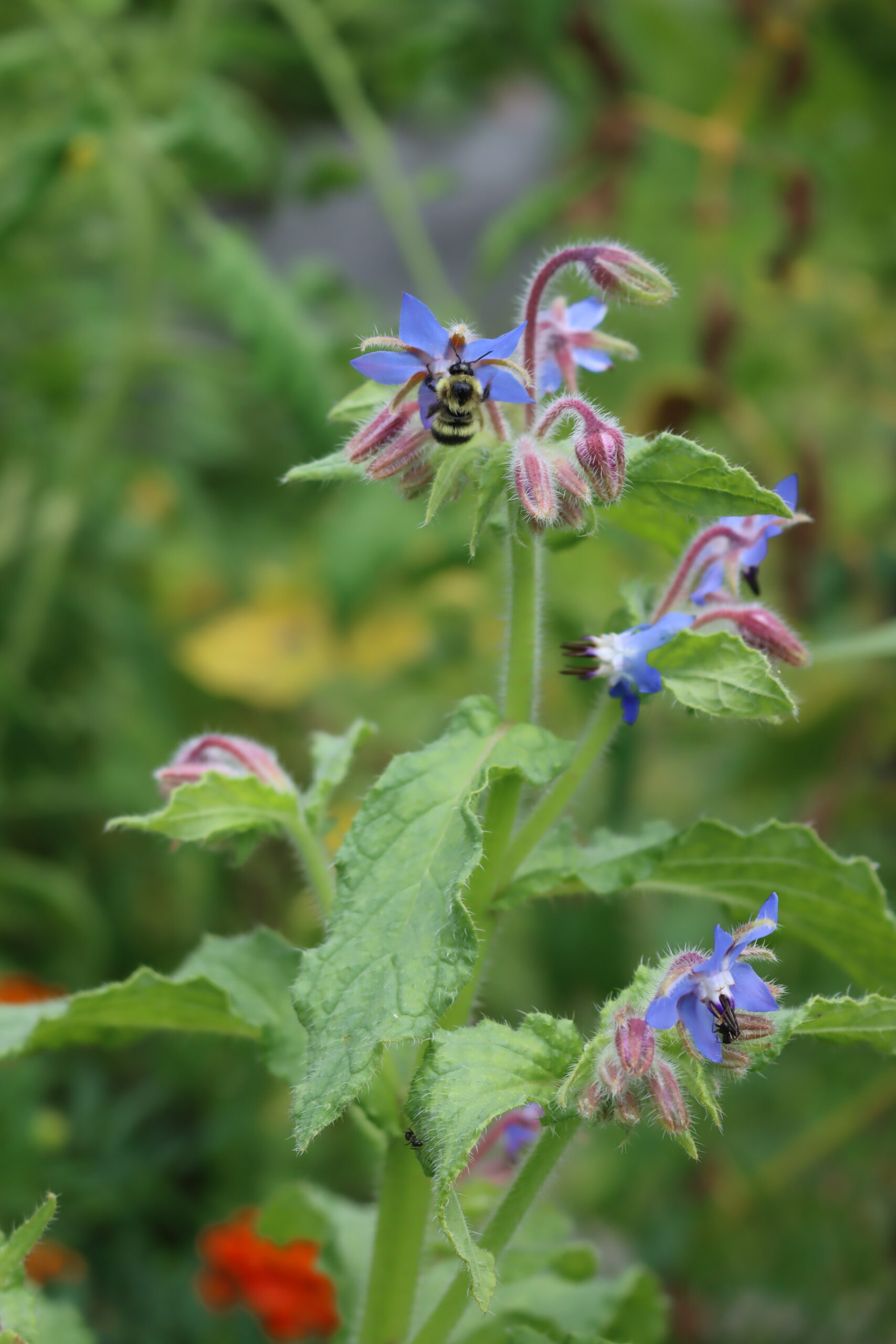
Borage is an agressive self seeder, and once you’ve plented it, you’ll be growing it for life. That means you’ll have plenty on hand to experiment with this recipe.
A Quick Look at the Recipe
- Recipe Name: Borage Jelly
- Recipe Type: Flower Jelly Recipe
- Canning Method: Waterbath Canning
- Prep/Cook Time: 30 Minutes
- Canning Time: 10 Minutes
- Yield: 4 to 5 half pint jars
- Jar Sizes: Quarter Pint, Half Pint or Pint
- Headspace: 1/4 inch
- Ingredients Overview: Edible Flowers, Water, Lemon Juice (not optional), and sugar
- Difficulty: Easy! You’re basically making a quick tea and setting it with pectin.
- Similar Recipes: The process is very similar to making other summertime floral jellies, including Chamomile Jelly, Calendula Jelly, Elderflower Jelly, Peony Jelly, Bee Balm Jelly, Lemon balm Jelly, Nasturtium Jelly, or Rose Petal Jelly.
What does Borage Jelly Taste Like?
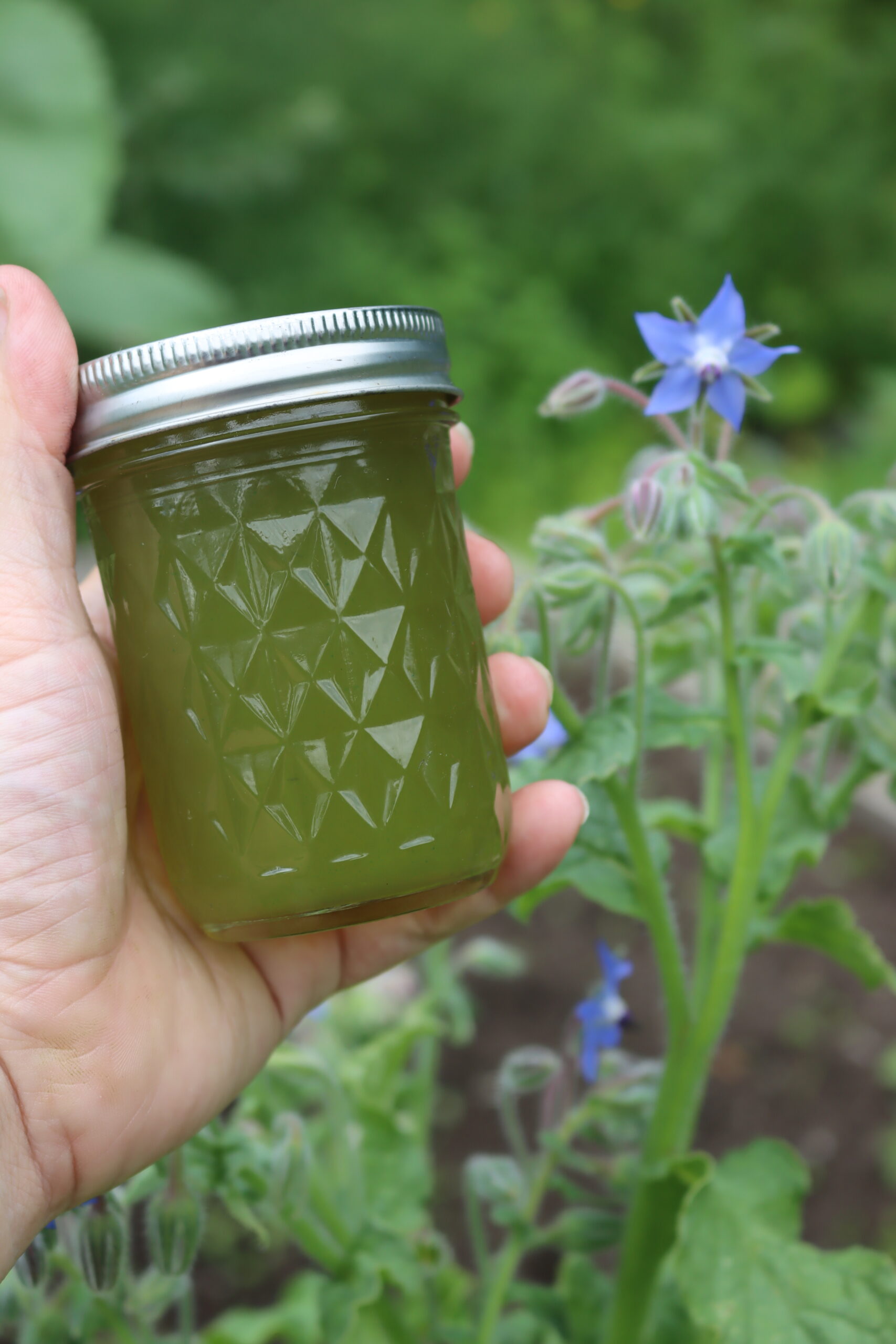
Borage has a light cucumber flavor, and it really comes through in this homemade borage jelly. You can use either the flowers or the greens, and the flavor (and color) is the same either way.
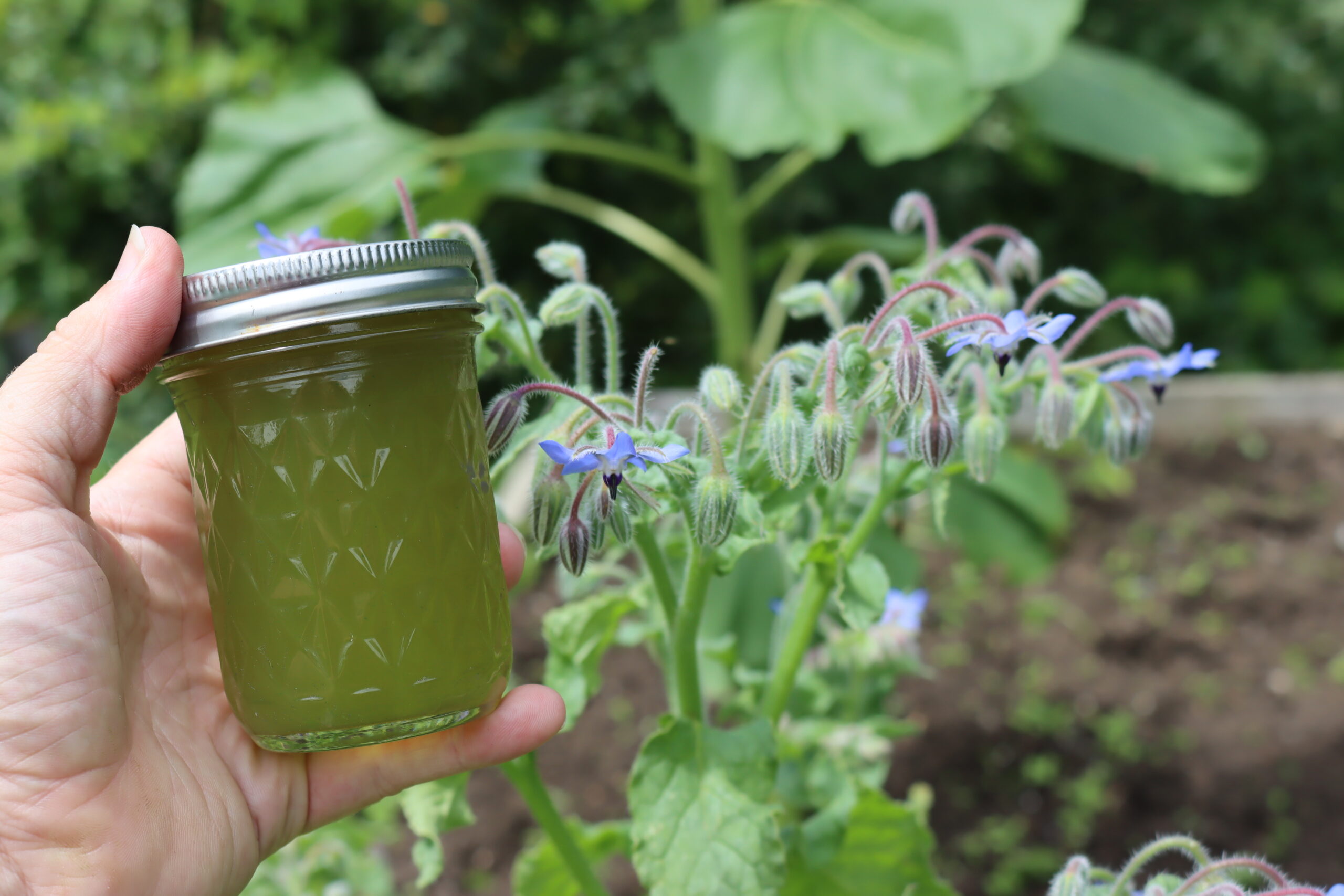
It’ll always have a light cucumber flavor, and light green color. Add a few drops of natural green food coloring for a more vibrant hue.
Harvesting Borage For Flower Jelly
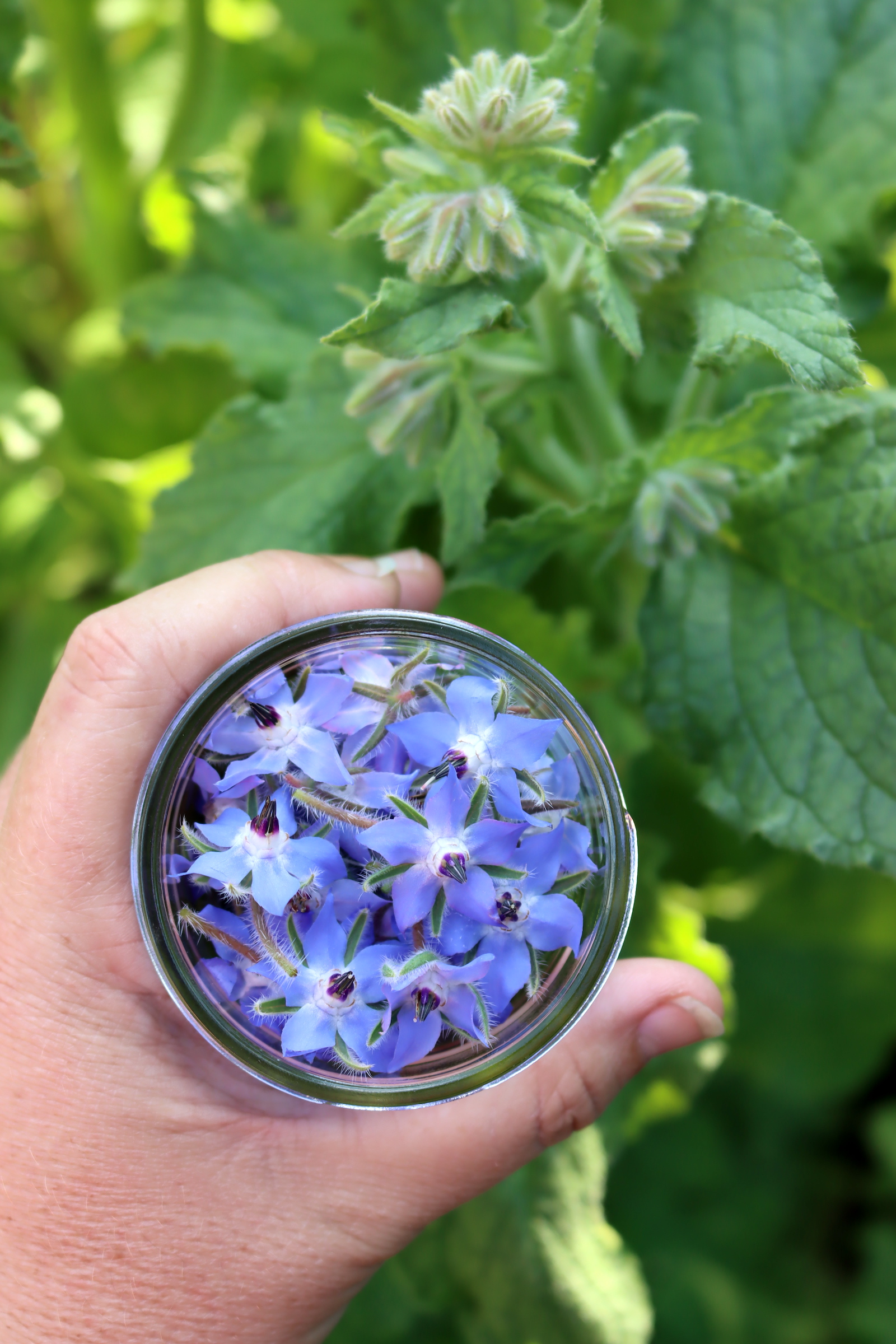
I experimented with a few different batches when coming up with a recipe for borage jelly. I tried to use just the flowers, and another using just the leaves, and a final recipe that used both flowers and leaves.
They all had a similar flavor and color, but a mix of flowers and leaves was the best.
Ingredients for Borage Jelly
To make a flower jelly from borage, you’ll need freshly harvested leaves or flowers (or both), plus water, sugar, pectin, and a bit of lemon juice.
For a 4 to 5 jar batch (8 oz each), you’ll need the following:
- 4 cups Borage, chopped finely
- 4 cups water
- 2 tbsp lemon juice (or ½ tsp citric acid)
- 1 to 4 cups sugar *see note
- 1 box (1.75 oz) pectin (Regular or Low Sugar)
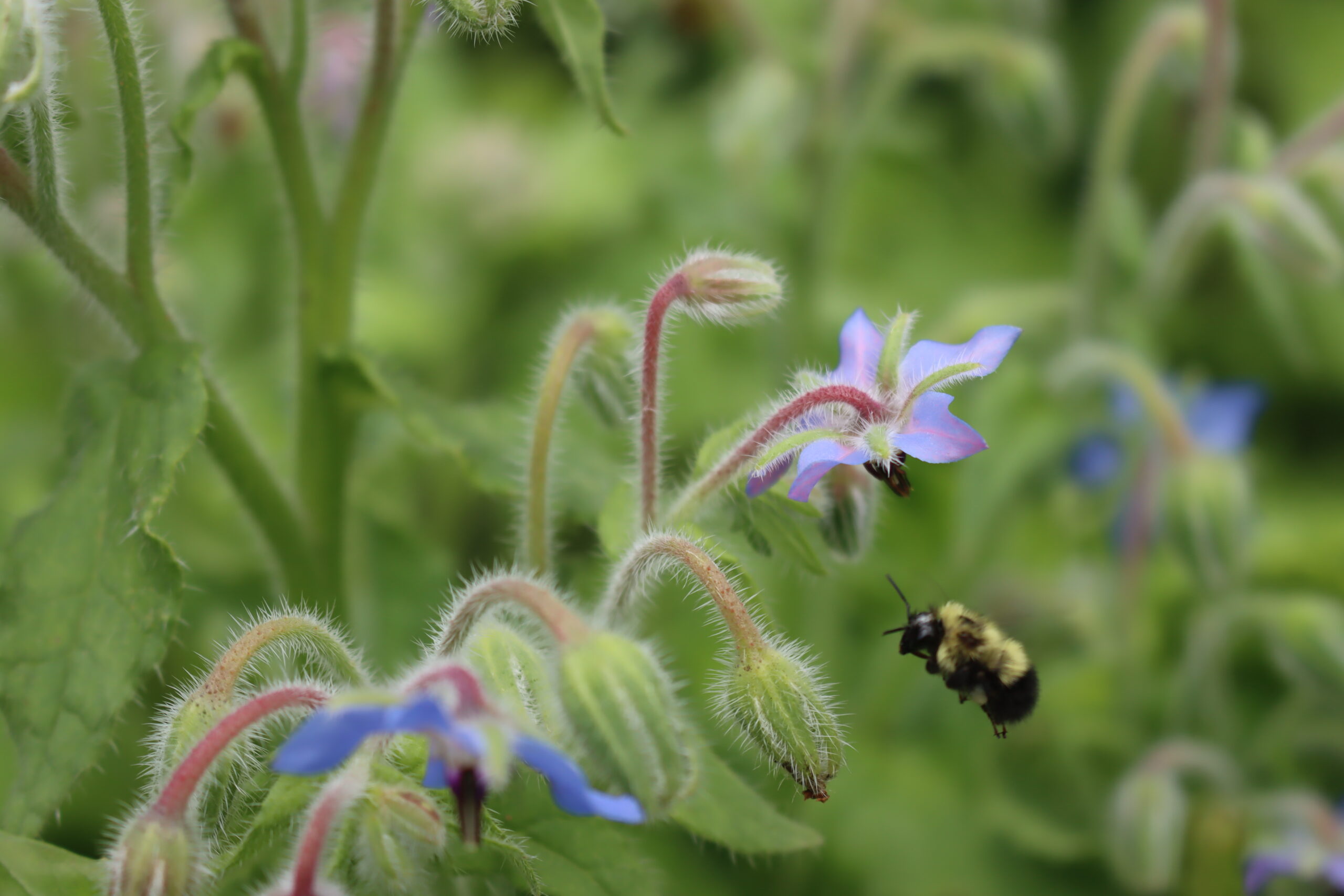
I was really hoping for a blue pink color from the borage flowers, but they just don’t give any color to the finished jelly. Go ahead and use either leaves or flowers.
If you do want a pink/purple jelly, use just flowers and then add a few muddled blueberries or blackberries. For a greener herbal jelly, add a few drops of natural green food coloring.
The lemon juice helps balance the flavor of the sugar, adding a bit of tart contrast to bring out the flavor of the flowers and leaves. It also lowers the pH, which helps the pectin set, and also preserves the jelly and makes it safe for canning.
Even if you’re not canning the jelly, you do need lemon juice. If you want a more neutral flavor instead, you can use citric acid powder (dissolved in a bit of water).
Citric acid granules are much stronger than citrus juice, and they’re used at a rate of 1/4 teaspoon of citric acid in place of each Tablespoon of lemon juice (or lime juice) in a recipe.
This recipe has 2 Tablespoons of lemon juice, so you’d need 1/2 teaspoon of citric acid per batch.
For pectin, I generally use sure jell or sure jell low sugar pectin, as they’re really dependable and result in the best texture in my opinion. (I’ve tried just about every type of pectin on the market.)
For regular sure jell pectin, you’ll need to add a minimum of 4 cups of sugar because it’ll only jell with a 1:1 liquid to sugar ratio. Sure jell low sugar will gel with any amount of sugar, and you can use as little as 1/2 cup for a barely sweet jelly. I’d suggest using 1 to 2 cups for a lower-sugar recipe that’s still sweet enough.
(Sure jell low sugar can also be used with full sugar recipes, so that’s what I usually keep on my shelf because it works great regardless of the sugar you choose.)
If you have Ball Flex Batch Pectin, you’ll need 6 Tbsp. (which is equal to a 1.75 oz box of other types of pectin). That’s true for their regular and low-sugar canisters.
The recipe card below also has instructions for liquid pectin, which requires astronomical amounts of sugar (7 cups sugar to 4 cups liquid). I don’t use it, but some people prefer that type of pectin, so I’ve included it just in case.
How to Make Borage Jelly
To start, you’ll need 2 to 4 cups of fresh chopped garden borage, be it leaves or flowers or both. I usually like to pick them directly into a quart jar because it’s just the right size for the next step, which is steeping in 4 cups of boiling water.
In this case, the herb really needs to be chopped so you can get the best flavor, so if you do pick into a jar, be sure to tear the leaves up as you go.
Steep the borage tea for about 15 to 20 minutes, and then strain.
Pour the borage tea into a jelly pot and add 2 tablespoons of lemon juice. (The lemon juice balances the sweetness from the sugar, and also makes the jelly safe for canning. I’d recommend it even if you’re not canning your jelly.) Next, bring the tea to a boil.
Add in one box of powdered pectin. (I use sure jel generally, but any standard 1.75 oz box of pectin will work.)
Stir in the pectin until it’s completely dissolved and boil for 1 full minute.
Next, add the sugar. Standard pectin requires a 1:1 ratio of sugar to liquid to gel. Since we’re working with 4 cups of borage tea, you’ll need 4 cups of sugar.
If you use a “low sugar” pectin, such as Sure Jel low sugar, then you can use as little sugar as you’d like. For a very low sugar jelly, you can use as little as 1/2 to 1 cup sugar to 4 cups borage tea.
After you’ve added the sugar, stir to completely dissolve and return the mixture to a hard boil on the stove for 1 minute.
After 1 minute, remove the mixture from the heat and ladle it into prepared jars.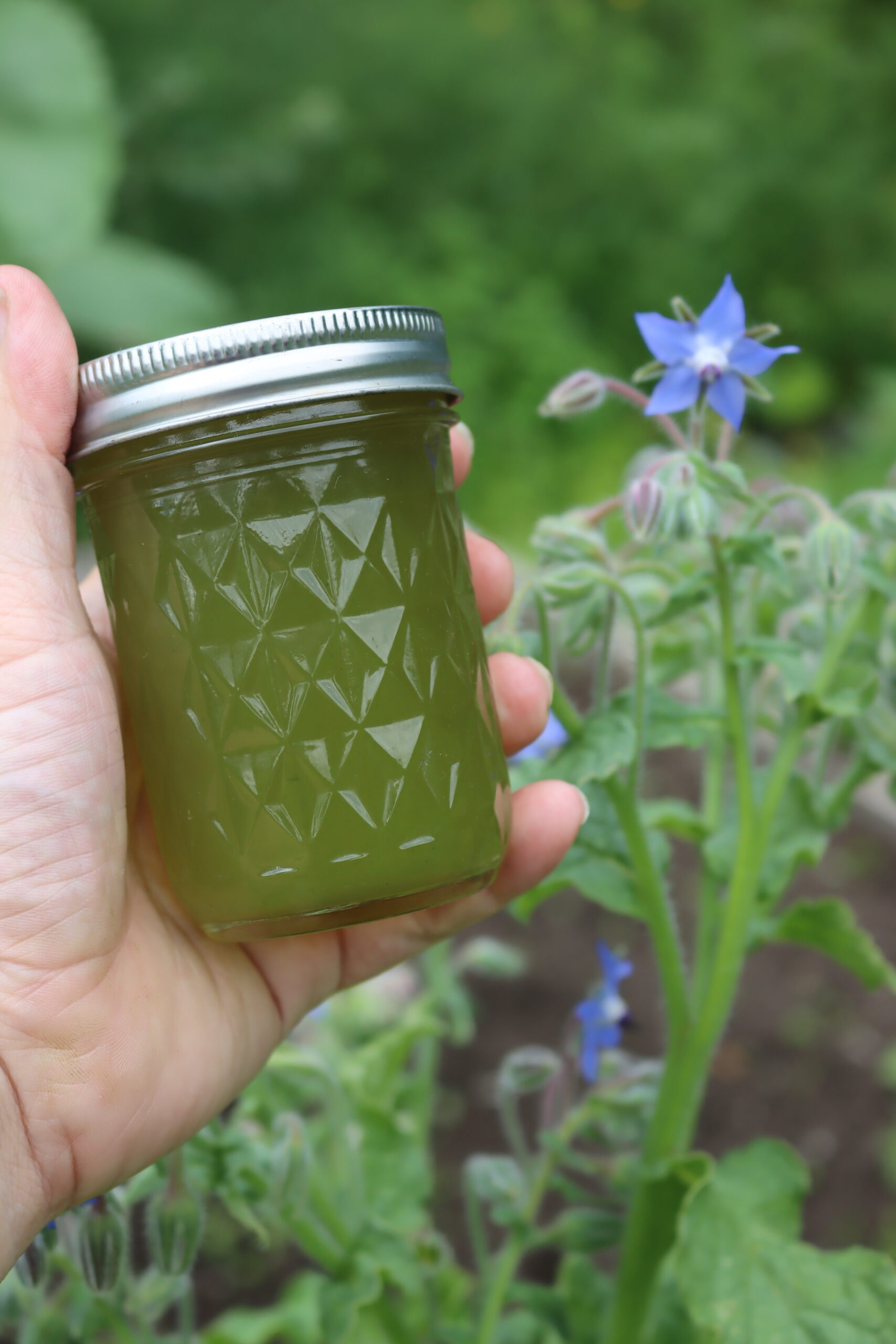
Canning Borage Jelly
Canning this fun herbal jelly is optional, and you can simply store it in the refrigerator, where it’ll last several weeks. Freezing is also an option, provided you’re using freezer-safe jars.
Personally, I like the simplicity of processing the jars in a water bath canner because it allows me to store the jelly right on the pantry shelf year-round. I can have the sweet cucumber flavor of borage jelly any time of year, and it’s not taking up refrigerator or freezer space in the meantime.
To can this jelly, be sure you’ve used lemon juice, which lowers the pH of the mixture enough for canning.
Prepare a water bath canner, canning jars, and lids before you start making the jelly. Make the jelly as otherwise, but then ladle into prepared canning jars leaving 1/4 inch headspace.
Seal the jars with 2 part canning lids and then process for 10 minutes in a water bath canner (15 minutes if above 6,000 feet in elevation).
Once the canning time is complete, remove the jars to cool on a towel on the counter. Properly canned and sealed jars will maintain quality on the pantry shelf for 12-18 months. Refrigerate after opening.
Borage Jelly Variations
This jelly actually works really well with both savory and sweet variations. I have a savory herbal jelly recipe that I use with spicier herbs, and it can be made with fresh borage as well.
Borage Recipes
Looking for more ways to use borage?
If you tried this Borage Jelly Recipe, or any other recipe on Creative Canning, leave a ⭐ star rating and let me know what you think in the 📝 comments below!
And make sure you stay in touch with me by following on social media!
Edible Flower Jellies
Borage Jelly
Ingredients
- 4 cups borage leaves or flowers, chopped
- 4 cups water
- 2 tbsp lemon juice
- 1 to 4 cup sugar, see note
- 1 box powdered pectin, 1.75 oz pectin (Regular or Low Sugar)
Instructions
- Harvest borage leaves and flowers, carefully picking them over to remove any bugs. Give them a quick wash and then chop finely.
- Pour 4 cups boiling water over the top of the chopped borage and allow the tea to infuse for about 10 minutes.
- Strain the borage tea into a saucepan or jam pot. Add the lemon juice, which will help bring out the best color in the jelly, but it's also required to balance the sugar in the recipe and help the pectin set. Beyond that, it adds acidity to help preserve the jelly, so don't skip the lemon!
- Bring the mixture to a boil and add the powdered pectin, stirring to dissolve. Allow the mixture to boil for 1 minute before adding sugar. (Note: Do not add the sugar at the same time as the pectin, or before the pectin, or the jell will not set.)
- Add the sugar, stirring to dissolve (See notes on quantity). Bring the mixture back to a full boil for 1 minute before ladling into jelly jars leaving 1/4 inch headspace.
- If canning, process in a water bath canner for 10 minutes. Otherwise, allow the jars to cool completely on the counter before storing in the refrigerator (for up to a month) or the freezer for up to 6 months.
Notes
Sugar
If using standard pectin, you must use a 1:1 ratio of liquid to sugar. That means for 4 cups flower blossom tea you'd need a minimum of 4 cups sugar to get the jelly to set. That results in a very sweet "old-fashioned" jelly. To reduce the sugar, simply use low-sugar pectin instead and then make the jelly as instructed but using less sugar. I suggest sure jel low sugar, which is very dependable. Lowering sugar will also lower yield, and the yield of 5 half-pints is for a full sugar recipe. If using Pomona's Universal Pectin, the instructions are different, as that is a 2-part low sugar pectin. Follow the instructions provided in the Pomona's box for mint jelly. If using liquid pectin, the order of operations is different (pectin is added last, sugar first). Liquid pectin also requires a lot more sugar to set (7 cups sugar to 4 cups liquid). I don't recommend liquid pectin because of the high sugar levels required for set, but it will work if that's your preference. If you have Ball Flex Batch Pectin, you’ll need 6 Tbsp. (which is equal to a 1.75 oz box of other types of pectin). That’s true for their regular and low-sugar canisters.Nutrition
Nutrition information is automatically calculated, so should only be used as an approximation.
Flower Jelly Recipes
Stock your pantry with these tasty floral jellies!
Herbal Jellies
Flowers aren’t the only plants in the garden that make wonderful jellies!
- Savory Herbal Jelly
- Lemon Balm Jelly
- Calendula Jelly (Marigold Jelly)
- Mint Jelly (coming soon)
- Tulsi Jelly (coming soon)

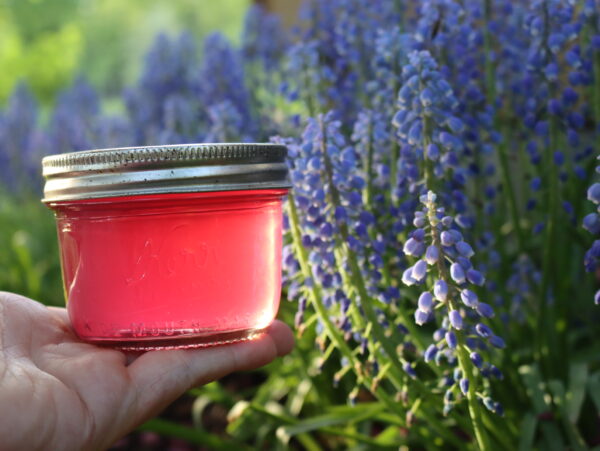
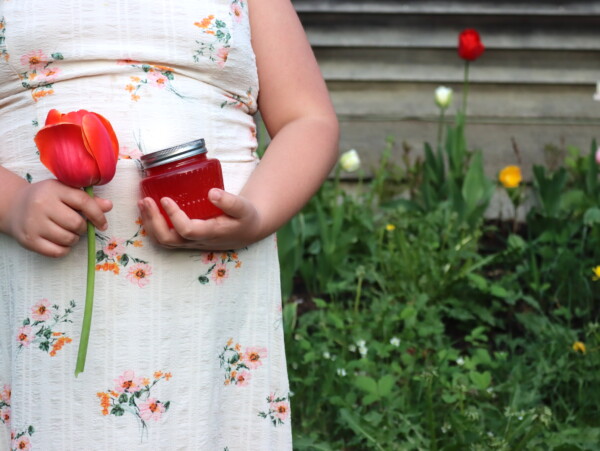
This herbal jelly recipe is really unique, and it has a bright, fresh cucumber flavor. My daughter and I used up the jars at tea parties all summer long!