
This post may contain affiliate links. Please see our disclosure policy.
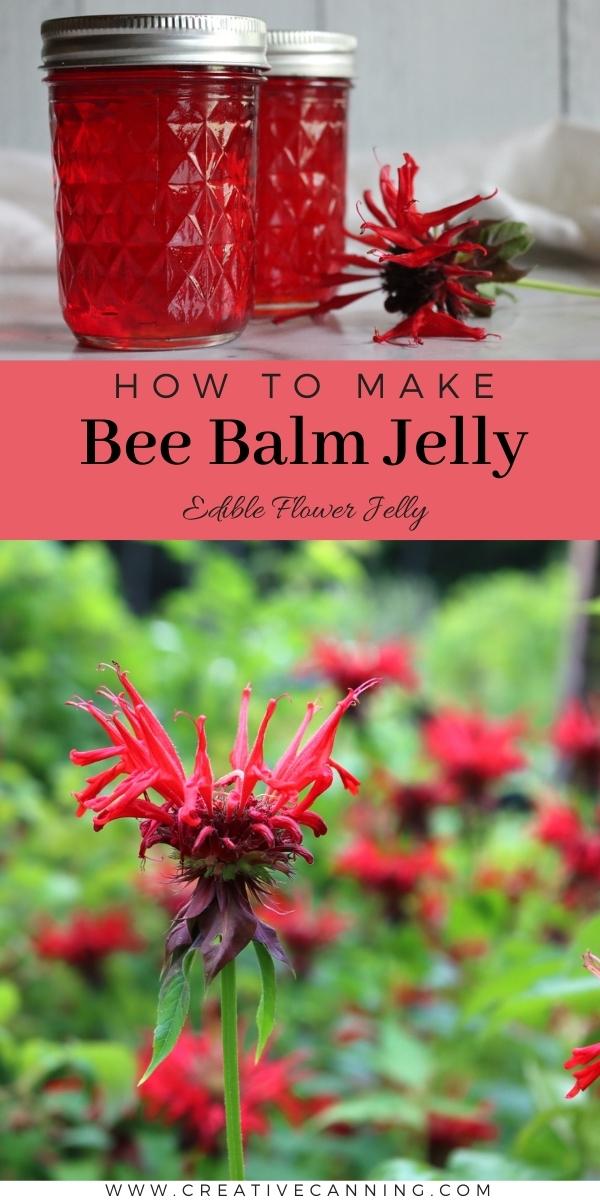
Bee balm jelly is a surprisingly savory homemade jelly with beautiful color in the jar and a spicy, herbal flavor that earns a place on any cheese board.
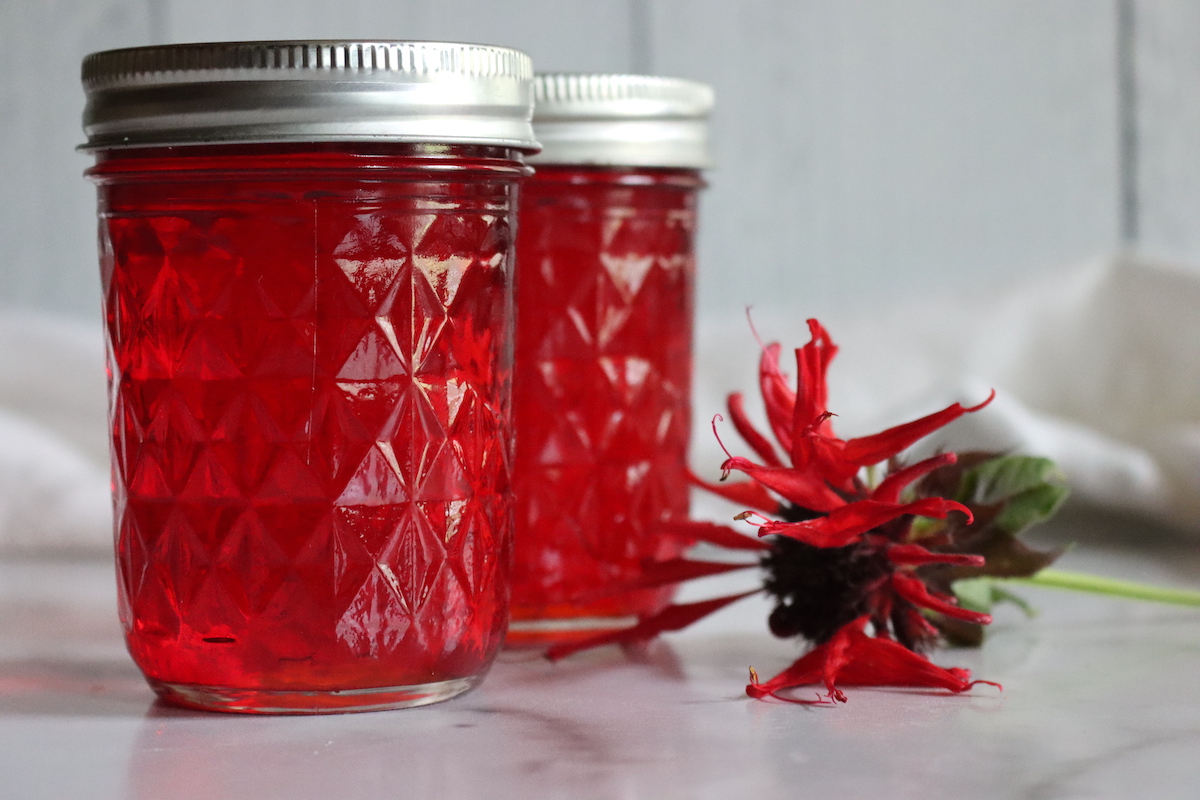
Table of Contents
- Notes from My Kitchen
- A Quick Look at the Recipe
- What Does Bee Balm Jelly Taste Like?
- Identifying and Harvesting Bee Balm
- Ingredients for Bee Balm Jelly
- Adjusting the Sweetness
- How to Make Bee Balm Jelly
- Canning Bee Balm Jelly
- Altitude Adjustments
- Ways to Use Bee Balm Jelly
- Bee Balm Jelly FAQs
- Flower Jelly Recipes
- Bee Balm Jelly Recipe
- Jelly Canning Recipes
This recipe has been reviewed for safety and accuracy by a Master Food Preserver certified through the University of Cornell Cooperative Extension.
Bee balm is a beautiful addition to any perennial flower garden, but few people know that these stunning flowers are also tasty edible flowers. Not only are the flowers edible, but the greens and stems are too, and they’re often used in place of oregano and marjoram in cooking.
The leaves have a herbal quality, and the flavor lands a bit like a mix between oregano and marjoram with something extra you can’t quite place. That same spiciness is what makes bee balm one of the better-known medicinal flowers, used in old herbal remedies for coughs, sore throats, and other respiratory complaints.
Those spicy flowers turn into a savory herbal jelly that’s a natural fit for a charcuterie plate. I’ve written this one as a savory herbal jelly, with vinegar and an optional splash of wine to balance the herbal notes. If you’d rather have a sweet floral jelly, you can use the petals in my basic flower jelly recipe instead, where they come out sweet and spicy, a little like a peach habanero. Still good, just in a different direction.
Notes from My Kitchen

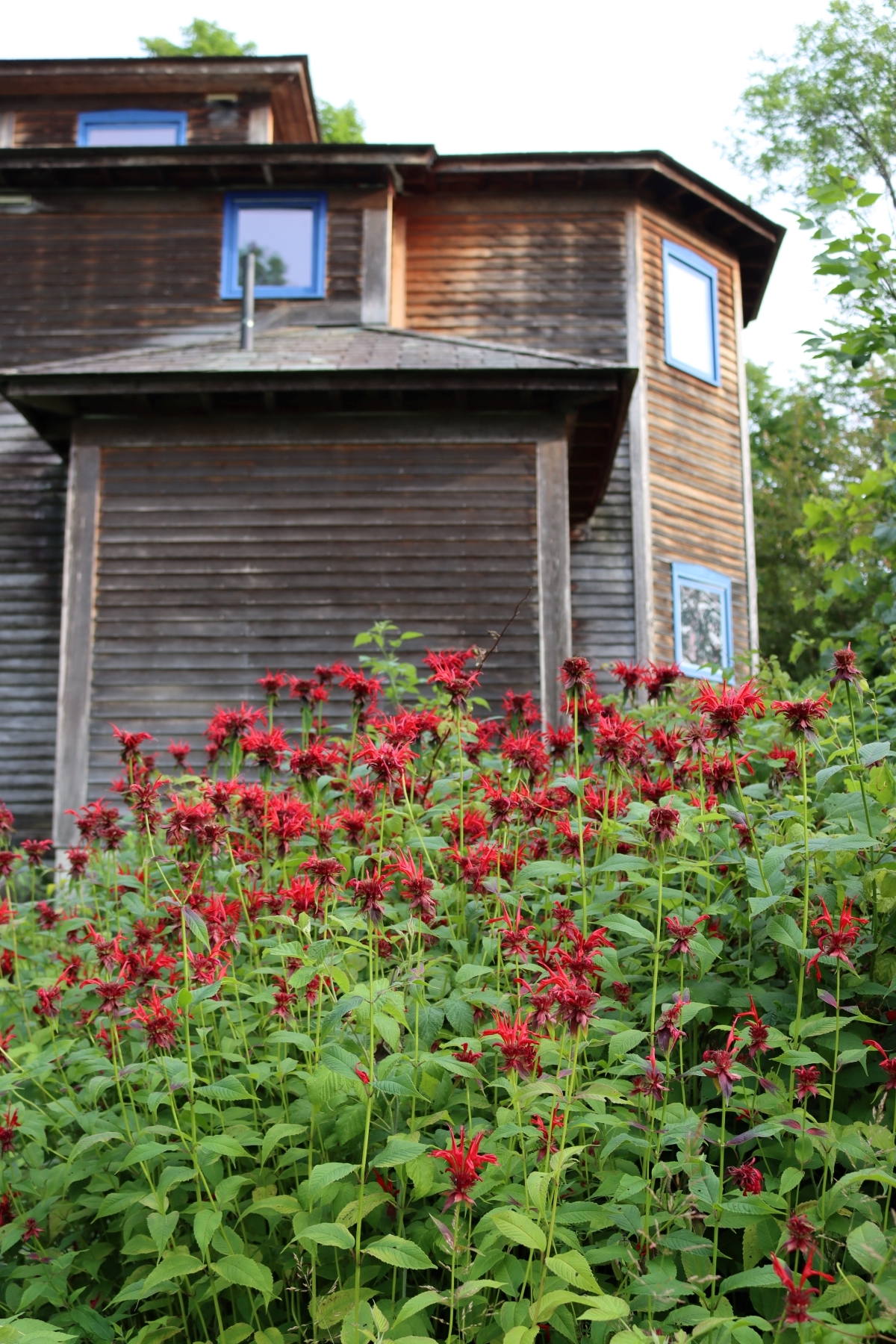
Bee balm has earned its spot in our perennial beds, partly because the pollinators swarm it all summer and partly because it gives me far more blossoms than I know what to do with. I started turning the petals into a savory jelly because the flowers carry the same spicy, oregano-like quality the leaves do, and that puts it squarely on the cheese-board side of the pantry rather than the toast-and-butter side.
A batch only needs a couple of cups of petals, and the patch is generous enough that you really can’t tell where you picked once you’ve walked away (ours fills right back in within a few days). It sets up soft and spoonable, with a color that does most of the selling on its own.
A Quick Look at the Recipe
- Recipe Name: Bee Balm Jelly
- Recipe Type: Herbal Jelly Recipe
- Canning Method: Water Bath Canning
- Prep/Cook Time: 30 Minutes (including steeping)
- Canning Time: 10 Minutes
- Yield: 4 to 5 half-pint jars
- Jar Sizes: Quarter Pint, Half Pint, or Pint
- Headspace: 1/4 inch
- Ingredients Overview: Bee balm blossoms, water, vinegar, lemon juice, sugar, and pectin
- Difficulty: Easy! You’re basically making a quick herbal tea and setting it with pectin.
- Similar Recipes: The process is much like other savory herbal jellies, including Chive Blossom Jelly, Lemon Balm Jelly, Nasturtium Jelly, and Borage Jelly.
What Does Bee Balm Jelly Taste Like?
Bee balm jelly leans herbal and spicy rather than sweet. The flavor sits somewhere between oregano and marjoram, with a warm, slightly peppery edge and a floral note underneath that’s hard to pin down. Made savory, with vinegar and only a cup or two of sugar, it reads more like a herb jelly you’d serve with cheese and cured meats than a spread for your morning biscuit.
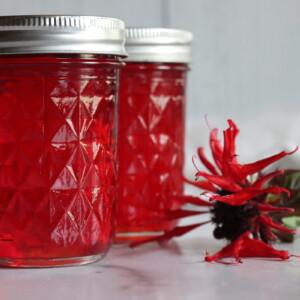
In the jar, the red blossoms give it a deep, warm color that makes it look impressive on a board. If you take it in the sweet direction instead, with more sugar, the same spicy quality turns into something closer to a peach habanero jam, where the floral sweetness comes first, and the heat catches up a beat later.
You continue to amaze and inspire with your depth of knowledge, excellent tried and true recipes, as well as your hands-on skills and approach. Thank you!!
Identifying and Harvesting Bee Balm
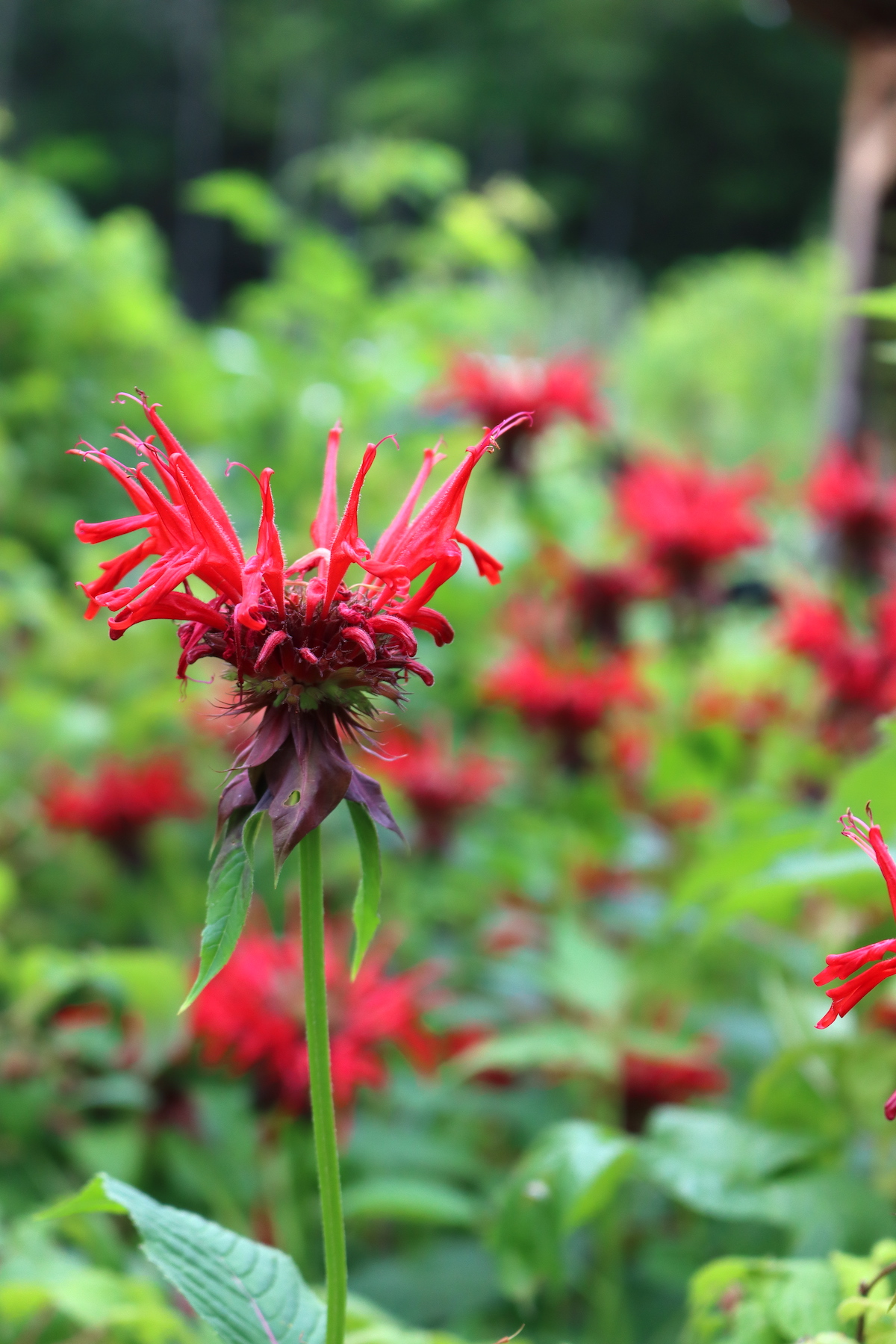
Bee balm is a member of the mint family in the genus Monarda, and it’s sometimes called wild bergamot or bergamot because its aroma resembles the bergamot orange in Earl Grey tea. The two species you’ll usually meet are Monarda didyma, the scarlet-red garden type, and Monarda fistulosa, the lavender-pink wild bergamot. Both are edible and both work here, though the red blossoms give the strongest color.
Wild Bee Balm is usually foraged, but it’s easy enough to identify.
Harvest from a spot you know is free of herbicides, pesticides, and road spray, which means your own yard or a neighbor’s patch is the safest bet. Pick the flower heads when the plants are in full bloom in mid to late summer, and collect about 2 cups of fresh blossoms for a batch.
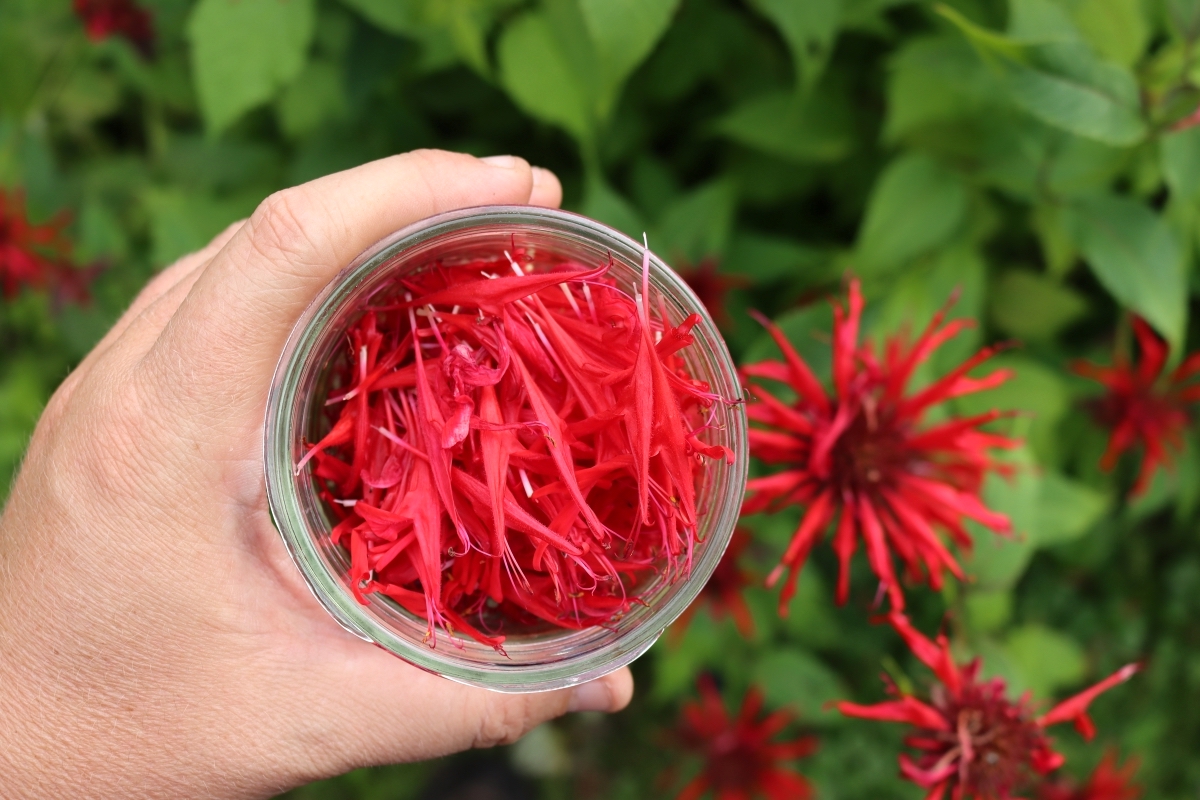
Back in the kitchen, pull the petals from the flower heads and discard the green calyx and any stem bits, since you only want the colorful petals for the jelly. Give them a quick rinse and a once-over for hitchhiking insects before they go into the tea.
Ingredients for Bee Balm Jelly
Bee balm jelly follows the savory branch of my herbal jelly formula: the blossoms steep into a tea, then set with low-sugar pectin, a little sugar, and enough vinegar and lemon juice to balance the flavor and keep it safe for canning.
- Bee Balm Blossoms: Use the petals of Monarda didyma (red) or Monarda fistulosa (lavender wild bergamot), gathered from a pesticide-free area and stripped of their green bits. The red blossoms give the best color, but any edible bee balm works.
- Water (and Optional Wine): Plain water makes a fine tea, but swapping half of it for a dry white wine adds depth that suits the savory style. Use clean filtered water if your tap has a strong chlorine taste, since that can muddy the delicate floral flavor.
- Vinegar: Vinegar is the backbone of a savory jelly, both for flavor and for the acidity that makes it safe to can. Wine vinegar, white, cider, or rice vinegar all work, and each nudges the flavor a little differently, so use whichever suits the rest of your board.
- Lemon Juice: The lemon juice works alongside the vinegar to lower the pH and make the jelly safe for canning. Use bottled lemon juice rather than fresh, because bottled has a reliable, consistent acidity that fresh lemons don’t, and don’t cut the amount back.
- Sugar: Because this is a low-sugar pectin recipe, you can keep it to 1 to 2 cups of sugar, and it stays on the savory side. Add more, up toward 4 cups, if you’d like it sweeter (see the note below).
- Pectin: Use a low-sugar pectin such as Sure-Jell No Sugar, since regular pectin needs a lot more sugar to gel than a savory jelly calls for.
Adjusting the Sweetness
This recipe is written savory, with 1 to 2 cups of sugar, so it pairs with cheese and meats rather than tasting like a dessert spread. If you want a sweeter spread, you can take the sugar up toward 4 cups, or skip the savory route entirely and use the petals in my basic flower jelly recipe for a sweet floral version.
Whatever you do with the sugar, keep the full cup of vinegar and 1/4 cup of bottled lemon juice. That acidity is what makes the jelly safe to process in a water bath, so adjust sweetness by adding sugar, never by cutting back on the acid.
How to Make Bee Balm Jelly
Making bee balm jelly comes down to brewing a strong floral tea, then setting it with pectin, sugar, vinegar, and lemon juice. The one thing not to skip is the acid. The vinegar and bottled lemon juice are what keep it safe for canning, so use the full amounts even if you plan to keep your jars in the fridge.
Have your jars, lids, and water bath canner prepped before you start, since the jelly moves quickly once the pectin goes in, and you’ll want to ladle it hot.
Prepare the Bee Balm Blossoms
Start with about 2 cups of fresh bee balm blossoms, picked from a spot free of herbicides and pesticides. Pull the petals from the flower heads and discard the green calyx and any stems, since the green parts can turn the flavor bitter.
Give the petals a quick rinse to clear out any dirt or insects, and move them to a large heat-safe container like a glass measuring cup or a heatproof bowl. They’re now ready for the hot liquid.
Make the Bee Balm Tea
In a separate pot, bring 4 cups of water to a boil (or 2 cups water and 2 cups dry white wine for a deeper savory flavor). Pour the hot liquid over the bee balm petals, pushing them down until they’re submerged, then cover and steep for 10 to 15 minutes.
Strain the tea through a fine mesh strainer or a piece of cheesecloth, pressing gently on the petals to get all the liquid and color out. You should have roughly 4 cups of bee balm tea to carry into the next step.
Add the Acid and Pectin
Pour the strained tea into a large saucepan or jam pot and add 1 cup of vinegar and 1/4 cup of bottled lemon juice. Whisk in the box of low-sugar pectin until it’s fully dissolved, then bring everything to a boil over medium-high heat, stirring as it heats.
Once it reaches a full boil, let it boil hard for 1 full minute before you add anything else. This gives the pectin time to activate with the acid in the mix.
Add the Sugar
Add 1 to 2 cups of sugar, stirring until it’s fully dissolved. Return the mixture to a full rolling boil and boil for 1 more minute, then take it off the heat and skim off any foam with a spoon.
Immediately ladle the hot jelly into your prepared jars, leaving 1/4 inch of headspace. Wipe the rims, set the lids, and apply the bands fingertip tight, then move on to canning or cooling.
Canning Bee Balm Jelly
Canning is optional, but it’s a nice way to hold onto a seasonal flower for the rest of the year or to put up a few jars for gifting. If you’re not canning, just cap the cooled jars and store them in the refrigerator for up to 4 weeks, or in the freezer for up to 6 months.
To can bee balm jelly, have your water bath canner, jars, and lids ready before you make the jelly. After ladling the hot jelly into jars and leaving 1/4 inch headspace, wipe the rims with a clean damp cloth, set the 2-part lids, and tighten the bands until fingertip tight.
Process in a boiling water bath canner for 10 minutes, adjusting for altitude. Remove the jars and let them cool undisturbed on a towel for 12 to 24 hours, then check the seals. Store any unsealed jars in the refrigerator, and keep properly sealed jars on the pantry shelf for 12 to 18 months. Refrigerate after opening.
Altitude Adjustments
For water bath canning, processing times increase at higher elevations:
- 0 to 6,000 feet: 10 minutes
- Above 6,000 feet: 15 minutes
Ways to Use Bee Balm Jelly
This lightly floral, herbal jelly shines on a cheese board, spooned alongside nuts, brioche, and wedges of cheese. It’s also good spread on crackers, biscuits, and scones for a savory bite, and a quick snack of cream cheese and bee balm jelly on crackers rarely fails to satisfy.
Beyond the board, it works as a glaze on meats and fish. Spoon a little over your protein for the last few minutes of cooking, or serve it as a garnish once everything is plated. The spicy herbal note plays especially well with pork and poultry.
Bee Balm Jelly FAQs
Yes. Bee balm (Monarda) flowers, leaves, and stems are all edible. The petals have a spicy, herbal flavor that’s often used in place of oregano or marjoram, and they’re the part used to make this jelly. Use only blossoms you’ve correctly identified as edible bee balm, gathered from an area free of pesticides and road spray.
Bee balm is sometimes called wild bergamot or bergamot because its aroma resembles the bergamot orange used to flavor Earl Grey tea, but it isn’t the citrus. Bee balm is a North American plant in the mint family (Monarda), while the bergamot orange is a true citrus fruit. They share a scent, not a botanical family.
The usual culprits are adding the sugar at the same time as the pectin (whisk the pectin into the acidified tea and boil for a full minute before the sugar goes in), boiling the finished jelly too long, or trying to double the batch. Low-sugar pectins still need both of their full one-minute boils. If it’s still loose after 24 to 48 hours, use it as a savory syrup or glaze, or read through my guide on troubleshooting jelly set.
Yes. You can increase the sugar toward 4 cups for a sweeter spread, or use the petals in my basic flower jelly recipe for a fully sweet floral jelly. Either way, keep the 1/4 cup of bottled lemon juice, since that acidity is what makes the jelly safe to can. The lemon juice is required for canning, the vinegar adds extra acidity and flavor that takes the jam in a savory direction.
Flower Jelly Recipes
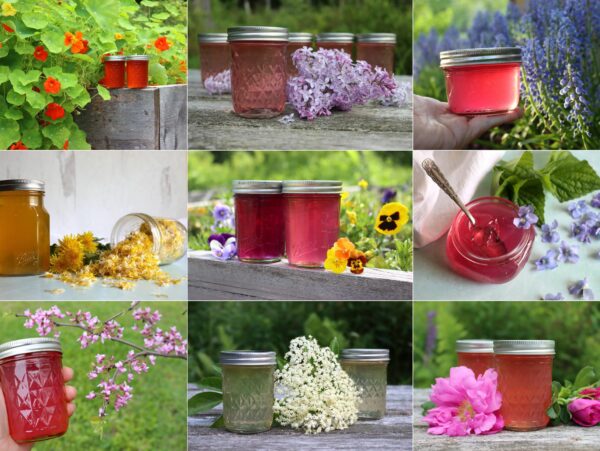
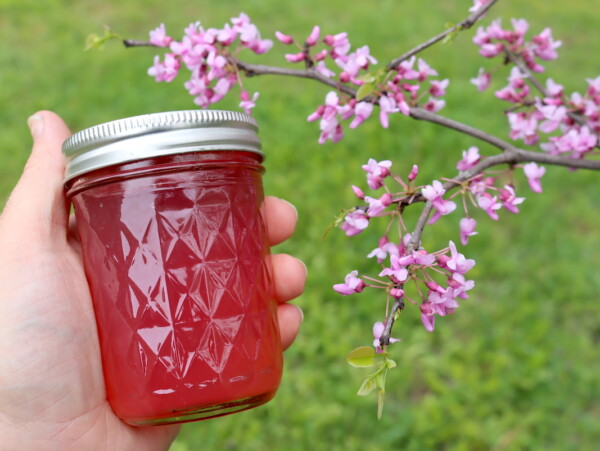
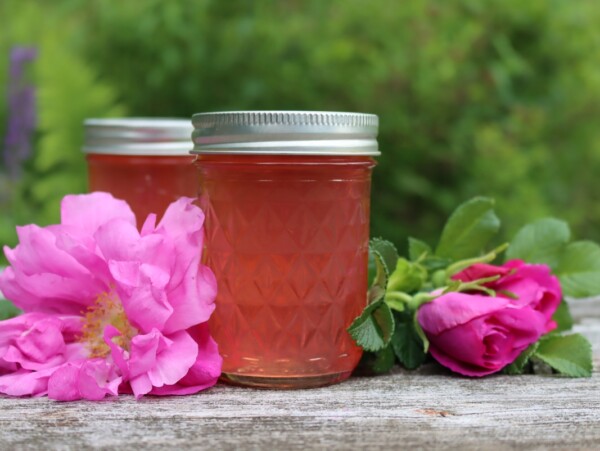
If you tried this Bee Balm Jelly recipe, or any other recipe on Creative Canning, leave a ⭐ star rating and let me know what you think in the 📝 comments below!
And make sure you stay in touch with me by following on social media!
Bee Balm Jelly
Equipment
- Canning Jars, Lids and Bands
Ingredients
For the Bee Balm Tea
- 2 cups fresh bee balm blossoms, de-stemmed (or 1 cup dried)
- 4 cups water, or 2 cups water and 2 cups dry white wine
For the Jelly
- 4 cups bee balm tea, strained
- 1 cup vinegar, wine, white, cider, or rice
- 1/4 cup bottled lemon juice
- 1 Box Low Sugar Powdered Pectin, 1.75 oz low-sugar pectin, such as Sure-Jell No Sugar
- 1 to 2 cups granulated sugar, See Notes for Sweet Jelly Option
Instructions
- Bring the water (or water and wine) to a boil. Pour over the bee balm blossoms in a heat-safe container, pushing them down to submerge. Cover and steep 10 to 15 minutes.
- Strain the tea through a fine mesh strainer or cheesecloth, pressing gently on the petals. Measure, adding water if needed to reach the full amount.
- Pour the tea into a large pot and add the vinegar and lemon juice. Whisk in the pectin until dissolved. Bring to a full rolling boil over medium-high heat, stirring, and boil hard for 1 minute.
- Add the sugar and stir to dissolve. Return to a full rolling boil and boil 1 more minute. Remove from heat and skim off any foam.
- Ladle hot jelly into prepared jars, leaving 1/4 inch headspace. Wipe rims, center lids, apply bands fingertip-tight.
- Process in a boiling water bath for 10 minutes, adjusting for altitude. Let jars rest 5 minutes, then cool undisturbed 12 to 24 hours before checking seals.
Notes
Nutrition
Nutrition information is automatically calculated, so should only be used as an approximation.
Jelly Canning Recipes
Find the perfect recipe
Searching for something else? Enter keywords to find the perfect recipe!

I grow bee balm in the perennial bed mostly for the pollinators, but turning a few blossoms into this savory jelly has become a fun summer ritual. The herbal, almost oregano-like flavor surprises everyone who tries it.
You continue to amaze and inspire with your depth of knowledge, excellent tried and true recipes as well as your hands on skills and approach. Thank you!!
Thank you!