
This post may contain affiliate links. Please see our disclosure policy.
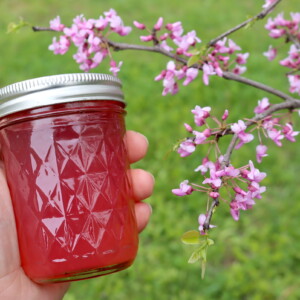
Redbud jelly is a delicious way to enjoy edible redbud flowers each spring, capturing their soft color and delicate flavor in a jar you can spread on toast long after the blooms are gone.
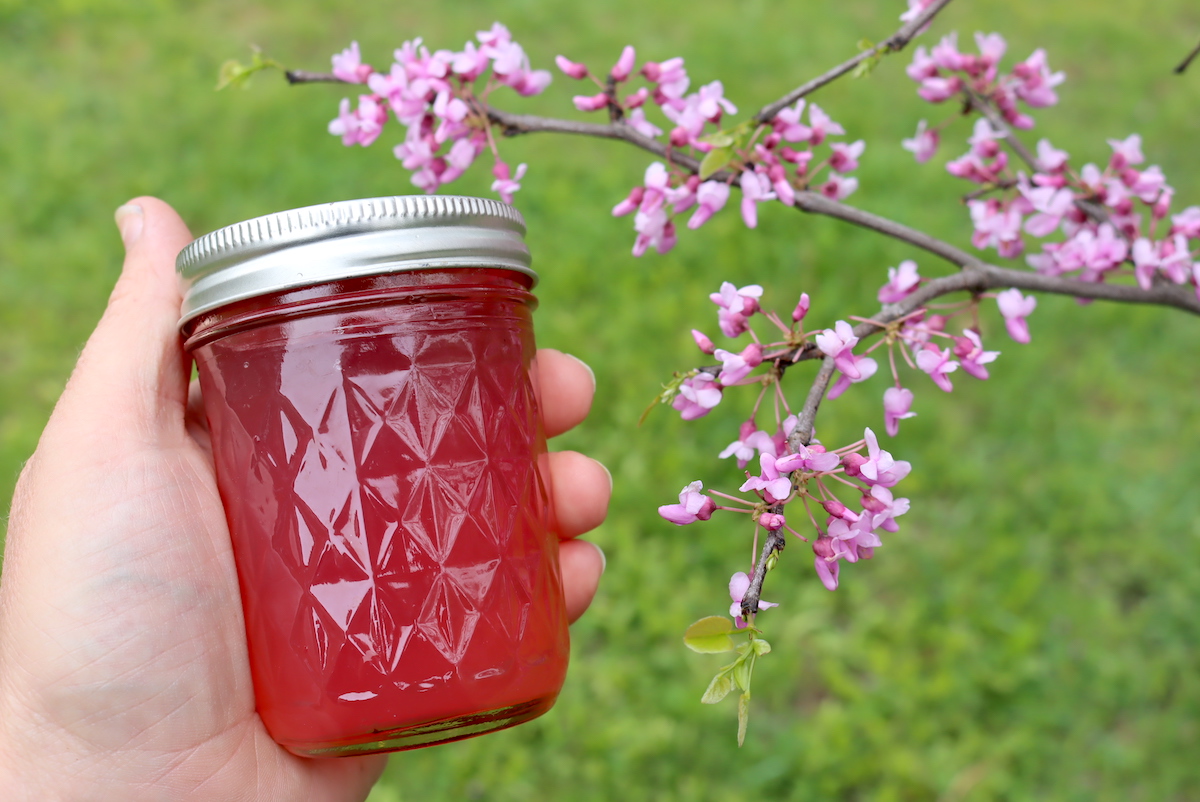
Table of Contents
- Notes from My Kitchen
- Quick Look at the Recipe
- What Does Redbud Jelly Taste Like?
- Identifying and Harvesting Redbud
- Ingredients for Redbud Jelly
- Low Sugar Options
- How to Make Redbud Jelly
- Canning Redbud Jelly
- Altitude Adjustments
- Ways to Use Redbud Jelly
- Redbud Jelly FAQs
- Flower Jelly Recipes
- Redbud Jelly (& Syrup) Recipe
- Jelly Canning Recipes
This recipe has been reviewed for safety and accuracy by a Master Food Preserver certified through the University of Cornell Cooperative Extension.
This recipe makes either redbud jelly or a redbud syrup, and the only real difference between them is the pectin. Add it and you get a soft, spreadable jelly; leave it out and you have a floral syrup for cocktails, drinks, and drizzling over desserts.
A good flower jelly is a way to hold onto the aroma and flavor of fresh edible flowers long after the season ends, even when there’s snow on the ground. Redbud blooms early, so it’s often the first flower jelly of my year.
Notes from My Kitchen

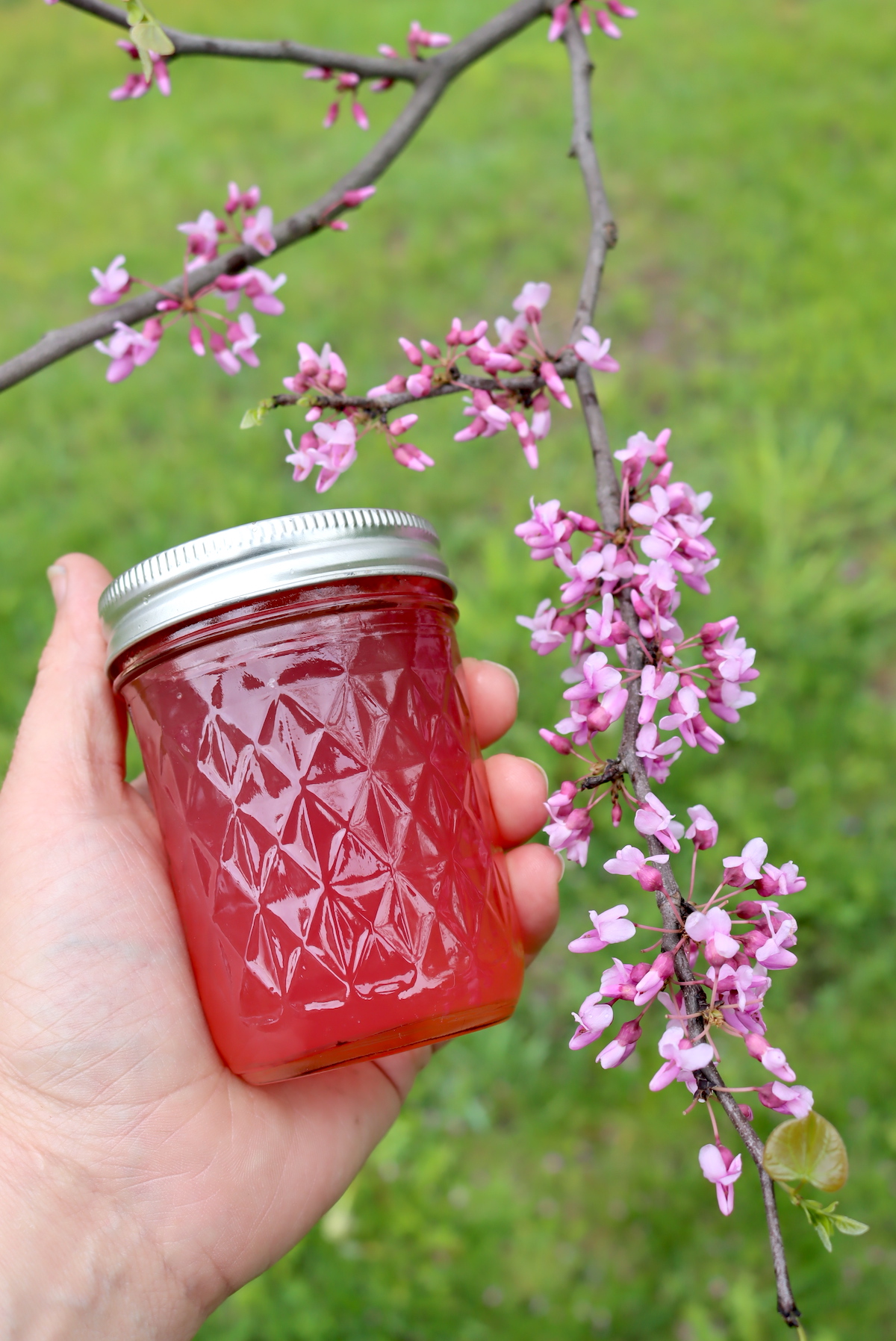
We try a new flower jelly just about every spring, since the season is short up here in Vermont and I can never quite let the blossoms go without holding onto a few. The spring we found a redbud tree in full bloom, we were back in the kitchen making jelly that same afternoon. The petals steep into a tea overnight, and the moment the lemon juice goes in, the whole jar shifts to a clear pink.
A full batch gives me about 5 half-pint jars, mild and lightly floral, and it’s lovely on toast or cornbread. If I’ve got extra redbud tea, I’ll leave the pectin out of part of it and make a syrup for spring drinks. Either way, it’s a fleeting kind of preserve that tastes like the few weeks it came from.
Quick Look at the Recipe
- Recipe Name: Redbud Jelly (or Syrup)
- Recipe Type: Flower Jelly Recipe (or Flower Syrup)
- Canning Method: Water Bath Canning
- Prep/Cook Time: 30 Minutes active (plus a 24-hour steep)
- Canning Time: 10 Minutes
- Yield: 5 to 6 half-pint jars
- Jar Sizes: Quarter Pint, Half Pint, or Pint
- Headspace: 1/4 inch
- Ingredients Overview: Redbud blossoms, water, lemon juice, sugar, and pectin
- Difficulty: Easy! You’re basically making a floral tea and setting it with pectin.
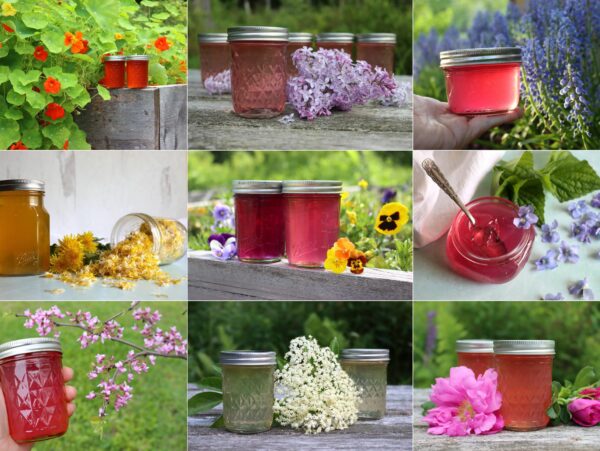
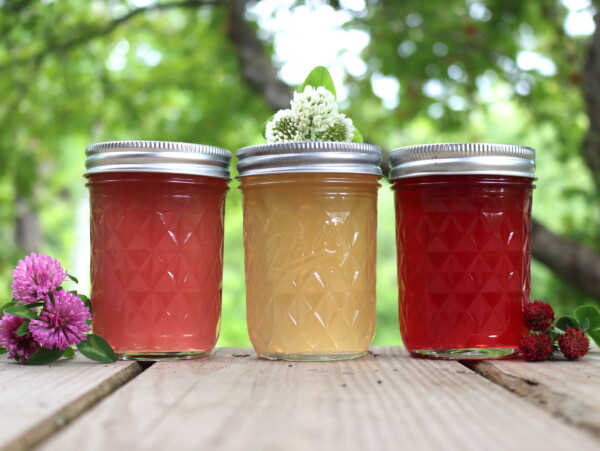
- Similar Recipes: The process is very similar to other spring-time wild foraged flower jellies, including Dandelion Jelly, Grape Hyacinth Jelly, Violet Jelly, Clover Jelly, Elderflower Jelly, Fireweed Jelly, and Rose Petal Jelly.
Wow! This was so easy! These were the easiest flowers to collect. Super mild berry flavor. I really appreciate your instructions and educational information. I canned into quarter pints to share. Thank you for introducing me to the wonderful world of flower jelly!
What Does Redbud Jelly Taste Like?
Redbud jelly is delicate and lightly sweet, with a soft floral character and a faint green, pea-like note that comes from the flowers themselves. Redbud is in the legume family, so the blossoms carry a subtle fresh-bean quality alongside the sweetness. It’s mild enough to spread on toast or cornbread without taking over.
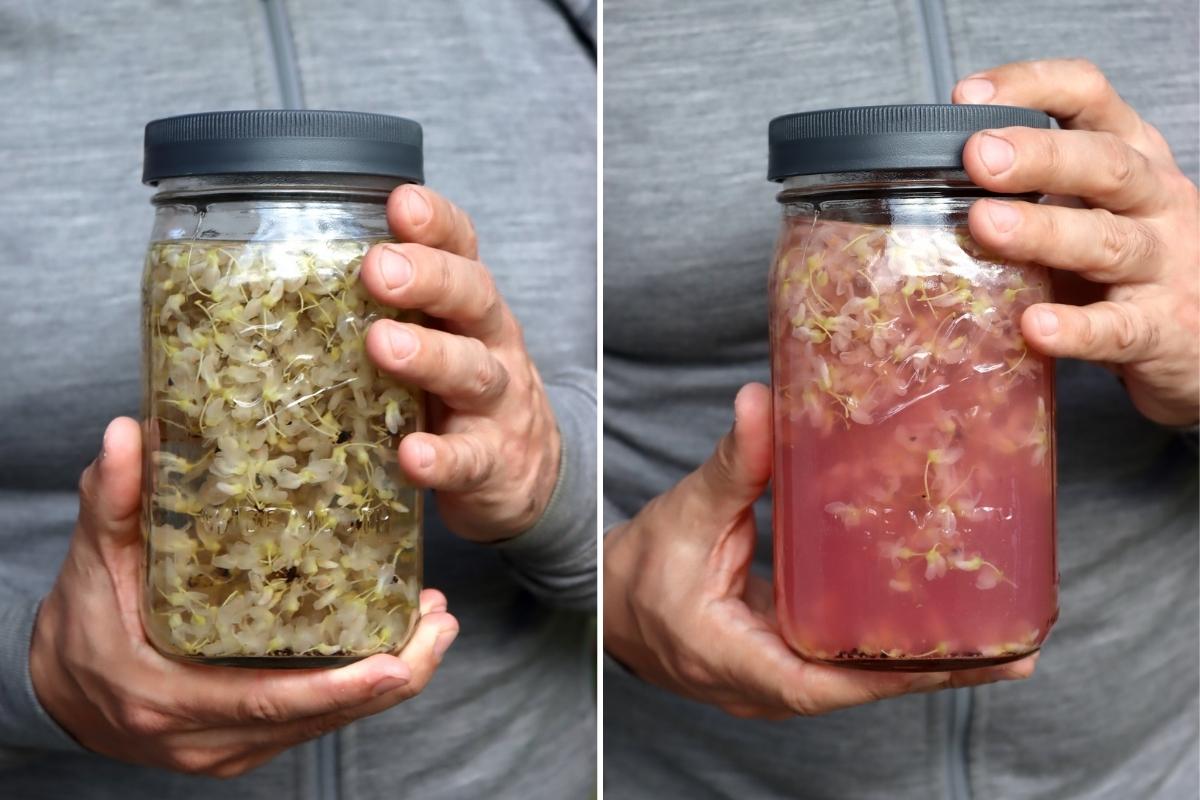
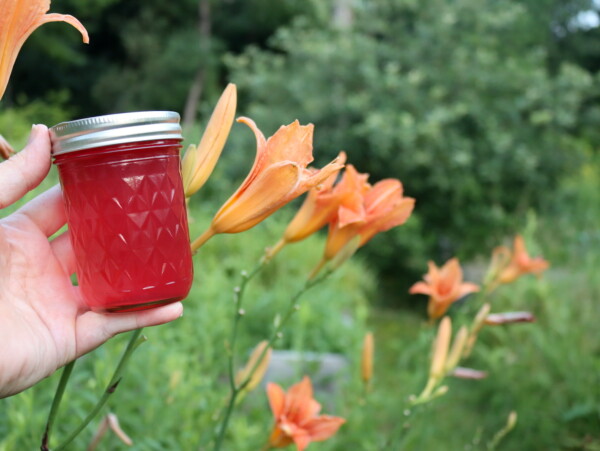
In the jar, the jelly is a pretty pink. That color shows up the moment the lemon juice hits the steeping tea, shifting it from a dull gray-purple to a clear pink (it’s worth watching), and that pink carries straight through to the finished jelly.
Identifying and Harvesting Redbud
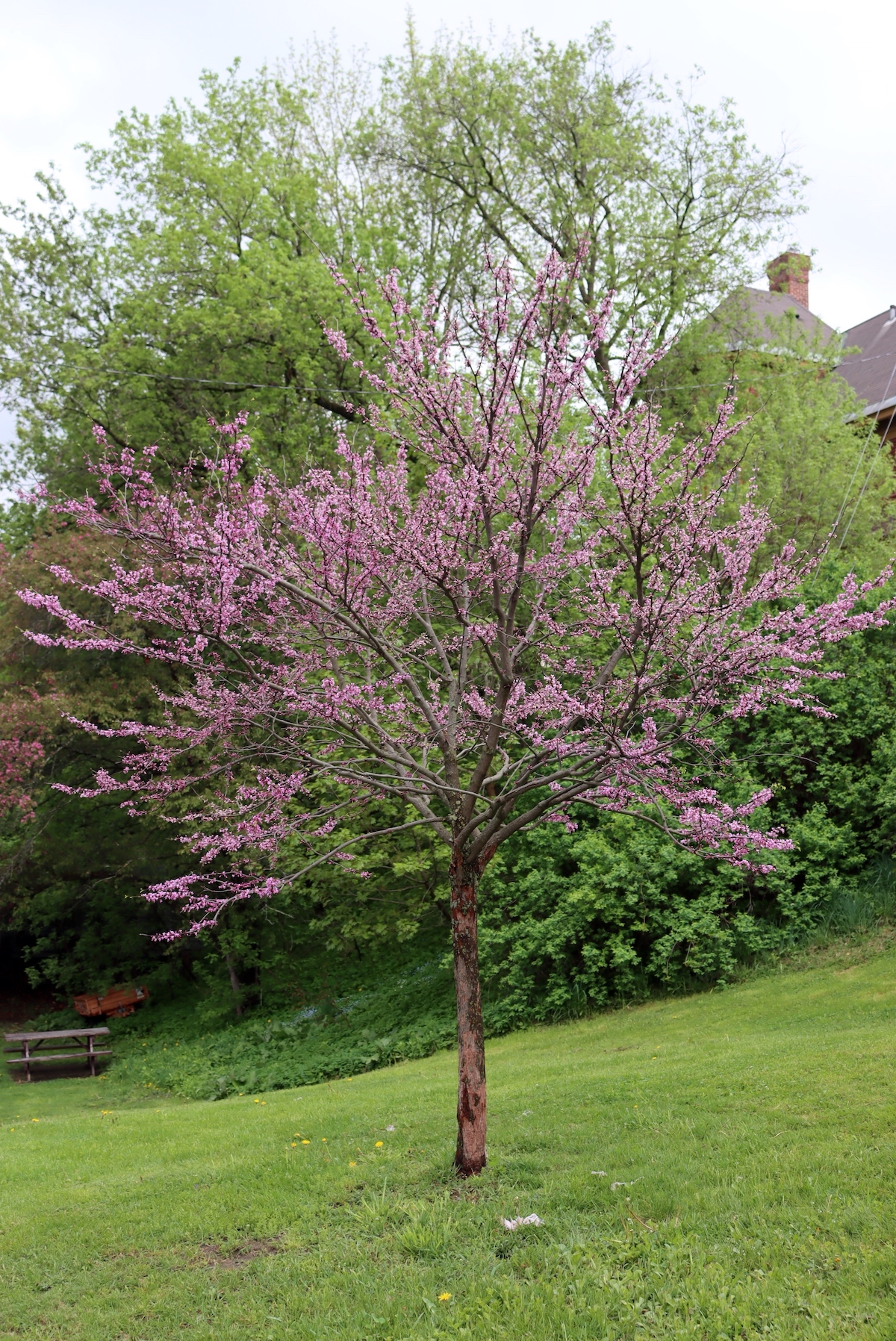
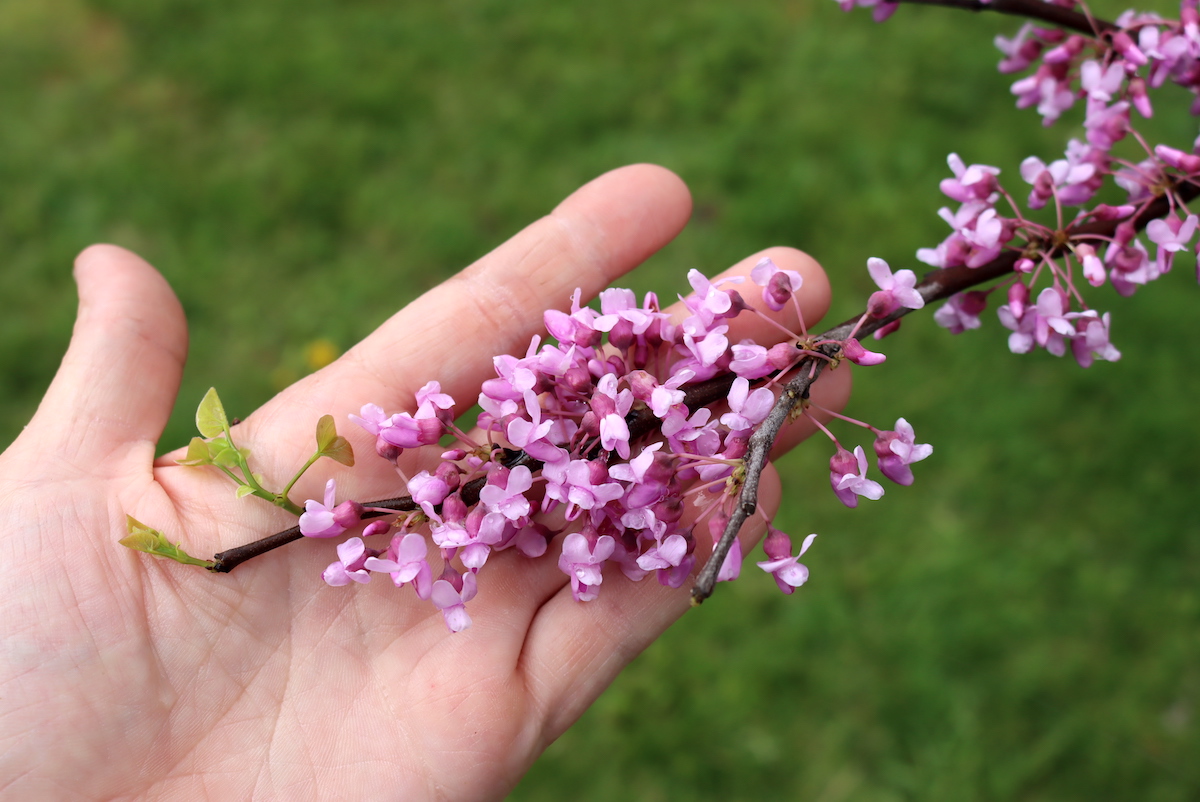
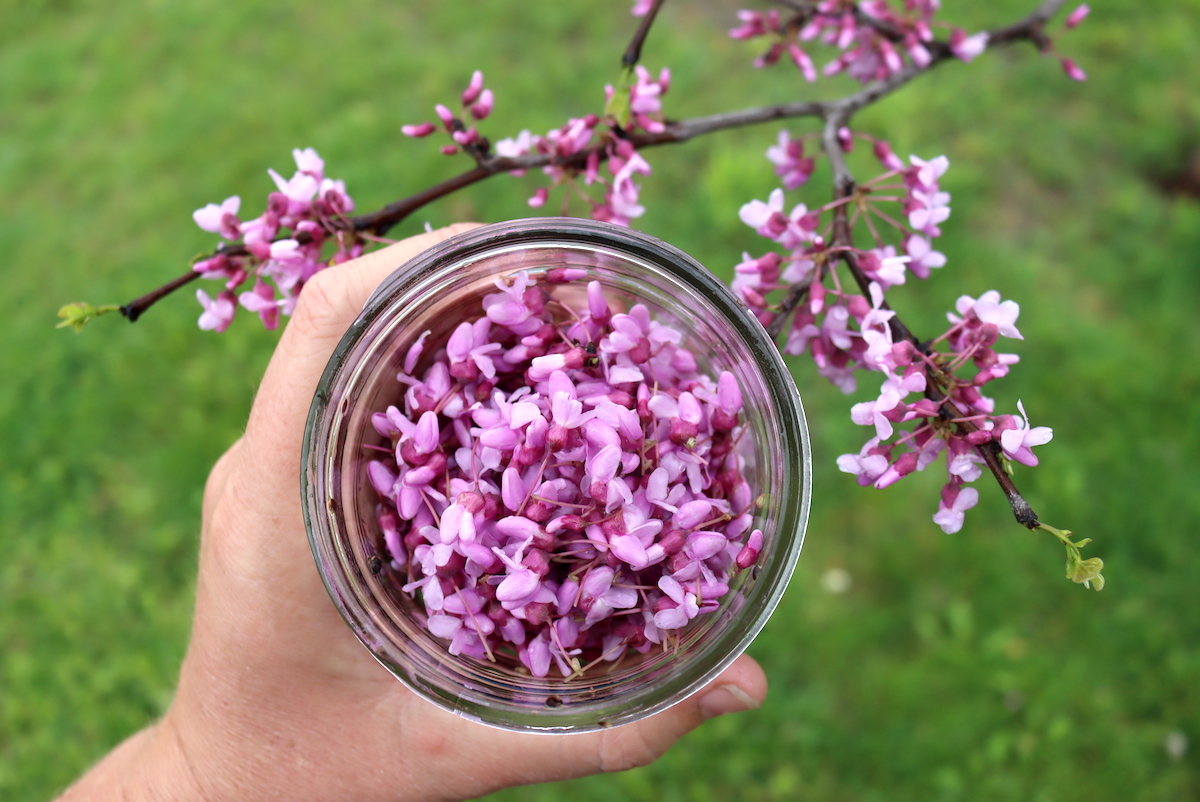
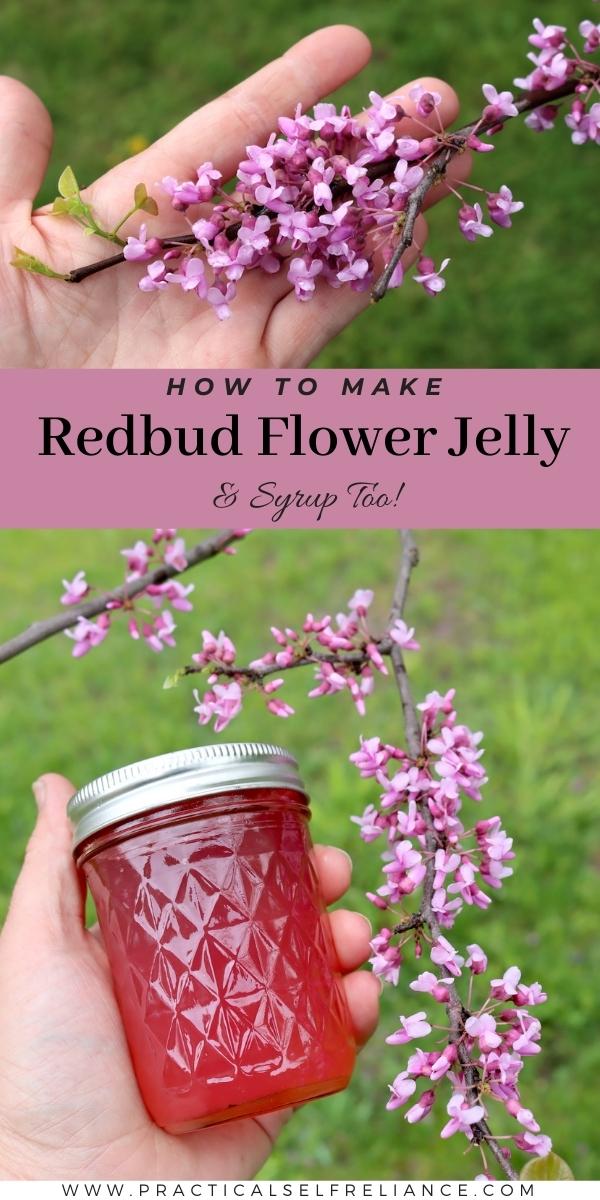
Redbud trees bloom around the same time as the first dandelions. For most of the country, that’s early spring, usually sometime in March, though here in Vermont, it isn’t until May, since winter likes to stick around in the north country. You can identify a redbud by looking for a tree absolutely covered in tiny pink flowers that look a bit like snapdragons, often blooming right out of the trunk and branches before the leaves appear.
If you find the tree toward the end of its flowering season, you’ll start to see early leaves unfurling at the branch tips alongside the last blooms. Harvest the flowers when the tree is in full bloom, and only take blossoms from trees that haven’t been sprayed with pesticides or other chemicals, since you’ll be steeping them straight into the jelly.
Pull the blossoms off and leave the stems on the tree. Once you’re home, give them a quick look to clear out any insects, then de-stem and pick out any bits of bark or leaf before you make your tea.
Ingredients for Redbud Jelly
Redbud jelly uses the same basic formula as other flower jellies: fresh edible flowers steeped into a tea, then set with sugar, pectin, and a bit of lemon juice for balance and safety.
- Redbud Blossoms: Use just the flowers, de-stemmed, with any bark or leaf debris picked out (a few unopened buds in the mix are fine). Harvest from trees that haven’t been sprayed, and rinse the blossoms before steeping. The flowers bring both the delicate flavor and the pink color to the finished jelly.
- Water: Use clean filtered water if your tap water has a strong chlorine taste, which can carry through into the delicate floral flavor.
- Lemon Juice: The lemon juice does several jobs at once. It draws the color out of the petals, balances the sweetness and intensifies the floral flavor, helps the pectin set, and lowers the pH enough to make the jelly safe for canning. Use bottled lemon juice for its consistent, reliable acidity. For a more neutral flavor you can use citric acid powder instead, at about 1 teaspoon in place of the 1/4 cup of lemon juice.
- Sugar: Regular powdered pectin needs plenty of sugar to gel, so this recipe follows the current Sure Jell ratio of 5 cups sugar to 4 cups of liquid for an old-fashioned jelly that sets reliably. There’s a lower-sugar option in the note just below if you’d prefer one.
- Pectin: Reach for regular powdered pectin (like Sure Jell) here. It’s dependable and gives a consistent set with this floral tea. (Leave it out entirely and you’ll have a redbud syrup instead.)
Low Sugar Options
If you’d like a less sweet jelly, reach for Sure Jell low sugar pectin instead and cut the sugar back to as little as 1 to 2 cups. With Pomona’s Universal Pectin, bump the lemon juice up to 1/2 cup, since Pomona’s doesn’t include the added citric acid that other pectin brands do.
Pomona’s is a two-part low-sugar pectin with a separate calcium water, so it works a bit differently. Follow the mint jelly directions on the box, and if it’s your first time with it, it’s worth reading through how to use Pomona’s pectin first.
How to Make Redbud Jelly
Making redbud jelly is a lot like any other flower jelly: steep the blossoms into a tea, then set that tea with lemon juice, pectin, and sugar. The one quirk with redbud is that the lemon juice goes in early, right when you pour the water over the flowers, because the acid is what pulls the color out of the petals and turns the tea a clear pink.
Don’t skip that lemon juice. It brightens both the color and the flavor, helps the pectin set, and lowers the pH enough to make the jelly safe for water bath canning, so it belongs in the recipe whether or not you plan to can. If you’d rather make a redbud syrup, you’ll follow all the same steps and simply leave the pectin out.
Prepare the Redbud Blossoms
You’ll need about 4 cups of redbud flowers for a full batch. Pick them when the tree is in full bloom, pulling the blossoms off and leaving the stems behind on the branch.
Take a few minutes to de-stem the flowers and pick out any bits of bark, leaf, or other debris. A handful of unopened buds mixed in is fine, but you want mostly clean petals going into the jar.
Make the Redbud Tea
Pack the cleaned blossoms loosely into a clean quart jar (don’t press them down, since the water needs room to move through them). Bring 4 cups of water to a boil, pour it over the flowers, and then stir in 1/4 cup of bottled lemon juice right away. The lemon does double duty here, drawing the color out of the petals and starting the acidification that keeps the jelly safe.
Let the tea steep for about 24 hours, moving it to the refrigerator after the first few hours. That’s longer than most flower jellies call for, but redbud really does improve with the extra infusion time. Strain the tea through a fine mesh strainer or cheesecloth, pressing or squeezing to get every bit of that pink liquid, and you should end up with about 4 cups of tea.
Add the Pectin
Pour the strained redbud tea (with its lemon juice already in it) into a jelly pot and bring it to a boil over medium-high heat. Don’t add the sugar yet.
Once it’s boiling, whisk in one box of powdered pectin until it dissolves completely, then keep it at a full boil for one minute. (If you’re making syrup instead of jelly, this is the step you skip, going straight to the sugar.)
Add the Sugar
After that minute of boiling with the pectin, add 5 cups of sugar all at once. (Don’t add the sugar before or at the same time as the pectin, or the jelly won’t set.) Stir until the sugar dissolves completely, then bring everything back to a full rolling boil for one more minute.
Pull the pot off the heat and skim off any foam with a spoon. Ladle the hot jelly into prepared jars right away, leaving 1/4 inch of headspace. A canning funnel makes this a lot less messy.
Canning Redbud Jelly
Canning is optional, but it’s an easy way to keep redbud jelly on the shelf year-round, and it makes a nice spring gift. If you’d rather not can, let the jars cool completely on the counter, then store the jelly in the refrigerator for up to a month or the freezer for up to 6 months.
To can redbud jelly, have your water bath canner, jars, and lids ready before you start. After filling the jars and leaving 1/4 inch of headspace, wipe the rims with a clean, damp cloth, set on the two-part canning lids, and tighten the bands until fingertip tight. If you’re new to canning, my beginner’s guide to water bath canning walks through the whole process and the supplies you’ll need.
Process in a boiling water bath canner for 10 minutes. Lift the jars out and let them cool undisturbed on a towel for 24 hours, then check the seals. Refrigerate any jars that didn’t seal and use them first. Properly sealed jars hold their quality on the pantry shelf for 12 to 18 months, and you’ll want to refrigerate after opening.
Altitude Adjustments
For water bath canning, processing times increase at higher elevations:
- 0 to 6,000 feet: 10 minutes
- Above 6,000 feet: 15 minutes
Ways to Use Redbud Jelly
Redbud jelly is mild and lightly floral, so it’s right at home on breakfast foods. Spread it on toast, a croissant, or an English muffin, or set it out alongside warm cornbread or biscuits at dinner. Its soft pink color makes it a pretty addition to a spring brunch spread.
The flowers themselves are worth playing with beyond jelly. Redbud blossoms show up in spring recipes like a redbud sour cocktail, a lemon cornmeal loaf cake, and a fresh redbud salad. And if you have extra tea, skip the pectin and turn it into a redbud syrup for drinks and desserts.
Redbud Jelly FAQs
Yes. The flowers of the eastern redbud (Cercis canadensis) are edible and lightly sweet, with a faint pea-like note, since redbud is in the legume family. Harvest blossoms from trees that haven’t been sprayed, and rinse them before using. The young seed pods are also edible when cooked, though this recipe uses just the flowers.
Yes. Follow all the same steps but leave out the pectin, and you’ll have a redbud syrup for cocktails, drinks, and desserts. Keep the lemon juice either way, since it sets the color and provides the acidity. Store the syrup in the refrigerator, or process it in a water bath canner the same way you would the jelly.
The most common reasons jelly doesn’t set are adding the sugar at the same time as the pectin (add pectin first and boil for 1 minute before adding sugar), boiling the finished jelly for too long (over 5 minutes), or trying to double the batch size. If it doesn’t set after 24-48 hours, enjoy it as a floral syrup or read through my guide on troubleshooting jelly set.
Yes, but you’ll need to use a low-sugar pectin like Sure-Jell Low Sugar or Pomona’s Universal Pectin and follow the package instructions for mint jelly. If you use Pomona’s, increase the lemon juice to 1/2 cup, since it doesn’t contain the added citric acid that other pectins do. The yield will be lower with reduced sugar.
Flower Jelly Recipes
If you tried this Redbud Jelly recipe, or any other recipe on Creative Canning, leave a ⭐ star rating and let me know what you think in the 📝 comments below!
And make sure you stay in touch with me by following on social media!
Redbud Jelly (& Syrup)
Equipment
- Canning Jars, Lids and Bands
Ingredients
For the Redbud Tea
- 4 cups redbud flowers, de-stemmed, about 1 quart loosely packed
- 4 cups water
- 1/4 cup bottled lemon juice, or 1 teaspoon citric acid
For the Jelly
- 1 box powdered pectin, 1.75 oz, regular, such as Sure-Jell original or 6 Tbsp bulk pectin
- 5 cups granulated sugar
Instructions
- Place the de-stemmed redbud blossoms loosely in a clean quart jar. Bring the water to a boil, pour it over the flowers, and stir in the lemon juice right away (the acid turns the tea pink).
- Steep about 24 hours, moving the jar to the refrigerator after the first few hours. Strain the tea through a fine mesh strainer or cheesecloth, pressing to get every bit of liquid. You should have about the amount of tea called for; top off with a little water if needed.
- Pour the strained tea (with its lemon juice) into a large pot and bring to a boil over high heat. Whisk in the powdered pectin until fully dissolved and boil for 1 minute.
- Add all the sugar at once and stir to dissolve. Return to a full rolling boil and boil hard for exactly 1 minute. Remove from heat and skim off any foam.
- Ladle hot jelly into prepared jars, leaving 1/4 inch headspace. Wipe rims, center lids, and apply bands fingertip tight.
- Process in a boiling water bath for 10 minutes, adjusting for altitude. Turn off heat and let jars rest 5 minutes, then cool undisturbed 12 to 24 hours before checking seals.
Notes
Nutrition
Nutrition information is automatically calculated, so should only be used as an approximation.
Jelly Canning Recipes
Find the perfect recipe
Searching for something else? Enter keywords to find the perfect recipe!

Excellent recipe for delicious red bud jelly. Easy to follow and so good! Thank you!
I most definitely will!!! Last year I mixed mimosa and sand plum, and it was like a party on the taste buds!!!
Hi from Oklahoma where the Redbud tree is our state tree! Its in bloom right now, and I have some picked for jelly, but we also have sand plums but thats not until August. But I would love to mix the two. My question is, if I want to preserve the buds for jelly making at a later time, do I freeze the buds, or do I make the tea first then freeze the tea?
I have found that freezing flower buds really destroys the flavor (with most flowers). Definitely make the tea and freeze that. Your idea sounds wonderful, let me know how it turns out when the sand plums come in.
I most definitely will!!! Last year I mixed mimosa and sand plum, and it was like a party on the taste buds!!!
I made the jelly and it is so runny what went wrong?
I have a jelly set troubleshooting guide here that may help: https://creativecanning.com/troubleshooting-jelly-set/
Can I make the violet or redbud tea and save it to make jelly at a later time?
Yes, that’s perfectly fine. It should keep in the refrigerator for a few days, or in the freezer for a month or two.
I made this recipe last year and it turned out great! Then this year I followed the same directions and my jelly isn’t setting. I assume it’s my own fault but I’m not sure what I did. Any tips to get it to set?
Of course! Take a look at this jelly troubleshooting guide and you might see what when awry this time: https://creativecanning.com/troubleshooting-jelly-set/
This is the recipe that I was looking for, in my opinion the best one and the one that I have used for years.
Thank you for putting it on the internet.
Tina
I’m so glad you enjoyed it!
This is an excellent recipe. I made a batch and we tasted it. I am impressed by the flavor (all the children agreed it’s delicious) and the use of 1 and a half cups sugar. That’s a low sugar jelly, and it set up fine when refrigerated. It doesn’t get really firm on the counter but since we refrigerate after opening that’s not a problem. Thank you again!
So glad you enjoyed it!
Made this for the first time, and I love it! I did a half batch using low-sugar Sure-Jell and 1 cup of sugar, and it was the perfect sweetness for me. Thanks for the lovely recipe!
That’s right about how I like it too. So glad you enjoyed it!
My juice smells like cabbage. I’m afraid to start making the jelly because I may have messed something up. Is it supposed to smell like cabbage?
That’s a strange one! I’m not sure what could have happened, but it should smell very lightly floral, not like cabbage. Did you make the tea shortly after harvesting the flowers, or did the flowers sit around for a while? The flowers themselves may have started to spoil. If they either sat around for a while, or you harvested after a wet/rainy day. That’s my best guess.
But really, that’s a guess. I have no idea what could have gone wrong.
HI, about how many jars does the recipe yield of jelly?
This makes 4 to 5 half pints, or 2 to 2 1/2 pints of jelly.
Wow! This was so easy! These were the easiest flowers to collect. Super mild berry flavor. I really appreciate your instructions and educational information. I canned into quarter pints to share. Thank you for introducing me to the wonderful world of flower jelly🤗
So glad you enjoyed it!
How much sugar do you use for syrup? I understand it’s 1 to 4 cups depending on the pectin (for the jelly). But since there is no pectin in the syrup, how much sugar do you use? Thanks!
Usually, when making a syrup, you use a 1:1 ratio of liquid to sugar. So 1 cup of sugar to 1 cup of redbud tea. That said, it’s completely up to you and you can use less if you like, so you can use anywhere between 1 and 4 cups for this recipe. Just be sure to add the lemon juice if you’re canning. Enjoy!
HI Ashley. Is there any way to halve this recipe? I only managed to get two cups of redbud flowers – so two cups of the liquid. I just realized I cannot simply use half of the sure-jell pectin I have. Can I just swap out low/no sugar sure jell?
You can actually just use a half box of pectin, and yes, you can use low/no sugar pectin. A standard box of pectin is 6 Tbsp of powder, so you’d use 3 Tbsp and then save the rest for another batch. I make half batches (with 2 cups liquid) with half a box of pectin all the time.
Can the syrup be canned as well?
Yup! Same canning instructions.