
This post may contain affiliate links. Please see our disclosure policy.
Aronia jelly turns a tart, astringent berry into a sweet, deep purple preserve worth spreading on your morning toast. If you grow aronia and have struggled to use up the harvest, a batch of jelly puts that whole crop to good use, and it keeps on the pantry shelf for a year or more once it’s canned.
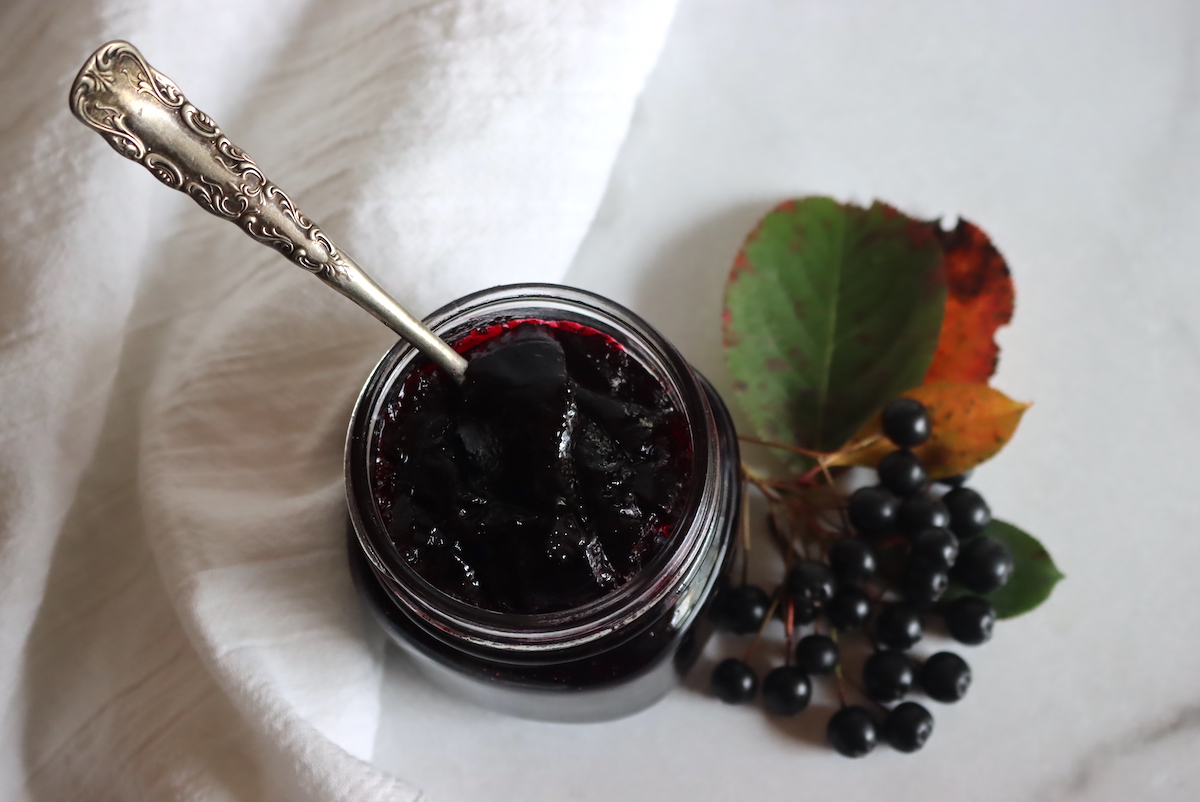
Table of Contents
- Notes from My Kitchen
- Quick Look at the Recipe
- What Does Aronia Jelly Taste Like?
- Identifying and Harvesting Aronia
- Ingredients for Aronia Jelly
- Low Sugar and Pectin Options
- How to Make Aronia Jelly
- Don’t Overcook Pectin Jelly
- Canning Aronia Jelly
- Altitude Adjustments
- Yield Notes
- Ways to Use Aronia Jelly
- Aronia Jelly FAQs
- Berry Canning Recipes
- Aronia Jelly Recipe
- Jelly Canning Recipes
This recipe has been reviewed for safety and accuracy by a Master Food Preserver certified through the University of Cornell Cooperative Extension.
We grow aronia (Aronia melanocarpa) here on our homestead, and while the berries get a lot of attention as an antioxidant-rich superfood, they can be tricky to actually use. I’ll eat a few out of hand in the garden, but they’re tart and astringent, and there’s only so many you can put away that way. I freeze them for smoothies too, though that usually means adding a lot of sweeter fruit to balance them out.
Jelly solves that problem with the sugar it needs to taste good, and something interesting happens along the way. The pectin seems to bind up some of the compounds that make aronia so astringent, so the finished jelly is much smoother and rounder than plain aronia juice or aronia syrup. It sets up the same way as other pectin-set fruit jellies, with a clear juice, a box of pectin, and a timed one-minute boil.
If you don’t grow your own aronia, you can make this jelly with store-bought juice instead. Look for 100% aronia (chokeberry) juice with nothing added, and substitute it cup for cup for the fresh-extracted juice in the recipe below.
Notes from My Kitchen

Aronia gives us a heavy crop most years, and jelly is one of the ways I keep up with it without the freezer filling up. I extract the juice in big batches when the berries come in, and since the juice freezes well, I’ll often stash a few quarts and make jelly later in the fall when the kitchen isn’t already buried in tomatoes.
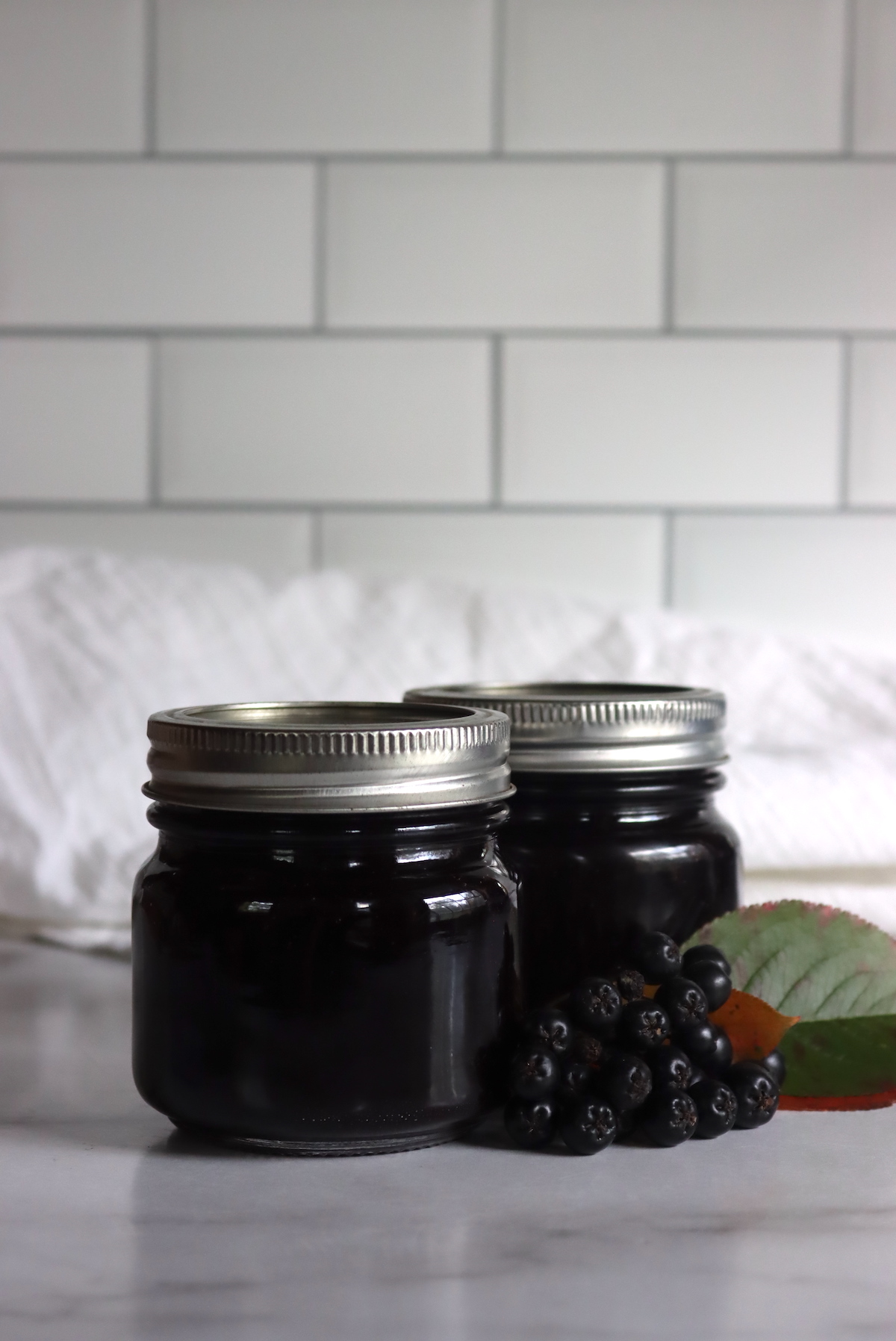
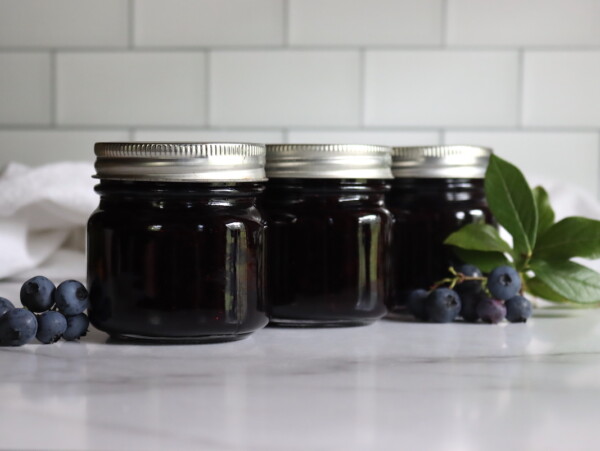
A batch makes about five half-pint jars, which is plenty to give a few away and still keep some on the shelf. The color is deep enough that it almost reads black in the jar, and it holds that color all winter. If you’ve only ever tried aronia raw and written it off, the jelly is a different thing entirely.
Quick Look at the Recipe
- Recipe Name: Aronia Jelly
- Recipe Type: Jelly Recipe
- Canning Method: Water Bath Canning
- Prep/Cook Time: 45 Minutes (plus a couple of hours to drain the juice)
- Canning Time: 10 Minutes
- Yield: 5 to 6 half-pint jars
- Jar Sizes: Quarter Pint, Half Pint, or Pint
- Headspace: 1/4 inch
- Ingredients Overview: Aronia berries (or aronia juice), water, lemon juice, sugar, and pectin
- Difficulty: Easy. You simmer and strain the berries for a clear juice, then set it with pectin and sugar.
- Similar Recipes: The method is the same as other pectin-set fruit jellies, including Saskatoon Jelly and Elderberry Jelly. If you forage your own fruit, you might also like Chokecherry Jelly and Wild Grape Jelly, which set up the same way.
What Does Aronia Jelly Taste Like?
Aronia jelly is sweet and tart with a deep berry flavor that lands somewhere near a cross between a dark grape and a black currant. Raw aronia is famously astringent, the dry, mouth-puckering quality you get from an underripe persimmon, but most of that drops away once the berries are cooked, sweetened, and set with pectin. What’s left is a rounded, fruity jelly that tastes like the berry without the bite.
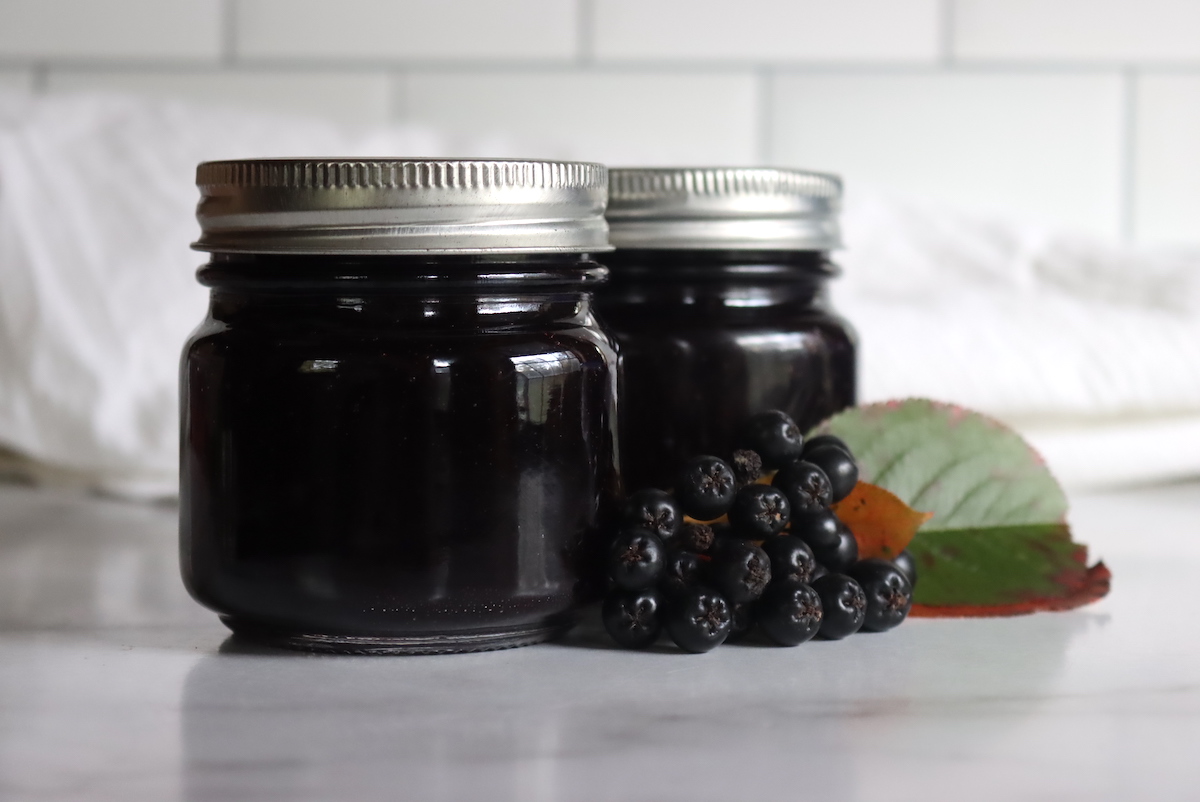
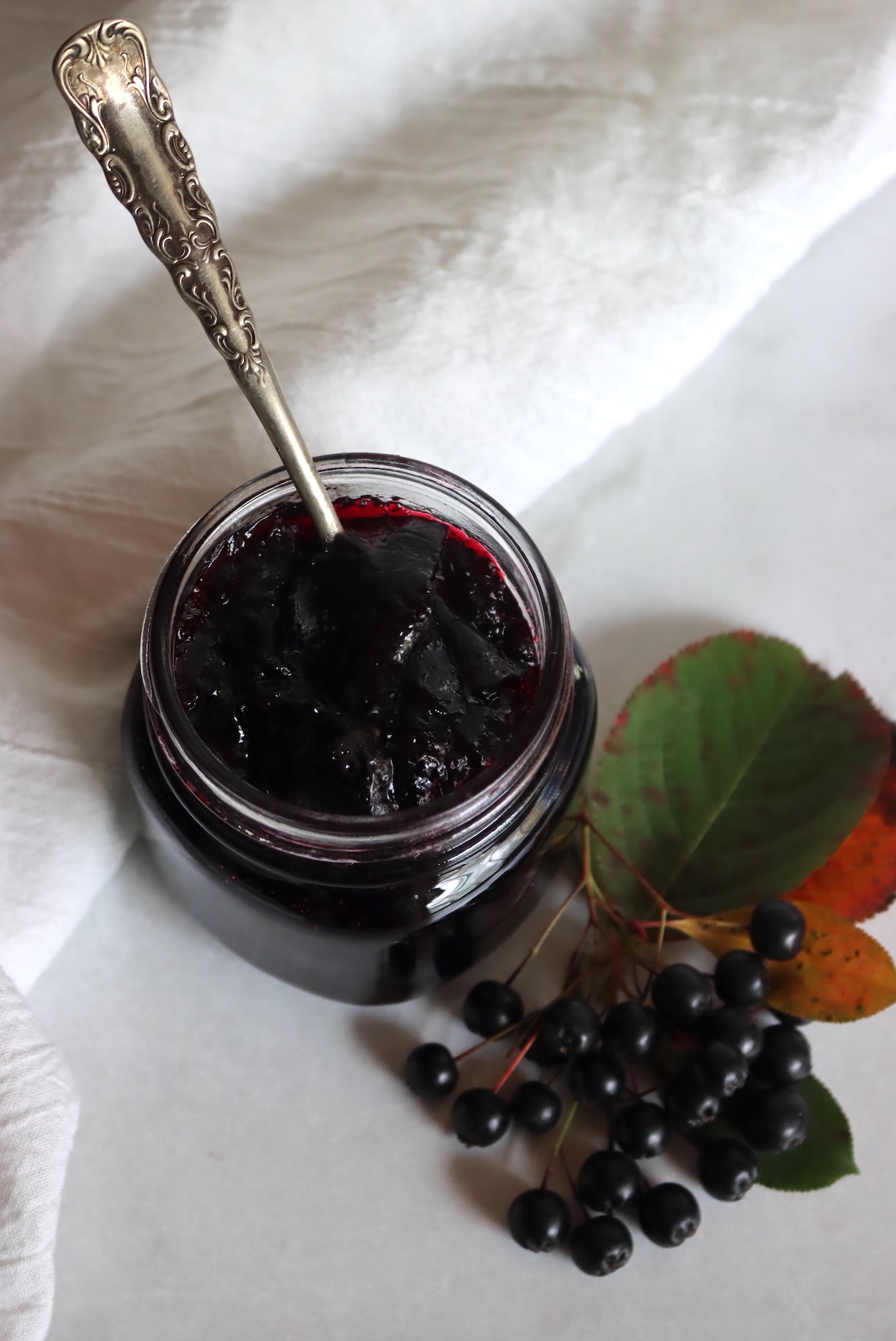
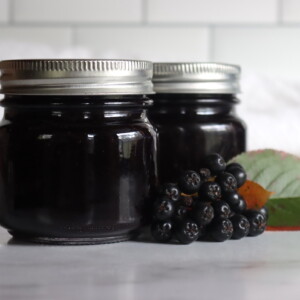
In the jar, the color is striking. Aronia juice is so dark that the finished jelly reads nearly black, turning a clear deep purple when you hold it up to the light. It spreads cleanly and holds its color through months of storage, which is part of what makes it nice to give as a gift.
Identifying and Harvesting Aronia
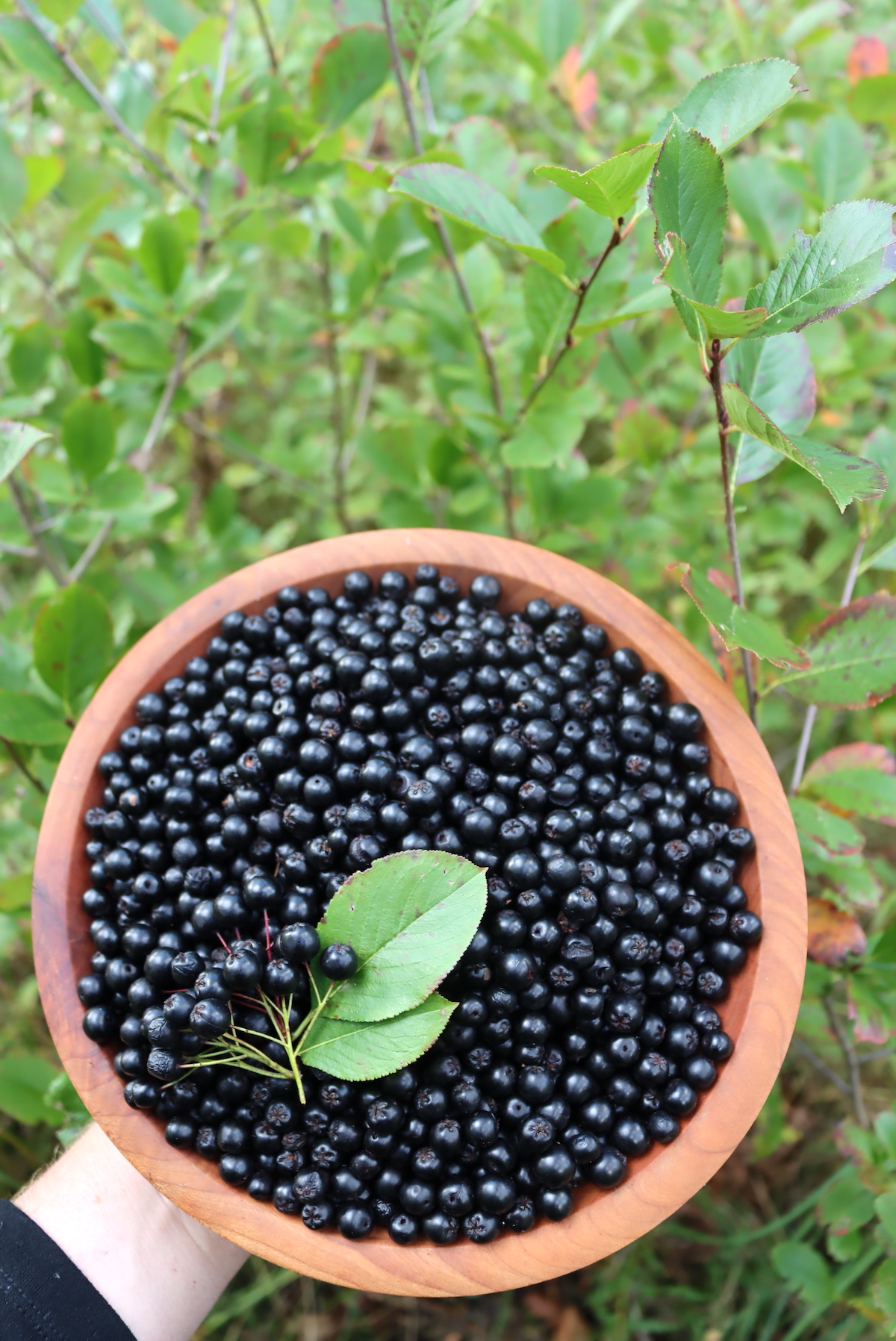
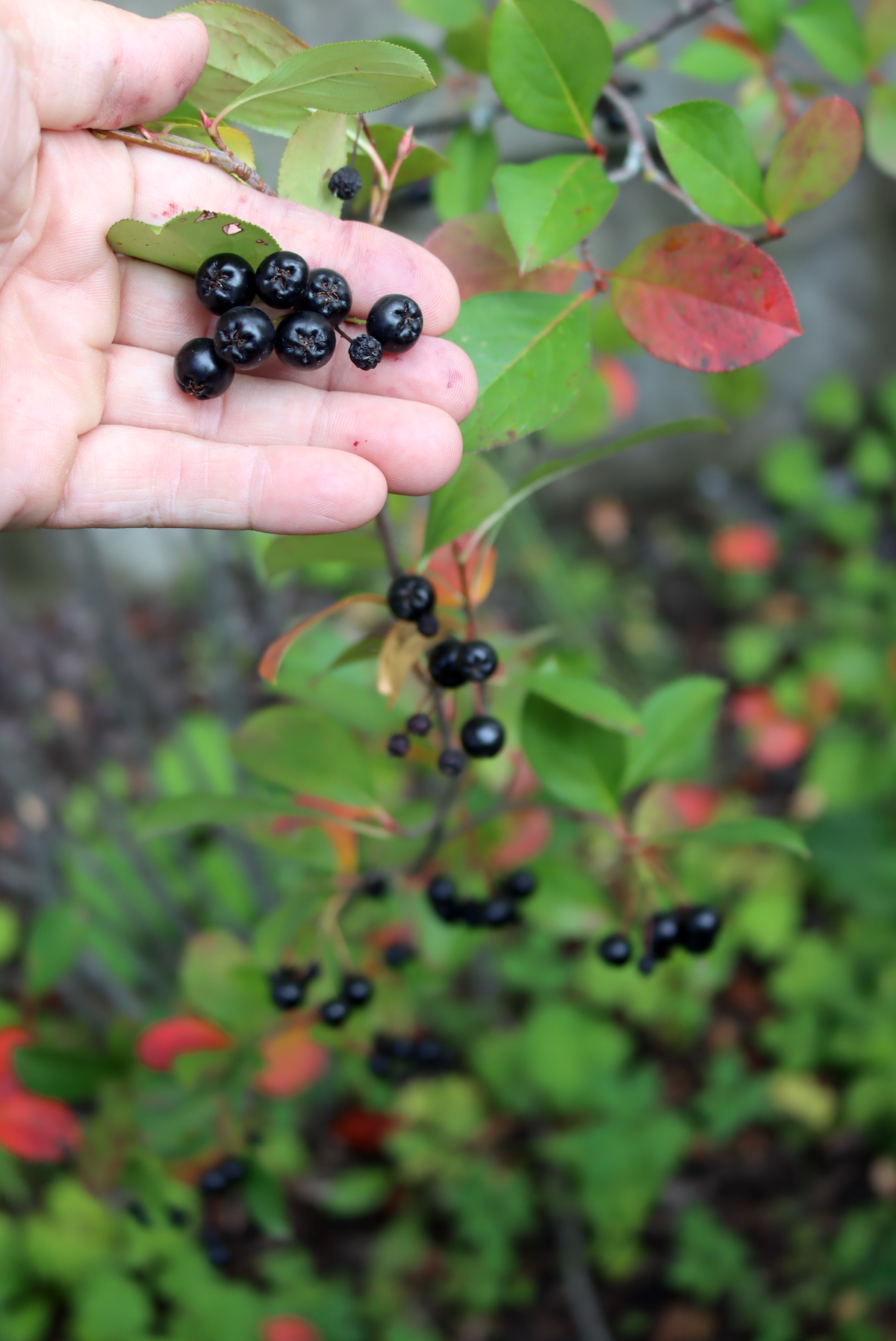
Aronia grows as a hardy landscape shrub, and we grow it on purpose here, but it’s also a common wild fruit you can forage as black chokeberry in much of the country. The dark berries hang in clusters and ripen from late summer into fall. As with any wild harvest, only pick and use the fruit if you’re completely sure of the identification, since there’s no substitute for positively identifying a plant before you eat it.
One detail that helps with identification is the blossom end of the fruit, which has a distinctive little crown where the flower was attached. Harvest aronia when the berries are fully ripe and a deep purple-black, since underripe fruit is even more astringent than usual. Fresh and frozen berries both work for jelly, so if you pick more than you can process at once, freeze the extra and make jelly later.
Ingredients for Aronia Jelly
Aronia jelly uses the same basic method as other pectin-set fruit jellies: extract a clear juice, then set it with sugar, pectin, and a little lemon juice for color and a dependable gel. The full amounts are in the recipe card below, but here’s what each ingredient does and how to choose it.
- Aronia Berries: You’ll need about 4 quarts of fresh berries to make the 4 cups of juice this recipe calls for. Fresh or frozen both work, and frozen berries actually break down a little faster. Pick fully ripe, deep purple-black fruit and rinse it well before extracting. If you’d rather skip the extraction step, substitute 4 cups of store-bought 100% aronia (chokeberry) juice with no added thickeners.
- Water: The water simmers with the berries to draw out their juice. If your tap water has a strong chlorine taste, use filtered water so it doesn’t carry through into the jelly.
- Lemon Juice: The lemon juice brightens the flavor, deepens the color, and helps the pectin gel reliably. Aronia is naturally high in acid, so the lemon here is for flavor and a good set, not for canning safety, which means fresh or bottled both work. (Bottled gives a consistent result; fresh has a little more flavor.) Aronia is acidic enough on its own that you can dial the lemon back toward a couple of tablespoons if you want a more pure aronia flavor. For a flavor-neutral option, use citric acid powder instead, at 1 teaspoon in place of the 1/4 cup of lemon juice.
- Sugar: Regular powdered pectin needs plenty of sugar to gel, so this recipe uses 5 cups of sugar for the 4 cups of juice. Don’t cut it back with regular pectin or the jelly won’t set. There’s a lower-sugar option in the note just below if you’d prefer one.
- Pectin: Use regular powdered pectin (like Sure Jell) for this recipe, which is dependable and produces consistent results.
Low Sugar and Pectin Options
This recipe is written for regular powdered pectin (like Sure Jell original), which needs the full amount of sugar to set. If you’d prefer a less sweet jelly, use Sure Jell low sugar pectin (pink box) or Ball low sugar pectin and reduce the sugar following the package directions, since the amounts differ from regular pectin. Aronia takes well to a tarter, less sweet jelly, so this is worth trying if you like the berry’s natural bite.
Pomona’s Universal Pectin sets with any amount of sugar (or none at all), though the gel is softer. It works a bit differently with a 2-part calcium-water system, so follow the box and read how to use Pomona’s pectin if it’s your first time.
Liquid pectin isn’t recommended here, since it needs more sugar to set and gives less consistent results with a dark, tannic juice like aronia. If liquid pectin is what you have on hand, don’t reuse the powdered amounts. Follow the grape jelly directions on the Certo liquid pectin package instead, since aronia sets up much like grape, and note that the order of operations is reversed with liquid pectin. You stir the sugar into the juice and bring it to a full rolling boil first, then add the pectin at the very end and boil hard for one minute, which is the opposite of the powdered method.
How to Make Aronia Jelly
Aronia jelly comes together in two stages: extracting the juice, which takes most of the time but is mostly hands-off while the juice strains, and then cooking the jelly, which only takes about 15 minutes once the juice is ready.
You can use fresh or frozen aronia berries, or skip straight to the cooking step with store-bought aronia juice. Either way, you’re working toward 4 cups of clear juice as the base for the jelly.
Extract the Aronia Juice
Wash about 4 quarts of fresh aronia berries and put them in a large, heavy-bottomed pot with 4 cups of water. Bring it slowly up to a simmer, mashing the berries with a potato masher as the pot heats to help them release their juice. Simmer for at least 10 minutes, until the berries have fallen apart and stained the water deep purple.
Pour the cooked berries and liquid into a jelly bag set over a bowl and let it drain for a couple of hours. Don’t squeeze the bag, since squeezing pushes pulp through and clouds the jelly. You should end up with about 4 cups of strained juice; if you’re a little short, top it off with a splash of water to reach the full amount.
Cook the Jelly
Combine the 4 cups of aronia juice and 1/4 cup of lemon juice in a deep, heavy-bottomed pot. Whisk in one box of powdered pectin until it’s fully dissolved, then bring the mixture to a full rolling boil over high heat, stirring constantly and skimming off any foam.
Add the 5 cups of sugar all at once. (Do NOT add the sugar before or at the same time as the pectin, or the jelly won’t set.) Stir until the sugar is fully dissolved, return to a full rolling boil that can’t be stirred down, and boil hard for exactly 1 minute. Remove from heat, skim off any foam, and ladle the hot jelly into prepared jars, leaving 1/4 inch headspace.
Don’t Overcook Pectin Jelly
Pectin jelly sets on chemistry, not on cooking time, and that trips a lot of people up. The jelly looks thin in the pot when you take it off the heat, and that’s exactly right, because pectin firms up as the jelly cools, not while it’s boiling. A hard rolling boil for one full minute after the sugar dissolves is the whole job.
Skip the thermometer and the cold-plate test here, since those are for old-fashioned no-pectin jellies that you cook to a gel point. And give the jars a full 24 to 48 hours to set before you decide anything went wrong. If it’s still loose after that, my guide to troubleshooting jelly that didn’t set walks through how to fix it.
Canning Aronia Jelly
Canning is optional, but it’s a good way to keep aronia jelly on the shelf year-round or to give it away as gifts. If you’re not canning, let the jars cool completely, then store them in the refrigerator for a few weeks or the freezer for up to a year. (See the storage notes below for the details.)
To can aronia jelly, prepare your water bath canner, jars, and lids before you start cooking the jelly. After ladling the hot jelly into jars (leaving 1/4 inch headspace), wipe the rims with a clean, damp cloth, center the lids, and screw the bands down to fingertip tight.
Process in a boiling water bath canner for 10 minutes (adjusting for altitude below). When the time is up, turn off the heat and let the jars sit 5 minutes before lifting them out, which helps prevent siphoning. Cool undisturbed on a towel for 12 to 24 hours, check the seals, and refrigerate any jars that didn’t seal. Sealed jars keep on the pantry shelf for 12 to 18 months.
Altitude Adjustments
For water bath canning, processing times increase at higher elevations:
- 0 to 6,000 feet: 10 minutes
- Above 6,000 feet: 15 minutes
Yield Notes
About 4 quarts of fresh aronia berries (roughly 5 to 6 pounds) simmered with 4 cups of water makes the 4 cups of strained juice a full batch needs. If you’re working with store-bought juice, you can skip the extraction entirely and just measure out 4 cups.
A full batch (4 cups of juice, 1/4 cup of lemon juice, one box of pectin, and 5 cups of sugar) makes roughly 5 to 6 half-pint jars. Don’t double the batch, since larger amounts don’t heat evenly and often won’t set. If you want more, make two single batches back to back instead.
Ways to Use Aronia Jelly
Aronia jelly is at home in all the usual spots, spread on toast, biscuits, or muffins, or stirred into plain yogurt or oatmeal. The deep, tart flavor also stands up well to savory pairings, so it works as a glaze for duck and other game, or as the fruit element on a cheese and charcuterie board next to a sharp aged cheddar.
It’s a nice filling for baked goods too, tucked into small turnovers or thumbprint cookies for a tart, fruity center. For something cooler in summer, swirl aronia jelly with Greek yogurt, a little honey, and fresh berries, then freeze it into pops. Because the color holds and the flavor is something most people haven’t tried, it also makes a memorable jar to give away.
Aronia Jelly FAQs
No, aronia berries are high in acid on their own, so lemon isn’t needed for safe canning. The lemon juice here is for color and a dependable gel, and you can reduce it or leave it out if you’d rather have a more pure aronia flavor.
Yes. Substitute 4 cups of store-bought aronia (chokeberry) juice for the fresh-extracted juice and go straight to cooking the jelly. Check that it’s 100% juice with no added thickeners or gums, which can interfere with the set.
The usual reasons jelly doesn’t set are adding the sugar before the pectin has dissolved and boiled, boiling the finished jelly too long, or doubling the batch. Pectin jelly also looks thin when hot and firms up as it cools, so give it 24 to 48 hours before deciding. If it still doesn’t set, enjoy it as a syrup or read through my guide on troubleshooting jelly set.
Yes, but you’ll need a low-sugar pectin like Sure-Jell Low Sugar or Pomona’s Universal Pectin and follow the package directions, since regular pectin needs the full sugar amount to gel. The yield will be a little lower with reduced sugar.
Berry Canning Recipes
If you tried this Aronia Jelly recipe, or any other recipe on Creative Canning, leave a ⭐ star rating and let me know what you think in the 📝 comments below!
And make sure you stay in touch with me by following on social media!
Aronia Jelly
Equipment
- Canning Jars, Lids and Bands
Ingredients
For the Aronia Juice
- 4 quarts fresh or frozen aronia berries
- 4 cups water
For the Jelly
- 4 cups aronia juice, strained, or store-bought
- 2 tablespoons lemon juice, optional
- 1 box powdered pectin, 1.75 oz, regular, such as Sure-Jell original or 6 Tbsp Bulk Pectin
- 5 cups granulated sugar, See notes for low sugar option
Instructions
- To extract the juice from fresh berries: wash the aronia berries and place them in a large pot with the water. Bring to a simmer, mashing the berries with a potato masher as they heat. Simmer at least 10 minutes, until the berries fall apart.
- Strain through a jelly bag or cheesecloth-lined strainer for at least 2 hours, then measure the juice, adding water if needed to reach the amount called for. (Skip this step if using store-bought juice.)
- Place the aronia juice in a large pot and add the optional lemon juice. Whisk in the powdered pectin until completely dissolved. Bring to a full rolling boil over high heat, stirring constantly.
- Add all the sugar at once and stir until dissolved. Return to a full rolling boil and boil hard for exactly 1 minute. Remove from heat and skim off any foam.
- Ladle hot jelly into prepared jars, leaving 1/4 inch headspace. Wipe rims clean, center lids, and apply bands fingertip-tight.
- Process in a boiling water bath for 10 minutes, adjusting for altitude. Turn off heat and let jars rest 5 minutes before removing. Cool undisturbed for 12 to 24 hours before checking seals.
Notes
Nutrition
Nutrition information is automatically calculated, so should only be used as an approximation.
Jelly Canning Recipes
Find the perfect recipe
Searching for something else? Enter keywords to find the perfect recipe!

Hi can I use liquid pectin instead of powdered ? That’s what I have on hand.
For liquid pectin you’ll need quite a bit more sugar to get it to set. It’d be 4 cups juice, 7 1/2 cups sugar, and 2 pouches liquid pectin. The order of operations is different, and the sugar is added first with liquid pectin. Follow the order of operations listed on the box. Best of luck with it!
I came across your recipe for Chokeberry jelly yesterday after looking for a recipe for a very long time. YouTube does not have one. We have a home in South Dakota for the summer and that’s where I came across this jelly. It has become one of my top three jams and jellies. however, I can’t find fresh berries anywhere and the few stores you can find it stocked is so expensive. I did find 100% juice on Amazon but again very expensive. We winter in Texas and so I finally got around to trying your recipe yesterday and it worked out perfectly. We are heading back to South Dakota next week and I have ordered 3 Chokeberry bushes. Hopefully I’ll be able to grow my own. Thank you for posting this easy recipe. Too bad I can’t give you 6 stars or more!!!
What a great story, thanks for sharing it! So glad the aronia jelly worked out perfectly for you, and good luck with those three bushes. They’re prolific, so you’ll have plenty for jelly. Happy canning!
Bill, I’m not sure what part of SD you live in but our daughter and her husband have lots of Aronia berry bushes and sells them, in the Sioux Falls area.
When I used 4 quarts of berries and four cups of water I ended up with eight+ cups of juice rather than four. I assume this means that I need to make two batches of jelly?
Yes, you’ll need to make two batches with that much juice. Sounds like you had some really juicy fruit! Sometimes they can be very dry, but not always!
The 5 aronia bushes we have are very generous and we often get almost 2 homer pails from each so I get regularly too many aronia berries to process.
I was glad to find your recipe. It is truly delicious! I plan to try the variations next year.
There are a couple of pointers about the astringency:
After cleaning and sorting the berries, I put them in very large bags in the freezer.
Besides giving me more time to process them without losing any, it also kills the astringency and makes it easier to get more juice out of them as the fruit falls apart easier when cooked.
Since the seeds are tiny, they are not objectionable and once, after cooking them, I put them through the blender and decided to make jam instead. It was pretty yummy but…
My grown children prefer the jelly, however: They marvel at the color that is “just like a stained glass window”.
That’s great to know about the freezer trick!
I substituted 1 teaspoon of stevia powder instead of sugar and chia seeds instead of pectin due to dietary restrictions and intolerances in the family. I was worried about just using the fruit on its own so added a handful of blueberries. Just an alternative for those that need sugar or pectin free.
Those are fine substitutions for a refrigerator jam, just keep in mind they’re not canning safe. So glad it turned out for you. Enjoy!
Can you use liquid pectin for this recipe?
With liquid pectin, the instructions are a bit different. You need 7 cups sugar to 4 cups juice to get it to jel, and you add the pectin at the end, mixing in the sugar first. The set is also a bit softer with liquid pectin.
Anyhow, to make Aronia jelly with liquid pectin, you can make those modifications and it should work just fine. Enjoy!
Have you ever had difficulty getting the jelly to set? If so, how did you remedy it? I followed this recipe exactly but my jelly is very runny.
I haven’t had trouble getting this jelly to set personally. Take a look at this jelly troubleshooting guide and see if that helps: https://creativecanning.com/troubleshooting-jelly-set/
You are missing some text in your Arona Jelly recipe. it says :” between a tablespoon of lemon juice. My question is between a 1 tablespoon and what???
Thanks for catching that. It should say 1 to 2 Tbsp of lemon juice. I’ve gone in and fixed that in the article.
I get gobs of arena because, even frozen they are a good snack (berries every year. I wait to pick them until late September or early to mid October or even later some years. I eat them off the bush after that all winter long (middle of Minnesota) better than fall in my opinion. This sounds like a very good jelly. Thanks for the recipe. I have quite a number of frozen berries. If they are frozen, is it still 4 quarts of berries to get the 4 cups of juice for the right consistency of flavor?
Also, do you have a canned ketchup recipe by any chance? Would it be possible for you to answer my questions in my email? One of the things I do best is forget who I asked what questions & then I can’t find the answers if they are answered on the person’s website.
Thank you very much.
Hi Penny,
The ratio should be the same for frozen aronia, and you might even get a slightly better extraction rate with them as freezing helps the juice flow better sometimes.
For ketchup, somehow I’ve yet to make a regular ketchup recipe (though gooseberry ketchup, or cranberry ketchup are delicious). I have heard that the recipe from the National Center for Food Preservation is pretty solid though. Here it is: https://nchfp.uga.edu/how/can_03/tomato_ketchup.html