
This post may contain affiliate links. Please see our disclosure policy.
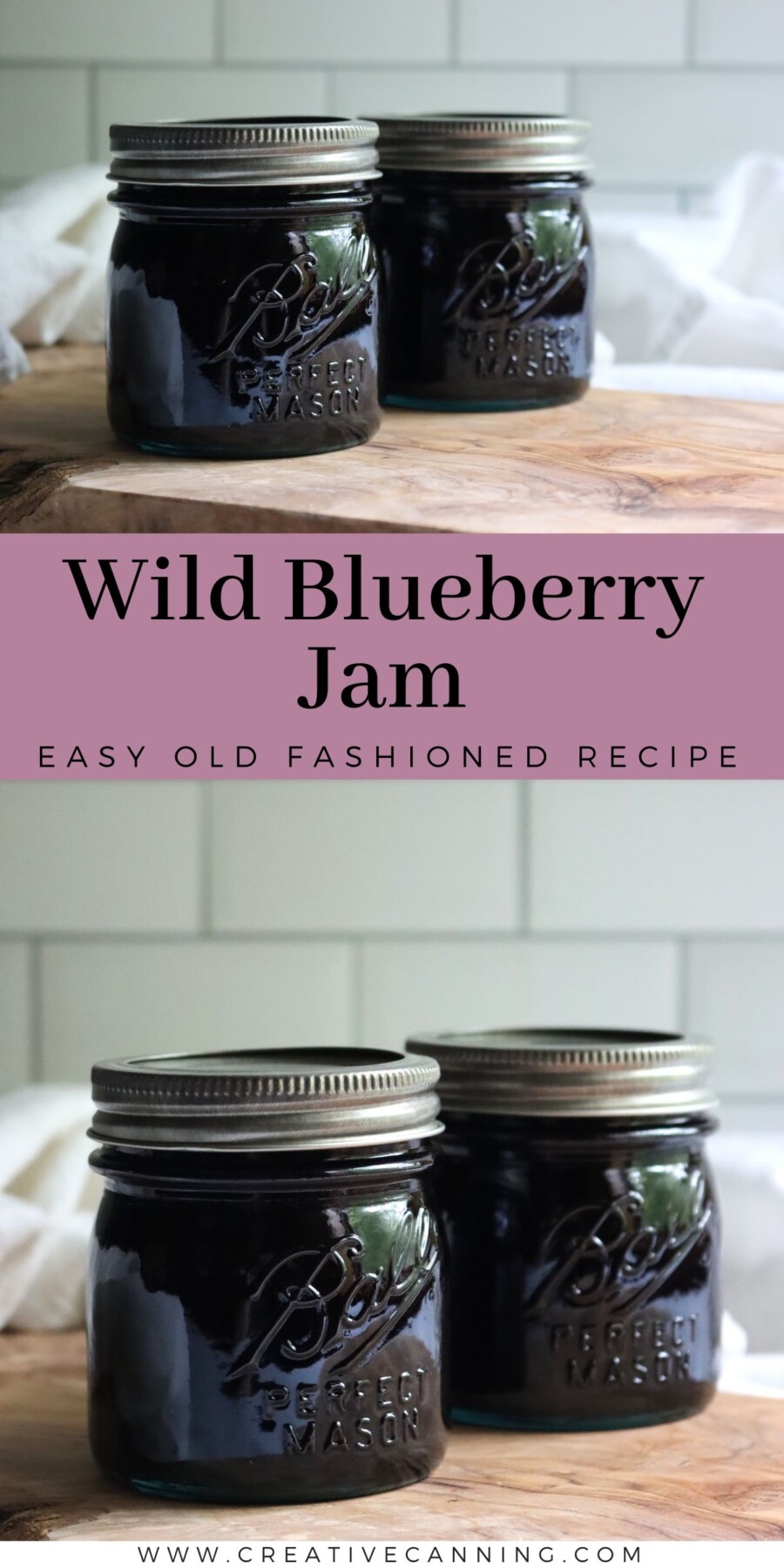
Wild blueberry jam tastes more like blueberry than anything you can make from the big cultivated berries. It sets on its own with no boxed pectin, and you only need a few pints for a small batch of unforgettable jam.
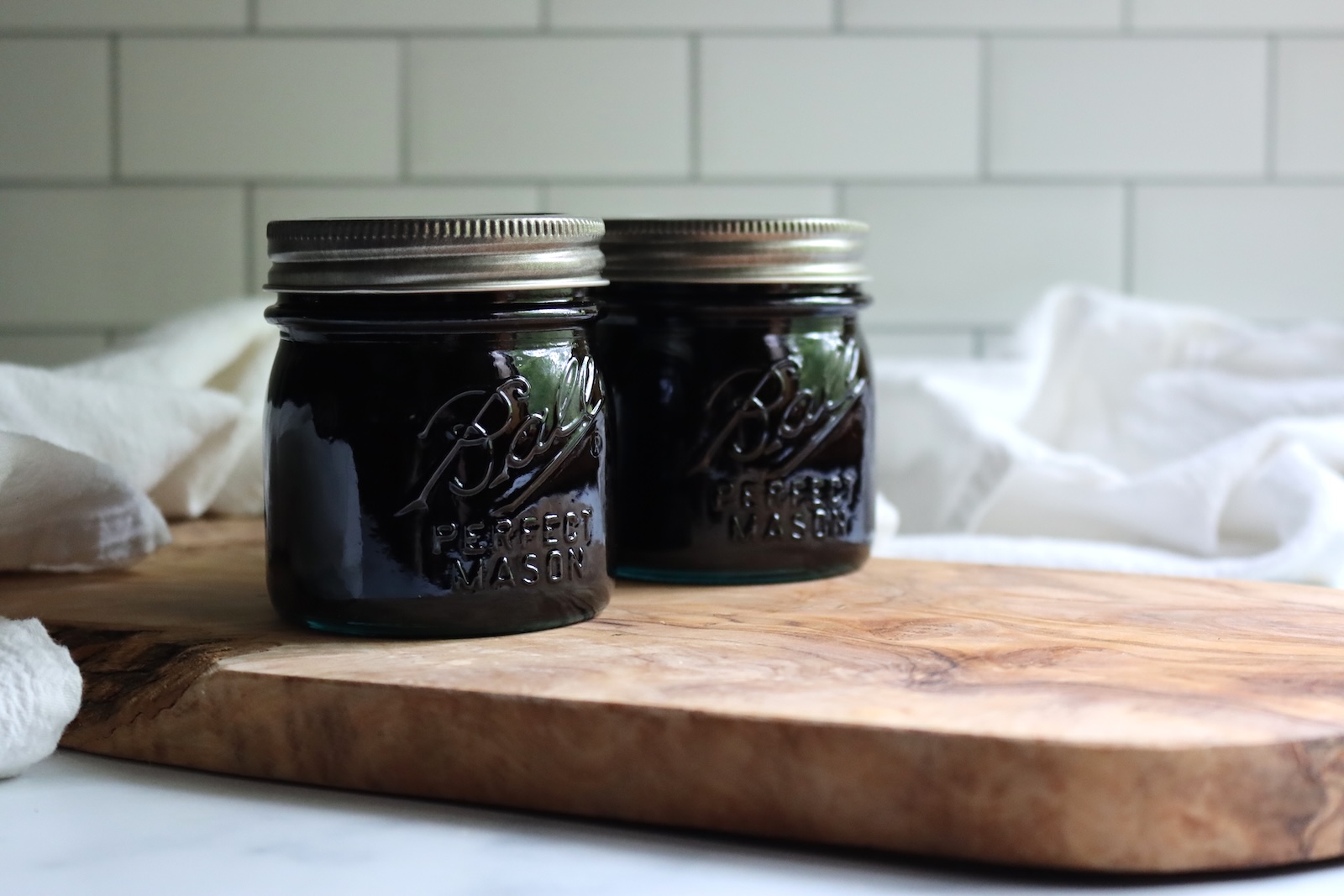
Table of Contents
- Notes from My Kitchen
- Quick Look at the Recipe
- Ingredients for Wild Blueberry Jam
- Low Sugar Options
- How to Make Wild Blueberry Jam
- Step-by-Step Instructions
- Canning Wild Blueberry Jam
- Altitude Adjustments
- Setting Notes
- Ways to Use Wild Blueberry Jam
- Storage and Shelf Life
- More Ways to Preserve Wild Blueberries
- Yield Notes
- Wild Blueberry Jam FAQs
- Blueberry Canning Recipes
- Wild Blueberry Jam Recipe
- Jam Canning Recipes
This recipe has been reviewed for safety and accuracy by a Master Food Preserver certified through the University of Cornell Cooperative Extension.
Wild blueberries aren’t the same fruit as the ones in the big plastic clamshells. They’re lowbush berries, Vaccinium angustifolium, and they grow on their own across the Maine barrens instead of being planted in rows. The berries are tiny, the skin is most of what you’re eating, and they taste sharper and a little winey next to a cultivated blueberry.
That’s also why they make good jam. Most of the pectin in a blueberry is in the skin, so a cup of wild berries has more of it than a cup of the big ones. This batch gets to the gel stage on 12 to 15 minutes of hard boiling with nothing but lemon juice to help. I go through how that works in my guide to making jam without added pectin.
There’s less sugar here than a traditional no-pectin jam calls for, about half what you’d normally use for four cups of fruit. Wild blueberries have enough flavor to carry it, and you get a jam that tastes like fruit instead of like sugar. It follows NCHFP guidance for jams without added pectin, which is where the gel stage method and the 10-minute process come from.
My blueberry jam without added pectin is the same method with cultivated fruit and a lot more sugar, if you want the firmer, old-fashioned version.
Fresh wild blueberries have a short season. Almost the whole Maine crop gets frozen at harvest, so frozen is what you’ll find most of the year, and frozen is fine here. They go in straight from the bag and give up their juice a little faster than fresh. You can make this jam in January.
If you’d rather put the berries up whole and decide later, I have a tutorial on canning blueberries. And if you came home with more than two clamshells, there are three dozen more blueberry canning recipes on the site.
Notes from My Kitchen

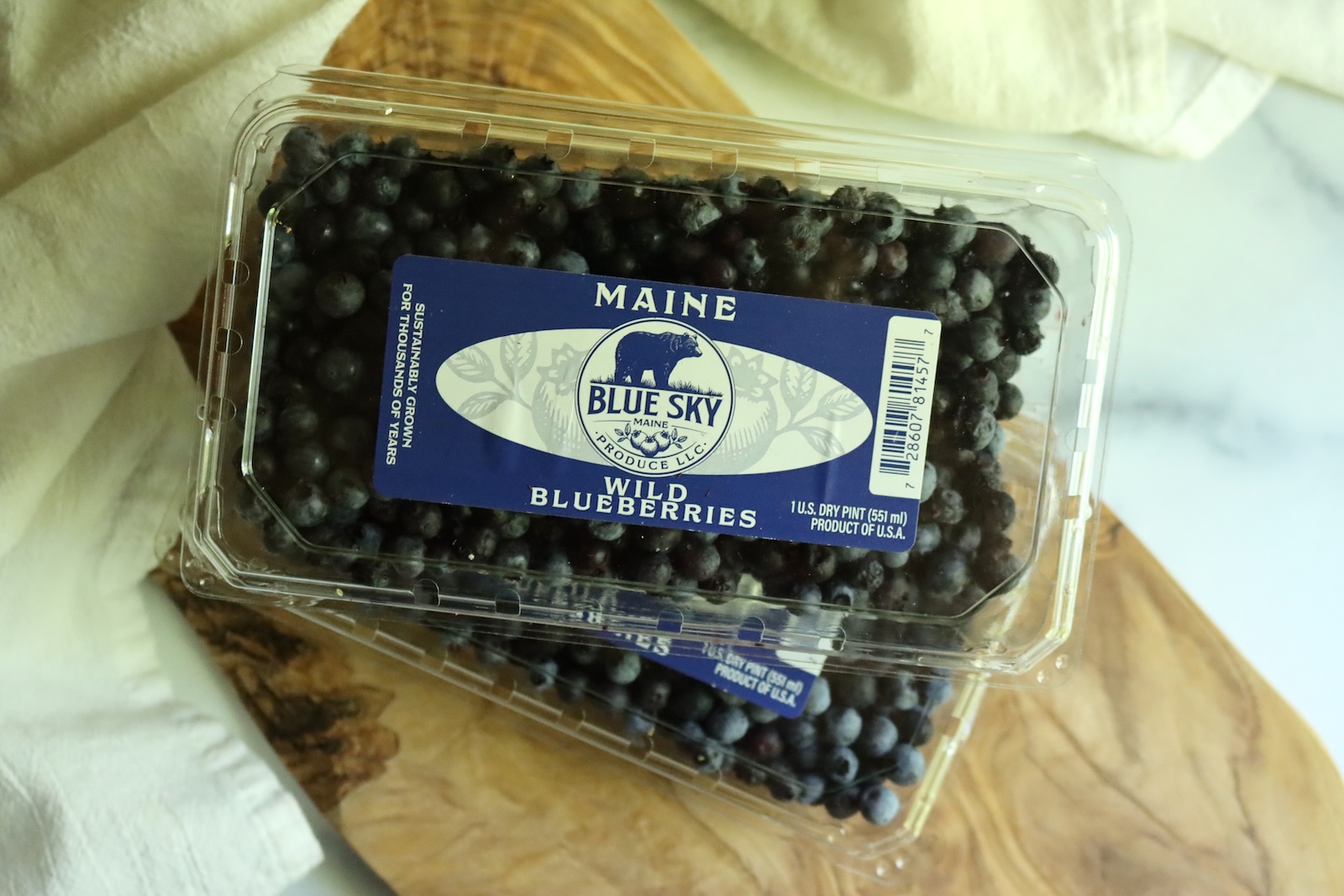
We spent a week on the coast of Maine this summer, and I wasn’t expecting the blueberry situation in the grocery stores. Every single one had at least three kinds side by side, including cultivated berries bigger than some of the strawberries in the next case over, and then, in small unassuming clamshells, the wild ones. We were at the beach all week, and I mostly wasn’t thinking about canning, but I kept coming back to those little berries.
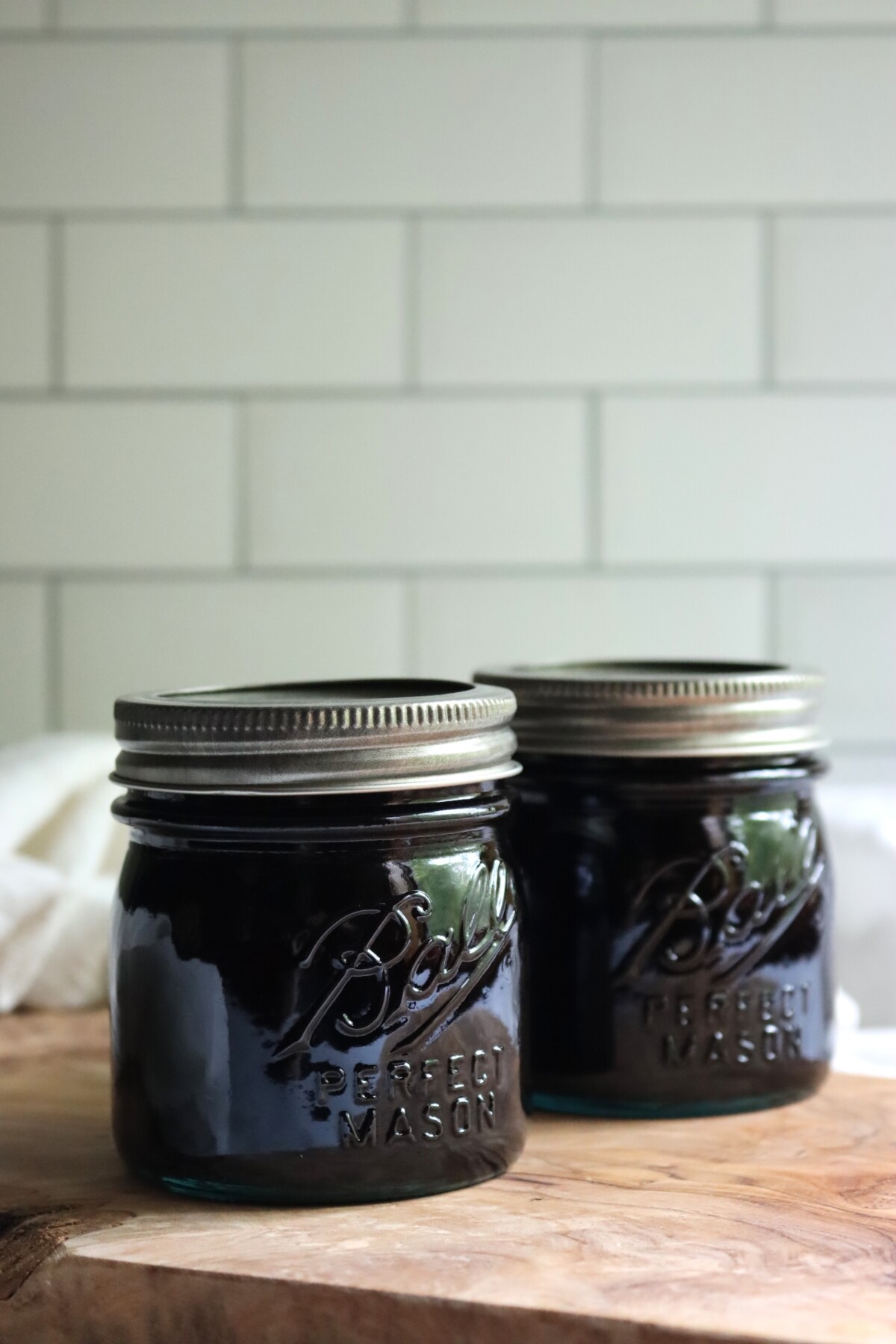
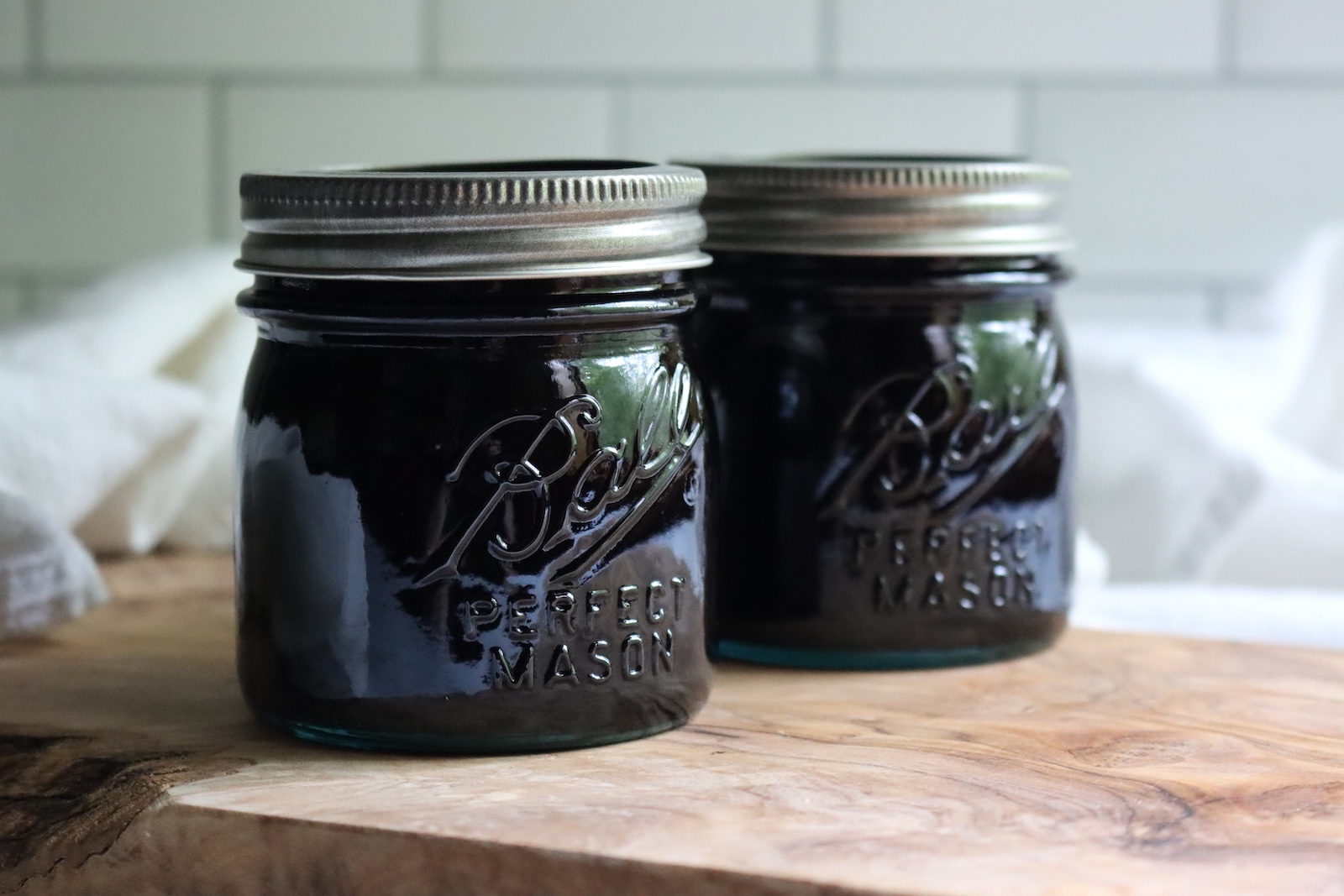
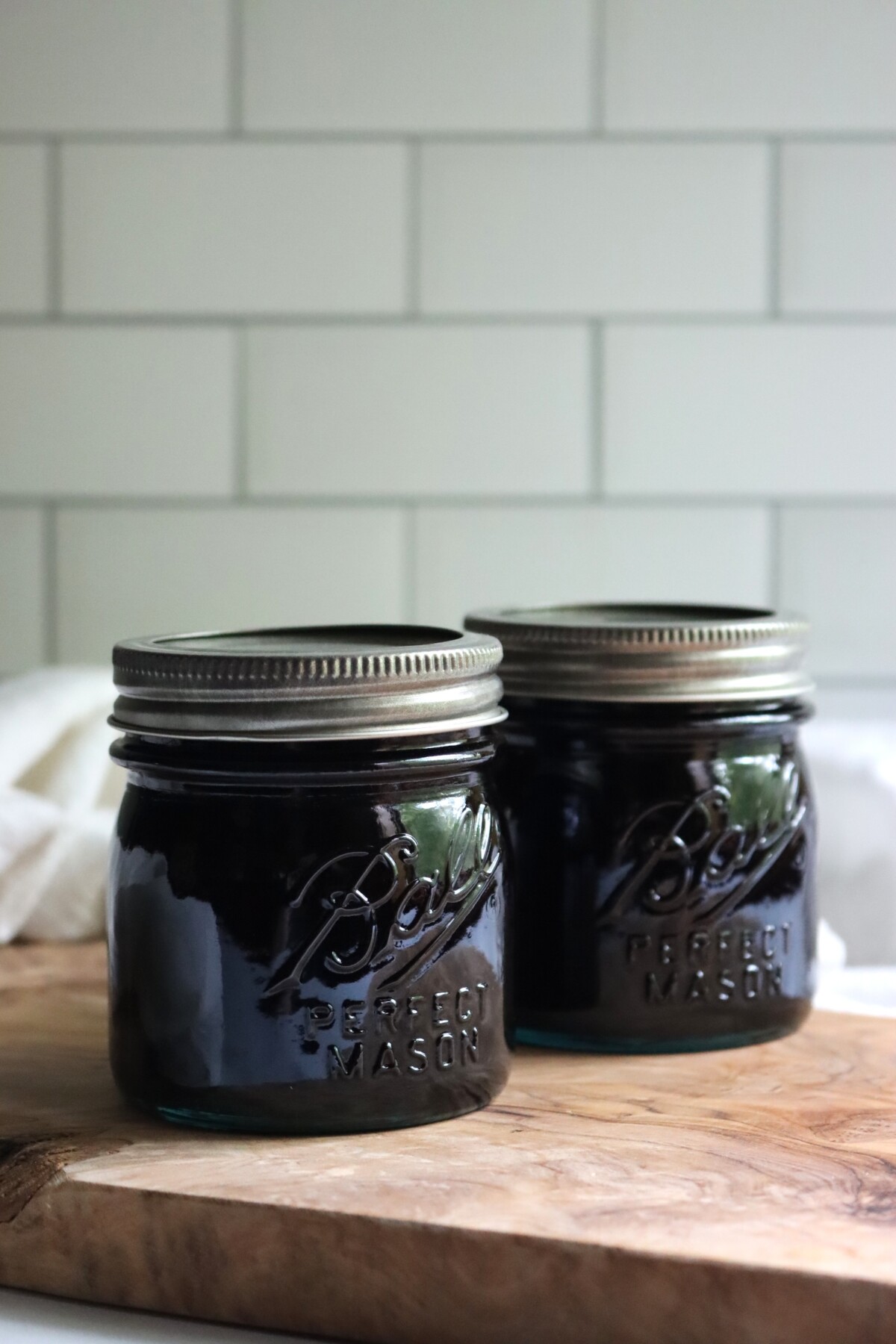
By the last day, I wanted to bring a piece of Maine home to preserve, and a lobster roll wasn’t going to fit in my suitcase. So I bought two pints of wild blueberries, drove them back to Vermont, and made jam that same week. Two half pints isn’t much jam, but it’s enough to remember a trip by.
Quick Look at the Recipe
- Recipe Name: Wild Blueberry Jam
- Recipe Type: Jam (no added pectin)
- Canning Method: Water Bath Canning
- Prep Time: About 10 minutes
- Cook Time: About 20 minutes, with 12 to 15 of those at a hard boil
- Canning Time: 10 minutes for half pints
- Yield: About 2 half pints
- Jar Sizes: Half pints or quarter pints
- Headspace: 1/4 inch
- Ingredients Overview: Wild blueberries, sugar, lemon juice
- Safe Canning Recipe Source: Follows NCHFP guidance for jams without added pectin
- Difficulty: Easy
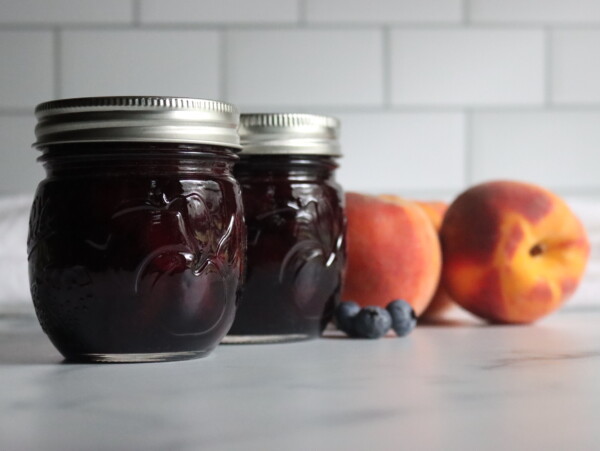
- Similar Recipes: This is like the other old-fashioned jams that set without added pectin, such as strawberry jam without pectin and alpine strawberry jam. If you have blueberries to work through, try other blueberry canning recipes like blueberry lime jam or blueberry peach jam.
Ingredients for Wild Blueberry Jam
Three ingredients, and two of them are already in your kitchen. The amounts are in the recipe card. What each one does in the pot is the part that matters, because that’s what tells you which ones you can move and which you can’t.
With a list this short, there’s nowhere for a substitution to hide. Change the sugar, and you change the set. Change the fruit, and you change everything.
- Wild blueberries: Lowbush, not highbush. They’re much smaller than cultivated berries and dark all the way through when you cut one open. Fresh is lovely in season. Frozen works just as well and doesn’t need thawing, though it takes a minute or two longer to come up to a boil. Pull out stems, leaves, and any soft ones as you rinse. A few slightly underripe berries in the mix are a bonus, since underripe fruit has more pectin. Cultivated blueberries substitute, but the flavor is milder and the set is looser, and my blueberry jam without added pectin is balanced for the bigger fruit.
- Sugar: Plain granulated white, and less of it than a traditional jam. In a high-acid fruit jam, sugar handles flavor, set, and yield. It isn’t the preservative, so the amount is yours to adjust. More sugar gives a firmer set, a faster cook, and a bit more jam in the jars. Less gives a softer spread that tastes more like the fruit. I keep it low here because wild blueberries have the flavor to carry it.
- Lemon juice: Blueberries are acidic enough to water bath can on their own, so this isn’t the safety control. It’s here for flavor, color, and set. It adds a little pectin and keeps the color from going gray. Bottled juice like Santa Cruz organic lemon juice has a consistent acidity and it’s what I usually grab, but fresh squeezed is fine in this one. Don’t skip it entirely or the jam tastes flat.
Use a wide, heavy-bottomed pot, not a tall narrow one. A small batch cooks down faster with more surface area, and heavy walls keep the sugar from scorching once it thickens. Wash your jars and get the canner heating before you start cooking. The jam moves fast at the end, and you don’t want to be hunting for lids.
Low Sugar Options
There’s already less sugar here than in a standard no-pectin jam, so it’s fair to ask what happens if you cut more. Less sugar means a longer cook to the gel stage, a softer set, and fewer jars, since the sugar is part of the volume in the pot. None of that is a safety problem. The fruit’s own acidity is what makes this safe to water bath can.
For a true low-sugar jam that still sets firmly, use Pomona’s Universal Pectin instead of cooking to the gel stage. It sets with calcium instead of sugar, so you can sweeten to taste or skip sugar altogether. My guide to using Pomona’s pectin walks through it.
How to Make Wild Blueberry Jam
No overnight maceration on this one. Everything goes in the pot at once, comes up to a boil, and boils hard until it hits the gel stage. That took me 12 to 15 minutes from the moment it hit a full boil. Start to finish, jars included, this is under an hour.
The ratio is 4 cups of wild blueberries to 1 1/2 cups of sugar and 1/4 cup of lemon juice. Two pint clamshells got me there, right around 1 1/4 pounds.
What this recipe asks for is attention. A small batch of thickening jam over high heat will scorch the second you turn your back. Keep the spoon moving, and you’ll be fine.
Step-by-Step Instructions
- Rinse the wild blueberries and sort through them, pulling out any stems, leaves, or berries that have gone soft. Frozen berries go into the pot straight from the bag.
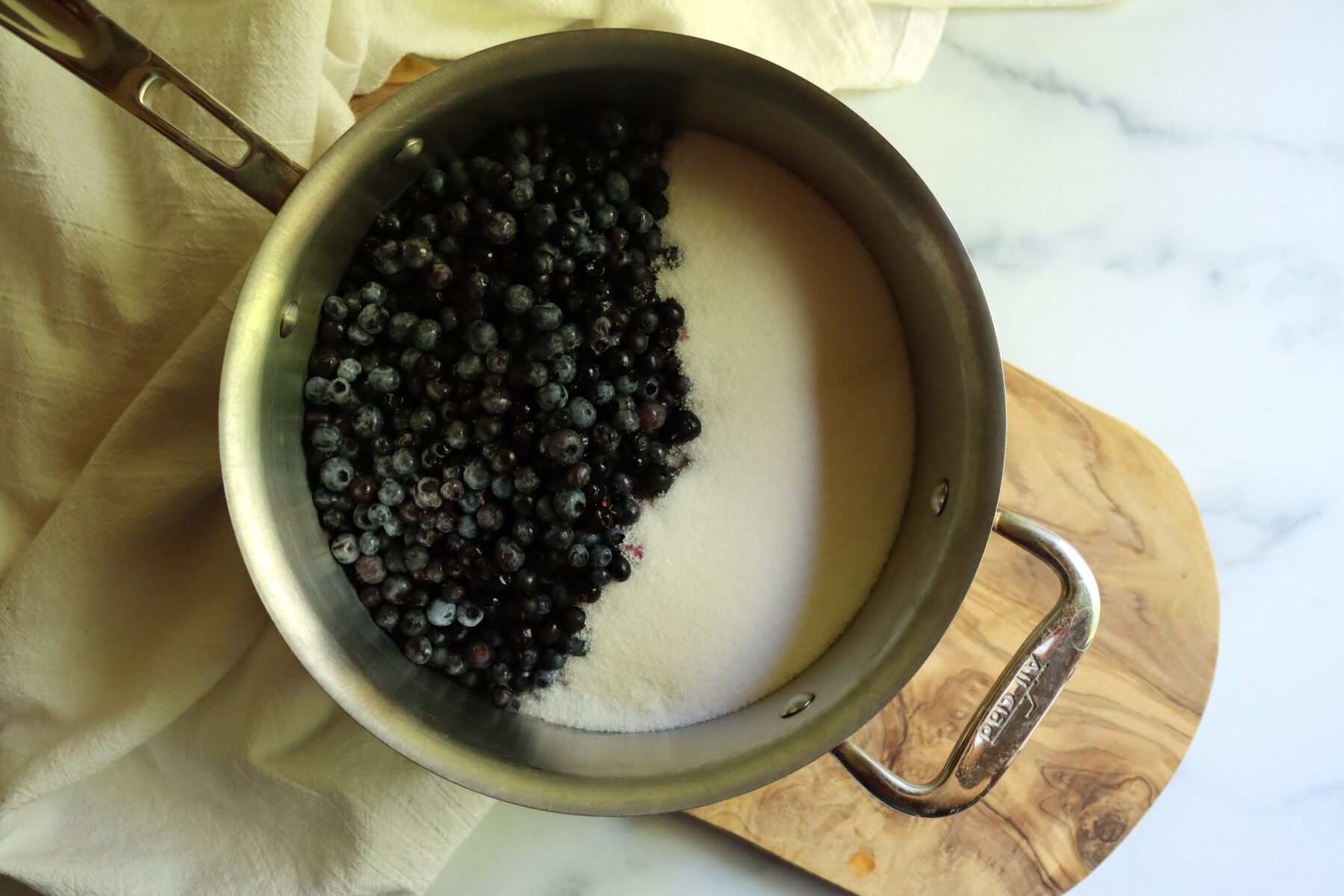
- Add the berries, lemon juice, and sugar to a wide, heavy-bottomed pot all at once. There’s no need to macerate the fruit first or hold the sugar back.
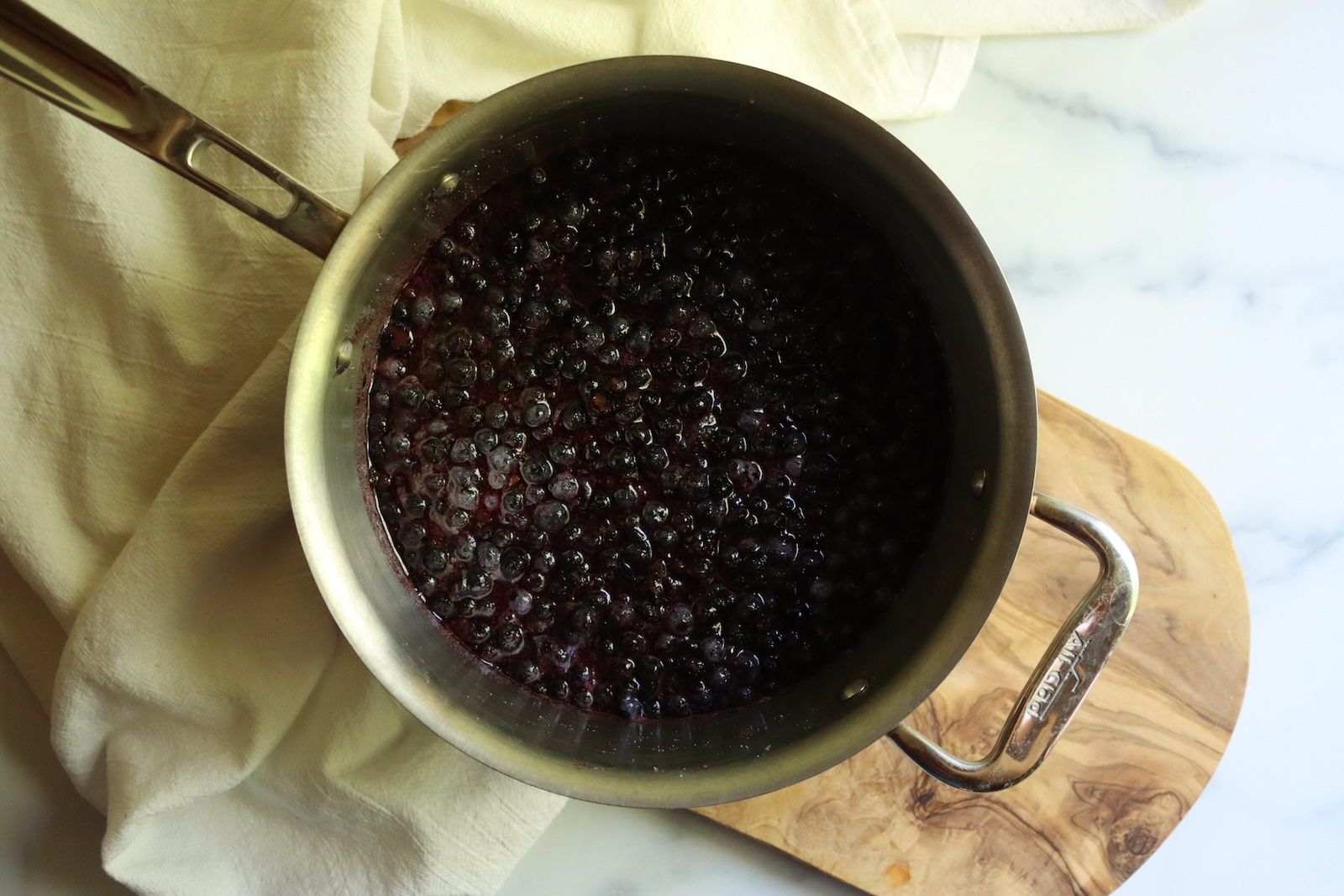
- Cook over high heat, stirring constantly and mashing the berries lightly against the side of the pot as they soften, so they release their juice and the sugar dissolves.
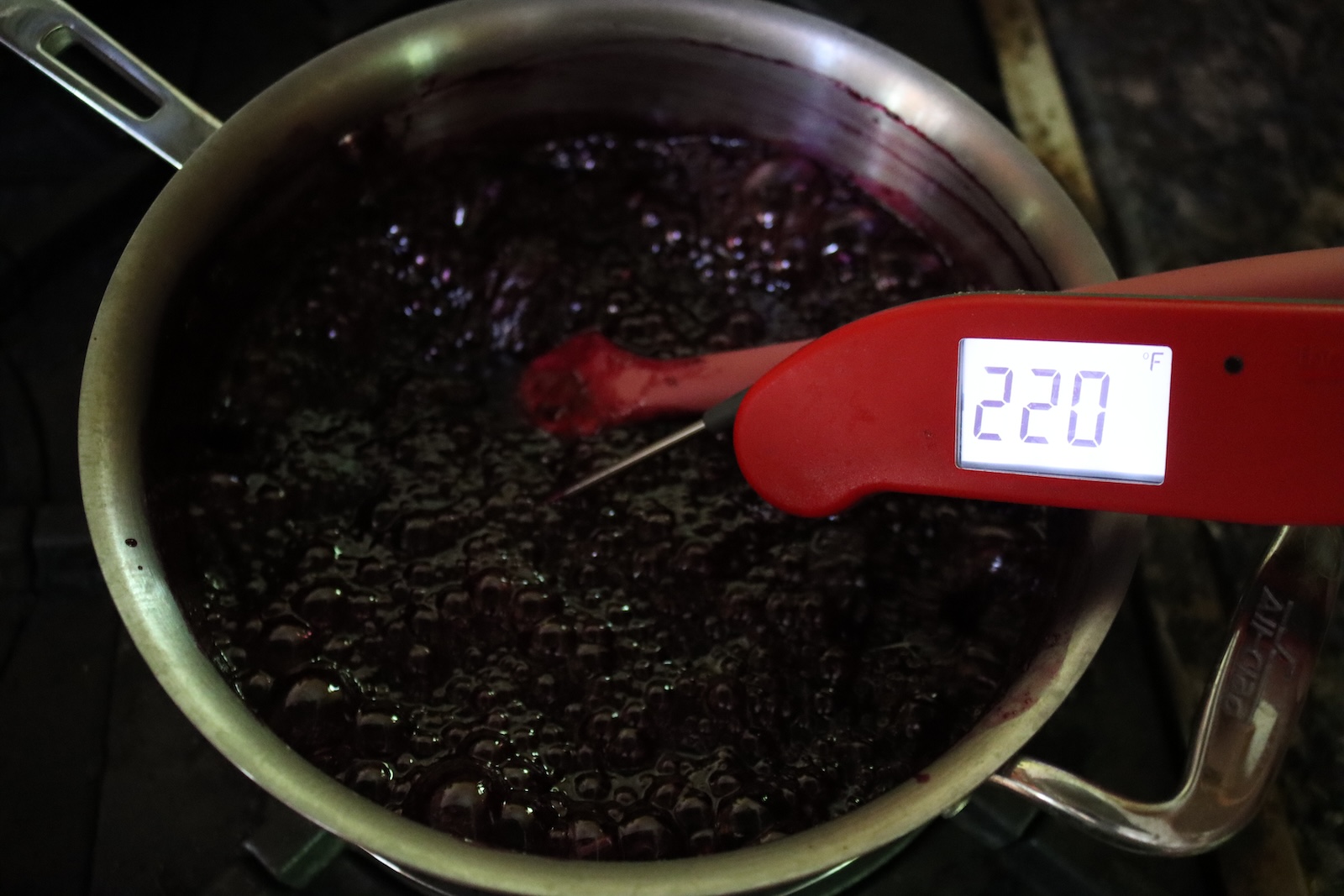
- Boil hard for 12 to 15 minutes, still stirring, until the jam hits 220 degrees F on an instant-read thermometer or wrinkles on a frozen plate.
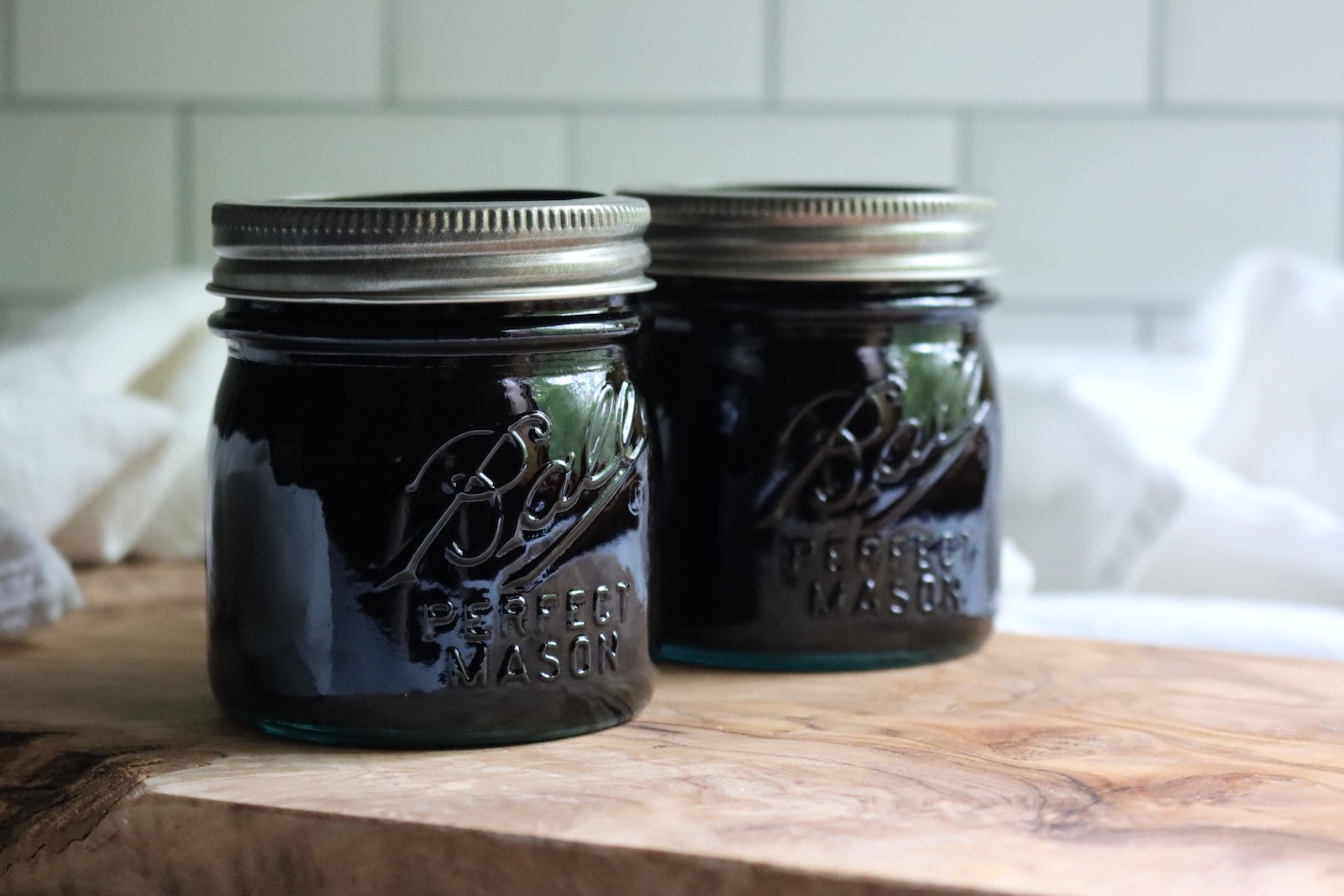
- Ladle the hot jam into prepared jars, leaving 1/4 inch headspace. Slide a bubble tool around the inside of each jar, wipe the rims, and apply lids and rings to fingertip tight.
Canning Wild Blueberry Jam
Get your water bath canner filled and heating before the jam goes on the stove. The jam is done long before a full canner comes to temperature. Wash the jars and keep them warm, and have lids, rings, and a canning funnel out and ready.
Fill to 1/4 inch headspace, run a bubble tool around the inside of each jar, and wipe the rims before the lids go on. A drip of jam on the rim is the most common reason a jar doesn’t seal, and it’s easy to miss on a batch this sticky.
Lower the jars into the canner so they’re under at least an inch of water. Process half pints for 10 minutes in a boiling water bath canner, adjusting for altitude. Turn off the heat and let them sit in the canner another 5 minutes before you lift them out. That rest keeps the jam from siphoning under the lids.
Cool the jars on a towel for 12 to 24 hours, undisturbed, before you check the seals.
Altitude Adjustments
For water bath canning, processing times increase at higher elevations:
- 0 to 6,000 feet: 10 minutes
- Above 6,000 feet: 15 minutes
Setting Notes
Jam sets as it cools, not in the pot. Don’t judge this one by how it looks going into the jars, because hot jam is always runny.
Give it a full 24 to 48 hours on the counter before you decide anything. Expect a soft, spoonable set. There isn’t much sugar in it, and wild blueberries make a jam that mounds on a spoon instead of standing up on its own.
The gel stage is 220 degrees F at sea level. It drops about 1 degree for every 500 feet, so at 2,500 feet you’re looking for roughly 215 degrees F.
If you’d rather not trust a thermometer, keep two small plates in the freezer. Drop a spoonful onto a cold one, put it back in the freezer for a minute, then push the edge with a fingertip. If it wrinkles, it’s done.
If it still hasn’t set after two days, it’s usually one of three things: you pulled it off the heat early, the fruit was very ripe and low on pectin, or the batch was too big. You can recook it, and my guide to troubleshooting jelly set covers how. You can also call it wild blueberry syrup and pour it on pancakes. Nobody here has ever complained.
Ways to Use Wild Blueberry Jam
Toast, first. It’s especially good on something a little salty, like a buttered English muffin or a biscuit. It’s also good stirred into plain yogurt or oatmeal, where a soft set helps, since it swirls through instead of sitting in a lump.
Because it’s loose, it goes anywhere you want jam to move. Warm a spoonful over vanilla ice cream or cheesecake. Spread it between cake layers, or spoon it over baked brie with a few toasted nuts. Thin it with a splash of vinegar and a pinch of salt and it glazes pork or duck.
With a yield this small, I mostly give it away, or open a jar on a morning when I want to think about the beach. Two jars go fast. This isn’t a jam that lasts long enough to get lost at the back of the pantry.
Storage and Shelf Life
After 12 to 24 hours, press the center of each lid. A sealed lid is firm and slightly concave and won’t flex.
Take the rings off before you store them, since a ring left on can hold a failed lid down and hide a jar that never sealed. Wipe the jars, label them with the date, and put them somewhere cool, dark, and dry. Sealed jam holds its quality for 12 to 18 months.
A jar that didn’t seal goes in the fridge and gets eaten in a week or two. You can reprocess it with a fresh lid if you catch it within 24 hours. Once a jar is open, keep it in the fridge and use it in 1 to 2 weeks. The jam darkens over a year on the shelf, and that’s normal.
You don’t have to can it at all with a batch this size. It keeps a few weeks in the fridge, or up to 6 months in the freezer. Use straight-sided freezer-safe jars, since a shouldered jar cracks as the jam expands up against the shoulder, and leave 1 inch of headspace.
More Ways to Preserve Wild Blueberries
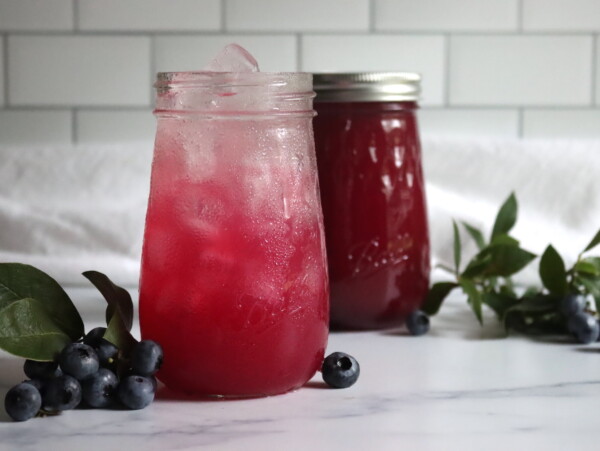
Jam isn’t the only thing to do with them, and the flavor comes through in all of these. Blueberry syrup is what I make most after jam. Blueberry butter cooks down long and slow into something closer to a spread. If you have more berries than patience, canning blueberry juice is quick, and it gives you a base for blueberry jelly later.
For berries you want whole, there’s canning blueberries in syrup and canning blueberry pie filling for winter baking. Pickled blueberries go on a cheese board. The rest are in my fruit canning recipes. And if you have a real glut, blueberry wine takes a lot of fruit, and it’s delicious with wild blueberries.
Yield Notes
Two pint clamshells came to right around 1 1/4 pounds and measured out to 4 cups of whole berries. That gave me a hair over 2 half-pint jars. Your count can shift by a partial jar depending on how juicy the fruit is and how far you cook it down, so have a third jar washed. A longer cook means firmer jam and less of it.
This halves cleanly, and since the base batch is small, it doubles without much trouble, about 4 half pints from 8 cups of berries. Add a few minutes of boiling at the larger volume. Don’t go past double. A deep pot takes so long to reach the gel stage that the fruit overcooks before it sets.
Wild Blueberry Jam FAQs
Pectin, frozen berries, and cutting the sugar are what come up most on a no-pectin jam.
No. Wild blueberries are small, so the skin is a bigger share of each berry, and that’s where most of the pectin is. The lemon juice adds a little more. Cooking to 220 degrees F is what sets it, and no boxed pectin goes in.
Usually one of three things: you pulled it off the heat before it reached 220 degrees F, the fruit was very ripe and low on pectin, or the batch was too big. Give it 24 to 48 hours to finish setting, and if it still hasn’t, read through my guide on troubleshooting jelly set.
Yes, and frozen is what you’ll find most of the year, since almost the whole Maine crop is frozen at harvest. They go in straight from the bag, no thawing. They give up their juice a little faster than fresh, so the jam may come together a minute or two sooner.
You can. Sugar handles flavor, set, and yield here, not preservation, since the acidity of the blueberries is what makes it safe to water bath can. Cutting it means a longer cook, a softer set, and a little less jam. For a true low sugar version that still sets firmly, use Pomona’s pectin instead.
Sealed jars keep about 12 to 18 months in a cool, dark place. A jar that didn’t seal goes in the fridge and gets used within a week or two. Once open, refrigerate and use within 1 to 2 weeks.
Blueberry Canning Recipes
If you came home with more berries than this batch takes, here’s where the rest go.
If you tried this Wild Blueberry Jam recipe, or any other recipe on Creative Canning, leave a ⭐ star rating and let me know what you think in the 📝 comments below!
And make sure you stay in touch with me by following on social media!
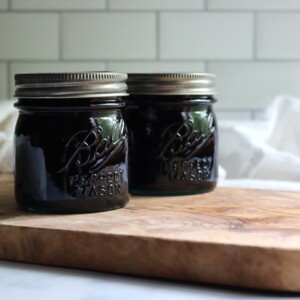
Wild Blueberry Jam
Equipment
- Canning Jars, Lids and Bands
Ingredients
- 4 cups wild blueberries, rinsed and sorted
- 1 1/2 cups granulated sugar
- 1/4 cup lemon juice, optional, for flavor and set, fresh or bottled
Instructions
- Wash the jars and keep them warm, and fill the water bath canner and set it over heat so it comes up to a boil while you cook the jam. Have lids, rings, and a funnel laid out and ready.
- Rinse the wild blueberries and sort through them, removing any stems, leaves, or berries that have gone soft or shriveled. Frozen wild berries go into the pot straight from the bag without thawing.
- Add the blueberries, lemon juice, and sugar to a wide, heavy-bottomed pot all at once. There’s no need to macerate the fruit first or hold the sugar back.
- Bring the mixture to a boil over high heat, stirring constantly and mashing the berries lightly against the side of the pot as they soften so they release their juices and the sugar dissolves.
- Keep the jam at a hard boil, stirring the whole time, until it reaches the gel stage at 220 degrees F on an instant-read thermometer. Expect this to take 12 to 15 minutes once the jam has come to a full boil. If you’d rather not use a thermometer, drop a spoonful onto a frozen plate, return it to the freezer for a minute, and push the edge with a fingertip. If it wrinkles and holds its shape, it’s done.
- Ladle the hot jam into the prepared jars, leaving 1/4 inch headspace. Slide a bubble tool around the inside of each jar to release trapped air, wipe the rims clean, center the lids, and apply the rings to fingertip tight.
- Lower the jars into the boiling water bath canner, making sure they’re covered by at least 1 inch of water, and process for 10 minutes, adjusting for altitude (see notes). Turn off the heat and let the jars stand in the canner for 5 minutes before removing them.
- Cool the jars undisturbed on a towel-lined counter for 12 to 24 hours, then remove the rings and check the seals before labeling and storing.
Notes
- 0 to 6,000 feet: 10 minutes
- Above 6,000 feet: 15 minutes
Nutrition
Nutrition information is automatically calculated, so should only be used as an approximation.
Looking for another small batch to put up this week? Here are more jam canning recipes, and the rest of my water bath canning recipes if you have the canner out anyway.
Jam Canning Recipes
More jams that set on their own fruit, no box required.
Find the perfect recipe
Searching for something else? Enter keywords to find the perfect recipe!

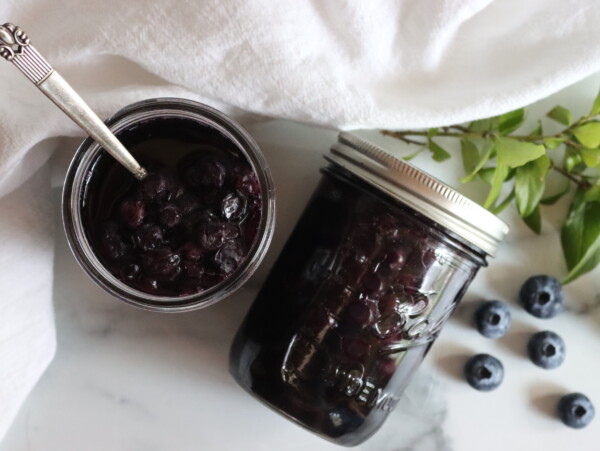
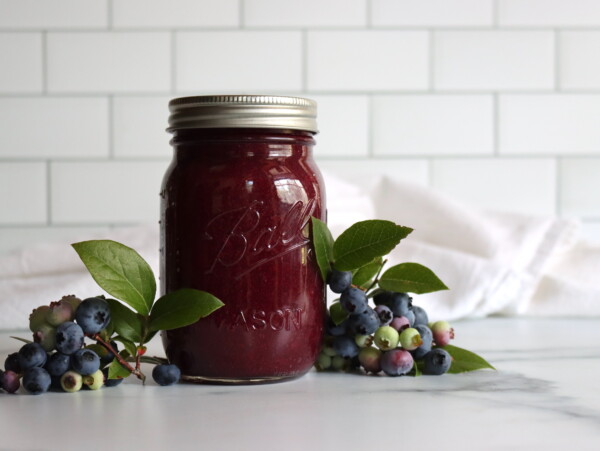
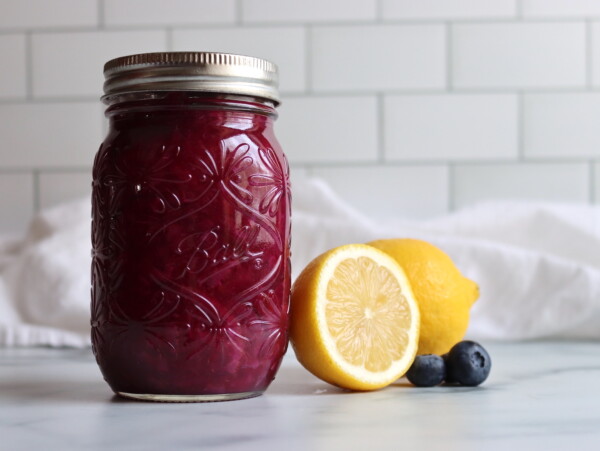
Wild blueberries have such a short season, and I really enjoyed being able to preserve a bit of our summer Maine coast trip. The flavor is intense and wonderful, and I’m so happy with this one.