This post may contain affiliate links. Please see our disclosure policy.
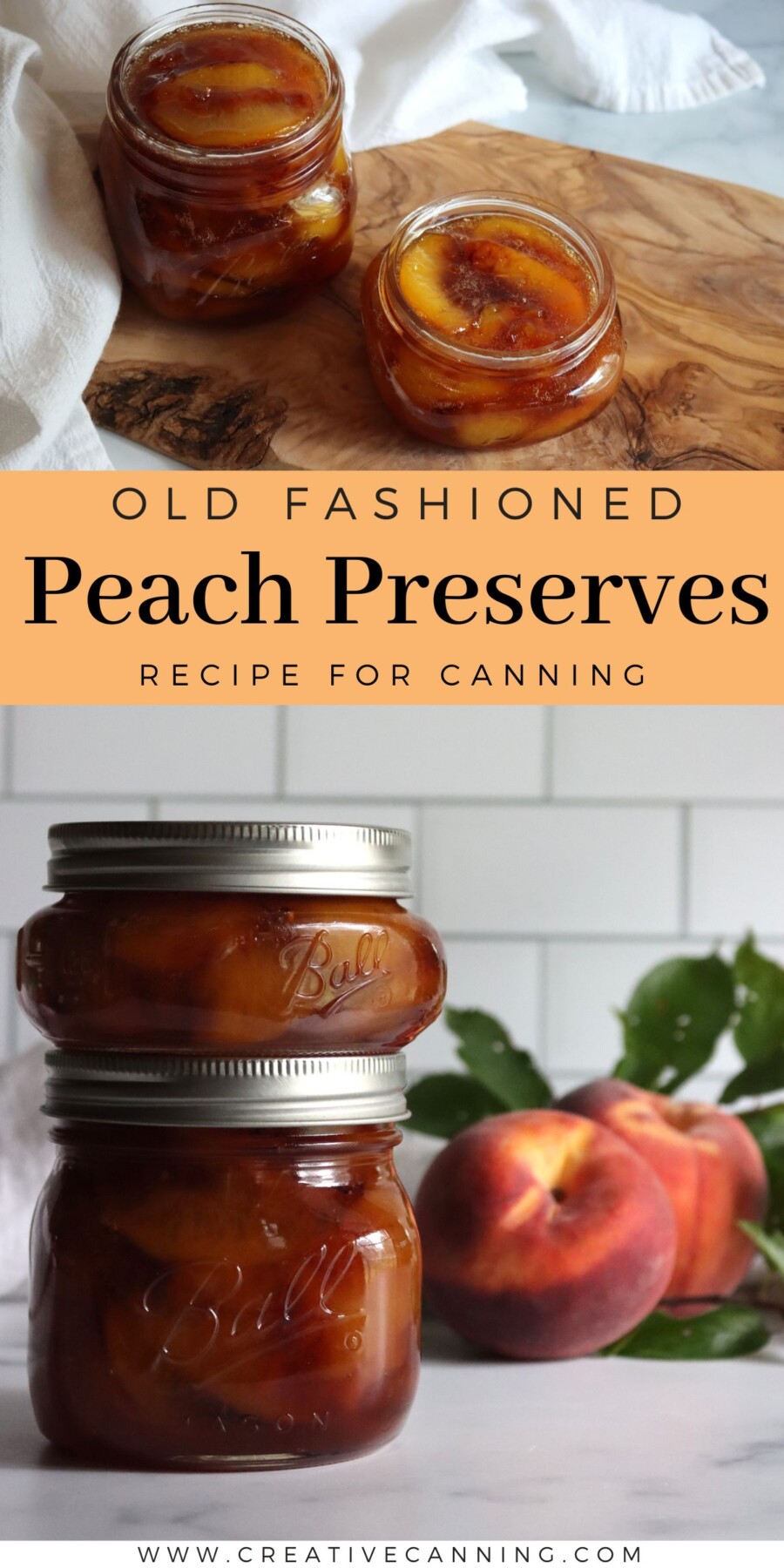
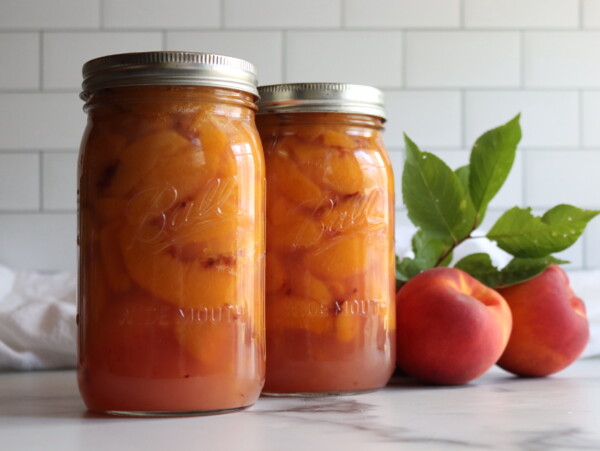
Peach preserves is an old-fashioned fruit preserve that keeps the fruit in slices, suspended in a rich syrup. You get real pieces of summer peach on your toast instead of a smooth spread.
It’s a simple three-ingredient recipe, no added pectin required. Just peaches, sugar, and a little lemon juice for balance.
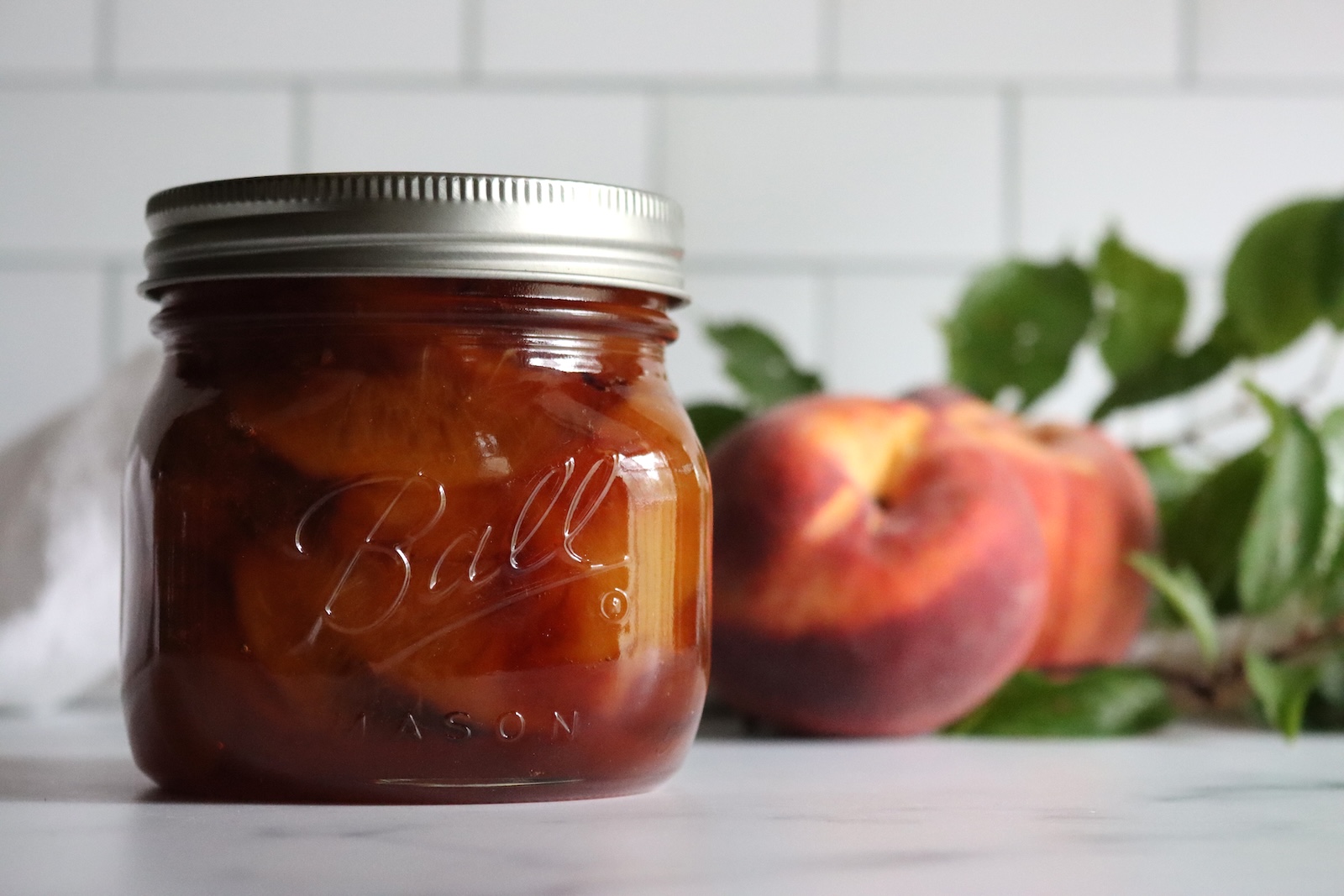
Table of Contents
- Notes from My Kitchen
- Quick Look at the Recipe
- What Are Peach Preserves?
- Ingredients for Peach Preserves
- Why Yellow Peaches Only
- Low Sugar Options
- How to Make Peach Preserves
- Canning Peach Preserves
- Altitude Adjustments
- Setting Notes
- Ways to Use Peach Preserves
- Storage and Shelf Life
- Yield Notes
- Peach Preserves FAQs
- More Ways to Preserve Peaches
- Peach Canning Recipes
- Old Fashioned Peach Preserves Recipe
- Jam Canning Recipes
This recipe has been reviewed for safety and accuracy by a Master Food Preserver certified through the University of Cornell Cooperative Extension.
Preserves are a bit different than jams or jellies. They’re old-fashioned high-sugar recipes that preserve pieces of fruit in a clear, thick syrup, so you get two distinct textures, and incredible peach flavor. It’s not the same even, smooth texture as jam or jelly, and it is what many people remember lining the shelves of memaw’s house growing up.
The method comes from Linda Ziedrich’s The Joy of Jams, Jellies, and Other Sweet Preserves. Linda’s recipes are always spot on, and she is a real student of accurate traditional methods. She’s also a stickler for canning safety, so I know that her recipes are always spot on in terms of flavor, accuracy, and canning safety.
The key is to slice the fruit and rest it in sugar overnight instead of mashing it, which is the difference between regular peach jam and a classic peach preserve recipe.
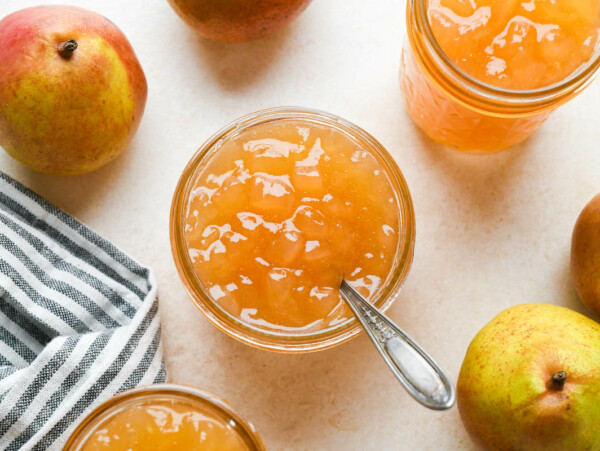
The same process is used to make other old-fashioned preserves, like strawberry preserves and pear preserves.
And, keep in mind, if you’re buried in peaches, I have even more peach canning recipes to fill your pantry.
Notes from My Kitchen

Vermont isn’t peach country, though we do have a few cold-hardy zone 4 trees that fruit in a good year. Most summers, I buy peaches by the crate at our food coop and spend a long afternoon working through them. The first year I made preserves this way, I used my tall stockpot. A big batch of fruit seemed to call for a big pot. I stood over it the better part of an hour and the peaches broke apart long before the syrup thickened.
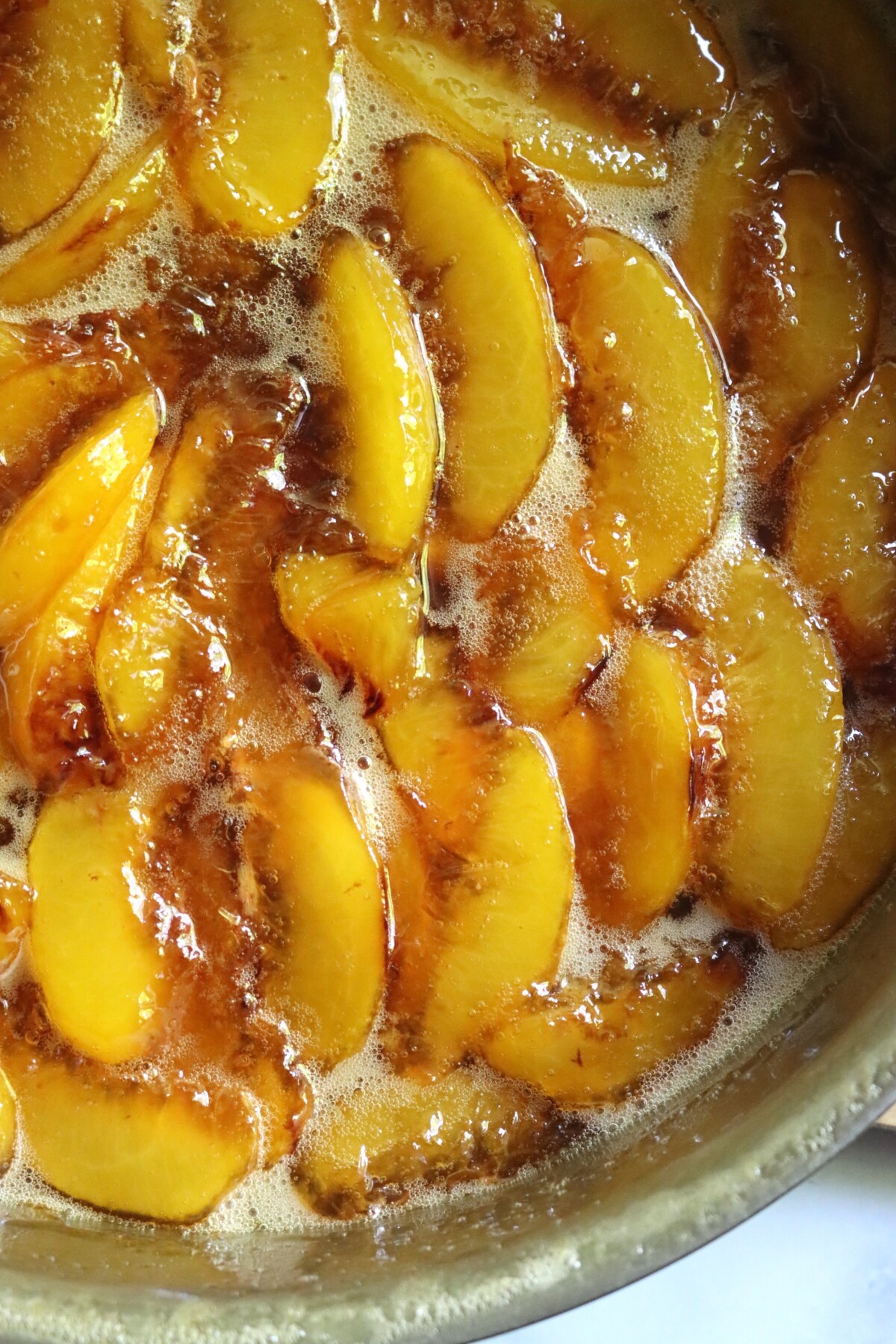
Linda’s method is the perfect fix, and this recipe really does call for a wide pan and a small batch. I switched to my widest stainless skillet the next time, and the same amount of fruit came to the gel stage in half the time, with the slices still intact. That’s the whole recipe, honestly. Everything else is peaches and sugar.
Quick Look at the Recipe
- Recipe Name: Old Fashioned Peach Preserves
- Recipe Type: Fruit preserves, no added pectin
- Canning Method: Water Bath Canning
- Prep Time: About 20 minutes, plus an overnight rest in sugar
- Cook Time: About 40 minutes
- Canning Time: 10 minutes for half pints
- Yield: About 4 to 5 half pints
- Jar Sizes: Half pints or quarter pints
- Headspace: 1/4 inch
- Ingredients Overview: Yellow peaches, sugar, and bottled lemon juice
- Safe Canning Recipe Source: Adapted from The Joy of Jams, Jellies, and Other Sweet Preserves by Linda Ziedrich, and follows NCHFP guidance for jams and jellies
- Difficulty: Easy, but spread over two days
- Similar Recipes: Peach preserves are made the same way as the other old-fashioned preserves on this site, like old-fashioned cherry preserves and old-fashioned pear preserves. If you have a crate to work through, try other peach canning recipes like peach butter or peach jelly.
What Are Peach Preserves?
Preserves are fruit kept in pieces, suspended in a thick syrup, rather than broken down into a spread. Jam is crushed or mashed fruit. Jelly is strained juice with no fruit in it at all. Preserves sit at the chunky end of that line.
The way you get there’s by resting the sliced fruit in sugar first. The sugar pulls juice out of the peaches overnight and firms the slices at the same time, so they hold together in the pot instead of collapsing. You end up cooking the syrup rather than the fruit, which is a gentler process than it sounds.
Nothing about that changes the safety math. The sugar, the acid, the jar size, and the canning time are the same whether you mash the peaches or slice them. All you’re changing is the texture in the jar.
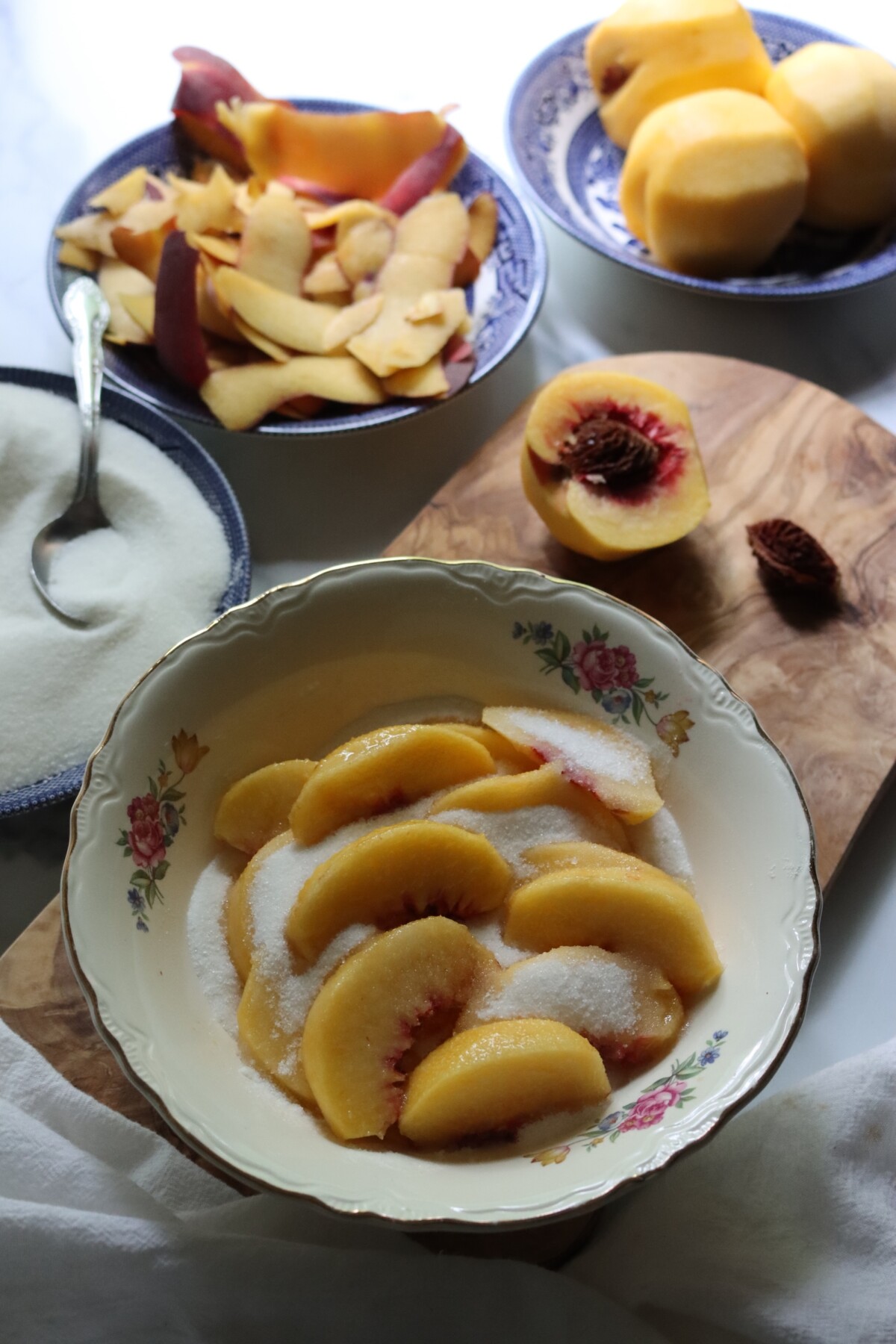
Ingredients for Peach Preserves
The recipe is only three ingredients, and it’s more about the process than a long ingredient list.
- Peaches: Yellow-fleshed only, ripe enough to smell like peaches but still firm enough to slice cleanly. A soft, dripping peach makes a good jam and a poor preserve, because the slices fall apart in the syrup. Freestone varieties are much less work than clingstone, since the halves twist right off the pit. A few slightly underripe peaches in the mix are a small bonus, because underripe fruit carries more natural pectin. Frozen peaches work if they were peeled and sliced before freezing, and they give up their juice faster, so expect a shorter maceration and a slightly softer slice.
- Sugar: Plain granulated white sugar. It draws the juice out of the fruit overnight, firms the slices, and carries the set. This recipe already runs about 12 percent below the bottom of the USDA sugar range for a no-pectin fruit spread, which is part of why it tastes so much like peach. Less sugar means a longer cook, a softer set, and fewer jars, but it’s not a safety question. I get into that in my post on sugar in canning recipes.
- Bottled lemon juice: This is the ingredient that doesn’t move. Peaches sit close enough to the line that tested peach spreads specify added acid, and bottled juice is used because its acidity is consistent from bottle to bottle. Fresh lemons vary by fruit and by season. Use the full amount, and use bottled, like Santa Cruz organic lemon juice. It also brightens the flavor and helps the set, which is a nice bonus for something you were going to add anyway.
For equipment, the pan matters more than anything else on this list. You want the widest, heaviest-bottomed pan you own, and a large skillet beats a stockpot every time.
Have your jars washed and the canner heating before the syrup goes on the heat, because the last ten minutes move quickly.
Why Yellow Peaches Only
Use yellow-fleshed peaches for this recipe. Not white-fleshed, and not the white-fleshed flat peaches either, however good they taste fresh.
White peach cultivars were bred for sweetness, and they run measurably lower in acid than yellow ones. Tested canning recipes are written around the acidity of yellow fruit. That’s why Ball prints “do not use white flesh peaches” right on their peach recipes, and why every current tested formula says the same. It’s one of the few ingredient rules in canning that has nothing to do with flavor.
If you’re also canning peaches in syrup this week, the same rule applies there.
Low Sugar Options
The high sugar content is what makes preserves work. This is a lot of sugar, and there’s no way to make this work as a low-sugar recipe. The sugar draws the liquid out of the fruit in the overnight maceration, creating the syrup but also firming up the peach slices.
Without all that sugar, the peaches will fall apart during cooking, and you’ll get a chunky jam instead of a preserve.
If you can’t handle the high-sugar nature of preserves, stick with jam recipes and jelly recipes, which are easy to switch to low-sugar options by using Pomona’s pectin.
How to Make Peach Preserves
Start the day before you hope to can, as this is a two-day recipe. The peaches go into sugar in the evening and into the pan the next morning, which sounds fussy and takes about twenty minutes of actual work.
The working ratio is 2 1/2 pounds of peeled and pitted peaches to 3 1/2 cups of sugar and 3 tablespoons of bottled lemon juice. That’s roughly 3 to 3 1/2 pounds of peaches as purchased, or about 6 to 8 medium, or 5 to 6 large ones.
Don’t scale it up. Two and a half pounds of fruit at a time is the ceiling on this one, and it’s the ceiling for a reason.
Peel, Slice, and Macerate the Peaches
Dip the peaches into boiling water for about a minute, then lift them out and slip the skins off with your fingers. If you’re only doing a few, as I am, a sharp paring knife is faster than heating a pot of water.
Peaches brown fast once they’re peeled, so work in batches and get each one into the sugar as you go.
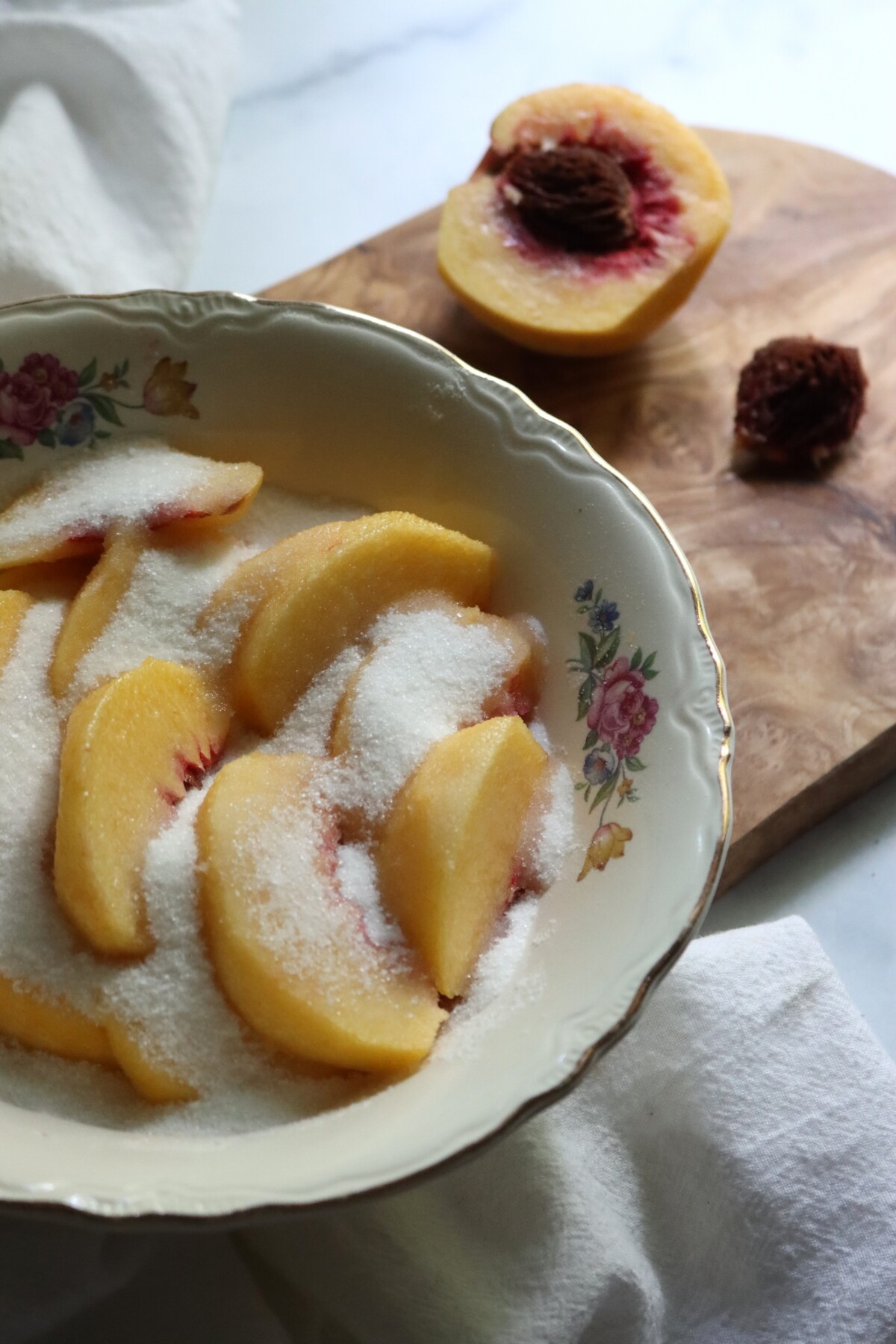
Cut the peaches off the pit in slices about a half inch thick. Layer them into a bowl with the sugar and the lemon juice, cover it, and put it in the refrigerator overnight. Twelve hours is right, and anything from 4 to 18 hours will work.
Cook the Preserves
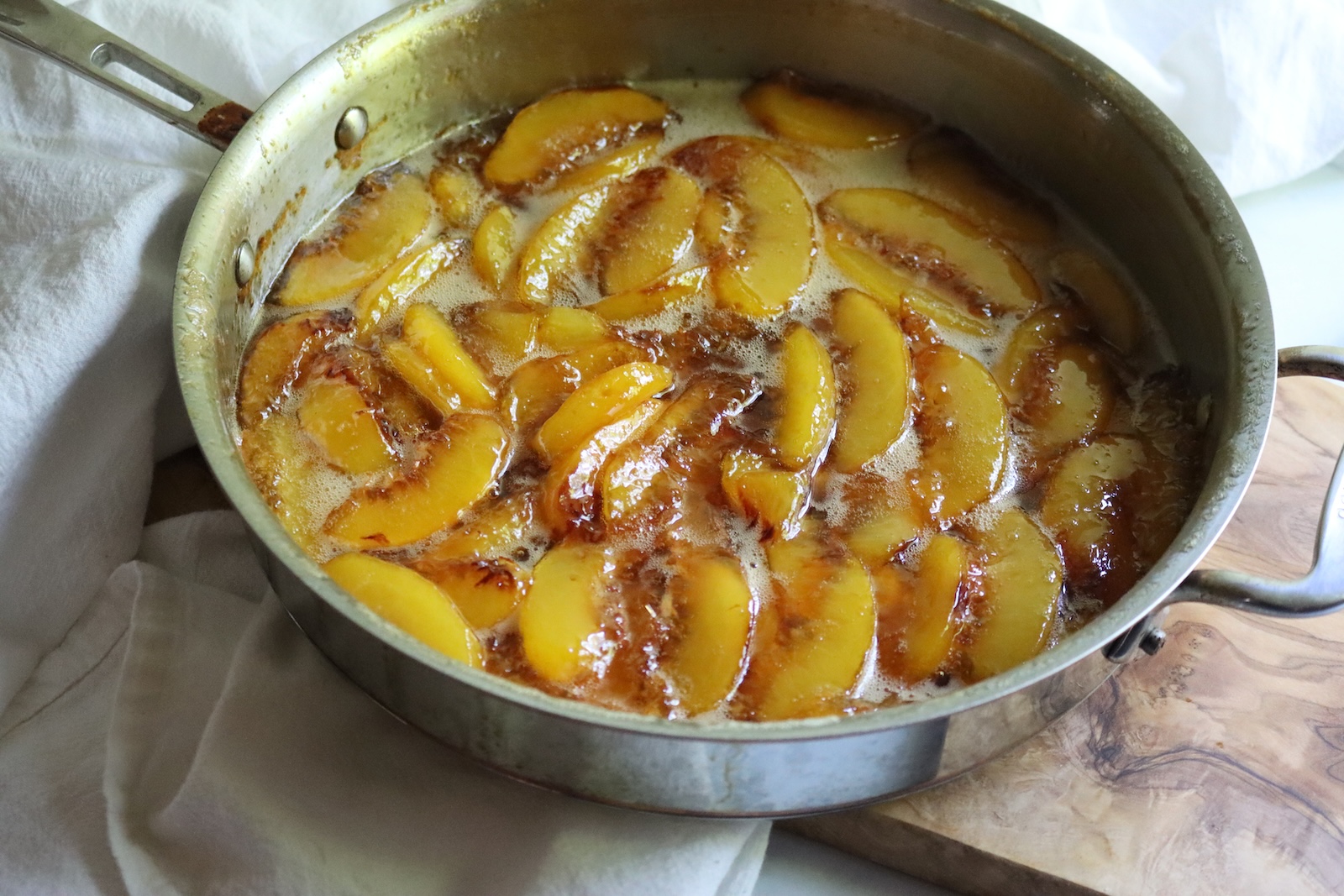
In the morning, the fruit will be sitting in a lot of clear syrup, and the slices will feel firmer than they did going in. Scrape it all into your widest heavy-bottomed pan.
Nothing should be more than an inch or two deep.
Heat it over medium, stirring gently, until every grain of sugar has dissolved. Don’t let it boil before that happens, or you can get sugar crystals in the finished jars.
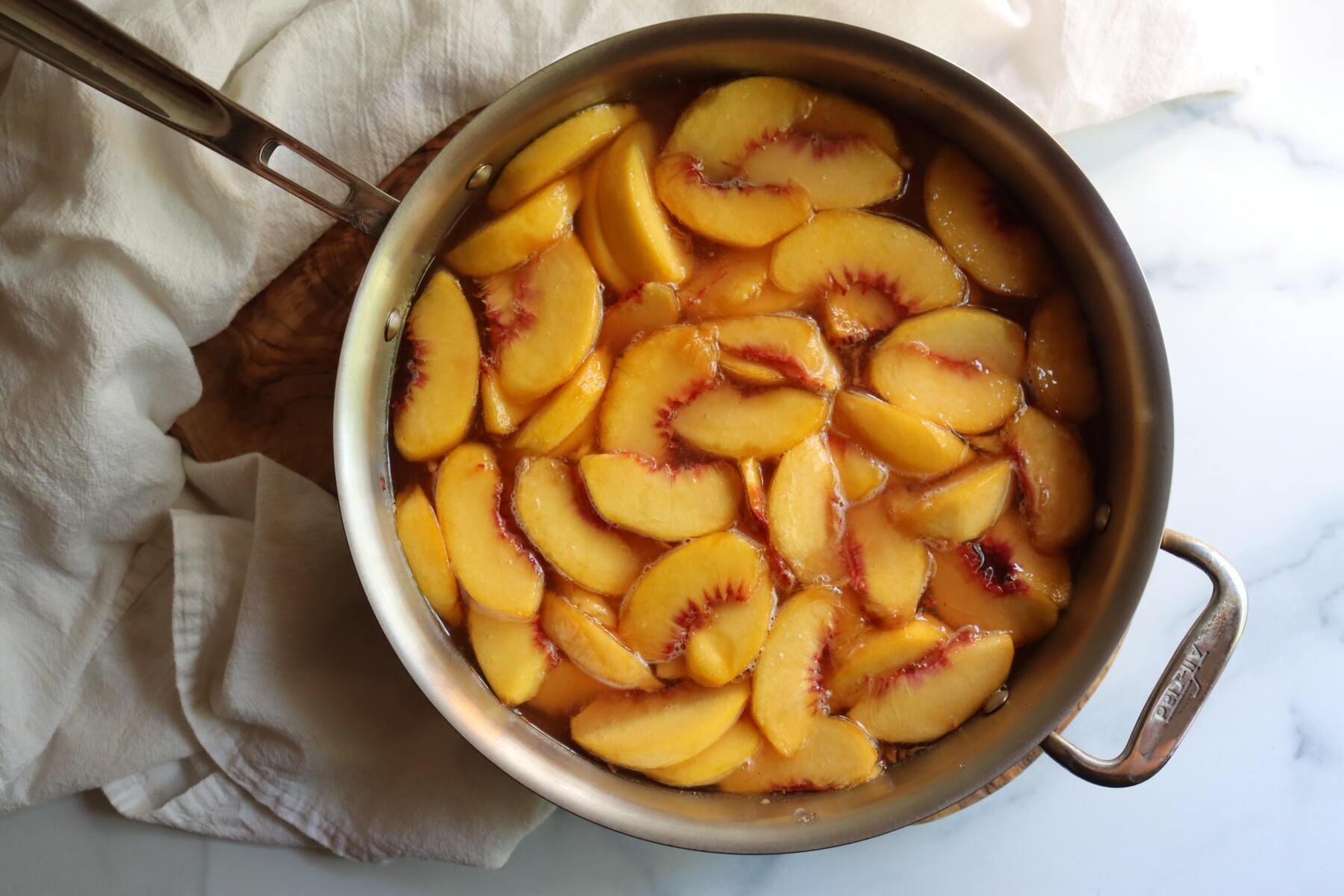
Once the syrup is clear, turn the heat up to medium-high and let it come to a hard boil.
From here it needs your attention. Stir often enough to keep the bottom from catching, and stir gently enough that you aren’t breaking up the slices.
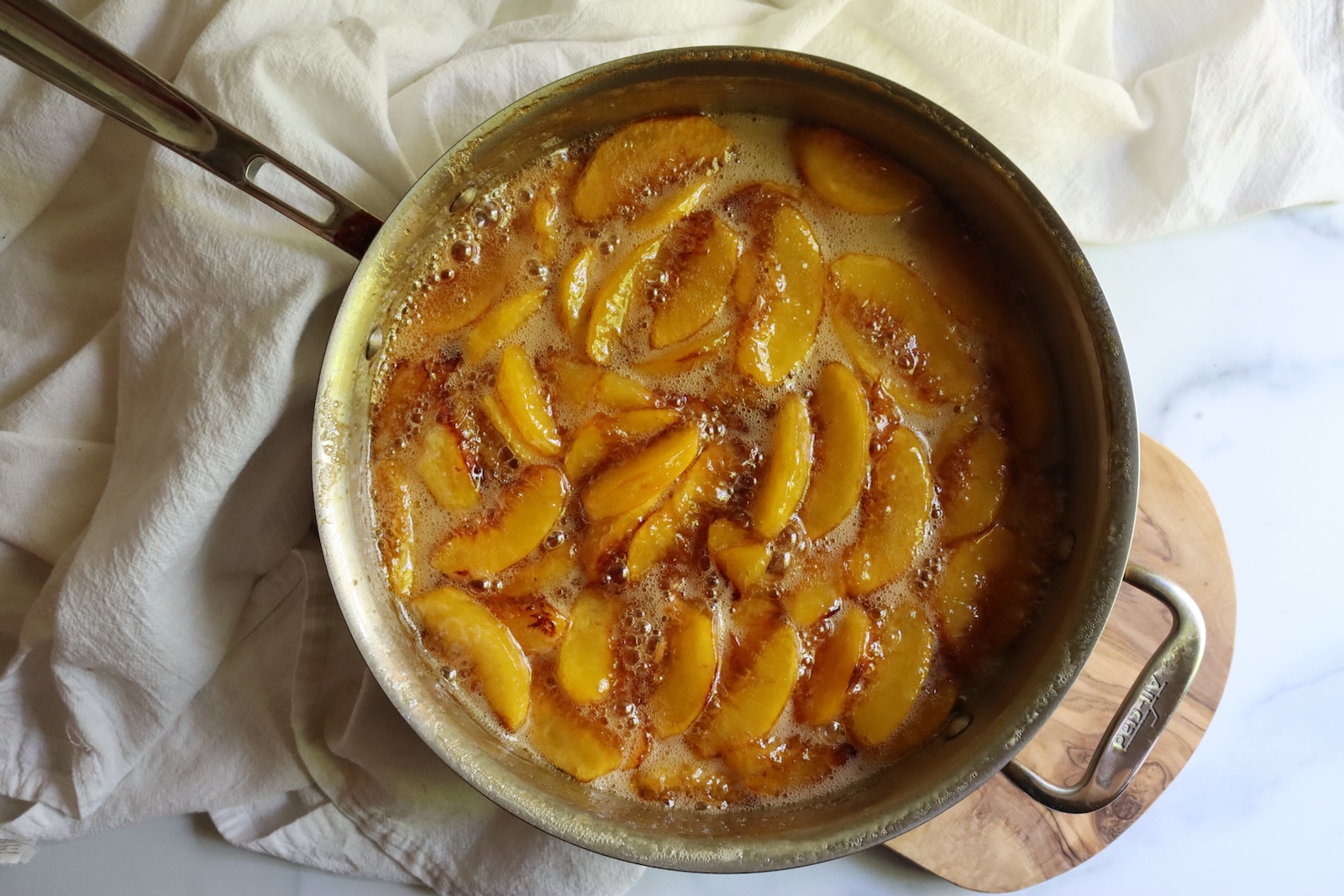
A wide pan will get you to the gel stage in something like 25 to 35 minutes of hard boiling, and a narrow one can take twice that.
Test the Gel Stage
The gel stage is 220 degrees F at sea level, and an instant-read thermometer catches it without any guessing. It drops about 1 degree for every 500 feet of elevation, so at 2,500 feet you’re looking for roughly 215 degrees F.
If you’d rather not trust a thermometer, keep two small plates in the freezer. Drop a spoonful of the syrup onto a cold plate, put it back in the freezer for a minute, then push the edge with a fingertip. A wrinkled skin means it’s done.
Canning Peach Preserves
Get your water bath canner filled and heating before the pan goes on the stove. A canner full of water takes far longer to boil than the preserves take to cook. Wash the jars, keep them warm, and lay out your lids, rings, and a canning funnel.
Fill the jars to 1/4 inch headspace, working to get a fair share of slices and syrup into each one. Run a bubble tool around the inside of each jar, then wipe the rims clean before the lids go on. A drip of syrup on the rim is the most common reason a jar doesn’t seal, and it’s easy to miss on something this sticky.
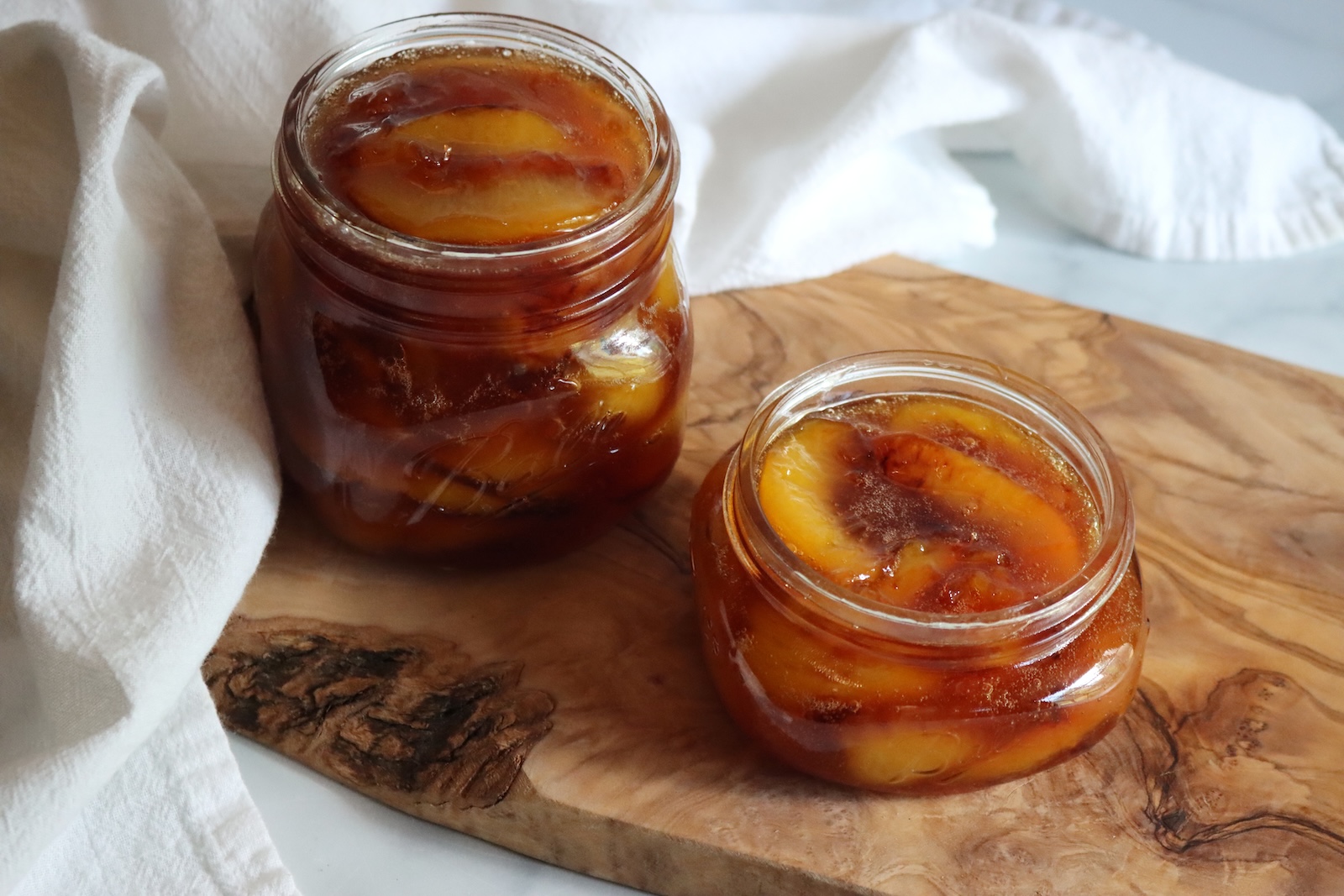
Lower the jars into the canner so they’re covered by at least an inch of water. Process half pints for 10 minutes in a boiling water bath canner, adjusting for altitude. Quarter pints take the same 10 minutes.
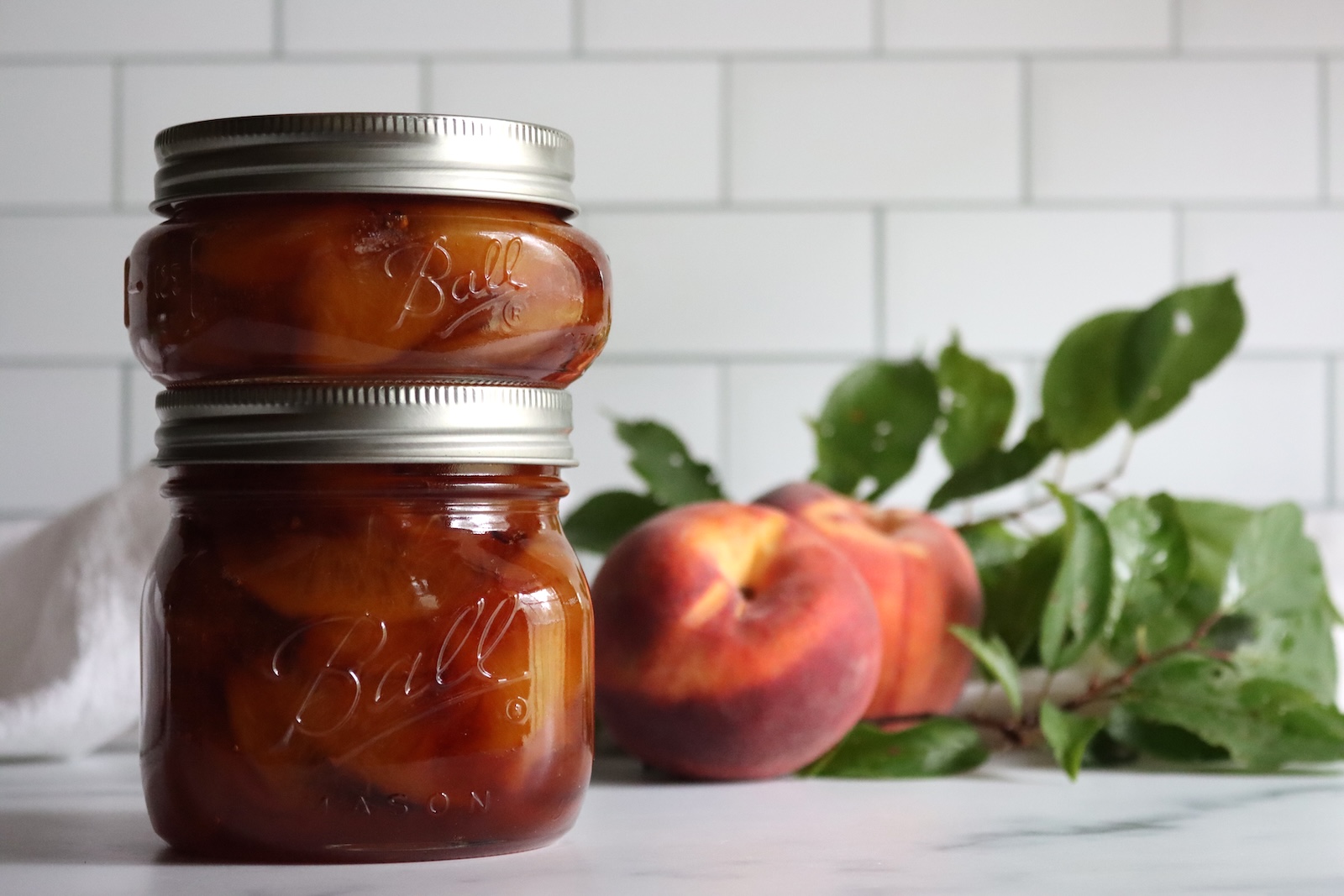
Turn the heat off when the time is up, and let the jars sit in the canner another 5 minutes before you lift them out. That short rest keeps the syrup from siphoning out under the lids. Cool the jars undisturbed on a towel for 12 to 24 hours before you check the seals.
Altitude Adjustments
For water bath canning, processing times increase at higher elevations:
- 0 to 6,000 feet: 10 minutes
- Above 6,000 feet: 15 minutes
Setting Notes
Preserves set as they cool, not in the pan, so don’t judge these by how they look going into the jars. Hot syrup is always runny.
Give them a full 24 to 48 hours on the counter before you decide anything. Expect a soft set with the slices suspended in a thick syrup, closer to a spoonable preserve than to a stiff jam. That’s what this style is supposed to be, and the low sugar makes it a little softer still.
Peaches also have less natural pectin than apples or currants, so the syrup does more of the work than the fruit does. Slightly underripe peaches help, and so does the full amount of lemon juice.
If it still hasn’t set after two days, look at three things. Pulling the pan off a little early, very ripe fruit, or a batch scaled up past the limit. You can recook it, and my guide to troubleshooting jelly set walks through how. You can also relabel it as peach syrup and pour it over pancakes, which is what happens at my house about a third of the time.
Ways to Use Peach Preserves
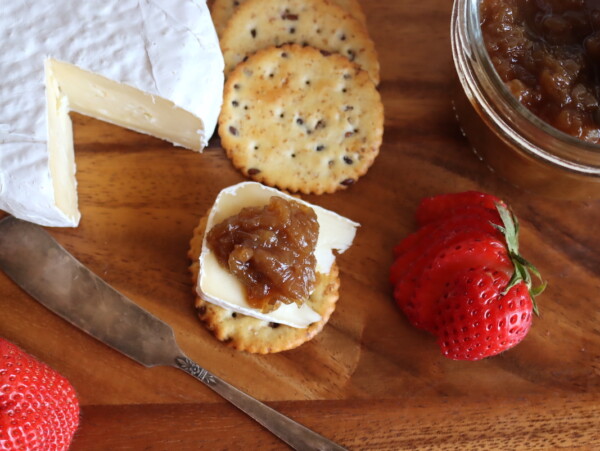
Toast and biscuits first, and the slices are the reason to make preserves instead of jam. A buttered biscuit with a spoonful of this on it is most of the argument. It’s also good on a cheese board next to something sharp, or stirred into plain yogurt where the pieces stay recognizable.
Because it’s on the loose side, it works anywhere you want a fruit spread that moves. Warm a jar and spoon it over vanilla ice cream, pound cake, or a bowl of oatmeal. It fills a thumbprint cookie nicely, and it makes a fast glaze for pork or chicken with a splash of vinegar and a pinch of salt stirred in.
The use I get the most out of is the least clever one. A split biscuit, a little cream, and a spoonful of this in January.
Storage and Shelf Life
After the jars have cooled 12 to 24 hours, check the seals by pressing the center of each lid. A sealed lid is firm, slightly concave, and won’t flex under your finger.
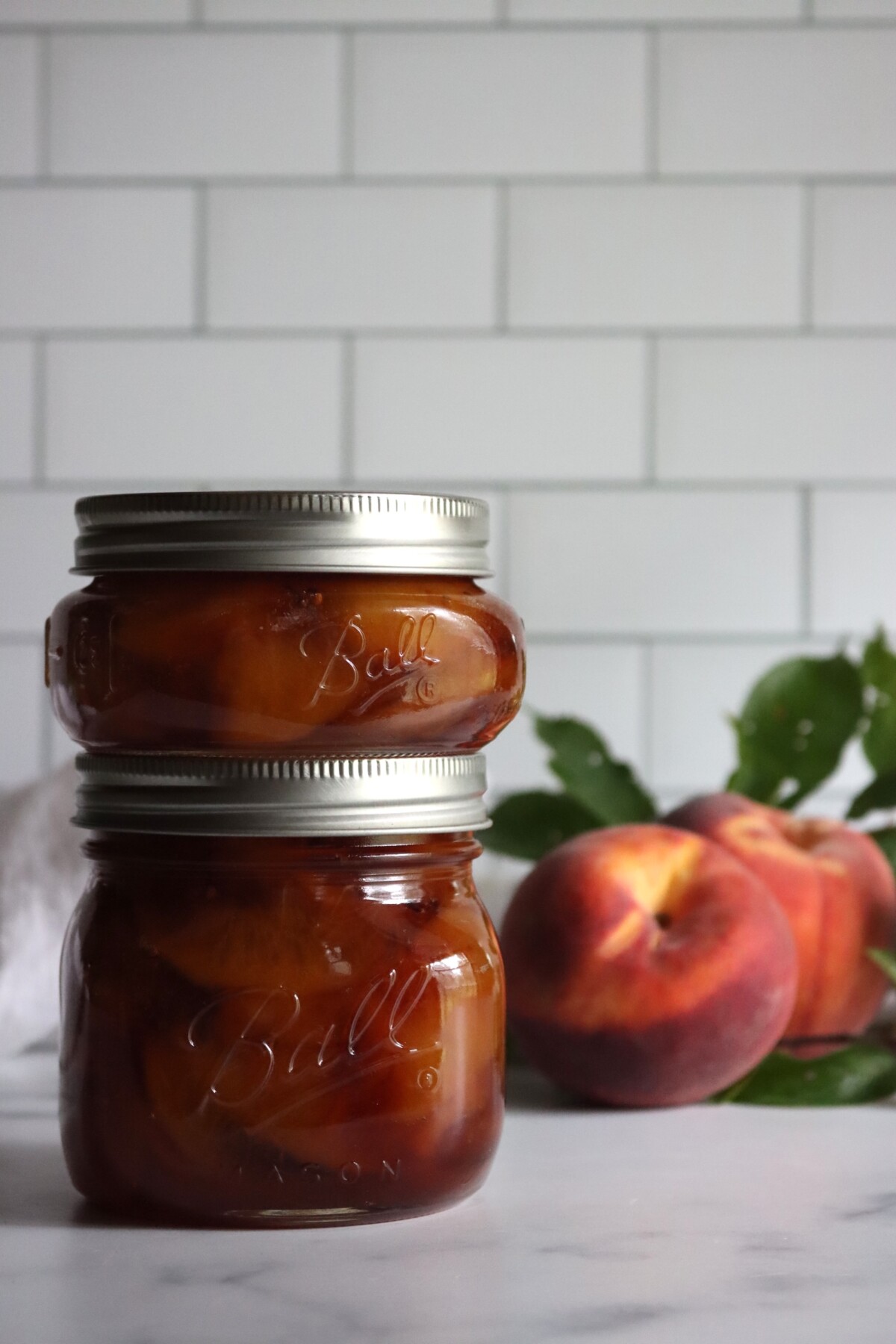
Take the rings off before you put the jars away. A ring left on can hold a failed lid in place and hide a jar that never sealed. Wipe the jars down, label them with the date, and store them somewhere cool, dark, and dry. Sealed preserves hold their quality for 12 to 18 months, and the color darkens slowly over that time.
A jar that didn’t seal goes into the refrigerator and gets eaten within a week or two. You can also reprocess it with a fresh lid if you catch it within 24 hours. Once a jar is opened, keep it refrigerated and use it within 1 to 2 weeks.
You don’t have to can these at all. They keep in the refrigerator for a few weeks, or in the freezer for up to 6 months.
For the freezer, use straight-sided freezer-safe jars. A shouldered jar cracks as the preserves expand up against the shoulder. Leave 1 inch of headspace so there’s room to move.
Yield Notes
About 3 to 3 1/2 pounds of peaches as purchased comes to 2 1/2 pounds peeled and pitted, which is 5 to 6 cups of slices. That gives you 3 to 4 half pints. Where you end up in that range depends on how juicy the fruit was and how far you cooked it down, so wash an extra jar and have it ready. A longer boil means a firmer preserve and slightly less of it.
This one halves cleanly, but it doesn’t double. Two and a half pounds of fruit is Ziedrich’s own stated limit, and it’s the reason the recipe works at all. Peaches carry a lot of water, and a deeper pan can’t drive it off fast enough. A doubled batch either refuses to set, or cooks so long the slices break down. Make two separate batches back-to-back instead.
Peach Preserves FAQs
Frozen fruit, honey, and the difference between preserves and jam are the questions I get most on peach posts. Here are the answers.
No. The preserves set by cooking the syrup to the gel stage at 220 degrees F, using the natural pectin in the fruit with a boost from the lemon juice. Peaches carry less pectin than apples or currants, so the set is on the soft side, and slightly underripe fruit helps.
The most common reasons are pulling the pan off the heat before it reached the gel stage at 220 degrees F, using very ripe fruit with less natural pectin, or scaling the batch up past 2 1/2 pounds of peaches. Give it 24 to 48 hours to finish setting, and if it still hasn’t, read through my guide on troubleshooting jelly set.
No, use yellow-fleshed peaches. White cultivars were bred for sweetness and run lower in acid, and tested peach canning recipes are written around the acidity of yellow fruit. Ball prints the same restriction on their peach recipes. Eat the white ones fresh instead.
Yes, as long as they were peeled and sliced before freezing and they’re a yellow variety. Thaw them in the refrigerator and use the juice that comes off them, then macerate as written, though it will take less time since freezing already broke the cells down. The slices come out a little softer than fresh.
The fruit. Jam is crushed or mashed, so it spreads smooth, while preserves are sliced and rested in sugar first so the pieces stay whole in the jar. The sugar, the acid, and the canning time are the same either way, so it comes down to the texture you want.
More Ways to Preserve Peaches
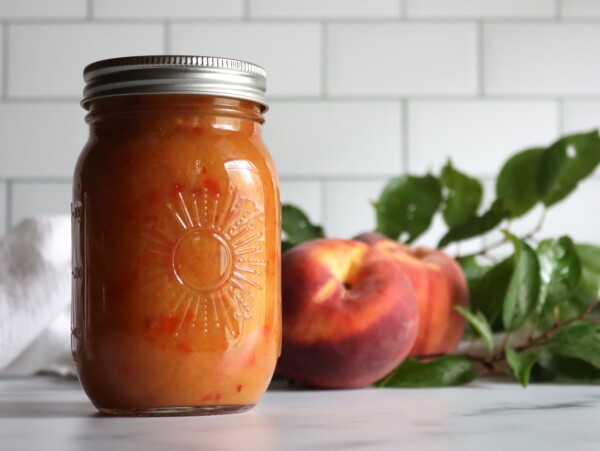
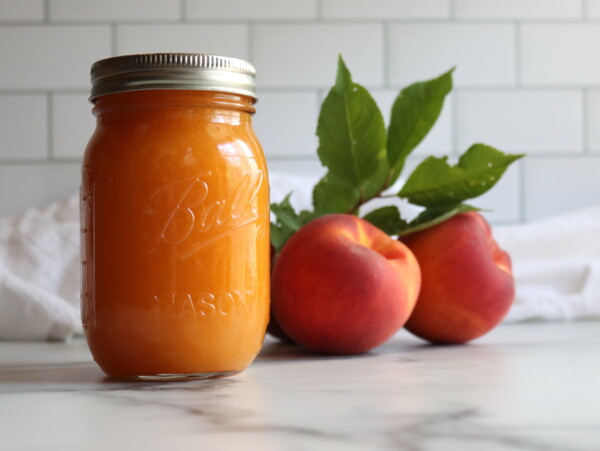
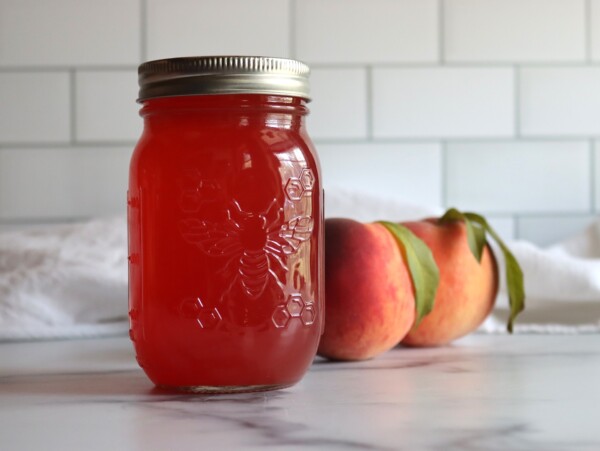
A crate of peaches goes further than one recipe. Peach butter cooks down long and slow into something smoother than a preserve, and peach jelly is the one to make with the peels and pits you’d otherwise compost. Peach syrup and peach nectar both use fruit that’s too soft to slice.
For fruit you want to keep in pieces, there’s canning peaches in syrup and canning peach pie filling for winter baking. Peach applesauce is a good use for a half crate of seconds. On the savory side, try peach salsa or pickled peaches, and there’s a peach lemonade concentrate for hot afternoons. The rest of the orchard is in my fruit canning recipes.
Peach Canning Recipes
If the crate is still full, here’s where the rest of it goes.
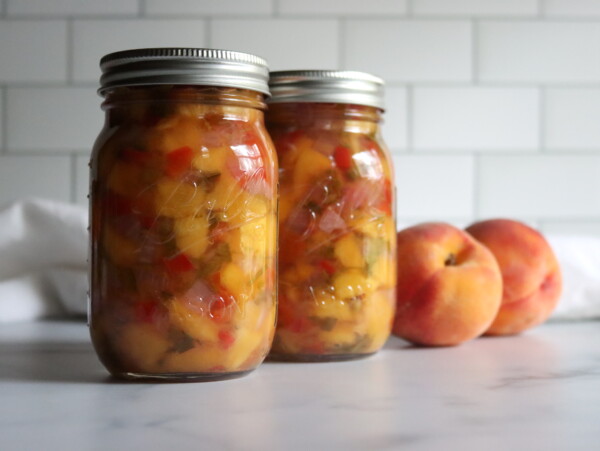
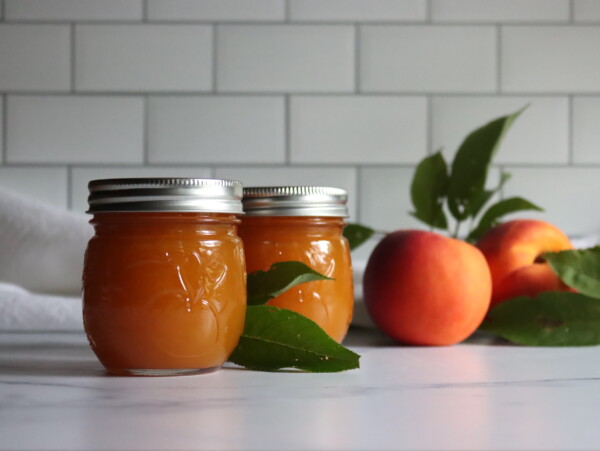
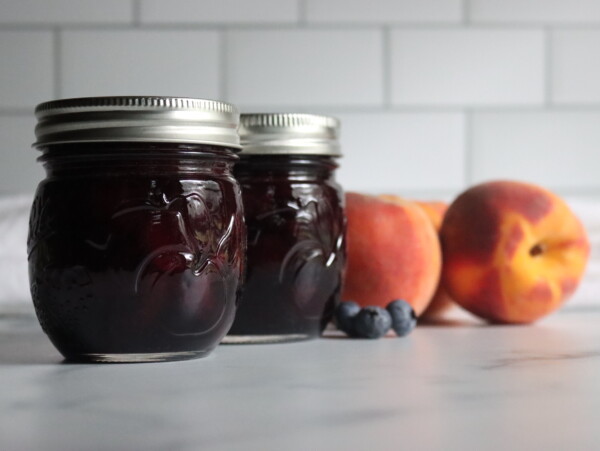
If you tried this Old Fashioned Peach Preserves recipe, or any other recipe on Creative Canning, leave a ⭐ star rating and let me know what you think in the 📝 comments below!
And make sure you stay in touch with me by following on social media!
Old Fashioned Peach Preserves
Equipment
- Canning Jars, Lids and Bands
Ingredients
- 2 1/2 lbs peaches, yellow fleshed, peeled and pitted, weighed after prep, see notes
- 3 1/2 cups sugar
- 3 Tbsp bottled lemon juice
Instructions
- Bring a pot of water to a boil. Dip the whole peaches into the boiling water for about 1 minute, lift them out, and slip the skins off with your fingers. Or peel peaches by hand with a sharp knife.
- Cut the peeled peaches off the pits into slices about 1/2 inch thick, working in batches so they do not brown while you peel.
- Layer the peach slices into a large bowl with the sugar and the bottled lemon juice.
- Cover the bowl and refrigerate for 12 hours or overnight. Four hours is the minimum and 18 hours is the maximum.
- Prepare the water bath canner, jars, and lids. Fill the canner and set it over heat before you start cooking, since it takes longer to boil than the preserves take to cook.
- Scrape the fruit and all of its syrup into a wide, heavy bottomed pan. Nothing should sit more than about 2 inches deep.
- Heat over medium, stirring gently, until every grain of sugar has dissolved. Do not let it come to a boil before the sugar dissolves.
- Raise the heat to medium high and bring the syrup to a hard boil.
- Boil hard for 25 to 35 minutes, stirring often enough to keep the bottom from catching and gently enough to keep the slices whole.
- Test for the gel stage at 220 degrees F on an instant read thermometer, or by dropping a spoonful onto a frozen plate and pushing the edge with a fingertip to see if it wrinkles.
- Remove the pan from the heat as soon as it reaches the gel stage.
- Ladle the hot preserves into the prepared jars, leaving 1/4 inch headspace and dividing the slices and syrup evenly between them.
- Release trapped air bubbles, check the headspace again, and wipe the rims and threads clean.
- Set the lids on and apply the bands fingertip tight.
- Process half pints or quarter pints for 10 minutes in a boiling water bath canner, adjusting for altitude (see notes).
- Turn off the heat and let the jars rest in the canner for 5 minutes before lifting them out.
- Cool the jars undisturbed on a towel for 12 to 24 hours, then check the seals, remove the rings, label the jars, and store them in a cool, dark place.
Notes
- 0 to 6,000 feet: 10 minutes
- Above 6,000 feet: 15 minutes
Nutrition
Nutrition information is automatically calculated, so should only be used as an approximation.
Looking for another spread to put up while the canner is out? Here are more jam canning recipes, and the rest of my water bath canning recipes.
Jam Canning Recipes
More spreads that set on the fruit’s own pectin, with no box required.
Find the perfect recipe
Searching for something else? Enter keywords to find the perfect recipe!