
This post may contain affiliate links. Please see our disclosure policy.
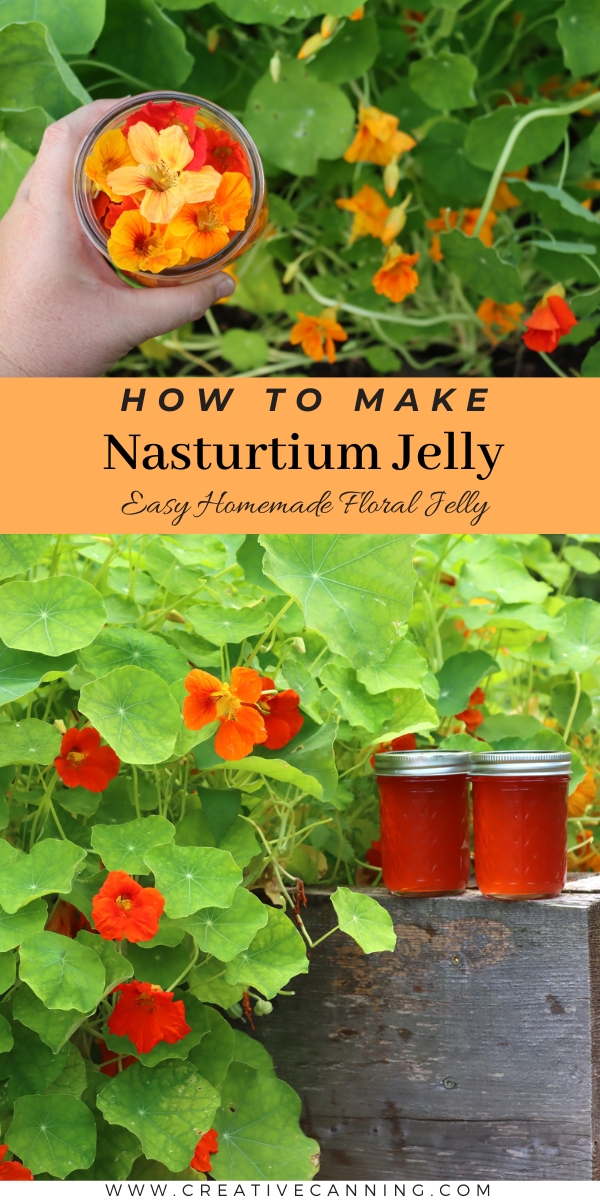
Nasturtium jelly is a fun way to enjoy these spicy edible flowers, and it adds a little zest (and color) just about anywhere you use it.
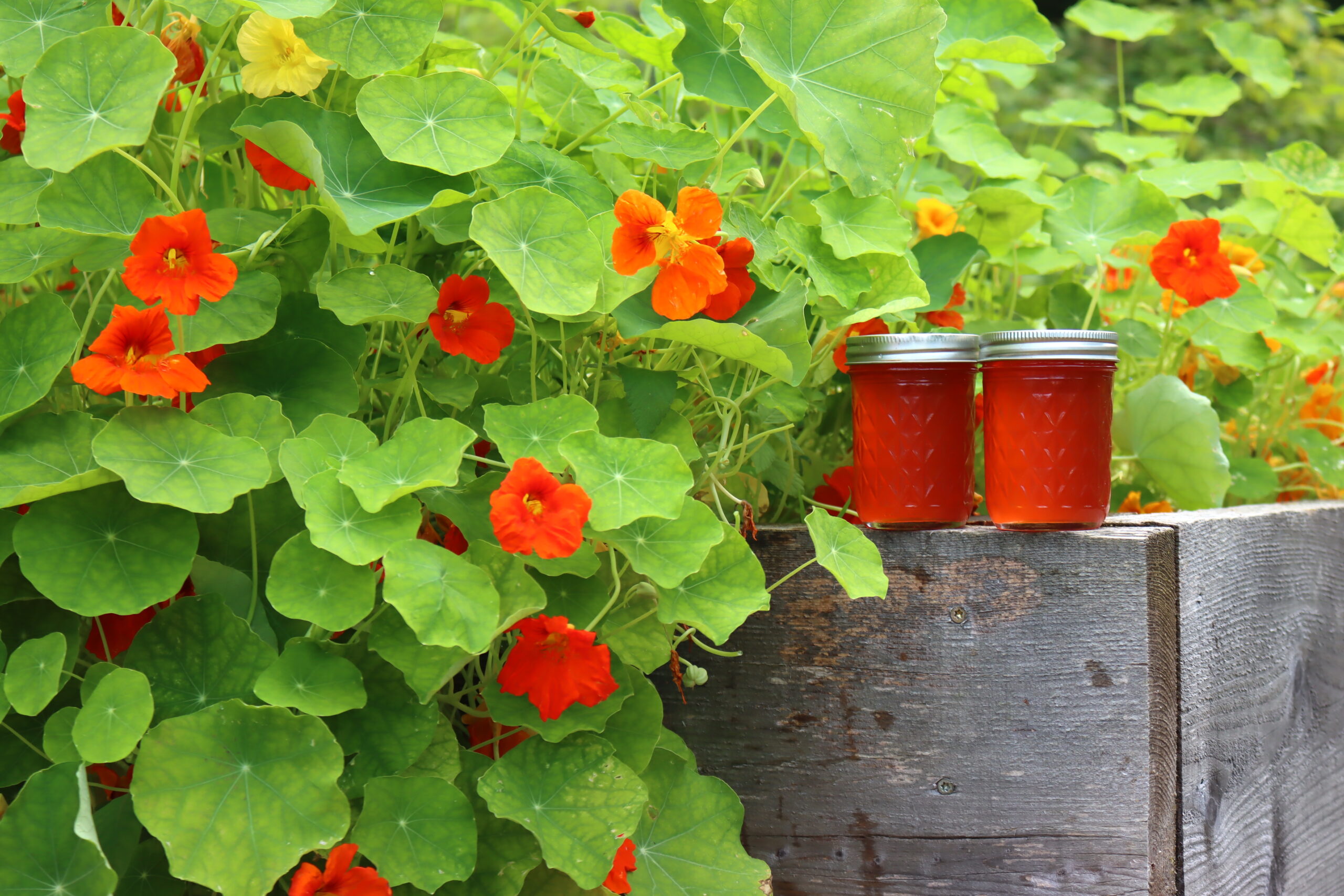
Table of Contents
- Notes from My Kitchen
- Quick Look at the Recipe
- What Does Nasturtium Jelly Taste Like?
- Choosing and Harvesting Nasturtiums
- Ingredients for Nasturtium Jelly
- Low Sugar Options
- How to Make Nasturtium Jelly
- Canning Nasturtium Jelly
- Altitude Adjustments
- Ways to Use Nasturtium Jelly
- Nasturtium Jelly FAQs
- Flower Jelly Recipes
- Nasturtium Jelly Recipe
- Jelly Canning Recipes
This recipe has been reviewed for safety and accuracy by a Master Food Preserver certified through the University of Cornell Cooperative Extension.
Nasturtiums are delicious edible flowers, most familiar as colorful salad toppers, but they’re just as good eaten as a spicy snack right out in the garden. We plant a few nasturtiums most years because they bring all the pollinators to the yard, but this past summer, we put in a whole bed of them.
Every part of the plant is edible, and there are dozens of nasturtium recipes to work through (the plant even has a long history of medicinal uses). I was hoping to try my hand at nasturtium pesto and nasturtium seed capers, since the green leaves make a wonderful pesto and the underripe green seeds are excellent pickled or lacto-fermented into homegrown capers. Actual capers sold in the grocery store are closely related to nasturtiums, so the flavor is surprisingly similar.
But what about the flowers?
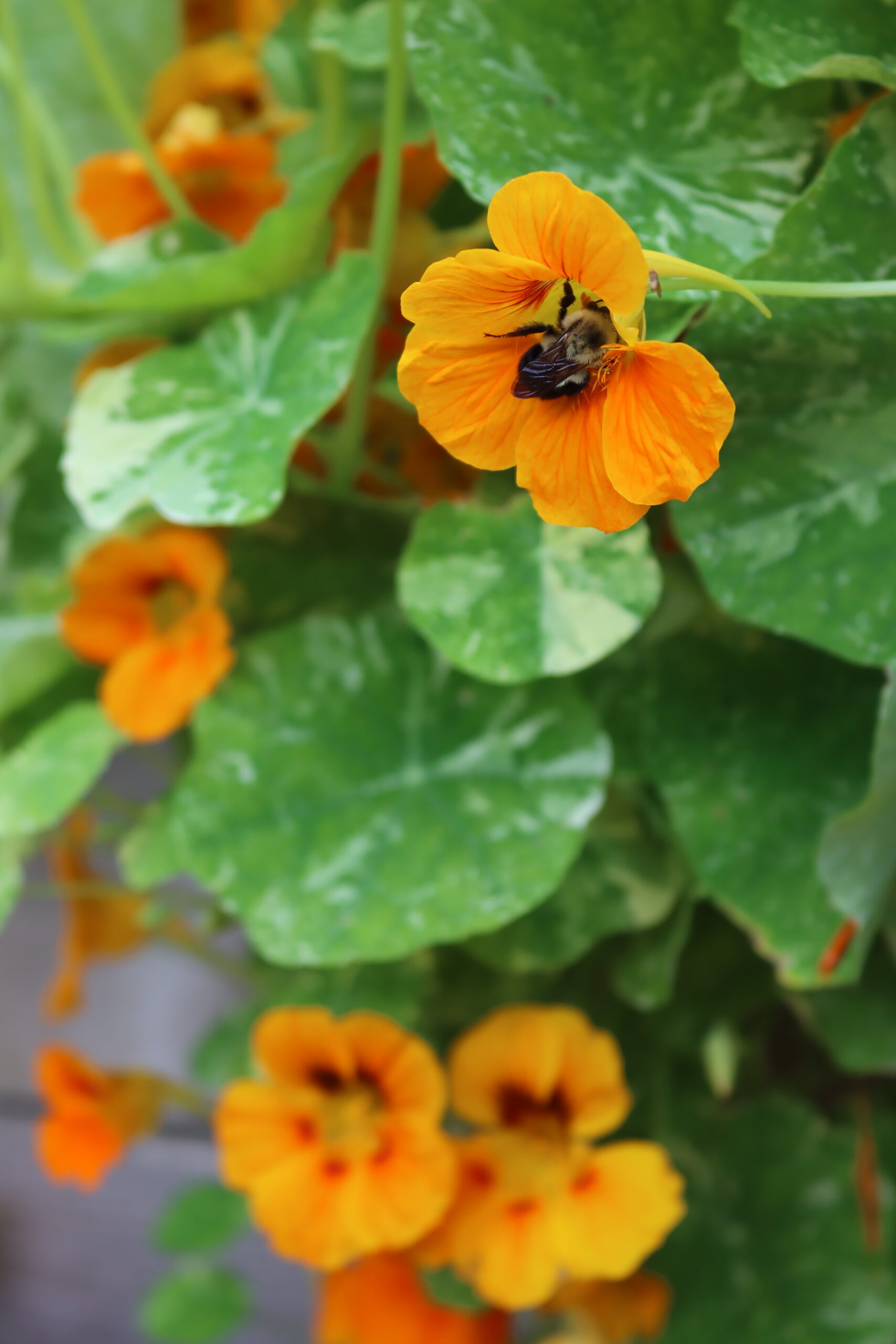
The blooms are the parts most people recognize, but they’re usually just enjoyed raw in salads and rarely make it into anything more interesting. I cooked a few up into stir-fries and stirred them into simmering pots of rice, both of which were lovely, but then I came across a recipe for nasturtium jelly in an old cookbook.
They have a spicy-sweet flavor that’s a little like Sichuan peppercorns, and the author played up that connection by adding a pinch of Sichuan to the jelly for extra heat. You can make this nasturtium jelly as is with just the flowers, or kick it up a notch with other seasonings, the choice is yours.
Notes from My Kitchen

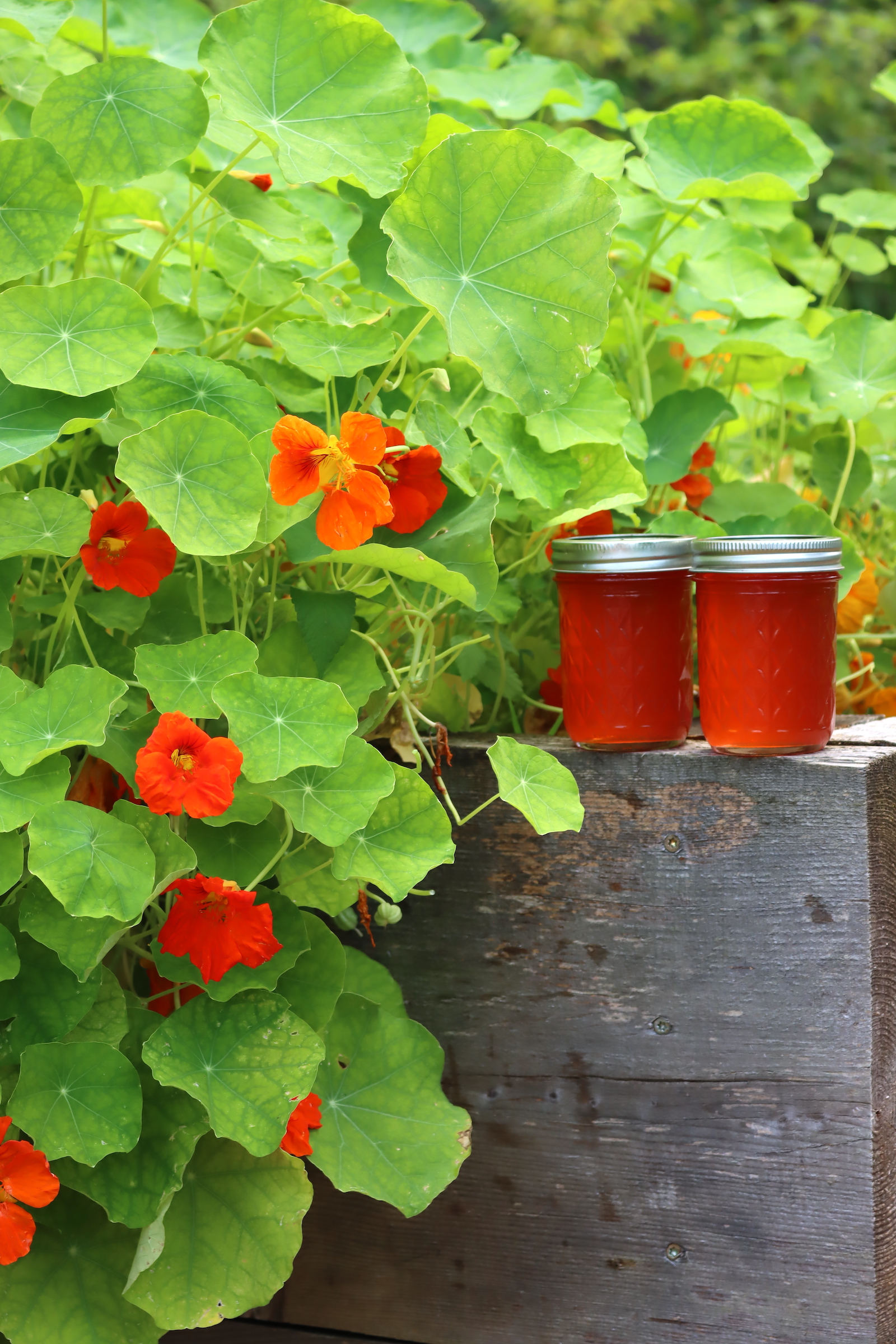
Nasturtium jelly is unlike the sweet, delicate floral jellies we’re used to. It’s spicy and a little in-your-face, more at home on a cheese board than on toast (though it’s really good on savory cheddar chive biscuits).
A single batch makes about 5 to 6 half-pint jars, which is enough to stock the pantry and still have a few to give away. It’s the kind of jar that will turn heads at your next potluck.
Quick Look at the Recipe
- Recipe Name: Nasturtium Jelly
- Recipe Type: Flower Jelly Recipe
- Canning Method: Water Bath Canning
- Prep/Cook Time: About 90 Minutes (including a 1-hour steep)
- Canning Time: 10 Minutes
- Yield: 5 to 6 half-pint jars
- Jar Sizes: Quarter Pint, Half Pint, or Pint
- Headspace: 1/4 inch
- Ingredients Overview: Nasturtium blossoms, water, lemon juice, sugar, and pectin
- Difficulty: Easy! You’re basically making a floral tea and setting it with pectin.
- Similar Recipes: The process is very similar to other summertime flower jellies, including Chamomile Jelly, Calendula Jelly, Elderflower Jelly, Peony Jelly, Borage Jelly, and Rose Petal Jelly. If you’d rather go really savory, nasturtium also works in a savory herb jelly.
What Does Nasturtium Jelly Taste Like?
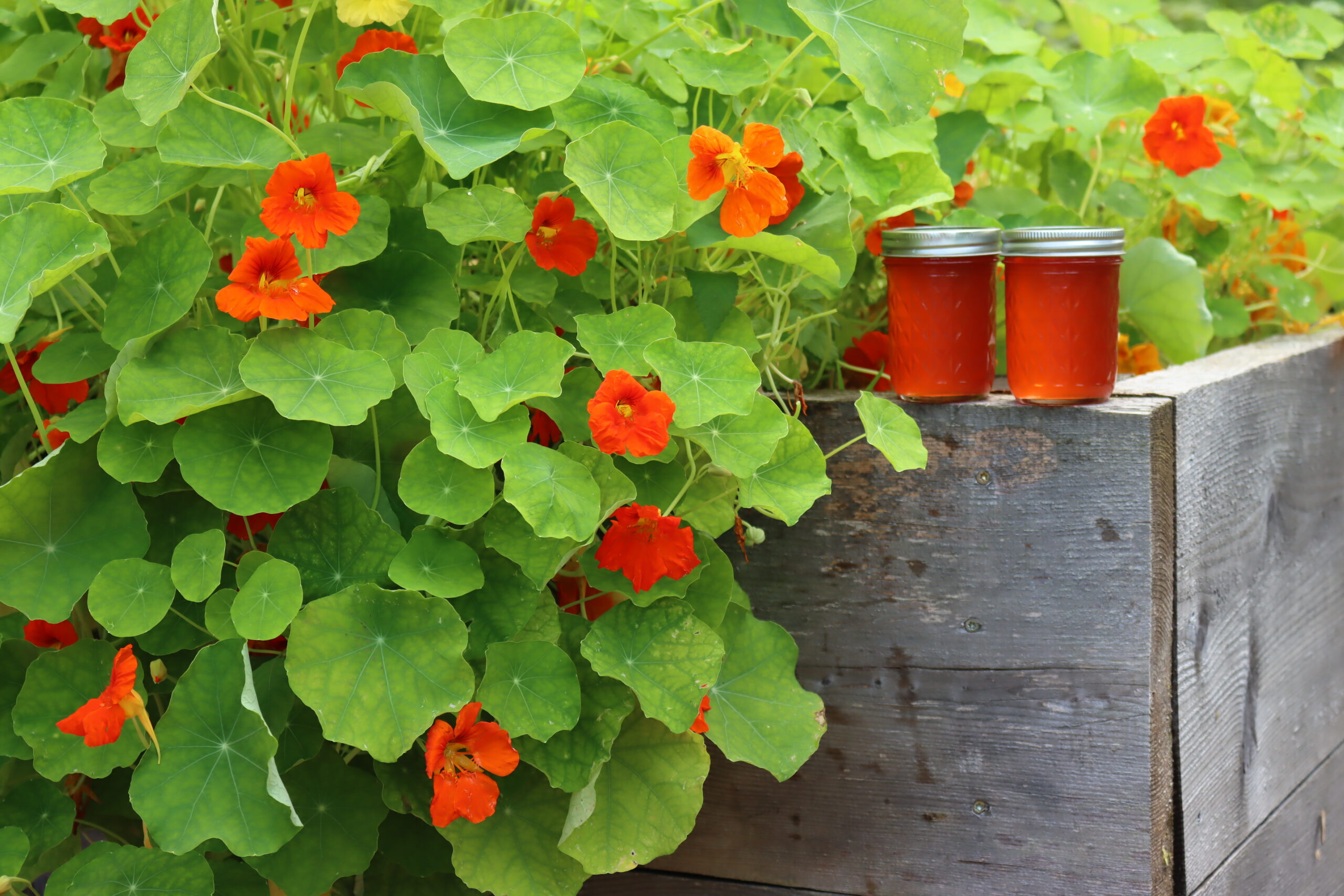
Nasturtium jelly is both sweet and spicy, with a peppery bite that’s a little like Sichuan peppercorn sitting underneath soft floral notes. It pairs well with neutral foods like plain butter biscuits, where that unusual flavor has room to come forward, and it works nicely brushed onto meats as a glaze while they cook.
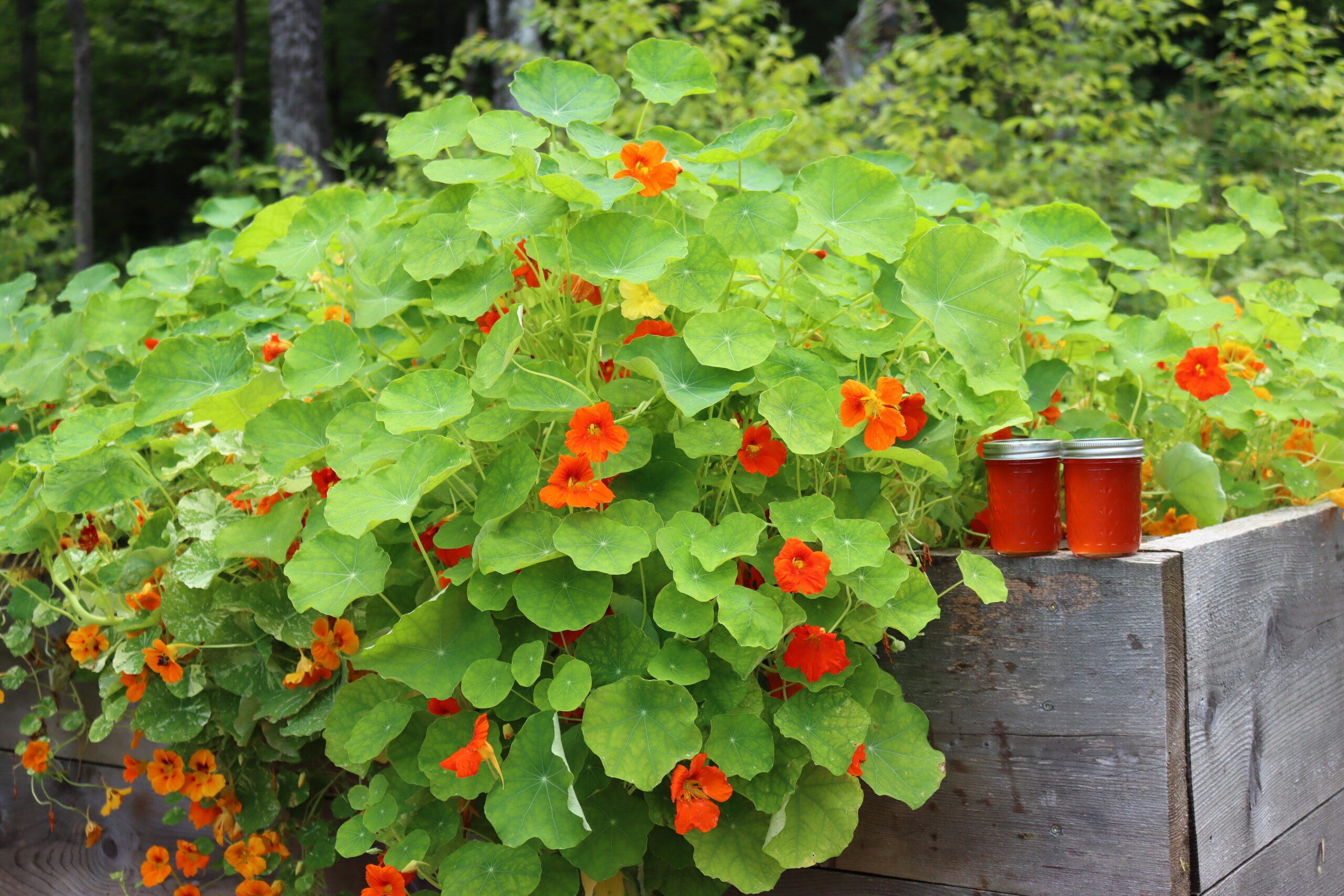
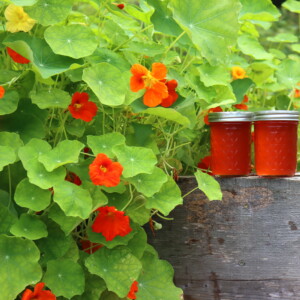
I’ve written this as a standard sweet jelly, but nasturtium flowers also work in my savory herbal jelly recipe if you’d rather take it in a savory direction. In the jar, the jelly takes on a soft golden to amber color, shifting a little depending on the mix of orange, yellow, and red flowers you steep.
Choosing and Harvesting Nasturtiums
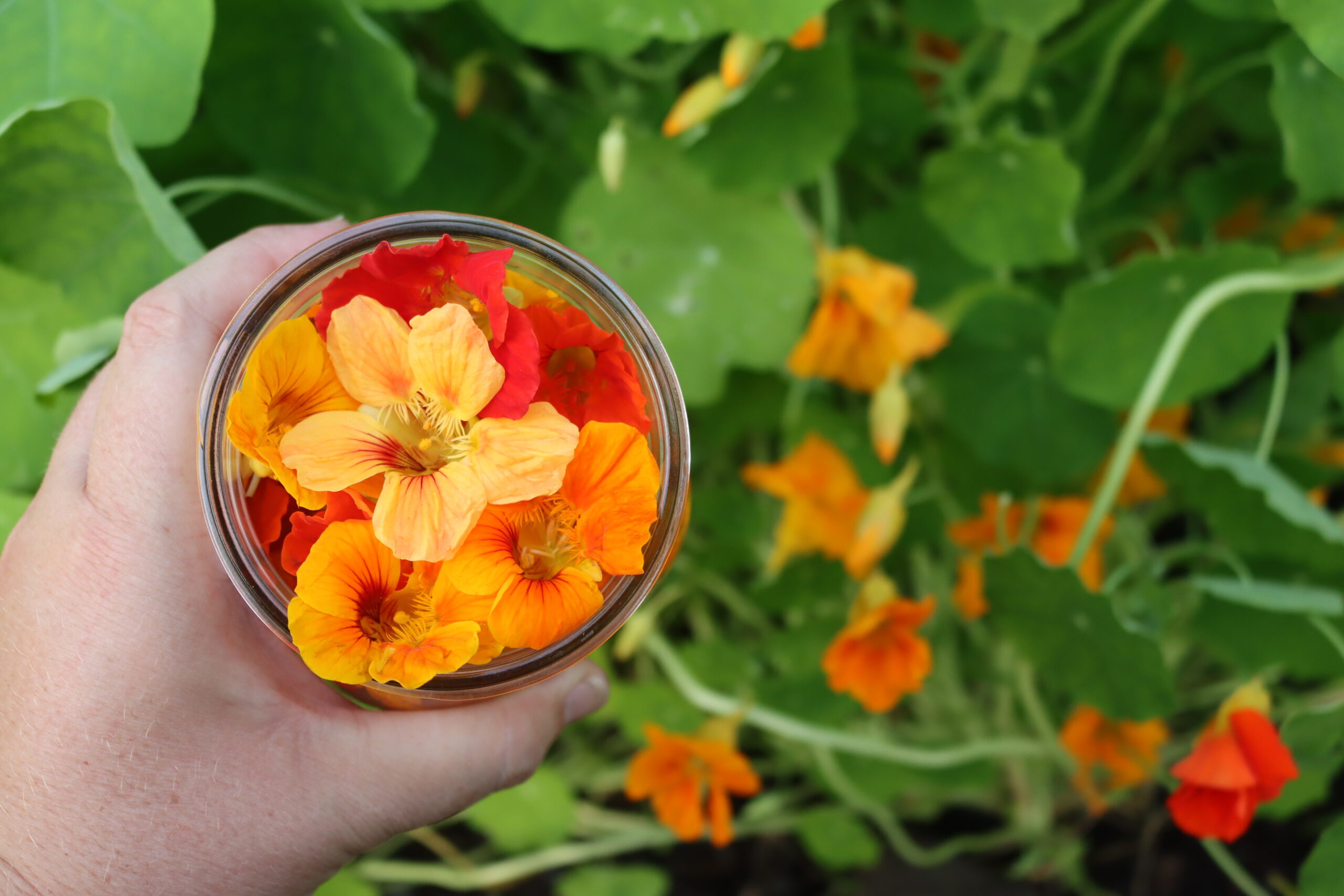
Nasturtiums are easy to grow, and the common garden varieties (with their round leaves and spurred, trumpet-shaped flowers) are all edible. The blossoms come in shades of orange, yellow, and red, and you can mix whatever colors you have. Just be sure the flowers come from plants grown without pesticides or other chemical sprays, since you’ll be steeping them straight into the jelly.
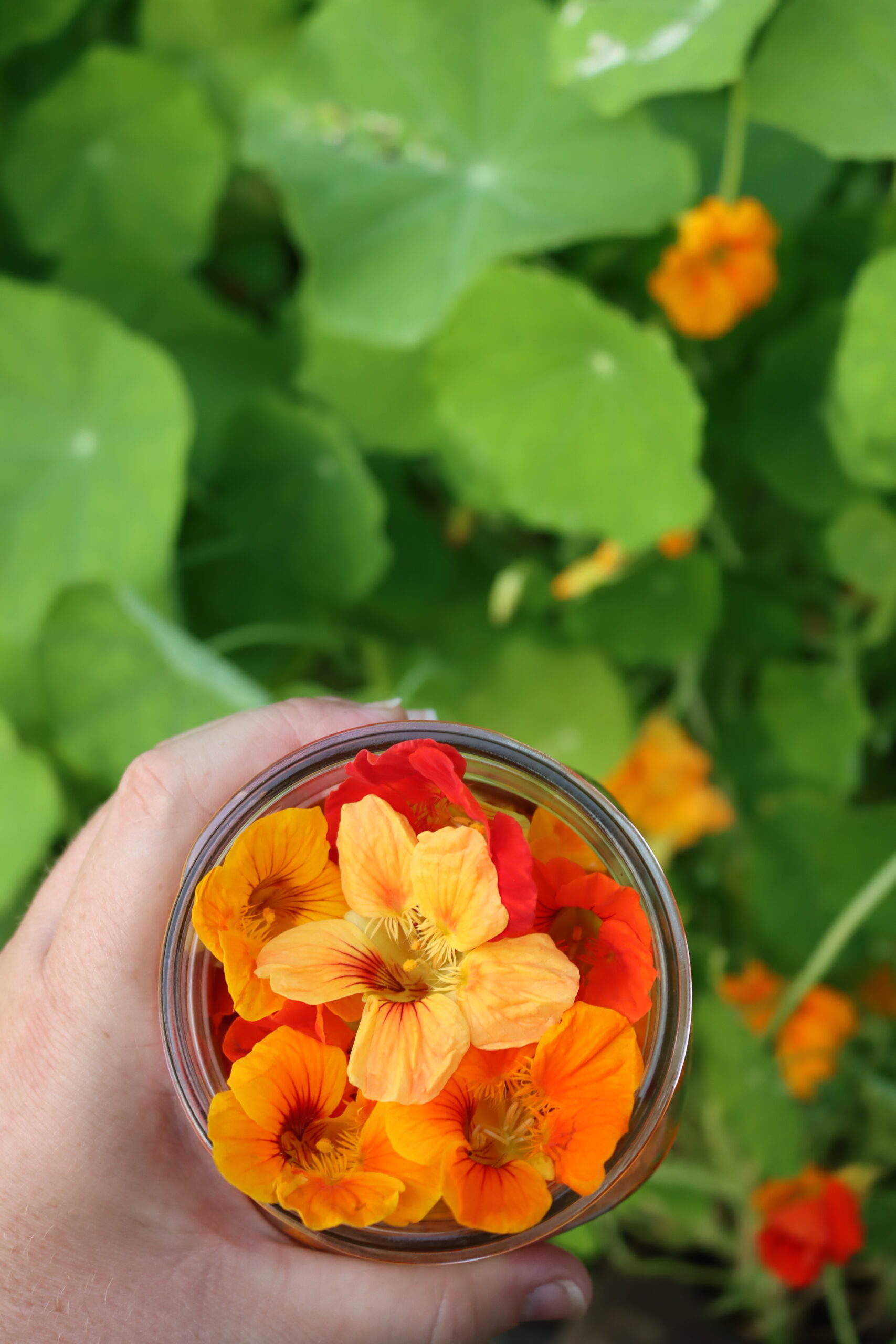
For a full batch, you’ll want about a quart of nasturtium flowers. That sounds like a lot, but these are prolific plants, and you can usually gather that much from a single hanging basket once they hit peak bloom. If you’re short on flowers, make a half batch or collect blooms over a few days, keeping them in the refrigerator until you have enough. (A box of pectin is about 6 Tbsp, so for a half batch you’d use 3 Tbsp and save the rest for another recipe.)
Bees and other pollinators love to tuck inside the blooms, so look the flowers over before you use them and give them a quick rinse under cool water to clear out any insects without bruising the petals.
Ingredients for Nasturtium Jelly
Nasturtium jelly uses the same basic formula as other flower jellies: fresh edible flowers steeped into a tea, then set with sugar, pectin, and a bit of lemon juice for balance and safety.
- Nasturtium Blossoms: Use the everyday garden varieties in any mix of orange, yellow, and red. They should come from plants grown without pesticides, and a quick rinse before steeping clears out any insects. The flowers bring both the peppery flavor and the soft color to the finished jelly.
- Water: Use clean filtered water if your tap water has a strong chlorine taste, which can carry through into the delicate floral flavor.
- Lemon Juice: The lemon juice does a few jobs at once. It adds a little tartness that balances the sugar and brings the flower flavor forward, it helps the pectin set, and it lowers the pH enough to make the jelly safe for canning. Use bottled lemon juice for its consistent acidity. For a more neutral flavor you can swap in citric acid powder instead, at about 1 teaspoon in place of the 1/4 cup of lemon juice.
- Sugar: Regular powdered pectin needs plenty of sugar to gel, so this recipe follows the current Sure Jell ratio of 5 cups sugar to 4 cups of liquid for an old-fashioned jelly that sets reliably. There’s a lower-sugar option in the note just below if you’d prefer one.
- Pectin: Reach for regular powdered pectin (like Sure Jell) here. It’s dependable and gives a consistent set with this floral tea.
Low Sugar Options
If you’d like a less sweet jelly, reach for Sure Jell low sugar pectin instead and cut the sugar back to as little as 1 to 2 cups. With Pomona’s Universal Pectin, bump the lemon juice up to 1/2 cup, since Pomona’s doesn’t include the added citric acid that other pectin brands do.
Pomona’s is a two-part low-sugar pectin with a separate calcium water, so it works a bit differently. Follow the mint jelly directions on the box, and if it’s your first time with it, it’s worth reading through how to use Pomona’s pectin first.
How to Make Nasturtium Jelly
Making jelly from nasturtium flowers works like any other flower jelly, with one twist. Nasturtiums carry a strong, peppery flavor that comes right through the sugar, so the finished jelly has a bit more backbone than most floral jellies.
Whatever you do, don’t skip the lemon juice. It balances the sweetness, helps the pectin set, and lowers the pH enough to keep the jelly safe for water bath canning, so it stays in the recipe even if you’re planning to keep your jars in the fridge.
Prepare the Nasturtium Blossoms
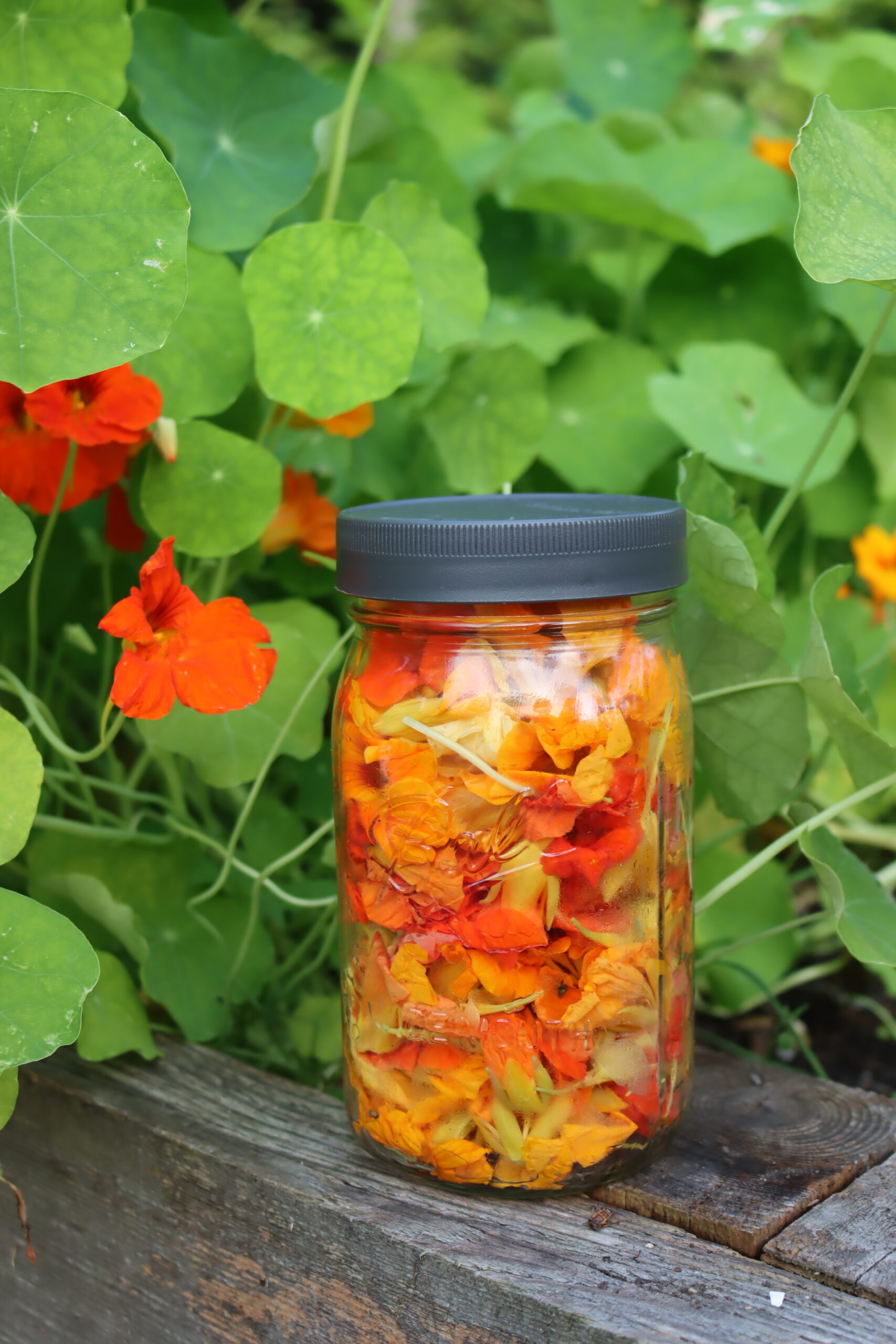
You’ll want about a quart of fresh nasturtium blossoms, which works out to roughly 2 to 4 cups once they settle into the jar. I like to pick straight into a quart jar, since it’s the right size for the steeping step that comes next.
Give the flowers a good look before you use them, since bees and other insects love to crawl down inside the blooms. A quick rinse under cool water clears out any hitchhikers without bruising the petals.
Make the Nasturtium Tea
Bring 4 cups of water to a boil and pour it over the blossoms in their jar (or in a heatproof bowl). Push the flowers down so they’re fully submerged, cover, and let them steep for at least an hour, or overnight in the refrigerator for a deeper color and flavor. If you’d like a spicier jelly, tuck a tablespoon of Sichuan peppercorns in with the flowers before you add the water, and they’ll infuse right into the tea.
Once the tea has steeped, strain it through a fine mesh strainer, pressing gently on the blossoms to coax out every bit of liquid. Measure what you have, and top it off with a little water if needed to reach a full 4 cups of tea.
Add Lemon Juice and Pectin
Pour the nasturtium tea into a jelly pot and stir in 1/4 cup of bottled lemon juice. (The lemon juice balances the sweetness, helps the pectin set, and brings the pH down into the safe range for canning, so don’t leave it out even if you’re keeping the jelly in the fridge.) Bring the mixture up to a boil over medium-high heat.
Once it’s boiling, whisk in one box of powdered pectin until it dissolves completely, then let it boil hard for one full minute before you move on to the sugar.
Add the Sugar
After that minute of boiling with the pectin, add 5 cups of sugar all at once. (Don’t add the sugar before or at the same time as the pectin, or the jelly won’t set.) Stir until the sugar dissolves completely, then bring everything back to a full rolling boil for one more minute.
Pull the pot off the heat and skim off any foam with a spoon. Ladle the hot jelly into prepared jars right away, leaving 1/4 inch of headspace at the top.
Canning Nasturtium Jelly
Canning is optional, but it’s a nice way to keep this seasonal jelly on the shelf year-round, and it makes a thoughtful gift. If you’d rather skip it, let the jars cool completely at room temperature, then store them in the refrigerator for a few weeks or in the freezer for up to 6 months.
To can nasturtium jelly, get your water bath canner, jars, and lids ready before you start cooking. After ladling the hot jelly into jars and leaving 1/4 inch of headspace, wipe the rims with a clean, damp cloth, set on the two-part canning lids, and tighten the bands until fingertip tight.
Process in a boiling water bath canner for 10 minutes. Lift the jars out and let them cool undisturbed on a towel for 24 hours, then check the seals. Refrigerate any jars that didn’t seal and use them first. Properly sealed jars hold their quality on the pantry shelf for 12 to 18 months, and you’ll want to refrigerate after opening.
Altitude Adjustments
For water bath canning, processing times increase at higher elevations:
- 0 to 6,000 feet: 10 minutes
- Above 6,000 feet: 15 minutes
Ways to Use Nasturtium Jelly
Nasturtium jelly leans sweet and peppery at the same time, so it plays well against plain, buttery things. Spread it on warm butter biscuits or toast, spoon it over a wheel of soft cheese, or set it out on a cheese board where the heat can catch people a little off guard.
It also works as a glaze. Brush it over chicken, pork, or salmon during the last few minutes of cooking and it melts into a sweet-and-spicy finish. A jar tied with a ribbon makes a nice gift too, especially for anyone who already loves nasturtiums out in the garden.
Nasturtium Jelly FAQs
Yes, the entire nasturtium plant is edible, including the flowers, leaves, and seed pods. The blossoms have a peppery, slightly sweet flavor and are popular as salad toppers and garnishes. As long as your plants were grown without pesticides, the flowers are safe to steep into jelly.
A full batch takes about a quart of fresh blossoms, which is roughly 2 to 4 cups. Nasturtiums are prolific bloomers, so even a single hanging basket can usually keep up. If you’re short on flowers, make a half batch or collect blooms over a few days and store them in the refrigerator until you have enough.
The most common reasons jelly doesn’t set are adding the sugar at the same time as the pectin (add pectin first and boil for 1 minute before adding sugar), boiling the finished jelly for too long (over 5 minutes), or trying to double the batch size. If it doesn’t set after 24-48 hours, enjoy it as a floral syrup or read through my guide on troubleshooting jelly set.
Yes, but you’ll need to use a low-sugar pectin like Sure-Jell Low Sugar or Pomona’s Universal Pectin and follow the package instructions for mint jelly. If you use Pomona’s, increase the lemon juice to 1/2 cup, since it doesn’t contain the added citric acid that other pectins do. The yield will be lower with reduced sugar.
Flower Jelly Recipes
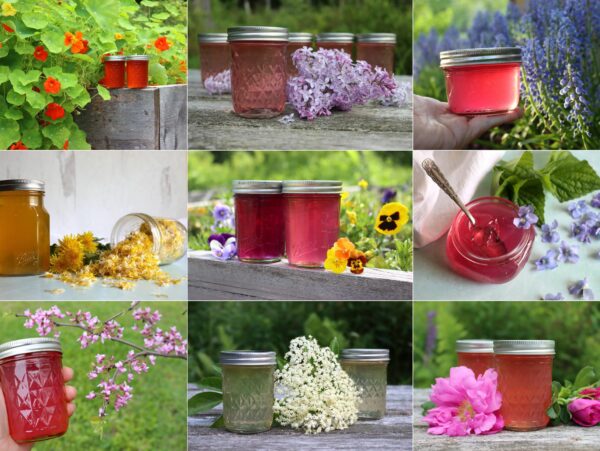
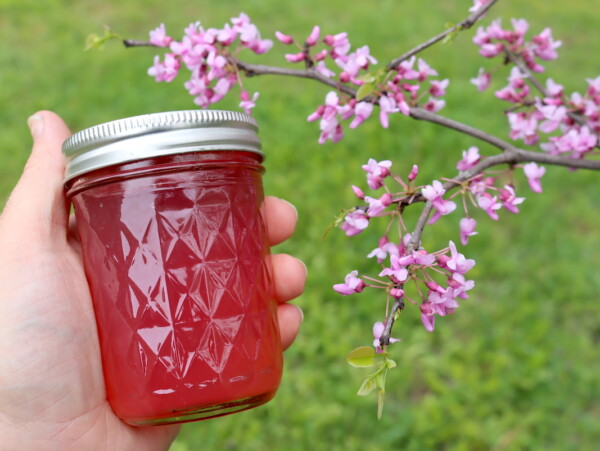
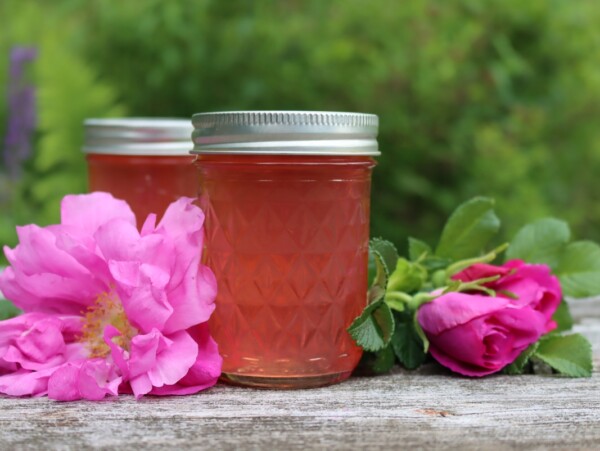
If you tried this Nasturtium Jelly recipe, or any other recipe on Creative Canning, leave a ⭐ star rating and let me know what you think in the 📝 comments below!
And make sure you stay in touch with me by following on social media!
Nasturtium Jelly
Equipment
- Canning Jars, Lids and Bands
Ingredients
For the Nasturtium Tea
- 2 to 4 cups fresh nasturtium blossoms, about 1 quart, rinsed
- 4 cups water
For the Jelly
- 4 cups nasturtium tea, strained
- 1/4 cup bottled lemon juice, or 1 teaspoon citric acid
- 1 box powdered pectin, 1.75 oz, regular, such as Sure-Jell original, or 6 Tbsp bulk pectin
- 5 cups granulated sugar
Instructions
- Bring the water to a boil and pour it over the rinsed nasturtium blossoms. Push the flowers down until fully submerged, cover, and steep for at least 1 hour, or overnight in the refrigerator.
- Strain the tea through a fine mesh strainer, pressing gently on the blossoms. Measure the strained tea, adding water if needed to reach the full amount called for.
- Place the nasturtium tea in a large pot and add the lemon juice. Whisk in the powdered pectin until completely dissolved. Bring to a full rolling boil over high heat, stirring constantly, and boil for 1 minute.
- Add all the sugar at once and stir to dissolve. Return to a full rolling boil and boil hard for exactly 1 minute. Remove from heat and skim off any foam.
- Ladle hot jelly into prepared jars, leaving 1/4 inch headspace. Wipe rims, center lids, and apply bands fingertip tight.
- Process in a boiling water bath for 10 minutes, adjusting for altitude. Turn off heat and let jars rest 5 minutes, then cool undisturbed 12 to 24 hours before checking seals.
Notes
Nutrition
Nutrition information is automatically calculated, so should only be used as an approximation.
Jelly Canning Recipes
Find the perfect recipe
Searching for something else? Enter keywords to find the perfect recipe!

I made it and tastes very good. Thank you.
So glad you enjoyed it!