This post may contain affiliate links. Please see our disclosure policy.
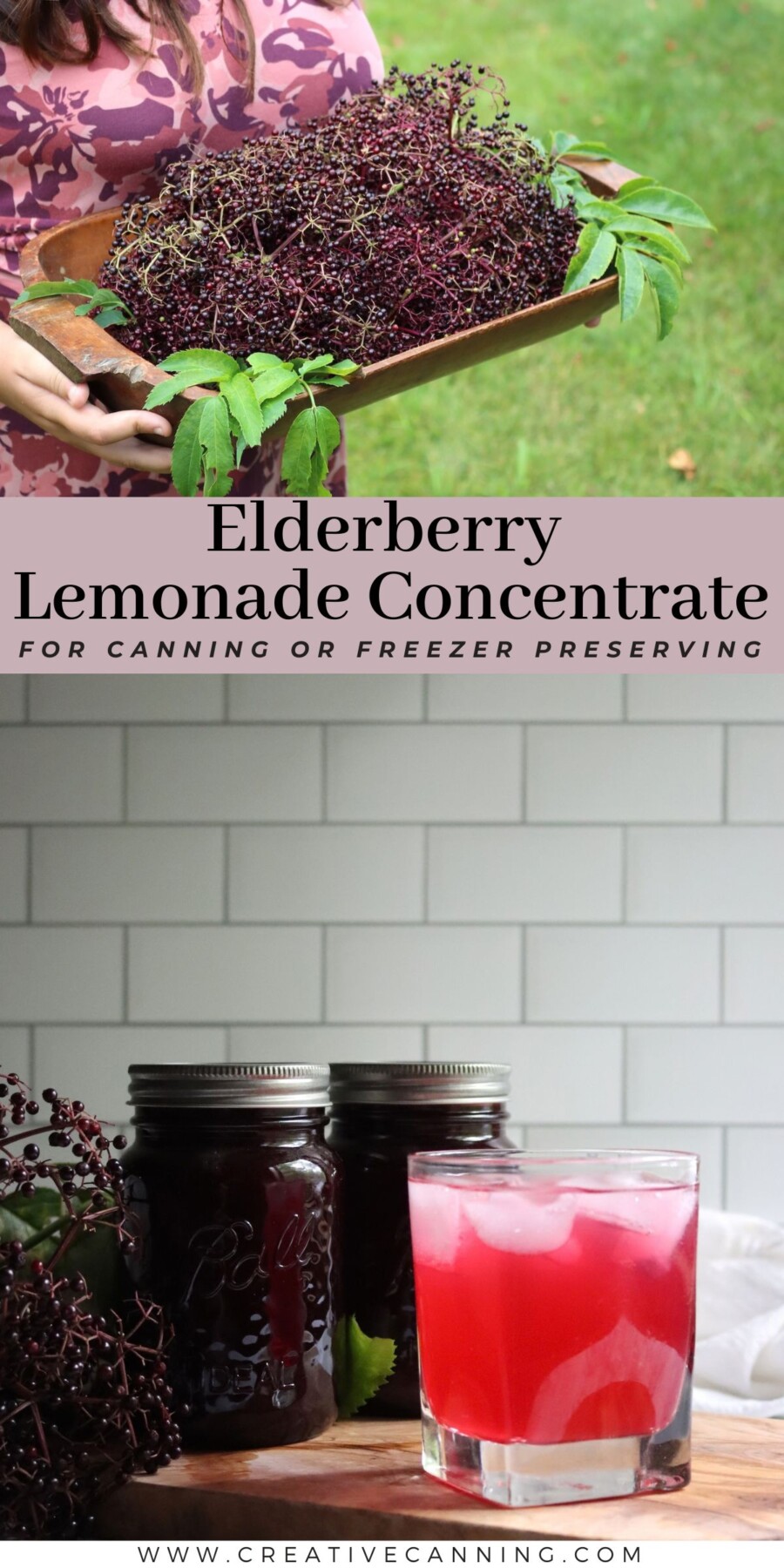
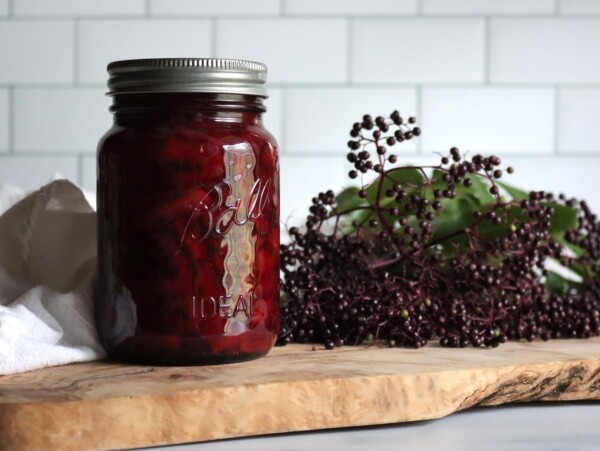
Elderberry lemonade concentrate puts an elderberry harvest on the pantry shelf as a drink mix that keeps all year. It’s tart, purple lemonade with real elderberry flavor, and all it takes is cold water to turn one jar into a pitcher of homemade elderberry lemonade.
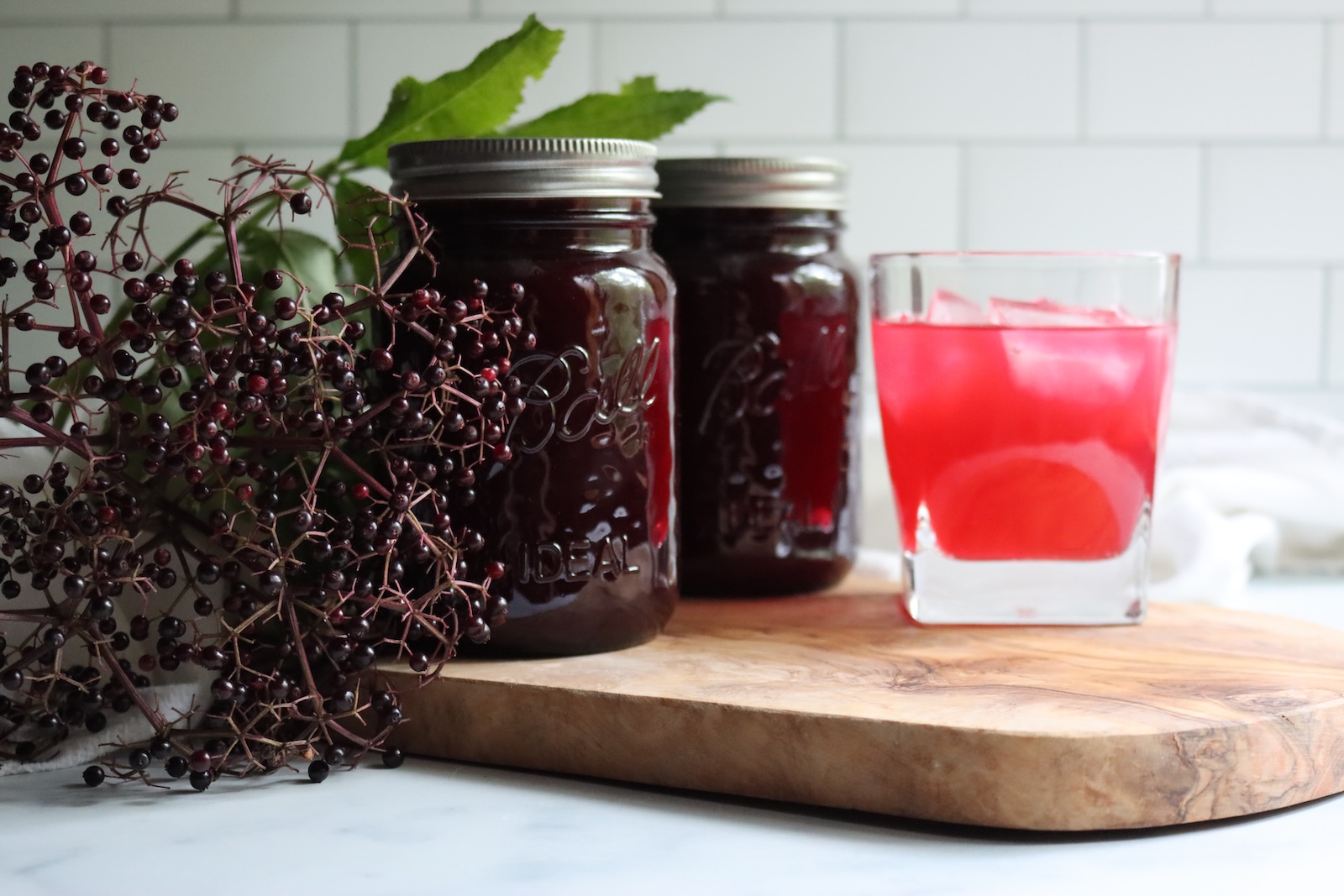
Table of Contents
- Notes from My Kitchen
- Quick Look at the Recipe
- Ingredients for Elderberry Lemonade Concentrate
- Keep the Lemon and Sugar as Written
- Yield Notes
- How to Make Elderberry Lemonade Concentrate
- Canning Elderberry Lemonade Concentrate
- Altitude Adjustments
- Serving Ideas for Elderberry Lemonade
- Storage and Shelf Life
- Elderberry Lemonade Concentrate FAQs
- Elderberry Canning Recipes
- Lemonade Concentrate Canning Recipes
This recipe has been reviewed for safety and accuracy by a Master Food Preserver certified through the University of Cornell Cooperative Extension.
Elderberries have a dark, earthy flavor, and they aren’t very sweet or very tart on their own. That’s why they go so well with lemon. In a lemonade, the lemon juice brings the tartness, and the elderberries bring the color and that dark berry flavor.
Most elderberries end up as jelly, jam, syrup, or wine, so a drink concentrate is a nice change. It’s one of my lemonade concentrate canning recipes, and like my blackberry lemonade concentrate and plum lemonade concentrate, it starts with strained juice.
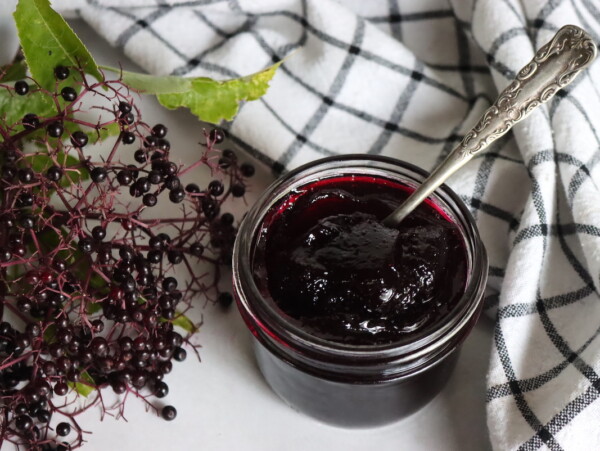
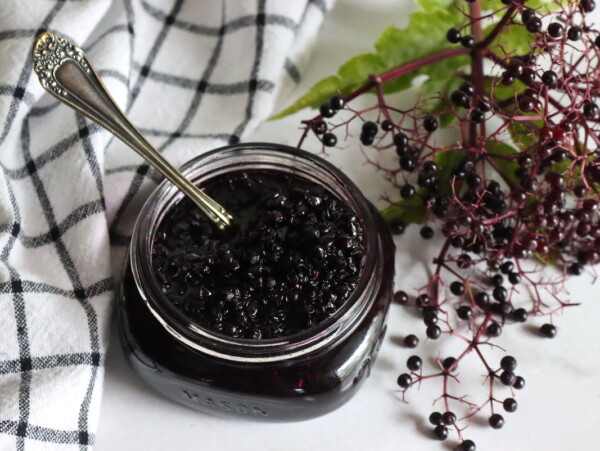
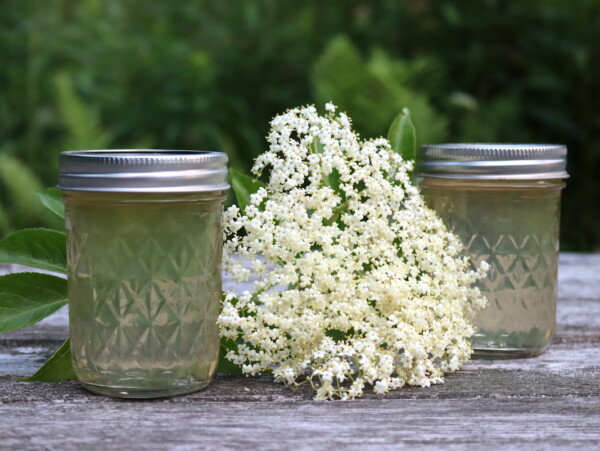
Elderberry jelly is the traditional way to put up extra berries, old-fashioned elderberry jam keeps them whole, and elderberry marmalade adds slices of lemon and orange. The flowers make elderflower jelly earlier in the summer, and there are dozens more elderberry recipes for the rest of the harvest.
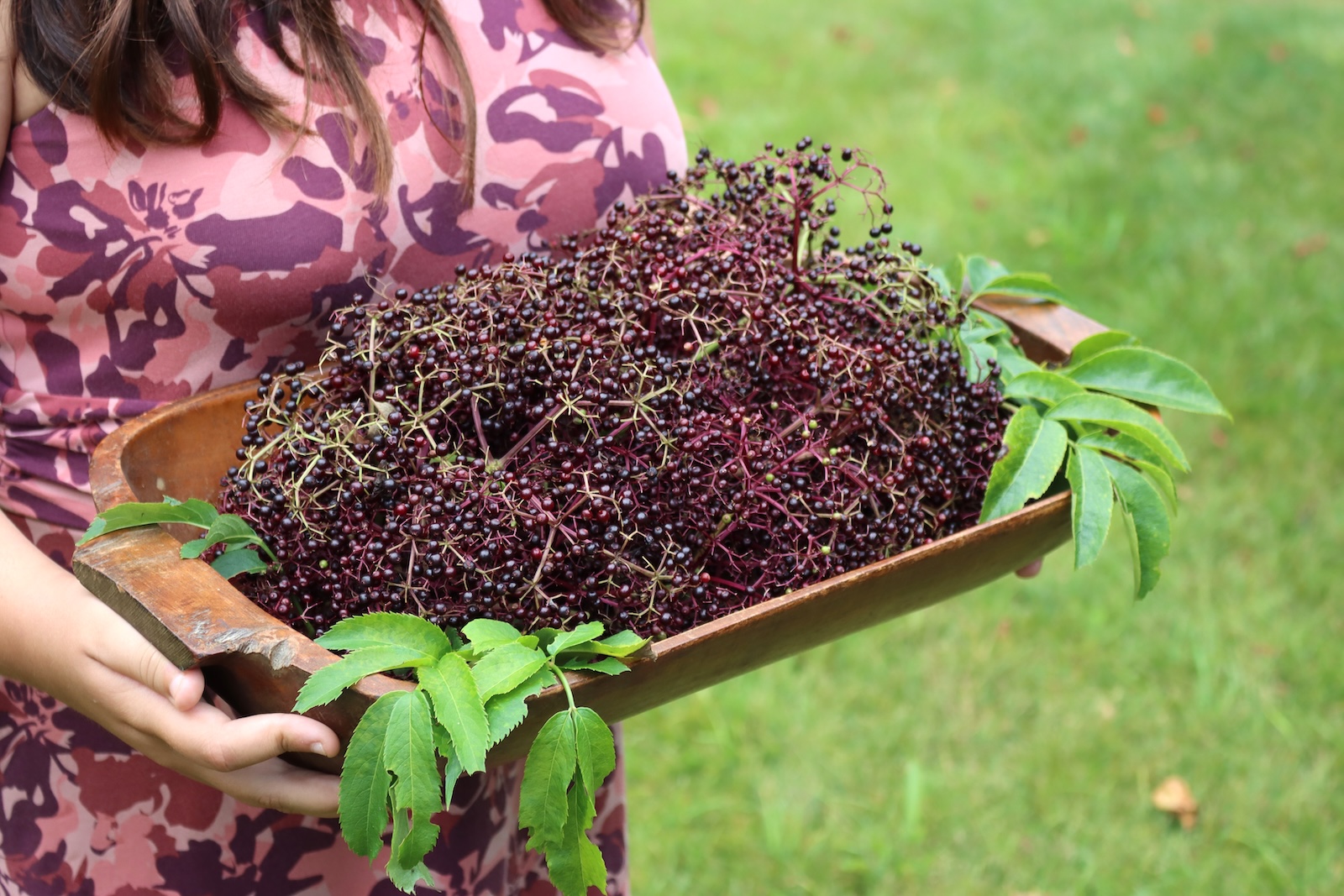
Elderberries ripen here in Vermont in early September, and farther south they’re often ready in July or August. They grow wild across much of the country, and it’s easy to grow your own elderberries, too. If you’re picking wild ones, read up on identifying elderberries first.
Notes from My Kitchen

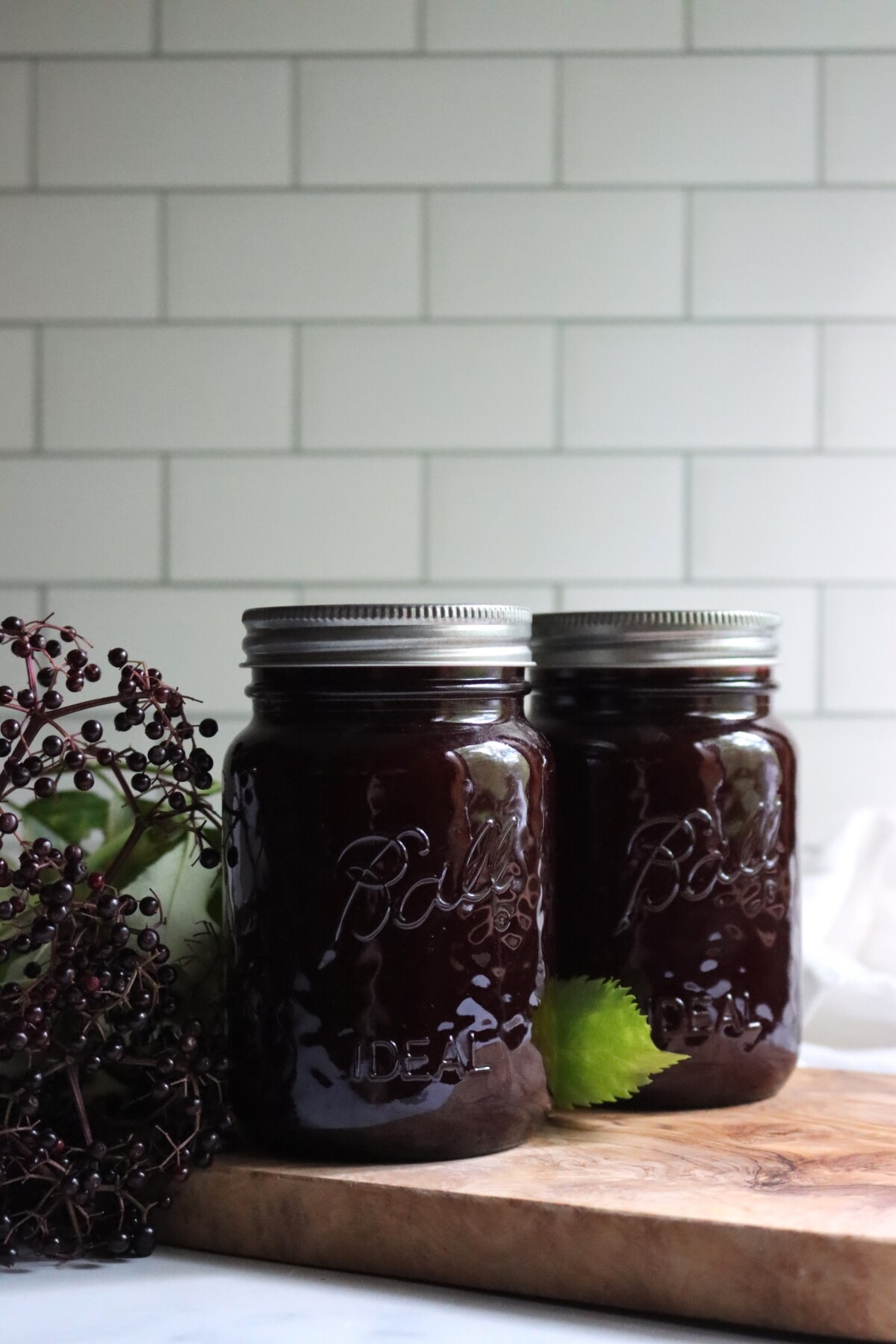
Most people want elderberries for elderberry syrup, but there’s no tested way to can it. I make our syrup fresh in small batches during flu season, and we dry plenty of berries for tea.
This lemonade concentrate is the elderberry drink that does go on the pantry shelf. I’d rather pour a glass of elderberry lemonade than take syrup off a spoon anyway. Purple lemonade in the middle of a Vermont winter is a fine thing to have.
Bottled lemon juice is most of the liquid here, so this is one of my lemon canning recipes as much as an elderberry one.
Canning lemonade is the plain version, and there are juices and more lemonades in my list of drink canning recipes.
Quick Look at the Recipe
- Recipe Name: Elderberry Lemonade Concentrate
- Recipe Type: Lemonade Concentrate
- Canning Method: Water Bath Canning
- Prep Time: About 45 minutes, including making the juice
- Cook Time: About 10 minutes
- Canning Time: 15 minutes for half pints, pints, or quarts
- Yield: About 2 pints
- Jar Sizes: Half pints, pints, or quarts
- Headspace: 1/4 inch
- Ingredients Overview: Elderberries, bottled lemon juice, sugar, and water
- Safe Canning Recipe Source: Follows the NCHFP processing times for fruit purees, with bottled lemon juice as the acid. Neither the NCHFP nor the USDA has a tested elderberry lemonade concentrate.
- Difficulty: Easy
- Similar Recipes: Watermelon lemonade concentrate also depends on bottled lemon juice for its acid, and raspberry lemonade concentrate starts with strained juice the same way. For more elderberries, try elderberry jelly, old-fashioned elderberry jam, or elderberry marmalade.
Ingredients for Elderberry Lemonade Concentrate
Fresh or frozen elderberries both work here. Dried elderberries work too, with a quick steep in boiling water instead of a simmer, and the FAQ below has the amounts.
Pure store-bought elderberry juice is another option, as long as it’s unsweetened and has nothing else in it. The lemon juice and sugar are the two parts that stay the same for canning.
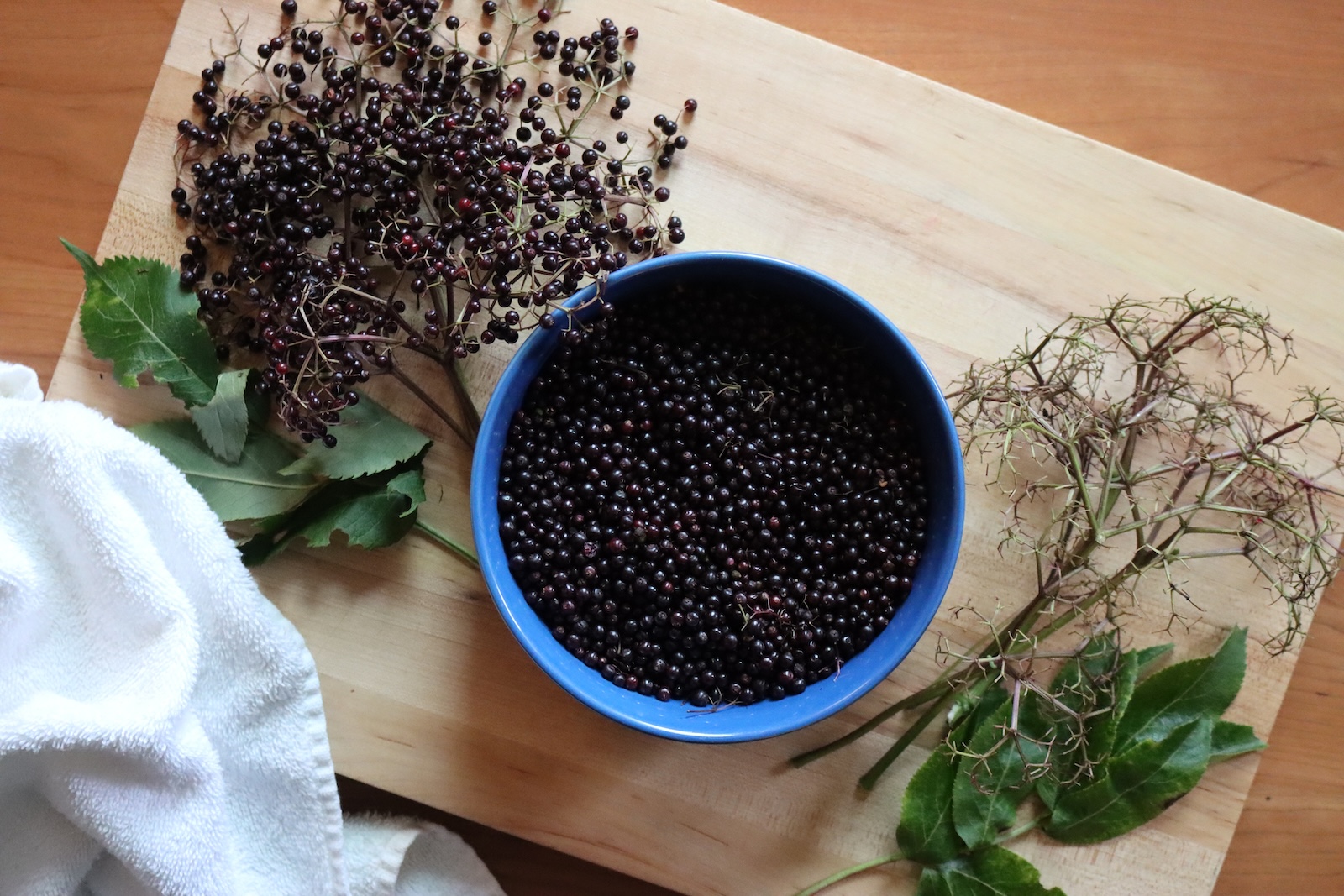
- Elderberries: Fully ripe and completely de-stemmed. The stems and leaves are mildly toxic and bitter, so pick out every bit of green. Freeze the clusters first, and the berries roll right off the stems. Elderberries need cooking before you eat them, which is what the simmer is for.
- Water: A small amount gets the berries simmering, and most of it ends up in the juice.
- Bottled lemon juice: This is the acid that makes the concentrate safe to can. Use bottled juice for its consistent acidity, and don’t cut the amount. I use Lakewood Organic or Santa Cruz Organic, which taste a lot better than the plastic lemons.
- Sugar: Plain granulated sugar. It balances the lemon and gives the lemonade a little body. I keep the full amount of sugar in every canned elderberry recipe, and this one is no exception.
Keep the Lemon and Sugar as Written
Elderberries aren’t acidic enough to can on their own, so the bottled lemon juice is doing the safety work here. Keep it at twice the volume of the elderberry juice, and never cut it back.
Don’t cut the sugar or swap in honey, either. To make a bigger batch, scale everything up together.
If you’d like to use fresh lemons, less sugar, or honey, make it as a fridge or freezer concentrate instead of canning it.
My jelly bag and stand does the straining here, though a fine-mesh strainer lined with cheesecloth works fine. An instant-read thermometer is worth having here, since you heat the concentrate to a set temperature instead of boiling it.
Yield Notes
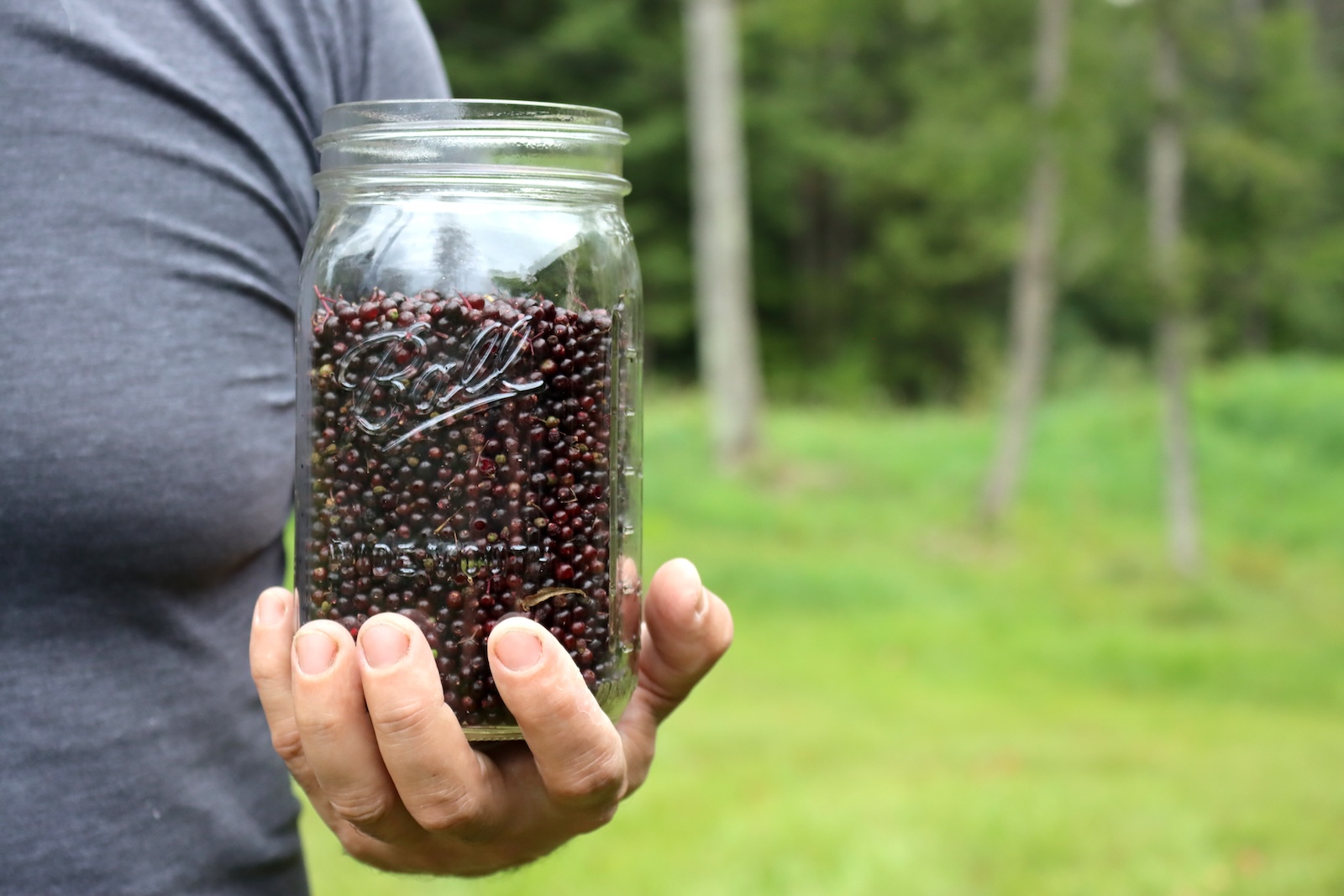
One pound of elderberries as picked is about 3 cups once you de-stem them. When I simmer them with 3/4 cup of water and strain them, I get about 1 cup of juice. If you get more, save the extra for another use.
A batch of concentrate uses:
- 1 cup elderberry juice
- 2 cups bottled lemon juice
- 2 cups sugar
That makes about 2 pints of concentrate, and each pint mixes up into a half gallon of lemonade. The recipe doubles or triples easily, as long as everything goes up together.
How to Make Elderberry Lemonade Concentrate
Making the juice is the only part of this that takes any time. You can make it a few days ahead and keep it in the fridge. Or freeze it at harvest and make the concentrate in winter.
Start the water bath canner before the concentrate. A full canner takes longer to heat than this small batch does.
Make the Elderberry Juice
Strip the berries off the stems, then pick through them for any bits of stem or leaf that came along. Put them in a saucepan with the water and bring it to a simmer.
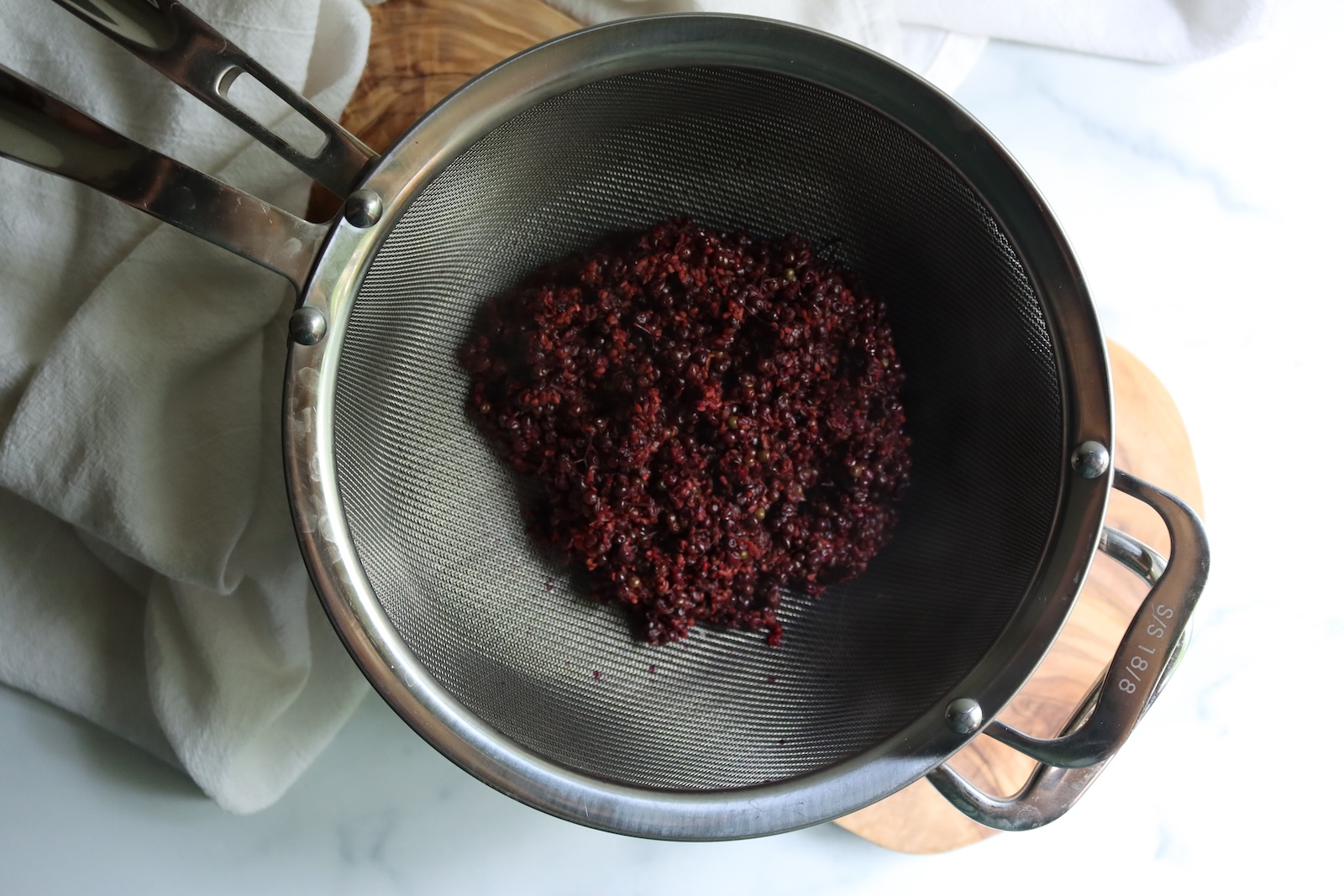
Simmer for 10 to 15 minutes, mashing the berries with a potato masher as they soften. They’re ready when they’ve collapsed and given up their juice.
Strain everything through the jelly bag and let it drip. Measure the juice once it stops dripping, since you measure the lemon juice and sugar against it.
Heat the Concentrate
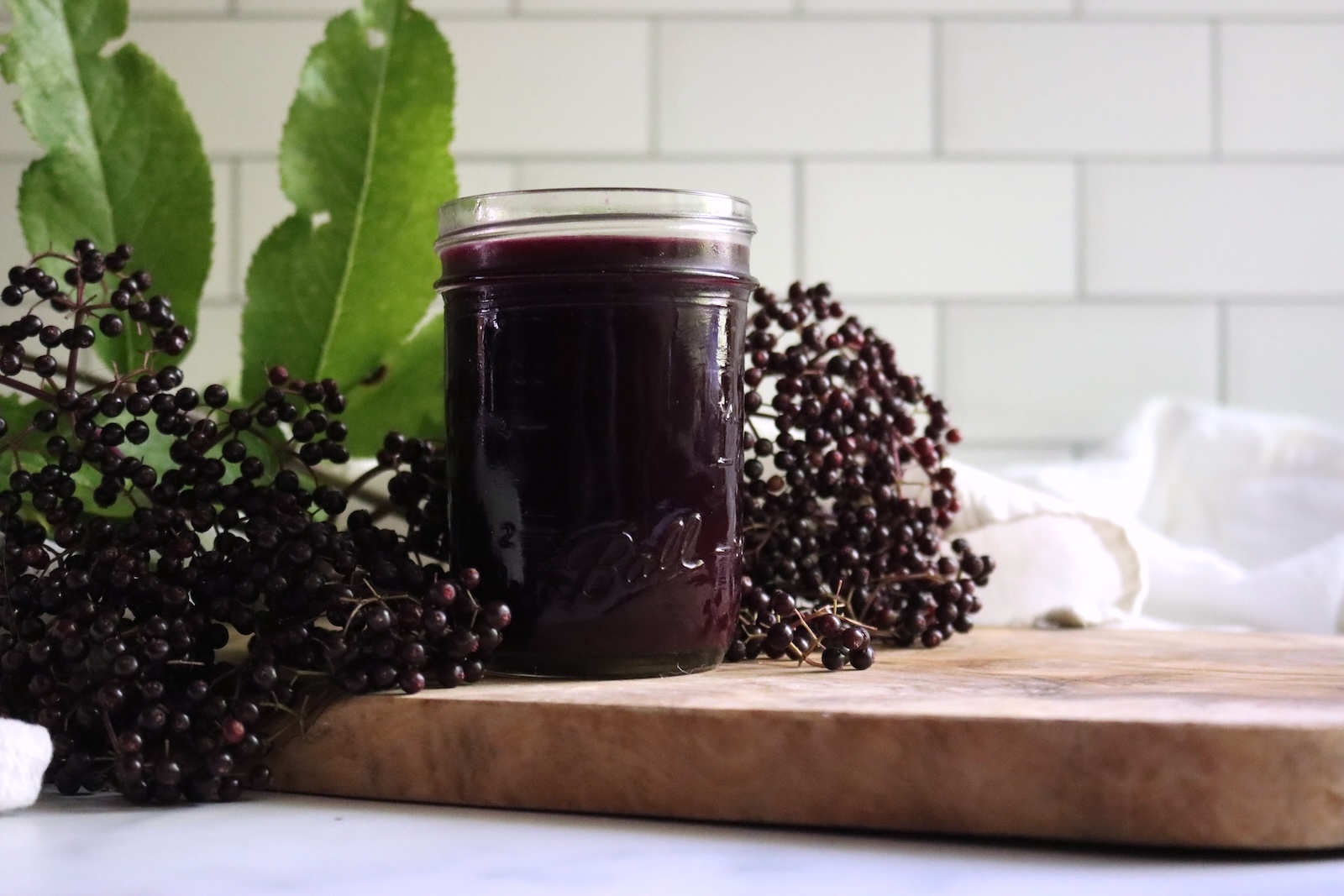
Combine the elderberry juice, bottled lemon juice, and sugar in a saucepan. Heat it gently, stirring often, until the sugar dissolves.
Keep heating until it reaches 190 degrees F on the thermometer. It should be steaming and just short of a simmer. Don’t let it boil, since boiling cooks off the fresh lemon flavor.
Canning Elderberry Lemonade Concentrate
Ladle the hot concentrate into hot jars with a canning funnel, leaving 1/4 inch headspace. Wipe the rims, center the lids, and screw the bands down fingertip tight.
Lower the jars into the water bath canner, and make sure at least an inch of water covers them. Process half pints, pints, or quarts for 15 minutes, adjusting for altitude (see the chart below).
Turn off the heat, uncover the canner, and let the jars rest for 5 minutes. Then lift them out with a jar lifter and let them cool on a towel for 12 to 24 hours.
Don’t use half-gallon jars, since quarts are the largest size with a processing time. These are the NCHFP processing times for fruit purees. Neither the NCHFP nor the USDA has a tested elderberry lemonade concentrate, so the bottled lemon juice is what this recipe relies on.
Altitude Adjustments
For water bath canning, the processing time goes up at higher elevations. The times are the same for half pints, pints, and quarts:
- 0 to 1,000 feet: 15 minutes
- 1,001 to 6,000 feet: 20 minutes
- Above 6,000 feet: 25 minutes
Serving Ideas for Elderberry Lemonade
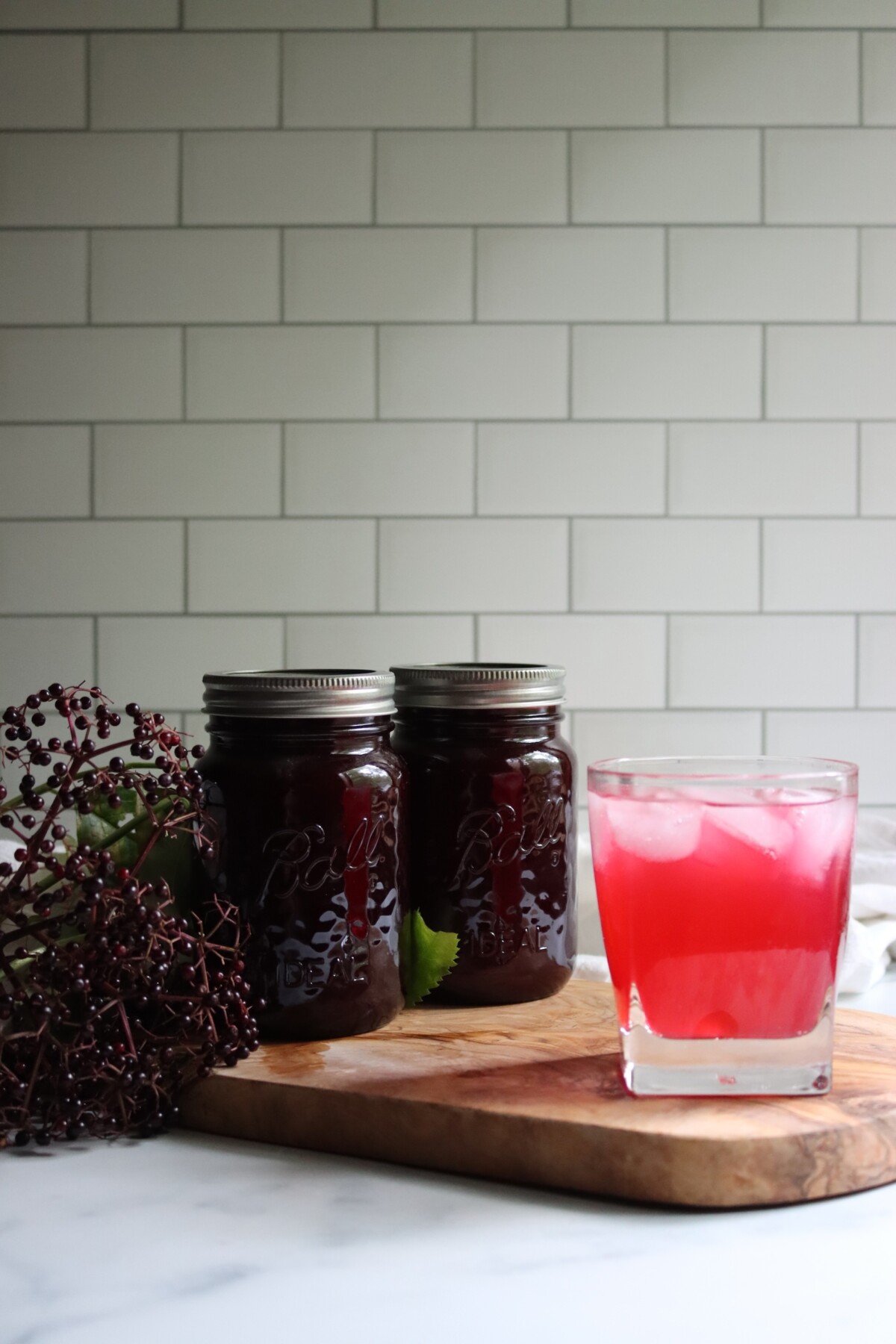
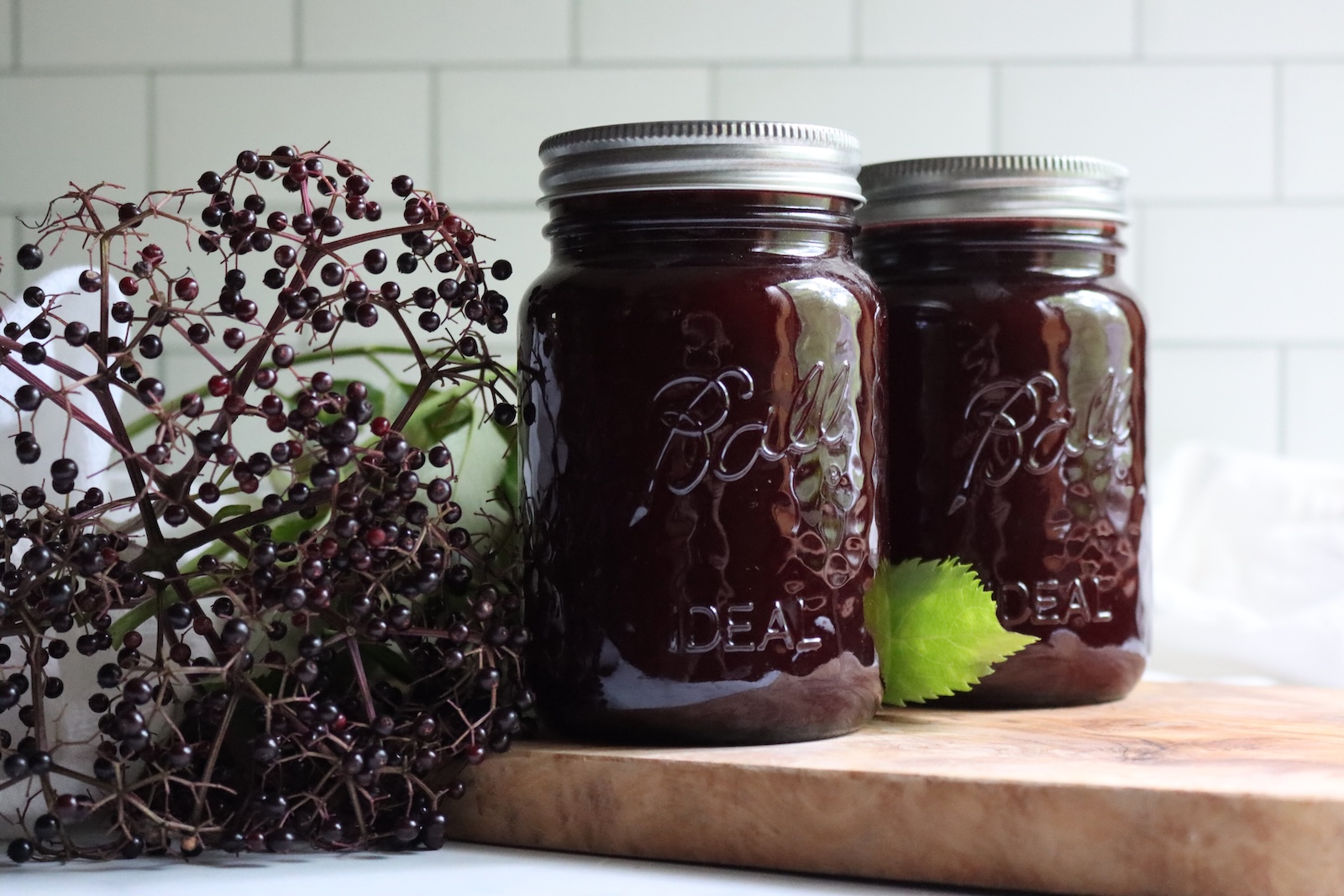
Mix 1 part concentrate with 3 parts cold water. A pint makes a half gallon. The easy way is to pour a pint into a half-gallon mason jar and top it off with water.
With still water, it’s a tart, purple lemonade for pouring over ice. Sparkling water turns it into an elderberry lemon soda, and the mixed lemonade makes good popsicles.
A splash of straight concentrate is good in iced black tea, or as a mixer with gin or vodka. A pint jar with a ribbon on it makes an easy gift, since everyone knows what to do with lemonade.
Storage and Shelf Life
After 12 to 24 hours, press the center of each lid. A good seal is slightly concave and doesn’t move when you press it.
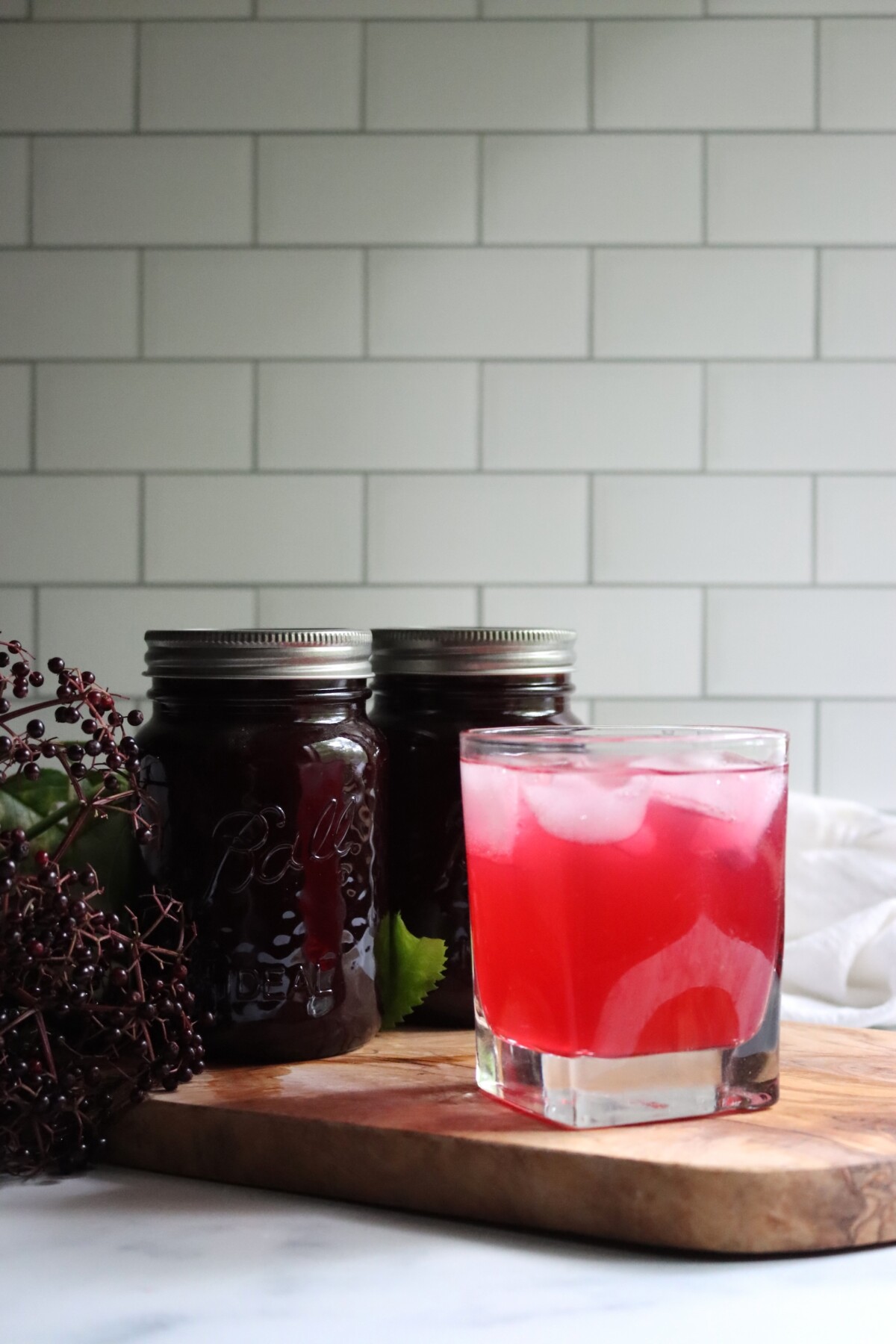
Store the jars with the bands off, so a band can’t hide a lid that didn’t seal. Store sealed jars in a cool, dark place, and use them within 12 to 18 months. A little sediment can settle at the bottom, which is normal with lemon juice, so shake the jar before mixing.
If a jar doesn’t seal, reprocess it with a new lid within 24 hours. Or keep it in the fridge and use it within a few weeks. Once a jar is open, keep it in the fridge.
You can also skip the canner and freeze the concentrate in straight-sided, freezer-safe jars with 1 inch of headspace. You can make a batch without canning using fresh lemon juice, less sugar, or honey.
Elderberry Lemonade Concentrate FAQs
People ask most about the lemon and the sugar with elderberries. We cover those, along with dried berries and how far one jar goes.
A pint jar makes a half gallon of lemonade, and a quart jar makes a gallon. Mix 1 part concentrate with 3 parts cold water, which is 2 cups of concentrate to 6 cups of water for a pint. Make it a little stronger or weaker to suit your taste.
Yes. For dried elderberries, make a quick tea instead of simmering fresh berries. Pour 1 1/2 cups of boiling water over about 1/4 cup of dried elderberries, steep for 5 minutes, and strain. The berries soak up some of the water, and you should still have about 1 cup of juice. Store-bought juice works too, as long as it’s pure, unsweetened elderberry juice and nothing else.
Not if you’re canning it. The lemon juice is the acid that makes this safe to can, so it needs the consistent acidity of bottled juice, and fresh lemons aren’t all equally acidic. If you’d rather use fresh lemons, make it as a fridge or freezer concentrate.
Not for canning. I keep the full sugar in every canned elderberry recipe, and honey isn’t a swap here. For a fridge or freezer batch, cut the sugar as much as you like, or use honey. Honey is sweeter than sugar, so start with about 3/4 as much.
No. Elderberries aren’t consistently acidic enough for water bath canning, and there’s no tested process for plain elderberry syrup or juice. The only tested elderberry canning recipes are elderberry jelly and elderberry jam, and both use a very high sugar ratio. In this concentrate, bottled lemon juice is two thirds of the liquid. Make elderberry syrup fresh and keep it in the fridge or freezer.
Elderberry Canning Recipes
Jelly and jam are the tested ways to can the berries, and the blossoms have a jelly too.
If you tried this Elderberry Lemonade Concentrate recipe, or any other recipe on Creative Canning, leave a ⭐ star rating and let me know what you think in the 📝 comments below!
And make sure you stay in touch with me by following on social media!
Elderberry Lemonade Concentrate
Equipment
- Canning Jars, Lids and Bands
- Potato Masher
- Large Stainless Steel Saucepan
Ingredients
For the Elderberry Juice
- 1 lb elderberries, as picked, see notes
- 3/4 cup water
For the Concentrate
- 1 cup elderberry juice, measured, see notes
- 2 cups bottled lemon juice
- 2 cups granulated sugar
Instructions
- De-stem the elderberries completely, so no stem or leaf goes in the pot.
- Simmer the elderberries with the water for 10 to 15 minutes, mashing them as they soften, until they collapse and release their juice.
- Strain through a jelly bag and measure the juice (see notes).
- Prepare a water bath canner, jars, and lids, and keep the jars hot until you fill them.
- Combine the elderberry juice, bottled lemon juice, and sugar in a saucepan.
- Heat gently, stirring often, until the sugar dissolves and the mixture reaches 190 degrees F. Do not let it boil.
- Ladle the hot concentrate into hot jars, leaving 1/4 inch headspace. Wipe the rims, center the lids, and screw the bands down fingertip tight.
- Process half pints, pints, or quarts in a boiling water bath canner for 15 minutes, adjusting for altitude (see notes).
- Turn off the heat, remove the canner lid, and wait 5 minutes before lifting the jars out onto a towel.
- Cool 12 to 24 hours, check the seals, and take the bands off before storing.
- To serve, mix 1 part concentrate with 3 parts cold water.
Notes
- 0 to 1,000 feet: 15 minutes
- 1,001 to 6,000 feet: 20 minutes
- Above 6,000 feet: 25 minutes
Nutrition
Nutrition information is automatically calculated, so should only be used as an approximation.
While the canner’s out, blueberry lemonade concentrate and raspberry lemonade concentrate use up summer berries, and there’s canning lemonade for the plain version. There’s a flavor for most of the fruit you can pick in my full list of lemonade concentrate canning recipes.
Lemonade Concentrate Canning Recipes
Nearly all of them start with fruit and plenty of lemon juice.
Find the perfect recipe
Searching for something else? Enter keywords to find the perfect recipe!