This post may contain affiliate links. Please see our disclosure policy.
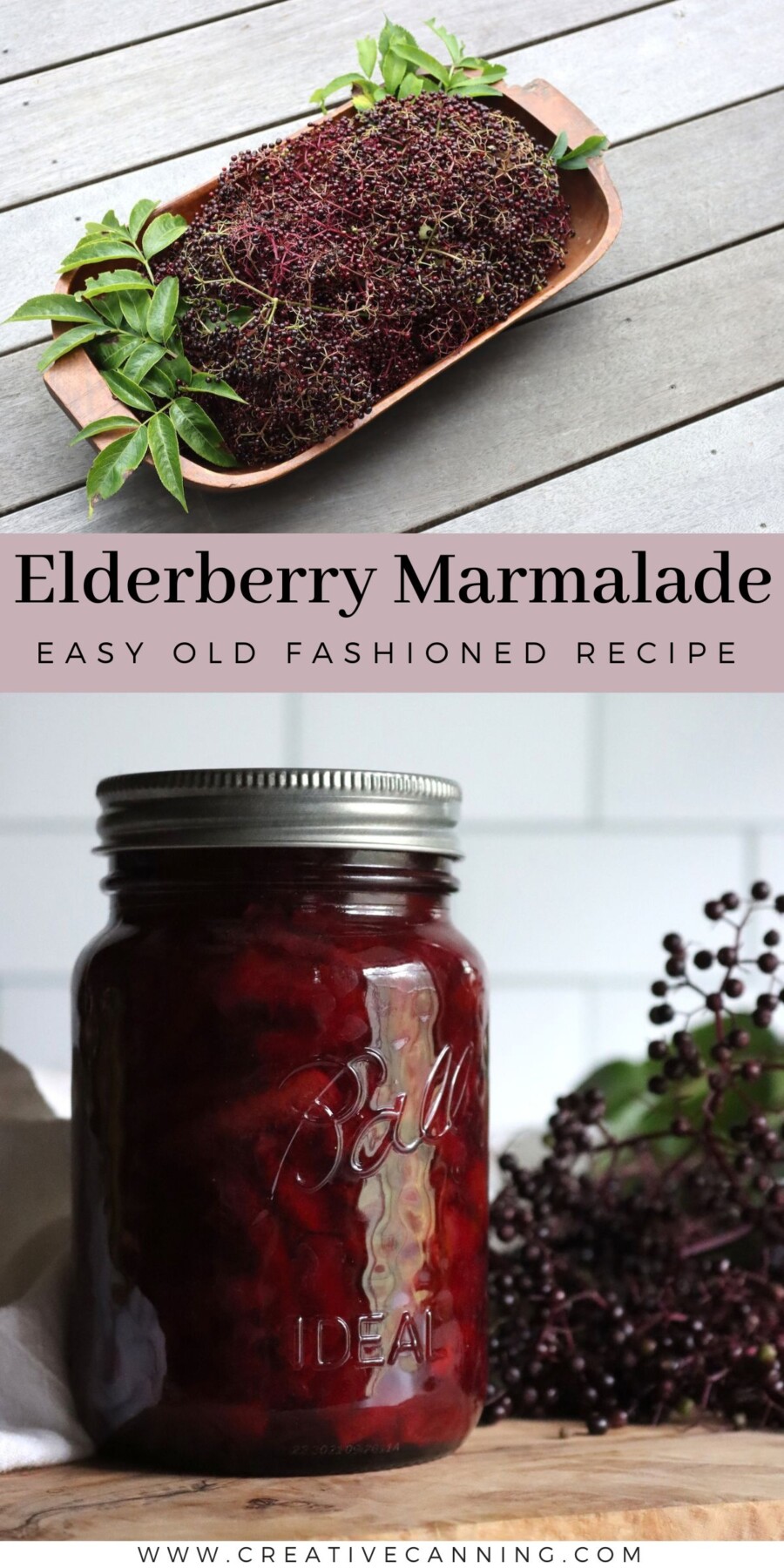
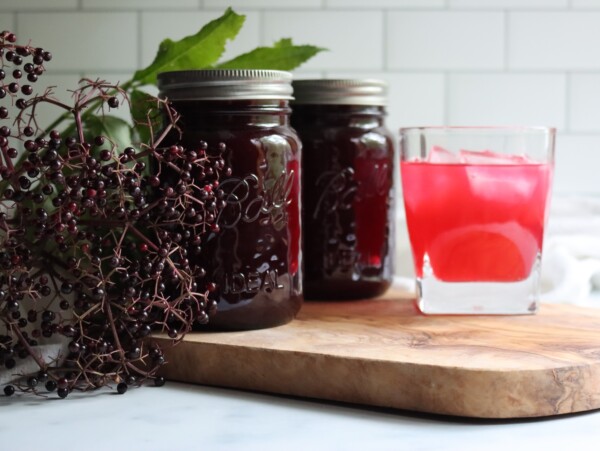
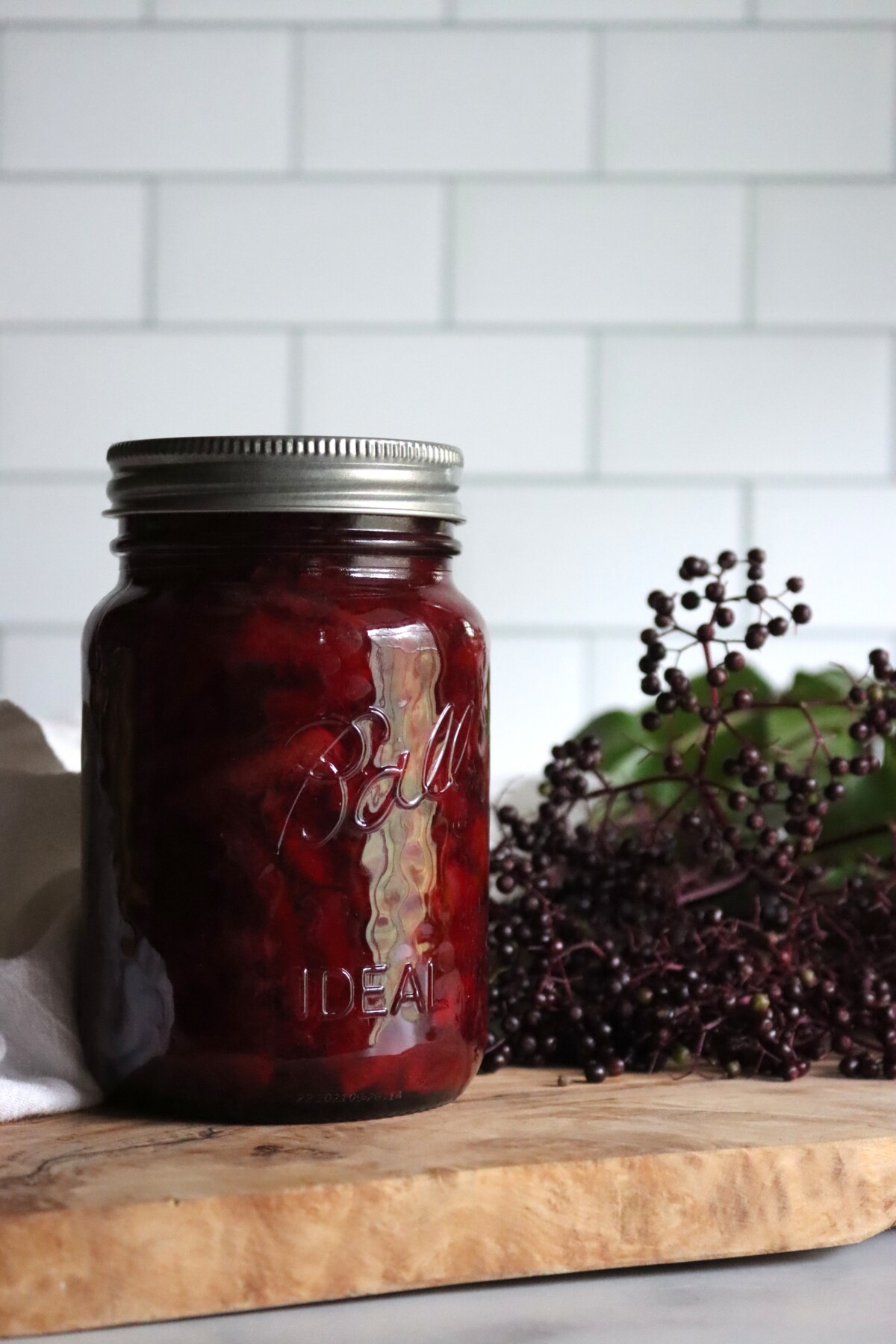
Elderberry marmalade turns an elderberry harvest into a preserve with slices of lemon and orange suspended in it, peel and all. It sets without boxed pectin, and the citrus brightens the berries, so what you taste on your toast is deep elderberry with a little citrus bite.
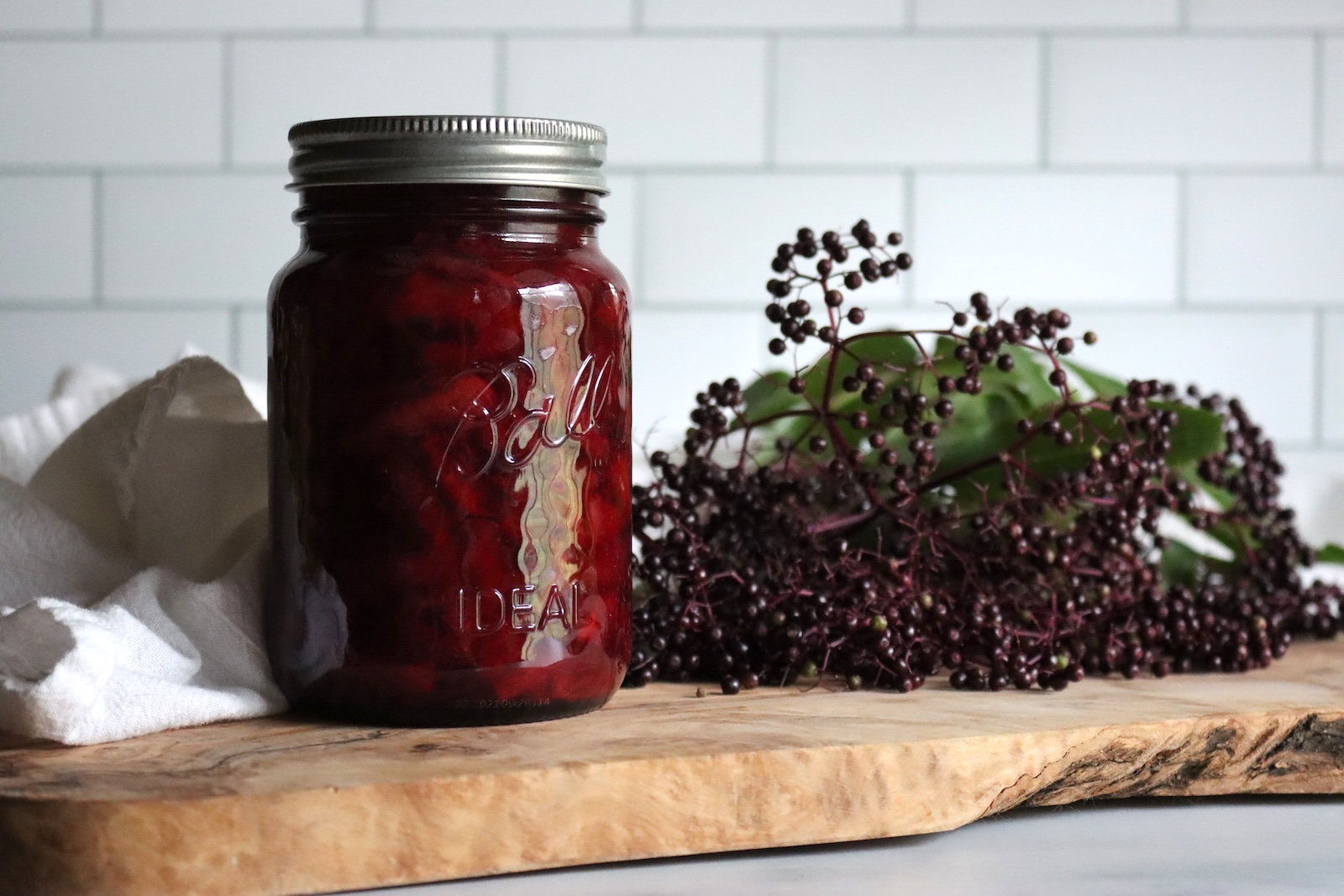
Table of Contents
- Notes from My Kitchen
- A Quick Look at the Recipe
- Ingredients for Elderberry Marmalade
- Citrus Swaps and Substitutions
- How to Make Elderberry Marmalade
- Canning Elderberry Marmalade
- Altitude Adjustments
- Setting Notes
- Ways to Use Elderberry Marmalade
- Storage and Shelf Life
- More Ways to Preserve Elderberries
- Yield Notes
- Elderberry Marmalade FAQs
- Elderberry Canning Recipes
- Marmalade Recipes
This recipe has been reviewed for safety and accuracy by a Master Food Preserver certified through the University of Cornell Cooperative Extension.
Elderberries ripen in late summer, and ours here in Vermont are ready in early September, after most of the summer fruit is already in jars. By then I’m not looking for another big canning day, and a batch this size is about right.
Elderberry jelly is the classic way to can elderberries, and you strain the juice smooth through a jelly bag. Old-fashioned elderberry jam keeps the whole berries, seeds and all. This marmalade is somewhere in between. You make it from the strained juice, so there are no seeds, and slice whole citrus into the pot.
Elderberries have a deep, almost winey flavor. Lemon and orange add a sharp, bright edge, and the marmalade comes out rounder than the jelly and smoother than the jam.
Marmalade is an old way to stretch a small amount of fruit a long way. The whole citrus brings pectin and acid at once, so the pot thickens on its own the way any jam without added pectin does. It’s the same method behind apple marmalade and strawberry marmalade, and behind most of the citrus marmalade recipes I make in February.
If you have more berries than this uses, there’s homemade elderberry syrup for the fridge and elderberry wine for the carboy. If you’re picking wild, start with identifying elderberries before anything goes in a pot.
Notes from My Kitchen

Some years we pick elderberries by the bucketful. They go into elderberry wine and jelly first, and we dry plenty more for tea.
Once those are done, I start looking for new ways to put up the rest. This marmalade is the newest one on my shelf.
A Quick Look at the Recipe
- Recipe Name: Elderberry Marmalade
- Recipe Type: Marmalade (no added pectin)
- Canning Method: Water Bath Canning
- Prep Time: About 30 minutes, plus an overnight soak
- Cook Time: About 30 minutes
- Canning Time: 10 minutes for quarter pints or half pints
- Yield: 3 half pints
- Jar Sizes: Quarter pints or half pints
- Headspace: 1/4 inch
- Ingredients Overview: Elderberry juice, sugar, lemons, orange, bottled lemon juice
- Safe Canning Recipe Source: Follows NCHFP guidance for jams and jellies
- Difficulty: Easy
- Similar Recipes: This sets the same way as the other fruit marmalades without added pectin, like blueberry lemon marmalade and cranberry orange marmalade. If you have more berries to put up, there’s elderberry jelly and elderberry jam.
Ingredients for Elderberry Marmalade
The ingredient list is short. Elderberries and sugar make the base, and the whole lemons and orange are what make it a marmalade.
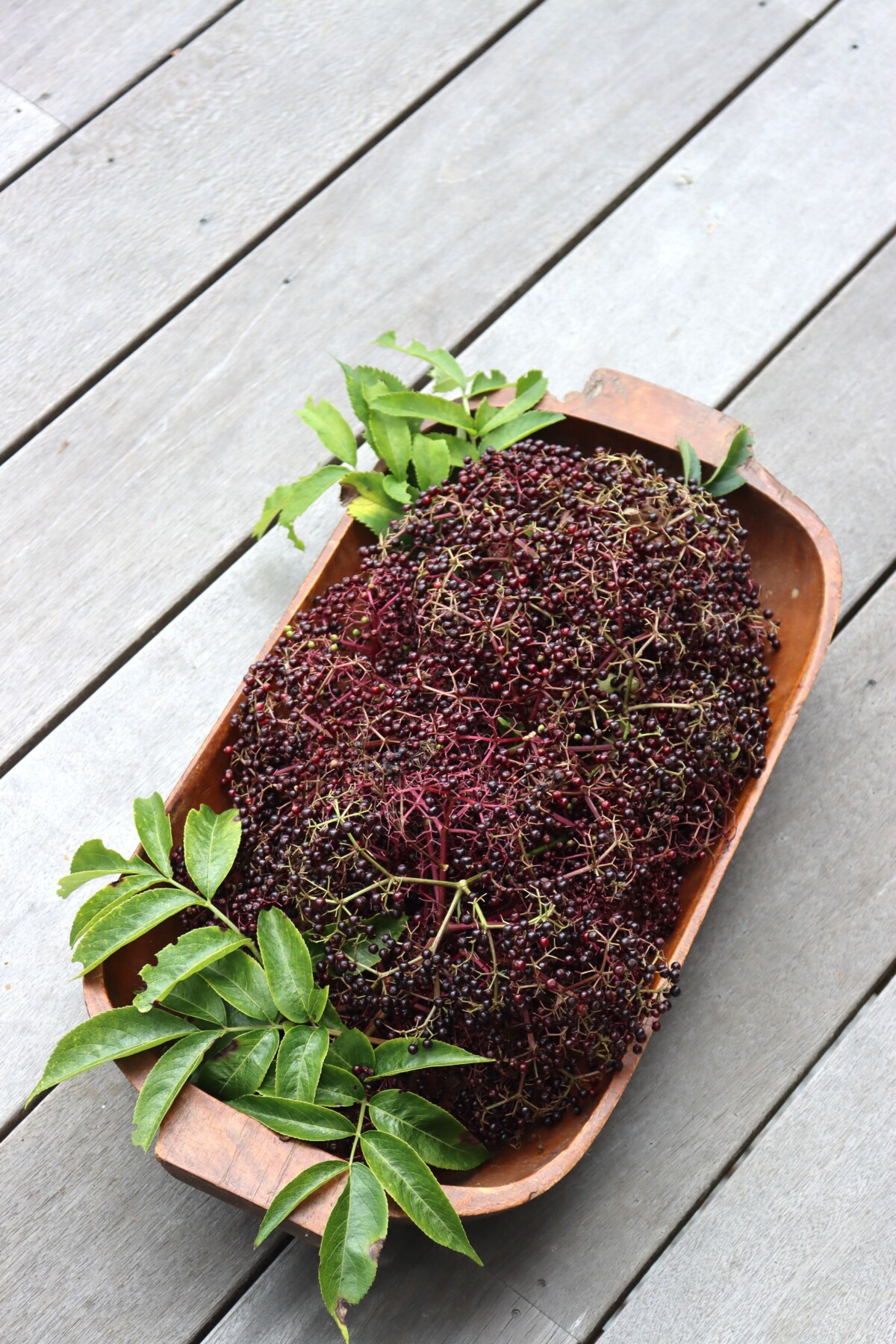
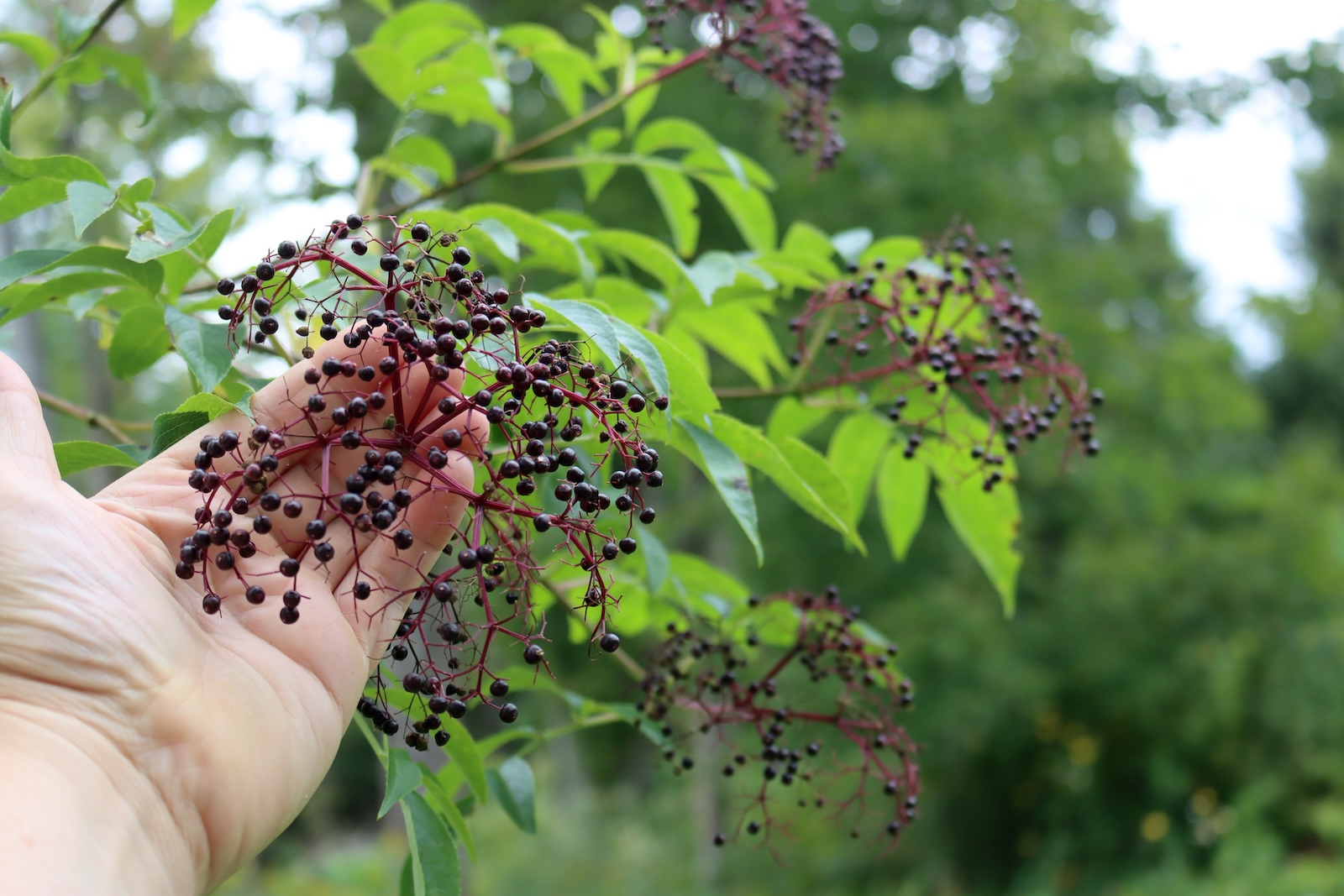
- Elderberries: Fully ripe, deep purple, and completely de-stemmed. Every bit of stem and leaf has to come off, because the green parts of the plant aren’t something you want in a jar, and they turn the flavor bitter. Freeze the clusters first, and the berries pop right off. You simmer the berries themselves into juice here, since elderberries always need cooking before you eat them.
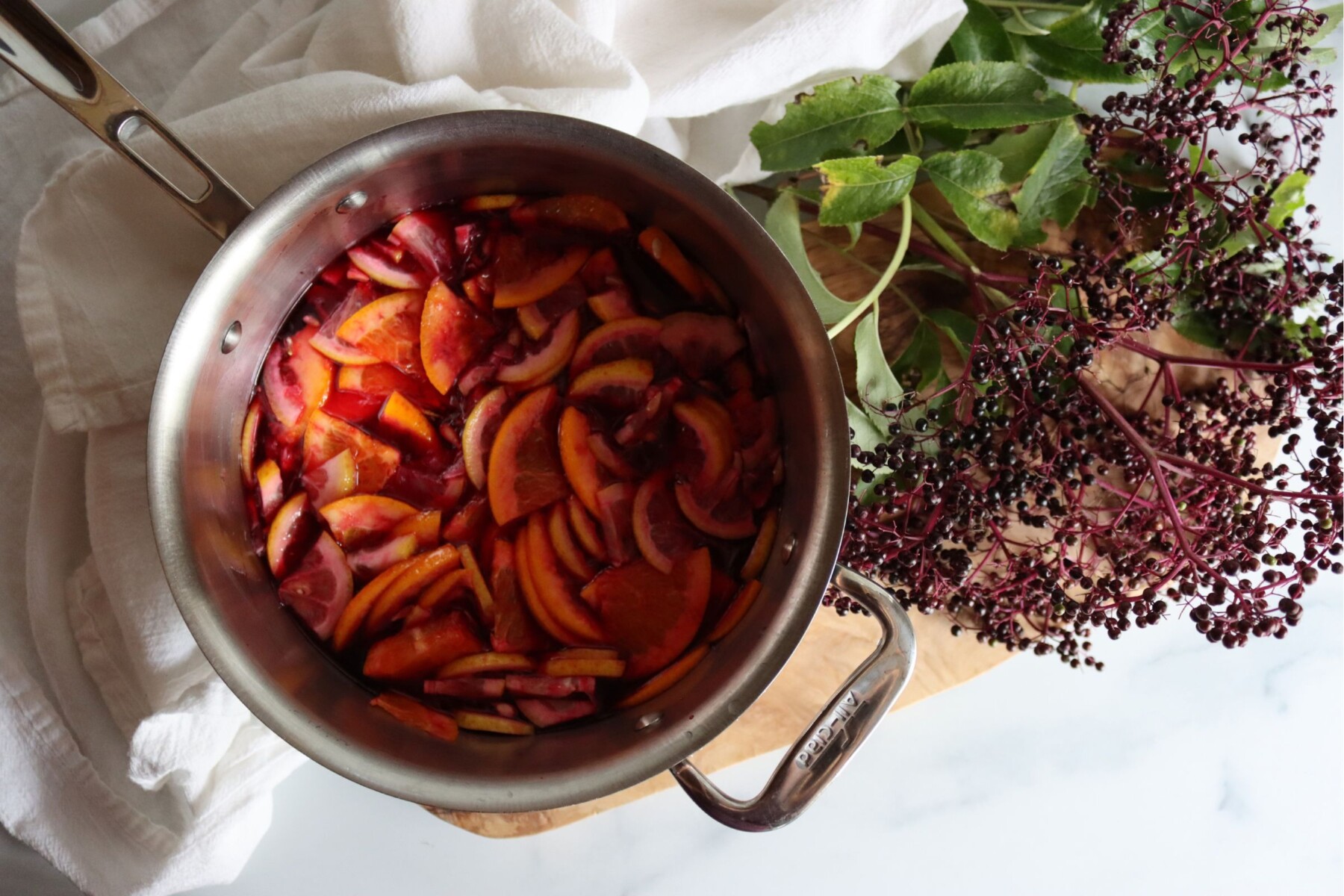
- Lemons: Two whole lemons, peel and all, sliced thin into quarter moons. They add acid and a lot of the pectin. If your lemons are waxed, soak them in very hot water for a few minutes and wipe the wax off first. Any of my lemon canning recipes will use up the rest of the bag.
- Orange: One whole orange, treated the same way. Navel is what I use. The orange rounds out the lemon and softens the bitterness, so the jar doesn’t taste sharp. Blood oranges work here too if you’re making this in winter, and the slices come out a deeper red against the berries.
- Bottled lemon juice: Consistent, tested acidity, which fresh lemons can’t promise, since they vary from one to the next. I use organic bottled lemon juice, and it isn’t optional here.
- Sugar: Plain granulated white sugar. It sweetens, helps the marmalade set, and adds most of the weight in the jars. Elderberries aren’t acidic enough to can on their own, so the sugar is doing preservation work here too. Measure it carefully, and don’t cut it.
- Water: A little for simmering the berries into juice, more for softening the citrus peel. Almost all of it cooks back off before the sugar goes in.
Slice the citrus as thin as you can manage. A sharp knife works, a mandoline slicer is faster, and thin slices are what make the peel tender instead of chewy.
I strain the juice through a jelly bag and stand, and I cook in a wide, heavy-bottomed pot, because a small batch of marmalade scorches the moment you stop stirring.
Citrus Swaps and Substitutions
You can swap the citrus as long as the count doesn’t decrease. Three oranges make a sweeter, rounder marmalade, and limes in place of the lemons make a sharper one. Meyer lemons give you softer peel and less bitterness, the same as in my Meyer lemon marmalade.
The count doesn’t change. One cup of elderberry juice gets at least three whole citrus fruits, because that’s where the acid and most of the pectin come from.
Don’t cut the bottled lemon juice either. The whole fruit and the measured juice both add acid here, and elderberries don’t have enough of their own.
The sugar is the one thing I’d leave alone completely. In most marmalades you can cut it by up to a third, because the fruit is acidic enough to can on its own. Elderberries aren’t. Extension guidance only covers canning elderberries as jam and jelly, and both depend on a very high sugar ratio to make up for it. Honey and low-sugar pectins are out for the same reason.
If a low-sugar preserve is what you’re after, try low-sugar orange marmalade instead, which sets with a low-sugar pectin. Pomona’s Universal Pectin is another way to cut the sugar in a citrus marmalade, and my guide to using Pomona’s pectin walks through how it works.
How to Make Elderberry Marmalade
This is a two-day recipe, but barely. The citrus soaks overnight, and the cooking the next day takes about half an hour. The ratio is 1 cup elderberry juice to 3 cups sugar, plus two whole lemons, one whole orange, and 1/2 cup bottled lemon juice.
If you’re working by weight, that’s 1 pound of elderberries as picked to about 1 1/3 pounds of sugar.
Soak the Citrus
Start with the citrus the night before. Trim the ends off the lemons and the orange, quarter them lengthwise, and pull out every seed. Slice the quarters as thin as you can with the peel still on.
Cover them with cold water and leave them on the counter overnight. That soak pulls out a good bit of the bitterness, and it starts softening the peel before it ever sees heat.
Make the Elderberry Juice
The next day, make the juice. Put the de-stemmed elderberries in a saucepan with a little water, and simmer them for at least 10 minutes, crushing the berries against the side of the pan as they soften.
Strain the whole thing through a jelly bag and let it drip. Don’t wring the bag out dry. I do squeeze mine a little, since the peel is going in whole and nobody is judging this one on clarity.
Measure the juice before it goes in the pot. One pound of elderberries as picked gives about 1 cup, and if you get more, save the extra for another use.
Soften the Peel
Drain the soaking water off the citrus. Put the slices in a wide, heavy-bottomed pot with fresh water and simmer until the peel is tender and most of the water has cooked away, about 10 to 15 minutes.
Test it by pressing a slice against the side of the pot with a spatula. A spatula cuts through tender peel easily. If it doesn’t, add more water and keep simmering, and don’t let the pot go dry.
Getting the peel tender before the sugar goes in is the one step I’d tell you not to rush. Sugar sets the texture of citrus peel. Peel that’s still firm when the sugar hits it stays chewy no matter how long you boil it afterward.
Cook to the Gel Stage
Once the peel is tender, add the elderberry juice, the bottled lemon juice, and the sugar. Bring it back to a hard boil and cook until it reaches the gel stage. That takes about 10 minutes, though it varies with your stove and your citrus.
Check it at 220 degrees F on an instant-read thermometer, or use the frozen plate test. Pull the pot off the heat, skim the foam, and jar it hot.
Canning Elderberry Marmalade
Fill and heat your water bath canner before you start cooking. You’ll finish a batch this small long before a full canner comes up to a boil. Wash the jars, keep them warm, and set the lids, bands, canning funnel, and jar lifter within reach.
Ladle the hot marmalade into hot jars, leaving 1/4 inch headspace. Run a bubble tool around the inside of each jar and top up the headspace if it needs it. Wipe the rims clean before the lids go on, since a sticky rim is a common reason a jar of preserves doesn’t seal. Screw the bands down to fingertip tight.
Lower the jars into the canner until they’re under at least an inch of water. Process quarter pints or half pints for 10 minutes in a boiling water bath canner, adjusting for altitude (see the chart below). Turn off the heat, take the canner lid off, and let the jars sit another 5 minutes before you lift them out. That rest helps keep the marmalade from siphoning out from under the lids.
Cool them on a towel for 12 to 24 hours, undisturbed, before you check the seals.
Altitude Adjustments
For water bath canning, processing times increase at higher elevations:
- 0 to 6,000 feet: 10 minutes
- Above 6,000 feet: 15 minutes
Processing doesn’t change how a marmalade sets. That happens in the pot, before the jars ever go in the canner.
Setting Notes
Marmalade sets as it cools, not in the pot. What goes into the jars is always runny, so don’t judge this one by how it pours.
Give it a full 24 to 48 hours before you decide anything. What you want is a soft, spreadable set with tender slices of peel suspended in it, not something that stands up on a spoon.
The gel stage is 220 degrees F at sea level, and it drops about 1 degree for every 500 feet you go up. At 2,500 feet, you’re looking for roughly 215 degrees F.
If you’d rather not trust a thermometer, keep two small plates in the freezer. Pull the pot off the heat and drop a spoonful onto a cold plate. Put it back in the freezer for a minute, then push the edge with a fingertip. If it wrinkles, it’s done.
Citrus peel brings a lot of pectin, so this one should reach the gel stage sooner than the no-pectin elderberry jam does. If it still hasn’t set after two days, you probably pulled it off the heat early, and my guide to troubleshooting jelly set covers how to recook it. You can also call it elderberry syrup and put it on pancakes. Nobody here has ever complained about that.
Ways to Use Elderberry Marmalade
Toast and good butter, first, the same as any marmalade. It’s especially good on something salty like an English muffin or a biscuit, where the salt balances the bitterness in the peel.
It does well on a cheese board. Elderberry and a sharp aged cheddar are very good together, and it’s worth a spoonful next to a blue cheese if you like that sort of thing. Warm it with a splash of vinegar, and it makes a glaze for pork or duck.
It’s also good on baked brie, or in thumbprint cookies the way you’d use a jelly.
Storage and Shelf Life
After 12 to 24 hours, press the center of each lid. A sealed lid is firm and slightly concave, and it won’t flex under your finger.
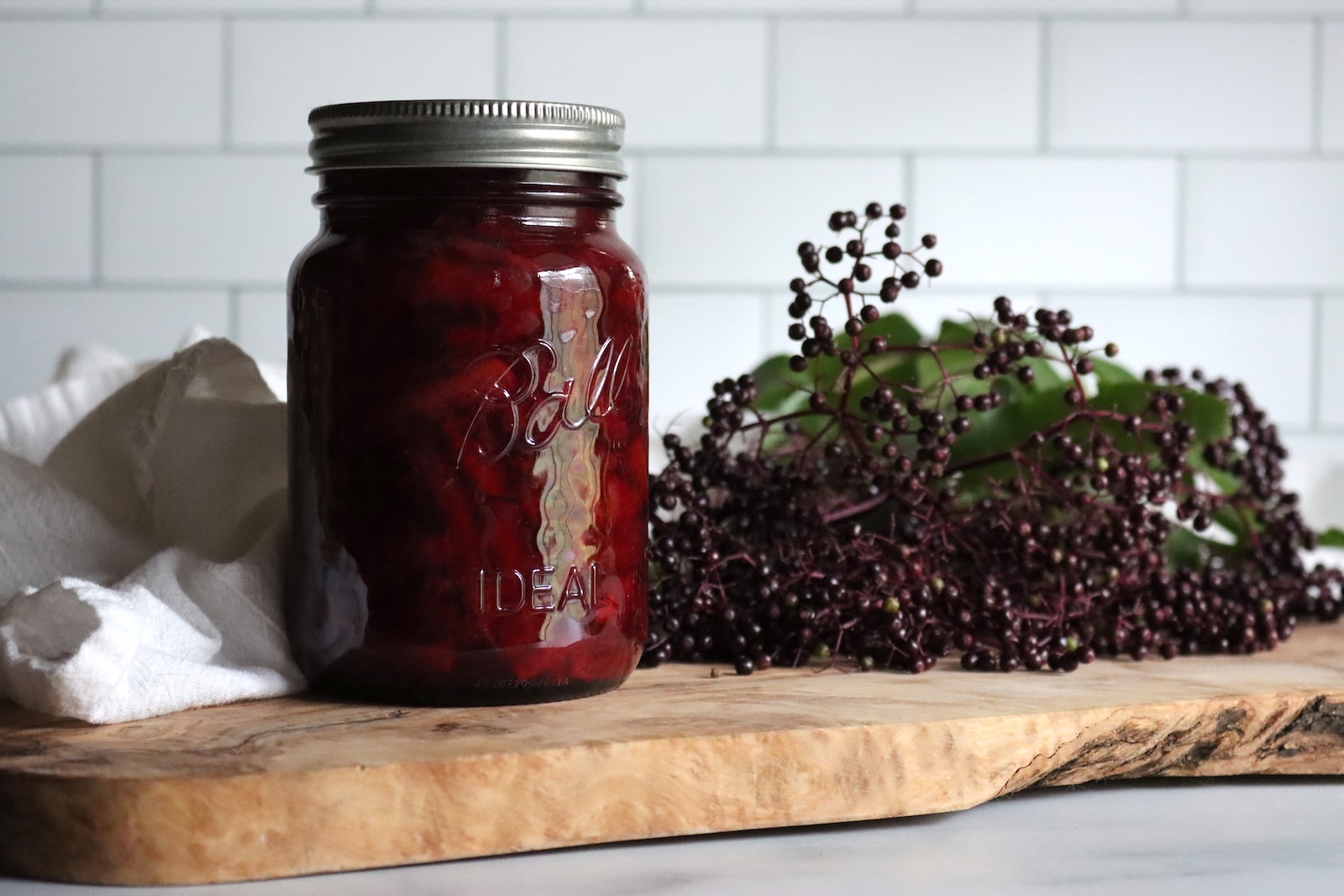
Take the bands off before you put the jars away. If you leave a band on, it can hold a failed lid down and hide a jar that never sealed. Wipe the jars, label them with the date, and store them somewhere cool, dark, and dry. Sealed marmalade holds its quality for 12 to 18 months, and the citrus slices darken toward the color of the berries over that time, which is normal.
If a jar doesn’t seal, put it in the fridge and eat it within a week or two. If you catch it within 24 hours, you can reprocess it with a fresh lid. Once a jar is open, keep it in the fridge and use it within 1 to 2 weeks.
You don’t have to can it at all with a batch this size. It keeps a few weeks in the fridge, or up to 6 months in the freezer. Use straight-sided, freezer-safe jars, since a shouldered jar can crack as the marmalade expands against the shoulder, and leave 1 inch of headspace.
More Ways to Preserve Elderberries
The other two elderberry canning recipes are opposites. Elderberry jelly is the smooth one. Its juice drips through a jelly bag, so it has no seeds and no peel. Old-fashioned elderberry jam is the opposite: you cook the whole berries down and strain nothing out.
Both depend on a high-sugar ratio instead of acid, so you can’t make either one low sugar for canning. If you like the wild fruit end of the jelly shelf, aronia jelly, chokecherry jelly, and wild grape jelly are the same sort of project.
Everything else goes in the fridge, the freezer, or the cupboard. Elderberry syrup is what most people make, and elderberry tincture keeps for years on a shelf. Elderberry wine is worth a gallon if you have the berries for it.
Growing your own elderberries is easy if you want to get ahead for next season, and the flowers earlier in the summer make elderflower jelly.
Yield Notes
One pound of elderberries as picked came out to about 3 cups once I cleaned and de-stemmed them. Simmering them with 3/4 cup of water gave me 1 cup of strained juice, and if you get more, save the extra for another use.
That finished at 3 half pints, with a little left in the pot for toast. Wash a fourth jar before you start, since how far you cook it down changes the count by a partial jar.
This halves cleanly, and it doubles without much trouble, with a few more minutes of boiling at the larger volume. Don’t go past double. A deep pot takes so long to reach the gel stage that the peel overcooks before it sets.
Elderberry Marmalade FAQs
Sugar, set, and the citrus are what come up most on a marmalade like this one.
The citrus peel. A marmalade has whole slices of citrus in it, peel and all, and that is where the texture and the bitterness come from. For my old-fashioned elderberry jam, I cook whole elderberries down with sugar and a little lemon juice, seeds and all. This one starts with strained juice, so there are no seeds, and the only solid pieces in the jar are lemon and orange.
No, not in this one. Most marmalades let you cut the sugar by up to a third, because the fruit is acidic enough to can on its own. Elderberries sit around a pH of 5 and aren’t acidic enough on their own, so extension guidance for elderberry jam and jelly calls for a very high sugar ratio to make up for it. Those ratios come from the University of Wisconsin Extension, and honey doesn’t preserve on the same terms, so it isn’t a swap here. The citrus helps the set and the flavor, but nobody has tested it as a stand-in for any of the sugar, so keep both.
The usual reasons are pulling it off the heat before it reached the gel stage, or scaling the batch up too far. Give it 24 to 48 hours to finish setting, and if it still hasn’t, read through my guide on troubleshooting jelly set. A marmalade that never sets is still good on pancakes.
Yes. Make a quick tea from them instead of juicing fresh berries. Pour 1 1/2 cups of boiling water over about 1/4 cup of dried elderberries, let them steep for 5 minutes, and strain. The dried fruit soaks up some of the water, and you should still end up with about 1 cup. Measure 1 cup for the marmalade, and save any extra for another use.
You can shorten it, but I wouldn’t skip it. The soak pulls bitterness out of the peel and gives it a head start on softening, and peel that goes into sugar still firm stays chewy in the jar. An hour helps. Overnight is better.
Elderberry Canning Recipes
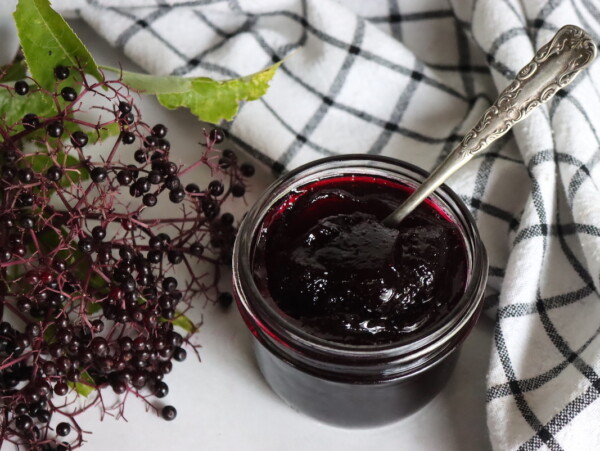
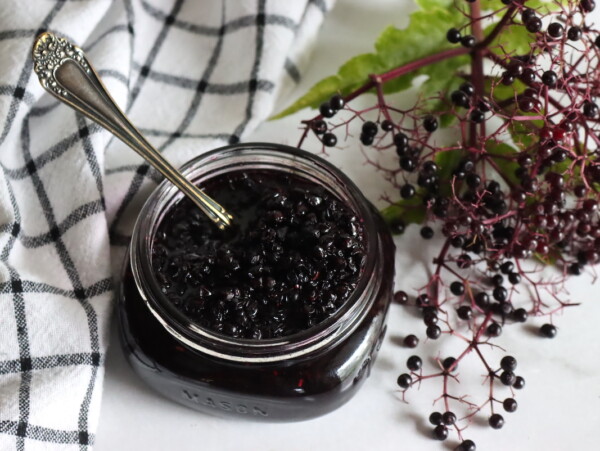
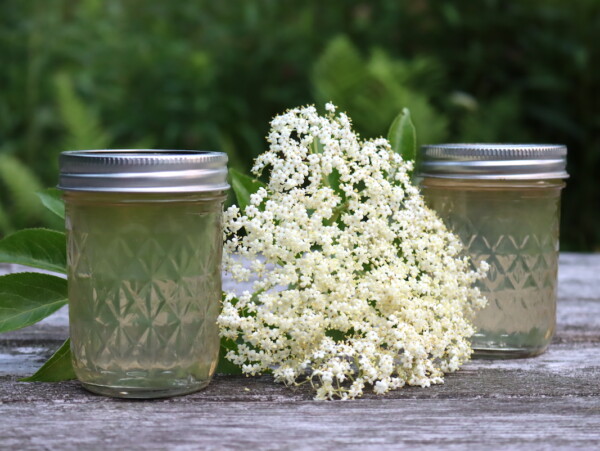
The berries make jelly and jam, and the flowers make a jelly of their own.
If you tried this Elderberry Marmalade recipe, or any other recipe on Creative Canning, leave a ⭐ star rating and let me know what you think in the 📝 comments below!
And make sure you stay in touch with me by following on social media!
Elderberry Marmalade
Equipment
- Canning Jars, Lids and Bands
- Bubble remover
- Large glass or stainless steel bowl
- Sharp knife or mandoline
Ingredients
For the Elderberry Juice
- 1 lb elderberries, as picked, see notes
- 3/4 cup water
For the Marmalade
- 1 cup elderberry juice, measured, see notes
- 2 lemons, quartered and thinly sliced, peel on
- 1 orange, quartered and thinly sliced, peel on
- 2 cups water, for simmering the citrus
- 1/2 cup bottled lemon juice
- 3 cups granulated sugar
Instructions
- Trim the ends off the lemons and the orange, quarter them lengthwise, and pull out the seeds.
- Slice the citrus quarters as thin as you can, peel and all, into small quarter moons.
- Put the citrus in a bowl, cover it with cold water, and leave it overnight. An hour is the minimum.
- De-stem the elderberries completely, so no stem or leaf material goes in the pot.
- Simmer the de-stemmed elderberries with water for at least 10 minutes, crushing the berries against the side of the pan as they soften.
- Strain the cooked berries through a jelly bag and measure the juice (see notes).
- Prepare a water bath canner, jars, and lids, and keep the jars hot until you fill them.
- Drain the soaking water off the citrus and put the slices in a wide, heavy-bottomed pot with fresh water.
- Simmer until the peel is tender and most of the water has cooked away, about 10 to 15 minutes, adding more water if the peel is still firm.
- Test the peel by pressing a slice against the side of the pot with a spatula. A spatula cuts through tender peel easily, and the peel will not soften further once the sugar goes in.
- Add the elderberry juice, bottled lemon juice, and sugar to the tender citrus.
- Return to a hard boil and cook until it reaches the gel stage, about 10 minutes.
- Test for the gel stage at 220 degrees F, or take the pot off the heat and check whether a spoonful wrinkles on a frozen plate.
- Remove the pot from the heat and skim off any foam.
- Ladle the hot marmalade into hot jars, leaving 1/4 inch headspace. Remove air bubbles, adjust the headspace, and wipe the rims clean.
- Center the lids on the jars and screw the bands down to fingertip tight.
- Process quarter pints and half pints in a boiling water bath canner for 10 minutes, adjusting for altitude (see notes).
- Turn off the heat, remove the canner lid, and wait 5 minutes before lifting the jars out onto a towel.
- Cool 12 to 24 hours, check the seals, take the bands off, and store in a cool, dark place.
Notes
- 0 to 6,000 feet: 10 minutes
- Above 6,000 feet: 15 minutes
Nutrition
Nutrition information is automatically calculated, so should only be used as an approximation.
Looking for another jar to put up this week? There’s the method for making marmalade with any citrus, plus orange marmalade and lime marmalade when the winter fruit comes in. The rest of my marmalade recipes and water bath canning recipes are a good place to look if you have the canner out anyway.
Marmalade Recipes
Most of the rest are citrus, and most of them set the same way.
Find the perfect recipe
Searching for something else? Enter keywords to find the perfect recipe!