
This post may contain affiliate links. Please see our disclosure policy.
Asparagus, potato, and leek soup brings two comforting bowls together into one, with sweet spring asparagus, hearty potatoes, and mellow leeks that you can pull off the pantry shelf any month of the year. It is the kind of soup that tastes like a garden lunch in May, even when you are heating up a jar in the middle of January.
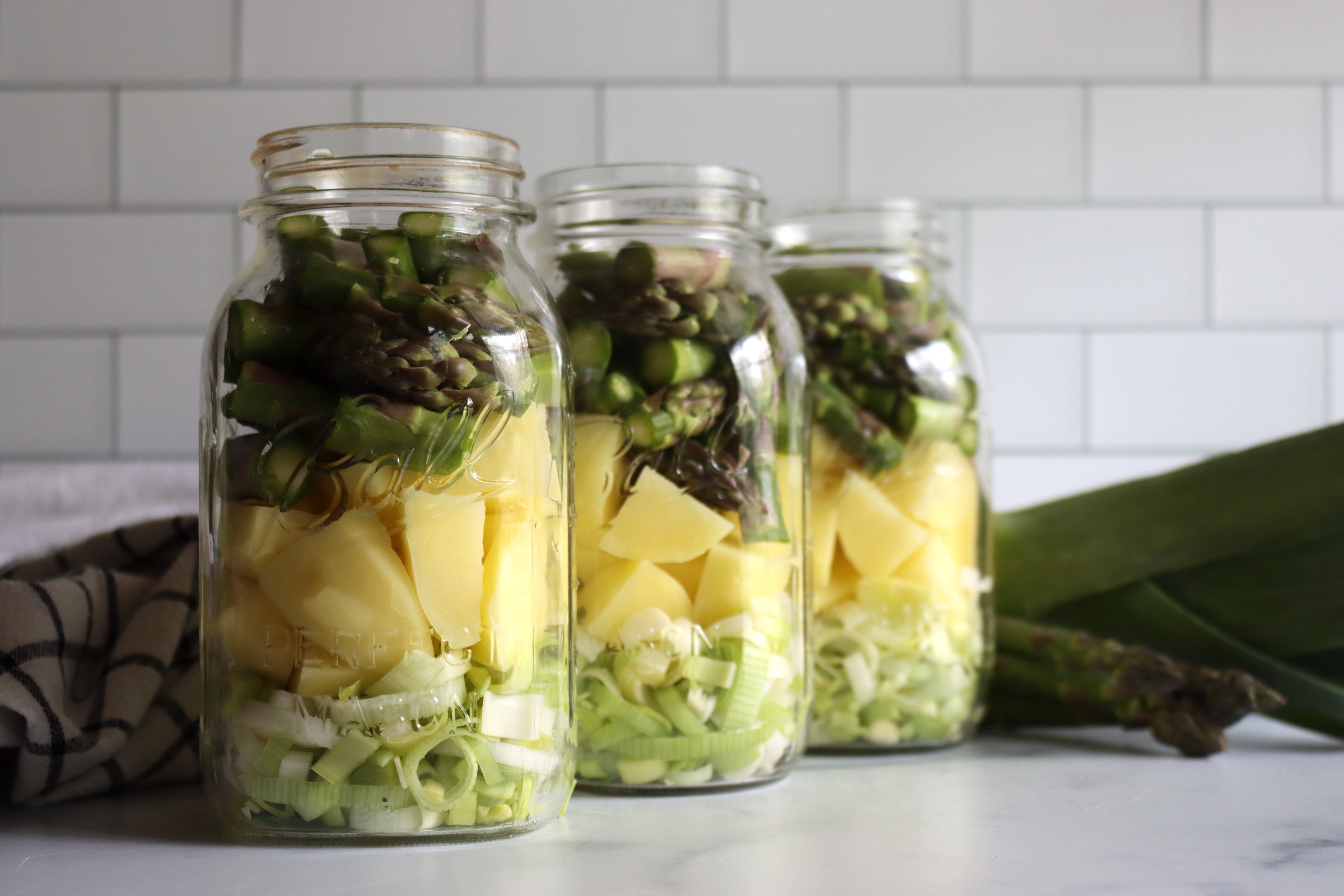
Table of Contents
- Notes from My Kitchen
- Quick Look at the Recipe
- Choosing the Vegetables
- Ingredients for Asparagus Potato & Leek Soup
- Asparagus Potato & Leek Soup Variations
- How to Make Asparagus Potato & Leek Soup
- Canning Asparagus Potato & Leek Soup
- Altitude Adjustments
- Tips for Success
- Serving Ideas for Asparagus Potato & Leek Soup
- Yield Notes
- Asparagus Potato & Leek Soup FAQs
- Soup Canning Recipes
- Canning Asparagus Potato & Leek Soup Recipe
- Meal in a Jar Canning Recipes
This recipe has been reviewed for safety and accuracy by a Master Food Preserver certified through the University of Cornell Cooperative Extension.
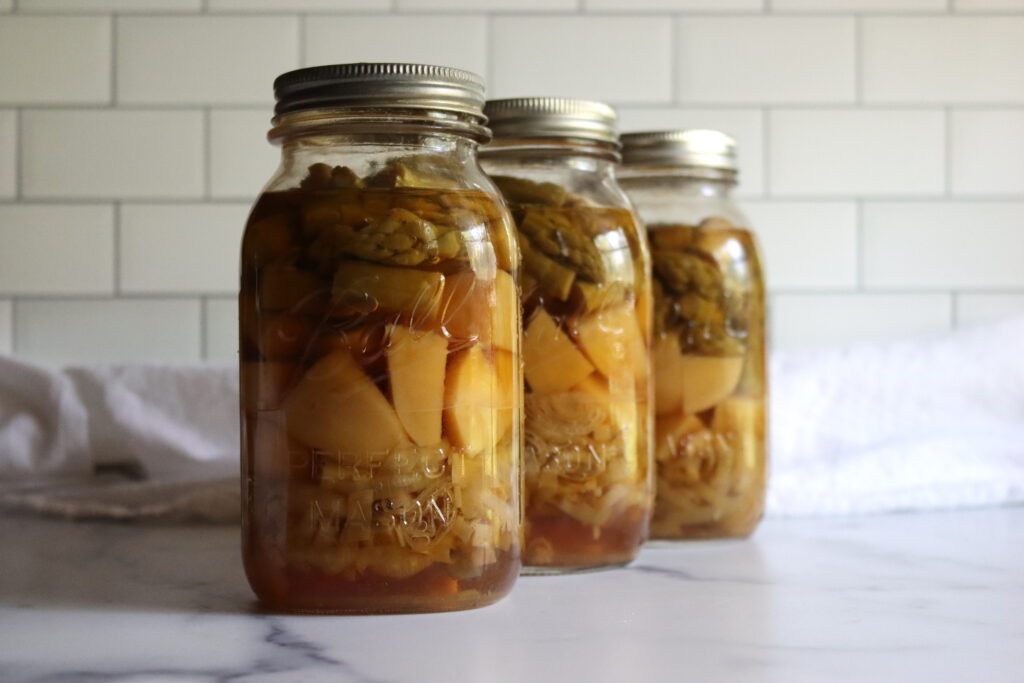
Canning asparagus, potato, and leek soup follows the same pressure canning process as the other vegetable soups I keep on the shelf, like my asparagus soup base and my potato leek soup. It uses the hearty soup guidelines from the University of Alaska, which means the jars are packed mostly full of vegetables with broth filling the gaps, then processed in a pressure canner long enough to make them safe and shelf stable.
As written this is a small two quart batch, sized to the smallest safe load for a pressure canner, but the proportions are forgiving and the recipe scales up to fill a full canner whenever you have the asparagus to spare. I keep it vegetarian with homemade vegetable broth, though a swap to chicken stock adds a little richness if you would rather go that direction.
Notes from My Kitchen

I canned this one almost by accident. Early one spring I had a flush of asparagus coming out of the garden faster than we could eat it, so I had a batch of plain asparagus soup base and a batch of potato leek soup simmering side by side on the stove. Standing there between the two pots, I started wondering whether those flavors might belong in the same jar, and after a quick taste with a ladle from each, I went ahead and combined them.
It turned out to be a keeper. My kids already loved the potato leek, and the asparagus gives it a fresh green note that keeps it from feeling too heavy. I usually puree mine smooth once I open a jar, with a little parmesan or a spoonful of sour cream stirred in, and it makes a quick lunch on a cold day when the garden feels very far away.
Quick Look at the Recipe
- Recipe Name: Asparagus, Potato, and Leek Soup
- Recipe Type: Soup Canning Recipe (Hearty)
- Canning Method: Pressure Canning
- Prep Time: About 20 minutes
- Cook Time: About 10 minutes
- Canning Time: Pints 75 minutes, Quarts 90 minutes
- Yield: About 2 quarts or 4 pints (scales up to fill the canner)
- Jar Sizes: Pints and quarts
- Headspace: 1 inch
- Ingredients Overview: Leeks, potatoes, asparagus, vegetable broth, salt
- Safe Canning Recipe Source: University of Alaska Hearty Soups Guidance
- Difficulty: Easy
- Similar Recipes: Canning asparagus, potato, and leek soup is a lot like other pressure canned vegetable soups, such as Potato Leek Soup and Asparagus Soup Base. If you enjoy putting up garden vegetables this way, try other soup canning recipes like Classic Vegetable Soup or Carrot Soup.
Choosing the Vegetables
The vegetables in this soup all need to be ones that hold up to a long stay in the pressure canner, and the trio here was chosen partly for that reason. Waxy potatoes like Yukon Gold or red potatoes keep their shape better than starchy russets, which tend to break down into the broth, so I reach for those when I have the choice.
Leeks bring a soft, oniony sweetness without the sharp bite of an onion, and they want a careful wash before they go in the pot, since grit likes to hide between the layers. For the asparagus, slimmer spears tend to stay tender through processing, while thick woody ends are worth trimming off, and if you have extra spears beyond what the soup needs, they are easy to put up on their own as canned asparagus.
Ingredients for Asparagus Potato & Leek Soup
The exact amounts are in the recipe card below, but here is what each part brings to the jar and where you have room to adjust. This is a short ingredient list, and none of it is fussy, which is part of why it has stayed in my canning rotation.
- Leeks: the mild allium backbone of the soup. Use the white and pale green parts, sliced and washed well to get the grit out from between the layers. They soften into a gentle sweetness during processing.
- Potatoes: they give the soup its body and make it filling. Waxy varieties like Yukon Gold or red potatoes hold their shape in the jar, while starchy russets tend to dissolve into the broth. Peel and dice them into bite sized pieces so they cook evenly.
- Asparagus: the spring flavor that makes this more than a plain potato soup. Trim the tough ends and cut the spears into one inch pieces. If you find yourself with more than the soup calls for, you can also put it up as canned asparagus on its own.
- Vegetable Broth: it fills the gaps between the solids and carries the flavor. Homemade vegetable broth is what I use, but a good store bought broth works just as well, and chicken stock is fine here too if you are not keeping it vegetarian.
- Salt: for seasoning. It is there for flavor, not safety, so you can adjust it to taste or leave it out without affecting how the soup cans.
You will notice there is no cream, cheese, flour, or thickener in that list, and that is on purpose. Those ingredients are not safe to can in a low acid soup, so anything that turns this into a creamy bisque gets stirred in at serving instead, which I will come back to below.
Asparagus Potato & Leek Soup Variations
This recipe follows the hearty soup guidelines from the University of Alaska (publication FNH-00065), where the jars are packed mostly full of vegetables and the processing time and pressure are what make the soup safe to store at room temperature. Those numbers are fixed, so the time cannot be shortened, the pressure cannot be lowered, and this soup cannot be water bath canned. It contains only low acid vegetables, and a water bath canner does not reach a high enough temperature to make low acid food safe.
You can adjust the seasonings freely, adding herbs like thyme or a little black pepper before canning without any trouble. What you cannot add before canning is anything that thickens or enriches the soup, so cream, milk, cheese, butter, and flour or cornstarch all wait until you reheat a jar to serve.
The vegetable ratios are flexible too, so a little more potato or a little less asparagus is fine, as long as you keep the jars packed to the hearty guideline with the broth filling the gaps.
How to Make Asparagus Potato & Leek Soup
Making this soup for the canner is mostly prep work, since the pressure canner does the real cooking once the jars are sealed. The job before that is washing and chopping the vegetables, bringing everything up to a boil with the broth, and packing it hot into clean jars.
I like to get my jars and canner heating before I start chopping, so everything stays hot and moves along without a lot of waiting. A hot pack like this is about quality rather than safety, since the contents finish cooking in the canner, but starting hot helps the vegetables hold their texture and keeps the jars from cracking on a temperature shock.
Prepare the Ingredients
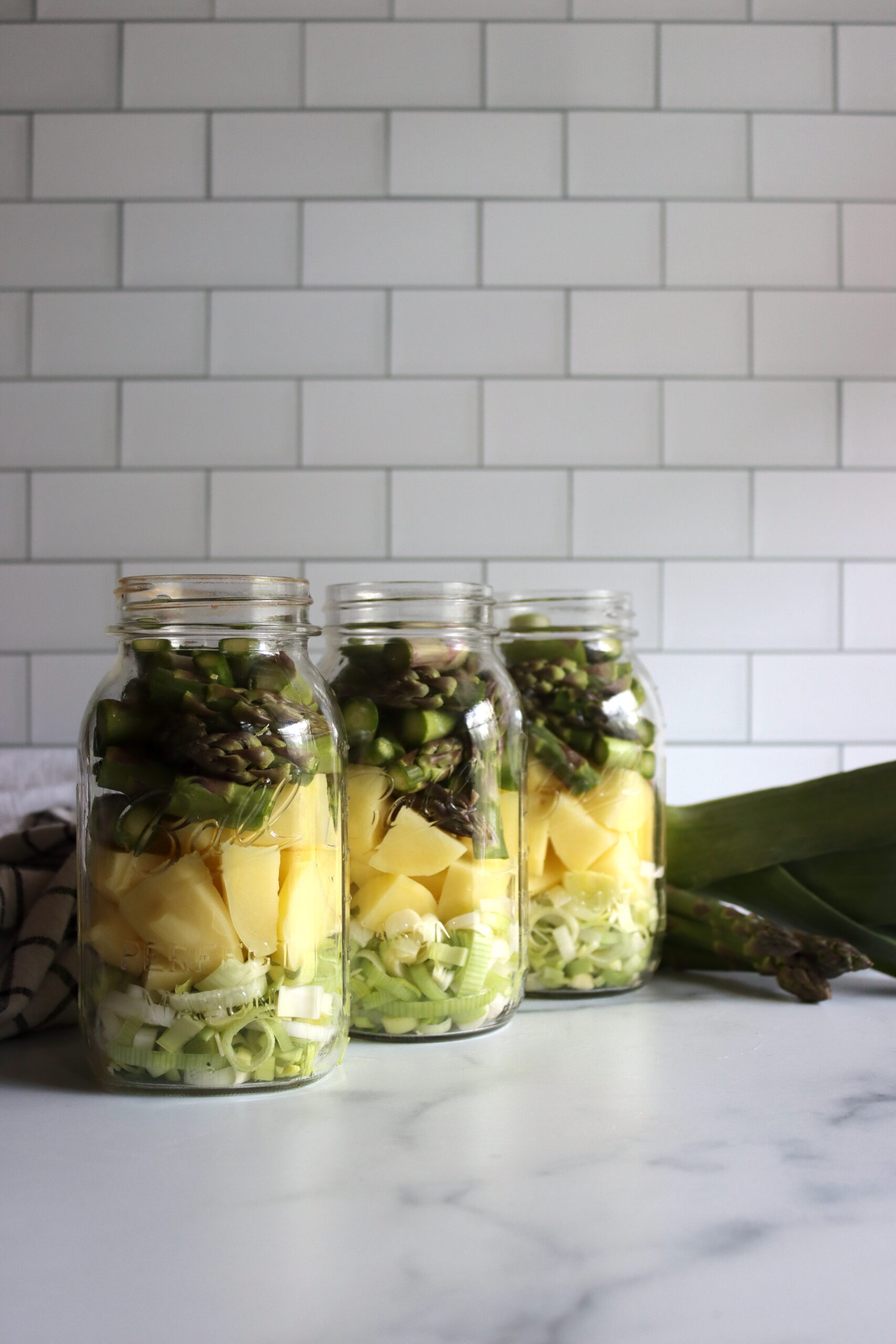
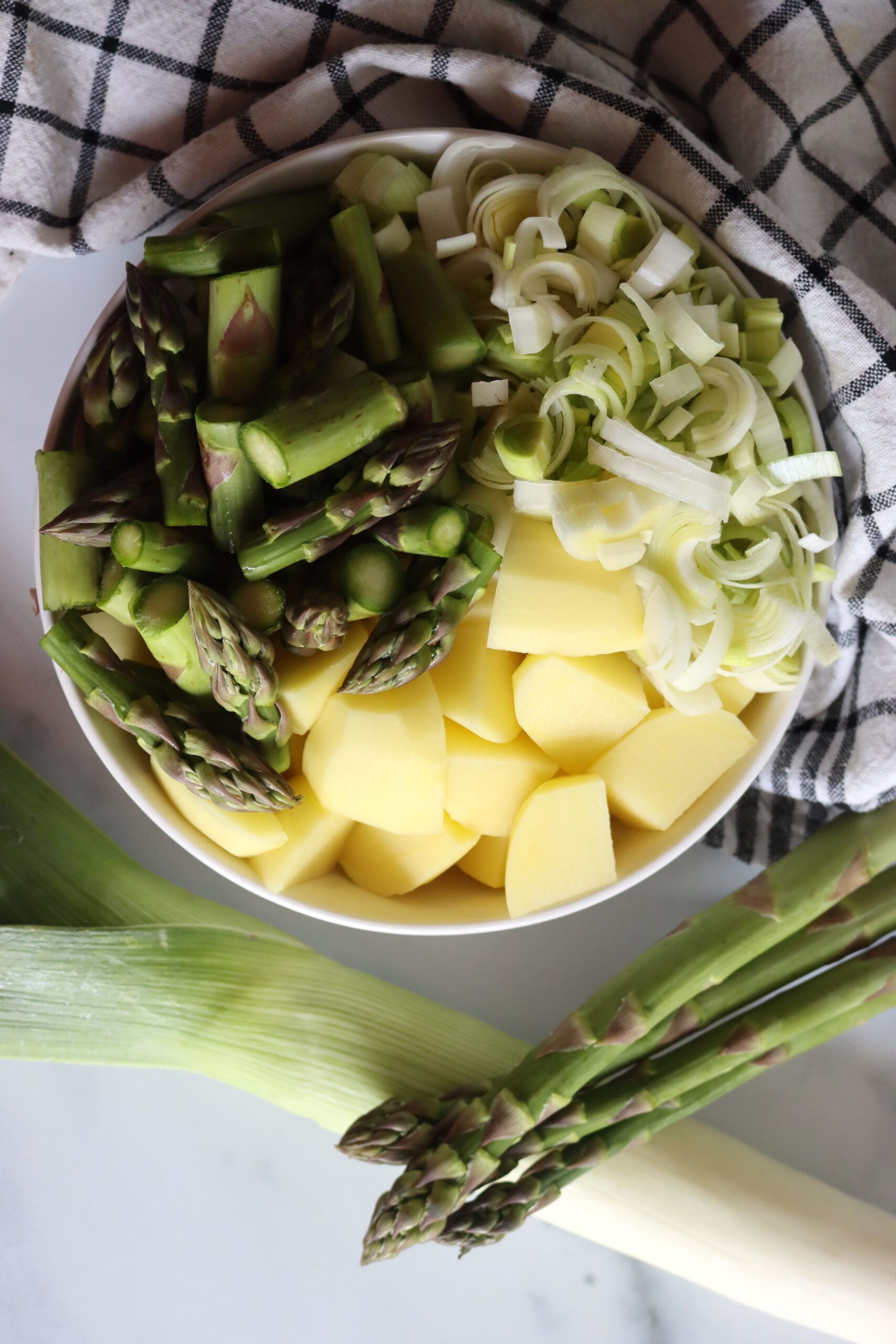
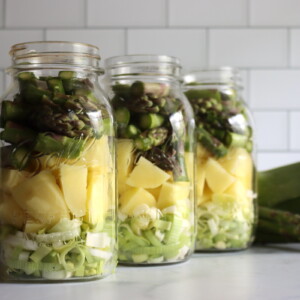
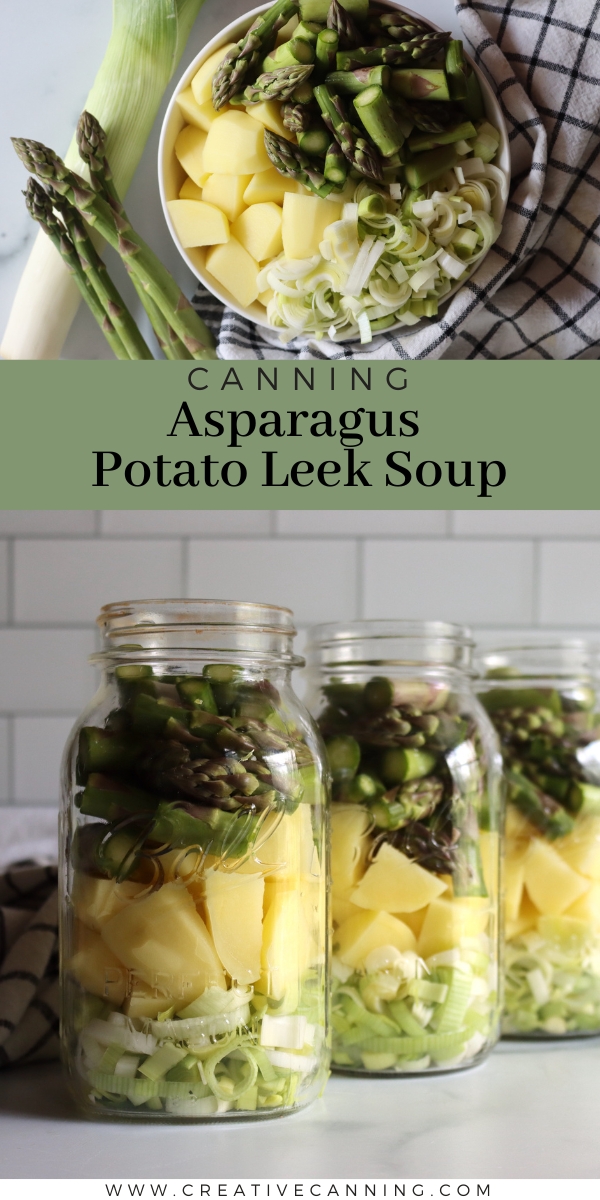
Wash the leeks well and slice them, separating the layers under running water if you see any grit hiding inside. Peel the potatoes and dice them into bite sized pieces, then trim the asparagus and cut it into one inch lengths. For a small two quart batch you are looking at about 2 cups of sliced leeks, 3 cups of diced potatoes, and 3 cups of chopped asparagus.
Add the vegetables to a large pot along with 2 teaspoons of salt and enough vegetable broth to cover, roughly 4 cups. If you are adding herbs like thyme or rosemary, this is the moment for them. Bring the pot up to a boil, then drop it to a simmer for about 5 minutes, which softens the vegetables just enough to help them hold up through the long process in the canner.
Simmer and Pack the Jars
This recipe uses the hearty pack, which means the jars get filled mostly with the solid vegetables, leaving a generous 1 inch of headspace, and then the hot broth is ladled over the top to fill in the gaps. A slotted spoon makes this easier, since you can lift the vegetables in first and then pour the broth around them.
Once the jars are filled, run a bubble remover or a thin spatula around the inside to release any trapped air, and check that you still have 1 inch of headspace, topping up with broth if needed. Wipe the rims clean with a damp cloth so nothing interferes with the seal, set the lids on, and screw the bands down to fingertip tight.
Canning Asparagus Potato & Leek Soup
This is a hot pack recipe processed in a pressure canner, and the smallest batch you can safely run is 2 quarts or 4 pints, which is the minimum load a pressure canner needs to come up to temperature properly. The recipe as written makes exactly that small batch, but it scales up cleanly, so feel free to double or triple it to fill your canner if you have the vegetables on hand.
To can, prepare your pressure canner, jars, and lids. Pack the jars to the hearty guideline, leave 1 inch of headspace, remove the air bubbles, wipe the rims, and apply the lids and bands fingertip tight. Place the filled jars in the canner, lock the lid, and let the steam vent for a full 10 minutes before adding the weight and bringing it up to pressure.
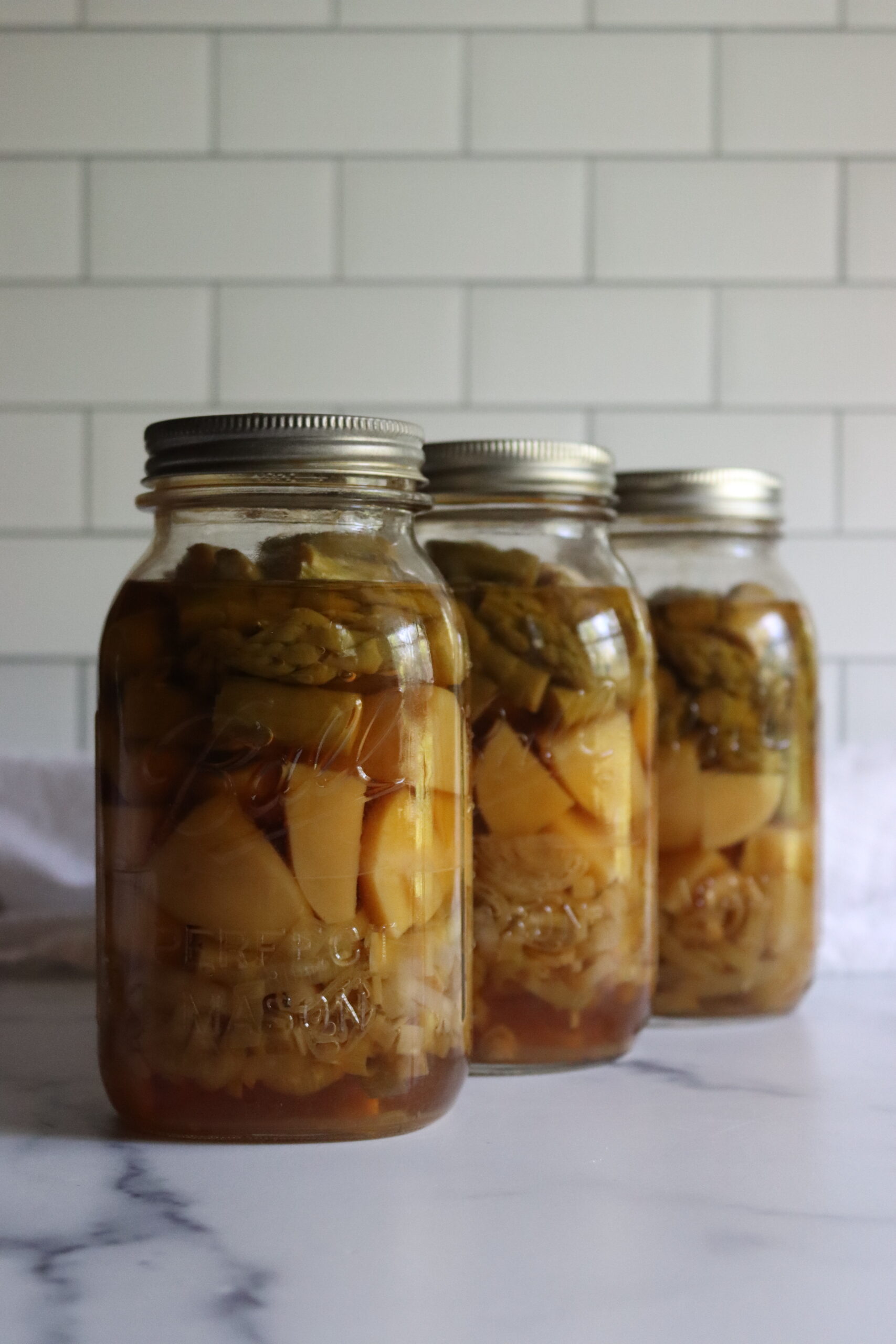
Process pints for 75 minutes or quarts for 90 minutes at 10 pounds pressure in a weighted gauge canner or 11 pounds in a dial gauge canner, adjusting for altitude. Use a natural pressure release when the time is up, and never force cool the canner. Once the pressure has come down on its own, remove the jars and let them sit undisturbed for 12 to 24 hours before checking the seals.
Altitude Adjustments
With pressure canning, the processing times stay the same at higher altitudes, but the pressures change. Here are the altitude adjustments for pressure canning asparagus, potato, and leek soup:
For dial gauge pressure canners:
- 0 to 2,000 feet: 11 lbs pressure
- 2,001 to 4,000 feet: 12 lbs pressure
- 4,001 to 6,000 feet: 13 lbs pressure
- 6,001 to 8,000 feet: 14 lbs pressure
For weighted gauge pressure canners:
- 0 to 1,000 feet: 10 lbs pressure
- Above 1,000 feet: 15 lbs pressure
Tips for Success
Hold off on pureeing until you are ready to serve. A smooth, pureed soup is too dense to can safely, since the heat cannot move through a thick puree the way it moves through a brothy jar of chunks, so this one always goes into the jar in pieces and gets blended later if you want it smooth.
Waxy potatoes really do make a difference here, since starchy ones tend to dissolve into the broth during the long process and can leave the soup cloudy and thick. If a little cloudiness happens anyway, it is purely a texture thing and not a sign of a problem. And if you are canning a mixed load of pint and quart jars at once, process the whole batch for the longer quart time of 90 minutes.
Serving Ideas for Asparagus Potato & Leek Soup
To serve, empty a jar into a saucepan and heat it through on the stove, or warm it right in the jar in the microwave with the lid and band removed. From there it goes one of two ways in my kitchen. Some days I leave it chunky and rustic, and other days I blend it smooth with an immersion blender for a silkier bowl.
This is the point where all the rich additions that could not go in the canner come into play. A splash of cream or a spoonful of sour cream or creme fraiche turns it into a velvety bisque, a handful of grated parmesan melts in nicely, and a drizzle of good olive oil with some fresh herbs on top finishes it off. It pairs well with crusty bread or a grilled cheese for a fuller meal, and it sits comfortably alongside the other vegetarian soup canning recipes on the pantry shelf.
Yield Notes
A two quart batch as written gives you, predictably, about 2 quarts or 4 pints of soup, which is the smallest load you should run in a pressure canner. The exact yield shifts a little depending on how finely you chop and how tightly you pack the jars, so treat it as a close estimate rather than an exact count.
Scaling up is simple, since the ratios hold no matter how big the batch gets. Multiply the vegetables and broth to fill as many jars as your canner holds, and process by jar size rather than by batch size. The one rule that does not bend is the floor: do not can less than 2 quarts or 4 pints at a time, since a pressure canner needs that much in it to heat properly.
Here are answers to a few questions that come up most often with this soup.
Asparagus Potato & Leek Soup FAQs
No. Asparagus, potato, and leek soup is made of low acid vegetables, so it is not safe for water bath canning. You need to use a pressure canner to make safe, shelf stable jars.
No. Flour, cornstarch, and other thickeners are too dense to let heat move through the jar safely, so they are never added before canning. Thicken the soup on the stove when you reheat it to serve.
No. A pureed soup is too thick for heat to penetrate safely during processing, so this soup is always canned in chunks. Blend it smooth after you open a jar, when you are reheating it to serve.
Properly processed and sealed jars keep for about 12 to 18 months in a cool, dark place, though they stay safe longer. Refrigerate after opening and use within 3 to 4 days.
There are so many soups worth keeping in jars. Try a few more of these for your pantry:
Soup Canning Recipes
If you tried this Asparagus, Potato, and Leek Soup recipe, or any other recipe on Creative Canning, leave a ⭐ star rating and let me know what you think in the 📝 comments below!
And make sure you stay in touch with me by following on social media!
Canning Asparagus Potato & Leek Soup
Equipment
- Canning Jars, Lids and Bands
Ingredients
- 2 cup leeks, sliced
- 3 cups potatoes, diced
- 3 cups asparagus, chopped
- 2 tsp salt
- 4 cups vegetable broth, plus more to fill as needed
Instructions
- Prepare a pressure canner, jars, and lids. Wash and slice the leeks, peel and dice the potatoes, and trim and chop the asparagus.
- Combine the leeks, potatoes, asparagus, and salt in a large pot. Add vegetable broth to cover and bring to a boil, then reduce to a simmer for 5 minutes.
- Using a slotted spoon, pack the hot vegetables into the jars to the hearty guideline, leaving 1 inch headspace. Ladle hot broth over the top to fill the gaps, keeping 1 inch headspace.
- Run a bubble remover around the inside of each jar to release trapped air, adjust the headspace if needed, then wipe the rims and set the lids and bands to fingertip tight.
- Place the jars in the pressure canner and vent the steam for 10 minutes before adding the weight. Process pints for 75 minutes or quarts for 90 minutes at 10 lbs pressure in a weighted gauge canner or 11 lbs in a dial gauge canner, adjusting for altitude.
- Allow a natural pressure release. Remove the jars and cool undisturbed for 12 to 24 hours, then check the seals.
Notes
- 0 to 2,000 feet in elevation – 11 lbs pressure
- 2,001 to 4,000 feet in elevation – 12 lbs pressure
- 4,001 to 6,000 feet in elevation – 13 lbs pressure
- 6,001 to 8,000 feet in elevation – 14 lbs pressure
- 0 to 1,000 feet in elevation – 10 lbs pressure
- Above 1,000 feet – 15 lbs pressure
Nutrition
Nutrition information is automatically calculated, so should only be used as an approximation.
And if you are stocking the pantry with ready to heat meals, here are more recipes to can:
Meal in a Jar Canning Recipes
Find the perfect recipe
Searching for something else? Enter keywords to find the perfect recipe!

Thanks for this great, easy idea!
You’re quite welcome!
Can you puree the soup before canning?
No, this one has to be pureed at serving. When canning soups at home, it’s hard to ensure the right density in pureed soups, and it’s tricky to ensure even processing. The only tested method is canning them in chunks and then pureeing at serving.