
This post may contain affiliate links. Please see our disclosure policy.
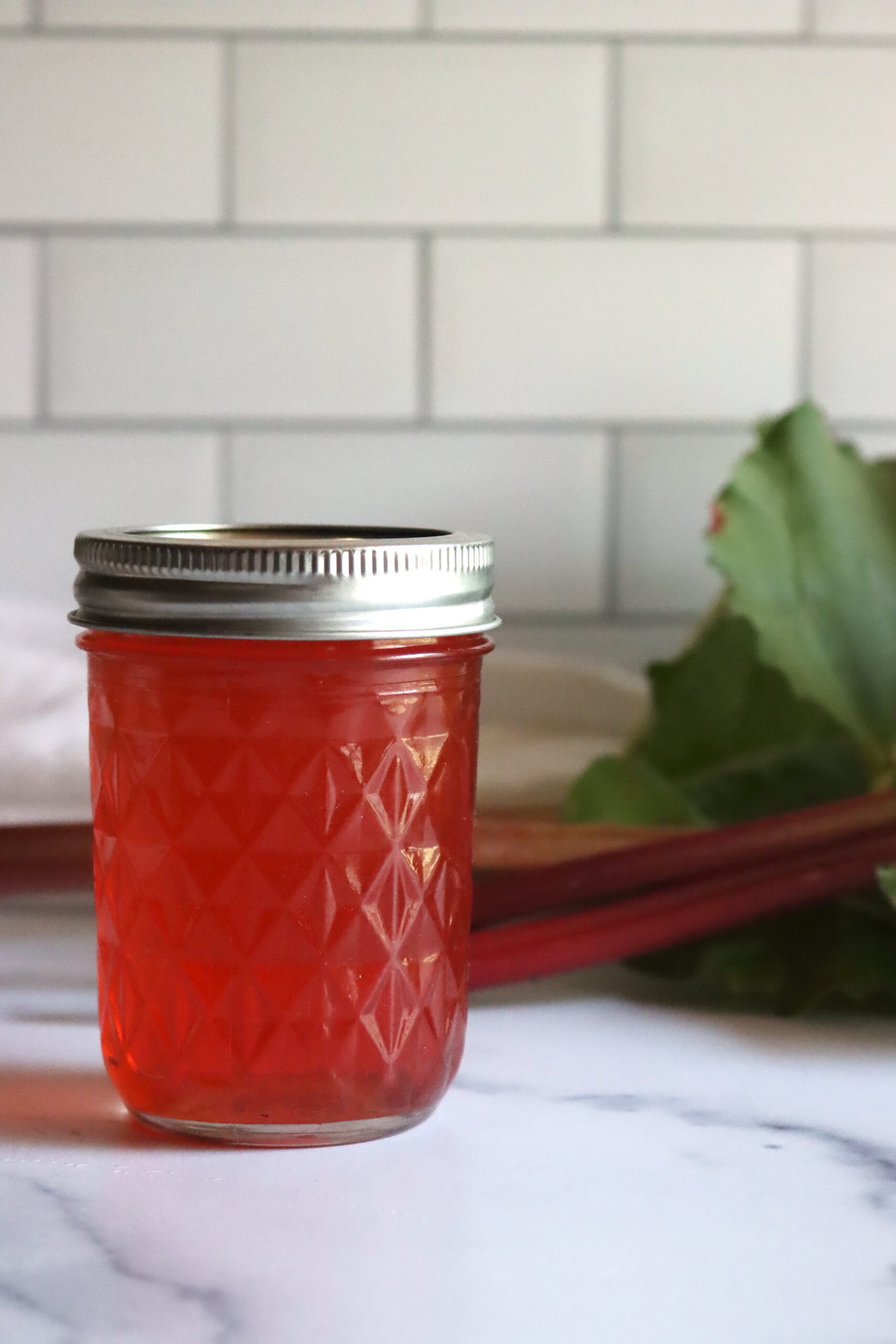
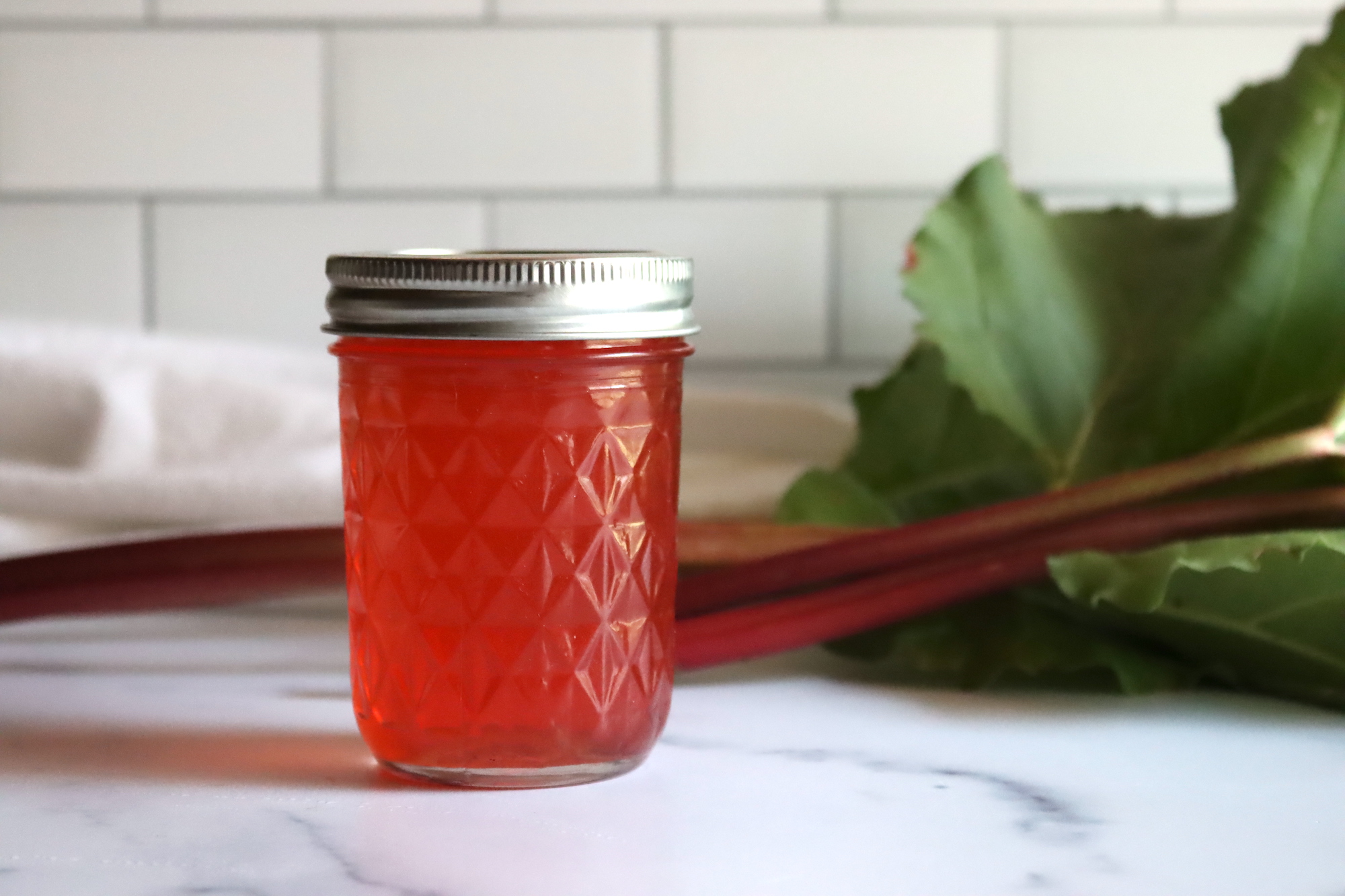
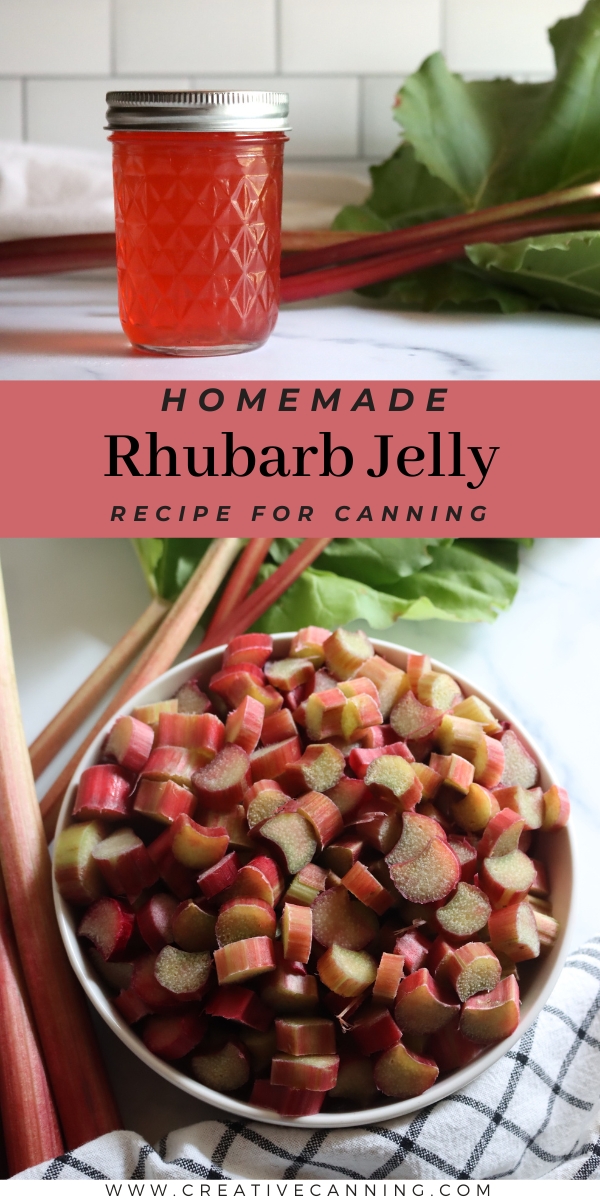
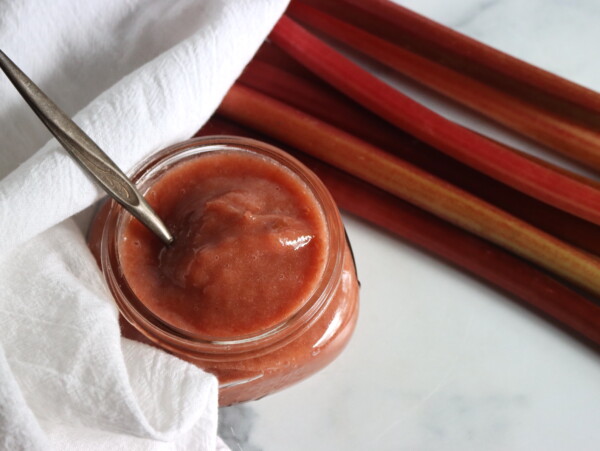
Rhubarb jelly captures the bright, tart flavor of spring rhubarb in a smooth, clear spread that’s lovely on toast, tucked into thumbprint cookies, or stirred into a warm mug of tea. It’s a simple way to put up that first big rhubarb harvest, and the clear jelly keeps all the flavor without a single stringy piece of stalk.
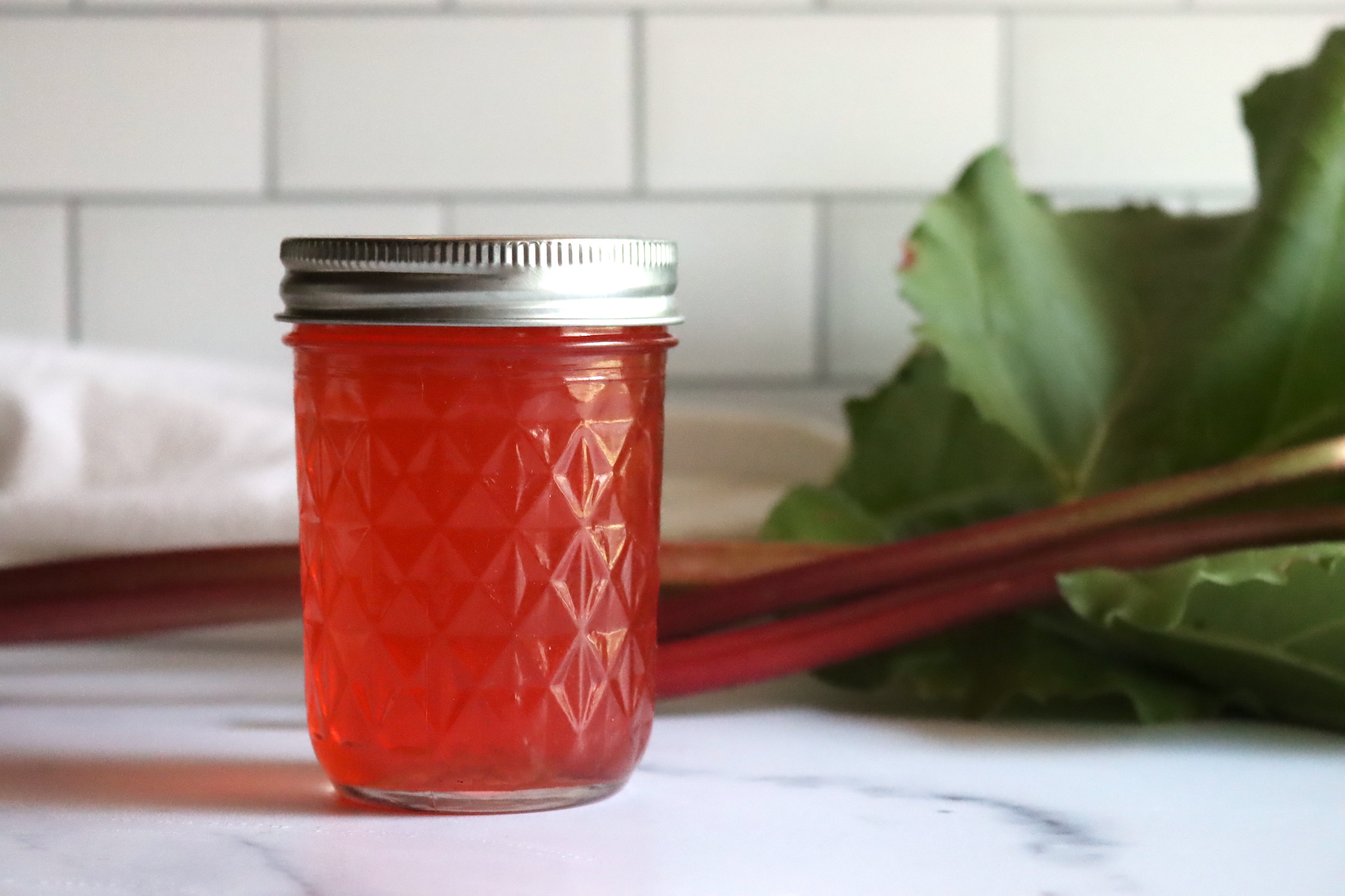
Table of Contents
- Notes from My Kitchen
- Quick Look at the Recipe
- Ingredients for Rhubarb Jelly
- Low Sugar and Pectin Options
- How to Make Rhubarb Jelly
- Don’t Overcook Pectin Jelly
- Canning Rhubarb Jelly
- Altitude Adjustments
- Yield Notes
- Rhubarb Jelly Variations
- Ways to Use Rhubarb Jelly
- Rhubarb Jelly FAQs
- Rhubarb Canning Recipes
- Rhubarb Jelly Recipe
- Jelly Canning Recipes
This recipe has been reviewed for safety and accuracy by a Master Food Preserver certified through the University of Cornell Cooperative Extension.
There’s something about a homemade jelly that captures the pure essence of a fruit and turns it into a luscious spread, all without the chunks you get in a jam. Don’t get me wrong, I love a chunky jam, and I make rhubarb jam and strawberry rhubarb jam every year, but a clear rhubarb jelly is its own kind of lovely. I first started making rhubarb jelly years ago from a recipe in the book Food in Jars, and it’s been a spring staple ever since.
A quick note on how rhubarb behaves, since it’s a little different from most fruit. Rhubarb is technically a vegetable that we treat like a fruit, and the stalks contain almost no natural pectin, so this recipe relies on added powdered pectin to set. The flip side is that rhubarb is naturally quite acidic, so there’s no need for any added lemon juice, the way some other jellies call for.
Notes from My Kitchen

Rhubarb is one of the first things to come up in our Vermont garden each spring, long before anything else is ready, so a few batches of this jelly in May and June feel like the official start of preserving season for me. It has a way of reminding me of spring all year round, right up until the next crop comes in.
My kids are the real reason this one stays in the rotation, though. They’re jelly people through and through, and like good Vermont farm kids, they’ll pull a stalk of raw rhubarb right out of the garden and eat it on the spot, puckered faces and all. This jelly has their name written all over it, and it disappears fast.
Quick Look at the Recipe
- Recipe Name: Rhubarb Jelly
- Recipe Type: Fruit Jelly
- Canning Method: Water Bath Canning
- Prep/Cook Time: 60 to 90 Minutes (plus straining time)
- Canning Time: 10 Minutes
- Yield: 5 to 6 half-pint jars
- Jar Sizes: Half Pint or Pint
- Headspace: 1/4 inch
- Ingredients Overview: Rhubarb, water, sugar, and pectin (no lemon needed)
- Safe Canning Recipe Source: Adapted to standard powdered pectin (Sure-Jell) proportions
- Difficulty: Easy. Once you’ve strained the juice, it’s just pectin, sugar, and a one-minute boil.
- Similar Recipes: The process is much like other fruit jellies made with added pectin, such as Strawberry Jelly, Dandelion Jelly, or Lilac Jelly. If you’ve got more rhubarb to use up, try canning rhubarb pie filling or rhubarb juice.
Ingredients for Rhubarb Jelly
Rhubarb jelly is about as simple as a preserve gets, with just a few ingredients. Here’s what each one does:
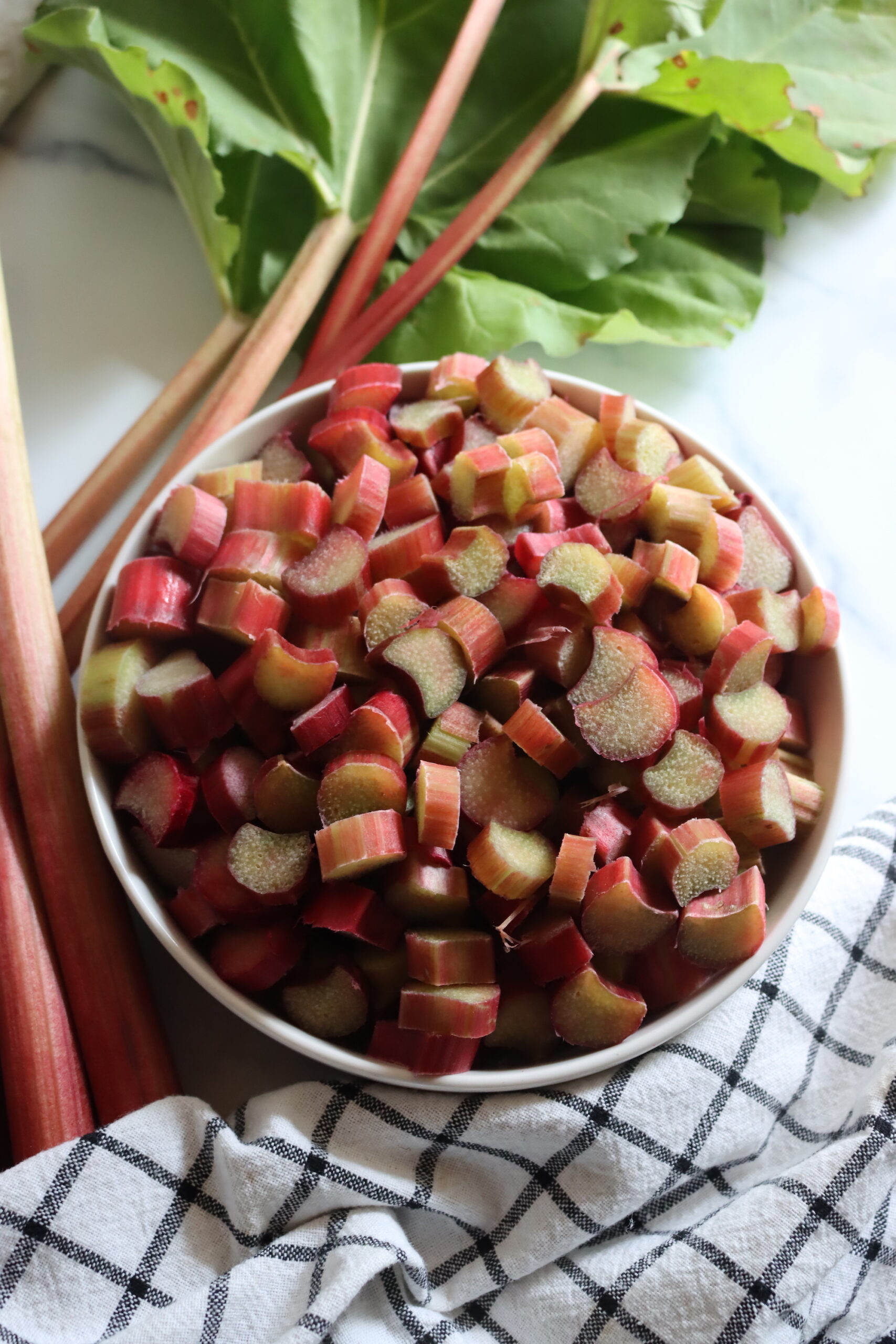
- Rhubarb: Choose firm, crisp stalks. Color doesn’t tell you much about ripeness, but it does affect the jelly: deep red stalks give a blush-pink jelly, while greener stalks make an amber one. Trim and discard the leaves, which are toxic, and use only the stalks. Frozen rhubarb works beautifully here too, since freezing breaks down the cells and helps it release even more juice.
- Water: Rhubarb is simmered in water to draw out its juice, which is then strained off for the jelly.
- Granulated Sugar: Sweetens the jelly and works with the pectin to set the gel. Regular powdered pectin needs plenty of sugar, so this recipe uses 5 cups of sugar to 4 cups of juice. See the note below for low sugar options.
- Powdered Fruit Pectin (Such as Sure-Jell): Rhubarb has almost no pectin of its own, so the added pectin is what makes it gel rather than stay a syrup. Sure-Jell is dependable, and Ball’s Fruit Pectin works well too.
You’ll notice there’s no lemon juice in this recipe. Rhubarb is naturally acidic enough that the jelly sets and cans safely without any added acid, so all it needs is the pectin to bring it together.
Low Sugar and Pectin Options
This recipe is written for regular powdered pectin (like Sure Jell original), which needs the full amount of sugar to set. If you’d prefer a less sweet jelly, use Sure Jell low sugar pectin (pink box) or Ball low sugar pectin and reduce the sugar following the package directions. With rhubarb jelly, that usually means somewhere between 1 and 3 cups of sugar for 4 cups of juice.
Pomona’s Universal Pectin sets with any amount of sugar (or none at all), though the gel is softer. It works a bit differently with a 2-part calcium-water system, so follow the box and read how to use Pomona’s pectin if it’s your first time.
Liquid pectin isn’t recommended here, since it needs more sugar to set and gives a less consistent result. If liquid pectin is what you have, use the tested Certo amounts instead: 3 1/2 cups rhubarb juice, 7 cups sugar, and 2 pouches (one 6-ounce box) of Certo liquid pectin. The order of operations is reversed with liquid pectin too: you stir the sugar into the juice and bring it to a full rolling boil first, then add the pectin at the very end and boil hard for exactly 1 minute. That’s the opposite of the powdered method, where the pectin goes into the juice before the sugar.
How to Make Rhubarb Jelly
Making rhubarb jelly is a two-part process: simmer the rhubarb and strain off its juice, then cook that juice with pectin and sugar to set the gel. One thing to keep in mind before you start: the pectin goes into the juice before the sugar, and the mixture has to reach a full rolling boil at each stage. That order is what activates the pectin so the jelly sets.
Extract the Juice
Trim the leaves and root ends off the rhubarb stalks (discard the leaves, they’re toxic), along with any brown or damaged spots, then wash the stalks under cool water. Chop the rhubarb and place it in a large saucepan or jam pot with 3 cups of water.
Bring it to a low boil over medium-high heat, watching closely, since rhubarb tends to foam up and can boil over quickly. Stirring regularly helps keep the foam down. Reduce the heat, cover, and simmer for 15 to 20 minutes, until the rhubarb has completely broken apart and the liquid is bright pink.
Line a fine-mesh strainer or sieve with cheesecloth and set it over a large bowl. Pour in the cooked rhubarb and let the juice drip through for 1 to 2 hours or more. Don’t squeeze the cheesecloth or press the pulp if you want clear jelly, since forcing the juice through pushes fine pulp into it and makes it cloudy. Measure out 4 cups of juice for a batch, and discard the spent rhubarb solids.
Make the Jelly
While the juice strains, prepare your canning setup. Fill your water bath canner halfway with water and bring it to a simmer, then wash your jars and lids in hot soapy water and keep them hot until you’re ready to fill them.
Pour the 4 cups of rhubarb juice into a large 6- or 8-quart saucepot. Stir in the entire box of pectin until it’s fully dissolved, then place the pot over high heat and bring it to a full rolling boil, which is a boil that doesn’t stop bubbling even when you stir it, stirring constantly.
Once you’ve reached a full rolling boil, add all 5 cups of sugar at once. Stir vigorously to dissolve it completely, then return the mixture to a full rolling boil and boil for exactly 1 minute, stirring constantly. Remove the pot from the heat and skim off any foam with a metal spoon.
Don’t Overcook Pectin Jelly
Pectin jelly sets on chemistry, not on cooking time, and that trips a lot of people up. The jelly looks thin in the pot when you take it off the heat, and that’s exactly right, because pectin firms up as the jelly cools, not while it’s boiling. A full rolling boil for one minute after the sugar dissolves is the whole job.
Skip the thermometer and the cold-plate test here, since those are for old-fashioned no-pectin jellies that you cook to a gel point. And give the jars a full 24 to 48 hours to set before you decide anything went wrong (some batches take a little longer). If it’s still loose after that, my guide to troubleshooting jelly that didn’t set walks through how to fix it.
Canning Rhubarb Jelly
Work quickly while the jelly is still very hot, since it begins to set as it cools. If you’re new to water bath canning, that guide walks you through all the basics step by step.
Ladle the hot jelly into prepared hot jars, filling to within 1/4 inch of the top. This headspace is smaller than most canning recipes because jelly is low in solids and doesn’t expand much during processing. A canning funnel makes this easier and helps you gauge the headspace.
Wipe the jar rims thoroughly with a clean, damp cloth, since even a little jelly on the rim can keep a jar from sealing. Center the lids and screw the bands on fingertip-tight, without overtightening, which can also keep jars from sealing.
Load the filled jars into your preheated canner and bring it to a full rolling boil. Process the jars for 10 minutes (adjust for altitude as needed). When the time is up, turn off the heat and let the jars rest in the canner for 5 minutes before lifting them out.
Set the jars on a towel-covered counter, leaving space between them, and leave them undisturbed for 12 to 24 hours. Then check the seals by pressing the center of each lid. If it doesn’t flex, the jar is sealed and shelf-stable for about 18 months. Refrigerate any unsealed jars for immediate use, and refrigerate all jars after opening.
Altitude Adjustments
The altitude adjustments for water bath canning rhubarb jelly are as follows:
- 0 to 6,000 feet: 10 minutes
- Above 6,000 feet: 15 minutes
Before you start prepping stalks, it helps to know how much rhubarb a batch actually takes, since the yield surprises people the first time.
Yield Notes
You’ll need about 1 1/2 pounds of rhubarb, simmered with 3 cups of water, to get the 4 cups of juice this recipe calls for. The water is part of the recipe here, since rhubarb gives up its flavor into the cooking water and you strain off the whole pink, fragrant lot of it.
A full batch (4 cups of juice, one box of pectin, and 5 cups of sugar) makes 5 to 6 half-pint jars. Don’t double the batch, since larger amounts don’t heat evenly and often won’t set. If you want more, make two single batches back to back instead.
Rhubarb Jelly Variations
Rhubarb’s tart, crisp flavor is wonderful on its own, but it also takes well to a few additions, most of which lean toward softening that tartness with a little extra sweetness or warmth.
Swapping some of the rhubarb juice for apple juice gives you a lighter jelly, both in color and in taste. Adding fresh strawberries or raspberries to the rhubarb and water as it simmers brings a deeper red color and a sweet berry note alongside the rhubarb. For a little warmth, cinnamon, mint, ginger, and vanilla all pair nicely, added as the juice cooks.
Honey is another lovely match for rhubarb. You can stir some in along with the sugar as the jelly cooks, reducing the sugar slightly to account for it. Keep in mind that swapping in too much honey can affect the set, so think of it as a flavor accent rather than a full replacement for the sugar.
Love the recipe, I am on my third batch, thank you so much!
Ways to Use Rhubarb Jelly
Rhubarb jelly has a bright, sweet-tart flavor that works just about anywhere you’d use a fruit jelly, and a few spots where you might not expect it.
- Toast and Baked Goods: Spread it on scones, English muffins, biscuits, or toast for a simple breakfast.
- Meat Glaze: Mix it with a little honey and brush it over chicken or pork as it grills for a sweet-tart glaze.
- Cheese Board: Serve a small dish alongside sharp or creamy cheeses, where the tartness cuts through the richness.
- Stirred into Tea: A spoonful melted into a hot mug of tea adds a sweet, fruity twist.
- Thumbprint Cookies: Spoon into the centers of thumbprint cookies before or after baking.
Rhubarb Jelly FAQs
Yes, frozen rhubarb works wonderfully for jelly. Freezing breaks down the cell walls, so thawed rhubarb actually gives up its juice even more readily than fresh. You can chop and freeze your spring harvest, then make jelly any time of year. Just thaw it (or simmer it straight from frozen) and proceed as you would with fresh.
The color comes entirely from the stalks. Deep red rhubarb makes a blush-pink jelly, while greener stalks make an amber or pale one, and both taste the same. If you want a pinker jelly from green stalks, simmer a handful of strawberries or raspberries in with the rhubarb, or add a drop of food coloring.
Common causes include not reaching a full rolling boil, incorrect timing after adding the sugar, doubling the batch, or using expired pectin. Rhubarb has no pectin of its own, so the boxed pectin is essential here. Pectin jelly also looks thin when hot and firms up as it cools, so give it 24 to 48 hours before judging the results. If it still hasn’t set after a couple of weeks, you can remake it by reheating with additional pectin. For detailed steps, see our guide on troubleshooting jelly set.
Yes, but you’ll need a low-sugar pectin like Sure-Jell Low Sugar or Pomona’s Universal Pectin and follow the package directions, since regular pectin needs the full amount of sugar to gel. With rhubarb jelly that’s usually 1 to 3 cups of sugar for 4 cups of juice. The yield will be a little lower with reduced sugar.
Still have stalks left over after the jelly is done? These are the rhubarb recipes I reach for next, and most of them use up a good armload:
Rhubarb Canning Recipes
If you tried this Rhubarb Jelly Recipe, or any other recipe on Creative Canning, leave a ⭐ star rating and let me know what you think in the 📝 comments below!
And make sure you stay in touch with me by following on social media!
Rhubarb Jelly
Equipment
- Canning Jars, Lids and Bands
Ingredients
For the Juice
- 1 1/2 lbs rhubarb, leaves removed
- 3 cups water
For the Jelly
- 4 cups strained rhubarb juice
- 1 box powdered pectin, 1.75 oz regular powdered pectin, or 6 Tbsp bulk pectin
- 5 cups granulated sugar, See notes for low sugar option
Instructions
- Trim and discard the rhubarb leaves and root ends, wash the stalks, and chop them. Place in a large pot with the water.
- Bring to a low boil over medium-high heat, watching closely since rhubarb foams up easily, then reduce the heat, cover, and simmer 15 to 20 minutes until the rhubarb breaks apart and the liquid is bright pink.
- Strain through a cheesecloth-lined strainer for 1 to 2 hours without squeezing. Measure the strained juice.
- Prepare a water bath canner, jars, and lids if you’re canning.
- Pour the juice into a jelly pot and whisk in the pectin until dissolved. Bring to a full rolling boil over high heat, stirring constantly.
- Add all the sugar at once, stir to dissolve, return to a full rolling boil, and boil hard for exactly 1 minute. Remove from heat and skim off any foam.
- Ladle into prepared jars, leaving 1/4 inch headspace. Wipe the rims, center the lids, and apply bands fingertip-tight.
- Process in a boiling water bath for 10 minutes, adjusting for altitude. Rest the jars 5 minutes, then cool 12 to 24 hours and check the seals.
Notes
Nutrition
Nutrition information is automatically calculated, so should only be used as an approximation.
Rhubarb is just the start of jelly season around here. Once the spring stalks slow down, these are the jellies that fill out the rest of the canning year:
Jelly Canning Recipes
Find the perfect recipe
Searching for something else? Enter keywords to find the perfect recipe!

Am I able to use frozen rhubarb? I have a bunch that I froze this year.
Yes, frozen rhubarb works just fine for jelly. Enjoy!
I canned my first ever batch of rhubarb jelly using your recipe. How long before it sets? Also, i read that i should have added lemon juice as rhubarb doesn’t have enough acid, is that true?
I’m very new to canning and am trying my best to learn.
Congrats on your first batch! Two things. First, give it time to set. Most jelly firms up within 24 hours, but it can take up to a week or two to reach its final set, so don’t worry if it’s still loose right now. If it’s still runny after a few days, here’s my guide to fixing it: https://creativecanning.com/troubleshooting-jelly-set/.
On the acid question, you’re totally fine. Rhubarb is naturally high in acid, which is exactly why it’s safe to water bath can without adding any. That’s why my recipe doesn’t call for lemon juice. Some recipes add a splash of lemon for flavor or to help the set, but it isn’t needed for safety here, so you didn’t miss anything. Welcome to canning, and good luck with the batch!
This is my favorite rhubarb jelly recipe
I’m glad you enjoyed it! We love it too.
How many jars will this make?
This makes 4 half pint (8 oz) jars.
Instead of juicing the strawberries, could I just puree them and mix them with rhubarb juice?
Yes, you could make this with a mixture of strawberry puree and rhubarb juice. Both are fine for canning. What you’ll want is a total of 4 cups of juice/puree to one box of pectin. Enjoy!
Fabulous recipe! Thank you very much. I made my first batch and it set beautifully. A nice jelly, soft but still firm, tart and sweet at the same time.
Lovely! So glad you enjoyed it =)
Love the recipe I am on my third batch thank you so much
Great to hear it!