
This post may contain affiliate links. Please see our disclosure policy.
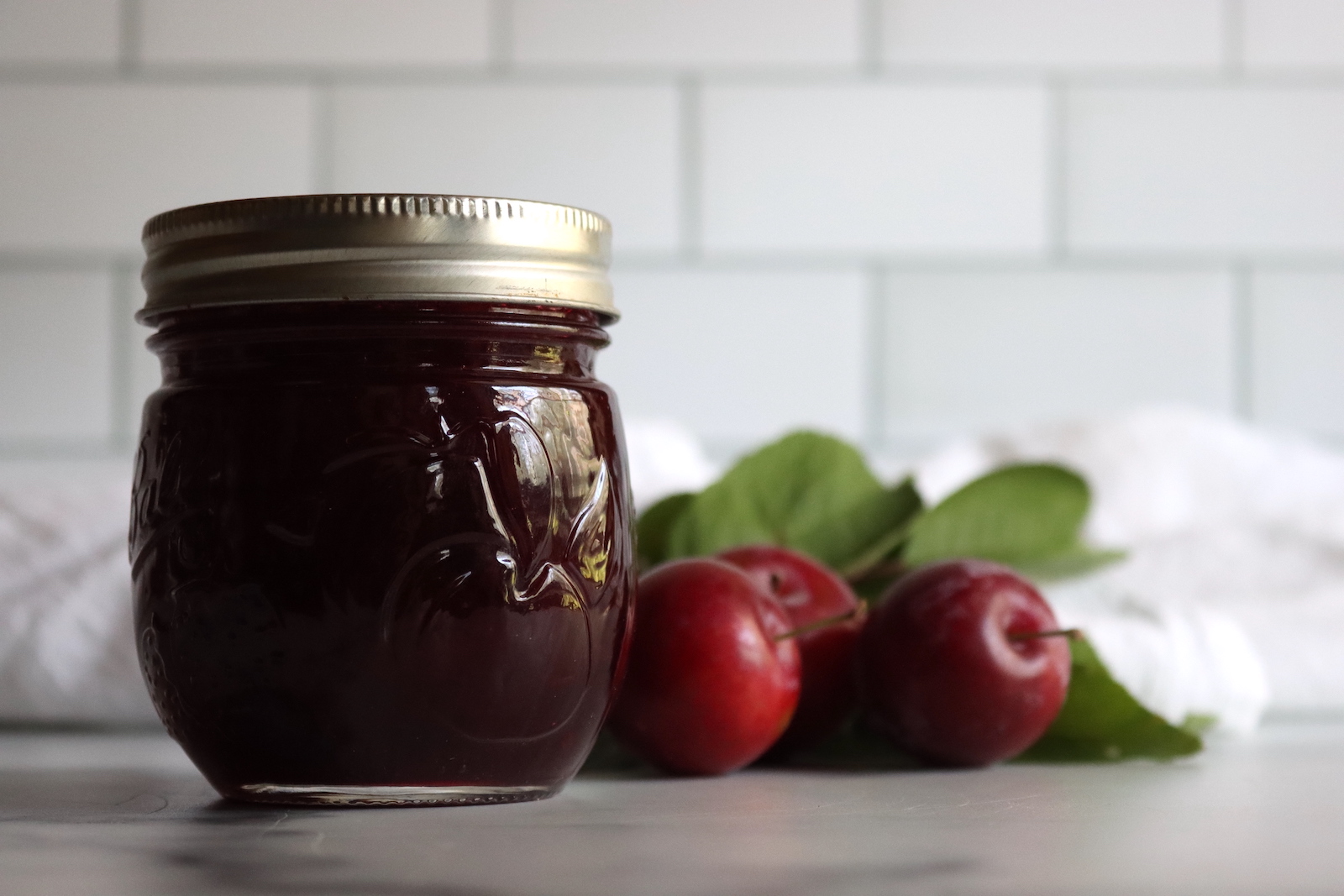
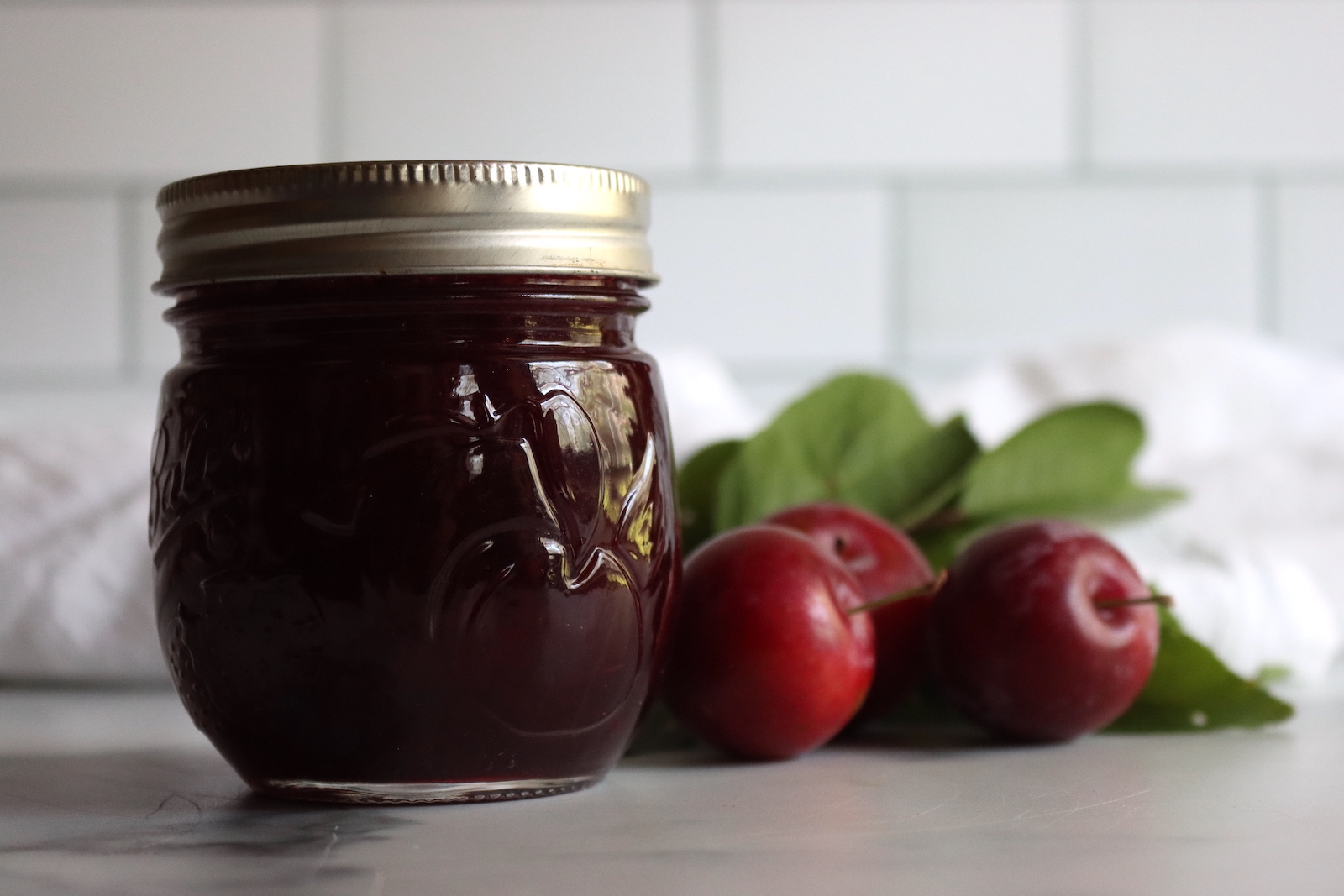
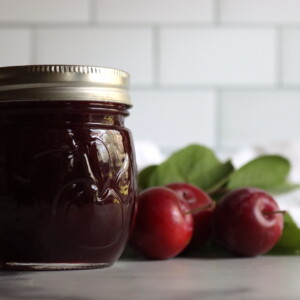
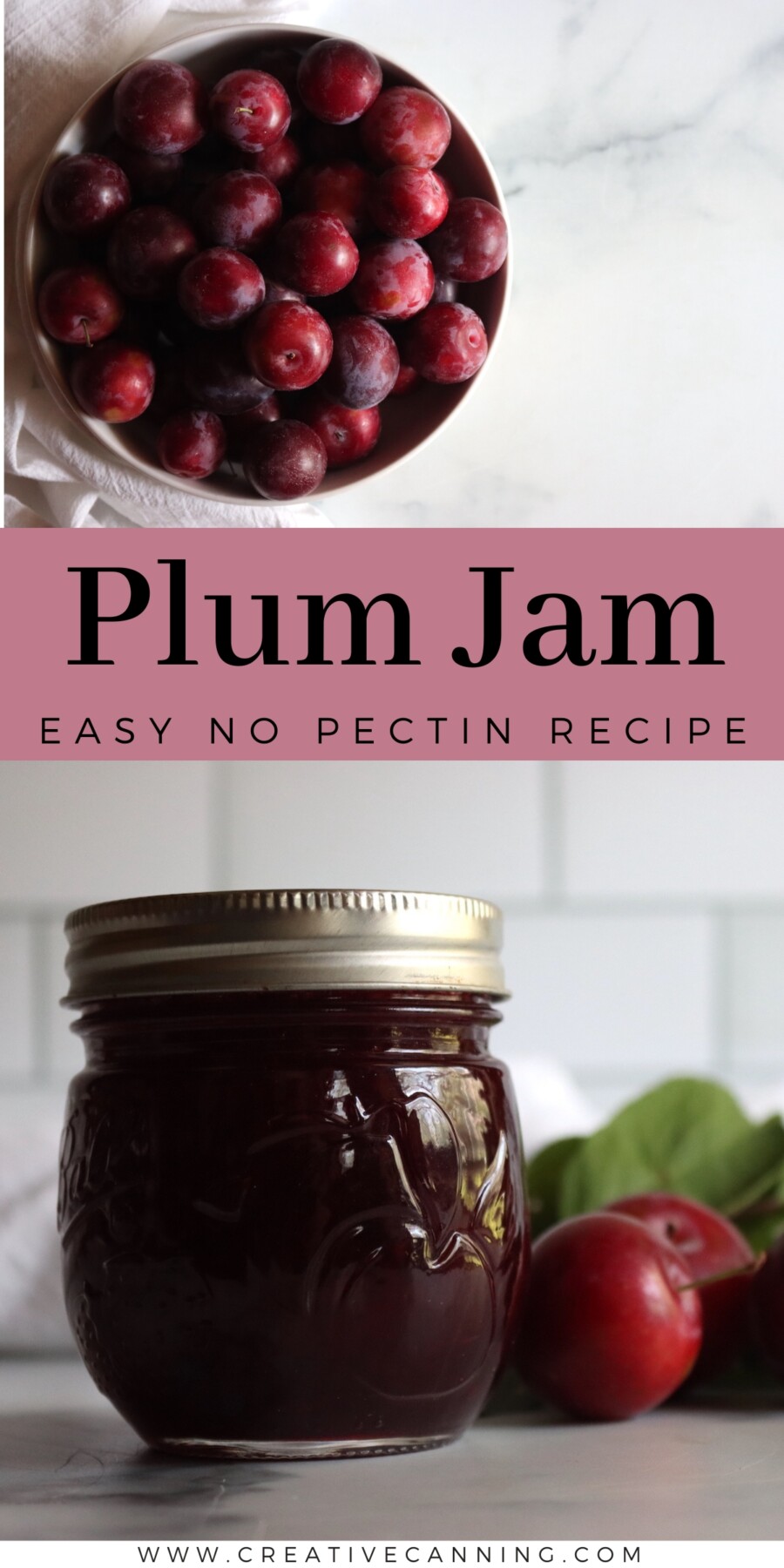
Plum jam is one of those old fashioned preserves that tastes like it took all day to make, but actually comes together in under an hour. Made with just fruit, sugar, lemon juice, and a splash of water, it sets beautifully without any added pectin and captures the rich, tangy sweetness of ripe summer plums in every jar.
If you’ve never made jam without pectin before, this is a wonderful place to start. Plums are naturally high in pectin and they gel reliably even for beginners.
This recipe has been reviewed for safety and accuracy by a Master Food Preserver certified through the University of Cornell Cooperative Extension.
This is my mom’s favorite jam. She talked about it constantly when I was a kid, reminiscing about jars of plum jam from her own childhood, but she had no idea how to make it and could never find anywhere to buy it.
Store shelves are full of grape jelly and strawberry jam, but good plum jam? That’s something you have to make yourself.
So I made this recipe for her, to recreate that memory from her childhood. And it did not disappoint. The first time she tasted it, she got a little misty-eyed, and that’s when I knew I’d gotten it right.
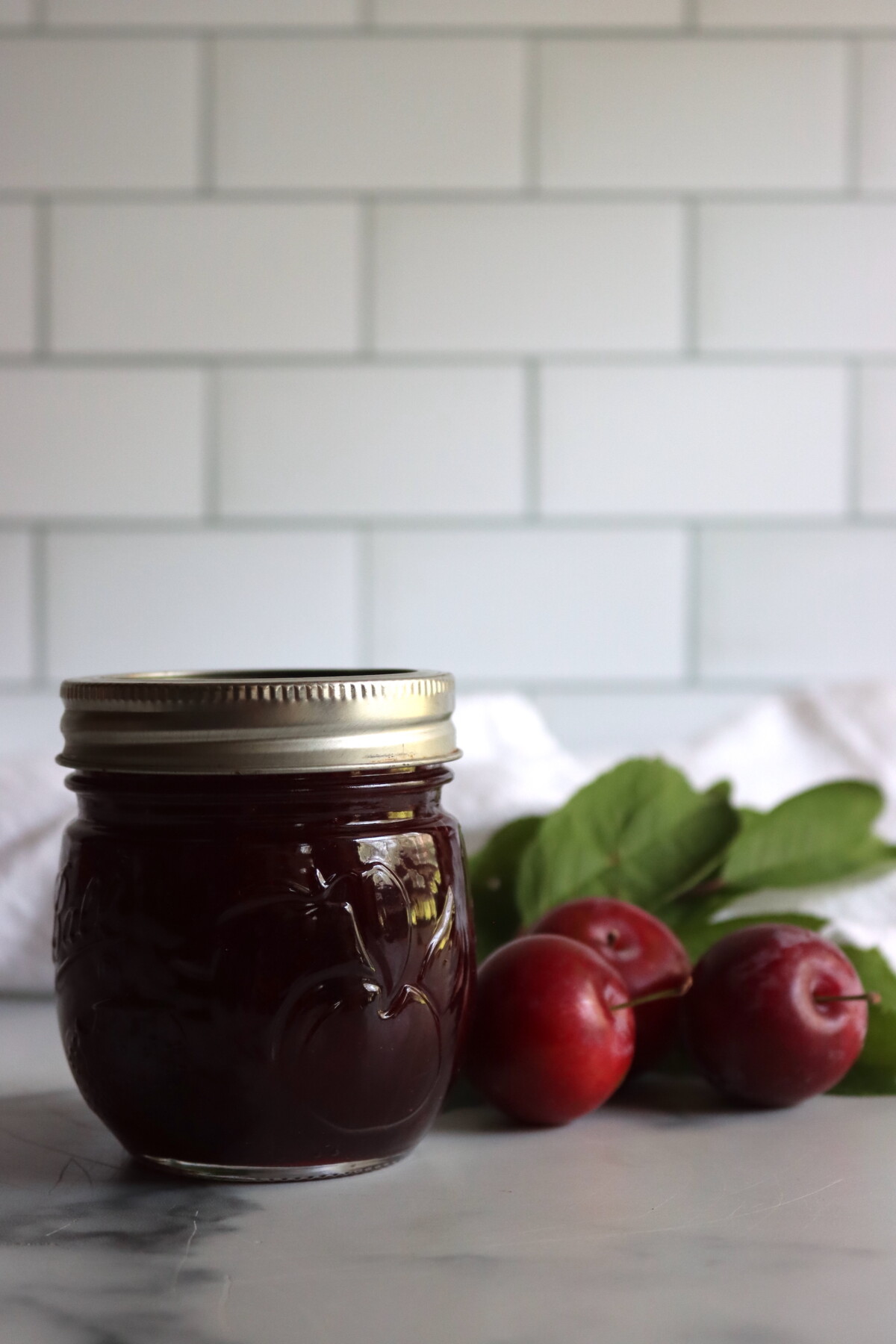
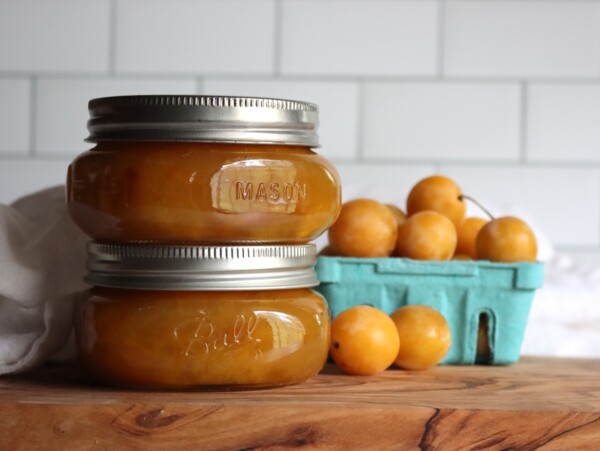
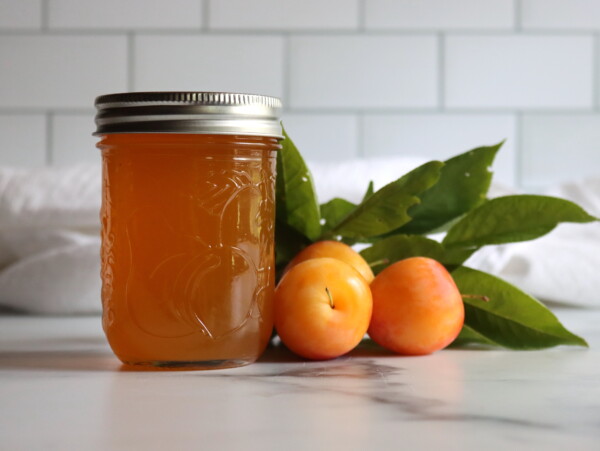
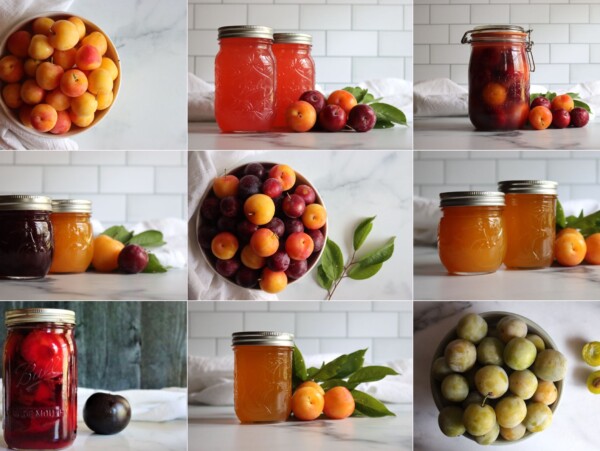
This plum jam recipe works with any variety of plum, though the flavor will change depending on what you use. Rich, deep-red plums like Santa Rosa give you that classic plum jam taste, bold and slightly tangy with a gorgeous ruby color. Lighter varieties produce a milder, more delicate preserve.
We grow a dozen varieties of plums here on our Vermont homestead, and this recipe works just as well with hardy northern types like Alderman, La Crescent, Mount Royal, and Toka as it does with the warm-weather Santa Rosa plums my mom loves in California.
We’ve even made it with wild foraged plums, which produces an intensely flavored jam thanks to the natural tannins and bright acidity in wild fruit.
Notes from My Kitchen

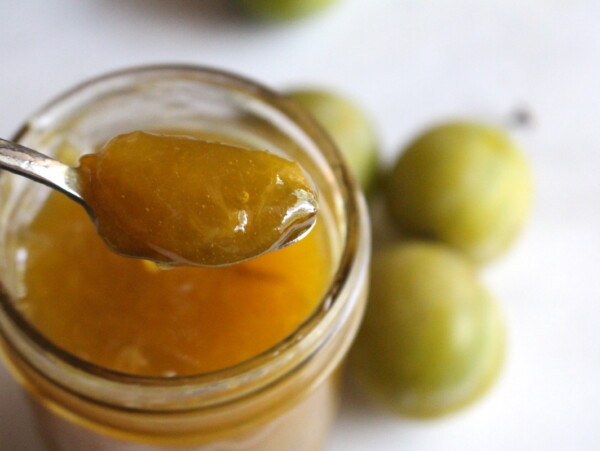
This jam sets dependably every single time, which is exactly what you want when you’re new to making preserves without pectin. The plums break down as they cook, thickening into a rich, spreadable jam that holds its shape on a spoon but still spreads easily on warm toast. The flavor depends entirely on your plums, so pick ones you love eating fresh and you’ll love them even more in jam form.
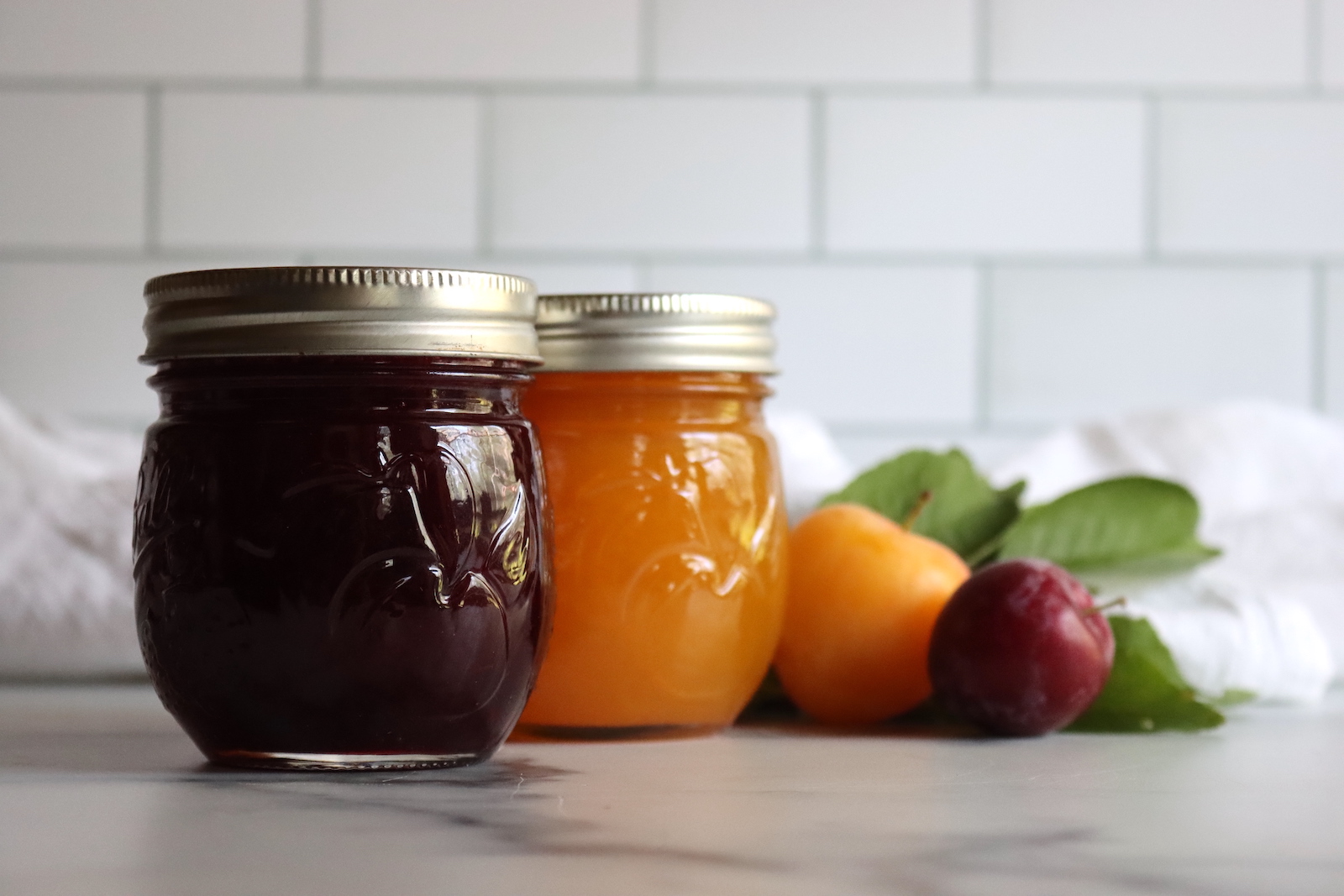
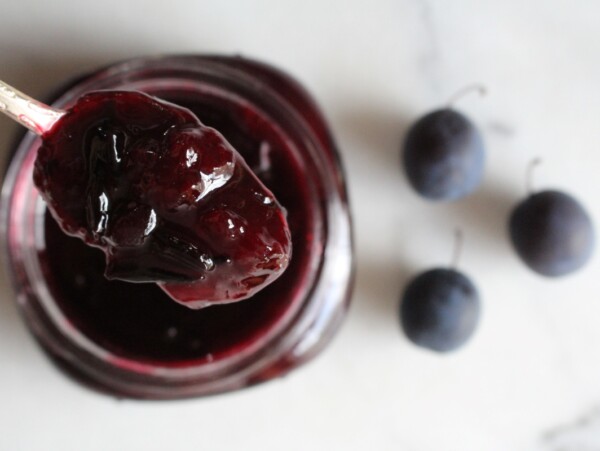
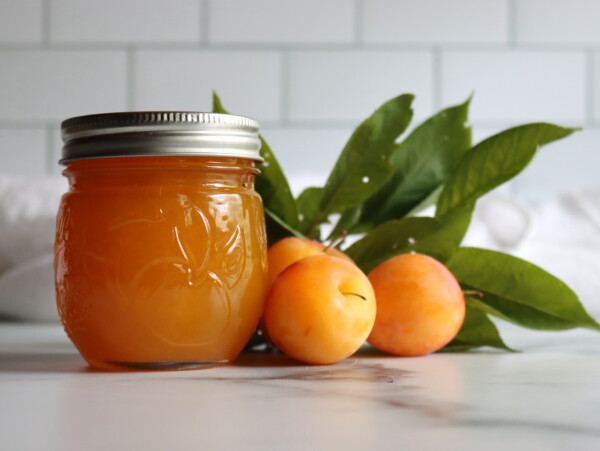
I reach for red-fleshed varieties when I want that deep, classic plum flavor, but honestly, every type we’ve tried has been delicious in its own way. The greengage version is mild and almost honey-like, while damson plum jam is intensely tangy and complex. This basic recipe adapts to whatever you’ve got in your orchard or at the farmers market.
My mom still asks for a jar every time I make a batch, and after all these years, I’m still happy to oblige.
Quick Look at the Recipe
- Recipe Name: Traditional Plum Jam without Pectin
- Recipe Type: Jam without Pectin
- Canning Method: Water Bath Canning
- Prep Time: About 20 minutes
- Cook Time: 15 to 25 minutes
- Canning Time: 10 minutes for half pints or pints
- Yield: About 8 half pints or 4 pints
- Jar Sizes: Quarter pints, half pints, or pints
- Headspace: 1/4 inch
- Ingredients Overview: Plums, sugar, water, and lemon juice. No pectin needed.
- Safe Canning Recipe Source: NCHFP and So Easy to Preserve
- Difficulty: Easy. This is a great first recipe for anyone learning to make jam without added pectin.
- Similar Recipes: This old fashioned approach to jam making works beautifully with other fruits too. Try Grape Jam, Blackberry Jam, or Apricot Jam using the same technique. For more ways to preserve your plum harvest, see my collection of Plum Canning Recipes.
Ingredients
This recipe comes together with just four ingredients, and the plums really do all the heavy lifting. Because you’re not relying on boxed pectin, the fruit itself provides the pectin needed for a good set, which means choosing the right plums matters more than in a recipe where pectin does the work for you.
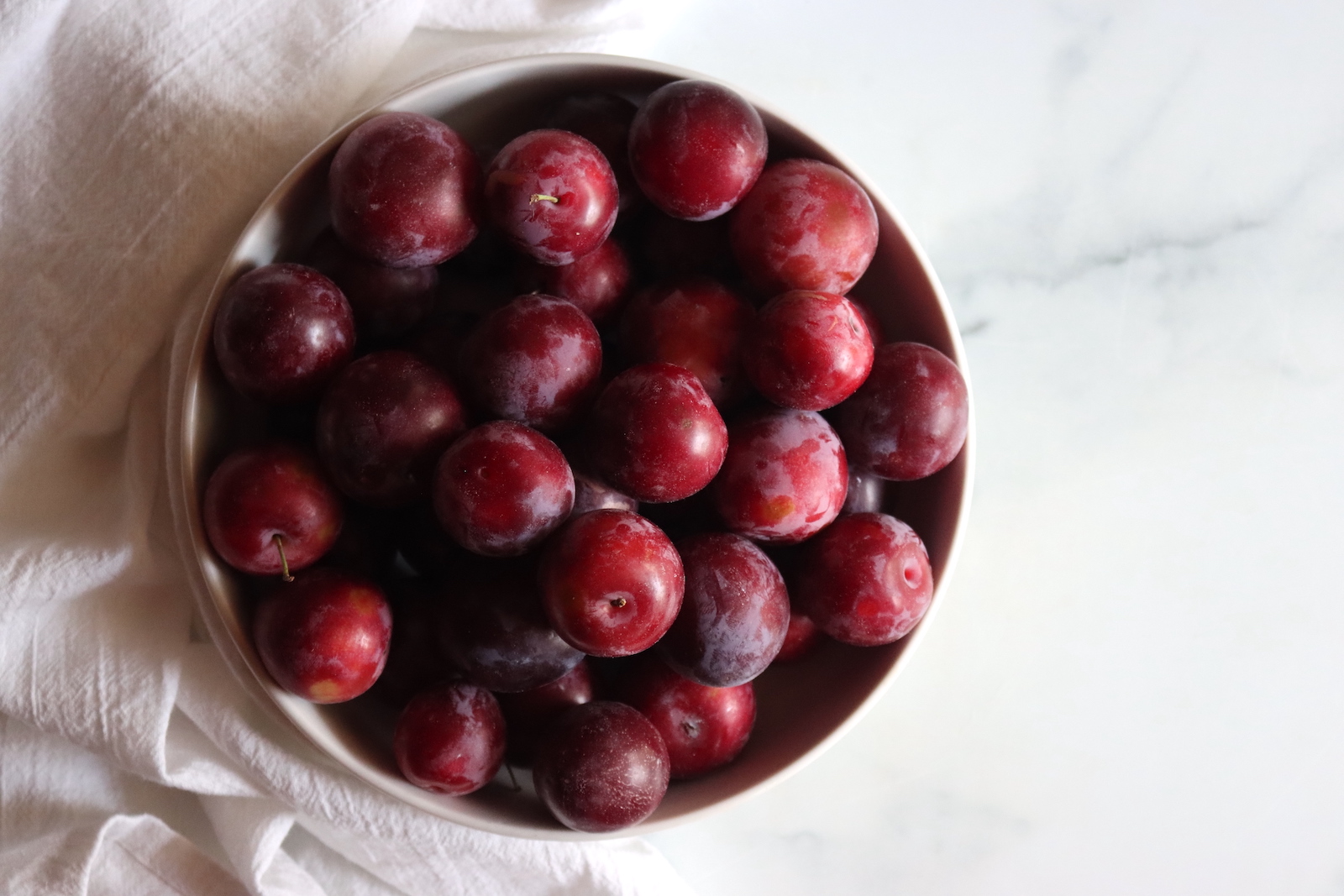
- Plums: You’ll need about 4 pounds of fresh plums to get 2 quarts chopped. Any variety works, but the recipe specifically calls for “tart plums,” so look for ones with good acidity and bold flavor. Red-fleshed plums like Santa Rosa, Satsuma, or Elephant Heart produce a deep ruby jam with that classic plum taste. Yellow or green varieties make a milder, lighter preserve. If you can, include a few slightly underripe plums in your mix, as these have more pectin and will help the jam set. Pit and chop them coarsely, leaving the skins on since the skins contribute pectin, color, and texture to the finished jam.
- Sugar: The NCHFP recipe calls for 6 cups of sugar, which produces a well-balanced jam with reliable set. That said, plums are naturally high in pectin, and I’ve found this recipe still sets nicely with as little as 4 cups of sugar if you prefer a less sweet preserve. If you reduce the sugar, keep a close eye on the jam as it cooks, since the set point may come a little sooner. Do not reduce below 4 cups, as sugar plays a role in both texture and preservation.
- Water: The 1½ cups of water keeps the plums from scorching in the early stages of cooking, before they’ve released their juices. Even very ripe, juicy plums benefit from the water, since the jam needs time to cook down and activate the natural pectin before the moisture evaporates.
- Lemon juice: A quarter cup of lemon juice brightens the flavor and provides extra acidity to help the jam gel properly. Fresh or bottled both work fine here. The acidity also ensures the jam is safe for water bath canning.
If you want a lower sugar option using added pectin, try Pomona’s Universal Pectin and follow their separate instructions.
Step by Step Instructions
This jam comes together relatively quick, and it’s pretty forgiving.
Prepare the Plums
Wash your plums and cut them in half to remove the pits. Some varieties are freestone and the pits pop right out, while clingstone types take a bit more coaxing. Either way, just cut around the pit and twist.
Once pitted, chop the plums coarsely into roughly half-inch pieces. You don’t need to be precise here, since the fruit will break down quite a bit during cooking. Leave the skins on, as they contribute pectin and give the jam a gorgeous color and pleasant texture.
Combine Ingredients
Add the chopped plums, water, sugar, and lemon juice to a large, heavy-bottomed pot. A wide pot works best because more surface area means faster evaporation, which helps the jam reach set point sooner.
Stir everything together to distribute the sugar, then turn the heat to medium and let it come to a simmer. Stir occasionally until the sugar dissolves completely and the plums start to soften and release their juices.
Cook to Gel Point
Once the mixture is bubbling, increase the heat and bring it to a rapid boil. Stir frequently to prevent sticking or scorching on the bottom of the pot, especially as the jam thickens. The plums will fall apart as they cook, and the mixture will darken and reduce in volume.
Cook until the jam reaches gel stage, which usually takes 15 to 25 minutes depending on your plums and your stove.
Fill Jars
When the jam reaches set point, remove the pot from the heat. If there’s any foam on the surface, skim it off with a spoon. Ladle the hot jam into prepared jars, leaving 1/4 inch headspace.
Wipe the rims clean with a damp cloth, apply the lids and bands, and tighten just to fingertip tight.
Testing for Set
The NCHFP describes the gel point as 8°F above the boiling point of water, which works out to 220°F at sea level. Use an instant-read or candy thermometer for the most reliable results.
At higher elevations, both the boiling point and the gel point drop. For every 500 feet above sea level, subtract 1 degree from your target temperature. Here in Vermont at 1,000 feet, my jams set at about 218°F.
If you don’t have a thermometer, use the cold plate test instead. Before you start cooking, put a small plate in the freezer. When you think the jam is close, drop a spoonful onto the cold plate and let it sit for 30 seconds, then push it with your finger. If the surface wrinkles and the jam holds its shape, it’s ready. If it’s still runny, keep cooking and test again in a few minutes.
Canning Plum Jam
Canning is optional, but it lets you store your jam on the pantry shelf instead of taking up space in the refrigerator. Without canning, this jam will keep for several weeks in the fridge or up to six months in the freezer.
If you want shelf-stable jars, prepare your water bath canner before you start making the jam. Fill the prepared jars with hot jam, leaving 1/4 inch headspace, and process for 10 minutes in a boiling water bath, adjusting for altitude as noted below.
After processing, remove the jars and let them cool undisturbed for 12 to 24 hours. Check the seals before storing. Properly sealed jars keep at room temperature for 12 to 18 months.
Altitude Adjustments
For water bath canning, processing times increase at higher elevations:
- 0 to 6,000 feet: 10 minutes
- Above 6,000 feet: 15 minutes
Yield Notes
This recipe starts with about 4 pounds of fresh plums, which gives you roughly 2 quarts (8 cups) of chopped fruit once pitted. The NCHFP lists the yield as about 8 half-pint jars, though your actual yield will vary depending on how long you cook the jam and how juicy your particular plums are.
A shorter cook produces more jam with a softer set. A longer cook concentrates the flavors and yields less volume but a firmer texture. Either approach works fine, so cook to your preference.
You can use quarter pint, half pint, or pint jars for this recipe, and the processing times are the same for all three sizes. Don’t can in jars larger than pint.
Serving Ideas
Toast is the obvious answer, and a thick layer of plum jam on warm, buttered sourdough is hard to beat. The tangy sweetness of the jam cuts through the richness of the butter, and the flavors just work together in that effortless way good food does. English muffins and biscuits are equally good vehicles.
Plum jam makes an unexpectedly good glaze for roasted meats, especially pork and duck. Whisk it with a splash of balsamic vinegar or soy sauce and brush it on during the last few minutes of cooking. The sugars caramelize and the fruit acidity balances the richness of the meat. It also works stirred into a pan sauce for pork chops.
For something a little more refined, spread plum jam on a cheese board alongside aged cheddar or creamy brie. It pairs beautifully with blue cheese too, where the sweetness tempers the salt. Swirl it into plain yogurt or oatmeal for breakfast, spoon it over vanilla ice cream, or use it as a filling for thumbprint cookies and layer cakes.
Plum Jam FAQs
No, plums are naturally rich in pectin, especially when you include some slightly underripe fruit. Combined with the right amount of sugar, acid, and cooking time, they set reliably without any boxed pectin. This is one of the easiest fruits for making old fashioned jam.
Yes. The NCHFP recipe calls for 6 cups of sugar, but plums have enough natural pectin that the jam will still set with as little as 4 cups. Reducing the sugar will produce a more tart jam, so taste your plums first and adjust according to how sweet they are. Do not reduce below 4 cups, as sugar plays a role in texture and preservation.
The most common cause is undercooking. Without added pectin, the jam needs to reach a specific temperature (220°F at sea level) to gel properly. Timing alone isn’t reliable since every batch cooks differently. Use a thermometer or the cold plate test to check for set. If your jam is already jarred and didn’t set, you can pour it back into the pot, reboil to the correct temperature, and re-can it. For more help, my guide to troubleshooting jam and jelly set.
Any plum will work, though the flavor varies quite a bit between varieties. Red-fleshed plums like Santa Rosa, Satsuma, and Elephant Heart produce a deep, richly flavored jam with gorgeous color. European varieties like Italian prune plums make excellent jam as well. Hardy northern types like Alderman, Mount Royal, and Toka work beautifully, as do wild foraged plums, which produce an intensely flavored preserve with natural tannins. Choose plums you enjoy eating fresh and you’ll love them in jam form.
Plum Canning Recipes
If you tried this Plum Jam Recipe, or any other recipe on Creative Canning, leave a ⭐ star rating and let me know what you think in the 📝 comments below!
And make sure you stay in touch with me by following on social media!
Plum Jam without Pectin
Equipment
- Large heavy-bottomed pot
- Canning Jars, Lids and Bands
Ingredients
- 4 lbs plums
- 6 cups sugar, see notes for lower sugar
- 1 1/2 cups water
- 1/4 cup lemon juice
Instructions
- If canning, prepare a water bath canner, jars, and lids before beginning. Sterilize the jars since the processing time is under 10 minutes.
- Wash the plums and cut them in half to remove the pits. Chop the plums coarsely, leaving the skins on.
- Combine the chopped plums, water, sugar, and lemon juice in a large, heavy-bottomed pot. Stir to distribute the sugar and bring the mixture slowly to a boil over medium heat, stirring occasionally until the sugar dissolves.
- Once boiling, increase the heat and cook rapidly, stirring constantly to prevent sticking or burning. The plums will break down as they cook and the mixture will thicken.
- Cook until the jam reaches gel point, about 220°F at sea level (8°F above the boiling point of water). You can also test for set using the cold plate method: drop a spoonful onto a chilled plate, wait 30 seconds, and push it with your finger. If it wrinkles, it’s ready.
- Remove the pot from the heat and skim off any foam if desired. Ladle the hot jam into prepared jars, leaving 1/4 inch headspace. Wipe the rims clean, apply lids and bands, and tighten to fingertip tight.
- Process in a boiling water bath for 5 minutes at elevations up to 1,000 feet. Increase to 10 minutes at 1,001 to 6,000 feet, or 15 minutes above 6,000 feet.
- Remove jars from the canner and let them cool undisturbed for 12 to 24 hours. Check seals before storing. Properly sealed jars keep at room temperature for 12 to 18 months.
Notes
- 0 to 6,000 feet: 10 minutes
- Above 6,000 feet: 15 minutes
Nutrition
Nutrition information is automatically calculated, so should only be used as an approximation.
Old Fashioned Jam Recipes
Find the perfect recipe
Searching for something else? Enter keywords to find the perfect recipe!

I canned 7 half pint jars this morning. I followed your recipe to the letter and they have turned out great. This will be my go to recipe from now on.
I’m so glad it turned out for you!