
This post may contain affiliate links. Please see our disclosure policy.
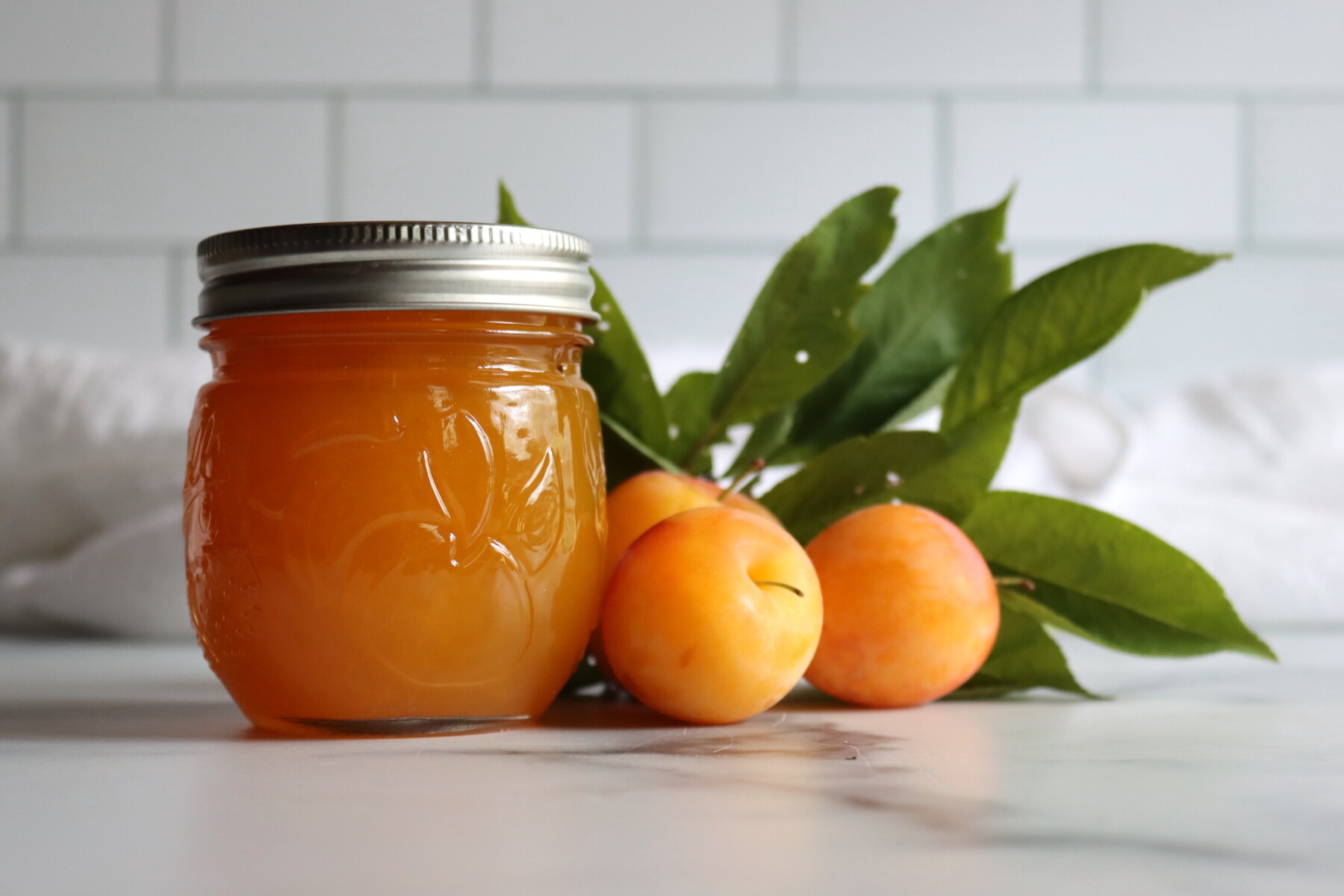
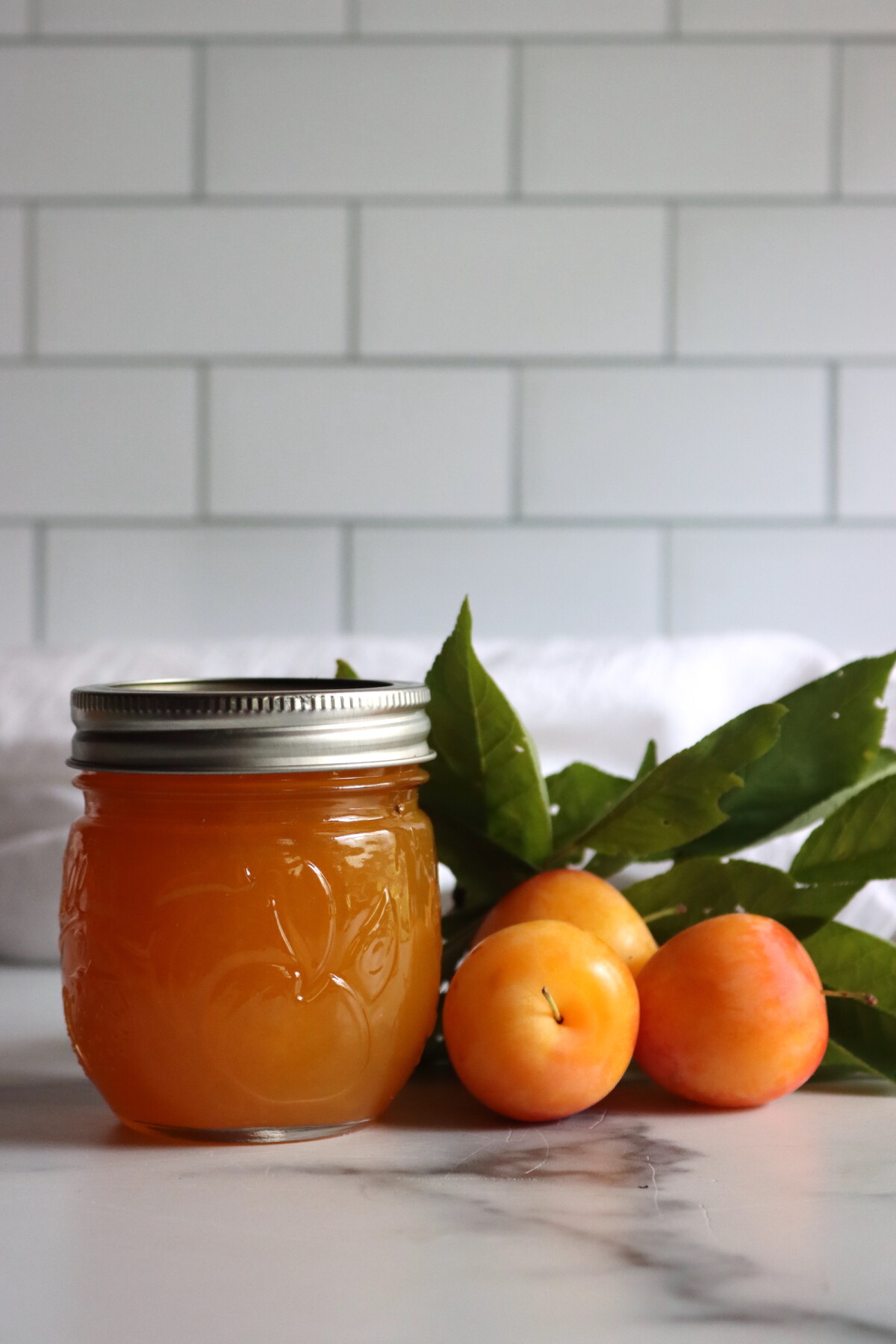
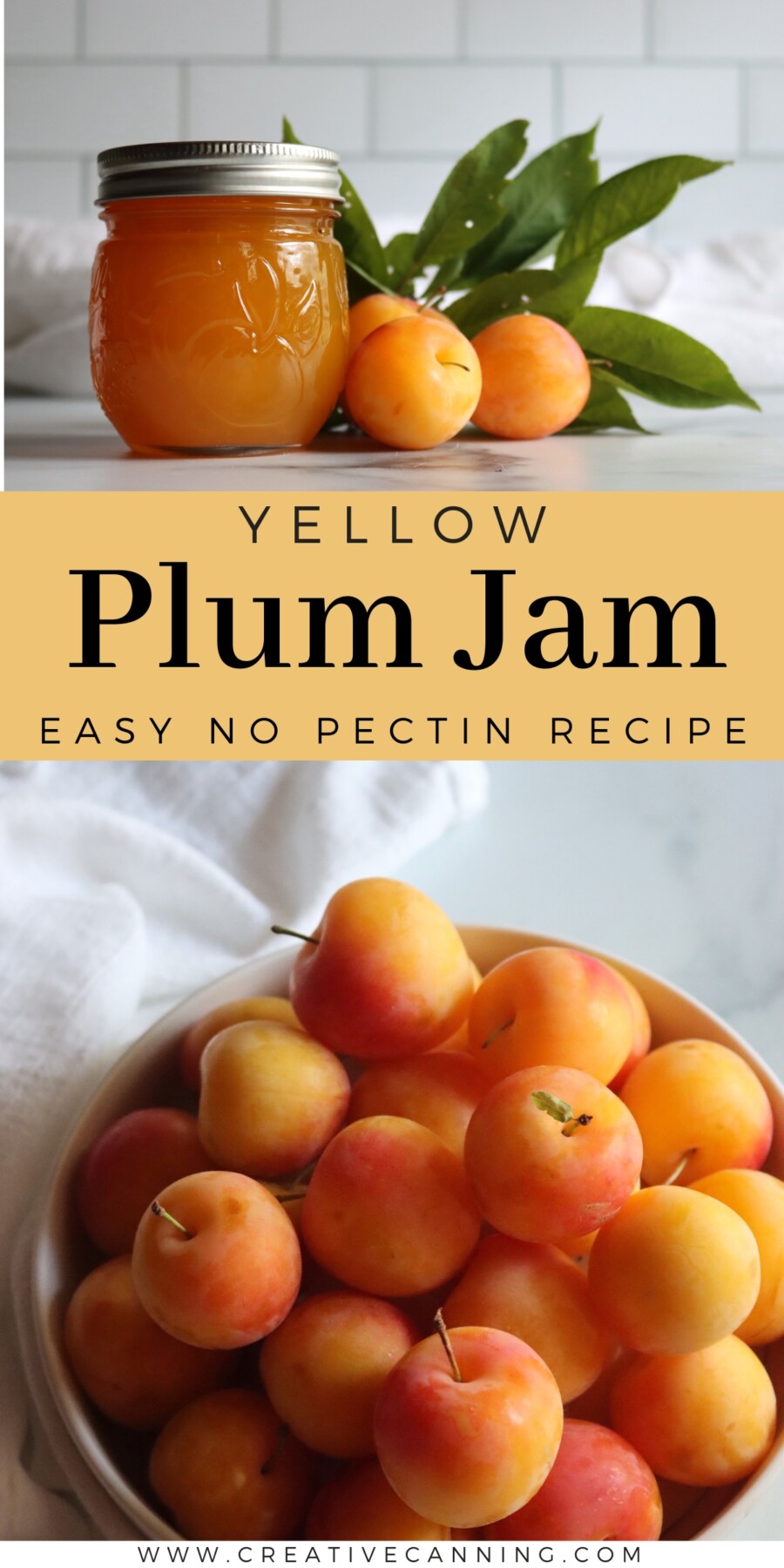
Yellow plum jam has a brightness that red plum jam simply can’t match. Where darker plums produce a rich, deeply flavored preserve, golden plums give you something lighter and more delicate, with a subtle honey sweetness and almost apricot-like undertones that catch you by surprise.
A lot of the flavor compounds in plums are also color compounds, which means the color of your fruit directly affects the taste of your jam. Yellow plums have their own distinct flavor profile, and once you’ve tried a jar of this sunny preserve, you’ll understand why it deserves a spot on the shelf right next to the traditional version.
This recipe has been reviewed for safety and accuracy by a Master Food Preserver certified through the University of Cornell Cooperative Extension.
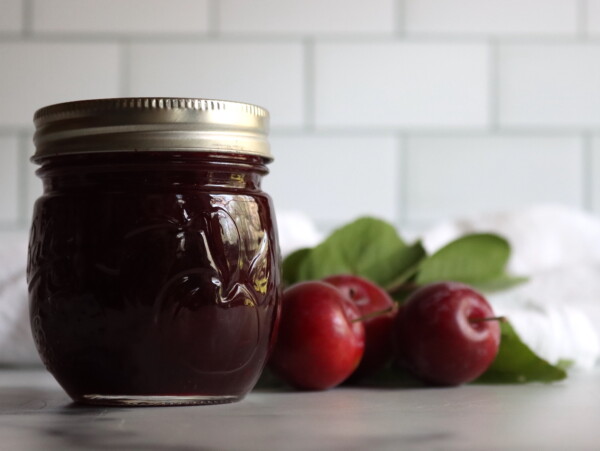
I’ve been making plum jam for years, and my mom’s favorite has always been a classic jam made with deep red Santa Rosa plums. It’s the jam I make for her every summer without fail, and she lights up every time I hand her a jar. Recently, though, I started exploring what else the plum world has to offer. A local farm had beautiful greengages and damsons, and I couldn’t resist making small batches of each to see how they compared.
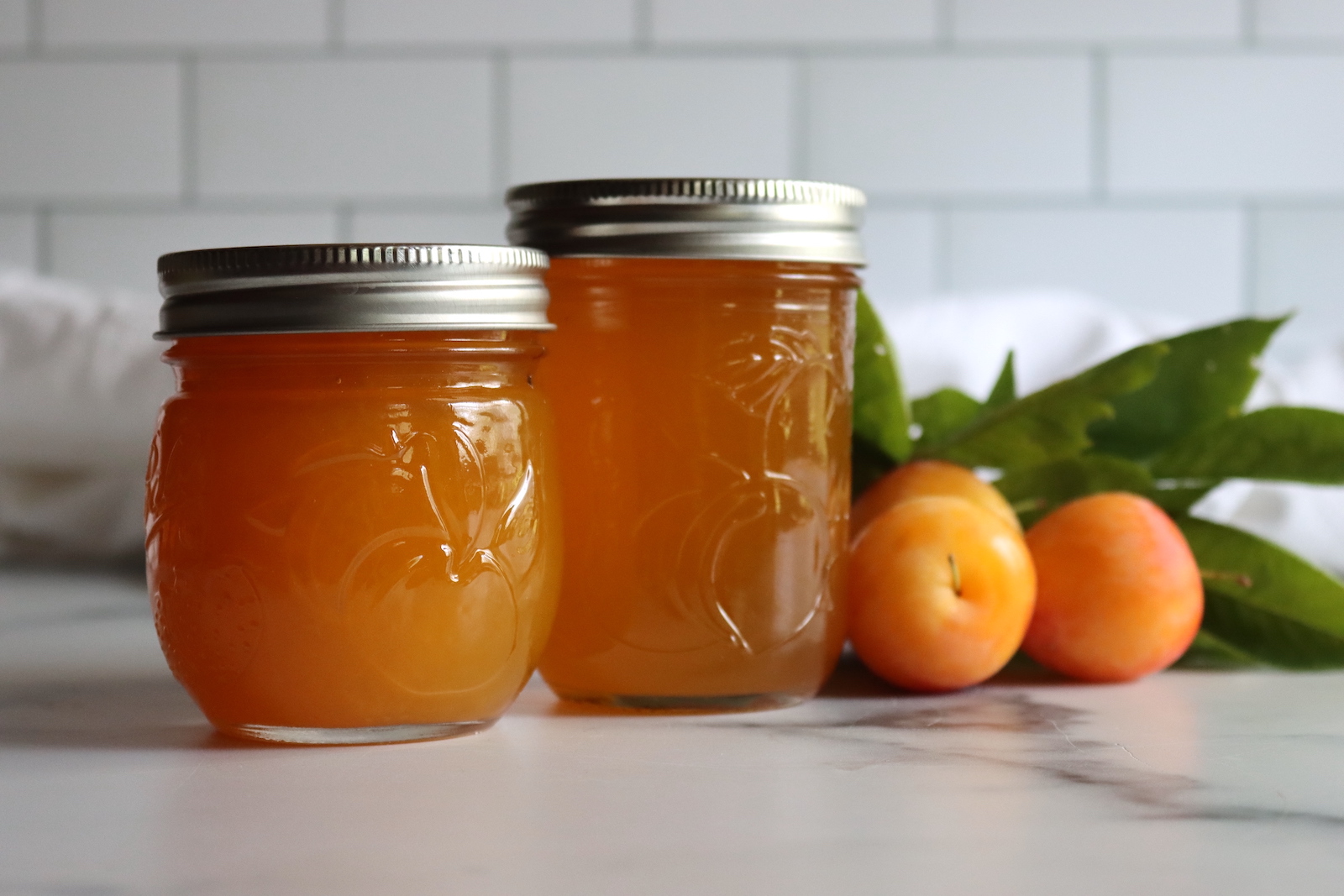
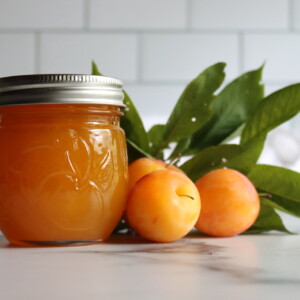
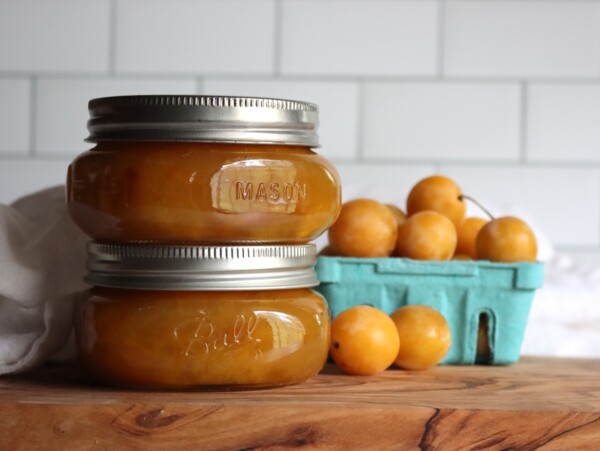
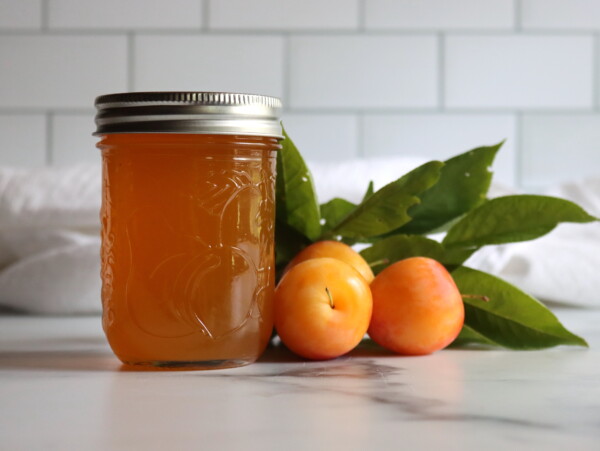
This year, the same farm had a gorgeous golden plum variety, and I knew I had to try it. The finished jam exceeded every expectation. It’s lighter in body than red plum jam, with a fresh, almost floral quality and a gorgeous amber color that looks like bottled sunshine. The flavor is sweet and tangy with hints of apricot, nothing like the bold intensity of darker varieties.
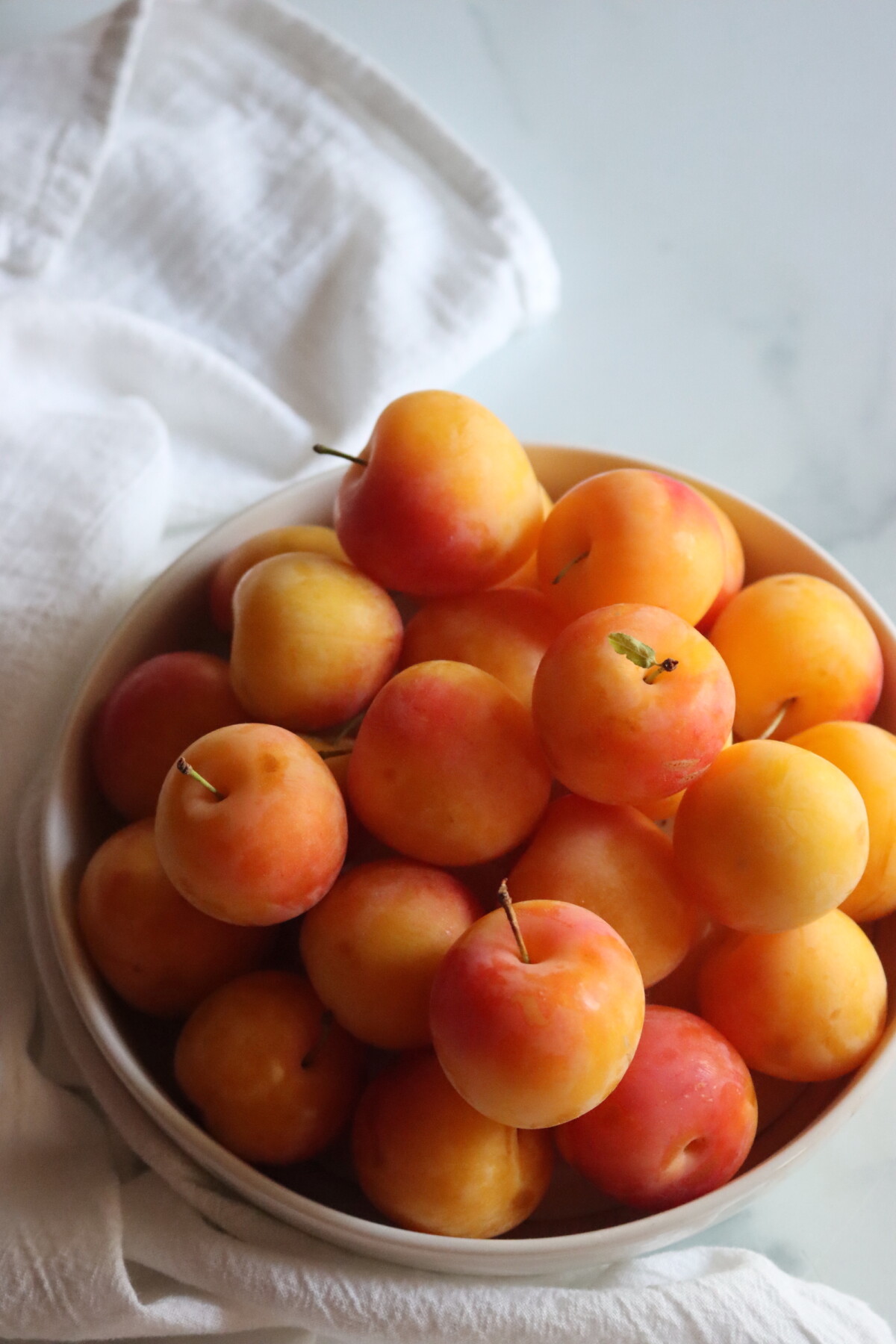
This is a tested recipe adapted from the NCHFP and published in So Easy to Preserve. It works beautifully with any golden or yellow plum variety, from common grocery store finds to specialty types like mirabelles, yellowgages, or Shiro plums. The natural pectin in the fruit means no added boxed pectin is needed, and the gentle cook time preserves the delicate flavor that makes golden plums special.
Notes from My Kitchen
Golden plums are more delicate than red varieties, both in texture and flavor. They tend to be softer when ripe, and that translates to a slightly softer set in the finished jam. It still spreads beautifully and holds its shape, but it has a more yielding, spoonable quality rather than a firm slice. Personally, I love that about it. The texture matches the gentle flavor.
The taste surprised me. I expected something similar to regular plum jam, just lighter in color. Instead, I got a completely different preserve with its own personality: bright, fresh, and almost tropical, with undertones that remind me of apricots and honey. It pairs beautifully with soft cheeses and makes a wonderful glaze for light meats like chicken or pork tenderloin.
My mom still gets her Santa Rosa jam, but now there’s a jar of yellow plum jam in my own fridge that I’m not sharing.
Quick Look at the Recipe
- Recipe Name: Golden Plum Jam without Pectin
- Recipe Type: Jam without Pectin
- Canning Method: Water Bath Canning
- Prep Time: About 20 minutes
- Cook Time: 15 to 25 minutes
- Canning Time: 10 minutes for half pints or pints
- Yield: About 8 half pints
- Jar Sizes: Quarter pints, half pints, or pints
- Headspace: 1/4 inch
- Ingredients Overview: Chopped golden plums, sugar, water, and lemon juice. No pectin needed.
- Safe Canning Recipe Source: NCHFP and So Easy to Preserve
- Difficulty: Easy. Yellow plums are naturally high in pectin and set reliably without fuss.
- Similar Recipes: This old fashioned approach to jam making works beautifully with other fruits too. Try Grape Jam, Blackberry Jam, or Apricot Jam using the same technique. For more plum variations, see Damson Jam and Greengage Jam.
Ingredients
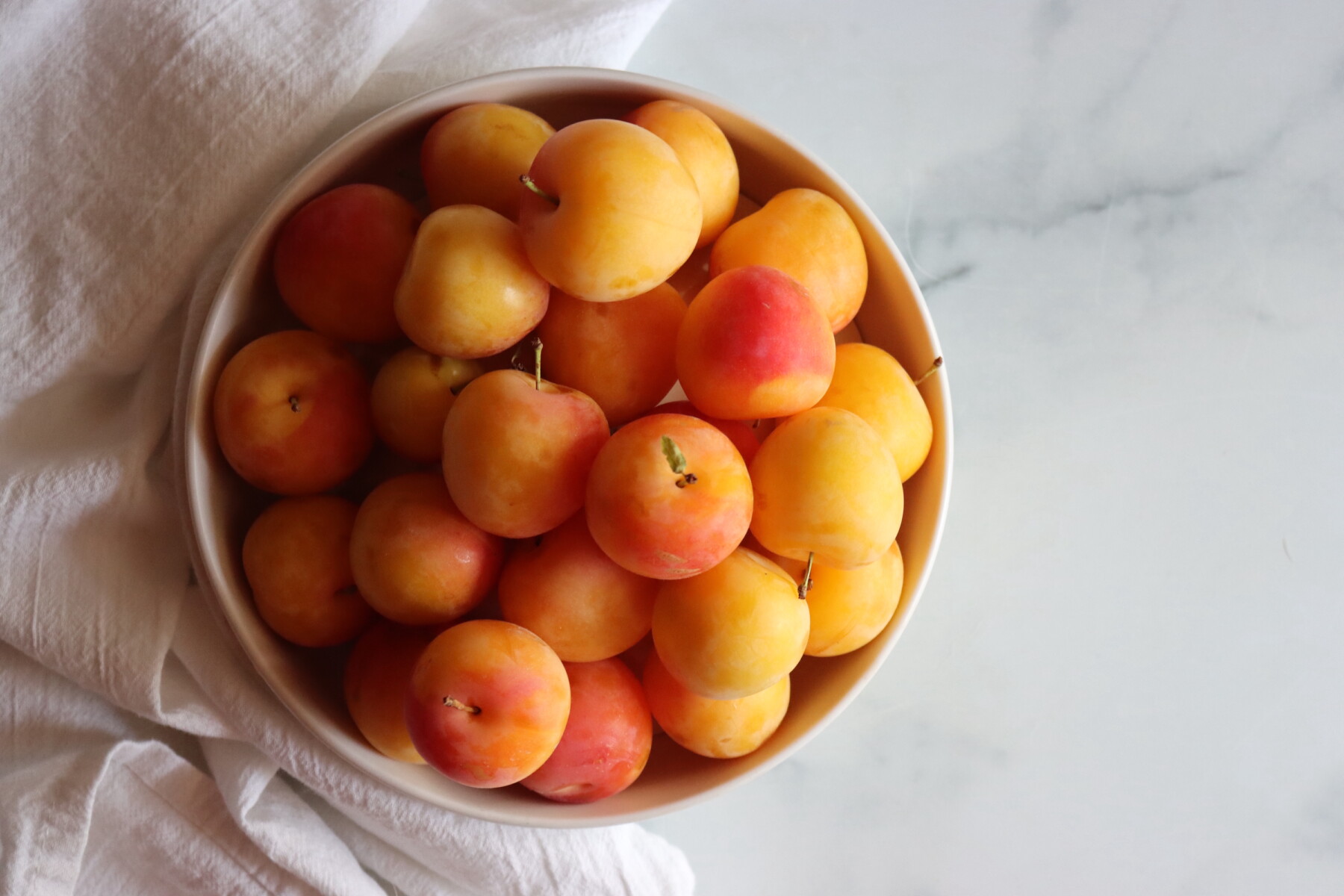
This recipe uses just four ingredients and relies on the natural pectin in the plums themselves to achieve a good set. Golden plums have plenty of pectin, especially when you include a few that are just slightly underripe, so there’s no need for boxed pectin.
- Golden Plums: You’ll need about 4 pounds of fresh golden or yellow plums to get 2 quarts chopped. Any yellow-fleshed variety works well here, including common golden plums, mirabelles, yellowgages, Shiro plums, or other light-colored varieties. Look for plums that are ripe but still slightly firm, and include a few underripe ones if possible since they contain more pectin. Pit and chop them coarsely, leaving the skins on. The skins contribute pectin and give the finished jam its beautiful amber color.
- Sugar: The tested recipe calls for 6 cups of sugar, which balances the natural tartness of the plums and helps the jam set properly. If your golden plums are particularly sweet (they often are), you can reduce this to as little as 4 cups and the jam will still set, though the flavor will be more tart and the texture slightly softer. Do not reduce below 4 cups, as sugar plays a role in both texture and preservation.
- Water: The 1½ cups of water prevents the plums from scorching before they release their juices. Golden plums tend to be a bit softer and juicier than red varieties, so they’ll break down quickly once cooking begins, but the water ensures an even start.
- Lemon juice: A quarter cup of lemon juice adds brightness and provides the acidity needed for a proper gel. It also ensures the jam is safe for water bath canning. Fresh or bottled lemon juice both work fine here.
For a lower sugar option using added pectin, Pomona’s Universal Pectin works well and lets you customize the sweetness level.
Step by Step Instructions
This plum jam comes together quickly, so prepare a waterbath canner and jars before you begin cooking the jam.
Prepare the Plums
Wash your golden plums and cut them in half to remove the pits. Most golden varieties are freestone or semi-freestone, so the pits should release fairly easily. Chop the plums coarsely into roughly half-inch pieces, leaving the skins on. The skins are important since they contribute pectin, color, and a subtle tartness that balances the sweetness of the flesh.
Combine Ingredients
Add the chopped plums, water, sugar, and lemon juice to a large, heavy-bottomed pot. A wide pot works best for jam making because more surface area means faster evaporation. Stir everything together and bring the mixture to a simmer over medium heat, stirring occasionally until the sugar dissolves and the plums begin to soften and release their juices.
Cook to Gel Point
Once the mixture is bubbling, increase the heat and bring it to a rapid boil. Stir frequently to prevent sticking or scorching. The plums will break down as they cook, and the mixture will thicken and darken slightly to a rich amber color. Continue cooking until the jam reaches gel stage, which usually takes 15 to 25 minutes depending on your plums and your stove.
Fill Jars
When the jam reaches set point, remove the pot from the heat. Skim off any foam if desired. Ladle the hot jam into prepared jars, leaving 1/4 inch headspace. Wipe the rims clean with a damp cloth, apply lids and bands, and tighten to fingertip tight.
Testing for Set
The gel point for jam is 8°F above the boiling point of water, which works out to 220°F at sea level. Use an instant-read or candy thermometer for the most reliable results.
At higher elevations, both the boiling point and the gel point drop. For every 500 feet above sea level, subtract 1 degree from your target temperature. At 1,000 feet, jams set at about 218°F.
If you don’t have a thermometer, use the cold plate test. Before you start cooking, put a small plate in the freezer. When you think the jam is close, drop a spoonful onto the cold plate and let it sit for 30 seconds, then push it with your finger. If the surface wrinkles and the jam holds its shape, it’s ready. If it’s still runny, keep cooking and test again in a few minutes.
Golden plums tend to produce a slightly softer set than darker varieties, so don’t be surprised if your jam is more spoonable than sliceable. This is normal and doesn’t mean the jam failed to set.
Canning Golden Plum Jam
Canning is optional, but it lets you store your jam on the pantry shelf instead of taking up space in the refrigerator. Without canning, this jam will keep for several weeks in the fridge or up to six months in the freezer.
If you want shelf-stable jars, prepare your water bath canner before you start making the jam. Fill the prepared jars with hot jam, leaving 1/4 inch headspace, and process for 10 minutes in a boiling water bath, adjusting for altitude as noted below.
After processing, remove the jars and let them cool undisturbed for 12 to 24 hours. Check the seals before storing. Properly sealed jars keep at room temperature for 12 to 18 months.
Altitude Adjustments
For water bath canning, processing times increase at higher elevations:
- 0 to 6,000 feet: 10 minutes
- Above 6,000 feet: 15 minutes
Yield Notes
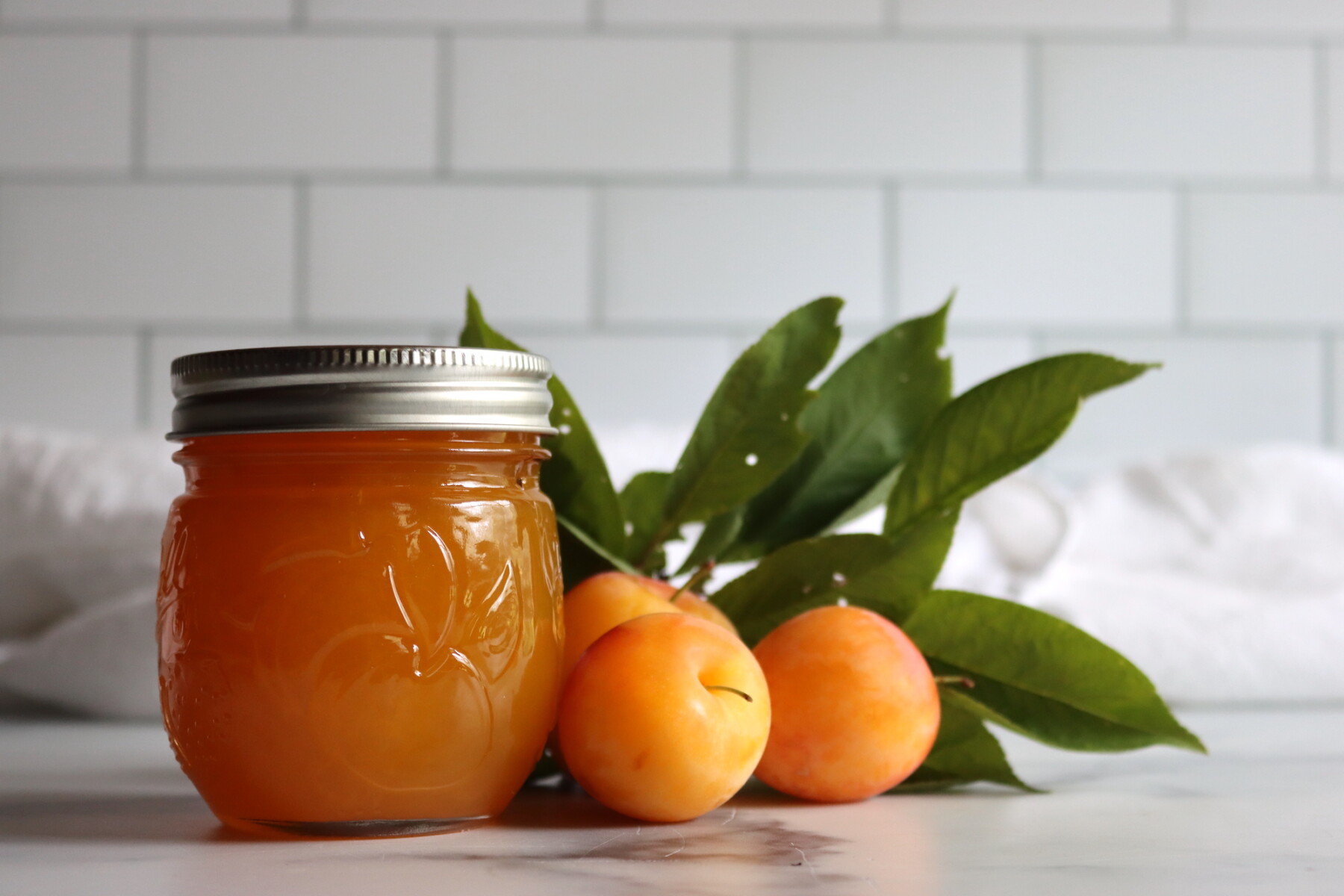
This recipe starts with about 4 pounds of fresh golden plums, which gives you roughly 2 quarts (8 cups) of chopped fruit once pitted. The expected yield is about 8 half-pint jars, though your actual results will vary depending on how long you cook the jam and how juicy your particular plums are.
Golden plums tend to be quite juicy and break down quickly, so the jam may take a bit longer to reach set point than darker varieties. A shorter cook produces more jam with a softer set, while a longer cook concentrates the flavors and yields less volume but a firmer texture.
You can use quarter pint, half pint, or pint jars for this recipe, and the processing times are the same for all three sizes. Don’t can in jars larger than pint.
Serving Ideas
Golden plum jam has a lighter, more delicate flavor than traditional plum preserves, which opens up some serving possibilities that might not work as well with a bolder jam. It’s beautiful on a warm croissant or brioche, where the buttery pastry doesn’t compete with the fruit but complements its gentle sweetness.
This jam pairs exceptionally well with cheese, particularly soft varieties like brie, camembert, or fresh goat cheese. The bright acidity cuts through the richness of the cheese while the honey-like sweetness enhances its flavor. Add it to a cheese board alongside crackers and marcona almonds for an elegant appetizer.
The apricot undertones make golden plum jam a natural match for poultry. Use it as a glaze for roasted chicken or brush it over pork tenderloin in the last few minutes of cooking. It also makes a surprisingly good addition to a vinaigrette, whisked with olive oil, white wine vinegar, and a touch of Dijon mustard for a fruity salad dressing.
For breakfast, swirl it into Greek yogurt or spoon it over overnight oats. The sunny color brightens up even the gloomiest winter morning.
Golden Plum Jam FAQs
No, golden plums are naturally high in pectin and will set without any added boxed pectin. Including a few slightly underripe plums in your batch helps ensure a good gel, since underripe fruit contains more pectin than fully ripe fruit.
Golden plums naturally produce a softer set than darker varieties. This is normal and doesn’t mean your jam failed. The softer texture matches the more delicate flavor profile of golden plums. If you prefer a firmer set, cook the jam a few minutes longer or include more underripe plums in your batch.
Any yellow or golden-fleshed plum will work well in this recipe. Common options include generic golden plums from the grocery store, mirabelles, yellowgages, Shiro plums, and other light-colored varieties. Each will produce a slightly different flavor, but all are delicious. Mirabelles in particular are prized for their honey-like sweetness and apricot undertones.
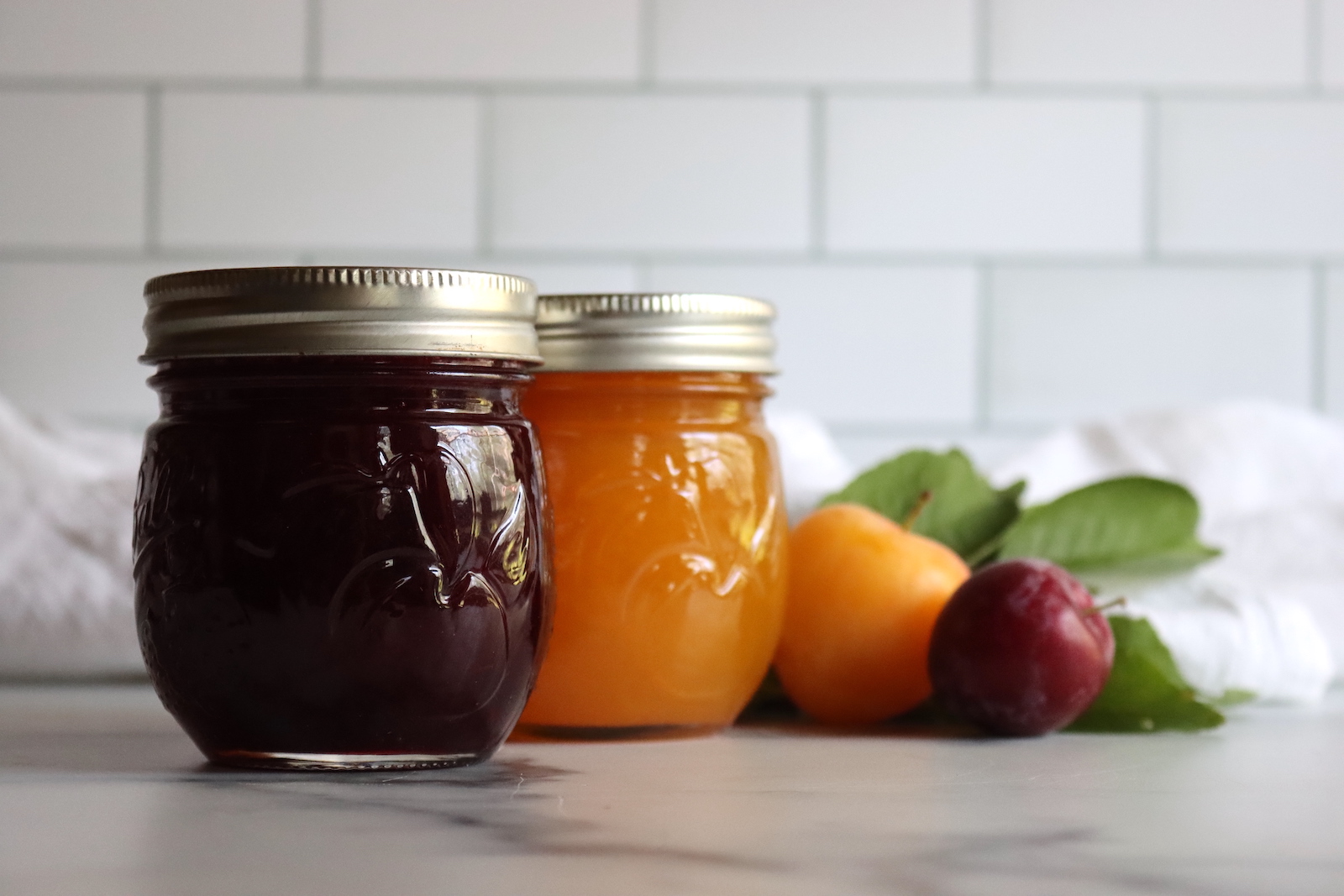
Golden plum jam has a lighter, brighter flavor than jam made with red or purple plums. Where darker plums produce a rich, deeply flavored preserve, golden plums give you something more delicate with subtle honey sweetness and almost apricot-like undertones. The color is also dramatically different, ranging from pale gold to rich amber depending on your plums.
Plum Canning Recipes
If you tried this Golden Plum Jam recipe, or any other recipe on Creative Canning, leave a ⭐ star rating and let me know what you think in the 📝 comments below!
And make sure you stay in touch with me by following on social media!
Golden Plum Jam without Pectin
Equipment
- Half-pint canning jars with lids and bands
- Instant-read or candy thermometer
- Large heavy-bottomed pot
Ingredients
- 2 quarts golden plums, measured after chopping and pitting, about 4 pounds whole plums
- 6 cups sugar
- 1 1/2 cups water
- 1/4 cup lemon juice, fresh or bottled
Instructions
- If canning, prepare a water bath canner, jars, and lids before beginning.
- Wash the golden plums and cut them in half to remove the pits. Chop the plums coarsely, leaving the skins on. You should have about 2 quarts (8 cups) of chopped fruit.
- Combine the chopped plums, water, sugar, and lemon juice in a large, heavy-bottomed pot. Stir to distribute the sugar and bring the mixture slowly to a boil over medium heat, stirring occasionally until the sugar dissolves.
- Once boiling, increase the heat and cook rapidly, stirring constantly to prevent sticking or burning. The plums will break down as they cook and the mixture will thicken to a rich amber color.
- Cook until the jam reaches gel point, about 220°F at sea level (8°F above the boiling point of water). You can also test for set using the cold plate method: drop a spoonful onto a chilled plate, wait 30 seconds, and push it with your finger. If it wrinkles, it’s ready. Golden plums naturally produce a softer set than red varieties.
- Remove the pot from the heat and skim off any foam if desired. Ladle the hot jam into prepared jars, leaving 1/4 inch headspace. Wipe the rims clean, apply lids and bands, and tighten to fingertip tight.
- Process in a boiling water bath for 10 minutes at elevations up to 6,000 feet, or 15 minutes above 6,000 feet.
- Remove jars from the canner and let them cool undisturbed for 12 to 24 hours. Check seals before storing. Properly sealed jars keep at room temperature for 12 to 18 months.
Notes
Sugar
The tested recipe calls for 6 cups of sugar, but golden plums are often naturally sweeter than red varieties. You can reduce this to as little as 4 cups if you prefer a less sweet, more tart jam. Do not reduce below 4 cups.Yield
Expect about 8 half pints, depending on how juicy your plums are and how long you cook the jam. Golden plums tend to be quite juicy, so the jam may take a bit longer to reach set point.Storage
Without canning, store in the refrigerator for several weeks or freeze for up to 6 months. Sealed jars keep 12 to 18 months in a cool, dark place. Once opened, refrigerate and use within 3 to 4 weeks.Jar Sizes
You can use quarter pint, half pint, or pint jars. Processing times are the same for all sizes up to pint. Do not can in jars larger than pint.Altitude Adjustments
- 0 to 6,000 feet: 10 minutes
- Above 6,000 feet: 15 minutes
Nutrition
Nutrition information is automatically calculated, so should only be used as an approximation.
Old Fashioned Jam Recipes
Find the perfect recipe
Searching for something else? Enter keywords to find the perfect recipe!

I found it a little thin for my liking- would reduce the amount of water next time. Flavor was good, though!
I’m glad you liked the flavor! The water is only there to keep the plums from scorching at the start, and it cooks off before the jam is done. If it came out thin, it just needed a little more time on the stove. Next time, keep it at a full boil a few minutes longer and do a plate test before you jar it. Put a small plate in the freezer, drop a spoonful of jam on it, and push it with your finger after a minute. If it wrinkles, it’s ready.
Golden plums really give this a unique flavor, and my mom absolutely loves it!