
This post may contain affiliate links. Please see our disclosure policy.
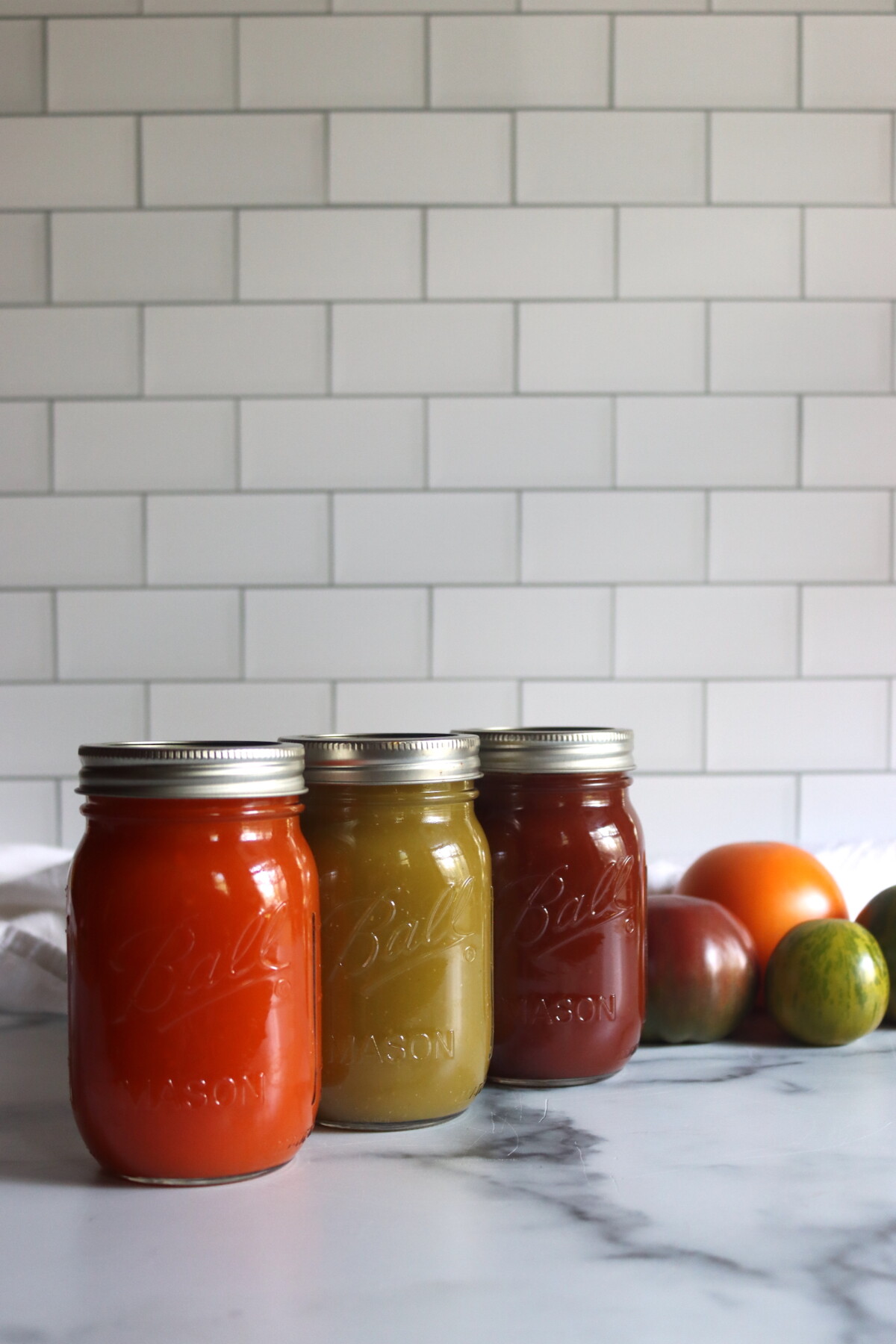
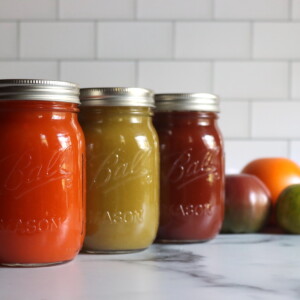
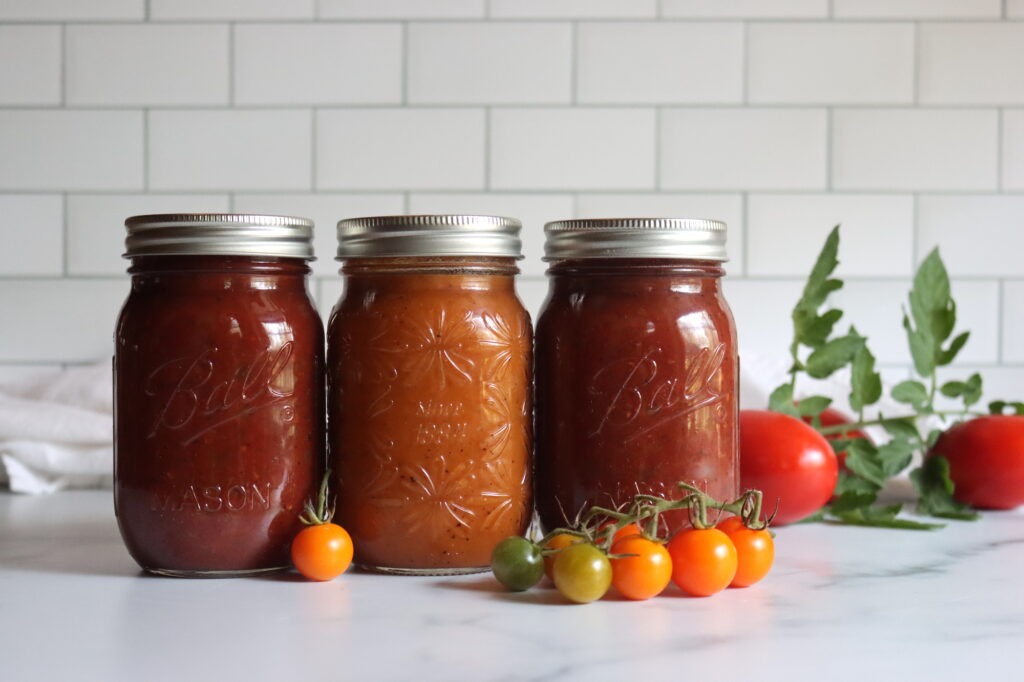
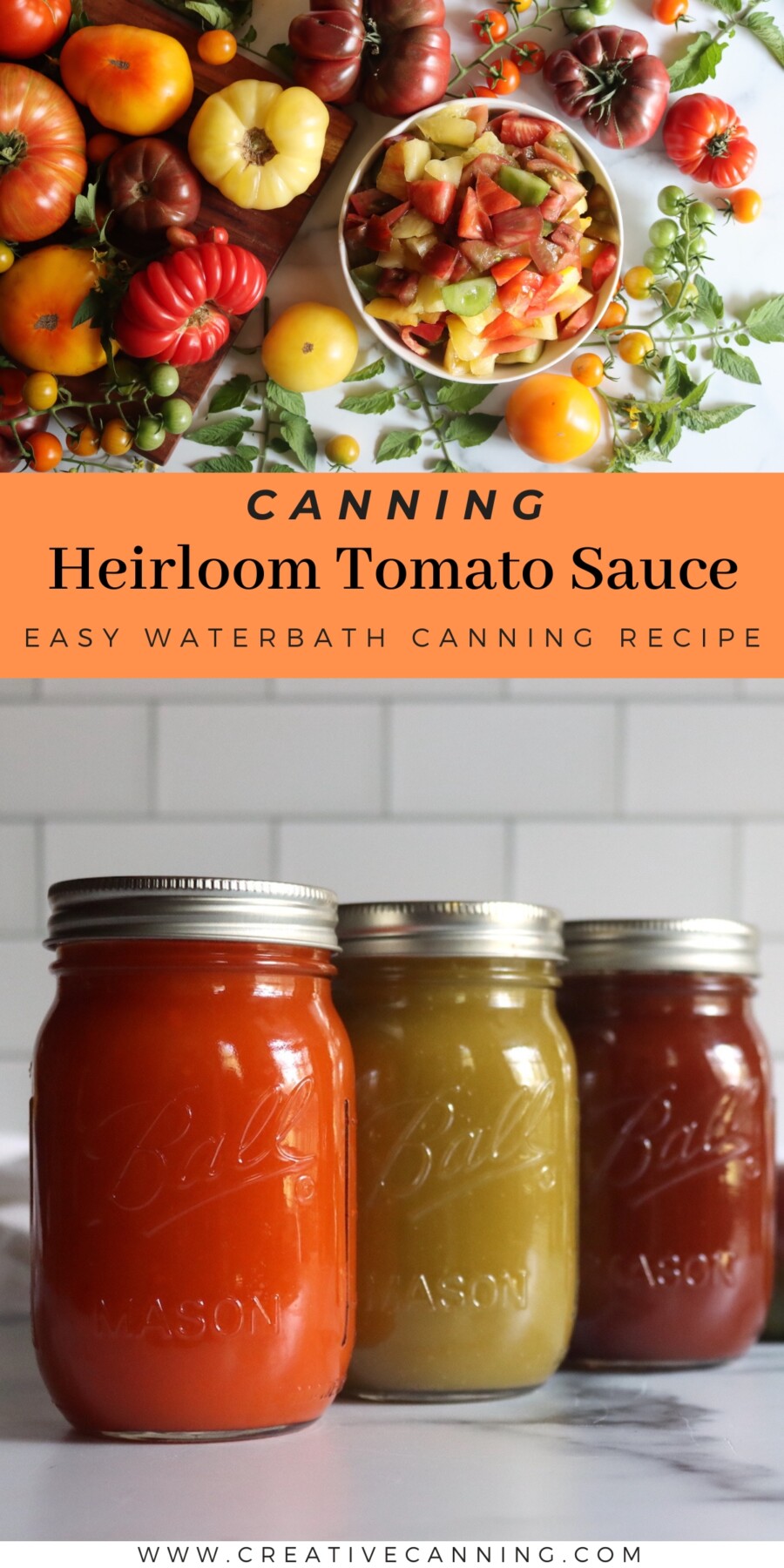
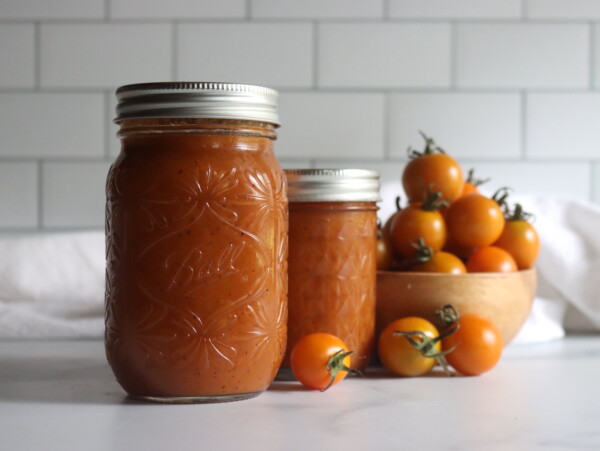
Heirloom tomato sauce captures the color and flavor of heritage varieties in a way that a standard red sauce just can’t. A single batch can come out deep purple, bright green, or golden orange depending on what you grew, with a flavor all its own, so the jars on your shelf taste like the specific tomatoes from your garden rather than a generic puree.
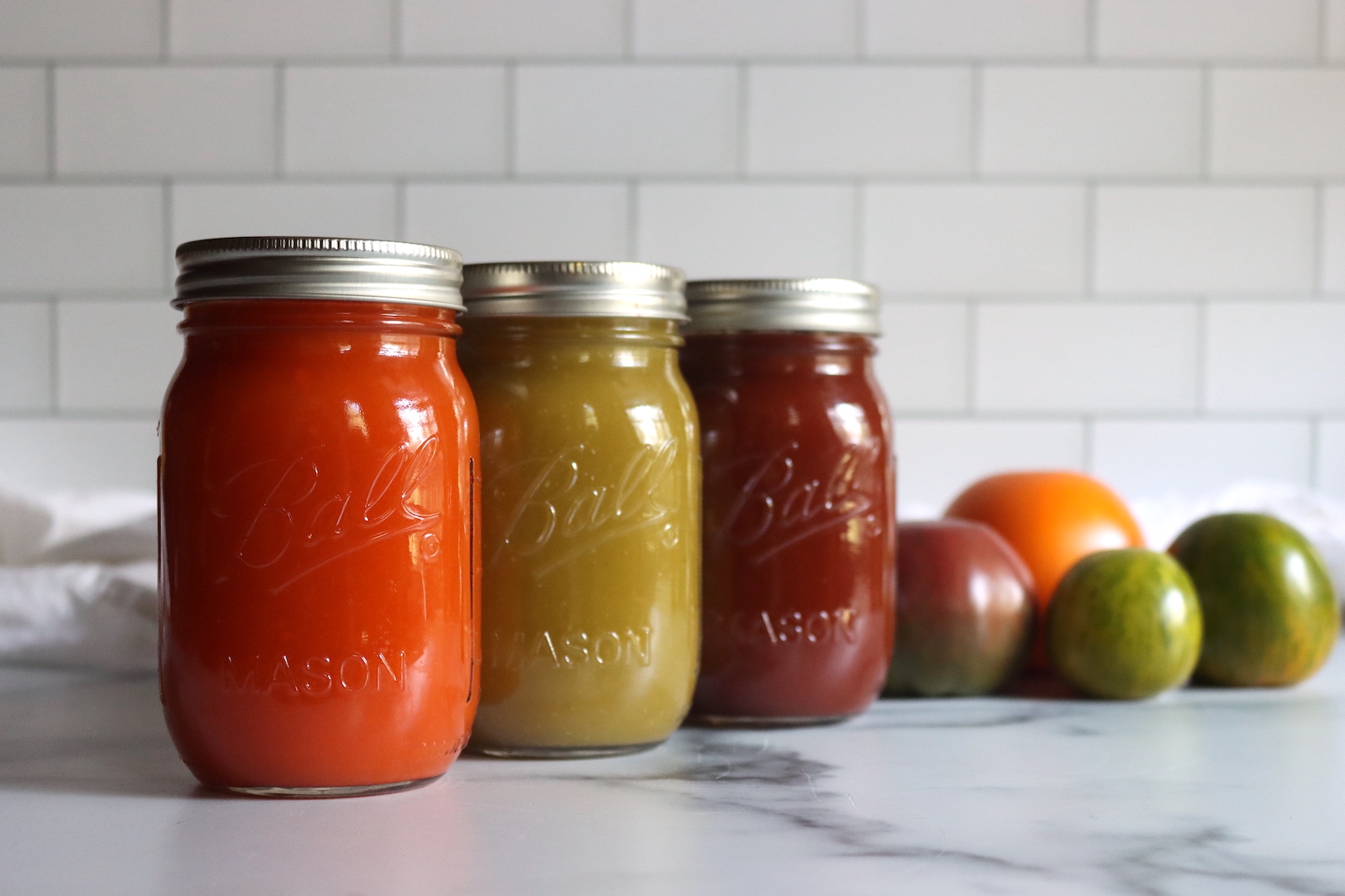
Table of Contents
- Notes from My Kitchen
- Quick Look at the Recipe
- Choosing Heirloom Tomatoes
- Ingredients for Heirloom Tomato Sauce
- Heirloom Tomato Sauce Notes
- How to Make Heirloom Tomato Sauce
- Canning Heirloom Tomato Sauce
- Altitude Adjustments
- Tips for Success
- Ways to Use Heirloom Tomato Sauce
- Yield Notes
- Heirloom Tomato Sauce FAQs
- Tomato Canning Recipes
- Heirloom Tomato Sauce Recipe
- Pasta Sauce Canning Recipes
This recipe has been reviewed for safety and accuracy by a Master Food Preserver certified through the University of Cornell Cooperative Extension.
This recipe follows the NCHFP standard tomato sauce method, which means it’s tested and approved for water bath canning. It works with any tomato variety, so it’s the same safe process you’d use for paste tomatoes, just applied to the heirlooms you want to show off. If you’re after more ideas for the harvest, the full collection of tomato canning recipes has options for every kind of tomato you might be growing.
The one thing that changes with heirlooms is yield. They tend to carry far more water and larger seed cavities than meaty paste tomatoes like Romas, so you’ll need roughly 1.5 to 2 times the weight to land the same amount of finished sauce.
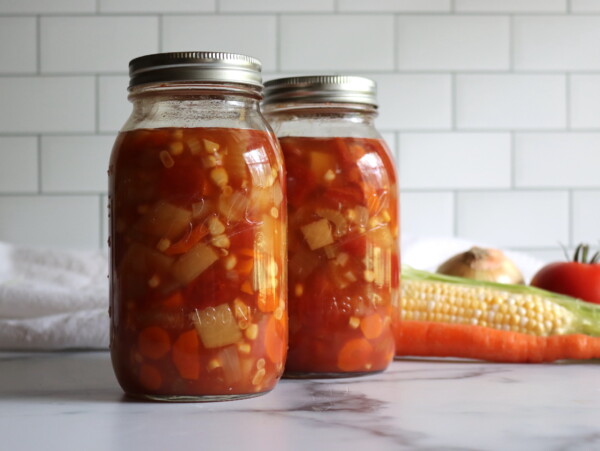
If you’d like to preserve that heirloom character in another form, there’s also heirloom tomato soup for a ready-to-eat option, a seasoned roasted marinara sauce if you want herbs and garlic cooked in, or canned tomato juice when you have a glut to work through.
Notes from My Kitchen

I started making single-varietal sauces with whatever heirloom was producing fastest in the garden, and the results surprised me every time. A batch of Black Krim came out an almost purple-brown that looked like nothing else I’d canned, while Green Zebra turned a green so bright it could have passed for a tomatillo salsa. The flavors change right along with the colors, with some varieties leaning sweet, some sharply acidic, and some carrying a depth that standard red tomatoes never quite hit.
The thing to plan for going in is the volume of tomatoes. I usually fill two five-gallon buckets of heirlooms for a single small batch where one bucket of Romas would do, and the extra simmering time to cook off all that water is real. When the sauce finally reaches the consistency I want, though, it’s deeply flavored and worth the wait.
Quick Look at the Recipe
- Recipe Name: Heirloom Tomato Sauce
- Recipe Type: Tomato Canning Recipes
- Canning Method: Water Bath Canning
- Prep Time: About 1 hour
- Cook Time: 45 minutes to 1 hour
- Canning Time: 35 minutes (pints), 40 minutes (quarts)
- Yield: About 4 pints
- Jar Sizes: Pints or quarts
- Headspace: 1/4 inch
- Ingredients Overview: Heirloom tomatoes, bottled lemon juice or citric acid, salt (optional)
- Safe Canning Recipe Source: NCHFP Standard Tomato Sauce
- Difficulty: Easy
- Similar Recipes: This uses the same NCHFP standard tomato sauce method that works for any tomato variety, so for a seasoned version with herbs and garlic cooked in, try roasted marinara sauce. To preserve heirloom flavor in another form, make heirloom tomato soup or canned tomato juice.
Choosing Heirloom Tomatoes
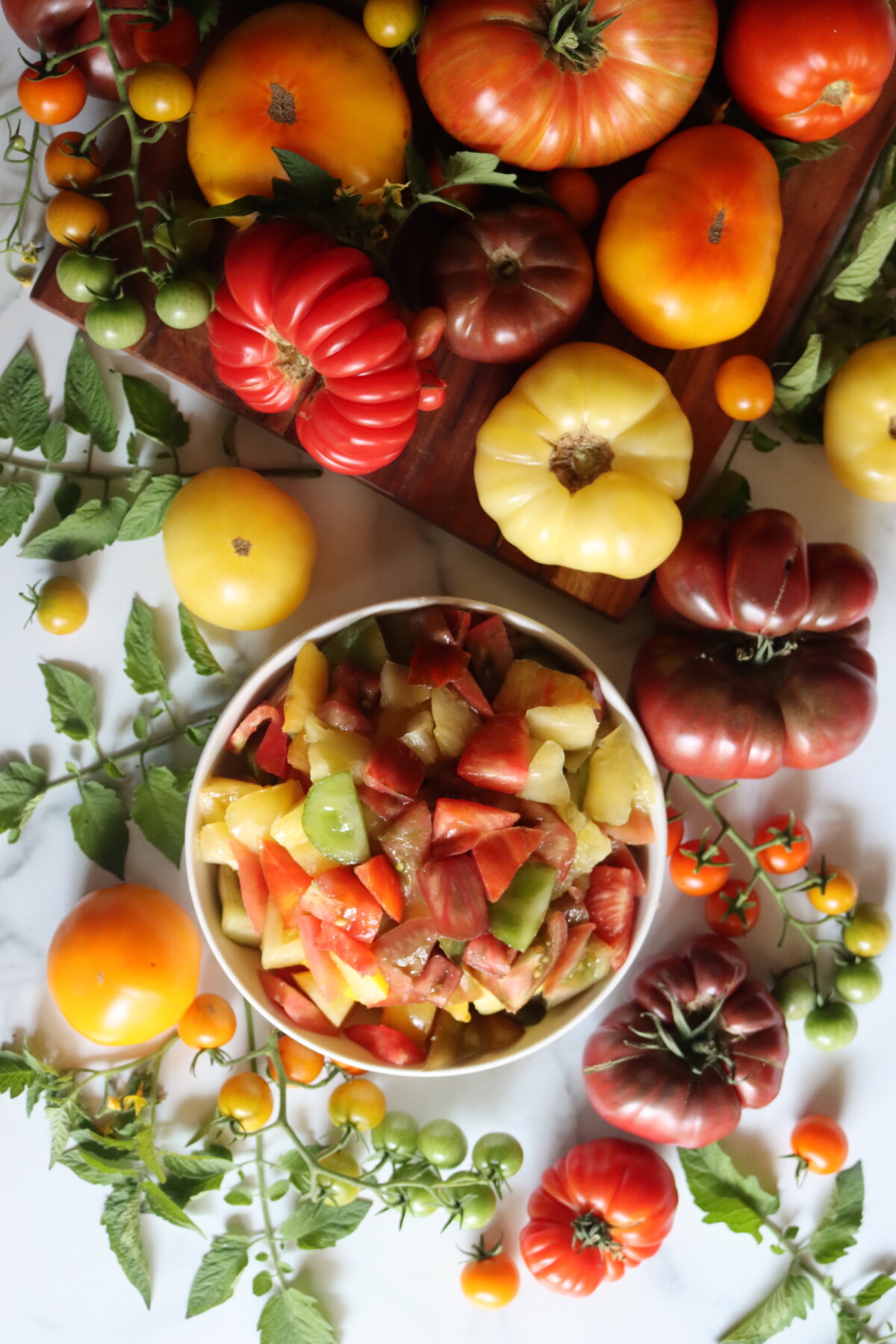
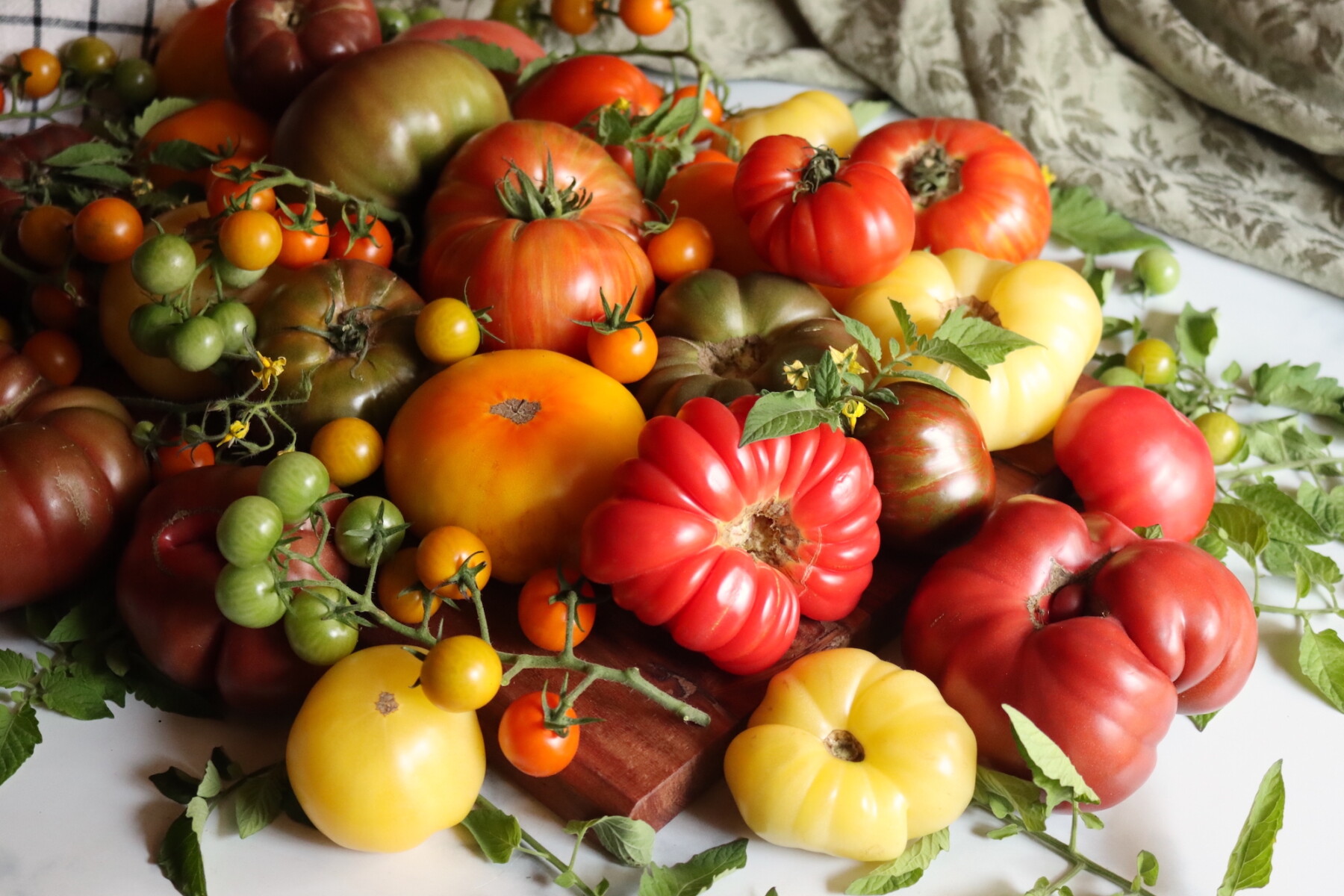
Any heirloom variety will make safe sauce provided it’s properly acidified, so the choice really comes down to the color and flavor you want in the jar. Purple and black types like Black Krim and Cherokee Purple give you that deep brooding color, green varieties like Green Zebra stay startlingly green, and yellow or orange types like Brandywine Yellow, Kellogg’s Breakfast, and Lemon Boy land somewhere between gold and amber. Sticking to a single variety per batch keeps the color clean and lets one tomato’s character carry the whole jar.
You can absolutely mix varieties for a more layered flavor, though the colors tend to blend toward a muddy red once they’re combined, so you lose the single-variety drama. Whatever you choose, look for fully ripe, unblemished fruit, and cut away any bruised or soft spots before they go in the pot. Since heirlooms are watery, having a lot on hand matters more than with paste tomatoes, so pick when several plants are producing heavily and you can fill a batch in one go.
Ingredients for Heirloom Tomato Sauce
Heirloom tomato sauce keeps the ingredient list short, with just tomatoes and an acidifier doing the work. The tomatoes carry all the flavor here, so this is the place to use the varieties that excite you most.
- Heirloom Tomatoes: Any variety works, from purple-black types to green, yellow, or orange. Plan on roughly 16 to 24 pounds for about 4 pints of sauce, which is around 1.5 to 2 times what you’d need with paste tomatoes. The exact amount depends on how watery your variety runs and how thick you cook the sauce down. For a single-variety batch, use one kind throughout; for more complexity, blend a few and accept a more muted color.
- Bottled Lemon Juice or Citric Acid: Required for safe canning, and not optional. Add 1 tablespoon bottled lemon juice OR 1/4 teaspoon citric acid per pint (double both for quarts). Use bottled lemon juice rather than fresh, since bottled has a consistent acidity that fresh does not. The acid is the safety control for this recipe and cannot be reduced, no matter how tart the tomatoes taste.
- Salt (optional): Salt is for flavor only and does nothing for safety. Add 1/2 teaspoon per pint or 1 teaspoon per quart if you like, or leave it out entirely with no effect on the process.
This is a plain, unseasoned sauce by design. You can add herbs, garlic, and other flavorings when you open a jar to use it, which gives you far more flexibility than committing to a seasoning during canning.
If you’d rather have the seasoning cooked in from the start, the roasted marinara sauce recipe is built for that.
Heirloom Tomato Sauce Notes
This recipe is safe because it follows the NCHFP standard tomato sauce method, where the added acid is what makes water bath canning possible. Add 1 tablespoon bottled lemon juice or 1/4 teaspoon citric acid to every pint (double for quarts), and never reduce that amount. The acidity of fresh tomatoes varies too much to rely on, and heirlooms are no exception, so the acid stays as written regardless of how sweet or tart a given variety tastes.
What you can safely change is the seasoning and the consistency. Salt is optional and only affects flavor, and you can simmer the sauce thinner or thicker to taste. What you cannot change is the acid, the headspace, the processing time, or the jar size, since those are the parts of the tested recipe that keep it safe.
How to Make Heirloom Tomato Sauce
Making this sauce comes down to three stages: peeling the tomatoes, milling them into a smooth puree, and simmering that puree down until it reaches the thickness you want. None of it is difficult, but the simmering takes patience with heirlooms because of all the water you’re cooking off.
It helps to get your canner heating and your jars washed before you start, so everything is ready to go once the sauce is done. From there, work through the steps below in order, and don’t rush the reduction at the end.
Blanch and Peel the Tomatoes
Wash the tomatoes and remove any stems or damaged portions. Working in batches, dip them in boiling water for 30 to 60 seconds, just until the skins start to split, then transfer them right away to a bowl of ice water (or cold well water) to stop the cooking.
Once the tomatoes are cool enough to handle, the skins should slip off easily. Pull off the skins, cut out the cores, and chop the tomatoes into quarters or large chunks so they break down quickly in the next step.
Make the Puree
Place the peeled, cored tomatoes in a large pot and bring them to a boil. Boil uncovered for about 20 minutes, stirring now and then to keep them from sticking, until the tomatoes have fully broken down into a loose, soupy mixture.
Run the softened tomatoes through a food mill to remove the seeds and any stray bits of skin, which leaves you with a smooth puree ready for simmering. If you don’t have a food mill, you can blend the tomatoes and push them through a fine mesh sieve instead, though you’ll lose a little more volume that way.
Simmer to Thicken
Return the puree to a large, wide pot, since a wider surface lets the moisture evaporate faster. Bring it to a boil, then lower the heat to a steady simmer and cook uncovered, stirring frequently so the bottom doesn’t scorch. For a thin sauce, reduce the volume by about a third; for a thicker sauce, keep going until it’s reduced by about half.
With heirloom tomatoes this stage takes longer than it would with paste tomatoes, simply because there’s more water to drive off. Plan on 45 minutes to an hour or more depending on how thick you want the finished sauce, and trust the consistency in the pot over the clock.
Canning Heirloom Tomato Sauce
Once the sauce has reached the consistency you want, it’s time to get it into jars. If you’d rather not can the whole batch, the sauce keeps in the refrigerator for up to a week, or you can freeze it in freezer-safe containers for up to 6 months.
To can, prepare your water bath canner, jars, lids, and bands, keeping the jars hot until you’re ready to fill them. Add the acidifier to each hot jar first, then salt if you’re using it. Ladle the hot sauce into the jars through a canning funnel, leaving 1/4 inch headspace.
Slide a bubble remover or chopstick around the inside of each jar to release trapped air, adjust the headspace if needed, then wipe the rims with a clean, damp cloth, center the lids, and apply the bands fingertip tight.
Process in a boiling water bath canner, making sure the jars are covered by at least 1 to 2 inches of water. Process pints for 35 minutes and quarts for 40 minutes at elevations up to 1,000 feet, adjusting for altitude (see the table below).
When the time is up, turn off the heat and let the jars rest in the canner for 5 minutes before lifting them out onto a towel-lined counter. Leave them undisturbed for 12 to 24 hours, then check the seals, remove the bands, and store in a cool, dark place.
Altitude Adjustments
For water bath canning, processing times increase at higher elevations:
Pints:
- 0 to 1,000 feet: 35 minutes for pints, 40 minutes for quarts
- 1,001 to 3,000 feet: 40 minutes for pints, 45 minutes for quarts
- 3,001 to 6,000 feet: 45 minutes for pints, 50 minutes for quarts
- Above 6,000 feet: 50 minutes for pints, 55 minutes for quarts
Tips for Success
A food mill is the piece of equipment that makes this recipe smooth. It pulls out the seeds and skins while leaving you with the pulp, which matters more with heirlooms than with paste tomatoes because heirlooms carry so many more seeds. Run the cooked tomatoes through while they’re still hot, and pass the pulp through a second time if you want an especially smooth texture.
The other thing that makes a difference is the pot you reduce in. A wide, shallow pan exposes more surface area and cooks the sauce down noticeably faster than a tall, narrow stockpot, which can save you a good half hour with watery varieties.
Stir often as the sauce thickens, since a reducing tomato sauce scorches easily once most of the water is gone, and a scorched bottom will flavor the whole batch.
Ways to Use Heirloom Tomato Sauce
Plain heirloom tomato sauce is a blank canvas that lets the color and flavor of your tomatoes lead. Because it goes into the jar unseasoned, you can take it in any direction once you open it, which is part of why a plain sauce earns its shelf space.
- Quick marinara: Sauté garlic in olive oil, add a jar of sauce, and season with salt, basil, and oregano for a fast pasta sauce that shows off your tomato variety.
- Pizza base: Spread it on homemade pizza as-is or lightly seasoned. The unusual color of a variety like Black Krim or Green Zebra makes for a striking pie.
- Soup starter: Use it as the base for tomato soup, adding cream, broth, or other vegetables as you like.
- Shakshuka: Warm the sauce in a skillet, crack eggs into it, and cook until the eggs are just set.
- Braising liquid: Use it as a base for braising chicken, meatballs, or vegetables.
- Curry base: Swap it in for canned tomatoes in curry recipes, adding spices as the recipe directs.
However you use it, the color tends to be the conversation starter, so a sauce that came off the shelf looking purple or green is worth saving for dishes where it’ll actually show.
Keep a few jars of your most unusual varieties back for those.
Yield Notes
This recipe makes about 4 pints, but the exact number is the hardest thing to pin down with heirloom tomatoes. Because they hold so much more water and have larger seed cavities than paste tomatoes, you lose a lot of volume between the raw fruit and the finished sauce. Plan on roughly 16 to 24 pounds of heirlooms for 4 pints, which is around 1.5 to 2 times what the same yield would take in paste tomatoes.
Your real yield depends on the variety, how far you reduce the sauce, and the growing conditions that season, so start with more tomatoes than you think you need and simmer to the consistency you want rather than to a target jar count. The recipe halves and doubles cleanly, so it’s easy to scale up to a full canner load once you know how your tomatoes cook down. Just keep the acid at 1 tablespoon of bottled lemon juice or 1/4 teaspoon of citric acid per pint no matter the batch size.
A few common questions come up when people make this sauce for the first time, so here are the ones I hear most.
Heirloom Tomato Sauce FAQs
No. The added acid is what makes this sauce safe for water bath canning, and the amount cannot be reduced for any variety regardless of how sweet or tart it tastes. Use 1 tablespoon bottled lemon juice or 1/4 teaspoon citric acid per pint (double for quarts), and use bottled lemon juice rather than fresh, since its acidity is consistent. Perceived sweetness has nothing to do with the actual pH, so never cut the acid based on taste.
Heirloom tomatoes have higher water content and larger seed cavities than meaty paste tomatoes like Romas. Once you remove the seeds and cook the puree down, you lose much more volume than you would with paste tomatoes. Plan on roughly 1.5 to 2 times the weight of heirlooms to land the same amount of finished sauce.
The color shifts slightly during processing, but distinctive colors like purple, green, or orange generally hold well. Green tomatoes tend to turn a bit more olive-toned, and very dark varieties may lighten a little. The finished sauce will still look noticeably different from a standard red tomato sauce.
Properly processed and sealed jars keep for about 12 to 18 months in a cool, dark place. Check that each jar sealed before storing, and refrigerate any jar that didn’t seal and use it within a week. Once a jar is opened, refrigerate it and use it within about 5 to 7 days.
For more ways to put up the tomato harvest, browse the rest of the collection below.
Tomato Canning Recipes
If you tried this Heirloom Tomato Sauce recipe, or any other recipe on Creative Canning, leave a ⭐ star rating and let me know what you think in the 📝 comments below!
And make sure you stay in touch with me by following on social media!
Heirloom Tomato Sauce
Equipment
- Large wide pot for simmering
- Canning Jars, Lids and Bands
Ingredients
- 18 lbs heirloom tomatoes, about 16 to 24 pounds, depending on variety and how thick you cook the sauce
- 4 Tbsp bottled lemon juice, 1 tablespoon per pint, OR 1 teaspoon citric acid (1/4 teaspoon per pint)
- 2 tsp salt, 1/2 teaspoon per pint, optional
Instructions
- Prepare the canner and jars. Fill a water bath canner and bring it to a simmer. Wash your jars, lids, and bands, and keep the jars hot until you're ready to fill them.
- Blanch and peel. Wash the tomatoes and remove stems and any damaged spots. Working in batches, dip the tomatoes in boiling water for 30 to 60 seconds, until the skins split, then transfer them to ice water. Slip off the skins, cut out the cores, and chop into quarters or chunks.
- Cook and mill. Place the peeled tomatoes in a large pot, bring to a boil, and boil uncovered for about 20 minutes, stirring to prevent sticking. Run the softened tomatoes through a food mill to remove seeds and skins and leave a smooth puree.
- Simmer to thicken. Return the puree to a wide pot and simmer uncovered, stirring frequently, until reduced by about one-third for a thin sauce or by about half for a thicker sauce. With heirlooms this takes longer because of the extra water, so plan on 45 minutes to an hour or more.
- Acidify and fill. Add the bottled lemon juice or citric acid to each hot jar, then add salt if using. Add 1 Tbsp lemon juice per pint or 2 Tbsp per quart, see notes for citric acid. Salt is to taste, but 1/2 tsp per pint is about right for most people. Ladle the hot sauce into the jars, leaving 1/4 inch headspace.
- Remove bubbles and seal. Slide a bubble remover around the inside of each jar to release trapped air and adjust the headspace if needed. Wipe the rims with a clean, damp cloth, center the lids, and apply the bands fingertip tight.
- Process. Process pints in a boiling water bath for 35 minutes, or quarts for 40 minutes, adjusting for altitude (see notes). Turn off the heat, wait 5 minutes, then remove the jars and let them cool undisturbed for 12 to 24 hours before checking the seals.
Notes
- 0 to 1,000 feet: 35 minutes for pints, 40 minutes for quarts
- 1,001 to 3,000 feet: 40 minutes for pints, 45 minutes for quarts
- 3,001 to 6,000 feet: 45 minutes for pints, 50 minutes for quarts
- Above 6,000 feet: 50 minutes for pints, 55 minutes for quarts
Nutrition
Nutrition information is automatically calculated, so should only be used as an approximation.
And if you’re cooking your way through the tomato patch, here are more sauces to can.
Pasta Sauce Canning Recipes
30+ Pasta Sauce Recipes For Canning
Pasta sauce recipes for canning are surprisingly hard to track down, especially if you’re looking for water bath canning recipes.…
Find the perfect recipe
Searching for something else? Enter keywords to find the perfect recipe!

I love making single-variety batches from colorful heirlooms! They’re so fun, and you get all that delicious, complex heirloom flavor.