This post may contain affiliate links. Please see our disclosure policy.
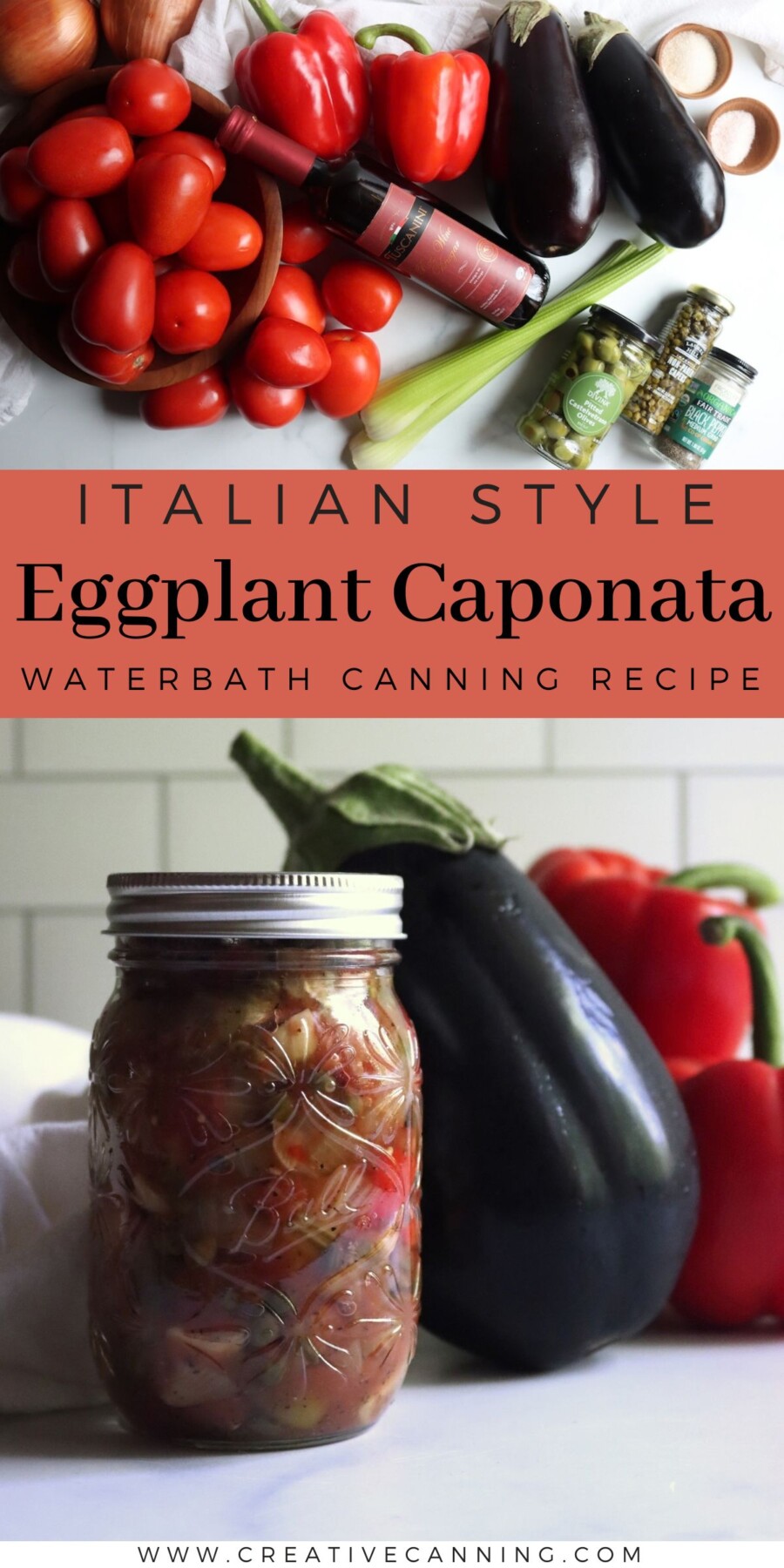
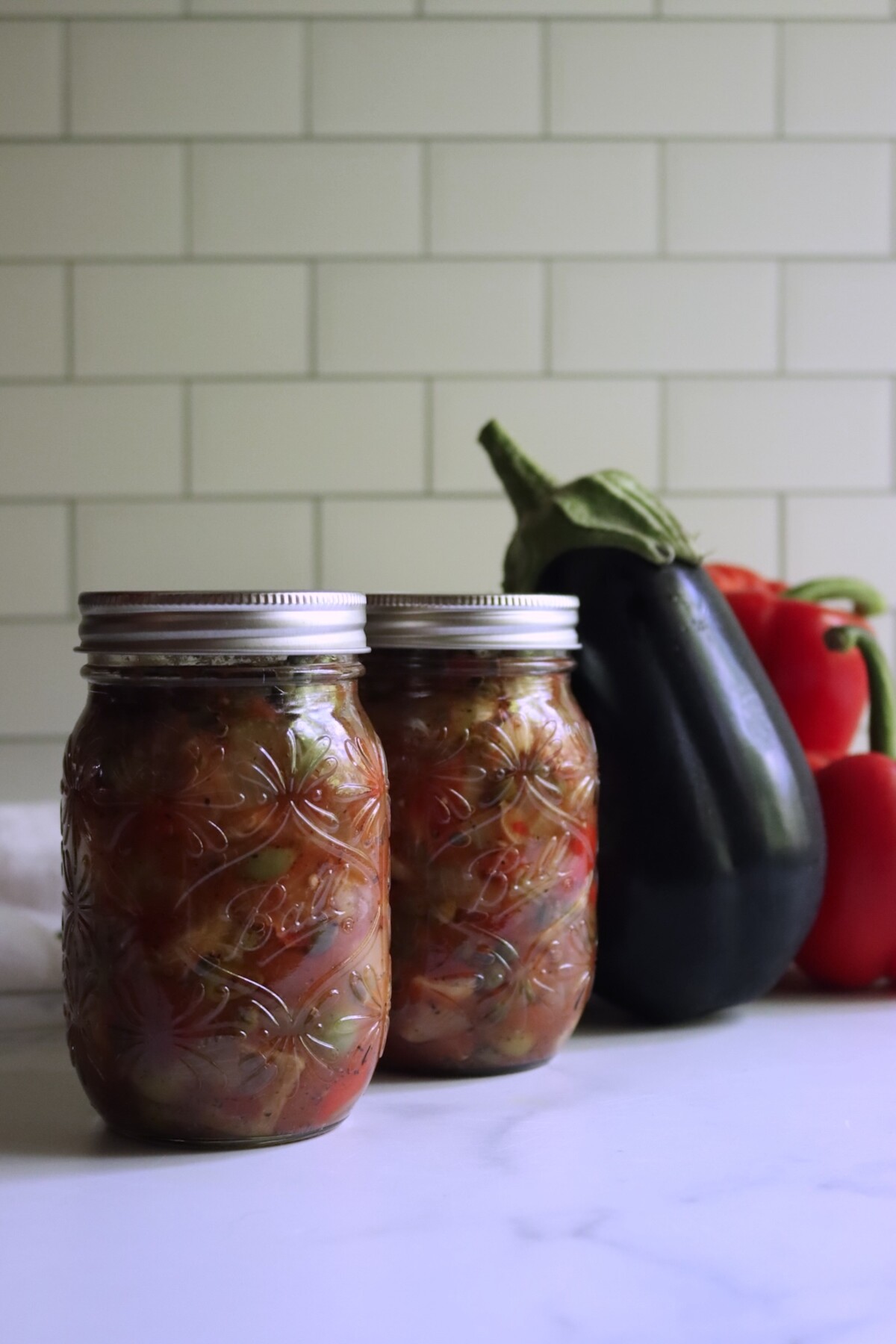
Eggplant caponata is a Sicilian sweet-and-sour eggplant relish, and this tested canning recipe lets you keep it on the pantry shelf all year. Open a jar, spoon it onto crusty bread or toss it with hot pasta, and you have an antipasto or an easy dinner in minutes.
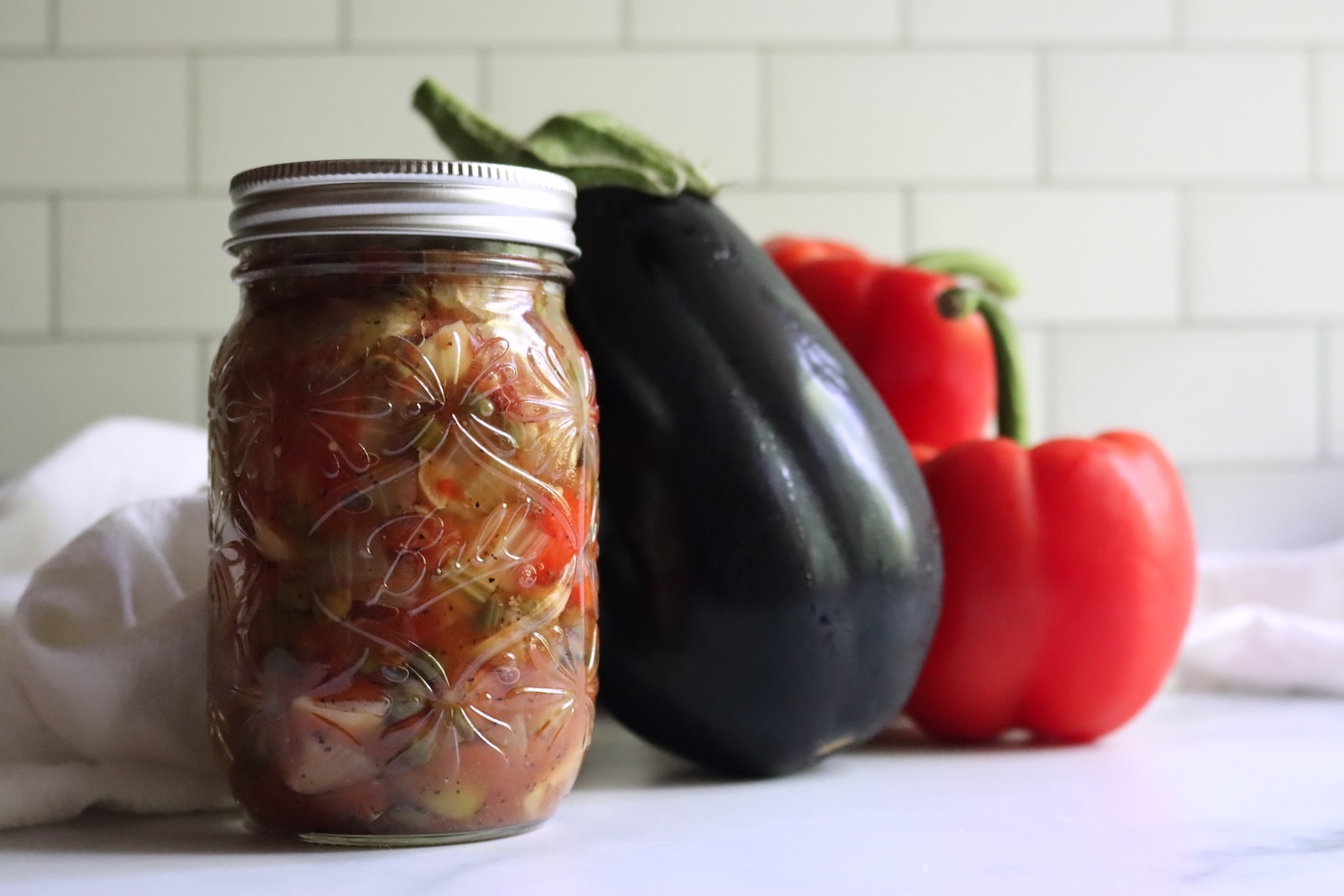
Table of Contents
- Notes from My Kitchen
- Quick Look at the Recipe
- Choosing Eggplant and Tomatoes for Caponata
- Ingredients for Eggplant Caponata
- Eggplant Caponata Notes
- Step-by-Step Instructions
- Canning Eggplant Caponata
- The Corrected Recipe
- Altitude Adjustments
- Tips for the Best Eggplant Caponata
- Ways to Use Eggplant Caponata
- Storage and Shelf Life
- Yield Notes
- Eggplant Caponata FAQs
- Relish Canning Recipes
- Eggplant Caponata Recipe
- Tomato Canning Recipes
This recipe has been reviewed for safety and accuracy by a Master Food Preserver certified through the University of Cornell Cooperative Extension.
Caponata comes from Sicily, where cooks simmer eggplant with onions, celery, olives, and capers in a sweet-and-sour sauce of sugar and vinegar. Italians call that sauce agrodolce. Sicilians serve caponata at room temperature, either as an antipasto on bread or as a side next to grilled fish or meat.
Sicilian cooks make it plenty of ways. Some add pine nuts or raisins, and most fry the eggplant in olive oil first. For this one, you roast the eggplant instead, along with the tomatoes and red peppers.
It’s a close cousin of my eggplant puttanesca sauce, with less tomato and no red wine. The sugar and red wine vinegar give it that sweet-and-sour taste, so it’s closer to a relish than a pasta sauce. This particular recipe is adapted from the caponata sauce recipe in the 38th edition of the Ball Blue Book.
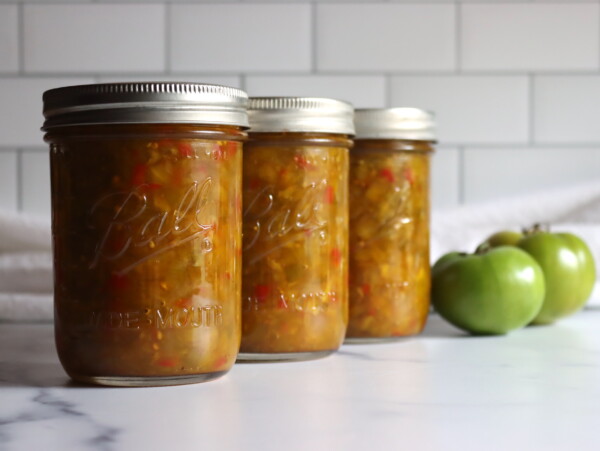
If the garden is handing you more eggplant than you can cook, there are more ideas in my list of eggplant canning recipes. And if you like a spoonful of something tangy next to dinner, I have plenty of relish recipes for canning too.
Notes from My Kitchen

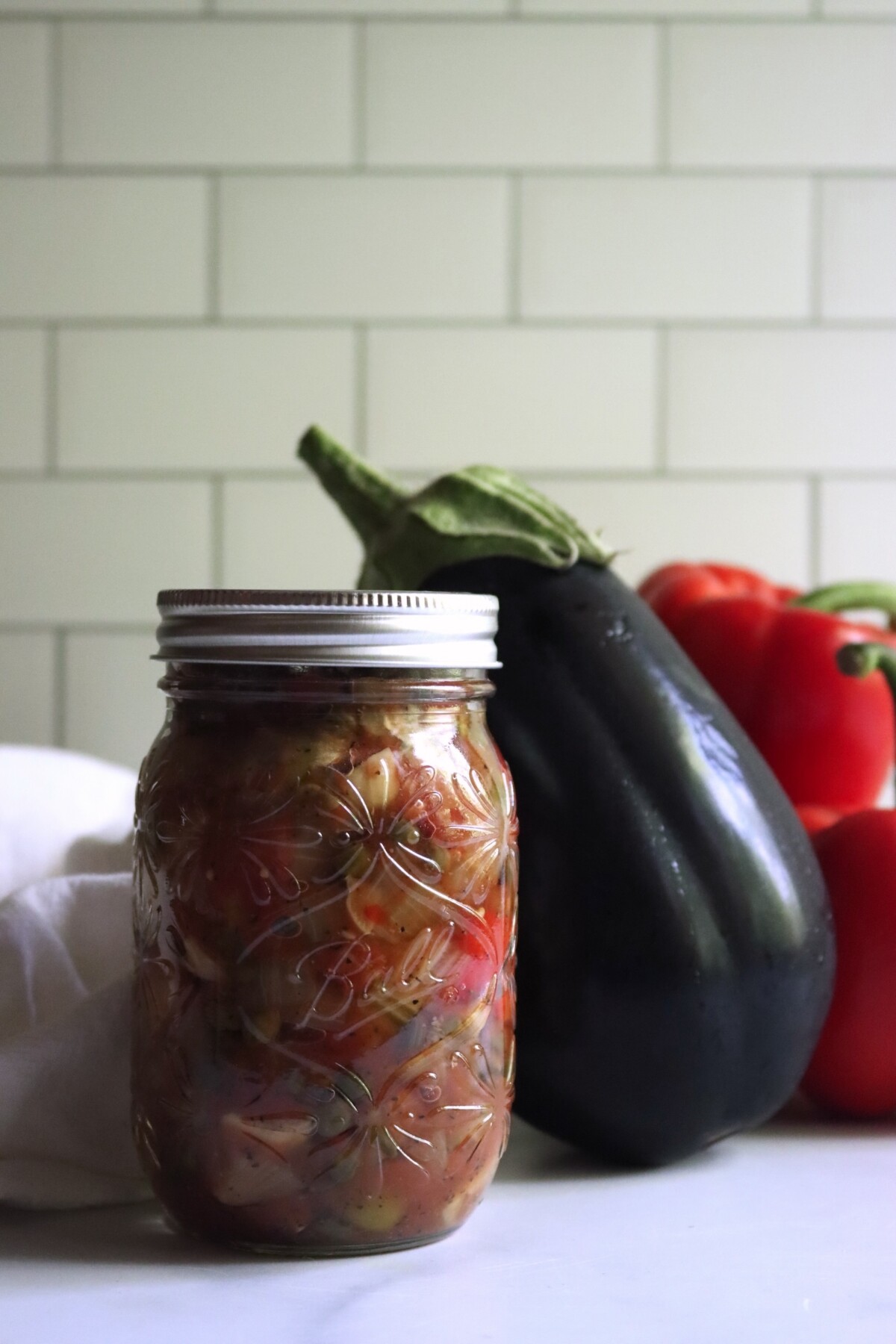
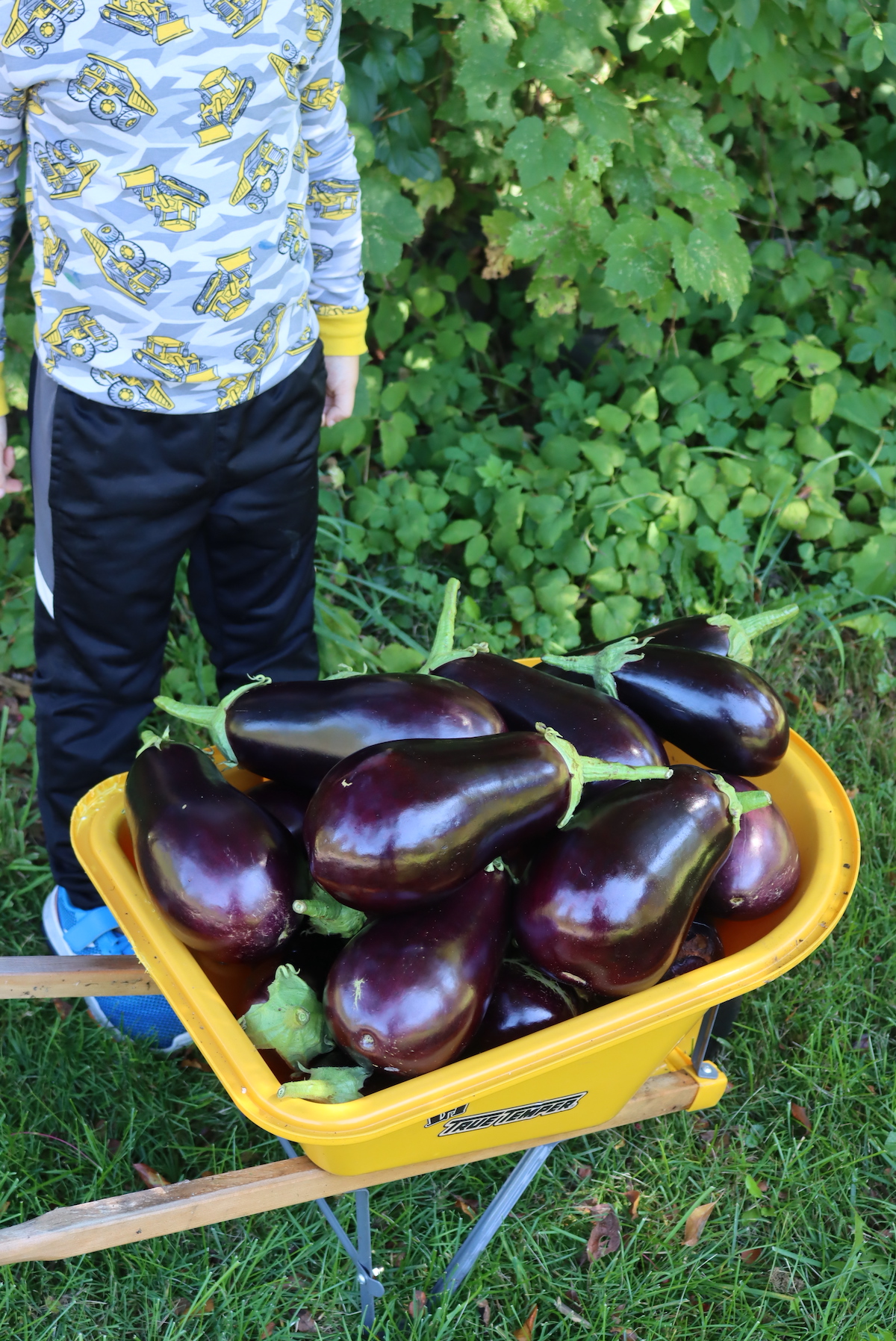
Our family loves eggplant, and the garden gives us more of it every year than we can eat fresh. My son once hauled his wheelbarrow full of a single day’s eggplant harvest, and the next day was no different.
Freezer space only goes so far, so I’ve been working my way through tested eggplant canning recipes to keep more of the harvest on the pantry shelf. Caponata is another one from that list, along with my eggplant puttanesca sauce.
It’s absolutely delicious right out of the jar, and the olives really add something that’s unique in canning recipes.
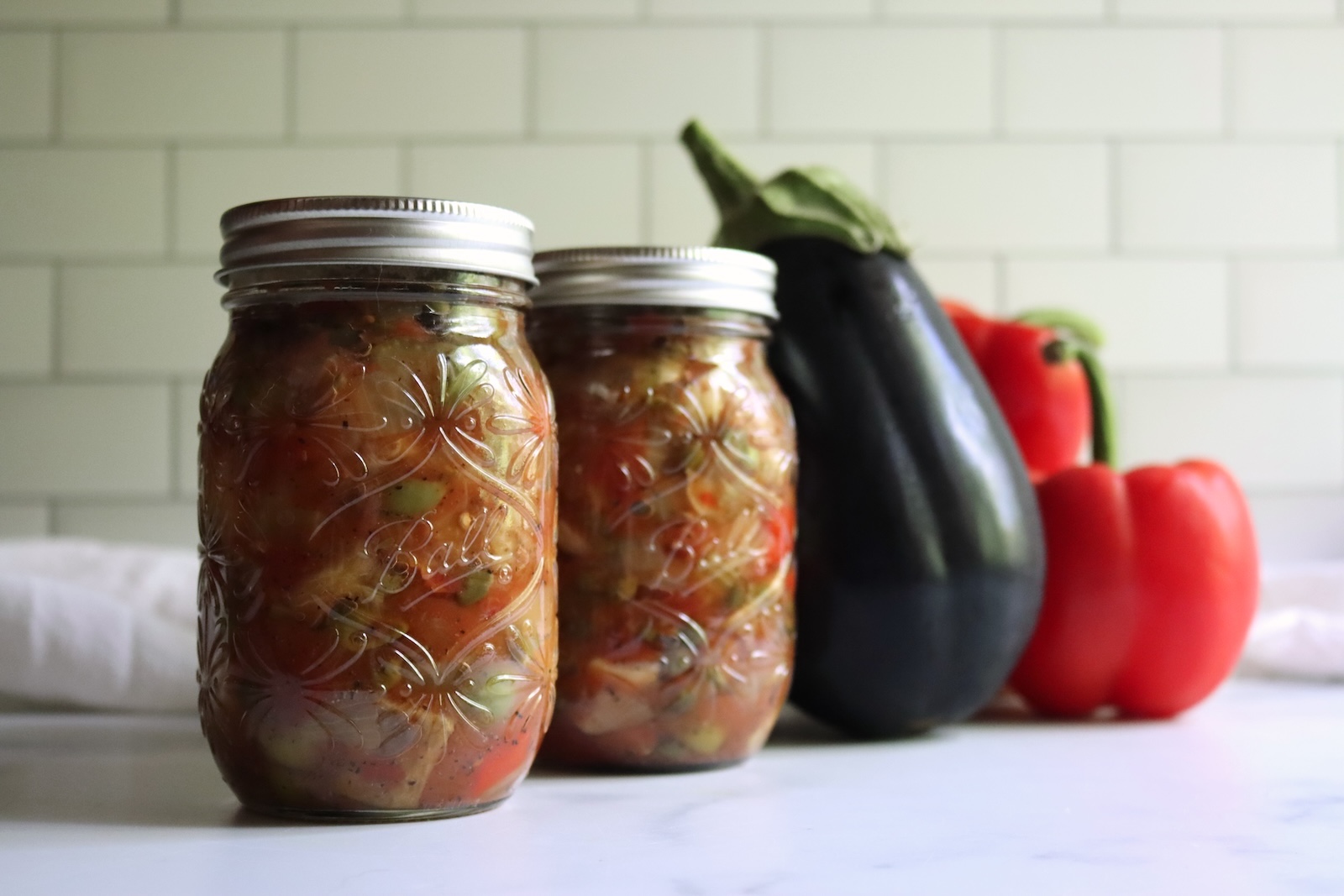
Here’s the recipe at a glance before you start roasting.
Quick Look at the Recipe
- Recipe Name: Eggplant Caponata
- Recipe Type: Sweet-and-sour eggplant relish, acidified with red wine vinegar
- Canning Method: Water Bath Canning
- Prep Time: About 40 minutes
- Cook Time: About 65 minutes, counting the roasting
- Canning Time: 35 minutes for pints or half pints
- Yield: About 5 pints
- Jar Sizes: Pints or half pints
- Headspace: 1/2 inch
- Ingredients Overview: Eggplant, plum tomatoes, red bell peppers, onions, celery, garlic, olives, capers, sugar, red wine vinegar, salt, and black pepper
- Safe Canning Recipe Source: Ball Blue Book Guide to Preserving, 38th edition, p. 109, with Ball’s corrected 35-minute process
- Difficulty: Easy, with a fair bit of chopping
- Similar Recipes: Eggplant puttanesca sauce is a close cousin that goes on pasta. For other sweet-and-sour jars, try pepper onion relish or green tomato chutney.
Choosing Eggplant and Tomatoes for Caponata
Weigh your eggplant rather than counting it. Sizes vary so much between varieties that a count in a recipe doesn’t tell you much, and a single jumbo eggplant from the grocery store can weigh as much as two from the garden.
Pick eggplants that feel heavy for their size, with tight, glossy skin. Any variety works, and in my garden it’s usually the classic Italian globes. You don’t need to peel or salt them, since they roast in their skins and you scoop the flesh out afterward.
For the tomatoes, use plum or paste varieties like Roma or San Marzano. They have meatier walls and less juice than slicing tomatoes. If your tomatoes came in weeks before the eggplant, canned tomatoes work too, and my tomato canning recipes cover the rest of the harvest.
Ingredients for Eggplant Caponata
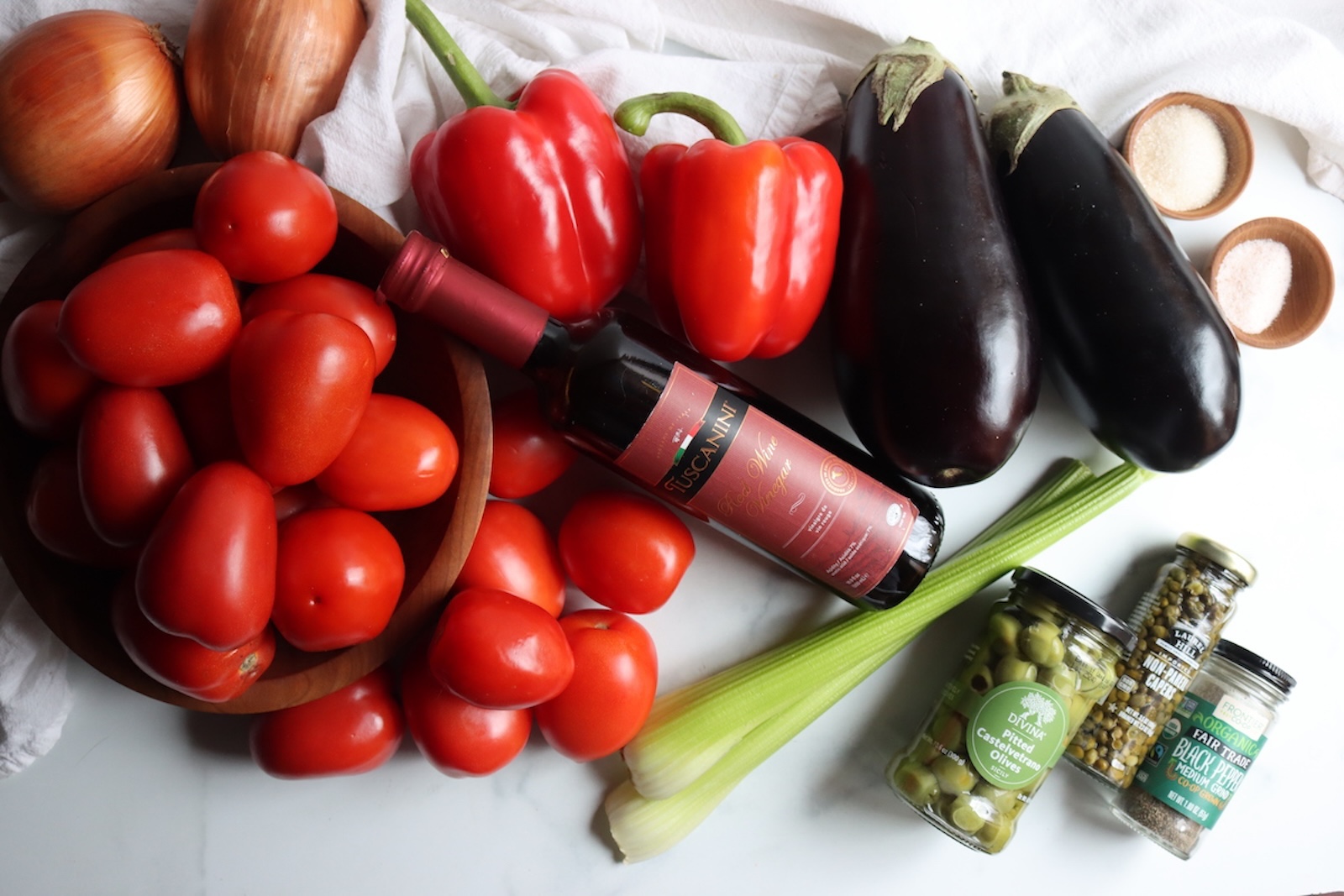
The list is long, but most of it is vegetables and pantry staples.
- Eggplant: Any variety, stemmed and quartered lengthwise. It roasts in its skin until soft, then you scoop the flesh out with a spoon.
- Plum tomatoes: Halved and roasted, then peeled and chopped. Home-canned tomatoes or a can of diced tomatoes can stand in for fresh.
- Red bell peppers: Halved and seeded, then roasted and peeled. They add sweetness against the vinegar, and orange or yellow bell peppers work the same way.
- Onions: Yellow or white, diced.
- Celery: Diced to match the onions. Celery is a classic caponata ingredient.
- Garlic: Fresh cloves, minced.
- Water: Ball softens the onions, celery, and garlic in water instead of oil. Use the measured amount, since extra water thins out the vinegar.
- Olives: Castelvetrano or kalamata, pitted and chopped. Castelvetranos are bright green and mild, and kalamatas are dark and briny.
- Capers: Brined capers, drained. They’re a big part of the salty, briny side of caponata.
- Sugar: Plain granulated sugar. It’s the sweet half of sweet and sour.
- Red wine vinegar: The sour half, and the acid that makes this safe in a water bath canner. It needs to say 5% acidity or higher on the label.
- Oil: A light coat on the baking sheet and on the eggplant and peppers, so they don’t stick while they roast.
- Salt and black pepper: Seasoning only, so adjust them to taste. I use canning and pickling salt, and my guide to pickling salt and its substitutions covers what else works.
The vegetables and the vinegar are the parts of the list to leave alone. Ball set the processing time for exactly those amounts.
Eggplant Caponata Notes
The red wine vinegar is the safety control here. Eggplant, peppers, onions, and celery are all low acid, and the half cup of vinegar is what makes the whole batch safe for a water bath canner. Use vinegar labeled 5% acidity or higher.
You can trade one olive for the other, or use orange or yellow bell peppers in place of red. Canned tomatoes work in place of fresh, and the salt and black pepper are up to you.
Olive oil, pine nuts, and raisins are traditional in Sicily. Stir them in after you open a jar.
Don’t add other vegetables or increase the ones in the recipe, as using more than the measured amounts could give you an unsafe jar.
Step-by-Step Instructions
Caponata is a two-part recipe. Roast the eggplant, peppers, and tomatoes in the oven first, then simmer everything in one pan on the stove.
Fill your water bath canner and set it over the heat before you do anything else. It takes a long time to come to a boil, and the caponata should go into the jars hot.
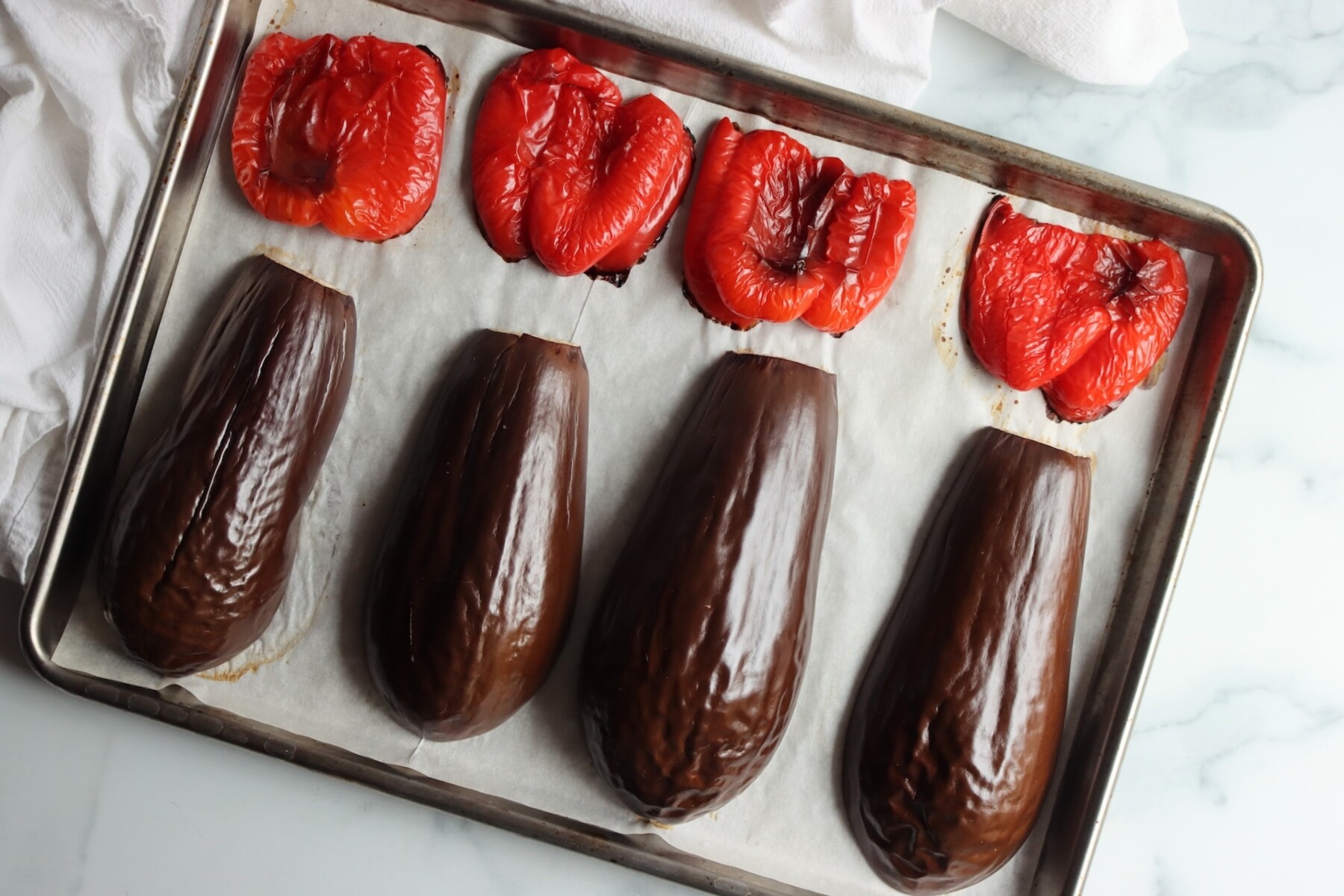
- Heat the oven to 375 degrees F. Stem the eggplants, cut them lengthwise into quarters, halve and seed the red peppers, and cut the tomatoes in half. Brush a baking sheet with a little oil, lay the eggplant and peppers on it skin side up, and brush them lightly with oil too. Line a second rimmed baking sheet with foil, set the tomato halves skin-side up, and roast both sheets for 25 to 30 minutes, until the skins soften and start to char.
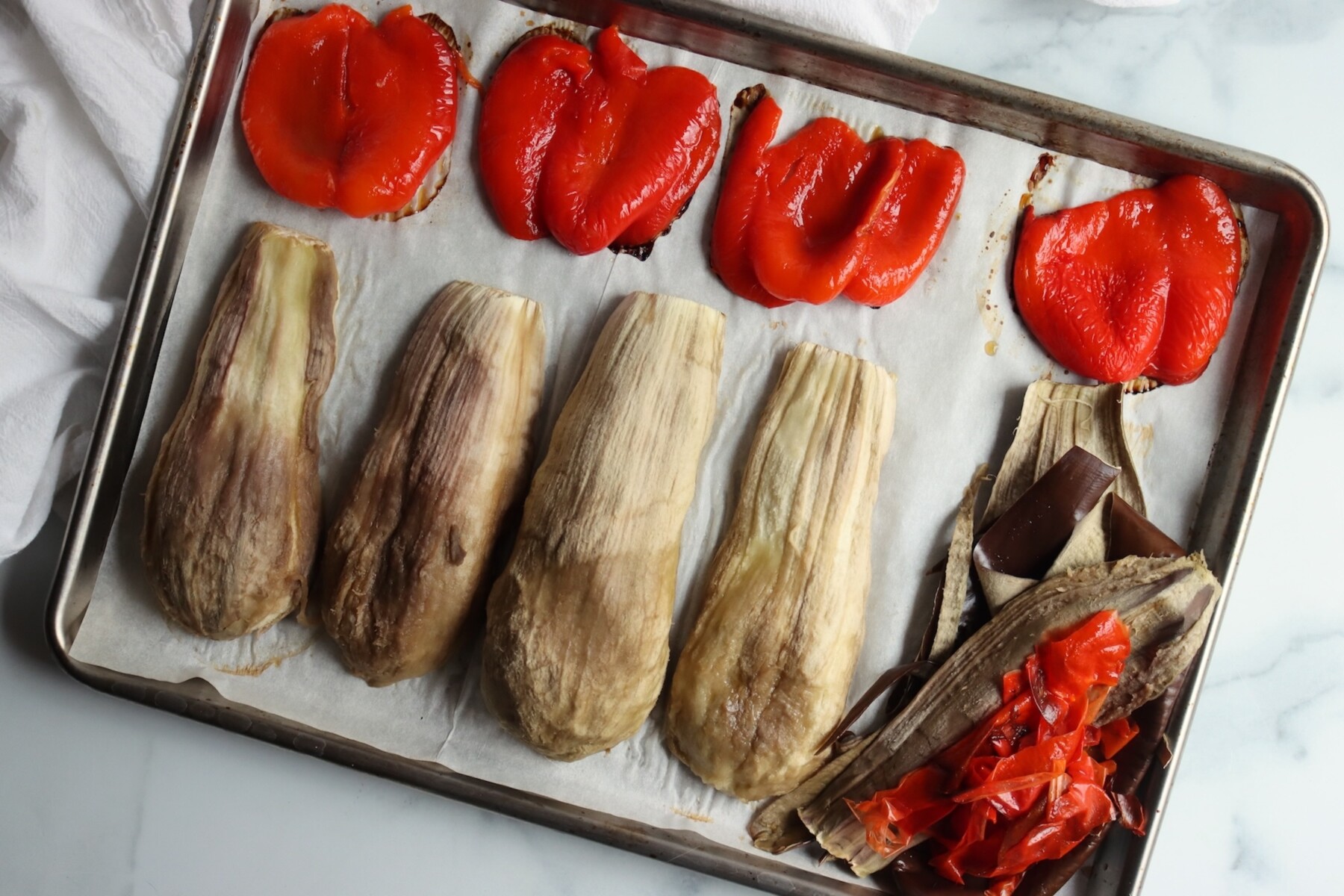
- Let the roasted vegetables cool to room temperature on the pans, so you can handle them. Slip the skins off the tomatoes and peppers, then scoop the eggplant flesh out with a spoon. Throw the skins away.
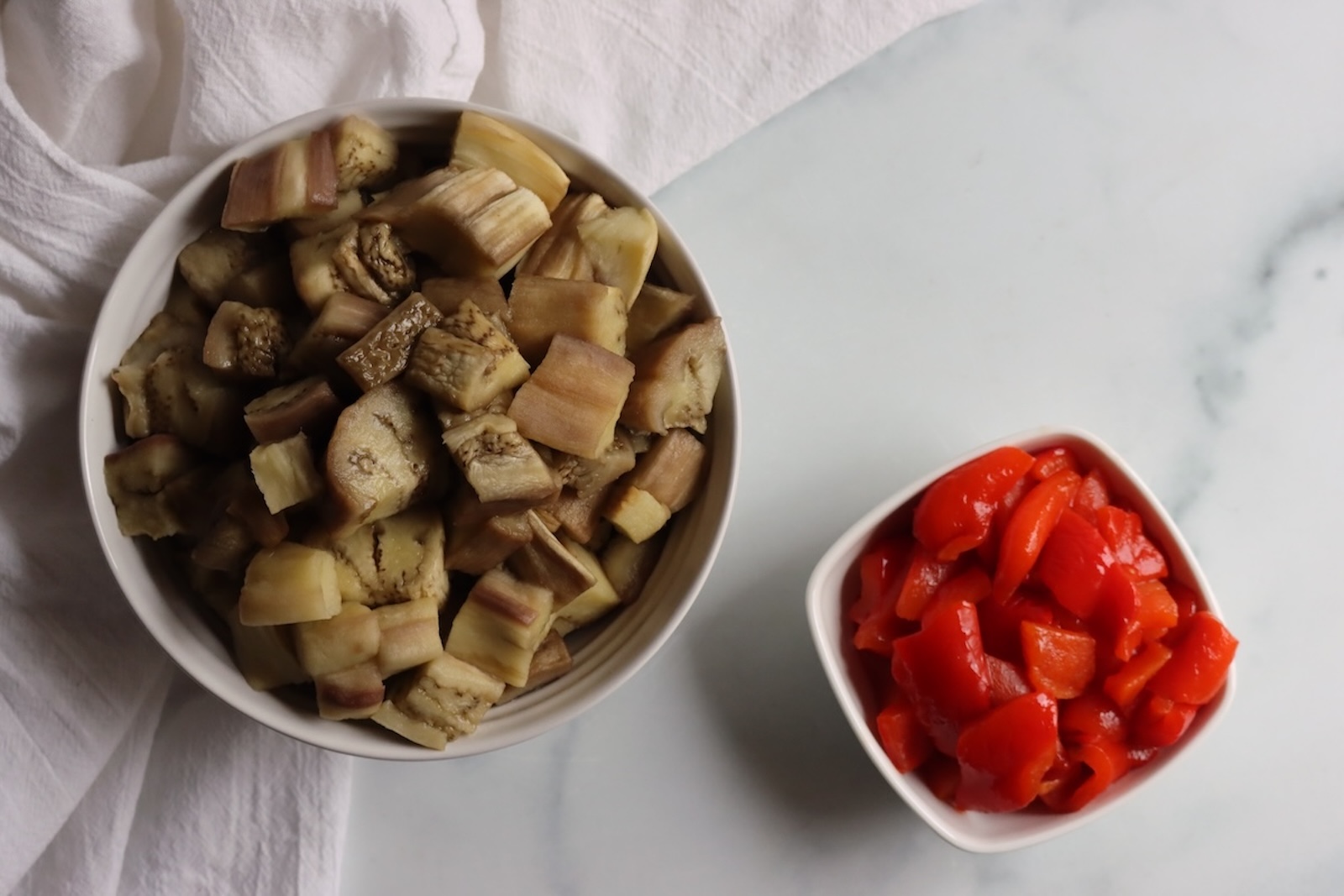
- Chop the tomatoes, the eggplant, and the peppers. Keep the tomatoes apart from the eggplant and peppers, since they go into the pan at different times.
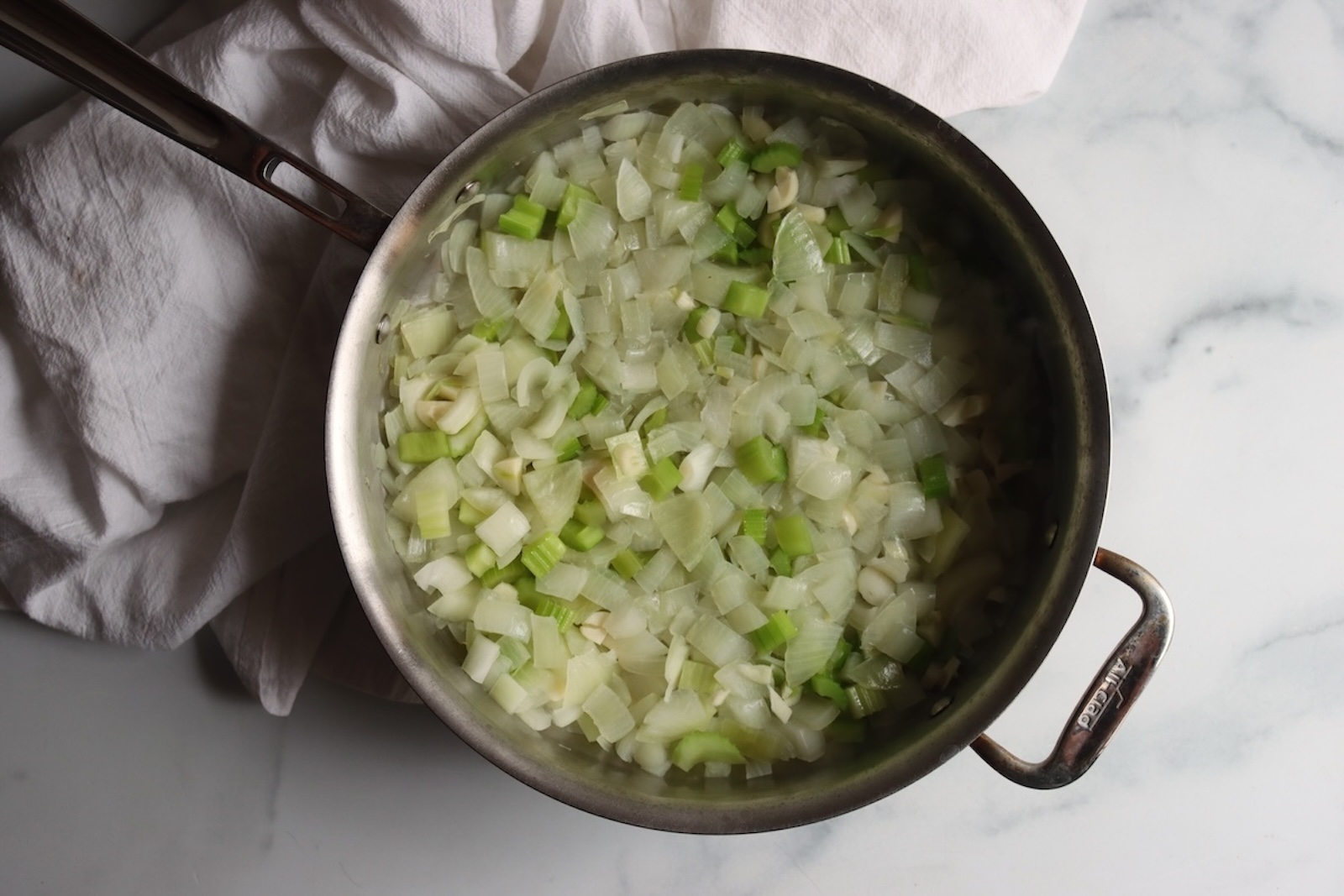
- Dice the onions and celery and mince the garlic. Add them to a large, wide pan or Dutch oven with the water, and cook over medium heat until the onions turn translucent, about 10 minutes.
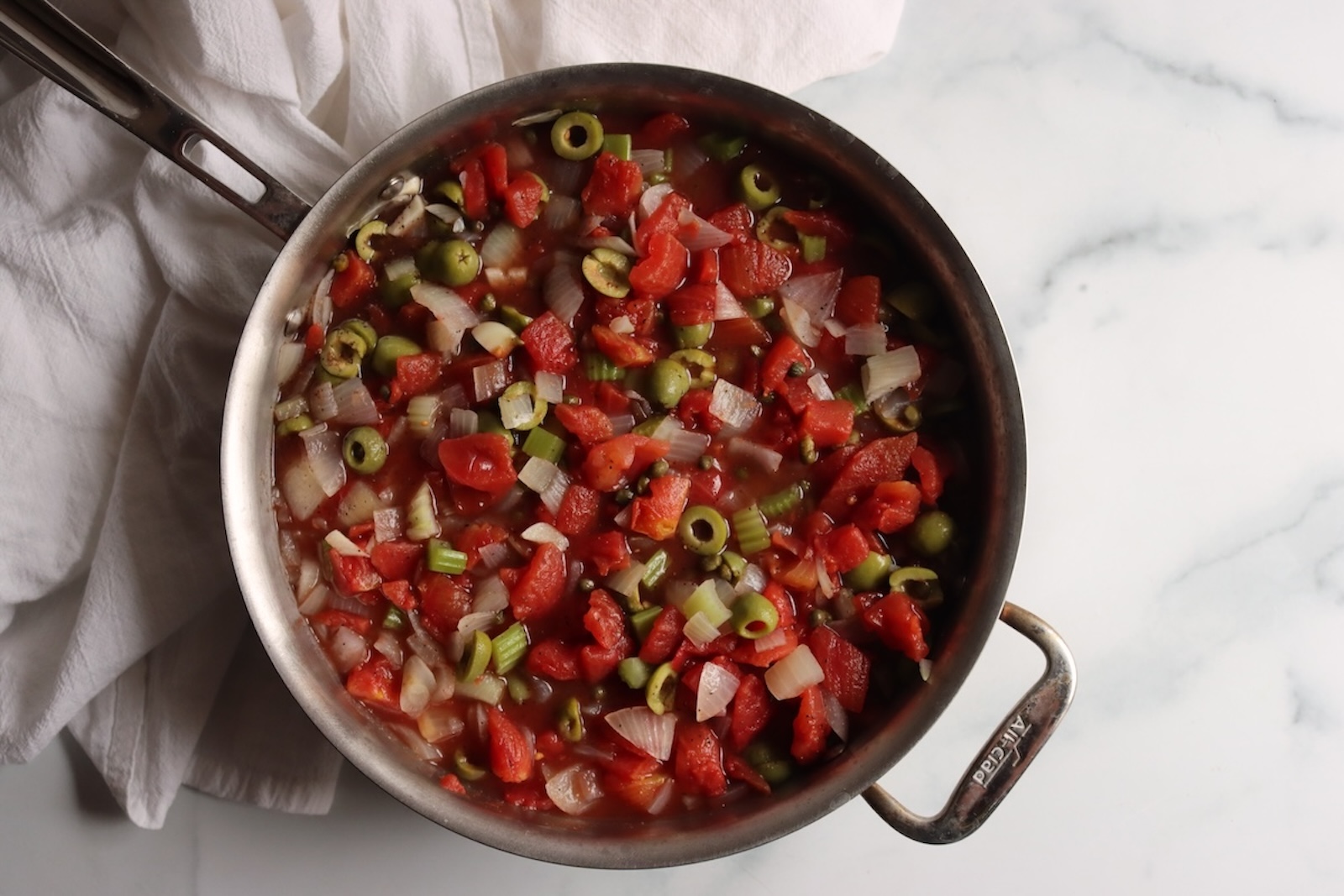
- Add the chopped tomatoes, olives, capers, sugar, salt, black pepper, and red wine vinegar. Simmer it over medium heat for about 20 minutes, stirring often, until it thickens slightly. Don’t cut back on the vinegar, since it’s what makes caponata safe to can.
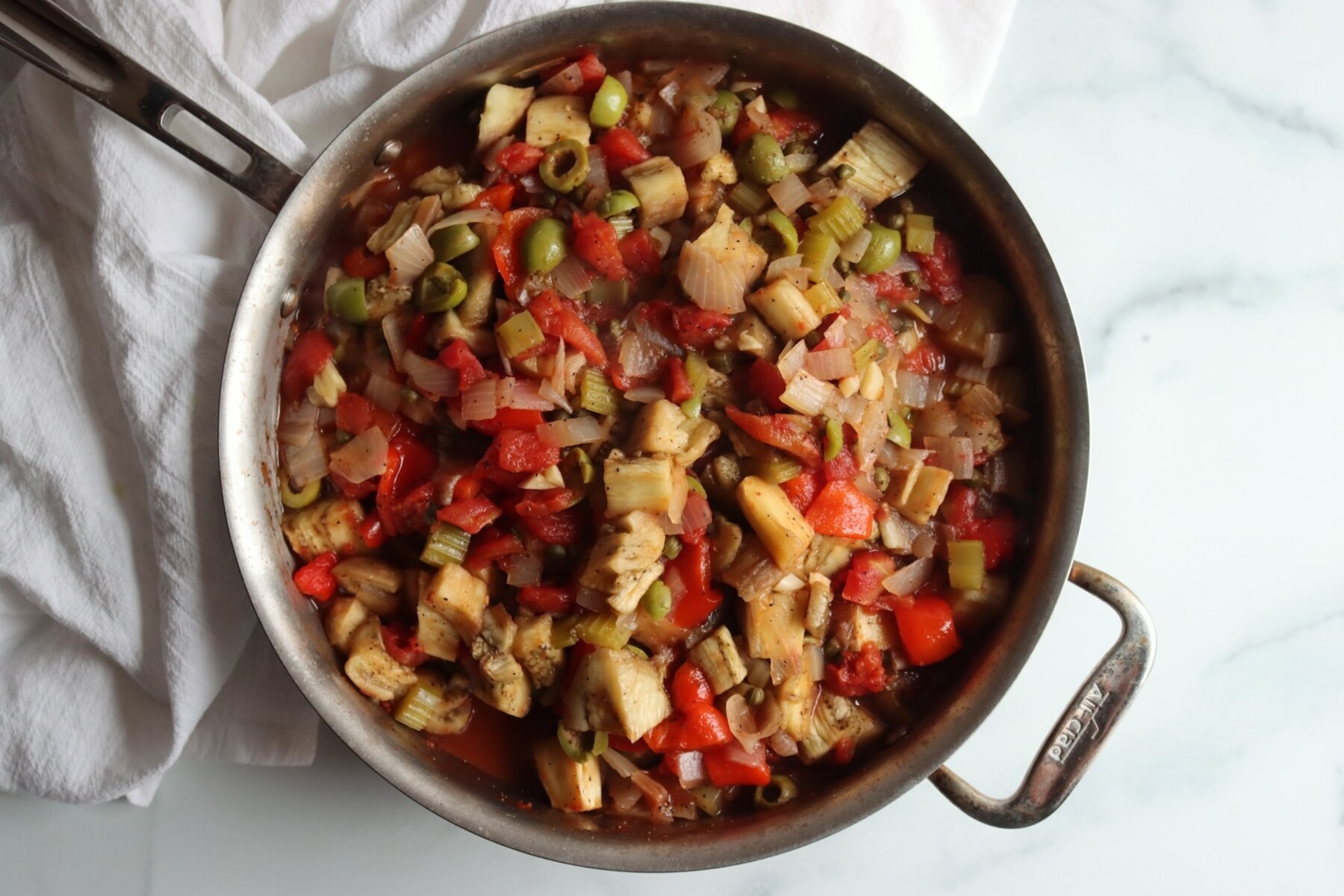
- Stir in the roasted eggplant and peppers, then cook 5 more minutes, just long enough to heat through. Taste it and adjust the salt and pepper if you want to.
Canning Eggplant Caponata
Keep your jars hot and waiting in the canner. A wide-mouth canning funnel keeps a chunky relish like this off the rims.
Ladle the hot caponata into hot jars, leaving 1/2 inch headspace. Run a bubble tool around the inside of each jar, top it up if the level drops, and wipe the rims clean. Set the lids on and screw the bands down fingertip tight.
Process pints or half pints for 35 minutes in a boiling-water-bath canner, ensuring at least an inch of water covers the jars. Adjust for altitude with the chart below if you’re above 1,000 feet.
The Corrected Recipe
This is Ball’s corrected, retested caponata recipe. The printed Ball Blue Book has a misprint in the canning time. It lists 20 minutes for pints, but the corrected time is 35 minutes.
The book also never tells you to halve the tomatoes, even though the roasting step calls for tomato halves. I follow the corrected version here, and so does the recipe card.
When the time’s up, turn off the heat and remove the canner lid. Let the jars sit for 5 minutes, then lift them out with a jar lifter. Cool them on a towel for 12 to 24 hours before you check the seals.
Altitude Adjustments
Water boils at a lower temperature as you go up, so the jars need longer in the canner above 1,000 feet. These are the water bath processing times for pints and half pints.
- 0 to 1,000 feet: 35 minutes
- 1,001 to 3,000 feet: 40 minutes
- 3,001 to 6,000 feet: 45 minutes
- 6,001 to 8,000 feet: 50 minutes
- Above 8,000 feet: 55 minutes
Tips for the Best Eggplant Caponata
Dice the onions and celery small and even. You eat caponata by the spoonful, often on bread, so a big chunk of celery stands out.
Pick the olive you like to eat on its own. Castelvetranos are mild and buttery, and kalamatas are saltier and brinier. You’ll taste them in every spoonful.
Ways to Use Eggplant Caponata
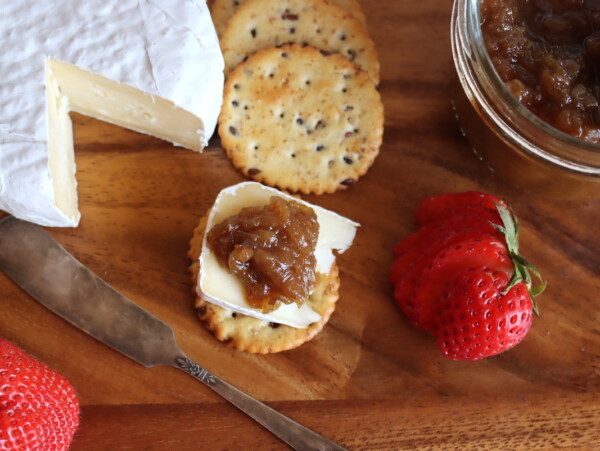
You can serve it two ways, with crusty bread as an appetizer or over pasta as a main dish. For an appetizer, spoon it onto toasted slices of bread, or set out a bowl of it on an antipasto platter with marinated peppers and zesty marinated mushrooms.
For dinner, warm a jar and toss it with hot pasta and a splash of the pasta water. If you like keeping jars on hand for spaghetti night, my pasta sauce recipes for canning have plenty more.
To make it more like the traditional version, stir in a drizzle of good olive oil, some toasted pine nuts, or a few raisins when you open the jar.
If you’d rather cook the rest of the harvest fresh, I have plenty of eggplant recipes ready to go.
Storage and Shelf Life
Once the jars are cool, press the center of each lid with a finger. A sealed lid stays down and doesn’t flex. Remove the rings before the jars go on the shelf so you can easily spot a seal that fails later.
If a jar didn’t seal, refrigerate it and use it within 1 to 2 weeks. You can also reprocess it within 24 hours with a new lid, and the steps are in my water bath canning guide.
Store sealed jars in a cool, dark place, and use them within 12 to 18 months. Label them with the date before they go on the shelf.
After you open a jar, refrigerate it and use within 1 to 2 weeks. If you’d rather not can it, the caponata keeps for the same 1 to 2 weeks in the refrigerator or up to a year in the freezer.
Yield Notes
Ball calls for 2 small eggplants, about 2 pounds. In my garden, 2 pounds is closer to two medium or large eggplants, so weigh them.
Once I roasted and scooped it, my eggplant came to about 4 cups, or 1 1/4 pounds. After I roasted and peeled them, the two red peppers came to about 1 cup, or 5 to 6 ounces.
Instead of the 4 pounds of fresh plum tomatoes, use 2 pints of home-canned tomatoes, chopped. That’s the swap in the book, and Ball’s corrected version also allows one 28-ounce can of diced tomatoes.
My batch made exactly 5 pints, even though Ball’s recipe says 6. Wash six jars anyway, since a partial jar at the end goes in the refrigerator instead of the canner.
Eggplant Caponata FAQs
These cover the vinegar, the traditional add-ins, canned tomatoes, how caponata differs from ratatouille, and how long the jars keep.
No. The red wine vinegar is what makes caponata safe for a water bath canner, and Ball balanced it against exactly the vegetables in the recipe. Use the full amount, and don’t add vegetables or increase the ones already there. The salt and black pepper are yours to adjust, and the olive, canned tomato, and pepper color swaps in the notes above are fine.
Yes, once you open the jar. None of them are in Ball’s recipe, so leave them out of the jars. A drizzle of olive oil and a handful of toasted pine nuts or raisins take it much closer to the Sicilian version.
Yes. The Ball Blue Book allows home-canned tomatoes, chopped, in place of the fresh plum tomatoes, and Ball’s corrected version also allows a can of diced tomatoes. The amounts are in the Yield Notes above. Skip the tomato roasting, and add them to the pan with the vinegar.
Caponata is Sicilian and sweet and sour, with vinegar, sugar, olives, and capers. Ratatouille is a French dish of eggplant, zucchini, peppers, and tomatoes that simmer in olive oil with herbs, and it has no vinegar or sugar. You serve caponata as an antipasto or a side, and ratatouille is a vegetable stew.
Store sealed jars in a cool, dark place, and use them within 12 to 18 months. Take the rings off so a failed seal is easy to spot. Once you open a jar, keep it in the refrigerator and use it within 1 to 2 weeks.
Relish Canning Recipes
More tangy jars to keep next to the caponata.
If you make a batch, let me know how it turns out.
If you tried this Eggplant Caponata recipe, or any other recipe on Creative Canning, leave a ⭐ star rating and let me know what you think in the 📝 comments below!
And make sure you stay in touch with me by following on social media!
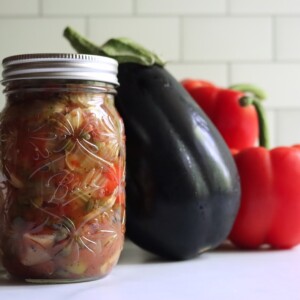
Eggplant Caponata
Equipment
- Canning Jars, Lids and Bands
- Rimmed baking sheets
- Bubble remover
Ingredients
- 2 lbs eggplant, stemmed and quartered lengthwise, see notes
- 4 lbs plum tomatoes, halved, or see notes for canned
- 2 red bell peppers, halved and seeded
- oil, for brushing
- 2 large onions, diced
- 2 ribs celery, diced
- 6 cloves garlic, minced
- 1/4 cup water
- 1 1/2 cups Castelvetrano or kalamata olives, pitted and chopped
- 1/2 cup capers, drained
- 2 Tbsp sugar
- 1 Tbsp salt
- 2 tsp ground black pepper
- 1/2 cup red wine vinegar, 5% acidity or higher
Instructions
- Prepare the water bath canner, jars, and lids. Fill the canner and set it over the heat before you start prepping, since it takes a long time to come to a boil.
- Heat the oven to 375 degrees F. Brush a baking sheet with a little oil, and line a second rimmed baking sheet with foil.
- Lay the eggplant quarters and red pepper halves skin side up on the oiled sheet, and brush them lightly with oil.
- Set the tomato halves skin side up on the foil-lined sheet.
- Roast both sheets for 25 to 30 minutes, until the skins soften and begin to char. Let the vegetables cool to room temperature on the pans.
- Peel and chop the tomatoes. Scoop the eggplant flesh out of the skins, discard the skins, and chop the eggplant. Peel and chop the peppers. Keep the tomatoes separate from the eggplant and peppers, which go in later.
- Put the onions, celery, garlic, and water in a large, wide pan or Dutch oven and cook over medium heat until the onions turn translucent, about 10 minutes.
- Add the chopped tomatoes, olives, capers, sugar, salt, black pepper, and red wine vinegar. Simmer over medium heat, stirring often, until it thickens slightly, about 20 minutes.
- Stir in the roasted eggplant and peppers and cook 5 minutes more.
- Ladle the hot caponata into hot jars, leaving 1/2 inch headspace.
- Remove air bubbles, check the headspace again, and wipe the rims clean.
- Center the lids on the jars and apply the bands fingertip tight.
- Process pints or half pints in a boiling water bath canner for 35 minutes, adjusting for altitude (see notes).
- Turn off the heat, take the lid off the canner, and let the jars stand for 5 minutes before lifting them out.
- Cool the jars on a towel for 12 to 24 hours, then check the seals, remove the rings, and store the jars in a cool, dark place.
Notes
- 0 to 1,000 feet: 35 minutes
- 1,001 to 3,000 feet: 40 minutes
- 3,001 to 6,000 feet: 45 minutes
- 6,001 to 8,000 feet: 50 minutes
- Above 8,000 feet: 55 minutes
Nutrition
Nutrition information is automatically calculated, so should only be used as an approximation.
While the canner’s out, here are more water bath canning recipes to fill the rest of the rack.
Tomato Canning Recipes
More ways to use up the tomato harvest.
Still looking for something else?
Find the perfect recipe
Searching for something else? Enter keywords to find the perfect recipe!