This post may contain affiliate links. Please see our disclosure policy.
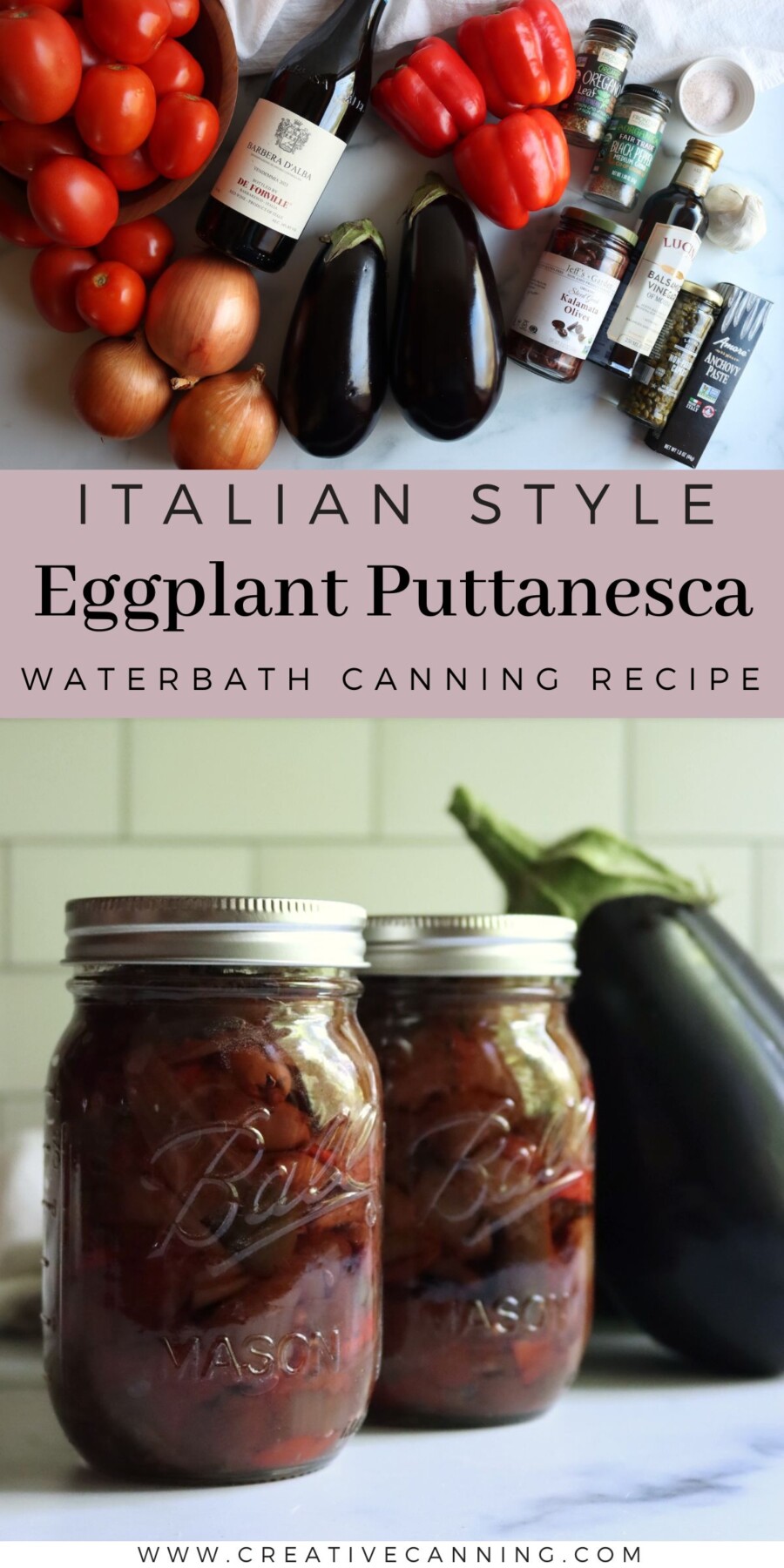
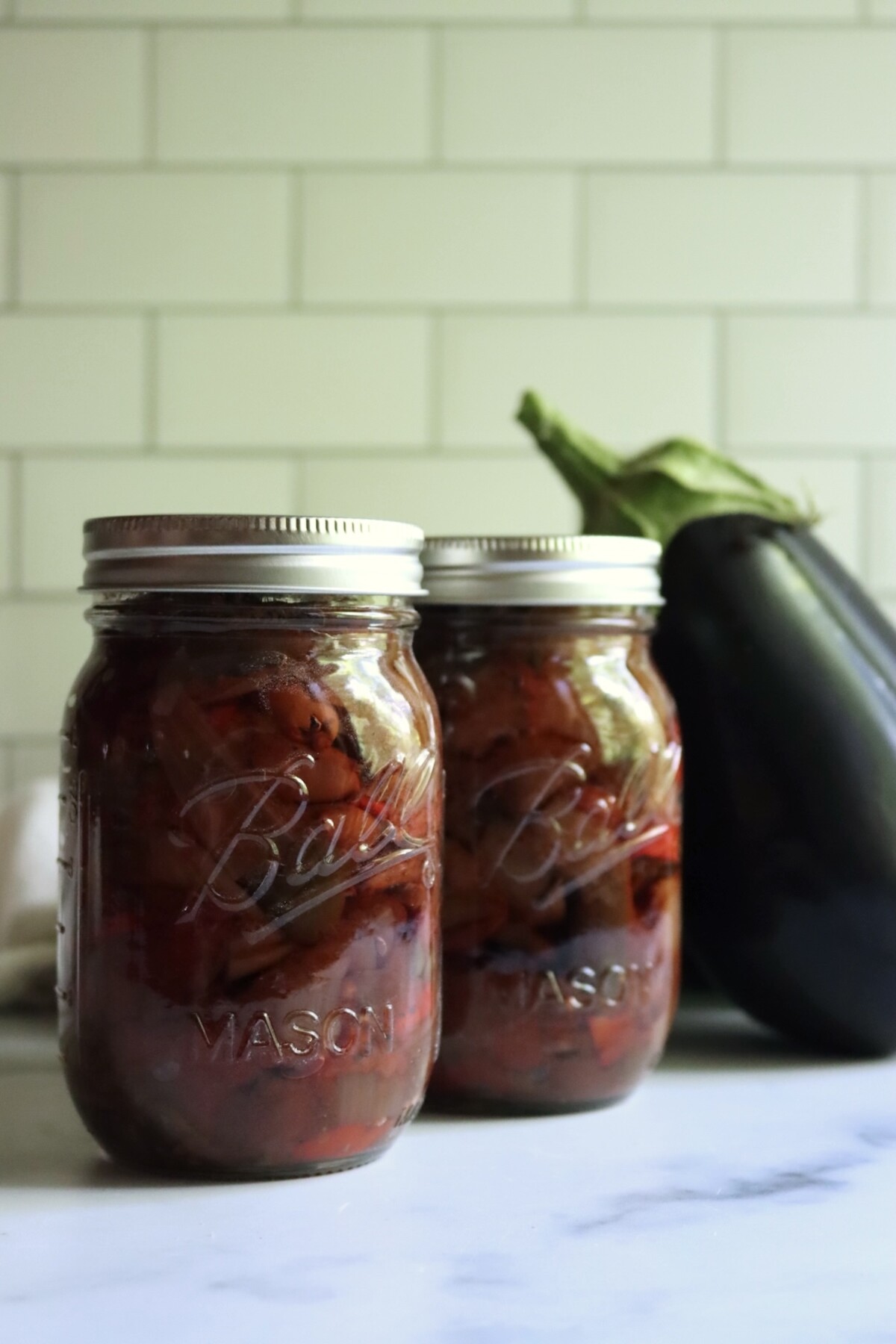
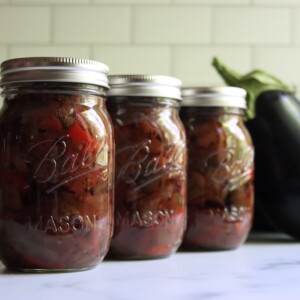
Eggplant puttanesca sauce is a chunky pasta topping built on roasted eggplant, olives, and capers. It’s salty and savory in a way no jarred pasta sauce is, and a canner load puts six pints of dinner on the pantry shelf.
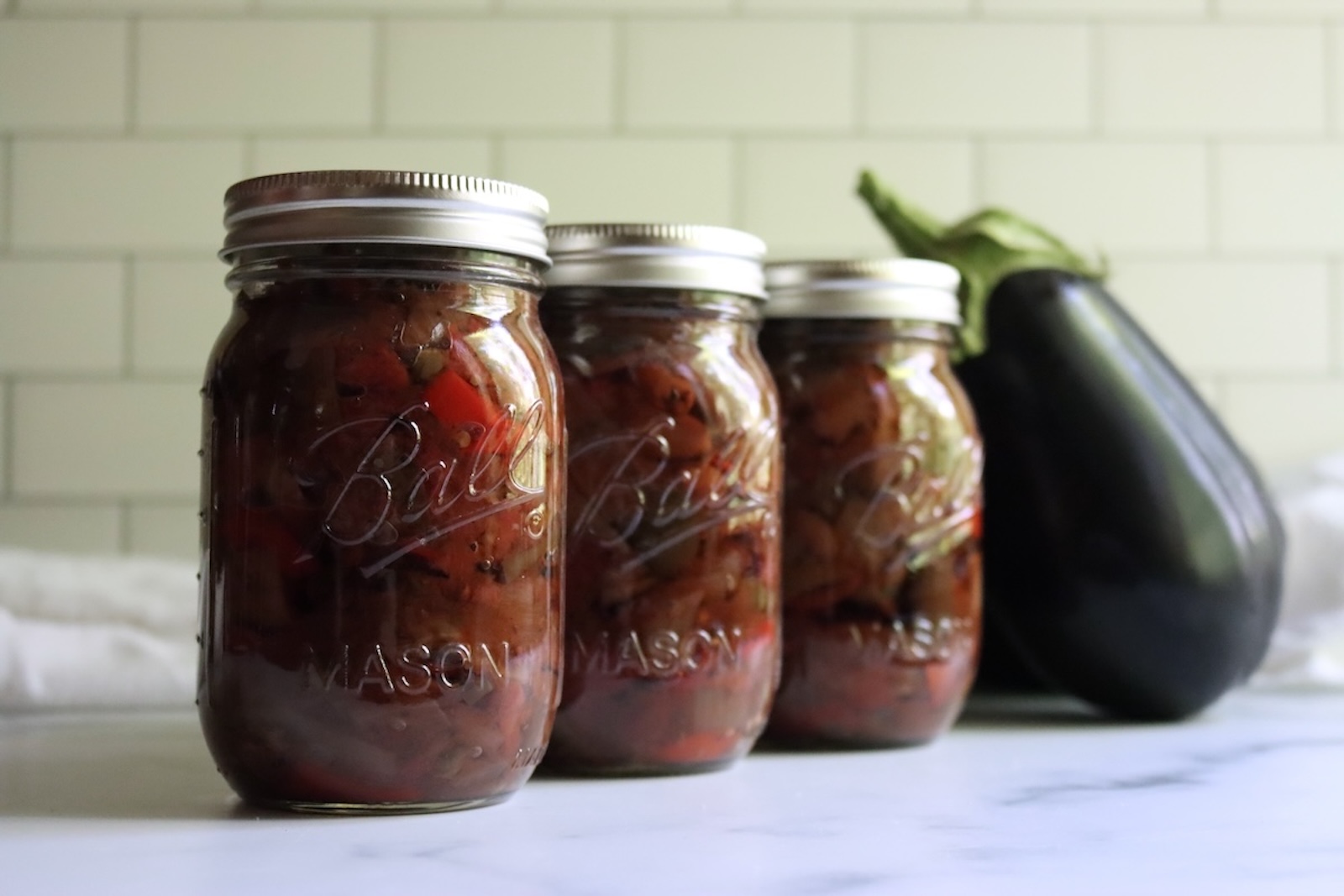
Table of Contents
- Notes from My Kitchen
- Quick Look at the Recipe
- Choosing Eggplant for Puttanesca Sauce
- Ingredients for Eggplant Puttanesca Sauce
- Eggplant Puttanesca Sauce Notes
- How to Make Eggplant Puttanesca Sauce
- Canning Eggplant Puttanesca Sauce
- Altitude Adjustments
- Tips for the Best Eggplant Puttanesca Sauce
- Ways to Use Eggplant Puttanesca Sauce
- Storage and Shelf Life
- Yield Notes
- Eggplant Puttanesca Sauce FAQs
- Tomato Canning Recipes
- Eggplant Puttanesca (Canning Recipe)
- Savory Sauce Canning Recipes
This recipe has been reviewed for safety and accuracy by a Master Food Preserver certified through the University of Cornell Cooperative Extension.
There isn’t much tomato in this recipe compared to all the other ingredients, and that’s what makes it good. The eggplant comes through instead of the tomato, and you end up with an eggplant, onion, and olive topping with plenty of salty umami behind it.
Two cups of dry red wine and a half cup of balsamic go into the pot, which is a lot of both. The eggplant soaks all of it up and doesn’t taste sharp at all, and the wine rounds the whole thing out. Everything gets roasted first, so the flavor is deeper than a stovetop sauce.
This is a tested recipe from The All New Ball Book of Canning and Preserving, which matters on a sauce this loaded with low-acid vegetables. If you like putting up dinner in jars, I have more pasta sauce recipes for canning, and the rest of my eggplant canning recipes are worth a look if your plants are producing faster than you can cook.
Notes from My Kitchen

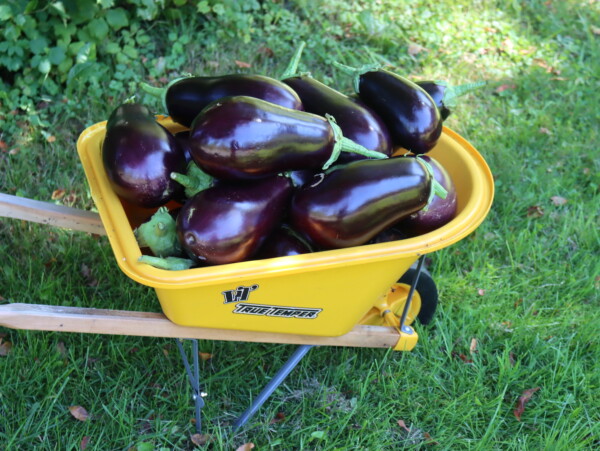
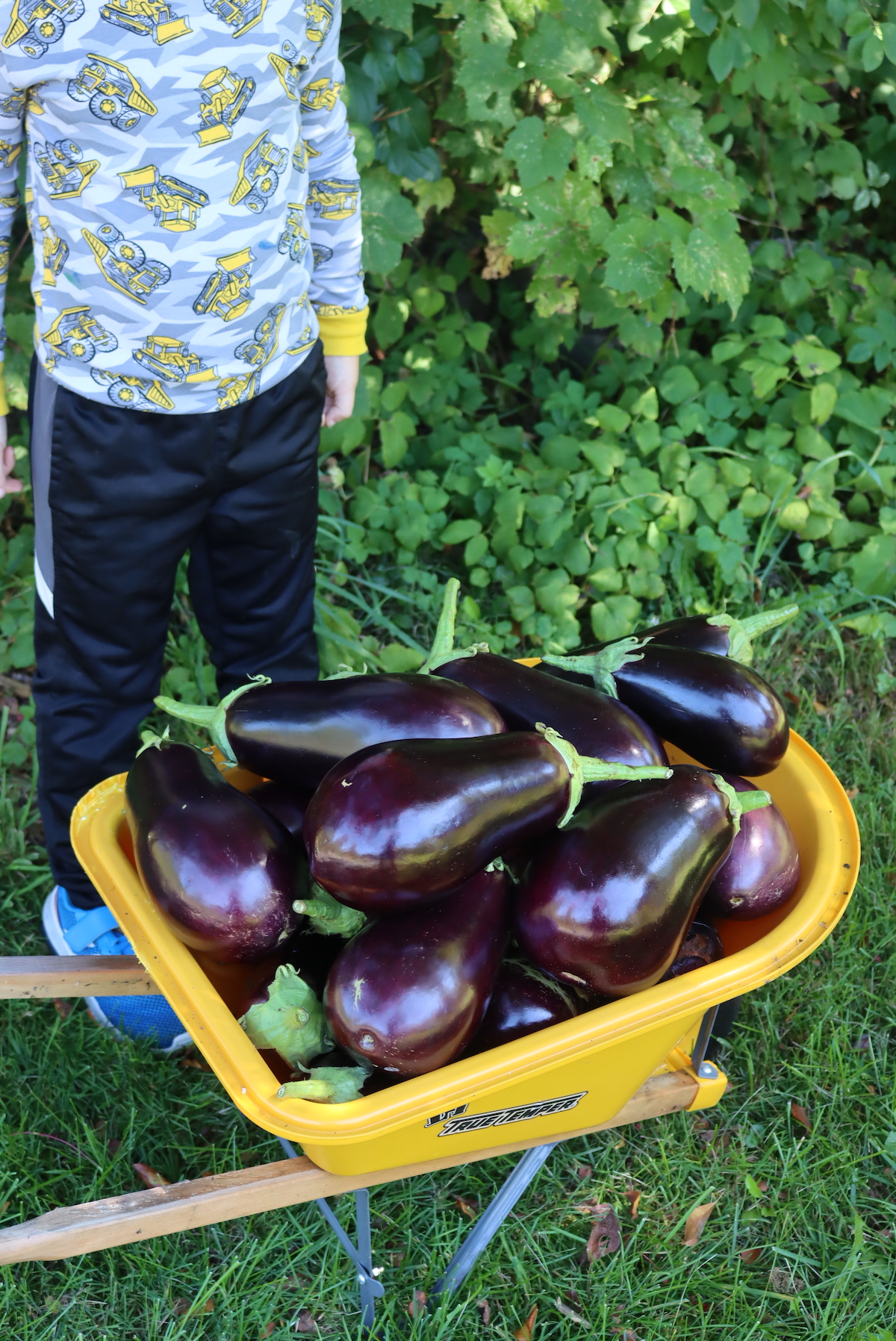
We absolutely love eggplant, and I’ve spent a long time hunting down canning recipes for it, because our plants hand us a bumper crop every single year. We freeze baba ganoush and Indian bartha for winter meals, but freezer space runs out fast around here.
We’ve even tried freeze-drying eggplant, and it works reasonably well. It’s a big investment in time and electricity, though, for something that’s going to cook down later anyway.
When I saw this recipe, I knew I had to make it, and it didn’t disappoint.
Quick Look at the Recipe
- Recipe Name: Eggplant Puttanesca Sauce
- Recipe Type: Savory pasta sauce, acidified with wine and vinegar
- Canning Method: Water Bath Canning
- Prep Time: About 40 minutes
- Cook Time: About 60 minutes, mostly hands-off in the oven
- Canning Time: 45 minutes for pints
- Yield: About 6 pints
- Jar Sizes: Pints or smaller
- Headspace: 1/2 inch
- Ingredients Overview: Paste tomatoes, eggplant, red bell peppers, onions, kalamata olives, capers, garlic, dry red wine, balsamic vinegar, anchovy paste, and dried oregano
- Safe Canning Recipe Source: The All New Ball Book of Canning and Preserving, with Ball’s published correction applied
- Difficulty: Easy, though the oven does most of the work and it takes a while
- Similar Recipes: This is made the same way as my other roasted tomato sauces, like roasted marinara sauce and roasted cherry tomato sauce. For another jar built on wine, try canning tomatoes in wine, and heirloom tomato sauce is the plainer everyday option.
Choosing Eggplant for Puttanesca Sauce
Two pounds of eggplant is two medium to large globes at my house. Weigh yours rather than counting them, because eggplant size varies wildly between varieties and one grocery store eggplant can be most of the two pounds on its own.
Pick fruits that feel heavy and have tight, glossy skin. A dull or wrinkled eggplant has been off the plant a while, and those tend to be seedier and more bitter. You don’t need to salt and drain them for this recipe, since roasting drives off the water instead.
Any variety works for this. The long, slender Asian types roast beautifully and have fewer seeds, and the classic Italian globes are what I usually have coming out of the garden. Leave your skins on, because they soften in the oven and disappear into the sauce.
For the tomatoes, use paste varieties. Six pounds of Romas cooks down to about three pounds after roasting, peeling, and seeding, which is roughly 6 cups coarsely chopped. Slicing tomatoes hold too much water and thin the sauce out. If you’re deciding what to plant, there’s a whole guide to choosing tomatoes for canning on my other site.
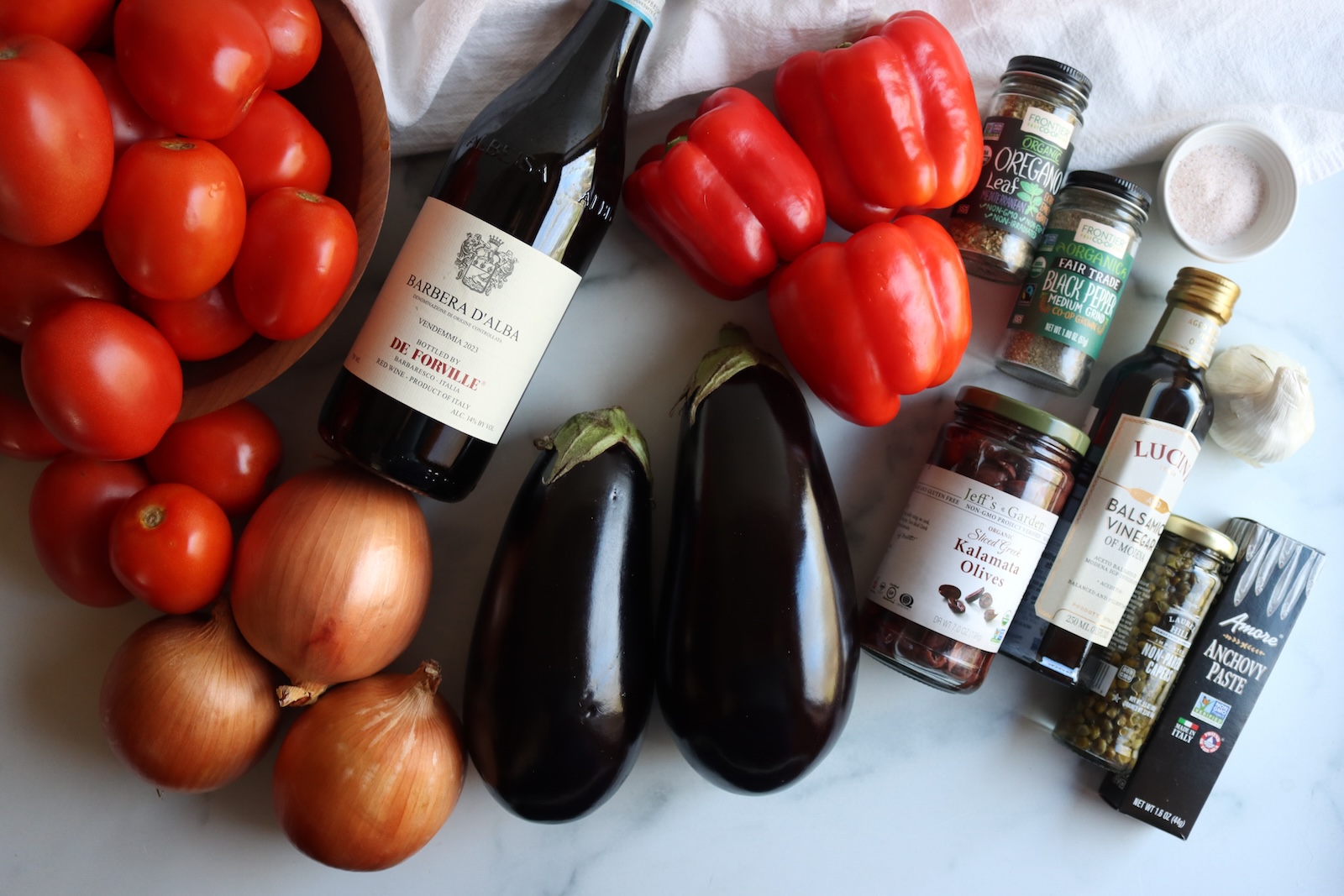
Ingredients for Eggplant Puttanesca Sauce
The swaps people ask about first are the anchovies and the olives. You can leave the anchovy paste out entirely, since it’s listed as optional, and green olives work in place of the kalamatas as long as the total stays at a cup and a half. The wine and the balsamic, though, are the acid that makes this safe in a water bath, and those amounts don’t move.
Here’s what each part is doing.
- Paste tomatoes: Roma, San Marzano, Amish Paste, or any other meaty variety. They roast down without flooding the pot. Slicing tomatoes will work in a pinch, but the sauce comes out looser.
- Eggplant: Any variety, skin on, cut into 1 inch cubes. It drinks up the wine and the balsamic and turns silky in the oven.
- Red bell peppers: Roasted and peeled, they add sweetness against all that salt. Orange or yellow peppers are fine too, and I’ve used a mix of whatever was ripe.
- Onions: Roasted in their skins and then peeled, which keeps them sweet instead of sharp. They’re a bigger part of this sauce than you’d guess from the ingredient list.
- Dry red wine: Any dry red you’d drink. Nothing sweet, and nothing labeled cooking wine, which is salted. This is part of the acid in the recipe, so the full 2 cups goes in.
- Balsamic vinegar: The other half of the acid, and the half Ball added in a correction after the book went to print. Use vinegar labeled at 5% acidity, at the full amount.
- Kalamata olives: Pitted and chopped. They carry most of the salty, briny flavor. Castelvetrano or another green olive works as a straight swap.
- Capers: Drained, and no need to rinse them. If yours are packed in salt rather than brine, rinse those and go by taste on the added salt.
- Anchovy paste: Optional, and it doesn’t taste like fish in the finished sauce. It adds savory depth, and the tube keeps for months in the refrigerator. Fillets mashed to a paste work the same.
- Garlic: Fresh cloves, minced. Jarred minced garlic works fine if that’s what you keep on hand.
- Dried oregano, salt, and black pepper: Seasoning only, so adjust these to taste. I use canning and pickling salt because it dissolves clean and doesn’t cloud the jars, and there’s more on that in my guide to pickling salt and its substitutions.
Everything else is a vegetable, and the vegetable amounts are what the processing time was tested against. That’s the one part of the list to leave alone.
Eggplant Puttanesca Sauce Notes
The red wine and the balsamic vinegar are the safety control here. Between them there are two and a half cups of acid going into the pot, and that’s what brings a load of eggplant, onions, and peppers down into water bath territory. Neither amount can be reduced, and the balsamic has to be labeled 5% acidity.
Ball corrected this recipe after the book came out, adding the balsamic and lengthening the water bath from 35 to 45 minutes. What you see here is the corrected version, so use these numbers rather than an older printing’s.
You can swap one olive for another, skip the anchovy paste, and move the oregano, salt, and pepper wherever you like. Don’t add vegetables, don’t increase them, and don’t cut the wine or the balsamic.
Just don’t reduce the acid!
How to Make Eggplant Puttanesca Sauce
This is a two-part recipe. Everything roasts first, then it all goes in a pot with the wine and the seasonings for a short simmer.
Start the canner before you start chopping. A full water bath canner takes a long time to come to a boil, and you want it ready when the sauce is.
Roast the Vegetables
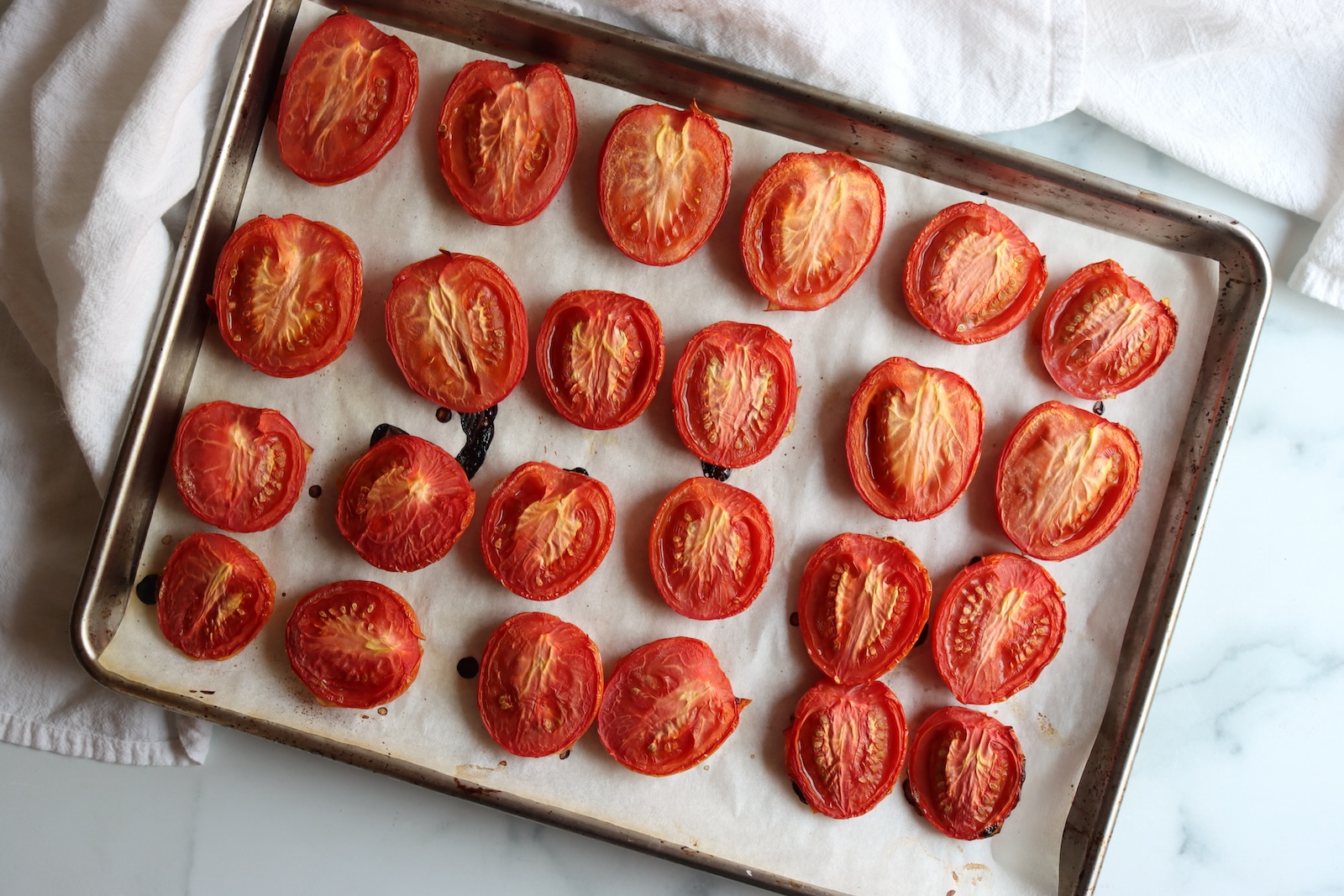
Heat the oven to 400 degrees F and line two rimmed baking sheets with foil. Don’t grease the tomato sheet.
Wash and core the tomatoes, cut them in half, and lay them on one sheet. Ball’s directions have you put them cut side down. I’ve tried it both ways and both peel easily afterward, but I’ve settled on cut side up, because the juices that run out onto the pan scorch when the tomatoes are face down. Roast them about 45 minutes, until the skins just start to char.
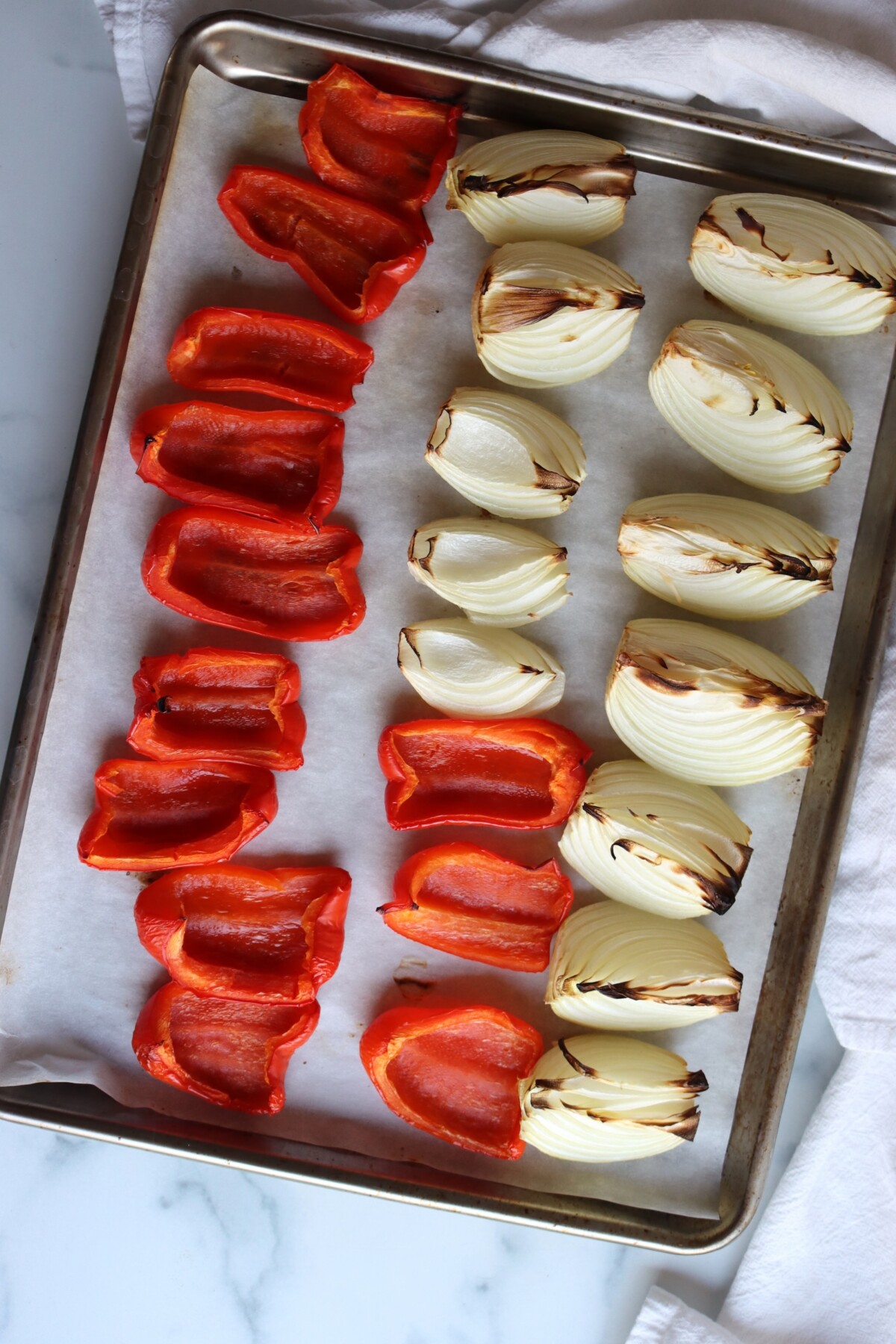
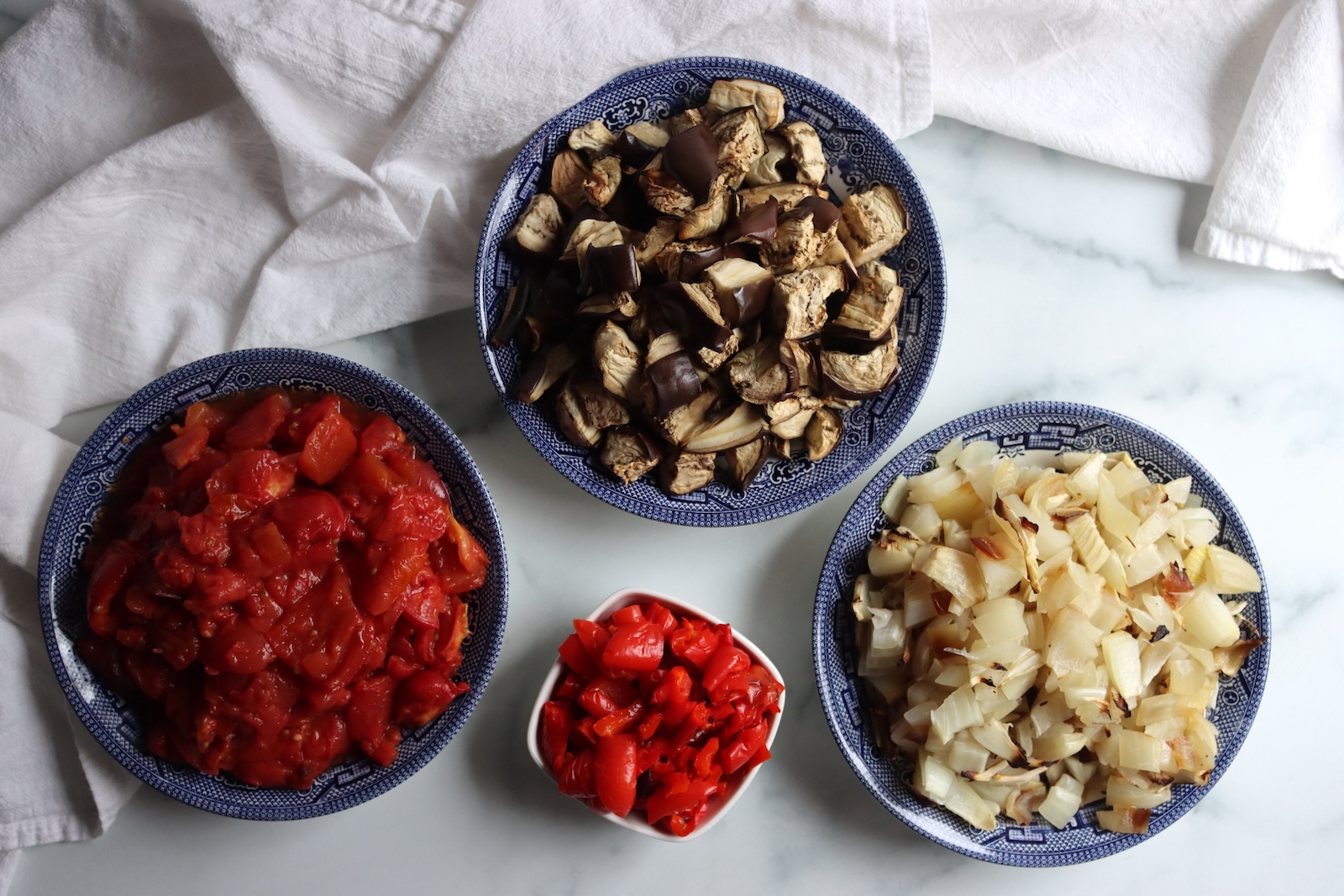
Ball says you can fit everything else on one sheet pan, but it’s not even close. You’ll need two more sheets to hold the rest of the ingredients. Put the onions and peppers on one, and the eggplant on another.
Halve and seed the peppers and set them skin side down, quarter the onions with their skins still on and add them. Give that sheet a light spray of oil.
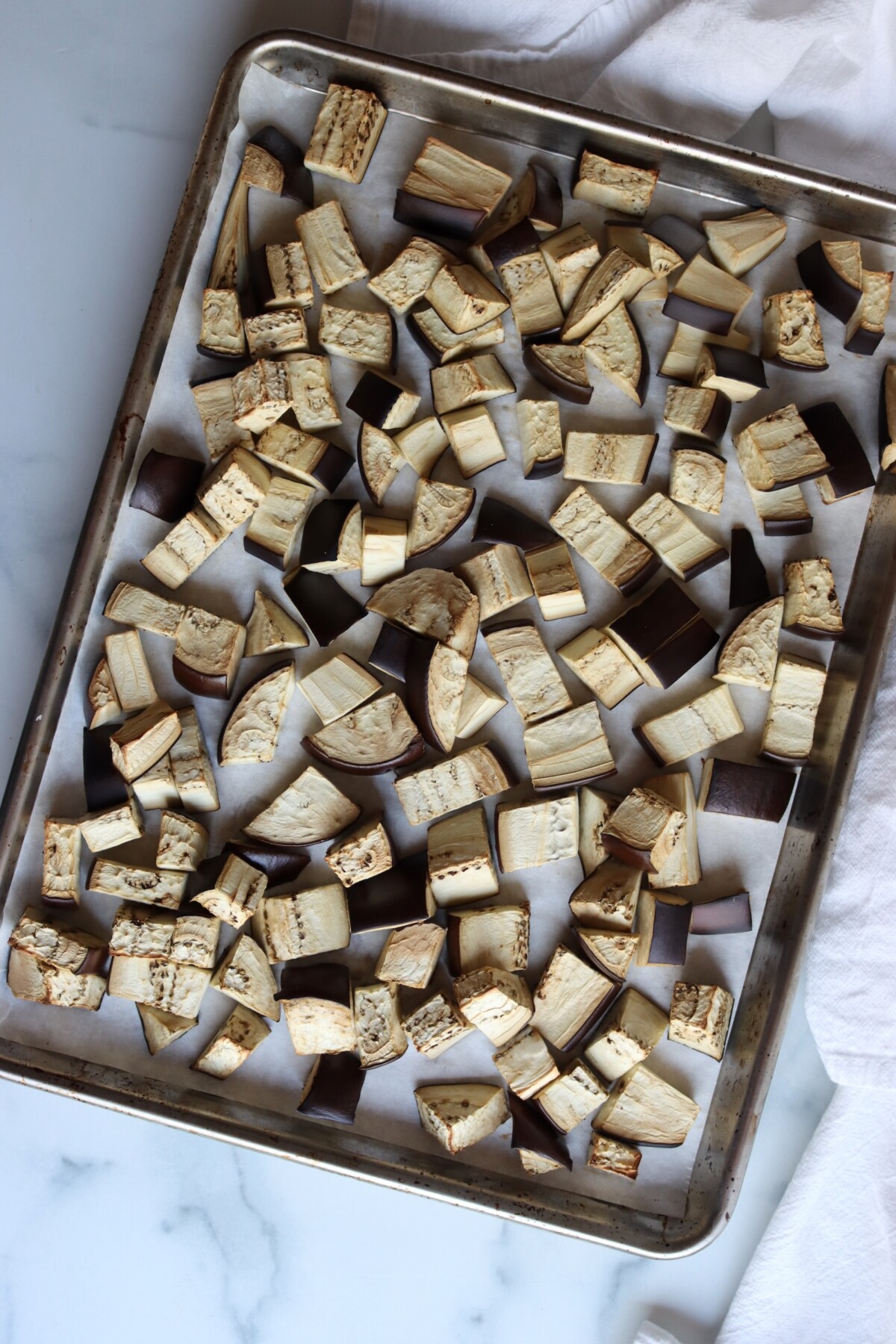
Dice the eggplant, but don’t peel it. Dice it evenly and spread it out on a sheet. My eggplant took up half a sheet pan.
It goes on a second rack and both go in for about 30 minutes, until the eggplant turns golden and the peppers are tender.
Let everything cool on the pans until you can handle it. The tomato skins slip right off, and so do the pepper and onion skins.
Chop the tomatoes coarsely and keep the seeds and juice, since both go in the pot.
Simmer the Sauce
Put the chopped tomatoes in a pot that holds at least 6 quarts, then add the eggplant, the chopped onion, and the chopped peppers.
It looks like a lot of vegetables at this stage, and it is.
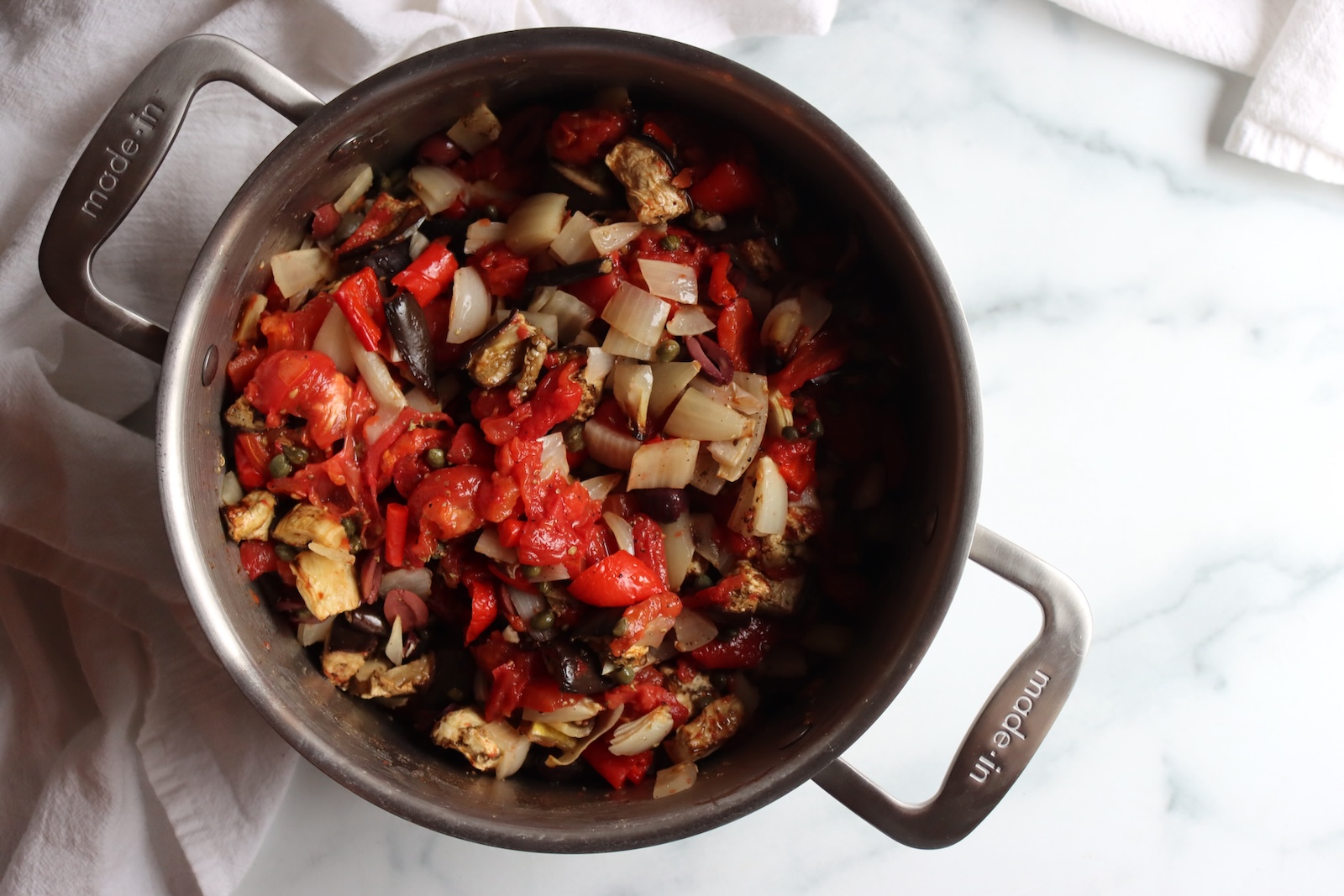
Add the wine, balsamic, olives, capers, garlic, anchovy paste, and dried seasonings.
Again, don’t cut down on the wine or vinegar. They’re both required for safe canning.
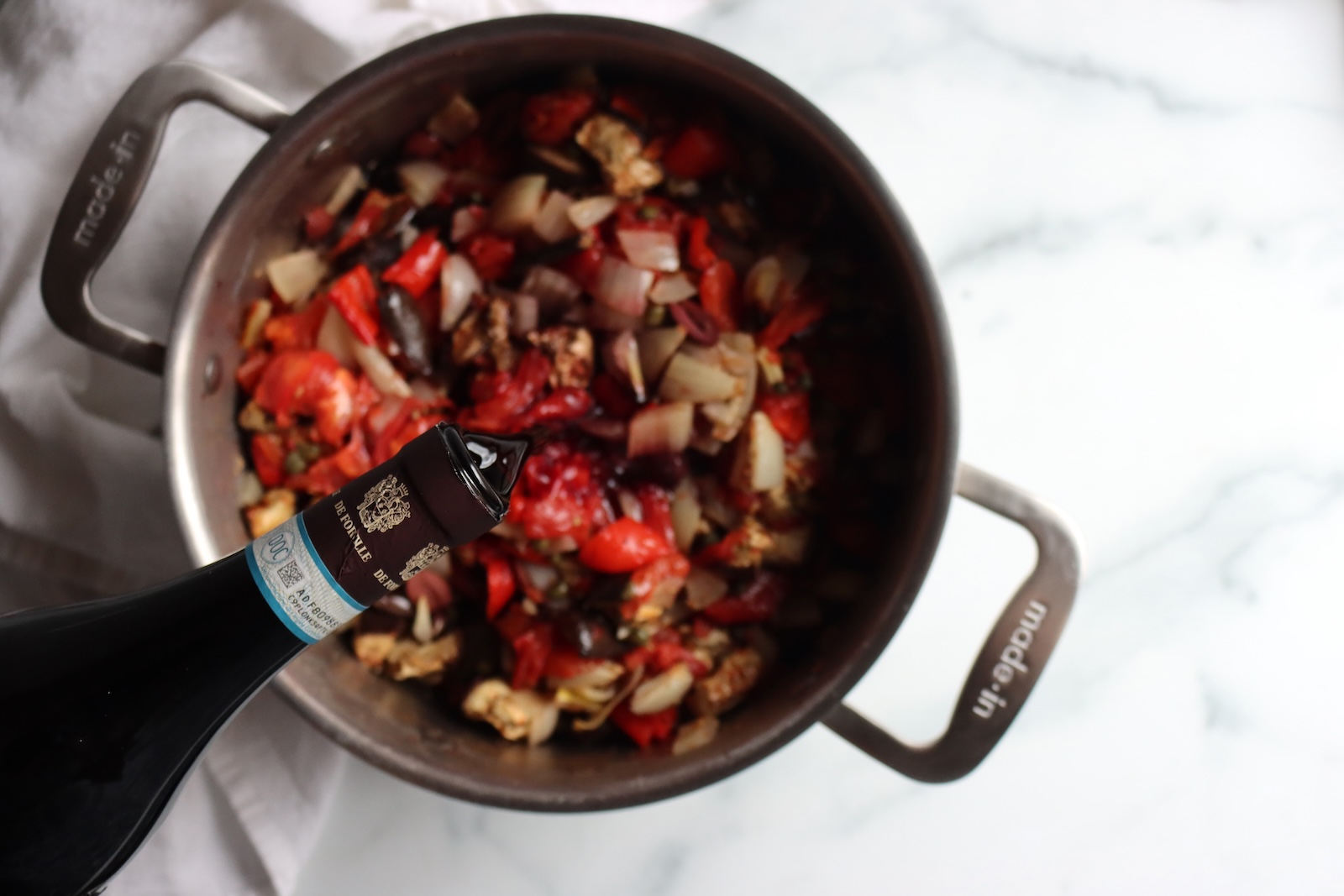
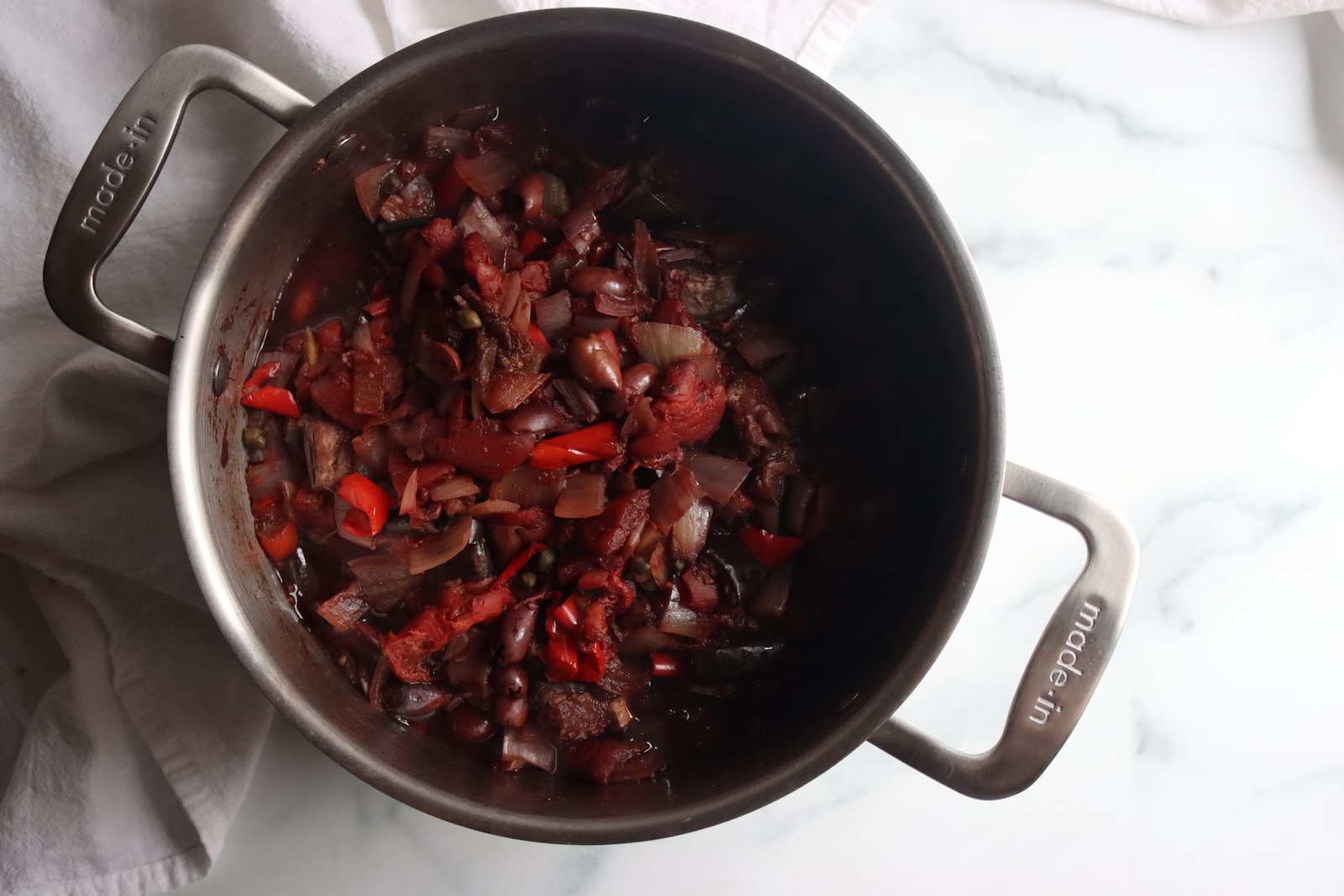
Stir well, bring it to a boil, then reduce heat and simmer for 15 minutes, uncovered.
That short simmer is all it needs. The roasting already did the concentrating, so this step is about getting everything hot and married before it goes in jars. Taste it and adjust the oregano or pepper if you want to, and leave the rest as written.
Canning Eggplant Puttanesca Sauce
Keep your jars hot and waiting in the canner or in simmering water. A chunky sauce fills much faster through a wide mouth canning funnel, and it saves you wiping sauce off every rim.
Ladle the hot sauce into hot pint jars, leaving 1/2 inch headspace. Run a bubble tool around the inside to release trapped air, check the headspace again, and wipe the rims and threads clean. Set the lids on and screw the bands down fingertip tight.
Process pints for 45 minutes in a boiling water bath canner, with the water covering the jars by at least an inch. Adjust for altitude using the chart below if you’re above 1,000 feet.
When the time is up, turn off the heat and take the lid off the canner. Let the jars sit in the water for 5 minutes before you lift them out with a jar lifter. Cool them on a towel for 12 to 24 hours without moving them, then check the seals.
Altitude Adjustments
Water above 1,000 feet boils cooler, so the jars need longer in the canner. These are the water bath processing times for pints.
- 0 to 1,000 feet: 45 minutes
- 1,001 to 3,000 feet: 50 minutes
- 3,001 to 6,000 feet: 55 minutes
- 6,001 to 8,000 feet: 60 minutes
- Above 8,000 feet: 65 minutes
Tips for the Best Eggplant Puttanesca Sauce
Cut your eggplant into even cubes. Pieces that are all about an inch roast at the same rate, and stray small ones turn to mush while the big ones are still firm.
Use three sheet pans and don’t crowd them. Vegetables packed tight steam instead of roasting, and steamed eggplant doesn’t taste like much. If your oven is small, roast in two rounds rather than piling it all onto one pan.
Keep the sauce chunky. This is a topping rather than a smooth marinara, and the pieces of eggplant and olive are the point. If you want something smooth for pizza and lasagna, roasted marinara sauce is the better recipe.
Ways to Use Eggplant Puttanesca Sauce
A jar over hot pasta is dinner in the time it takes the water to boil. It’s thick enough that it clings to rigatoni or penne without anything added, and a handful of parmesan on top is all it needs. It’s good enough to justify homemade pasta on a night when you have time for it.
Beyond pasta, it works anywhere you’d want a salty, savory vegetable sauce. Spoon it over grilled chicken or a firm white fish, fold it into cooked white beans for a quick supper, or pile it on toasted bread as an appetizer. It’s also good stirred into scrambled eggs, which is how a half-used jar usually gets finished around here.
For something closer to a dip, warm a jar and serve it with crusty bread alongside marinated peppers and a few olives.
Storage and Shelf Life
Once your jars are cool, press the center of each lid with a finger. A sealed lid doesn’t flex or pop back. Take the rings off before the jars go on the shelf, so a seal that lets go later is easy to spot.
Any jar that didn’t seal goes in the refrigerator and gets used within a week or so. You can also reprocess it within 24 hours with a new lid, and there’s more on that in my water bath canning guide.
Sealed jars keep their quality for about 12 to 18 months in a cool, dark place. The color darkens over time, which is normal for a sauce with this much wine in it. Label yours with the date, because a shelf of dark sauces all starts looking the same by February.
After you open a jar, refrigerate it and use it within 1 to 2 weeks.
Yield Notes
Here’s what the prep actually weighs out to, so you can shop for it. Six pounds of paste tomatoes gives about 3 pounds once roasted, peeled, and seeded, which is 6 cups coarsely chopped. Two pounds of eggplant, roasted, comes to about 1 pound and 5 cups. Three large red peppers roast down to 1 1/2 cups, about 6 ounces, and three large onions give 4 cups, about 20 ounces.
The recipe makes about 6 pints. Wash seven jars anyway, since a partial jar at the end goes in the refrigerator instead of the canner. This one doesn’t halve well, because the roasting pans are what set the batch size, so it’s easier to make the full amount.
Eggplant Puttanesca Sauce FAQs
Substitutions, the wine, and the anchovies are what come up most on a recipe like this one. Here are the answers.
No. The red wine and the balsamic vinegar together are what make this sauce safe to can in a water bath, against a very heavy load of low-acid vegetables. Both amounts stay exactly as written, and the balsamic needs to be labeled 5% acidity. Dried seasonings are free to adjust.
Mostly, but not completely. The sauce simmers uncovered for 15 minutes and then spends 45 minutes in the canner, so what’s left is a trace. The wine is there for flavor and acidity rather than for alcohol, and the finished sauce tastes rounded rather than boozy.
Yes, the anchovy paste is optional in the recipe. It adds savory depth rather than a fishy taste, so I’d try it once before deciding. Leaving it out changes nothing about the safety of the recipe.
No. The skin softens completely during roasting and the long simmer, and it disappears into the finished sauce. Peel it if you’d rather, but it isn’t necessary and the cubes hold their shape better with the skin on.
No. Pints are the largest tested jar size for this sauce, and no quart process exists for it. Half pints are fine if you want smaller jars, processed for the same 45 minutes.
Tomato Canning Recipes
Got more tomatoes than eggplant this year? Start here.
If you make a batch, I’d love to hear how it went.
If you tried this Eggplant Puttanesca Sauce recipe, or any other recipe on Creative Canning, leave a ⭐ star rating and let me know what you think in the 📝 comments below!
And make sure you stay in touch with me by following on social media!
Eggplant Puttanesca (Canning Recipe)
Equipment
- Canning Jars, Lids and Bands
Ingredients
- 6 lbs paste tomatoes, as purchased, see notes
- 2 lbs eggplant, cut into cubes, see notes
- 3 large onions, unpeeled, quartered
- 3 large red bell peppers, halved and seeded
- 1 1/2 cups kalamata olives, pitted and chopped
- 6 cloves garlic, minced
- 2 cups dry red wine
- 1/2 cup balsamic vinegar, 5% acidity
- 5 Tbsp capers, drained
- 1 Tbsp anchovy paste, optional
- 2 tsp salt
- 2 tsp dried oregano
- 1 tsp ground black pepper
Instructions
- Prepare the water bath canner, jars, and lids. Fill the canner and set it over heat before you start prepping, since it takes a long time to reach a boil.
- Heat the oven to 400 degrees F and line three rimmed baking sheets with foil. Leave the tomato sheet ungreased.
- Wash and core the tomatoes, cut them in half, and arrange them on the first sheet. Roast about 45 minutes, until the skins just begin to char.
- Halve and seed the bell peppers and set them skin side up on the second sheet. Quarter the onions with the skins on and add them skin side up and add them to the second sheet.
- Cut the eggplant into 1 inch cubes and scatter them around. Spray the sheet lightly with oil. Add them to the third baking sheet.
- Roast the second and third sheet about 30 minutes, until the eggplant is golden and the peppers are tender.
- Let everything cool on the pans until you can handle it, then slip the skins off the tomatoes, peppers, and onions and discard them.
- Chop the tomatoes coarsely, keeping the seeds and juice, and put them in a stock pot that holds at least 6 quarts.
- Coarsely chop the roasted onions and peppers and add them to the pot along with the roasted eggplant.
- Add the wine, balsamic vinegar, olives, capers, garlic, anchovy paste, salt, oregano, and black pepper. Stir well.
- Bring the pot to a boil, then reduce the heat and simmer uncovered for 15 minutes.
- Taste and adjust the dried seasonings if you want to. Leave the wine, vinegar, and vegetables as written.
- Ladle the hot sauce into hot jars, leaving 1/2 inch headspace.
- Release trapped air bubbles, check the headspace again, and wipe the rims and threads clean.
- Set the lids on and apply the bands fingertip tight.
- Process pints for 45 minutes in a boiling water bath canner, adjusting for altitude (see notes).
- Turn off the heat and let the jars rest in the canner for 5 minutes before lifting them out.
- Cool the jars undisturbed on a towel for 12 to 24 hours, then check the seals, remove the rings, label the jars, and store them in a cool, dark place.
Notes
- 0 to 1,000 feet: 45 minutes
- 1,001 to 3,000 feet: 50 minutes
- 3,001 to 6,000 feet: 55 minutes
- 6,001 to 8,000 feet: 60 minutes
- Above 8,000 feet: 65 minutes
Nutrition
Nutrition information is automatically calculated, so should only be used as an approximation.
Once the canner is out, it’s worth filling the rest of it. Here are more of my water bath canning recipes to go with it.
Savory Sauce Canning Recipes
More jars that go on dinner instead of on toast.
Looking for something a little different?
Find the perfect recipe
Searching for something else? Enter keywords to find the perfect recipe!