This post may contain affiliate links. Please see our disclosure policy.
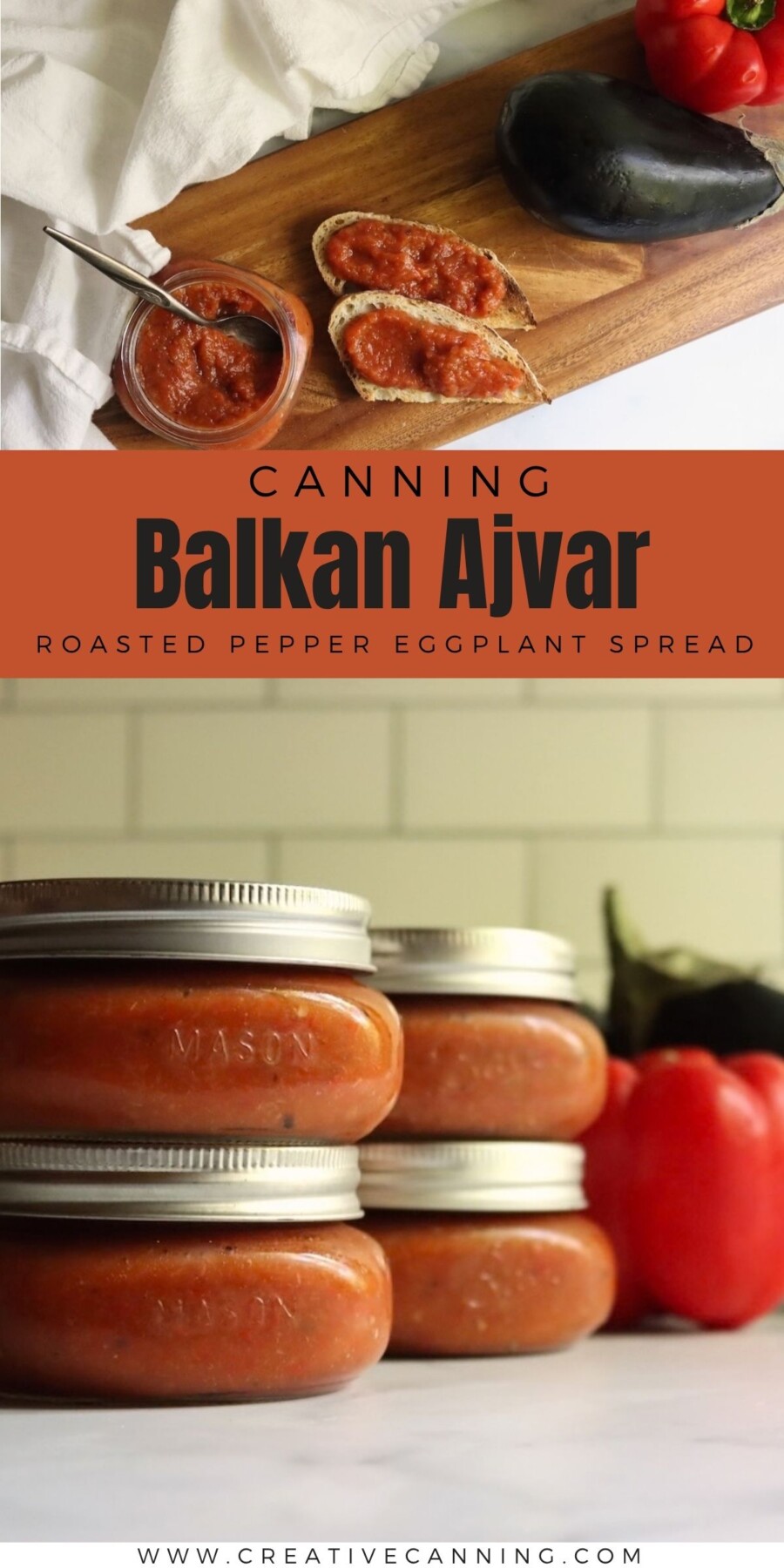
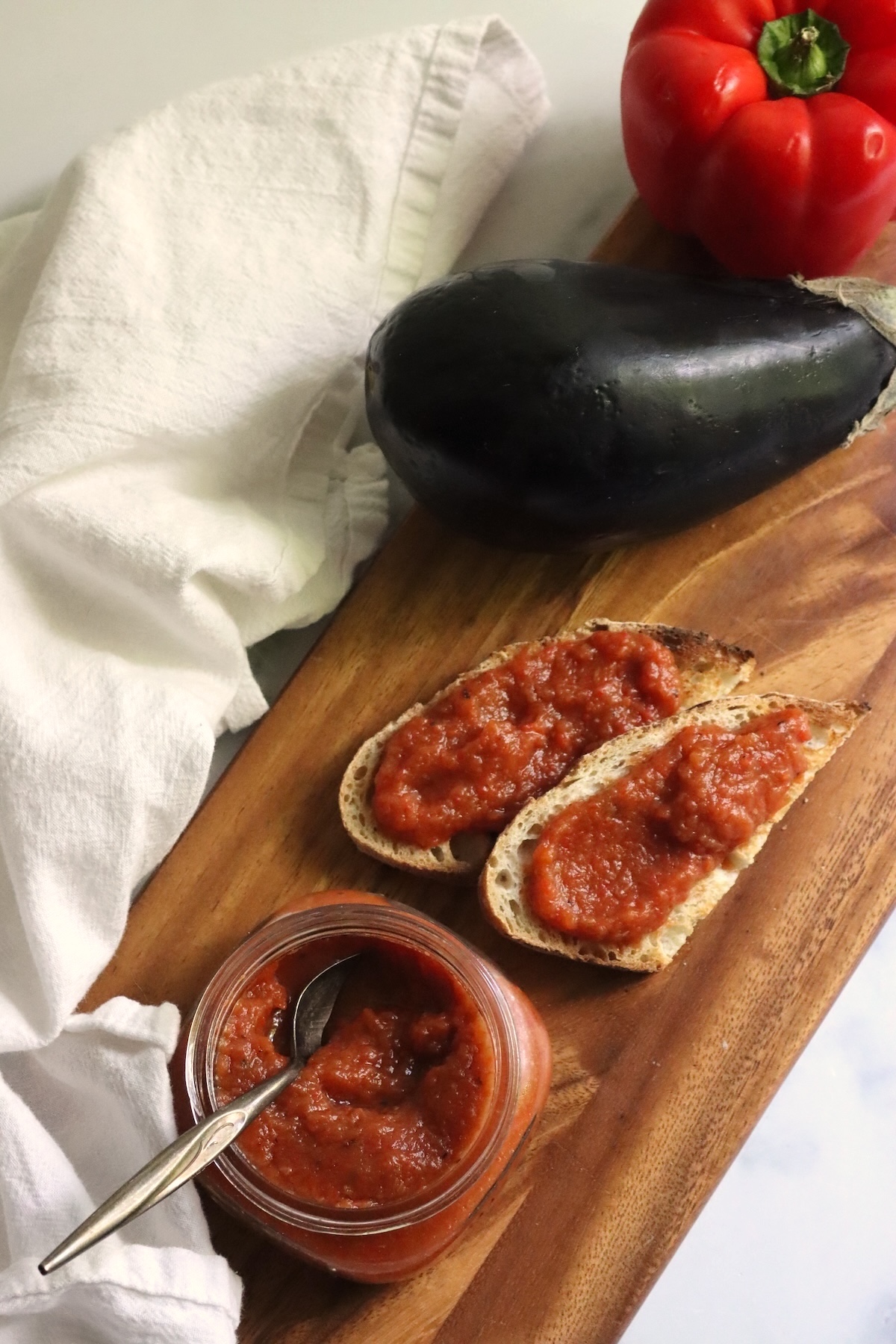
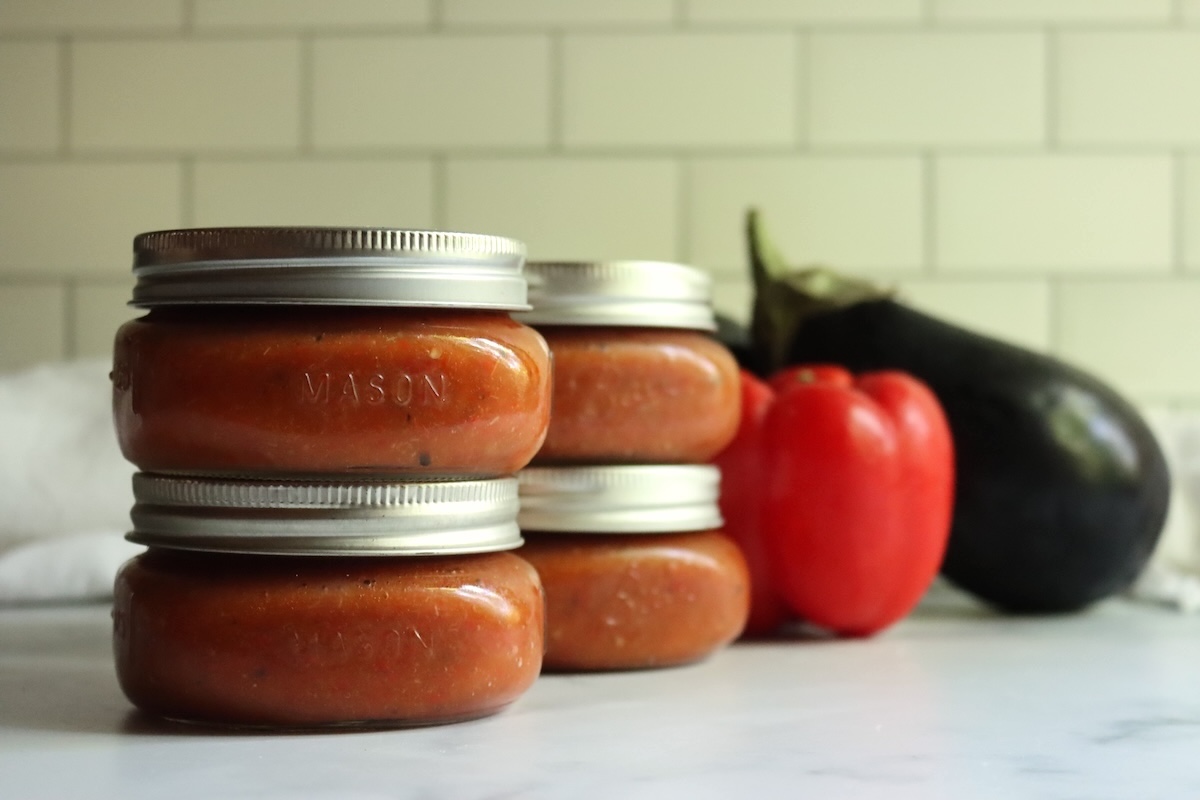
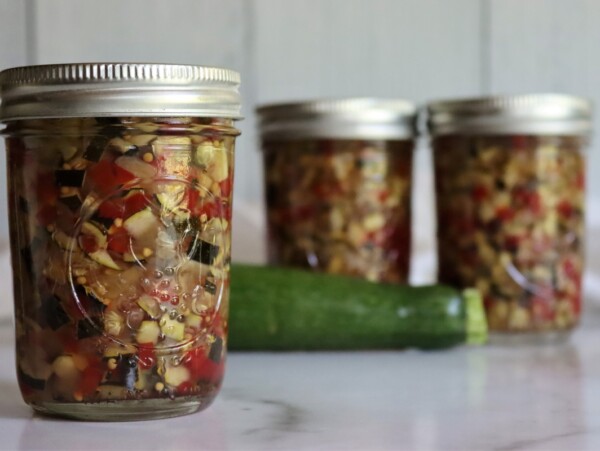
Ajvar is a sweet roasted red pepper and eggplant spread from the Balkans. With this tested canning recipe, you can keep jars on the pantry shelf. Open one in the middle of winter, and you have roasted peppers ready to spread on bread, serve with grilled meat, or set out as a dip.
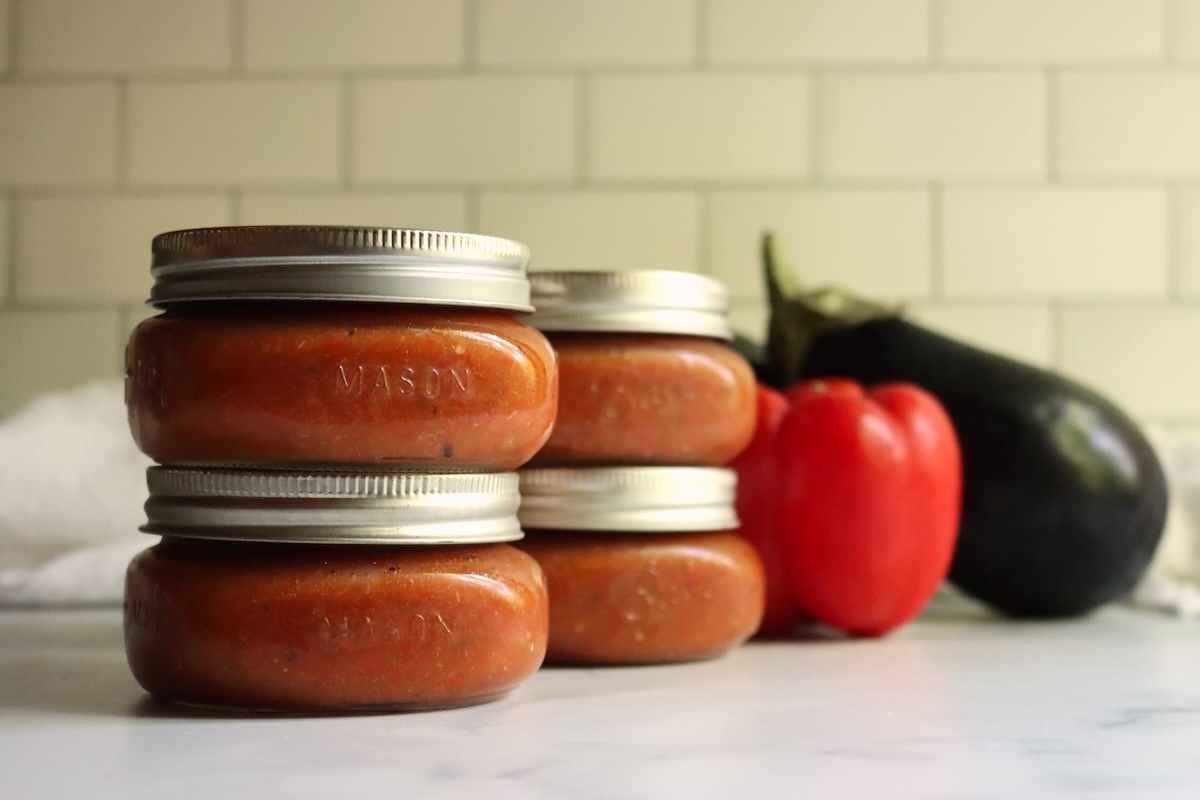
Table of Contents
- Notes from My Kitchen
- What Is Ajvar?
- Quick Look at the Recipe
- Choosing Peppers and Eggplant
- Ingredients for Ajvar
- Acid and Substitutions
- How to Make Ajvar
- The Corrected Recipe
- Canning Ajvar
- Altitude Adjustments
- Ways to Use Ajvar
- Storage and Shelf Life
- Yield Notes
- Ajvar FAQs
- More Pepper Canning Recipes
- Ajvar (Roasted Eggplant and Pepper Spread) Recipe
- More Condiment Canning Recipes
This recipe has been reviewed for safety and accuracy by a Master Food Preserver certified through the University of Cornell Cooperative Extension.
Ajvar (pronounced eye-var) is sweet, a little tangy, and thick enough to spread. You’ll find it on tables all over the Balkans, in Serbia, North Macedonia, Croatia, and Bosnia. Every jar starts with roasted red peppers.
Ajvar season is September and October, when red peppers are at their peak. Families and neighbors get together to roast whole peppers over an open fire, peel them by hand, and fill jars for winter. It’s part of zimnica, the winter foods that go into the pantry alongside pickled vegetables.
Ball’s version adds roasted eggplant to the peppers, along with garlic and cider vinegar. It’s a good way to put up a batch when the garden gives you plenty of both.
I made mine from Ball’s ajvar recipe, one of the new recipes they added to the 38th edition of the Ball Blue Book.
If your peppers and eggplant are coming in faster than you can eat them, I have plenty more pepper canning recipes and eggplant canning recipes, including an eggplant puttanesca sauce that uses up a pile of both. For the eggplant you cook fresh, there’s a long list of eggplant recipes to try.
Notes from My Kitchen

There’s a little specialty market in town that sells foods from the Balkans, including ajvar in little jars. The owner highly recommended it and said it’d be life-changing if I’d never tried it. I did, and I loved it!
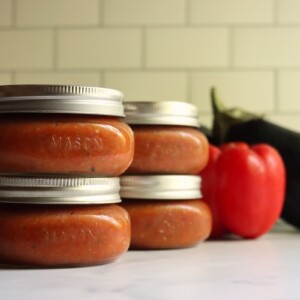
I was so happy when I came across a Ball recipe, because now I can make my own with homegrown peppers. It’s one of three Ball eggplant recipes I made this year, along with eggplant puttanesca sauce and caponata.
What Is Ajvar?
Ajvar is a roasted red pepper relish. The name comes from the Turkish word for caviar. Restaurants in Belgrade once served a red pepper salad as a stand-in for caviar and called it red ajvar. The name stuck.
Sweet ajvar is the traditional kind, and hot ajvar gets its heat from added chile peppers. Some families add eggplant or tomato. Ball’s recipe uses eggplant.
Traditional ajvar cooks for hours with a good amount of sunflower oil. None of those family recipes have a tested canning process. Ball developed this one for the water bath canner, with vinegar for acidity and no oil in the jar.
Quick Look at the Recipe
- Recipe Name: Ajvar (Roasted Eggplant and Pepper Spread)
- Recipe Type: Roasted vegetable spread with vinegar for acidity
- Canning Method: Water Bath Canning
- Prep Time: About 30 minutes
- Cook Time: About 45 minutes, most of it roasting
- Canning Time: 15 minutes for half pints
- Yield: About 4 half pints
- Jar Sizes: Half pints
- Headspace: 1/2 inch
- Ingredients Overview: Eggplant, red bell peppers, garlic, salt, cider vinegar, and an optional hot red pepper
- Safe Canning Recipe Source: Ball Blue Book Guide to Preserving, 38th edition
- Difficulty: Easy
- Similar Recipes: For more roasted peppers, there are marinated peppers and roasted red pepper soup. For a chunkier pepper condiment, try pepper onion relish. Eggplant puttanesca sauce is a pasta sauce with roasted eggplant and peppers.
Choosing Peppers and Eggplant
Ball’s recipe calls for red bell peppers. Pick ones that are fully red, with no green on the shoulders. A pepper that’s still partly green hasn’t finished ripening, and it tastes grassy even after roasting.
Traditional ajvar starts with roga, a long, horn-shaped red pepper that ripens in late September. Ball developed this recipe with red bell peppers, though, so that’s what I used. In terms of canning safety, you can use any type of pepper, hot or sweet.
For the eggplant, pick firm fruit with tight, glossy skin. Any variety works as long as you go by weight, since you scoop the flesh out of the skins after roasting.
Go by weight rather than counting, since eggplant and pepper sizes vary a lot. Ball measured the vinegar for the recipe weights. If you have more peppers than this recipe needs, canning peppers plain is an easy way to put up the rest, or make pickled bell peppers if you want them crisp.
Ingredients for Ajvar
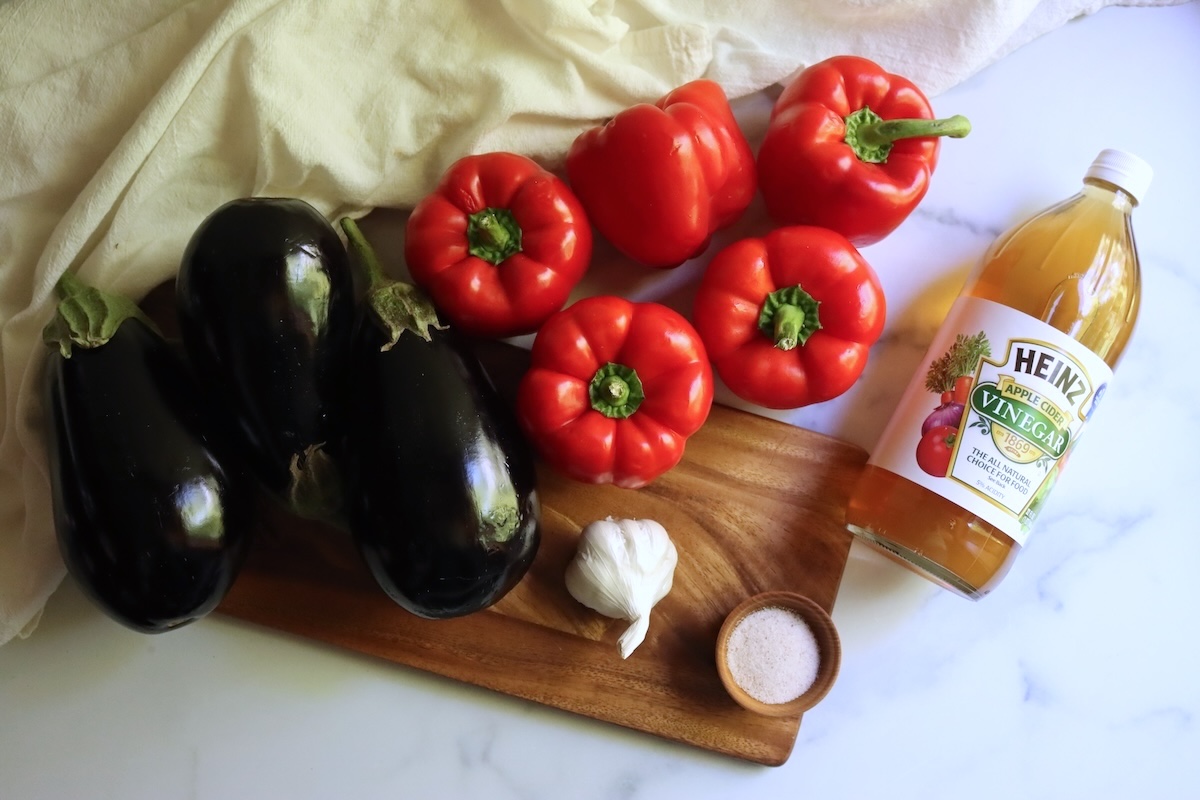
There are only five ingredients, plus a hot pepper if you’d like some heat.
- Red bell peppers: They make up most of the spread once you roast, peel, and blend them. Use fully ripe red ones.
- Eggplant: It gives the spread more body. You roast it in halves and scoop the flesh out of the skins.
- Garlic: Raw cloves go straight into the food processor with the roasted vegetables, and they cook when the spread comes to a boil.
- Cider vinegar: This is what makes ajvar safe to can, so use the full amount and check that the label says at least 5% acidity. I use cider vinegar in a glass bottle so it isn’t sitting in plastic. White wine vinegar at 5% or higher works in its place.
- Salt: It’s for flavor only, so you can use less. Canning and pickling salt dissolves cleanly and has no additives. My guide to pickling salt and substitutions covers the other choices.
- Hot red pepper: Optional. Seed it and roast it on the pepper sheet. A pinch of cayenne works instead if you don’t have a fresh one.
Acid and Substitutions
The cider vinegar is what makes ajvar safe in a water bath canner, since peppers, eggplant, and garlic are all low-acid vegetables. Ball measured the 2/3 cup of vinegar against the exact weights in the recipe. Check that the vinegar label says at least 5% acidity, and use all of it.
You can use white wine vinegar instead of cider vinegar, as long as it’s also at least 5%. You can cut back the salt, add the hot pepper or leave it out, and make the spread chunky or smooth.
Don’t add oil or more vegetables, and don’t cut the vinegar. If you miss the richness of traditional ajvar, stir a spoonful of olive oil into a jar after you open it.
Just don’t reduce the vinegar!
How to Make Ajvar
Ajvar is mostly oven time. The peppers and eggplant roast, the peppers steam so the skins come off, and then everything goes through the food processor and into a pot with the vinegar.
Fill your water bath canner and start heating it before you turn on the oven. A full canner takes a while to come to a boil. It should be ready by the time the hot ajvar goes into the jars.
Roast the Peppers and Eggplant
Heat the oven to 400 degrees F, and line two rimmed baking sheets with parchment paper. I use parchment instead of oiling the pans.
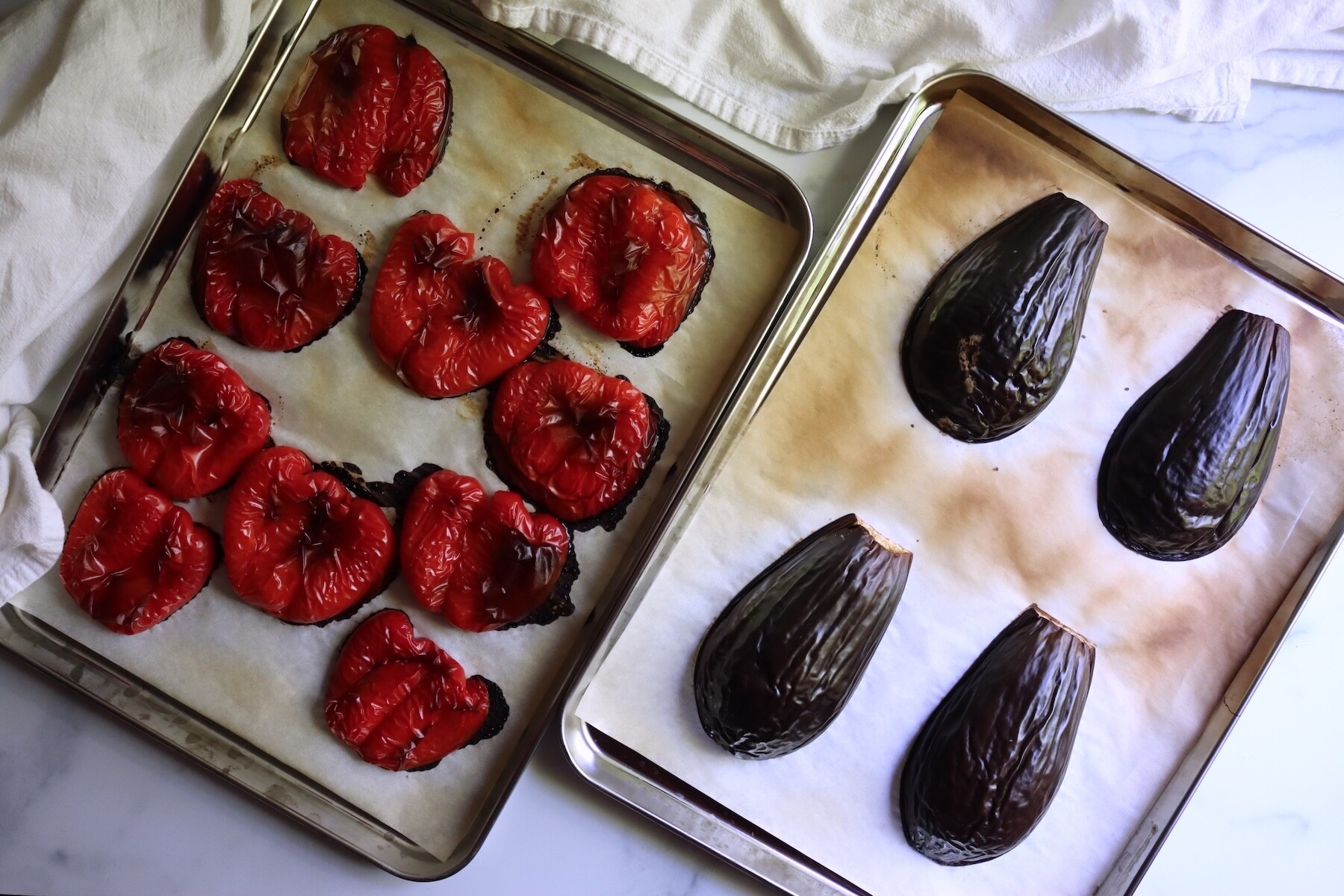
Cut the eggplants in half lengthwise and lay them skin side up on one sheet. Poke the skins a few times with a fork so the steam can escape.
Halve the bell peppers, remove the seeds, and lay them skin-side up on the second sheet. If you’re adding the hot pepper, seed it and put it on the same sheet.
Roast until the skins start to char. The peppers take about 20 minutes, and the eggplant can take up to 30.
Peel the Peppers and Scoop the Eggplant
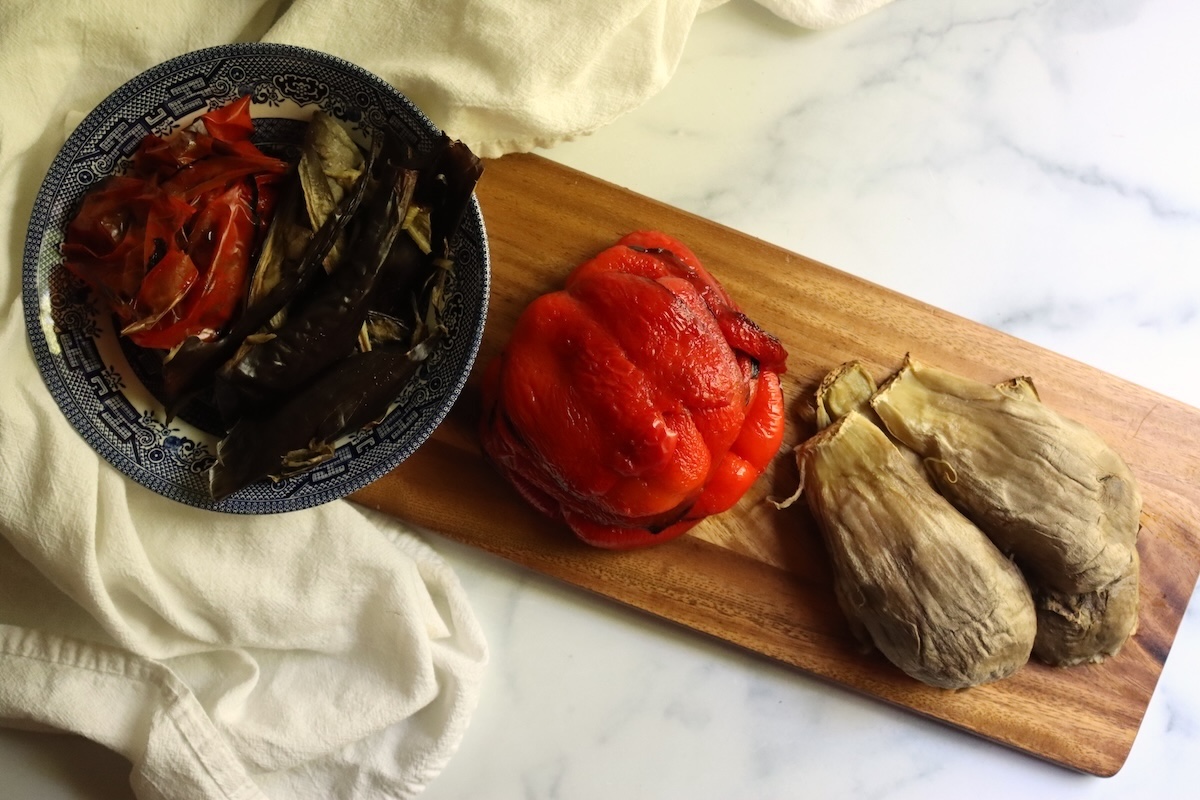
Take the peppers out first and put them in a lidded bowl, or set a plate over the top. Let them steam for 10 minutes to loosen the skins.
Peel off the skins with a sharp knife and discard them. Once the peppers have steamed, the skins should slip right off.
Let the eggplant cool until you can handle it. Then scoop out the flesh with a spoon and discard the skins and seeds.
Blend the Spread
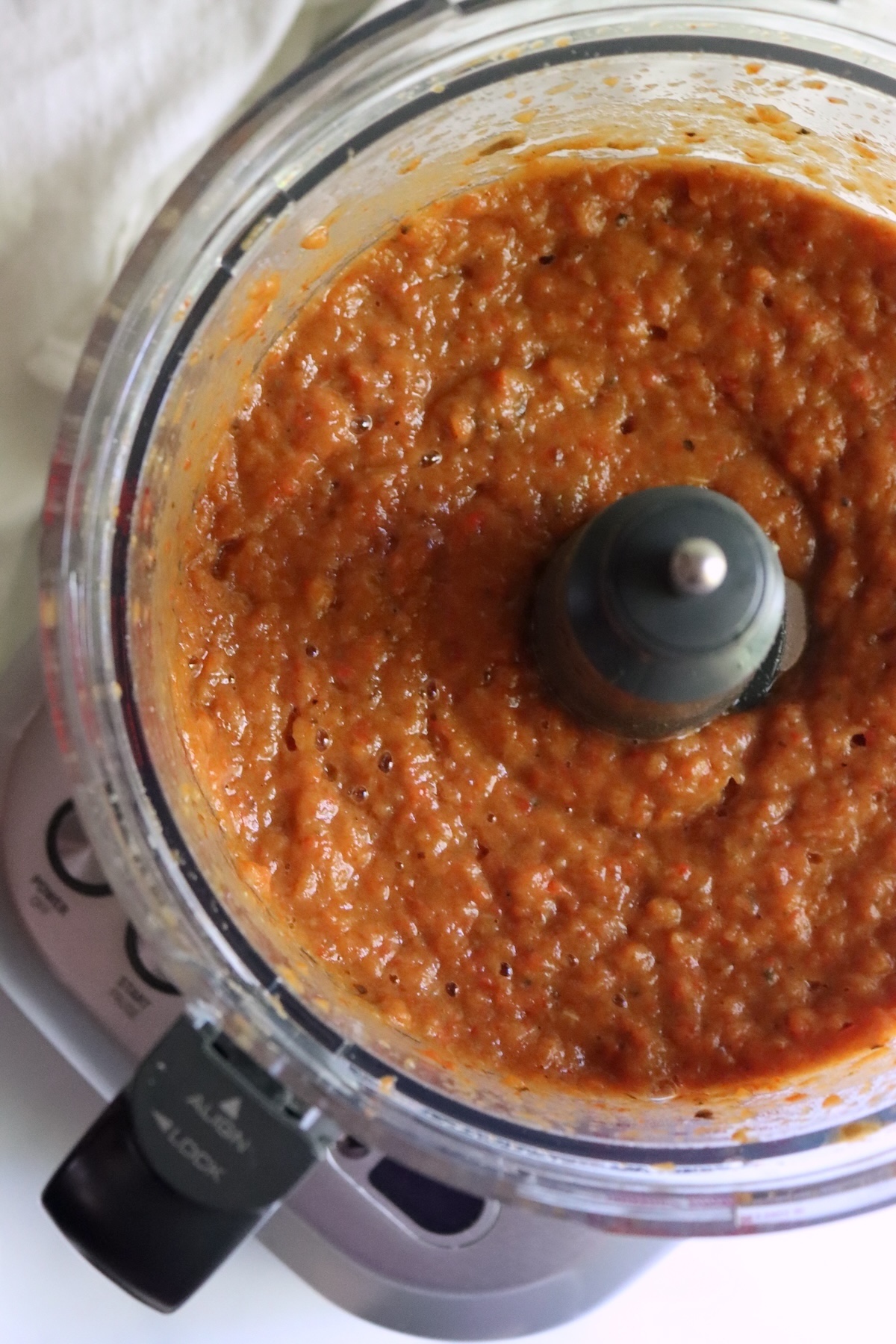
Put the peeled peppers, the eggplant, the garlic, the salt, and the hot pepper, if you’re using it, into a food processor.
Pulse it on chop for a chunky spread, or run it on low for a smooth puree. The ball gives you both options, so choose what you plan to use it for. Chunky works well with grilled meat, and smooth spreads more easily on bread.
Cook with the Vinegar
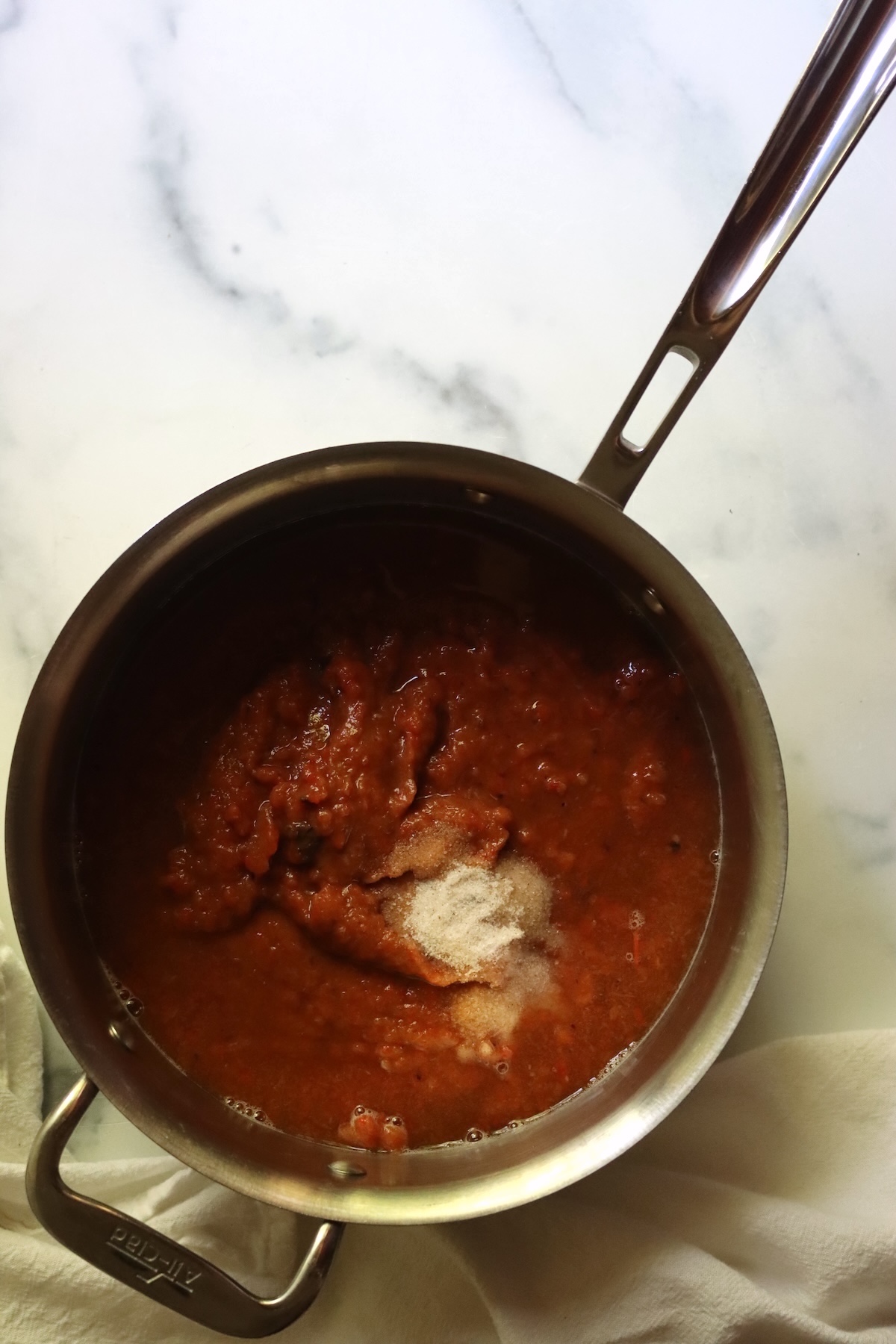
Scrape the spread into a stainless steel or enameled saucepan over medium heat, and stir in the vinegar. Again, don’t cut back on the vinegar. It’s what makes ajvar safe to can.
Bring it to a boil, stirring the whole time. It’s thick, and it spits as it heats, so keep the spoon moving and keep your hands back.
Taste it once it’s hot. You can use less salt in your next batch, but leave everything else as written.
The Corrected Recipe
This is Ball’s corrected ajvar recipe. The printed Ball Blue Book lists the vinegar in the ingredients, but none of the steps tell you to add it. Without the vinegar, ajvar isn’t safe to water bath can.
The book also never heats the spread before it goes into the jars, even though the filling step calls for hot ajvar. I follow the corrected version here, and so does the recipe card.
Canning Ajvar
Keep your half-pint jars hot in simmering water until you’re ready to fill them. A thick spread goes into the jars much more cleanly through a wide-mouth canning funnel.
Ladle the hot ajvar into the jars, leaving 1/2 inch headspace. Run a bubble tool around the inside of each jar to release trapped air, then check the headspace again and add more if it dropped. Wipe the rims, center the lids, and screw the bands on fingertip tight.
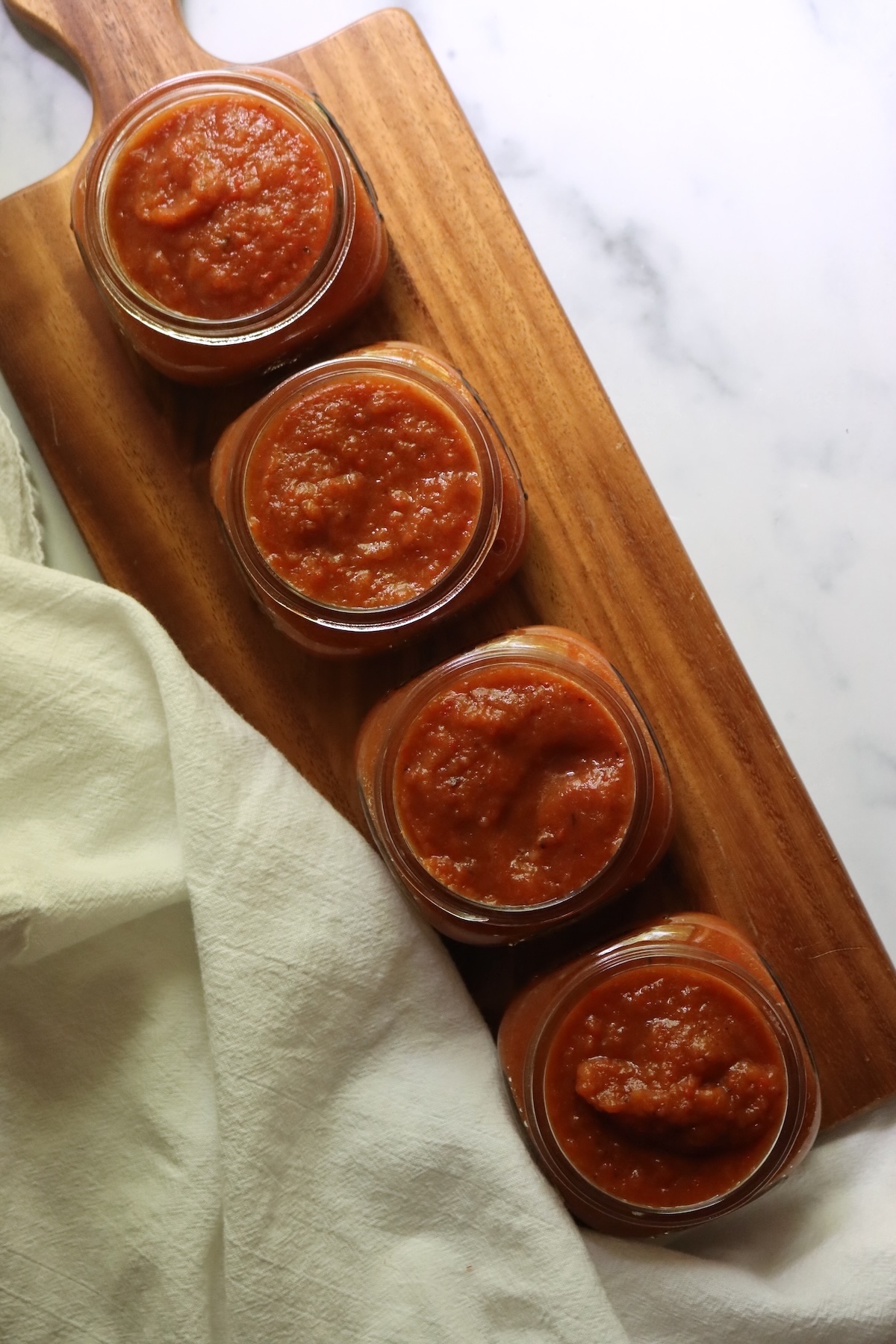
Set the jars in the canner, and make sure the water covers them by at least an inch. Bring it to a full rolling boil, then process half pints for 15 minutes at 0 to 1,000 feet, and adjust for altitude with the chart below.
When the time’s up, turn off the heat and take the lid off the canner. Let the jars sit for 5 minutes, then lift them out with a jar lifter and set them on a towel to cool for 12 to 24 hours.
If you’ve never used a canner, my guide to water bath canning for beginners walks through the whole process.
Altitude Adjustments
Water boils at a lower temperature the higher you go, so the jars need more time in the canner above 1,000 feet. These are the times for half pints from the relish altitude chart in University of Georgia Extension’s Canning Relishes.
- 0 to 1,000 feet: 15 minutes
- 1,001 to 6,000 feet: 20 minutes
- Above 6,000 feet: 25 minutes
Ways to Use Ajvar
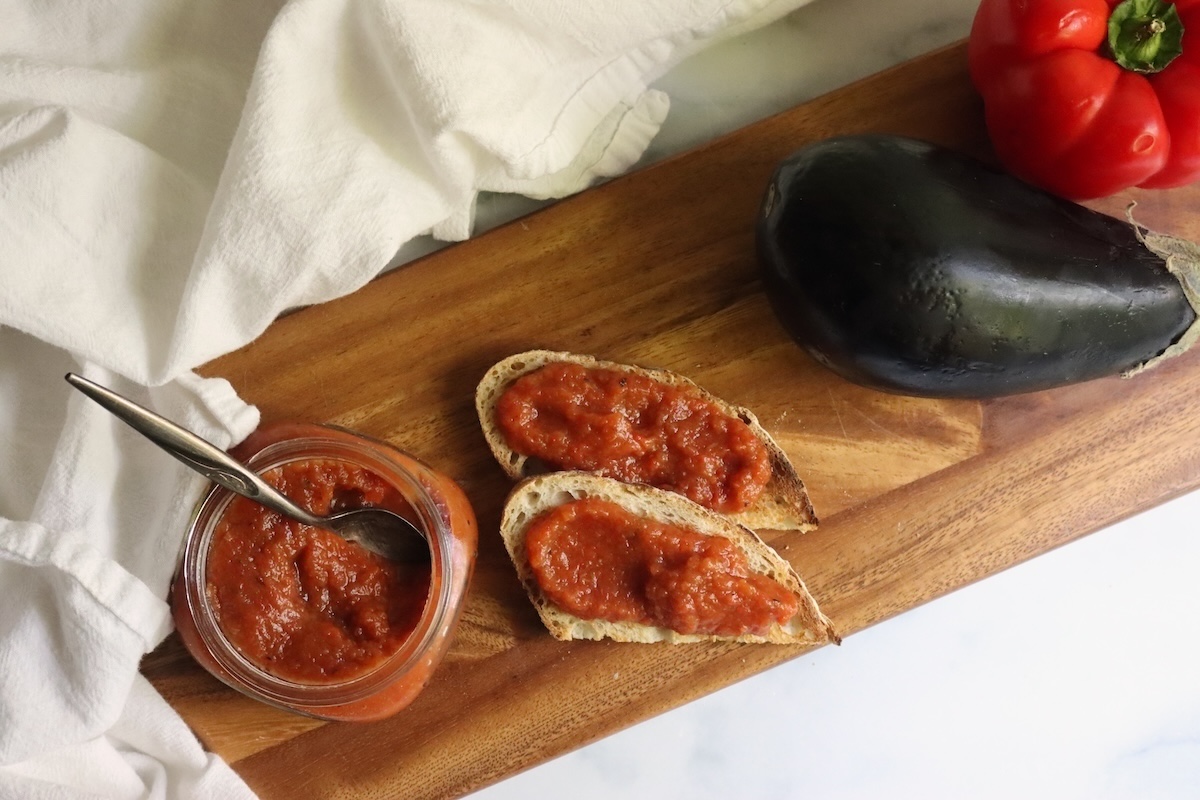
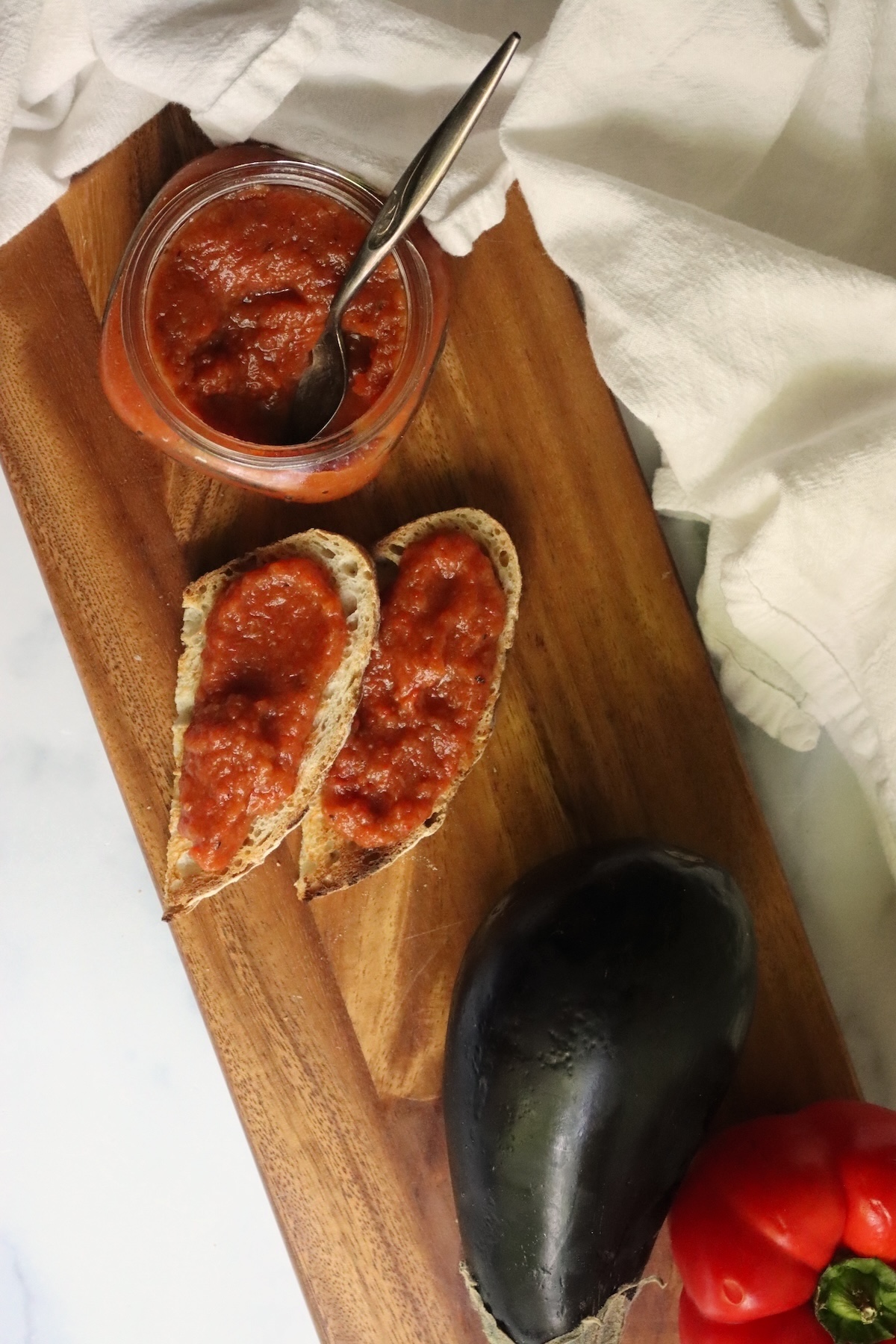
In the Balkans, ajvar goes on bread and comes to the table as a side dish. A thick slice of bread with a spoonful of ajvar and a little feta is an easy way to start on your first jar.
It’s also a condiment for grilled meat. Serve it next to sausages, burgers, lamb, or chicken, or spread it on a sandwich in place of mayonnaise. If you want to keep the Balkan theme going, pour a glass of smreka, a Balkan juniper berry soda, to go with it.
Stir a spoonful into rice or beans, or thin it with a little water for a quick pasta sauce. If you like having jars like that ready for dinner, there are plenty more pasta sauce recipes for canning to try.
For a party, set out a jar as a dip with pita and raw vegetables, next to a bowl of marinated peppers. If ajvar becomes a regular on your table, you can fill out the condiment shelf with green tomato ketchup and my relish recipes for canning.
Storage and Shelf Life
Once the jars have cooled, push down on the middle of each lid. A sealed lid doesn’t flex. Store the jars with the bands off, since a band can hold a loose lid in place and hide a seal that failed.
If a jar didn’t seal, put it in the refrigerator and use it within a week, or reprocess it within 24 hours with a new lid.
Store sealed jars in a cool, dark place, and use them within 12 to 18 months. After you open a jar, keep it in the refrigerator and use it within 1 to 2 weeks.
You can skip the canner, too. Ajvar keeps in the refrigerator for up to a week, or you can freeze it for up to a year.
Yield Notes
Shop by weight, not by count. For me, a pound and a half of eggplant was two medium eggplants on the small side. One jumbo grocery store eggplant can weigh that much on its own.
Two and a half pounds of red bell peppers came to five medium peppers, which is the low end of Ball’s count.
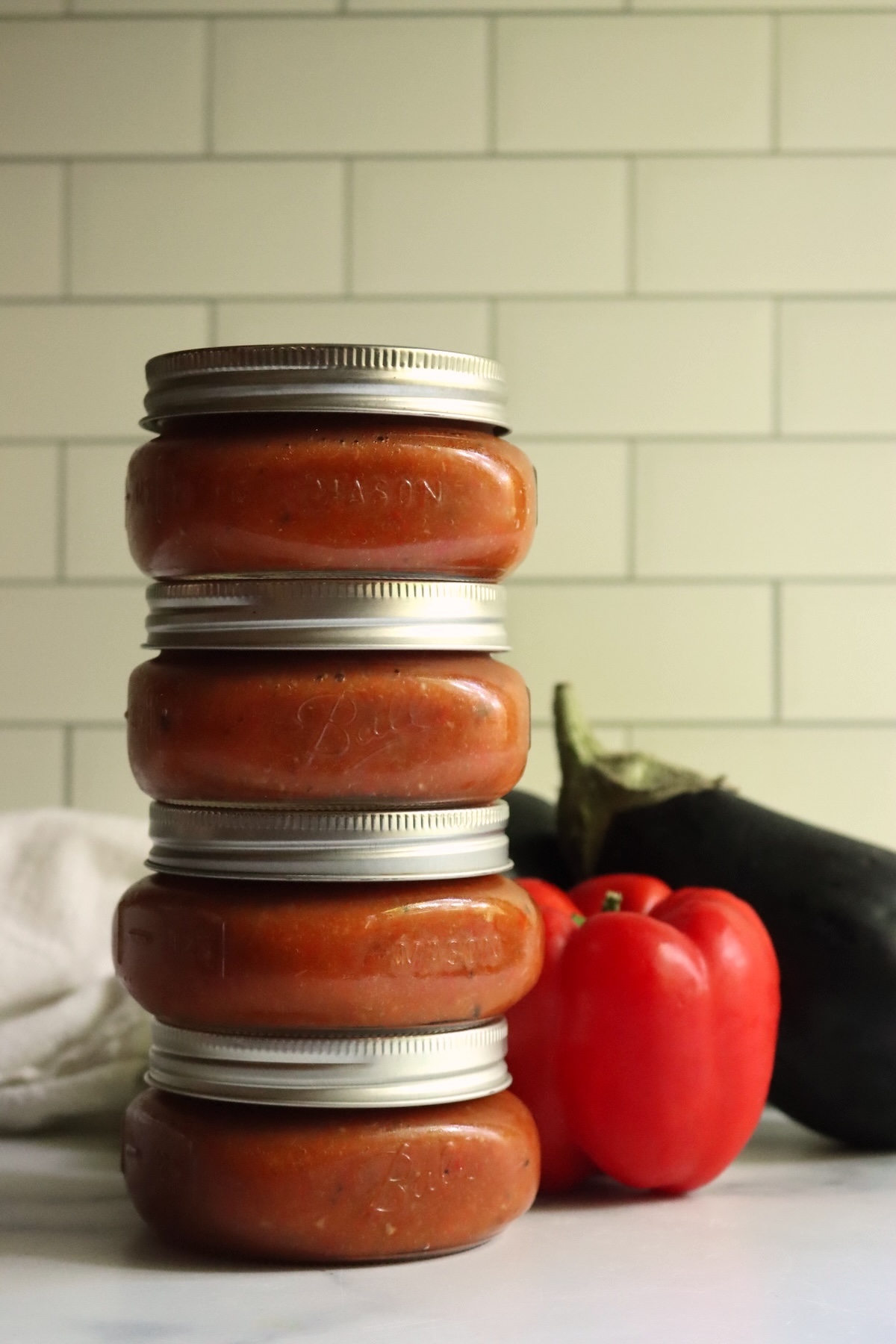
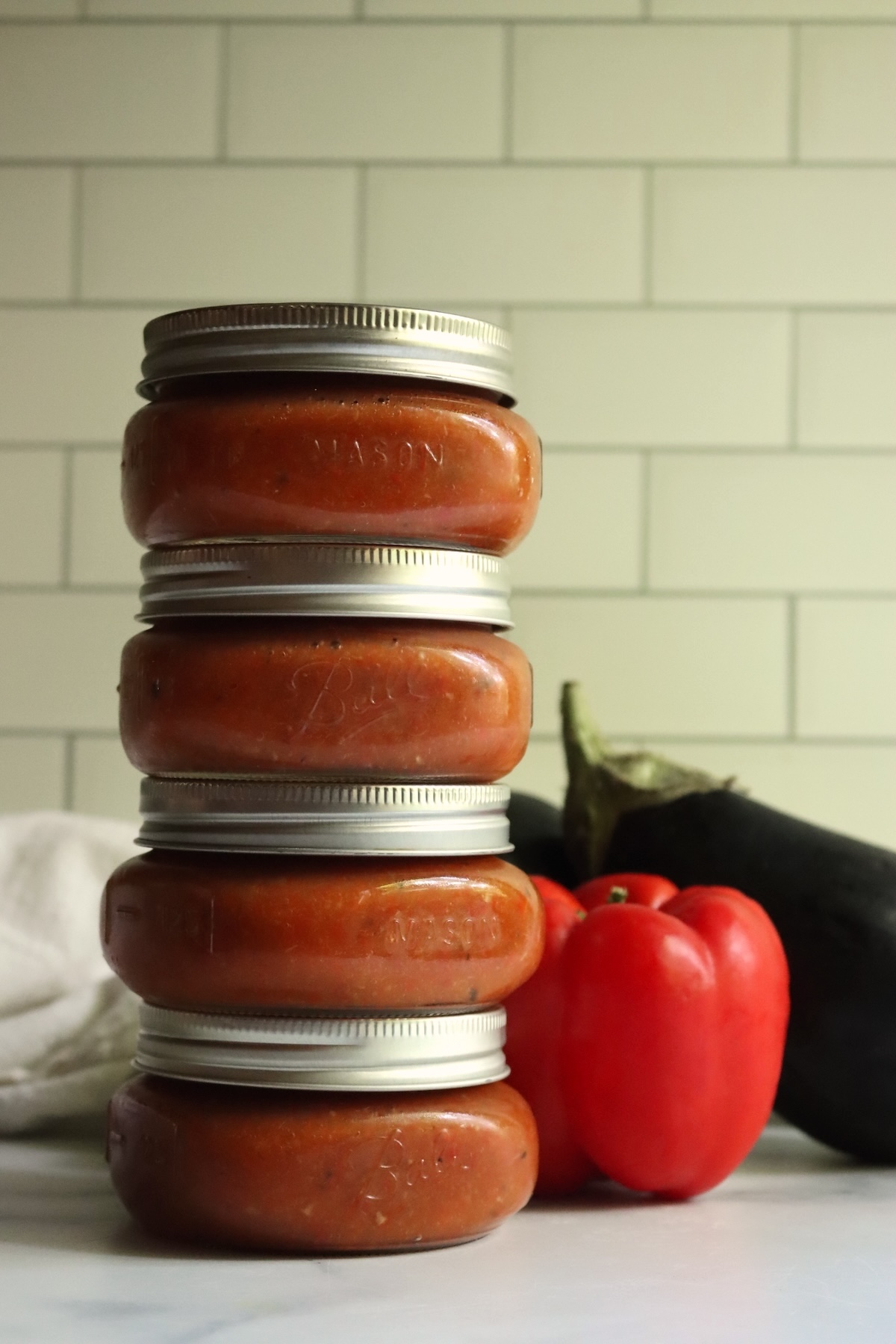
I got exactly the 4 half pints the recipe makes. Wash an extra jar anyway, in case yours comes out a little bigger.
Ajvar FAQs
Here’s what you can and can’t change in a jar of ajvar, starting with the oil that traditional recipes use.
Not before canning. Traditional ajvar cooks with a lot of oil, but this tested recipe doesn’t include any. You can’t add fat to a home canning recipe unless the testing included it. Stir a spoonful of olive oil into a jar after you open it instead.
No. The vinegar is what makes ajvar safe to can, since peppers, eggplant, and garlic are all low-acid vegetables. Ball measured it against the exact weights in the recipe, so use the full amount at 5% acidity or higher. You can use less salt if you like.
Traditionally, it’s roga, a long red pepper shaped like a horn. Ball developed this recipe with red bell peppers, so stick with red bells, by weight, for canning.
Roast a seeded hot red pepper along with the bell peppers, which is the optional heat in Ball’s recipe. A pinch of cayenne works too. In the Balkans, store-bought jars say blagi for mild or ljuti for hot. Don’t add extra peppers on top of the ones in the recipe.
No. Ball only gives a process for half pints. Half pints are a good size for a spread anyway, since you’ll want to finish an open jar within a couple of weeks.
More Pepper Canning Recipes
Still have peppers coming in? There’s plenty more to make with them.
If you tried this Ajvar recipe, or any other recipe on Creative Canning, leave a ⭐ star rating and let me know what you think in the 📝 comments below!
And make sure you stay in touch with me by following on social media!
Ajvar (Roasted Eggplant and Pepper Spread)
Equipment
- Rimmed baking sheets
- Parchment Paper
- Large glass or stainless steel bowl
- Food Grinder or Food Processor
- Large Stainless Steel Saucepan
- Half-pint canning jars with lids and bands
- Bubble remover
Ingredients
- 1 1/2 lbs eggplant, as purchased, see notes
- 2 1/2 lbs red bell peppers, as purchased, see notes
- 2 cloves garlic
- 2 tsp salt
- 2/3 cup apple cider vinegar, at least 5% acidity, or white wine vinegar at 5%
- 1 hot red pepper, seeded, optional, or a pinch of cayenne
Instructions
- Prepare the water bath canner, jars, and lids. Keep the jars hot in simmering water until you fill them.
- Heat the oven to 400 degrees F and line two rimmed baking sheets with parchment paper.
- Cut the eggplants in half lengthwise, place them skin side up on one baking sheet, and prick the skins a few times with a fork.
- Halve and seed the bell peppers and place them skin side up on the second sheet. Add the seeded hot pepper to this sheet if you’re using it.
- Roast until the skins start to char. The peppers take about 20 minutes, and the eggplant can take up to 30.
- Move the roasted peppers to a covered bowl while they’re hot, and let them steam for 10 minutes. Peel off the skins with a sharp knife and discard them.
- Let the eggplant cool until you can handle it, then scoop out the flesh and discard the skins and seeds.
- Put the peppers, eggplant, garlic, salt, and hot pepper, if using, in a food processor. Pulse on chop for a chunky spread, or puree on low for a smooth one.
- Scrape the spread into a stainless steel or enameled saucepan over medium heat, and stir in all of the vinegar.
- Bring the ajvar to a boil, stirring constantly so it doesn’t splatter or scorch.
- Ladle the hot ajvar into hot jars, leaving 1/2 inch headspace. Remove air bubbles and wipe the rims.
- Center the lids and apply the bands fingertip tight.
- In a boiling water bath canner, with at least 1 inch of water over the jars, process half pints for 15 minutes, adjusting for altitude (see notes).
- Turn off the heat, take the lid off the canner, and let the jars rest for 5 minutes before lifting them out.
- Cool the jars undisturbed for 12 to 24 hours, then check the seals, remove the bands, and store the jars in a cool, dark place.
Notes
- 0 to 1,000 feet: 15 minutes
- 1,001 to 6,000 feet: 20 minutes
- Above 6,000 feet: 25 minutes
Nutrition
Nutrition information is automatically calculated, so should only be used as an approximation.
More Condiment Canning Recipes
A few more small jars for the condiment shelf.

Find the perfect recipe
Searching for something else? Enter keywords to find the perfect recipe!