This post may contain affiliate links. Please see our disclosure policy.
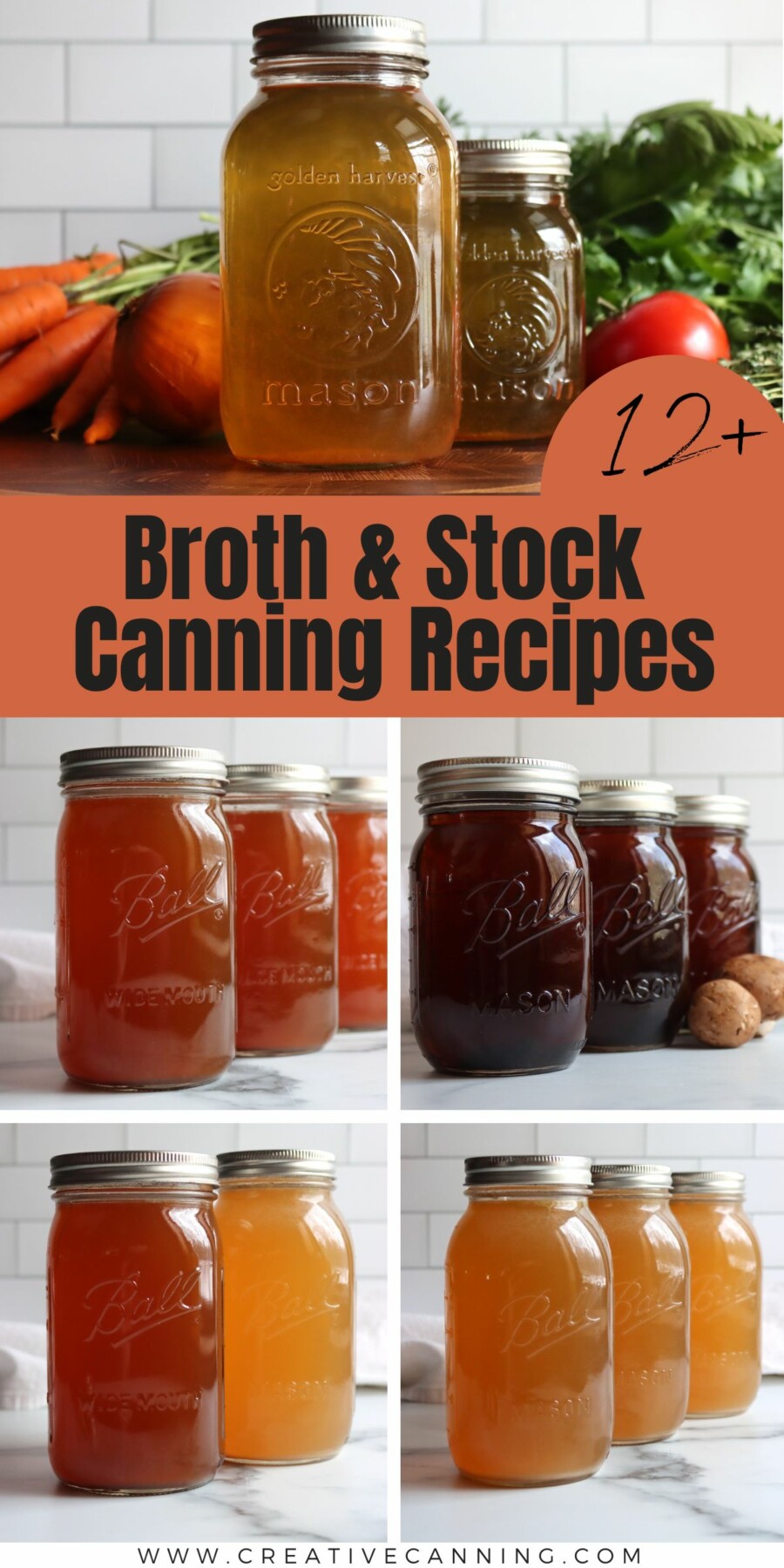
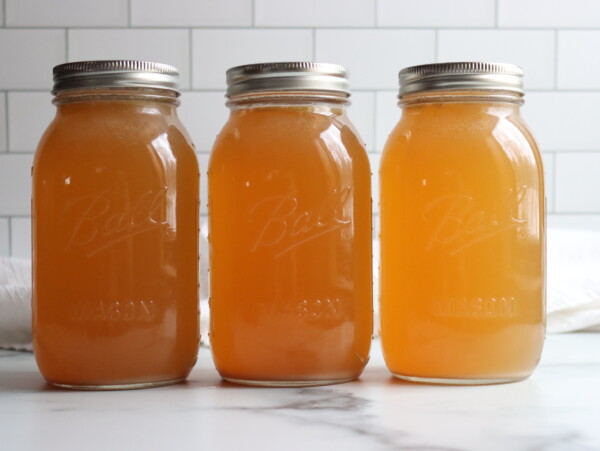
Broth and stock canning recipes are some of the most practical jars you can put on the pantry shelf. They may not look as exciting as pie filling or jam, but once you have homemade broth ready to go, quick soups, gravies, and from-scratch meals get a whole lot easier.
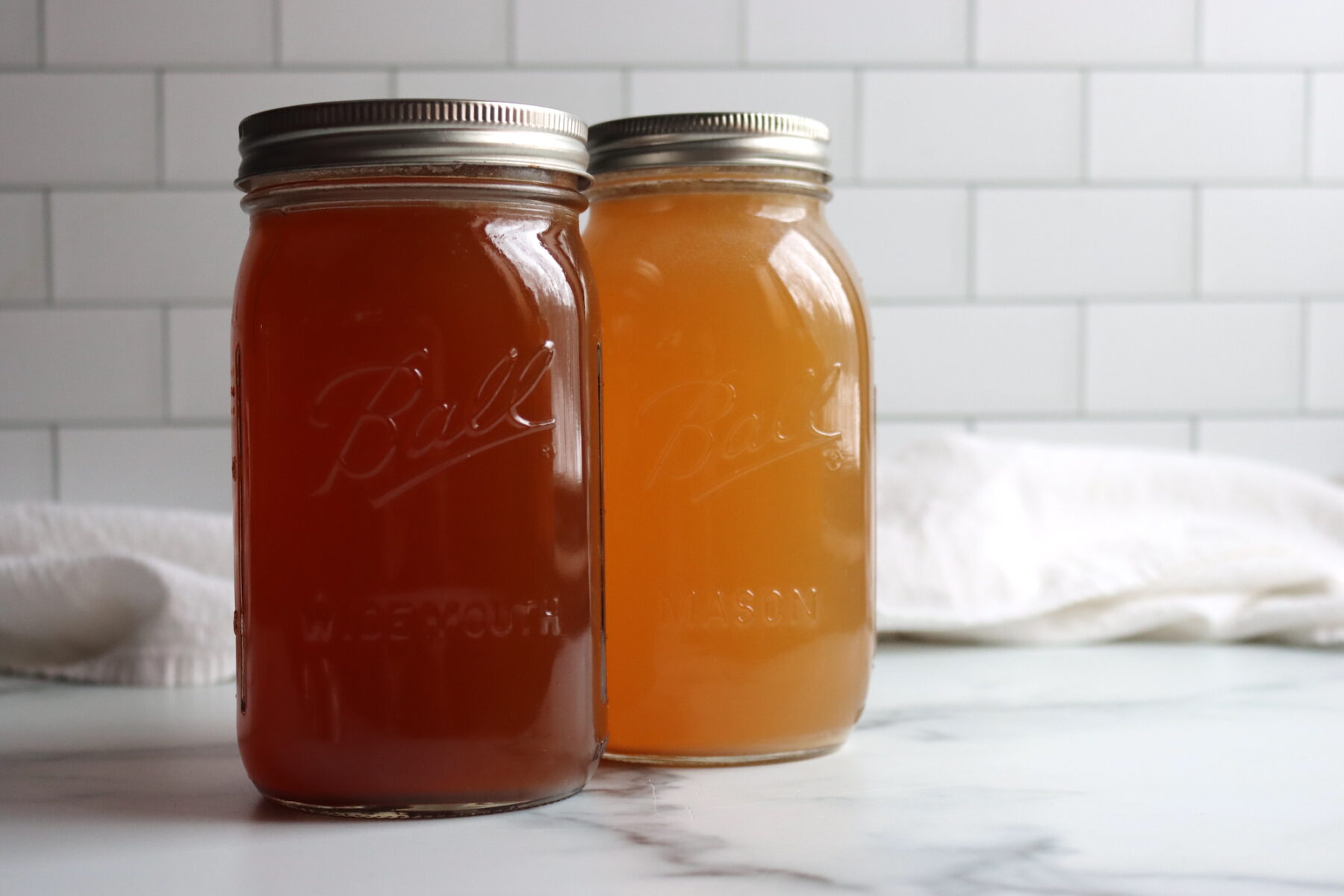
Table of Contents
- Why Can Broth and Stock?
- What’s the Difference Between Broth and Stock?
- Basic Instructions for Pressure Canning Broth and Stock
- Poultry Broth Canning Recipes
- Beef & Lamb Broth Canning Recipes
- Pork Broth & Specialty Meat Broths
- Wild Game Broth Canning Recipes
- Vegetable Broth Canning Recipes
- Mushroom Broth Canning Recipes
- Canning Recipe Lists
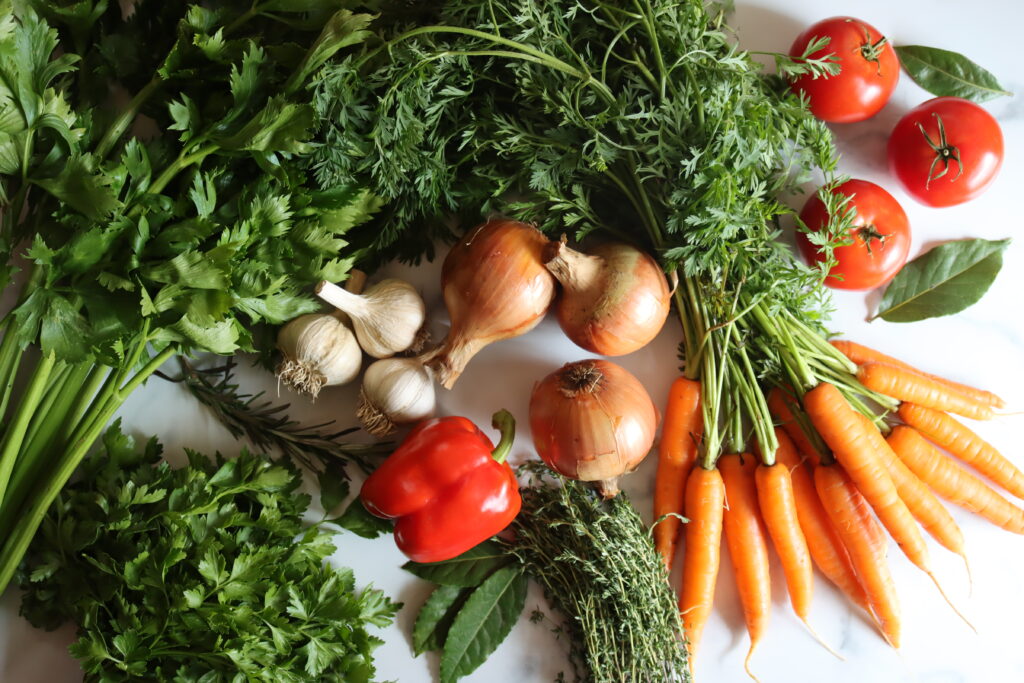
There’s something deeply satisfying about canning broth and stock at home. It’s one of those pantry staples that may not look flashy on the shelf, but once you have a few jars tucked away, you’ll use them constantly. Homemade broth adds so much more flavor than store-bought, and it’s a wonderful way to make the most of bones, vegetables, herbs, and kitchen scraps that might otherwise go to waste.
Pressure canning broth and stock is also one of the simplest ways to build a practical pantry. Once the jars are processed, you’ve got ready-to-use soup starters, cooking liquid for grains and beans, and the base for quick sauces, stews, gravies, and braises. Whether you keep it plain and simple or make rich specialty stocks, these recipes are worth having on hand.
Why Can Broth and Stock?
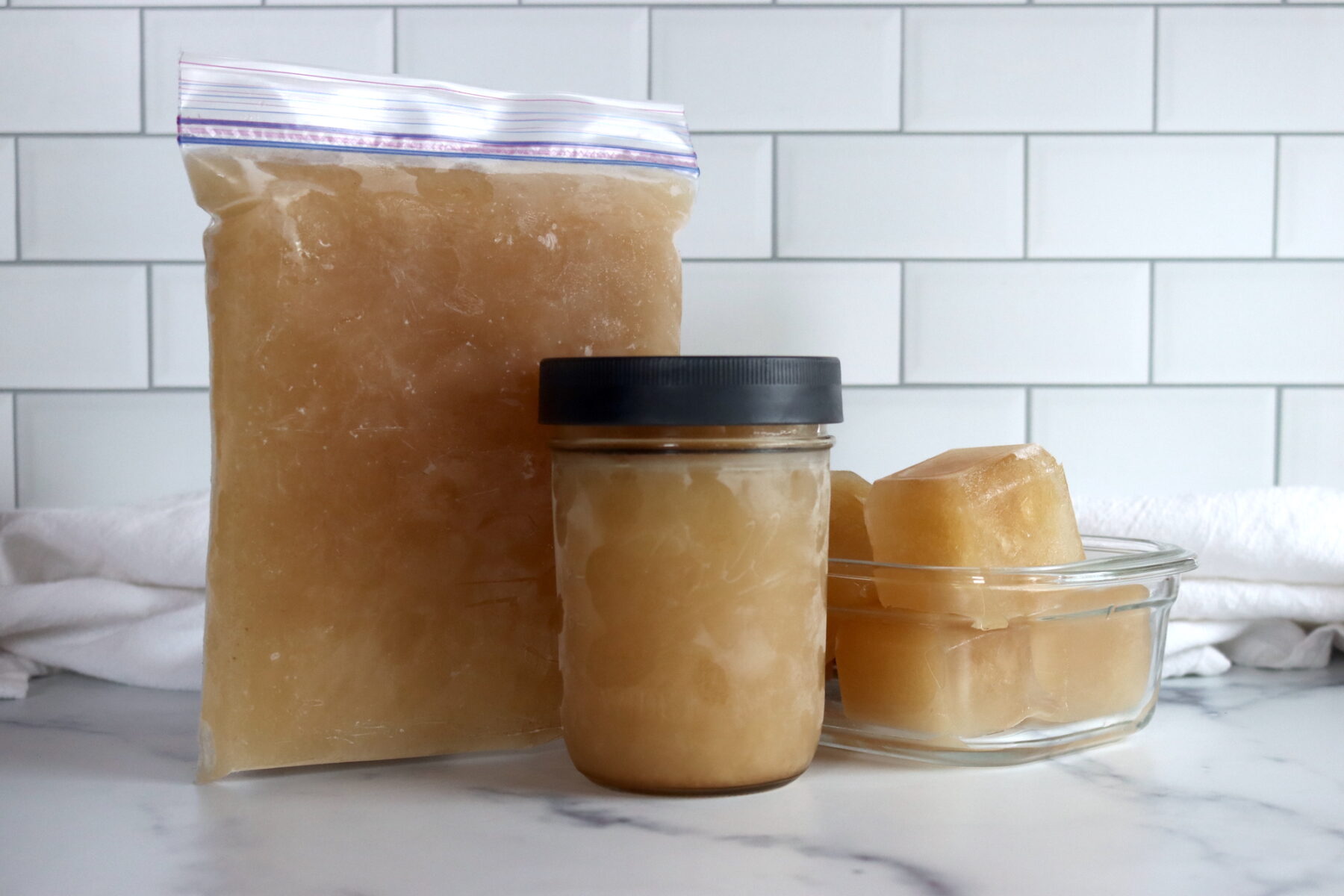
One of the best reasons to can broth is convenience. Freezer space is always limited, and jars of pressure-canned stock are easy to store and use. They’re also shelf stable, so you can keep a good supply on hand without worrying about power outages or digging through a packed freezer.
It’s also a great way to stretch your ingredients. A roast chicken can become broth, then soup, then gravy. Beef bones can become stock that flavors half a dozen meals. When you can broth and stock, you’re not just preserving liquid, you’re preserving value, flavor, and a whole lot of kitchen work for later.
What’s the Difference Between Broth and Stock?
People often use the terms broth and stock interchangeably, and in everyday cooking, that usually works just fine. Traditionally, though, broth is made more from meat and vegetables, while stock is made primarily from bones, often with a bit of meat still attached. Broth is usually lighter and ready to sip on its own, while stock tends to have more body and a richer texture because the bones release gelatin as they simmer.
In practice, the line between the two gets blurry pretty quickly in a home kitchen. A pot of chicken carcasses, onion ends, celery tops, and a few leftover bits of meat can reasonably be called either one, depending on who’s writing the recipe. Most home canners use the names pretty loosely, and what matters more is that you’re working with a strained liquid without thickeners, dairy, noodles, rice, barley, or pureed solids.
For canning, the good news is that both broth and stock are processed the same way. Whether you call it chicken broth, beef stock, turkey bone broth, or vegetable broth, once it’s strained and packed as a plain liquid, it’s canned as a pressure-canned broth or stock recipe. The canning implications don’t really change based on the name, but they do change if you leave in solids, add vegetables to the jars, or turn it into a finished soup.
That’s why many canning recipes keep broth and stock very simple. Once it’s safely canned on its own, you can always turn it into soup later by adding noodles, cream, cooked meat, rice, or anything else you like when you open the jar.
Basic Instructions for Pressure Canning Broth and Stock
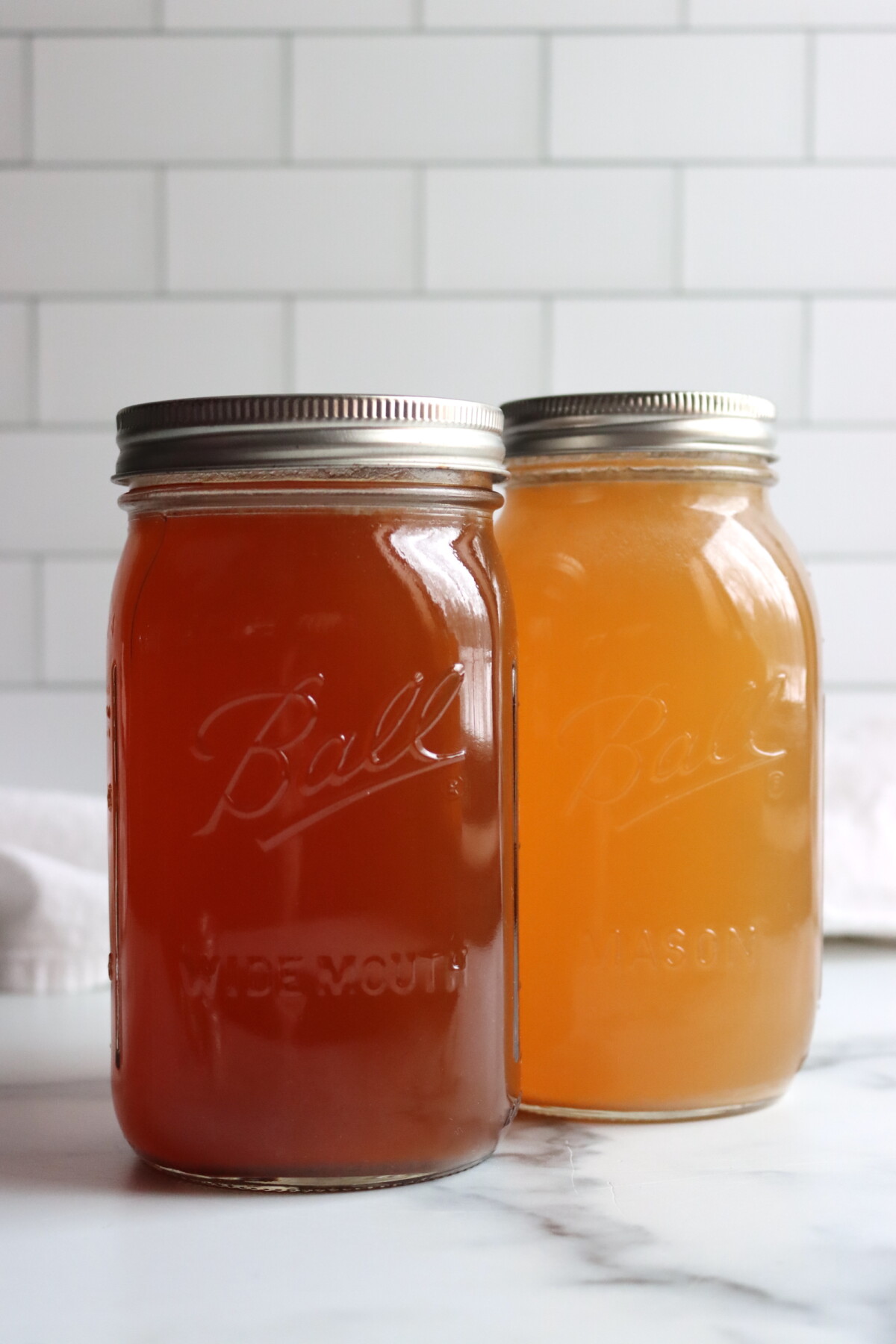
Broth and stock are some of the simplest things to pressure can because you’re working with a strained liquid rather than a jar full of solids. Start by making your broth or stock as usual, then strain it well so there are no bits of meat, bones, or vegetables left in the liquid.
Reheat it to a boil, ladle it into hot jars, leave 1 inch of headspace, wipe the rims, apply lids, and load the jars into a preheated pressure canner.
For meat-based broths and stocks, the tested processing times are generally the same whether you’re canning chicken, beef, turkey, or other plain meat stock: 20 minutes for pints and 25 minutes for quarts in a pressure canner, using the standard pressure canning altitude adjustments. That’s one reason these are such handy pantry staples, since they process much faster than soup canning recipes or jars that contain solids.
Vegetable broth is a little different. Even though it’s also strained, tested recipes process it longer than meat stock. Bernardin’s tested vegetable stock recipe uses 30 minutes for pints and 35 minutes for quarts, again adjusted for altitude. So while the actual canning method is basically the same, the timing is not quite interchangeable.
The important thing is to keep broth and stock plain and unthickened for canning. Once you start adding solids back into the jars, or turning it into a finished soup, you have to follow a different tested process with much longer canning times.
Poultry Broth Canning Recipes
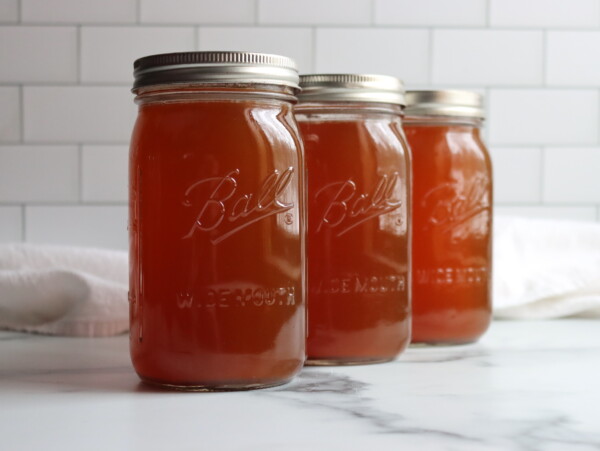
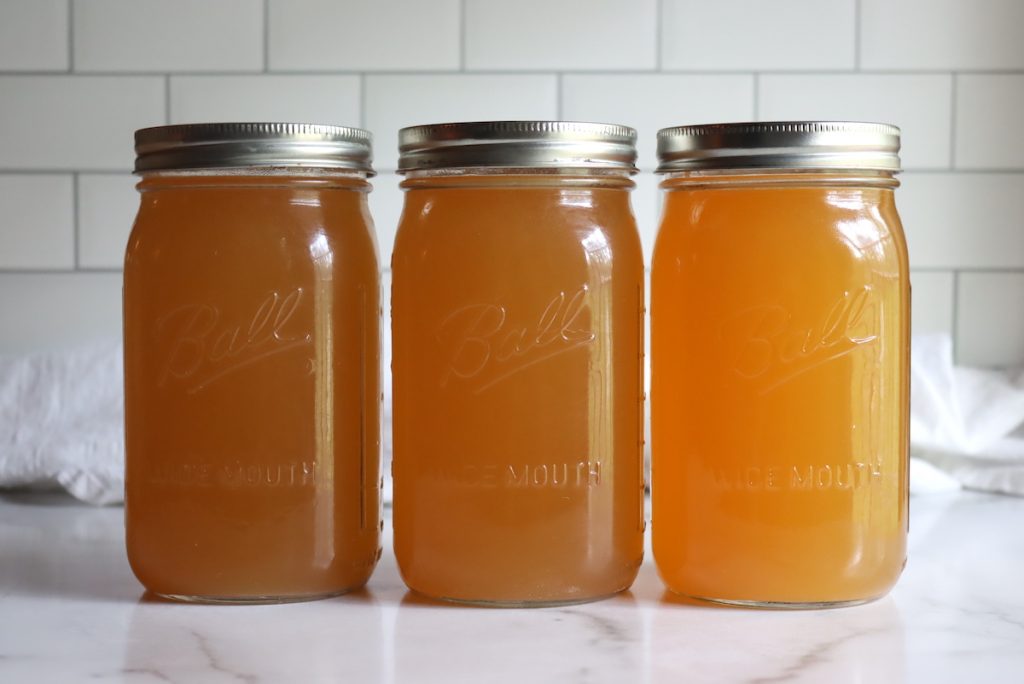
Poultry broth is probably the most useful broth you can keep on the pantry shelf. Chicken broth, turkey broth, and other poultry stocks are mild enough for almost anything, but still rich enough to bring real flavor to soups, gravies, rice, stuffing, casseroles, and sauces.
They’re also a great way to make the most of leftover roast chickens or holiday turkey carcasses, especially when you roast the bones first and simmer them with peeled vegetables for a cleaner, fuller broth.
Beef & Lamb Broth Canning Recipes
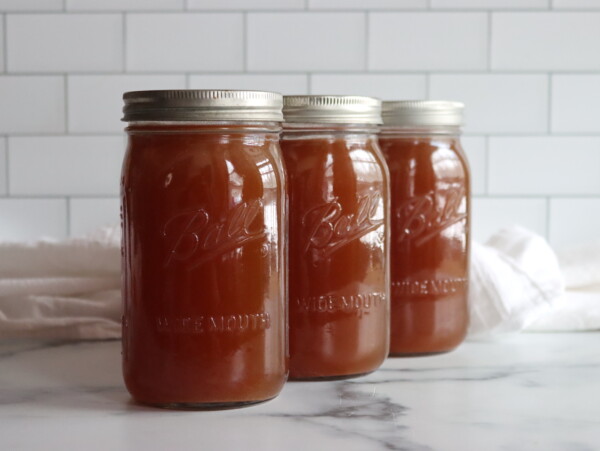
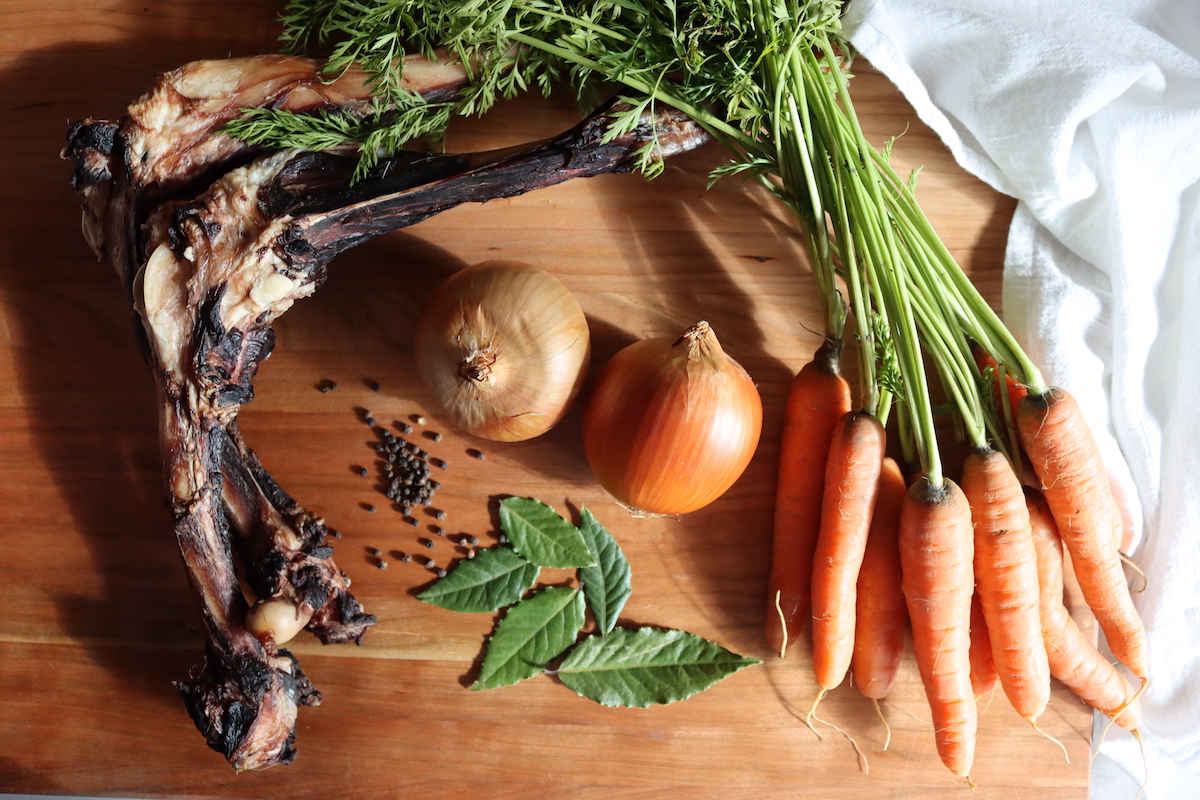
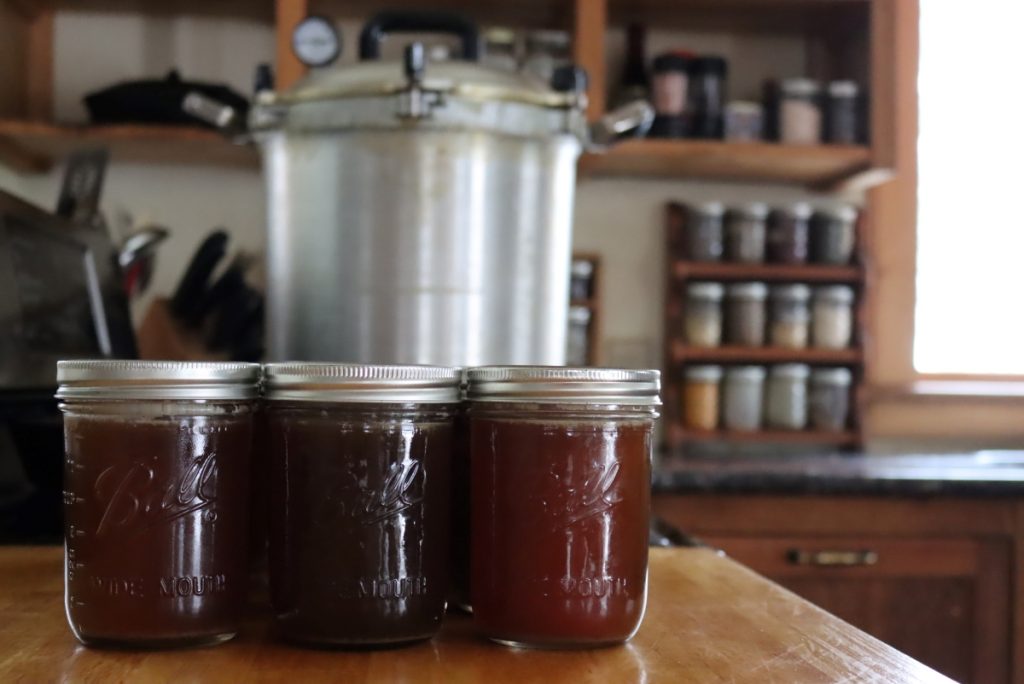
Beef and lamb broths are some of the richest, heartiest stocks you can put on the pantry shelf. They start with roasted bones, a long simmer, and a good batch of peeled vegetables for flavor, which gives you a darker broth with much more body than a quick stovetop stock.
These are the jars I reach for when I’m making gravy, stew, French onion soup, or anything that needs a little depth behind it.
Personally, I like to start with beef shank with the meat still attached, so I get a meatier broth. I roast the shanks, then slow simmer them for hours. The meat can be picked off for canning separately, so then I get two different dishes out of the process.
Pork Broth & Specialty Meat Broths
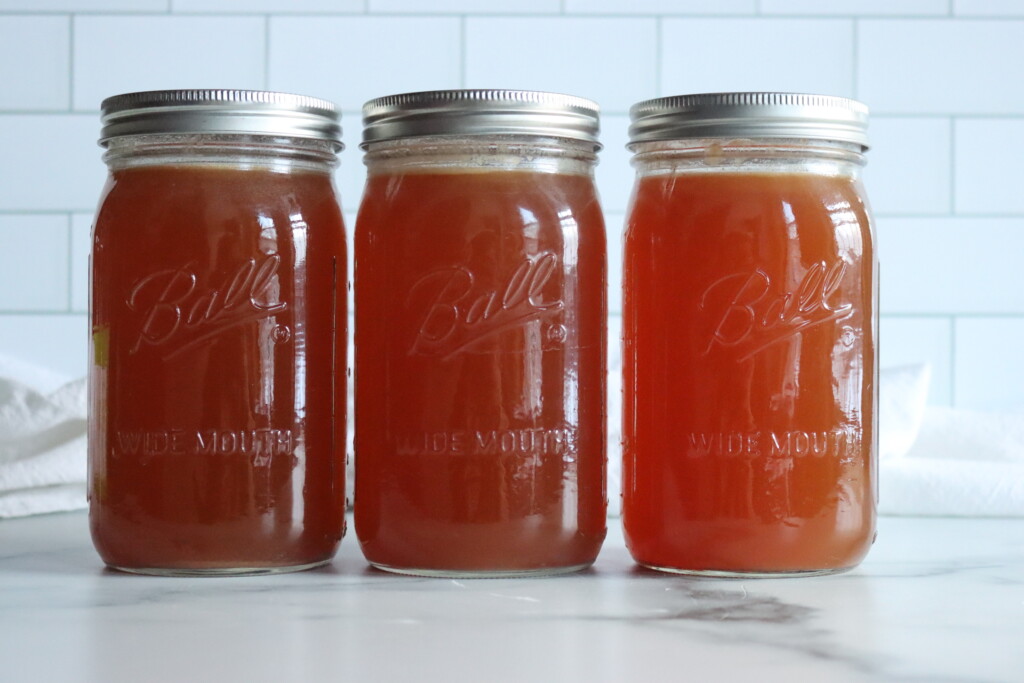
Pork broth deserves a lot more attention than it usually gets. It has a full, savory flavor that works beautifully in bean dishes, ramen-style soups, gravies, braises, and all kinds of rustic meals. I like to use pork broth as the base for my bean canning recipes, so these recipes work double duty in my canning kitchen.
This is also where specialty recipes like rib broth fit in. Rib broth is basically a clever way to turn leftover rib bones into something genuinely useful, with all that roasted, smoky, meaty flavor ending up in the stockpot instead of going to waste.
Wild Game Broth Canning Recipes
Wild game broths are one of the best reasons to save bones after butchering season. Venison broth in particular makes an especially rich stock, and it’s a wonderful way to make use of the whole animal instead of letting those bones go to waste.
The flavor is usually deeper and more distinctive than standard beef broth, and it’s especially nice in stews, gravies, and cold-weather soups.
Vegetable Broth Canning Recipes
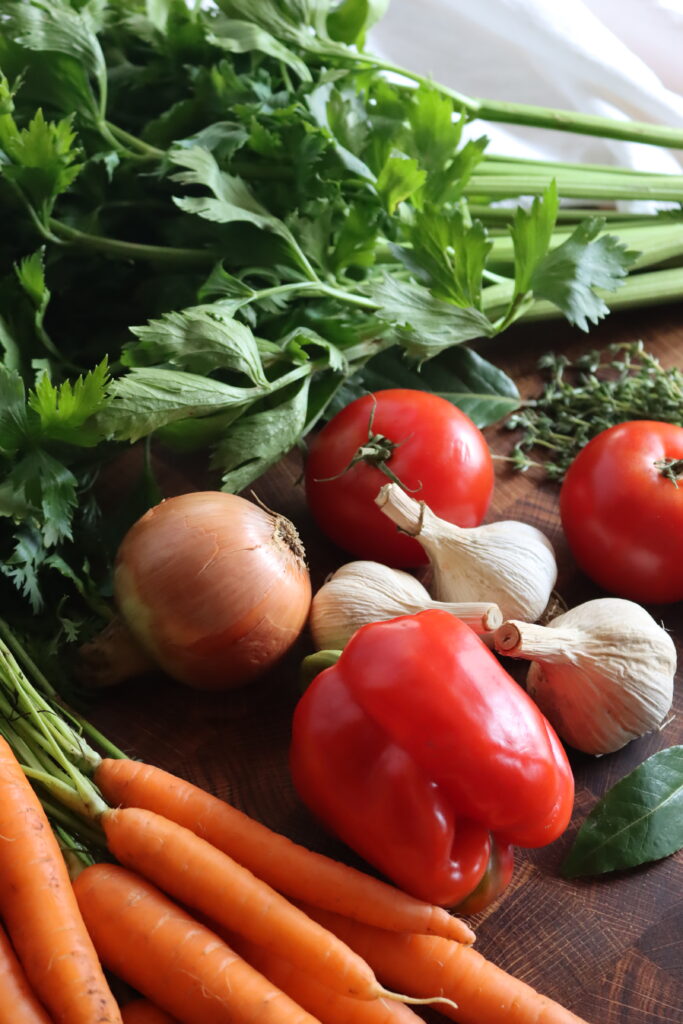
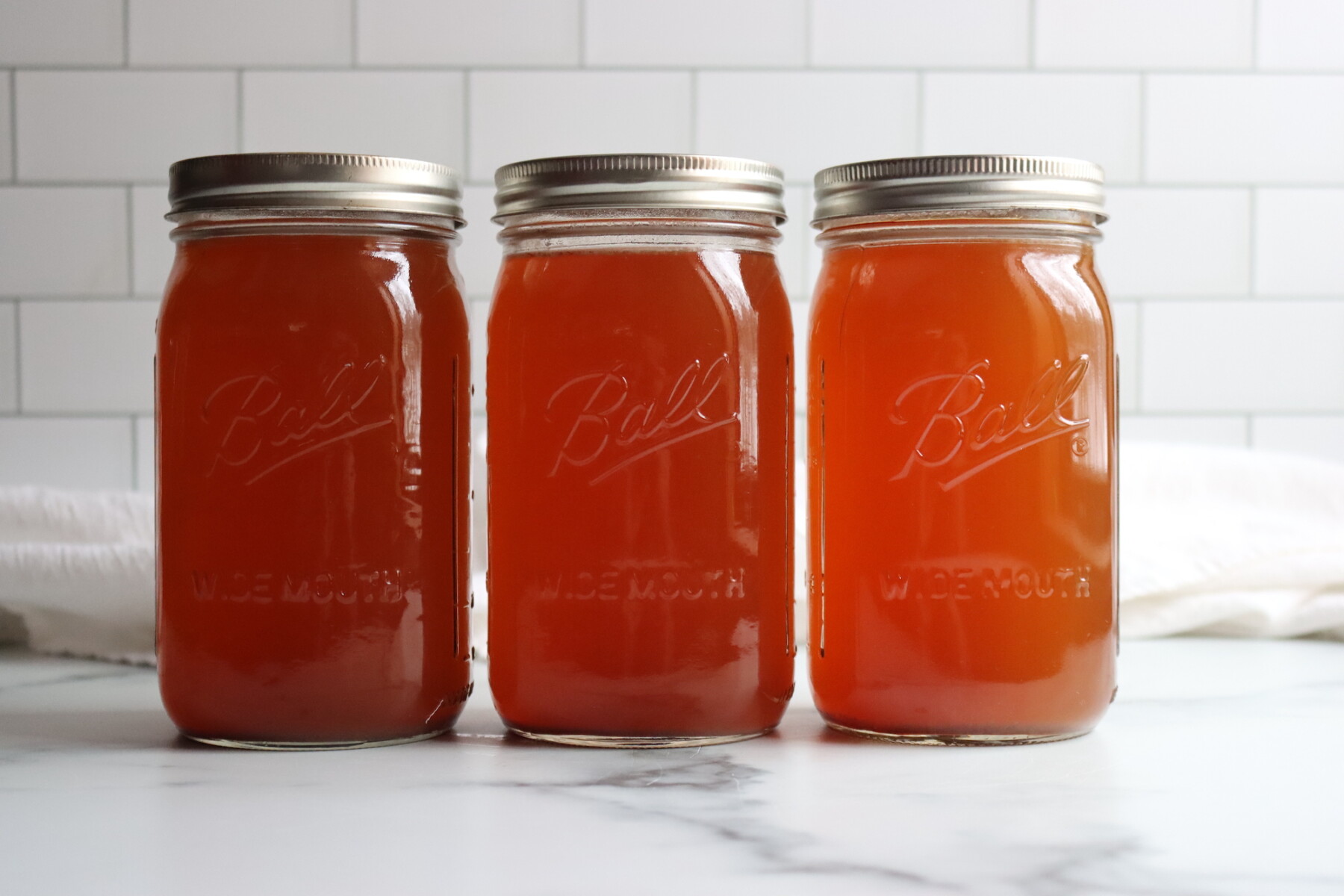
Vegetable broth is a little different from meat stock, both in flavor and in canning time. It’s a great way to use up vegetable scraps but it still benefits from a little care. For the best color and cleanest flavor, it helps to use peeled vegetables and to avoid letting strong brassicas or too many bitter scraps dominate the pot.
Even though it’s also a fully strained broth, vegetable broth is processed longer than meat stock in tested recipes. Bernardin’s tested vegetable stock recipe uses 30 minutes for pints and 35 minutes for quarts in a pressure canner. So while the method is very similar to canning beef or chicken broth, the timing is not interchangeable.
You can make specialty vegetable broths like onion broth or pumpkin broth by choosing your vegetables carefully.
- Classic Vegetable Broth
- Onion Broth
- Pumpkin Guts Stock (a zero waste approach to making broth with pumpkin “guts”)
- Corn Cob Stock (doesn’t include canning instructions, but use generic vegetable stock instructions)
Mushroom Broth Canning Recipes
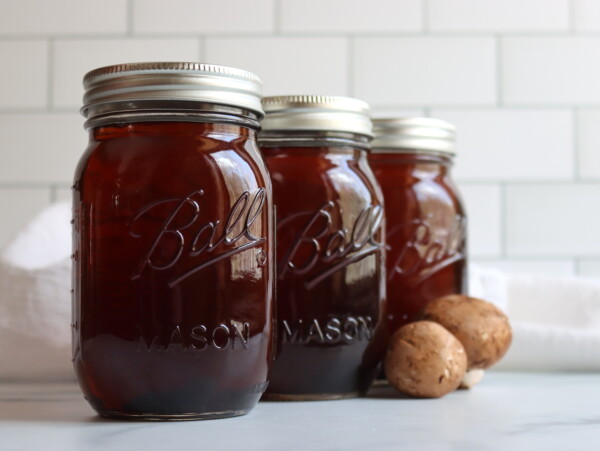
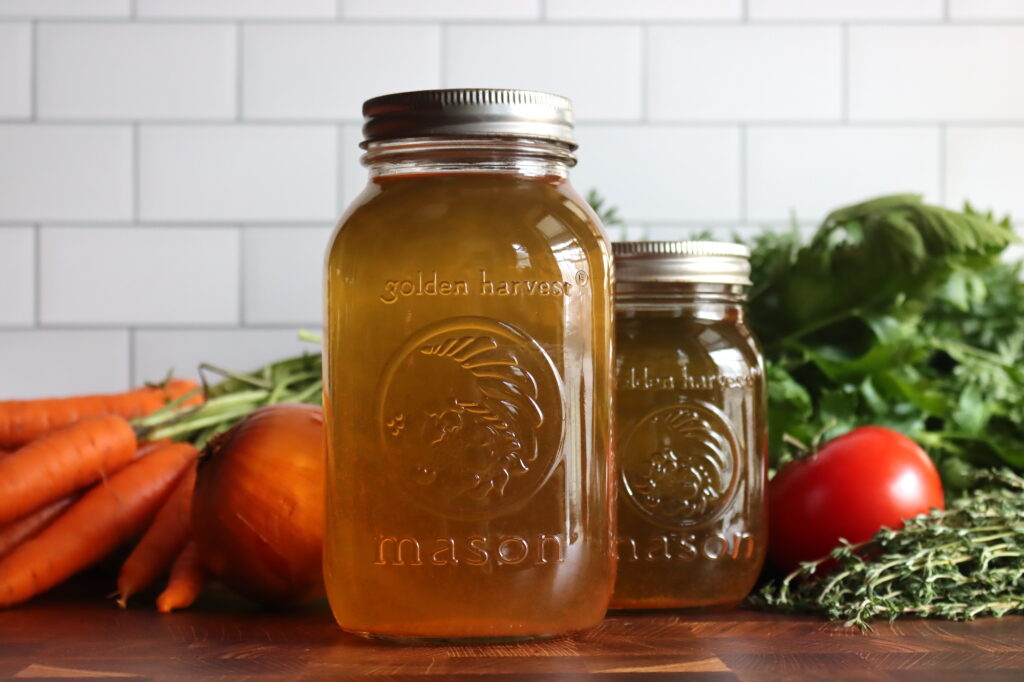
Mushroom broth makes a wonderfully deep, savory pantry staple, especially if you cook a lot of risotto, gravy, pan sauces, ramen, or vegetarian soups. It has a much earthier flavor than standard vegetable broth, and it’s one of those specialty broths that feels surprisingly luxurious for something made mostly from stems, trimmings, and a long simmer.
The NCHFP does not have a specific recipe for canning mushroom broth, but they note that broths for specific ingredients can be canned using the same times as canning the item itself.
There is a tested NCHFP process for canning mushrooms, and that process is 45 minutes for half-pints or pints in a pressure canner.
Given that, you can pressure can a fully strained mushroom broth using the same mushroom timing, not the shorter meat-stock timing or vegetable broth timing. It’s also worth noting that the tested mushroom process is for half-pints and pints only, not quarts.
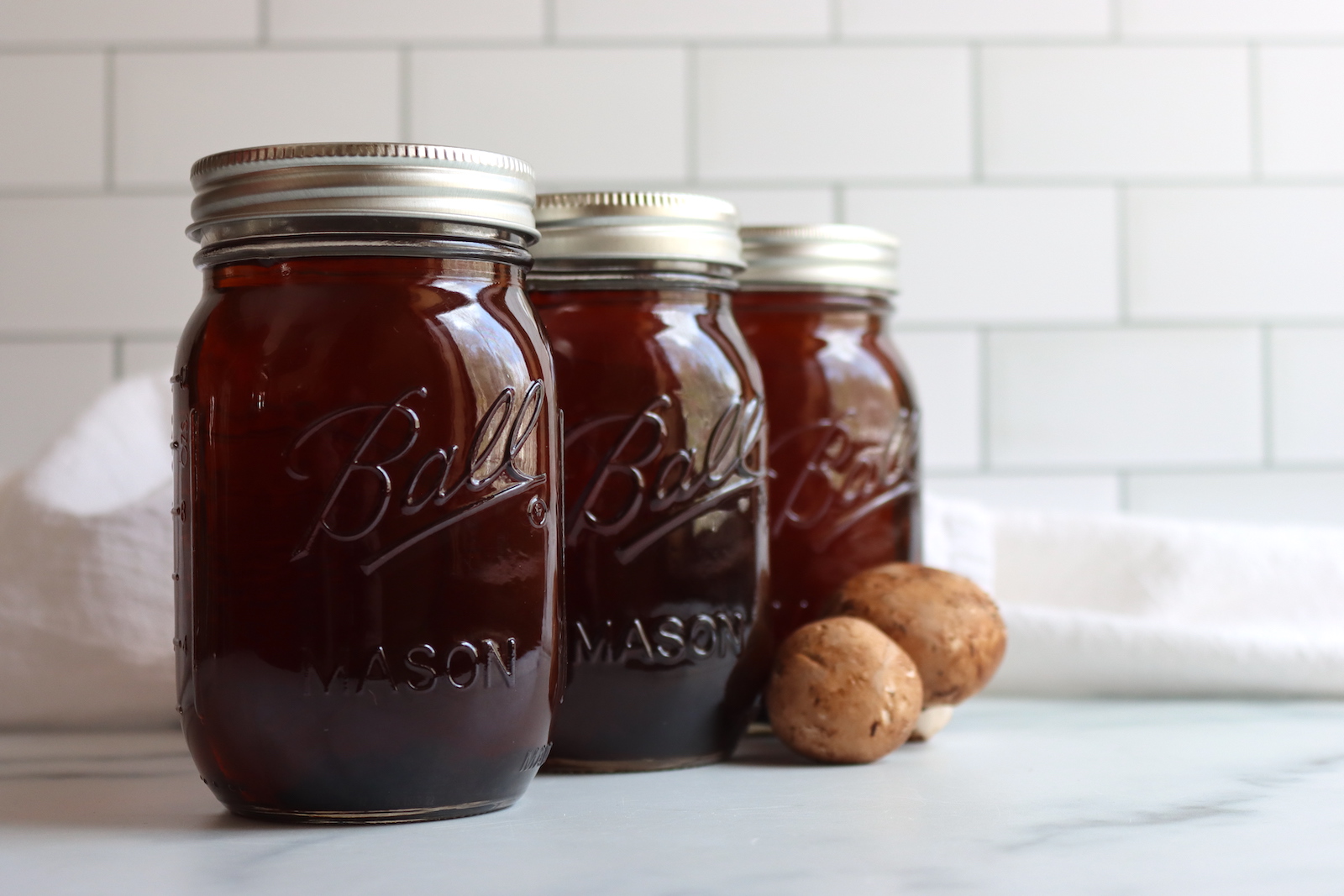
Broth and stock canning recipes may not be the most glamorous jars in the pantry, but they’re some of the most useful. Once you start putting up homemade broth, it’s amazing how often you reach for it, whether you’re making soup, cooking beans or rice, building a quick sauce, or just trying to get dinner on the table without starting from scratch.
What I especially love about these recipes is that they help you make the most of what you already have. Roast bones, kitchen trimmings, mushroom stems, leftover rib bones, holiday turkey carcasses, or venison bones can all turn into something genuinely practical.
If you’re building a from-scratch pantry, broth is one of the smartest places to start.
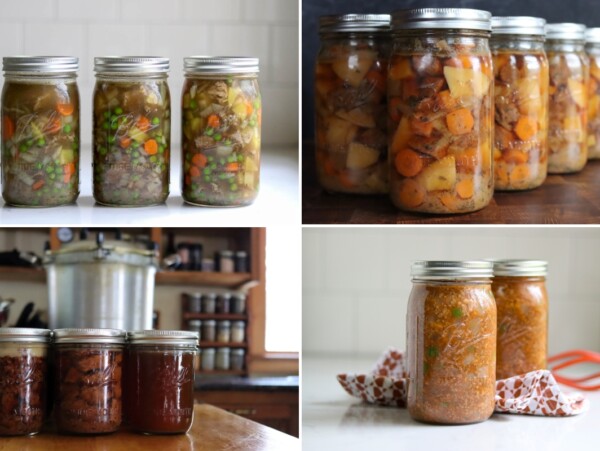
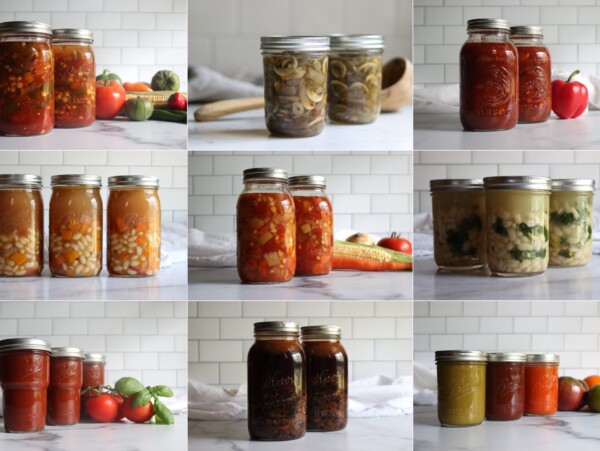
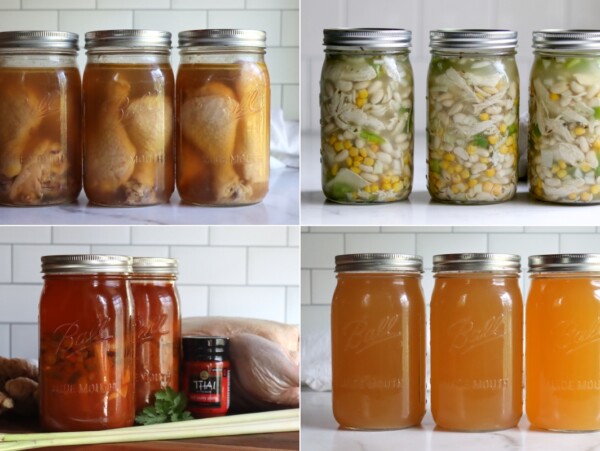
Canning Recipe Lists
Find the perfect recipe
Searching for something else? Enter keywords to find the perfect recipe!