This post may contain affiliate links. Please see our disclosure policy.
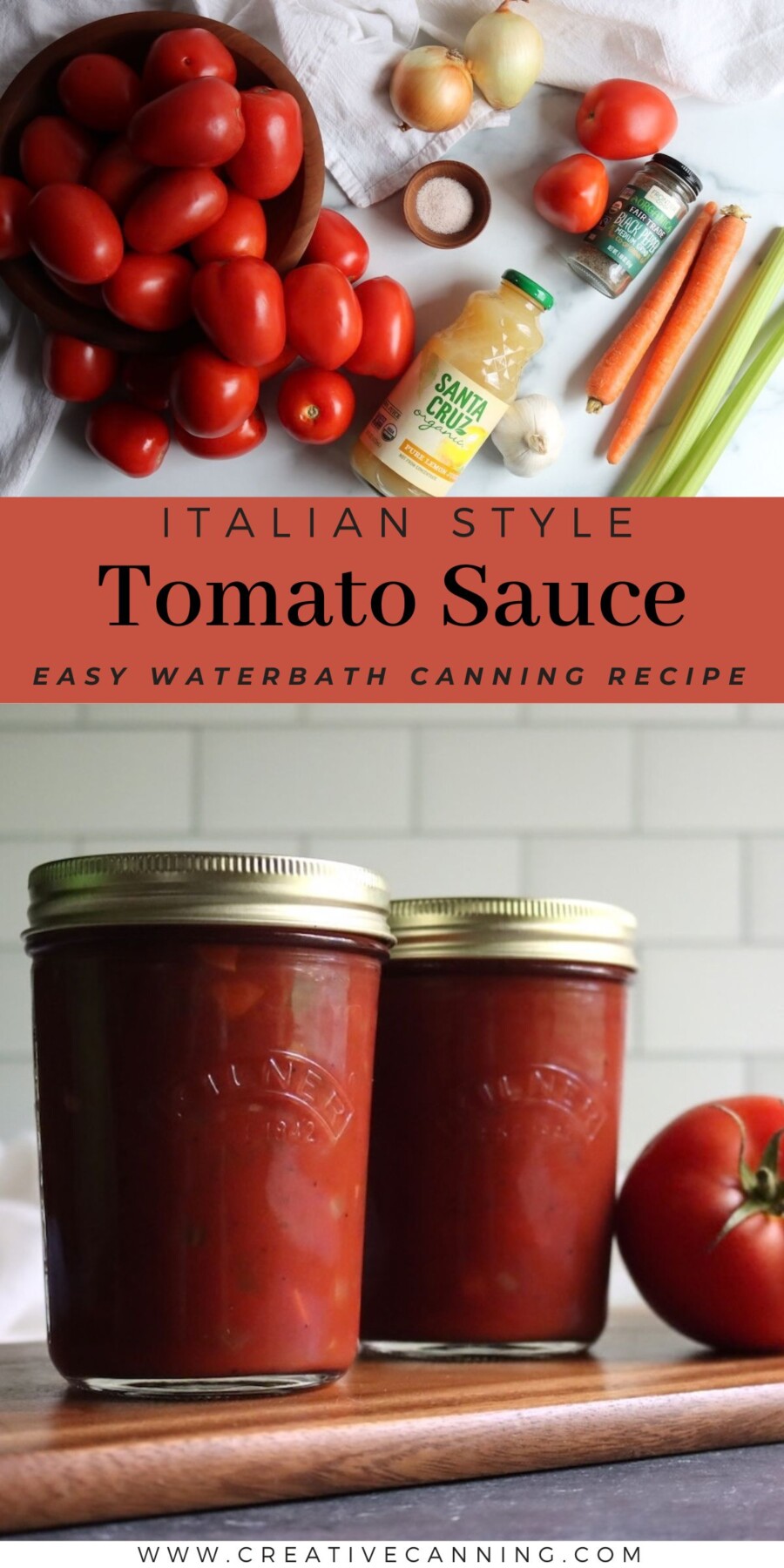
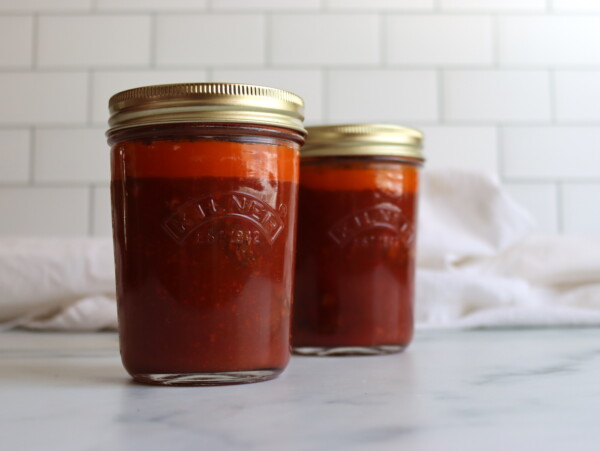
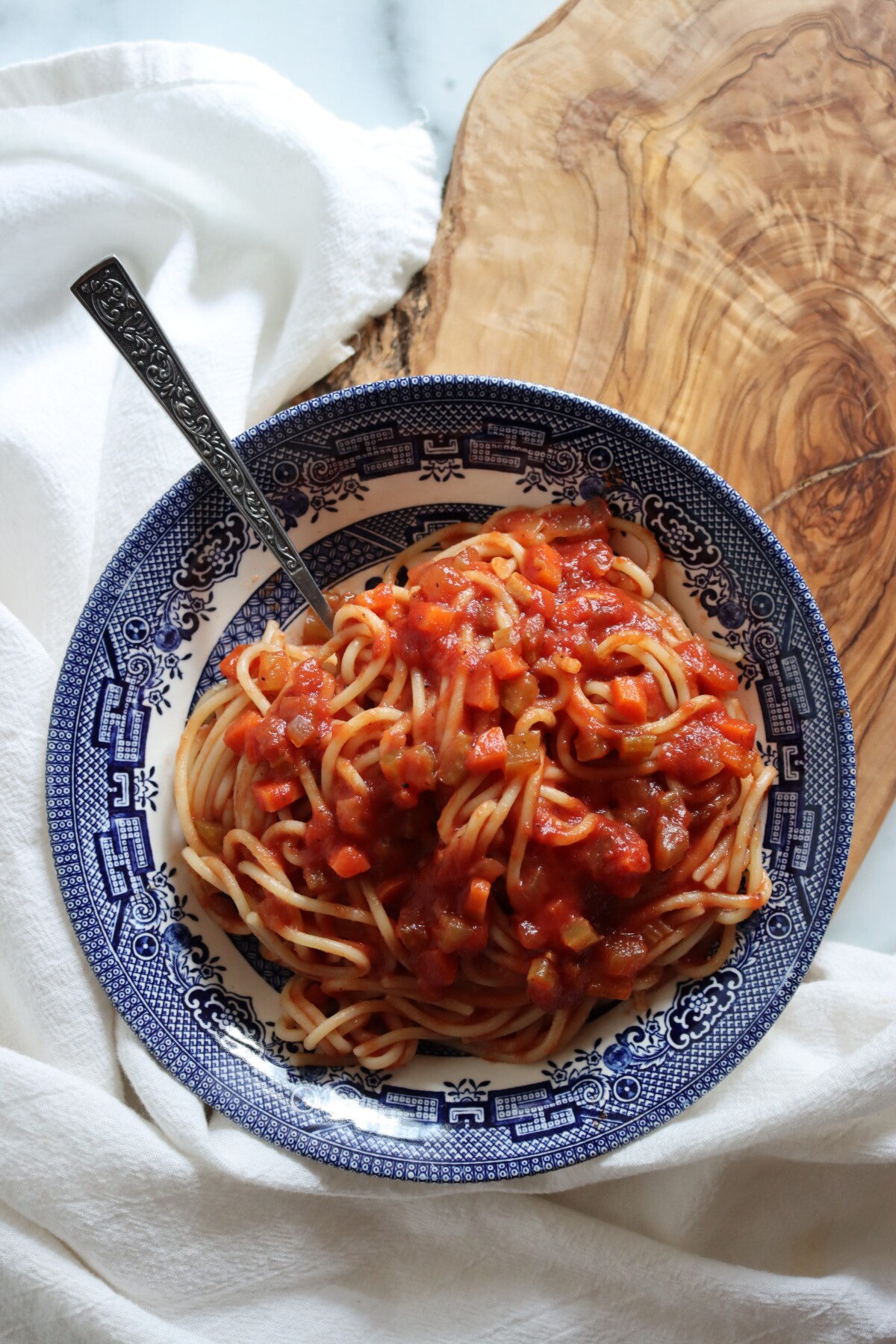
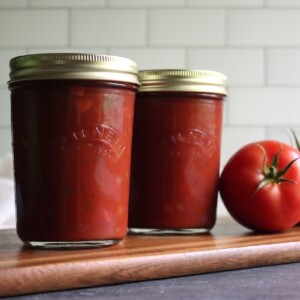
Italian-style tomato sauce is a classic seasoned tomato sauce that’s popular in Italian home kitchens. It has garlic, finely chopped carrot and celery vegetables, giving it plenty of flavor, so spaghetti night is just a jar and a box of pasta away.
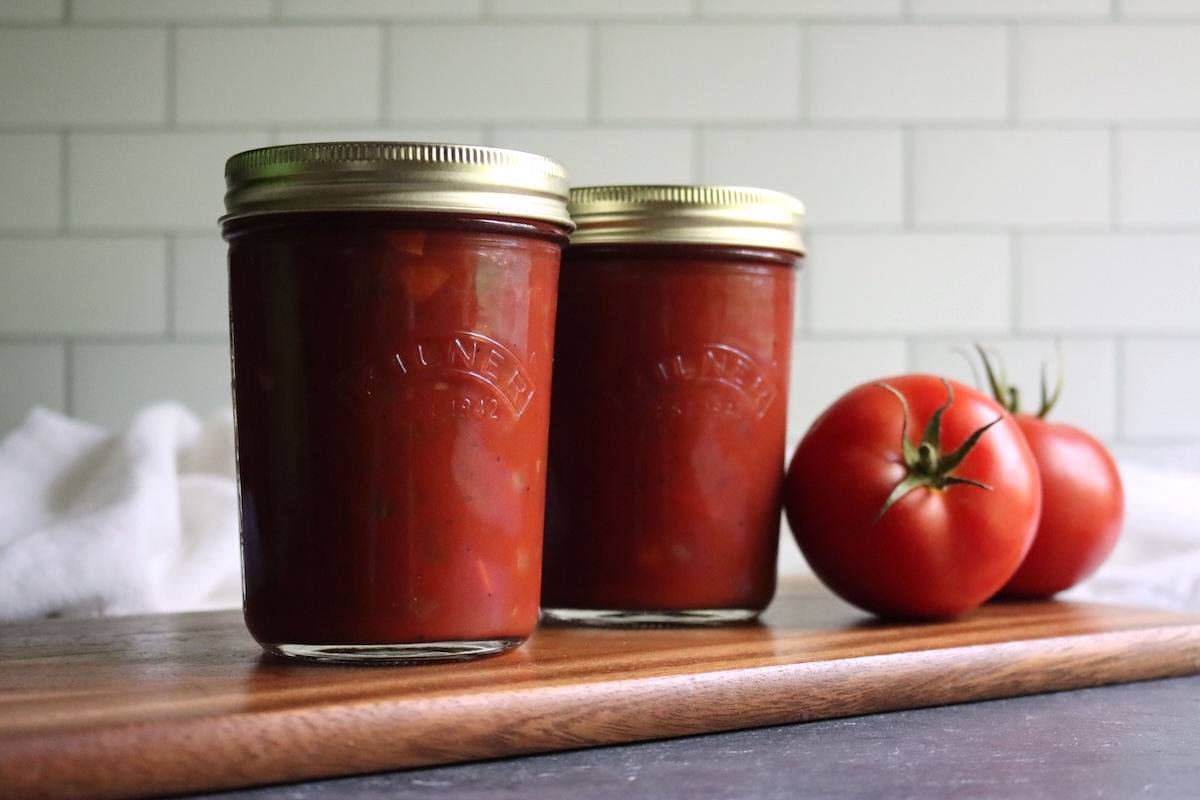
Table of Contents
- Notes from My Kitchen
- Quick Look at the Recipe
- Fresh Tomatoes or Passata
- Ingredients for Italian-Style Tomato Sauce
- Italian-Style Tomato Sauce Notes
- How to Make Italian-Style Tomato Sauce
- Canning Italian-Style Tomato Sauce
- Altitude Adjustments
- Ways to Use Italian-Style Tomato Sauce
- Storage and Shelf Life
- Yield Notes
- Italian-Style Tomato Sauce FAQs
- Tomato Canning Recipes
- Italian-Style Tomato Sauce Recipe
- Savory Sauce Canning Recipes
This recipe has been reviewed for safety and accuracy by a Master Food Preserver certified through the University of Cornell Cooperative Extension.
This sauce is mostly tomatoes, with a little onion, celery, carrot, and garlic cooked in, plus a pinch of hot pepper flakes. It’s nothing fancy, and it goes with just about any pasta.
Onion, celery, and carrot are the classic Italian soffritto, the base of a lot of sauces and soups. They’re chopped fine and simmered right in the tomatoes. They soften but don’t disappear, so you get little flecks of vegetable all through the sauce.
You can start with fresh paste tomatoes from the garden or with store-bought passata, which is just tomatoes that have been puréed and strained. I used passata for this batch, and it cuts the prep down to chopping a few vegetables.
This is a tested recipe adapted from the Ball Complete Book of Home Preserving, and it’s designed as an easy water bath canning recipe. It’s one of a long list of pasta sauce recipes for canning, so you can fill the shelf with a few different ones.
If you’d rather roast your tomatoes first, my roasted marinara sauce is the one to make. And if the garden is handing you more than sauce tomatoes, there are plenty more tomato canning recipes to work through.
Notes from My Kitchen

I lived in Italy as a student in college, staying with a host family, and this is the type of simple tomato sauce I ate there all the time. They’ll often bring you a primo piatto, or first course, of pasta with a sauce like this before the main dish.
My host mother always brought me a plate of it as the first thing at dinner, and once I’d finished, the rest of the meal came out. Multi-course meals aren’t as standard here in the US, but there it’s just part of the way of life. This sauce is pretty much exactly what she served me, and it’s delicious.
Quick Look at the Recipe
- Recipe Name: Italian-Style Tomato Sauce
- Recipe Type: Seasoned tomato sauce, acidified with bottled lemon juice
- Canning Method: Water Bath Canning
- Prep Time: About 20 minutes with passata, or about 45 minutes if you’re milling fresh tomatoes
- Cook Time: About 25 minutes, depending on how fast your pot reduces
- Canning Time: 35 minutes for pints or half pints
- Yield: About 3 pints
- Jar Sizes: Pints or half pints
- Headspace: 1/2 inch
- Ingredients Overview: Plum tomato purée or passata, onion, celery, carrot, garlic, bottled lemon juice, salt, black pepper, and hot pepper flakes
- Safe Canning Recipe Source: Ball Complete Book of Home Preserving
- Difficulty: Easy, especially with store-bought passata
- Similar Recipes: Eggplant puttanesca sauce is another Italian sauce from the Ball book, and roasted marinara sauce and roasted cherry tomato sauce have herbs cooked in. Heirloom tomato sauce and plain canned tomato sauce are the unseasoned options, and spaghetti sauce without meat is the pressure-canned sauce with more vegetables.
Fresh Tomatoes or Passata
This sauce starts with smooth tomato purée. You can make it yourself from fresh tomatoes, or you can open a few bottles of store-bought passata.
Passata is the Italian name for puréed, strained tomatoes. Most grocery stores carry it now, usually in tall glass bottles near the canned tomatoes. Look for plain passata, with tomatoes and maybe salt on the label, and skip any with oil or garlic already in it.
For fresh purée, use paste tomatoes if you can. Roma, San Marzano, and Amish Paste all have meaty walls and small seed cavities. That means more purée per pound, and less time boiling it down.
Rutgers is another good sauce tomato, and there’s a guide to choosing tomatoes for canning if you’re planning next year’s garden. Slicing tomatoes work too, but they carry a lot more water. You’ll need more of them, and the purée will be thinner.
Whatever you use, pick fully ripe tomatoes and cut away any bruised or soft spots. Don’t use tomatoes from vines that were already killed by frost. That’s USDA guidance for any canned tomato product, and it matters here in Vermont in the fall, when the last of the crop comes in all at once.
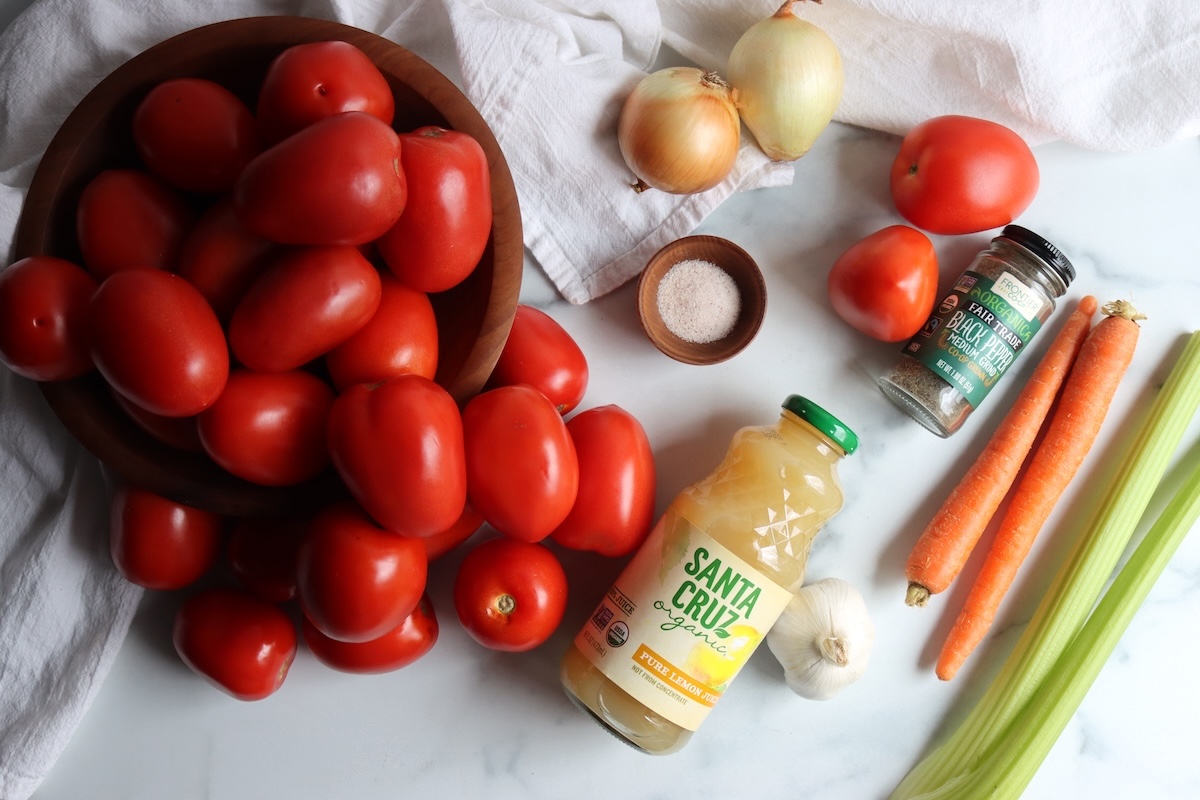
Ingredients for Italian-Style Tomato Sauce
The ingredient list is short: tomatoes, the three soffritto vegetables, garlic, lemon juice, and seasoning.
- Tomato purée or passata: Either fresh paste tomatoes run through a food mill, or plain store-bought passata. Measure it before it goes in the pot, because the recipe is built on the volume of purée rather than the weight of the tomatoes.
- Onion: Yellow or white, chopped fine. Small pieces turn tender in the time it takes the sauce to cook down.
- Celery: Chopped as fine as the onion. It adds the savory note that makes this taste like an Italian red sauce instead of plain tomato.
- Carrot: Peeled and chopped fine. It adds a little sweetness to balance the lemon juice, and it’s where those little orange flecks come from.
- Garlic: Fresh cloves, chopped fine. Jarred minced garlic is fine if that’s what you keep on hand.
- Bottled lemon juice: This is the acid that makes the sauce safe for a water bath canner. It has to be bottled lemon juice, since fresh lemons vary too much in acidity.
- Salt: For flavor only, so you can cut it back or leave it out, and go light if your passata is already salted. Canning and pickling salt dissolves cleanly, and there’s more on that in my guide to pickling salt and its substitutions.
- Black pepper and hot pepper flakes: Seasoning only. Use less of the flakes for a mild sauce, or skip them.
Everything except the seasonings is fixed. The vegetables and lemon juice were measured together, and that balance determines the processing time.
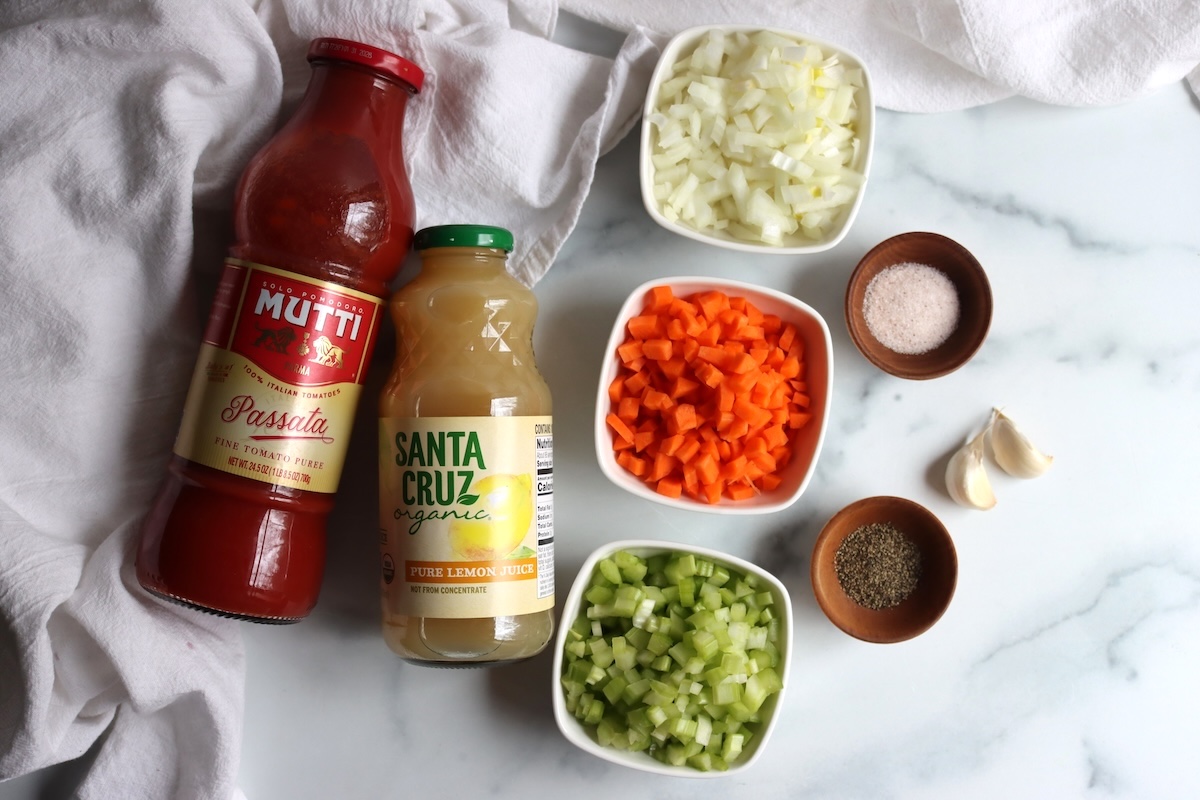
Italian-Style Tomato Sauce Notes
The bottled lemon juice is the safety control here. Onion, celery, carrot, and garlic are all low-acid vegetables, and the lemon juice brings the whole pot back into water bath territory. My guide to acidifying tomatoes for home canning explains how that works.
You can’t add vegetables either. More onion or celery, or an added vegetable like peppers or mushrooms, throws off that balance. If you want a sauce with more vegetables, spaghetti sauce without meat is a pressure canning recipe built for exactly that.
Salt, black pepper, and hot pepper flakes are seasonings, so adjust those however you like.
Just don’t cut the lemon juice!
How to Make Italian-Style Tomato Sauce
This is a simple recipe. Make the purée or open the passata, put everything in one pot, cook it down a little, and can it.
Start the canner before you start on the sauce. A full water bath canner takes a long time to come to a boil, and you want it ready when the sauce is.
Make the Tomato Purée
If you’re using passata, skip ahead to cooking the sauce. For fresh tomatoes, wash them, cut out the cores, and cut them into quarters.
Simmer the quartered tomatoes for a few minutes until they’re soft, then run them through a food mill to remove the skins and seeds. Heating them first speeds up the milling and helps keep the finished sauce from separating in the jar.
A hand-crank mill handles a batch this size, and the KitchenAid food mill attachment is quicker if you’re doing a lot of tomatoes. If you’ve never used one, it works the same way as making applesauce with a food mill.
No food mill? Peel the tomatoes, squeeze out the seeds, and purée them in a blender or food processor instead.
Measure the purée once it’s done. Put any extra in the freezer for the next batch.
Cook the Sauce
The Ball recipe has you soften the vegetables in a little purée and then add the rest a bit at a time. I skip that and pour everything into a large stainless steel pot at once: the purée or passata, onion, celery, carrot, garlic, lemon juice, salt, black pepper, and hot pepper flakes.
Again, don’t skip or reduce the lemon juice. It’s what makes this sauce safe to can.
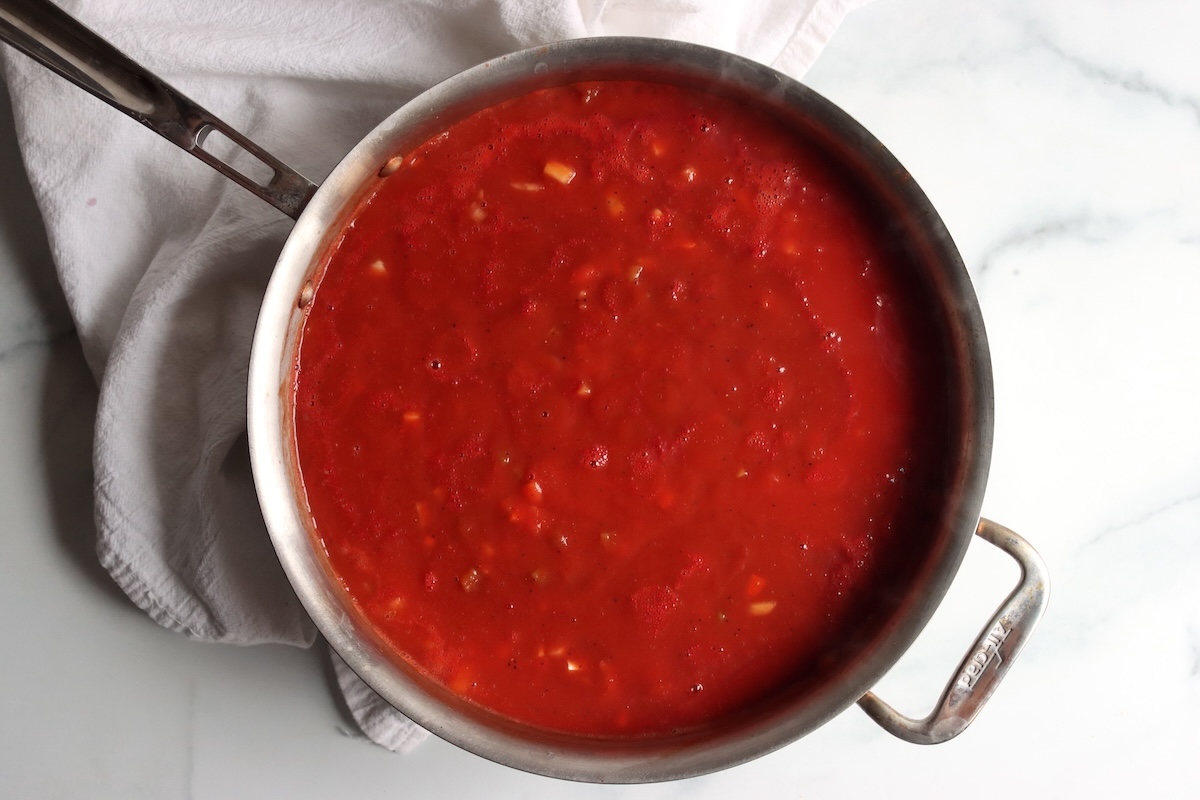
Bring it to a boil over medium-high heat, stirring often. Then turn the heat up and boil it hard, still stirring, until the sauce is reduced by about a third and thickened slightly. That takes about 15 minutes.
Go by the volume rather than the clock. In a deep stock pot it can take quite a bit longer, and a wide pot like a large Dutch oven boils down much faster. Stir more as it thickens, since tomato sauce scorches easily once it’s reduced.
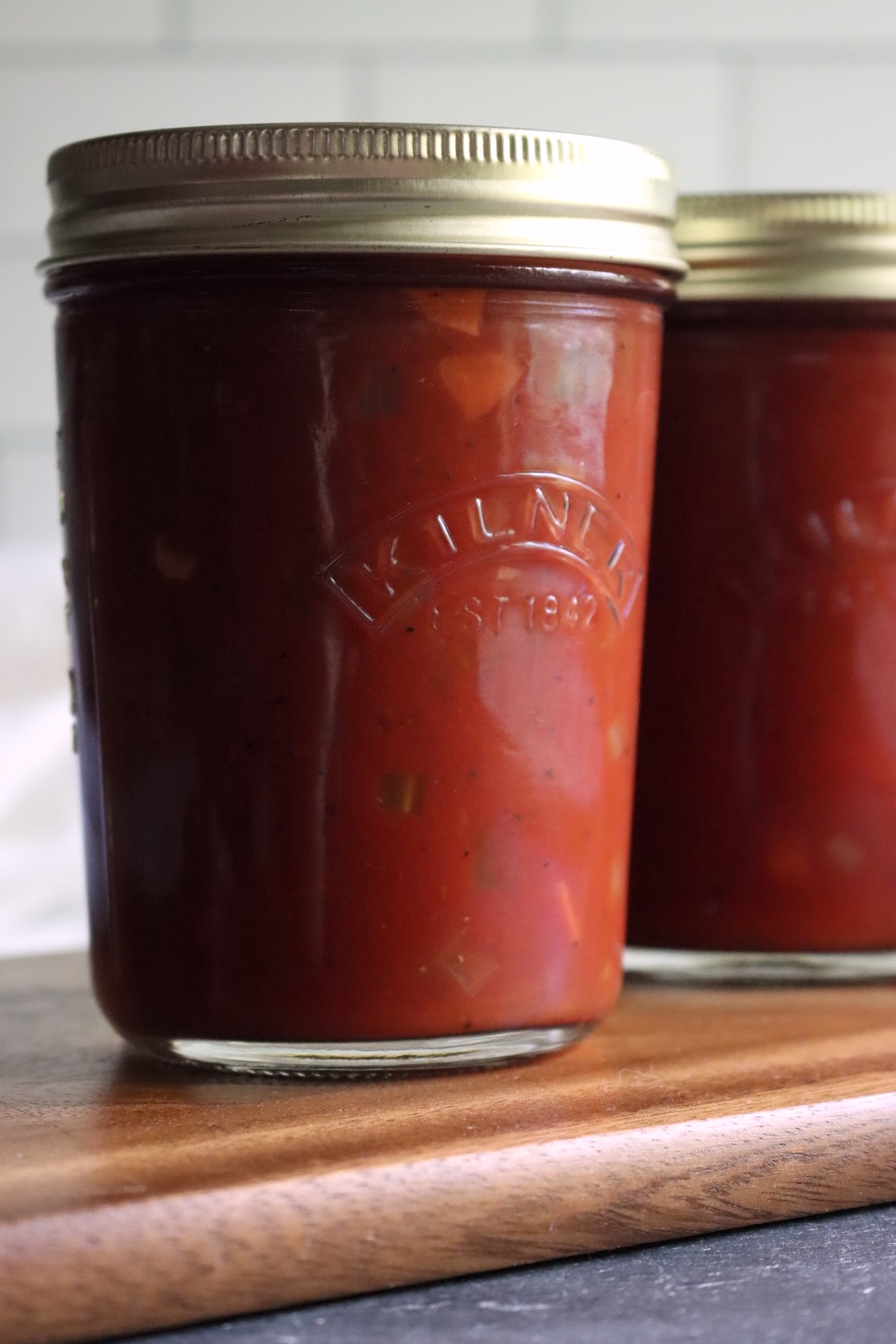
When it’s done, the vegetables are tender but still in small pieces. That’s how it should look.
Canning Italian-Style Tomato Sauce
Keep your jars hot and waiting in the canner or in simmering water. A canning funnel keeps sauce off the rims, saving you from wiping every jar.
Ladle the hot sauce into hot jars, leaving 1/2 inch headspace. Run a bubble tool around the inside to release trapped air, check the headspace again, and wipe the rims clean. Set the lids on and screw the bands down fingertip tight.
Process pints or half pints for 35 minutes in a boiling water bath canner, with the water covering the jars by at least an inch. Adjust for altitude using the chart below if you’re above 1,000 feet.
When the time is up, turn off the heat and remove the canner lid. Let the jars sit in the water for 5 minutes before you lift them out with a jar lifter. Cool them on a towel for 12 to 24 hours without moving them, then check the seals.
Altitude Adjustments
Water above 1,000 feet boils cooler, so the jars need longer in the canner. These are the water bath processing times for pints and half pints.
- 0 to 1,000 feet: 35 minutes
- 1,001 to 3,000 feet: 40 minutes
- 3,001 to 6,000 feet: 45 minutes
- 6,001 to 8,000 feet: 50 minutes
- Above 8,000 feet: 55 minutes
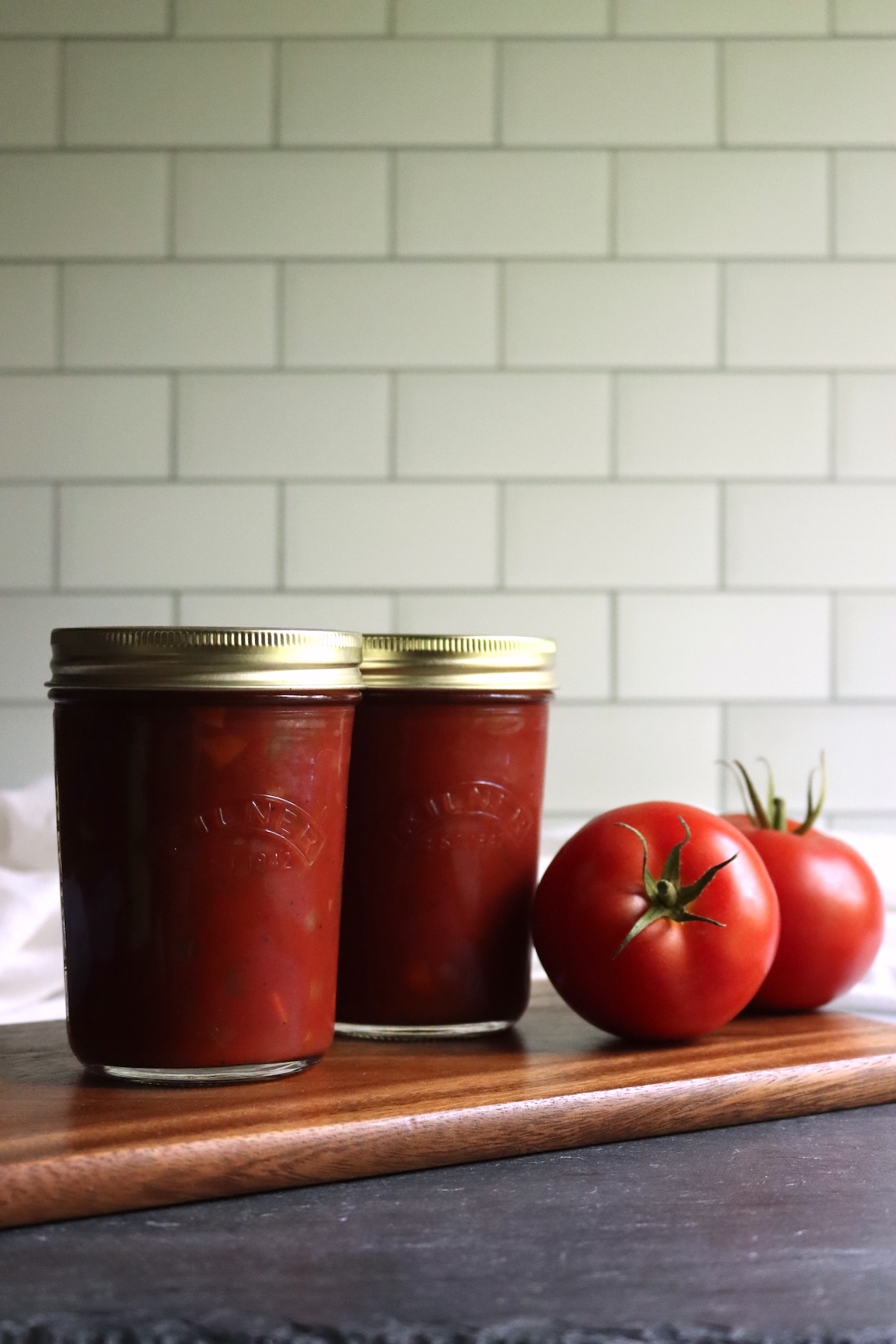
Ways to Use Italian-Style Tomato Sauce
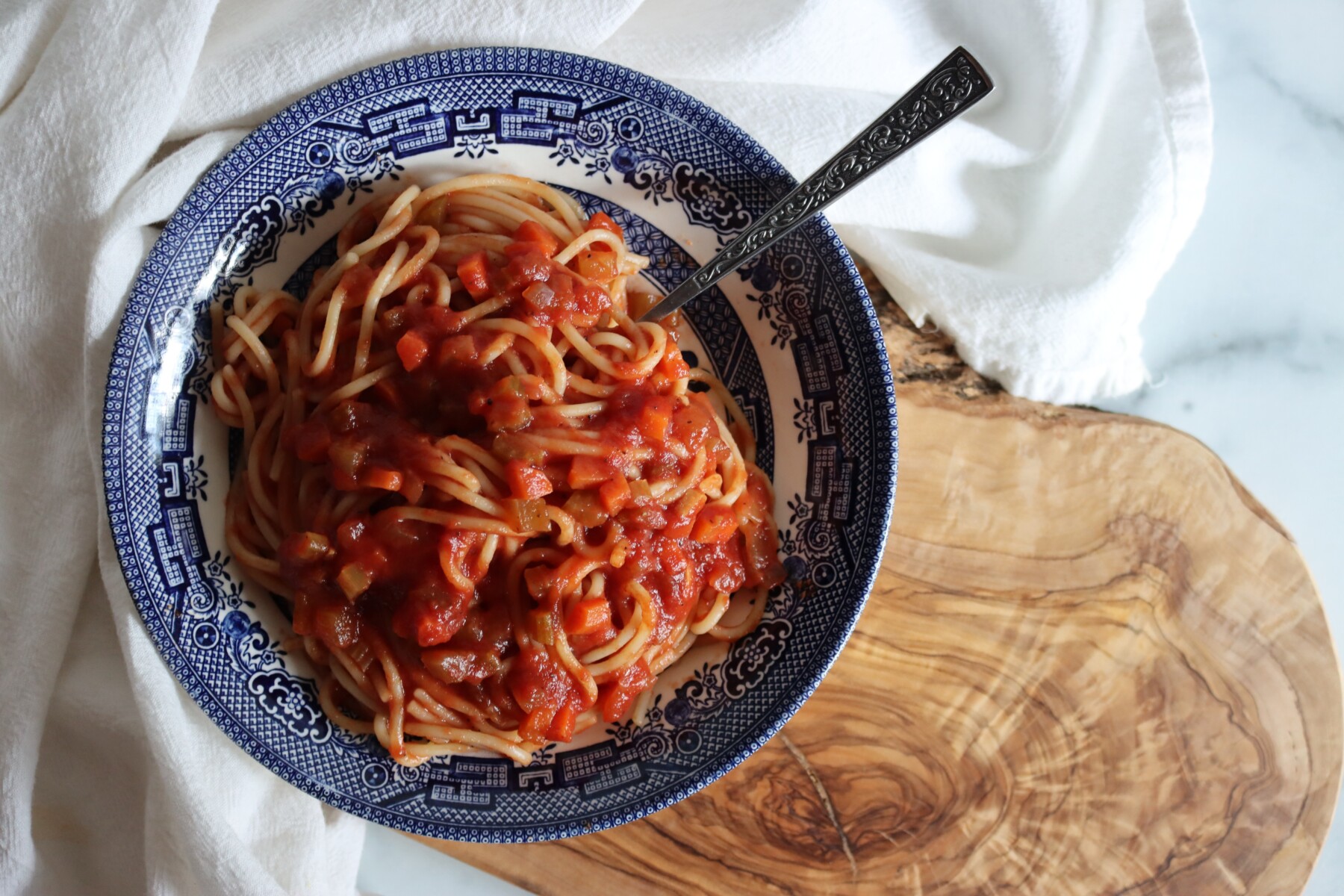
Heat a jar and toss it with spaghetti, and dinner is done. A handful of torn fresh basil and some parmesan on top is all it needs. It’s good enough to justify homemade pasta on a night when you have the time.
Or serve it the Italian way, as a small plate of pasta before the main course.
It works anywhere a red sauce does. Layer it into lasagna or baked ziti, spoon it over chicken or eggplant parmesan, or simmer it down a little further for pizza sauce. It’s also a quick way to dress up a jar of canned meatballs.
Fresh herbs are best added when you open the jar. Stir in basil, oregano, or a drizzle of good olive oil right before serving, and the sauce tastes like it was made that day.
Storage and Shelf Life
Once your jars are cool, press the center of each lid with a finger. A sealed lid doesn’t flex or pop back. Take the rings off before the jars go on the shelf, so a seal that lets go later is easy to spot.
Any jar that didn’t seal goes in the refrigerator and gets used within a week or so. You can also reprocess it within 24 hours with a new lid, and there’s more on that in my water bath canning guide.
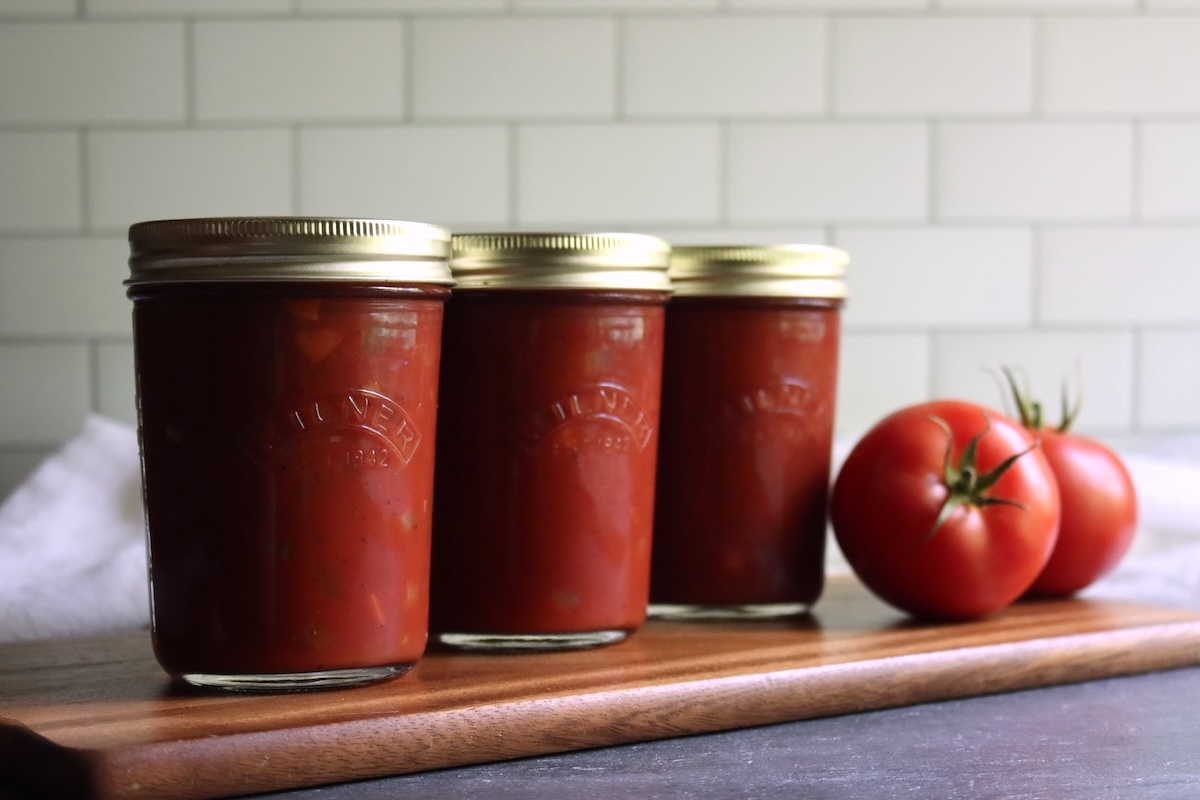
Sealed jars keep their quality for about 12 to 18 months in a cool, dark place. Label yours with the date, because a shelf full of red sauces all starts looking the same by February.
After you open a jar, refrigerate it and use it within 1 to 2 weeks.
Yield Notes
The book figures about 4 1/2 pounds of plum tomatoes to make 8 cups of purée. Juicier tomatoes give less, and a food mill always leaves some pulp behind, so have a few extra pounds on hand.
With passata, just measure out 8 cups. Most bottles hold a little under 3 cups, so plan on three.
My batch with passata made exactly 3 pints. Wash four jars anyway, since a partial jar at the end goes in the refrigerator instead of the canner. Halving or doubling the recipe is fine, though a doubled pot takes longer to cook down.
Italian-Style Tomato Sauce FAQs
Readers ask the same few questions on my other tomato sauce recipes: store-bought tomatoes, the lemon juice, adding peppers or other vegetables, jar sizes, and herbs.
Yes. Plain passata is just puréed, strained tomatoes, so it takes the place of the fresh purée cup for cup. That’s what I used for this batch, and it made exactly 3 pints. Skip any passata with oil or garlic in it, and keep the full amount of lemon juice.
No. The bottled lemon juice is what makes this sauce safe for a water bath canner, since the onion, celery, carrot, and garlic are all low-acid vegetables. Use the full amount, and use bottled rather than fresh. If the sauce tastes too tart, a pinch of sugar when you open the jar takes the edge off.
No. The vegetable amounts are balanced against the lemon juice, and adding more changes what the processing time was set for. If you want a sauce with more vegetables in it, spaghetti sauce without meat is a pressure canning recipe built for that.
No. Pints are the largest jar size Ball gives a process for with this sauce. You can use any jar smaller than a pint with the same 35-minute canning time, so half pints are fine.
Dried herbs are fine to stir in as seasoning, and canning recipes generally call for dried rather than fresh. That’s what I use when I add herbs to a canned sauce. Fresh basil is better added when you open the jar, because it loses its flavor and color in the canner anyway.
Tomato Canning Recipes
Still have tomatoes on the counter? Start here.
If you make a batch, I’d love to hear how it went.
If you tried this Italian-Style Tomato Sauce recipe, or any other recipe on Creative Canning, leave a ⭐ star rating and let me know what you think in the 📝 comments below!
And make sure you stay in touch with me by following on social media!
Italian-Style Tomato Sauce
Equipment
- Large stainless steel or enameled pot
- Canning Jars, Lids and Bands
- Bubble remover
Ingredients
- 8 cups plum tomato purée or passata, see notes
- 2/3 cup onion, finely chopped
- 2/3 cup celery, finely chopped
- 1/2 cup carrot, peeled and finely chopped
- 2 cloves garlic, finely chopped
- 4 Tbsp bottled lemon juice
- 2 tsp salt
- 1/2 tsp black pepper, freshly ground
- 1/2 tsp hot pepper flakes
Instructions
- Prepare the water bath canner, jars, and lids. Keep the jars hot until you’re ready to fill them.
- If using fresh tomatoes, wash, core, and quarter them, simmer until soft, then run them through a food mill to remove the skins and seeds. Skip this step if using passata.
- Measure the tomato purée or passata into a large stainless steel pot.
- Add the onion, celery, carrot, garlic, lemon juice, salt, black pepper, and hot pepper flakes.
- Bring to a boil over medium-high heat, stirring often.
- Boil hard, stirring often, until the sauce is reduced by about one third and slightly thickened, about 15 minutes.
- Ladle the hot sauce into hot jars, leaving 1/2 inch headspace.
- Release trapped air bubbles, check the headspace again, and wipe the rims clean.
- Set the lids on and apply the bands fingertip tight.
- Process pints or half pints in a boiling water bath canner for 35 minutes, adjusting for altitude (see notes).
- Turn off the heat, remove the canner lid, and let the jars rest for 5 minutes before lifting them out.
- Cool the jars undisturbed for 12 to 24 hours, then check the seals, remove the rings, label the jars, and store them in a cool, dark place.
Notes
- 0 to 1,000 feet: 35 minutes
- 1,001 to 3,000 feet: 40 minutes
- 3,001 to 6,000 feet: 45 minutes
- 6,001 to 8,000 feet: 50 minutes
- Above 8,000 feet: 55 minutes
Nutrition
Nutrition information is automatically calculated, so should only be used as an approximation.
Once the canner is out, it’s worth filling the rest of it. Here are more of my water bath canning recipes to go with it.
Savory Sauce Canning Recipes
More jars that go on dinner instead of on toast.
Looking for something a little different?
Find the perfect recipe
Searching for something else? Enter keywords to find the perfect recipe!