This post may contain affiliate links. Please see our disclosure policy.
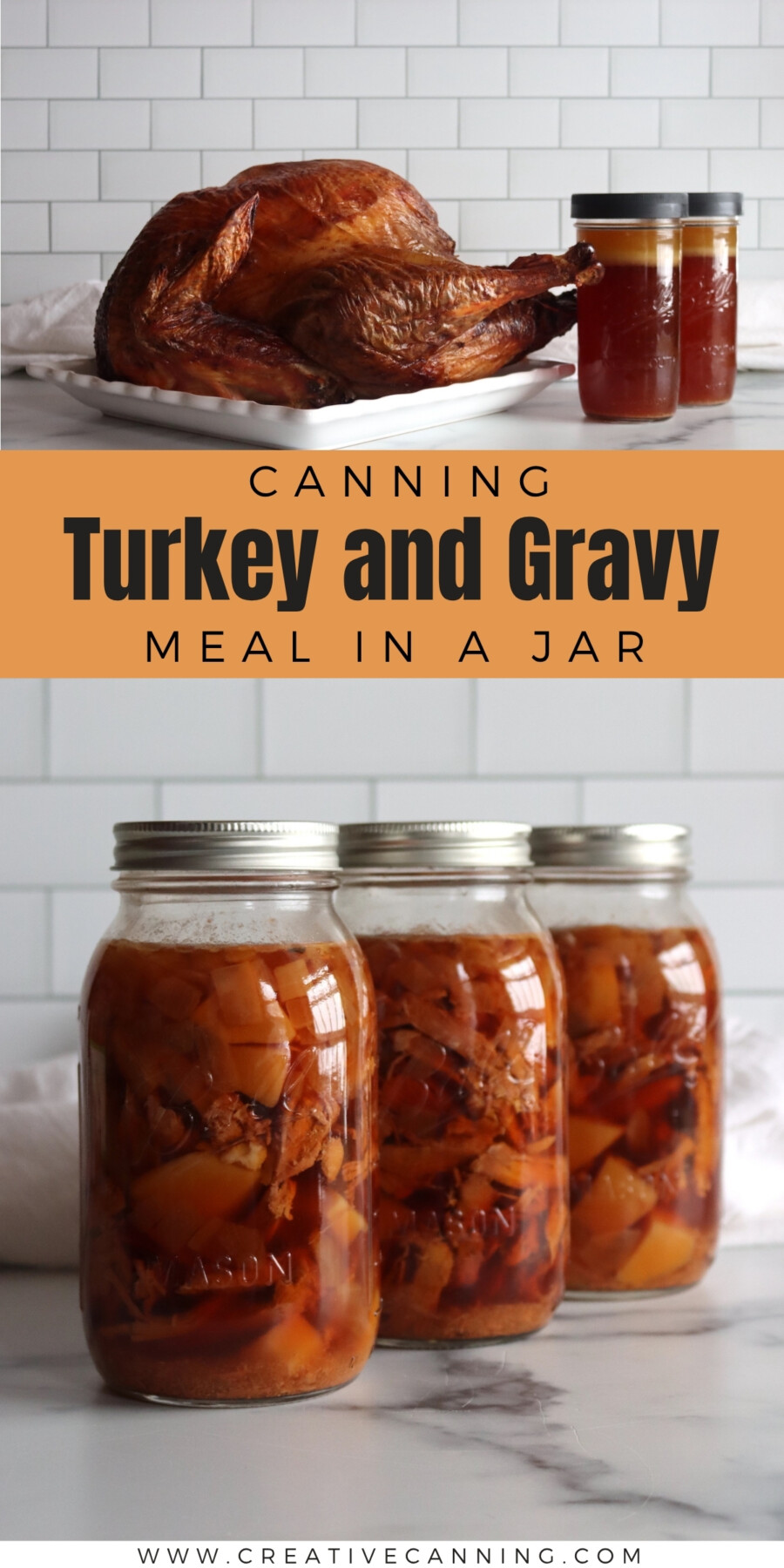
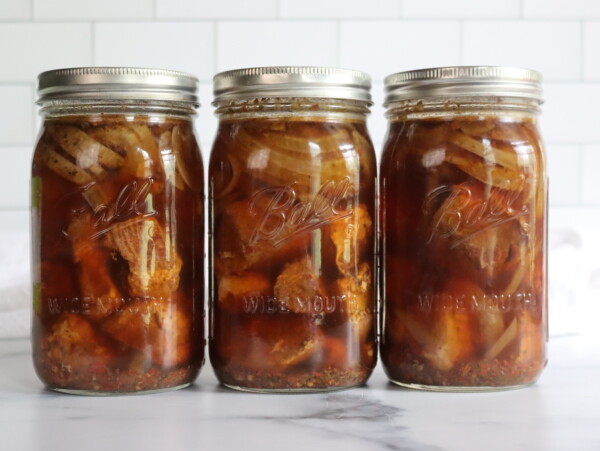
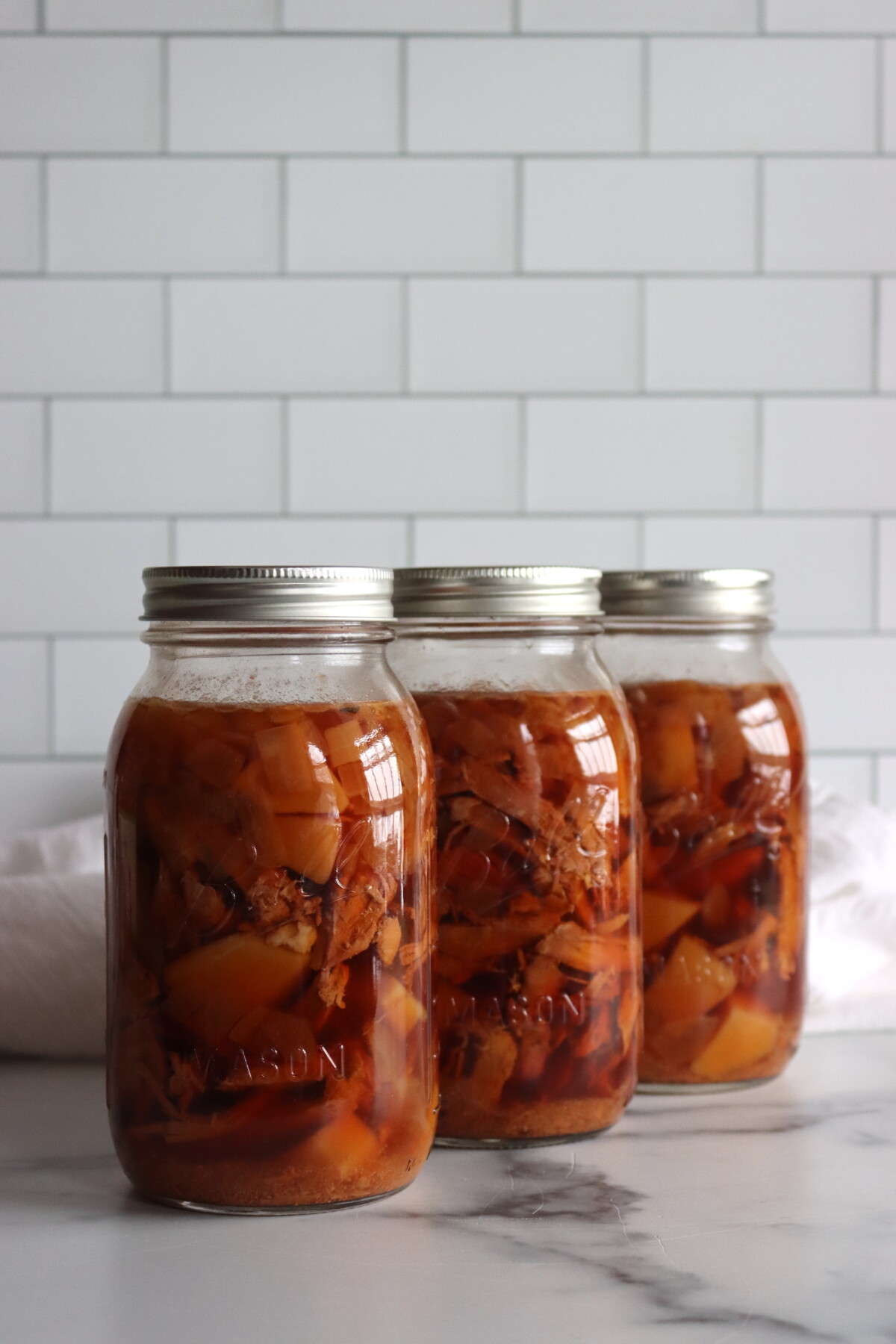
Canning turkey and gravy turns the last of the holiday bird into dinners for the pantry shelf. Shredded turkey, potatoes, and onions go into the jars in a seasoned broth. Open a jar, turn the broth into gravy, and you’ve got hot turkey and gravy on the table in about 15 minutes.
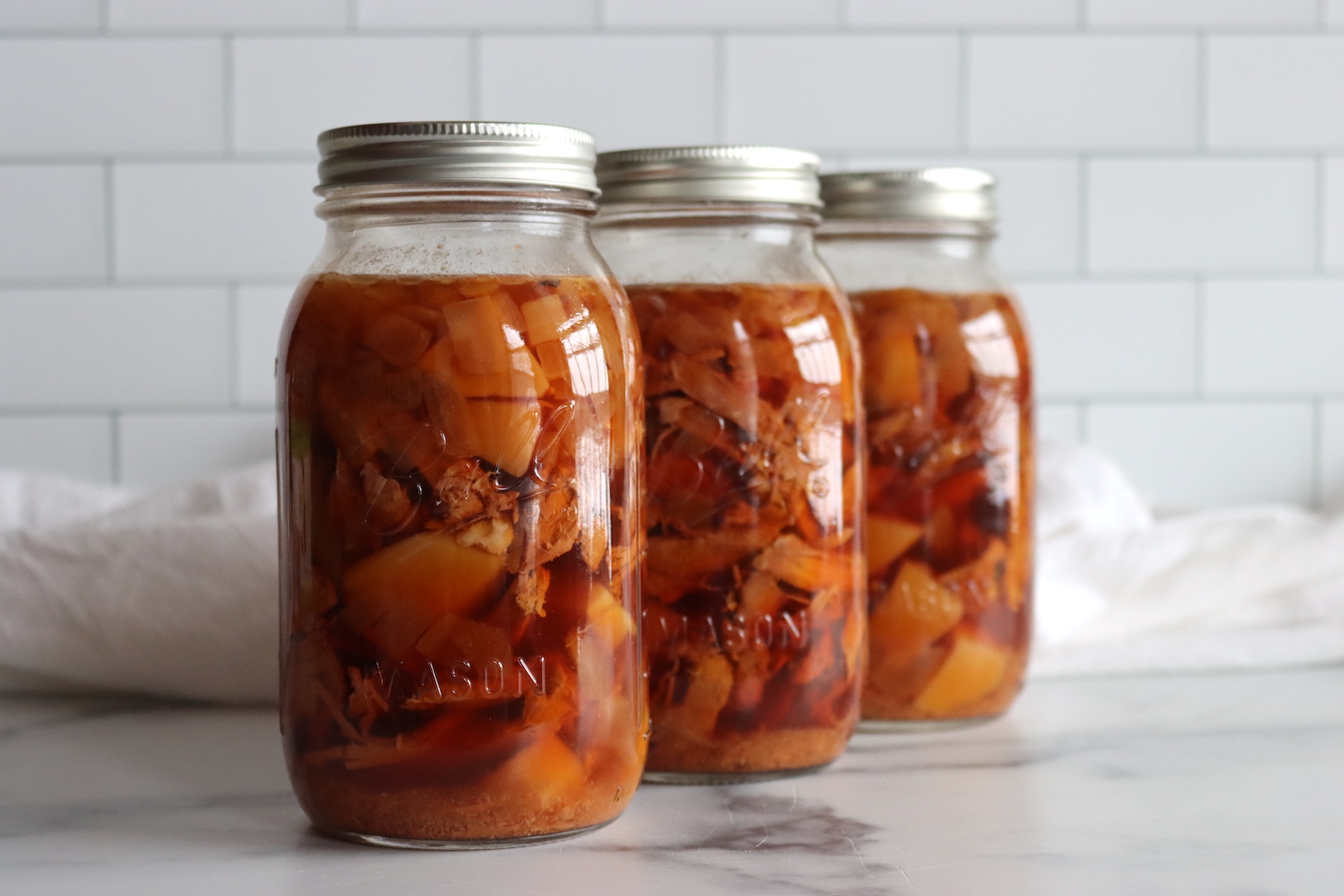
Table of Contents
- Notes from My Kitchen
- Quick Look at the Recipe
- Choosing Turkey for Canning
- Ingredients for Turkey and Gravy
- Turkey and Gravy Variations
- How to Make Turkey and Gravy for Canning
- Canning Turkey and Gravy
- Altitude Adjustments
- Serving Ideas for Turkey and Gravy
- Storage and Shelf Life
- Yield Notes
- Canning Turkey and Gravy FAQs
- Meal in a Jar Canning Recipes
- Canning Turkey and Gravy Meal in a Jar Recipe
- More Poultry Canning Recipes
This recipe has been reviewed for safety and accuracy by a Master Food Preserver certified through the University of Cornell Cooperative Extension.
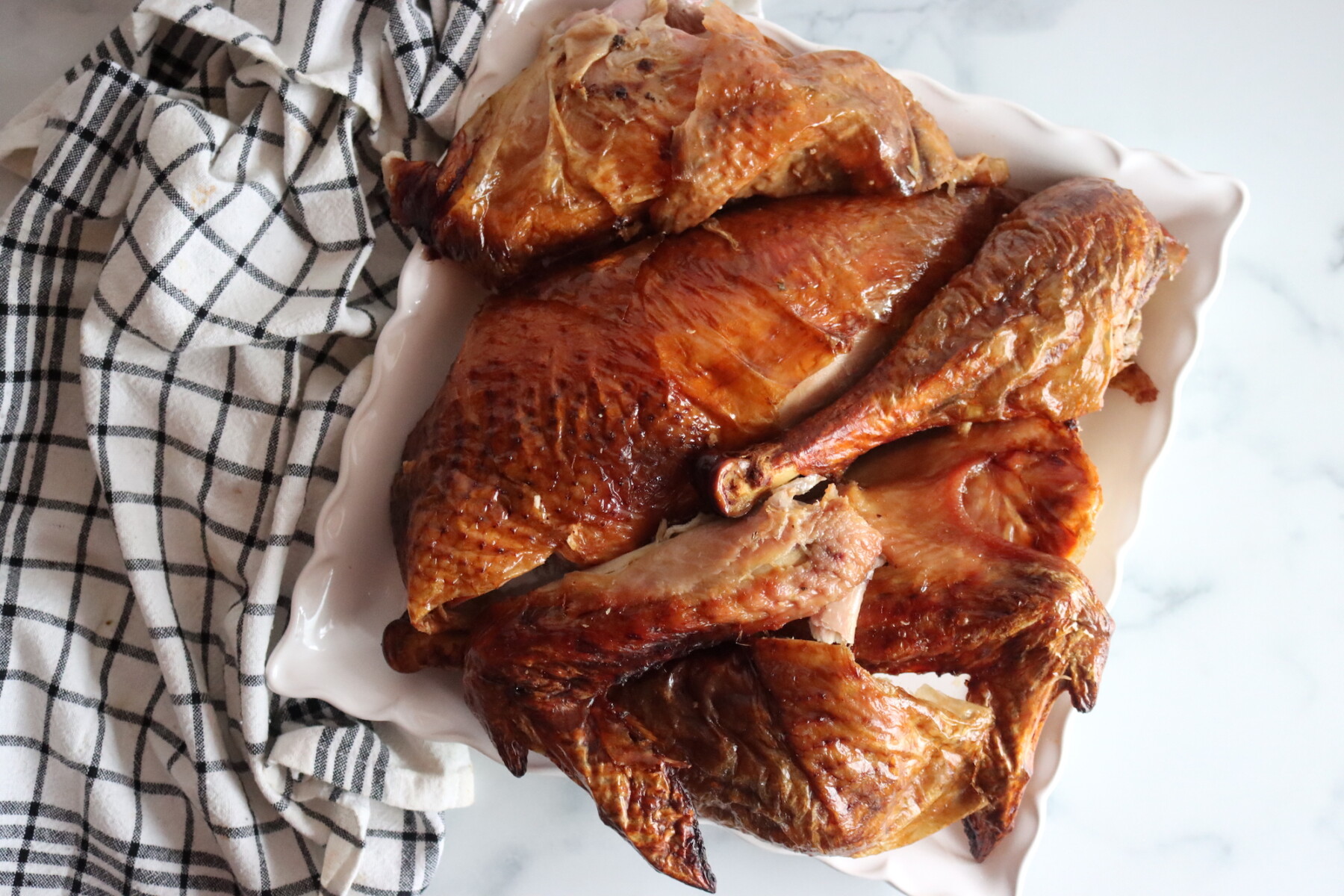
Hot turkey and gravy is the meal that comes after the big one. The holiday dinner gets all the attention, but turkey over mashed potatoes the next night, or piled on toast and smothered in gravy, is what a lot of us look forward to.
The trouble is that a whole turkey makes more leftovers than anyone can eat in a week. Putting them up in jars means no freezer burn, and the meat’s already cooked, so you’ve done most of the work before you start.
I adapted this recipe from the chicken and gravy in The All New Ball Book of Canning and Preserving, using cooked turkey in place of the chicken. My canning chicken and gravy is the original version, and it’s the one to make if you’re starting with raw chicken.
Turkey works in place of chicken in just about any chicken canning recipe, and gravy is the obvious place to start. If you’d rather put up plain jars of meat, there’s canning turkey, and the carcass goes into canning turkey broth.
When you want more ways to use the bird, I keep a list of turkey canning recipes. There are more than a hundred meal in a jar canning recipes for the rest of the shelf, too.
Notes from My Kitchen

I put up turkey the same way as chicken, and I’ve been working through turkey versions of my chicken meals in a jar. Readers have asked for a turkey tetrazzini for a couple of years now, and I want to get a turkey enchilada filling right too.
This one came first, made with the dark meat left over from our Thanksgiving turkey. It’s Ball’s chicken and gravy with turkey in place of the chicken, an extra cup of onion in place of the celery, and an extra cup of potato.
It tasted just like leftover Thanksgiving turkey, because it was. The other two are still in the works, but this one’s ready for your pantry.
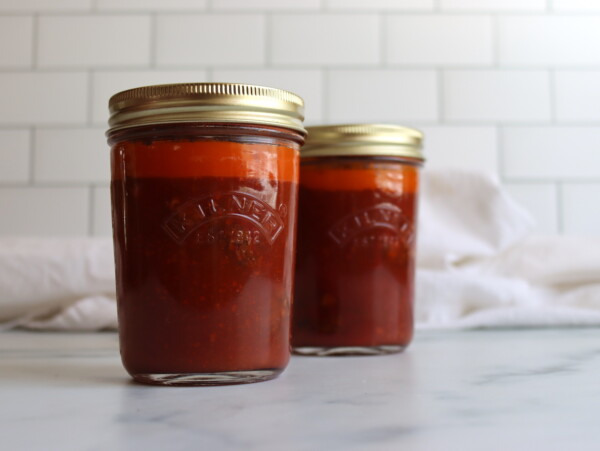
This one goes into the jars thin, with broth rather than gravy. You thicken it on the stove after you open a jar, and that only takes a few minutes.
Quick Look at the Recipe
- Recipe Name: Canning Turkey and Gravy Meal in a Jar
- Recipe Type: Meal in a Jar Canning Recipe (hearty pack)
- Canning Method: Pressure Canning
- Pack: Hot pack
- Prep Time: About 30 minutes
- Cook Time: About 15 minutes
- Canning Time: 75 minutes for pints, 90 minutes for quarts
- Yield: About 3 quarts or 6 pints
- Jar Sizes: Pints or quarts
- Headspace: 1 inch
- Ingredients Overview: Cooked turkey, potatoes, onions, broth, white wine, and seasonings
- Safe Canning Recipe Source: Adapted from Ball’s Chicken and Gravy Dinner in a Jar, The All New Ball Book of Canning and Preserving, first edition, pp. 274-275, packed hot under the hearty soup guidelines in University of Alaska Fairbanks Cooperative Extension Service FNH-00065, Canning Soups and Sauces
- Difficulty: Easy
- Similar Recipes: Other poultry meals in a jar work the same way, like canning chicken and gravy, chicken pot pie filling, and chicken and mushrooms in garlic sauce.
Choosing Turkey for Canning
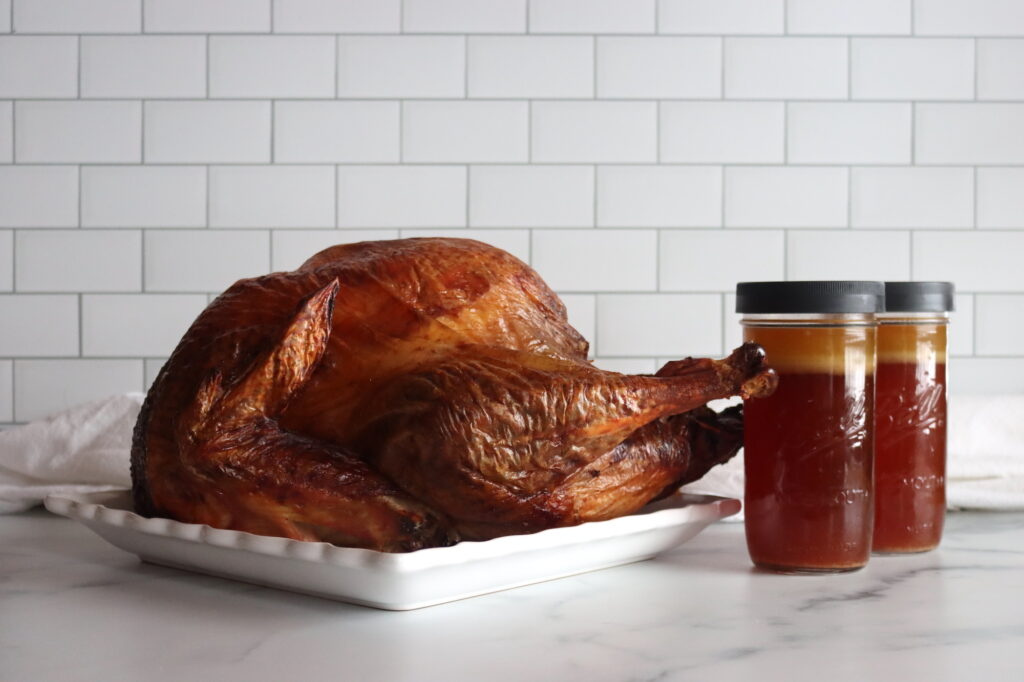
This recipe starts with leftover roast turkey. I used dark meat, but white meat works, and so does a mix of both. Pick it off the bones and pull it into bite-size shreds, and leave the skin, bones, and gristle behind.
Put it up within 3 to 4 days of cooking, as long as it went into the fridge promptly after dinner. That’s the same window you’d give any cooked leftovers. Turkey that’s been sitting longer than that shouldn’t go into jars.
If you’re starting with raw turkey, use my chicken and gravy recipe with turkey in place of the chicken, pound for pound. Ball wrote it for raw meat and the process is a bit different. This recipe is adapted for leftovers, following the University of Alaska’s process.
Ingredients for Turkey and Gravy
It’s a short list, and most of it is already in the kitchen the day after a holiday dinner.
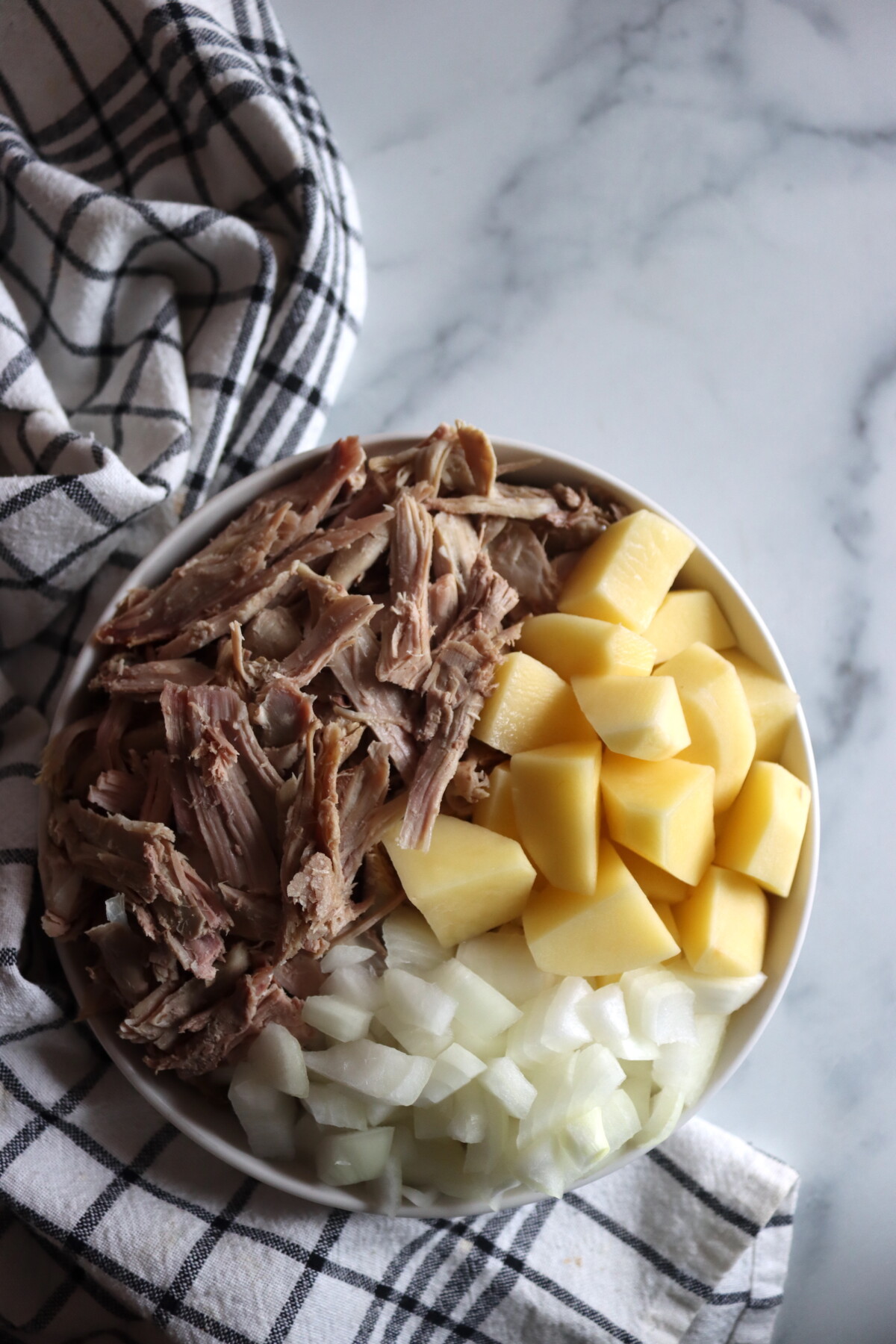
- Cooked turkey: Shredded leftover roast turkey, dark meat, white meat, or both. It takes the place of the chicken in Ball’s recipe. Turkey and chicken share the same pressure canning times, and my canning turkey covers turkey on its own.
- Potatoes: Peeled and diced small, about 1/2 inch, so they cook through and fit in between the turkey. My batch has twice the potatoes in Ball’s recipe. Red potatoes and other waxy types hold their shape better than russets or Yukon Golds, which can fall apart in the canner. There’s more on potatoes in jars in my guide to canning potatoes.
- Onions: Yellow onions, chopped. My batch uses twice as much onion as Ball’s recipe, since the extra cup stands in for the celery. You can put the celery back, cup for cup, if you like it.
- Turkey broth: Homemade turkey broth made from the same carcass is a natural fit. Chicken broth works just as well, and store-bought broth is fine too. It goes in thin, with nothing added to thicken it.
- Dry white wine: Ball’s recipe uses a splash for flavor, and it doesn’t change the processing time. If you’d rather not cook with wine, leave it out and use more broth.
- Salt, poultry seasoning, and black pepper: These season the jar, and none of them affects safety. I use Redmond’s Real Salt in meat and meal in a jar recipes, because it tastes better and a cloudy broth doesn’t matter here. Plain canning salt works too, and so does a salt substitute that doesn’t turn bitter or cloud. There’s more on that in my guide to pickling salt and its substitutions.
Flour, cornstarch, butter, and cream all stay out of the jar. None of them has a tested canning process, and thickeners keep heat from moving evenly through the jar in the canner.
They go in at serving instead, when you turn the broth into gravy.
Turkey and Gravy Variations
Shredded leftover chicken works in place of the turkey, cup for cup. If you’re starting with raw chicken, use my canning chicken and gravy instead.
The vegetables can trade places at the same total volume. Put Ball’s cup of celery back in place of the extra onion, or swap diced carrots for some of the potatoes. I cover changes like these in my article on safe changes to canning recipes.
Substitutions don’t change the time or pressure. Thickeners, dairy, noodles, and rice wait until serving.
To design a meal of your own, use the extension-tested Choice Meal in a Jar protocol, which uses the same 75- and 90-minute times.
How to Make Turkey and Gravy for Canning
This is a hot pack. The turkey and vegetables simmer in broth for a few minutes before they go into the jars, so everything’s hot when it goes in the canner.
Get the canner and jars ready before you start cooking, since you’ll fill the jars while the food is still hot. If you haven’t used a pressure canner before, my guide to pressure canning for beginners walks through a whole canner load.
Prepare the Turkey and Vegetables
Pick the turkey off the bones and shred it into bite-size pieces. Peel and dice the potatoes, and chop the onions.
Measure everything after you’ve prepped it. The cup measures are for shredded turkey, diced potatoes, and chopped onion, not whole ones.
Simmer in Broth
Put the turkey, potatoes, and onions in a large Dutch oven with the salt, poultry seasoning, pepper, and wine. Pour in enough broth to cover everything.
Bring it to a boil, then turn the heat down and simmer for 5 minutes. Keep a little extra broth hot on the back of the stove for topping off the jars.
Pack the Jars
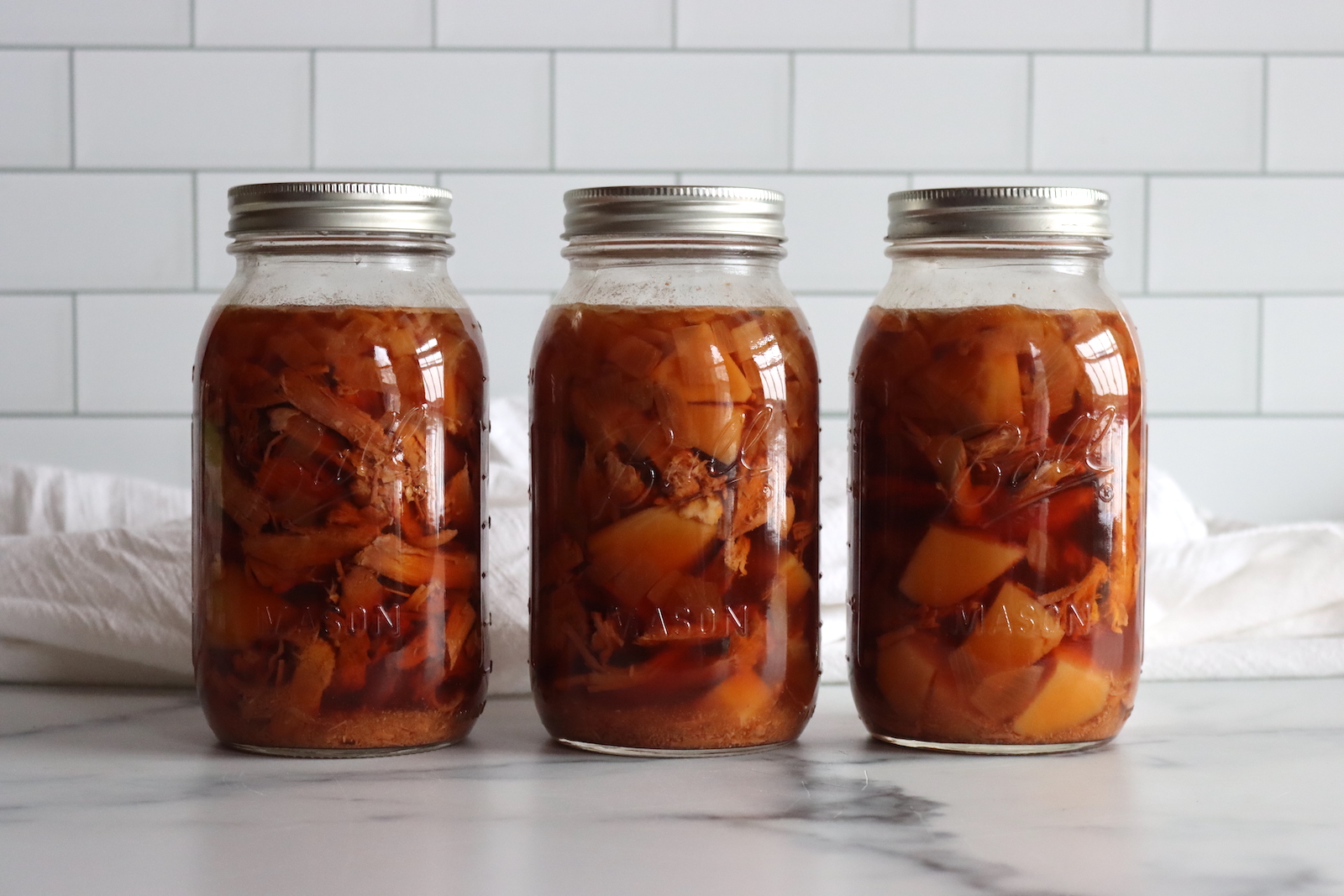
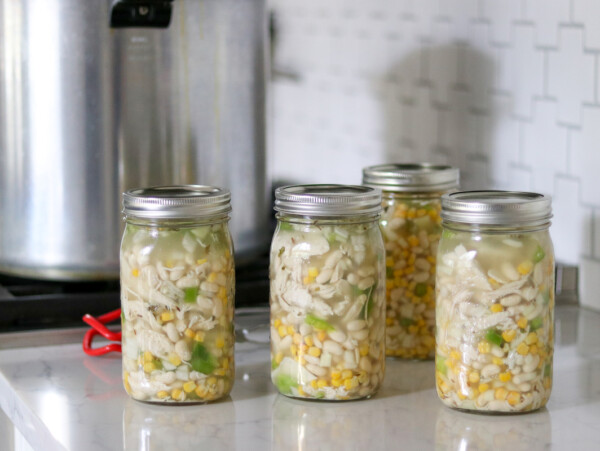
Use a slotted spoon to fill the hot jars with turkey and vegetables, dividing them evenly among the jars. Fill each one to about 1 inch from the rim. You want the jars full of solids but not jam-packed, so the broth can get down between the pieces.
Ladle the hot broth from the pot over the top first, since that’s where the seasoning and wine are, and leave 1 inch of headspace. Save the extra broth for topping off.
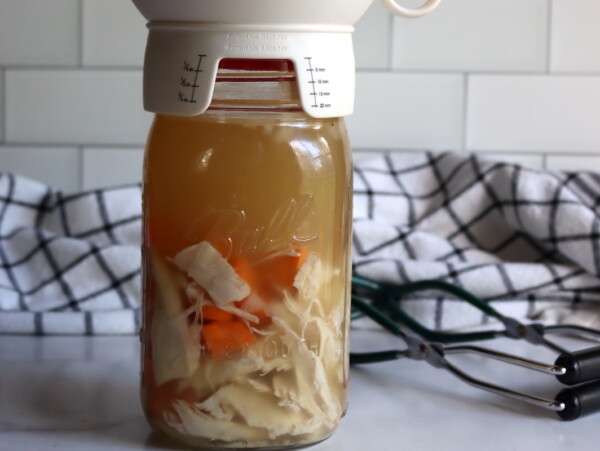
A canning funnel keeps the rims clean. Run a bubble tool around the inside of each jar, check the headspace again, and top it up with more broth if it dropped.
Wipe each rim clean with a damp cloth, set the canning lids on, and screw the bands on fingertip tight.
Canning Turkey and Gravy
Set the jars in the pressure canner with a jar lifter and lock the lid. Let it vent a steady stream of steam for 10 minutes before you add the weight or close the petcock.
Bring the canner up to 10 pounds pressure in a weighted gauge canner or 11 pounds in a dial gauge canner, and adjust for altitude with the chart below. Process pints for 75 minutes or quarts for 90 minutes.
Hold the pressure steady the whole time. If it drops below your target, bring it back up and restart the timer.
When the time’s up, turn off the heat and let the canner come down to zero on its own. Once it reads zero, take off the weight, wait 5 minutes, and remove the lid.
Leave the jars inside for another 10 minutes, then lift them out onto a towel-lined counter to cool.
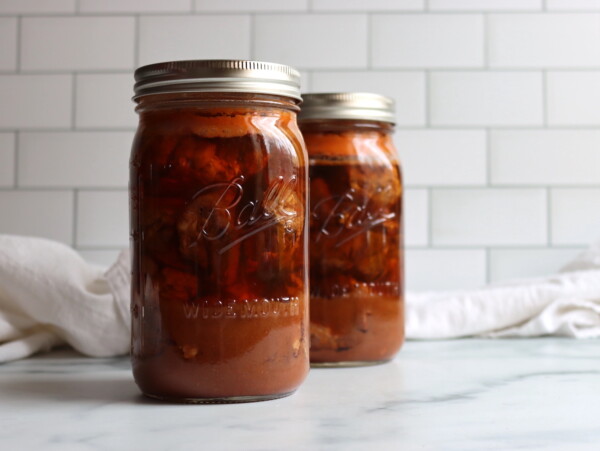
Don’t worry if the broth level drops a little during processing. The potatoes soak some of it up, and a jar that lost some liquid is fine as long as it sealed. Never open a jar to top it up, but if one lost more than half its liquid, refrigerate it and use it within 2 to 3 days.
Altitude Adjustments
With pressure canning, the canning time is always 75 minutes for pints and 90 minutes for quarts, at any altitude. Only the pressure changes, following these altitude adjustments for pressure canning.
For dial gauge pressure canners:
- 0 to 2,000 feet: 11 lbs pressure
- 2,001 to 4,000 feet: 12 lbs pressure
- 4,001 to 6,000 feet: 13 lbs pressure
- 6,001 to 8,000 feet: 14 lbs pressure
For weighted gauge pressure canners:
- 0 to 1,000 feet: 10 lbs pressure
- Above 1,000 feet: 15 lbs pressure
Serving Ideas for Turkey and Gravy
I make the gravy from the broth in the jar and serve it over everything else. Pour the broth into a saucepan, bring it to a simmer, and stir in a little flour or cornstarch whisked into cold water. Let it simmer a few minutes until it thickens.
Warm the turkey and vegetables in a second pan while the gravy cooks, then ladle the gravy over the top.
The classic is a pile of mashed potatoes with the turkey and gravy ladled over the top. It’s just as good over biscuits, egg noodles, or rice, or spooned over thick toast for an open-faced hot turkey sandwich.
For a quick pot pie, thicken a jar, pour it into a pie dish, and bake it under a crust. My canning chicken pot pie filling has the oven times.
Still working through a fridge full of fresh leftovers? There are 30+ leftover turkey recipes for everything that doesn’t go in a jar.
Storage and Shelf Life
Let the jars sit undisturbed for 12 to 24 hours, then take the bands off and check every seal. Press the center of each lid, and it shouldn’t move.
Taking the bands off matters, since a band can hold down a lid that never sealed. Put any unsealed jar in the fridge and eat it within a few days, or reprocess it within 24 hours with a new lid for the full time.
Store sealed jars without bands in a cool, dark place, and use them within 12 to 18 months, while they’re at their peak. Once a jar is open, keep it in the fridge and finish it within 3 to 4 days.
Yield Notes
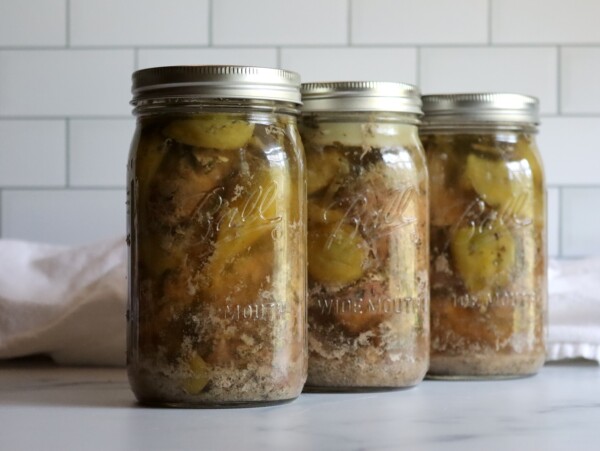
My batch used 6 cups of shredded dark meat turkey (750 grams), 2 cups of diced potatoes (350 grams), and 2 cups of chopped onion (250 grams). It filled 3 quarts, or about 6 pints.
Ball’s 2 pounds of raw boneless chicken cooks down to about 6 cups shredded, so that’s how much turkey goes in. Shredded meat and the extra cup of potato are where the third quart comes from.
Plan on 4 cups of broth, and you’ll have plenty to fill the jars.
It doubles cleanly at the same processing time, and the smallest load is 2 quarts (4 pints). My All American canner takes 14 quart jars, so I usually fill it if I have enough leftover turkey.
Canning Turkey and Gravy FAQs
Readers making the chicken version have asked about swapping the wine, and turkey adds a question of its own about starting with raw meat.
No. Turkey, potatoes, and onions are all low-acid foods, and a water bath canner doesn’t get hot enough to make them shelf-stable. You need a pressure canner for this one.
No. Flour and cornstarch make the jar too dense for heat to move through it evenly in the canner. Can it thin, and thicken it on the stove when you heat a jar for dinner.
Yes. Use my canning chicken and gravy recipe, and put raw boneless turkey in place of the chicken, pound for pound, cut into 2-inch chunks. That’s Ball’s original raw pack, and turkey uses the same 75- and 90-minute times as chicken.
More broth, in the same amount. The wine is only there for flavor, so leaving it out doesn’t change the processing time.
Meal in a Jar Canning Recipes
More dinners ready to heat and eat from the pantry shelf.
If you tried this Canning Turkey and Gravy Meal in a Jar recipe, or any other recipe on Creative Canning, leave a ⭐ star rating and let me know what you think in the 📝 comments below!
And make sure you stay in touch with me by following on social media!
Canning Turkey and Gravy Meal in a Jar
Equipment
- Pint or quart canning jars
- Canning lids and bands
- Slotted spoon
- Bubble remover
Ingredients
- 6 cups cooked turkey, shredded, dark or white meat, see notes
- 2 cups potatoes, peeled and diced
- 2 cups onions, chopped
- 2 tsp salt, or a non-clouding salt substitute
- 2 tsp poultry seasoning
- 1 tsp ground black pepper
- 1/4 cup dry white wine, or more broth
- 4 cups turkey broth, hot, or chicken broth, see notes
Instructions
- Prepare the pressure canner, jars, lids, and bands, and keep the jars hot.
- Pick the cooked turkey off the bones and shred it into bite-size pieces, leaving out the skin, bones, and gristle.
- Peel and dice the potatoes, and chop the onions.
- Put the turkey, potatoes, and onions in a large pot with the salt, poultry seasoning, pepper, and wine, and add enough broth to cover.
- Bring to a boil, then reduce the heat and simmer for 5 minutes. Keep extra broth hot for topping off the jars.
- Use a slotted spoon to fill the hot jars with turkey and vegetables to about 1 inch from the rim, full but not jam-packed.
- Ladle hot broth over the solids, leaving 1 inch headspace.
- Remove air bubbles, check the headspace again, and top up with hot broth to keep 1 inch.
- Wipe the rims, set the lids on, and apply the bands fingertip tight.
- Load the jars into the pressure canner, lock the lid, and vent a steady stream of steam for 10 minutes before adding the weight or closing the petcock.
- Process at 10 lbs pressure in a weighted gauge canner or 11 lbs in a dial gauge canner, quarts for 90 minutes or pints for 75 minutes, adjusting for altitude (see notes).
- Turn off the heat and let the canner return to zero pressure on its own. Remove the weight, wait 5 minutes, then remove the lid.
- Leave the jars in the canner 10 more minutes, then lift them onto a towel-lined counter to cool undisturbed for 12 to 24 hours.
- Check the seals, remove the bands, label the jars, and store them in a cool, dark place.
Notes
- 0 to 2,000 feet: 11 lbs
- 2,001 to 4,000 feet: 12 lbs
- 4,001 to 6,000 feet: 13 lbs
- 6,001 to 8,000 feet: 14 lbs
- 0 to 1,000 feet: 10 lbs
- Above 1,000 feet: 15 lbs
Nutrition
Nutrition information is automatically calculated, so should only be used as an approximation.
More Poultry Canning Recipes
Chicken, duck, and goose recipes, and most of them work with turkey too.
Find the perfect recipe
Searching for something else? Enter keywords to find the perfect recipe!