This post may contain affiliate links. Please see our disclosure policy.
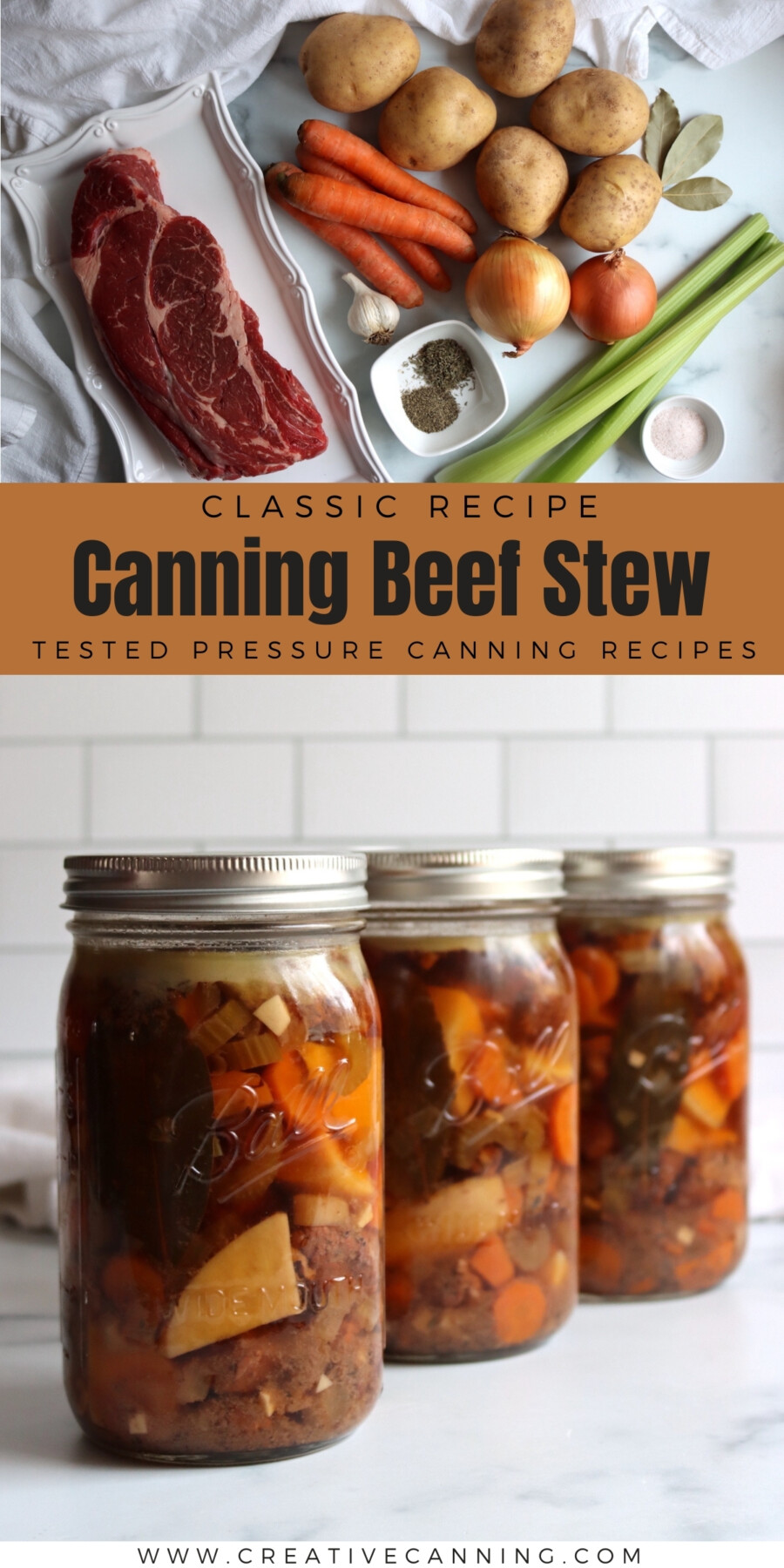
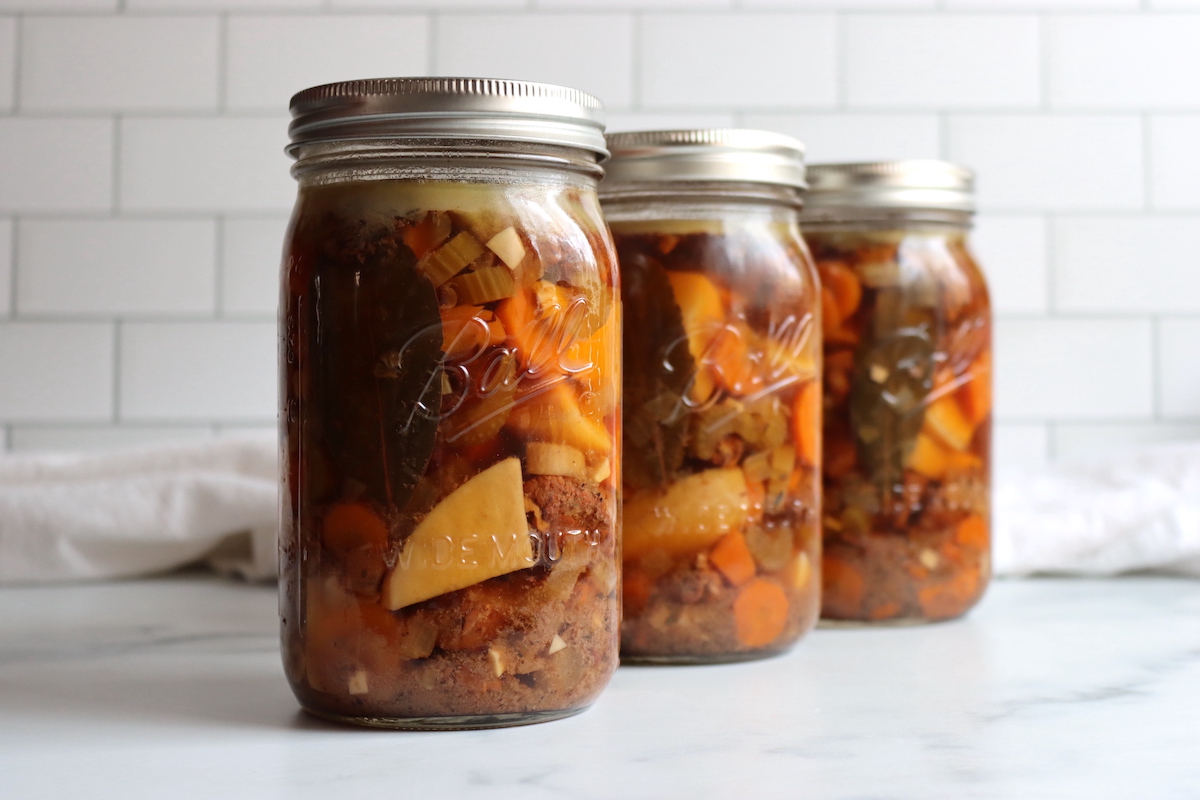
Canning beef stew is one of my favorite ways to turn a classic cold-weather meal into something practical for the pantry. It’s hearty, filling, and made with simple ingredients, but once it’s pressure canned, it becomes an easy shelf-stable supper that’s ready whenever you need it.
This recipe has been reviewed for safety and accuracy by a Master Food Preserver certified through the University of Cornell Cooperative Extension.
This recipe is adapted from the Ball Complete Book of Preserving, which has a number of really good meal-in-a-jar recipes. That said, I’ve found that some of their recipes are a bit off when it comes to yield, especially with main dish recipes like this one. The printed version of this stew says it yields just 3 1/2 quarts, but in truth, the yield is around 5 to 6 quarts, depending on how you pack the jars.
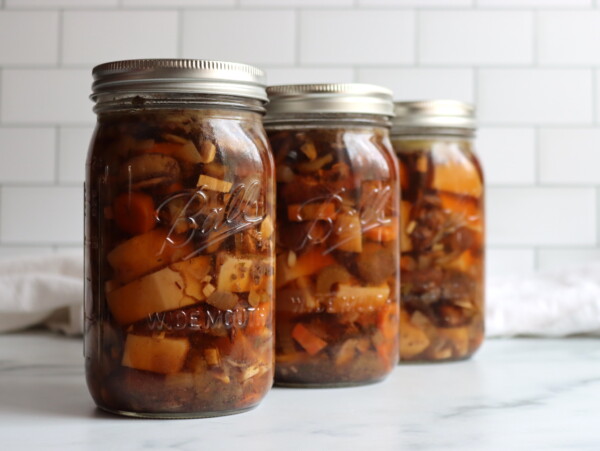
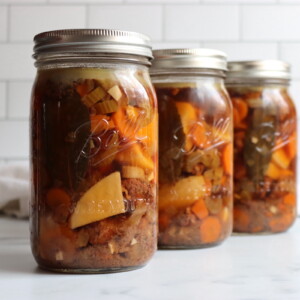
As written here, this recipe makes 5 hearty quart jars, packed full like an actual beef stew and not a thin, broth-heavy soup. They don’t specify how much broth to use, but I’ve found that 8 cups (2 quarts) is just right for filling the 5 jars that this recipe yields, with no extra left over at the end.
You could stretch it to 6 quarts if you packed the jars more lightly and wanted a brothier stew, but you’d need to add an extra quart of stock. (Both versions, yielding 5 or 6 quarts, with 2 or 3 quarts of broth, are perfectly fine for pressure canning using these instructions.)
The amount of salt needed here varies based on the type of broth you’re using. Commercially canned broth has a lot of salt, but I make my homemade broth without salt so I can adjust when I use it. You’ll need a lot less salt if using salted broth.
This version has enough seasoning to give the stew good flavor while still keeping it simple and classic, with tender beef, potatoes, carrots, celery, onion, garlic, and a rich beef broth that tastes like a proper homemade meal.
Why you’ll love this family favorite recipe!

I love having a few jars of beef stew on the shelf because it feels like a full dinner waiting for me in the pantry. It’s simple, familiar, and made with ingredients I usually already have on hand, which makes it a great choice for a canning day when I want something dependable that I know the kids will love.
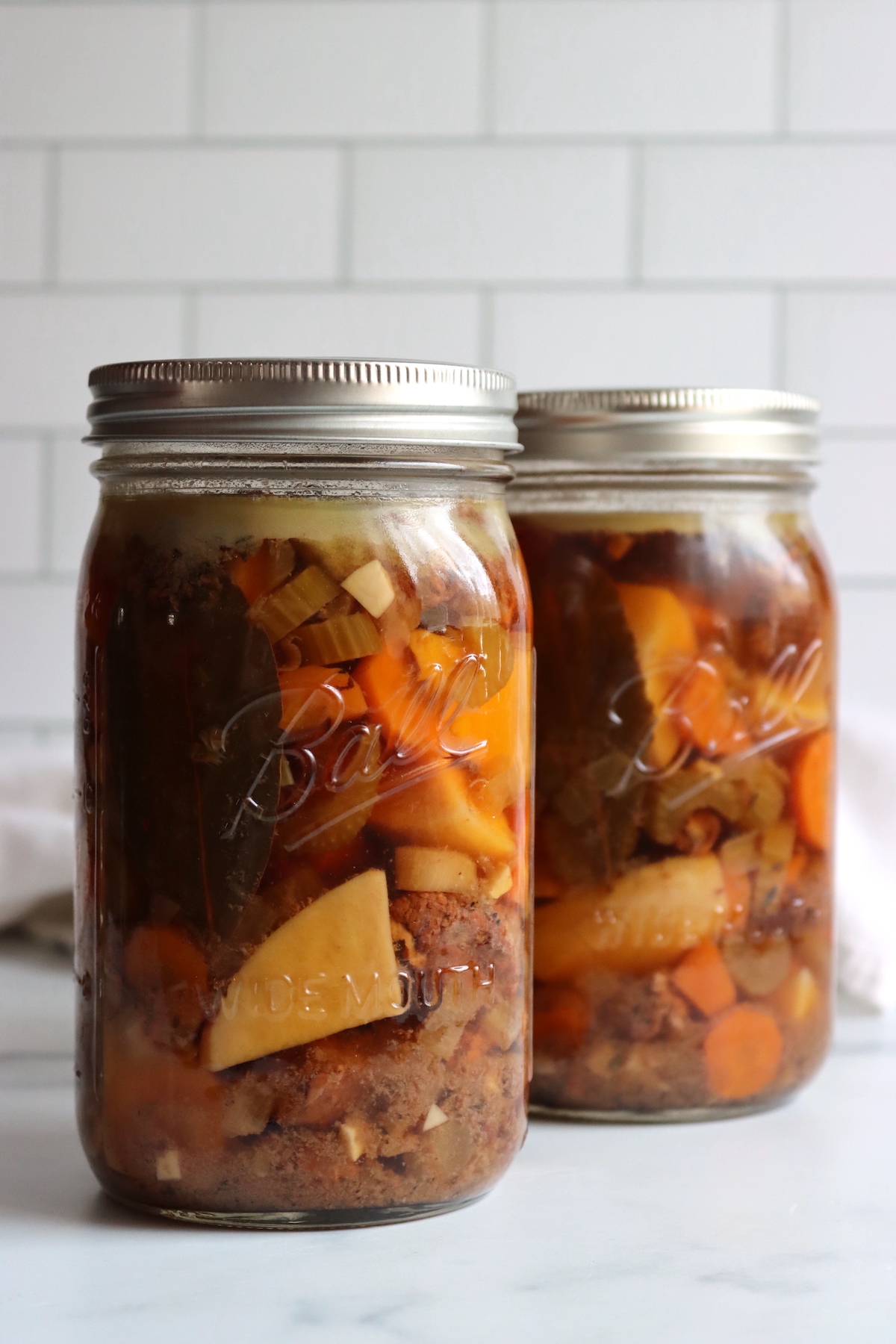
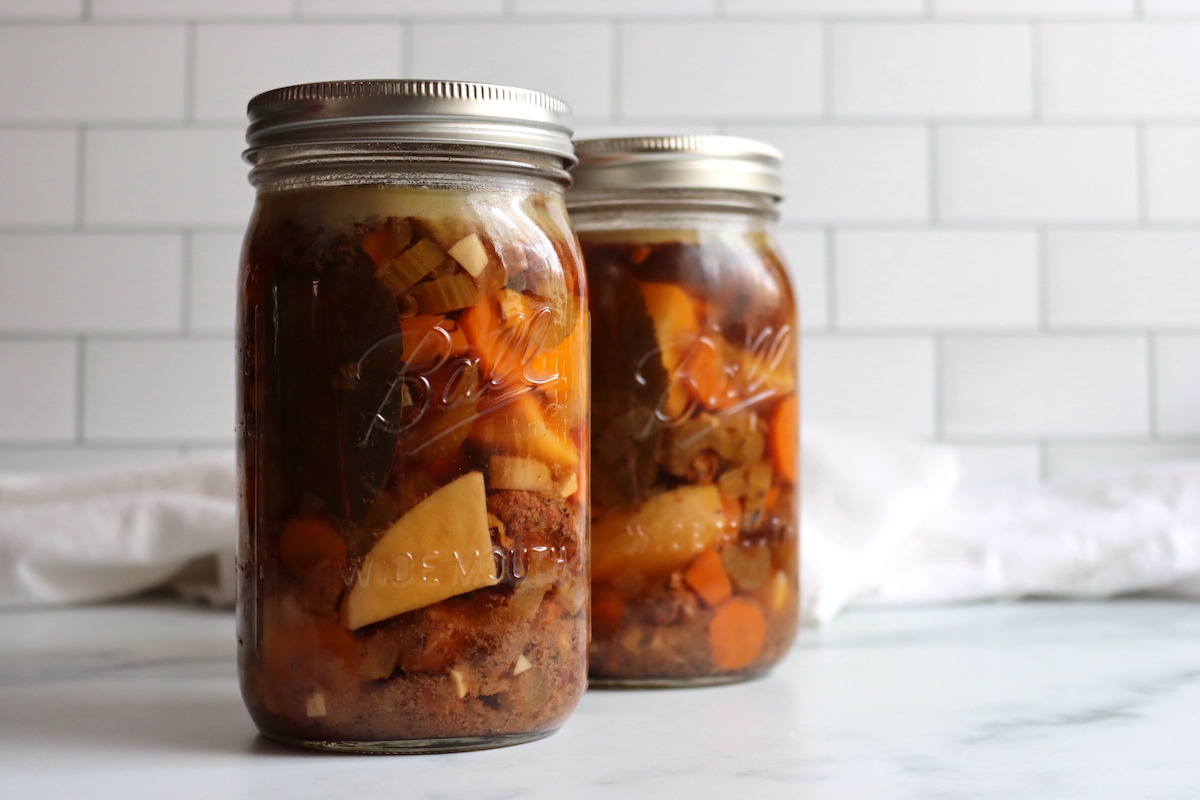
It’s also a really satisfying recipe because the jars come out packed like an actual meal, not a thin soup with a few vegetables floating around. This version makes five solid quart jars exactly as written, but it’ll easily make 6 jars of slightly less hearty soup if you add more broth.
Quick Look at the Recipe
- Recipe Name: Canning Beef Stew
- Recipe Type: Soup Canning Recipe
- Canning Method: Pressure Canning
- Prep/Cook Time: About 45 minutes
- Canning Time: 90 minutes for quarts
- Yield: 5 quarts (or 10 pints)
- Jar Sizes: Pints or Quart
- Headspace: 1 inch
- Ingredients Overview: Beef stew meat, potatoes, carrots, celery, onion, garlic, seasonings, olive oil, and beef stock
- Safe Canning Recipe Source: Adapted from the Ball Complete Book of Preserving, adjusted for actual yield and seasoning
- Difficulty: Moderate. The prep is straightforward, but there is a bit of vegetable chopping and browning before the jars go into the canner.
- Similar Recipes: This recipe is similar to other hearty beef canning recipes, like Beef Stroganoff, Beef Burgundy, Chipotle Beef Taco Meat, and Home Canned Beef Short Ribs. If you’re looking for other classic soup recipes, it’d fit on the pantry shelf nicely next to jars of French Onion Soup, Tomato Soup and Classic Vegetable Soup.
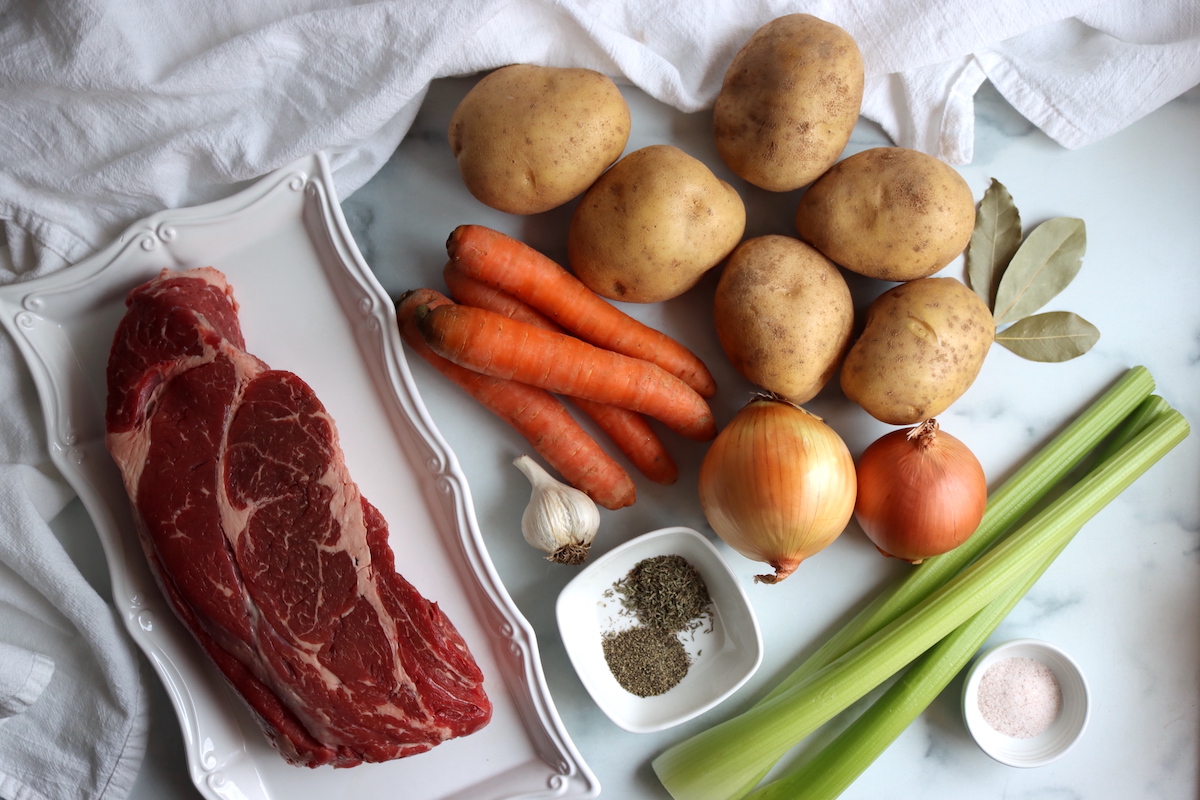
Ingredients for Beef Stew
This recipe uses basic stew ingredients, but the balance is what makes it work so well in the jar. Everything cooks together into a hearty shelf-stable meal with plenty of meat and vegetables in each quart.
- Beef stew meat: The main ingredient and the heart of the recipe, giving the stew body and richness. I like to use a whole beef chuck roast, which usually comes in 2 1/2 pound pieces. It has the best flavor and marbling, and then I just cut it into stew sized chunks. You can use any cut of beef here, but a well marbled stewing cut will give you the best results.
- Olive oil: Used to brown the beef and build flavor before the stew is assembled. Any neutral oil will work here, and tallow is fine too. It’s just to brown the meat before it’s added to the stew.
- Potatoes: Add substance and make the stew feel like a full meal. Gold potatoes hold their shape the best in stews, and release the least amount of starch into the jars. Russets also work, but they tend to release a lot of starch into the broth.
- Carrots: Bring sweetness and classic stew flavor. Use hearty storage carrots, not the thin, sweet colorful ones you find at the summer market. Storage carrots hold their shape and flavor in canning, whereas salad carrots fall apart and taste flat.
- Celery: Adds depth and that familiar savory base note. I honestly don’t generally like celery, but it adds a really great flavor to the soup, even if I’m picking it out of my bowl at the end.
- Onion: Helps flavor the broth and rounds out the stew. I tend to use strongly flavored yellow onions in this stew, but any onions will work.
- Garlic: Gives the finished jars a little extra savory richness. It’s optional, but gives really lovely flavor.
- Salt: Brings the flavors together and keeps the stew from tasting flat. If you’re using salted broth, full salt brands will have 2 to 3 tsp salt already in 8 cups. Low salt versions are closer to 1 to 1 1/2 tsp. You’ll need about 4 1/2 tsp for a batch with unsalted homemade broth, and 1 1/2 to 3 tsp with store bought salted broth.
- Thyme, Bay Leaves & Black Pepper: Adds a traditional stew flavor that works beautifully with beef, but you can choose whatever dry spices you like in this stew.
- Beef stock: Forms the broth and ties the whole recipe together. You can also use vegetable stock, chicken stock or water if that’s all you have on hand, but beef will give the most traditional flavor.
This canning recipe follows the Hearty Soup Protocols from the University of Alaska Extension, and there’s actually a good bit of flexibility here. If you’d like to adjust the recipe to your tastes, I’d encourage you to read those guidelines so you can understand what can safely be substituted.
The seasonings are completely up to your tastes, and you can feel free to add in any dry seasonings that suit your preferences. You can also substitute a bit of wine in place of some of the beef broth.
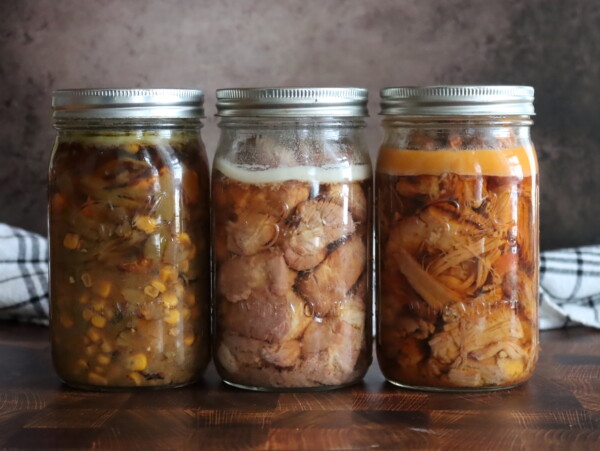
For meat, you can use any type of beef, pork, venison, bison, elk, or bear meat.
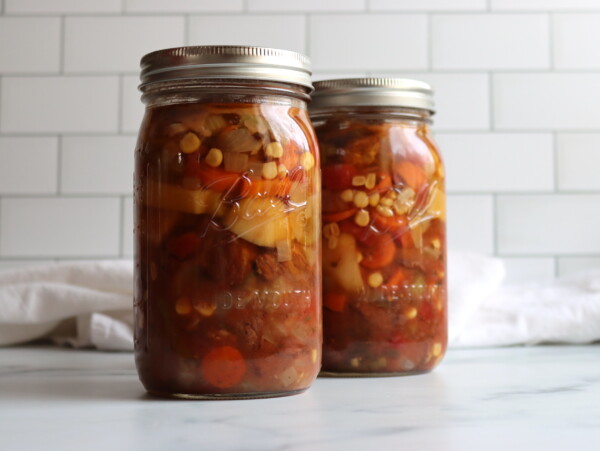
In terms of the vegetables, this is the classic mix, but the protocol has a list of other vegetables you can substitute into this recipe, so long as you keep everything submerged under the broth in the jars. Good choices include corn, green beans, and mushrooms.
You cannot add cooking greens, sweet potatoes, creamed corn, dry beans, or winter squash.
And, of course, you cannot add anything that’s generally not approved for canning, including thickeners, dairy, pasta, rice, pureed vegetables, or cured meats such as ham or bacon.
I know that many people use flour to brown their meat for stew, and add things like cornstarch or flour to the broth for thickening, but you can’t use flour or thickeners at all when canning. You can, however, thicken the soup with a bit of flour at serving.
Step by Step Instructions
- Gather the ingredients: Start by gathering all the ingredients for the stew. Prepare your pressure canner for hot pack according to the manufacturer’s instructions. Usually that means adding 2 inches of water and bringing it to a gentle simmer.
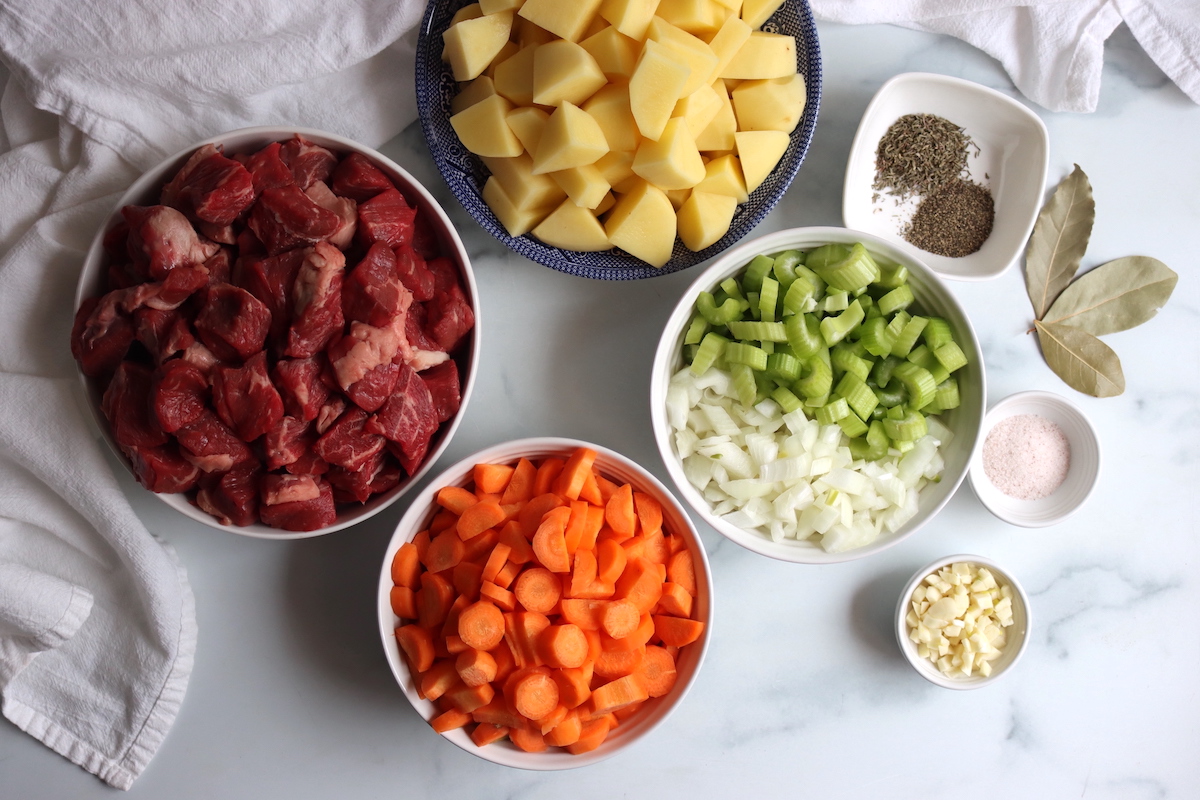
- Prepare the ingredients: Peel and cube the potatoes, slice the carrots, chop the celery and onion, and mince the garlic. If needed, cut the beef into evenly sized cubes so it cooks and packs into the jars more evenly.
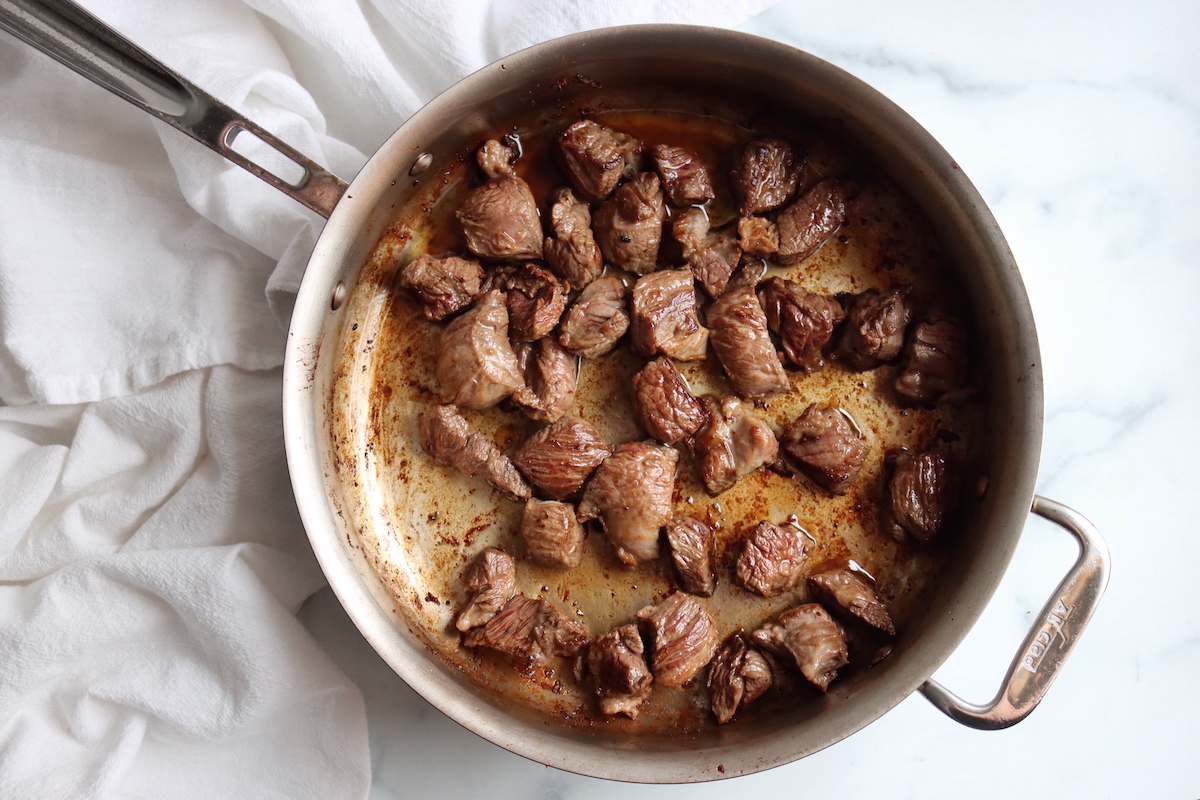
- Brown the beef: Heat the olive oil in a large heavy-bottomed pot over medium-high heat, then add the beef. Brown the meat on all sides, working in batches if needed so it sears instead of steaming. This step adds a lot of flavor to the finished stew.
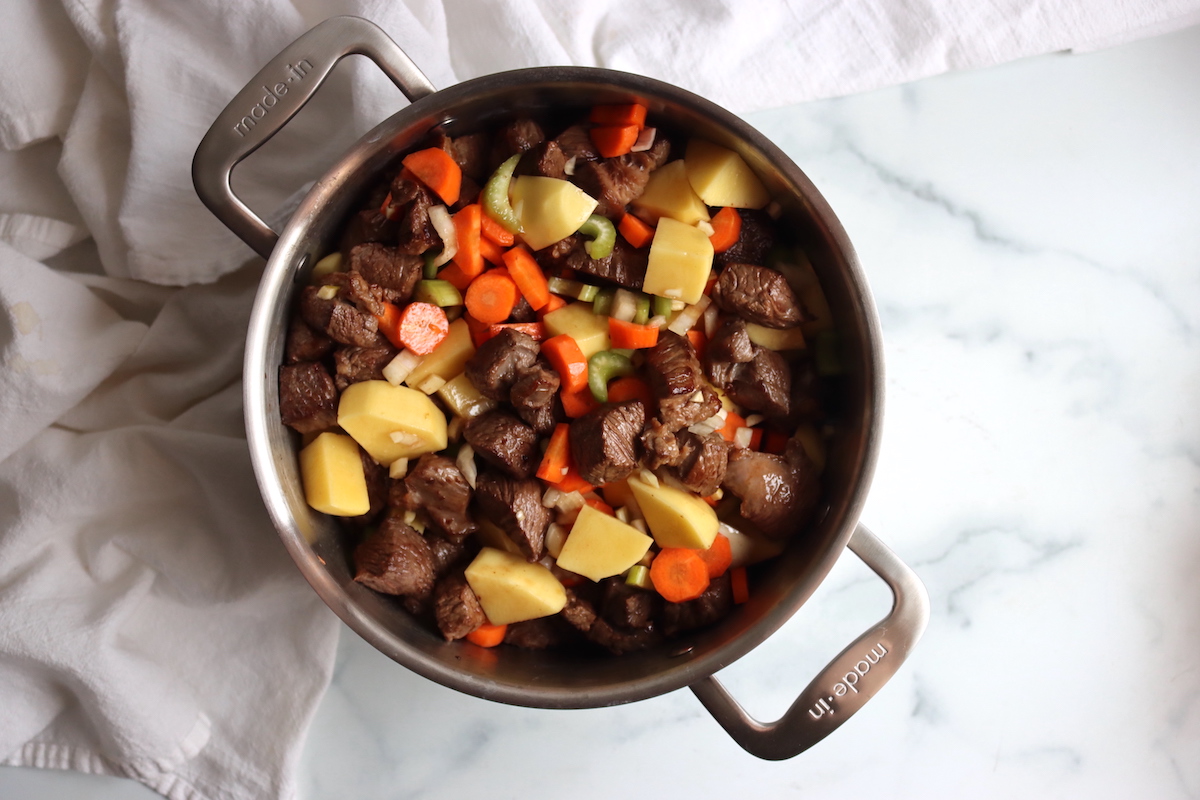
- Combine everything in the pot: Once the beef is browned, add the prepared potatoes, carrots, celery, onion, and garlic to the pot. Stir in the salt, thyme, pepper, and beef stock, then bring the mixture to a boil and simmer briefly so everything is pre-heated for hot pack.
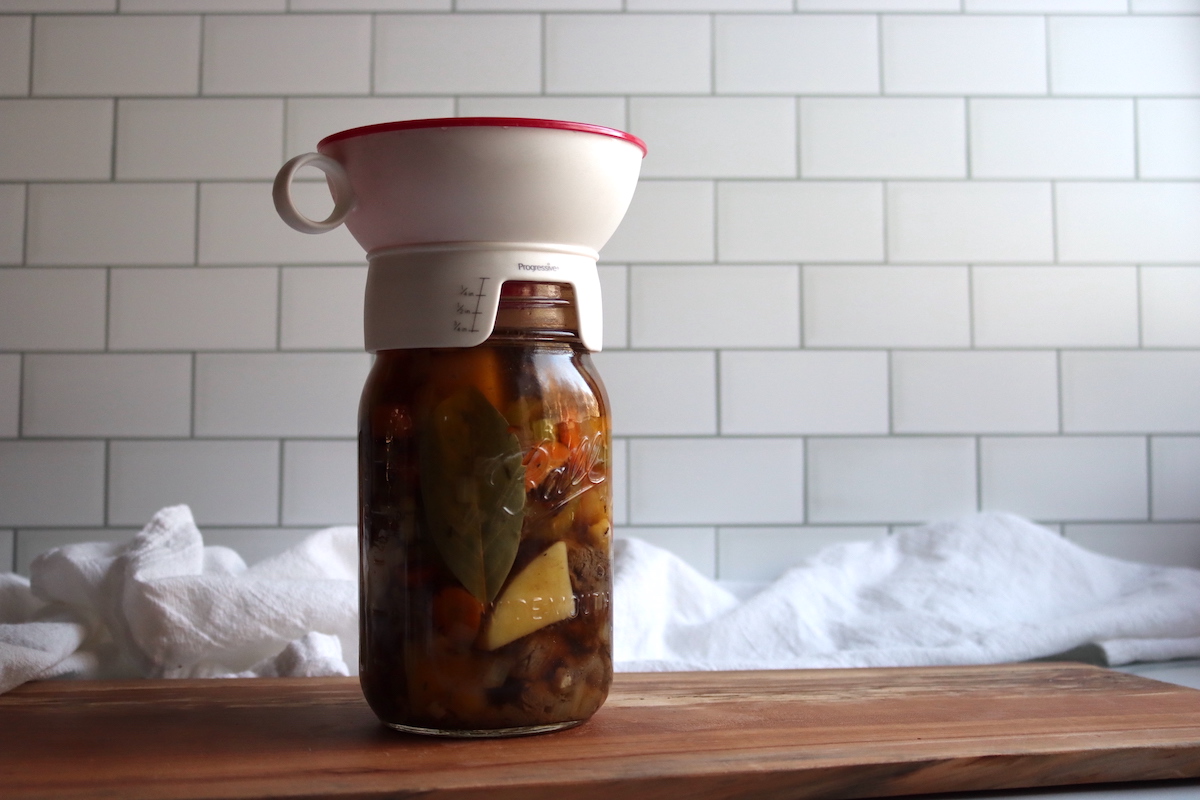
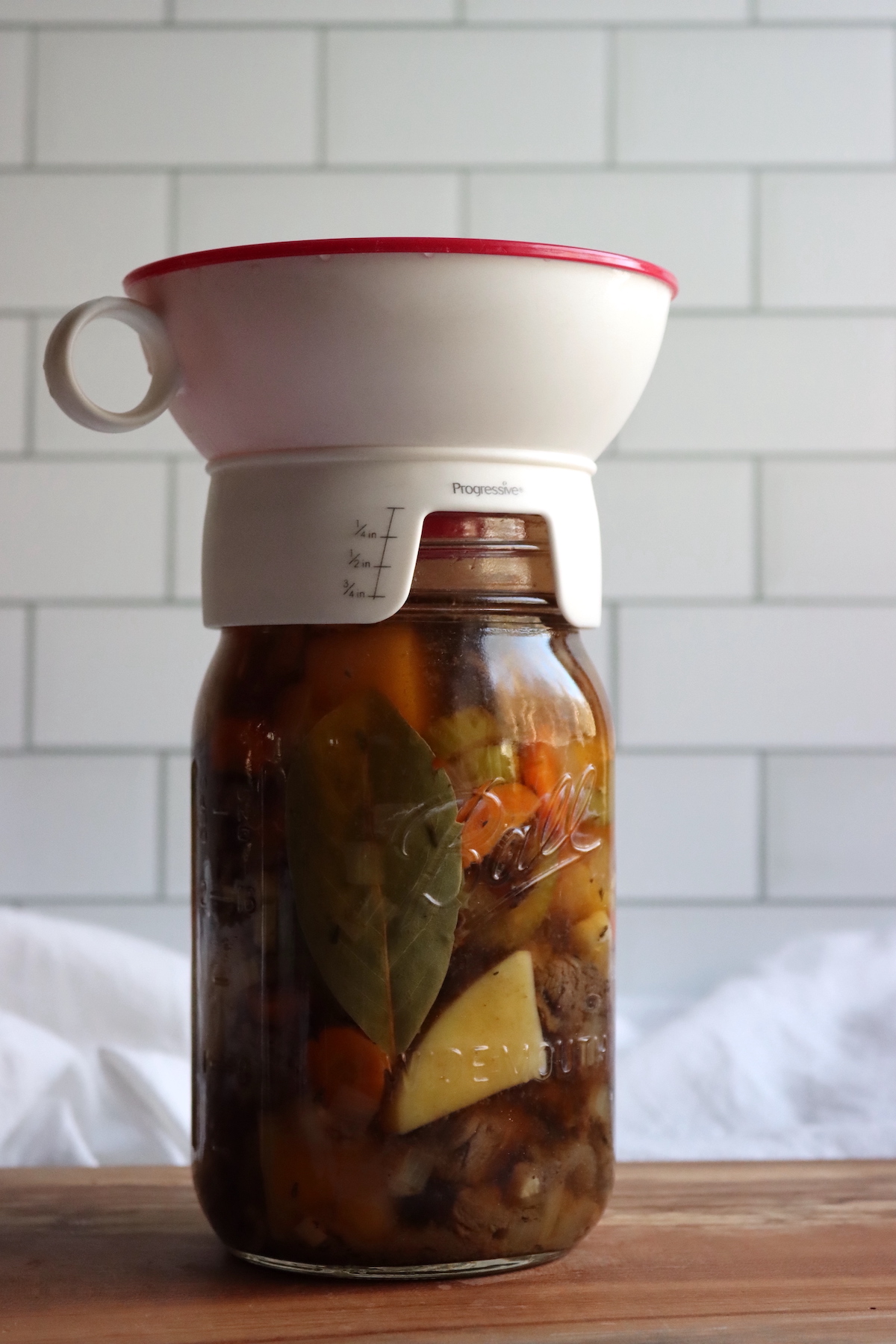
- Fill the jars: Ladle the hot stew into prepared canning jars, making sure each jar gets a good balance of beef, vegetables, and broth. Slip one bay leaf in each jar. Leave the 1” headspace, remove any air bubbles, adjust the liquid if needed, and wipe the rims before adding lids and bands.
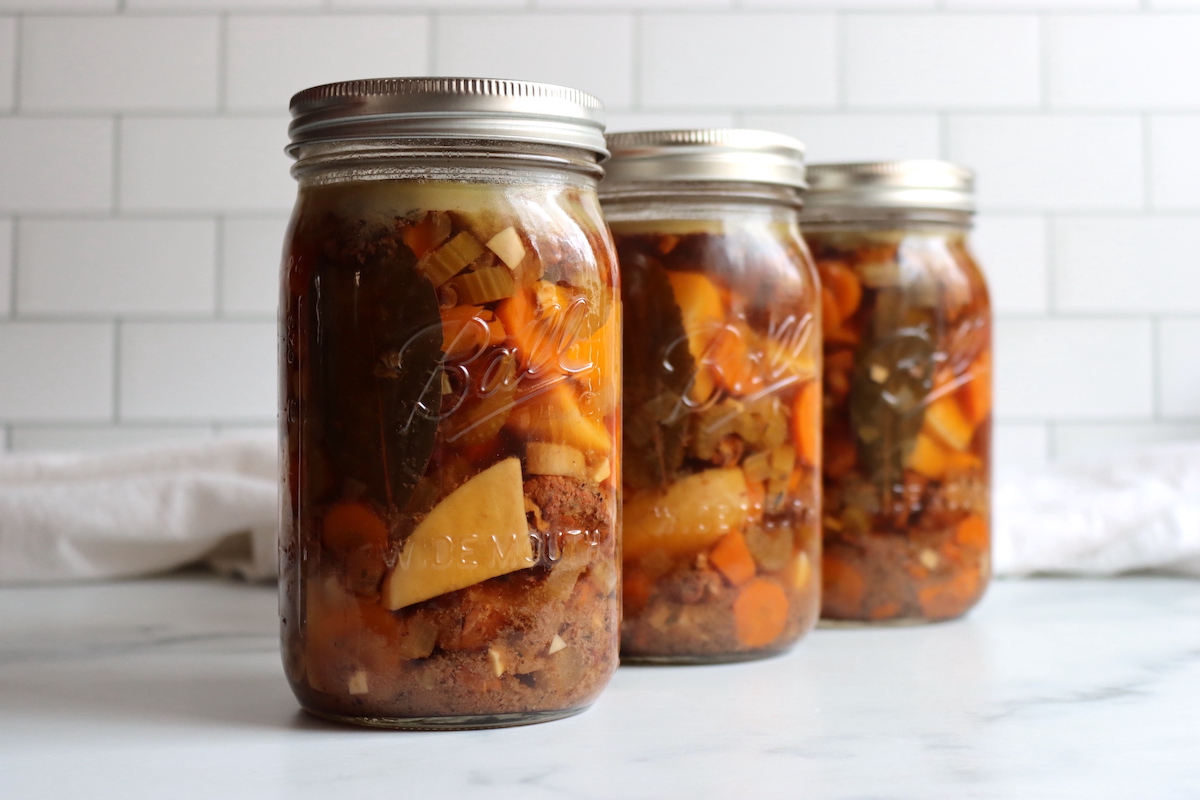
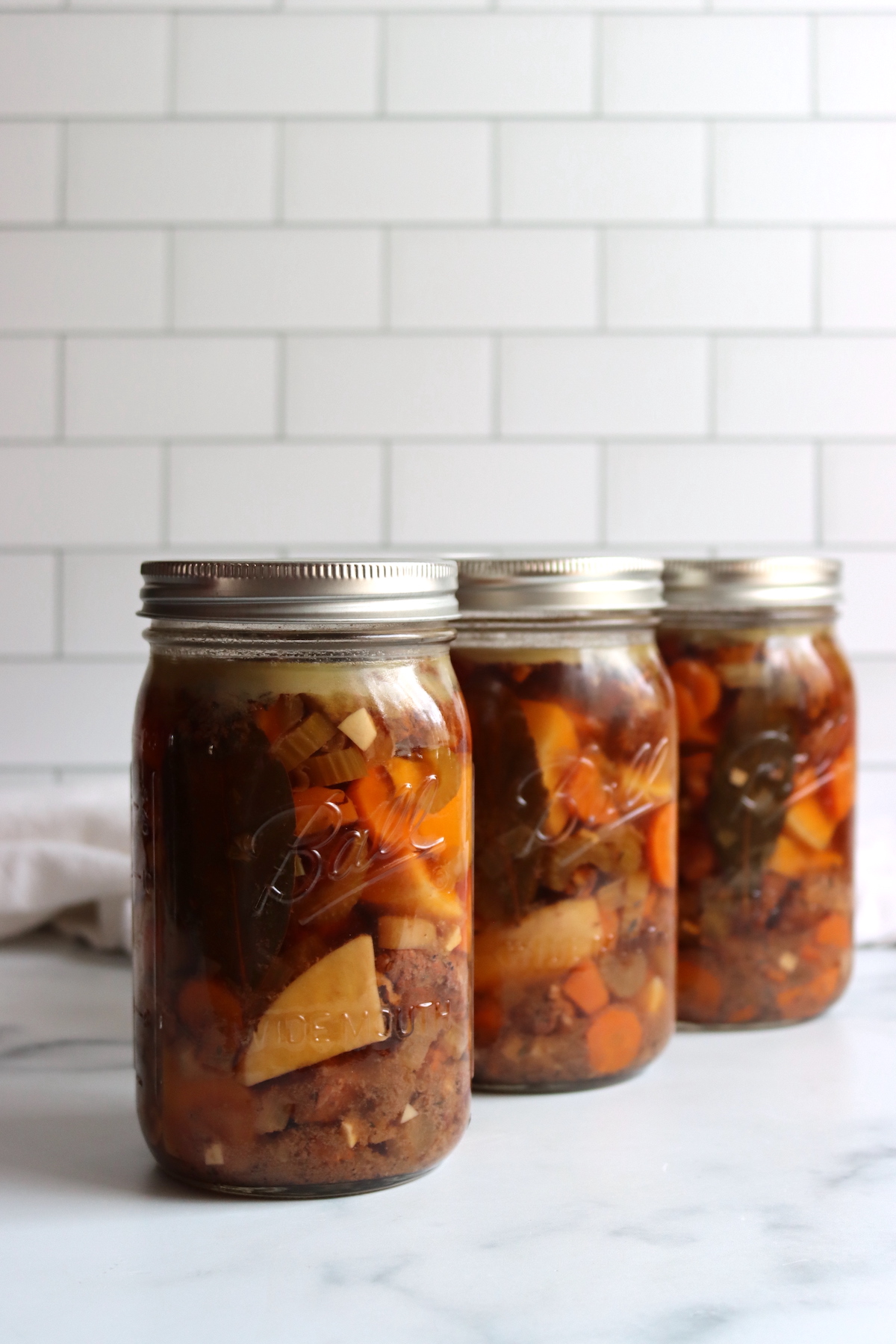
- Process the jars: Place the filled jars into a pressure canner and process quart jars for 90 minutes and pint jars for 75 minutes, adjusting pressure to altitude. Once the canner returns to zero pressure naturally, remove the jars and let them cool completely before checking the seals.
Canning Beef Stew
This particular stew is not fully cooked when it goes into the canning jar. The meat is browned, and the vegetables are briefly simmered for 5 minutes to ensure everything is packed hot. This simmer also drives off a bit of air from the veggies, helping them to pack better, and sets the starches so they don’t cloud the broth.
I’d suggest using a slotted spoon to evenly distribute the solids between the jars before using a ladle to top the jars off to 1 inch headspace.
This recipe should yield 5 quarts as written (or 10 pints). If you run short on broth, add a bit of boiling water, but there should be plenty. If you’d like a less hearty soup, add an extra quart of stock and distribute the ingredients between 6 quarts (or 12 pints).
Once the jars are packed to 1 inch headspace, you’re ready to cap the jars with 2 part canning lids and load them into a preheated pressure canner. They should be processed for 90 minutes for quarts, or 75 minutes for pints, adjusting pressure to altitude (see below).
Altitude Adjustments
With pressure canning, the processing times stay the same at higher altitudes, but the pressures change. Here are the altitude adjustments for pressure canning:
For dial gauge pressure canners:
- 0 to 2,000 feet in elevation – 11 lbs pressure
- 2,001 to 4,000 feet in elevation – 12 lbs pressure
- 4,001 to 6,000 feet in elevation – 13 lbs pressure
- 6,001 to 8,000 feet in elevation – 14 lbs pressure
For weighted gauge pressure canners:
- 0 to 1,000 feet in elevation – 10 lbs pressure
- Above 1,000 feet – 15 lbs pressure
Serving Ideas
This beef stew is fully cooked and ready to heat and serve straight from the jar, which is exactly why I love canning it. It makes an easy meal on its own with a slice of bread or a biscuit, and it’s especially good on cold nights when I want something filling without much effort.
You can also thicken the broth after opening if you want more of a traditional stovetop stew texture. I sometimes simmer it with a little flour slurry or cornstarch slurry and serve it over mashed potatoes, buttered noodles, or even with dumplings on top. If you like keeping meal starters in the pantry, this is one of those recipes that earns its shelf space quickly.
Canning Beef Stew FAQs
As written, this recipe makes 5 hearty quart jars. That’s with the jars packed like an actual stew, with plenty of meat and vegetables in each jar. If you packed the solids more lightly and wanted a brothier stew, you could likely stretch it to 6 quarts, but you would need roughly 4 more cups of broth.
No, thickeners like flour, cornstarch, and tapioca should not be added before pressure canning. They can interfere with heat penetration in the jar. If you want a thicker stew, the best option is to thicken it after opening the jar for serving.
Potatoes that hold their shape well are best for this recipe. Waxy or all-purpose potatoes tend to stay firmer in the jar, while very starchy potatoes can break down more during processing. I like using yukon gold potatoes because they keep a nice cube shape after canning and have amazing flavor.
That usually comes down to broth and seasoning. Some published recipes are very light on salt and use water in place of broth, which can leave the finished jars tasting flat. Using a flavorful beef stock and enough salt for the type of broth you’re using makes a big difference in the final result. Read the notes on salt quantities to make sure you’re using the right amount.
Beef Canning Recipes
If you tried this Pressure Canning Recipe for Beef Stew, or any other recipe on Creative Canning, leave a ⭐ star rating and let me know what you think in the 📝 comments below!
And make sure you stay in touch with me by following on social media!
Canning Beef Stew
Equipment
Ingredients
- 2 1/2 lb stewing beef, such as beef chuck, cut into 1 1/2-inch cubes
- 2 Tbsp olive oil, or other neutral oil
- 6 cups potatoes, cubed and peeled
- 4 cups carrots, peeled and sliced
- 1 1/2 cups celery, chopped
- 1 1/2 cups onion, peeled and diced
- 3-4 cloves garlic, minced
- 4 1/2 tsp Salt, Important, see notes
- 5 whole bay leaves, one per quart jar
- 1 tsp thyme
- 1 tsp pepper
- 8 cups beef stock, see notes
Instructions
- Prepare your pressure canner, jars, lids, and bands according to the manufacturer’s instructions. Wash the jars well and keep them hot until needed.
- Peel the potatoes and cut them into cubes. Slice the carrots, chop the celery, dice the onion, and mince the garlic. If the beef is not already cut, trim it as needed and cut it into about 1 1/2-inch cubes.
- Heat the olive oil in a large heavy-bottomed pot or Dutch oven over medium-high heat. Add the beef and brown it on all sides, working in batches if needed so the meat browns properly instead of steaming.
- Once all the beef is browned, return it all to the pot if you worked in batches. Add the potatoes, carrots, celery, onion, and garlic, and stir everything together.
- Add the salt, thyme, pepper, and beef stock. Save the bay leaves for adding individually to each jar. Stir well, then bring the mixture to a boil over medium-high heat.
- Once boiling, reduce the heat and simmer the stew for about 5 minutes until heated through.
- Ladle the hot stew into hot quart jars, making sure each jar gets a balanced mix of meat, vegetables, and broth. Slip one bay leaf in each jar. Leave 1 inch headspace.
- Use a bubble remover or nonmetallic utensil to remove air bubbles from each jar. Add more broth if needed to maintain the proper 1 inch headspace.
- Wipe the jar rims with a clean damp cloth, then apply the lids and bands, tightening the bands to fingertip tight.
- Place the filled jars into the prepared pressure canner. Lock the lid, vent the canner for 10 minutes, then bring it up to pressure.
- Process quart jars for 90 minutes at 11 pounds pressure in a dial gauge canner or 10 pounds pressure in a weighted gauge canner, adjusting pressure as needed for altitude.
- When the processing time is complete, turn off the heat and allow the canner to return to zero pressure naturally. Do not force cool the canner.
- Once the canner is fully depressurized, wait a few minutes, then carefully remove the lid. Let the jars rest in the canner for about 5 minutes before removing them.
- Transfer the jars to a towel-lined counter and let them cool undisturbed for 12 to 24 hours. Check the seals, remove the bands for storage, label the jars, and store them in a cool, dark place.
Notes
Nutrition
Nutrition information is automatically calculated, so should only be used as an approximation.
Soup & Stew Canning Recipes
Find the perfect recipe
Searching for something else? Enter keywords to find the perfect recipe!