This post may contain affiliate links. Please see our disclosure policy.
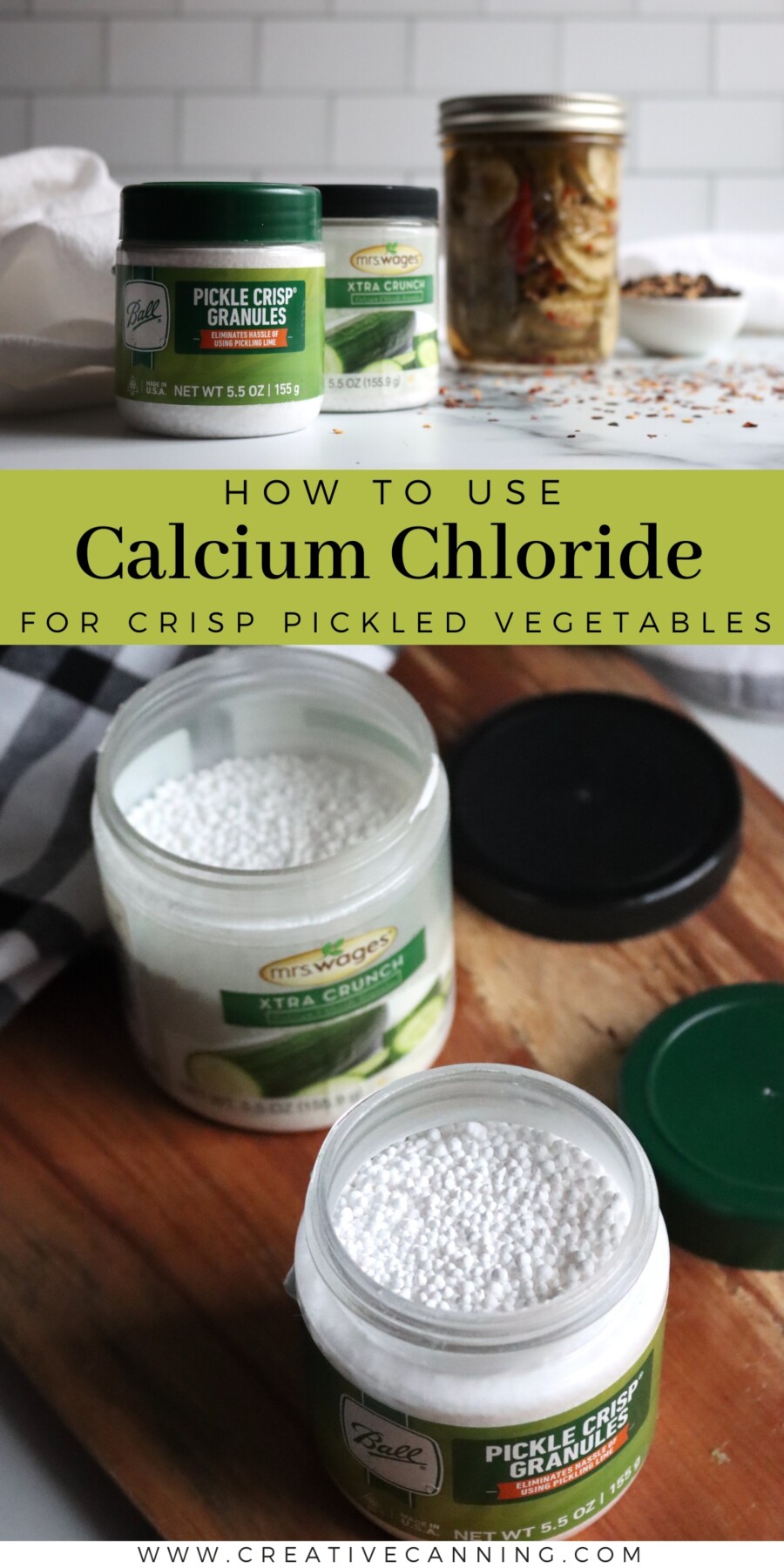
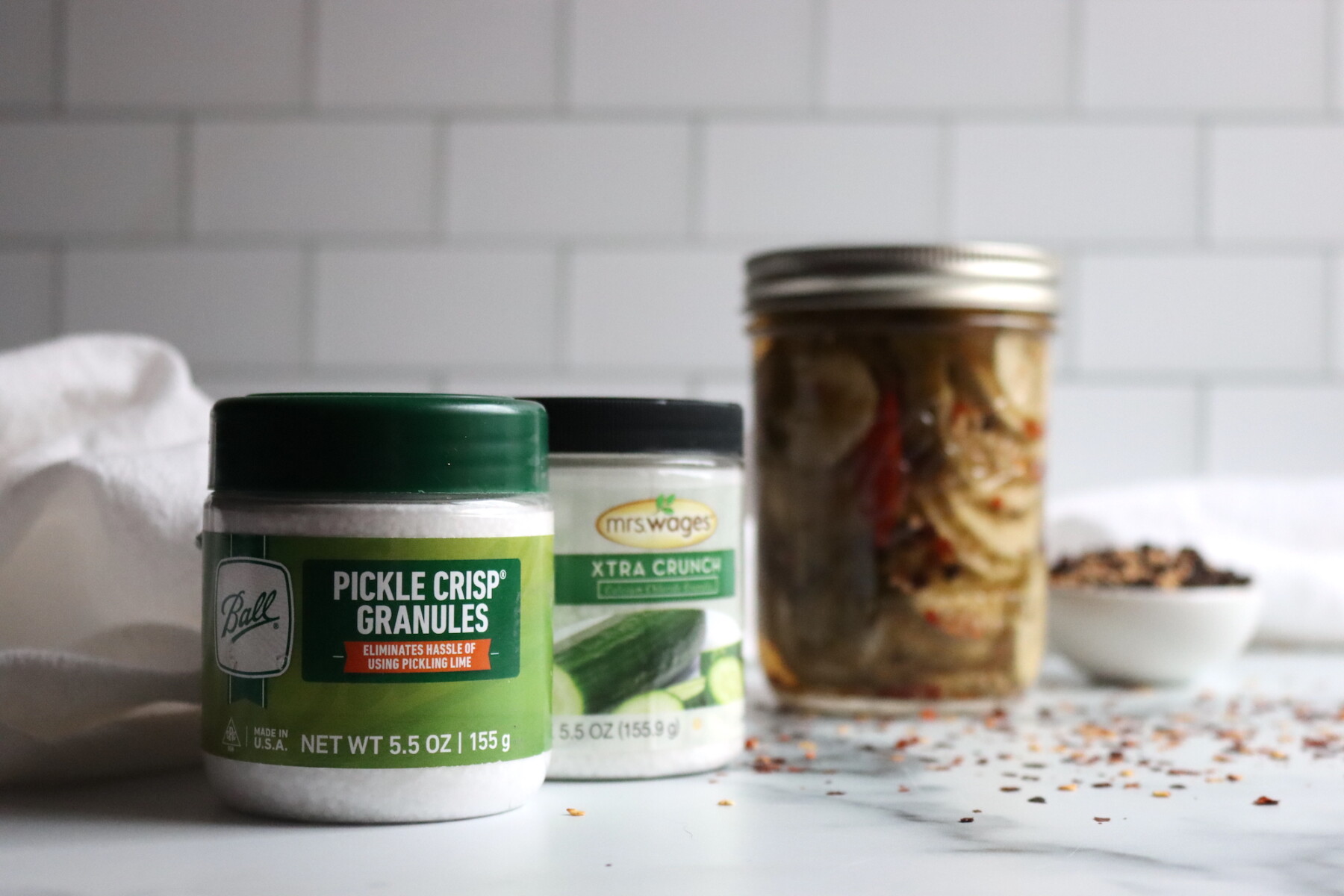
Keeping pickles crisp is one of the most common struggles in home canning, and even the best cucumbers can soften after processing. Many modern recipes include Pickle Crisp or Xtra Crunch, two common brand names for calcium chloride, a simple mineral salt used to help vegetables stay firm in the jar.
While it’s not required for safe canning, just a pinch can make a noticeable difference in texture. Understanding what calcium chloride is, how it works, and when (or when not) to use it will help you decide if it’s worth adding to your canning routine.
If you’ve ever had a batch of pickles come out softer than you hoped, it doesn’t mean you did anything wrong. Heat, natural enzymes in the cucumbers, and even the minerals in your water can turn a crisp cucumber into a soft pickle.
That’s why calcium chloride shows up in so many modern pickle recipes. Sold as Pickle Crisp (from Ball Canning) or Xtra Crunch (from Mrs. Wages), it’s a neutral-tasting firming salt that helps vegetables hold their structure during processing and storage.
It’s completely optional, but when texture really matters, it’s an easy add-on that can take homemade pickles from good to the kind you actually want to snack on straight from the jar.
What Is Calcium Chloride?
Calcium chloride (CaCl₂) is a naturally occurring mineral salt, not something invented in a lab.
It’s the same ingredient you’ll find listed on many commercial cans of beans, tomatoes, or pickles, added to help the food keep its texture through high-heat processing.
In canning, calcium chloride works by strengthening the natural pectin in fruits and vegetables. During canning, heat and acid can break down those pectins, causing food to soften. Calcium binds with the pectin molecules, creating a stronger structure that holds up better in the jar.
It’s odorless, flavorless, and food-safe, so it won’t change the taste of your finished recipe, only the texture. It really is nothing more than a little extra calcium, but a pinch goes a long way.
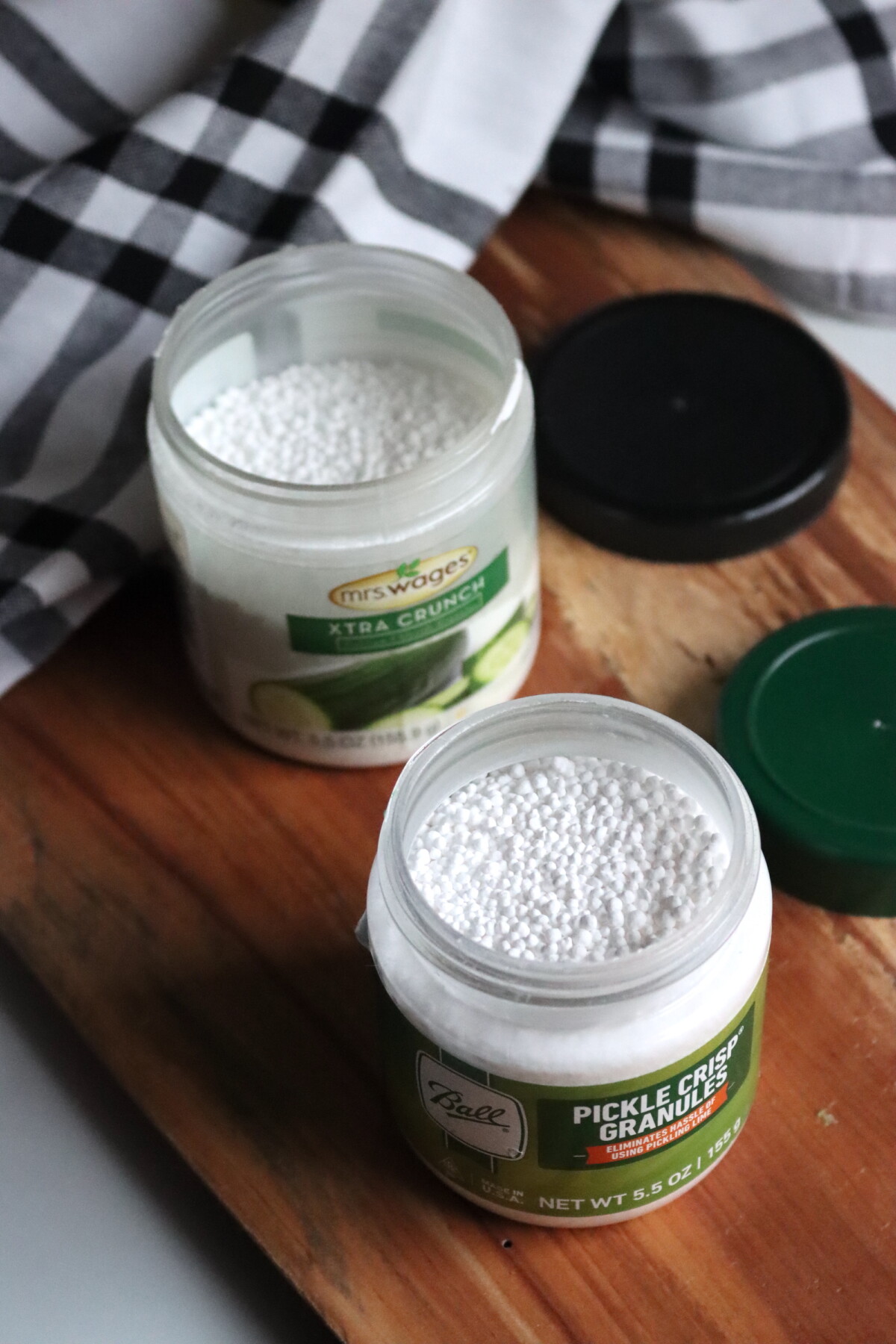
Ball canning makes Pickle Crisp and Mrs. Wages makes Xtra Crunch, and they’re identical, though Xtra Crunch tends to be a bit less expensive. Both brands come in 5.5 ounce containers, which is enough to make 80 quarts (or 160 pints) of pickles.
As a mineral salt, it’s shelf stable forever, so one tiny jar will last pretty much forever.
How to Use Calcium Chloride
For home canning, you don’t need much. A small amount added directly to each jar before filling helps vegetables stay firm during processing.
The standard amounts are:
- Half Pints: ¹⁄₁₆ teaspoon per jar (or up to ⅜ tsp)
- Pints: ⅛ teaspoon per jar (or up to ¾ tsp)
- Quarts: ¼ teaspoon per jar (or up to 1 ½ tsp)
For most pickles, all you need is about ¹⁄₁₆ per cup (half pint), which works out to ⅛ teaspoon per pint jar (as that’s the most common pickle canning jar size.
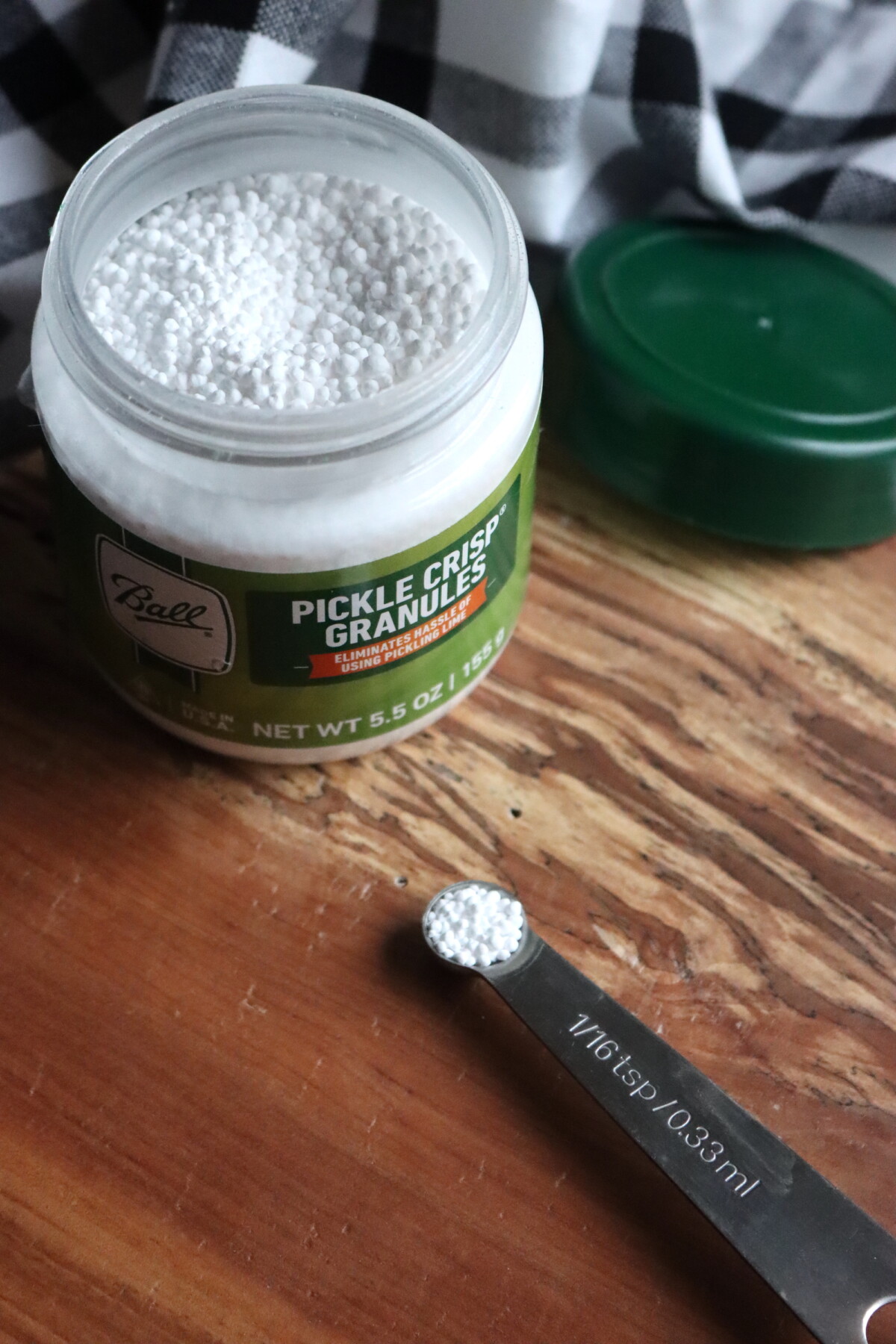
Some recipes that really want extra crunch (like pickled daikon or carrots) will sometimes call for up to ¾ teaspoon per pint, and that amount is just fine too. More than that isn’t necessary or helpful, so keep it somewhere in that range.
Sprinkle the granules directly into the empty jar before adding your vegetables and liquid. There’s no need to dissolve it first. It will fully dissolve in the jar and won’t cloud your brine or syrup.
Once added, proceed with your recipe as usual. That means packing the jars, pouring in the brine, and processing according to tested guidelines.
It’s worth remembering that calcium chloride is not a preservative. It doesn’t extend shelf life or make your jars safer, it just helps with texture.
It also won’t fix overripe, soft, or poorly handled produce. Start with fresh, firm vegetables for the best results, and use calcium chloride as a supplement, not a shortcut.
Can You Use Too Much Calcium Chloride?
Adding extra calcium chloride (within reason) won’t hurt the food or make it unsafe, but more isn’t better and it can potentially contributed to off flavors in excess. Excessive calcium chloride can give foods a bitter, metallic or excessively salty taste.
Once the pectin in your vegetables has bound with the available calcium, any excess will just sit harmlessly in the liquid. Stick with the standard ⅛ tsp to ¾ tsp per pint or ¼ tsp to 1 ¾ tsp per quart for best results.
When to Use Calcium Chloride
Calcium chloride can be used in any canning recipe where texture matters. It’s most common in pickles, but it also works well for tomatoes, peppers, beans, and other firm vegetables.
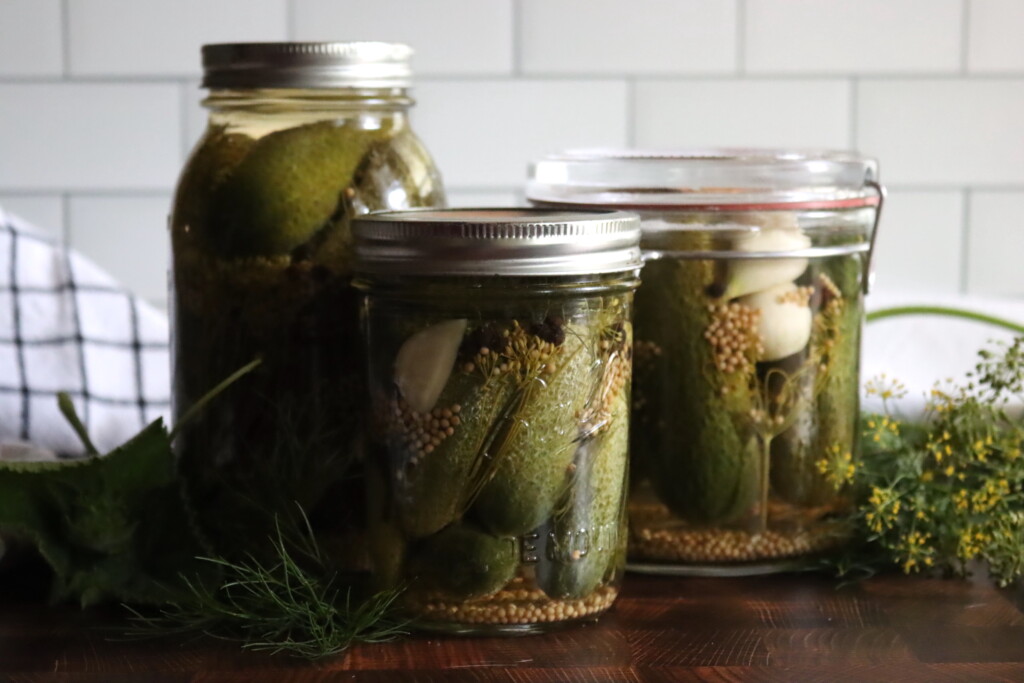
- Cucumber Pickles: Cucumbers are especially prone to softening because of their high water content, and it’s almost always helpful in cucumber pickling recipes. A tiny bit of calcium chloride helps them stay crisp, whether you’re making dill pickles, sweet pickles, or classic bread and butter pickles.
- Pickled Vegetables: Beyond cucumbers, it’s also really helpful in other vegetable pickles. Hot or sweet peppers often lose their snap when heat processed, and it’s very common to use in pickled banana peppers and pickled jalapeños. The same goes for other vegetable pickling recipes, like pickled green tomatoes that can get mushy in canning. Adding calcium chloride helps them keep a bit more bite in the jar.
- Tomatoes: Commercial canned tomatoes nearly always include calcium chloride, and it helps diced tomatoes stay firm instead of turning into mush. You can do the same at home, and keep them closer to fresh even in the jar.
- Beans and Legumes: If you’ve ever pressure canned beans and found them softer than store-bought, calcium chloride can help. It won’t make them crunchy, but it will help them hold their shape during processing and storage.
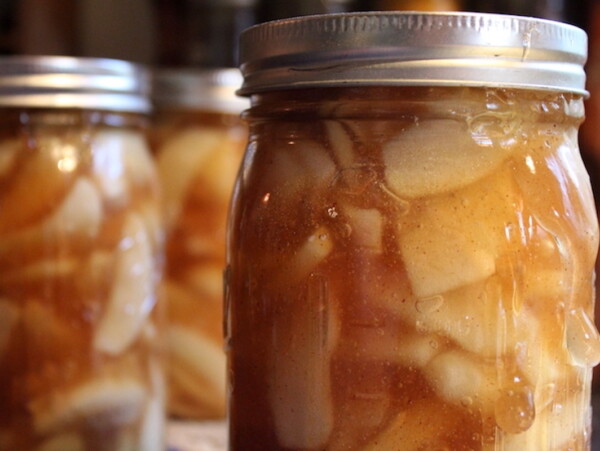
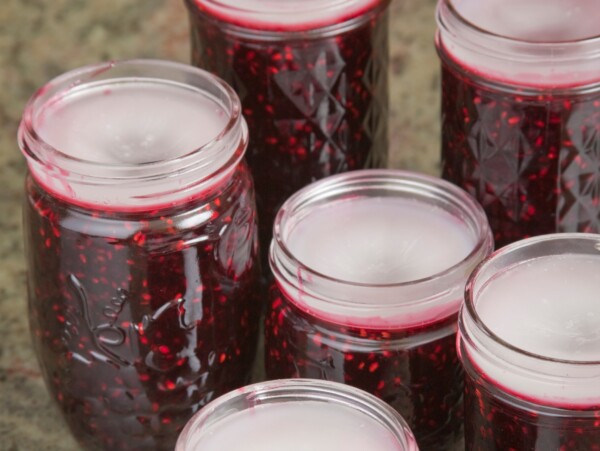
It’s also sometimes used in canned fruits in syrup, and it can be especially helpful with fragile fruits like when canning cherries or canning raspberries.
Alternatives for Keeping Pickles Firm
Before calcium chloride became widely available, home canners used several other methods to keep pickles crisp. Some still work, but most are either unreliable or more labor-intensive.
Pickling Lime (Calcium Hydroxide)
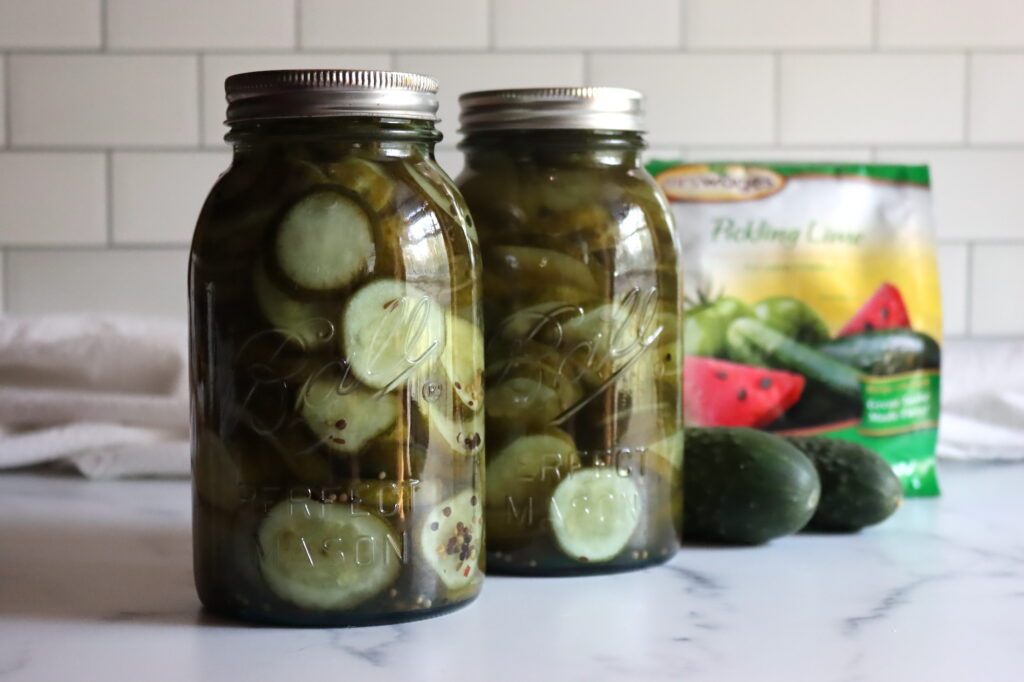
Used historically to soak cucumbers before pickling, food grade pickling lime can firm produce, but if it isn’t rinsed off completely, it can neutralize the vinegar and make your pickles unsafe. It’s no longer recommended for modern home canning, except in specific tested recipes, provided you follow the instructions exactly.
There are still some detailed, process oriented, tested recipes if you’re willing to put in the time. This classic recipe for lime pickled cucumbers is one example.
Alum (Potassium Aluminum Sulfate)
While once commonly used to keep pickles crisp, Alum (potassium aluminum sulfate) is no longer recommended for home canning. Modern research shows that alum provides little or no benefit after heat processing and can cause bitterness, a metallic taste, or mild digestive irritation if used in excess.
Alum contains aluminum, a mineral the body doesn’t need and can’t easily process, canning authorities like the USDA and NCHFP advise against its use. While small amounts aren’t dangerous, it’s best avoided in favor of safer, more effective options like calcium chloride.
Tannin-Rich Leaves (Grape, Cherry, Currant, Oak)
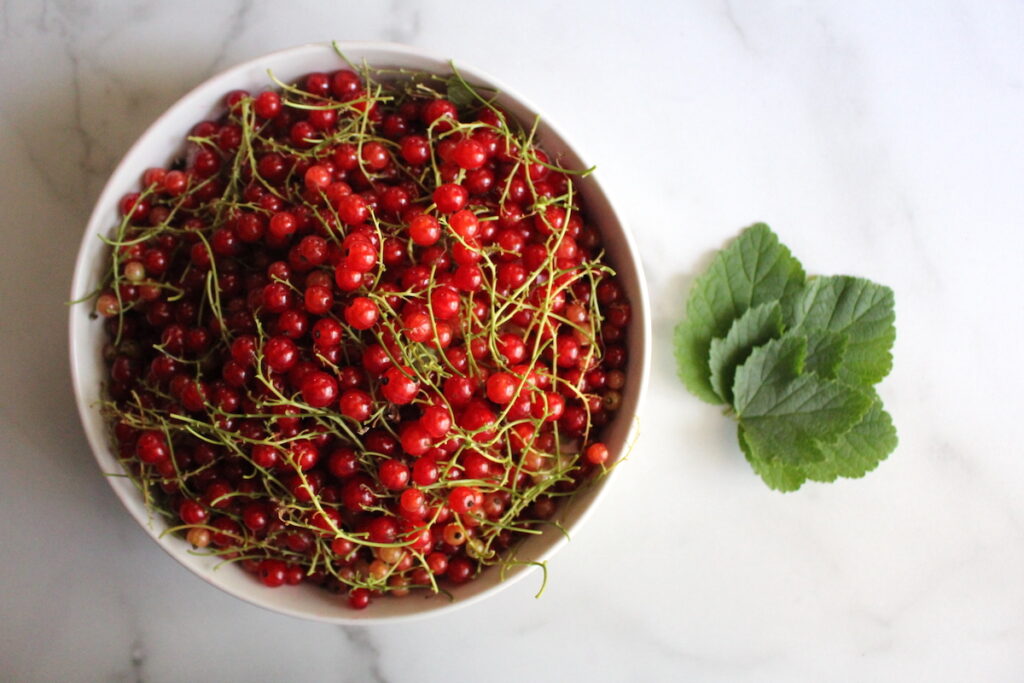
In the past, people added these leaves to their pickle jars because the tannins help slow softening. They still work for traditional fermented pickles, and they’re a fine addition to modern vinegar-canned pickles. That said, they’re not nearly as effective as pickle crisp, and most suburban homes don’t have currant bushes growing in the backyard anymore.
We grow a lot of our own fruit and have huge orchards, so I do still use them, and while they add some firmness and a lovely flavor, they don’t give the crunch that pickle crisp does.
Overnight Salting or Ice Baths
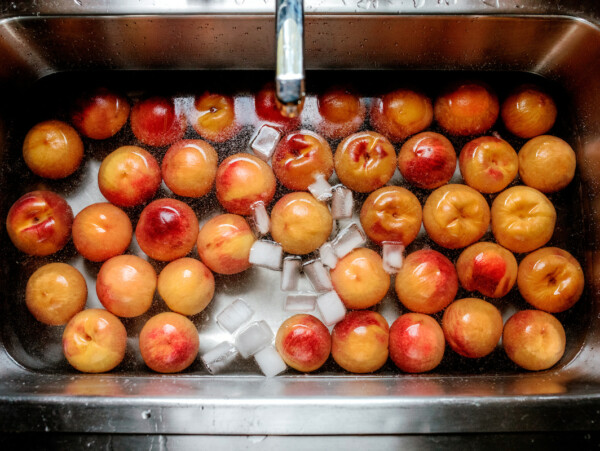
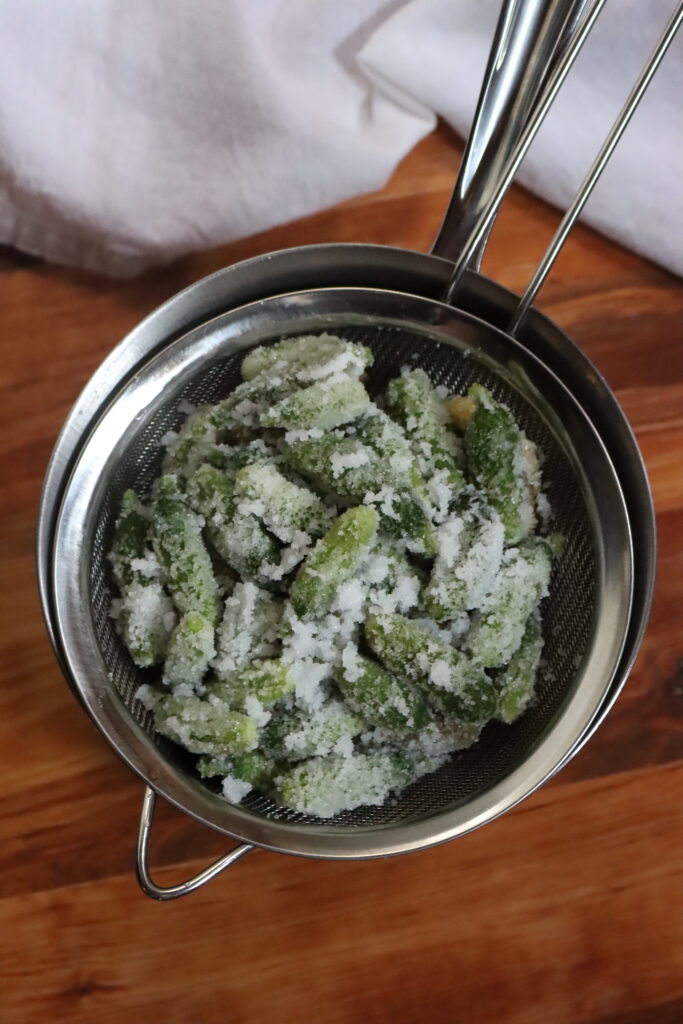
Soaking cucumbers in salt or ice water before pickling helps improve texture slightly by firming up the cucumbers. It’s still a good step to take, especially for large cucumbers, but it won’t guarantee crunch without calcium chloride.
If your recipe calls for these steps, it’s still important to do them, as process heavy recipes sometimes require these steps even if you’re also using pickle crisp. Calcium chloride is meant to be added to recipes as written, and shouldn’t take the place of other steps in the recipe.
Trimming the Blossom End
Always cut about 1/16 inch from the blossom end of each cucumber before pickling. That end contains enzymes that break down pectin and cause softening, even in the jar. That’s always recommended in any cucumber pickling recipe, regardless of whether you’re using a firming agent or not.
The thing is, it’ll prevent really soggy pickles, but it won’t make crisp ones. And, of course, that trick only works for cucumbers.
Making Crisp Canned Goods
Calcium chloride is one of those small, behind-the-scenes ingredients that quietly makes a big difference in the quality of your home-canned goods. It won’t make limp produce crisp again, and it won’t change canning safety, but it does help your pickles and vegetables hold their texture beautifully through processing and storage.
If you like a firm, crisp pickle, or you just want your canned tomatoes and beans to look a little more like the ones from the store, calcium chloride is a simple, science-backed tool worth keeping in your pantry.
FAQs: Using Calcium Chloride (Pickle Crisp)
Yes. Calcium chloride is approved by the National Center for Home Food Preservation and recognized as safe by the FDA. It doesn’t change the acidity, flavor, or safety of your recipe. It simply helps maintain a crisp texture.
Most guides suggest adding ⅛ teaspoon per pint or ¼ teaspoon per quart. Some sources suggest that up to ¾ tsp per pint or 1 ½ tsp per quart may be helpful for veggies that need to be extra crisp (but don’t add more beyond that). Sprinkle it directly into each empty jar before packing your food and liquid, and process as usual.
Yes, you can safely add calcium chloride to any tested canning recipe. It’s especially helpful for vinegar pickles, canned vegetables, and tomato products where you want the pieces to hold their shape during storage.
No. Calcium chloride is flavorless, odorless, and doesn’t alter acidity levels when used in small amounts. If you use excessive amounts, it can sometimes give food a bitter, salty or metallic taste, but that’s only in very large amounts that aren’t really necessary or useful in canning.
Canning Tutorials
Looking for more answers to common canning questions?