This post may contain affiliate links. Please see our disclosure policy.
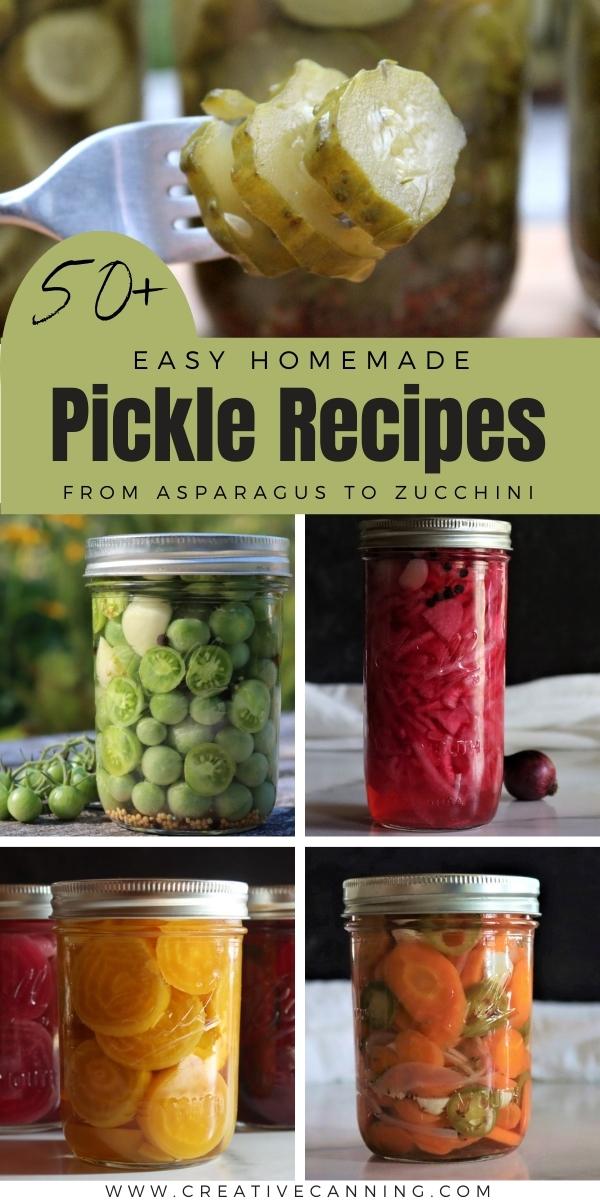
Pickling recipes go way beyond simple cucumber pickles! Learn how to pickle vegetables of all types, made with vegetables from Asparagus to Zucchini. Believe it or not, you can also pickle fruits, so I’ve included fruit pickling recipes as well.
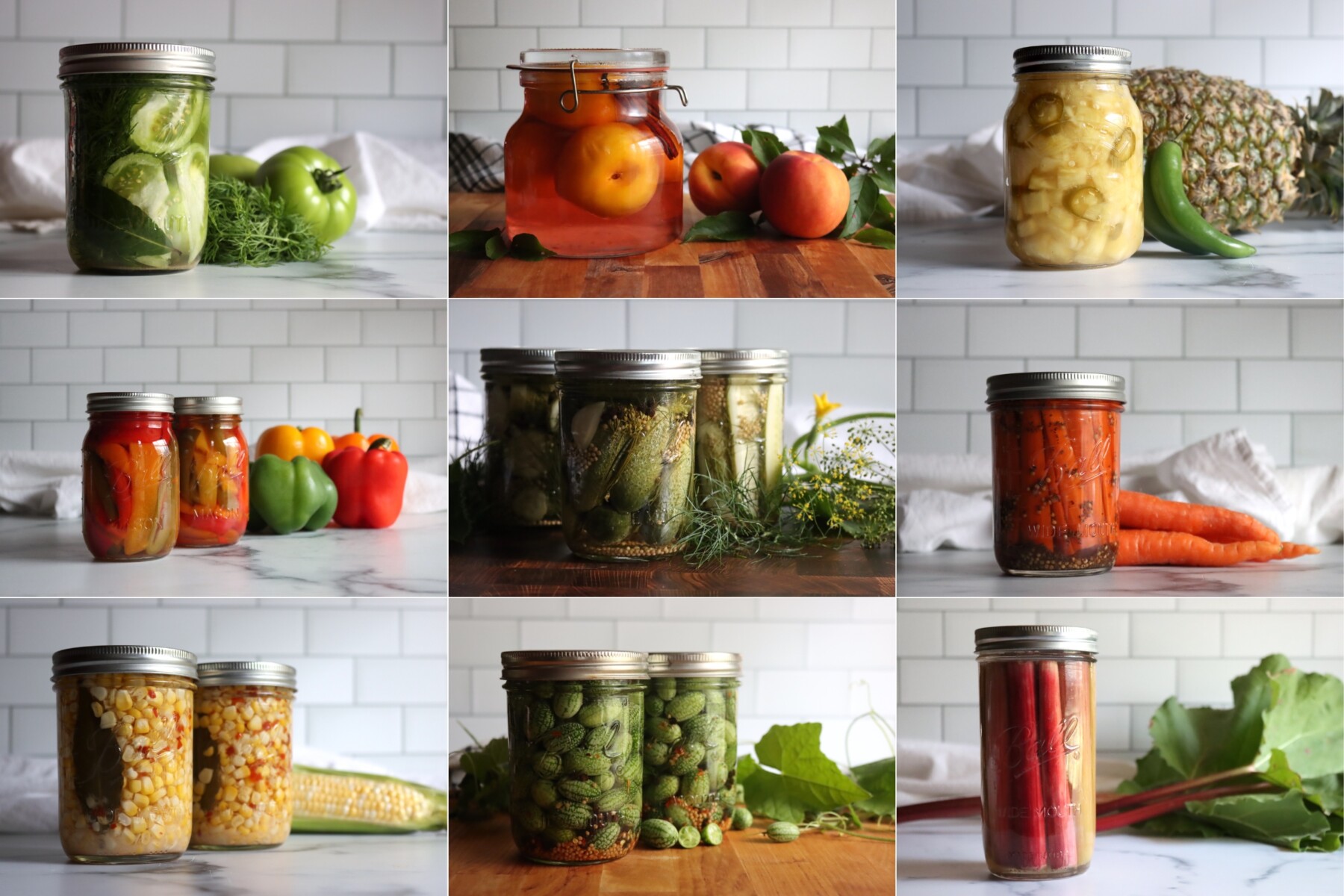
Table of Contents
- Pickling Basics
- Vegetable Pickling Recipes
- Asparagus
- Beets
- Brussels Sprouts
- Cabbage
- Carrots
- Cauliflower
- Corn
- Cucumbers
- Daikon
- Eggplant
- Fennel
- Fiddleheads
- Garlic
- Garlic Scapes
- Ginger
- Green Beans
- Kohlrabi
- Mushrooms
- Okra
- Onions
- Peas
- Peppers
- Pumpkin
- Radishes
- Ramps
- Spring Onions
- Sunchokes (Jerusalem Artichokes)
- Swiss Chard
- Tomatillos
- Tomatoes
- Turnips
- Zucchini and Squash
- Fruit Pickling Recipes
- Apples and Crabapples
- Apricots
- Blackberries
- Blueberries
- Cherries
- Cranberries
- Figs
- Grapes
- Peaches
- Pears
- Pineapple
- Plums
- Rhubarb
- Strawberries
- Watermelon Rind
- Relish Recipes
When most people think about pickles, they go straight to cucumber pickling recipes like dill pickle spears, bread and butter pickles, or sweet gherkins. They’re classics for a reason, but cucumbers are just one small corner of the pickling world.
Once I started canning more of our garden harvest here in Vermont, I realized just how many things improve with a good brine. Dilly beans became an easy way to preserve green beans, and pickled carrots quickly turned into one of my family’s favorite snacks. From there, it just kept expanding.
This roundup includes both tested water bath canning recipes and refrigerator pickles, so you can find something whether you want shelf-stable jars for the pantry or just a quick batch for the fridge. If your garden is producing faster than you can eat it fresh, pickling is often the most flavorful answer.
Pickling Basics
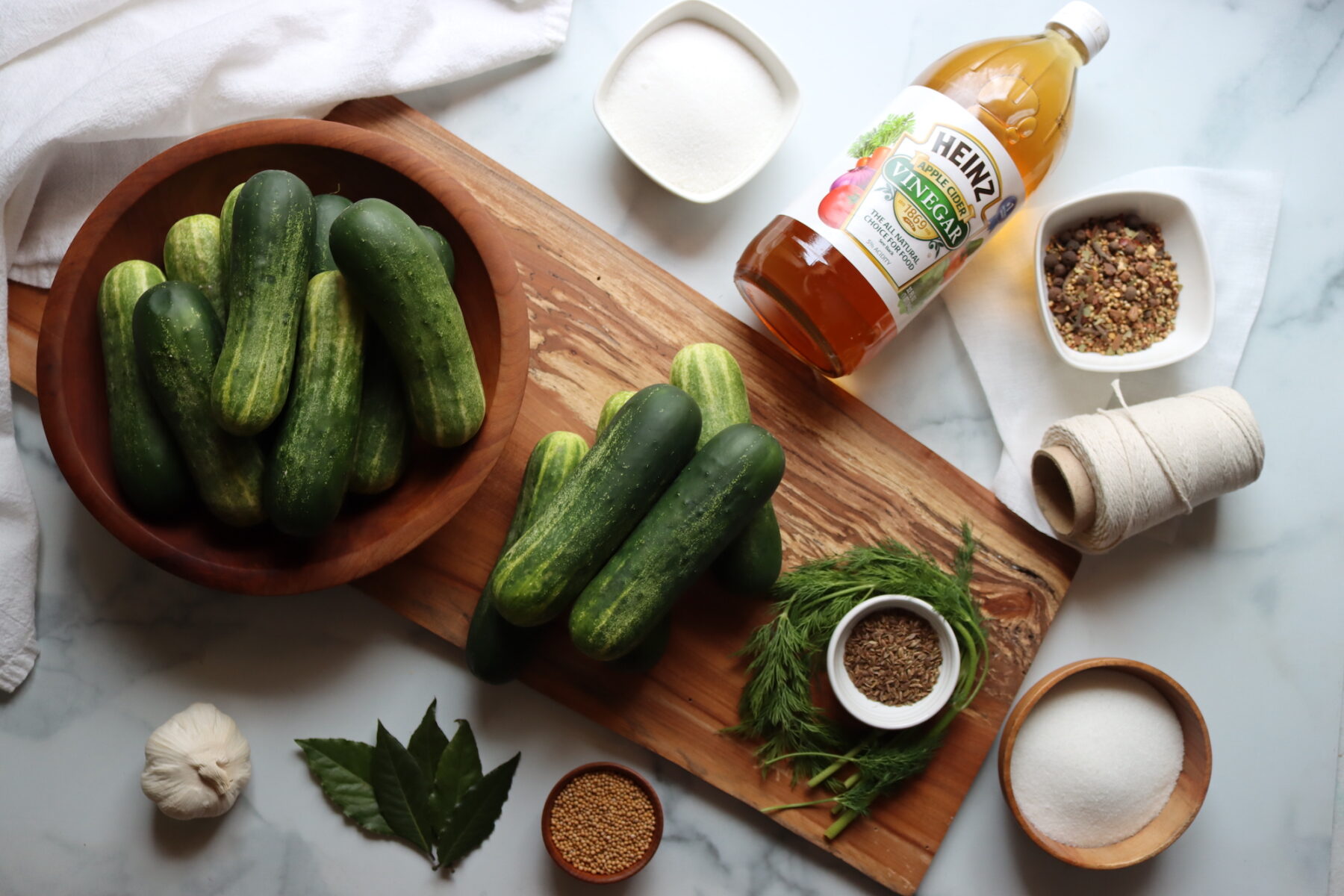
At its core, pickling is simple: produce, vinegar, salt, and seasonings. The one part you should never improvise is the acid level. For safety, stick with a tested recipe and use vinegar that’s labeled at 5% acidity.
In most canning recipes, the brine is at least half vinegar. So if a recipe includes water, juice, or wine, there’s usually an equal amount of 5% vinegar to keep the balance safe. Distilled white vinegar and apple cider vinegar are the most common choices, but other vinegars can work too if they’re properly standardized. Always check the label, since many rice vinegars are lower in acidity and not a straight substitute.
Salt, sugar, and spices are where the flavor comes in. Garlic, dill, mustard seed, coriander, peppercorns, bay, and chile flakes all show up often in pickle brines. You can usually adjust the dry spices to suit your taste, but don’t reduce the vinegar or otherwise change the tested brine ratio.
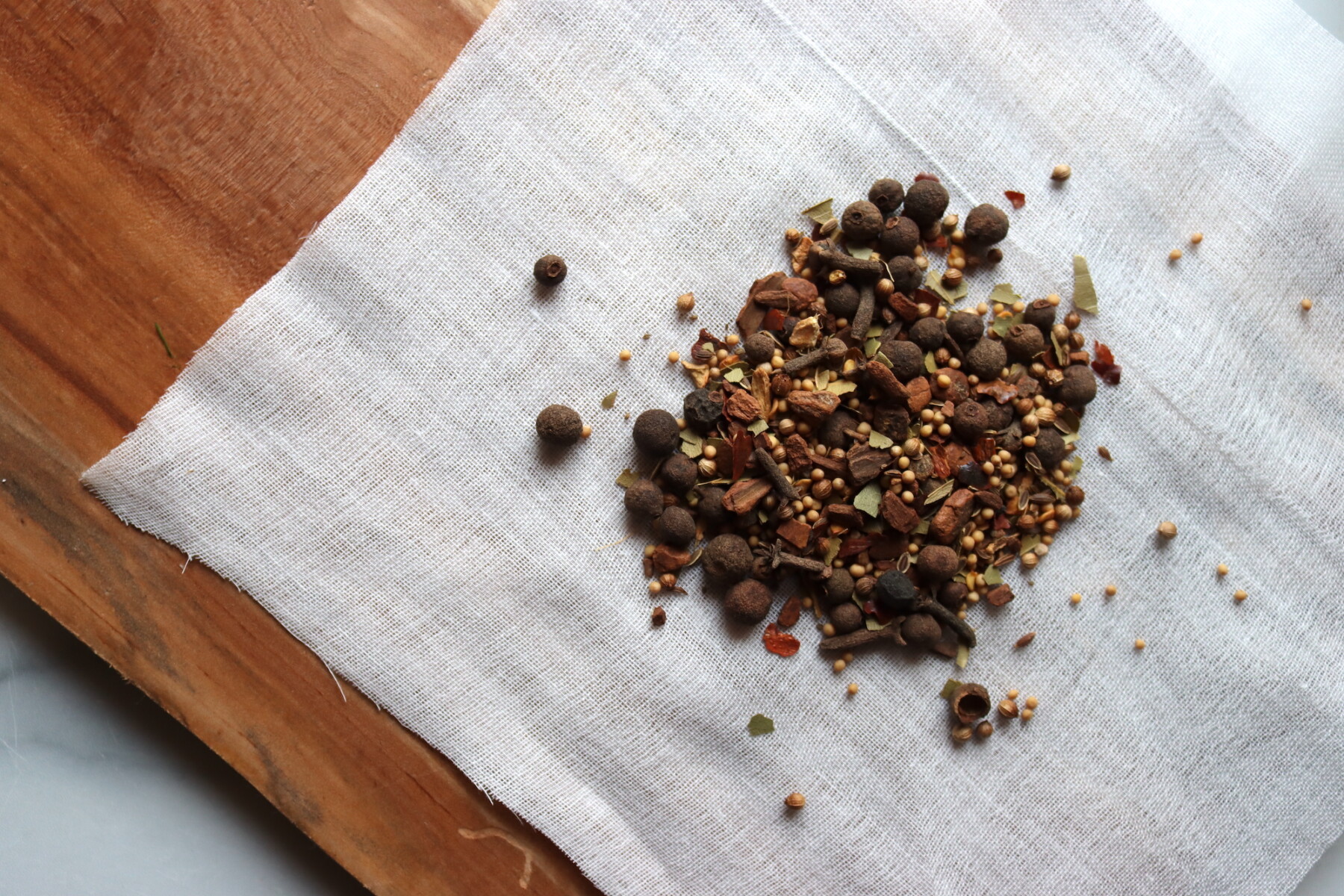
If you want to make your own blends, try this recipe for homemade pickling spice. You can even pickle unusual ingredients like green coriander seeds from cilantro plants.
Crisp Pickles
If you want crisp pickles, start with very fresh produce. Small, firm fruits and vegetables always pickle better than oversized or slightly limp ones, and the sooner they go into the brine after harvest, the better the final texture will be.
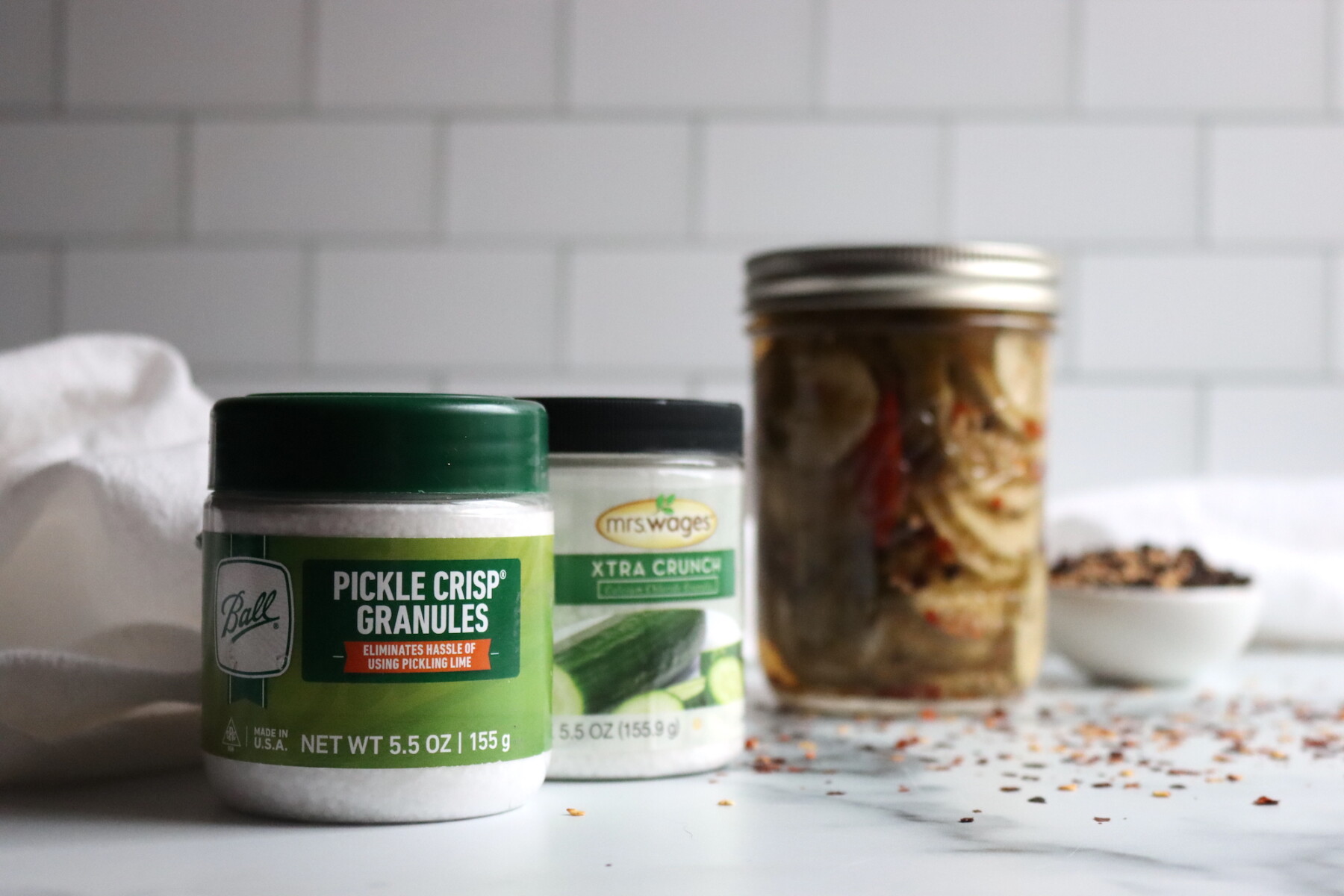
For extra crunch, I usually rely on calcium chloride (Pickle Crisp or Xtra Crunch) or traditional tannin sources like grape leaves, oak leaves, or a little black tea. Those can help a lot, but they won’t rescue produce that started out soft.
Canning Pickles
For pantry storage, pickles are usually processed in a boiling water bath canner. Because the brine is acidic, they don’t need pressure canning, but they do need a tested recipe with the right vinegar balance.
Most recipes follow the same basic pattern: pack the produce into jars, add spices, pour over hot brine, leave the headspace called for in the recipe, and process. Many pickle recipes use 1/2 inch headspace and process pint jars for roughly 10 to 15 minutes, but always follow the exact directions for the specific recipe you’re using.
Quick Refrigerator Pickles
Not every pickle has to be canned. Refrigerator pickles are fast, easy to make in small batches, and perfect for ingredients that don’t have tested shelf-stable canning recipes. They’re especially handy when you just want a jar or two for snacking or sandwiches.
These need to be stored in the refrigerator and used within a few weeks. They’re not pantry stable, but they’re a great way to preserve crunch and make use of small harvests.
Any pickle canning recipe can be converted to quick pickling recipe, just skip the canning step and store them in the refrigerator.
Vegetable Pickling Recipes
Vegetables are where most people start, and for good reason. Some stay wonderfully crisp, some soak up the brine like a sponge, and some take on completely different flavors once pickled.
Asparagus
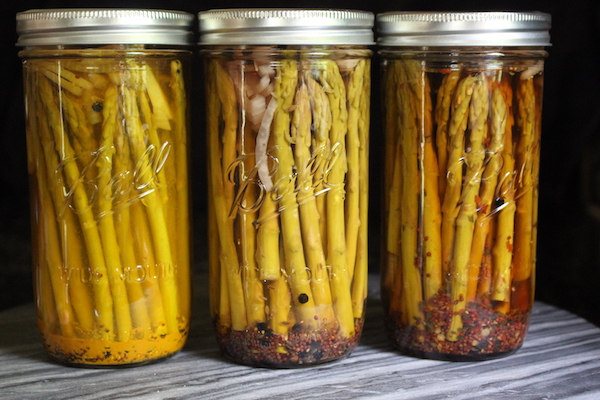
Pickled asparagus is one of my favorite early-season pickles because it keeps a surprisingly good texture and feels a little more special than the usual cucumber jar. It’s excellent on a relish tray, tucked next to smoked fish, or served with brunch.
Asparagus also takes well to different flavor profiles, from classic dill to spicy garlic brines. If you have a short asparagus season and want something beyond freezing, this is a good place to start.
Beets
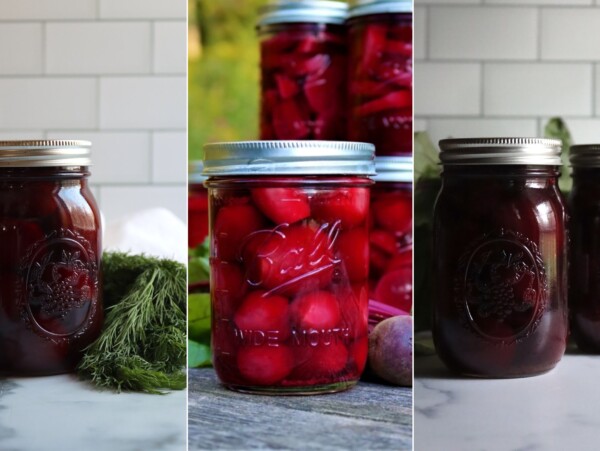
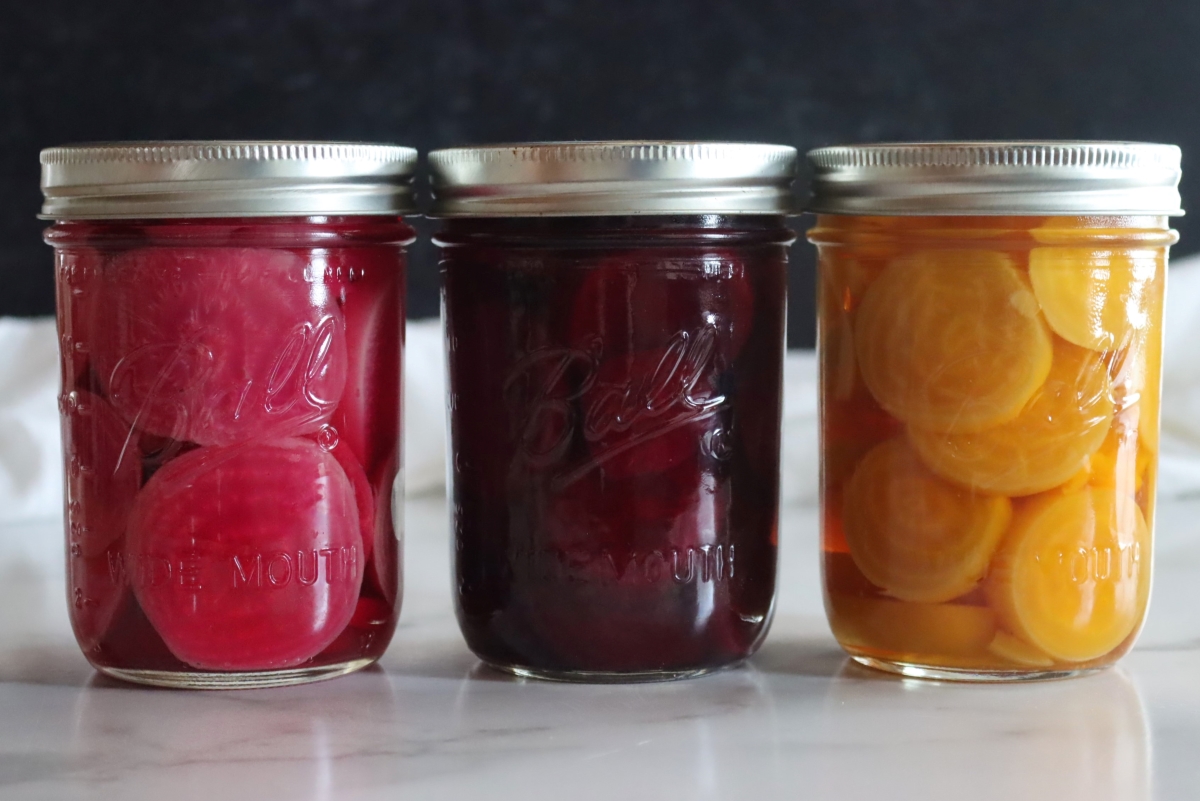
Pickled beets are an old-fashioned staple for a reason. They hold their shape well, the sweet-earthy flavor works beautifully with vinegar, and they keep that rich color that looks gorgeous on the table.
They’re good straight from the jar, but I use them most often in salads, alongside roast meats, or as part of a simple lunch plate with cheese and bread. If you grew up with pickled beets on the table, these are pure nostalgia.
Brussels Sprouts
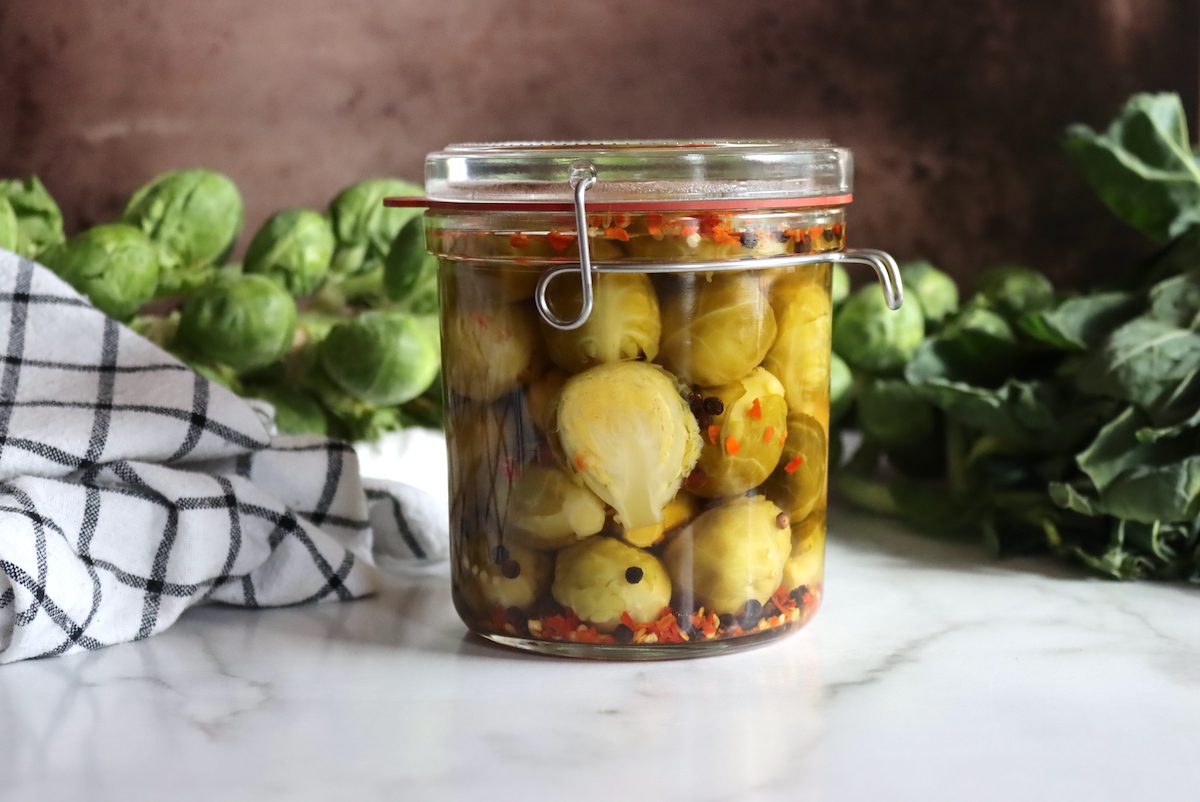
Brussels sprouts make surprisingly good pickles. They stay firm, soak up the brine well, and have enough natural sweetness to balance sharp vinegar flavors.
If you like bold, savory pickles for charcuterie boards or cocktail garnishes, pickled Brussels sprouts are worth trying. They’re one of those pickles that tend to win people over unexpectedly.
Cabbage
Cabbage shows up in all kinds of pickle recipes, from plain pickled red cabbage to mixed vegetable relishes, chow chow and piccalilli recipes. It has enough structure to hold up in brine, and it takes on sweet, sour, and spiced flavors especially well.
I especially like pickled cabbage with roast pork, sausages, sandwiches, and anything rich that benefits from a bright, vinegary contrast. It’s also one of the easiest ways to preserve extra cabbage without taking up freezer space.
Carrots
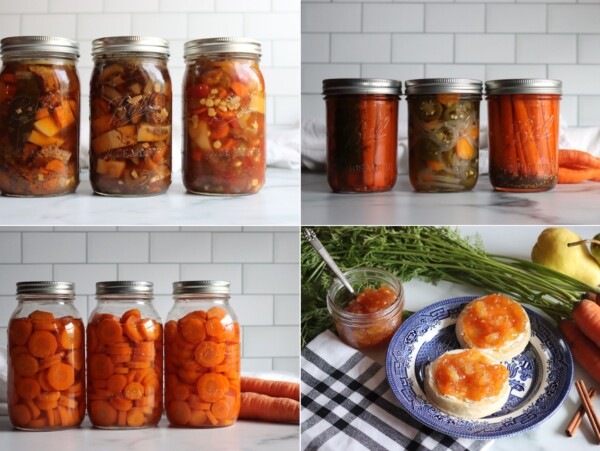
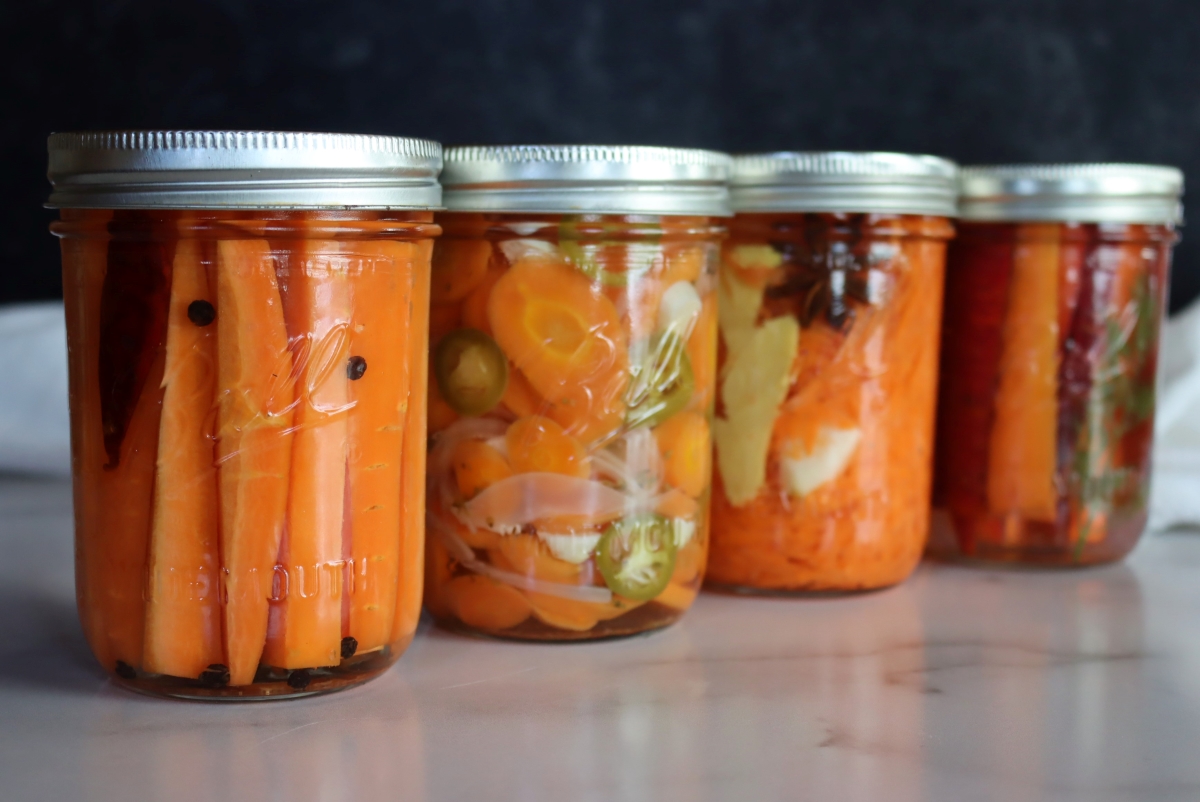
Pickled carrots are one of the best snacking pickles in the pantry. They stay crisp, they’re naturally sweet, and they work with all kinds of spice blends, from classic mustard seed brines to hot pepper versions and Asian-inspired combinations.
They’re equally at home on appetizer trays, tucked into lunch boxes, or chopped into salads. If you want a pickle that appeals to almost everyone, carrots are an easy win.
- Classic Pickled Carrots
- Mexican Pickled Carrots
- Spicy Pickled Carrots
- Vietnamese Carrot and Radish Pickle
Cauliflower
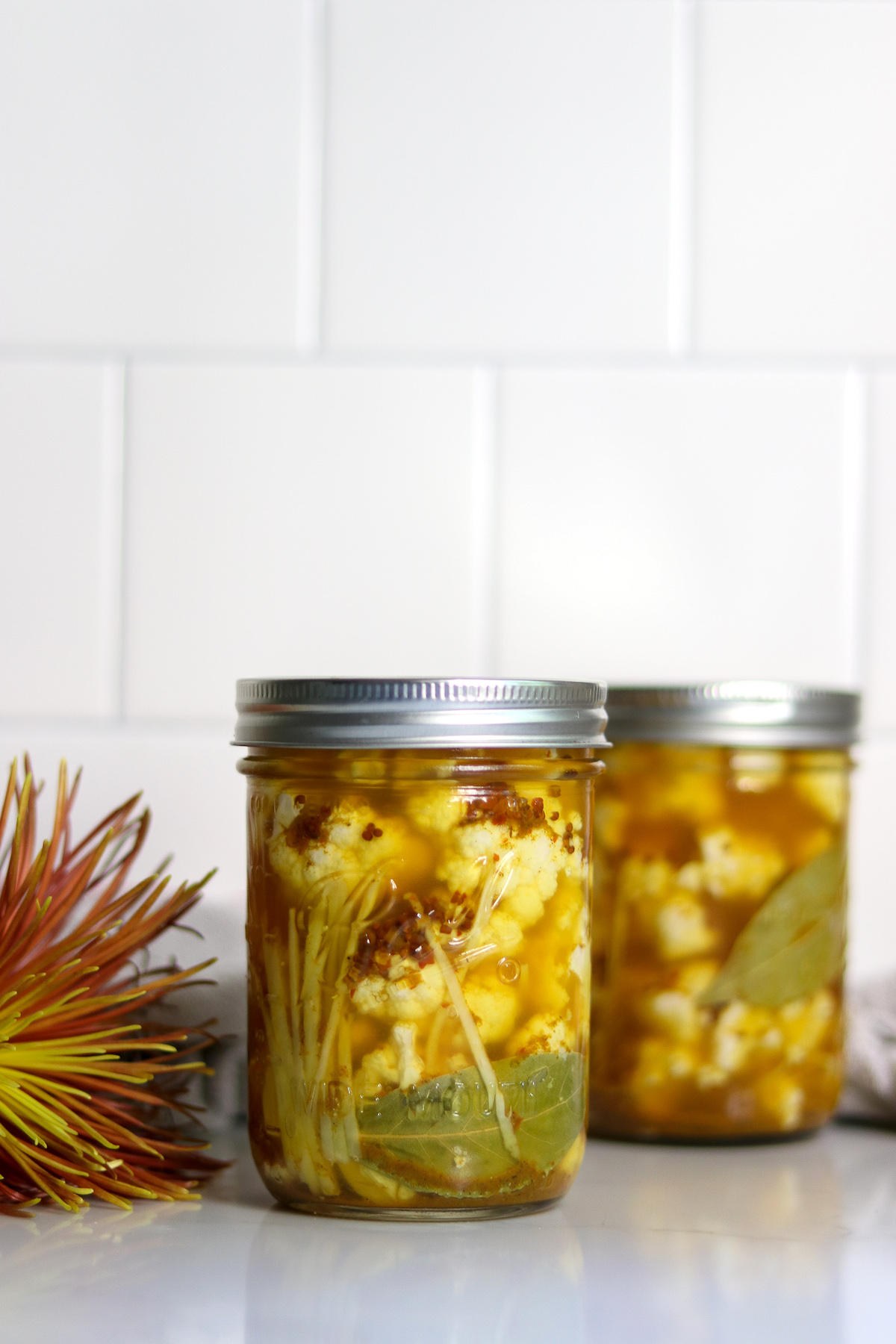
Cauliflower is one of those vegetables that really shines in pickles because it takes on whatever flavor you give it. Curry spices, garlic, chile, and mustard all work especially well here, and the florets hold enough texture to stay interesting.
Pickled cauliflower is a natural fit for antipasto platters, snack boards, and chopped salads. It also happens to be one of the few really flavorful ways to preserve cauliflower for longer storage.
Corn
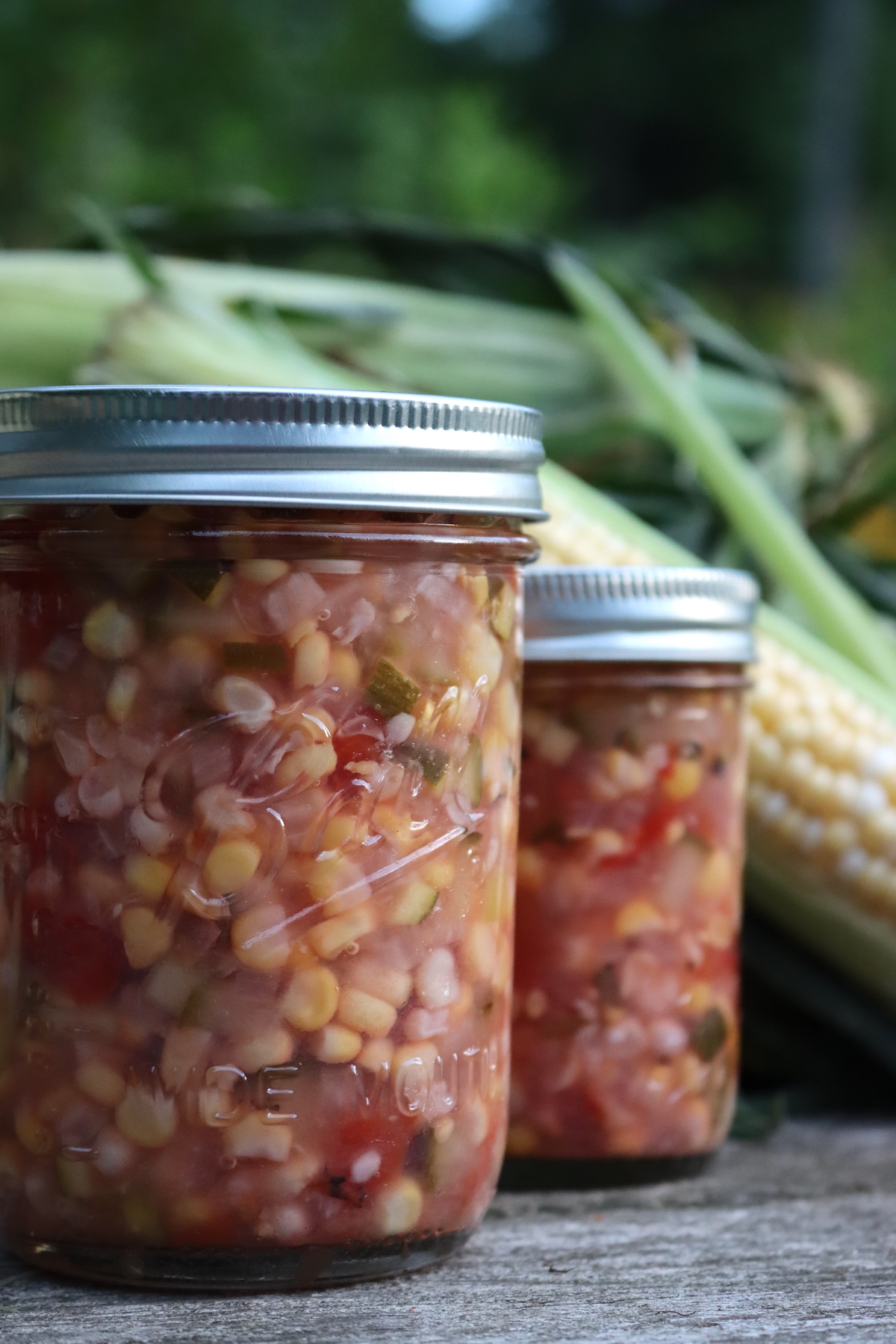
Pickled corn has a completely different feel from plain canned corn. It’s bright, a little sweet, and often a little spicy, which makes it perfect for tacos, bean salads, pasta salads, and relishes.
If you have a summer glut of sweet corn, this is a great way to preserve some of it in a form that’s ready to use as a condiment instead of a side dish. I especially like it in Southwestern-style recipes.
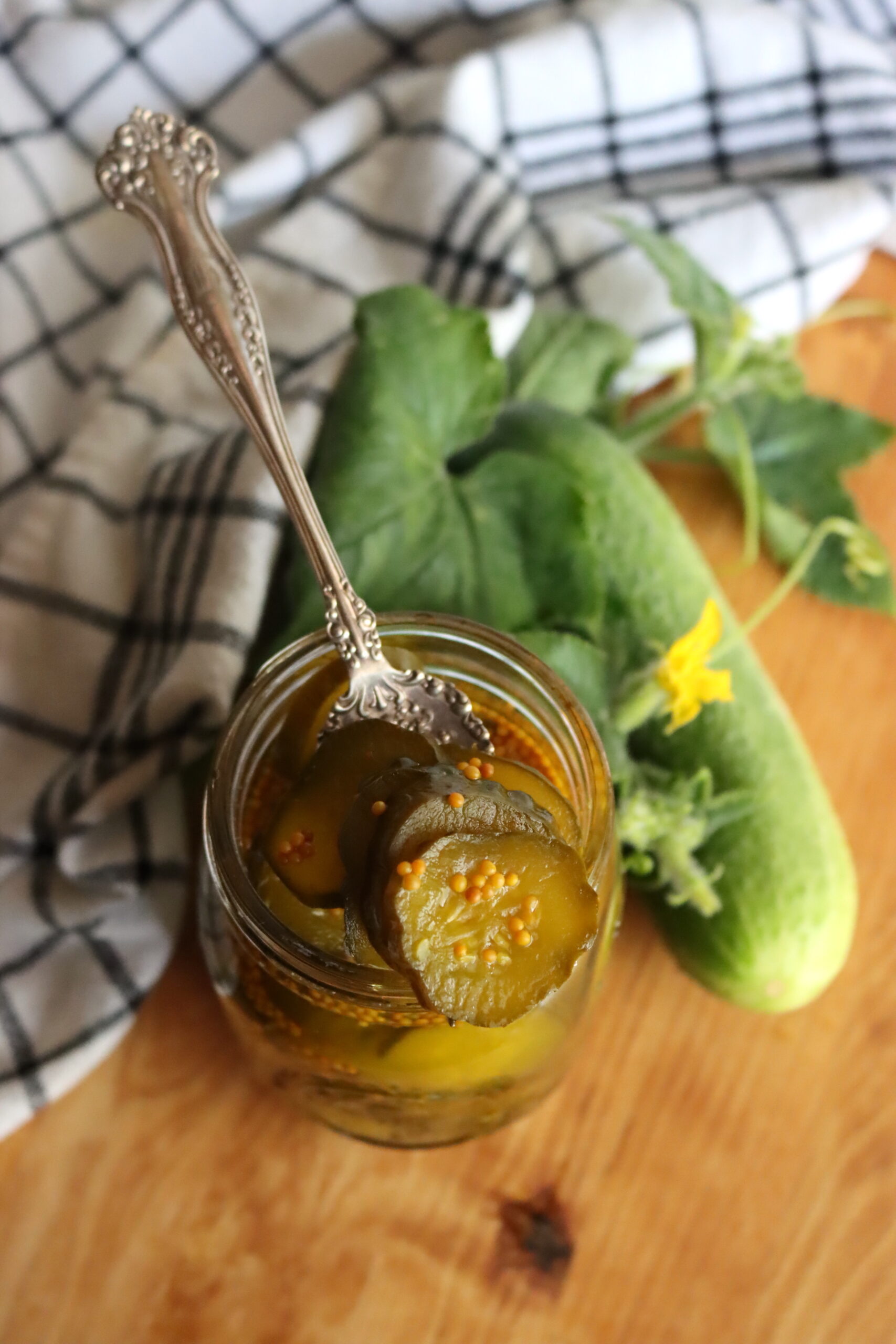
Cucumbers
Cucumbers may be the classic pickle, but there’s a lot more range here than most people realize. You can go sweet, sour, garlicky, old-fashioned, deli-style, European, or long-cured, all from the same basic vegetable.
If you’re specifically looking for cucumber ideas, this is really a category all its own. From crisp dill spears to bread and butter pickles to cornichons and heritage recipes, there’s enough variety here to keep a canner busy all season.
For even more cucumber pickle recipes, see my complete guide to 30+ Cucumber Pickle Recipes.
- Bread and Butter Pickles
- Dill Pickle Spears
- Dill Pickle Slices
- Garlic Dill Pickles
- Kosher Dill Pickles
- Sour Pickles
- Sweet Cucumber Pickles
- Sweet Gherkin Pickles
- Traditional French Cornichons
- German Mustard Pickles (Senfgurken)
- Danish Asier Pickles
- Russian Bear Claw Pickles
- Vermont Maple “Tongue” Pickles
- Old Fashioned 14-Day Sweet Pickles
- Old Fashioned Cucumber Lime Pickles
- Cucamelon Pickles
Daikon
Daikon is one of the most widely pickled vegetables in the world, especially in East Asian cuisines. It stays crisp, takes on flavor well, and works beautifully in everything from quick sandwich pickles to more traditional preparations.
These are especially good alongside Vietnamese and Korean dishes, but they’re just as useful in grain bowls, rice plates, or tucked into sandwiches that need a little crunch and brightness.
- Quick Pickled Carrots & Daikon Radishes
- Danmuji (Korean Pickled Daikon Radish)
- Vietnamese Carrot and Radish Pickle
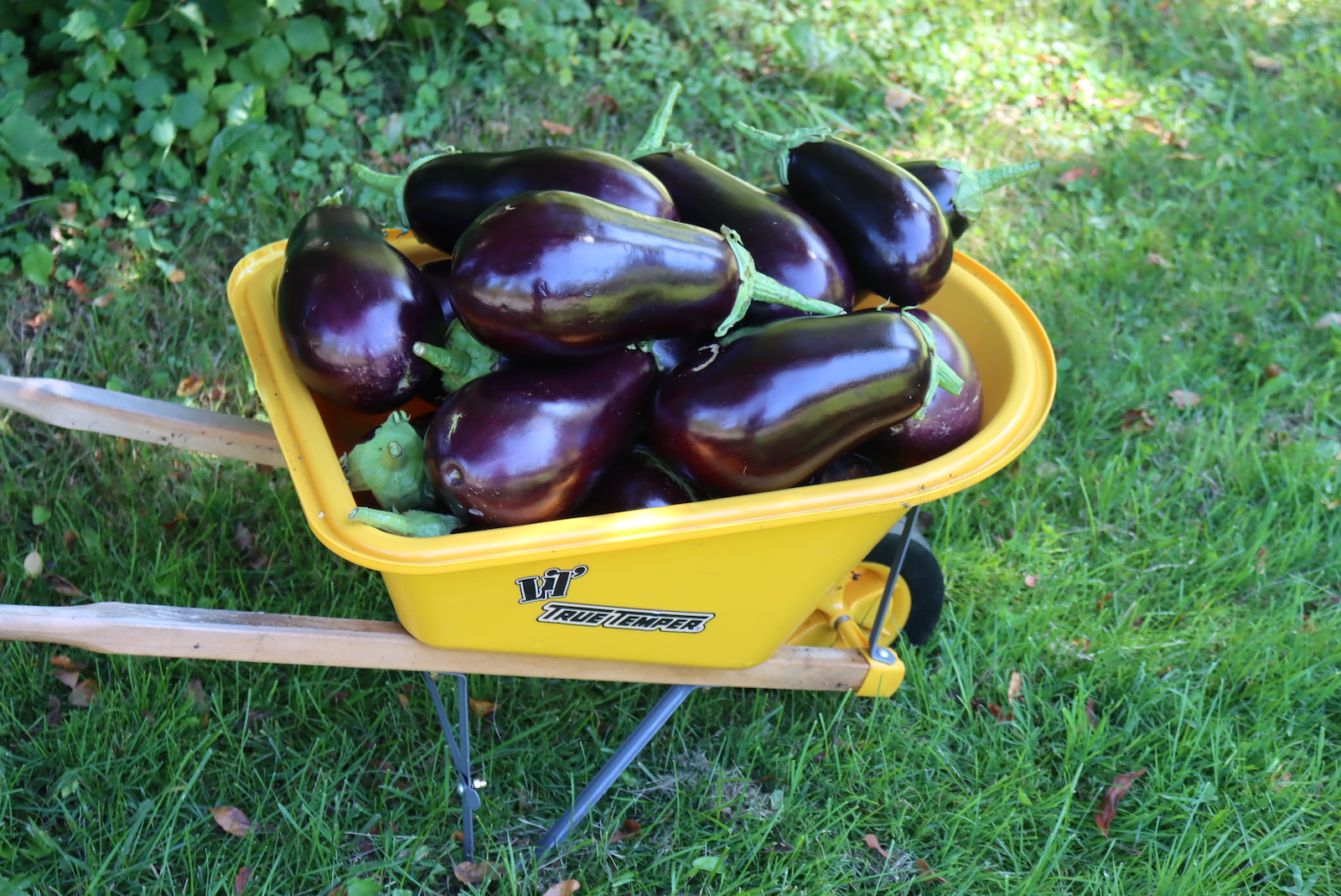
Eggplant
Eggplant is one of the trickier garden crops to preserve, which is part of why pickled versions are so useful. Safe recipes rely on plenty of added acid, but the payoff is a flavorful antipasto-style preserve that works far better than plain eggplant ever would in a jar.
Eggplant pairs beautifully with garlic, oregano, and other Mediterranean flavors. Serve it on sandwiches, with cheese and cured meats, or as part of an appetizer spread.
Fennel
Pickled fennel has a bright, aromatic flavor that works beautifully with grilled meats, seafood, and salads. It’s one of those pickles that feels a little fancy without actually being difficult.
Orange, star anise, and warm spices pair especially well with fennel’s natural sweetness, so this is a fun one if you like pickles that lean a little more elegant than everyday deli-style jars.
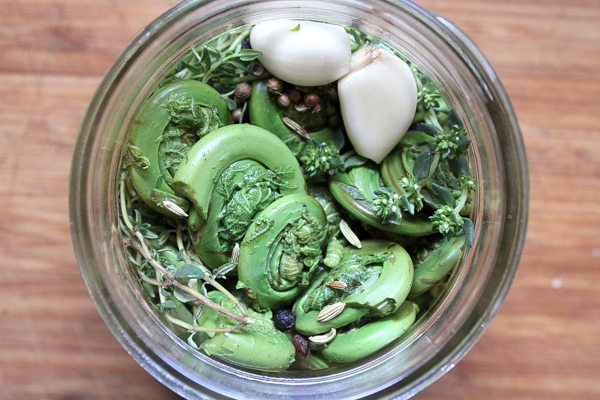
Fiddleheads
Fiddleheads have such a short harvest window that pickling them makes a lot of sense if you want to enjoy them beyond a few spring weeks. Their grassy, slightly nutty flavor works surprisingly well in a sharp brine.
This is one of those specialty pickles that feels very seasonal and very worth putting up while you can still get them.
Garlic
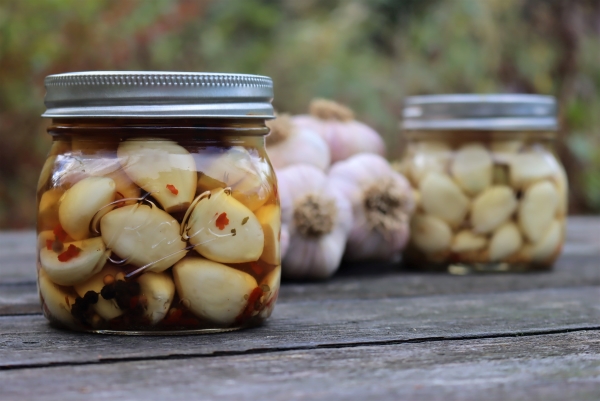
Pickled garlic makes a great snack on its own and is excellent on antipasto platters, in salads, or tucked next to roasted meats and cheeses. The flavor mellows in the brine, which makes it much easier to eat straight from the jar than raw garlic ever would be.
Garlic Scapes
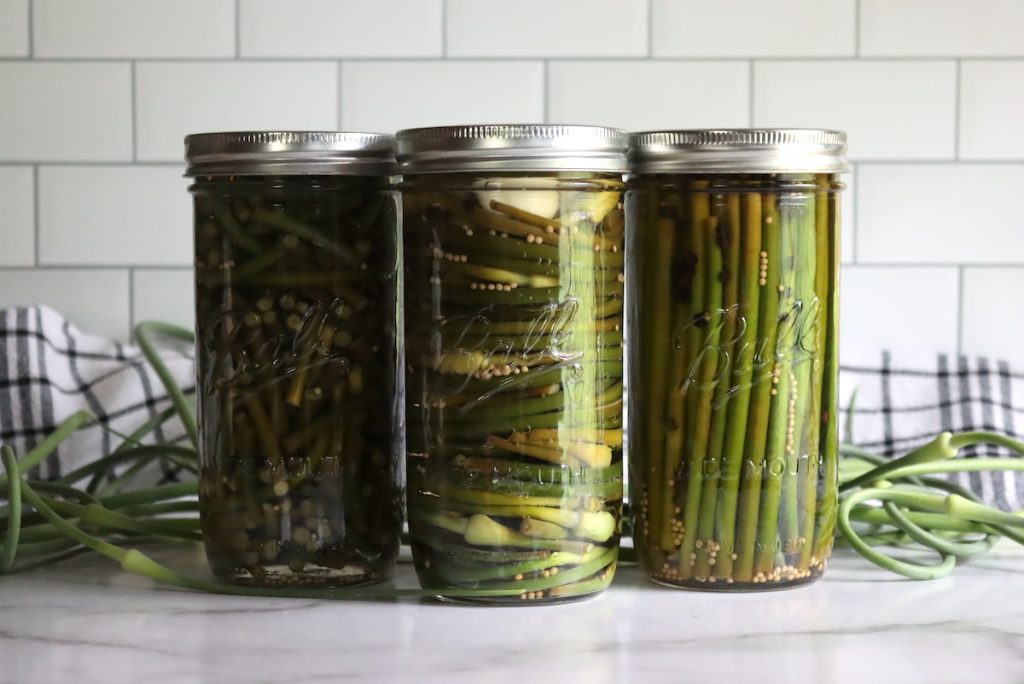
Garlic scapes are one of the easiest spring pickles to love. They keep a nice crunch, have a milder garlic flavor than cloves, and look beautiful in the jar.
They’re great on appetizer platters, chopped into salads, or served alongside grilled meats. If you grow hardneck garlic, this is one of the best ways to use that brief scape season.
Ginger
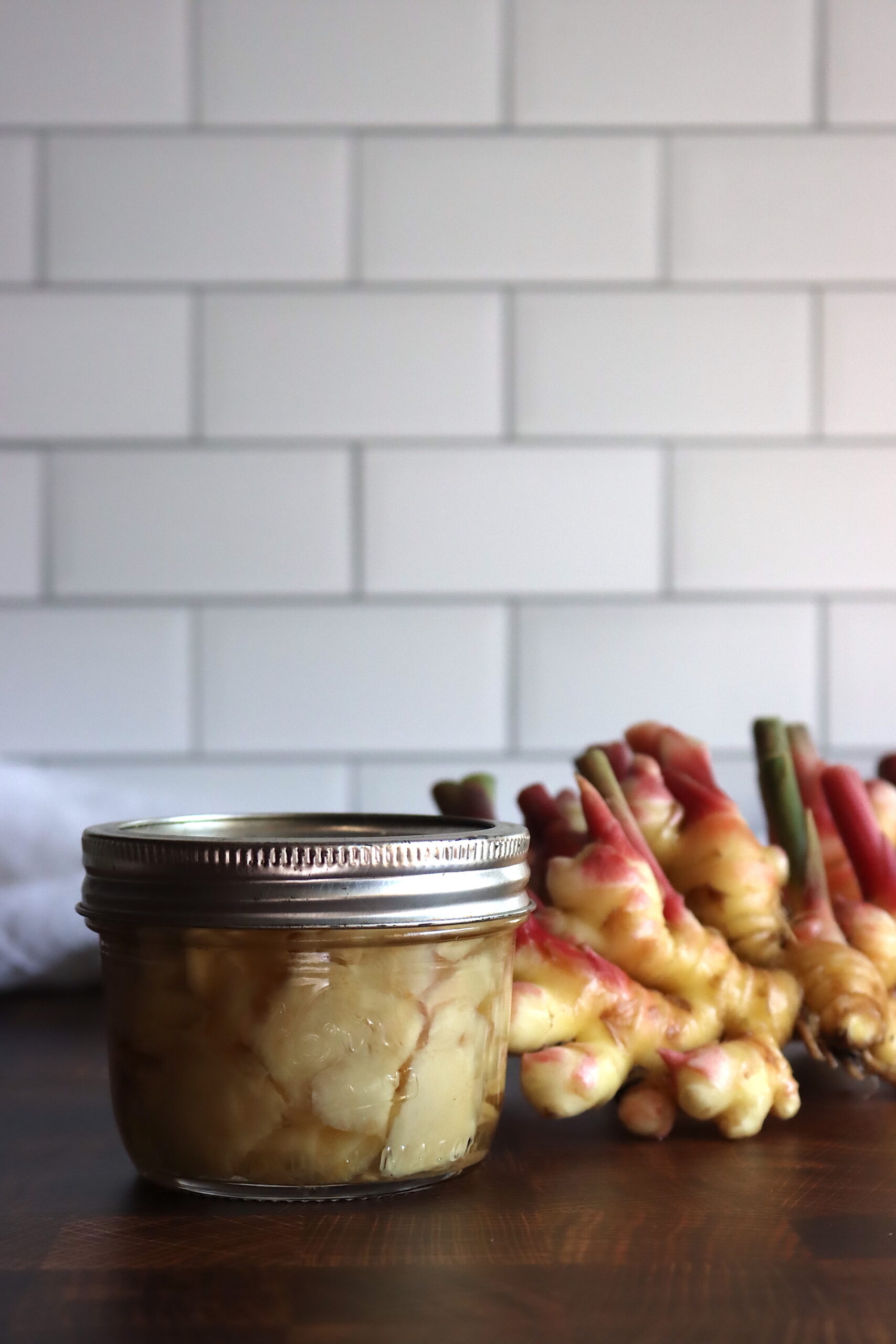
Pickled ginger, or gari, is one of the most recognizable specialty pickles. It’s commonly served with sushi and sashimi, but it’s also great anywhere you want something sharp, clean, and palate-cleansing.
If you make sushi at home, homemade pickled ginger is absolutely worth the effort. The flavor is fresher and brighter than most store-bought versions.
Green Beans
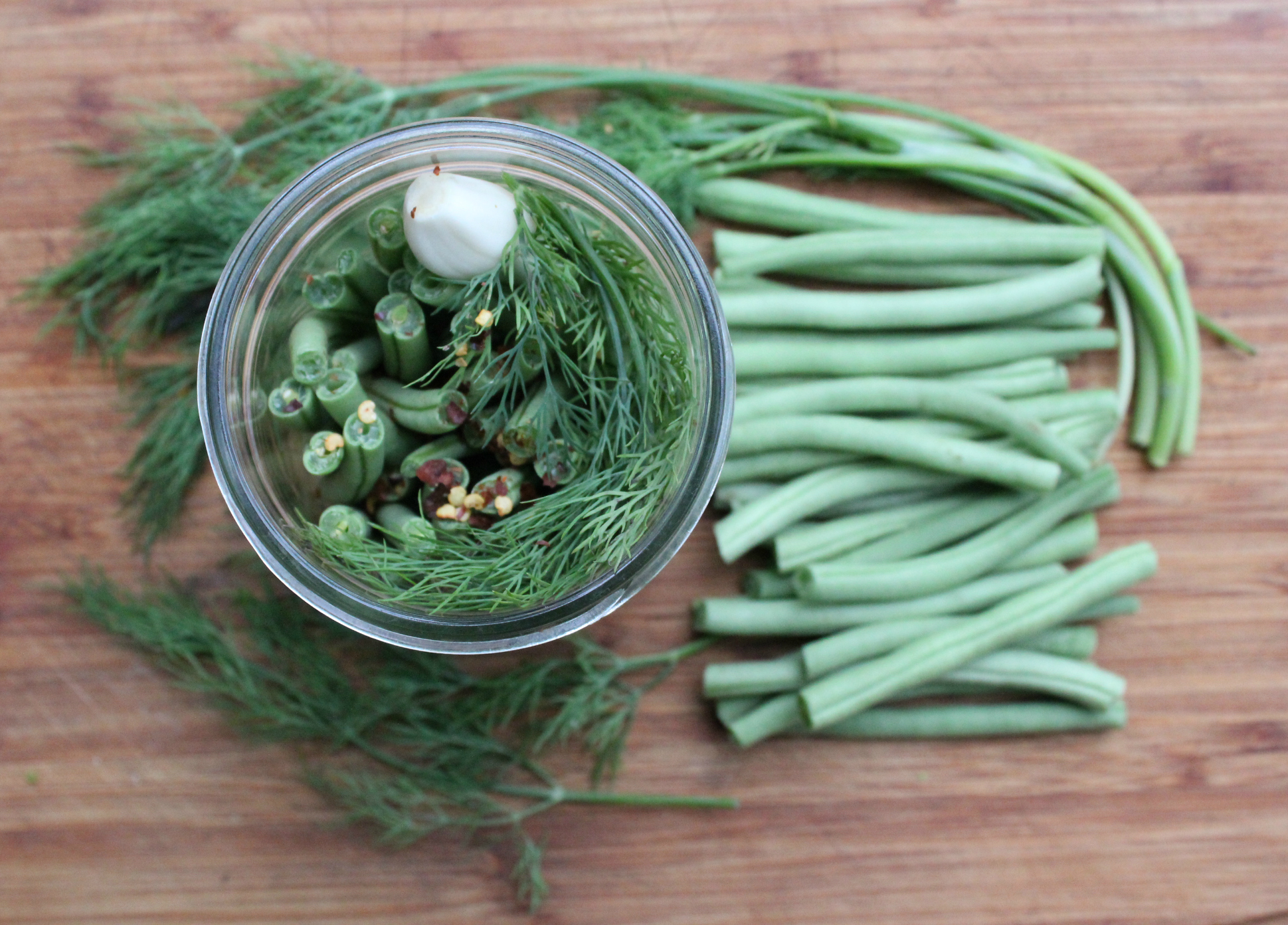
Green beans soak up whatever flavors you put in the brine, which is why they’re such a natural pickling vegetable. Dilly beans are the classic version, but spicy and garlicky variations are just as good.
These are one of the handiest jars to have in the pantry because they work as a snack, a garnish, or a side for sandwiches and simple lunches.
Kohlrabi
Kohlrabi is crisp, mild, and a little sweet, which makes it a good candidate for pickling. If you’ve never tried it, think of it as somewhere between a cabbage stem and a tender turnip.
It’s especially good shredded into quick pickles or sliced for burger and sausage plates, where that crunch really stands out.
Mushrooms
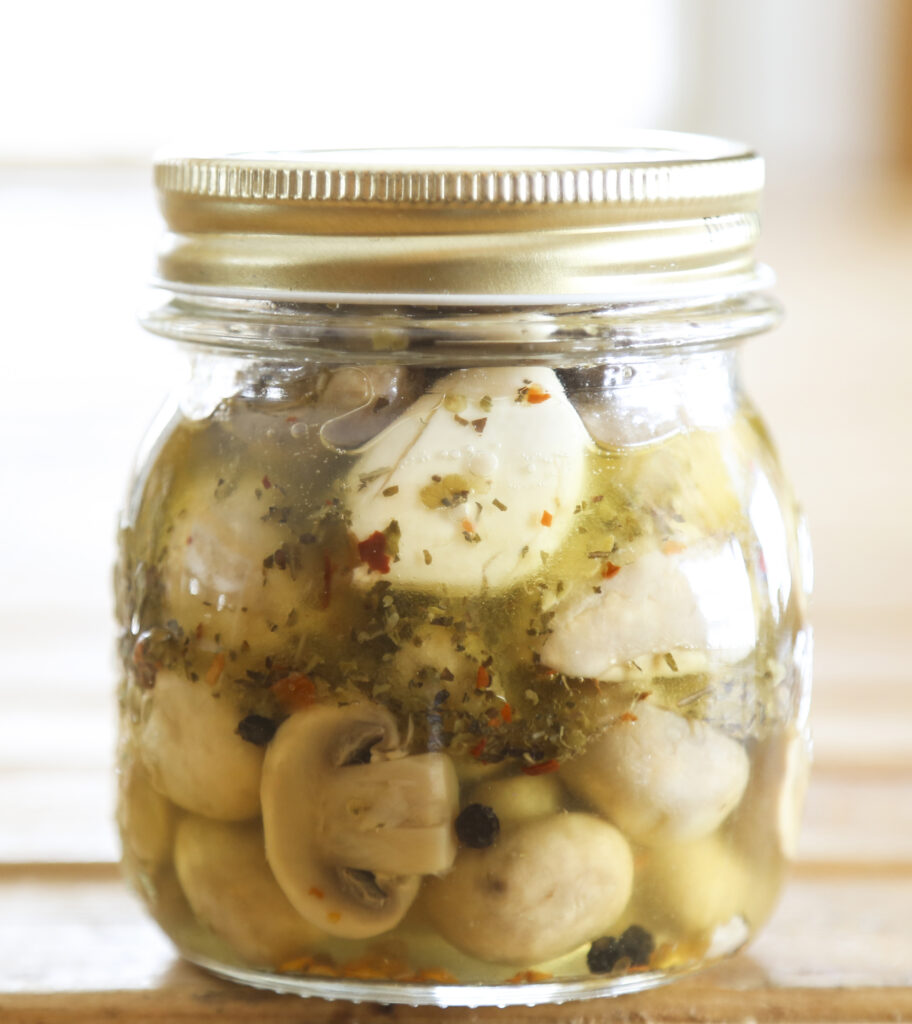
Pickled mushrooms are rich, savory, and endlessly useful. They’re especially good on charcuterie boards, next to roast beef or steak, or spooned onto salads and antipasto plates.
Different mushroom varieties give you different textures and flavors, so this is a fun category to play with if you like pantry recipes that feel a little more gourmet.
Okra
Pickled okra has the kind of crunchy bite that makes it instantly addictive. It’s a Southern classic for relish trays and snack plates, and it’s one of the best ways to preserve okra without dealing with sliminess.
If you grow okra or have access to a big summer crop, this is one of the more rewarding jars to put up.
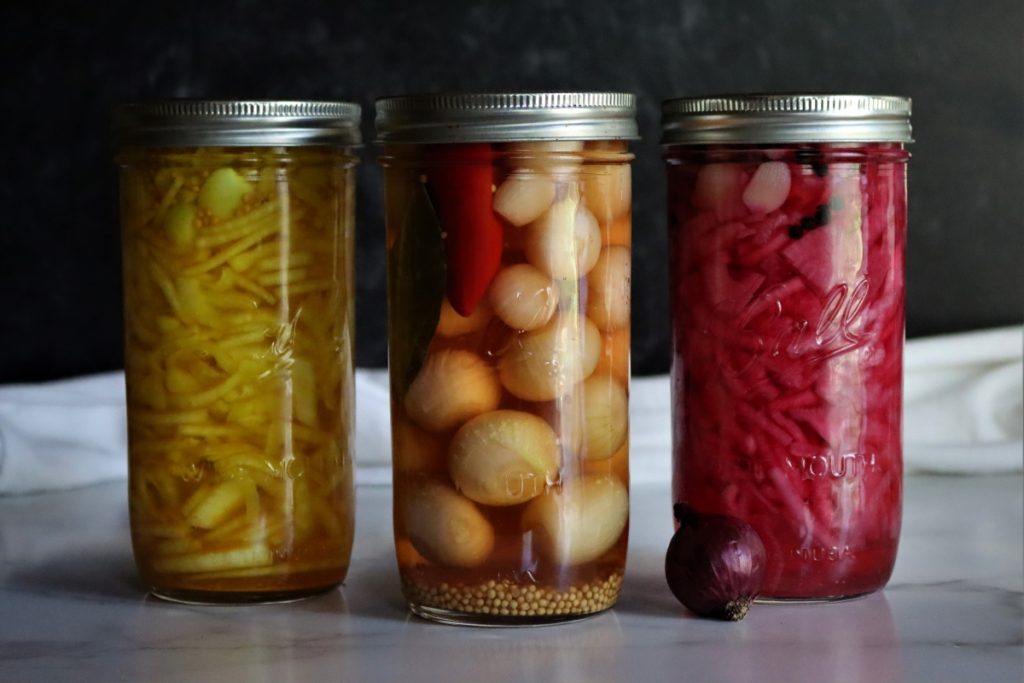
Onions
Pickled onions are one of the most useful condiments you can keep on hand. They add brightness, crunch, and just enough sweetness to wake up tacos, sandwiches, salads, grain bowls, and antipasto plates.
They’re especially nice when you want something sharper than fresh onion but a little more balanced and mellow.
Peas
Peas aren’t the first thing most people think of for pickling, but they handle it surprisingly well. They keep their personality, take on the tang of the brine, and work nicely in salads, pasta dishes, or as little pops of brightness on spring meals.
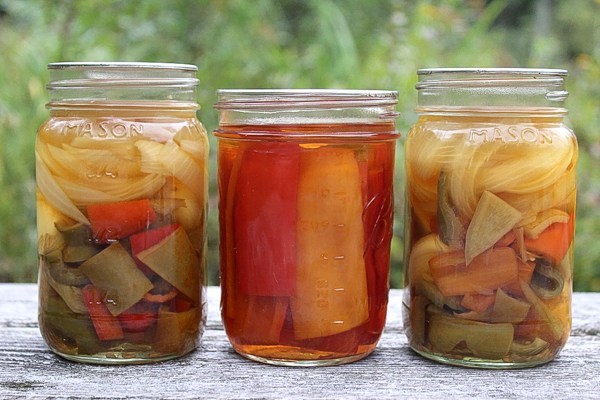
Peppers
Peppers are one of the most rewarding crops to pickle because each type gives you something different. Banana peppers and pepperoncini are bright and tangy, jalapeños bring heat, and habaneros make a seriously punchy pickle for people who like spice.
These are the jars I reach for constantly once they’re in the pantry. They go on sandwiches, tacos, pizza, nachos, salads, and pretty much anywhere a sharp little hit of heat is welcome.
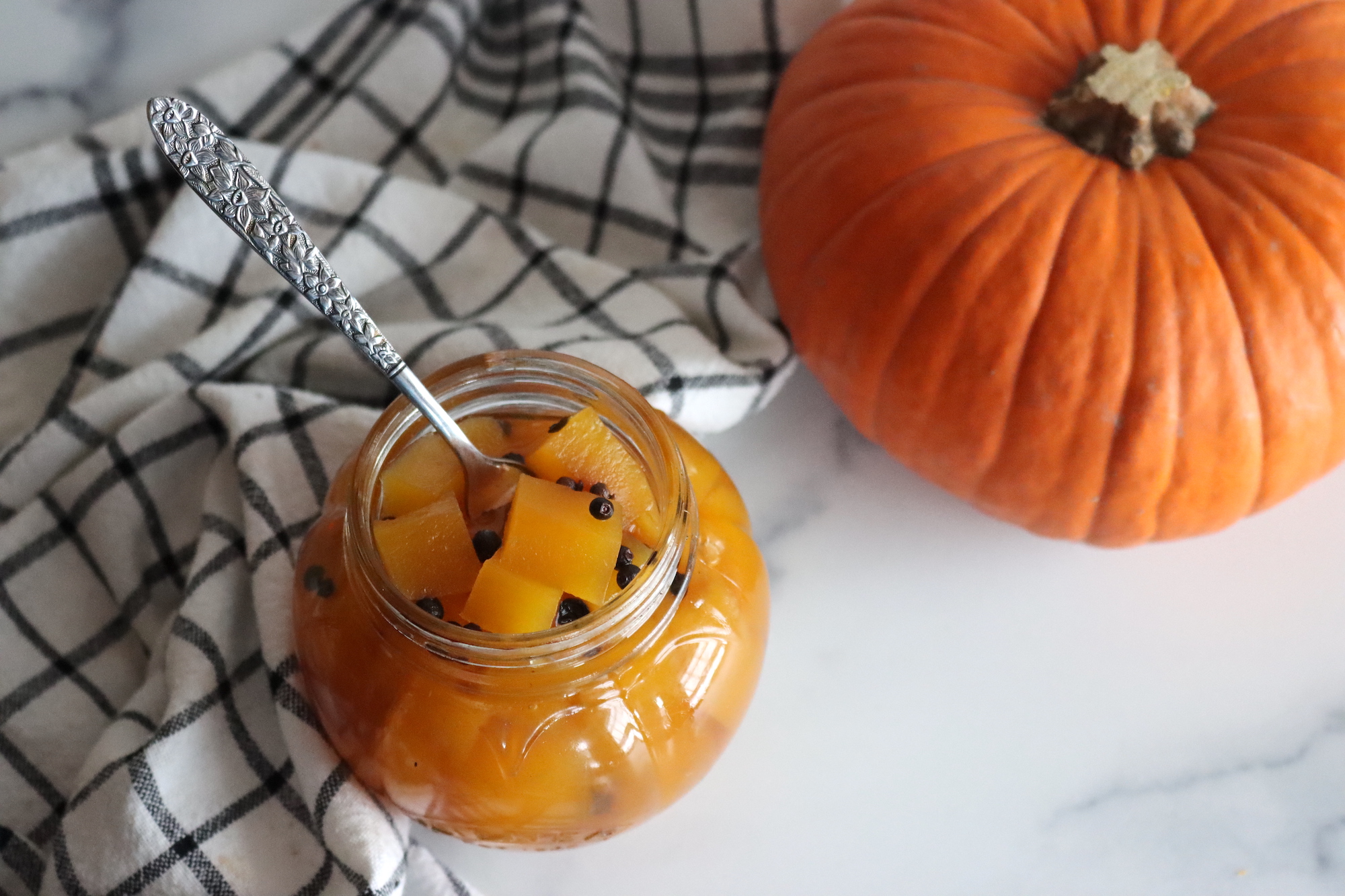
Pumpkin
Pickled pumpkin is a traditional Northern European preserve that works beautifully with roast turkey, pork, and other meat-based meals. Cinnamon, cloves, and cardamom pair especially well with the sweet and sour brine.
The texture varies from crunchy to soft depending on how long it’s cooked, so this isn’t a pickle you reach for when you want a sharp snap. But for fall and winter meals, it’s a nice change from the usual condiments.
Radishes
Radishes are one of the earliest garden vegetables, and pickling is a great way to use up the extras before they get pithy. The brine softens the bite just enough while keeping that pleasant crunch.
These are especially good if you like quick, bright pickles for tacos, grain bowls, and spring salads.
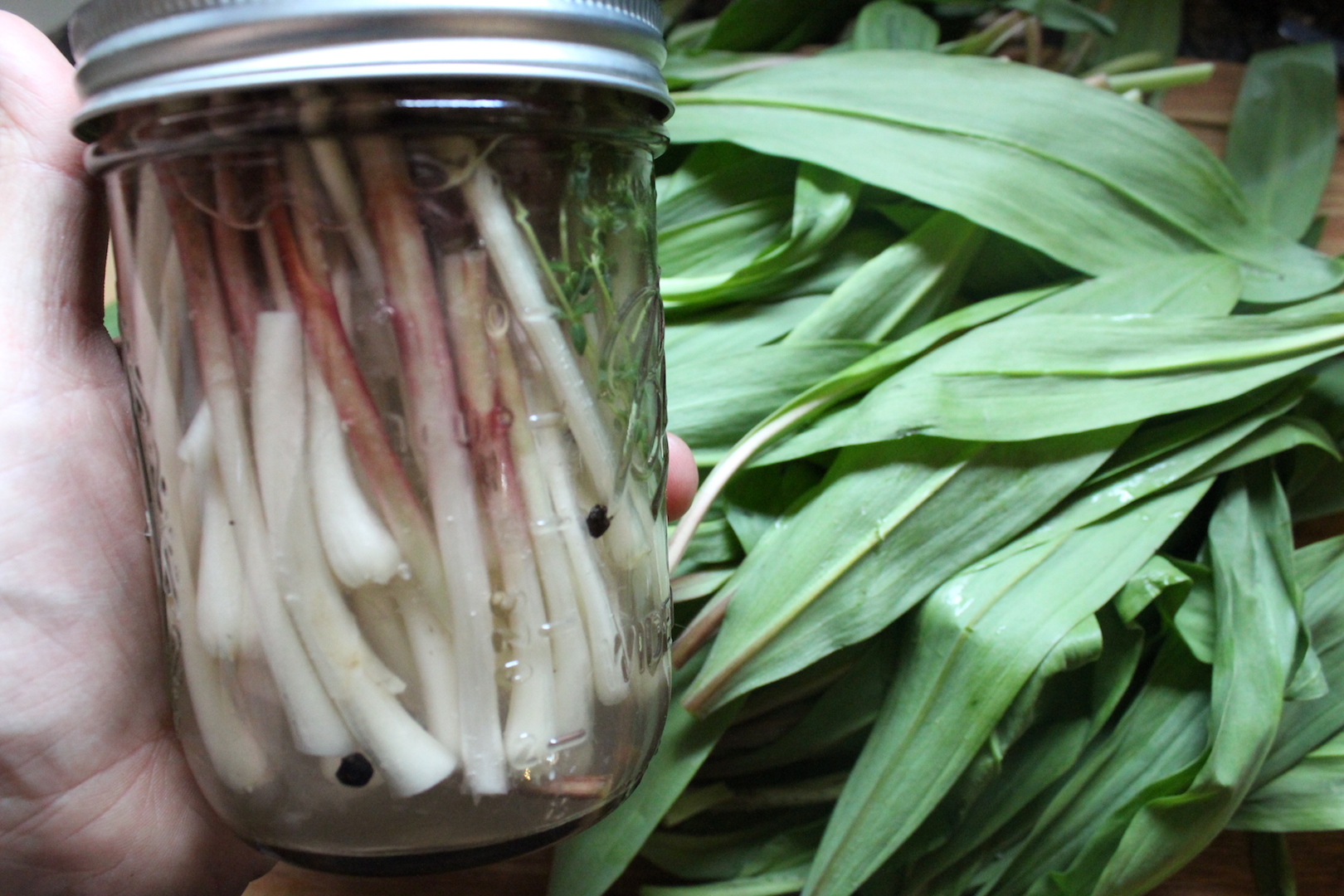
Ramps
Ramps only come in for a short window each spring, so pickling them is one of the best ways to stretch the season. Their wild onion-garlic flavor is bold enough to stand up to the brine beautifully.
Pickled ramps are excellent with cured meats, cheeses, sandwiches, and charcuterie spreads, especially when you want something a little more distinctive than pickled onions.
Spring Onions
If you have extra spring onions to harvest, pickling them is an easy way to turn them into something more useful than just another bunch in the crisper drawer. They stay crisp, mellow a bit in the brine, and pair especially well with burgers, sandwiches, and appetizer boards.
Sunchokes (Jerusalem Artichokes)
Sunchokes are crisp and lightly sweet when raw, and pickling helps highlight that texture while toning down some of the digestive issues they’re known for. If you’ve ever wanted to try them but weren’t sure what to do with them, pickling is one of the better options.
They’re a fun specialty pickle for fall and winter, especially if you enjoy unusual roots and tubers.
Swiss Chard
Swiss chard stems are one of those overlooked little kitchen scraps that turn into something genuinely pretty and useful once pickled. They keep their color well and make excellent quick refrigerator pickles.
There’s no tested canning recipe for Swiss chard stems, but they’re great in the fridge for burgers, sandwiches, salads, or tucked next to roasted meats.
Tomatillos
Tomatillos are naturally suited to pickling because they’re firm, tart, and just the right size for quick preparations. They make a bright, punchy pickle that works especially well with Mexican-inspired meals.
Use them in quesadillas, enchiladas, tacos, or just as a snack straight from the jar if you like sharp, tangy pickles.
Tomatoes
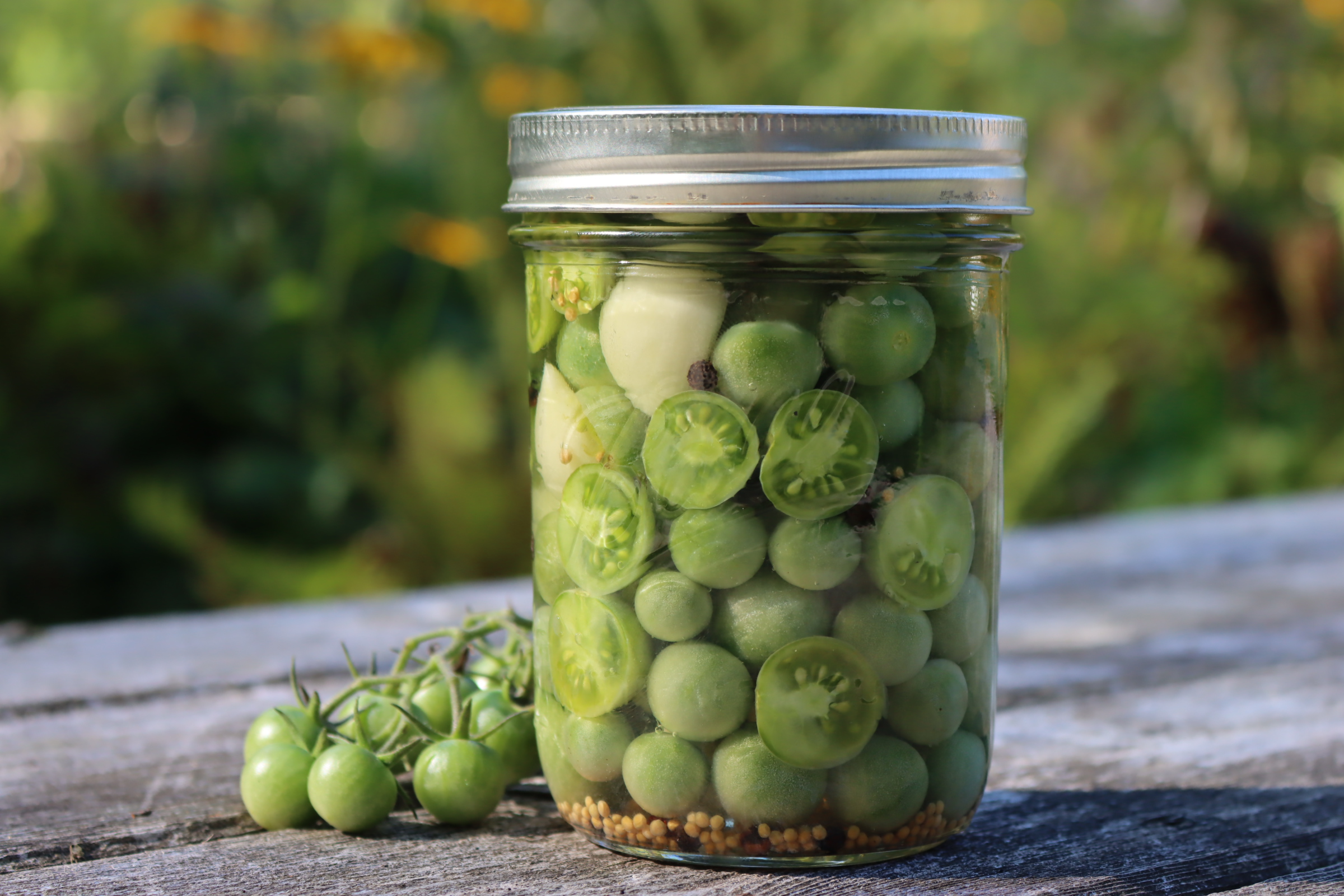
Tomatoes aren’t the first thing most people think to pickle, but they’re a smart way to use up bumper crops, especially cherry tomatoes and green tomatoes at the end of the season. The brine gives them a bright, savory edge that’s completely different from sauce, salsa, or plain canned tomatoes.
Pickled cherry tomatoes are great on appetizer boards, while pickled green tomatoes have that classic tang that works beautifully alongside beans, sandwiches, and Southern-style meals.
- Pickled Cherry Tomatoes
- Pickled Green Tomatoes
- Dill Pickled Green Tomatoes
- Spicy Pickled Green Tomatoes
- Sweet Pickled Green Tomatoes
Turnips
Pickled turnips are a classic Middle Eastern pickle, and once you try them it’s easy to see why. They’re crisp, garlicky, bright, and often tinted pink with a few slices of beet, which makes them as pretty as they are useful.
They’re perfect with falafel, shawarma, roast chicken, and all kinds of mezze-style meals. If you like bold, crunchy pickles, this is a great one to try.
Zucchini and Squash
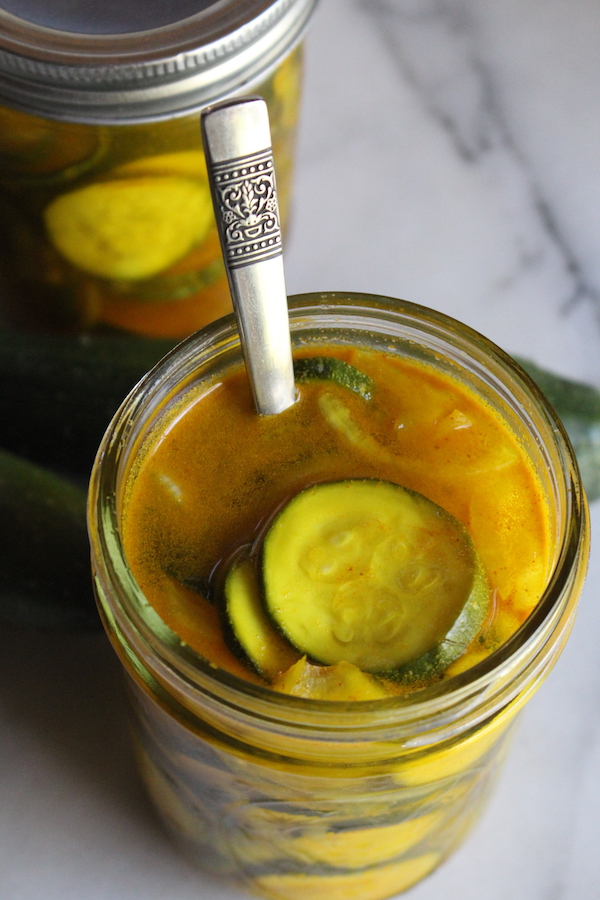
Zucchini and summer squash are excellent stand-ins for cucumbers, especially when the garden is producing more squash than anyone can reasonably eat. Their mild flavor takes especially well to sweet-tangy bread and butter style brines and chopped relishes.
If you’re tired of zucchini bread and sautéed squash, pickling is one of the best ways to turn an oversized harvest into something genuinely useful. These are especially good for people who like classic pickle flavors but don’t grow many cucumbers.
For more zucchini preservation ideas, see 13+ Zucchini Canning Recipes.
Fruit Pickling Recipes
Fruit pickles deserve a lot more attention than they get. They’re sweet, tart, and often warmly spiced, which makes them perfect with roast meats, cheese boards, sandwiches, and holiday meals.
For a complete collection, see 30+ Fruit Pickling Recipes.
Apples and Crabapples
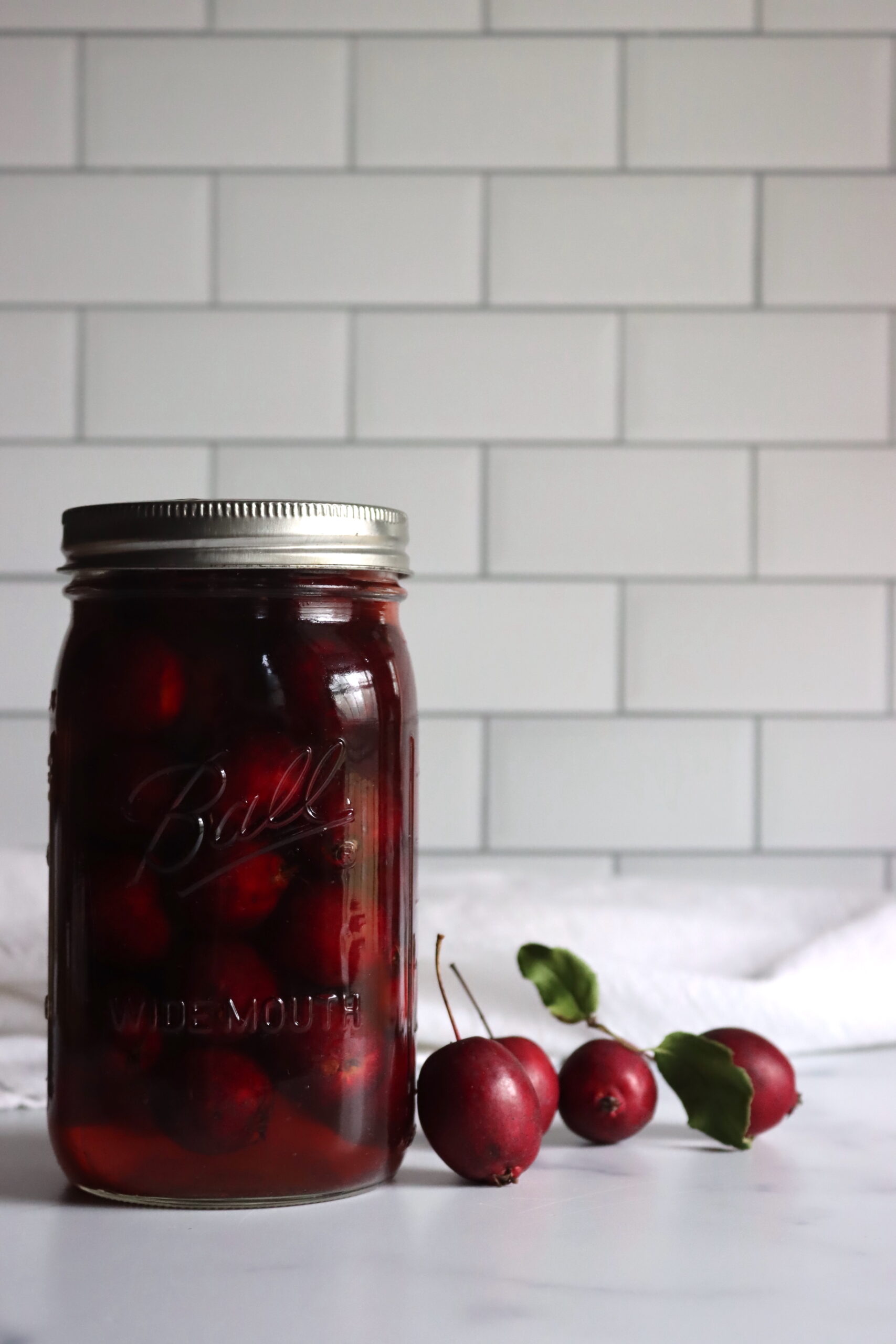
Pickled apples and crabapples have that classic sweet-sour balance that works beautifully with pork, sharp cheddar, roast poultry, and fall charcuterie boards. They’re one of the nicest ways to turn an apple harvest into something a little different.
Maple syrup, cider vinegar, and warm spices all pair especially well here. These aren’t everyday sandwich pickles so much as old-fashioned pantry treats, and they bring a lot of character to the table.
Apricots
Pickled apricots make a bright sweet-and-sour preserve that pairs especially well with baked ham, barbecue, and roast meats. They also happen to look beautiful on the shelf.
Blackberries
Pickled blackberries may sound unusual, but they work beautifully with cheese, salads, and even desserts. The sweet, tart, and savory balance is especially good when paired with salty foods.
Blueberries
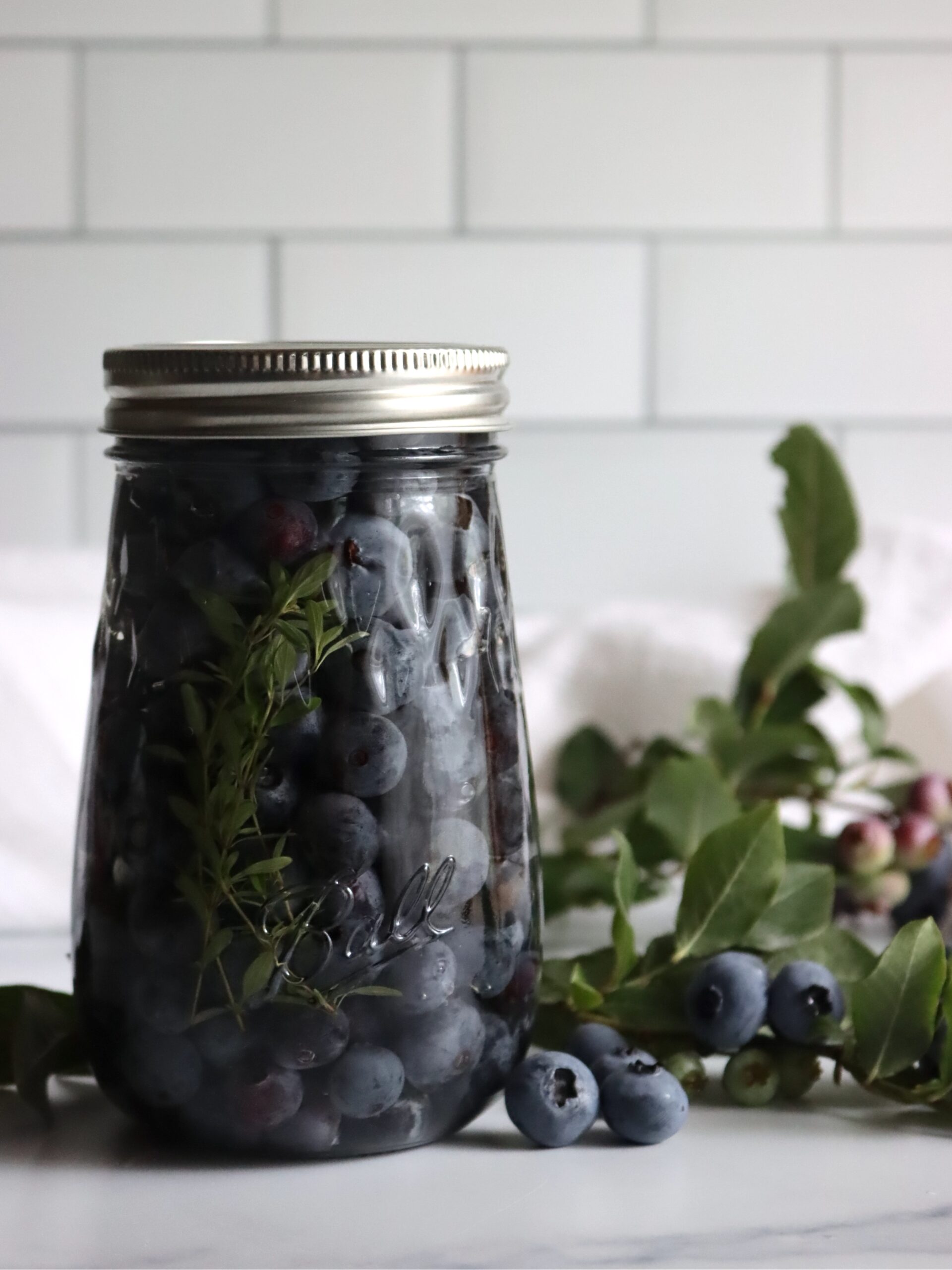
Pickled blueberries are one of my favorite unexpected fruit pickles. They can lean savory with meat and fish, or sweeter if you want to use them over goat cheese, ice cream, or desserts.
They make an especially nice appetizer spooned over soft cheese with crackers.
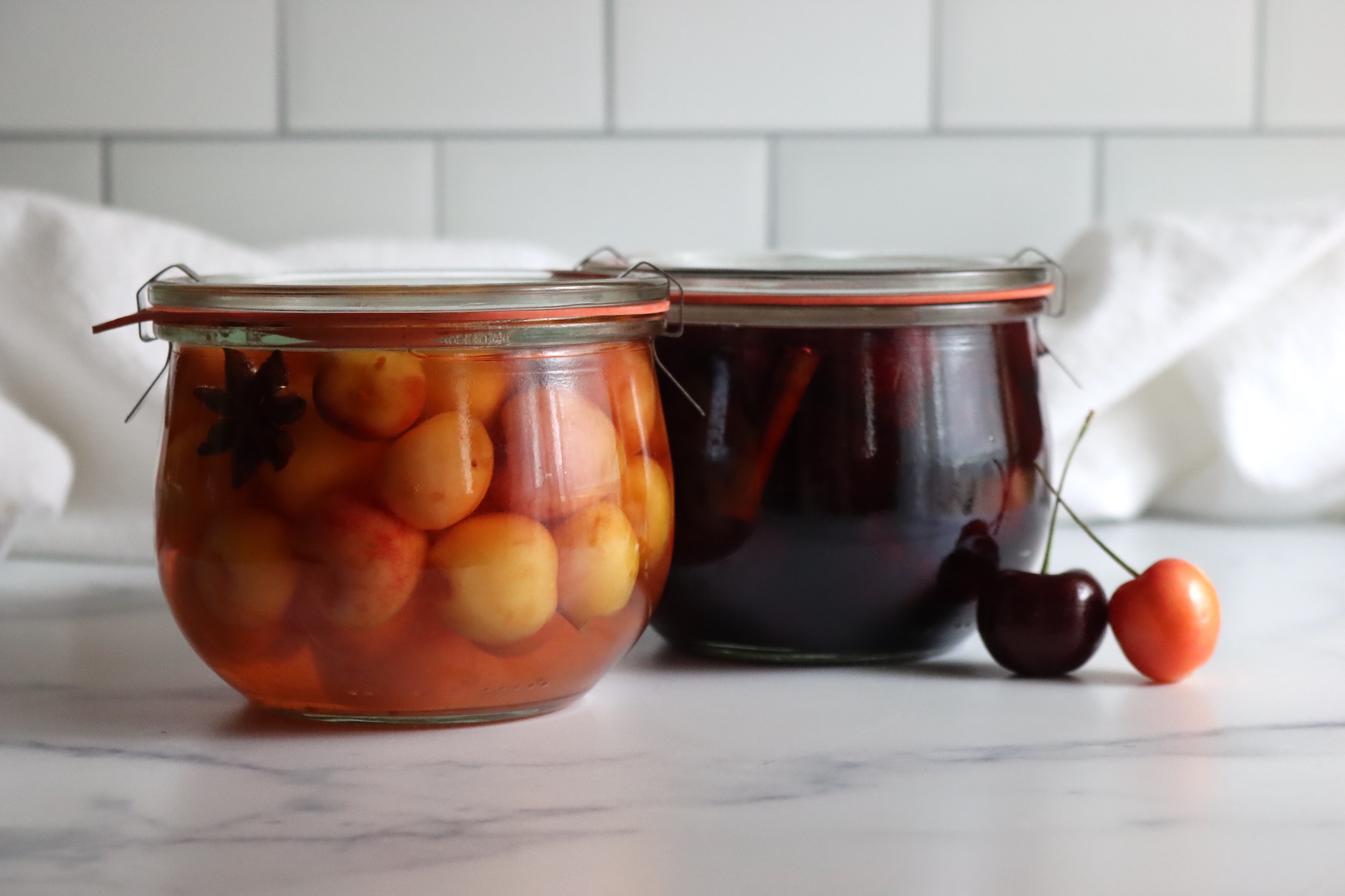
Cherries
Pickled cherries are a great way to stretch cherry season, and they’re ready much faster than many other fruit preserves. They’re excellent on charcuterie boards, summer salads, and alongside grilled meats.
The sweet-sour balance makes them surprisingly addictive straight from the jar too.
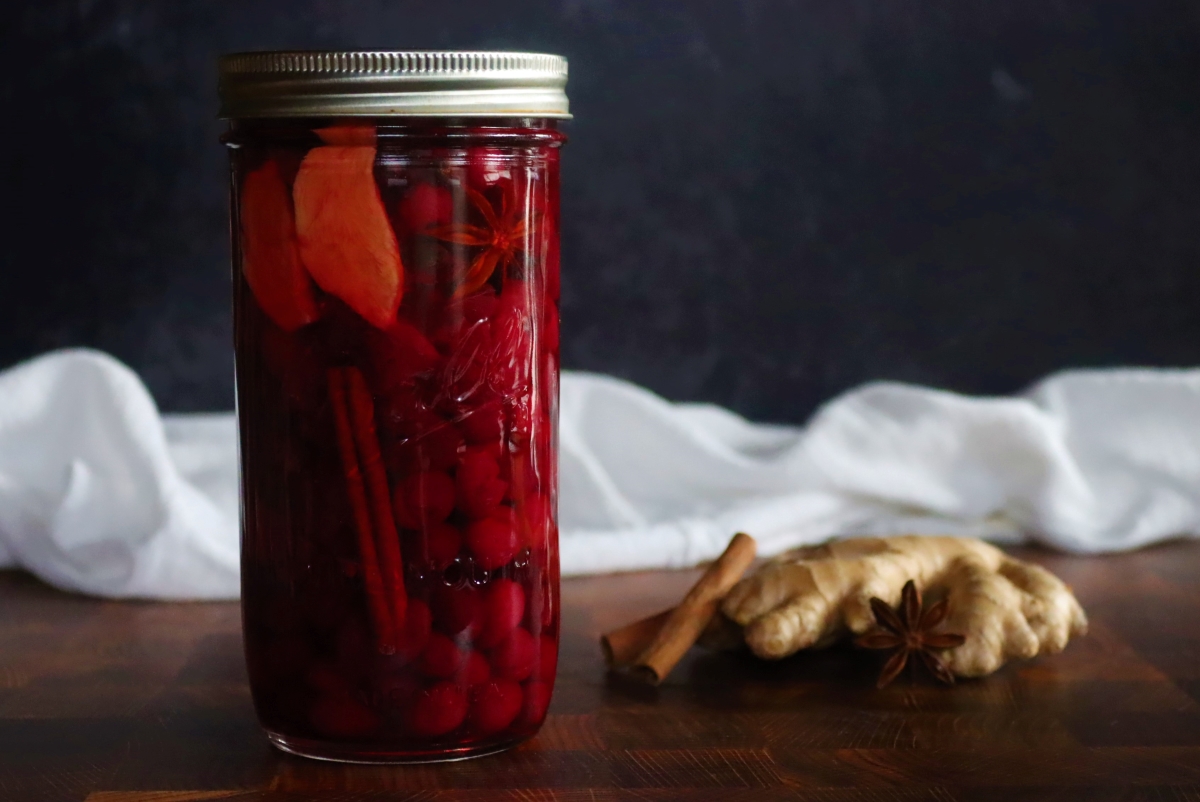
Cranberries
Pickled cranberries are especially nice around the holidays, but they’re useful well beyond that. They add a sharp, colorful note to cheese boards, roast meats, cocktails, and festive meals.
A few jars in late fall make an easy addition to Thanksgiving and Christmas spreads.
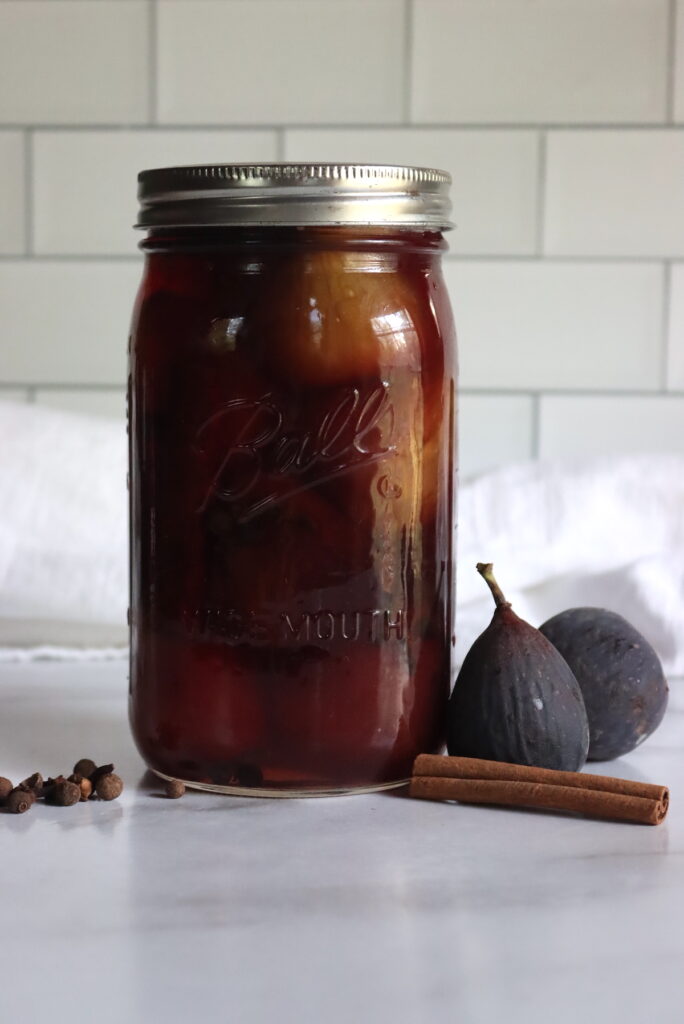
Figs
Pickled figs have a rich sweet-and-sour flavor that pairs beautifully with pork, turkey, game meats, and sharp cheeses. They feel a little elegant, but they’re very practical once you have a jar open.
If you like pantry preserves that work equally well on a holiday table or a cheese board, this is a good one to keep around.
Grapes
Pickled grapes are one of those unexpected little preserves that end up being far more useful than you’d think. They’re wonderful with cheese, good in green salads, and especially nice when you want a sweet-tart garnish that feels a bit different.
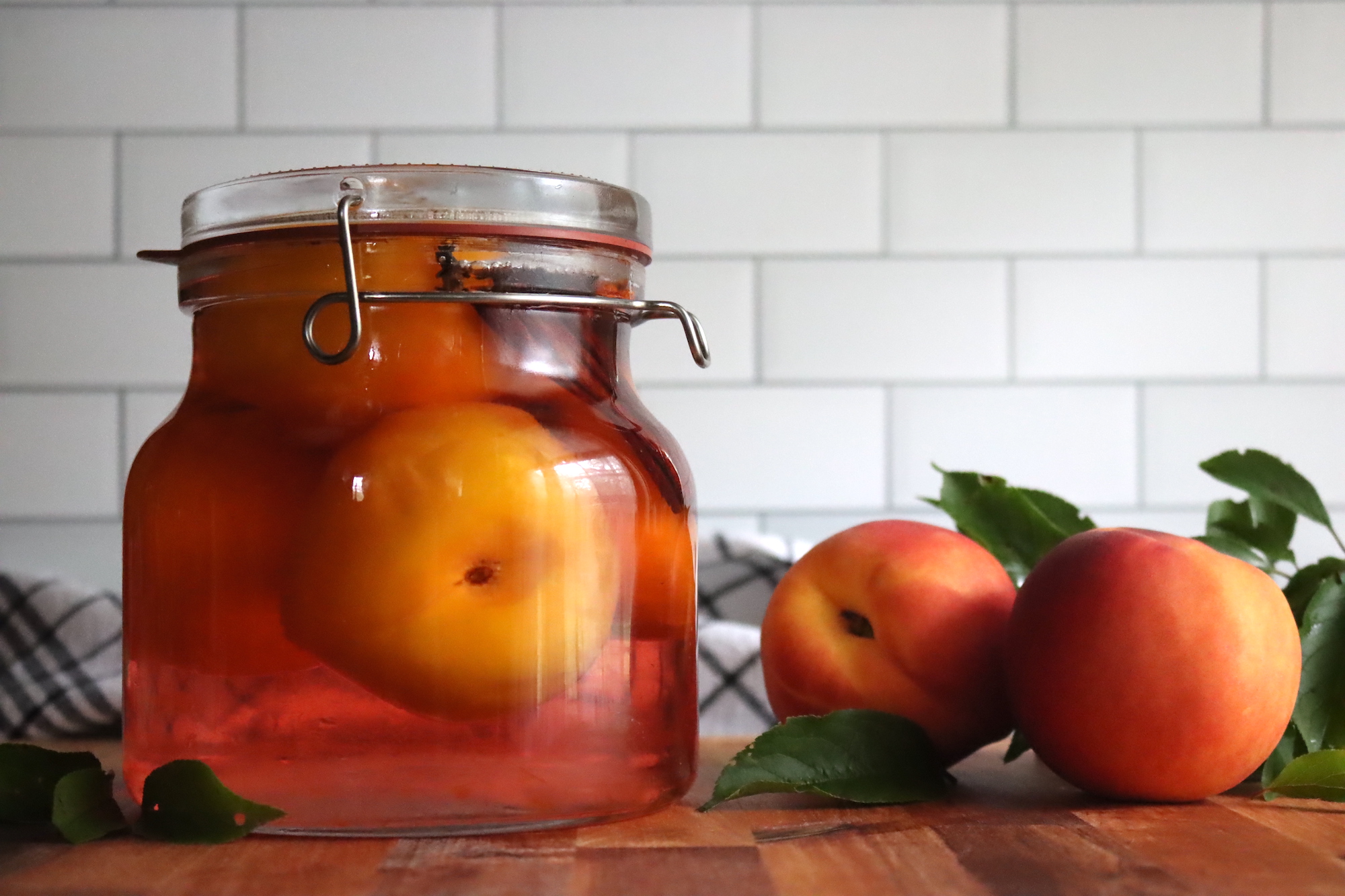
Peaches
Pickled peaches are a Southern classic, and for good reason. They’re sweet, sharply tangy, and usually warmed with spice, which makes them equally good with sandwiches, roast meats, or spooned over vanilla ice cream.
Pears
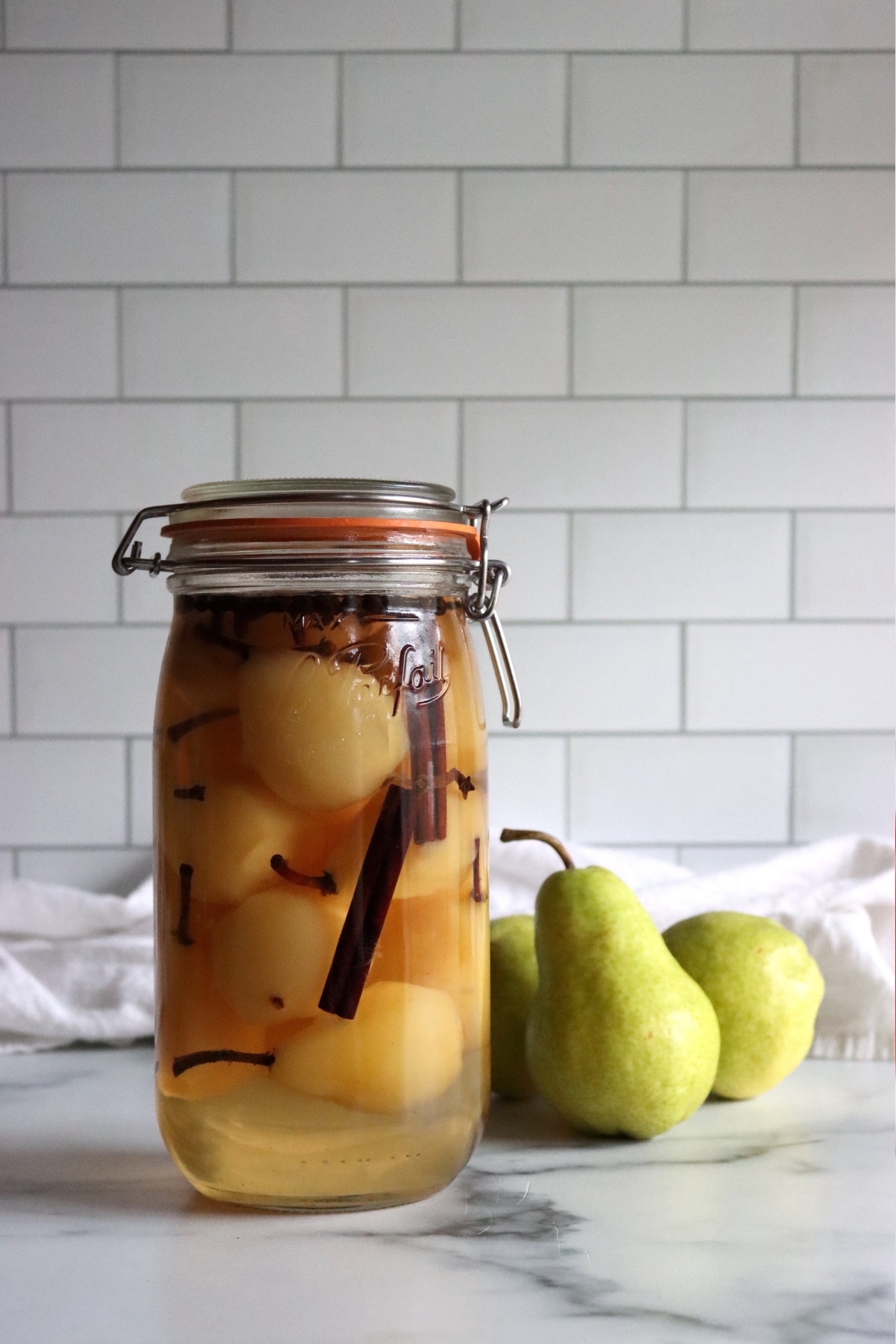
Pickled pears have a sweet, tangy, spiced flavor that feels right at home on a charcuterie board. They pair beautifully with both hard and soft cheeses, along with nuts, bread, and other fall fruit.
Pineapple
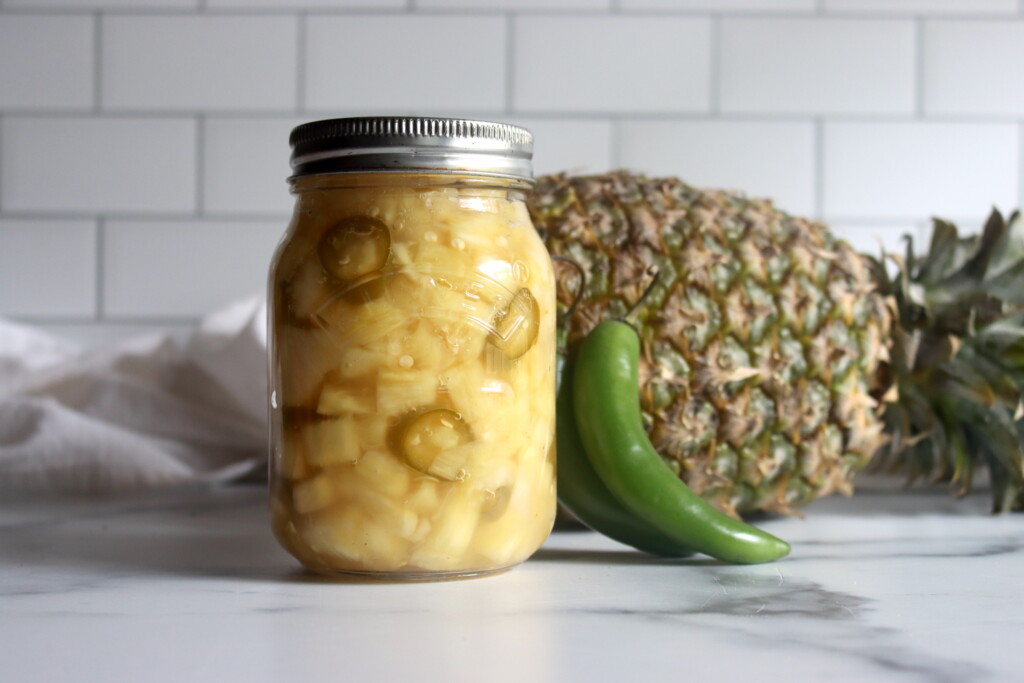
Pickled pineapple has a sweet-sour bite that’s especially good with fish, shredded pork, tacos, and spicy foods. It’s one of the fruit pickles that can lean either savory or snacky depending on how you season it.
It pairs especially well with hot peppers if you like that sweet-and-spicy contrast.
Plums
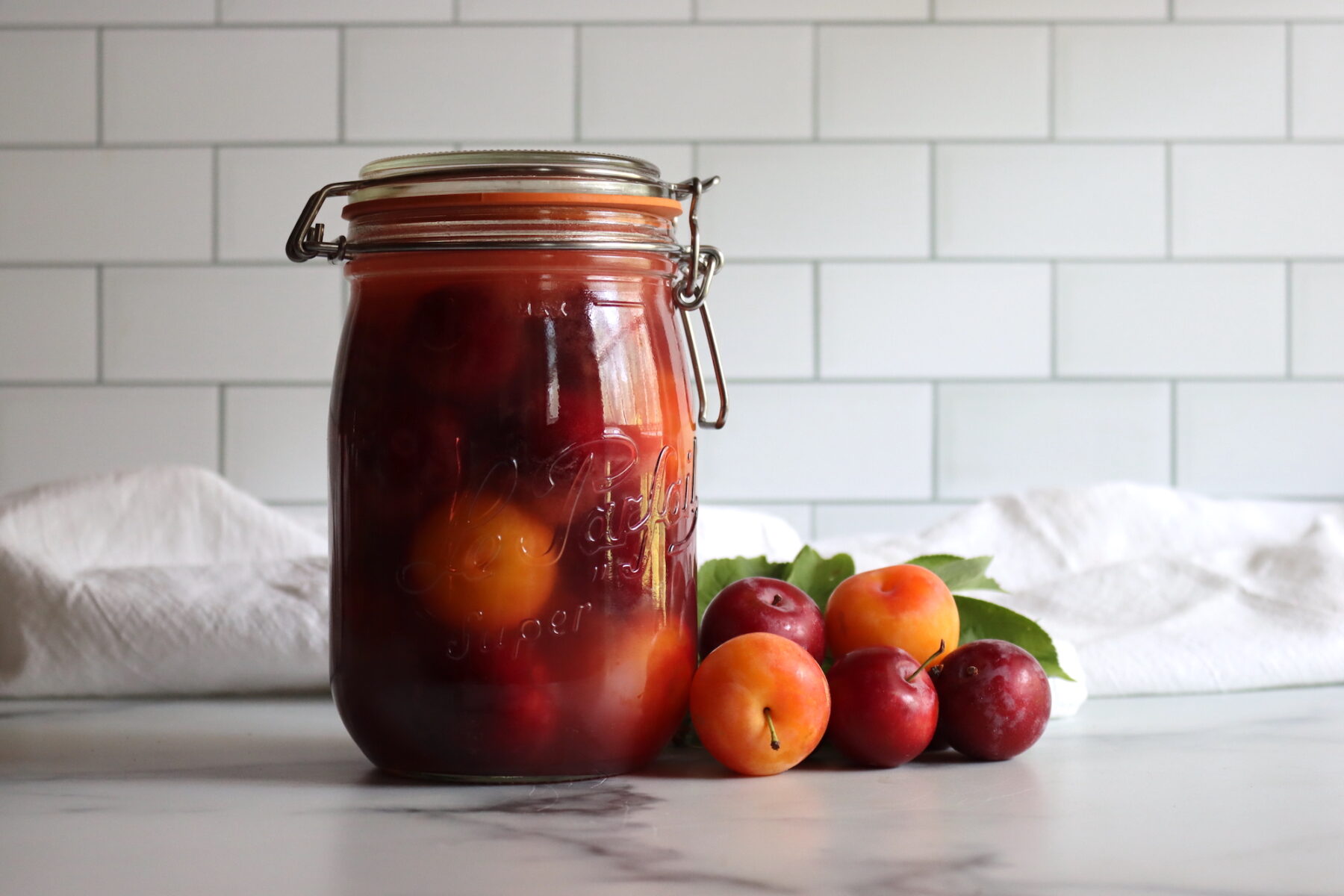
Pickled plums are especially popular in parts of Asia, and they can range from salty and intensely tangy to sweet-spiced and snackable. They’re a fun choice if you like unusual preserves with a lot of personality.
Use firm plums so they hold their shape well in the brine.
Rhubarb
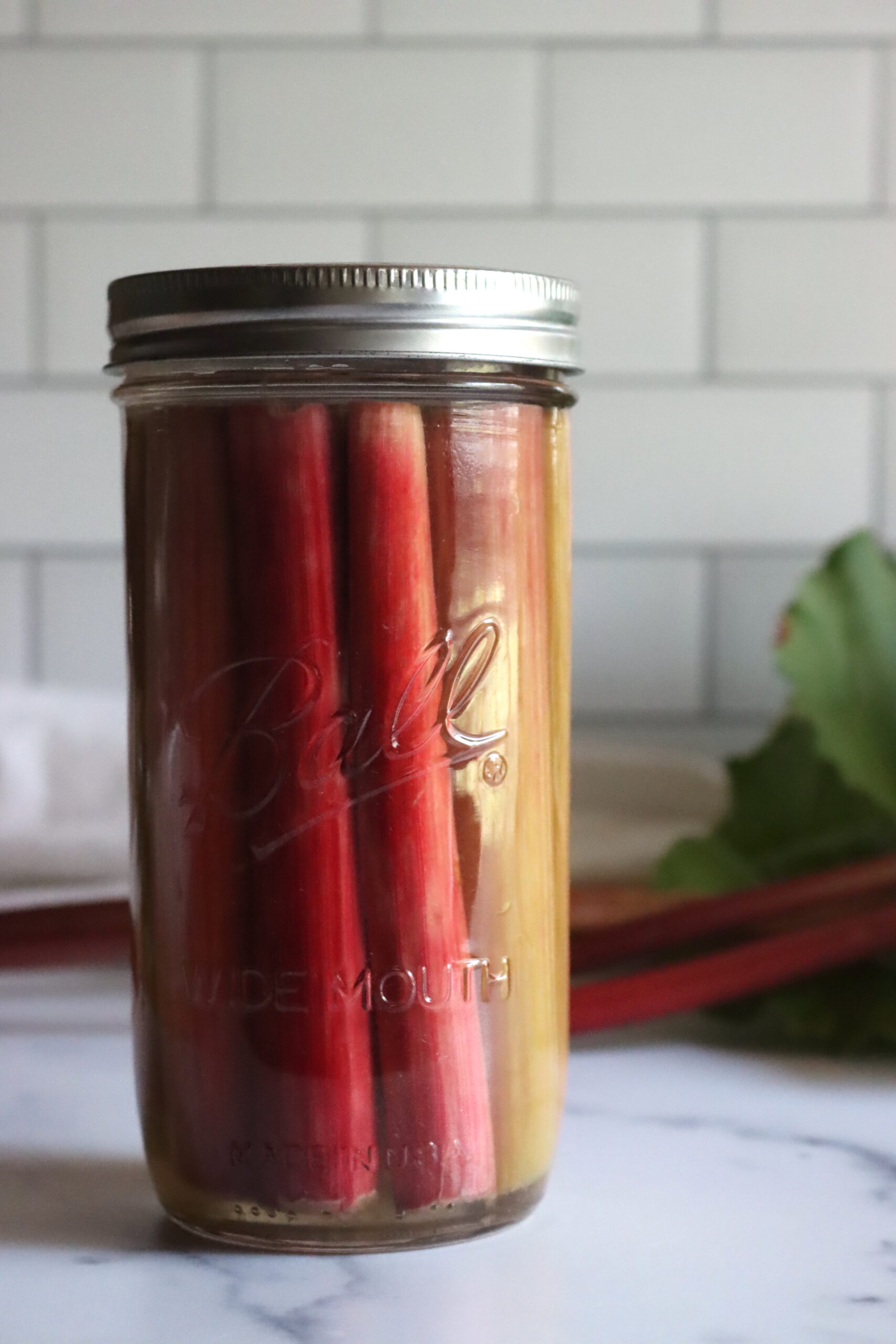
Rhubarb is technically a vegetable, but it behaves beautifully in sweet pickles. Its tart flavor and fibrous crunch make it especially well suited to brines that play up both color and texture.
The result is a pretty pickle that feels just right in spring.
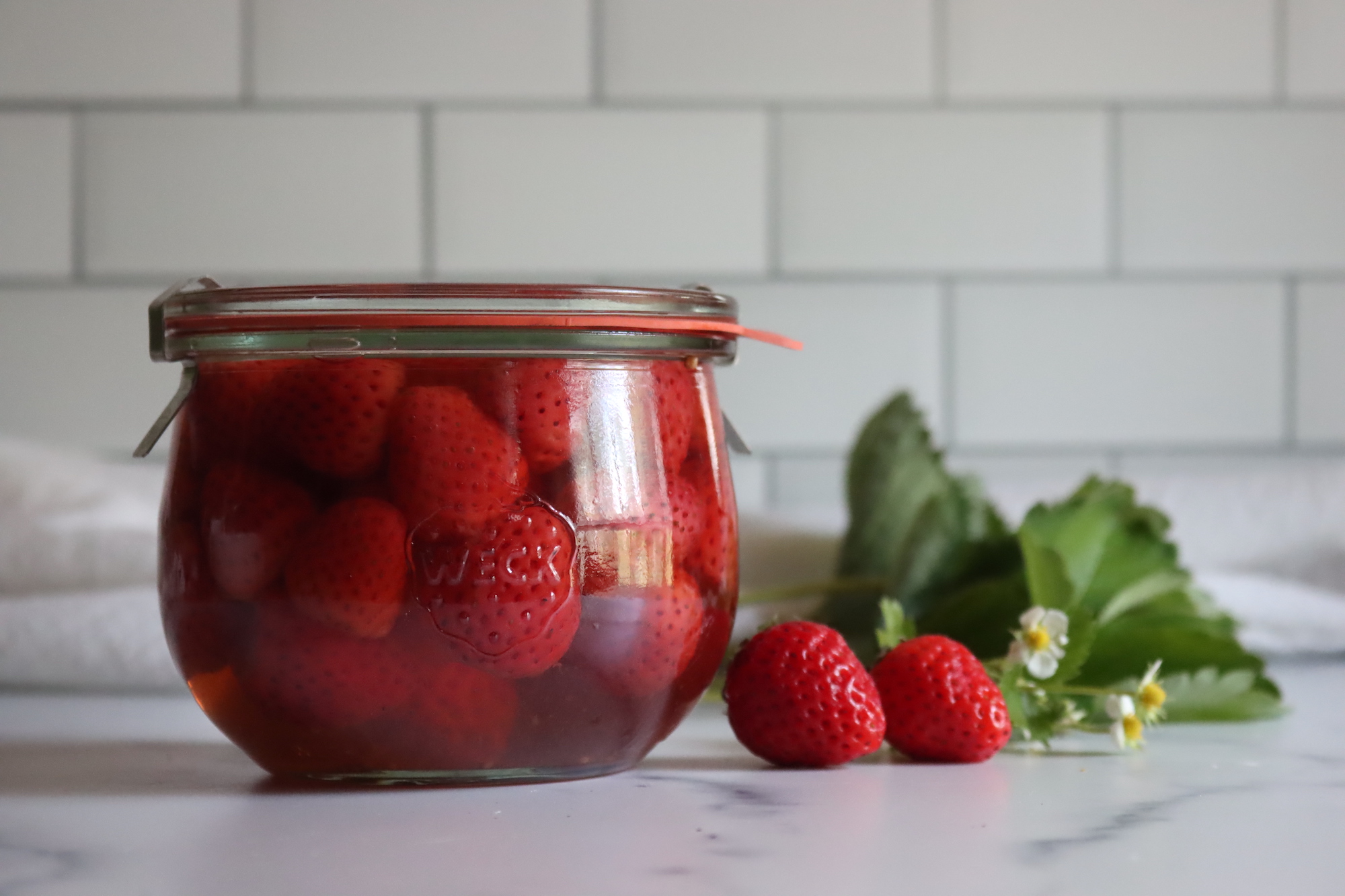
Strawberries
Pickled strawberries are bright, refreshing, and a little unexpected. They’re especially good tossed into salads, paired with cheese, or served with crackers as part of a spring or summer board.
This is another one where the spices can shift the whole personality of the jar, from sweet and floral to sharper and more savory.
Watermelon Rind
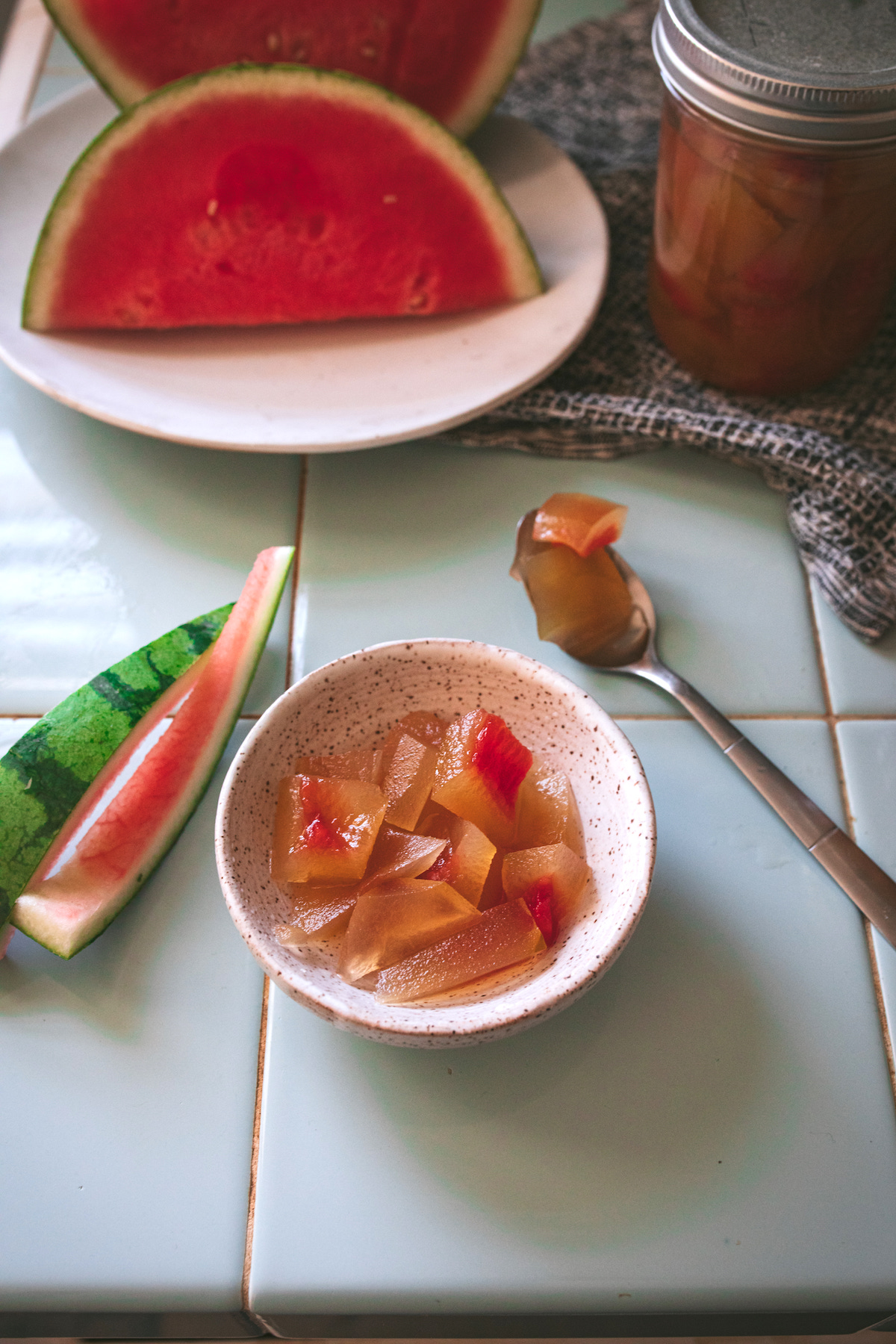
Watermelon rind pickles have been around for generations, and they’ve stuck around because they really are that good. The rind takes on flavor well, stays crisp, and turns something usually discarded into a genuinely worthwhile preserve.
If you like old-fashioned recipes with a practical streak, this is one of the best fruit pickles to try.
Relish Recipes
Relishes are closely related to pickles, but they have a slightly different job in the pantry. Instead of preserving one ingredient whole or in chunks, they combine finely chopped vegetables into spoonable condiments that can wake up everything from burgers and hot dogs to beans, grilled meats, and sandwiches.
For a complete collection, see 24+ Relish Recipes for Canning.
- Classic Pickle Relish
- Sweet Pickle Relish
- Dill Relish
- Cucumber Relish
- Onion Relish
- Pepper Onion Relish
- Zucchini Relish
- Corn Relish
These are some of my favorite pickling recipes, covering almost every fruit and vegetable under the sun. If I’ve missed any of your favorites, please do let me know below in the comments.
I’ll never pass up the opportunity to try out a new pickling recipe!