
This post may contain affiliate links. Please see our disclosure policy.
Violet jelly is a celebration of spring in a jar, made from wildflowers you can gather right in your own yard. With its pretty color and fresh berry flavor, it’s a fun one to share with family and friends, and whether you’re gifting it or keeping it for yourself, it brightens up the pantry and the breakfast table all year long.
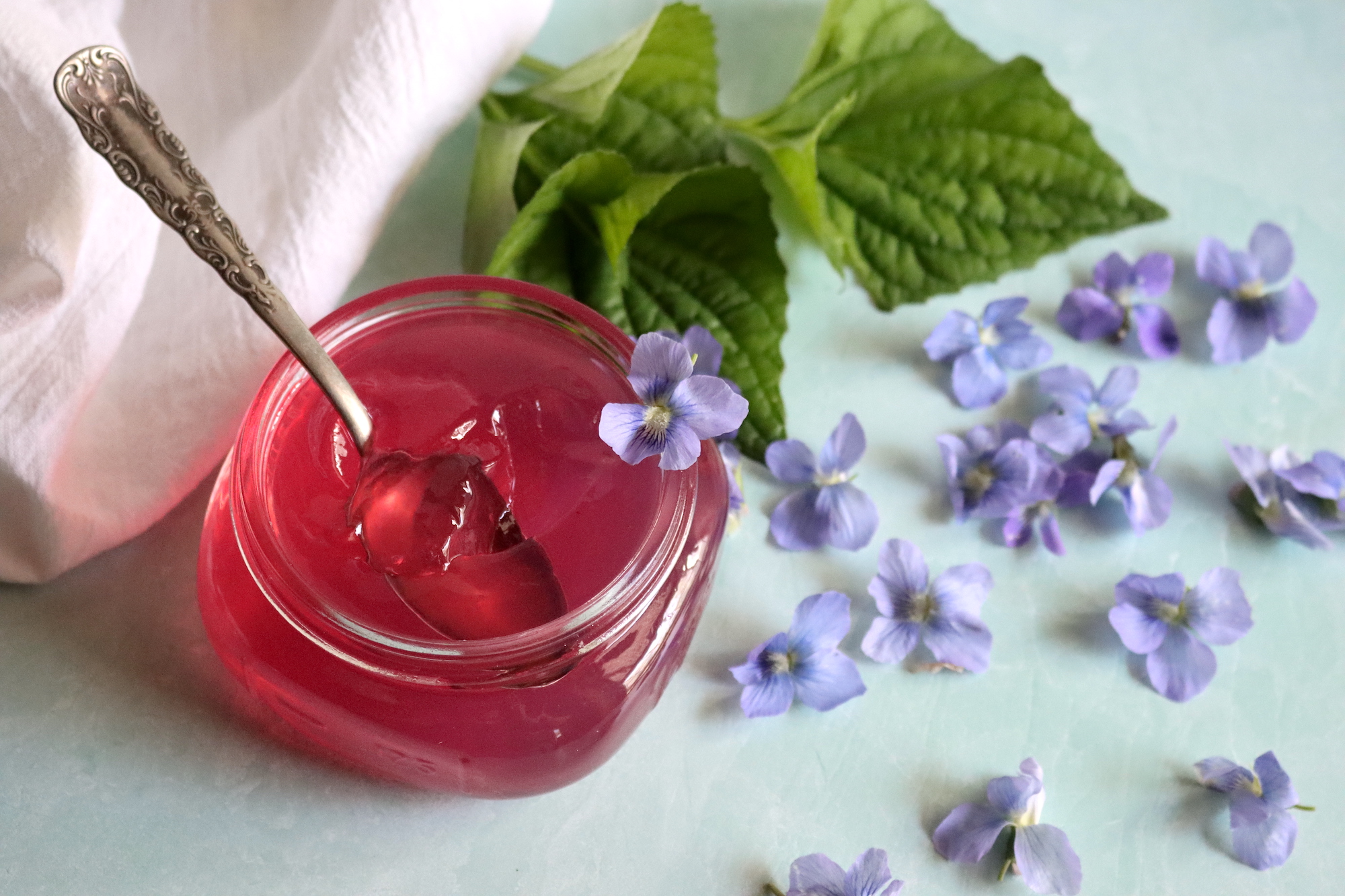
Table of Contents
- Notes from My Kitchen
- Quick Look at the Recipe
- What Does Violet Jelly Taste Like?
- Identifying and Harvesting Wild Violets
- Ingredients for Violet Jelly
- Low Sugar Options
- How to Make Violet Jelly
- Canning Violet Jelly
- Altitude Adjustments
- Ways to Use Violet Jelly
- Violet Jelly FAQs
- Flower Jelly Recipes
- Violet Jelly Recipe
- Jelly Canning Recipes
This recipe has been reviewed for safety and accuracy by a Master Food Preserver certified through the University of Cornell Cooperative Extension.
Spring is a great time to get outside, and this floral jelly gives you all the reason you need. Wild violets have a delicate, sweet flavor that turns into a jelly tasting surprisingly like fresh berries, and it’s a lovely spread for toast, scones, biscuits, or anything else that could use a little springtime sweetness.
Wild violets are abundant and easy to identify, growing in shaded, moist spots all over the place. Whether you’re an experienced forager or just getting started, you’ll find that making violet jelly is simple, and the results are worth it.
We’ve made tried-and-true dandelion jelly for years (it tastes like honey), and lately we’ve been working through forsythia jelly (tastes like peaches) and apple blossom jelly (tastes like plums). Wild violet was next on our list.
Notes from My Kitchen
With my little ones home and playing in the yard all spring, we had plenty of time to try our hand at new floral jellies, and violet quickly became one we kept coming back to. The kids love watching the tea change color when the lemon juice goes in, so it turns into half science experiment and half snack.
I’ve found it easiest to harvest the blossoms straight into a quart jar filled about halfway, which saves fussing with a bowl or basket. It takes a little patience to gather enough, but a batch doesn’t need much, and the pink jelly that comes out the other end is worth the time.
Quick Look at the Recipe
- Recipe Name: Violet Jelly
- Recipe Type: Flower Jelly Recipe
- Canning Method: Water Bath Canning
- Prep/Cook Time: 30 Minutes
- Canning Time: 10 Minutes
- Yield: 5 to 6 half-pint jars
- Jar Sizes: Quarter Pint, Half Pint, or Pint
- Headspace: 1/4 inch
- Ingredients Overview: Violet blossoms, water, lemon juice (not optional), sugar, and pectin
- Difficulty: Easy! You’re basically making a floral tea and setting it with pectin.
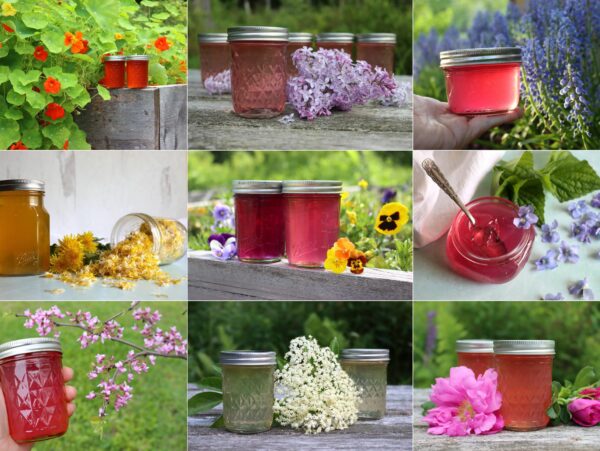
- Similar Recipes: The process is very similar to other springtime floral jellies, including Tulip Jelly, Dandelion Jelly, Redbud Jelly, Grape Hyacinth Jelly, Pansy Jelly, and Forsythia Jelly.
What Does Violet Jelly Taste Like?
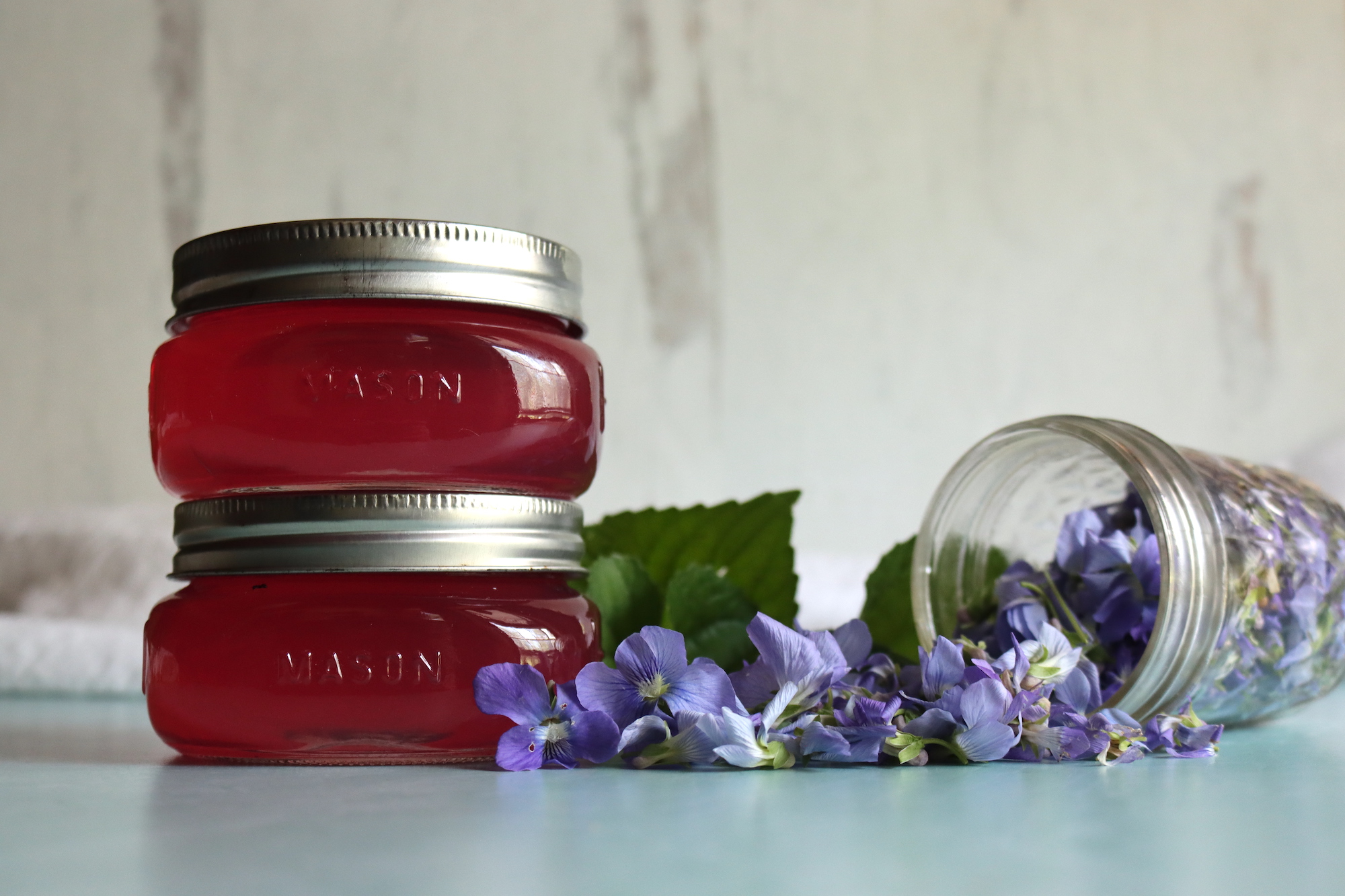
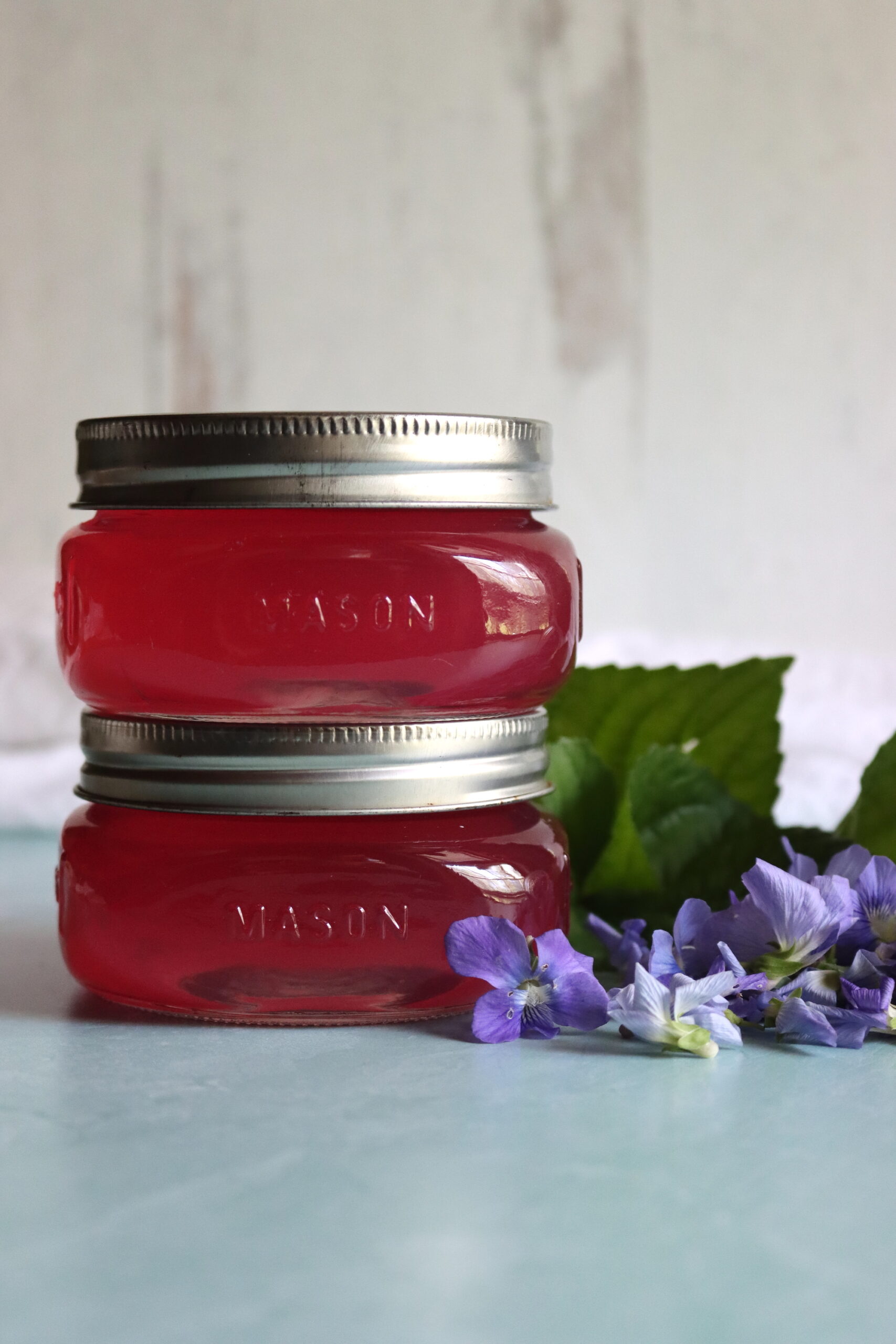
Violet jelly is sweet and floral with a slightly tangy, berry-like flavor that surprises people who expect it to taste like perfume. The berry note isn’t a coincidence. The same natural compounds that give violets their color also show up in berries like blueberries and blackberries, and the acid from the lemon juice brings those sweeter, fruitier flavors forward.
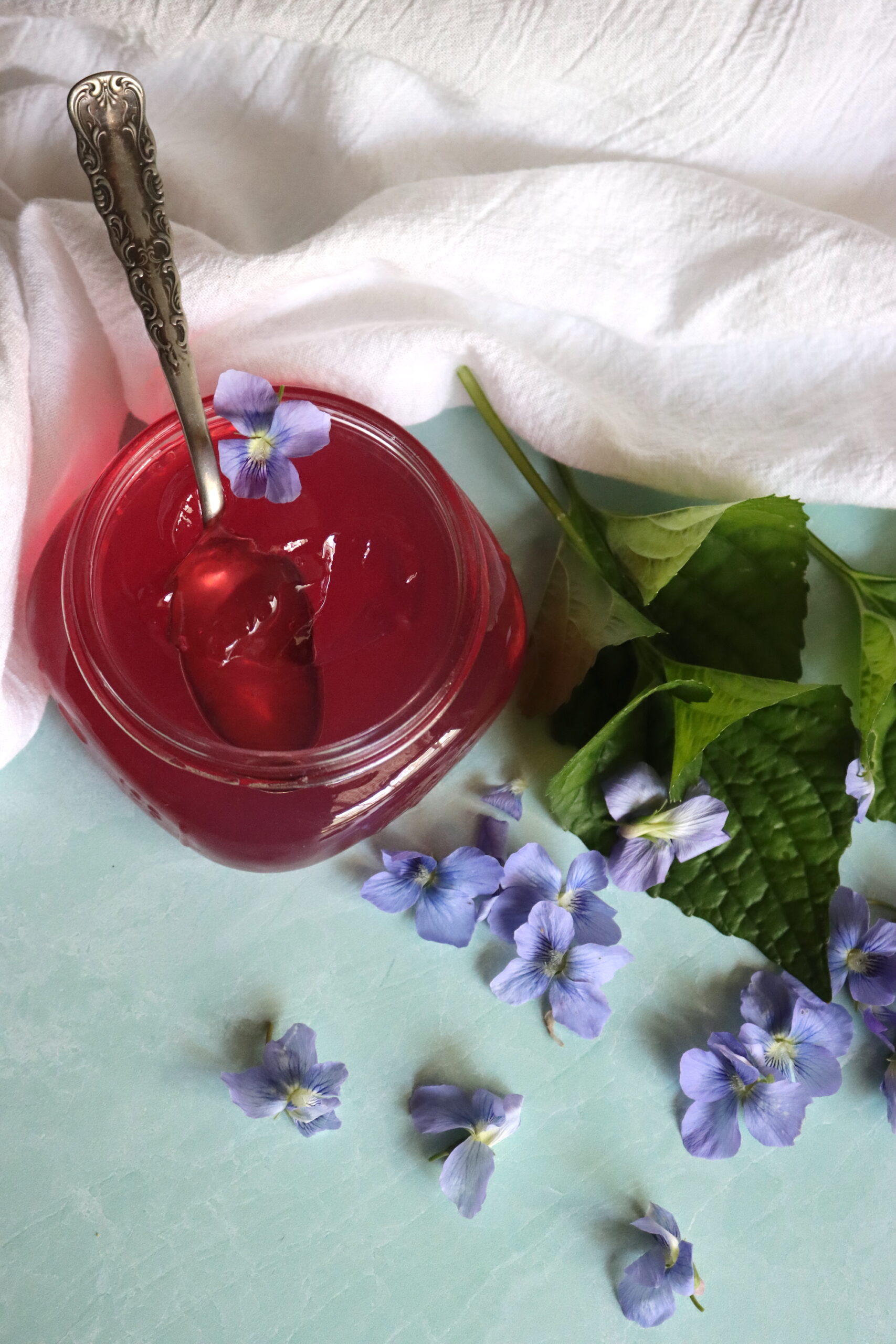
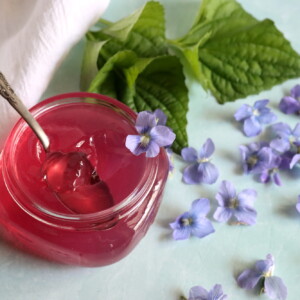
It ends up tasting less floral and more fruity than you’d guess, somewhere in the neighborhood of mixed berries. The finished jelly is a pretty pink, thick enough to hold on a spoon but smooth enough to spread easily on toast or scones.
Identifying and Harvesting Wild Violets
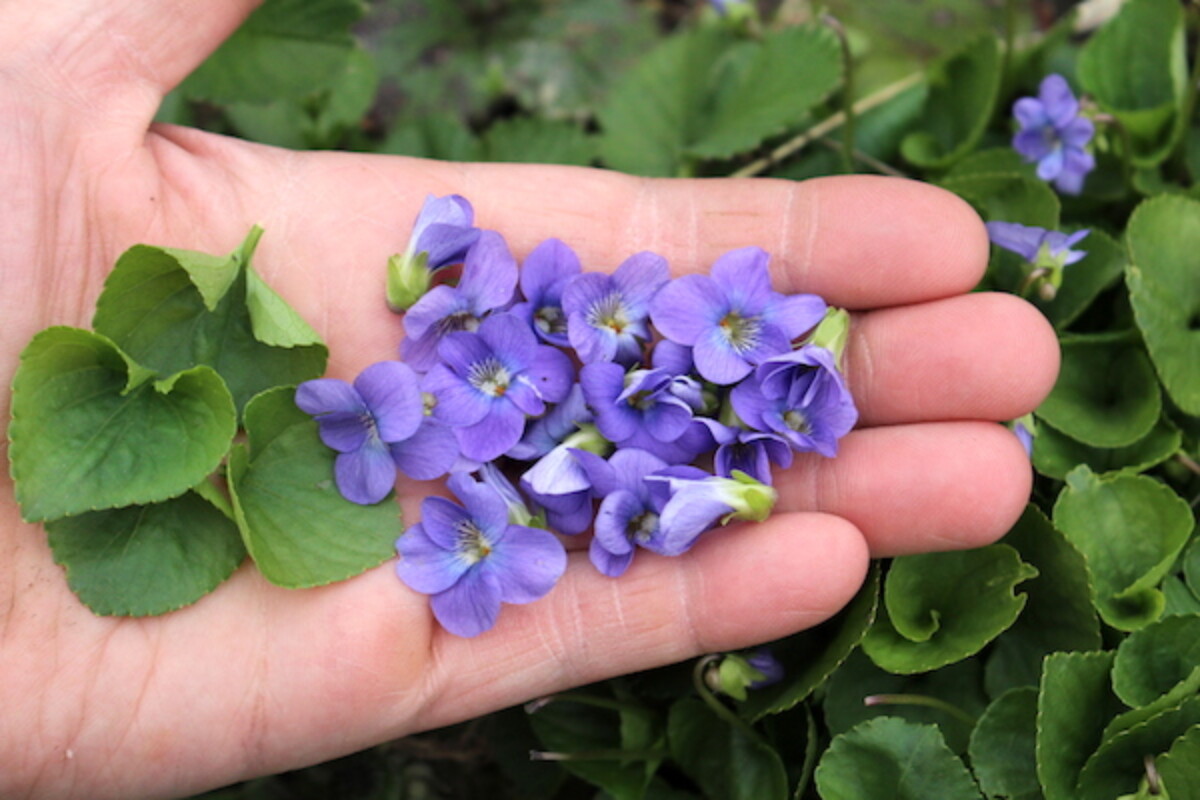
Wild violets thrive in shady, moist areas, and you’ll typically find them along the edges of a lawn, near trees, or on the north side of the house. They’re abundant and easy to identify, blooming anywhere from early spring into summer depending on where you live, which makes this a nice project for the stretch just before the fruit harvest gets going.
When picking the flowers, choose blossoms that are free from pesticides, pollution, or other chemicals. Only the flowers go into this jelly, so you don’t need the stems or leaves, and you’ll want about 2 cups of blossoms for a batch. If you can’t find wild violets, you can use other viola species like cultivated pansies or johnny jump ups, though you’ll want to steer clear of African violets, which are a different plant entirely and aren’t edible.
Ingredients for Violet Jelly
Violet jelly uses the same basic formula as other flower jellies: fresh edible flowers steeped into a tea, then set with sugar, pectin, and a bit of lemon juice for balance and safety.
- Violet Blossoms: The wild violet flowers are the heart of this jelly, giving it that sweet, floral, berry-like flavor. Use only the flowers, not the leaves or stems, and pick from a spot you know is free of pesticides. Other viola species, like cultivated pansies and johnny jump ups, work too.
- Water: Water steeps the flowers into violet tea, which is the base for the jelly. The tea starts out a turquoise or greenish color and shifts to pink once the lemon juice goes in. Use clean filtered water if your tap has a strong chlorine taste.
- Lemon Juice: The lemon juice does several jobs at once. It balances the sweetness, provides the acidity that activates the pectin, triggers that color change from turquoise to pink, and lowers the pH enough to make the jelly safe for canning. Use bottled lemon juice for consistent acidity. For a more neutral flavor, you can use about 1 teaspoon of citric acid powder in place of the lemon juice.
- Sugar: Regular powdered pectin needs plenty of sugar to gel, so this recipe uses the current Sure Jell ratio of 5 cups sugar to 4 cups of liquid for a classic old-fashioned jelly that sets reliably. There’s a lower-sugar option in the note just below if you’d prefer it.
- Pectin: Use regular powdered pectin (like Sure Jell) for this recipe, which is dependable and gives consistent results.
Low Sugar Options
If you prefer a less sweet jelly, you can use Sure Jell low sugar pectin instead and reduce the sugar to as little as 1 to 2 cups. If using Pomona’s Universal Pectin, increase the lemon juice to 1/2 cup, because Pomona’s does not contain added citric acid like other brands of pectin do.
Pomona’s is a 2-part low sugar pectin with calcium water that works a bit differently, so follow the mint jelly instructions in the box, and I’d suggest reading about how to use Pomona’s pectin if it’s your first time using it.
How to Make Violet Jelly
This is an easy recipe where you make a simple floral tea and set it with pectin. The fun part is the color change, which happens the moment the lemon juice hits the tea. Just make sure you don’t skip the lemon juice, since it matters for both flavor and safe canning.
Prepare the Violet Blossoms
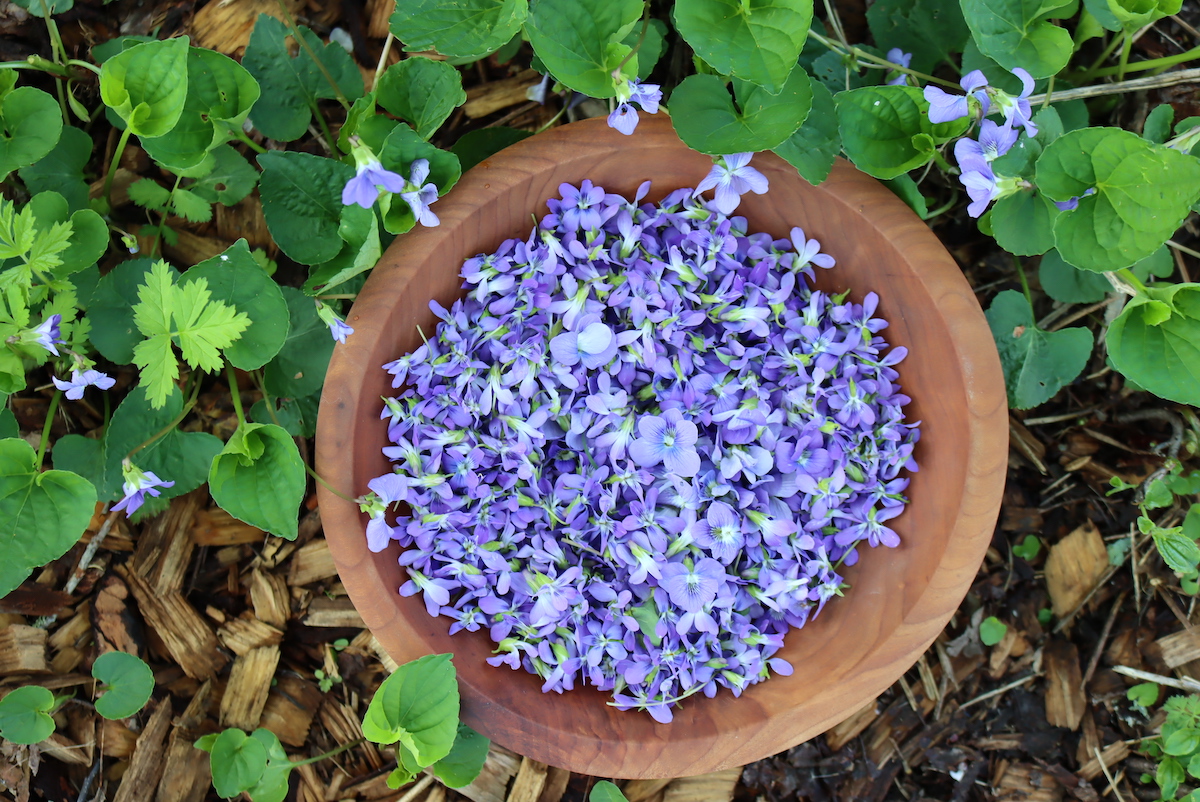
Start by harvesting about 2 cups of wild violet flowers, choosing blossoms that are free from pesticides and other chemicals. Only the flowers are used here, so there’s no need to bother with the stems or leaves.
The flowers are small, so this takes a little patience. I find it easiest to harvest directly into a quart jar filled about halfway, which is plenty for a batch and saves a step.
Make the Violet Tea
Pour 4 cups of boiling water over the violet flowers and let the mixture steep for 15 to 20 minutes. The tea will be a greenish or turquoise color at first, which is exactly what you want, and it won’t stay that way.
Once the flowers have steeped, strain out the petals. You should have a clean violet tea ready for the next step, which is where the color magic happens.
Add Lemon Juice and Pectin
Add 1/4 cup of lemon juice to the violet tea and watch the color shift from blue-green to a pink-purple shade. It’s a little kitchen chemistry, with the natural pigments in the violets reacting to the acid. (The lemon juice isn’t just for color and flavor. Don’t skip it even if you’re not canning, since the jelly needs it to be safe.)
Pour the tea into a large pot and bring it to a boil over medium-high heat. Add one box of powdered pectin, stir until completely dissolved, and let the mixture boil for 1 full minute.
Add the Sugar
After 1 minute, add 5 cups of sugar. (Do NOT add the sugar before or at the same time as the pectin, or the jelly won’t set.) Stir until the sugar is completely dissolved, then bring the mixture back to a full rolling boil for 1 minute.
Remove from heat and skim off any foam with a spoon. The jelly should be thick enough to hold on a spoon but smooth enough to spread. Immediately ladle the hot jelly into prepared jars, leaving 1/4 inch headspace.
Canning Violet Jelly
Canning is optional, but it’s a nice way to keep this seasonal treat around all year. If you’re not canning, let the jars cool completely at room temperature, then store in the refrigerator for up to a few weeks or in the freezer for up to 6 months.
To can violet jelly, prepare your water bath canner, jars, and lids before you start making the jelly. After ladling the hot jelly into jars (leaving 1/4 inch headspace), wipe the rims with a clean, damp cloth. Place the 2-part canning lids on the jars and tighten until fingertip tight.
Process in a boiling water bath canner for 10 minutes. Remove the jars and let them cool undisturbed on a towel for 24 hours, where you’ll hear the satisfying pop of the lids as they seal. Check the seals, store any unsealed jars in the refrigerator, and keep sealed jars on the pantry shelf for 12 to 18 months. Refrigerate after opening.
Altitude Adjustments
For water bath canning, processing times increase at higher elevations:
- 0 to 6,000 feet: 10 minutes
- Above 6,000 feet: 15 minutes
Ways to Use Violet Jelly
Violet jelly is lovely on toast, scones, biscuits, and English muffins, and the pink color makes it feel a little special at the breakfast table. It’s also good spooned over ice cream or yogurt, or served alongside soft cheeses like brie or fresh goat cheese on a cheese board.
Because of that color, it makes a thoughtful homemade gift, especially for anyone who appreciates wildflowers or foraged foods. A few jars tied with ribbon disappear quickly around the holidays.
Violet Jelly FAQs
Wild violets contain natural pigments (anthocyanins) that are sensitive to pH. The steeped tea starts out a turquoise or blue-green color, and when you add an acid like lemon juice, it shifts to a pink or purple shade. It’s the same family of compounds that give berries their color.
Yes. Other viola species work well, including cultivated pansies and johnny jump ups. Avoid African violets, which are a different plant entirely and are not edible. Always pick from a spot free of pesticides and other chemicals.
The most common reasons jelly doesn’t set are adding the sugar at the same time as the pectin (add pectin first and boil for 1 minute before adding sugar), boiling the finished jelly for too long (over 5 minutes), or trying to double the batch size. If it doesn’t set after 24-48 hours, enjoy it as a floral syrup or read through my guide on troubleshooting jelly set.
Yes, but you’ll need to use a low-sugar pectin like Sure-Jell Low Sugar or Pomona’s Universal Pectin and follow the package instructions for mint jelly. If you use Pomona’s, increase the lemon juice to 1/2 cup, since it doesn’t contain the added citric acid that other pectins do. The yield will be lower with reduced sugar.
Flower Jelly Recipes
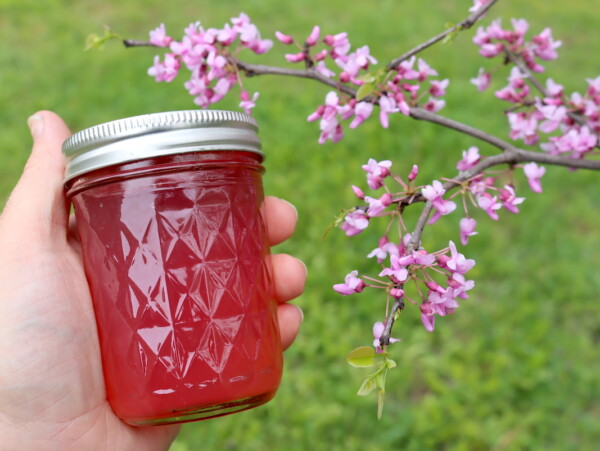
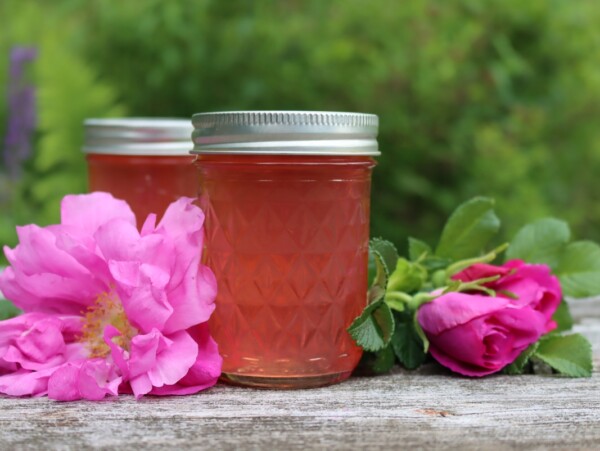
If you tried this Violet Jelly recipe, or any other recipe on Creative Canning, leave a ⭐ star rating and let me know what you think in the 📝 comments below!
And make sure you stay in touch with me by following on social media!
Violet Jelly
Equipment
- Canning Jars, Lids and Bands
Ingredients
For the Violet Tea
- 2 cups wild violet flowers, loosely packed
- 4 cups water
For the Violet Jelly
- 1/4 cup bottled lemon juice, or 1 teaspoon citric acid
- 1 Box powdered pectin, 1.75 oz, Sure-Jell or similar brand
- 5 cups sugar, or less, see notes
Instructions
- Harvest the violet flowers, choosing only blossoms free from pesticides. If using a mason jar, harvest directly into the jar, about halfway full.
- Pour the boiling water over the violet flowers. Let steep for 15 to 20 minutes. The tea will likely be greenish or turquoise at first.
- Strain out the flowers and pour the tea into a large pot. Stir in the lemon juice (or citric acid); the color will shift from turquoise to pink.
- Whisk in the powdered pectin until dissolved. Bring to a full rolling boil over high heat, stirring constantly, and boil for 1 minute.
- Add all the sugar at once and stir. Return to a full rolling boil and boil hard for exactly 1 minute. Remove from heat and skim off any foam.
- Ladle hot jelly into prepared jars, leaving 1/4 inch headspace. Wipe rims clean, center lids, and apply bands fingertip-tight.
- Process in a boiling water bath for 10 minutes, adjusting for altitude. Turn off heat and let jars rest 5 minutes before removing. Cool undisturbed for 12-24 hours before checking seals. If not canning, store in the refrigerator for up to 3 weeks.
Notes
Nutrition
Nutrition information is automatically calculated, so should only be used as an approximation.
Jelly Canning Recipes
Find the perfect recipe
Searching for something else? Enter keywords to find the perfect recipe!

Made this last year as my first foray into jelly-making, and it was a hit with everyone! Still, I made a bit more than I meant to and ended up using a lot of the jelly as a topping on blueberry waffles instead of syrup and found that it was deeply enjoyable that way. I missed the window for it this year but I’m definitely going to try again next spring!! Love your work, really thorough and accessible writing/instructions.
So glad it was a hit, and what a great first jelly to start with! Violet jelly on blueberry waffles sounds perfect. I’m so glad you liked it!
I am using liquid pectin. How much sugar would I need for following the 2 cups of violets in the recipe?
With liquid pectin, everything works a bit differently. Follow the mint jelly recipe on your pectin box, and that should get you what you need.
This looks so delicious! How many jars/sizes will I need?
This recipe makes 4 to 5 half pint jars (1 cup each). The total yield depends a bit on how much sugar you use, with more sugar getting you close to that 5 jar amount. Enjoy!
Delicious! Thank you so much for sharing. This is my first attempt at making jelly and my mother supervised. I’m 54 and I learned today, it’s never too late to learn something new.
I’m so happy for you! (And it’s so nice that you have your Mom with you too!)