
This post may contain affiliate links. Please see our disclosure policy.
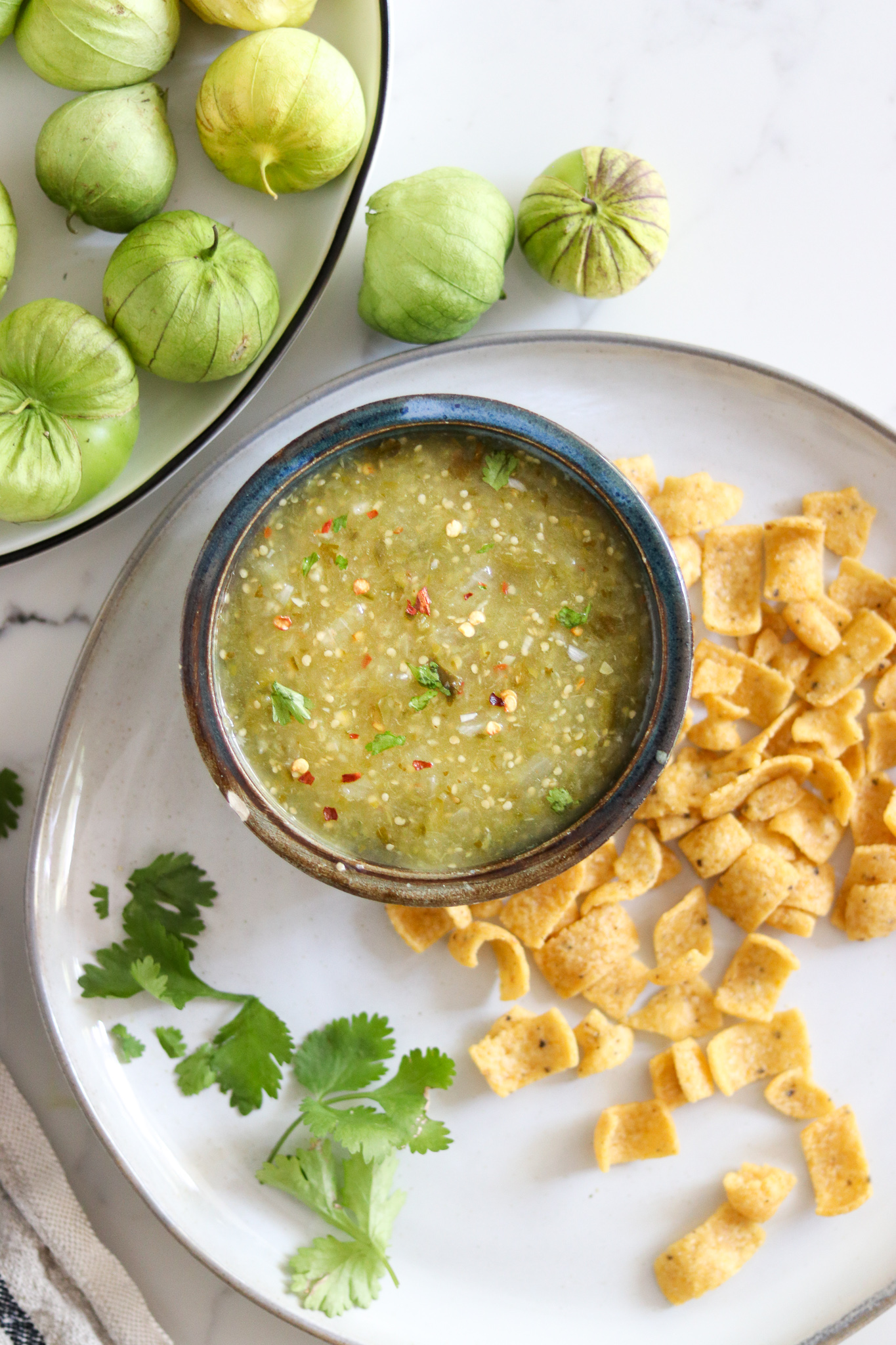
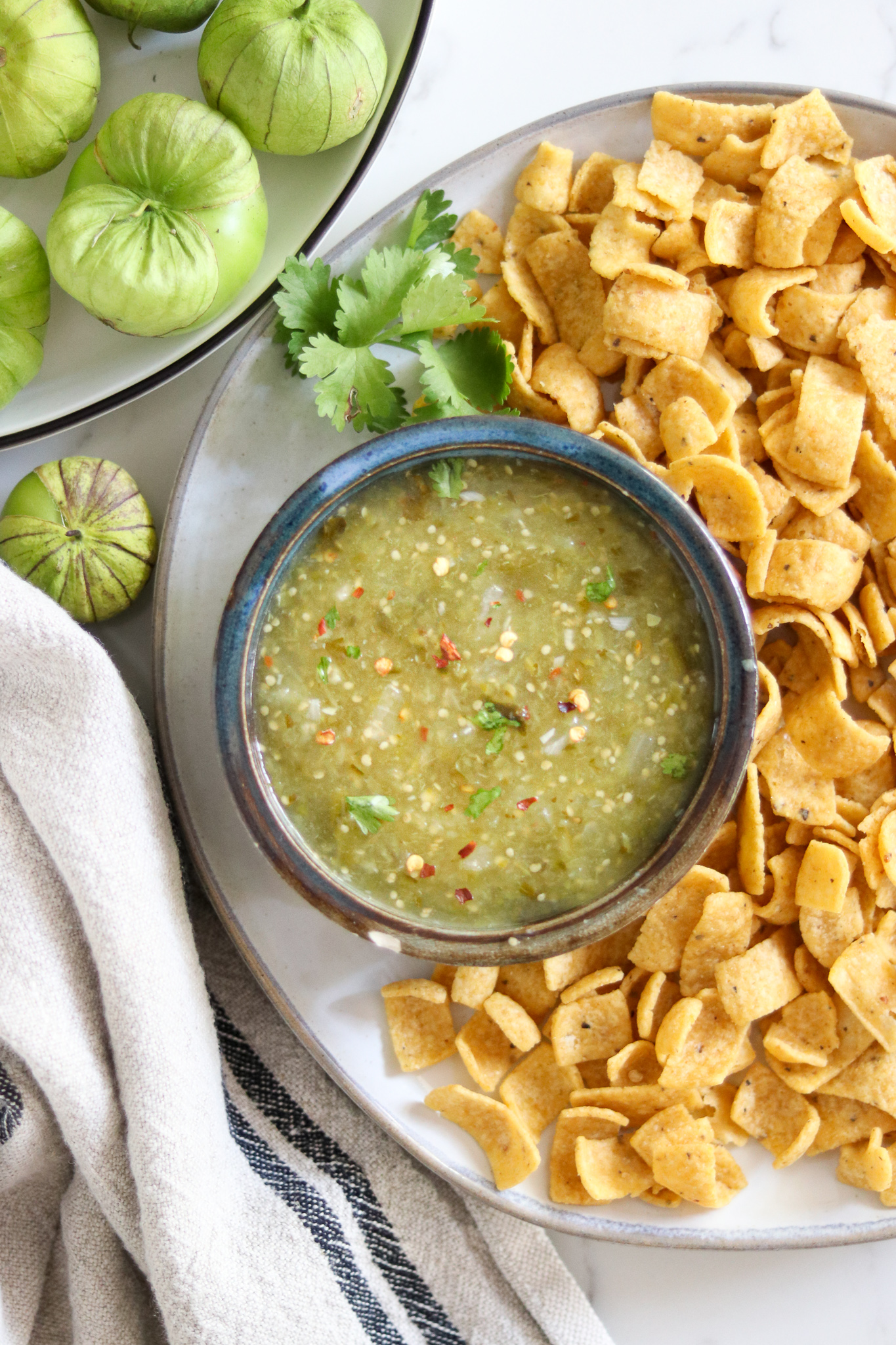
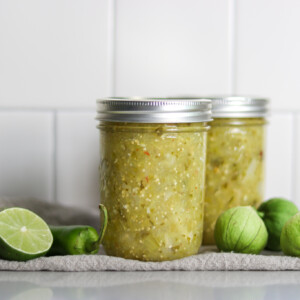
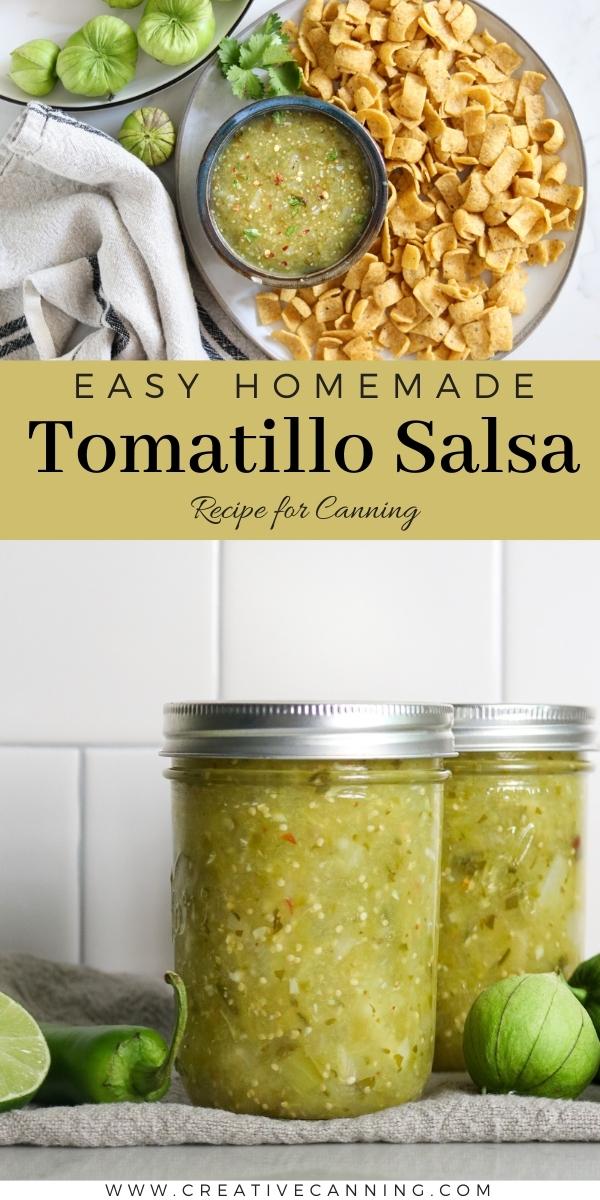
Tomatillo salsa is a bright, tart green salsa that you can put up by the canner load, and it’s what I do with a tomatillo plant that won’t quit. Tart, a little lemony, and as hot as you want to make it.
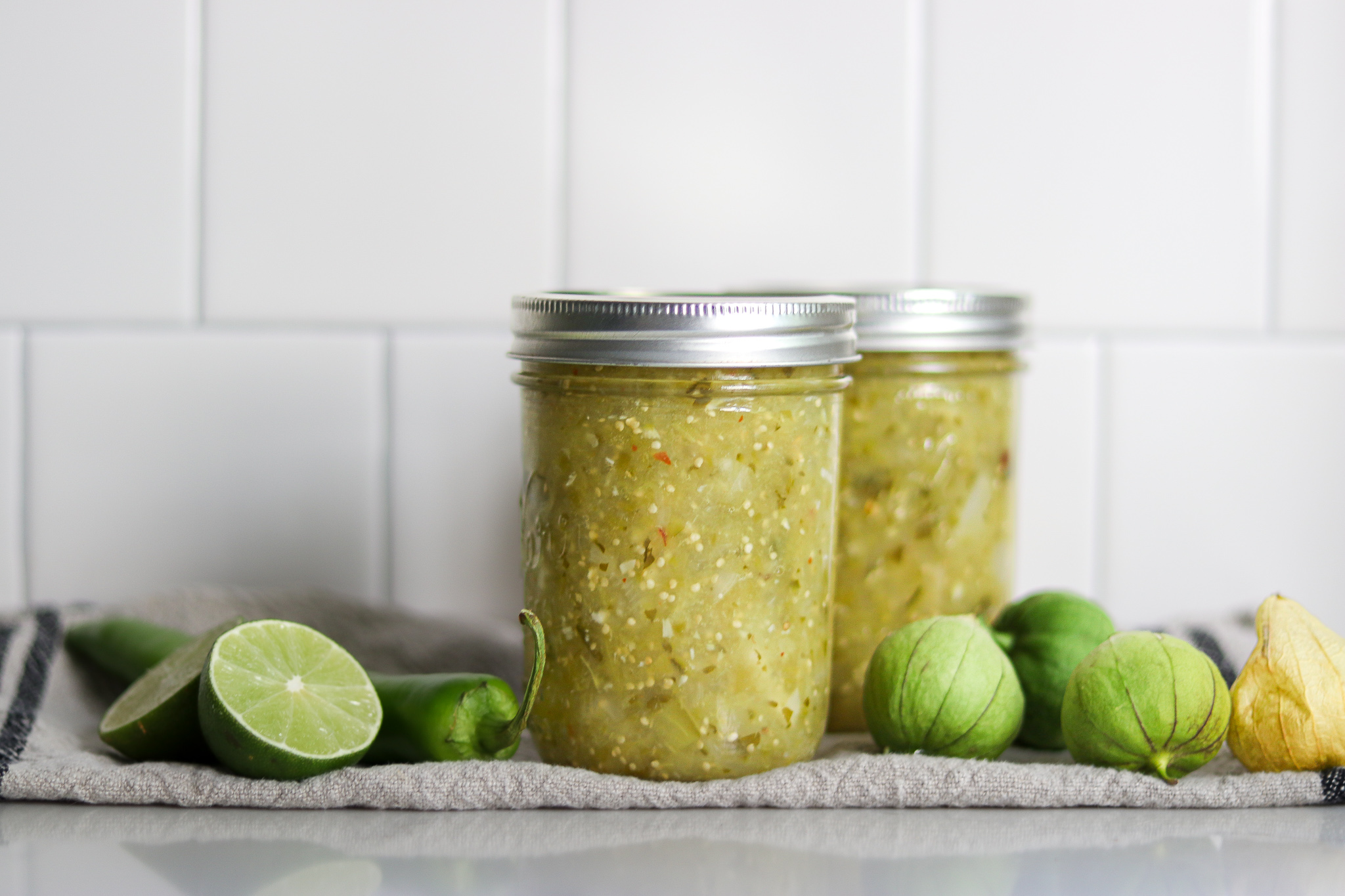
Table of Contents
- Notes from My Kitchen
- A Quick Look at the Recipe
- Are Tomatillos Safe for Canning?
- Choosing Tomatillos and Peppers
- Ingredients for Tomatillo Salsa
- Acid and Substitutions
- How to Make Tomatillo Salsa
- Canning Tomatillo Salsa
- Altitude Adjustments
- Ways to Use Tomatillo Salsa
- Other Ways to Preserve Tomatillos
- Storage and Shelf Life
- Yield Notes
- Tomatillo Salsa FAQs
- More Tomatillo Canning Recipes
- Tomatillo Salsa (Salsa Verde) Recipe
- More Salsa Canning Recipes
This recipe has been reviewed for safety and accuracy by a Master Food Preserver certified through the University of Cornell Cooperative Extension.
Tomatillos are one of those crops where the harvest is measured in buckets and wheelbarrow loads, even if you’re only growing a few tomatillo plants in the garden. I’ve pulled 20 pounds off a single plant. Nothing seems to slow them down.
They’re not green tomatoes, though the two get mixed up all the time. A tomatillo is a husked fruit in the physalis family, the same group as ground cherries, and it’s tart and faintly lemony where a tomato is sweet. That tartness is the whole point of salsa verde.
It’s also what makes them a canner’s friend. Tomatillos are acidic enough that the tested recipes need only a modest amount of added acid, which is not true of most things that come out of a summer garden. That’s worth knowing when you’re staring down a full bucket.
So if you’re planting tomatillos this year, have a few tested tomatillo canning recipes on hand. Trust me, you’re going to need them.
I make this one as a double batch of the tomatillo salsa from the Ball Complete Book of Home Preserving, so it fills a canner instead of a corner of one.
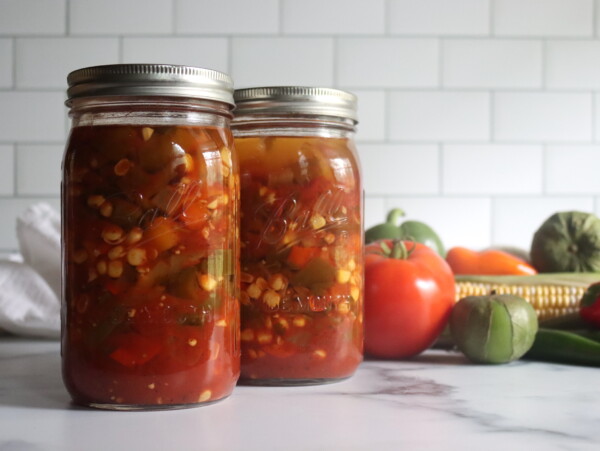
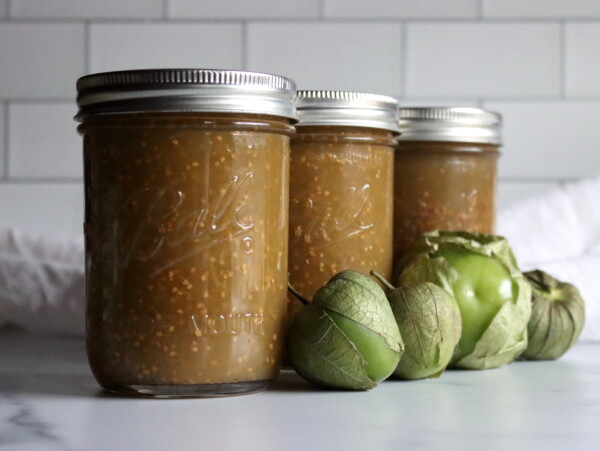
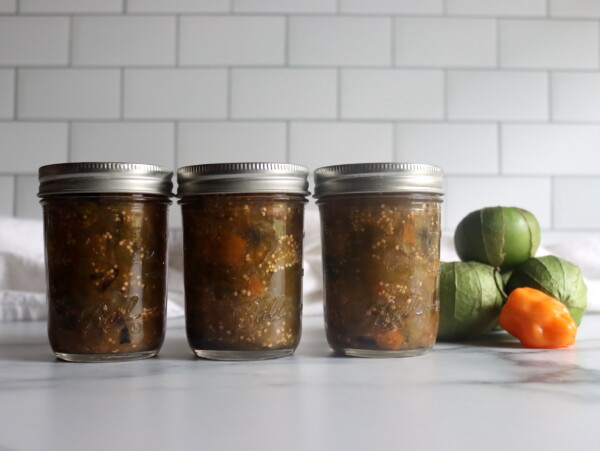
It’s a bit chunkier than a sauce. For a pourable sauce, my canned tomatillo sauce is built for that job, and is more of an enchilada sauce rather than a salsa. Beyond that, roasted tomatillo salsa and chipotle tomatillo salsa are the same fruit with a different edge.
If the tomatillos run out before the recipes do, green tomato salsa verde uses green tomatoes instead, and there’s a whole list of salsa canning recipes waiting to be made.
Notes from My Kitchen

One year life got in the way, and our garden turned into a hayfield. At the end of the season, we harvested the tomatillos with rakes, pulling them out of a tangle of waist-high grass.
They didn’t care one bit. We still got buckets, and that’s the year I stopped trying to keep up with them a jar at a time and started making this by the canner load. The tomatillos have been winning ever since.
A Quick Look at the Recipe
- Recipe Name: Tomatillo Salsa, also called salsa verde
- Recipe Type: Green salsa
- Canning Method: Water Bath Canning
- Prep Time: About 30 minutes
- Cook Time: About 20 minutes
- Canning Time: 15 minutes for half pints and pints
- Yield: About 4 pints, or 8 half pints
- Jar Sizes: Half pint or pint
- Headspace: 1/2 inch
- Ingredients Overview: Tomatillos, onion, green chile peppers, garlic, white vinegar, bottled lime juice, cumin, cilantro, salt, and hot pepper flakes
- Safe Canning Recipe Source: Ball Complete Book of Home Preserving
- Difficulty: Easy
- Similar Recipes: For the same tomatillos with a charred edge, there’s roasted tomatillo salsa and chipotle tomatillo salsa. For a smooth enchilada sauce version, there’s tomatillo sauce, and if the tomatillos run out, there’s green tomato salsa verde.
Are Tomatillos Safe for Canning?
Tomatillos sit right on the borderline for safe canning. Canned plain, the tested recipes all have you add bottled citrus juice to bring them down where they need to be.
This recipe handles that with a full cup of vinegar and a half cup of bottled lime juice. Both are acid, and both are part of what makes the jars safe in a water bath canner. Ball specifies bottled lime juice rather than fresh, because bottled comes at a standardized acidity and fresh limes vary from one to the next.
You can’t reduce either one if you’re canning. That’s no hardship, because tomatillos take all that acid well. It sharpens them up and gives the jar real zip.
Choosing Tomatillos and Peppers
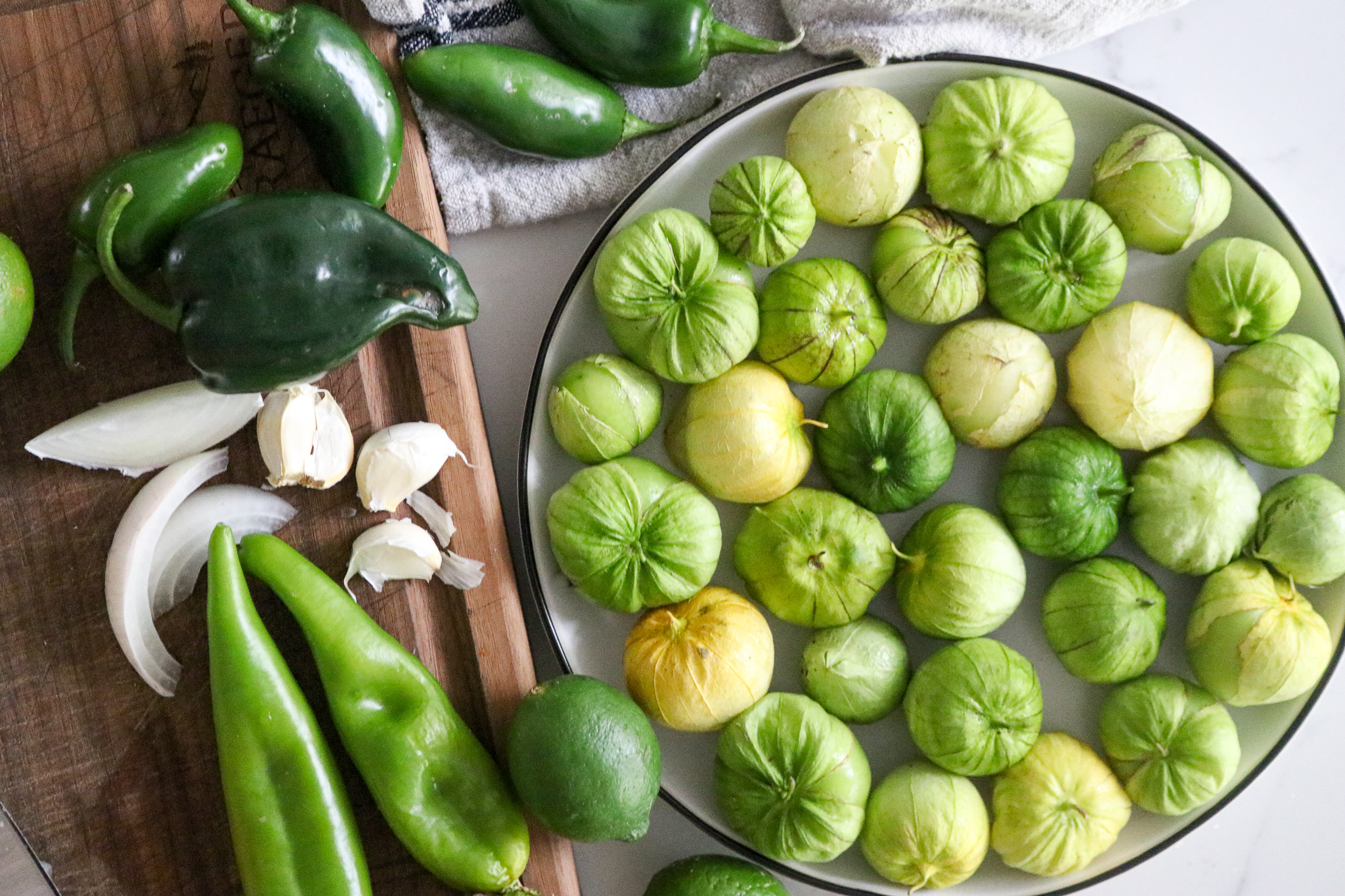
Just about any tomatillo variety works here, and believe it or not, there are a lot of them out there these days. There are purple-fleshed tomatillos, and very mild yellow-fleshed ones that taste almost like pineapple and can be eaten out of hand like fruit.
Most of what you’ll find is the standard green tomatillo, which gives the finished salsa its deep green color. Pick fruit that fills its husk and feels firm, and skip anything soft or split. Husk them and wash off the sticky film before you chop.
If you have other species of physalis in the garden, those work in this recipe too. Ground cherries are sweeter and taste more like pineapple, so most people make ground cherry jam instead. Any husked physalis fruit is good here.
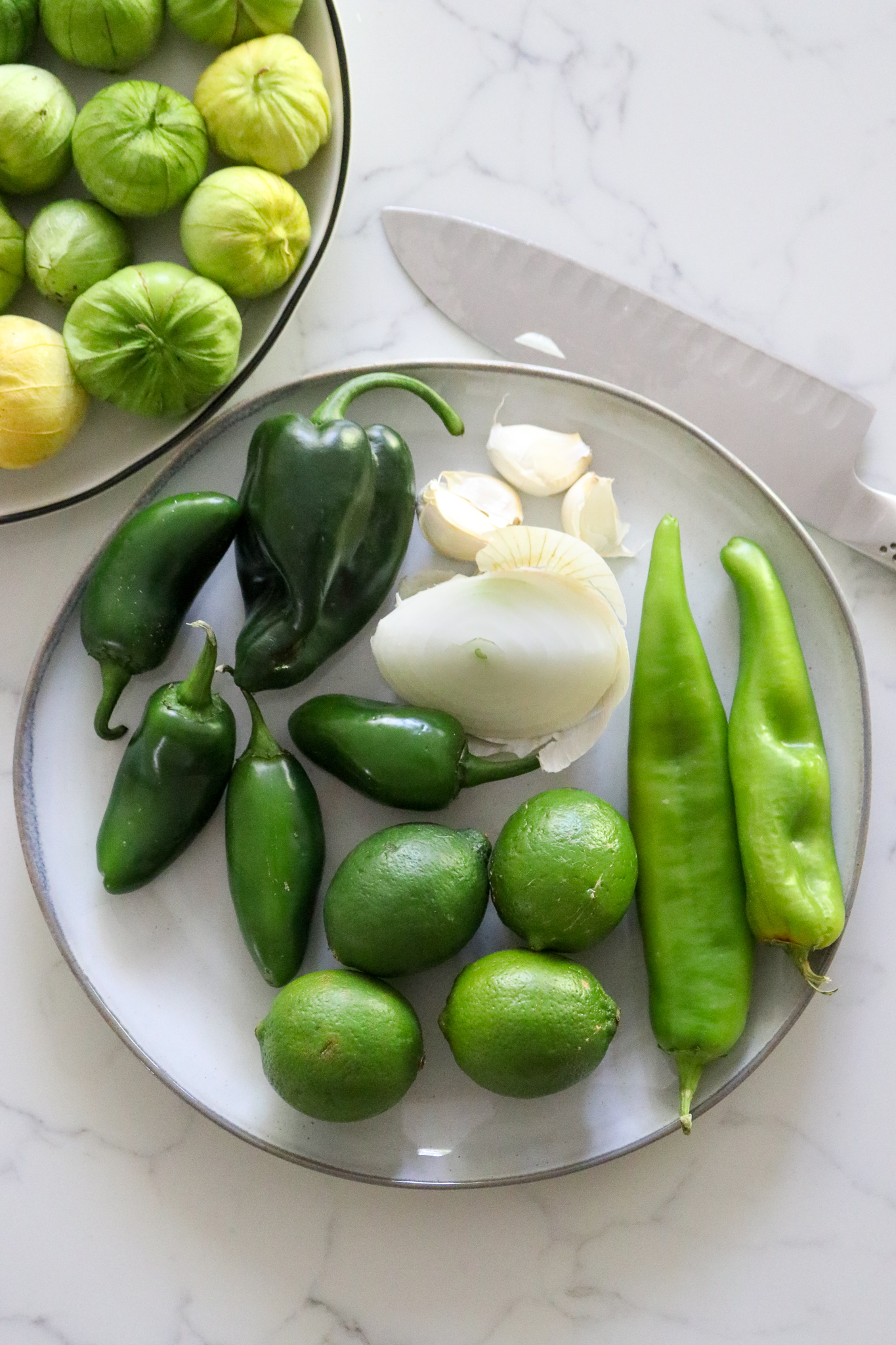
The peppers are the part you really get to choose, and that’s the question I get most on this recipe. Any hot or sweet pepper works as long as the total volume stays the same.
Bell peppers make a very mild salsa. Anaheim or poblano lands it in the middle, and jalapeño or serrano gives you real heat. I go with a mix of jalapeño, Anaheim, and poblano for a well-balanced batch, and that’s still the combination I come back to.
Leave the seeds in for more heat or take them out, whichever you like. Either way, dice the peppers fairly fine, into 1/4 inch pieces for the long, thin ones and a 1/4 inch dice for bigger poblanos. Wear gloves if you’re working through a big pile of hot ones.
Ingredients for Tomatillo Salsa
There aren’t many ingredients here, and every one of them is doing a job.
- Tomatillos: The body of the salsa and its tart, lemony flavor. Standard green ones give the best color.
- Onion: Sweetness underneath the tart. White onion is what I use, though yellow or red both work.
- Green chile peppers: Heat and flavor, and the one ingredient you can really make your own. Any variety, as long as the total volume holds.
- Garlic: Savory backbone. Mince it fine so it spreads through the jar.
- White vinegar: Part of the acid that makes this safe for the canner. It has to be labeled 5 percent acidity, and cider vinegar at 5 percent works too.
- Bottled lime juice: The other half of the acid, and the flavor that makes it taste like salsa verde. Use bottled lime juice, not fresh, because the tested recipe was built on a standardized acidity.
- Cumin: Warmth and a little smoke behind the tart. Ground, and it goes in with everything else.
- Cilantro: Optional, and it’s what makes it taste like restaurant salsa. Leave it out if you’re one of the people it tastes like soap to.
- Canning salt: Flavor only. Use canning or pickling salt rather than table salt, which has anti-caking agents that can cloud the jars.
- Hot pepper flakes: Background heat that sits behind the fresh peppers. Skip them for a mild batch.
Ball’s note on this recipe is that the flavor mellows and blends on the shelf, and that it’s at its best three to four weeks after canning. That’s held true in my pantry, so try to leave the first jar alone for a month.
Acid and Substitutions
The vinegar and the bottled lime juice both come straight from the tested recipe, and that acid level is what the processing time was based on. Neither one can be cut.
You can swap peppers for other peppers and onions for other onions, as long as the total volume of each stays the same. What you can’t do is add vegetables the recipe doesn’t have, increase the tomatillos, or trade one vegetable type for another.
Seasonings are different, and you can adjust cumin, cilantro, salt, and pepper flakes freely.
Just don’t reduce the vinegar or the lime juice!
It was easy to make and has a wonderful flavor. I will use this as the base for my enchilada suiza sauce.
How to Make Tomatillo Salsa
Start by chopping and measuring everything, because that’s the time-consuming part. Once the vegetables are ready, the rest of the recipe moves fast.
Get your water bath canner heating and your jars and lids ready before you start cooking. The salsa is done in about fifteen minutes, and you don’t want to be waiting on a cold canner.
Chopping and Measuring
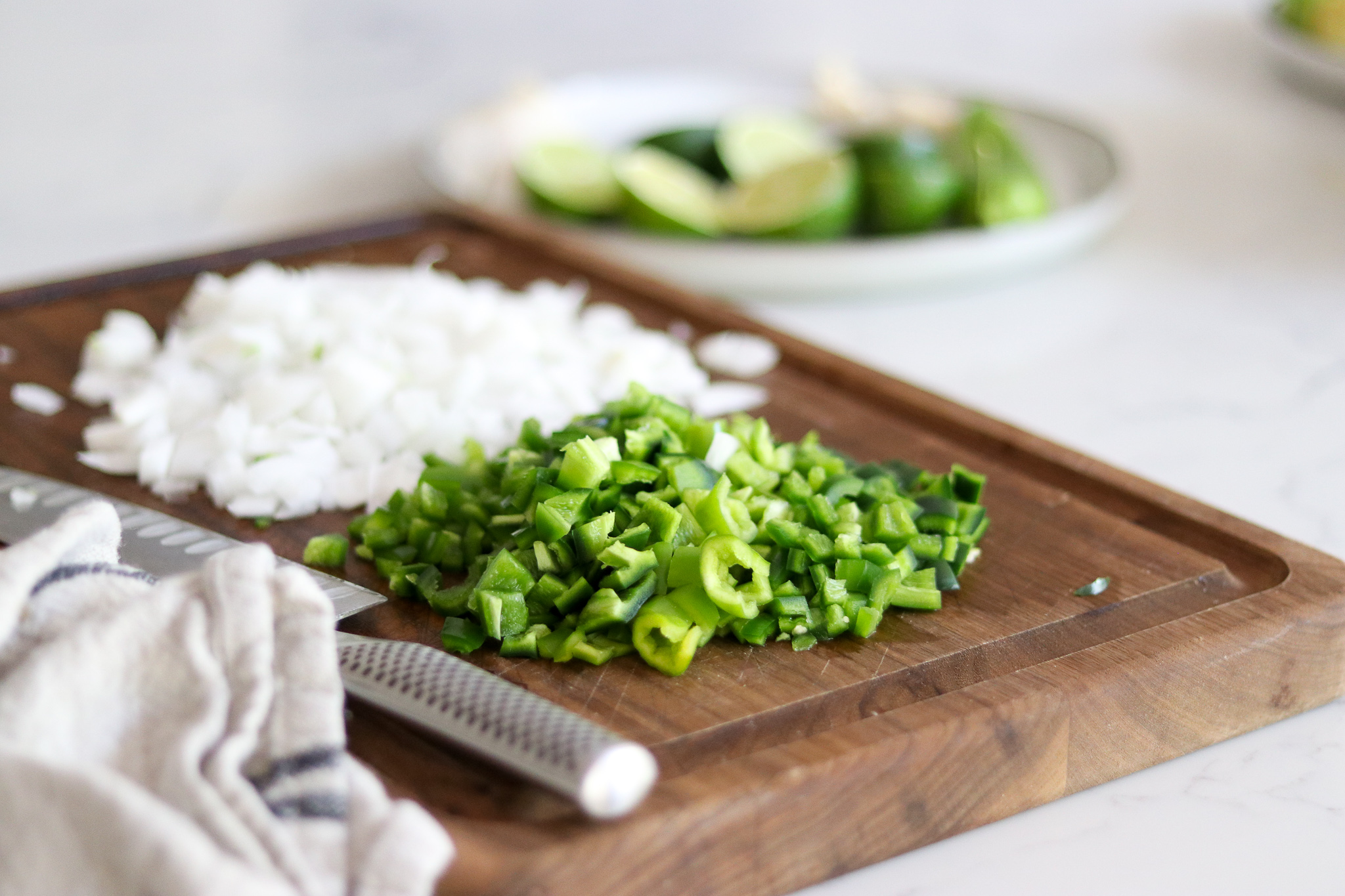
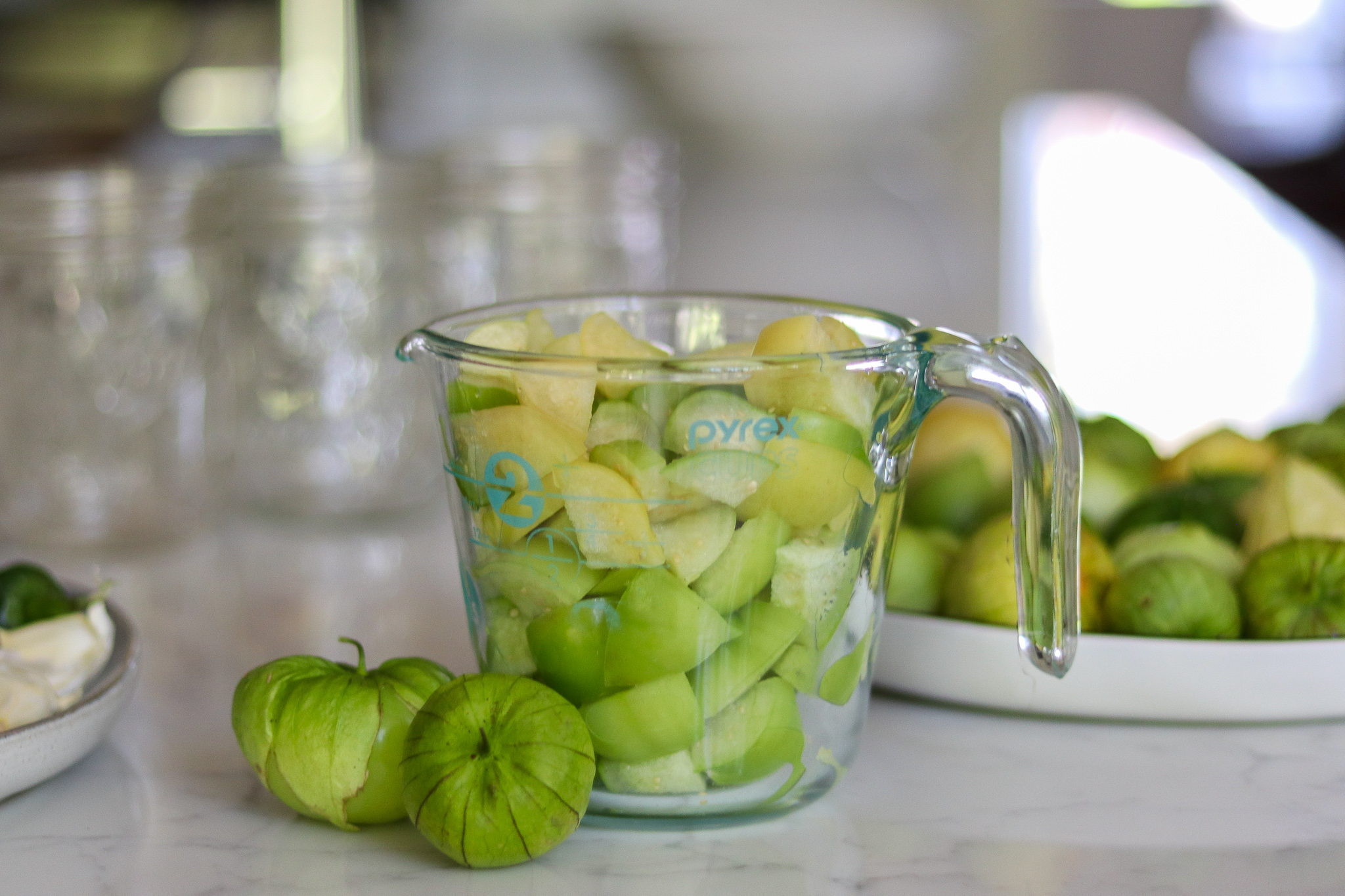
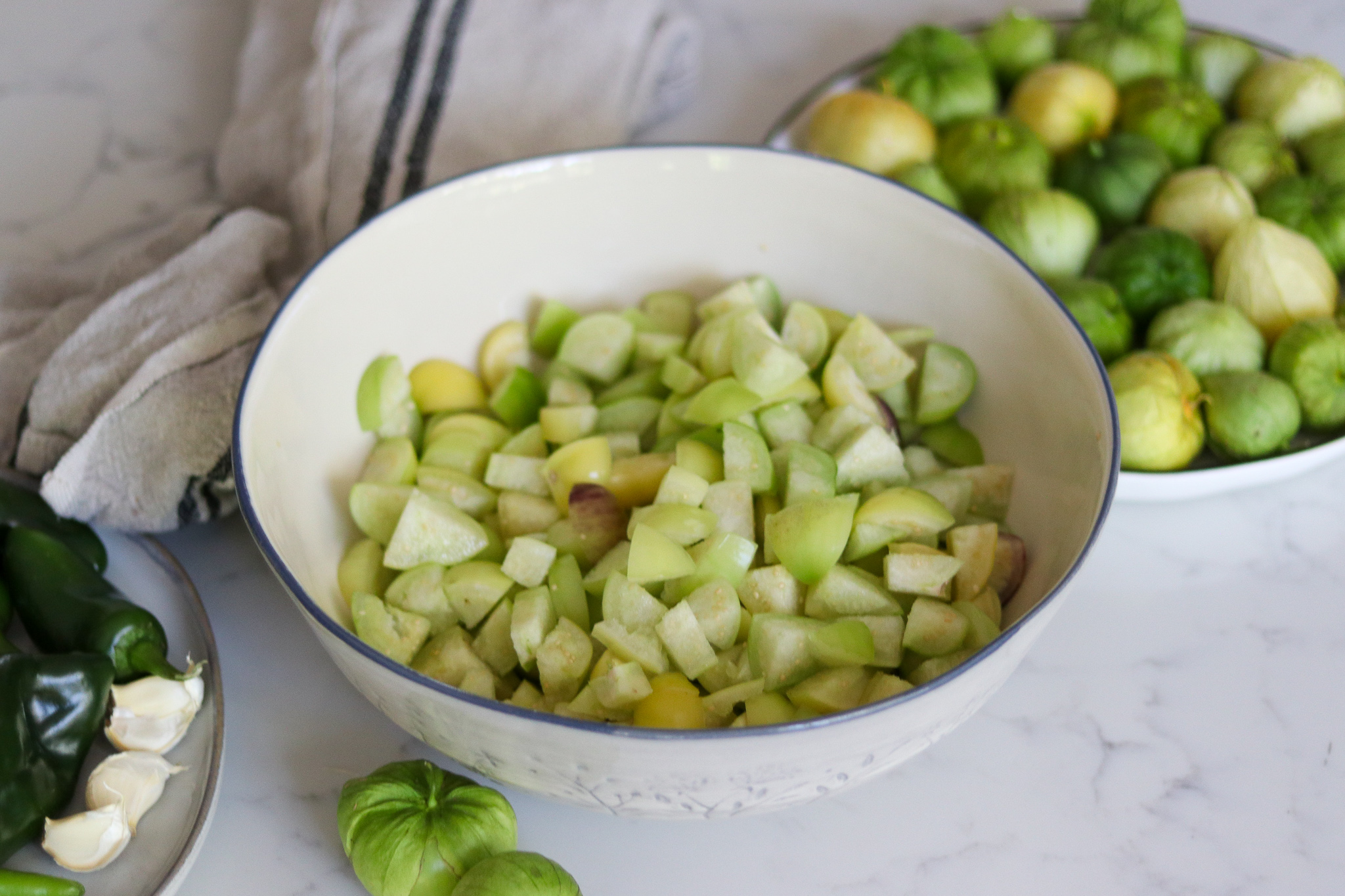
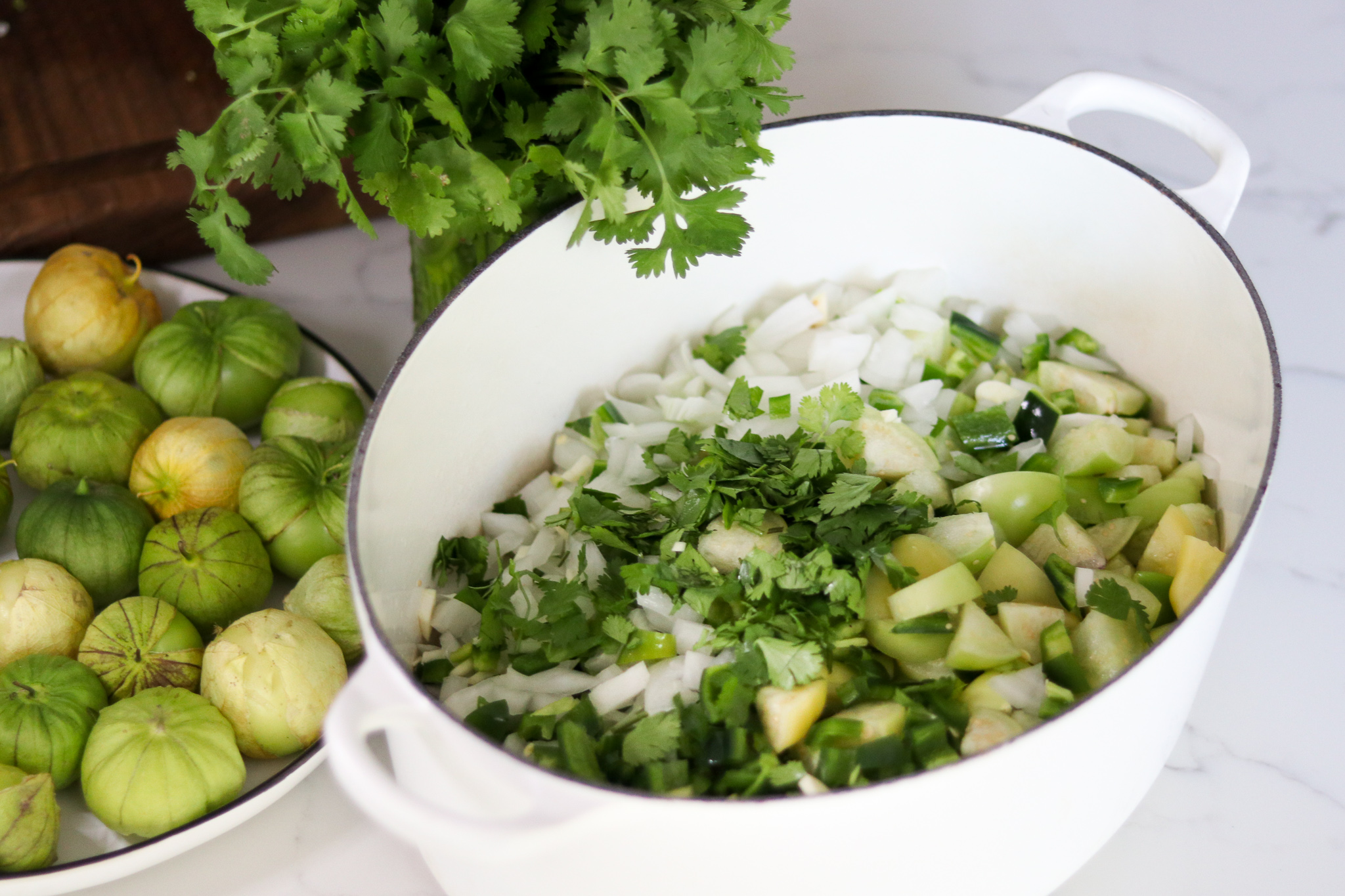
Husk the tomatillos, rinse off the sticky film, then chop them and measure the chopped fruit.
Chop the onion and peppers and measure those too. Mince the garlic fine.
A food processor that dices rather than purees cuts this down to almost nothing, and it’s what I use for most of my chopped recipes. If yours has a standard blade, pulse it rather than letting it run, or the peppers turn to slush before you’ve measured them.
Cooking the Salsa
Everything goes into a large Dutch oven or stockpot at once. The chopped vegetables, then the vinegar and lime juice, then the garlic, cumin, cilantro, salt, and pepper flakes.
Bring it to a boil over high heat, stirring constantly. The liquid keeps things from catching while the vegetables soften, but the bottom of the pot still wants watching. Once the tomatillos give up their juice that stops being a worry.
Turn it down and simmer about fifteen minutes, stirring often, until everything is heated through and softened. If you want a smoother salsa, run an immersion blender through it now. Leaving it chunky is fine too, and that’s how I usually pack it.
Canning Tomatillo Salsa
Have the canner simmering and the jars hot before the salsa is ready. If it’s your first time running one, my guide to water bath canning for beginners walks through the whole thing, and a steam canner works for this recipe too.
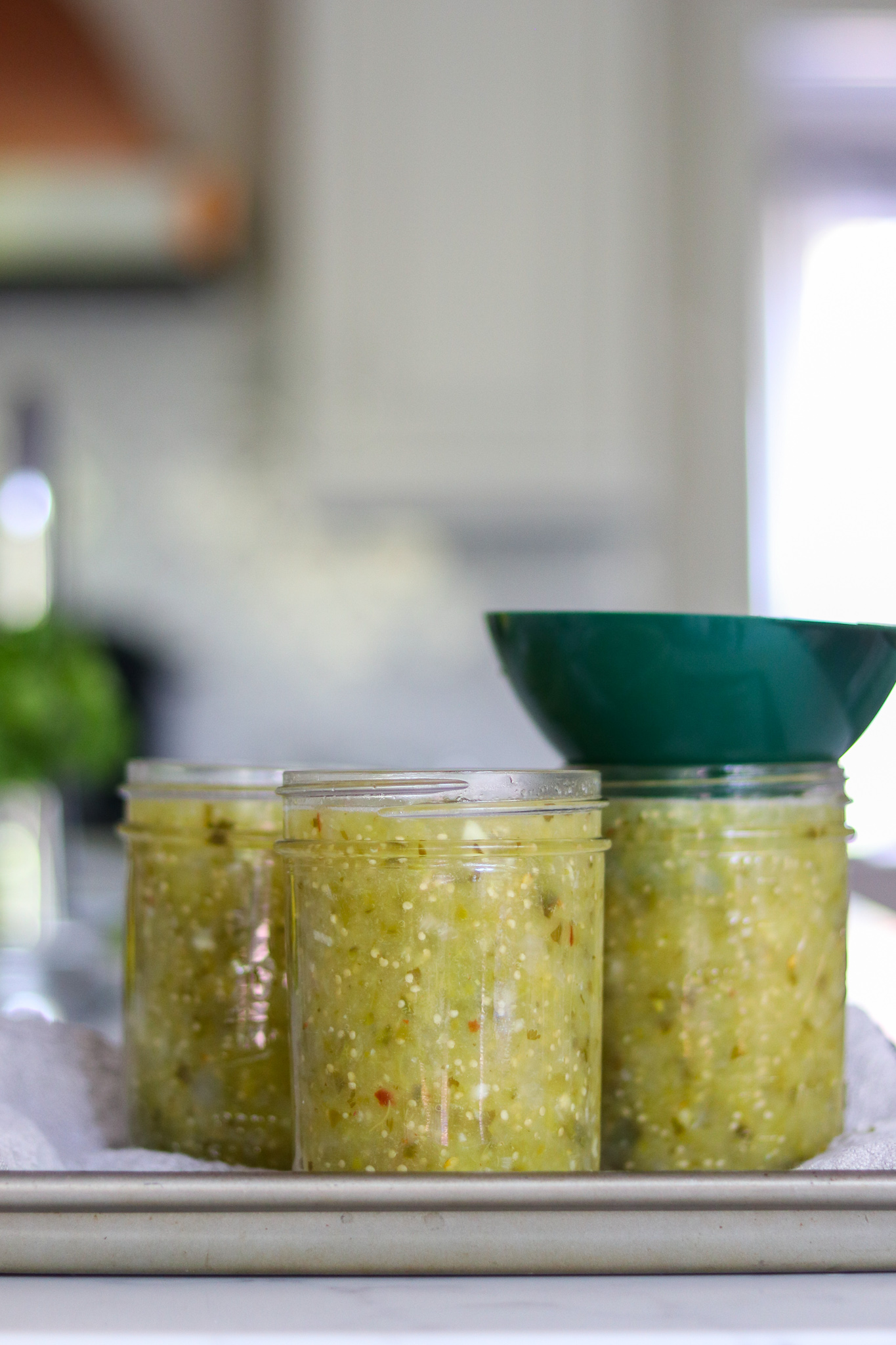
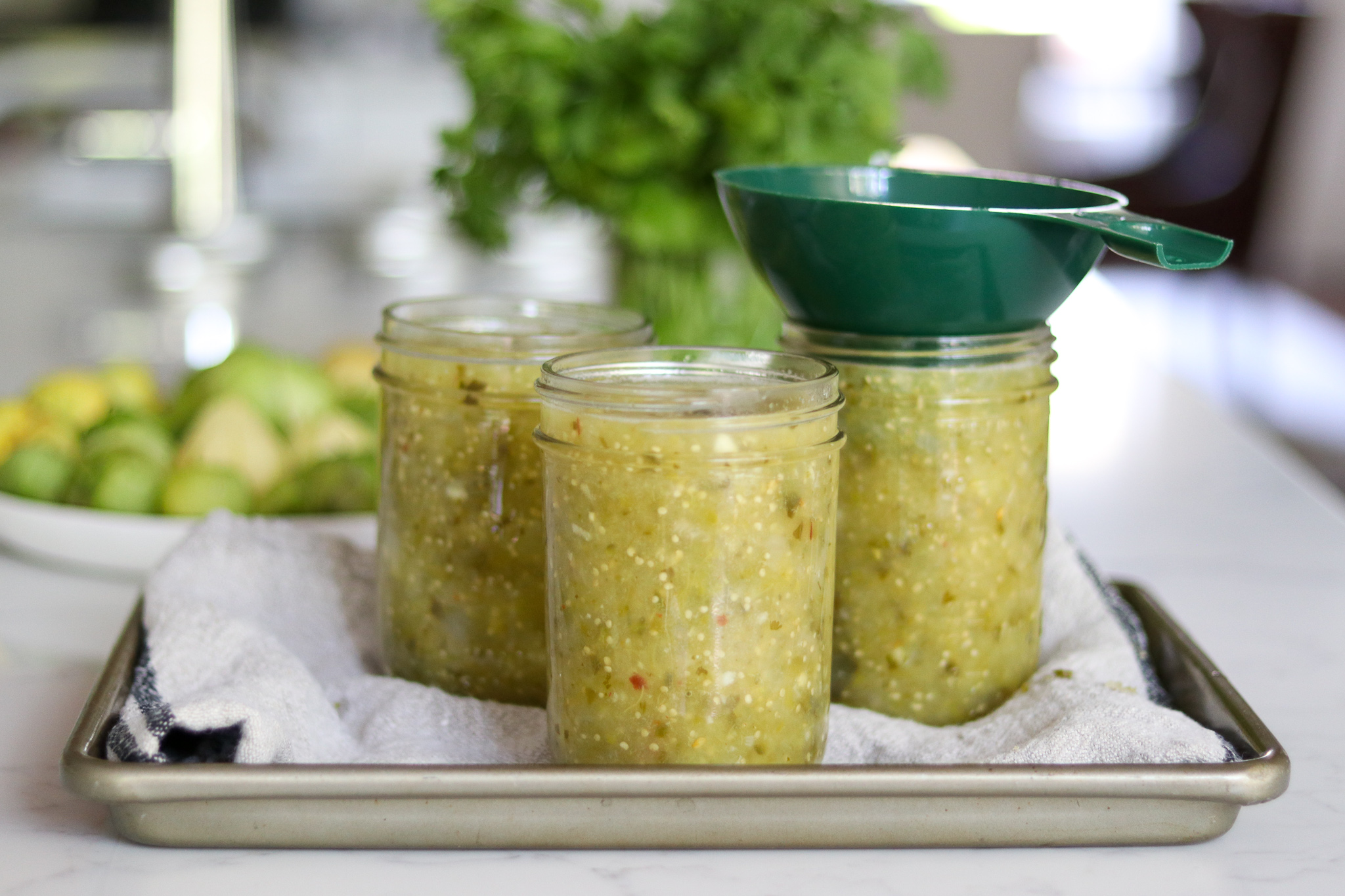
Ladle the hot salsa into hot jars through a canning funnel, leaving 1/2 inch headspace. Run a bubble tool or a wooden skewer around the inside of each jar, then check the headspace again and top it up if it dropped.
Wipe the rims and threads with a damp cloth, center the lids, and screw the bands down to fingertip tight. Lower the jars into the canner with a jar lifter, making sure the water covers them by an inch or two.
Bring the canner to a full rolling boil before you start the timer. Then process half pints and pints for 15 minutes, adjusting for altitude using the chart below.
When the time is up, turn off the heat and take the canner lid off. Leave the jars in the water another five minutes before you lift them out, which cuts down on siphoning.
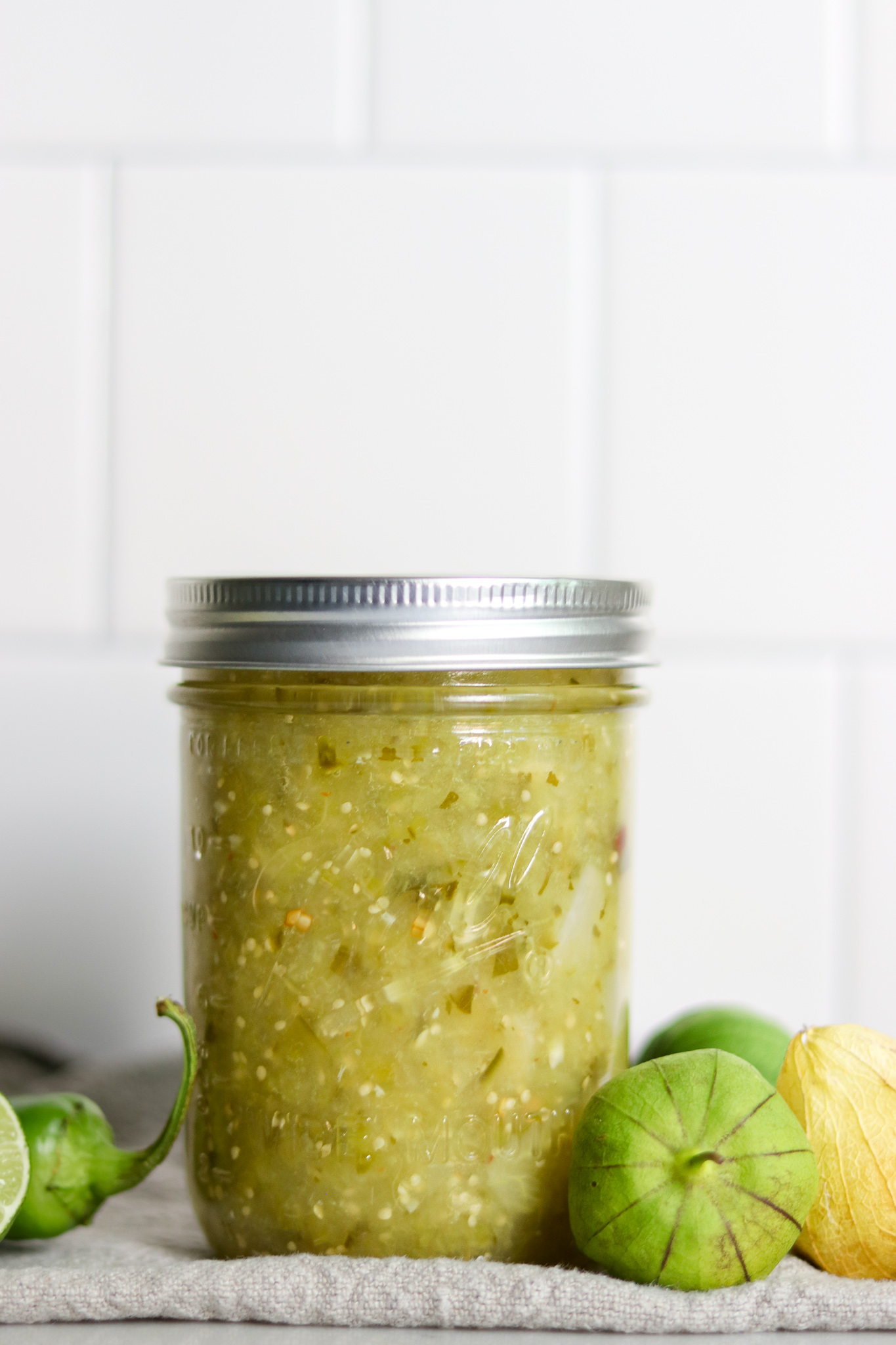
Set them on a towel on the counter and leave them alone for 12 to 24 hours. Then check the seals by pressing the center of each lid, and take the bands off before the jars go on the shelf.
Altitude Adjustments
Water boils cooler as you climb, so the jars need longer in the canner the higher up you are. Half pints and pints share the same time at every elevation.
- 0 to 1,000 feet: 15 minutes
- 1,001 to 3,000 feet: 20 minutes
- 3,001 to 6,000 feet: 25 minutes
- Above 6,000 feet: 30 minutes
Ways to Use Tomatillo Salsa
Straight out of the jar with chips is the obvious one, and it’s what most of mine gets used for. It works just as well spooned over eggs or a rice bowl. When the tomatillos are gone, I keep mango salsa and thick tomato salsa on the shelf for the same job.
I also use it as a simmer sauce for braised pork shoulder, and it does the same job for chicken. Pour a jar over the meat in a slow cooker and supper takes care of itself.
It makes a good green sauce for enchiladas, and with a little sour cream stirred in you have the makings of quick enchiladas suizas.
For taco night, restaurant-style house salsa and mild jalapeño salsa are the two red jars I keep next to it.
Other Ways to Preserve Tomatillos
Salsa is where most of my tomatillos end up, but it isn’t the only place they can go. A big harvest is easier to handle if you split it across a few methods, and there are plenty of other water bath canning recipes waiting once the tomatillos are done.
Here’s where to read about each one.
Storage and Shelf Life
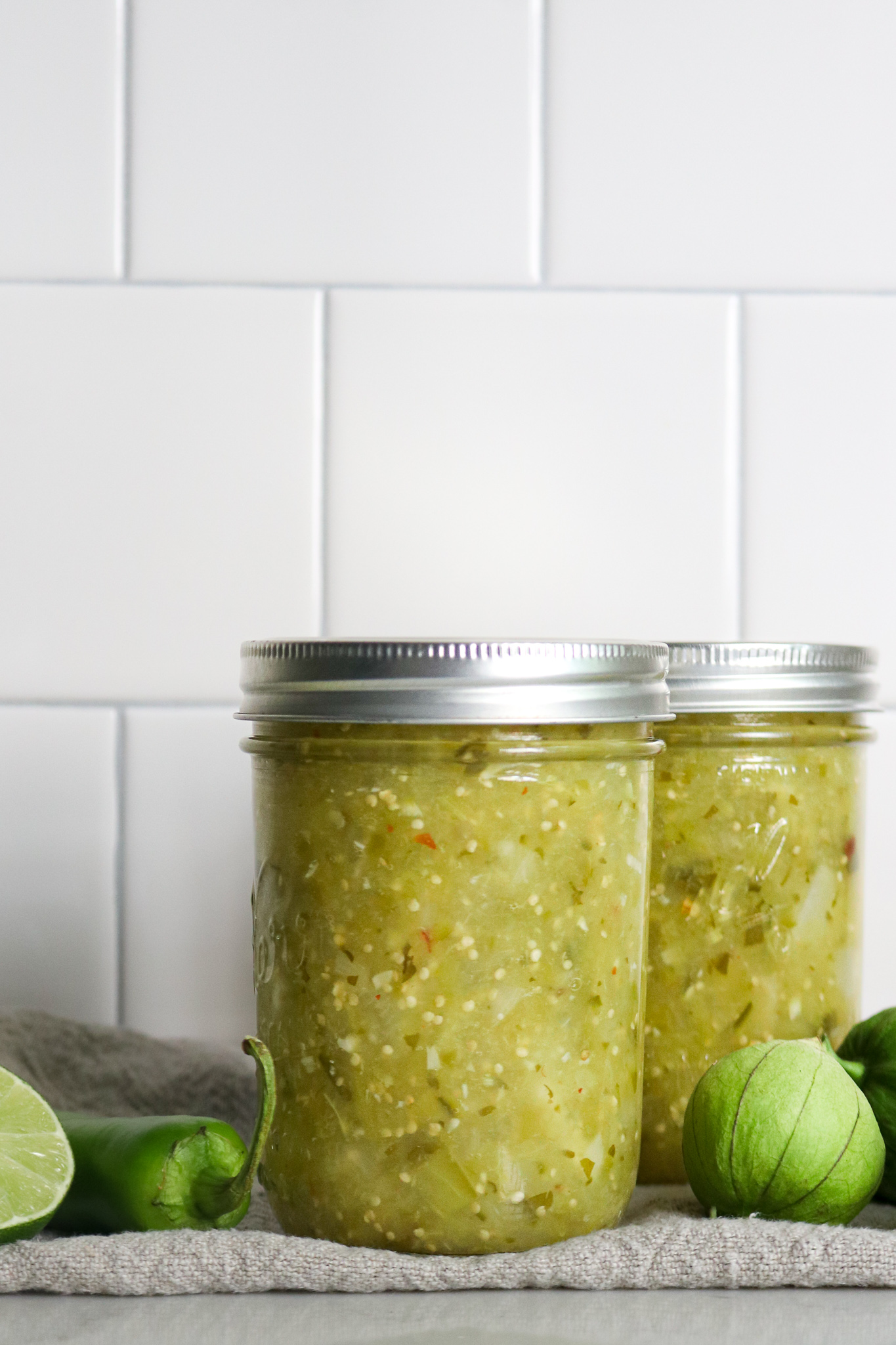
Sealed jars hold their quality for 12 to 18 months in a cool, dark cupboard, and the flavor is at its peak after the first month on the shelf. Store them with the bands off, since a band can hold a failed seal in place and keep you from noticing.
Check each lid with a press of your finger before the jars go away, and again when you pull one out to use. Any jar that didn’t seal goes in the refrigerator and gets used within a week or two.
If you’d rather skip the canner altogether, cool the finished salsa and keep it in the refrigerator for a couple of weeks, or freeze it. For freezing, leave 1 inch headspace for expansion and use straight-sided freezer-safe jars.
Yield Notes
This recipe starts with about 4 1/2 pounds of tomatillos as purchased, which husks and chops down to the 11 cups the recipe calls for. It finishes at about 4 pints, or 8 half pints.
Buy a little over 5 pounds if you’re shopping, since you’ll lose some to husking and soft fruit. Wash five pint jars rather than four, because a finer chop and a longer simmer both bring the jar count down.
Halving the recipe gives you 2 pints and works exactly the same way. This is Ball’s recipe doubled, and it doubles again from here as long as your pot is big enough and you stir often enough to keep the bottom from catching.
Here are the questions I get most often about canning tomatillo salsa.
Tomatillo Salsa FAQs
Readers ask about the peppers and the acid more than anything else, so those two come first.
Yes. The recipe calls for a set volume of peppers, and you can fill that volume with any variety you like, hot or sweet. Serranos or jalapeños for heat, Anaheim or poblano for the middle, bell peppers for none at all. Leave out the hot pepper flakes for a mild batch. Just stick to the total volume, because that’s what the processing time was based on.
Not if you’re canning it. The lime juice here is part of the acid, and the tested recipe was built on bottled juice at a standardized acidity. Fresh limes vary quite a bit from one to the next, so there’s no way to know what you’re getting. Use bottled for the canner, and save fresh limes for a batch you’re keeping in the refrigerator.
Yes, and the NCHFP treats the two as a one for one swap in its own tomatillo green salsa. Core and chop them and use the same measured cups. Green tomatoes hold more pectin and less water, so they don’t break down the way tomatillos do and the salsa comes out chunkier.
No. The tested times cover half pints and pints, and there’s no quart process for this recipe. A quart of salsa is also more than most households get through before it turns, so pints are the practical size anyway.
Sealed jars are best used within 12 to 18 months, stored cool and dark with the bands off. The flavor improves for the first month, so it’s worth waiting before you open the first one. Once opened, keep it in the refrigerator and use it within a week to ten days.
More Tomatillo Canning Recipes
A good tomatillo year gives you more than one salsa’s worth.
If you tried this Tomatillo Salsa recipe, or any other recipe on Creative Canning, leave a ⭐ star rating and let me know what you think in the 📝 comments below!
And make sure you stay in touch with me by following on social media!
Tomatillo Salsa (Salsa Verde)
Equipment
- Canning Jars, Lids and Bands
Ingredients
- 11 cups tomatillos, husked and chopped
- 2 cups white onion, chopped
- 2 cups green chile peppers, chopped
- 8 cloves garlic, minced
- 1 cup white vinegar, 5% acidity
- 1/2 cup bottled lime juice
- 4 tsp ground cumin
- 2 tsp canning salt
- 1 tsp hot pepper flakes
- 4 tbsp cilantro, chopped, optional
Instructions
- Prepare a water bath canner, jars, and lids, and keep the jars hot until you fill them.
- Husk and rinse the tomatillos, chop them, and measure the chopped fruit into a large Dutch oven or stockpot.
- Chop the onion and peppers, mince the garlic, and add them to the pot.
- Add the vinegar, lime juice, cumin, salt, hot pepper flakes, and cilantro if you are using it.
- Bring to a boil over high heat, stirring constantly so the mixture does not scorch.
- Reduce the heat and simmer, stirring often, for 15 minutes, until the vegetables have softened and everything is heated through.
- For a smoother salsa, blend it with an immersion blender now. Leave it chunky if you prefer.
- Ladle the hot salsa into hot jars, leaving 1/2 inch headspace. Remove air bubbles, adjust the headspace, and wipe the rims and threads clean.
- Center the lids on the jars and screw the bands down to fingertip tight.
- Process half pints and pints in a boiling water bath canner for 15 minutes, adjusting for altitude (see notes).
- Turn off the heat, remove the canner lid, and wait 5 minutes before lifting the jars out onto a towel.
- Cool 12 to 24 hours, check the seals, take the bands off, and store in a cool, dark place.
Notes
- 0 to 1,000 feet: 15 minutes
- 1,001 to 3,000 feet: 20 minutes
- 3,001 to 6,000 feet: 25 minutes
- Above 6,000 feet: 30 minutes
Nutrition
Nutrition information is automatically calculated, so should only be used as an approximation.
More Salsa Canning Recipes
Green salsa is only one shelf of the pantry.
Find the perfect recipe
Searching for something else? Enter keywords to find the perfect recipe!

One of my fav salsas. I understand you make cilantro optional in this recipe because one needs to acquire taste to it. That’s very kind of you. Probably, there’s many people out there who would like to try salsa verde but cilantro throw them off. You solved that hassle. Tks.
So glad you enjoyed it! Cilantro is one of those herbs people either love or can’t stand (some folks really do taste it as soapy), so I like leaving it up to the cook. The salsa is still great without it. Happy canning!
May I use serranos and omit the chili flakes for a more traditional taste?
Yes. The recipe includes 2 cups of peppers, and you can use any variety of pepper you’d like (hot or sweet). Just stick to no more than 2 cups and choose what you like.
It was easy to make and has a wonderful flavor. I will use this as the base for my enchilada suiza sauce.
So glad you liked it!