This post may contain affiliate links. Please see our disclosure policy.
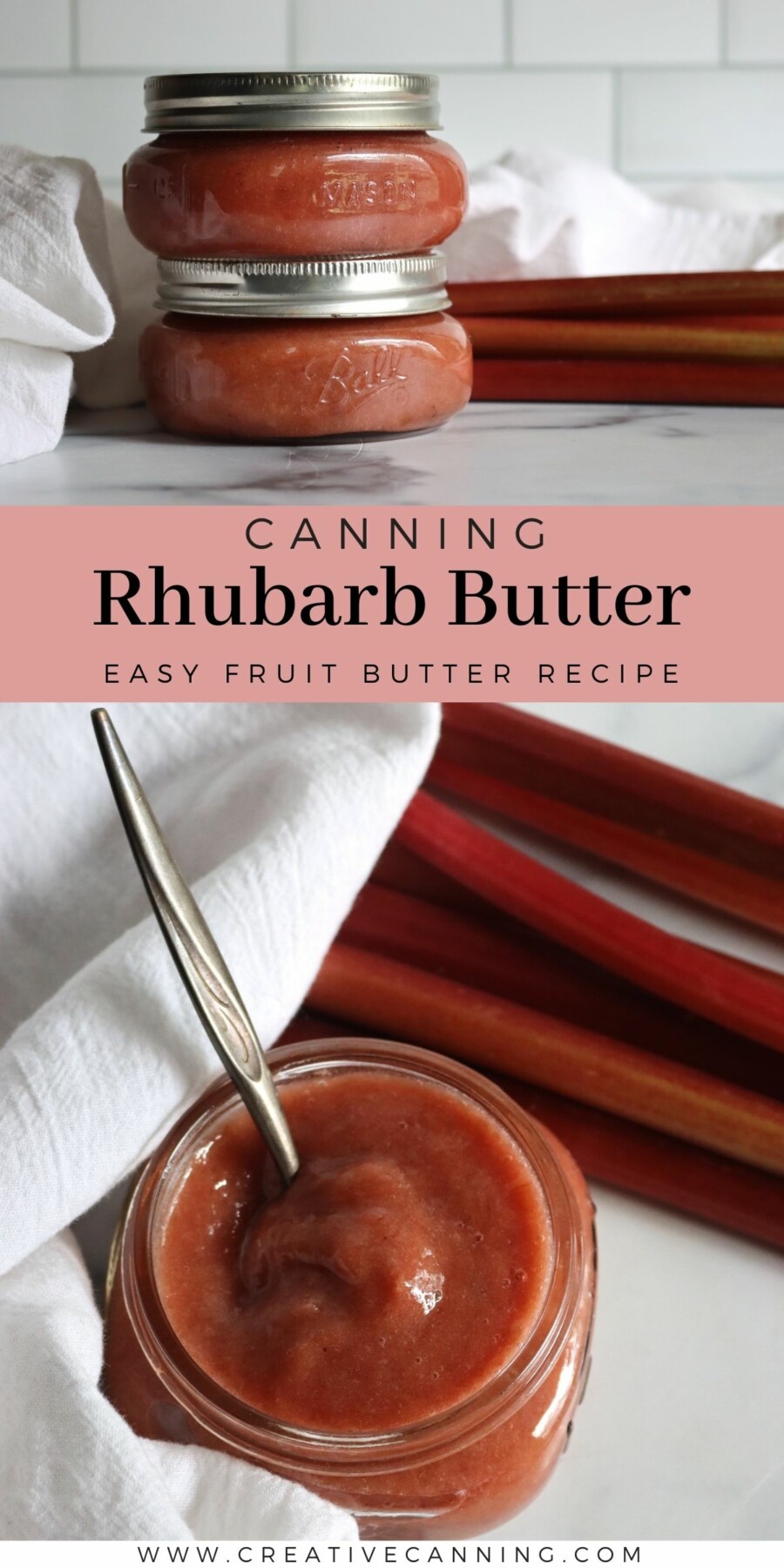
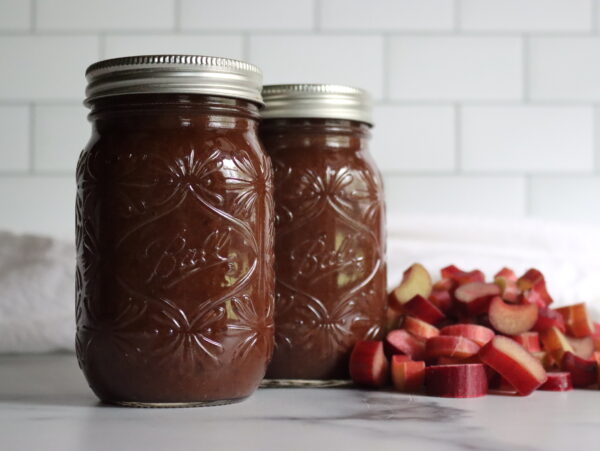
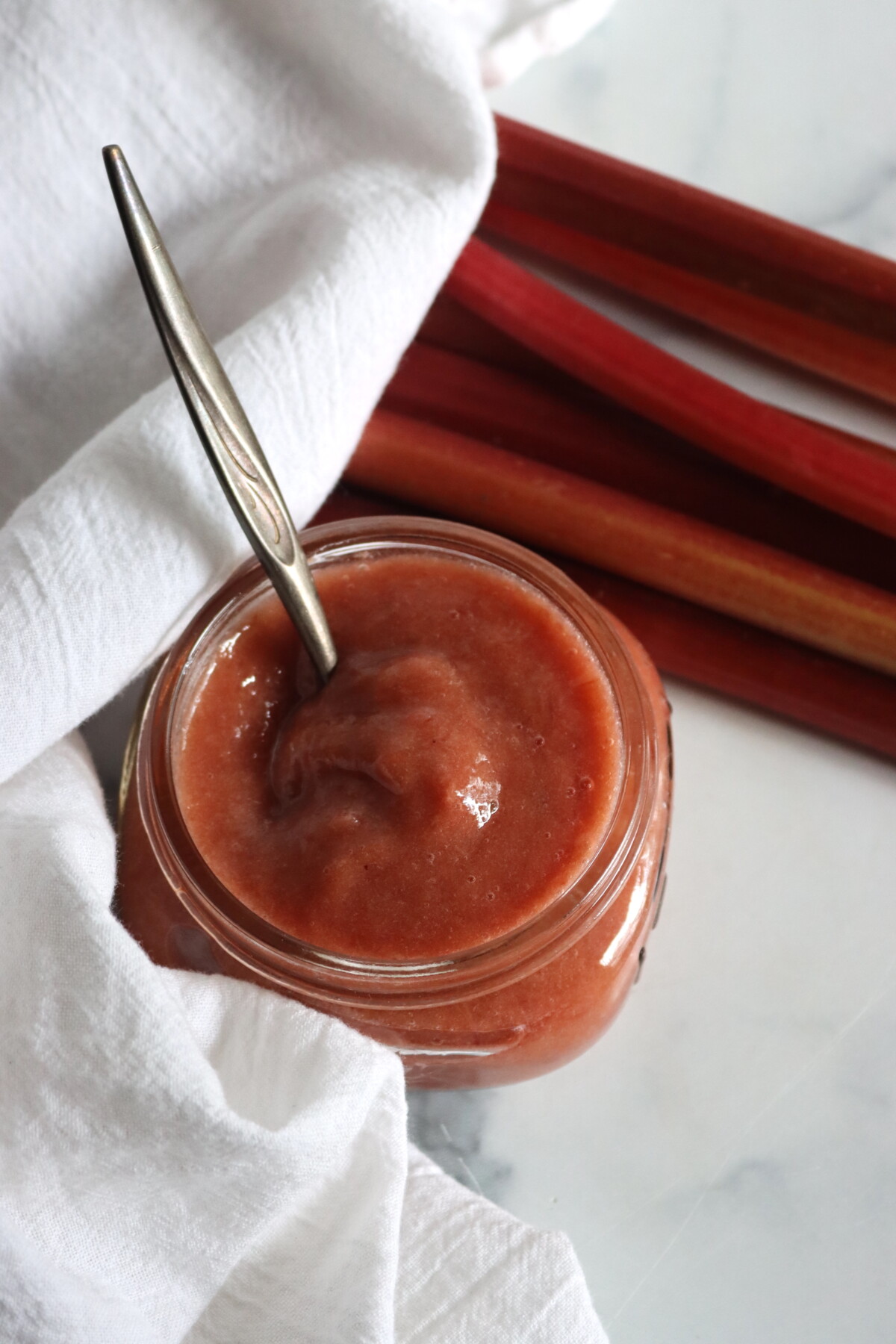
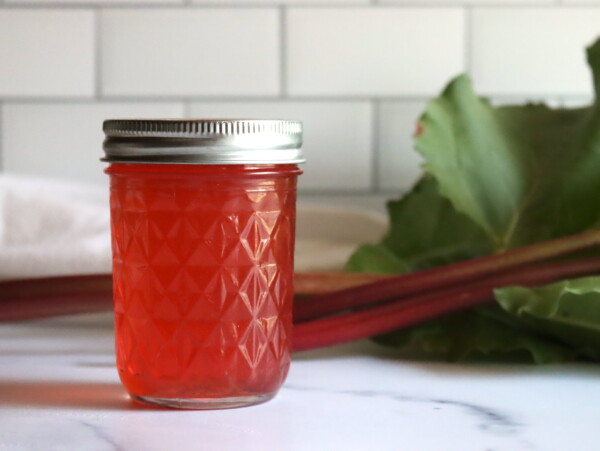
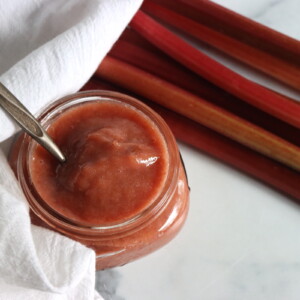
Rhubarb butter is a silky, spreadable preserve that concentrates all the sweet-tart flavor of rhubarb into something you can slather on toast, swirl into yogurt, or spoon straight from the jar. Unlike jam, there’s no pectin to fuss with and no gel point to hit. You simply cook the rhubarb down until it’s thick and glossy.
If you’ve made apple butter or pear butter, the process will feel familiar. And if you haven’t made any fruit butter recipe before, rhubarb is a forgiving place to start since it breaks down quickly and doesn’t require much hands-on attention until the final stages.
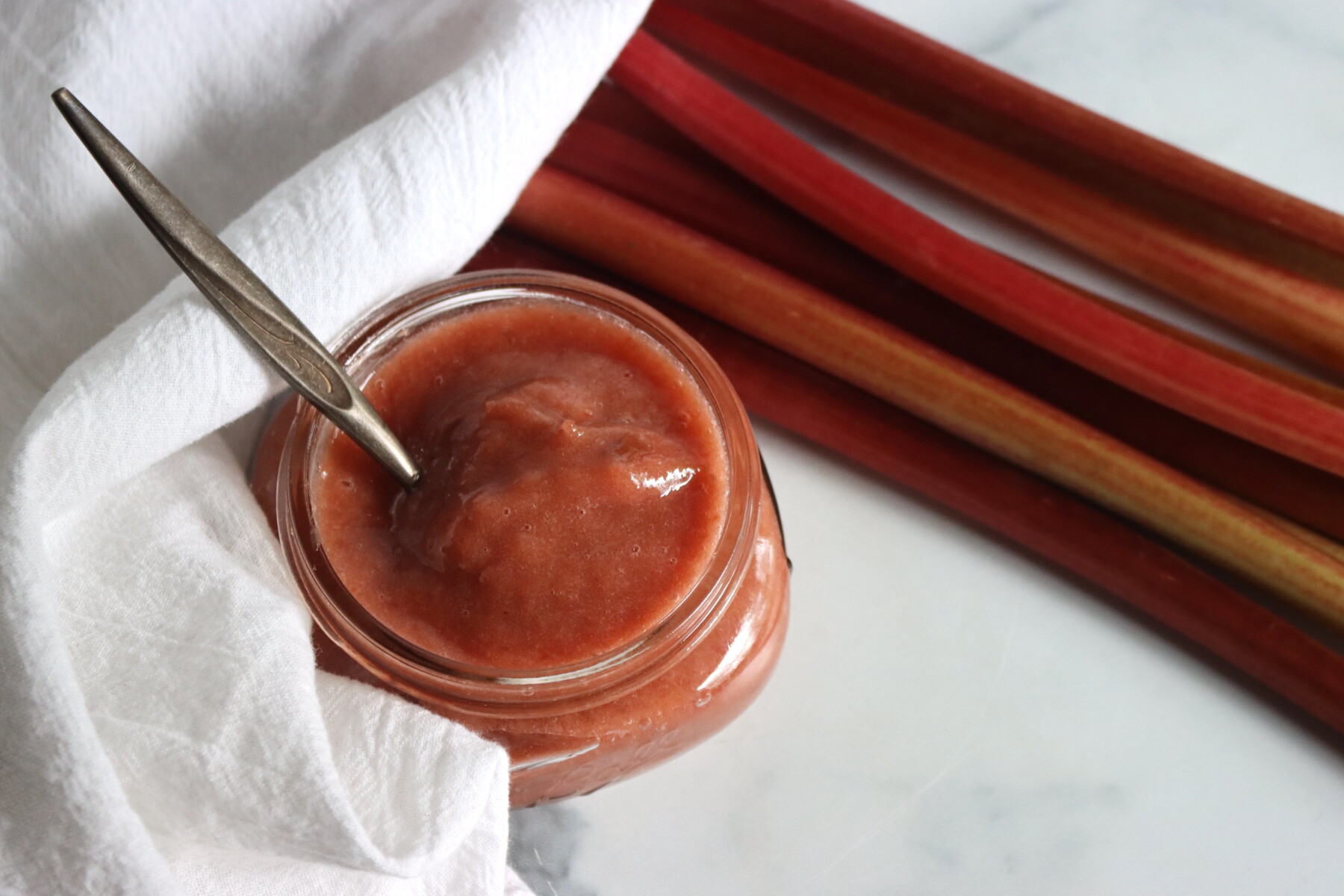
This recipe has been reviewed for safety and accuracy by a Master Food Preserver certified through the University of Cornell Cooperative Extension.
Fruit butters are one of the oldest ways to preserve fruit. The technique is simple: cook fruit with sugar until most of the moisture evaporates, leaving behind a thick, concentrated spread. The basic method for making fruit butter works with nearly any fruit, and rhubarb’s natural tartness makes it especially well suited to this treatment.
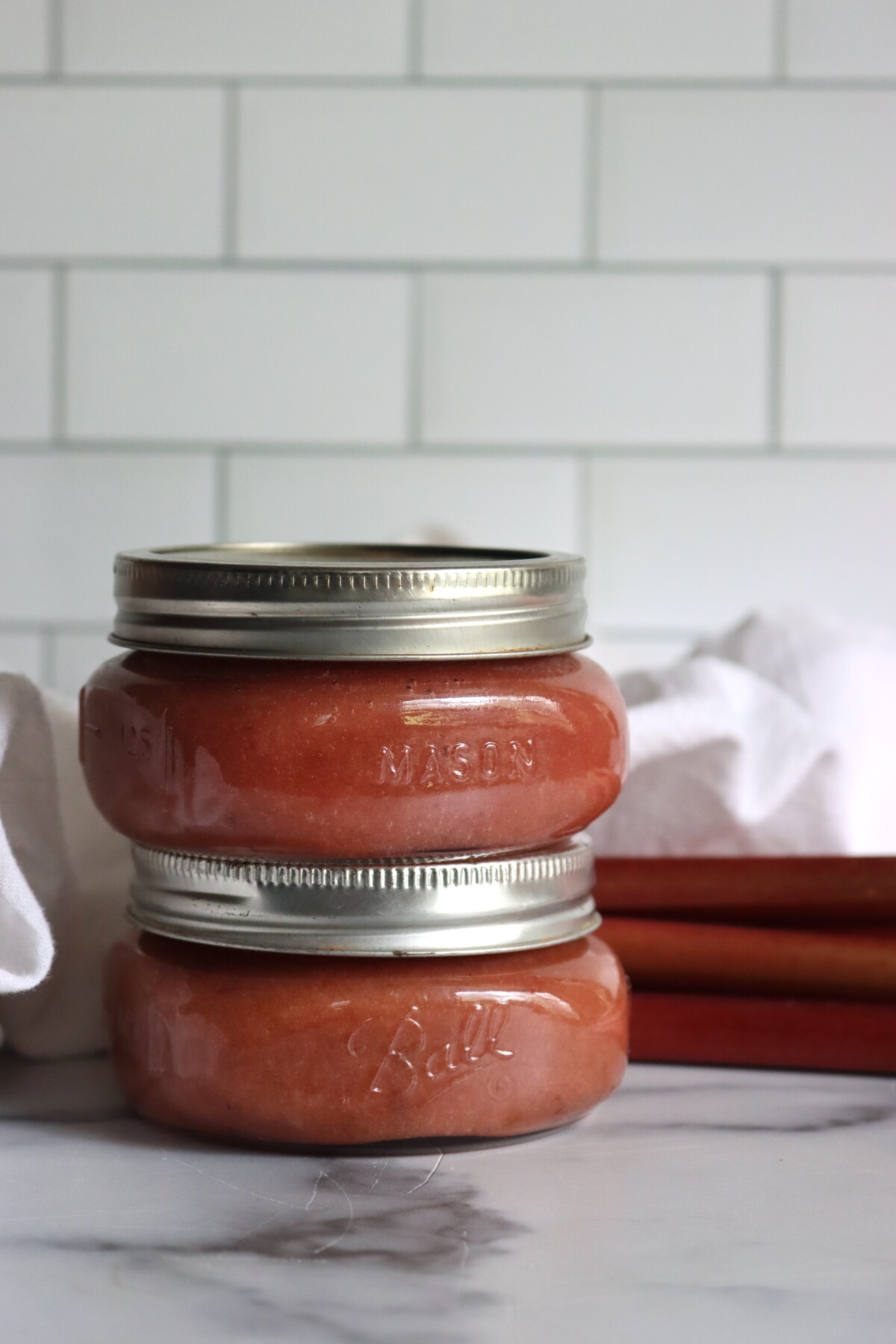
This small batch recipe makes about 3 half pints, which is a manageable amount for most households. You can easily scale it up if you have a bumper crop to work through, and the processing time stays the same regardless of batch size.
Notes from My Kitchen

Fruit butters were one of the things I learned early on when I started canning, and they’ve stayed in regular rotation ever since. There’s something satisfying about cooking fruit down to a silky spread without fussing with pectin or worrying about gel points. Rhubarb butter came later, after I’d made my way through apple and pear, and I’m glad I finally got around to it.
This small batch makes just three half pints, which is enough to keep us stocked without taking over the pantry. The kids prefer it to rhubarb jam because it’s smooth and spreads easily on toast without the chunks. I like that it uses the same late season rhubarb that works for syrup and jelly, so nothing from the garden goes to waste.
Once you get the hang of fruit butters, you’ll find yourself making them with all kinds of fruit.
Quick Look at the Recipe
- Recipe Name: Rhubarb Butter
- Recipe Type: Fruit Butter
- Canning Method: Water Bath Canning
- Prep Time: About 10 minutes
- Cook Time: About 40 minutes
- Canning Time: 10 minutes for half pints or pints
- Yield: About 3 half pints
- Jar Sizes: Half pints or pints
- Headspace: 1/4 inch
- Ingredients Overview: Rhubarb, sugar, water, lemon juice
- Safe Canning Recipe Source: Adapted for canning based on standard fruit butter methods established by the NCHFP
- Difficulty: Easy
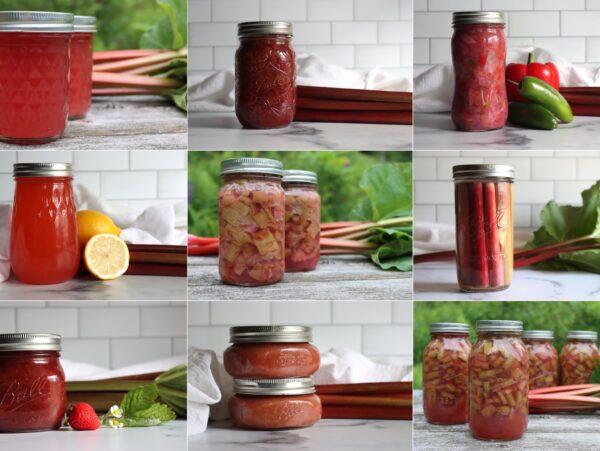
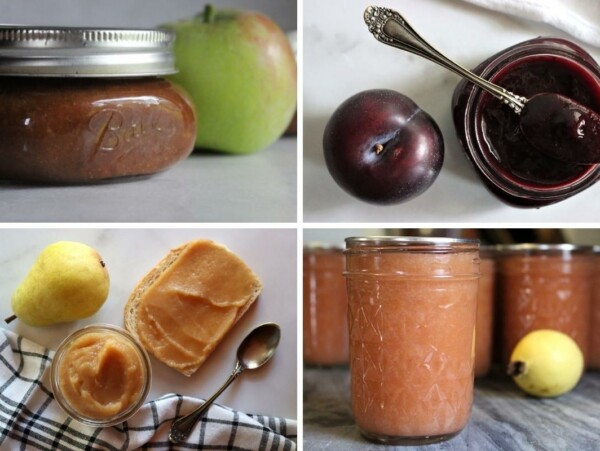
- Similar Recipes: Making rhubarb butter is similar to other fruit butters like cherry butter, blueberry butter and peach butter, all of which cook down without pectin. If you love rhubarb preserves, try other rhubarb canning recipes like rhubarb jam or rhubarb jelly.
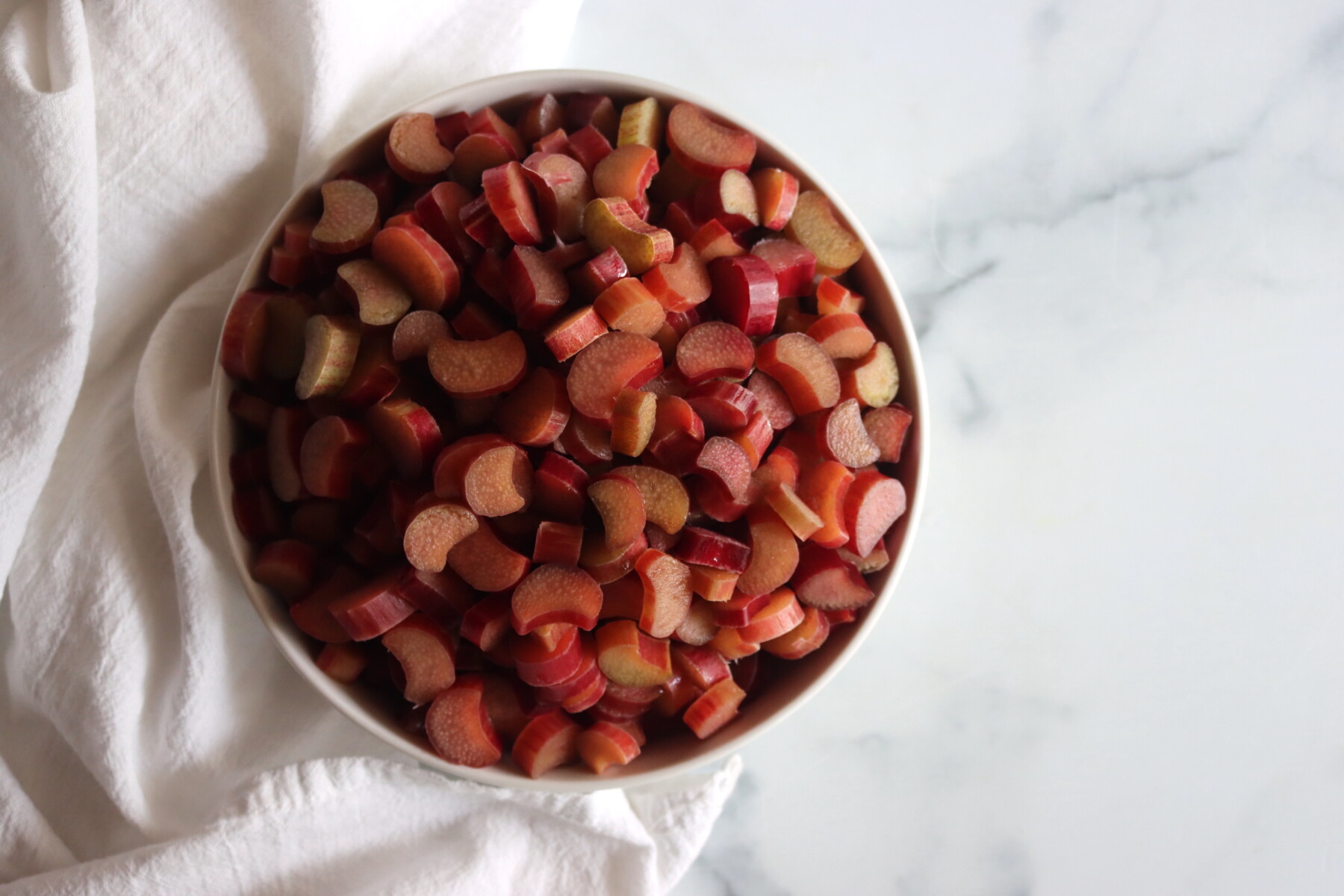
Ingredients
Rhubarb butter comes together with just four ingredients, and the process is forgiving enough that you can adjust to taste as you go.
- Rhubarb: Fresh or frozen both work well here. Choose the reddest stalks you can find if you want a deep pink butter, though green or pale pink rhubarb will taste just as good. Late season rhubarb that’s become stringy is fine since you’re blending everything smooth. Remove and discard the leaves, which are toxic.
- Sugar: Standard granulated sugar balances the tartness of the rhubarb and helps the butter thicken as it cooks. You can substitute honey or maple syrup if you prefer, though they will change the flavor profile. Start with a bit less than the recipe calls for since natural sweeteners tend to be sweeter by volume.
- Water: A small amount of water gets the cooking started and prevents the rhubarb from scorching before it releases its juices. You won’t need much.
- Lemon juice: A squeeze of lemon brightens the flavor and keeps the color from oxidizing. Fresh or bottled both work.
You can add a splash of vanilla extract at the end of cooking for a warmer flavor, or a pinch of cardamom or cinnamon if you like spiced fruit butters. Start with 1/4 teaspoon and taste as you go.
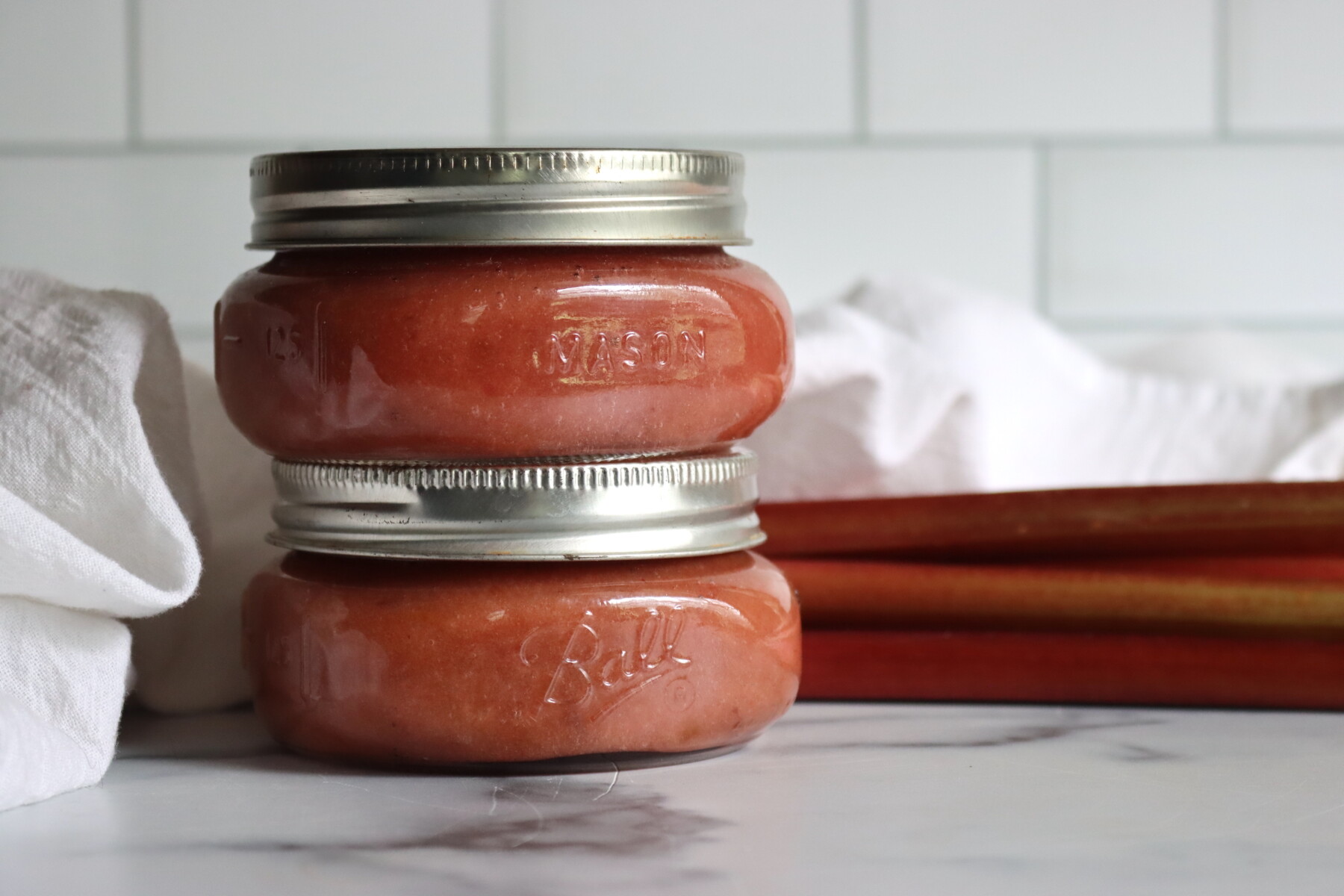
Step by Step Instructions
This recipe comes together faster than most fruit butters, since rhubarb doesn’t have as much moisture as apples or peaches. Simply cook the fruit, blend until smooth and then ladle into jars.
Cook the Rhubarb
Rinse the rhubarb and slice into 1-inch pieces, discarding any leaves. Place the sliced rhubarb in a heavy-bottomed pot with the sugar, water, and lemon juice. Stir to combine. Heat over medium heat, stirring frequently, until the rhubarb starts to release its juices and the mixture comes to a boil. Reduce the heat and simmer for 15 to 20 minutes, stirring occasionally, until the rhubarb is completely soft and broken down.
Blend Until Smooth
Carefully transfer the cooked rhubarb to a blender or use an immersion blender directly in the pot. Blend until completely smooth. A high-powered blender will give you the silkiest texture, but a regular blender or food processor works fine. Be careful when blending hot liquids: make sure the lid is secure and vented, place a towel over the top, and stand back when you turn it on.
Reduce Until Thick
Return the puree to the pot and bring it back to a gentle simmer over medium-low heat. Cook, stirring frequently with a long-handled spoon or spatula, until the butter has thickened and reduced significantly. This takes another 15 to 20 minutes. The butter will darken slightly and become glossy as it nears doneness. Scrape the bottom of the pot often to prevent scorching, especially toward the end.
To test for doneness, drag your spoon across the bottom of the pot. If the butter holds its shape and doesn’t immediately flow back to fill the gap, it’s ready. Keep in mind that the butter will thicken further as it cools.
Fill Jars
Ladle the hot butter into prepared jars, leaving 1/4 inch headspace. Remove air bubbles by running a bubble remover or chopstick around the inside edge of the jar. Wipe the rims clean with a damp cloth, apply lids and bands, and tighten to fingertip tight.
Canning Rhubarb Butter
Without canning, rhubarb butter will keep in the refrigerator for 2 to 3 weeks or in the freezer for up to a year. For shelf-stable storage, process the filled jars in a boiling water bath.
Prepare your water bath canner before you start making the butter. The canner should be at a gentle simmer (around 180°F) when you’re ready to process. Lower the filled jars into the canner, making sure they’re covered by at least 1 inch of water, and process for 10 minutes for either half pints or pints, adjusting for altitude as noted below.
After processing, turn off the heat and let the jars stand in the canner for 5 minutes before removing them. Place the jars on a towel-lined counter and let them cool undisturbed for 12 to 24 hours. Check seals before storing, and refrigerate any jars that didn’t seal for immediate use. Properly sealed jars keep at room temperature for 12 to 18 months.
Altitude Adjustments
For water bath canning, processing times increase at higher elevations:
- 0 to 1,000 feet: 10 minutes
- 1,001 to 6,000 feet: 15 minutes
- Above 6,000 feet: 20 minutes
Yield Notes
This recipe starts with about 2 pounds of rhubarb (roughly 6 to 8 cups sliced) and cooks down to approximately 3 cups of finished butter, which fills 3 half pint jars. The exact yield depends on how long you cook the butter and how much moisture your rhubarb contains.
If you want a thicker, more concentrated butter, cook it longer. If you prefer a softer, more spreadable consistency, pull it off the heat a bit earlier. The butter will thicken as it cools, so err on the side of slightly loose if you’re unsure.
Serving Ideas
Rhubarb butter is wonderful on hot buttered toast, English muffins, or biscuits. It’s also lovely served alongside scones with a dollop of whipped cream or clotted cream for a springtime treat.
Beyond breakfast, try swirling rhubarb butter into oatmeal or yogurt, using it as a filling for thumbprint cookies or layer cakes, or spreading it between cake layers. It makes a tangy-sweet addition to a cheese board, pairing especially well with creamy cheeses like brie or goat cheese.
For something unexpected, use rhubarb butter as a glaze for roasted pork or chicken. The tartness cuts through the richness of the meat beautifully.
Rhubarb Butter FAQs
The color of your finished butter depends entirely on the color of the rhubarb stalks you start with. Some varieties are deep crimson, while others range from pale pink to green. The flavor will be the same regardless of color. If you want a more vibrant pink, look for the reddest stalks you can find, or add a tiny drop of red food coloring at the end of cooking.
Yes, frozen rhubarb works well for fruit butter. No need to thaw it first. Just add it to the pot with the sugar and water and proceed as usual. You may need slightly less water since frozen rhubarb releases more liquid as it thaws.
Drag your spoon across the bottom of the pot. If the butter holds its shape and doesn’t immediately flow back to fill the gap, it’s ready. The butter will also darken slightly and become glossier as it nears doneness. Remember that it will thicken further as it cools, so it’s better to pull it slightly early than to overcook it.
Absolutely. Use equal amounts of strawberries and rhubarb by weight or volume. The cooking process stays the same, and you’ll end up with a lovely pink butter that combines the best of both flavors. You could also try rhubarb with raspberries or peaches.
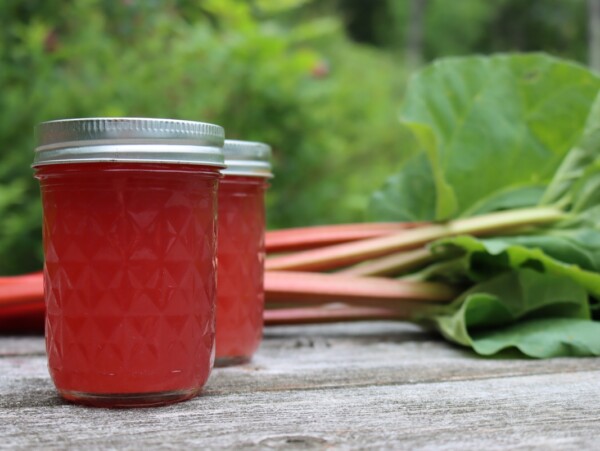
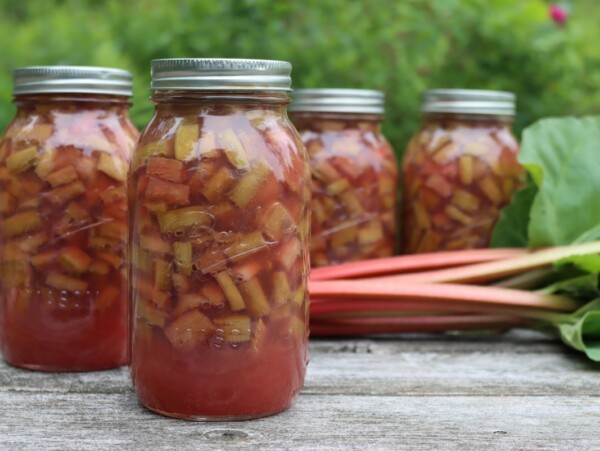
Rhubarb Canning Recipes
If you tried this Rhubarb Butter Recipe, or any other recipe on Creative Canning, leave a ⭐ star rating and let me know what you think in the 📝 comments below!
And make sure you stay in touch with me by following on social media!
Rhubarb Butter
Equipment
- Half pint canning jars
- Canning lids and bands
Ingredients
- 2 lbs rhubarb, stalks only, leaves removed
- 1 cup sugar
- 1/4 cup water
- 2 Tbsp lemon juice, fresh or bottled
Instructions
- Rinse the rhubarb and slice into 1-inch pieces, discarding any leaves. Place in a heavy-bottomed pot with sugar, water, and lemon juice. Heat over medium heat, stirring frequently, until the rhubarb releases its juices and comes to a boil. Reduce heat and simmer for 15 to 20 minutes until completely soft and broken down.
- Carefully transfer the cooked rhubarb to a blender or use an immersion blender directly in the pot. Blend until completely smooth. Be careful when blending hot liquids: secure the lid, vent it, place a towel over the top, and stand back.
- Return the puree to the pot and bring to a gentle simmer over medium-low heat. Cook, stirring frequently, until thickened and reduced, about 15 to 20 minutes more. The butter will darken slightly and become glossy. To test, drag a spoon across the bottom of the pot. If the butter holds its shape and doesn’t immediately fill in the gap, it’s ready.
- Ladle the hot butter into prepared jars, leaving 1/4 inch headspace. Remove air bubbles, wipe rims clean, and apply lids and bands to fingertip tight.
- Lower filled jars into a prepared water bath canner, ensuring they’re covered by at least 1 inch of water. Process for 10 minutes for half pints or pints, adjusting for altitude.
- Turn off heat and let jars stand in canner for 5 minutes before removing. Place on a towel-lined counter and cool undisturbed for 12 to 24 hours. Check seals before storing. Refrigerate any unsealed jars for immediate use.
Notes
Storage
Properly canned and sealed jars keep at room temperature for 12 to 18 months. Without canning, store in the refrigerator for 2 to 3 weeks or freeze for up to a year. Refrigerate after opening.Altitude Adjustments
- 0 to 1,000 feet: 10 minutes
- 1,001 to 6,000 feet: 15 minutes
- Above 6,000 feet: 20 minutes
Nutrition
Nutrition information is automatically calculated, so should only be used as an approximation.
Fruit Butter Canning Recipes
Find the perfect recipe
Searching for something else? Enter keywords to find the perfect recipe!