
This post may contain affiliate links. Please see our disclosure policy.
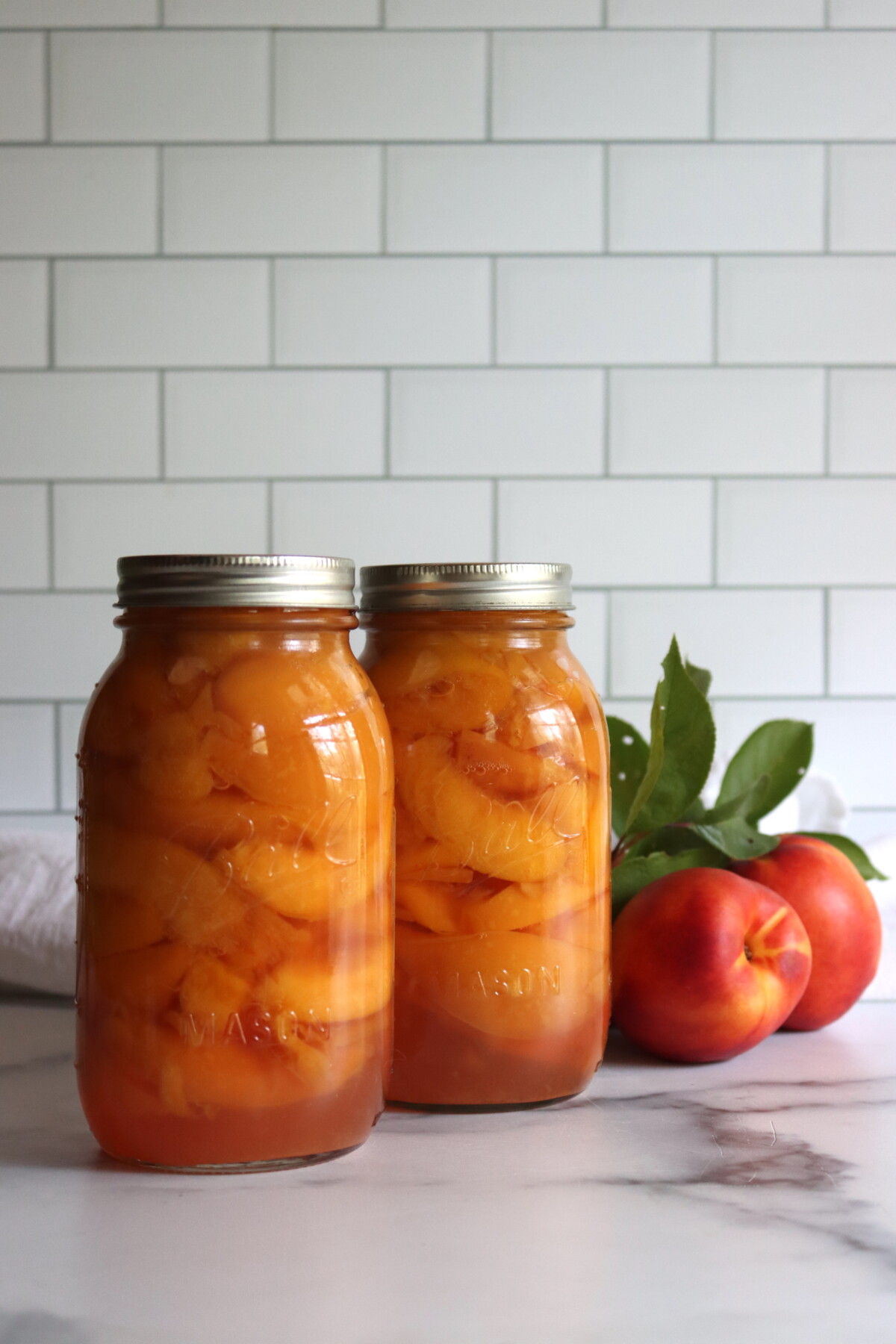
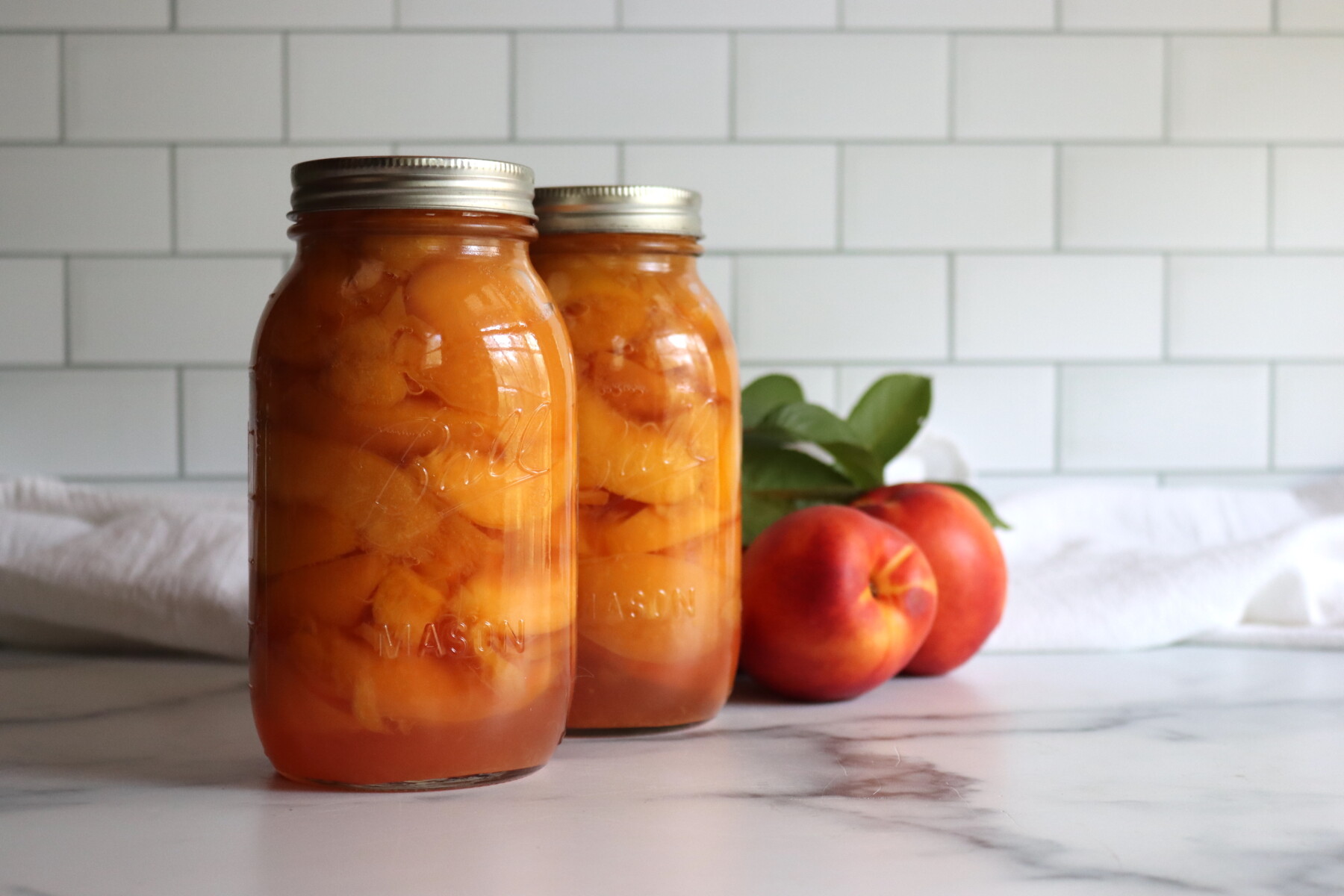
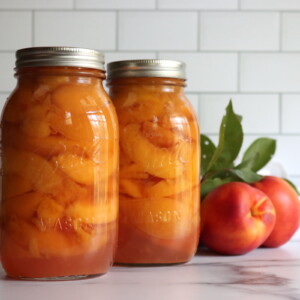
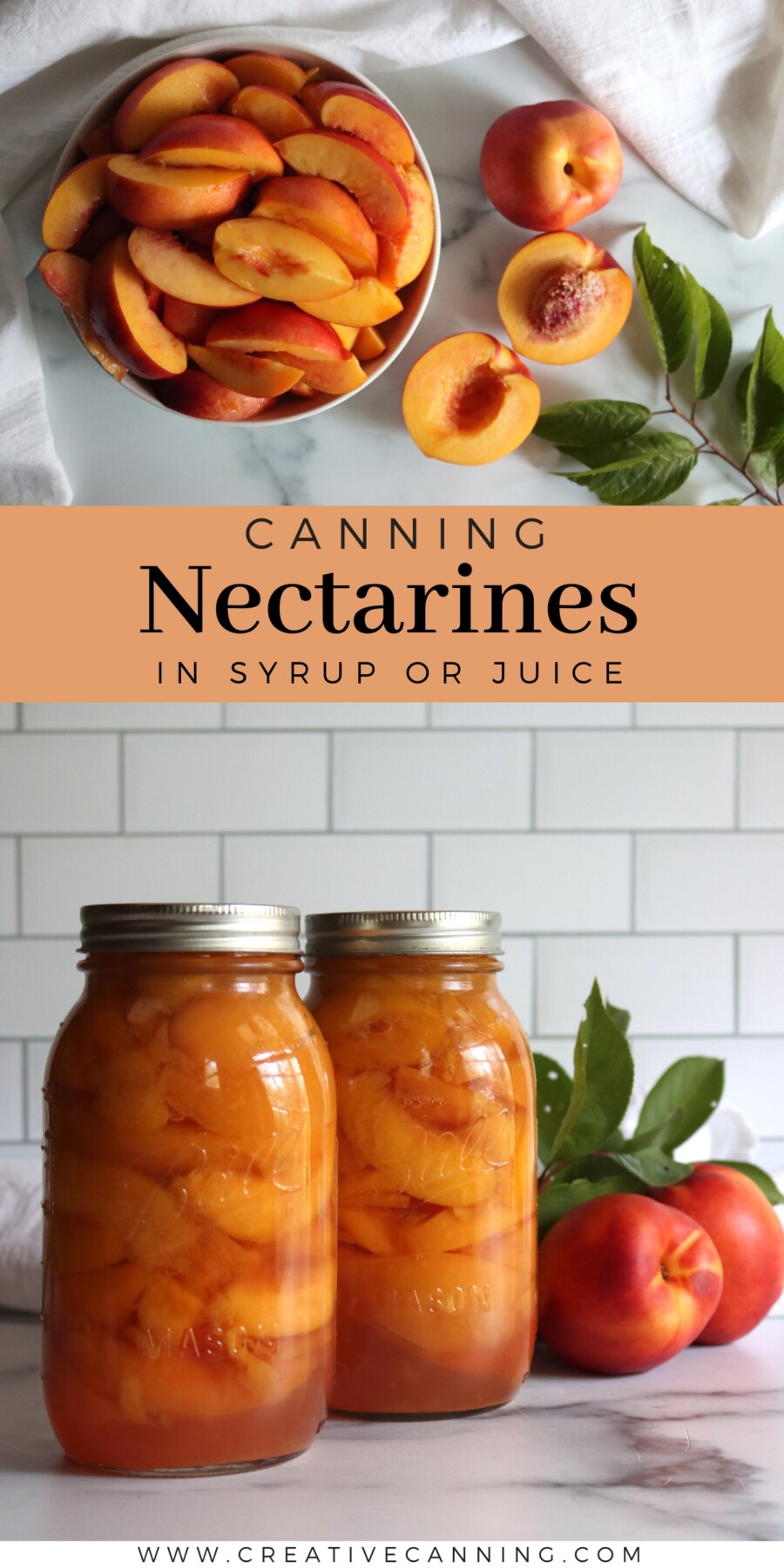
Canning nectarines preserves summer’s fuzzy-free stone fruit at its peak, giving you tender, sweet nectarine halves or slices ready to eat straight from the jar or use in desserts all year long. Unlike canning peaches, nectarines don’t need peeling, which makes this one of the easier stone fruit canning projects.
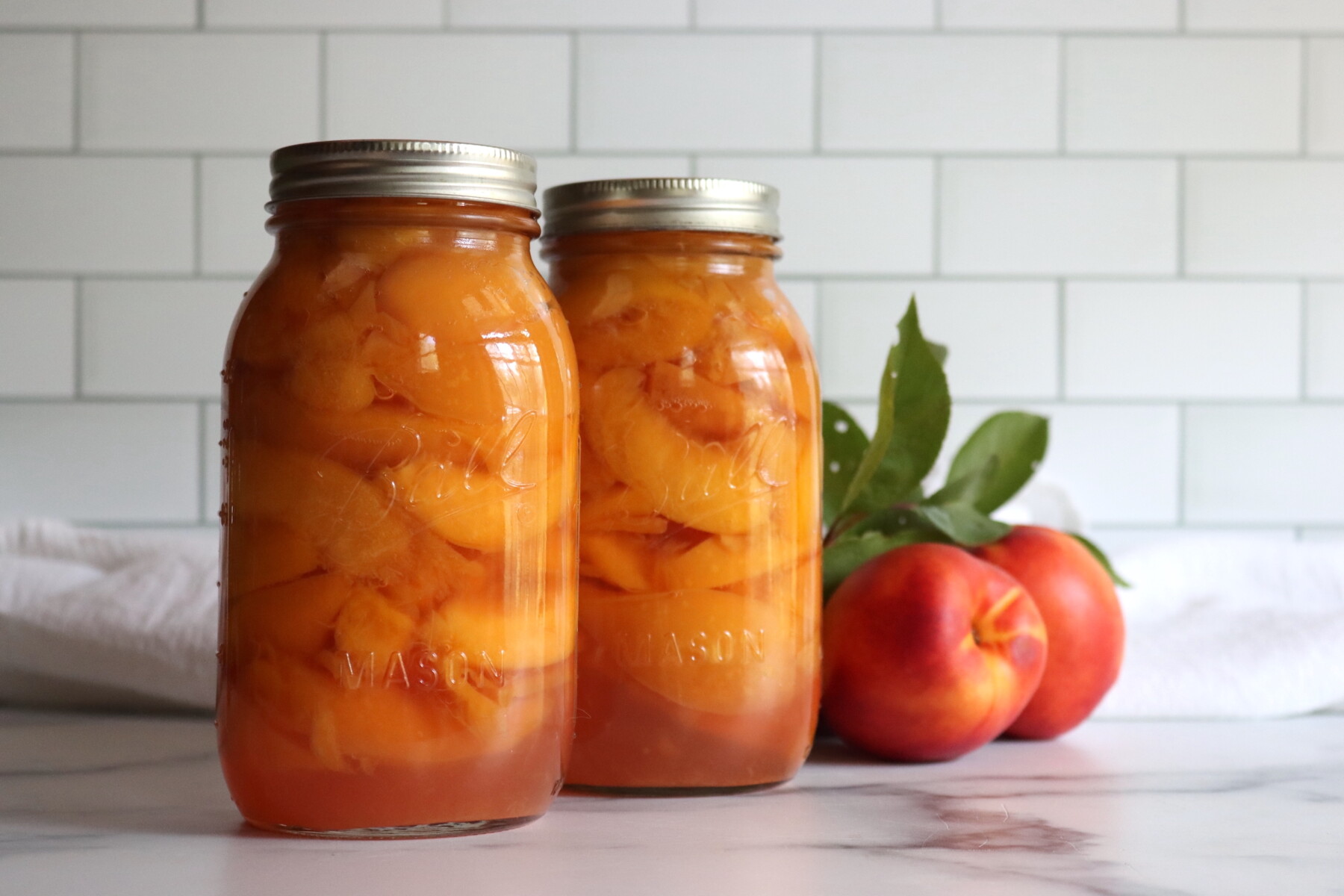
Table of Contents
- Why You’ll Love Canning Nectarines!
- A Quick Look at the Recipe
- Ingredients for Canning Nectarines
- Syrup for Canning Nectarines
- How to Can Nectarines
- Altitude Adjustments
- Pressure Canning Nectarines (Not Recommended)
- Yield Notes
- Serving Ideas
- Nectarine Canning FAQs
- Nectarine Canning Recipes
- Canning Nectarines Recipe
- Stone Fruit Canning Recipes
This recipe has been reviewed for safety and accuracy by a Master Food Preserver certified through the University of Cornell Cooperative Extension.
Why You’ll Love Canning Nectarines!

Canning nectarines is one of those satisfying projects that fills your pantry with something both practical and delicious. Here’s what makes it worth the effort:
- Beginner-friendly. If you can boil water and follow a recipe, you can successfully can nectarines. It’s a good introduction to water bath canning if you’re just getting started.
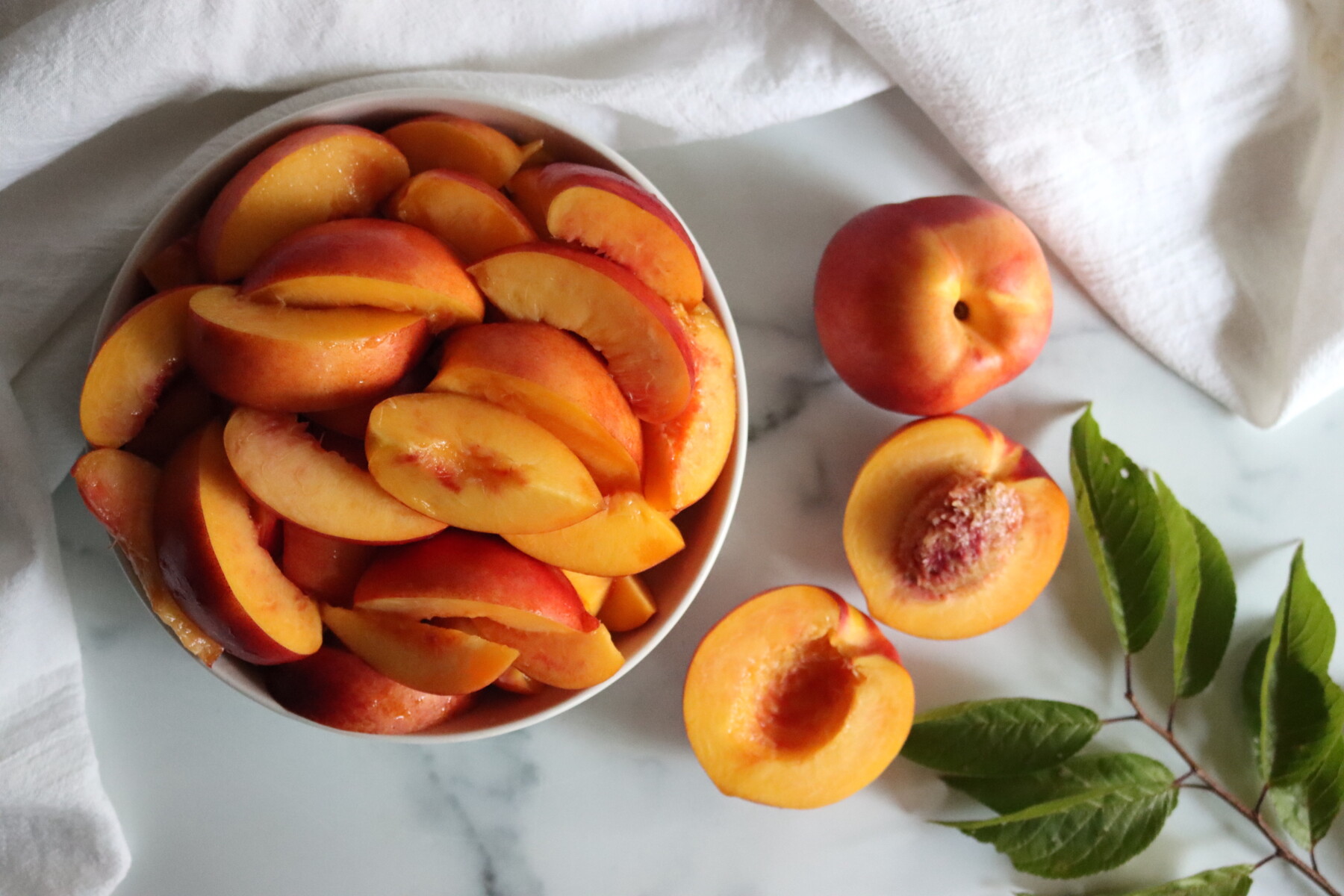
- No peeling required. Unlike their fuzzy cousins, nectarines can go straight into jars with their smooth skins on, which cuts down on prep time considerably.
- Works in so many ways. Canned nectarines work in cobblers, over ice cream, stirred into yogurt, or eaten straight from the jar with a spoon.
- Long shelf life. Properly canned nectarines will maintain peak quality for at least a year in a cool, dark place, though they’re usually gone from my pantry long before then.
A Quick Look at the Recipe
- Recipe Name: Canning Nectarines in Syrup
- Recipe Type: Fruit in Syrup
- Canning Method: Water Bath Canning
- Prep/Cook Time: 45 Minutes
- Canning Time: 20 min for pints and 25 min for quarts
- Yield: 7 quart jars (pint quantities in notes)
- Jar Sizes: Pint or Quart
- Headspace: 1/2 inch
- Ingredients Overview: Nectarines, Sugar or Honey, Water or Juice
- Safe Canning Recipe Source: National Center for Home Food Preservation
- Difficulty: Beginner-Friendly. Hot pack method only, no peeling required.
- Similar Recipes: The process is similar to other fruits canned in syrup, including other stone fruits in syrup like canning cherries, canning apricots, and canning peaches, as well as other fruits in syrup like canning pineapple and canning citrus sections.
Ingredients for Canning Nectarines
This recipe follows USDA guidelines for safe home canning. You’ll prepare nectarines (halved or sliced), pack them into jars with syrup, and process them in a boiling water bath. The sugar syrup isn’t required for preservation, the heat processing takes care of that, but it does help maintain the fruit’s texture, color, and flavor during storage.
You can choose the sweetness level of your syrup (very light, light, or medium) or even use water, apple juice, or white grape juice instead. I usually go with a light syrup, which gives just enough sweetness without overwhelming the fruit’s natural flavor.
The hot pack method is strongly recommended for nectarines. Raw pack tends to produce poor quality results with this fruit. Here’s what you’ll need:
- Nectarines (ripe but firm)
- Ascorbic acid solution (to prevent browning) – You can use commercial fruit preservative powder like Fruit Fresh, crushed vitamin C tablets, or lemon juice mixed with water. See maintaining color and flavor in canned food for detailed instructions on preparing the solution.
- Canning Liquid: You can use a sugar/water syrup, plain water, or acidic fruit juice like apple juice or white grape juice.
Syrup for Canning Nectarines
NCHFP allows packing nectarines in water, apple juice, white grape juice, or syrup. If using syrup, they recommend very light, light, or medium.
I usually choose based on what I plan to do with the jar:
- Light syrup is my go-to for nectarines because it enhances the fruit’s natural sweetness without overwhelming it. The nectarines stay firm and flavorful.
- Very light syrup works well if you want just a touch of sweetness while keeping the focus on the fruit itself.
- Medium syrup is good if you’re planning to use the nectarines in desserts where you want a richer, sweeter result.
- Juice (apple or white grape) is great if you want no added sugar. The fruit flavor stays bright, and the leftover liquid is delicious in smoothies or as a drink base.
- Water works for preservation, but it’s the plainest option. Your nectarines will taste somewhat washed out, and I don’t recommend it unless you have specific dietary restrictions.
If you want exact syrup ratios for scaling, I have a complete guide to the sugar/water ratios for each type of syrup for canning, but here’s some quick guidance:
For a 9-pint canner batch:
- Very light syrup: 3/4 cup sugar to 6 1/2 cups water
- Light syrup: 1 1/2 cups sugar to 5 3/4 cups water
- Medium syrup: 2 1/4 cups sugar to 5 1/4 cups water
- Heavy syrup: 3 1/4 cups sugar to 5 cups water
For a 7-quart canner batch:
- Very light syrup: 1 1/4 cups sugar to 10 1/2 cups water
- Light syrup: 2 1/4 cups sugar to 9 cups water
- Medium syrup: 3 3/4 cups sugar to 8 1/4 cups water
- Heavy syrup: 5 1/4 cups sugar to 7 3/4 cups water
To make any syrup, combine sugar and water in a saucepan and heat over high heat, stirring occasionally, until the sugar dissolves completely. Keep the syrup hot (but not actively boiling) while you pack the jars.
How to Can Nectarines
The process for canning nectarines is straightforward and follows the same general steps as other stone fruits. Here’s how to do it from start to finish.
Prepare Your Canning Equipment
Get your water bath canner heating with enough water to cover your jars by at least an inch. Wash your jars in hot, soapy water and keep them hot until you’re ready to fill them (I just leave them in the hot water). Prepare your lids according to the manufacturer’s instructions.
Prepare the Nectarines
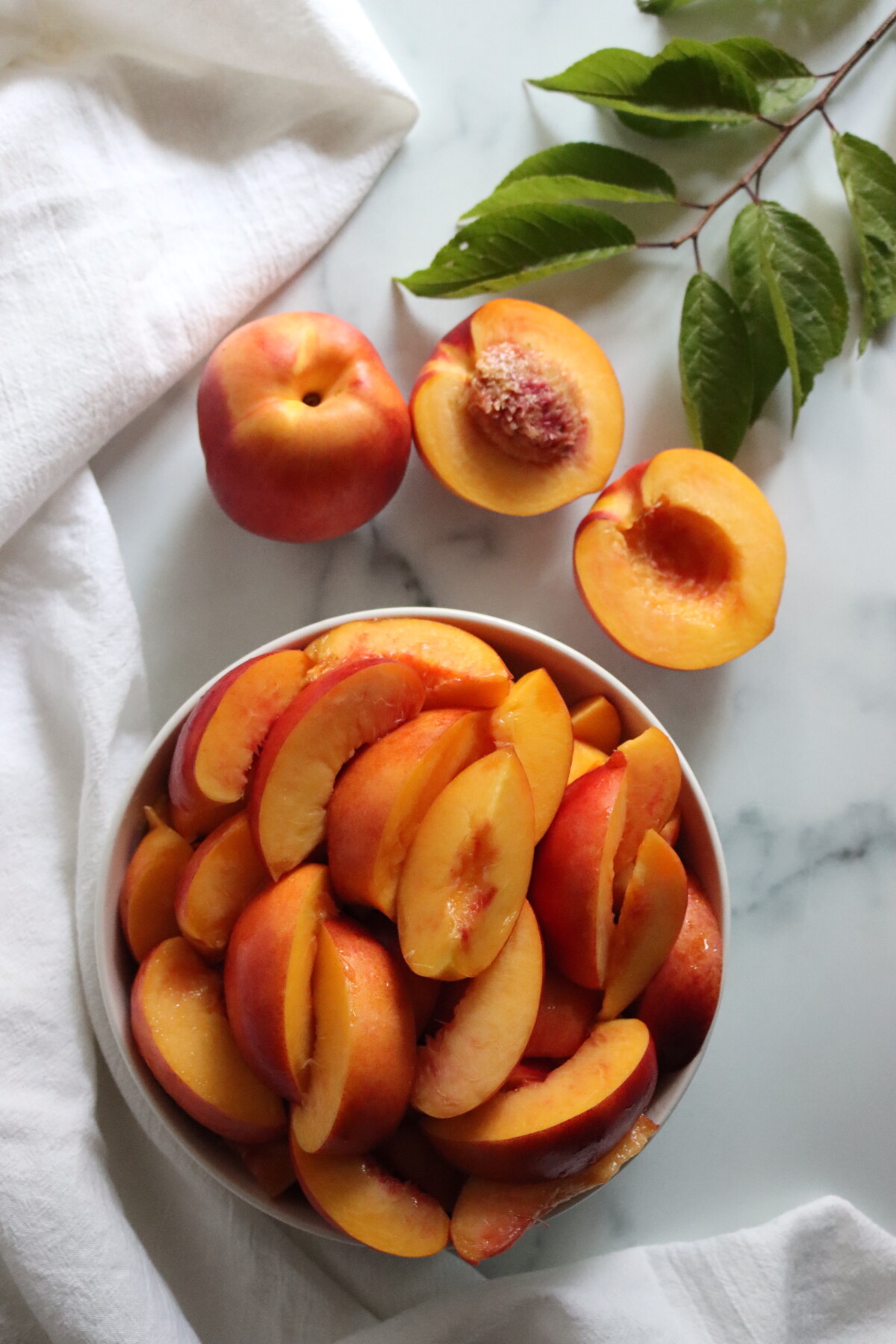
Wash the nectarines thoroughly under running water. Cut each nectarine in half along the natural seam and remove the pit. If you’re making slices, cut each half into uniform pieces.
Important: Unlike peaches, you don’t need to peel nectarines. Their smooth skin stays tender during processing and actually helps the fruit hold its shape.
As you work, drop the prepared fruit into a lemon juice or ascorbic acid solution to prevent browning. You can use commercial fruit preservative powder (like Fruit Fresh) or make your own with ascorbic acid powder or crushed vitamin C tablets dissolved in water.
Make Your Syrup or Prepare Your Liquid
If you’re using syrup, combine your sugar and water in a large pot and bring to a boil, stirring until the sugar dissolves completely. Keep the syrup hot but not actively boiling.
If you’re using water or juice instead, just heat it to boiling in a separate pot.
Hot Pack the Nectarines
Drain the nectarines from the ascorbic acid solution and place them in a large pot with your hot syrup, water, or juice. Bring to a boil and boil for 2-3 minutes until heated through.
Using a slotted spoon, pack the hot nectarines into hot jars, layering the halves cut-side down. This prevents them from floating and gives you a nicer looking jar. Leave ½ inch of headspace at the top.
Ladle the hot syrup (or liquid) over the fruit, maintaining that ½ inch headspace. Run a bubble remover or thin spatula around the inside of the jar to release any trapped air bubbles. Wipe the jar rims with a clean, damp cloth, then place the lids and screw on the bands until fingertip-tight.
Process the Jars
Lower the filled jars into your boiling water bath canner. The water should cover the jars by at least 1-2 inches. Bring the water back to a full rolling boil, then start your timer and process pint jars for 20 minutes or quart jars for 25 minutes.
These times are for elevations under 1,000 feet. For higher elevations, see the altitude adjustment section above.
When the time is up, turn off the heat and let the jars sit in the canner for 5 minutes before removing them. This helps prevent siphoning (liquid loss from the jars).
Carefully remove the jars using a jar lifter and set them on a towel on the counter, leaving space between jars for air circulation. You should hear the satisfying “ping” of the lids sealing within a few hours.
Let the jars cool completely (12-24 hours), then check the seals by pressing on the center of each lid. If it doesn’t flex or pop, it’s sealed. Remove the bands, wipe the jars clean, label with contents and date, and store in a cool, dark place.
Altitude Adjustments
The altitude adjustments for water bath canning nectarines are as follows:
- For Under 1,000 Feet in Elevation: 20 minutes for Pints and 25 minutes for Quarts
- For 1,001 to 3,000 Feet in Elevation: 25 minutes for Pints and 30 minutes for Quarts
- For 3,001 to 6,000 Feet in Elevation: 30 minutes for Pints and 35 minutes for Quarts
- Above 6,000 Feet in Elevation: 35 minutes for Pints and 40 minutes for Quarts
Pressure Canning Nectarines (Not Recommended)
Pressure canning is not recommended for nectarines since they’re a high-acid fruit that processes safely and quickly in a boiling water bath. However, some home canners prefer to pressure can all their produce for consistency in their workflow.
If you choose to pressure can nectarines, use these guidelines from the NCHFP:
For a dial-gauge pressure canner:
- Process pints or quarts for 10 minutes
- 6 PSI at 0-2,000 feet elevation
- 7 PSI at 2,001-4,000 feet elevation
- 8 PSI at 4,001-6,000 feet elevation
- 9 PSI at 6,001-8,000 feet elevation
For a weighted-gauge pressure canner:
- Process pints or quarts for 10 minutes
- 5 PSI at 0-1,000 feet elevation
- 10 PSI above 1,000 feet elevation
The hot pack method is still required. Prepare the fruit exactly as described in the recipe, then process using the pressure canner times and pressures above instead of the water bath times.
Yield Notes
This recipe makes 7 quart jars, and you’ll need slightly less fruit for a canner batch of pints.
Plan on about 2.5 pounds of nectarines per quart jar, or roughly 17.5 pounds for a full canner load of 7 quarts. For pints, you’ll need about 11 pounds of nectarines for a canner load of 9 jars.
A bushel of nectarines weighs approximately 48 pounds and yields 16 to 24 quarts, depending on the size and quality of the fruit.
For the syrup, you’ll need about 1 to 1.5 cups of syrup per quart jar. A light syrup made with 2¾ cups sugar and 6½ cups water yields about 7 cups, which is perfect for a 7-quart canner load.
Serving Ideas
Canned nectarines are useful in so many ways. Here are some of my favorite ways to use them:
- For breakfast: Spoon them over oatmeal, yogurt, or cottage cheese. The syrup makes a nice addition to pancakes or waffles too.
- For dessert: Use them in cobblers, crisps, or upside-down cake. They’re also delicious warmed and served over vanilla ice cream with a drizzle of the syrup.
- As a snack: Sometimes the simplest approach is best-just open a jar and eat them straight with a spoon.
- In salads: Chilled nectarine slices add a sweet element to spinach or arugula salads with goat cheese and nuts.
You can also drain and use them anywhere you’d use fresh nectarines, though they’ll be softer than fresh fruit.
Nectarine Canning FAQs
No! This is one of the best things about canning nectarines compared to peaches. The smooth skin softens during processing and doesn’t need to be removed, which saves significant prep time. The NCHFP specifically notes that nectarines are not peeled for canning.
While technically allowed, the USDA states that “raw packs make poor quality nectarines,” so it’s not recommended. The hot pack method, where you briefly heat the fruit in syrup before packing, produces much better results with firmer texture and better color retention. Always use hot pack for the best quality.
Properly canned nectarines will maintain good quality for at least 12 months when stored in a cool, dark place. They remain safe to eat beyond that if the seals are intact, though quality gradually declines over time. Most home canners recommend using them within 18 months for best flavor and texture.
Yes, absolutely. You can pack nectarines in plain water or unsweetened apple or white grape juice instead of sugar syrup. The fruit will be safely preserved since the heat processing handles preservation, not the sugar. However, texture and color retention won’t be quite as good as with syrup, and the fruit may taste somewhat washed out.
If you tried this Nectarine Canning Recipe, or any other recipe on Creative Canning, leave a ⭐ star rating and let me know what you think in the 📝 comments below!
And make sure you stay in touch with me by following on social media!
Nectarine Canning Recipes
Canning Nectarines
Equipment
Ingredients
For Preparing the Fruit
- 18 lbs nectarines, as purchased
- Ascorbic acid solution or Lemon Juice in Water, for treating cut fruit
For Light Syrup (enough for 7 quarts)
- 2¾ cups sugar
- 6½ cups water
Instructions
- Prepare equipment: Get your water bath canner heating. Wash jars in hot soapy water and keep hot. Prepare lids according to manufacturer's instructions.
- Prepare nectarines: Wash nectarines thoroughly. Cut in half along the seam and remove pits. Slice if desired (no need to peel). Place cut fruit in ascorbic acid solution to prevent darkening.
- Make syrup: Combine sugar and water in a large pot. Bring to a boil, stirring until sugar dissolves. Keep hot.
- Hot pack: Drain nectarines and place in the hot syrup. Bring to a boil. Pack hot fruit into hot jars, layering halves cut-side down, leaving ½ inch headspace.
- Add liquid: Ladle hot syrup over fruit, maintaining ½ inch headspace. Remove air bubbles with a bubble remover or spatula.
- Seal jars: Wipe jar rims clean. Place lids and screw bands on fingertip-tight.
- Process: Place jars in boiling water bath canner. Water should cover jars by 1-2 inches. Bring to a rolling boil and process pint jars for 20 minutes or quart jars for 25 minutes (for elevations under 1,000 feet). See altitude adjustments in notes.
- Cool: Remove jars from canner and let cool on a towel for 12-24 hours. Check seals. Store sealed jars in a cool, dark place.
Notes
- Very light syrup:1 1/4 cups sugar + 10 1/2 cups water
- Light syrup:2 1/4 cups sugar + 9 cups water
- Medium syrup:3 3/4 cups sugar + 8 1/4 cups water
- Heavy syrup:5 1/4 cups sugar + 7 3/4 cups water
- Very light syrup:3/4 cup sugar + 6 1/2 cups water
- Light syrup (recipe card):1 1/2 cups sugar + 5 3/4 cups water
- Medium syrup:2 1/4 cups sugar + 5 1/4 cups water
- Heavy syrup:3 1/4 cups sugar + 5 cups water
- For Under 1,000 Feet in Elevation: 20 minutes for Pints and 25 minutes for Quarts
- For 1,001 to 3,000 Feet in Elevation: 25 minutes for Pints and 30 minutes for Quarts
- For 3,001 to 6,000 Feet in Elevation: 30 minutes for Pints and 35 minutes for Quarts
- Above 6,000 Feet in Elevation: 35 minutes for Pints and 40 minutes for Quarts
Nutrition
Nutrition information is automatically calculated, so should only be used as an approximation.
Stone Fruit Canning Recipes
Find the perfect recipe
Searching for something else? Enter keywords to find the perfect recipe!

So much easier to put up than peaches with no peeling required. And honestly, I love nectarines even more!
Thank you for another clear and understandable recipe. My first time canning nectarines.
They look great. Almost looking forward to winter 😉
Thanks so much, and congratulations on your first batch of nectarines! There’s nothing better than opening a jar of summer fruit in the middle of winter. Enjoy!