
This post may contain affiliate links. Please see our disclosure policy.
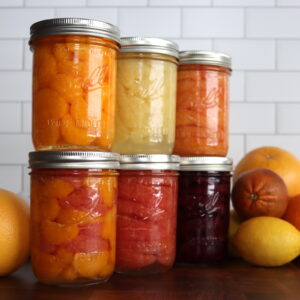
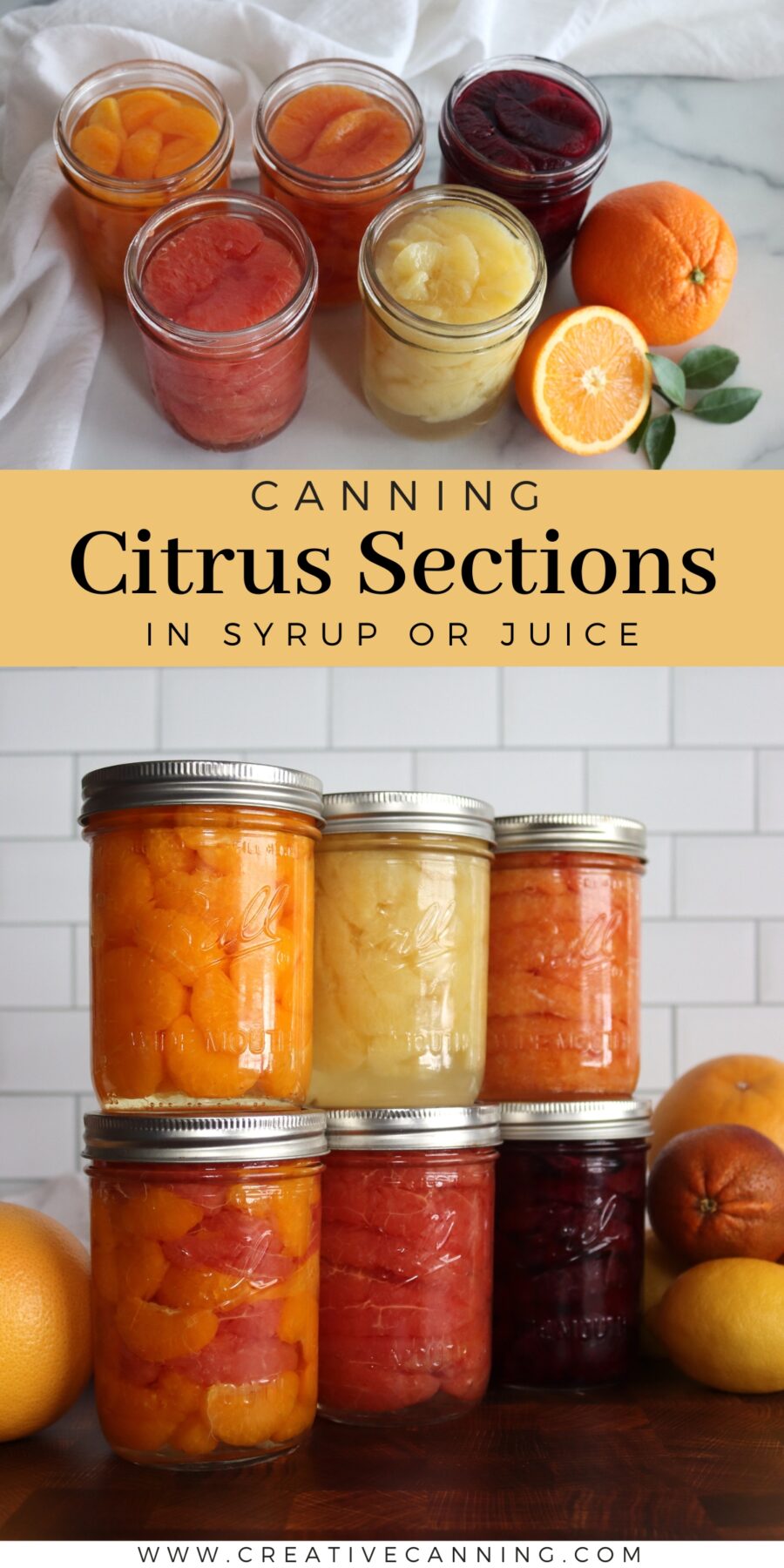
Canning citrus sections is one of those small pantry projects that makes winter feel instantly brighter, because with just a little peeling and a quick water bath you end up with jars of sweet, ready-to-use oranges and grapefruit that taste like you captured peak citrus season and put it on the shelf.
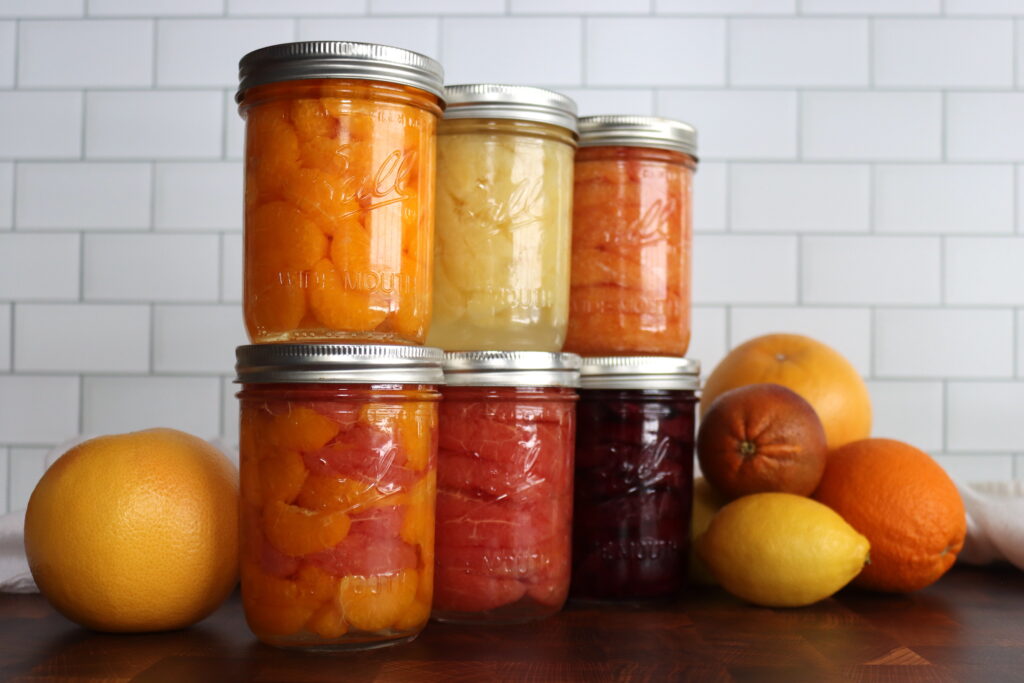
Table of Contents
- Why you’ll love this citrus canning recipe!
- A Quick Look at the Recipe
- Best Citrus for Canning
- Removing the Pith with Pectic Enzyme
- Choosing Syrup, Juice, or Water
- How to Make Citrus Sections for Canning
- Canning Citrus Sections
- Waterbath Canning Altitude Adjustments
- Yield Notes
- How to use Canned Citrus Sections
- Citrus Canning FAQs
- Citrus Canning Recipes
- Canning Citrus Sections Recipe
- Citrus Canning Recipes
This recipe has been reviewed for safety and accuracy by a Master Food Preserver certified through the University of Cornell Cooperative Extension.
Growing up, those little canned mandarin orange slices were a holiday treat in my family. My grandmother would buy a few cans just for decorating dishes on our Christmas table, which is a bit ironic considering we lived right in the middle of California citrus groves.
There was just something about those sweet, glossy, perfectly sectioned slices that felt more festive than a fresh orange. These days, it’s surprisingly hard to find really good canned citrus in stores, so I just make my own.
This method is based on the National Center for Home Food Preservation process for grapefruit and orange sections, and this recipe is simple, reliable, and perfect for stocking the pantry when citrus is at its best.
Why you’ll love this citrus canning recipe!

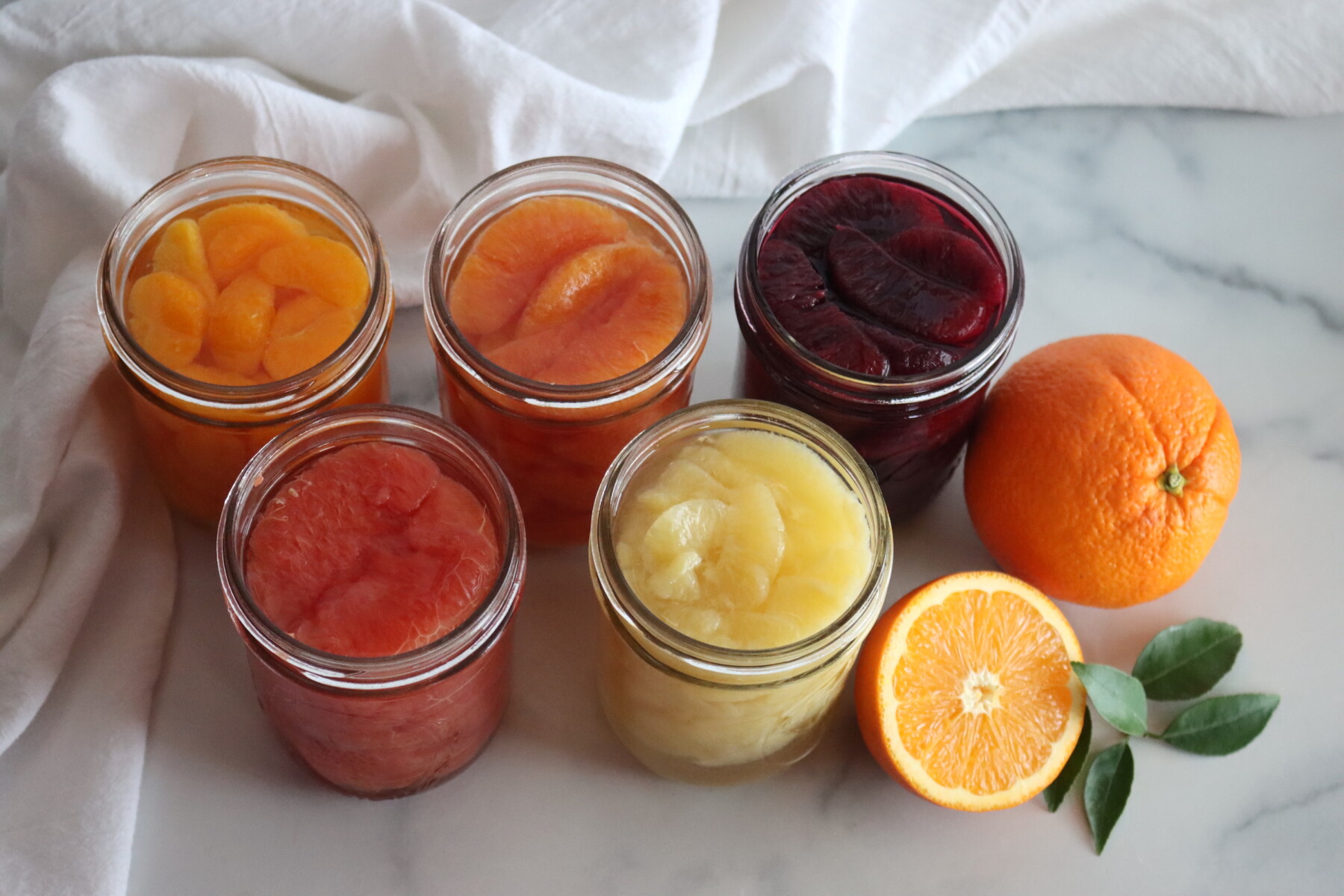
I started canning citrus sections because I wanted that old-school, perfectly sweet “canned mandarin” experience, but with fruit I actually chose, in a syrup I could control, and without the mushy, over-sweet store-bought versions. There’s something incredibly satisfying about opening a jar in the middle of February and having bright, sunny citrus ready to spoon over yogurt, toss into a salad, or pile onto a slice of pound cake like it’s no big deal.
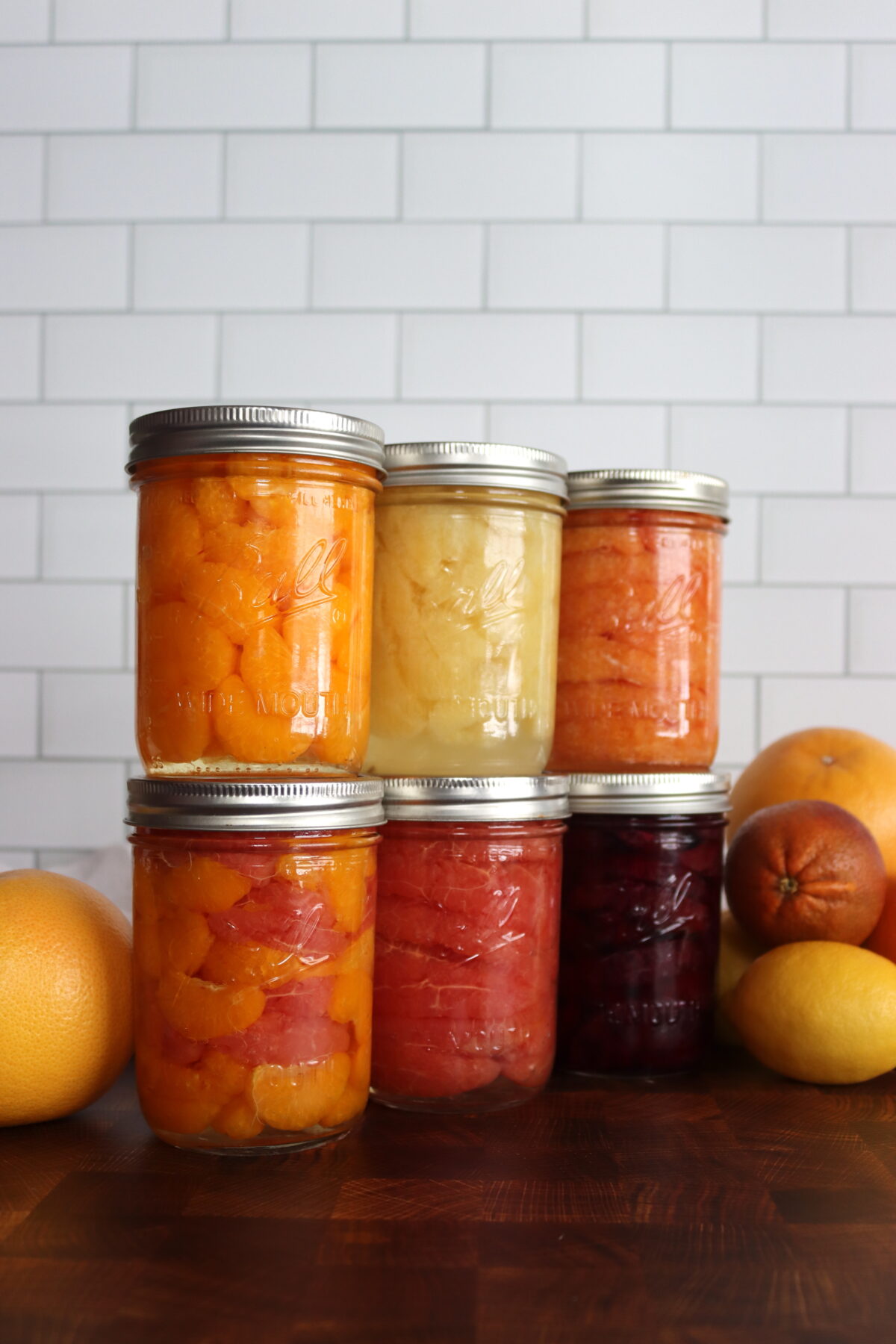
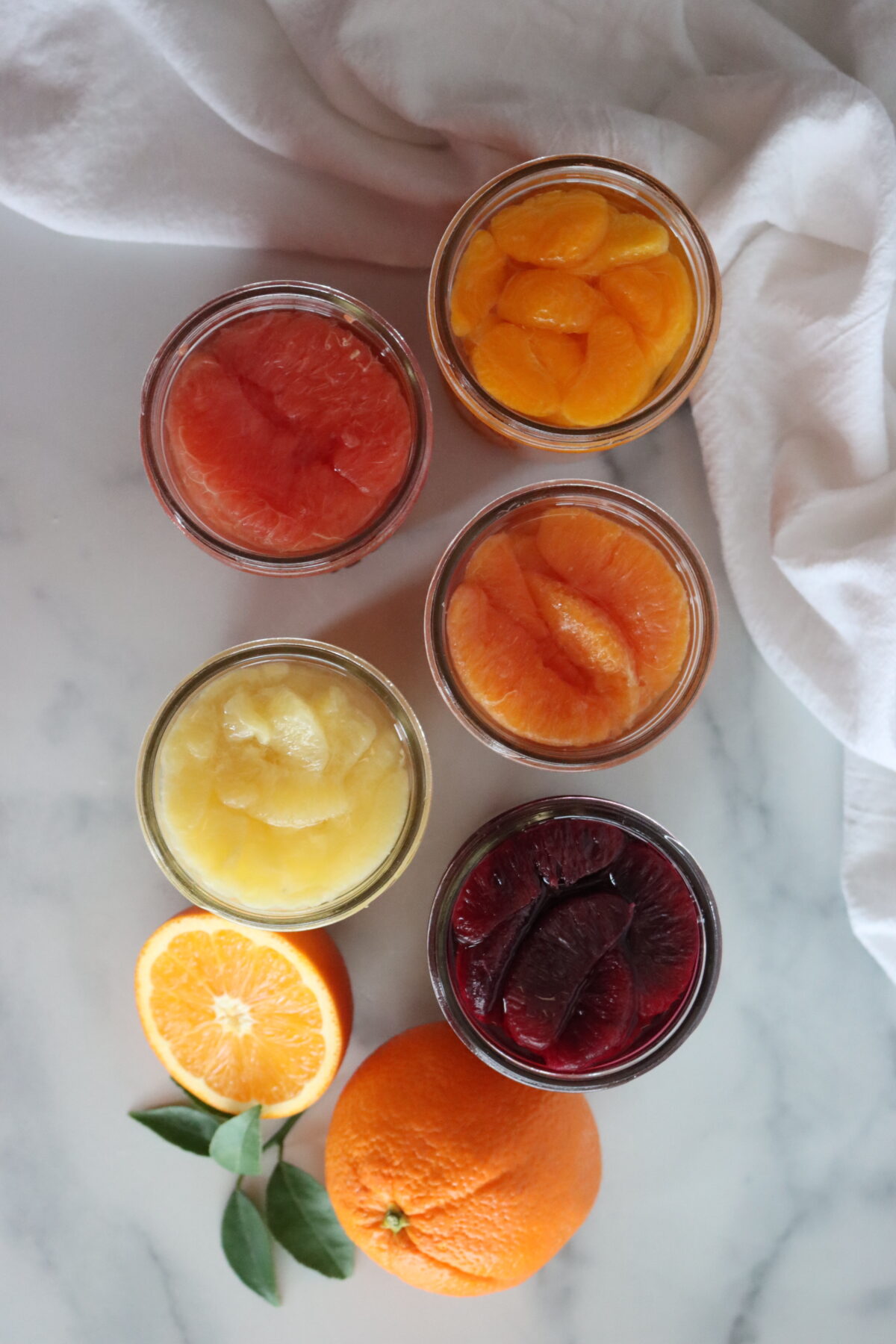
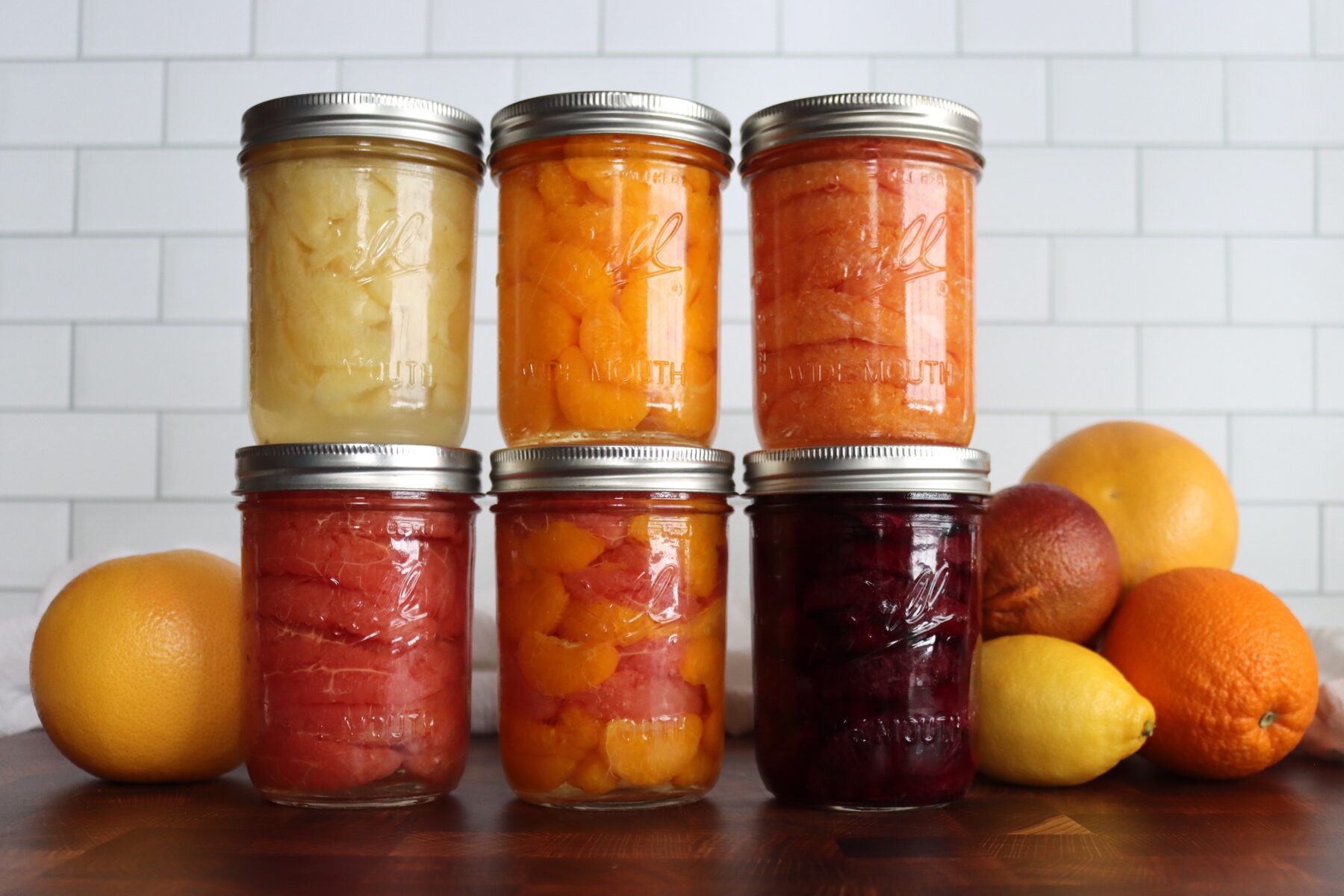
What I love most is how flexible it is. I can do all navels if that’s what I have on hand, switch to mandarins when I’m craving that classic nostalgic flavor, or mix in grapefruit when I want the jar to taste a little more grown-up and complex. And when I take the extra step to strip off the pith (especially with the pectic enzyme soak), the jars come out looking almost unreal with clear syrup, and shiny segments that almost seem to glow in the jars, with none of that lingering bitterness that can sneak in if you rush the prep.
A Quick Look at the Recipe
- Recipe Name: Canning Citrus Sections
- Recipe Type: Fruit in Syrup or Juice
- Canning Method: Waterbath Canning
- Prep/Cook Time: 1 hour (plus optional soaking time)
- Canning Time: 10 Minutes
- Yield: Varies
- Jar Sizes: Half Pint, Pint or Quart
- Headspace: 1/2 inch
- Ingredients Overview: Citrus, water and sugar
- Safe Canning Recipe Source: National Center for Home Food Preservation
- Difficulty: Easy! Once you make the syrup for canning, everything just goes into the jars for processing
- Similar Recipes: The process is very similar to making other fruits canned in syrup, including canning pineapple, canning grapes, canning apricots, and canning cherries.
Best Citrus for Canning
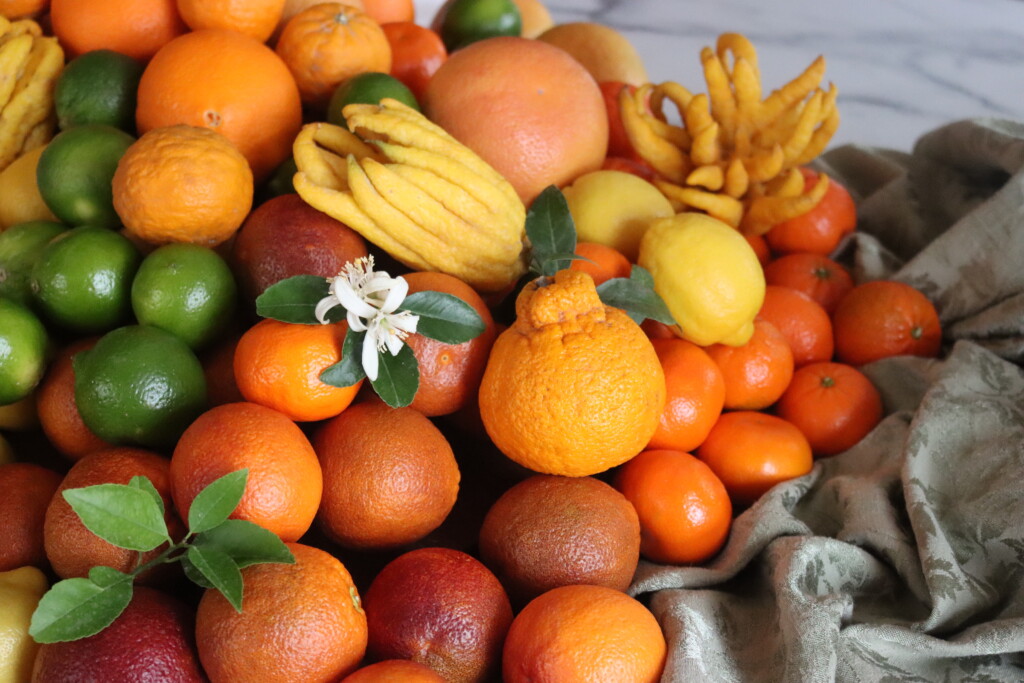
You can can orange sections from just about any orange variety, and you can also can grapefruit sections (either alone or mixed). Lemons and limes are much more acidic than oranges or grapefruits, and can also be canned as sections.
NCHFP notes that orange sections have their best flavor when canned with equal parts grapefruit (and grapefruit can be canned alone, too). Personally, I like them best as “all orange” or “all grapefruit,” but my daughter loved the mixed jars, so it really is a personal taste thing.
Here’s how different types behave in the jar:
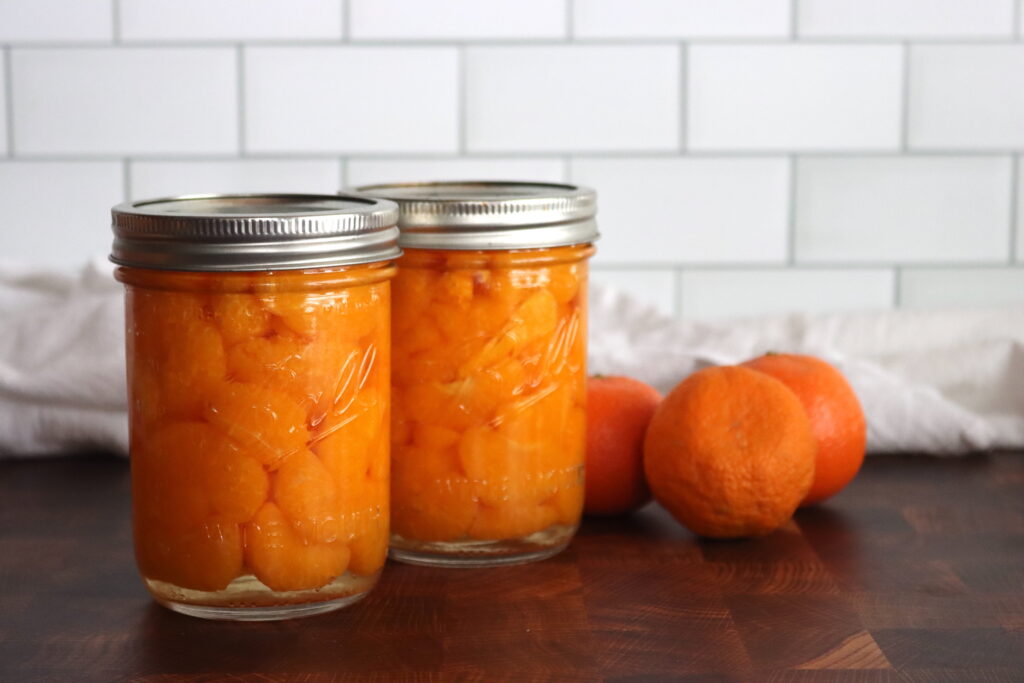
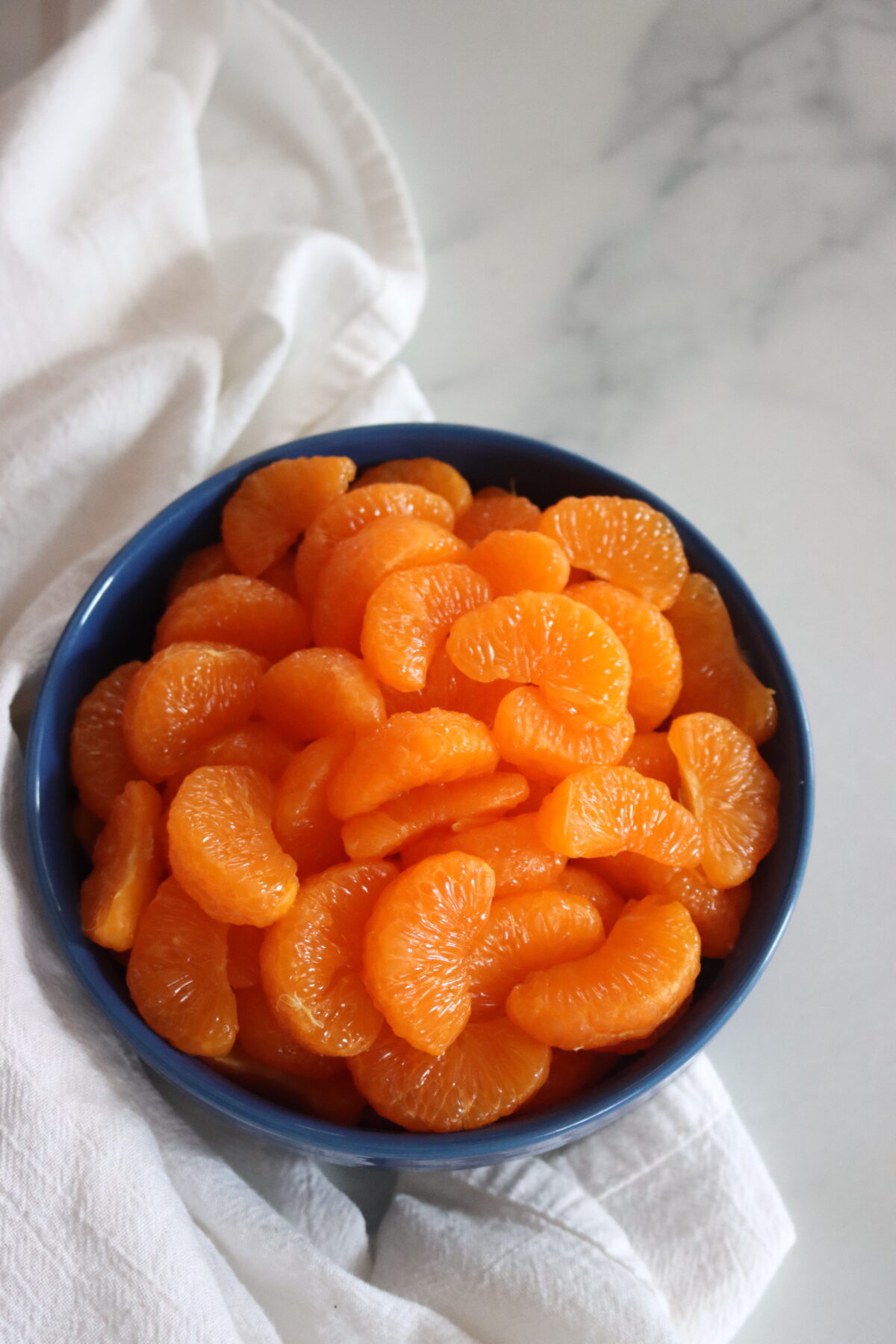
Mandarins, Clementines, Satsumas, Tangerines
These give that classic “canned mandarin” flavor that’s sweet, mild, and kid-friendly. They’re also my favorite for flavor and texture. Clementines and sumo oranges are the easiest to get around here, and they’re absolutely perfect.
When you buy canned orange segments in the store, they’re actually mandarins because their segments hold up much better and they have a sweeter, more orange than orange flavor.
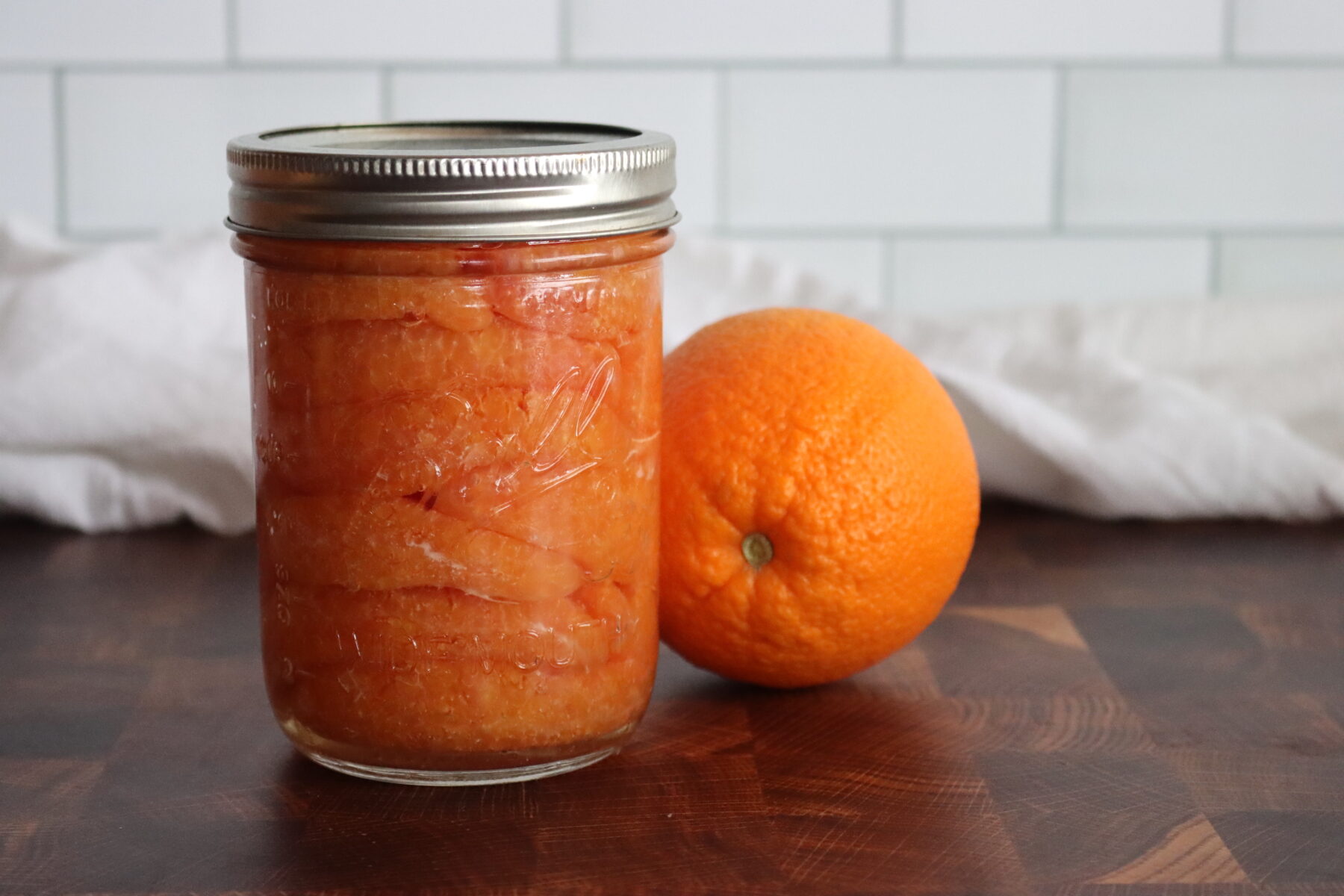
Navel oranges
Navel oranges have big sections that are easy to work with, but they contain a lot more air in their tissues than mandarins. As a result, they don’t hold together quite as well through the canning process. Still delicious, but they’re a bit softer out of the canner.
Cara Cara oranges
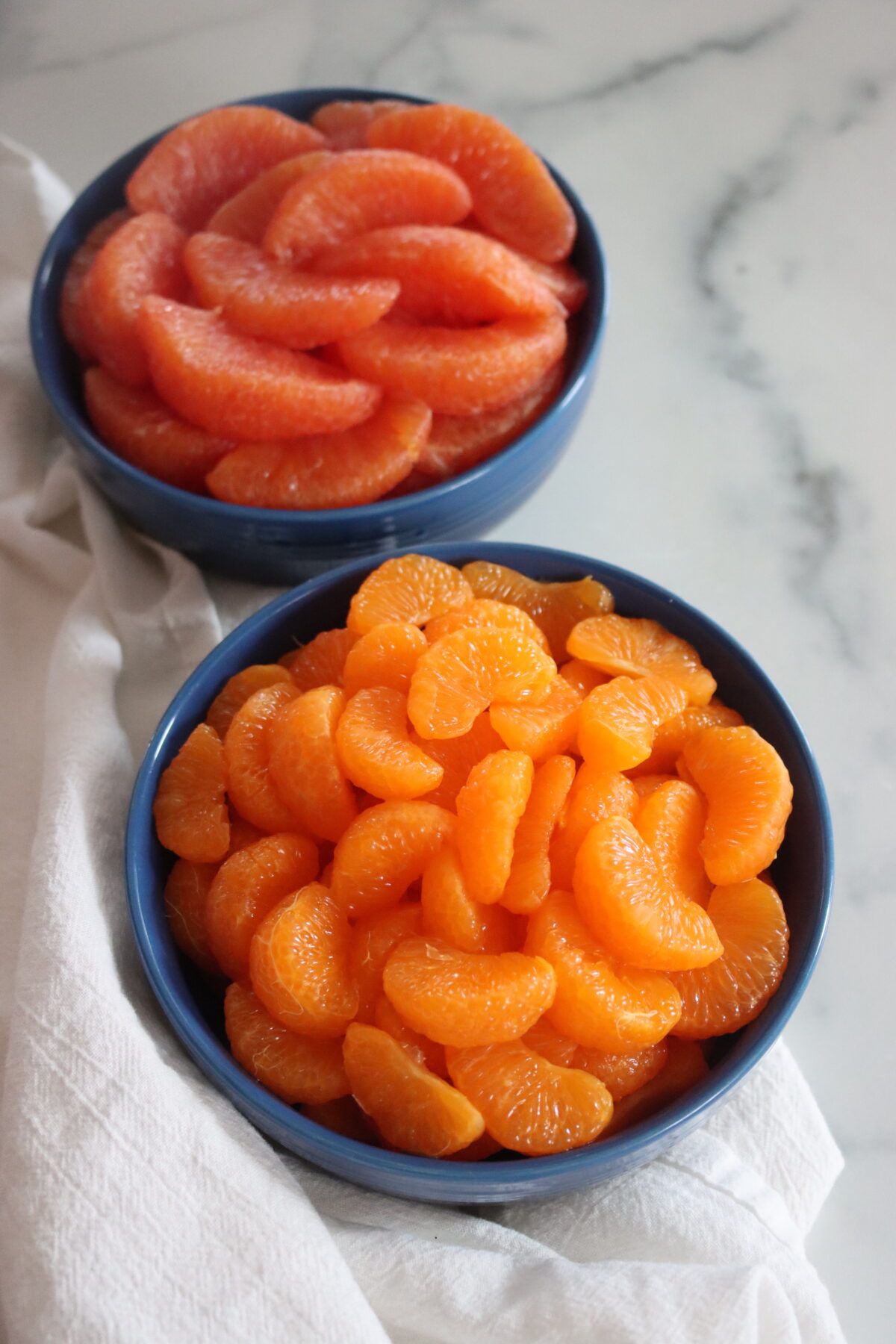
Pretty color and a sweeter flavor, Cara Cara oranges have a lovely pink color that mellows and turns a pale pink/orange in canning. The flavor is spot on, but like navel oranges, they contain a lot of air in their tissues and can be a bit soft out of the canner.
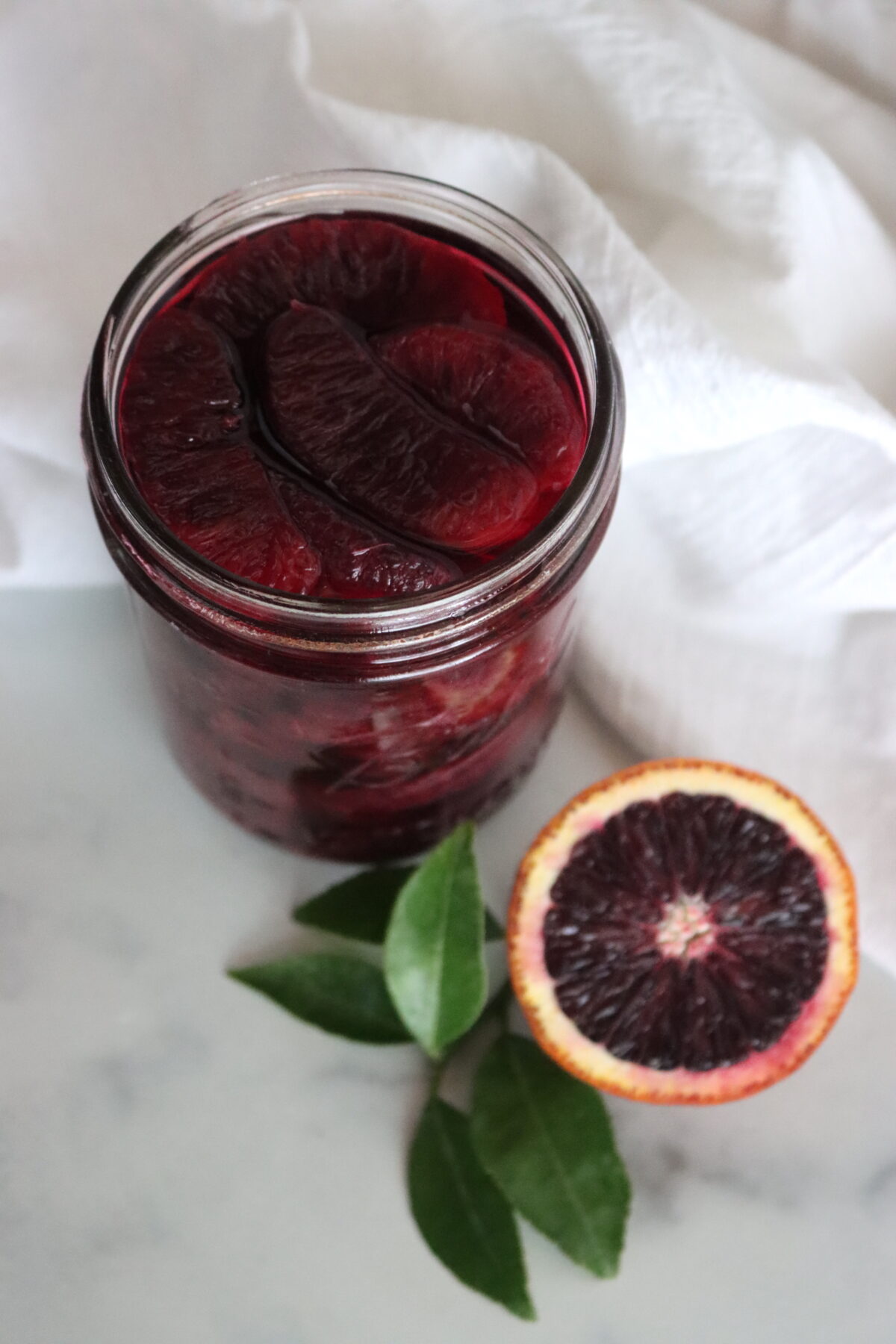
Blood Oranges
They’re dramatic in jars, and I’m a sucker for how they look canned. Expect some of that deep color to tint the liquid. Blood oranges taste almost more like raspberries than citrus, so these segments are really lovely in desserts and on salads.
Valencia Oranges
Usually reserved for juicing where you’re removing all the pith and membranes, valencias can be a bit bitter in canning and I don’t recommend them. Stick with mandarins for best flavor, and navels as a good second choice.
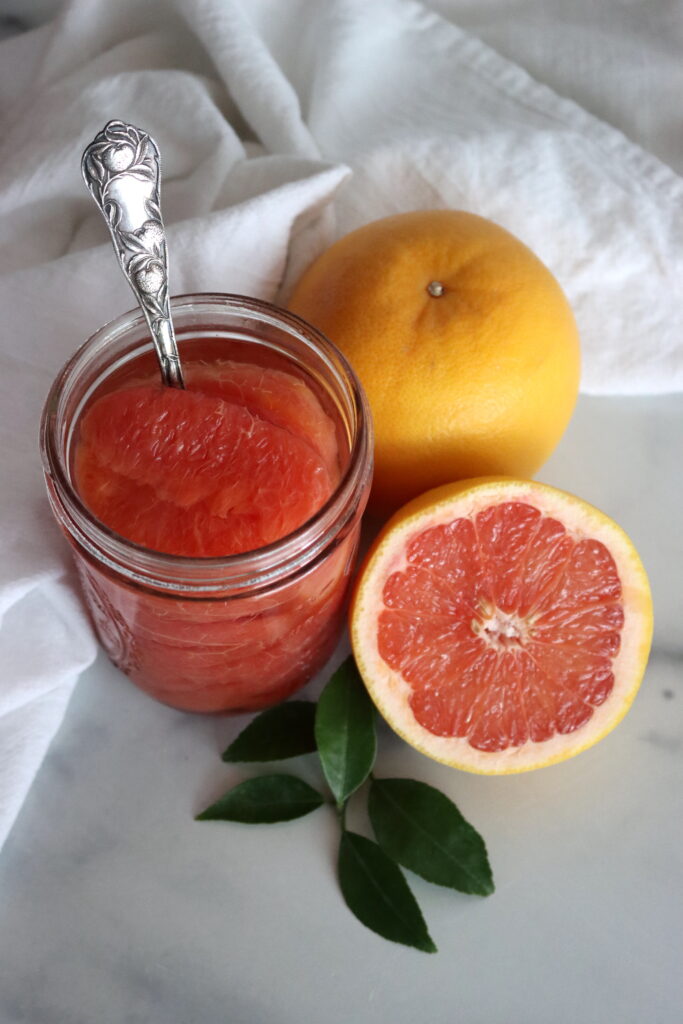
Grapefruit
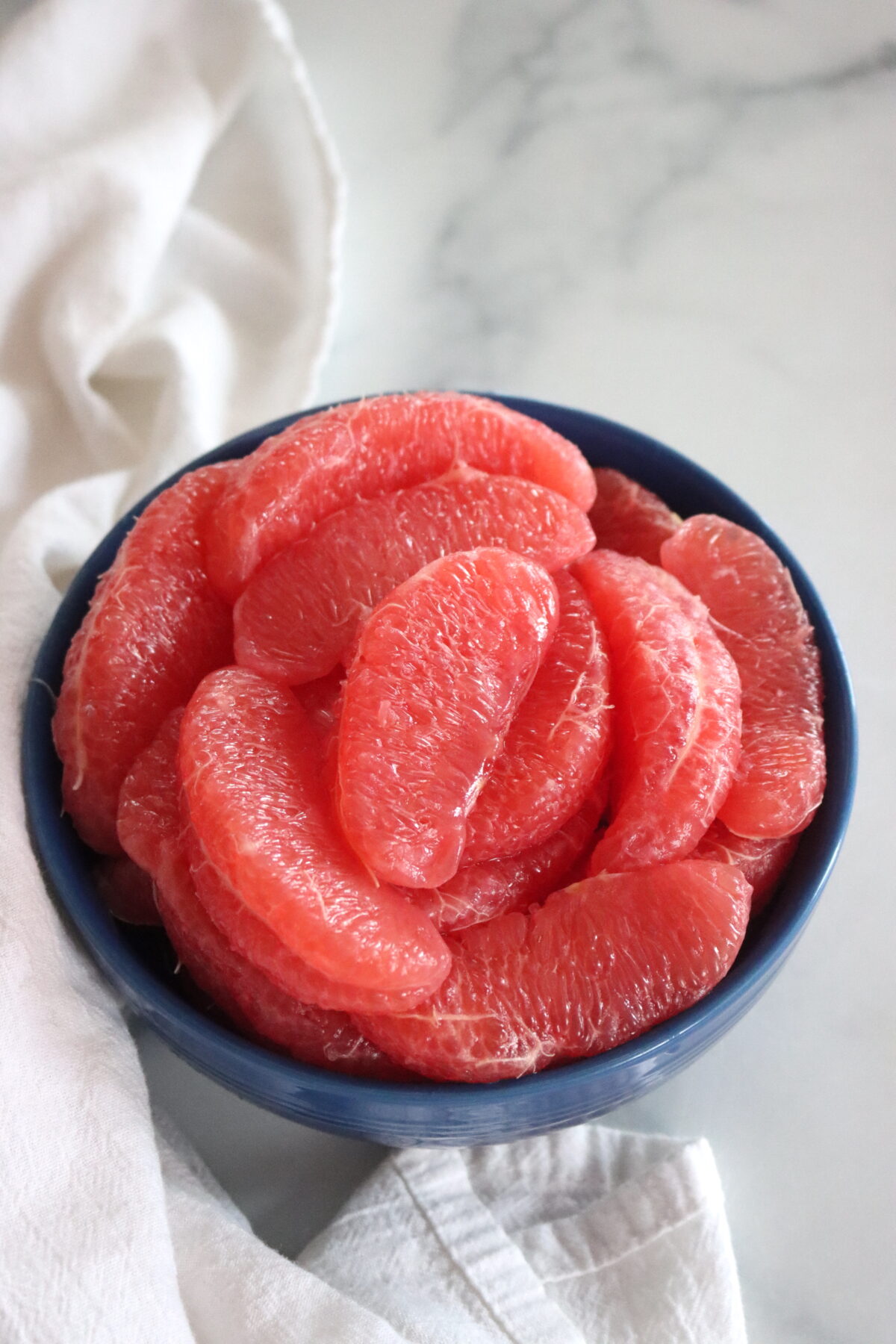
Often enjoyed for breakfast, canned grapefruit is absolutely delicious, and often a bit sweeter and more flavorful than its fresh version. Some people like to mix equal parts orange and grapefruit in the jars, but I like my grapefruit just as it is without oranges.
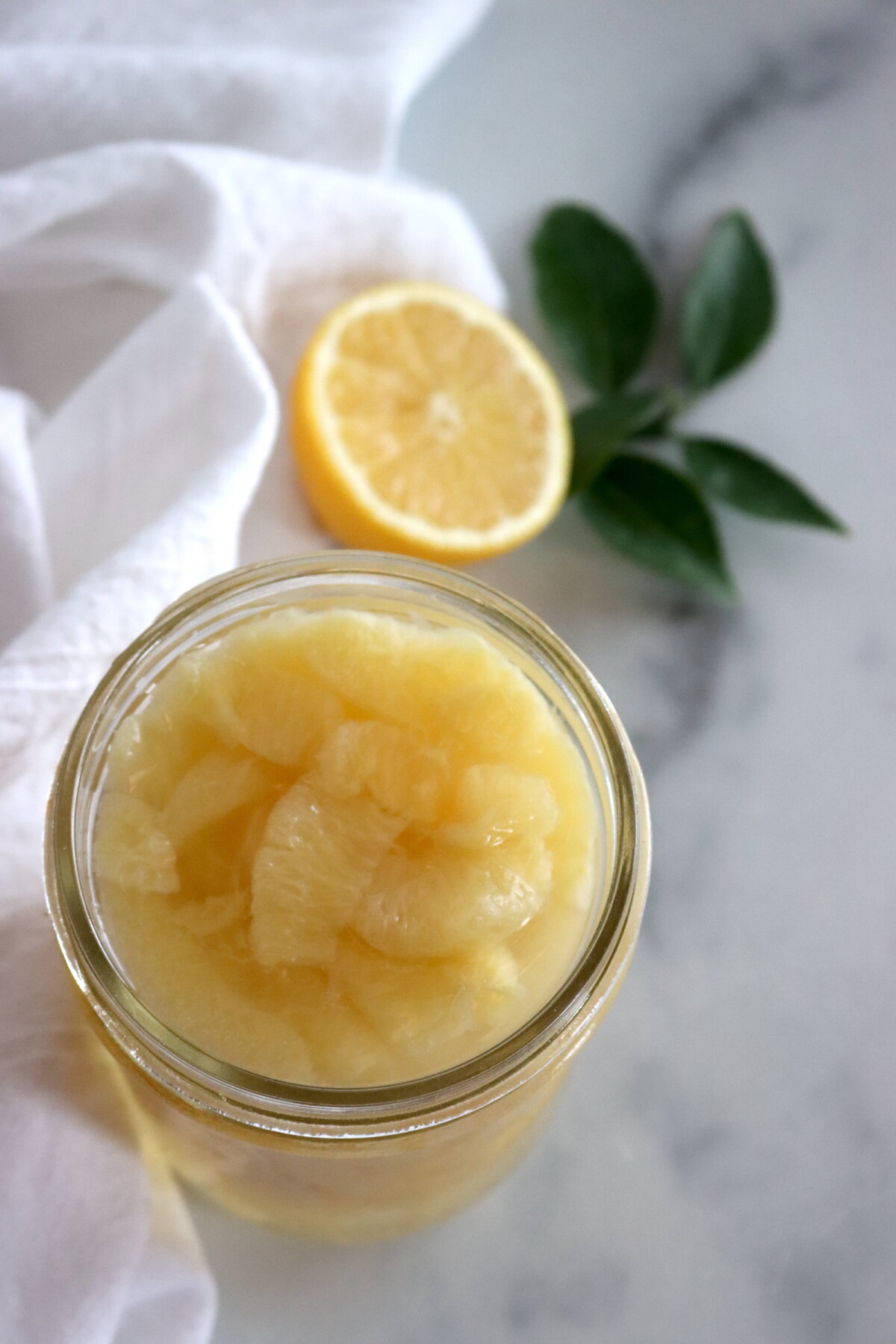
Lemons
Lemons are much more acidic than either oranges or grapefruit, but they’re delicious when canned in heavy syrup. They become a bit more like a lemon preserve (similar to old fashioned pear preserves or strawberry preserves). You can use them in drinks and treats, and they taste a bit like a candied lemon drop.
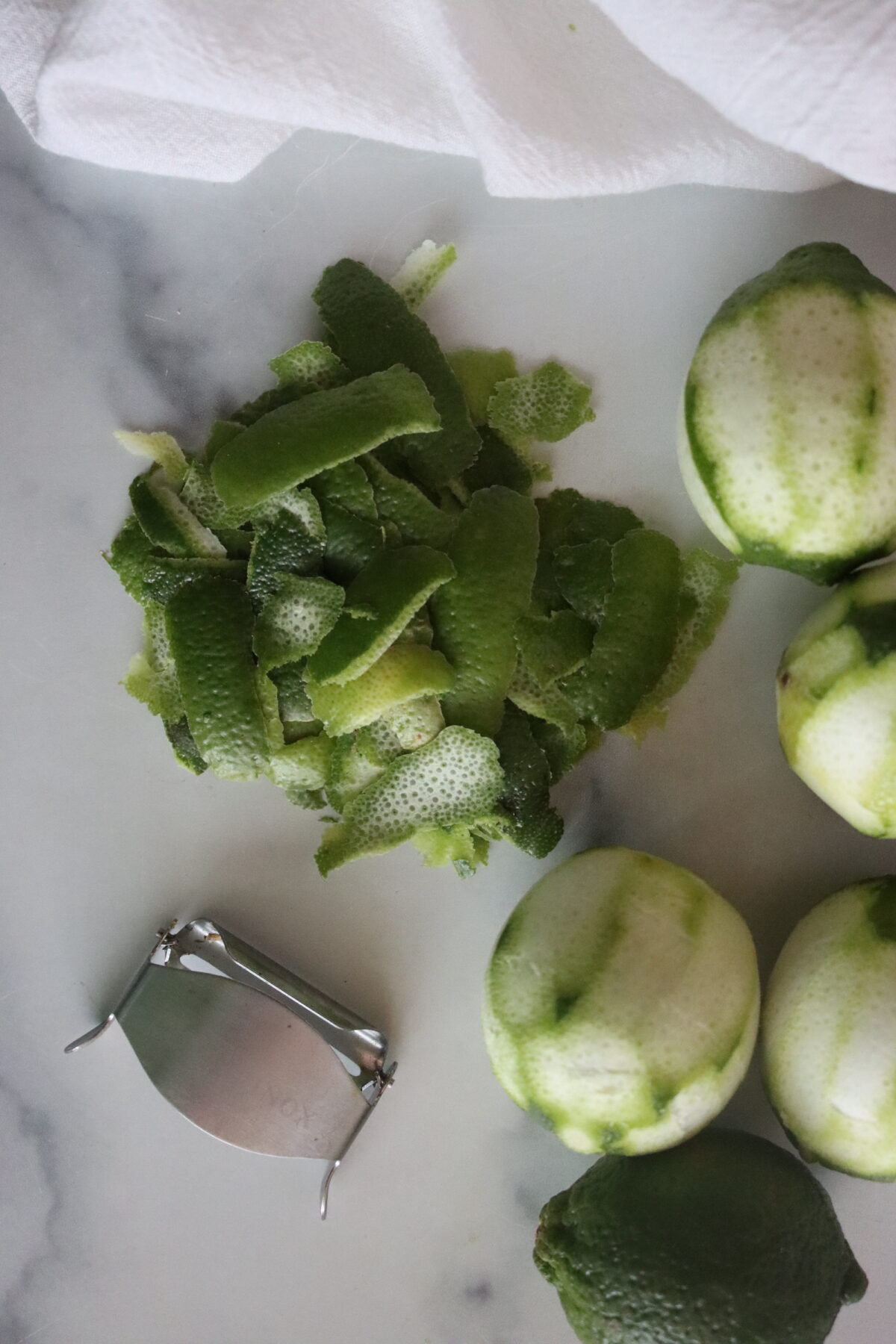
Limes
I have honestly tried, and failed, to make this recipe with limes. Limes are nearly impossible to section, and I just couldn’t make it work. I put a bunch of time into it, because my husband really loves limes, but they’re just unforgiving when it comes to peeling and sectioning.
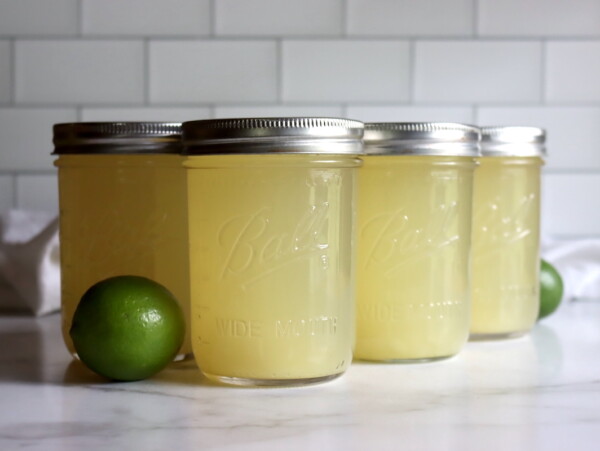
I ended up zesting all my limes for candied citrus peel, and then canning the juice as limeade concentrate.
Give it a try if you like, and hopefully your limes are more cooperative than mine.
Removing the Pith with Pectic Enzyme
If you’ve ever canned citrus and ended up with a little bitterness, it’s almost always the white pith and membrane. NCHFP specifically calls out removing the white tissue to prevent bitterness.
My favorite trick is pectic enzyme (pectinase). It doesn’t dissolve the fruit itself, it just helps loosen the pith so it rinses or wipes away easily, giving you cleaner, prettier segments.
How I do it (easy version):
- Peel the citrus and separate into sections.
- Mix 1 teaspoon pectic enzyme in 1 gallon of cold water.
- Submerge the sections and soak 3 hours to overnight (I usually do it in the fridge).
- Check periodically by gently rubbing a few segments. Pectic enzyme doesn’t make it disappear, it only loosens the pith, so nothing looks different until you rub or rinse, and then the pith slips right off.
- Rinse gently under cool water before packing into jars.
You can do it without pectic enzyme (just peel really well), but if you want those glistening, pith-free slices that look like the “good” canned mandarins from back in the day, this is the shortcut.
Choosing Syrup, Juice, or Water
NCHFP allows packing citrus sections in water, citrus juice, or syrup. If using syrup, they recommend very light, light, or medium.
I usually choose based on how I’ll use the jar:
- Light syrup is my go-to for oranges because it keeps the flavor from tasting washed out after canning.
- Juice is great if you want no added sugar (and the leftover liquid is fantastic in smoothies). If you use orange juice or grapefruit juice, make sure you get pulp free for the best flavor. You can also use pineapple juice, apple juice, grape juice, or pomegranate juice, each of which will give their own unique flavor to the segments.
- Water works, but it’s the plainest option. Your fruit will taste washed out, and I don’t recommend it.
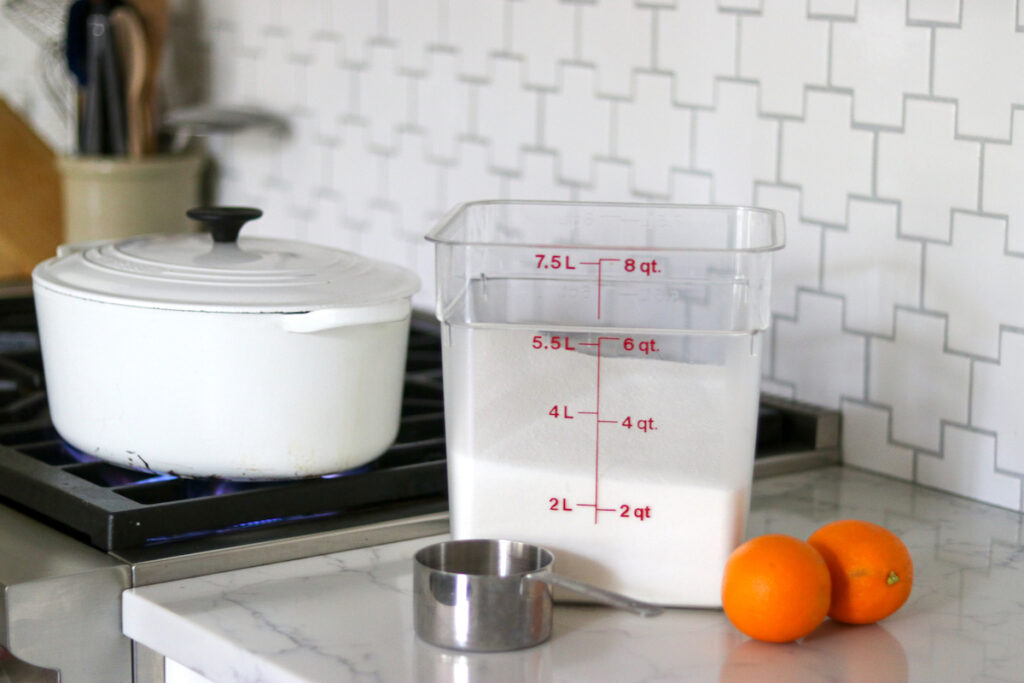
If you want exact syrup ratios for scaling, I have a guide to the sugar/water ratios for each type of syrup for canning, but here’s some quick guidance:
For a 9-pint canner batch:
- Extra-light syrup: 3/4 cups sugar to 6 1/2 cups water
- Light syrup: 1 1/2 cups sugar to 5 3/4 cups water
- Medium syrup: 2 1/4 cups sugar to 5 1/4 cups water
- Heavy syrup: 3 1/4 cups sugar to 5 cups water
- Extra-heavy syrup: 4 1/4 cups sugar to 4 1/4 cups water
For a 7-quart canner batch:
- Extra-light syrup: 1 1/4 cups sugar to 10 1/2 cups water
- Light syrup: 2 1/4 cups sugar to 9 cups water
- Medium syrup: 3 3/4 cups sugar to 8 1/4 cups water
- Heavy syrup: 5 1/4 cups sugar to 7 3/4 cups water
- Extra-heavy syrup: 6 3/4 cups sugar to 6 1/2 cups water
To make any syrup, combine sugar and water in a saucepan and heat over high heat until the sugar dissolves.
How to Make Citrus Sections for Canning
The only “fussy” part of this recipe is prepping the fruit. Once the citrus is peeled and sectioned, the rest is just packing jars and processing like any other fruit-in-syrup recipe.
Start with firm, sweet fruit that tastes good out of hand, because canning won’t improve bland citrus. Wash the fruit well before beginning.
With most citrus, you can usually peel the fruit, split it in half, and gently pull the sections apart with your fingers. If there’s pith clinging to the outside of the segments, pinch it away as you go. This method is quick and gives you that classic “canned mandarin” look.
Some types of citrus are a bit harder to section than others, especially lemons and limes, but you can usually get oranges and grapefruits without too much effort.
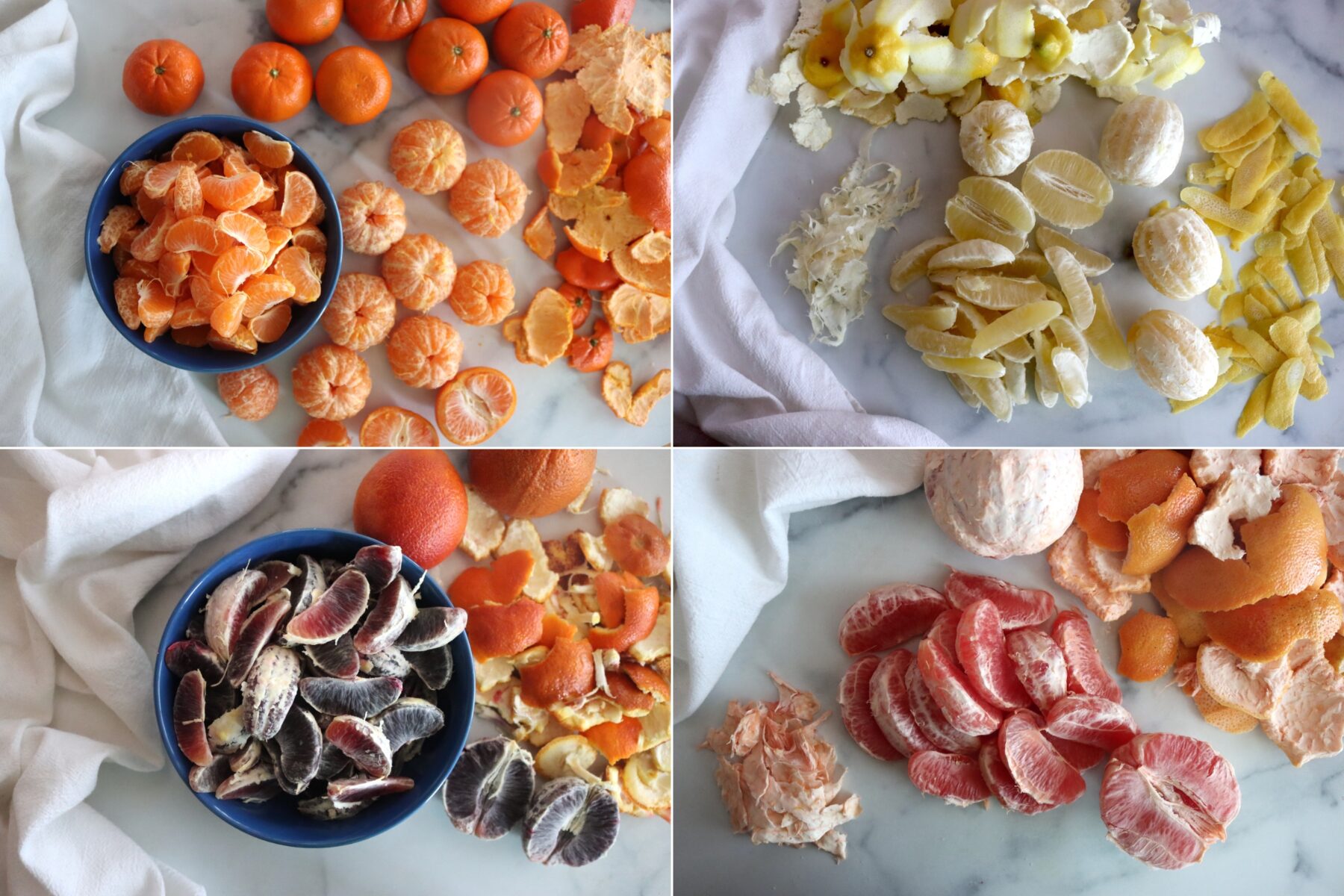
If you’re using the pectic enzyme soak to loosen pith, do it after the sections are separated. You’ll need 1 tsp pectic enzyme to 1 gallon of water for the soak. Once they’re done soaking, rinse gently under cool water and let the segments drain well so you’re not watering down your syrup or juice in the jar.
Remember that pectic enzyme doesn’t dissolve the pith, it only loosens it, so you’ll need to gently rub it off after the soak. The fruit won’t look different after the soak, until you gently stir it to slip off the white pith.
As you finish prepping, keep the sections covered so they don’t dry out, and go ahead and get your canning liquid ready. Citrus sections are packed with hot syrup, hot juice, or hot water, so it helps to have the liquid steaming and ready when the jars are filled.
Canning Citrus Sections
Citrus fruits are acidic, so these sections are safely processed in a boiling water canner. Start by filling your canner with enough water to cover the jars by at least 1 inch and begin heating it, then wash your jars, lids, and rings and keep the jars hot until you’re ready to fill.
Prepare your canning liquid next. Make your chosen hot syrup (extra-light through medium are the most common), or heat pulp-free citrus juice, or heat plain water, and keep it hot while you pack the jars so everything goes into the jars at the right temperature.
Fill the hot jars with citrus sections, packing them gently but firmly so you don’t crush the fruit. Ladle the hot syrup, juice, or water over the sections, leaving 1/2 inch headspace. Slide a bubble remover or plastic tool around the inside of the jar to release trapped air, then re-check the headspace and add more hot liquid if needed to return to 1/2 inch.
Wipe the jar rims with a clean, damp cloth (syrup can leave a sticky residue that interferes with sealing), then apply the lids and screw bands on to fingertip tight. Lower the jars into the canner, bring the water back to a full rolling boil, and start timing once it’s boiling hard.
Process pints or quarts for 10 minutes at 0–1,000 feet, adjusting for altitude as needed. When the time is up, turn off the heat and let the jars rest in the canner for 5 minutes before lifting them out. Set jars on a towel and cool undisturbed for 12–24 hours, then check seals, label, and store.
Waterbath Canning Altitude Adjustments
The altitude adjustments for water bath canning citrus segments are as follows:
- For Under 1,000 Feet in Elevation – 10 minutes for half-pints, pints and quarts
- For 1,001 to 6,000 Feet in Elevation – 15 minutes for half-pints, pints and quarts
- Above 6,000 Feet in Elevation – 20 minutes for half-pints, pints and quarts
Yield Notes
NCHFP estimates about 2 pounds of citrus per quart, and about 15 pounds per 7-quart canner load (or 13 pounds per 9-pint load). That said, your yield will vary dramatically based on how efficiently you pack the jars and the type of citrus.
Mandarins are thin skinned with very little pith compared to navel oranges, so mandarins yield quite a bit more per pound than navels.
How to use Canned Citrus Sections
These jars disappear fast at my house. My grandma always used canned mandarins to decorate her holiday ambrosia salad, and she’d eat canned grapefruit right out of the jar for breakfast.
They’re also great in:
- cheeseboards (citrus + sharp cheddar is sneaky-good)
- fruit salads (especially in winter)
- yogurt bowls and oatmeal
- simple cakes (poke holes and spoon the syrup over)
- citrusy vinaigrettes (use a spoonful of syrup + juice as the base)
Citrus Canning FAQs
Yes. Citrus is naturally high acid, so citrus sections are safely preserved with boiling water bath canning when you follow a tested process (hot pack, proper headspace, and the correct processing time for your jar size and altitude).
The key is removing as much white pith as possible while peeling and sectioning, since that’s what causes bitterness. For extra-clean sections, you can soak the peeled segments in pectic enzyme (pectinase) dissolved in water for several hours, then gently rub and rinse to loosen and wash away clinging membrane bits before packing the jars.
Both are safe choices. Light syrup usually gives the best flavor and texture for most oranges because it prevents the fruit from tasting washed out after processing. Citrus juice (pulp-free) is a great no-added-sugar option and the leftover liquid is excellent in smoothies or drinks. Water is allowed, but it’s the blandest option and the fruit often tastes less vibrant.
Bitterness almost always comes from pith and membrane left on the sections, not from the canning process itself. Fix it by peeling more thoroughly, taking the time to remove the white tissue during sectioning, and using the pectic enzyme soak if you want the cleanest results. If you’re using varieties that skew bitter (like many Valencias), switching to mandarins or navels can also help.
Citrus Canning Recipes
If you tried this Citrus Canning Recipe, or any other recipe on Creative Canning, leave a ⭐ star rating and let me know what you think in the 📝 comments below!
And make sure you stay in touch with me by following on social media!
Canning Citrus Sections
Equipment
Ingredients
- 13 lbs citrus, sectioned (oranges, grapefruit, or a mix; mandarins yield more per pound)
- 1 1/2 cups granulated sugar, optional, see notes
- 5 3/4 cups water
- Pectic Enzyme Liquid, for pith removal: 1 tsp pectic enzyme + 1 gallon cold water (for soaking sections 3 hours to overnight)
Instructions
- Prepare the citrus sections. Wash fruit. Peel and separate citrus into sections, removing as much white pith and membrane as possible to prevent bitterness. For extra-clean sections, soak the separated segments in 1 tsp pectic enzyme mixed into 1 gallon cold water for 3 hours to overnight, then gently rub/rinse and drain well.
- Prepare the canner and jars. Fill a boiling water canner with enough water to cover jars by at least 1 inch. Begin heating the water. Wash jars, lids, and rings. Keep jars hot until ready to fill.
- Make the light syrup. Combine sugar and water in a saucepan. Heat until the sugar dissolves and the syrup is hot. Keep it hot while you pack jars. Recipe above is for light syrup, see notes for other syrup types.
- Pack the jars. Fill hot jars with citrus sections, packing gently but firmly. Ladle hot light syrup over the sections, leaving 1/2 inch headspace.
- De-bubble and adjust headspace. Slide a bubble remover around the inside of the jar to release trapped air. Re-check headspace and add more hot syrup if needed to return to 1/2 inch.
- Apply lids and process. Wipe rims, apply lids, and screw bands on fingertip tight. Lower jars into the canner. Return water to a full rolling boil, then process using the time listed under Notes: Altitude Adjustments.
- Cool and store. Turn off heat and let jars rest 5 minutes in the canner. Remove jars and cool undisturbed 12–24 hours. Check seals, label, and store.
Notes
Syrup Options (9-Pint Canner Batch)
If you’d rather use a different syrup strength, use these tested ratios (make the syrup the same way: heat just until sugar dissolves, keep hot for packing):- Extra-light syrup: 3/4 cup sugar + 6 1/2 cups water
- Light syrup (recipe card): 1 1/2 cups sugar + 5 3/4 cups water
- Medium syrup: 2 1/4 cups sugar + 5 1/4 cups water
- Heavy syrup: 3 1/4 cups sugar + 5 cups water
- Extra-heavy syrup: 4 1/4 cups sugar + 4 1/4 cups water
Citrus Types and What to Expect in the Jar
- Mandarins/Clementines/Satsumas/Tangerines: Best texture and that classic “canned mandarin” vibe. Easiest to prep.
- Navels: Big easy sections, but they’re airier and can be a bit softer after canning.
- Cara Cara: Great flavor and pretty color, but also softer like navels.
- Blood oranges: Stunning jars; expect color to tint the liquid.
- Grapefruit: Excellent canned, often tastes sweeter than fresh. Great alone or mixed with oranges.
- Valencias: More bitterness risk; I don’t recommend them for sections.
- Lemons: Work well, especially in heavier syrup for a preserve-like result.
- Limes: Very difficult to section cleanly; doable in theory, frustrating in practice.
Removing Pith and Preventing Bitterness
Bitterness almost always comes from white pith and membrane left on the sections. If you want ultra-clean segments, the pectic enzyme soak helps loosen that clinging white tissue so it rinses away more easily. It does not dissolve the pith on its own, so plan to gently rub/rinse after soaking.Altitude Adjustments
Use the same processing time for half-pints, pints, and quarts. Start timing only once the canner is back at a full rolling boil.- 0–1,000 ft: 10 minutes
- 1,001–6,000 ft: 15 minutes
- Above 6,000 ft: 20 minutes
Yield Notes
NCHFP estimates about 13 pounds per 9-pint canner load, but yield depends heavily on fruit type and how tightly you pack. Mandarins usually give more usable sections per pound than navels because there’s less pith and waste. For a standard 7 quart canner batch, you’ll need about 15 pounds of fruit (and slightly more syrup).Storage and Serving
For best quality, use within 12–18 months. Refrigerate after opening. The syrup is delicious too—use it in drinks, smoothies, vinaigrettes, or to soak cakes.Nutrition
Nutrition information is automatically calculated, so should only be used as an approximation.
Citrus Canning Recipes
Find the perfect recipe
Searching for something else? Enter keywords to find the perfect recipe!

Thank you, I love the detail you put into this. So easy to understand.
Lovely, I’m so glad it’s helpful to you!