This post may contain affiliate links. Please see our disclosure policy.
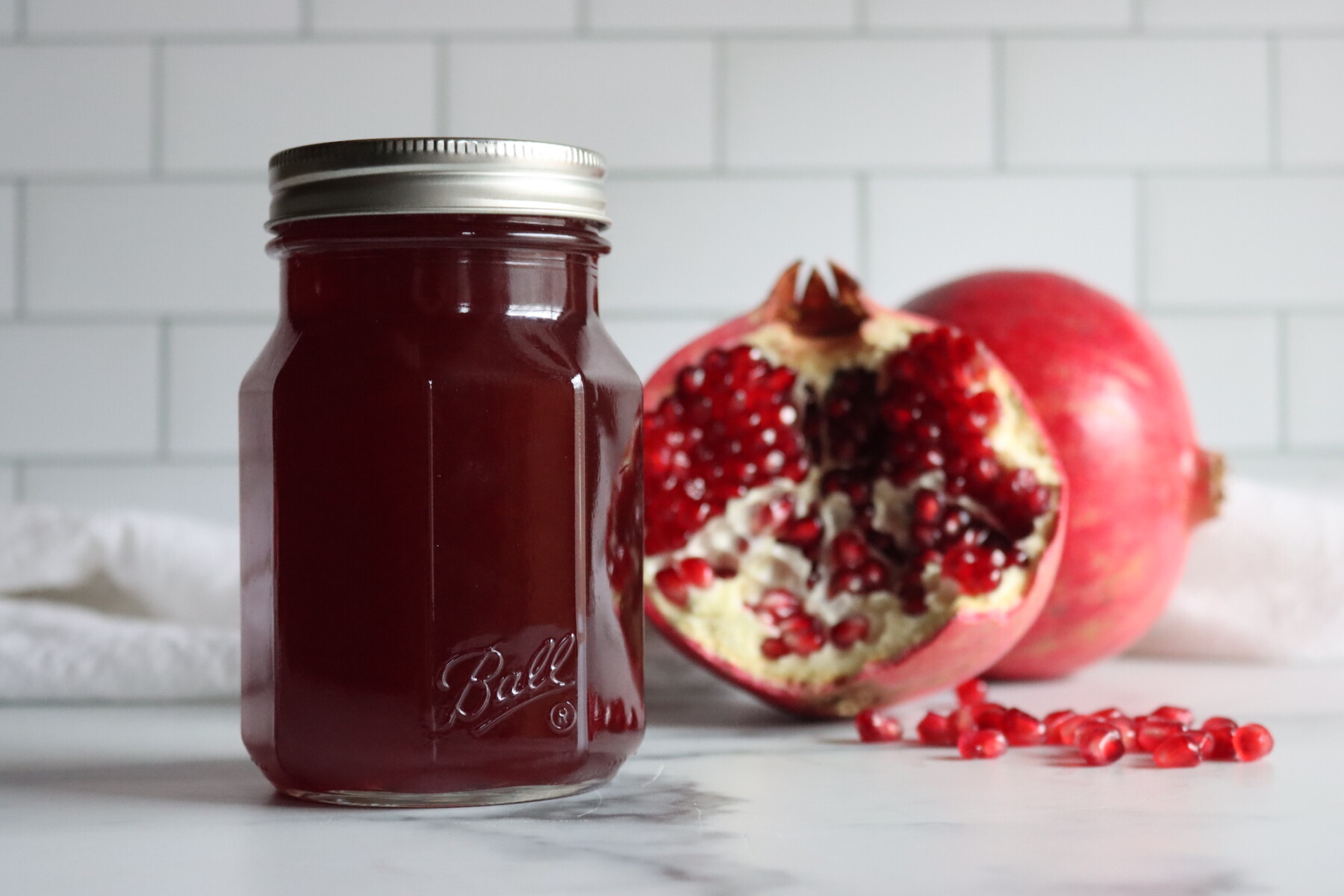
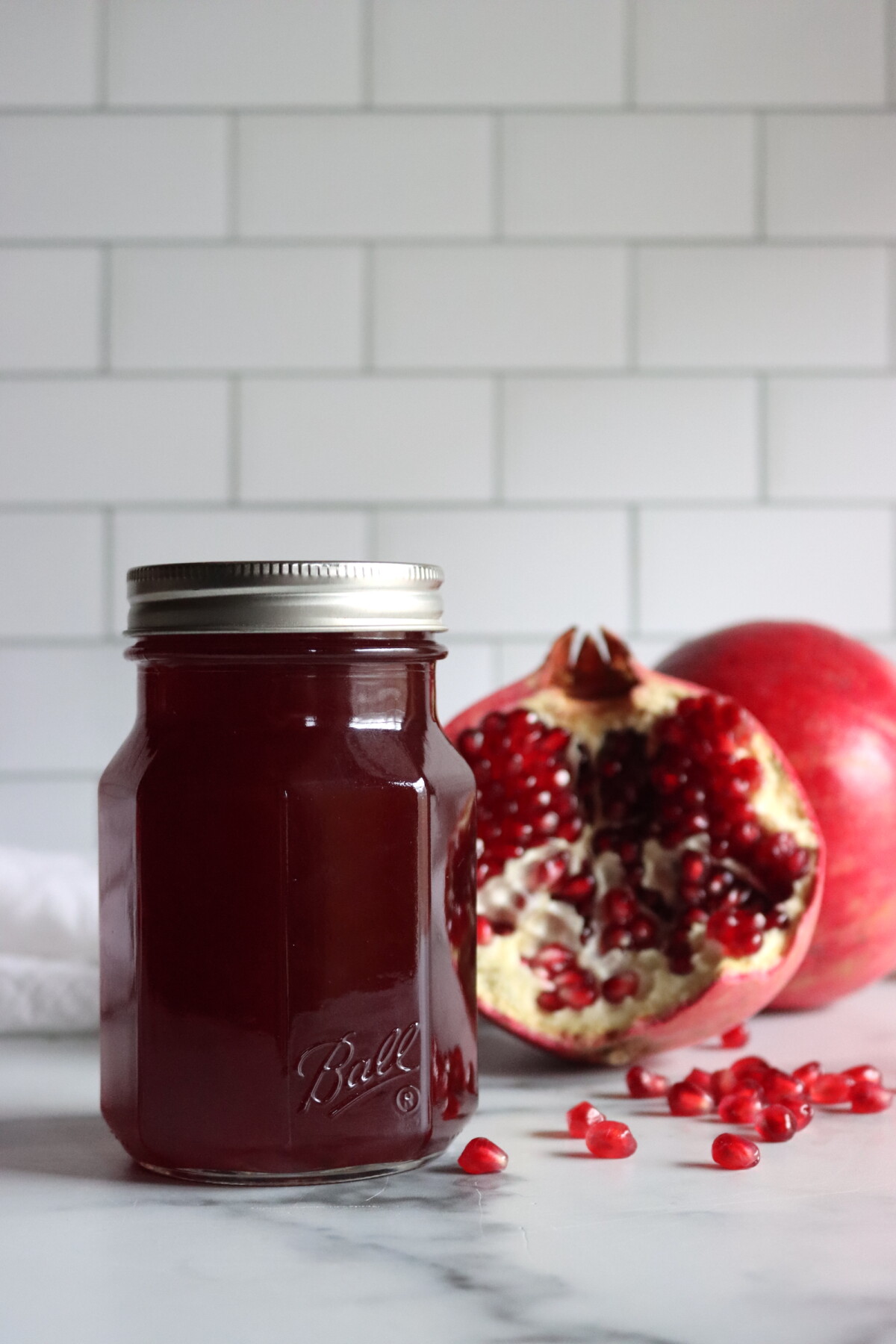
Pomegranate syrup is homemade grenadine, the deep red, sweet-tart syrup that gives a Shirley Temple its color, turns plain soda water into something worth sipping, and adds real fruit flavor to cocktails.
Made at home, it’s just pomegranate juice, sugar, and a little lemon, with none of the corn syrup or artificial coloring in most bottled grenadine. Canned into jars, it keeps on the shelf so you have it ready whenever a drink calls for it.
This recipe has been reviewed for safety and accuracy by a Master Food Preserver certified through the University of Cornell Cooperative Extension.
The method is simple. You combine pomegranate juice with an equal amount of sugar, add a little lemon, heat just until the sugar dissolves, simmer briefly, and process. Most people start with bottled 100% pomegranate juice, which means there’s no juicing or straining to do, though you can press your own from fresh pomegranates if you have them. For another way to put up the fruit, there’s also pomegranate applesauce.
Pomegranate juice is a high-acid ingredient, with a pH down around 3, so it’s safe for water bath canning on its own. The lemon juice in this recipe isn’t there for safety. It balances the sweetness and brightens the flavor, which keeps a 1:1 syrup from tasting flat. That 1:1 ratio of juice to sugar is what makes this a true grenadine: sweet and pourable, with enough tartness to taste like fruit rather than candy.
If you’d rather have something to cook with than to pour into drinks, the same juice takes you in a different direction. Cooked down with much less sugar and a longer simmer, it becomes a thick, tangy syrup along the lines of pomegranate molasses, the kind used in Middle Eastern dressings and glazes. That version is covered further down, and the instructions are in the recipe card notes so you have both in one place.
Notes from My Kitchen

This recipe came out of my daughter getting into mocktails. She’s been mixing up all sorts of creative drinks lately, and grenadine turns up in a lot of them, but I took one look at the label on the commercial stuff and couldn’t get behind it. Most of what’s on the shelf is high fructose corn syrup and red dye with barely any actual pomegranate in the bottle. Making our own meant I knew exactly what was going into her glass, which is just pomegranate juice, sugar, and a little lemon.
Now I keep a few half pints on hand so she can pull one off the shelf whenever she’s in an inventing mood. It’s been fun watching what she comes up with, and the syrup holds its color and flavor beautifully in soda water and lemonade. When I want something for cooking instead of drinks, I cook a batch down into the molasses-style version and use it in dressings and on roasted vegetables.
Quick Look at the Recipe
- Recipe Name: Pomegranate Syrup
- Recipe Type: Fruit Syrup
- Canning Method: Water Bath Canning
- Prep Time: About 5 minutes with bottled juice
- Cook Time: About 10 minutes
- Canning Time: 10 minutes for pints or half pints
- Yield: About 3 pints or 6 half pints
- Jar Sizes: Pints or half pints
- Headspace: 1/4 inch
- Ingredients Overview: Pomegranate juice, sugar, and lemon juice in a 1:1 juice to sugar ratio
- Safe Canning Recipe Source: NCHFP Berry Syrup procedure for the base recipe; the molasses variation is adapted from the Ball Complete Book of Home Preserving
- Difficulty: Easy
- Similar Recipes: Making pomegranate syrup is similar to other fruit syrup canning recipes, like blackberry syrup, raspberry syrup, and peach syrup. For another way to put up the fruit, try pomegranate applesauce.
Ingredients
Pomegranate syrup comes together with three ingredients, and the juice is the one that carries the whole recipe. The base version uses a 1:1 ratio of juice to sugar, which gives you a sweet, pourable grenadine-style syrup.
- Pomegranate Juice: Use 100% pomegranate juice for full flavor and deep color. Bottled juice is what most people reach for and works well here, just check the label and avoid juice blends or anything with added sugar. If you have fresh pomegranates, you can press your own juice from the arils, which takes about 3 large fruit per cup.
- Granulated Sugar: Standard white sugar in a 1:1 ratio with the juice gives the syrup its grenadine body and sweetness. The sugar is for flavor and consistency, not preservation, so you can cut it back for a tarter, thinner syrup, or take it much lower for the molasses-style variation, without affecting whether the syrup is safe to can.
- Lemon Juice: A little lemon balances the sweetness and brightens the flavor. It’s for taste, not safety, since pomegranate juice is acidic enough to can on its own, so fresh or bottled both work. Use about 1/4 cup per batch, or leave it out if you want the syrup on the sweeter, rounder side.
Step by Step Instructions
The base grenadine-style syrup is a quick stovetop project, especially if you start with bottled juice. There’s no juicing, no straining, and no gel point to chase, just dissolving sugar into juice and canning it.
Have your jars and canner ready before you start, since the syrup itself comes together in about ten minutes. If you’re juicing fresh pomegranates, do that first so you know how much juice you’re working with and can match the sugar to it.
Start with Pomegranate Juice
For the simplest version, measure out 4 cups of bottled 100% pomegranate juice. That’s the whole first step, and it’s why this recipe is so quick to put up. Pour it into a large stainless steel saucepan and you’re ready to sweeten it.
If you’re working from fresh fruit, I have detailed juice extraction instructions below. Press and strain your juice first, then come back to this step once you’ve measured out how much you have.
Make the Syrup
Add the sugar and lemon juice to the pomegranate juice in the saucepan. Heat over medium-high, stirring constantly, until the sugar is completely dissolved. Bring it to a boil, then reduce the heat and simmer for 5 minutes, skimming off any foam that gathers on top.
The finished grenadine will be pourable and sweet-tart, closer to maple syrup than to honey in thickness. This is the moment to taste it, since you can adjust the lemon to your liking before filling jars. For a thicker, more concentrated syrup, see the molasses-style variation below.
Fill Jars
Ladle the hot syrup into prepared jars, leaving 1/4 inch headspace. Wipe the rims clean with a damp cloth, center the lids, and apply the bands fingertip tight.
Half pints are a good size for a syrup you’ll use a little at a time in drinks, while pints make sense if you go through it quickly. A canning funnel keeps the rims clean as you fill, which helps the jars seal reliably.
Canning Pomegranate Syrup
Without canning, pomegranate syrup keeps in the refrigerator for several weeks or in the freezer for up to 6 months. For shelf-stable jars that last through the year, process them in a boiling water bath.
Prepare your water bath canner while the syrup comes together. Lower the filled jars into the canner, making sure they’re covered by at least 1 inch of water, and process for 10 minutes for either pints or half pints, adjusting for altitude as noted below.
After processing, turn off the heat and let the jars stand in the canner for 5 minutes before removing them. Set them on a towel-lined counter and let them cool undisturbed for 12 to 24 hours, then check the seals before storing. Properly sealed jars keep at room temperature for 12 to 18 months, and any that didn’t seal go straight into the fridge.
Altitude Adjustments
For water bath canning, processing times increase at higher elevations. These times are for pints and half pints:
- 0 to 1,000 feet: 10 minutes
- 1,001 to 6,000 feet: 15 minutes
- Above 6,000 feet: 20 minutes
Juicing Fresh Pomegranates
Bottled 100% pomegranate juice is the shortcut, and there’s nothing wrong with using it. But if you have fresh pomegranates on hand, or grow them, pressing your own juice gives you a brighter, fresher flavor and lets you control exactly what goes into the jar. It’s a little more work, mostly in getting the seeds out, but none of it is difficult.
Start by picking good fruit. Choose pomegranates that feel heavy for their size, with taut, unbroken skin and no soft spots. Heavier fruit holds more juice, and the skin color matters less than the weight. One thing worth knowing before you start: pomegranate juice stains everything it touches, so wear an apron and work close to the sink.
Getting the Seeds Out
The cleanest way to separate the arils (the juicy seed sacs) from the fruit is to do it underwater. Cut the crown off the top, score the rind into sections with a shallow cut that doesn’t reach the seeds, then submerge the fruit in a bowl of cool water and break it apart with your hands. The arils sink to the bottom while the bitter white membrane floats to the top.
Skim off and discard the floating membrane, then pour the arils into a strainer. Working underwater keeps the juice from spraying across your kitchen, and it makes quick work of separating out the pith, which carries the tannic, bitter notes you don’t want in your syrup. Drain the arils well before you press them.
Pressing the Juice
There are a few ways to get the juice out of the arils, and any of them work. You can pulse them briefly in a blender and strain, mash them with a potato masher and strain through a jelly bag or several layers of cheesecloth, run them through a food mill, or press them in a citrus reamer. For syrup, clarity matters less than it does for jelly, so you can press a little more firmly if you want to coax out every bit.
The one thing to avoid is grinding up the hard inner seeds, which releases bitter tannins into the juice. If you’re using a blender, pulse gently and just long enough to break the arils open, then strain. Pour the finished juice into a measuring cup so you can match the sugar to it, since the base recipe uses a 1:1 ratio of juice to sugar.
How Much Juice to Expect
Yield depends a lot on the size and juiciness of your fruit, but a large pomegranate gives you somewhere around 1/2 cup of juice. That makes the math easy to plan around when you’re deciding how many to buy or pick for a batch.
- 1 large pomegranate: about 1/2 to 3/4 cup of arils, which press to roughly 1/2 cup of juice
- 3 large pomegranates: about 1 cup of juice
- About 12 large pomegranates: about 4 cups of juice, enough for a full base batch
If you come up a little short, just scale the sugar down to match whatever juice you ended up with and keep the 1:1 ratio. There’s no need to hit exactly 4 cups, since the recipe works at any size as long as the proportions hold.
Pomegranate Molasses Variation
The grenadine version above is built for drinks, but with less sugar and a longer cook the same juice turns into something closer to pomegranate molasses. This is the thick, tangy, deeply concentrated syrup used in Middle Eastern cooking, spooned into salad dressings, brushed onto roasting meat and vegetables, or stirred into marinades. It’s tart and savory-leaning rather than sweet.
This version comes from the Ball Complete Book of Home Preserving. Combine 5 cups of pomegranate juice, 1/2 cup of bottled lemon juice, and 1 cup of sugar in a large stainless steel saucepan. Bring it to a boil over medium-high heat, stirring to dissolve the sugar, then reduce the heat and boil gently, stirring occasionally, until the mixture has reduced by half, about 30 minutes. Keep the bottled lemon juice as written here, since it’s part of the tested recipe.
Fill and process the jars exactly the same way as the base recipe, with 1/4 inch headspace and 10 minutes in the water bath, using the same altitude adjustments. The reduction means a smaller yield, about four 8-ounce half pint jars. For an even thicker syrup, you can cook it a little longer, watching closely near the end so it doesn’t scorch as it concentrates.
Serving Ideas
The grenadine-style syrup is made for drinks. Stir it into sparkling water for a homemade pomegranate soda, pour a splash into lemonade or iced tea, or use it the way you’d use any grenadine in cocktails and mocktails. A little in the bottom of a glass gives you that classic sunrise color as it settles.
It’s good over food too. Drizzle it on pancakes, waffles, or vanilla ice cream, or spoon it over yogurt and oatmeal. The sweet-tart flavor pairs well with citrus and with warm spices.
The molasses-style version leans savory. Whisk it into vinaigrettes, brush it over roasting chicken, lamb, or root vegetables, or stir it into marinades and grain dishes where you want a tart, fruity depth.
Yield Notes
The base grenadine recipe combines 4 cups of pomegranate juice with 4 cups of sugar, which makes about 6 cups of finished syrup, enough to fill 3 pint jars or 6 half pints. The recipe scales up cleanly, and the processing time stays the same regardless of batch size.
The molasses-style variation yields less because it’s reduced by half during cooking. Starting from 5 cups of juice, it makes about four 8-ounce half pint jars. If you cook it down further for a thicker syrup, expect the yield to drop a little more.
Pomegranate Syrup FAQs
Yes, and most people do. Use 100% pomegranate juice rather than a juice blend or anything with added sugar. Bottled juice skips the juicing and straining, which is what makes this recipe so quick to put up.
The base recipe here is essentially homemade grenadine. Grenadine is just pomegranate syrup made for drinks, and the 1:1 juice to sugar ratio gives you that sweet, pourable consistency. Homemade has the advantage of real pomegranate juice with no corn syrup or artificial coloring.
Yes. Use much less sugar and cook the juice down longer, until it reduces by half, for a thick, tart syrup along the lines of pomegranate molasses. The molasses-style variation and its measurements are described in the post and in the recipe card notes. The sugar is for flavor and consistency, not preservation, so reducing it doesn’t affect canning safety.
Properly canned and sealed jars keep at room temperature for 12 to 18 months. Once opened, refrigerate and use within a few weeks. Without canning, the syrup keeps in the refrigerator for several weeks or in the freezer for up to 6 months.
If you tried this Pomegranate Syrup recipe, or any other recipe on Creative Canning, leave a ⭐ star rating and let me know what you think in the 📝 comments below!
And make sure you stay in touch with me by following on social media!
Pomegranate Syrup
Equipment
- Canning Jars, Lids and Bands
Ingredients
- 4 cups pomegranate juice, 100% juice
- 4 cups granulated sugar
- 1/4 cup lemon juice, fresh or bottled
Instructions
- Prepare a water bath canner, jars, and lids before beginning.
- Combine the pomegranate juice, sugar, and lemon juice in a large stainless steel saucepan. Heat over medium-high, stirring constantly, until the sugar is completely dissolved.
- Bring to a boil, then reduce the heat and simmer 5 minutes, skimming off any foam.
- Ladle the hot syrup into prepared jars, leaving 1/4 inch headspace. Wipe the rims, center the lids, and apply the bands fingertip tight.
- Process in a boiling water bath for 10 minutes for pints or half pints, adjusting for altitude (see notes).
- Turn off the heat and let the jars rest 5 minutes, then remove and cool undisturbed for 12 to 24 hours. Check the seals.
Notes
Nutrition
Nutrition information is automatically calculated, so should only be used as an approximation.
The same juice-and-sugar method works for almost any fruit, so it’s worth keeping a few other syrups in the rotation alongside this one.
Fruit Syrup Canning Recipes
Find the perfect recipe
Searching for something else? Enter keywords to find the perfect recipe!