This post may contain affiliate links. Please see our disclosure policy.
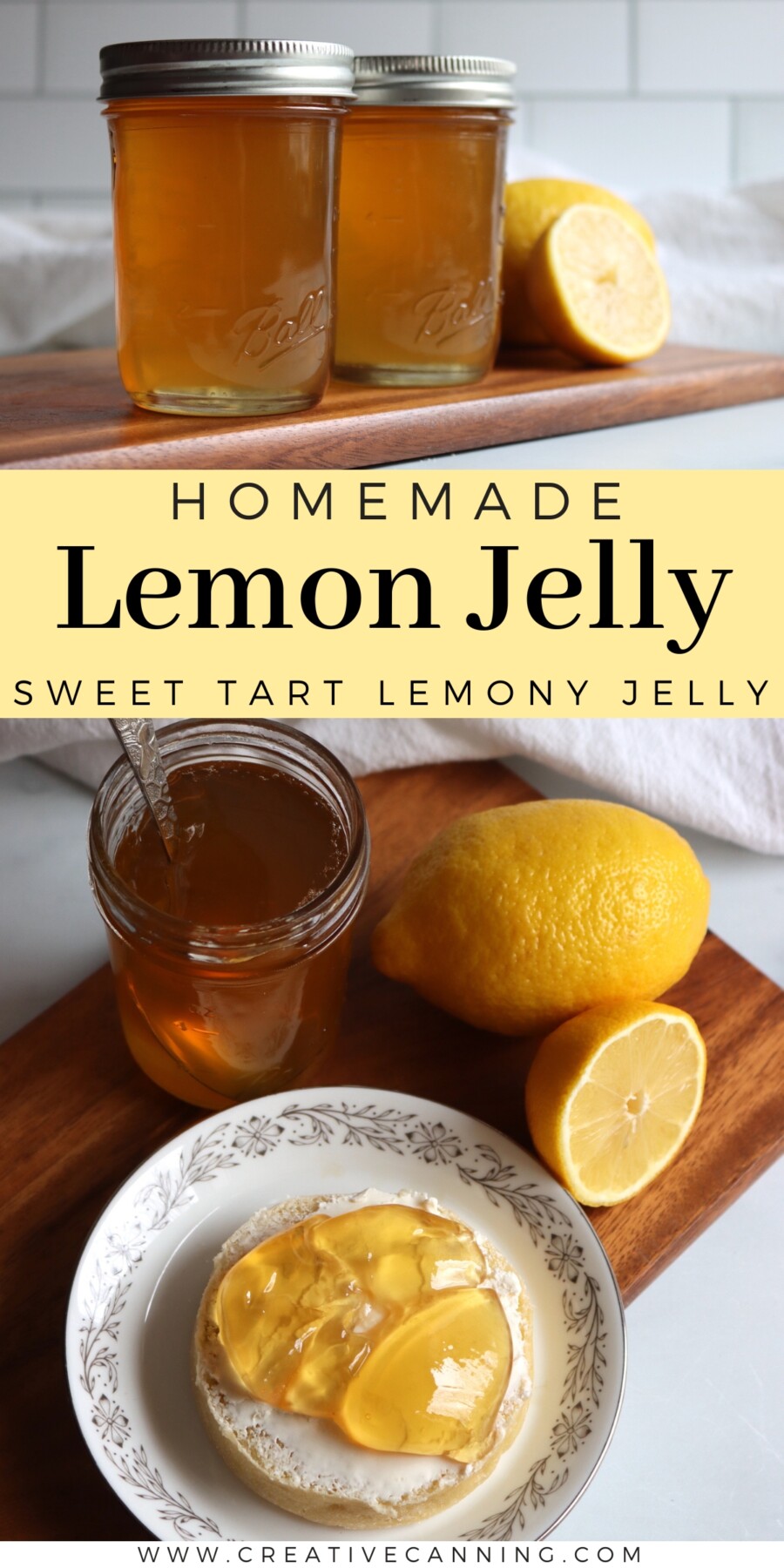
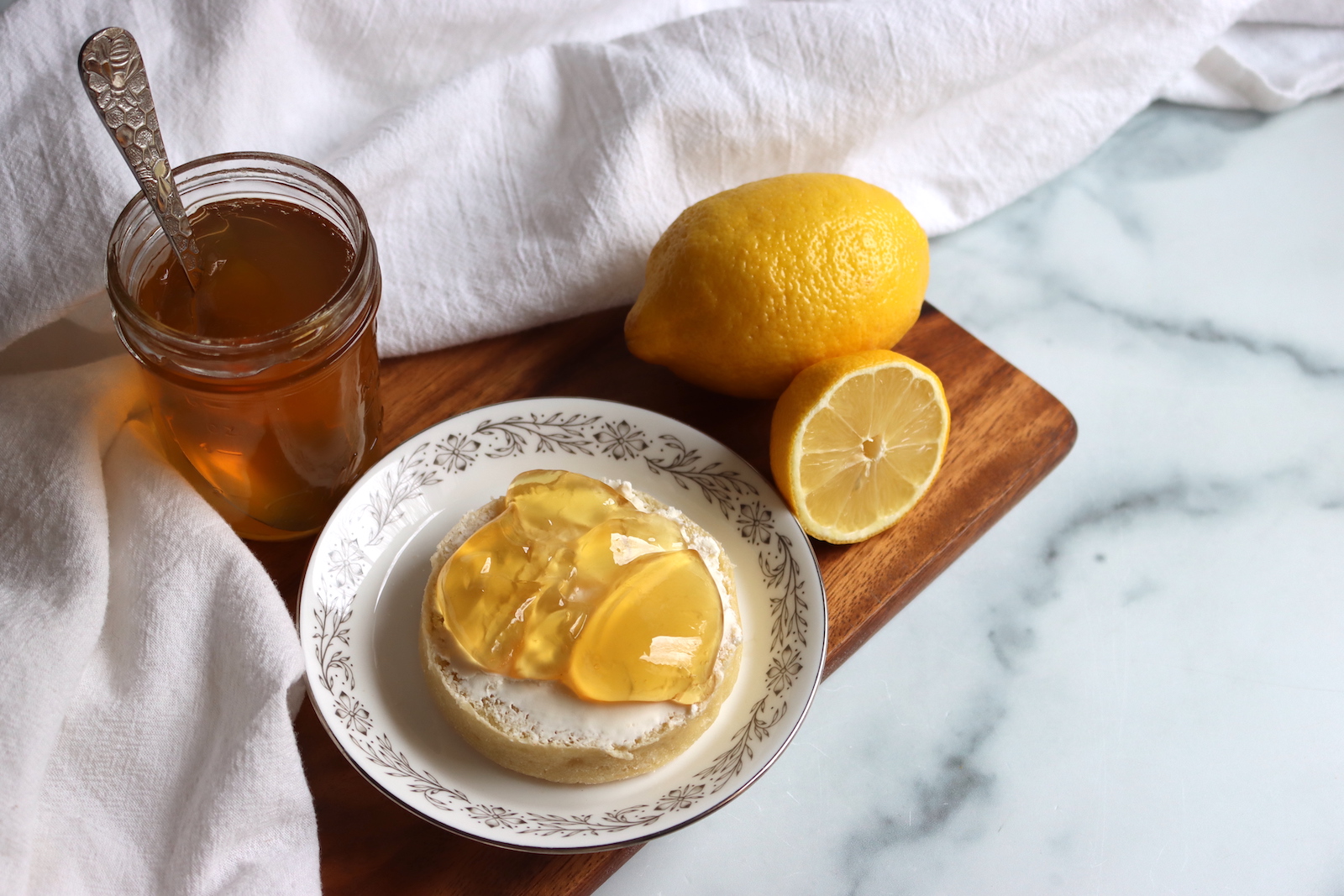
Lemon jelly delivers pure, bright citrus flavor without a single bit of peel in sight. If you love lemon marmalade but have family members who can’t handle the chewy peel, this is your solution: all that sunny lemon flavor in a smooth, spreadable jelly that even picky eaters will devour.
Unlike most fruit jellies that require extracting juice from whole fruit, lemon jelly uses the peel for flavor during the cooking process, then strains everything out. You get the aromatic oils from the zest infused into the juice, creating a jelly that tastes more intensely lemony than one made from juice alone. The result is a bright, tart-sweet spread that captures everything you love about lemons.
This recipe has been reviewed for safety and accuracy by a Master Food Preserver certified through the University of Cornell Cooperative Extension.
This recipe is adapted from the All New Ball Book of Canning and Preserving. Ball has included pectin to make this recipe foolproof, but experienced jelly makers should know that lemons are naturally high in pectin. You can absolutely make this without added pectin by cooking the juice and sugar to 220°F (about 8 to 10 minutes of hard boiling), and the batch pictured was made exactly that way with a beautiful set.
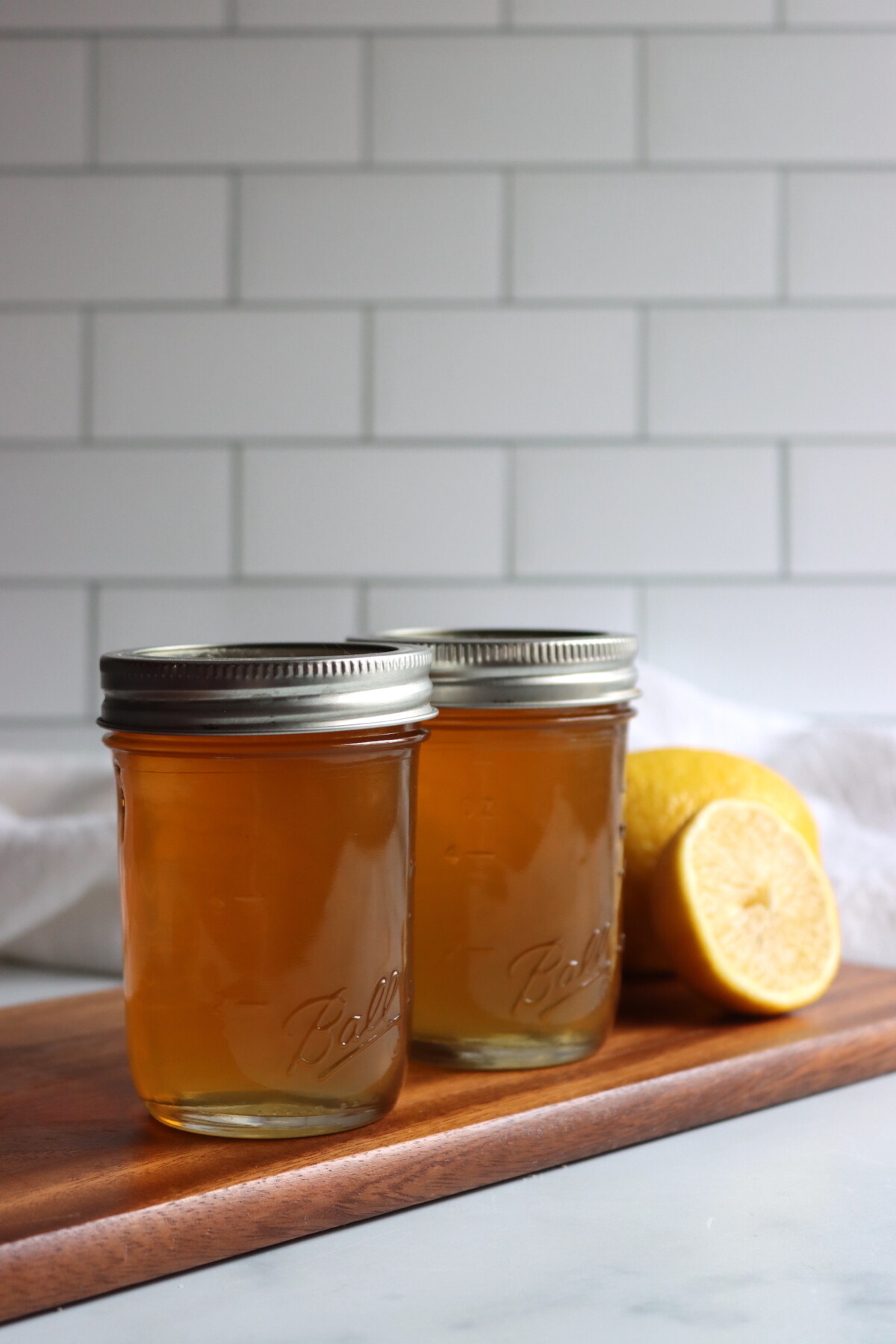
This is a small batch recipe, yielding about 5 to 6 quarter pints (2-3 half pints) using half a box of regular pectin or 3 tablespoons of Ball Flex Batch pectin. If you want a larger batch, simply double all ingredients for a yield of 10 to 12 quarter pints (or 6 to 6 half pints).
Without pectin, your yields are lower, and you get a more intense jelly. Expect about 4 quarter pints or 2 half pints from a batch.
Notes from My Kitchen

My husband loves all things lemon and is a huge fan of my lemon marmalade. My kids, though, love lemon but can’t handle the peel. They’re devoted fans of my strawberry jelly and peach jelly, so I knew this one would be a hit the moment I saw it. Pure lemon flavor in a form that everyone at the table will eat.
The small batch size is actually perfect for our family since it lets me make just enough to enjoy without committing a dozen jars to one flavor. The jelly sets up beautifully and has that bright, sunny lemon taste that makes breakfast feel like a treat. It’s become one of those recipes I make several times each winter when lemons are in season and at their best.
Quick Look at the Recipe
- Recipe Name: Lemon Jelly
- Recipe Type: Jelly
- Canning Method: Water Bath Canning
- Prep Time: About 30 minutes active, plus 3 hours straining time
- Cook Time: About 20 minutes
- Canning Time: 10 minutes for half pints or quarter pints
- Yield: About 2 to 3 half pints or 4 to 6 quarter pints, see notes
- Jar Sizes: Pints, half pints or quarter pints
- Headspace: 1/4 inch
- Ingredients Overview: Lemons, water, pectin (optional), and sugar
- Safe Canning Recipe Source: All New Ball Book of Canning and Preserving
- Difficulty: Moderate (requires careful prep and straining)
- Similar Recipes: This recipe has a similar flavor to other lemon canning recipes, like lemonade concentrate and lemon curd, but it’s similar in process to simple homemade jellies that can be made with or without pectin, like raspberry jelly or blackberry jelly.
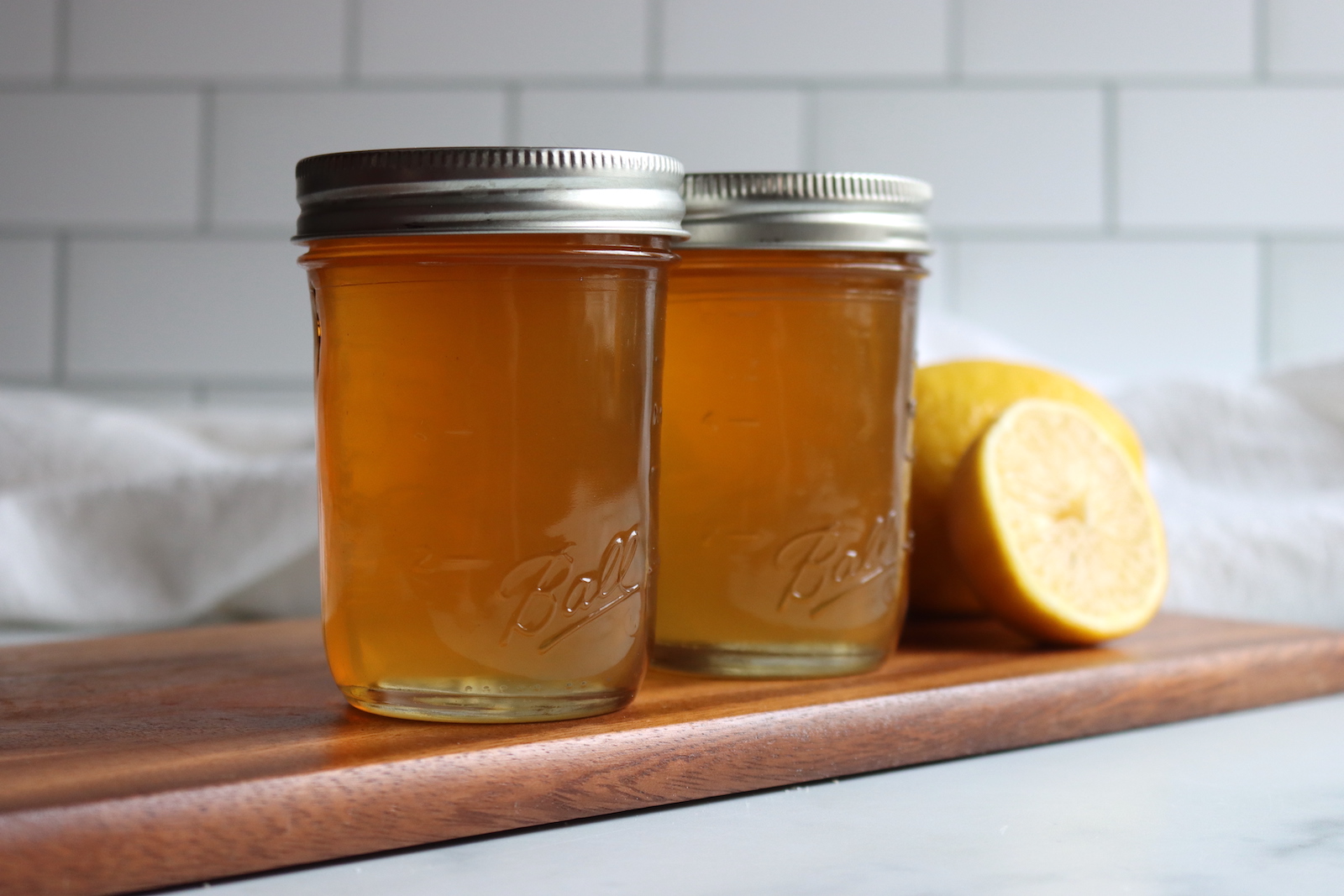
Ingredients
This recipe uses a combination of lemon peel (for aromatic oils) and lemon flesh and juice (for flavor and natural pectin). The peel infuses the cooking liquid with that unmistakable lemon fragrance, then everything gets strained out for a perfectly clear jelly.
- Lemons: 7 to 8 large lemons (about 2 pounds). Look for lemons with bright yellow skin and no soft spots. You’ll use both the peel and the flesh, so choose fruit that looks good inside and out. If you can find organic lemons, even better, since you’ll be extracting flavor from the peel.
- Water: 1½ cups of water helps extract juice and flavor during the initial simmer.
- Pectin: 3 tablespoons of Ball Classic Pectin or Flex Batch pectin (this is half a standard box). The pectin ensures a reliable set every time, but you can skip it if you’re an experienced pectin free jelly maker.
- Sugar: 2 cups of granulated sugar to 2 cups strained lemon. This 1:1 ratio is the classic ratio for jellies. The high sugar content balances the tartness of the lemons and helps achieve the proper gel.
To double the batch for 4 half pints, simply use 14 to 16 lemons, 3 cups water, 6 tablespoons pectin (a full box), and 4 cups sugar.
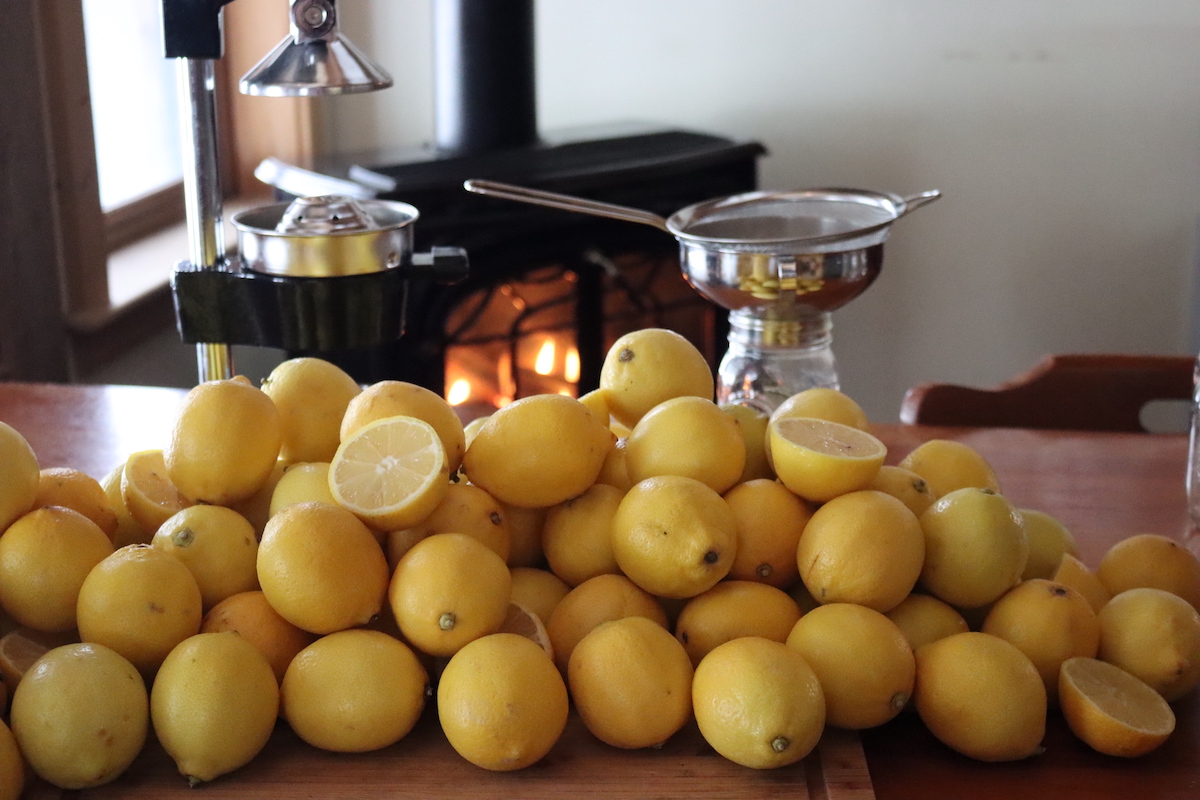
Step by Step Instructions
This is a process heavy recipe, so don’t skip steps.
Prepare the Lemons
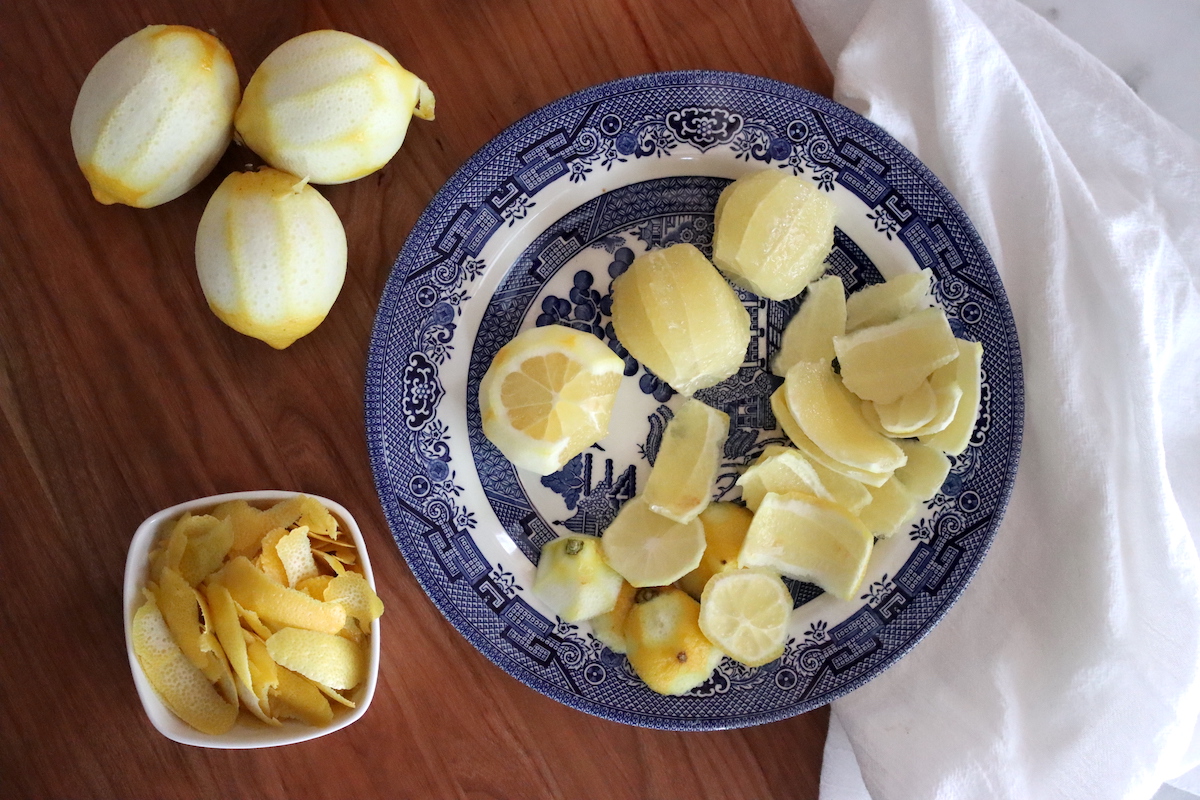
Scrub the lemons thoroughly, rinse well, and pat dry. Using a vegetable peeler, carefully strip the yellow rind from the lemons, avoiding the bitter white pith. You want to measure about 1 cup of peel strips, which is about 2 1/2 ounces by weight.
Work slowly and take only the colored part of the peel.
Remove the Pith and Chop
Using a sharp, thin-bladed knife, cut a ¼-inch slice from each end of the peeled lemons. Stand each lemon flat-end down on a cutting board and remove the remaining white pith in strips, cutting from top to bottom and following the curve of the fruit.
Coarsely chop the peeled lemons, reserving all the juice, to measure about 2 cups total. (Ball’s says you get 4 cups pulp here from fewer lemons, but I didn’t get anywhere near that. I actually had to add lemons to their original get to 2 cups.)
Cook the Lemon Mixture
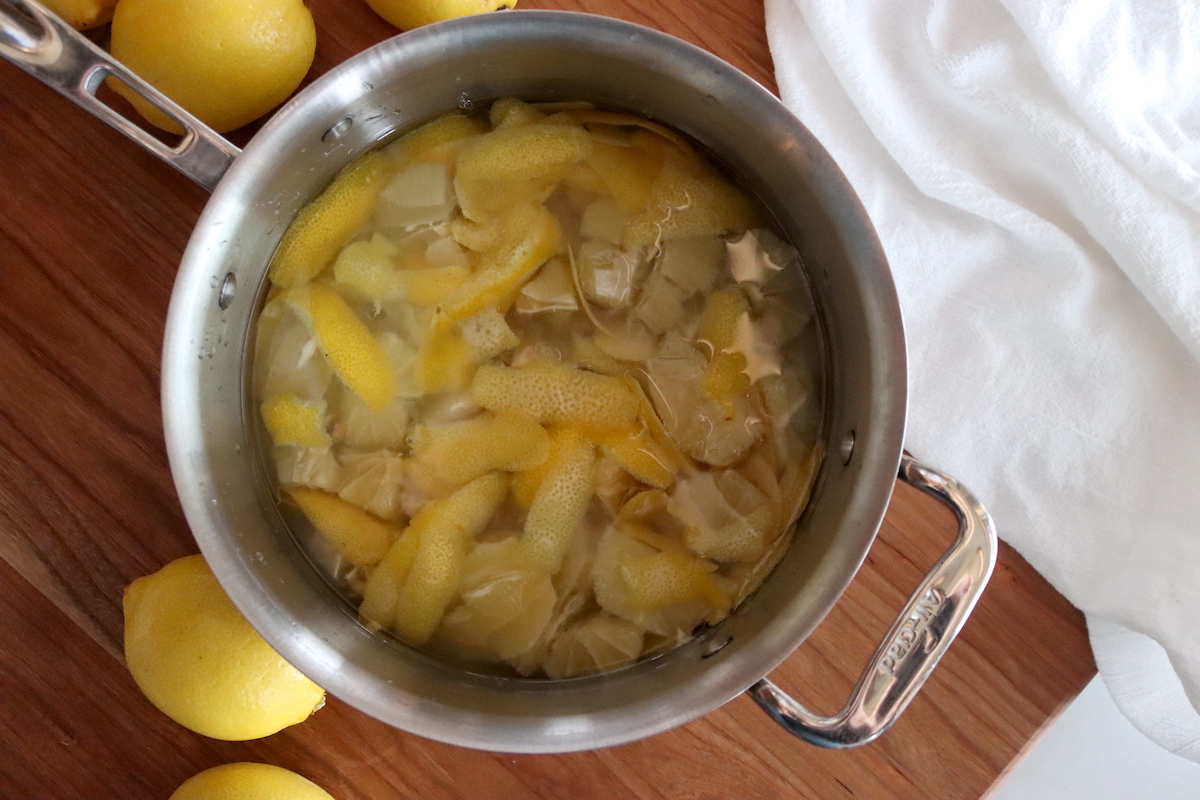
Combine the lemon peel strips, chopped lemon with its juice, and water in a 4-quart stainless steel or enameled Dutch oven (avoid reactive metals like aluminum or uncoated copper).
Bring to a boil over high heat, then reduce heat, cover, and simmer for 15 minutes.
Strain the Juice
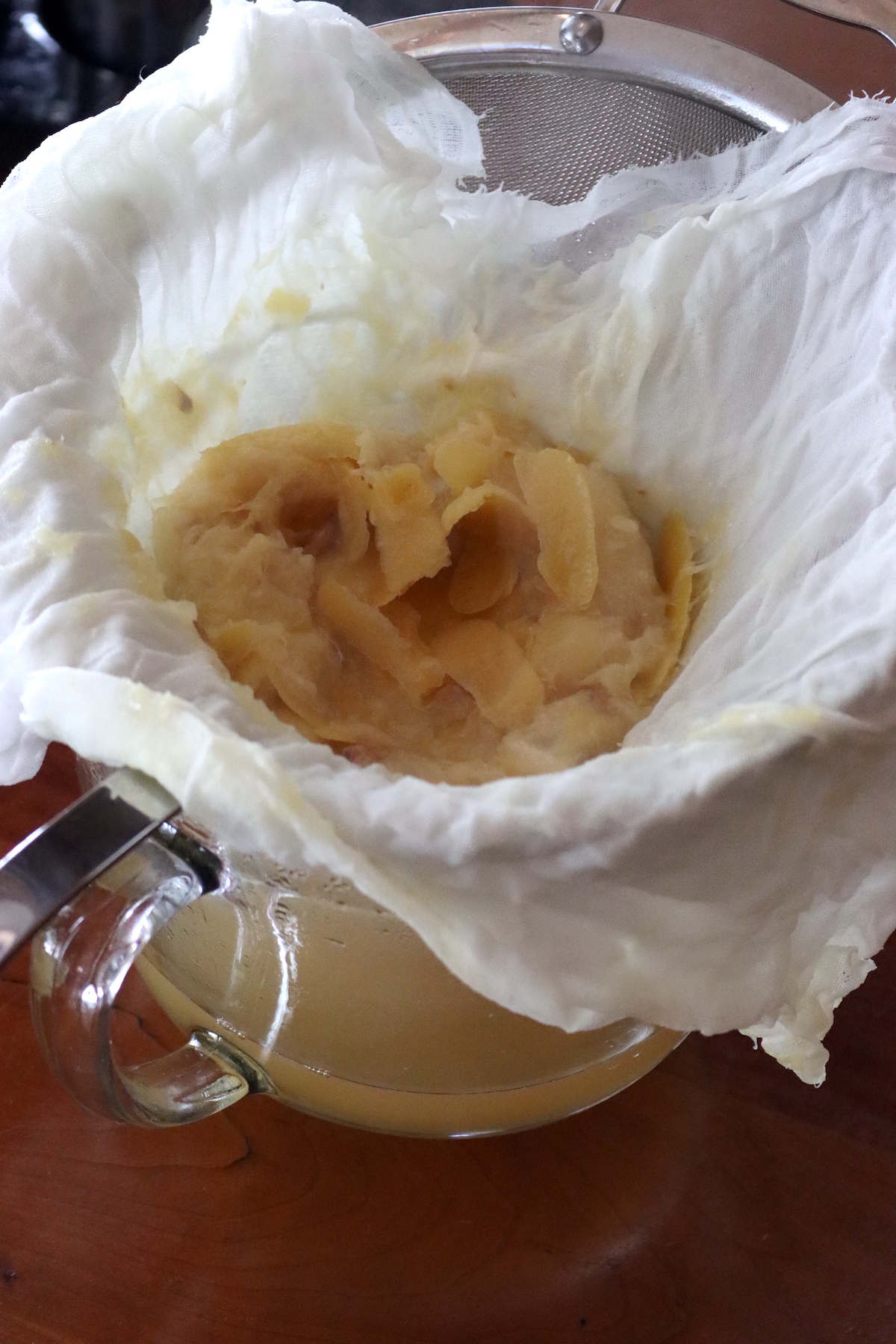
Line a large wire-mesh strainer with 3 layers of dampened cheesecloth and place over a large bowl. Pour the lemon mixture into the strainer and let drain for at least 3 hours, or overnight in the refrigerator.
You should get about 2 cups of juice. Discard the solids.
Cook the Jelly
Combine the lemon juice and pectin (if using) in a 4-quart stainless steel or enameled pot. Bring the mixture to a full rolling boil (a boil that cannot be stirred down) over high heat, stirring constantly.
Add the sugar, stirring to dissolve. Return to a full rolling boil and boil hard for 1 minute, stirring constantly. Remove from heat and skim off foam if necessary.
(If making this recipe without pectin, combine the sugar and lemon juice immediately and bring to a hard boil. Cook to 220 degrees F, testing for set on a plate that’s been chilled in the freezer.)
Fill Jars
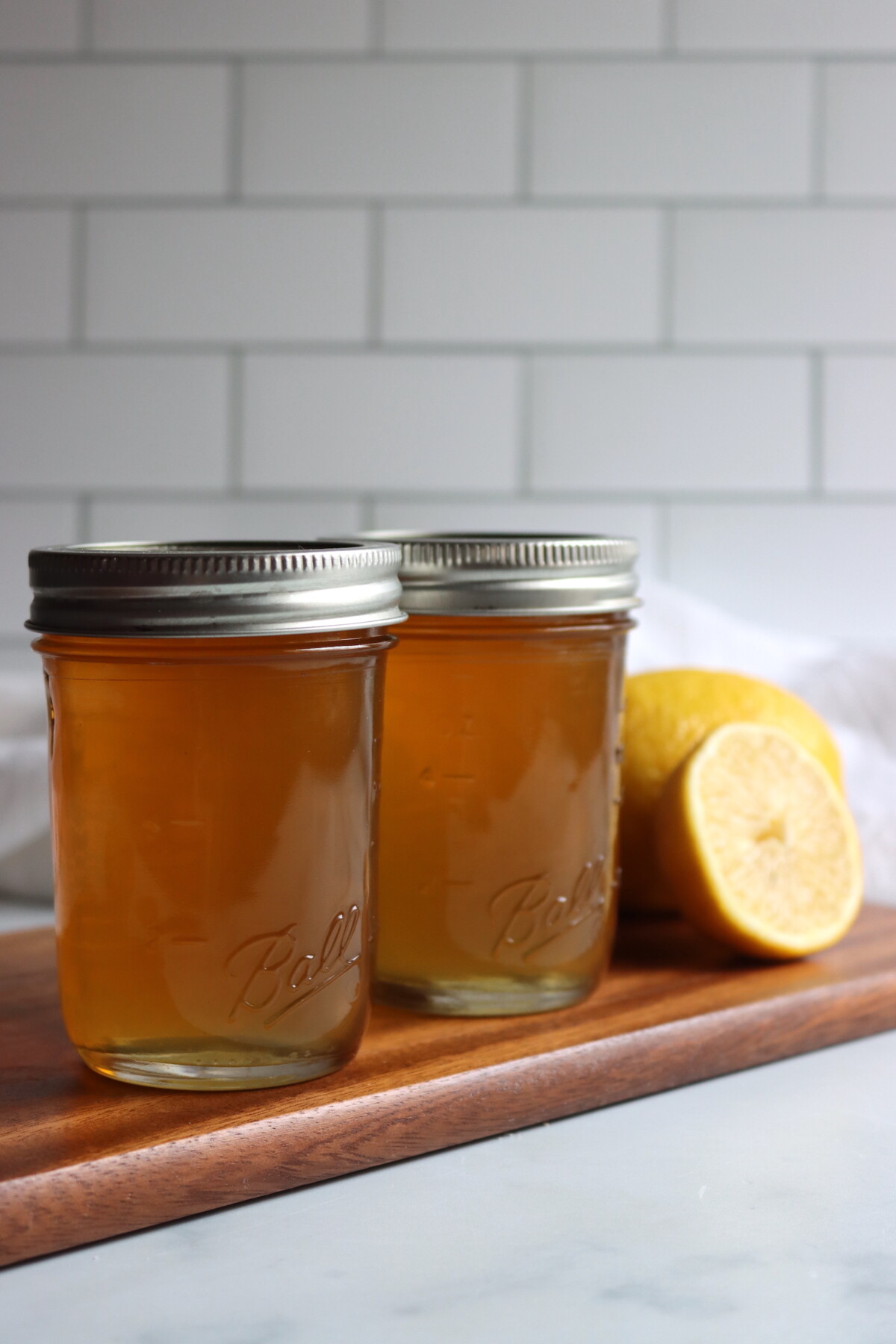
Ladle hot jelly into prepared jars, leaving ¼ inch headspace. Wipe jar rims with a damp cloth, center lids on jars, and apply bands to fingertip tight.
Setting Notes
Lemons are naturally high in pectin, which is why Ball’s added pectin makes this recipe virtually foolproof. With the pectin, you simply cook for 1 minute at a full rolling boil after adding the sugar, and the jelly will set reliably.
If you’re an experienced jelly maker and want to skip the pectin, you can make this recipe without it. After adding the sugar, boil hard for 8 to 10 minutes until the mixture reaches 220°F (at sea level) or passes the sheeting test. The batch pictured was made this way and set beautifully. Without pectin, expect a slightly softer, more delicate set.
With pectin, your yield is slightly higher. This recipe yields exactly 2 half pints without pectin, or closer to 3 half pints with added pectin.
Canning Lemon Jelly
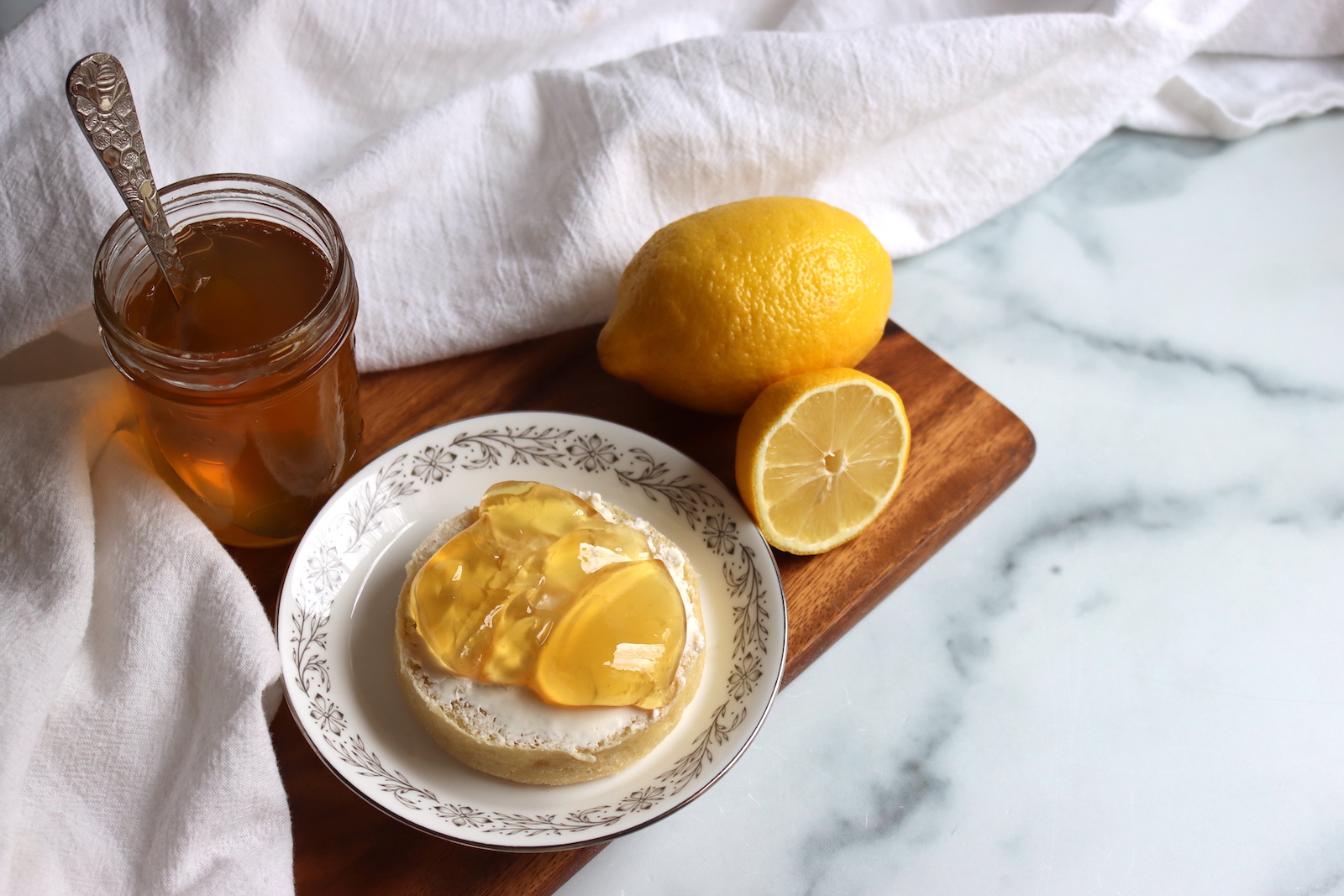
Without canning, lemon jelly will keep in the refrigerator for up to 3 weeks or in the freezer for up to 6 months. For shelf-stable storage, process the filled jars in a boiling water bath.
Prepare your water bath canner while you’re making the jelly. Lower the filled jars into the canner, making sure they’re covered by at least 1 inch of water. Process for 10 minutes for either half pints or quarter pints, adjusting for altitude as noted below.
After processing, turn off the heat and let the jars stand in the canner for 5 minutes before removing. Let the jars cool undisturbed on a towel-lined counter for 12 to 24 hours. Check seals before storing, and refrigerate any jars that didn’t seal for immediate use.
Altitude Adjustments
For water bath canning, processing times increase at higher elevations:
- 0 to 6,000 feet: 10 minutes
- Above 6,000 feet: 15 minutes
Yield Notes
This small batch recipe yields about 3 half pints (or 6 quarter pints) using half a box of pectin. For a larger batch of 4 half pints, double all ingredients: 12 lemons, 3 cups water, 6 tablespoons pectin (a full box), and 8 cups sugar.
Without pectin, the yield is slightly lower and it takes a bit of patience/experience to get a good set. Expect 2 half pints without added pectin.
The small batch size is perfect for trying a new recipe or for making small gifts. Quarter pint jars make especially nice gifts and are a great size for sampling without committing to a full jar.
Serving Ideas
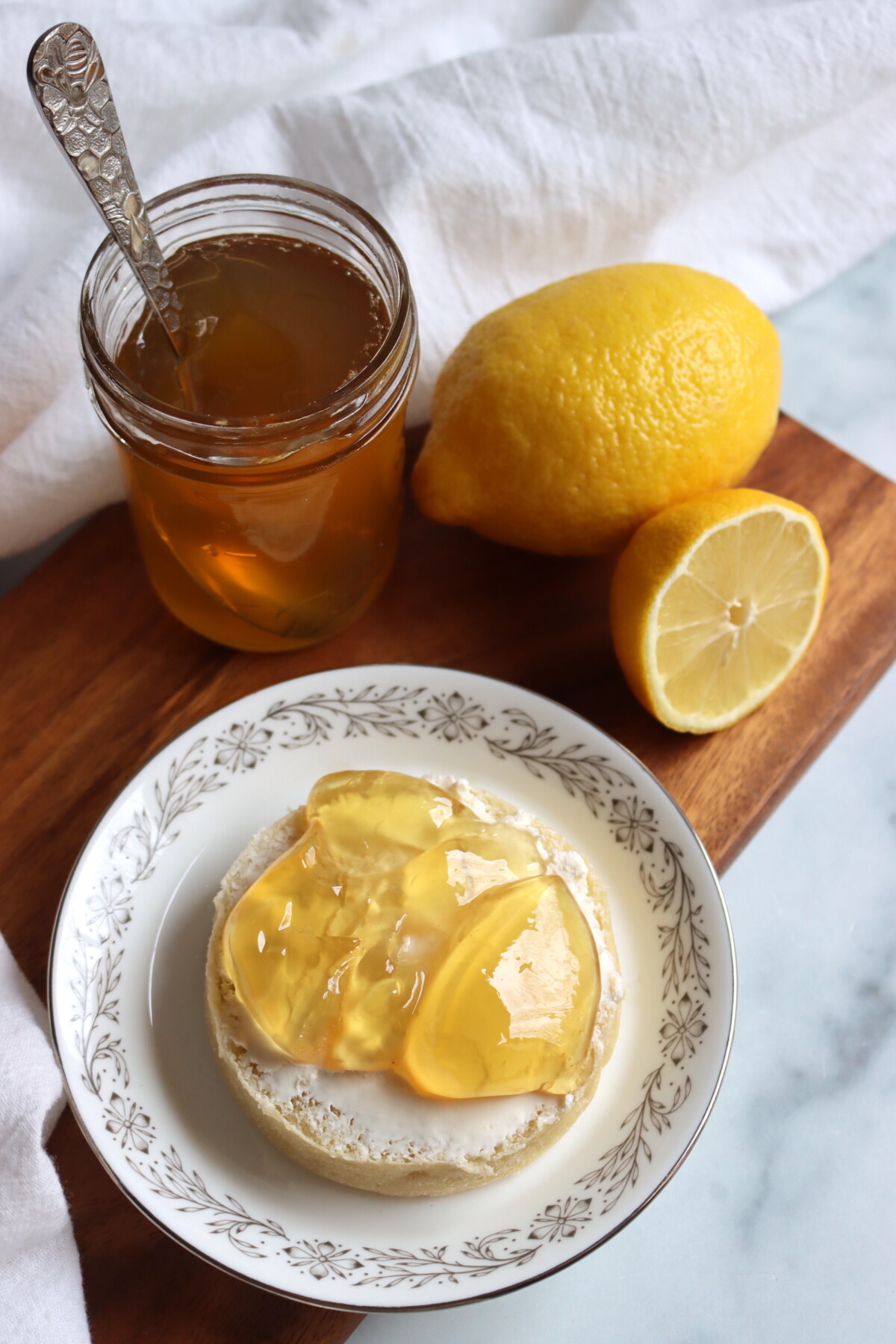
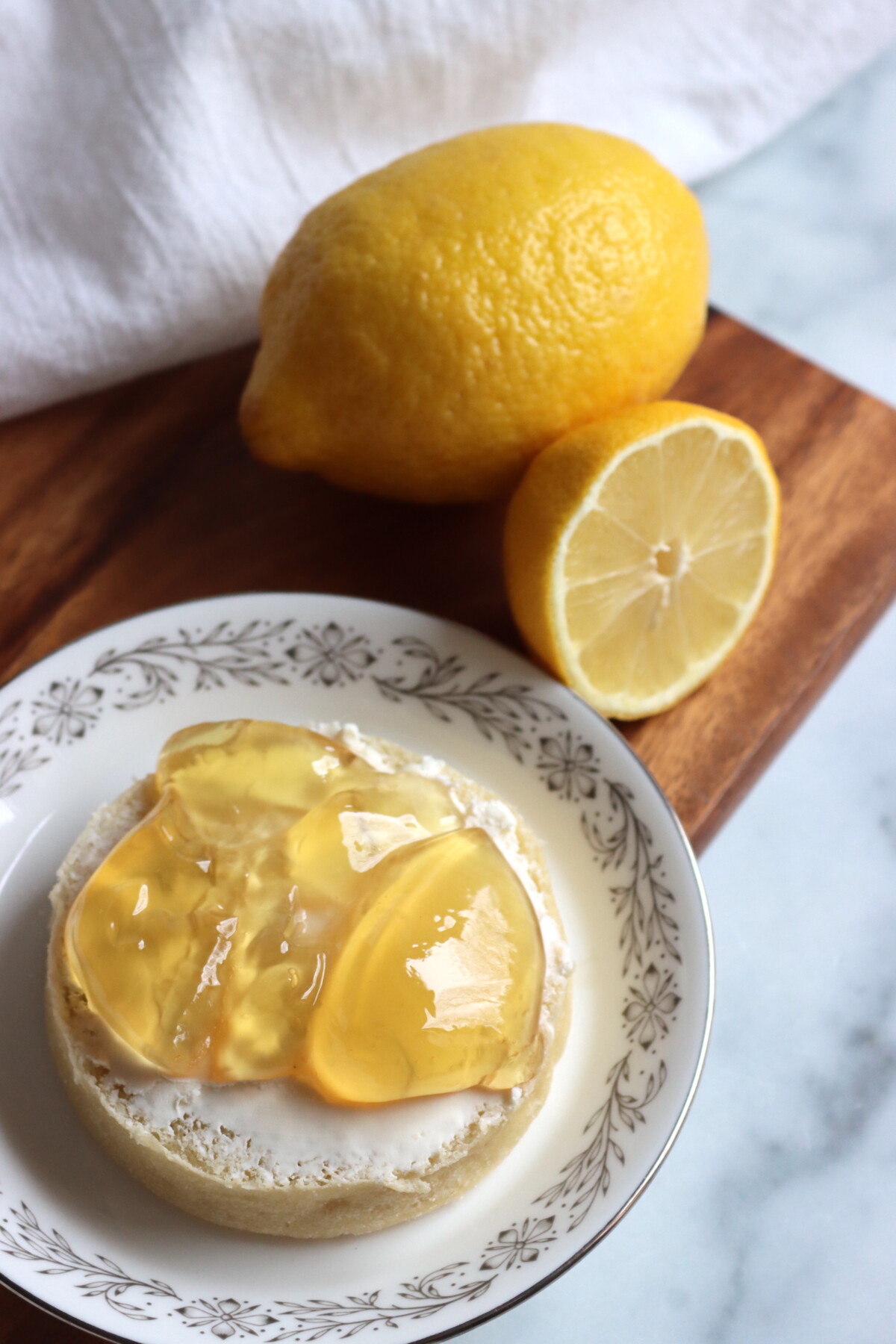
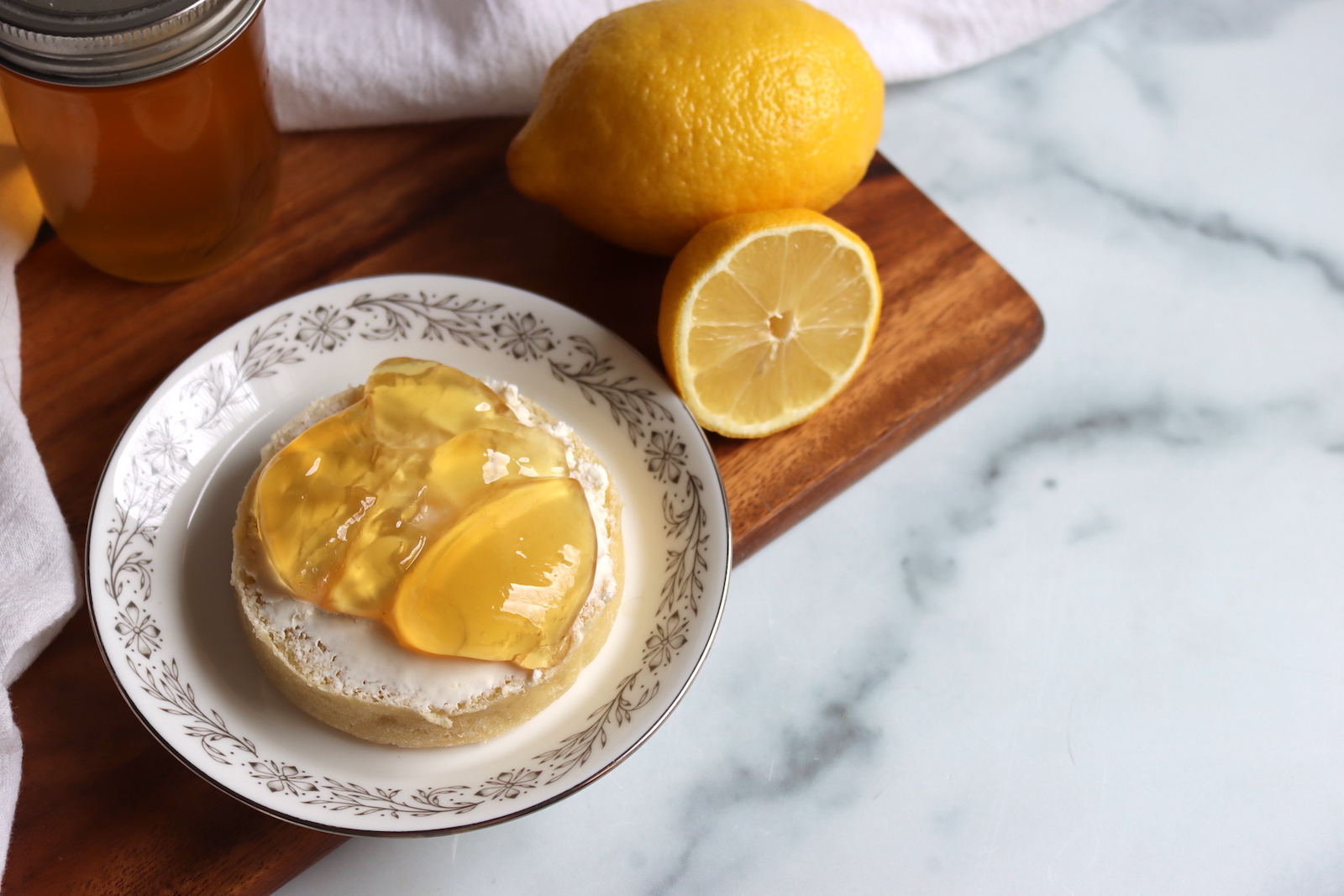
Lemon jelly is wonderful on toast, biscuits, or scones, and it pairs beautifully with cream cheese for an easy appetizer spread. The bright citrus flavor cuts through the richness of cream cheese or butter and makes everything taste fresher.
Try using lemon jelly as a glaze for poultry or fish: warm it gently and brush it over chicken or salmon during the last few minutes of roasting. It also makes an excellent filling for thumbprint cookies or between cake layers when you want a burst of citrus.
For a quick dessert, warm lemon jelly slightly and drizzle it over vanilla ice cream or pound cake. The tart sweetness is a perfect match for rich, creamy desserts.
Lemon Jelly FAQs
Yes! Lemons are naturally high in pectin. After adding the sugar, boil hard for 8 to 10 minutes until the mixture reaches 220°F or passes the sheeting test. Without pectin, the set will be slightly softer but still delicious. This method is best for experienced jelly makers comfortable with testing for gel point.
Lemon jelly strains out all solids for a perfectly smooth, clear spread. Lemon marmalade keeps thin strips of peel suspended throughout. Both have wonderful lemon flavor, but jelly is better for those who don’t enjoy the texture of peel in their spread.
This recipe uses whole lemons, not just juice, because the peel provides essential aromatic oils and flavor. If you wanted to use bottled juice, you would need a different recipe specifically designed for it. The fresh lemon process is what makes this jelly taste so much better than store-bought.
Yes! Ball includes a Simple Switch variation: follow the recipe exactly using lime juice and lime rind instead of lemon. The process and proportions are identical, and you’ll get a beautiful, tart lime jelly.
Yes! This recipe is excellent with meyer lemons, and gives you a sweeter, less acidic preserve that’s a bit milder on the palate.
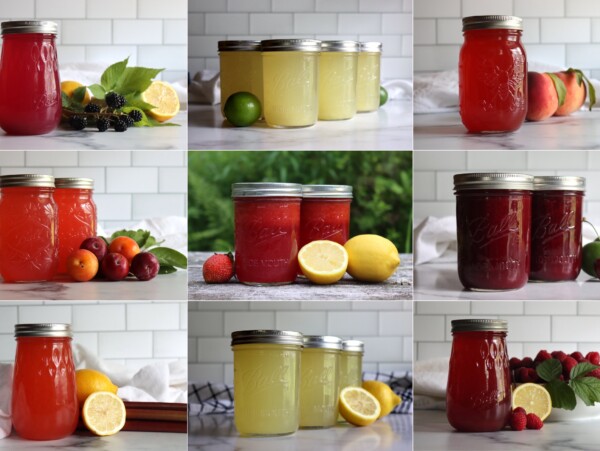
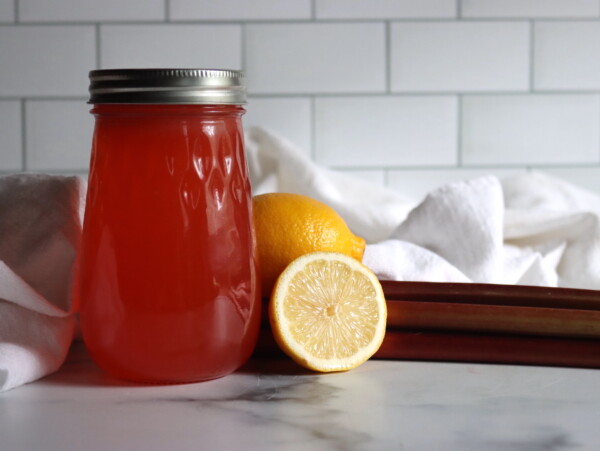
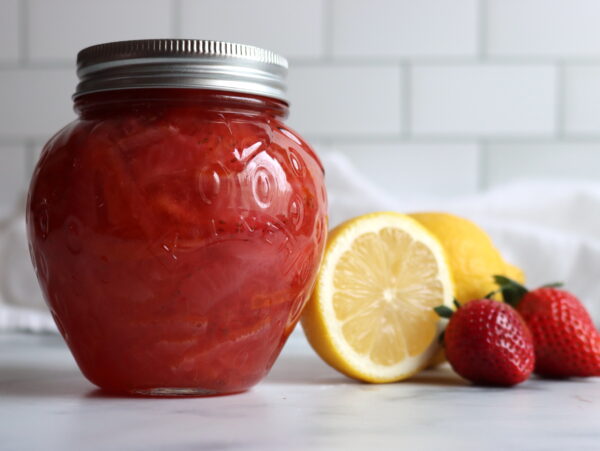
Lemon Canning Recipes
If you tried this Lemon Jelly recipe, or any other recipe on Creative Canning, leave a ⭐ star rating and let me know what you think in the 📝 comments below!
And make sure you stay in touch with me by following on social media!
Lemon Jelly
Equipment
- Half Pint or Quarter Pint Mason Jars
- Canning lids and bands
- Cheesecloth
- 4-Quart Stainless Steel or Enameled Pot
- Vegetable Peeler
Ingredients
- 2 lbs lemons
- 1½ cups water
- 3 Tbsp Powdered Pectin, Any brand, full sugar pectin, half a 1.75 ounce box (normally 6tbsp per box)
- 2 cups sugar, Adjust to your juice yield, 1:1 ratio
Instructions
- Scrub lemons thoroughly, rinse well, and pat dry. Using a vegetable peeler, carefully strip the yellow rind from the lemons, avoiding the bitter white pith, to measure about 1 cup of peel strips.
- Cut a 1/4-inch slice from each end of the peeled lemons. Stand each lemon flat-end down and remove the remaining white pith in strips, cutting from top to bottom following the curve of the fruit.
- Coarsely chop the peeled lemons, reserving all juice, to measure about 2 to 2 1/2 cups total.
- Combine lemon peel strips, chopped lemon with juice, and water in a 4-quart stainless steel or enameled pot. Bring to a boil, reduce heat, cover, and simmer for 15 minutes.
- Line a large wire-mesh strainer with 3 layers of dampened cheesecloth and place over a large bowl. Pour the lemon mixture into the strainer and let drain for at least 3 hours or overnight. You should get about 2 cups of juice. Measure, and adjust your sugar accordingly. You should add 1 cup sugar to every one cup of strained juice. Discard solids.
- Combine lemon juice and pectin in a 4-quart pot. Bring to a full rolling boil over high heat, stirring constantly. Add sugar (1:1 ratio to measured juice), stirring to dissolve. Return to a full rolling boil and boil hard for 1 minute, stirring constantly. Remove from heat and skim foam if necessary.
- Ladle hot jelly into prepared jars, leaving 1/4 inch headspace. Wipe rims, center lids on jars, and apply bands to fingertip tight.
- Process half pints or quarter pints in a boiling water bath canner for 10 minutes, adjusting for altitude. Turn off heat and let jars stand in canner for 5 minutes before removing.
Notes
Without Pectin
Lemons are naturally high in pectin. Experienced jelly makers can skip the added pectin: after adding sugar, boil hard for 8 to 10 minutes until the mixture reaches 220°F or passes the sheeting test. The set will be slightly softer but still excellent. Without pectin, this recipe yields a more intense jelly with a slightly lower yield of 2 half pints.Simple Switch: Lime Jelly
Follow the recipe exactly using lime juice and lime rind instead of lemon.Altitude Adjustments
- 0 to 6,000 feet: 10 minutes
- Above 6,000 feet: 15 minutes
Nutrition
Nutrition information is automatically calculated, so should only be used as an approximation.
Citrus Canning Recipes
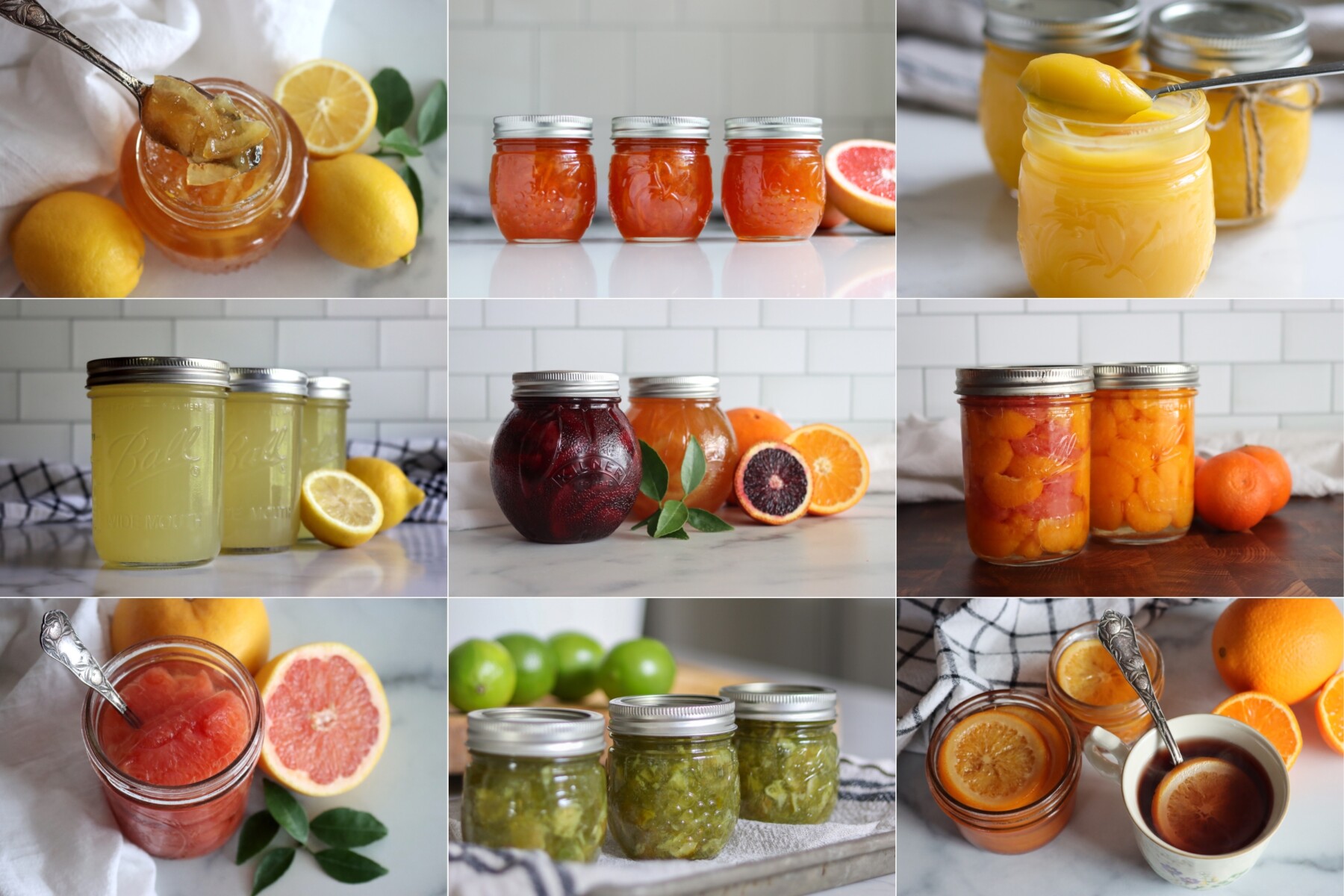
50+ Citrus Canning Recipes
Citrus canning recipes are one of my favorite ways to make winter feel a little less endless. When the days…
Find the perfect recipe
Searching for something else? Enter keywords to find the perfect recipe!