This post may contain affiliate links. Please see our disclosure policy.
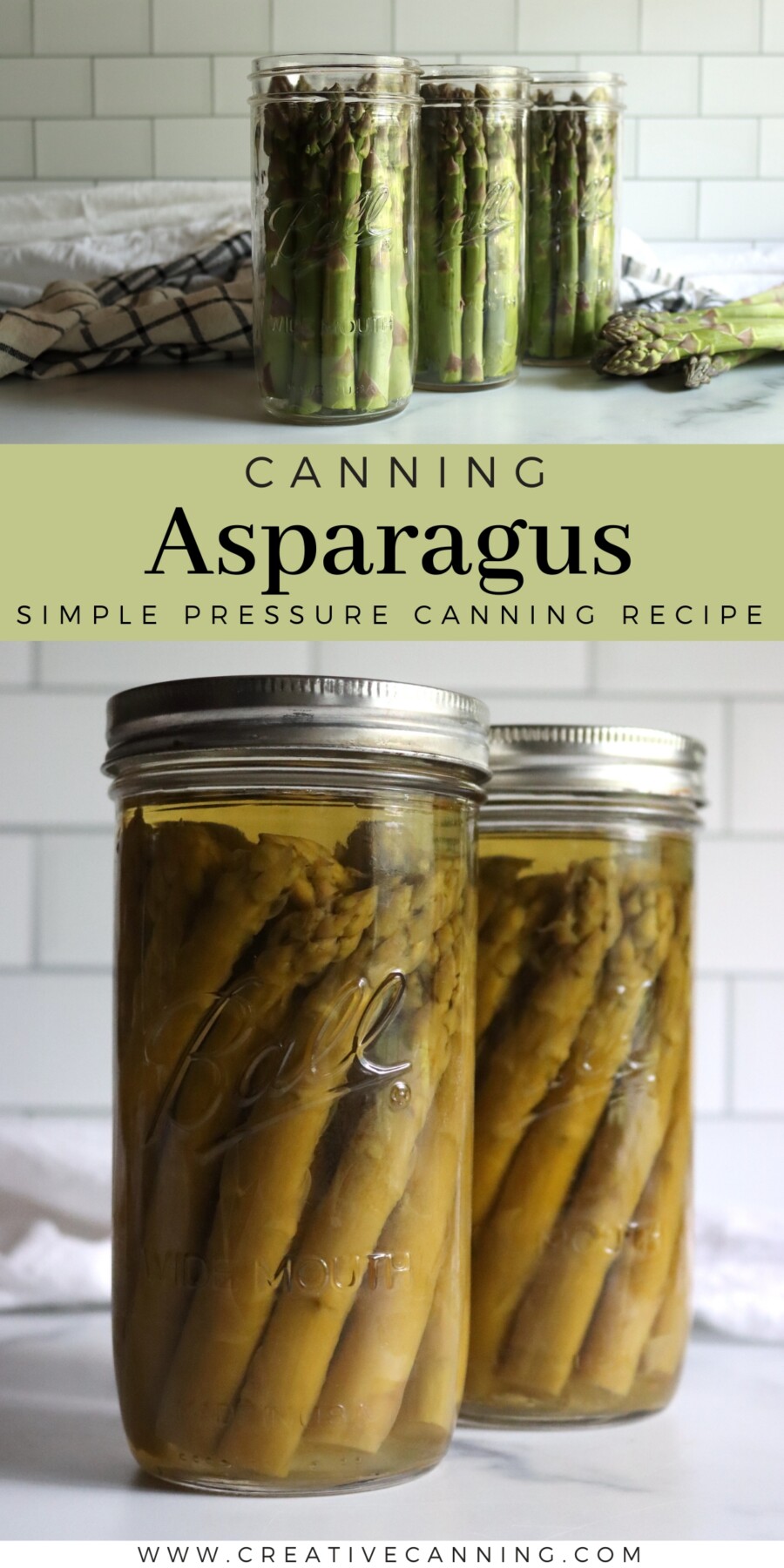
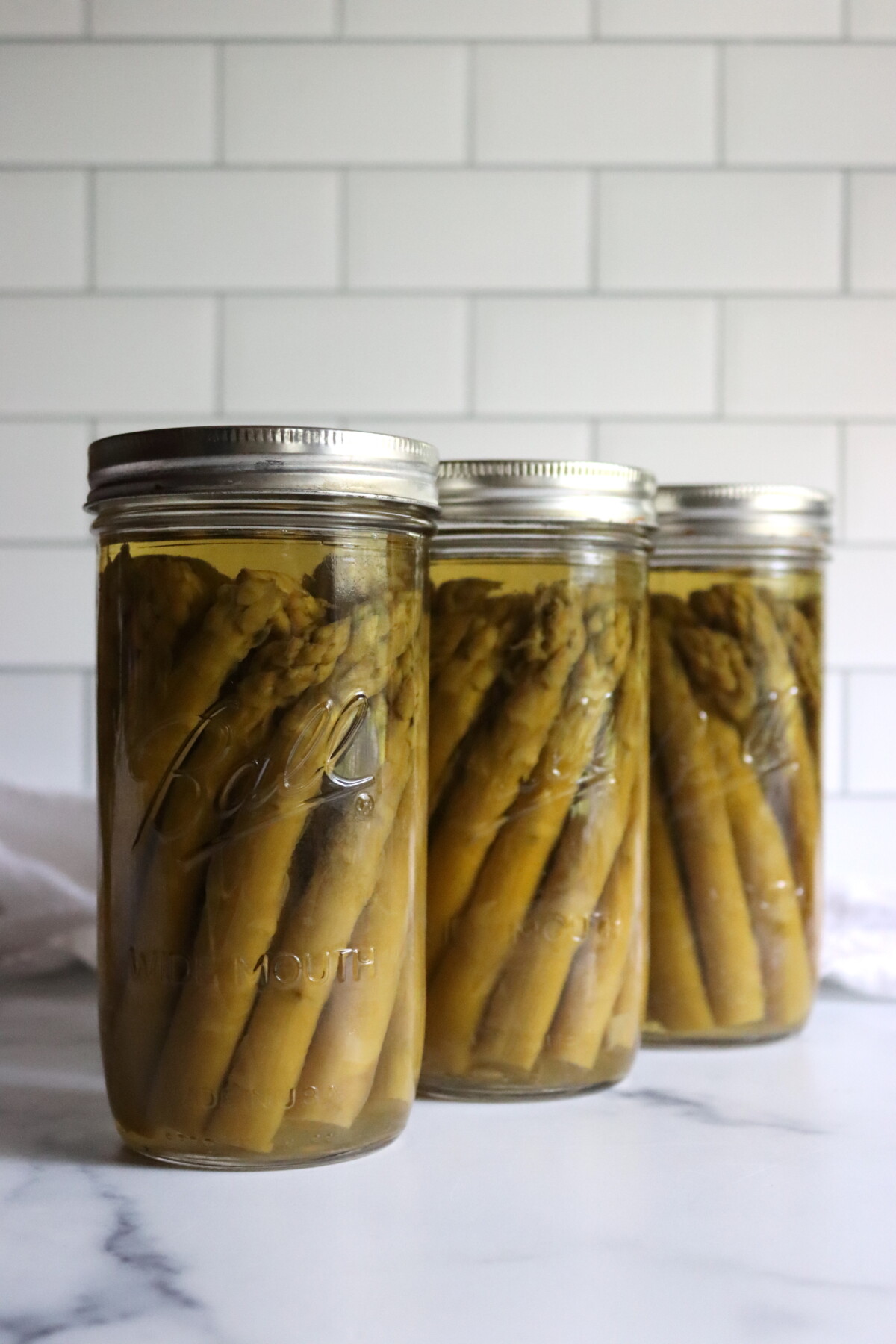
Canning Asparagus is one of my favorite ways to hang onto that short, sweet asparagus season. Those jars look so simple on the shelf, but they feel like a little luxury when spring is long gone and you want a quick vegetable side without a trip to the store.
This recipe has been reviewed for safety and accuracy by a Master Food Preserver certified through the University of Cornell Cooperative Extension.
This recipe comes from the National Center for Home Food Preservation (NCHFP), and it’s a tested, straightforward method for pressure canning asparagus spears or pieces. It’s a classic, no-frills recipe that focuses on safety and good texture, with options for either a hot pack or a raw pack.
For low-acid vegetables like asparagus, that matters, because safe canning requires a pressure canner and the correct processing time and pressure.
What I like most is that it’s flexible: you can can spears or cut pieces, and you can choose hot pack or raw pack depending on your workflow that day. Either way, you’re using boiling water as the canning liquid and keeping the ingredient list simple.
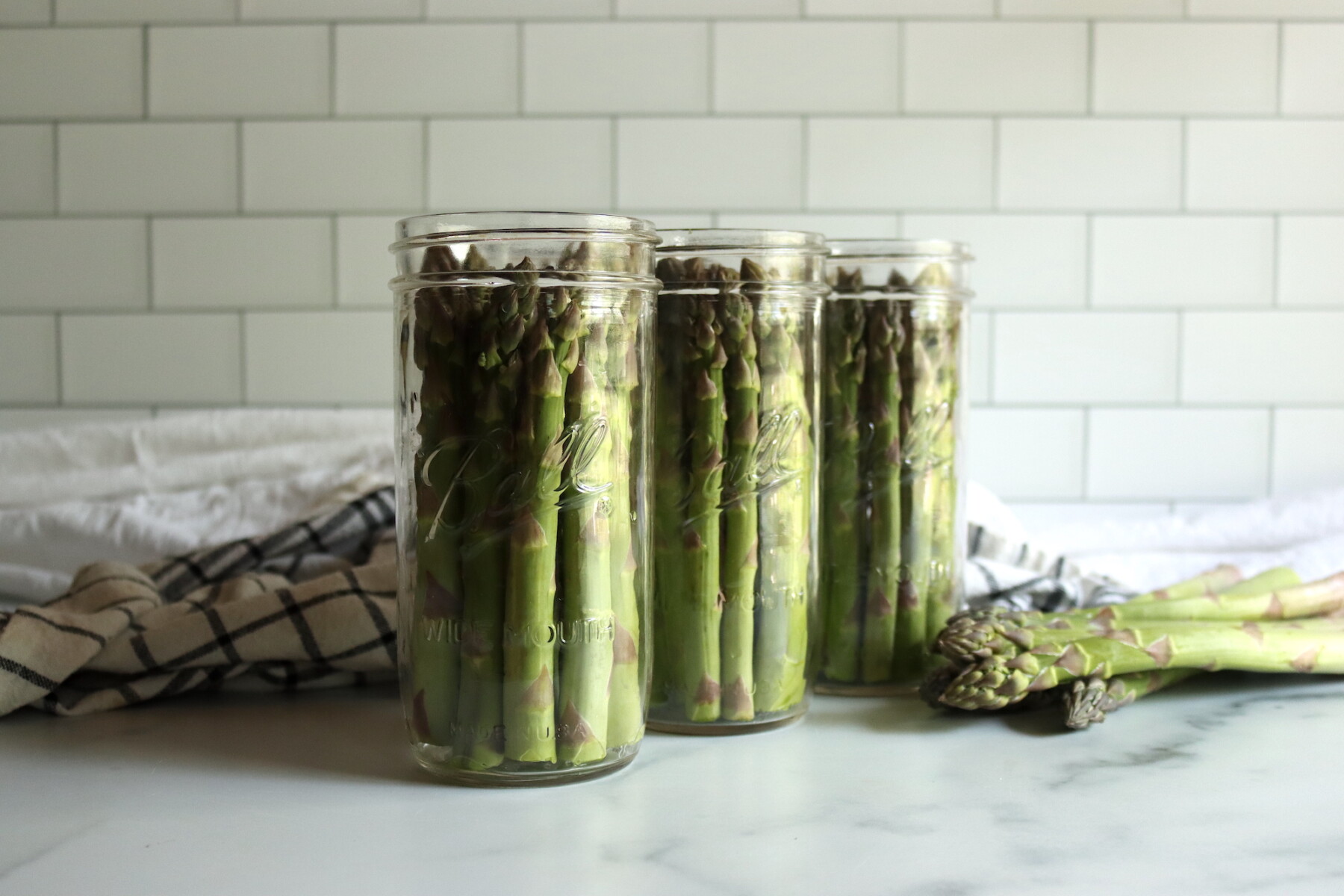
Personally, I like trimming the asparagus to the height of my jars and standing the spears tall with a raw pack. Hot pack is a bit more involved, and not worth the effort, when you can get great results with a simple raw pack.
Why you’ll love this recipe for canning asparagus!

For me, canned asparagus is pure nostalgia. When I was a kid, most of the vegetables we could afford were canned and inexpensive basics, either canned corn or canned green beans. Every once in a while, usually for birthdays or holidays, my mom would splurge on canned asparagus. I remember treating it like something special and savoring every bite, because it felt like the fanciest vegetable in the world.
Even now, though we grow fresh asparagus on our Vermont homestead, I still find myself craving that distinctly “canned asparagus” flavor. It’s not the same as fresh (fresh is crisp and bright, and honestly tastes like a totally different vegetable), but the canned version has its own appeal. These days my pantry is mostly home-canned food, and once our off-grid homestead asparagus patch finally started producing, canning asparagus felt like the perfect way to turn a spring harvest into something I can enjoy year-round.
Quick Look at the Recipe
- Recipe Name: Canning Asparagus (Spears or Pieces)
- Recipe Type: Pressure Canned Vegetable
- Canning Method: Pressure Canning
- Prep/Cook Time: About 1 to 2 hours (depending on trimming and pack style)
- Canning Time: 30 minutes for pints, 40 minutes for quarts (use quart times for tall pint and a half jars shown)
- Yield: Varies (planning estimate: about 3 1/2 pounds per quart, or about 16 pounds per 9 pints)
- Jar Sizes: Pint, Pint and a Half, or Quart
- Headspace: 1 inch
- Ingredients Overview: Asparagus, boiling water, optional salt
- Safe Canning Recipe Source: National Center for Home Food Preservation
- Difficulty: Easy, but you must use a pressure canner and follow the tested times and pressures.
- Similar Recipes: This method is very similar to pressure canning other plain vegetables in water, such as canning carrots or canning pumpkin.
Ingredients for Canning Asparagus
This is a simple, pantry-friendly canning project, but the prep work matters because asparagus can hide grit and tough stem ends.
- Asparagus: the vegetable you’re preserving, trimmed to remove tough portions
- Boiling water: the hot canning liquid used to cover the asparagus in the jars
- Canning salt (optional): added for flavor only (not for safety)
Substitutions or variations:
You can can asparagus as whole spears or cut it into one-inch pieces. You can also choose hot pack (briefly boil the asparagus before packing) or raw pack (pack raw spears tightly). Salt is optional; if you use it, use 1 teaspoon per quart for flavor.
How to Make Canning Asparagus
You’ll be working with clean jars, a pressure canner, and very hot water, so I like to set everything up first and then start prepping the asparagus.
Prepare a pressure canner by pre-heating it and washing jars before you begin.
Selecting and prepping the asparagus
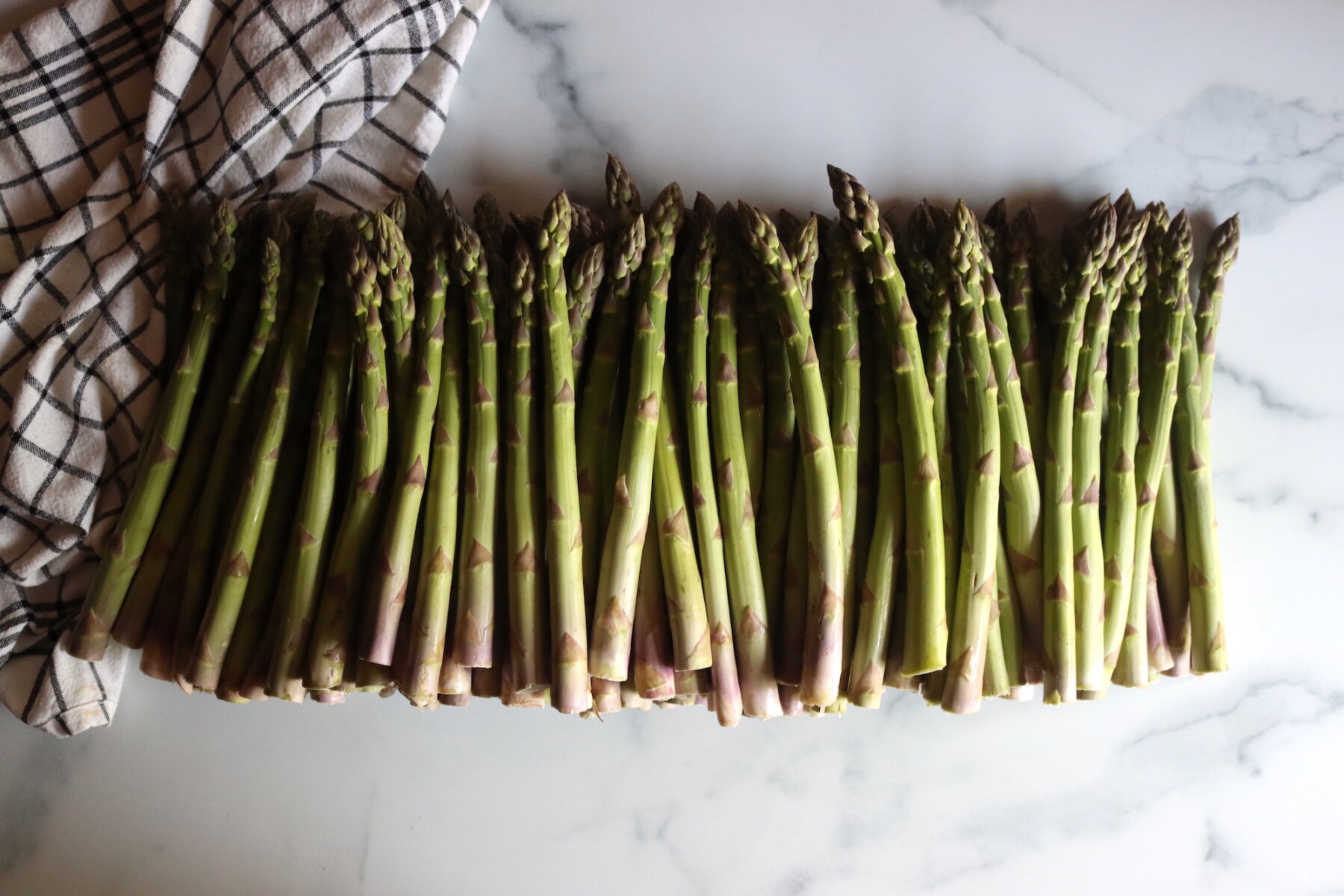
Choose tender, tight-tipped spears and trim away the tough stem ends. Wash the spears, trim off tough scales, break off tough stems, then wash again. Decide whether you’re canning spears or cutting the asparagus into one-inch pieces.
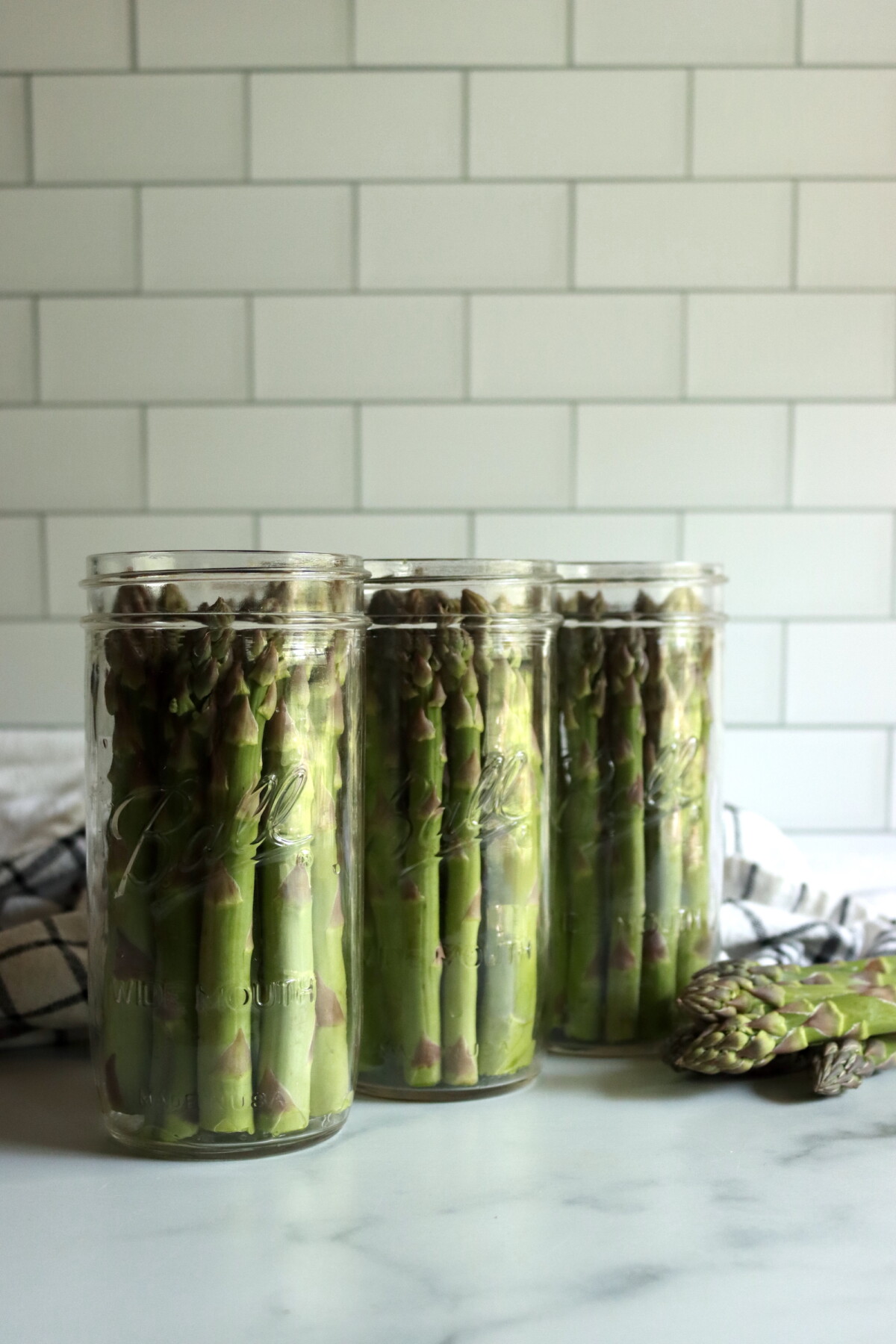
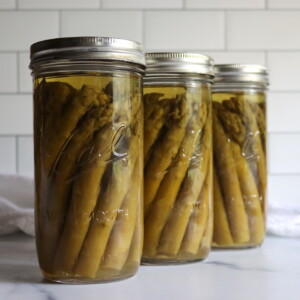
If you’re canning spears, cut the spears to 1 1/2 inches shorter than your jars. You’ll want them to stay submerged, and this recipe calls for a 1 inch final headspace. The spears should end about 1/2 inch below the liquid line.
Hot pack option
For hot pack, cover the asparagus with boiling water and boil for two to three minutes. Then loosely fill hot jars with the hot asparagus, keeping one inch of headspace.
Raw pack option
For raw pack, pack raw asparagus into jars as tightly as possible without crushing it, keeping 1 1/2 inchs of headspace above the spears.
Add liquid and finish filling jars
If you want, add salt to the jars for flavor. Most sources reccomend 1 tsp per quart or 1/2 tsp per pint, but adjust to your tastes. It’s for flavor, not preservation.
Then pour in boiling water, still keeping one inch of headspace. Remove air bubbles, wipe rims, apply lids, and get the jars into the canner promptly.
Canning Asparagus
Because asparagus is a low-acid vegetable, this recipe must be processed in a pressure canner (not a water bath). Follow your canner manufacturer’s directions for adding water, venting, and bringing the canner up to pressure.
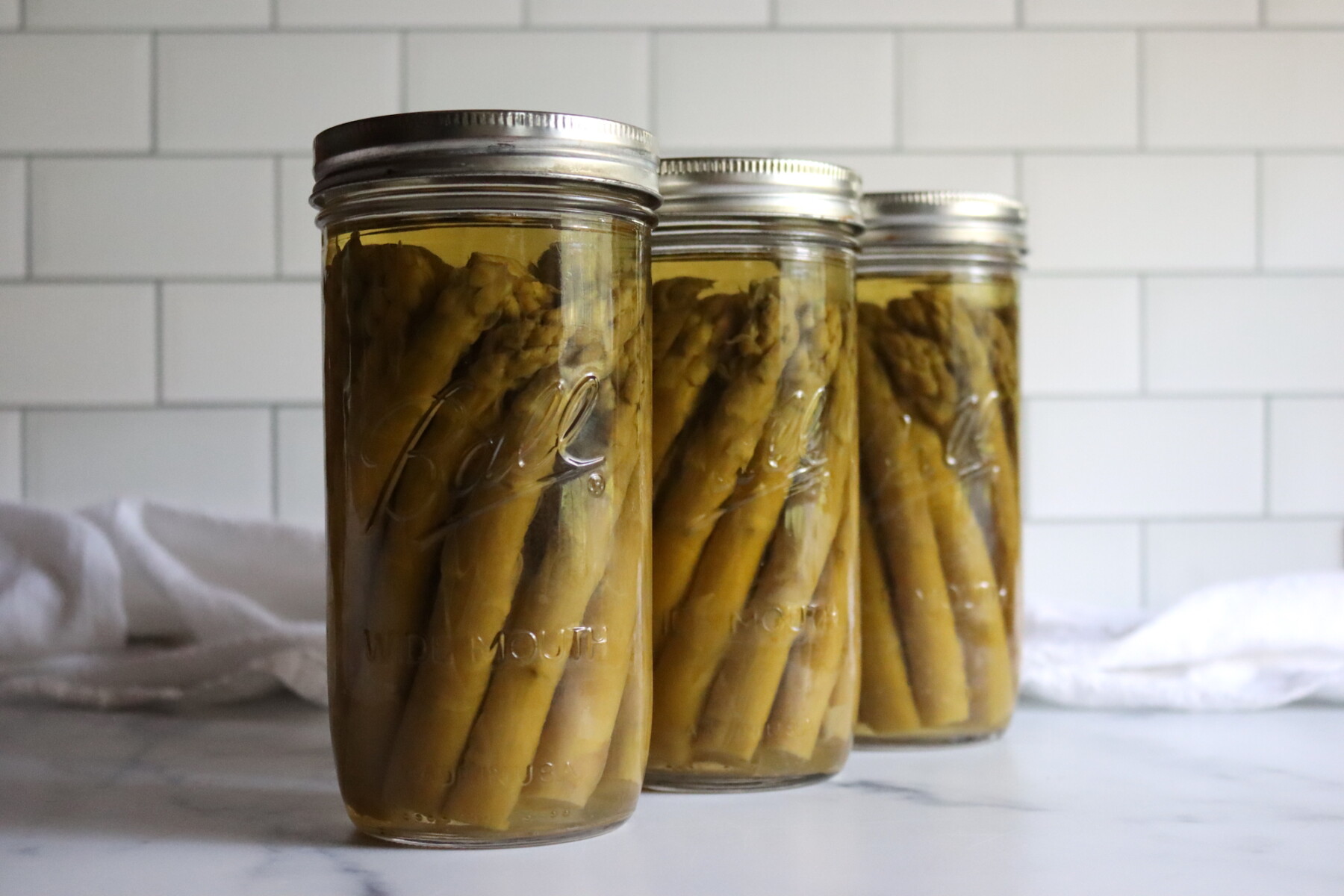
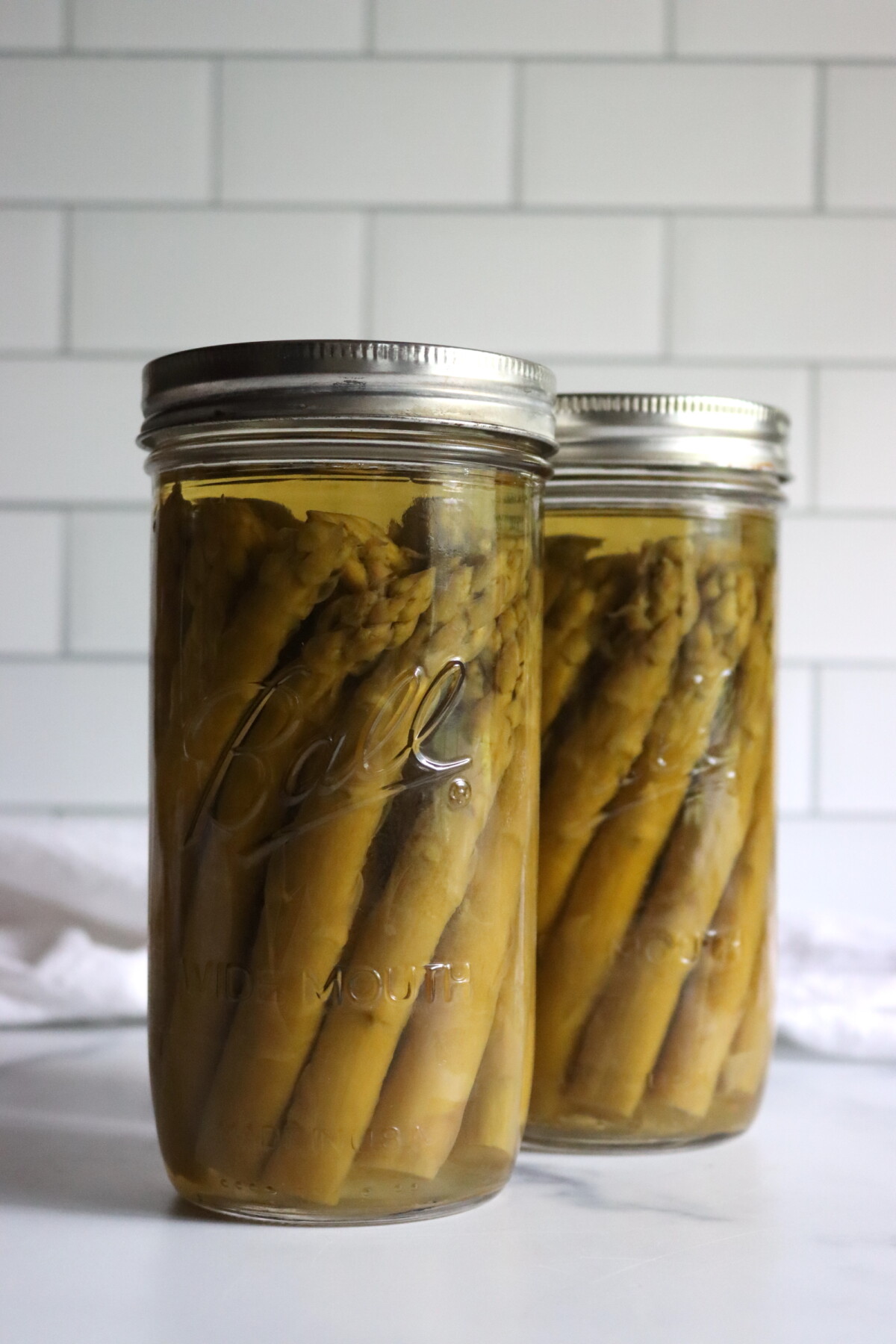
Process pint jars for 30 minutes or quart jars for 40 minutes, using the pressure that matches your canner type and altitude (see below). The processing times are the same for both hot pack and raw pack.
After processing, let the canner depressurize naturally, wait the recommended time before opening, and remove jars to cool undisturbed. Once cooled, check seals, label, and store.
Altitude Adjustments
With pressure canning, the processing times stay the same at higher altitudes, but the pressures change. Here are the altitude adjustments for pressure canning:
For dial gauge pressure canners:
- 0 to 2,000 feet in elevation – 11 lbs pressure
- 2,001 to 4,000 feet in elevation – 12 lbs pressure
- 4,001 to 6,000 feet in elevation – 13 lbs pressure
- 6,001 to 8,000 feet in elevation – 14 lbs pressure
For weighted gauge pressure canners:
- 0 to 1,000 feet in elevation – 10 lbs pressure
- Above 1,000 feet – 15 lbs pressure
Yield Notes
Asparagus is one of those canning projects where the yield depends a lot on spear thickness, how tightly you pack, and whether you’re doing spears or pieces, but the NCHFP gives some really helpful planning numbers.
For a full pressure canner load, plan on:
- About 24 to 25 pounds of asparagus for 7 quarts
- About 16 pounds of asparagus for 9 pints
They also note that a 31-pound crate typically yields about 7 to 12 quarts, and that works out to an average of about 3 1/2 pounds of asparagus per quart jar.
What about pint-and-a-half jars?
Pint-and-a-half jars (the “extra tall pints”) hold 24 ounces, which is one and a half pints, or three-quarters of a quart. Using the NCHFP’s average yield per quart as a guide:
- Estimated asparagus per pint-and-a-half jar: about 2 1/2 to 2 3/4 pounds
That’s not an exact measurement (asparagus never packs perfectly consistently), but it’s a really solid planning estimate if you’re buying or harvesting specifically for those tall jars.
Serving Ideas
Warm a jar and serve asparagus with butter, lemon, and black pepper as an instant side dish.
Drain well and add to casseroles, creamy soups, quiche, or a quick skillet pasta where you want tender vegetables fast.
Chop and fold into potato salad or egg salad for a springy twist, or blend into a creamy asparagus soup base with stock and a splash of cream.
Asparagus Canning FAQs
No. Asparagus is a low-acid vegetable, so it needs pressure canning for safe shelf storage.
Both are tested options and both use the same processing times. Hot pack briefly boils the asparagus before packing, while raw pack skips that step and packs raw spears tightly. Personally, I don’t notice a difference in the final product, so I always raw pack asparagus.
Salt is optional and included for flavor only. You can add small amounts of dry spices to the jars for added flavor, but I usually season the spears on serving so
If you’re canning asparagus spears, jar choice makes the whole project easier. You can technically use either pints or quarts, but the shape of the jar matters just as much as the size.
For spears, straight-sided jars are the easiest because you can slip the stalks in neatly without fighting a narrowing “shoulder” near the top. Wide-mouth jars help too, but the real key is a jar with straight walls so the spears pack upright and come back out cleanly later.
If you like the look of tall, tidy spears, there’s one jar style that used to be perfect: Ball’s pint-and-a-half jars (often called extra tall pints). They were just the right height for asparagus spears, and I used to love them for this. Ball doesn’t make them anymore, but you can still find similar pint-and-a-half style jars from brands like Kilner or Azure Standard these days. They’re a really nice option when you want that “spears standing straight in the jar” look without jumping all the way up to quarts.
That said, if you’re canning asparagus pieces instead of spears, you don’t have to overthink it. Pieces pack easily, and any standard pint or quart jar works just fine, even jars with shoulders.
Asparagus Canning Recipes
If you tried this recipe for pressure canning asparagus, or any other recipe on Creative Canning, leave a ⭐ star rating and let me know what you think in the 📝 comments below!
And make sure you stay in touch with me by following on social media!
Canning Asparagus
Equipment
Ingredients
- 24 1/2 pounds asparagus, spears or cut into 1-inch pieces
- Boiling water, for covering asparagus in jars
- Canning salt, optional, 1 teaspoon per quart
Instructions
- Prepare a pressure canner according to the manufacturer’s directions and heat clean quart jars.
- Wash asparagus well, trim off tough scales, snap off tough stem ends, then wash again. Leave as spears (trim to fit jars) or cut into 1-inch pieces.
- For raw pack (recommended), pack raw asparagus tightly into hot quart jars without crushing, leaving 1 1/2 inches of headspace.
- For hot pack, cover asparagus with boiling water and boil 2 to 3 minutes. Loosely fill hot quart jars with hot asparagus, leaving 1 1/2 inch of headspace.
- If using salt, add 1 teaspoon to each quart jar. Pour boiling water over the asparagus, filling to 1 inch of headspace (1/2 inch over the spears). Remove air bubbles, adjust headspace if needed, wipe rims, and apply lids.
- Process in a pressure canner for 40 minutes (quarts) or 30 minutes (pints), using the correct pressure for your canner type and altitude (see notes). When processing is complete, let the canner depressurize naturally, then remove jars and cool undisturbed for 12 to 24 hours. Check seals, label, and store.
Notes
Yield Notes
Yield varies with spear thickness and how tightly you pack jars. For planning, estimate about 3 1/2 lb asparagus per quart. A full canner load takes about 24 1/2 lb for 7 quarts or 16 lb for 9 pints. A pint-and-a-half jar (24 oz) holds 3/4 quart, so plan on roughly 2 1/2 to 2 3/4 lb asparagus per pint-and-a-half jar.Pressure Canning Altitude Adjustments
With pressure canning, the processing times stay the same at higher altitudes, but the pressures change. Here are the altitude adjustments for pressure canning: For dial gauge pressure canners:- 0 to 2,000 feet in elevation – 11 lbs pressure
- 2,001 to 4,000 feet in elevation – 12 lbs pressure
- 4,001 to 6,000 feet in elevation – 13 lbs pressure
- 6,001 to 8,000 feet in elevation – 14 lbs pressure
- 0 to 1,000 feet in elevation – 10 lbs pressure
- Above 1,000 feet – 15 lbs pressure
Nutrition
Nutrition information is automatically calculated, so should only be used as an approximation.
Vegetable Canning Recipes
Find the perfect recipe
Searching for something else? Enter keywords to find the perfect recipe!