This post may contain affiliate links. Please see our disclosure policy.
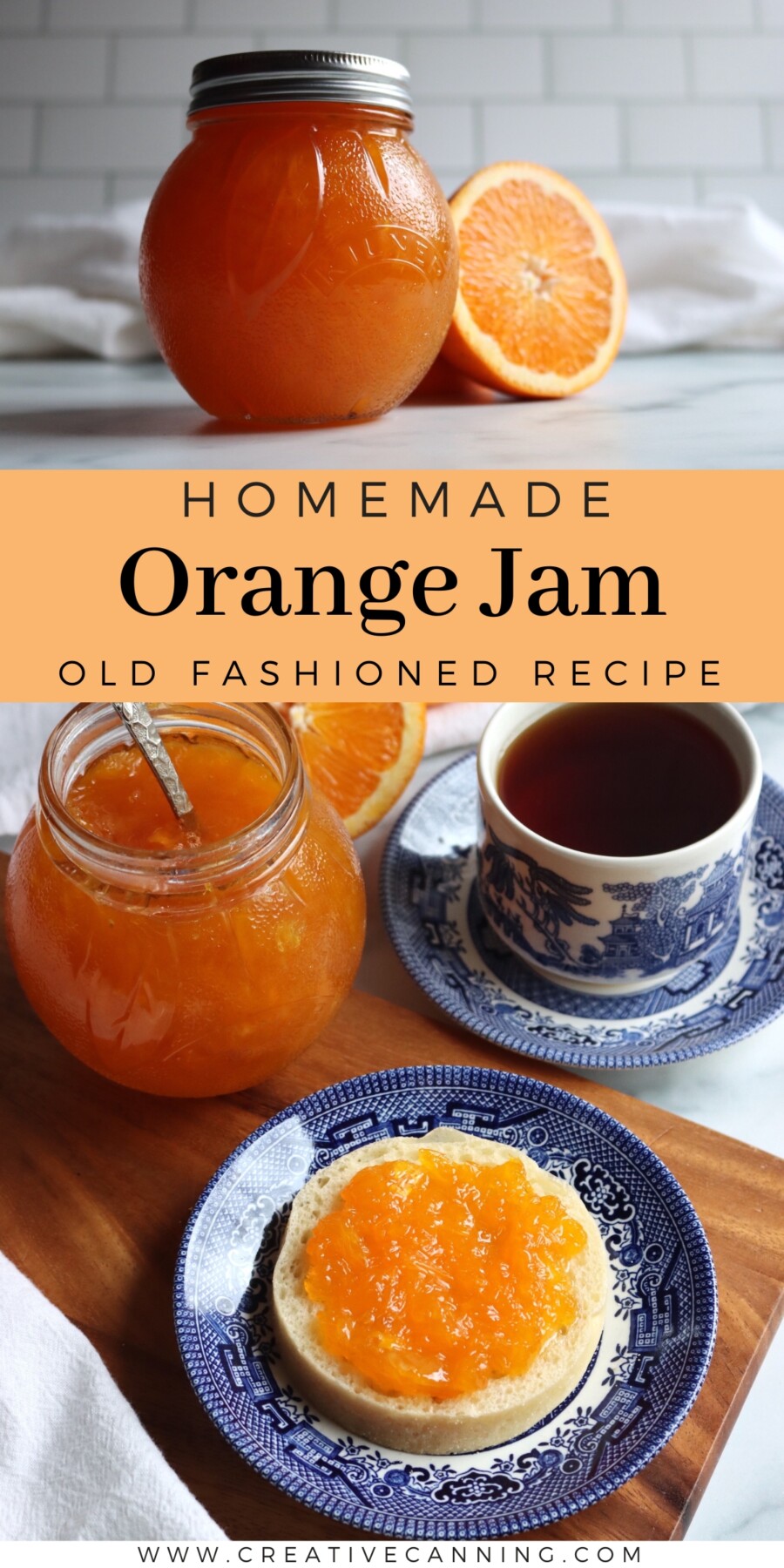
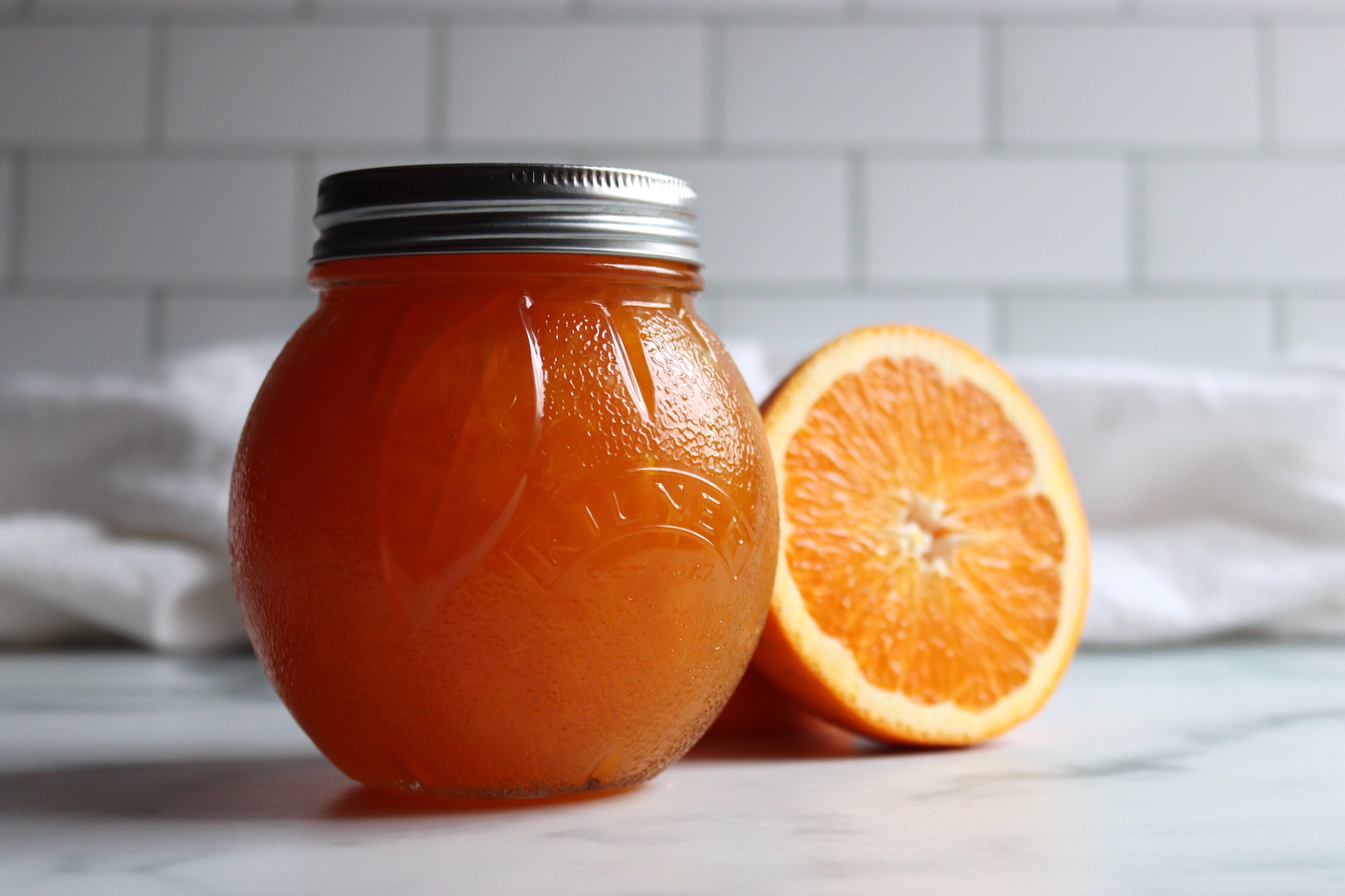
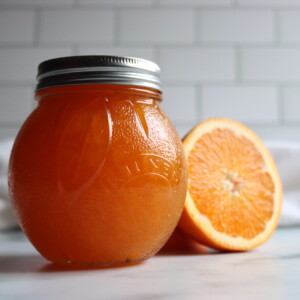
Orange jam gives you everything you love about fresh citrus without the bitterness that often comes with marmalade. Made with sweet oranges, lemon juice, and sugar, it comes together in under an hour and sets nicely without added pectin.
It has a bright, fresh flavor with plenty of concentrated orange taste, and it’s absolutely worth a spot on the pantry shelf.
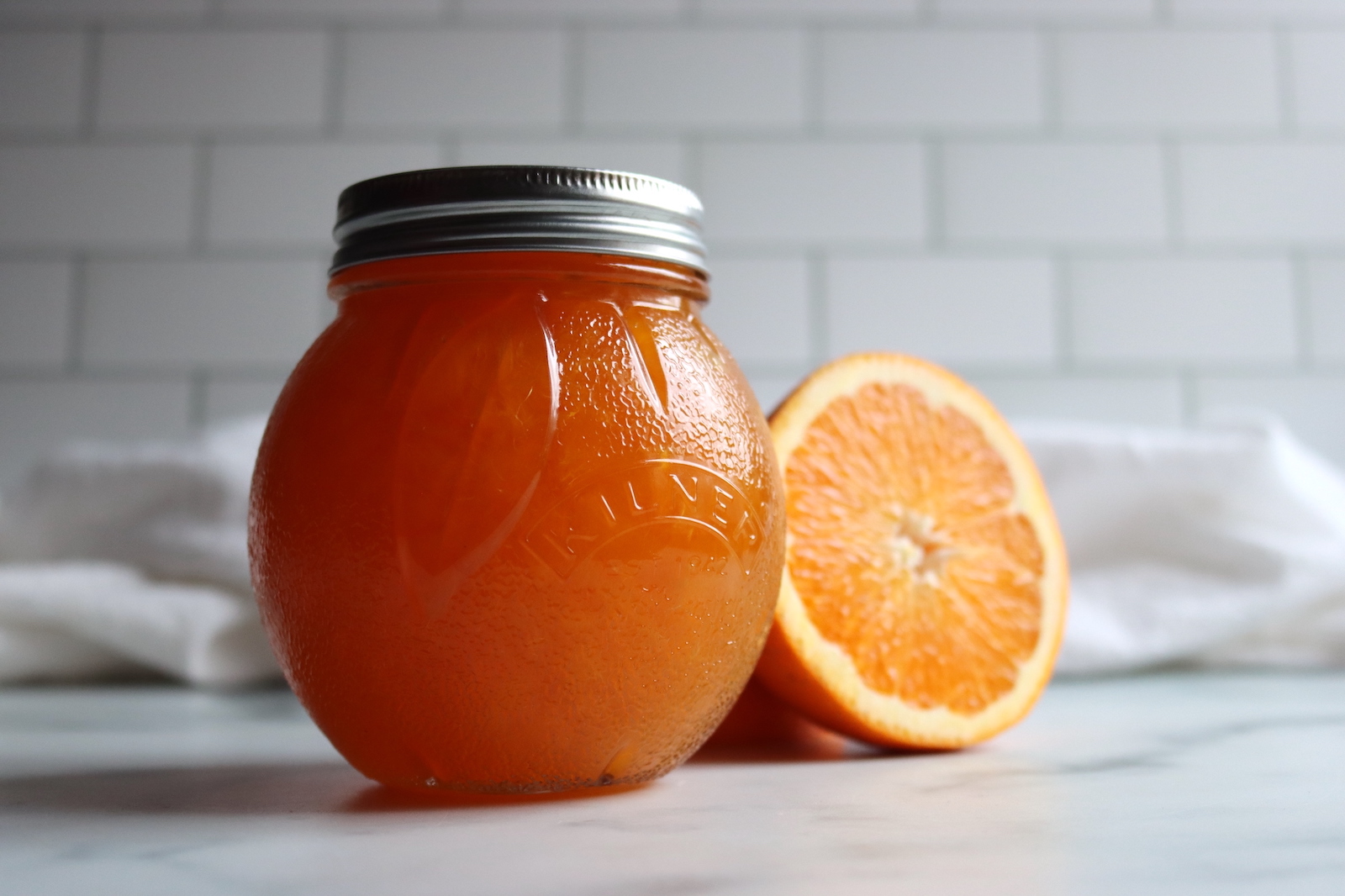
This recipe has been reviewed for safety and accuracy by a Master Food Preserver certified through the University of Cornell Cooperative Extension.
Traditional orange marmalade gets all the attention, but orange jam delivers that same sunny citrus flavor without the peel.
The peel in traditional marmalade recipes brings bitterness, which some people love and others don’t. My kids have never cared for it, but they do love citrus preserves, so I developed this recipe especially for them.
This jam is made entirely from orange supremes, which are peeled, membrane-free segments. With the pith and peel removed, the flavor stays purely sweet and bright. Lemon juice balances the sweetness and helps the jam set well without added pectin.
Any sweet orange works well here. Navels are the easiest to find and the simplest to prep because the segments are large and easy to work with. Blood oranges give the jam a deeper color and a slightly more complex flavor. Tangerines and clementines are lovely in winter, though their extra sweetness can make the finished jam taste more intense.
Notes from My Kitchen

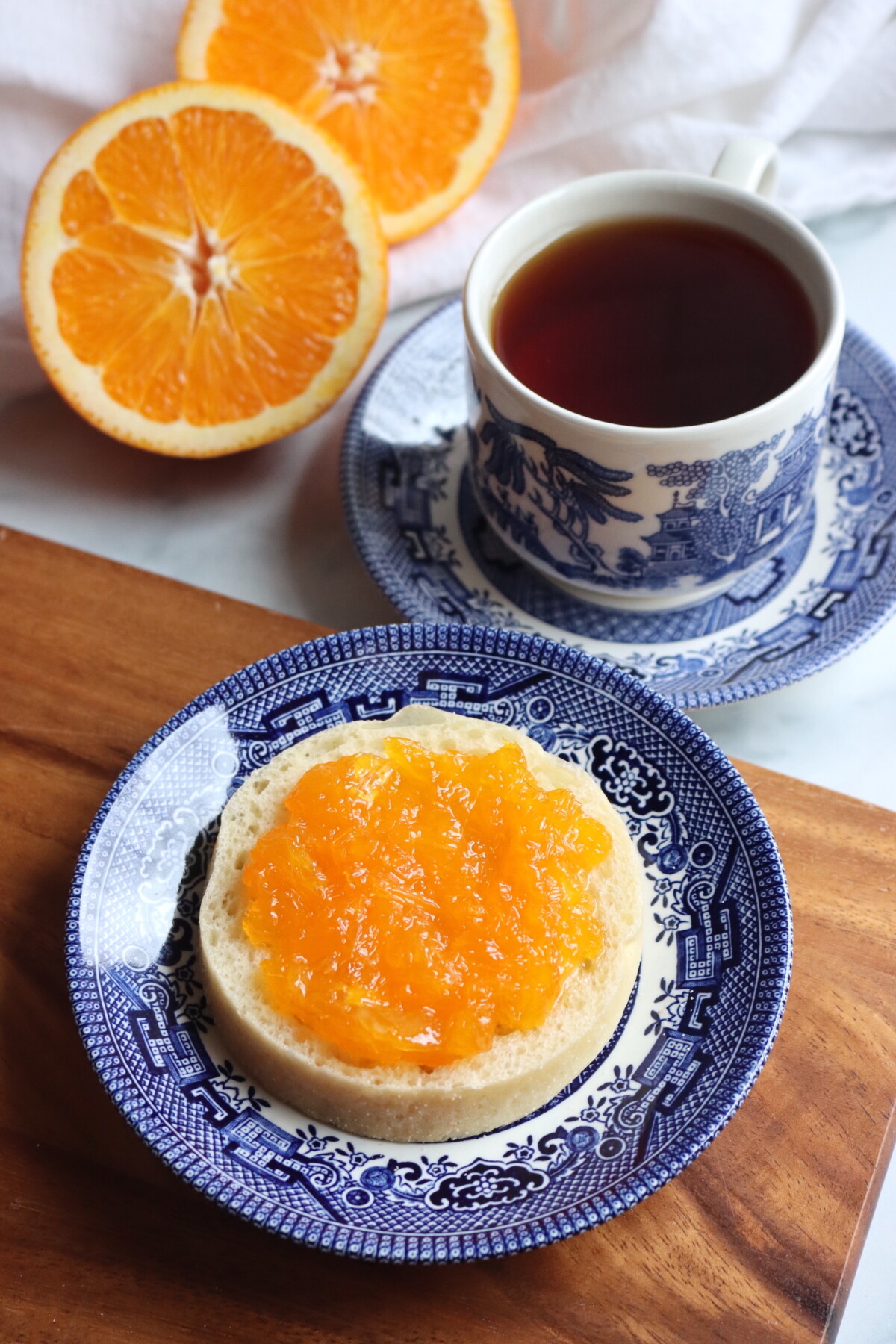
This jam is packed with orange flavor, and the lemon juice keeps it from becoming overly sweet. Don’t skip it. Taking the time to cut proper supremes is absolutely worth the effort. Since you’re removing the peel, pith, and membranes, the finished jam has no bitterness at all. It stays chunky with a soft, spoonable set, which is exactly how we like it.
My daughter made a birthday cake this week and used a jar as the filling between the layers. She paired it with vanilla cake and cream cheese frosting, and it tasted almost like an orange creamsicle. It’s also wonderful on toast, which is where most of our jars end up.
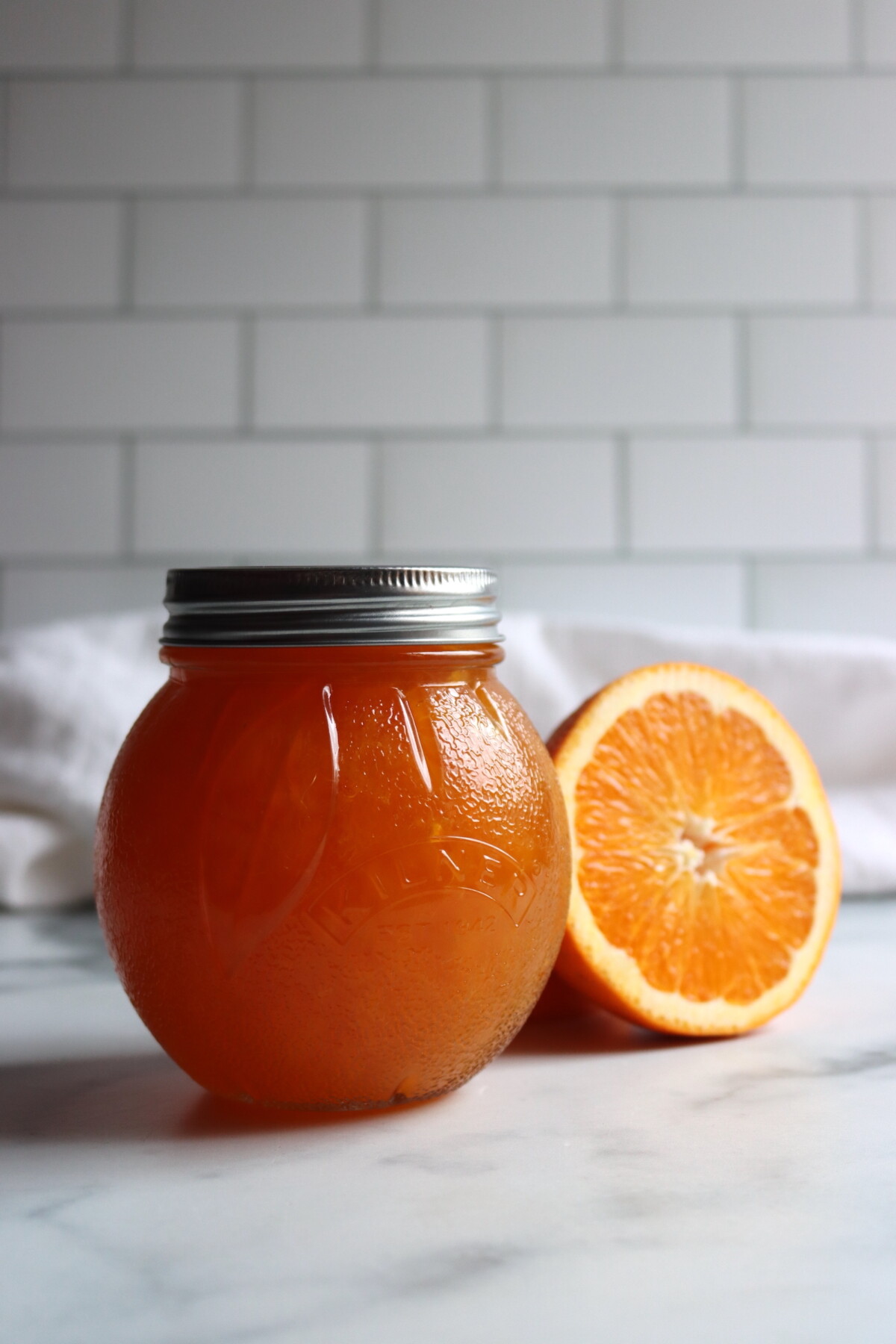
Quick Look at the Recipe
- Recipe Name: Orange Jam
- Recipe Type: Jam without Pectin
- Canning Method: Water Bath Canning
- Prep Time: About 30 minutes
- Cook Time: 8 to 10 minutes
- Canning Time: 10 minutes for half-pint jars
- Yield: 3 to 4 half-pint jars
- Jar Sizes: Half-pint jars
- Headspace: 1/4 inch
- Ingredients Overview: Orange supremes, fresh lemon juice, and sugar. No pectin needed.
- Safe Canning Recipe Source: Home-developed recipe following standard jam ratios for no-pectin preserves and NCHFP canning guidance.
- Difficulty: Easy. Prep takes a little time, but the cooking is quick and straightforward.
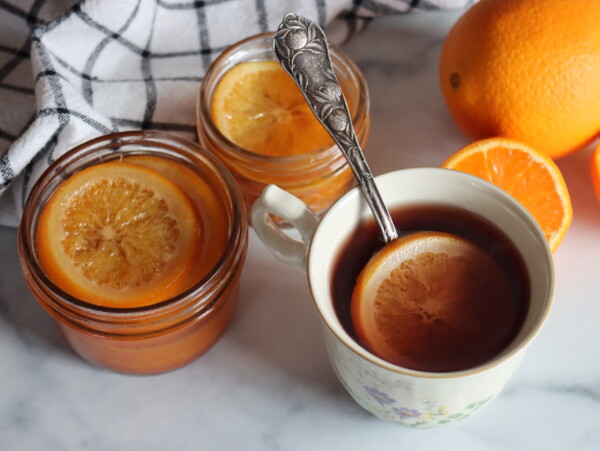
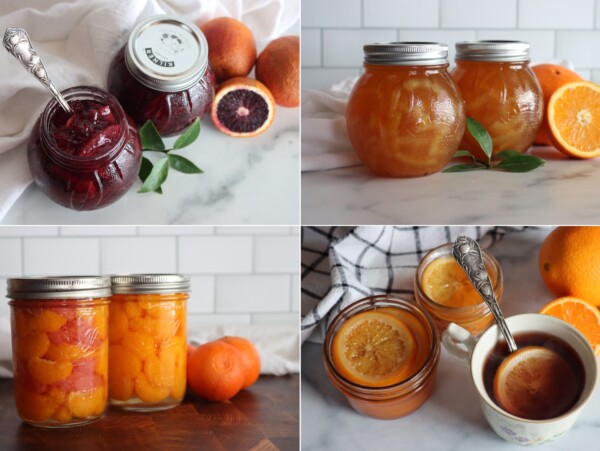
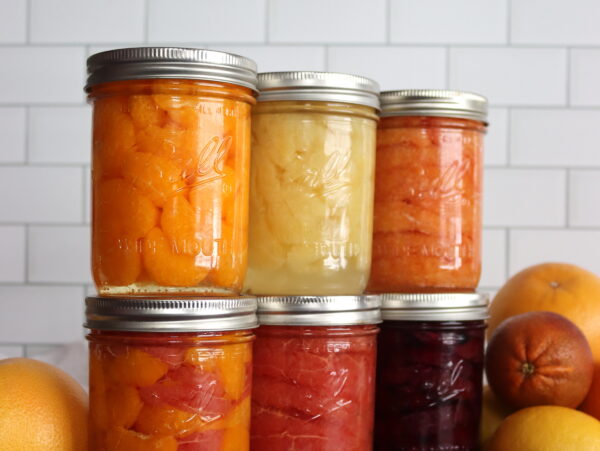
- Similar Recipes: Making this old fashioned jam without pectin is similar to other traditional preserves, like Traditional Grape Jam, Blackberry Jam, and Strawberry Jam, all made with just fruit, sugar, and lemon juice. If you enjoy citrus preserves, you might also like other orange canning recipes such as orange slices in honey syrup or canning orange segments.
Ingredients
This recipe uses just three ingredients and no added pectin. The ratio is 3 parts sugar to 4 parts prepared orange supremes by volume, and that balance matters for both flavor and set, so don’t change it.
- Oranges: Choose a sweet, easy-to-peel variety. Navel oranges are the standard choice and the easiest to work with. Blood oranges give the jam a deeper color and slightly more complex flavor, while Cara Cara oranges are milder and sweeter. Whatever you use, the goal is 4 cups of prepared supremes, or about 1 1/2 pounds, which usually takes about 5 pounds of medium oranges as purchased. Measure after prepping, not before, and adjust the sugar if your yield is different.
- Lemon juice: This does two important things: it balances the sweetness and helps create the right conditions for a good set. Do not skip it. Fresh lemon juice gives the best flavor, but bottled will work too. It isn’t strictly required for canning safety here, but it is important for the finished texture and flavor.
- Sugar: Standard granulated sugar. The recipe uses a 3:4 ratio of sugar to fruit by volume, which is what helps this jam set without added pectin. Do not reduce the sugar, since it’s essential for the set and not just for sweetness. If you’d prefer a lower-sugar version, use Pomona’s Pectin and follow their directions separately.
Step by Step Instructions
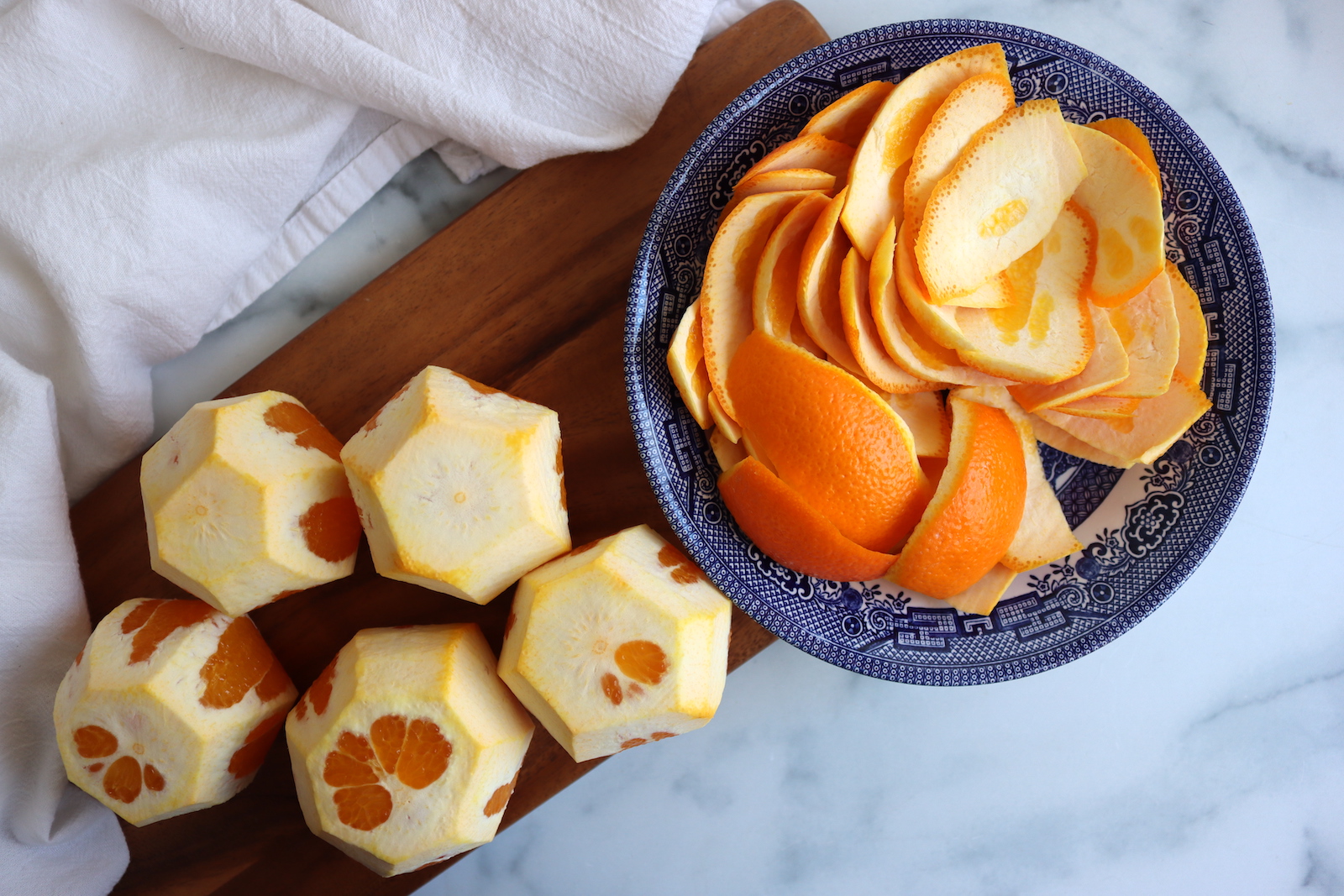
- Wash the oranges and use a sharp knife to remove the peel and pith completely from each one. Save the peels for candied orange peel.
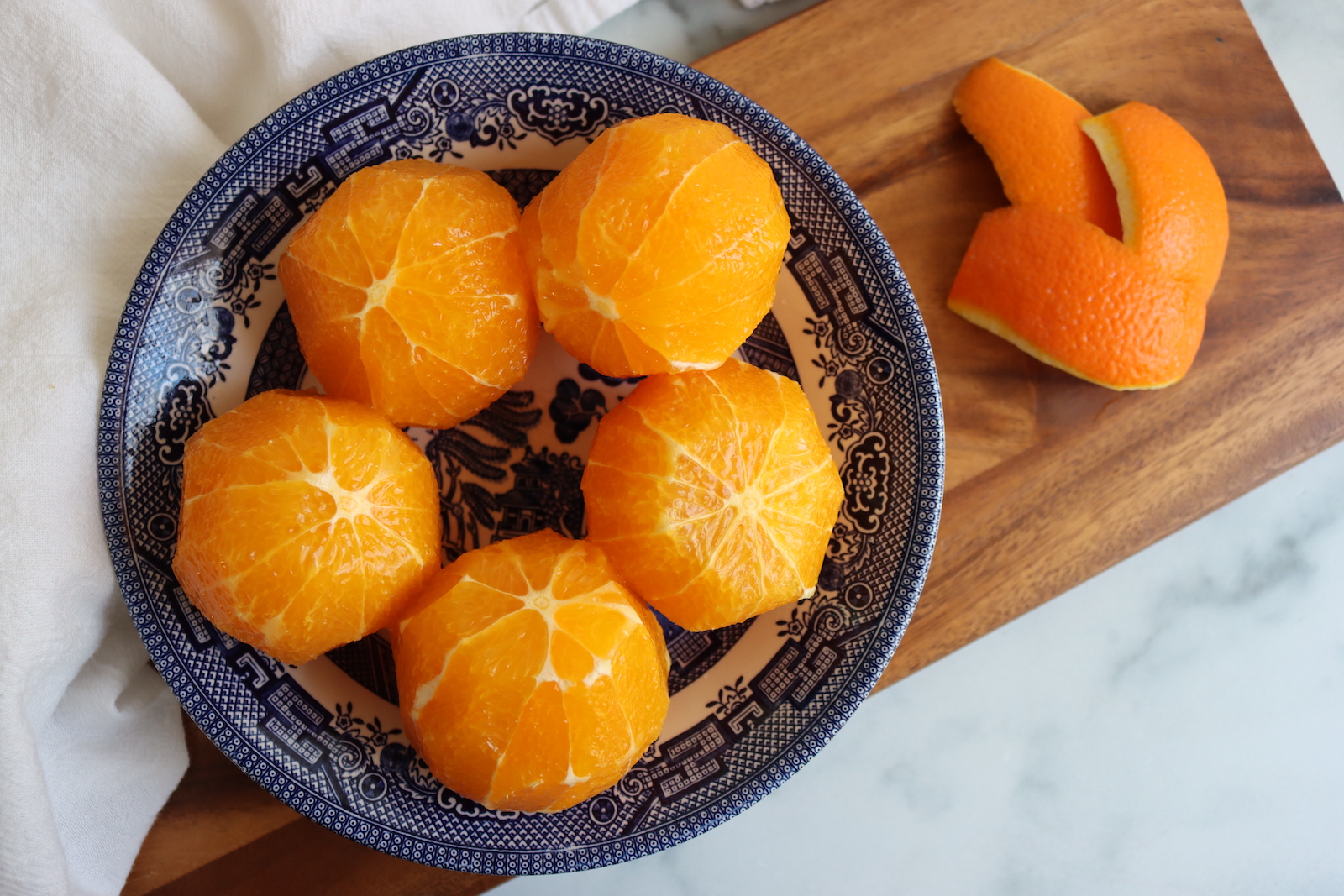
- Go back over each orange with a paring knife and trim away any remaining bits of white pith or membrane. Remove every bit, since leftover pith will make the jam bitter.
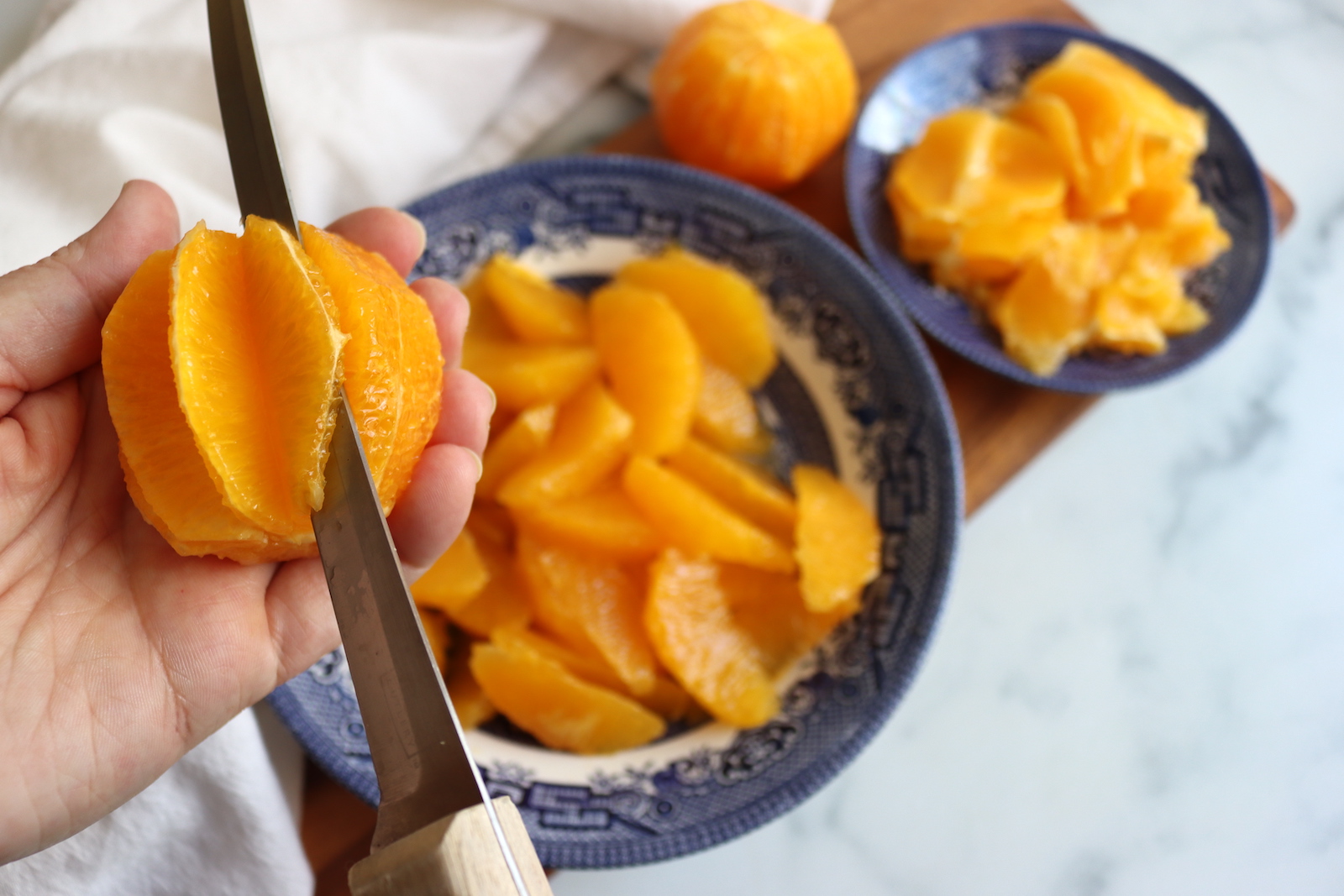
- Cut the oranges into supremes by slicing along each membrane to release the segments. Work over a bowl so you catch the juice as you go.
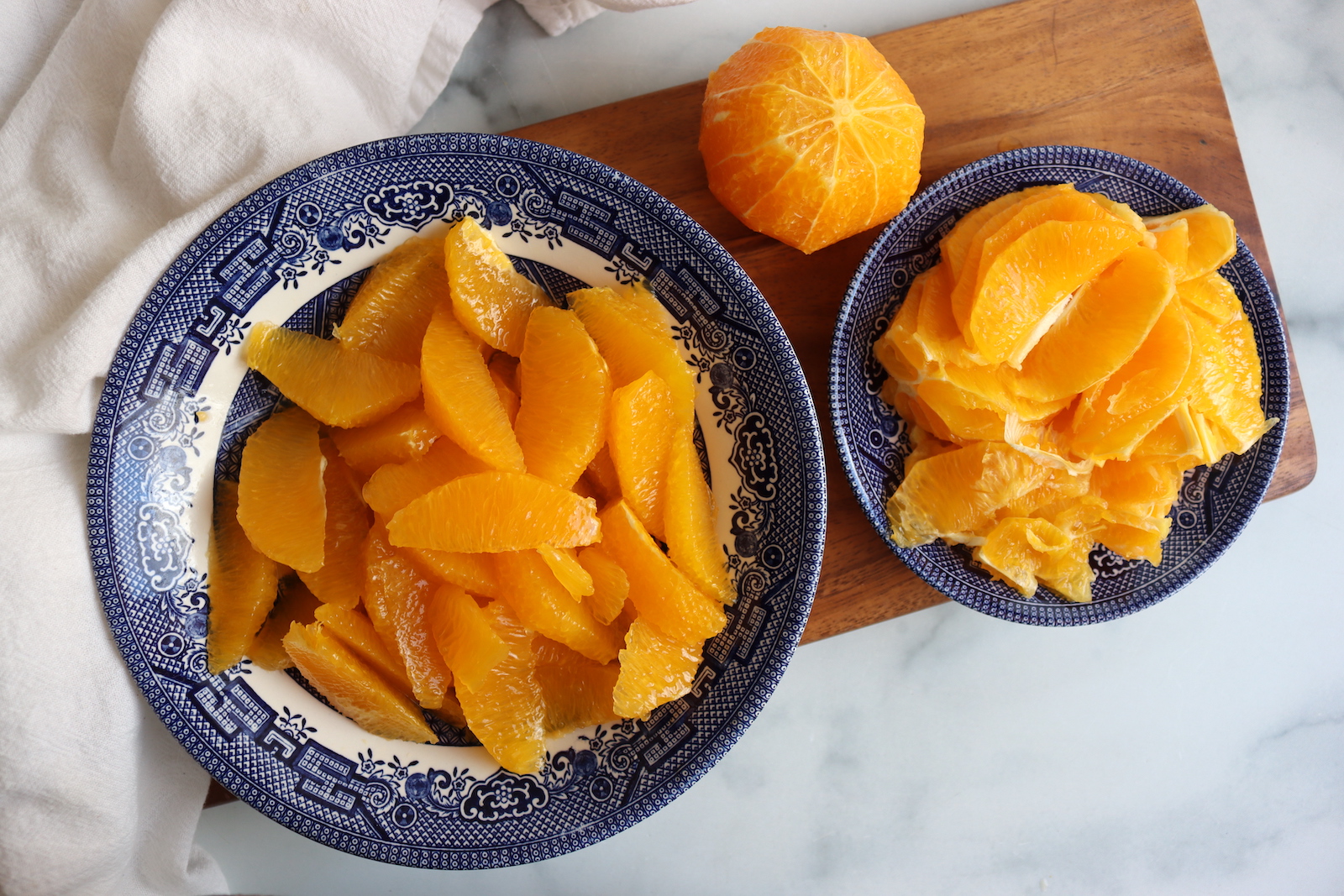
- Measure the prepared supremes. You need 4 cups. If you have more or less, adjust the sugar to maintain the 3:4 sugar-to-fruit ratio by volume. Combine the supremes, lemon juice, and sugar in a wide, heavy-bottomed pot.
- Bring the mixture to a boil over medium-high heat, stirring frequently, and cook for 8 to 10 minutes until the jam reaches 220°F on an instant-read thermometer. Ladle the hot jam into clean hot half-pint jars, leaving 1/4 inch headspace. Wipe the rims, apply lids and rings fingertip tight, and process in a boiling water bath canner for 10 minutes, adjusting for altitude as needed.
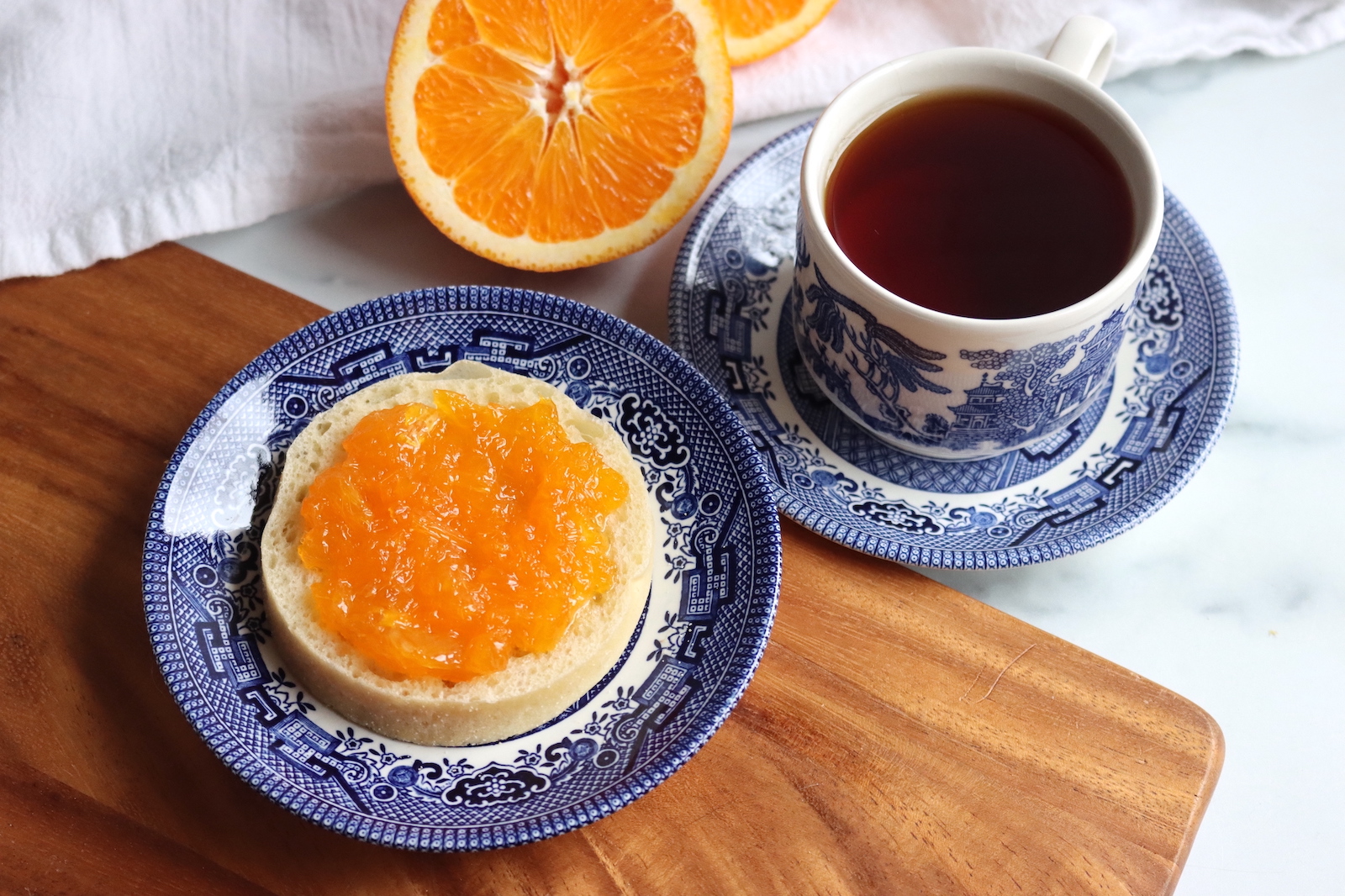
- Remove the jars and let them cool undisturbed for 12 to 24 hours. Check the seals before storing. Properly sealed jars will keep for up to 18 months in a cool, dark place.
Setting Notes
The gel point is 220°F at sea level. Use an instant-read thermometer as your main guide, and back it up with the cold plate test if needed.
Above sea level, the set point drops by about 1 degree for every 500 feet in elevation. For example, at 1,000 feet, the set point is about 218°F.
In my pot, this jam took about 8 to 10 minutes on medium-high heat to reach the set point, but it may take a bit more or less time in your kitchen. Cook time depends on the water content of your oranges and the width of your pot. A wider pot allows faster evaporation, which means a quicker set.
If you don’t have a thermometer, use the cold plate test: chill a small plate in the freezer before you start, drop a teaspoon of hot jam onto it, and push it with your finger. If it wrinkles, it’s ready.
Canning Orange Jam
Once the jam reaches the set point, it’s ready for jars. Canning is optional, and you can always keep this as a refrigerator or freezer preserve instead. It’ll keep for a few weeks in the fridge, or up to 6 months in the freezer.
That said, I usually can it so I can keep jars on the pantry shelf.
Ladle the jam into clean hot half-pint jars, leaving 1/4 inch headspace. Wipe the rims, apply lids fingertip tight, and process for 10 minutes in a boiling water bath canner, adjusting for altitude below. Yield is 3 to 4 half-pint jars.
Altitude Adjustments
For water bath canning, increase the processing time at higher elevations:
- Up to 6,000 feet: 10 minutes
- Above 6,000 feet: 15 minutes
Yield Notes
This recipe starts with 5 pounds of oranges as purchased, which yields about 4 cups of supremes, or roughly 1 1/2 pounds of prepared fruit. You can save the peels for another recipe, and candied orange peels or orange peel vinegar are both good ways to use them up.
Measure the prepared fruit, then add 3 parts sugar for every 4 parts fruit. In this recipe that’s 3 cups sugar to 4 cups fruit, but your actual amount may vary depending on the oranges. Adjust the sugar to match.
With 3 cups sugar, 4 cups prepared fruit, and 1/2 cup lemon juice, or about 1 tablespoon lemon juice per cup of prepared fruit, this recipe yields about 4 half-pint jars in my kitchen. I’ve listed the yield as 3 to 4 half-pint jars because sweeter oranges and clementines can be juicier and may give slightly different results.
Serving Ideas
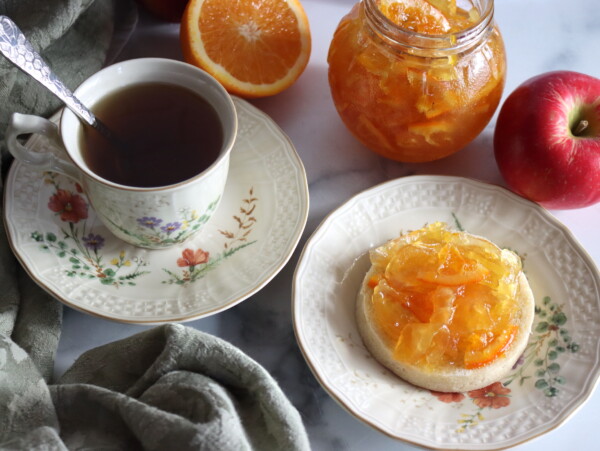
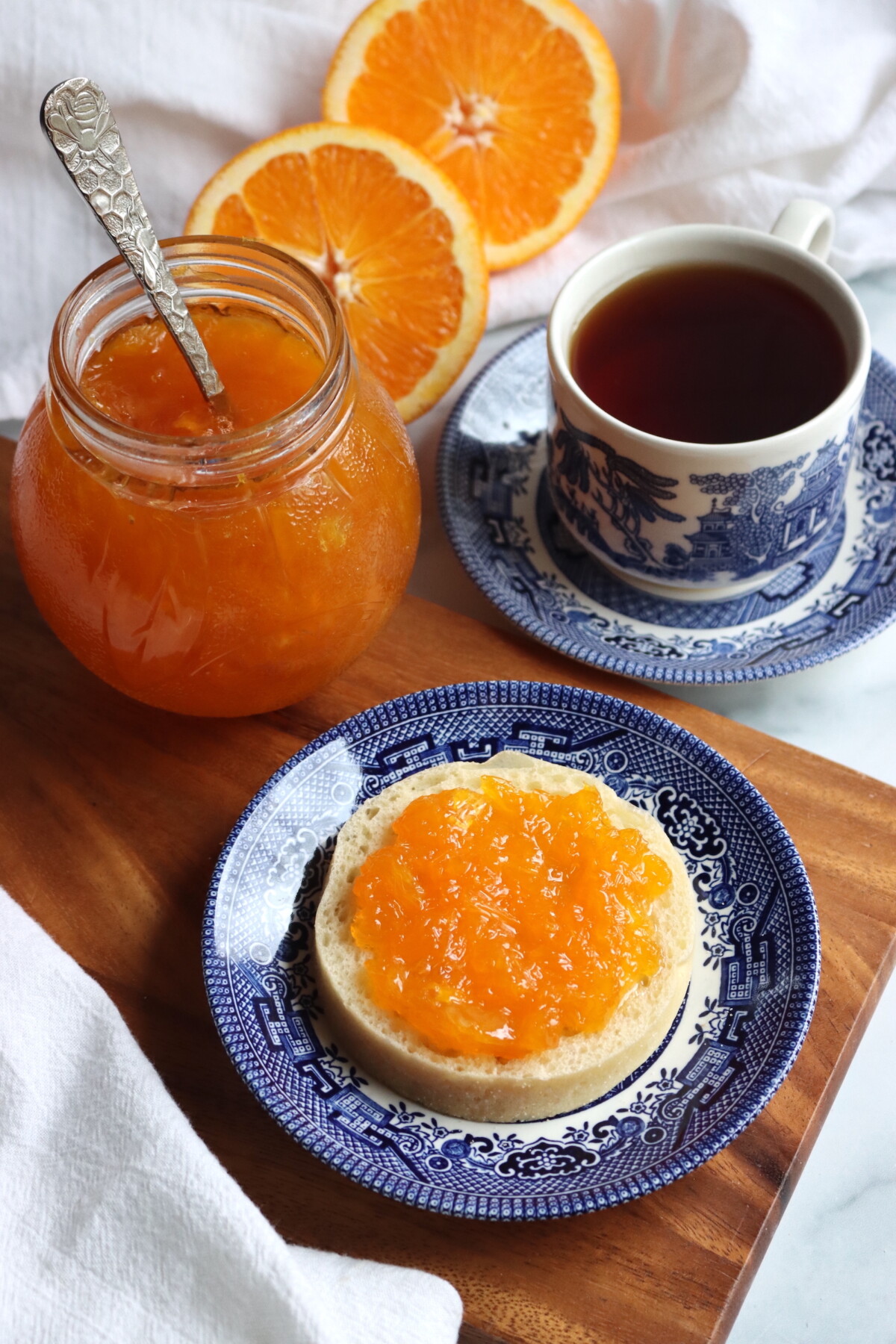
The obvious use is on toast, and it’s especially good on crusty sourdough. The soft set and chunky texture make it easy to spread, and the bright citrus flavor stands up well to salted butter. It’s also excellent on biscuits or English muffins.
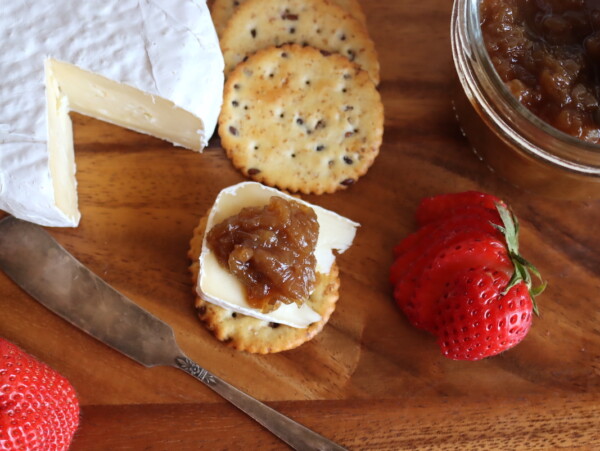
It also works beautifully as a cake filling. The looser set is actually an advantage here, since it spreads easily without feeling stiff or gummy. Try it between layers of vanilla cake with cream cheese frosting for something that tastes remarkably like an orange creamsicle. It also pairs nicely with Fig Jam on a cheese board with sharp cheddar or brie.
For something savory, thin a spoonful with a splash of white wine or water and use it as a glaze on roasted chicken or pork during the last 15 minutes of cooking. The sugar caramelizes, the citrus cuts the richness, and the flavor is fantastic.
Orange Jam FAQs
Orange jam can set without added pectin when you use the proper fruit-to-sugar ratio and cook it to the gel point. Even with the peel and pith removed, oranges still contain enough natural pectin for a soft set in most cases, and the lemon juice helps create the right conditions for setting.
The most common cause is an off fruit-to-sugar ratio. If your oranges yielded more than 4 cups of supremes and you didn’t increase the sugar to match, there may not have been enough sugar for a proper set. Another common issue is not reaching 220°F. Timing alone isn’t reliable, so use a thermometer. If the jam has already cooled and is still runny, you can reprocess it by pouring it back into the pot, bringing it back to 220°F, and jarring it again. For more help, see my guide to troubleshooting jam and jelly set.
Marmalade includes the peel, which gives it bitterness and a chewy texture. Orange jam is made from supremes with the peel and pith removed, so the flavor is sweeter, brighter, and more purely fruity. The texture is smoother as well. If marmalade tastes too sharp or too chewy for you, orange jam is a great alternative.
Yes. Navel oranges are the easiest to peel and give a classic sweet orange flavor. Blood oranges make a deeper-colored jam with a slightly more complex taste, and Cara Cara oranges are milder and sweeter. Avoid thin-skinned juice oranges, since they’re harder to supreme and often have more seeds and less concentrated flavor.
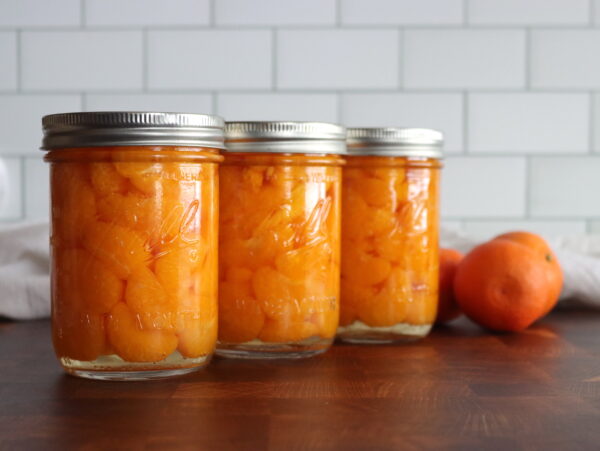
Orange Canning Recipes
If you tried this Orange Jam Recipe, or any other recipe on Creative Canning, leave a ⭐ star rating and let me know what you think in the 📝 comments below!
And make sure you stay in touch with me by following on social media!
Orange Jam
Equipment
- Half-pint canning jars with lids and bands
Ingredients
- 5 lbs oranges, see notes
- 1/2 cup lemon juice, preferably fresh
- 3 cups sugar, see notes
Instructions
- Peel the oranges, removing the outer zest with a knife. Save the peels for candied orange peel if desired. Go back on a second pass to remove every last bit of white pith, which is where the bitterness hides.
- Cut the oranges into supremes by slicing along each membrane to release the segments. Work over a bowl to catch any juice. You should get about 4 cups of supremes (or 1 1/2 lbs prepared) from 5 pounds of oranges as purchased.
- Measure the supremes. If you have more or less than 4 cups, adjust the sugar proportionally using a ratio of 3 cups sugar per 4 cups fruit.
- Combine the supremes, lemon juice, and sugar in a wide, heavy-bottomed pot. Bring to a boil over medium-high heat, stirring frequently. Cook for 8 to 10 minutes until the jam reaches 220°F (the gel point, see notes).
- Ladle the hot jam into prepared half-pint jars, leaving 1/4 inch headspace. Wipe rims clean, apply lids and bands, and tighten to fingertip tight.
- Process in a boiling water bath for 10 minutes, adjusting for altitude. Remove jars and let cool undisturbed for 12 to 24 hours.
- Check seals, label jars, and store in a cool, dark place for up to 18 months.
Notes
Amounts
This recipe uses 5 pounds of oranges as purchased to make 4 cups orange supremes (or 1 1/2 lbs in prepared weight). In my kitchen, that was about 10 medium oranges, but this can vary based on variety and how efficient your are cutting them. Aim for 4 cups supremes, which might take slightly more or less than 5lbs as purchased. If you end up with less, adjust the sugar as nessisary to maintain a 4:3 ratio by volume. The lemon in this recipe is 1/2 cup, which can be fresh or bottled. You’ll need about 2-3 fresh juicy lemons to yield this amount.Orange Varieties
Navels are the easiest oranges to work with and give a classic sweet flavor. Blood oranges add deeper color and complexity. Cara Cara oranges are milder and sweeter. Avoid thin-skinned juice oranges, as they’re harder to supreme and tend to have more seeds.Testing for Set
The gel point is 220°F at sea level. Above sea level, the set point drops by 1 degree for every 500 feet in elevation. For example, at 1,000 feet in elevation, the set point is at 218 F. Use an instant-read thermometer and trust it over the clock, but this should take roughly 8 to 10 minutes to set. If you don’t have a thermometer, use the cold plate test: chill a small plate in the freezer before you start, drop a teaspoon of hot jam onto it, and push it with your finger. If it wrinkles, it’s set.Yield & Storage
Expect 3 to 4 half pints, depending on how juicy your oranges are and how long you cook the jam. Sealed jars keep 12 to 18 months in a cool, dark place. Once opened, refrigerate and use within 3 to 4 weeks.Altitude Adjustments
For water bath canning, processing times increase at higher altitudes:- Under 1,000 feet: 10 minutes
- Over 6,000 feet: 15 minutes
Nutrition
Nutrition information is automatically calculated, so should only be used as an approximation.
Old Fashioned Jam Recipes
Find the perfect recipe
Searching for something else? Enter keywords to find the perfect recipe!