
This post may contain affiliate links. Please see our disclosure policy.
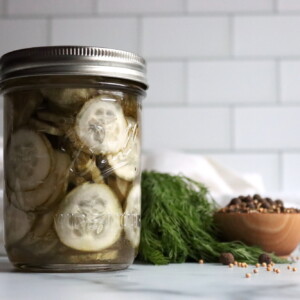
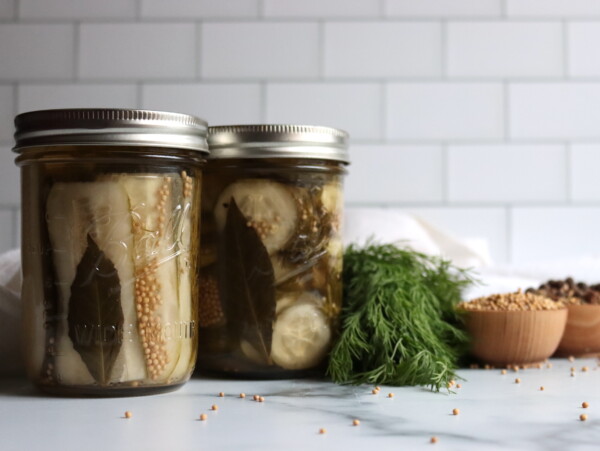
Low salt dill pickles are the answer when you want that tangy, deli-style crunch without committing to the heavy salt load of traditional dills. This tested canning recipe from the Ball Blue Book gives you plenty of flavor without much salt.
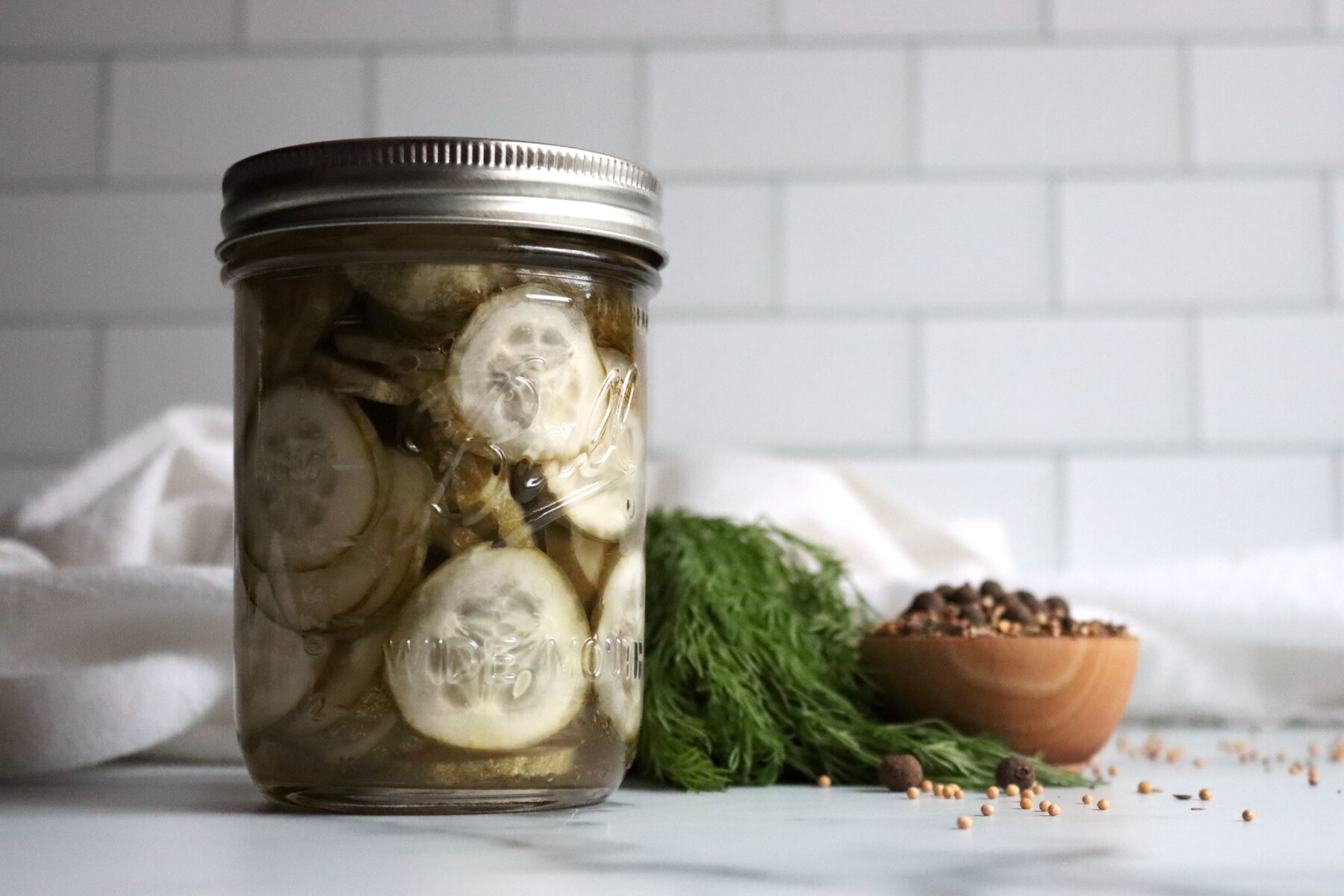
This recipe has been reviewed for safety and accuracy by a Master Food Preserver certified through the University of Cornell Cooperative Extension.
If you love the idea of home canned dill pickle slices but you’re trying to keep sodium in check, this low salt dill pickle recipe is a tested workaround. It’s not regular dill pickles with the salt simply removed, because that never quite works out. Salt does a lot for the classic deli style dill pickle flavor, and once you pull it back, the whole balance of the brine has to change.
That’s exactly what makes this Ball Blue Book low salt dill pickle recipe so different. Instead of a half water and half vinegar brine like many dill pickles, this one uses straight five percent vinegar for all the liquid, then leans on sugar and pickling spice to carry the flavor. The result is tangy, lightly sweet, and still very pickle chip friendly, but without the intense salty bite of classic hamburger dills.
If you’re expecting a sharp, salty no sugar dill, these won’t taste like that. They land closer to a sweet and sour dill-forward pickle slice, the kind that works on sandwiches when you want brightness and crunch without a lot of salt.
Notes from My Kitchen

These are not salt free pickles, but they’re dramatically lower in salt than traditional dill pickle recipes. The tradeoff is that the brine reads more sweet-tart than briny, because sugar is doing some of the heavy lifting that salt normally does, both for flavor and for texture. They feel a little deli adjacent because of the pickling spice infusion, but the dill heads keep the flavor anchored in the dill camp instead of drifting fully into bread and butter territory.
The fresh dill flavor also keeps them from tasting like sweet gherkins, even with the higher sugar level. The recipe makes about 6 pints, which gets us through sandwich season with a few extra jars to share.
If you’ve never canned a reduced sodium pickle before, this is the one I’d start with.
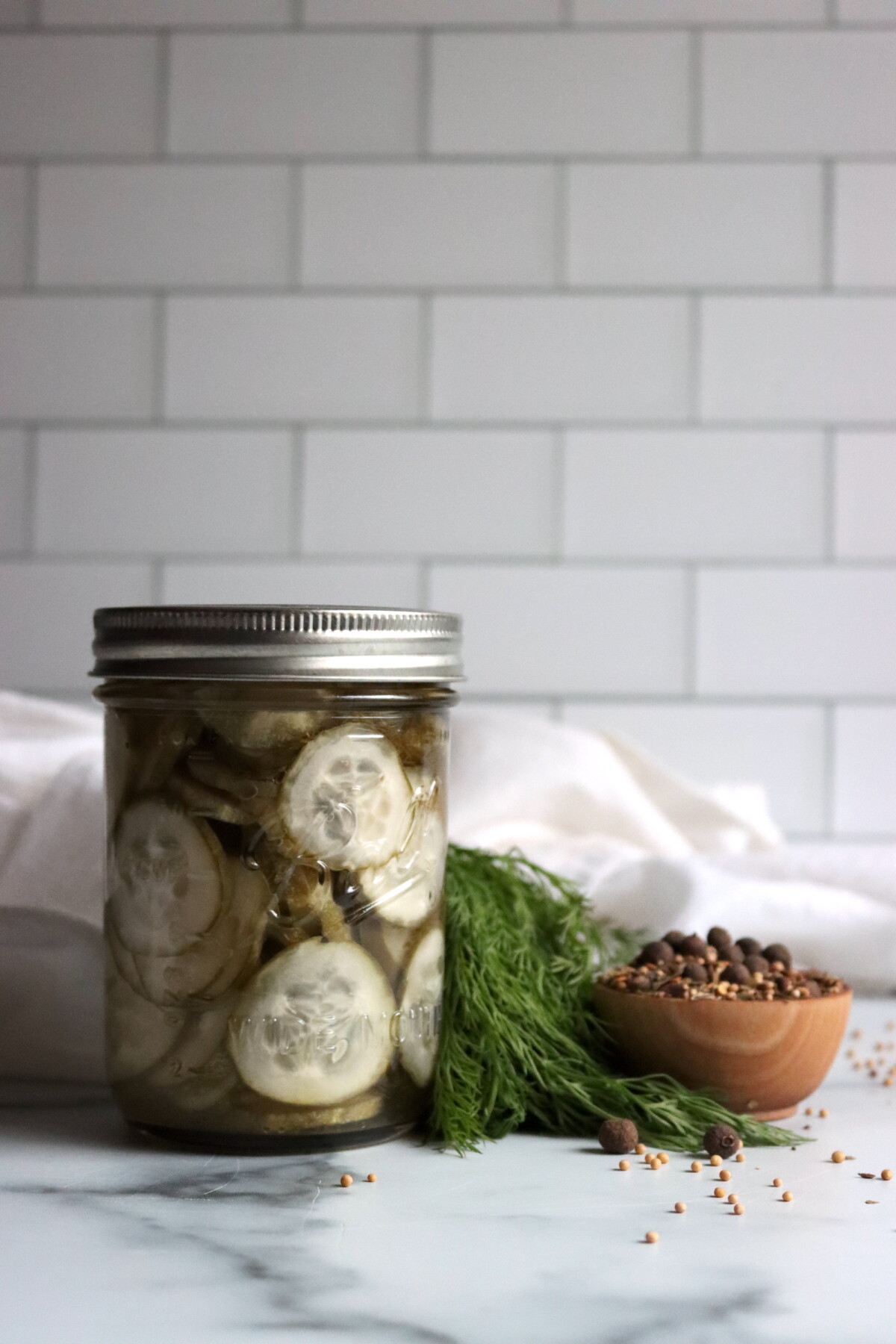
Quick Look at the Recipe
- Recipe Name: Low Salt Dill Pickles
- Recipe Type: Cucumber Pickle Recipe
- Canning Method: Water Bath Canning
- Prep Time: 20 minutes
- Cook Time: 20 minutes
- Canning Time: 15 minutes
- Yield: About 6 pints
- Jar Sizes: Pints only (not tested for quarts)
- Headspace: 1/2 inch
- Ingredients Overview: Pickling cucumbers, white vinegar, sugar, canning salt, pickling spice, and fresh dill.
- Safe Canning Recipe Source: Ball Blue Book
- Difficulty: Easy. It’s a quick raw pack pickle, no overnight brining required.
- Similar Recipes: If you like the idea of sandwich style pickle slices, try regular dill pickle slices or bread and butter pickles. For more dill-forward pickle options, look at classic dill pickles, garlic dill pickles, or kosher dill pickles. Beyond cucumbers, dill also works great in dill pickled carrots, dilly beans and dill pickled beets.
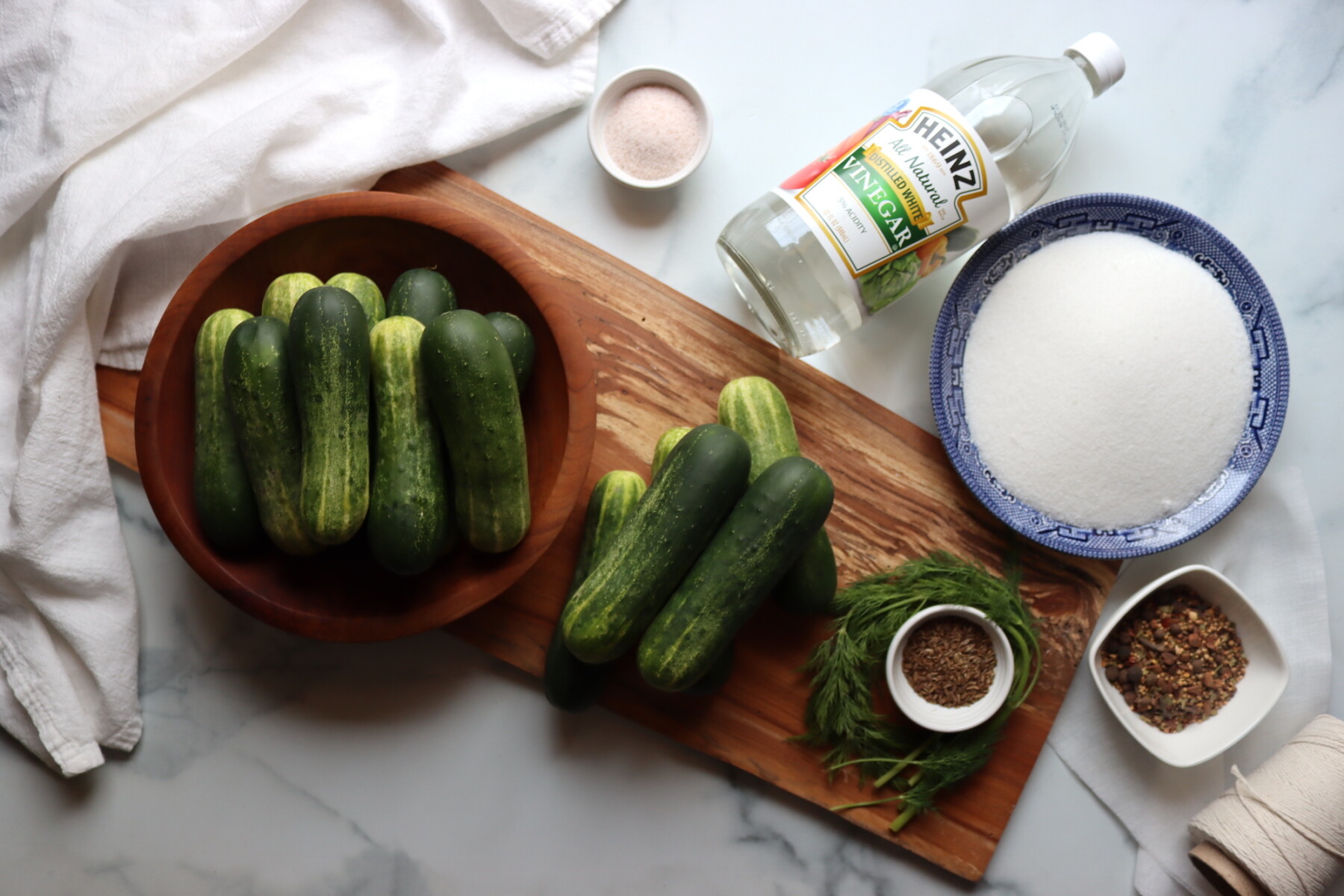
Ingredients for Low Salt Dill Pickles
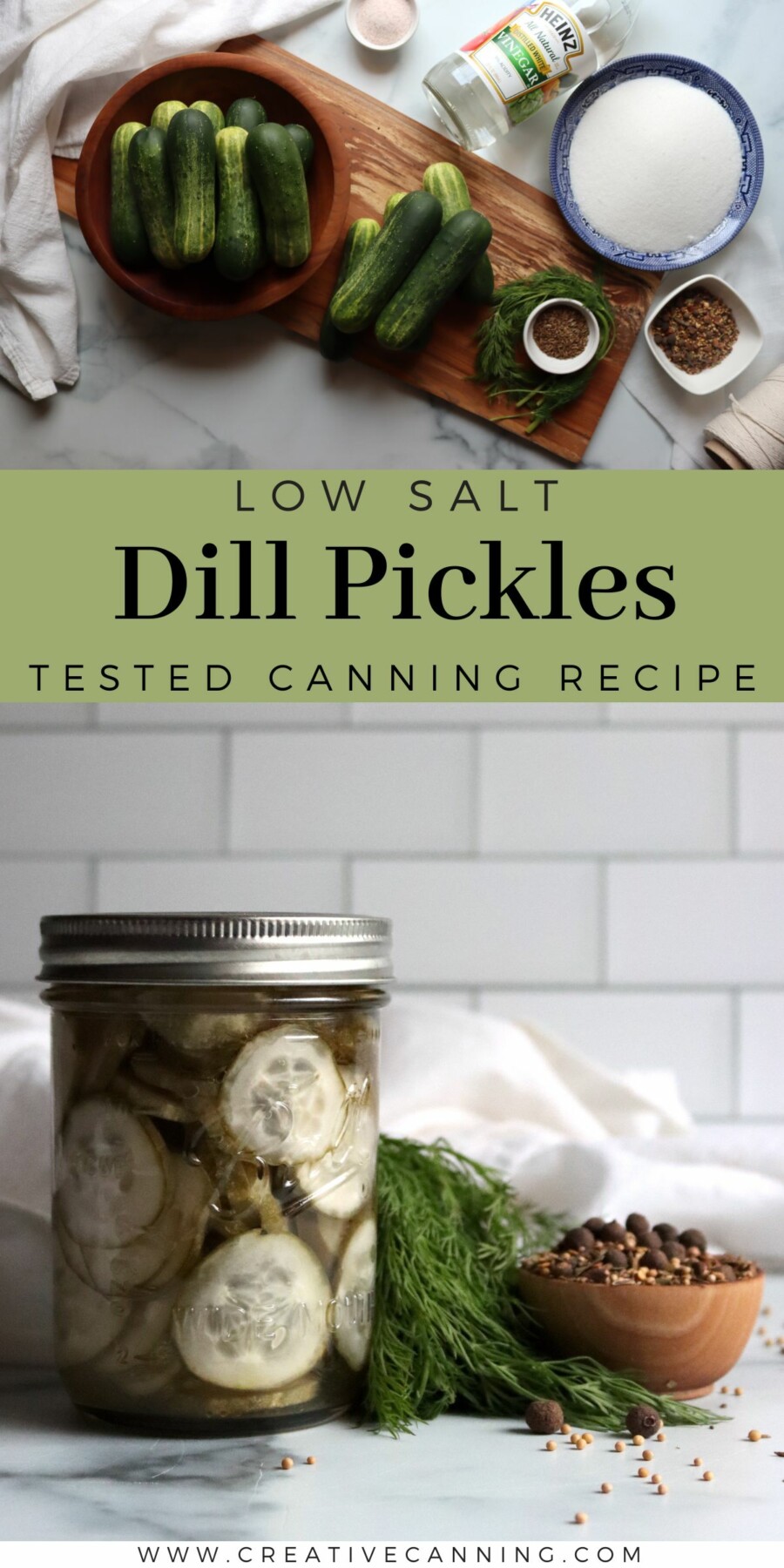
This low salt dill pickle recipe is a little different than most dill pickles, and that starts right in the ingredient list. Since the brine doesn’t rely on much salt for flavor, the recipe leans on a full strength vinegar brine, a generous amount of sugar for balance, and pickling spice to make sure these still taste like a real sandwich pickle when you open the jar.
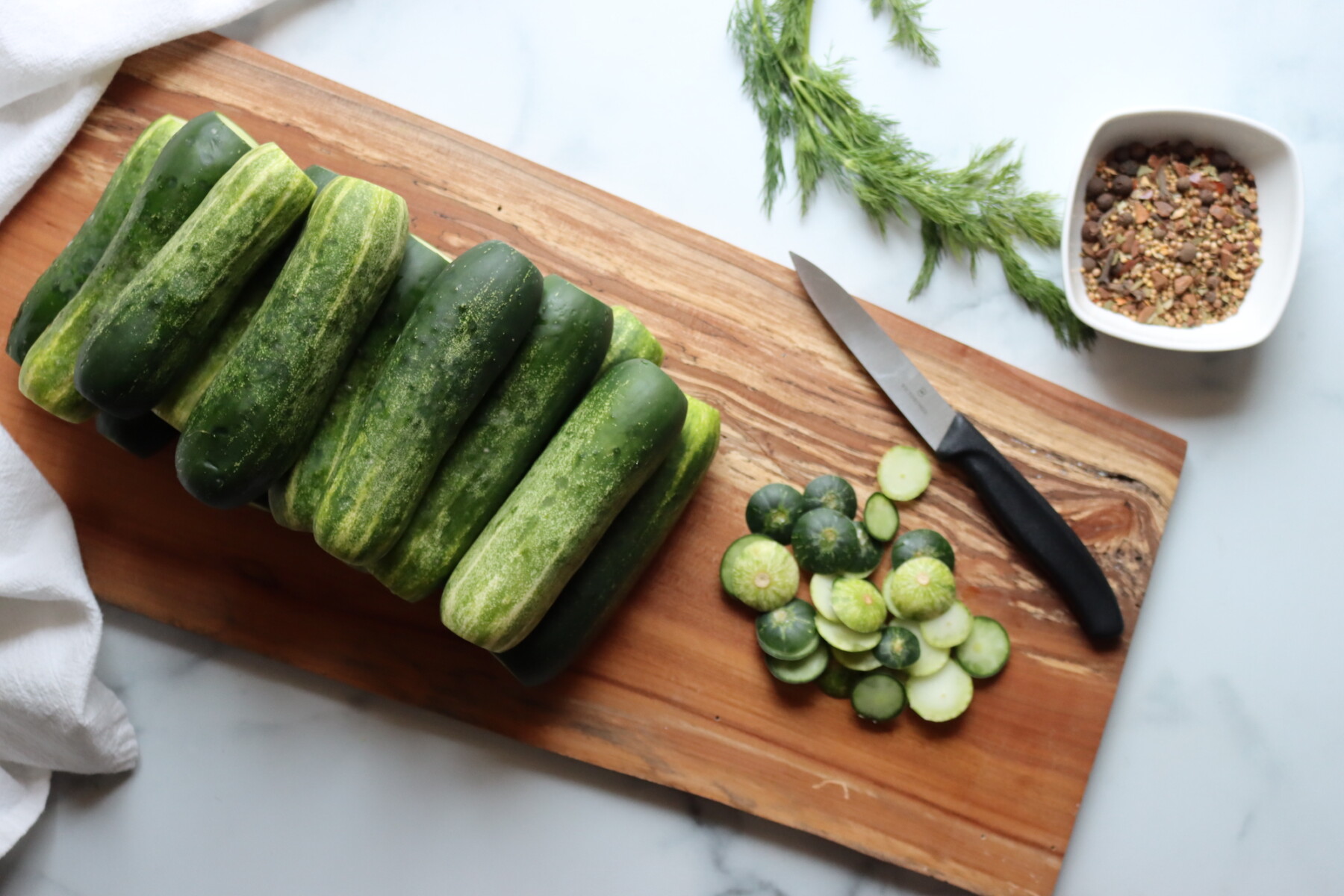
- Pickling cucumbers: Use small, firm pickling cucumbers in the 3 to 5 inch range, ideally picked that morning. Larger slicing cucumbers are safe in a vinegar brine, but they tend to soften more during processing and the seed cavity can get watery or pulpy. You’ll need about 4 pounds for the full batch.
- White vinegar: The brine is straight five percent vinegar with no water added, which is part of how this recipe stays safe with so little salt. Use commercial vinegar that’s clearly labeled five percent acidity, since lower acidity vinegars (like some homemade or imported varieties) are not safe for canning. White vinegar gives a clean, classic pickle flavor and keeps the brine lighter in color, though cider vinegar (also 5 percent) is a permitted swap if you’d rather have that warmer note.
- Granulated sugar: Three cups sounds like a lot, and that’s the whole point. With salt dialed way down, sugar rounds out the sharp vinegar bite and keeps the pickles from tasting harsh or flat. The end result reads more sweet-tart than briny, almost like a dill-leaning bread and butter style, but it doesn’t read as candy sweet.
- Canning or pickling salt: Even though these are low salt pickles, there’s still a small amount of canning or pickling salt in the brine. It improves flavor and helps the pickles taste more pickled instead of just sweet and sour. Stick with pickling salt for the cleanest taste and clearest brine, since the additives in table salt can cloud the liquid and the volume can vary by brand.
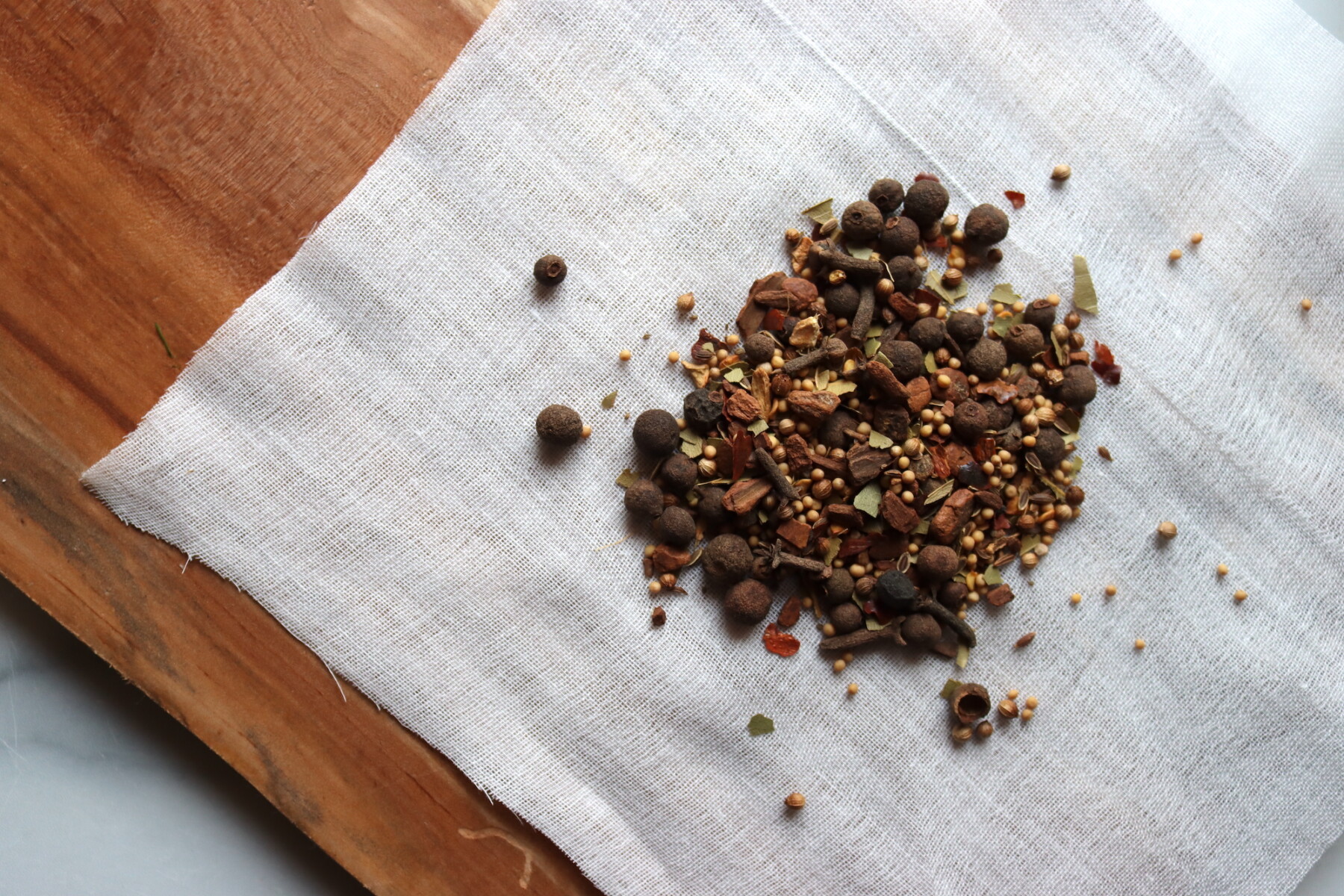
- Pickling spice: Because the salt is low, the recipe uses pickling spice to add complexity. That warm deli pickle background flavor comes from the spice blend steeping in the brine before it ever goes into the jars. I tie the spices into a small cheesecloth spice bag so the flavor infuses without leaving sediment in the bottom of every jar. If you want to mix your own, here’s my homemade pickling spice recipe.
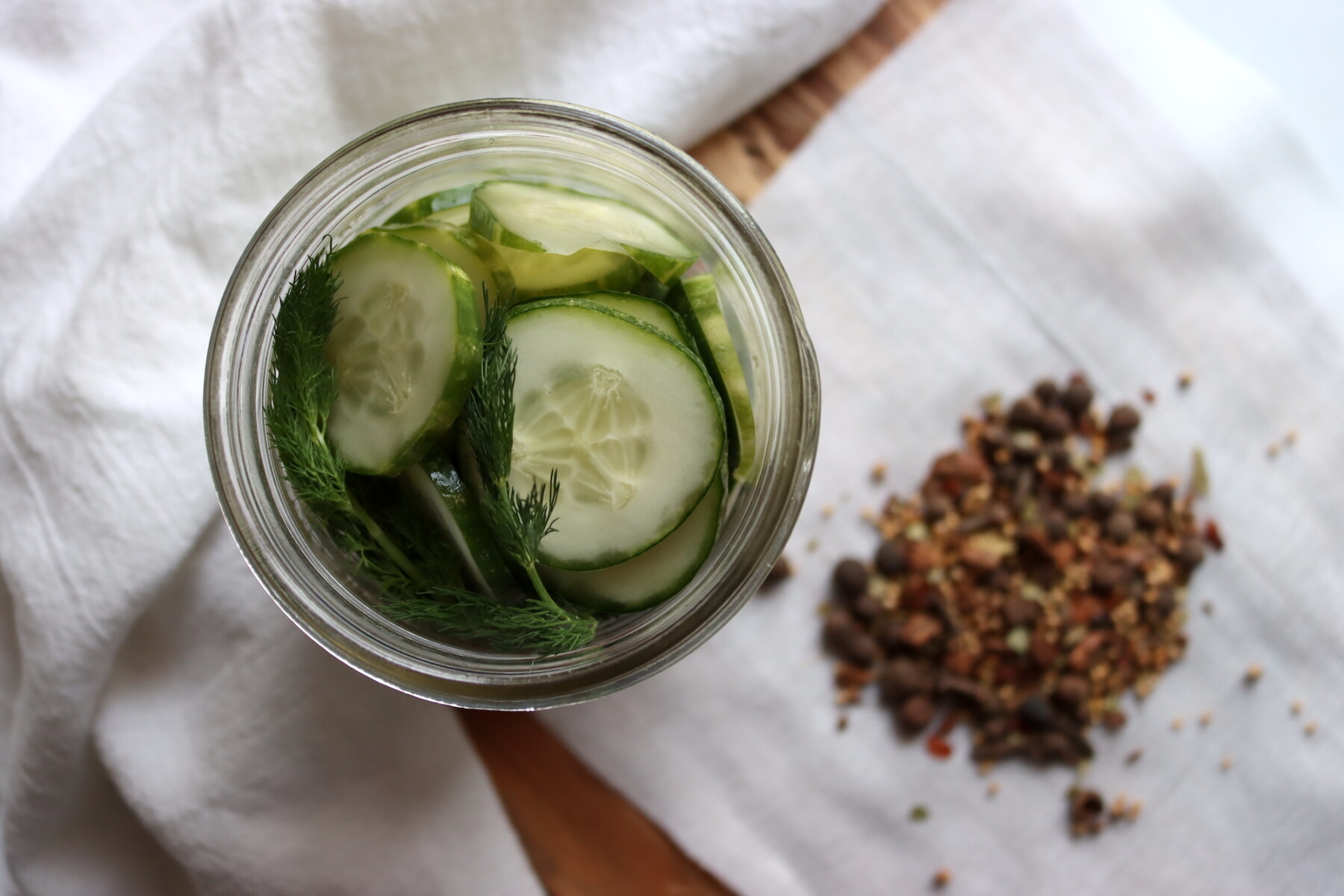
- Fresh dill: One dill head per pint jar gives you that classic dill aroma. Dill heads are the yellow flower clusters with a few seeds starting to form. If you don’t have access to fresh dill heads, you can substitute about 1/2 teaspoon of dill seed per jar. Dill seed holds up well in canning and gives a stronger traditional dill flavor than dried dillweed.
- Pickle Crisp (optional): Pickle Crisp is calcium chloride, an approved firming agent that helps pickles stay crunchy after processing. It’s optional, but if you’re going low salt and you still want that snappy texture, it’s worth using since it adds zero sodium. Add 1/8 teaspoon per pint jar right in with the dill before pouring in the brine.
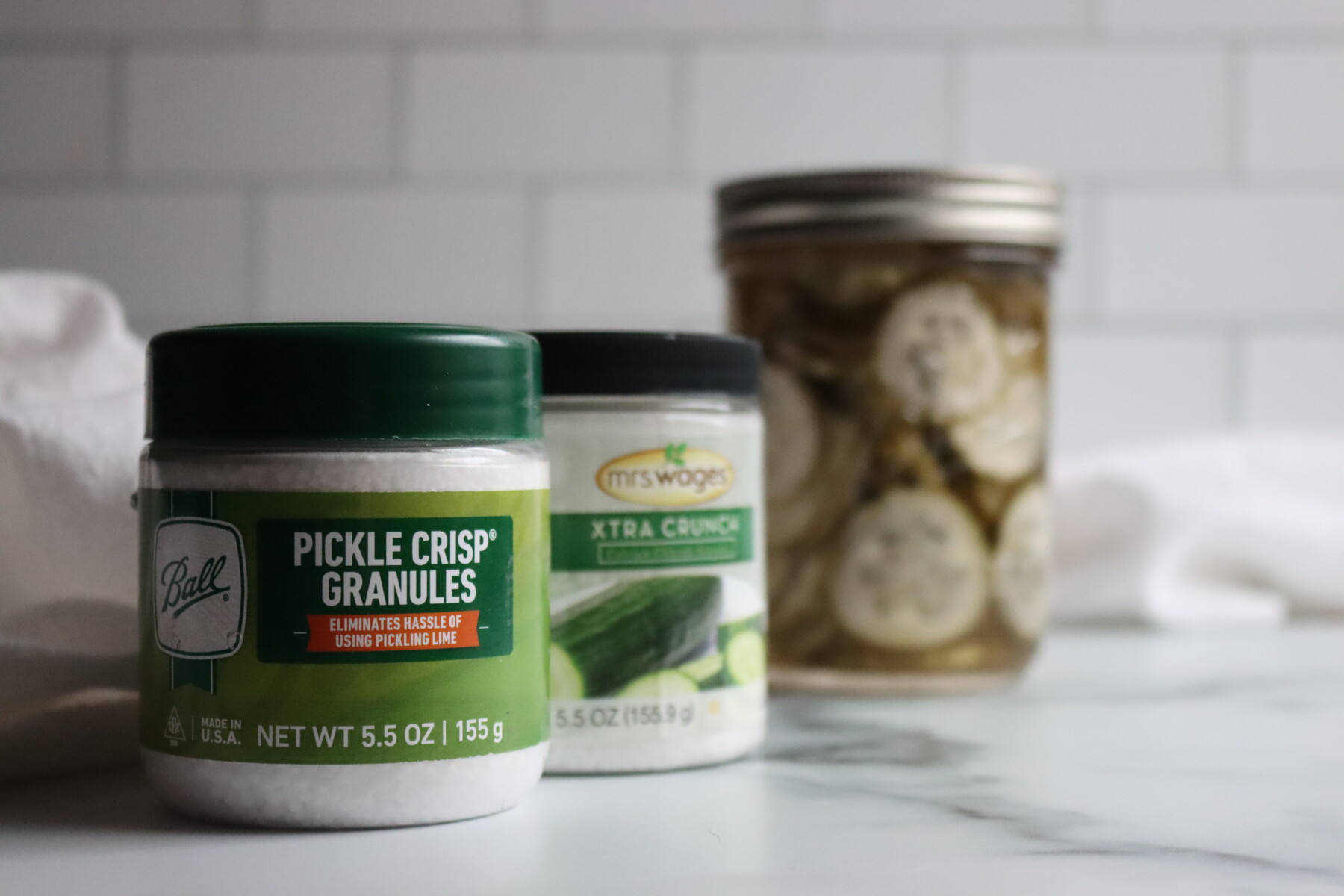
Tips for Crisp Pickles
Crunch starts with the cucumbers. Use the freshest cucumbers you can and can them soon after picking, since time and warmth are what soften pickles.
Trim about 1/16 inch off both ends of each cucumber before slicing. That small step helps remove enzymes associated with softening, and it’s one of those boring little details that really does pay off in the jar.
If you have time, keeping cucumbers cold while you prep your canner and brine can help too. You’re not doing a long soak here, just keeping them chilled so they spend less time warm before processing.
How to Make Low Salt Dill Pickles
This is a raw pack pickle, which means the cucumbers go into the jars cold and the hot brine is poured over them. Have everything prepped and ready before you start the brine, since once it’s simmering you want to keep moving.
Prepare the Canner and Jars
Fill your water bath canner about half full with water and bring it to a simmer. Wash your pint jars in hot soapy water, rinse, and keep them hot (either in the simmering canner or in a sink of hot water) until you’re ready to fill them. Have your lids and bands set out alongside the canner.
Prep the Cucumbers
Wash the cucumbers under cold running water and drain well. Trim about 1/16 inch off both ends of each cucumber, then slice them into 1/4 inch rounds. A mandoline gives you the most uniform slices in the least time, but a sharp knife works just fine if you take your time.
If your kitchen is warm, set the slices aside in the refrigerator while you make the brine.
Make the Pickling Brine
Tie the pickling spice into a small spice bag (a square of cheesecloth tied with kitchen twine works well, or a reusable muslin spice bag if you have one). Combine the vinegar, sugar, and canning salt in a large saucepan, then add the spice bag.
Bring everything to a boil, then reduce to a gentle simmer and let it simmer for about 15 minutes so the spice flavor has time to infuse the liquid. Remove the spice bag and discard it. Keep the brine hot until you’re ready to pour it into the jars.
Pack and Brine the Jars
Pack the cucumber slices into hot pint jars, leaving 1/2 inch headspace. Add one dill head per jar (or about 1/2 teaspoon dill seed if you’re using that instead), and add 1/8 teaspoon Pickle Crisp per jar if you’re using it.
Ladle the hot brine over the cucumbers, maintaining 1/2 inch headspace. Run a bubble remover or chopstick around the inside of each jar to release trapped air, and add a little more brine if needed to keep the headspace right.
Wipe the jar rims with a clean, damp paper towel, center the lids, and screw on the bands to fingertip tight.
If you’re not canning, you can let the jars cool to room temperature and store them in the refrigerator instead. Personally, I prefer to can them so I can keep them on the pantry shelf without taking up fridge space.
Canning Low Salt Dill Pickles
One important note: the canning time for low salt pickles is longer than regular pickles, dill or otherwise. Most cucumber pickles process for 10 minutes in pints, but low salt dill pickles need 15 minutes in a water bath canner (and longer at altitude). The extra time accounts for the reduced salt and modified brine, so don’t shortcut the time.
This recipe is also only tested for pint jars, so don’t try to scale it up to quarts.
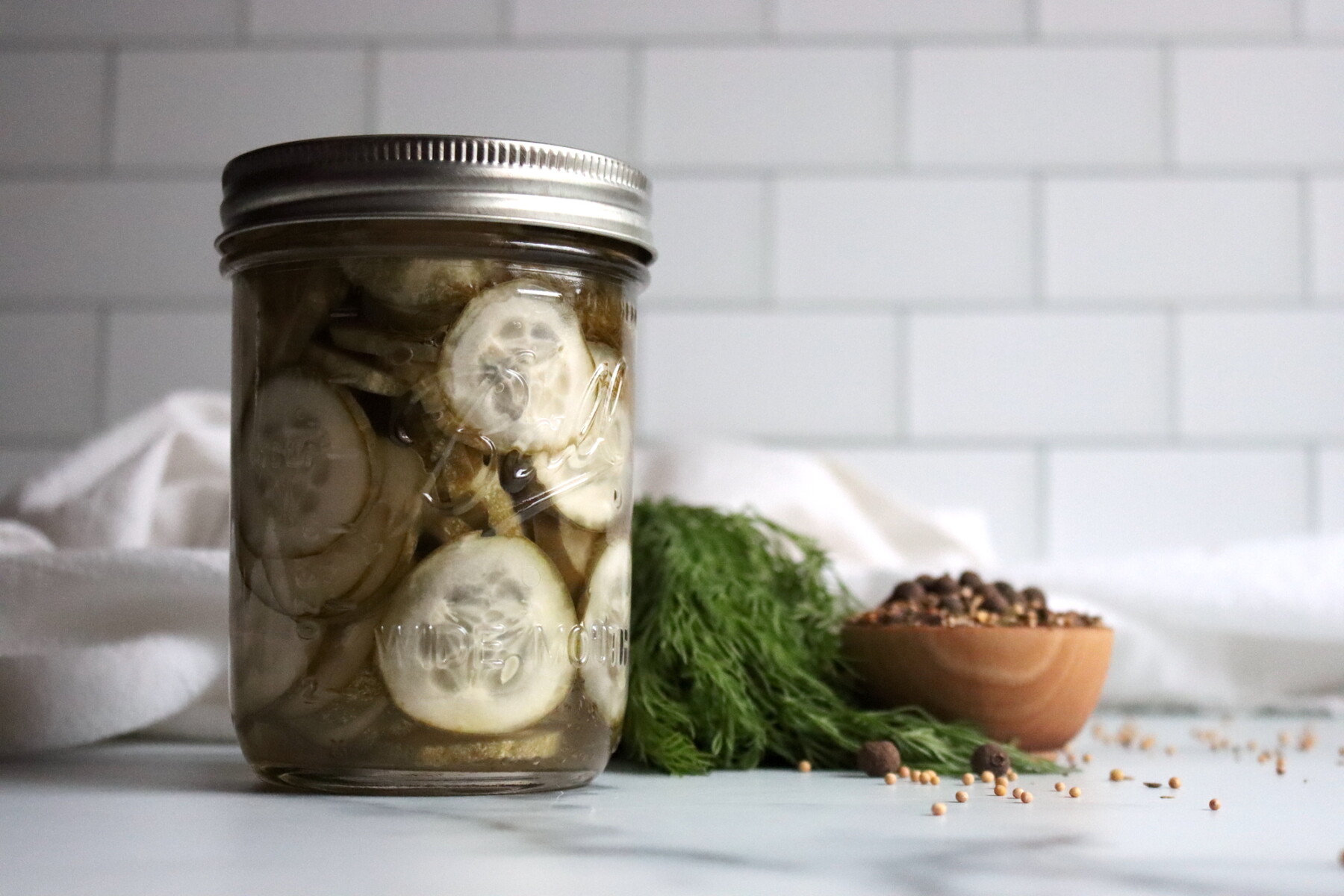
Process pint jars for 15 minutes in a boiling water bath canner, adjusting for altitude as needed. The canner water should cover the jars by at least 1 inch, and timing starts after the canner returns to a full rolling boil. When time is up, turn off the heat, remove the canner lid, and let the jars sit for 5 minutes before moving them to a towel-lined counter to cool undisturbed for 12 to 24 hours. Check the seals before storing.
Altitude Adjustments
For water bath canning, processing times for low salt dill pickles increase at higher elevations:
- 0 to 1,000 feet: 15 minutes
- 1,001 to 6,000 feet: 20 minutes
- Above 6,000 feet: 25 minutes
Yield Notes
Four pounds of pickling cucumbers yields about 6 pints of finished pickles. The exact yield will vary slightly depending on cucumber size and how tightly you pack the jars. Smaller, more uniform cucumbers in the 3 to 4 inch range tend to pack more efficiently than larger ones, and you may end up with a partial seventh jar (which goes in the fridge to enjoy first).
This recipe is only tested for pint jars in a raw pack. Half pints will work fine if you’d rather make smaller jars (process for the same time as pints), but quart jars are not safe for this recipe and have not been tested for low salt processing.
Serving Ideas
Low salt dill pickle slices are made for sandwich duty. Layer them on burgers, BLTs, ham and cheese, or grilled chicken sandwiches where you’d usually reach for a deli pickle. Because they’re sweet-tart rather than aggressively briny, they also play well with milder fillings like turkey or egg salad.
Beyond sandwiches, I chop them into tartar sauce, dice them into potato salad or pasta salad, fold them into deviled egg filling, or set them out alongside cheese and crackers as a snack. The brine is also worth saving once the jar is empty, since it makes a quick refrigerator pickle for sliced onions or radishes.
Give them at least 2 to 3 weeks in the jar before opening so the flavors have time to develop. Like most canned pickles, they get better with a little time on the shelf.
Low Salt Dill Pickle FAQs
Yes, when you follow this tested Ball Blue Book recipe and keep the vinegar level exactly as written. In canned pickles, vinegar is the safety-critical ingredient, and reputable extension guidance emphasizes not changing vinegar ratios and only using five percent acidity vinegar.
I would not reduce it further for a shelf stable canned recipe. The current ratio is what’s tested and gives a finished product that still tastes like a pickle.
Because flavor has to come from somewhere. With salt dialed way back, sugar rounds the sharp edges of straight vinegar and keeps the pickles from tasting aggressively sour. It’s not meant to turn these into candy sweet pickles, it’s there for balance, and the finished product reads more sweet-tart than briny.
Those are common in other reduced sodium pickle recipes, including the NCHFP version. Adding a few slices of onion and a small amount of dry spices generally changes flavor more than it changes the recipe structure, but if you want to stay closest to the Ball Blue Book profile, keep it dill forward and go light on extras.
If you tried this Low Salt Dill Pickles recipe, or any other recipe on Creative Canning, leave a ⭐ star rating and let me know what you think in the 📝 comments below!
And make sure you stay in touch with me by following on social media!
Low Salt Dill Pickles
Equipment
- Canning Jars, Lids and Bands
- Large saucepan
- Cheesecloth or spice bag
- Sharp knife or mandoline
Ingredients
- 4 lbs pickling cucumbers, 3 to 5 inch, very fresh
- 6 cups white vinegar, 5% acidity
- 3 cups granulated sugar
- 2 tbsp canning or pickling salt
- 2 tbsp pickling spice, tied into a spice bag
- 6 heads fresh dill, one per pint jar, or 1/2 tsp dill seed per jar
- Pickle Crisp (calcium chloride), optional, 1/8 tsp per pint jar
Instructions
- Set up your water bath canner and bring the water to a simmer. Wash pint jars in hot soapy water and keep them hot until you’re ready to pack. Have your lids and bands ready.
- Wash the cucumbers under cold running water and drain well. Trim about 1/16 inch off both ends of each cucumber, then slice the cucumbers into 1/4 inch rounds.
- Tie the pickling spice into a small cheesecloth spice bag. Combine the vinegar, sugar, and canning salt in a large saucepan and add the spice bag. Bring to a boil, then reduce to a simmer and simmer for 15 minutes so the spices have time to infuse the brine. Remove and discard the spice bag.
- Pack the cucumber slices into hot pint jars, leaving 1/2 inch headspace. Add one dill head (or 1/2 teaspoon dill seed) per jar, plus 1/8 teaspoon Pickle Crisp per pint if using.
- Ladle the hot brine over the cucumbers, maintaining 1/2 inch headspace. Run a bubble remover or chopstick around the inside of the jar to release trapped air, and add a little more brine if needed. Wipe the jar rims with a clean damp paper towel, center the lids, and screw on the bands to fingertip tight.
- Process pint jars for 15 minutes in a boiling water bath canner, adjusting for altitude (see notes). The canner water should cover the jars by at least 1 inch, and timing starts after the canner returns to a full rolling boil.
- Turn off the heat, remove the canner lid, and let the jars sit for 5 minutes. Move them to a towel-lined counter to cool undisturbed for 12 to 24 hours. Check the seals, label the jars, and store sealed jars in a cool, dark place. Allow the pickles 2 to 3 weeks to develop their flavor before opening.
Notes
Altitude Adjustments
- 0 to 1,000 feet: 15 minutes
- 1,001 to 6,000 feet: 20 minutes
- Above 6,000 feet: 25 minutes
For Crisper Pickles
Use the freshest cucumbers you can and can them within 24 hours of picking. Trimming 1/16 inch off both ends of each cucumber removes enzymes that contribute to softening. Calcium chloride (Pickle Crisp) is an approved firming agent that adds no sodium and helps the pickles stay snappy after processing.Nutrition
Nutrition information is automatically calculated, so should only be used as an approximation.
Find the perfect recipe
Searching for something else? Enter keywords to find the perfect recipe!

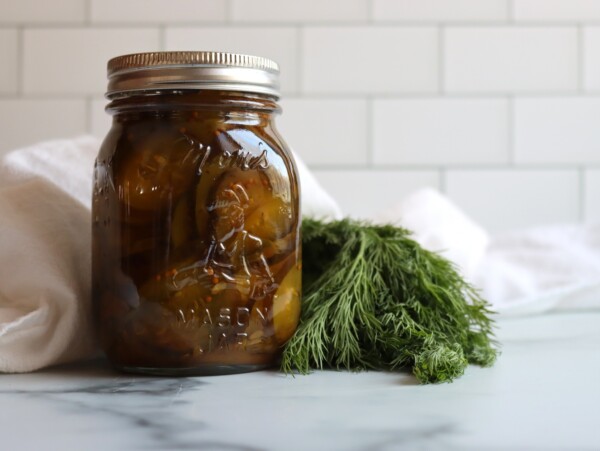
Such great flavor, even without a lot of salt!