This post may contain affiliate links. Please see our disclosure policy.
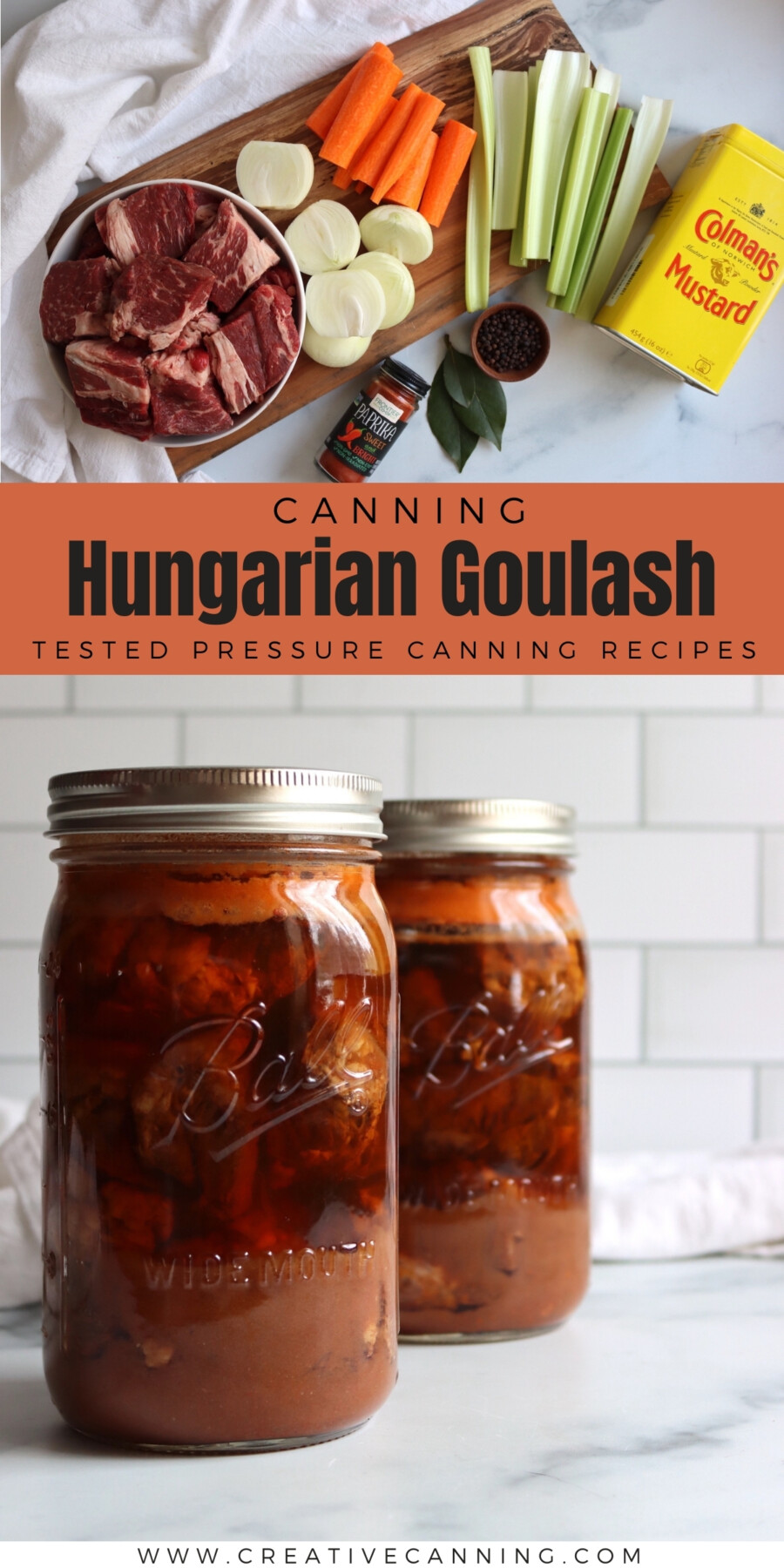
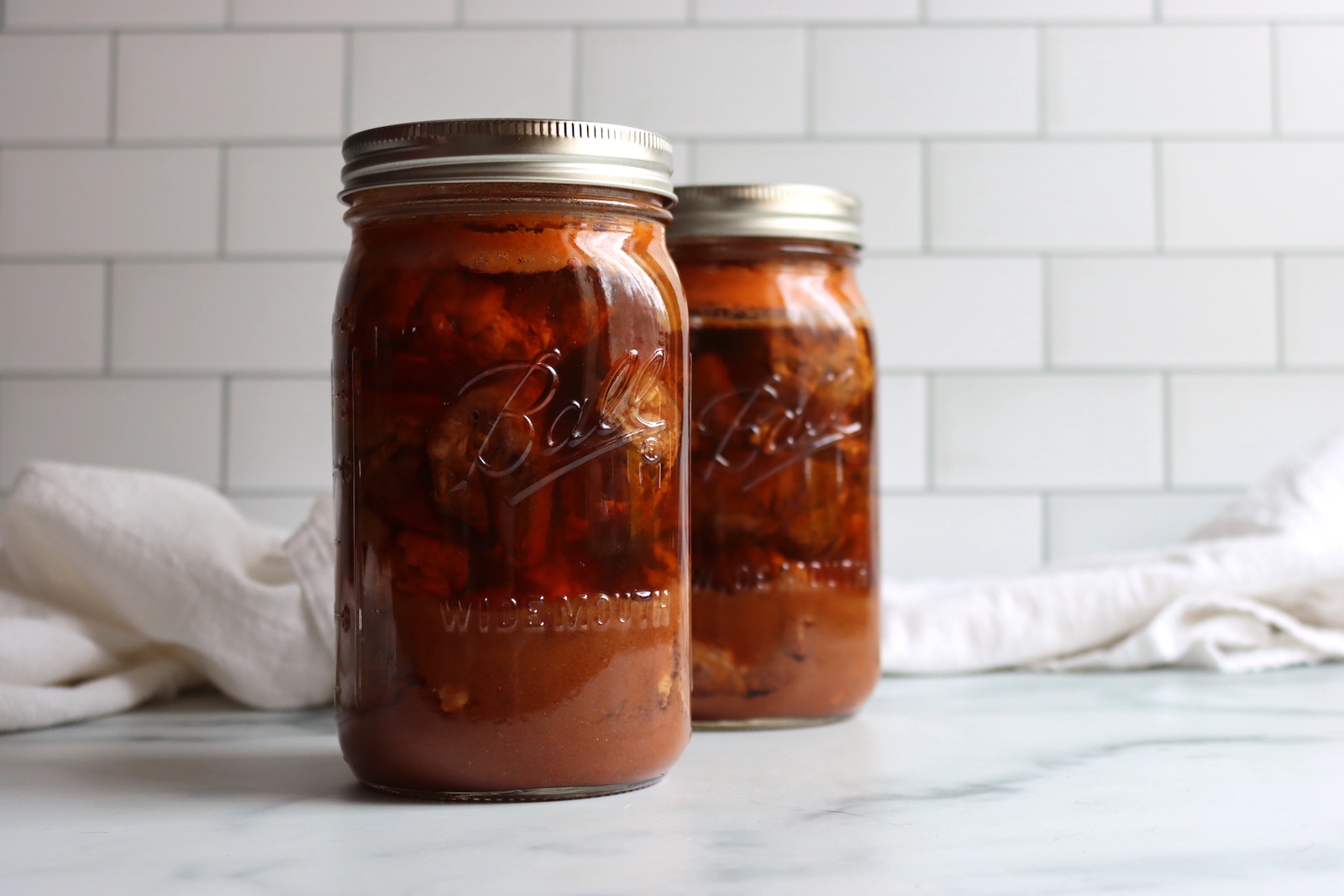
Canning goulash gives you a savory meal in a jar with incredible flavor, despite its deceptively short ingredients list. This Hungarian-inspired pressure canned recipe is rich, deeply flavored, and built around paprika-coated beef that simmers low and slow before it ever sees a jar.
Once it’s on the shelf, you have a proper hearty meal ready to go on any night of the week.
This recipe has been reviewed for safety and accuracy by a Master Food Preserver certified through the University of Cornell Cooperative Extension.
This recipe comes from the Ball Blue Book of Canning, and it’s also published in the Bernardin Guide to Home Preserving. Both are trusted tested sources, and the recipe is nearly identical between the two editions.
They both, however, have a misprint in the amount of water needed for this recipe. The beef simmers with the vegetables for an hour to build a broth, and it needs ample water to do that. They say 1 cup is enough, but I found that exactly 1 quart (4 cups) was needed to both successfully simmer the meat without scorching, and leave enough broth to pack the meat into the jars.
I’ve followed both here and noted the small variations in the recipe notes so you can decide what works best for your pantry.
Why you’ll love this goulash canning recipe!

I’ll be honest: I was skeptical going in. The long pre-cook felt like a lot of effort before the jars even went into the canner, but it builds the most incredible flavor in the meat. By the time the broth was done, the whole kitchen smelled amazing, and the beef was rich and tender in a way that shorter cooking methods just don’t achieve.
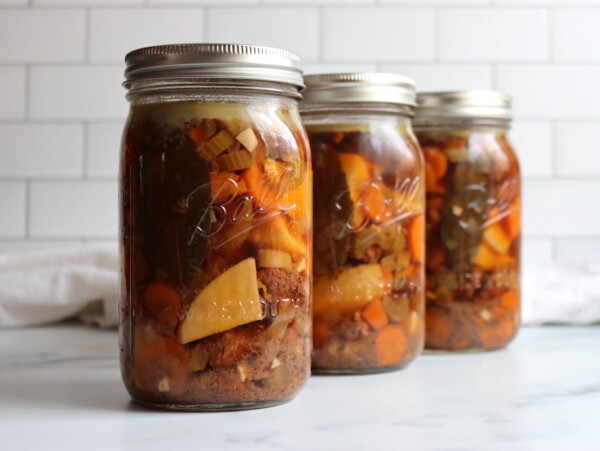
The vegetables in this recipe are technically flavor agents, cooked in large pieces so they can be removed before canning. You can add them to the jars, or leave them out, it’s up to you. My kids ate every last carrot while I loaded the canner, and I sat there picking off the onions straight from the pot because they were that good. The recipe says discard them, but I’d say either eat them on the spot as a snack, or include them in the jars.
This recipe is surprisingly good and well worth the effort, and it has earned a permanent spot in my canning rotation.
Quick Look at the Recipe
- Recipe Name: Canning Goulash
- Recipe Type: Meal in a Jar Canning Recipe
- Canning Method: Pressure Canning
- Prep/Cook Time: About 45 minutes prep, plus 1 hour simmer
- Canning Time: 75 minutes for pints, 90 minutes for quarts
- Yield: 4 pints or 2 quarts (easily doubled or tripled)
- Jar Sizes: Pints or Quarts
- Headspace: 1 inch
- Ingredients Overview: Beef or pork, paprika, carrots, celery, onion, vinegar, and a simple spice blend
- Safe Canning Recipe Source: Ball Blue Book of Canning and the Bernardin Guide to Home Preserving
- Difficulty: Moderate. The browning and long simmer take some time, but the process itself is straightforward, and the results are absolutely worth it.
- Similar Recipes: If you love hearty pressure canning recipes, this one fits right alongside other beef canning recipes like Beef Stew, Beef Burgundy, Beef Stroganoff, and Chipotle Beef Taco Meat.
Ingredients for Goulash
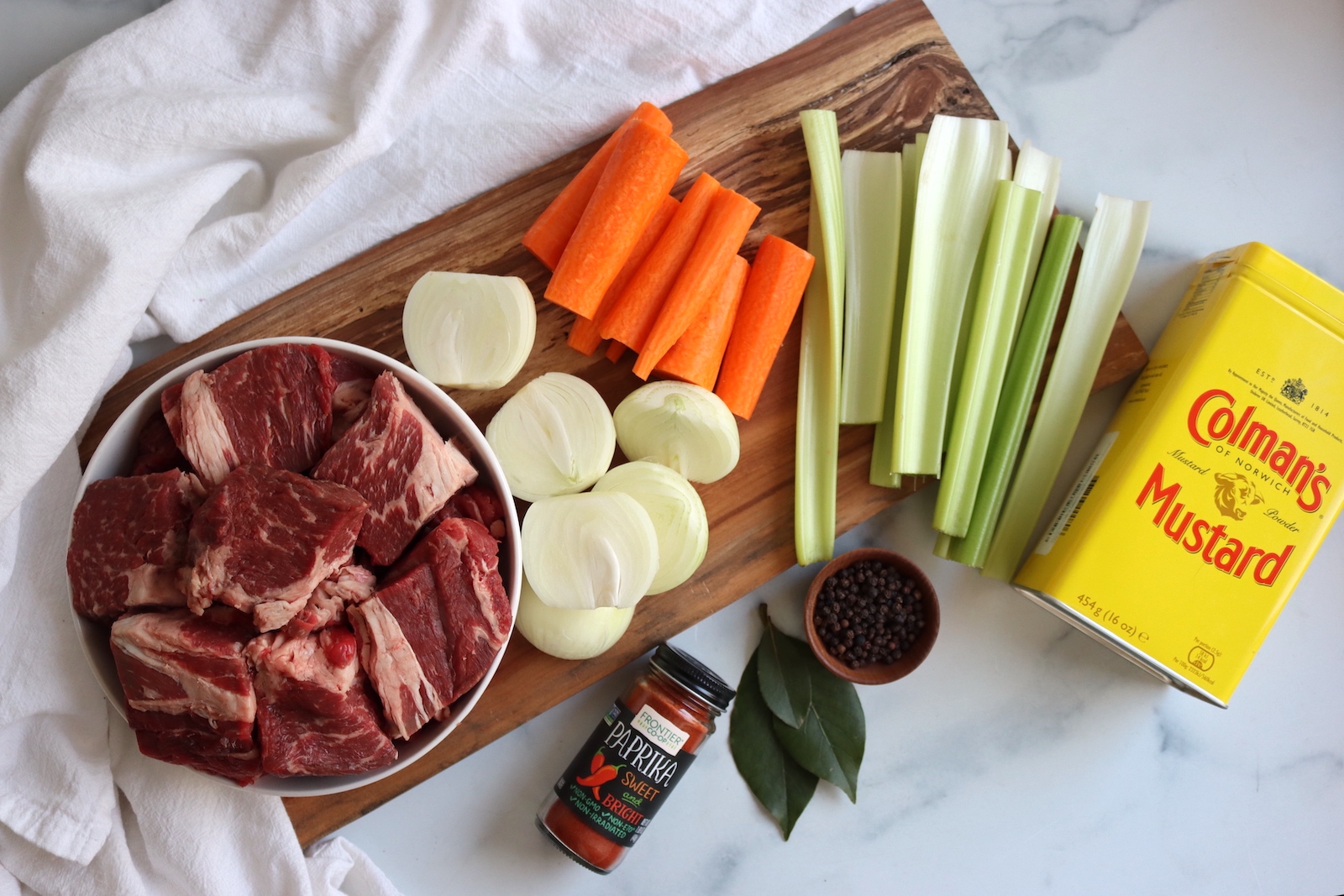
This recipe uses a short but carefully balanced list of ingredients. The vegetables and spice bag cook with the meat to build a rich, paprika-forward broth, and the vinegar adds a subtle depth that rounds everything out beautifully. The spices and vinegar are for flavor, not preservation, and you can adjust them to your tastes (but I think they’re perfect as is).
- Stewing beef or pork: The heart of the recipe, providing richness and body. Chuck roast, round, or any well-marbled stewing cut works well for beef. For pork, any stewing cut is fine, and pork leg roast is a great option per the Bernardin version of this recipe.
- Vegetable oil: Used to brown the meat before simmering, which builds flavor and gives the finished broth its depth. Any neutral oil works here.
- Carrots: Added in large halved pieces to flavor the broth during the long simmer. They soak up the paprika beautifully and can be removed before jarring or kept in if you prefer a heartier result.
- Celery: Cut in half lengthwise and cooked with the meat to add savory depth to the broth. Like the carrots, they can be discarded, eaten on the side, or kept in the jars.
- Onions: Halved with the root end intact so they hold together during cooking. They add sweetness and body to the broth and are genuinely delicious straight from the pot.
- Paprika: The defining spice in this recipe and the one that makes goulash what it is. Hungarian paprika is the most traditional choice, but Spanish paprika works well too. Use a good quality paprika here because it really is the star.
- Salt: Seasons the meat and the broth and helps the finished jars taste full and balanced rather than flat. This is just for flavor and can be reduced or left out entirely if you prefer to salt at serving.
- Mustard powder: A small but important addition that adds a subtle sharpness and warmth to the spice blend. I’d recommend dry mustard powder, but prepared mustard will work if that’s all you have.
- Caraway seeds: Listed as optional, but they’re really lovely in the dish. They add a faintly anise-like warmth that is traditional in some regional versions of goulash. Leave them out if you prefer a simpler flavor or if you know your family won’t enjoy them.
- Peppercorns and bay leaves: Bundled into a spice bag with the caraway seeds and simmered with the meat for the full cook time, then removed before jarring.
- Vinegar: Added to the pot for flavor, not for preservation. It brightens the richness of the beef and the paprika and gives the broth a little complexity. Any vinegar works here since the acidity level doesn’t affect canning safety in a pressure canned recipe.
- Water: Used to deglaze the pan after browning the meat, capturing all of the browned bits and adding them to the broth. Don’t let the pot boil dry, and add more if nessisary.
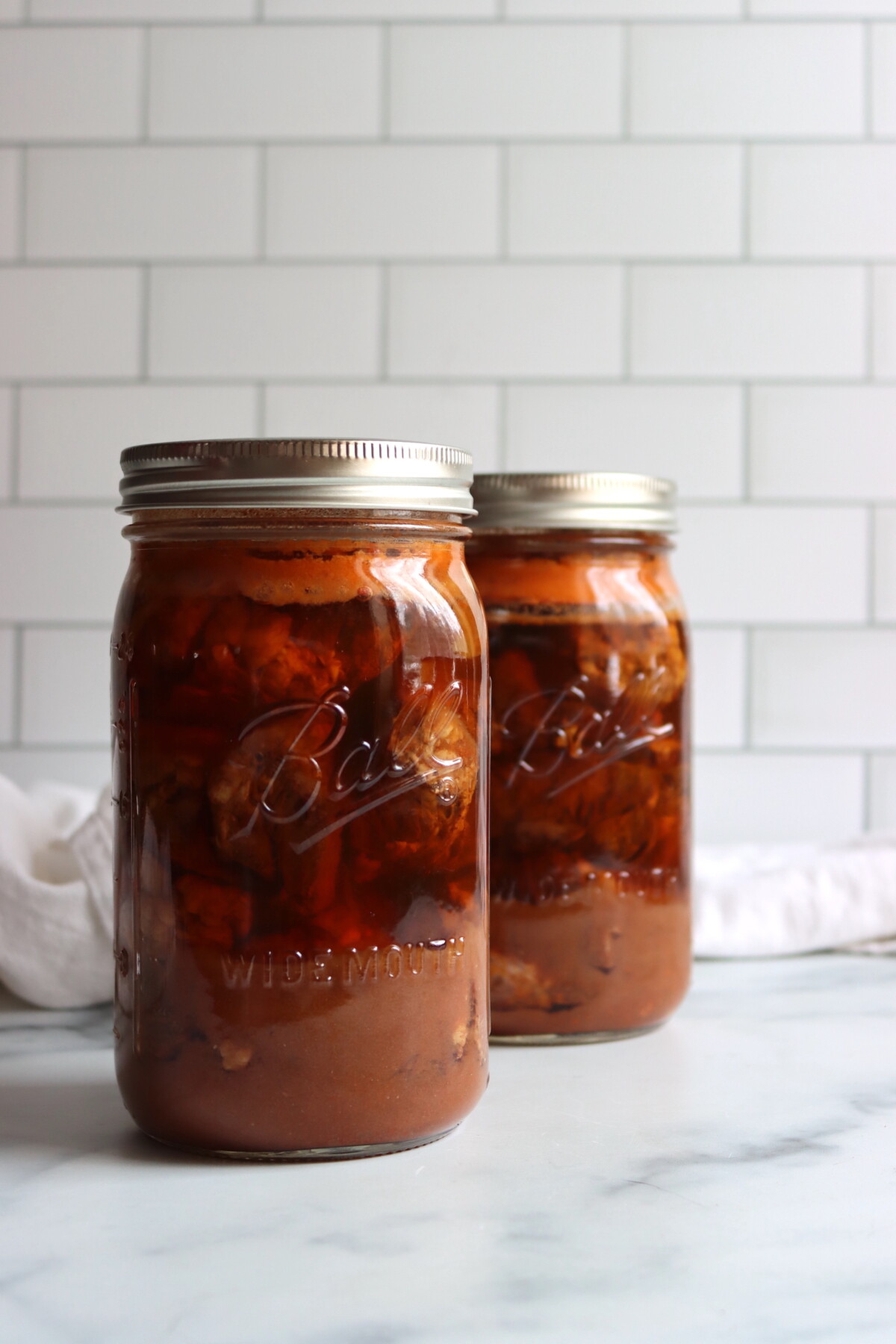
This recipe follows tested guidelines from Ball and Bernardin and can also be adapted using the University of Alaska Cooperative Extension Hearty Soups Protocol, which allows for some flexibility in the vegetable mix. Per those guidelines, the vegetables can safely be left in the jars rather than discarded, so long as everything stays submerged in the broth.
You cannot add thickeners, dairy, pasta, rice, or pureed vegetables before canning. For meat, you can use beef, pork, venison, bison, elk, or other game meats. Feel free to double or tripple the recipe to whatever batch size works best for your canner capacity (and household needs).
Step by Step Instructions
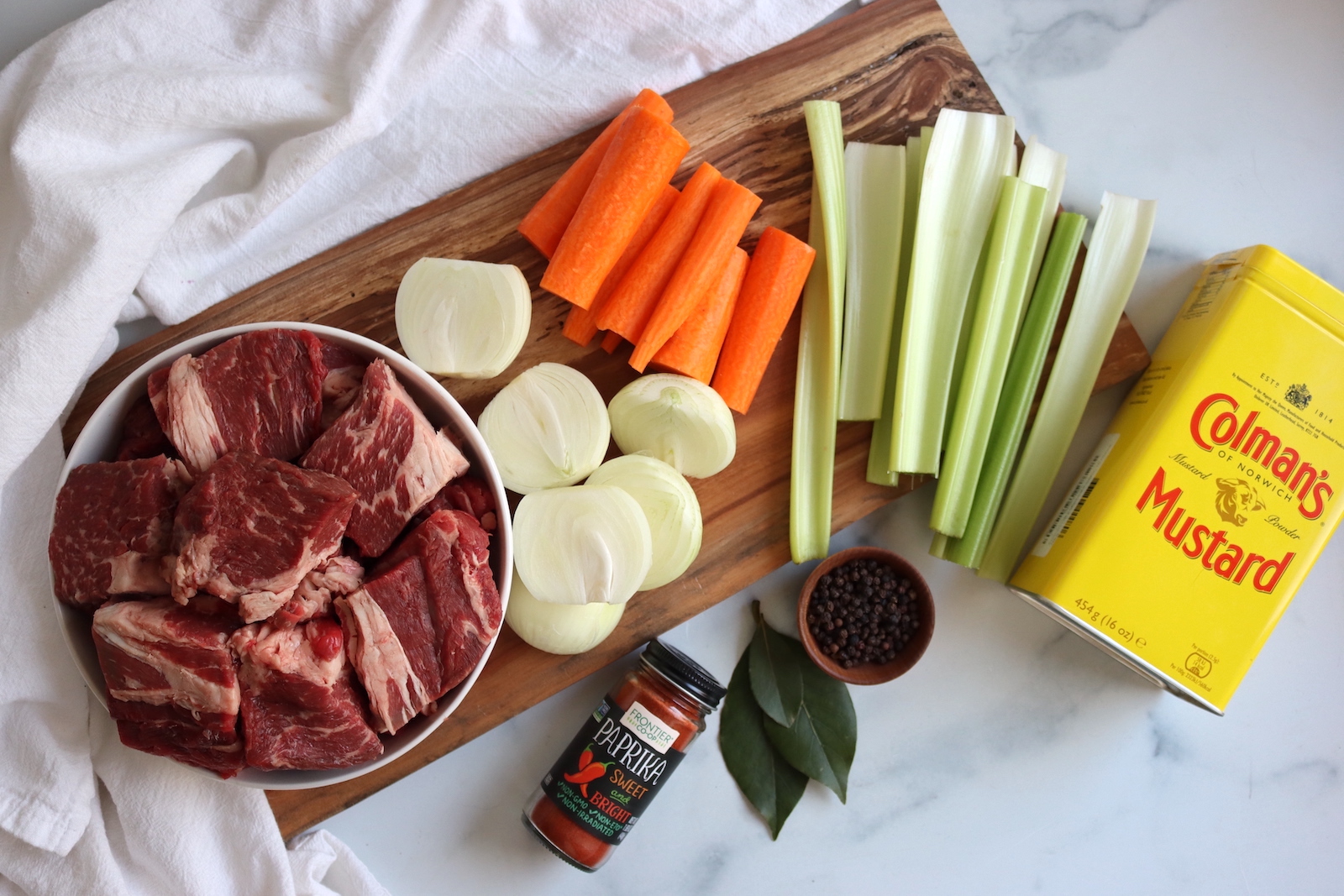
- Prepare your pressure canner, jars, lids, and bands. Cut the beef or pork into 1 to 2-inch cubes. Wash and halve the celery stalks, peel and halve the carrots, and halve the onions root-end intact. Bundle the peppercorns, bay leaves, and caraway seeds in cheesecloth to make a spice bag. Mix the paprika, salt, and mustard powder and toss with the meat until evenly coated.
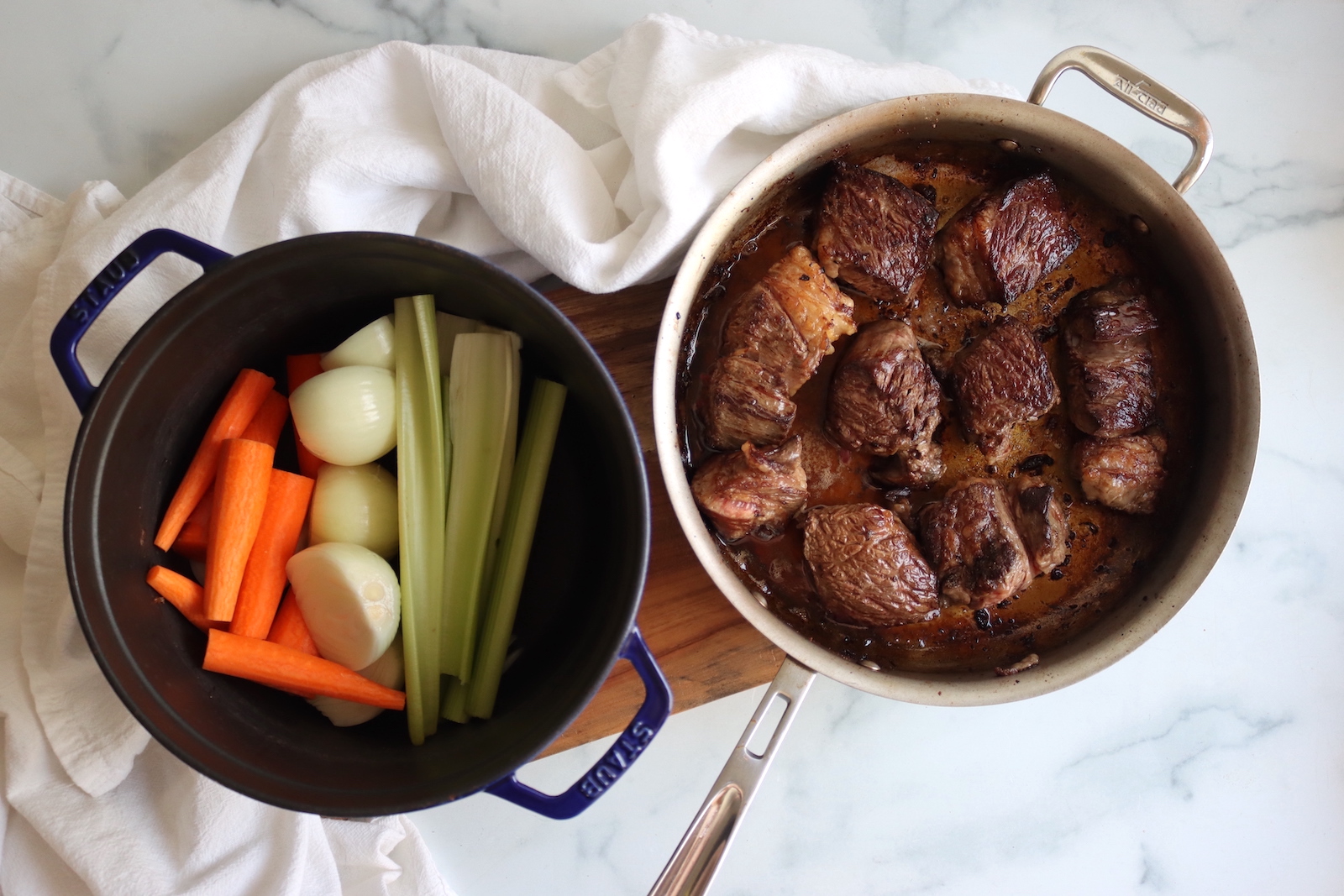
- Heat oil in a heavy-bottomed pan over medium-high heat and brown the meat in batches. Transfer to a large pot with the prepared vegetables. Deglaze the pan with water and pour into the pot. Add the spice bag and vinegar.
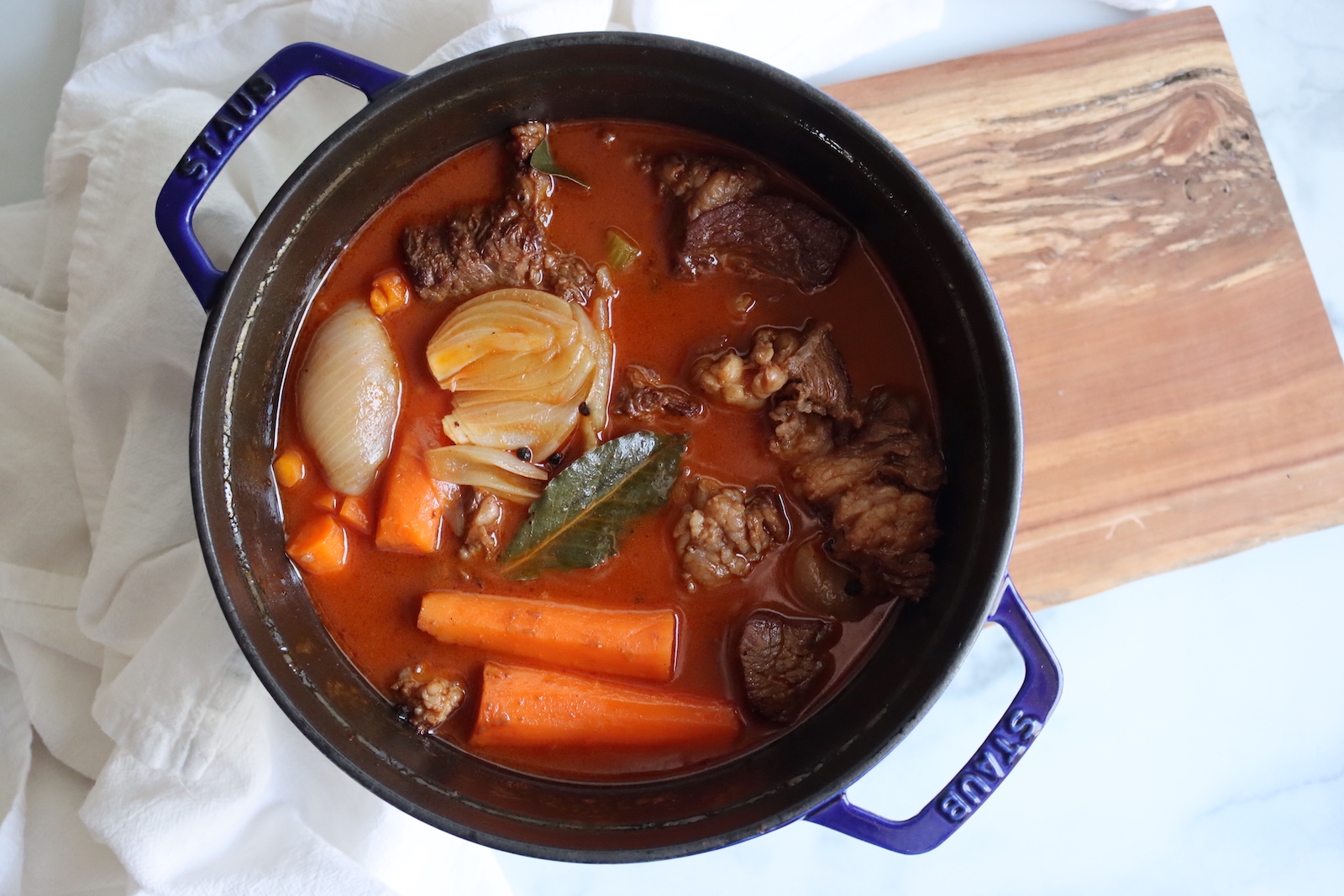
- Bring to a boil, then reduce to a simmer and cook covered for about 1 hour until the meat is just tender. Remove the spice bag. Remove and discard the vegetables, or leave them in if following the Hearty Soups Protocol. Ladle into prepared jars, leaving 1 inch headspace. Remove air bubbles, wipe rims, and apply lids to fingertip tight.
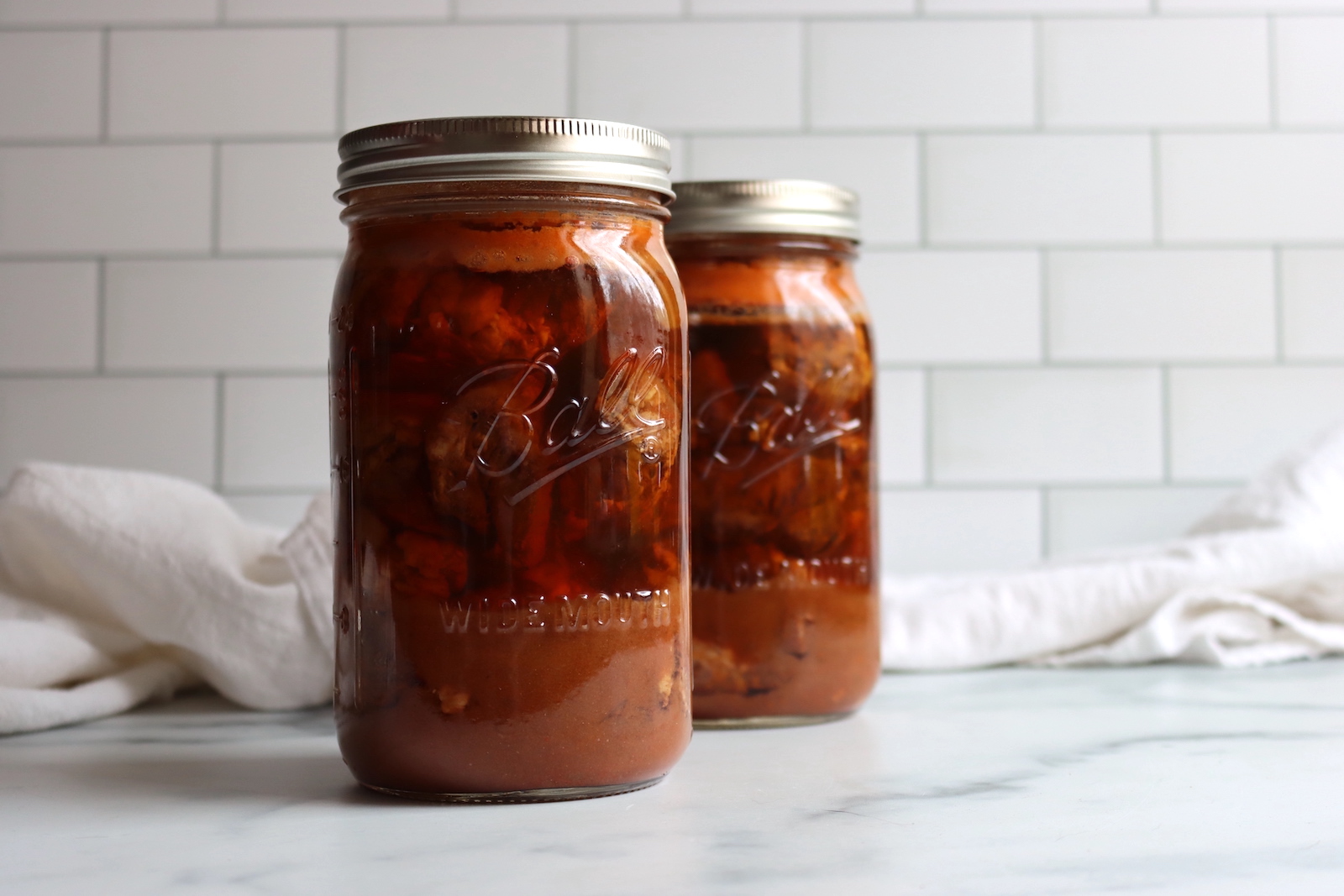
- Load jars into the preheated pressure canner. Lock the lid, vent for 10 minutes, then bring to pressure. Process pints for 75 minutes and quarts for 90 minutes, adjusting pressure for altitude. Allow the canner to depressurize naturally, then remove jars and cool for 12 to 24 hours. Check seals, label, and store.
Canning Goulash
This is a hot pack recipe. The meat is browned and simmered until just tender before going into the jars, which ensures good flavor and proper heat distribution during processing. Do not pack the meat in raw, as the recipe has been tested for safety as a hot pack.
The yield as written is 4 pints or 2 quarts. This is a small batch by canning standards, so it’s worth doubling or tripling if you want to fill a full canner load.
Process pints for 75 minutes and quarts for 90 minutes at 10 pounds in a weighted gauge canner or 11 pounds in a dial gauge canner, adjusting for altitude as noted below.
Altitude Adjustments
With pressure canning, the processing times stay the same at higher altitudes, but the pressures change. Here are the altitude adjustments for pressure canning goulash:
For dial gauge pressure canners:
- 0 to 2,000 feet in elevation: 11 lbs pressure
- 2,001 to 4,000 feet in elevation: 12 lbs pressure
- 4,001 to 6,000 feet in elevation: 13 lbs pressure
- 6,001 to 8,000 feet in elevation: 14 lbs pressure
For weighted gauge pressure canners:
- 0 to 1,000 feet in elevation: 10 lbs pressure
- Above 1,000 feet: 15 lbs pressure
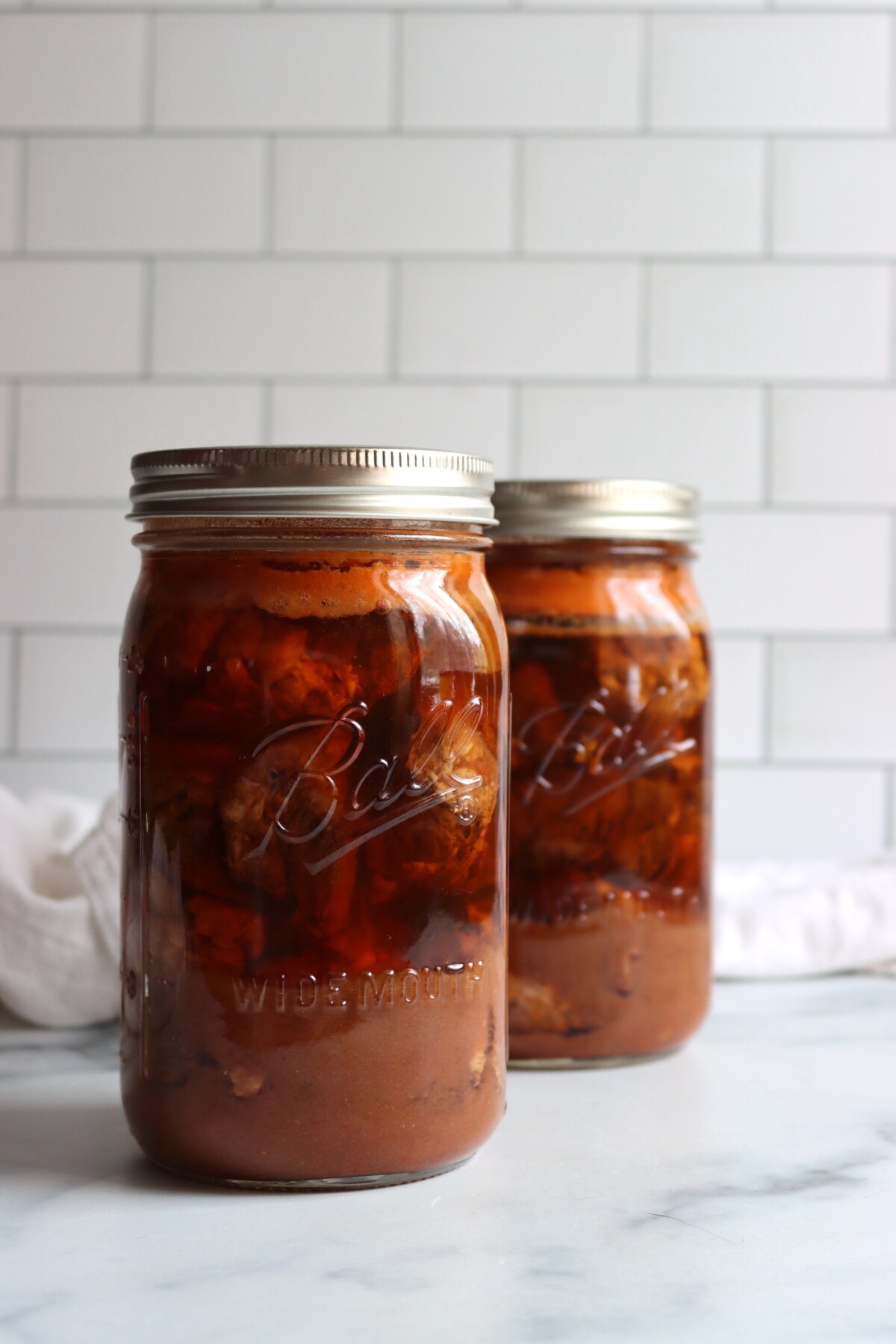
Serving Ideas
Goulash is traditionally served as a broth-based dish, ladled into a bowl and eaten with a thick slice of crusty bread on the side. It is simple and satisfying that way, and the paprika-rich broth is really the point.
If you want to make it more substantial, you can add a few homemade dumplings to the pot, or serve over noodles.
If you want to take it in a less traditional direction, the broth thickens beautifully with a simple flour or cornstarch slurry stirred in after opening. Thickened goulash is wonderful served over egg noodles, mashed potatoes, or a bed of braised cabbage and onion. You could also toss in macaroni after opening and let it cook right in the broth for a quick one-pot meal. It’ll end up being closer to Beef Stroganoff with a different spice profile, but still delicious.
For a simple weeknight dinner, just heat a jar on the stovetop and serve it as is. It is fully cooked and ready to eat straight from the jar with very little effort, which is exactly the point of having it on the shelf.
Canning Goulash FAQs
Yes, the vegetables can safely be left in the jars. The Ball Blue Book version of this recipe uses them as flavor agents and instructs you to remove them before canning, but keeping them in is allowed under the University of Alaska Cooperative Extension Hearty Soups Protocol, which is a tested and approved guideline for pressure canning mixed meat and vegetable recipes. Just make sure everything stays submerged under the broth and that you maintain the correct 1 inch headspace.
Yes, pork works well in this recipe. The Bernardin version specifically notes that pork leg roast is a good option. Any stewing cut of pork will work. You can also use venison, bison, elk, or other game meats, as the recipe follows guidelines that accommodate a range of red meats.
Some additions are allowed and some are not. Under the Hearty Soups Protocol, you can add most firm vegetables, including potatoes, carrots, celery, corn, and green beans, as long as everything stays submerged in the broth. You cannot add pureed vegetables, sweet potatoes, winter squash, dry beans, pasta, rice, thickeners, dairy, or cured meats before canning.
Goulash contains meat and low-acid vegetables, which means it must be pressure canned.. Water bath canning does not get hot enough to safely process meat-based recipes, no matter how long you run it. This recipe must be made in a proper pressure canner.
Beef Canning Recipes
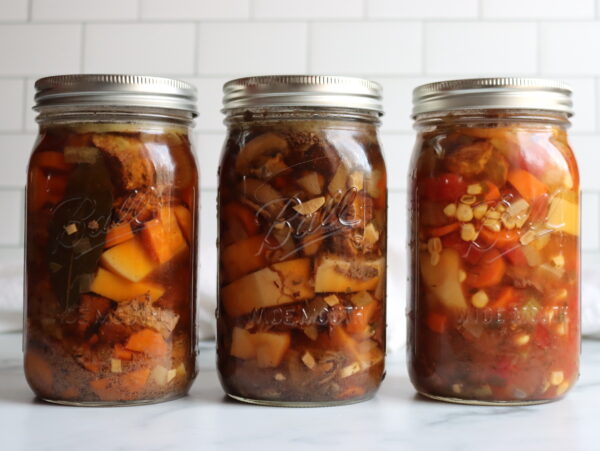
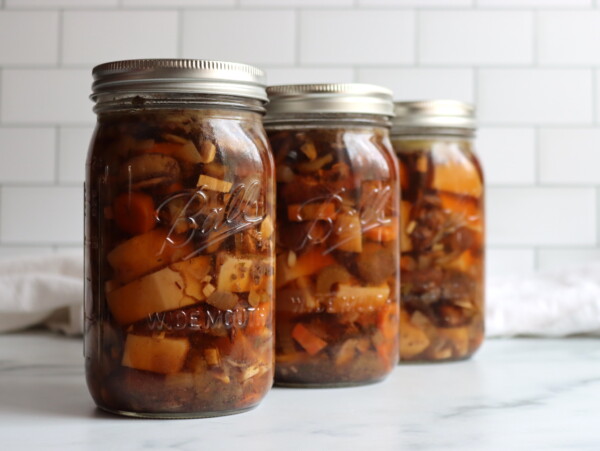
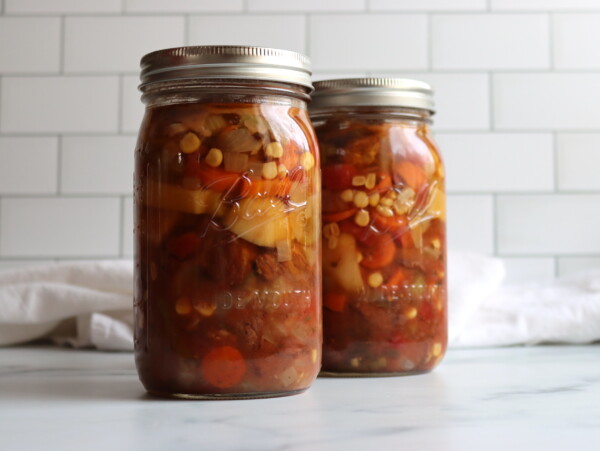
If you tried this Canning Goulash recipe, or any other recipe on Creative Canning, leave a ⭐ star rating and let me know what you think in the 📝 comments below!
And make sure you stay in touch with me by following on social media!
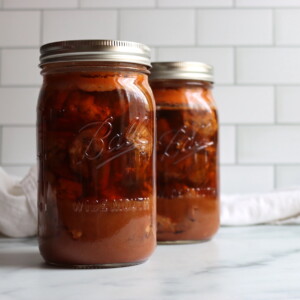
Canning Goulash
Equipment
Ingredients
- 4 lbs stewing beef or pork, such as beef chuck or round, cut into 2-inch cubes
- 2 to 4 Tbsp vegetable oil, as needed for browning meat, or other neutral oil
- 6 stalks celery, halved lengthwise
- 4 large carrots, peeled and halved lengthwise
- 3 medium onions, peeled and halved root-end intact
- 3 tbsp paprika, Hungarian paprika preferred
- 1 tbsp salt, see notes
- 2 tsp mustard powder
- 20 whole peppercorns
- 3 whole bay leaves
- 2 tsp caraway seeds, optional
- 4 cups water
- 1/4 cup vinegar, any type
Instructions
- Prepare your pressure canner, jars, lids, and bands according to the manufacturer’s instructions. Keep jars hot until needed.
- Wash and halve the celery stalks lengthwise, peel and halve the carrots, and halve the onions root-end intact so they hold their shape. Bundle the peppercorns, bay leaves, and caraway seeds in a piece of cheesecloth tied with kitchen twine to make a spice bag. Set aside.
- Combine the paprika, salt, and mustard powder in a small bowl. Toss the meat cubes with the spice mix in batches until evenly coated. Heat some of the oil in a large heavy-bottomed pan over medium-high heat and brown the meat in batches, adding more oil as needed. Transfer each batch to a large pot with the prepared vegetables as it finishes.
- Deglaze the frying pan with the water, scraping up all the browned bits from the bottom, and pour that liquid into the pot. Add the spice bag and vinegar. Bring to a boil, then reduce heat and simmer covered for about 1 hour until the meat is just tender but not falling apart. Alternatively, pressure cook on high for 7 to 10 minutes.
- Remove the spice bag. Remove and discard the vegetables, or leave them in if following the Hearty Soups Protocol. Ladle the hot goulash into prepared jars, making sure each jar has a good balance of meat and broth. Top with boiling water if needed. Leave 1 inch headspace. Remove air bubbles, wipe jar rims, and apply lids and bands to fingertip tight.
- Load jars into the preheated pressure canner. Lock the lid, vent for 10 minutes, then bring to pressure. Process pints for 75 minutes and quarts for 90 minutes, adjusting pressure for altitude. When processing is complete, turn off heat and allow canner to depressurize naturally. Wait a few minutes, then remove jars and cool on a towel-lined counter for 12 to 24 hours. Check seals, label, and store in a cool dark place.
Notes
Altitude Adjustments
For dial gauge pressure canners:- 0 to 2,000 feet in elevation: 11 lbs pressure
- 2,001 to 4,000 feet in elevation: 12 lbs pressure
- 4,001 to 6,000 feet in elevation: 13 lbs pressure
- 6,001 to 8,000 feet in elevation: 14 lbs pressure
- 0 to 1,000 feet in elevation: 10 lbs pressure
- Above 1,000 feet: 15 lbs pressure
Nutrition
Nutrition information is automatically calculated, so should only be used as an approximation.
Meal in a Jar Canning Recipes
Find the perfect recipe
Searching for something else? Enter keywords to find the perfect recipe!