
This post may contain affiliate links. Please see our disclosure policy.
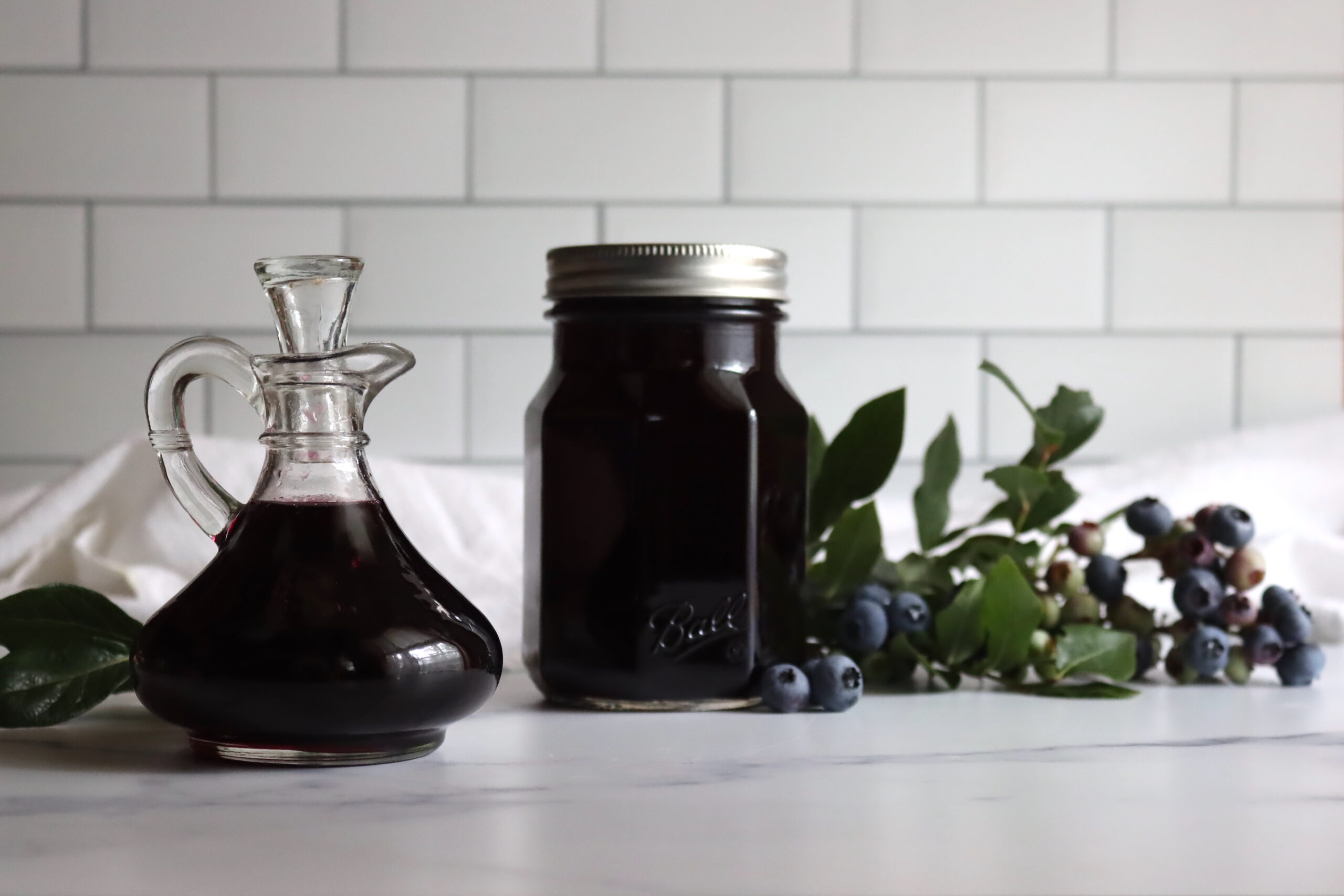
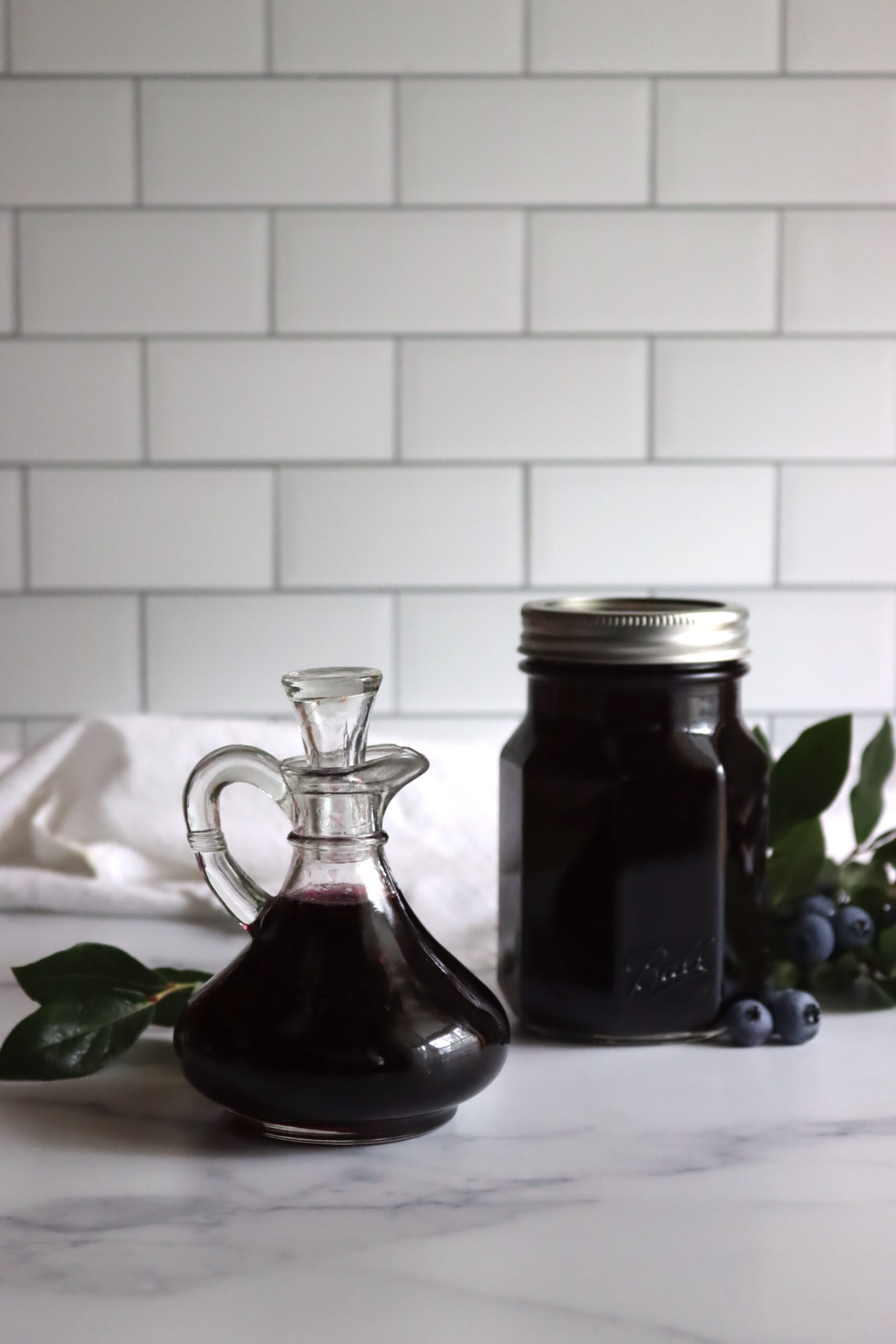
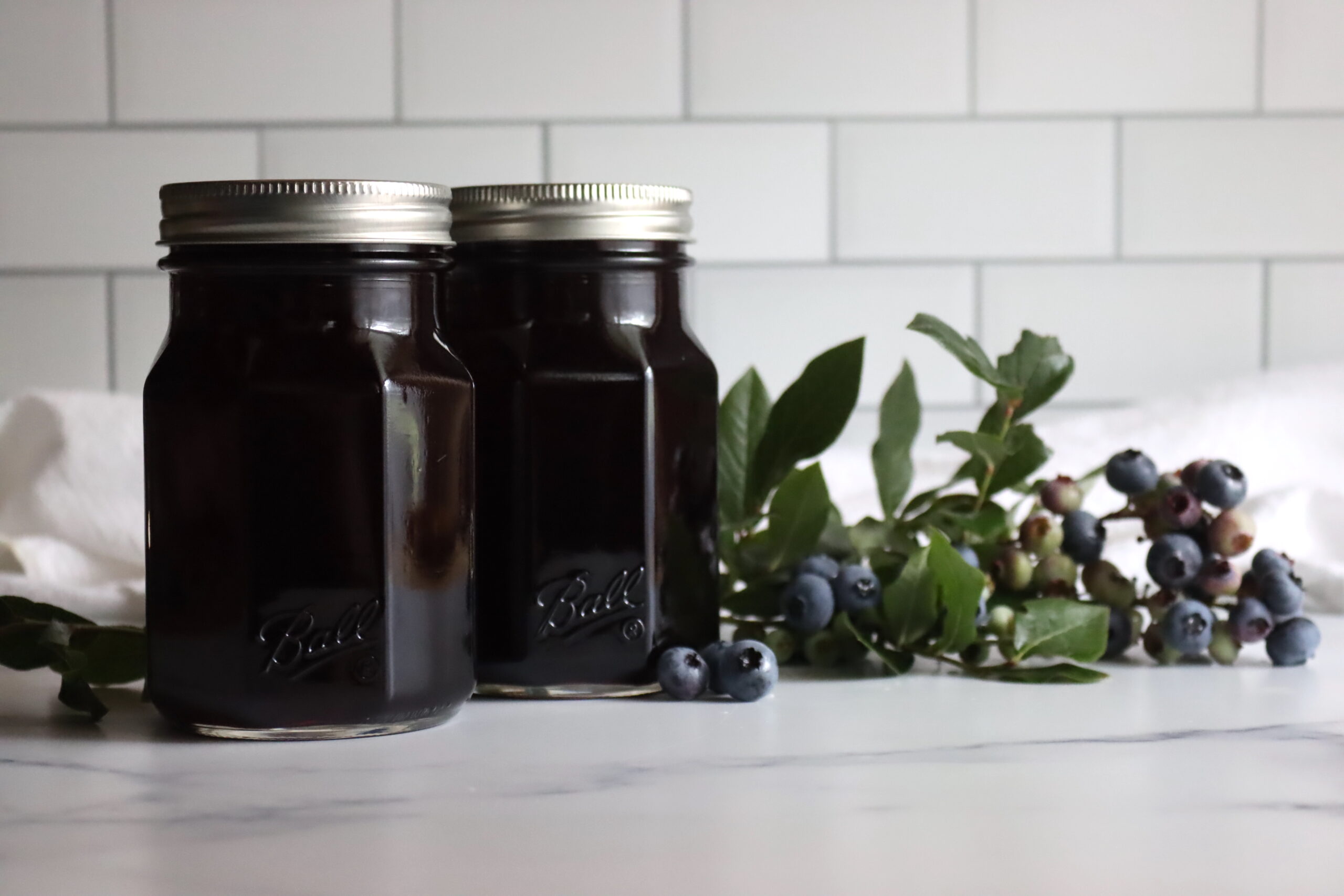
Blueberry syrup is wonderful over pancakes, spooned onto ice cream, or stirred into mixed drinks, and it’s a simple way to put up that short blueberry season for the whole year.
This recipe has been reviewed for safety and accuracy by a Master Food Preserver certified through the University of Cornell Cooperative Extension.
Blueberry season is short, so turning the berries into syrup is a way to keep that flavor on the shelf all year. Like the other berry syrups, this one strains the seeds and pulp out for a smooth, pourable syrup, with no pectin or set testing involved.
This recipe follows the Berry Syrup guidance from the National Center for Home Food Preservation, using a 1:1 ratio of juice to sugar for a true simple syrup with good body that dissolves instantly in cold drinks.
It’s the same juice you’d strain off when making blueberry butter the way The All New Ball Book of Canning and Preserving does it. That method cooks the berries down, runs off the juice for syrup, and turns the leftover pulp into blueberry butter, so the two pair naturally. Don’t toss the pulp.
Canning is optional. The syrup keeps in the refrigerator for weeks, so you can make a small batch for drinks or put up a larger quantity for the pantry. The batch below makes about 3 pints or 6 half pints, and doubling or tripling is easy since the processing time stays the same regardless of how many jars you’re canning.
Notes from My Kitchen

I make blueberry syrup most years when the pick-your-own places open up and we come home with more than we can eat fresh. I run the berries through for juice, can the syrup, and turn the pulp into fruit butter the same afternoon, so nothing goes to waste.
A jar of this goes fast around here, mostly over pancakes and stirred into seltzer. A little adds a lot of color and flavor, so even a half pint stretches a long way.
Quick Look at the Recipe
- Recipe Name: Blueberry Syrup
- Recipe Type: Fruit Syrup
- Canning Method: Water Bath Canning
- Prep Time: About 30 minutes active, plus straining time
- Cook Time: About 15 minutes
- Canning Time: 10 minutes for pints or half pints
- Yield: About 3 pints or 6 half pints
- Jar Sizes: Pints or half pints
- Headspace: 1/4 inch
- Ingredients Overview: Blueberries, water, and sugar in a 1:1 juice to sugar ratio, with optional lemon juice
- Safe Canning Recipe Source: NCHFP Berry Syrup
- Difficulty: Easy (the straining takes time but requires no attention)
- Similar Recipes: Making blueberry syrup is similar to other fruit syrups, like Raspberry Syrup, Strawberry Syrup, or Rhubarb Syrup. For other ways to put up the harvest, try more blueberry canning recipes like blueberry butter or blueberry jam.
Ingredients
Blueberry syrup comes together with blueberries, a little water, and sugar, plus an optional splash of lemon. The process is forgiving enough that you can adjust based on how much fruit you have.
- Blueberries: Fresh or frozen both work, and there’s no need to thaw frozen berries first. Ripe, plump berries give the most flavor and juice. You’ll need about 7 pounds (roughly 5 quarts) to yield the 4 cups of juice this batch calls for.
- Water: A small amount of water gets the extraction started and keeps the berries from scorching before they release their juice. The water becomes part of the final juice, so don’t add more than needed.
- Lemon Juice (optional): Blueberries are naturally high in acid, so lemon juice isn’t needed for safe canning here. It’s strictly for flavor, adding a little brightness that balances the sweetness. Fresh or bottled both work.
- Sugar: Standard granulated sugar in a 1:1 ratio with the extracted juice. This ratio gives you a true simple syrup with good body and pourability. You can reduce the sugar for a thinner, less sweet syrup, but it won’t have the same consistency.
This recipe scales easily. For every cup of blueberry juice, use 1 cup of sugar.
Step by Step Instructions
This recipe takes a few steps, but none of them are difficult. You cook the berries down with a little water, strain the juice, then add sugar and simmer before ladling everything into jars.
The straining is the longest part, and it’s hands-off. If you’re canning, prepare your water bath canner and jars while the juice drips through the cheesecloth.
Cook the Berries
Rinse the blueberries and remove any stems or leaves. Add about 7 pounds of berries to a large pot with 2 cups of water and bring to a boil over medium-high heat, crushing the berries with a potato masher as they heat.
Once the mixture reaches a boil, reduce the heat and simmer for about 10 minutes, stirring often, until the berries have broken down and given up their juice.
Strain the Juice
Line a fine-mesh strainer with three layers of dampened cheesecloth and set it over a large bowl. Pour in the cooked berries and let the juice drip through, about 30 minutes, or until it stops dripping. Don’t press on the solids if you want a clear syrup, though a slightly cloudy one tastes just as good.
You should collect about 4 cups of juice. Save the leftover pulp for blueberry butter or blueberry jam, or stir it into smoothies. If you come up short of 4 cups, keep the sugar at a 1:1 ratio with whatever juice you have.
Make the Syrup
Pour the 4 cups of blueberry juice into a clean saucepan and add the optional lemon juice and 4 cups of sugar. Heat over medium-high, stirring, until the sugar is completely dissolved. Bring to a boil, then reduce the heat and simmer for 5 minutes, stirring occasionally.
Remove from the heat and skim off any foam for a smooth, clear finish. The syrup will look thin while it’s hot and thicken slightly as it cools, so there’s no need to cook it down further.
Fill Jars
Ladle the hot syrup into prepared jars, leaving 1/4 inch headspace. Wipe the rims clean with a damp cloth, apply lids and bands, and tighten to fingertip tight.
A canning funnel keeps the rims clean and makes filling easier, which helps the jars seal. Either pint or half pint jars work for this syrup.
Canning Blueberry Syrup
Without canning, blueberry syrup will keep in the refrigerator for several weeks or in the freezer for up to 6 months, leaving 1 inch of headspace if you’re freezing. For shelf-stable storage, process the filled jars in a boiling water bath.
Prepare your water bath canner before you start making the syrup. Lower the filled jars into the canner, making sure they’re covered by at least 1 inch of water, and process for 10 minutes for either pints or half pints, adjusting for altitude as noted below.
After processing, turn off the heat and let the jars stand in the canner for 5 minutes before removing them. Place the jars on a towel-lined counter and let them cool undisturbed for 12 to 24 hours. Check seals before storing, and refrigerate any jars that didn’t seal for immediate use. Properly sealed jars keep at room temperature for 12 to 18 months.
Altitude Adjustments
For water bath canning, processing times increase at higher elevations:
- 0 to 1,000 feet: 10 minutes
- 1,001 to 6,000 feet: 15 minutes
- Above 6,000 feet: 20 minutes
Serving Ideas
Blueberry syrup is at home on the breakfast table, poured over pancakes, waffles, or French toast, and spooned onto yogurt or oatmeal for a little natural sweetness. It’s good over ice cream and cheesecake too.
You can serve it cold straight from the jar, or warm it in a saucepan with a pinch of cinnamon or nutmeg to turn it into a quick blueberry sauce. Either way, a little goes a long way, so start with a small pour and add more to taste.
For drinks, stir a spoonful into sparkling water or lemonade, or use it in cocktails. A blueberry-lemon version is simple: shake 1 ounce gin, 1 ounce lemon juice, 1 ounce blueberry syrup, and a dash of orange bitters with ice, then strain over fresh ice.
Yield Notes
This recipe starts with about 7 pounds of blueberries (roughly 5 quarts) and 2 cups of water, and yields about 4 cups of strained juice. Combined with 4 cups of sugar, that makes about 6 cups of finished syrup, which fills 3 pint jars or 6 half pint jars.
Juice yield depends on how juicy your berries are. If you come up short of 4 cups, keep the sugar at a 1:1 ratio with the juice. You’ll also have several cups of leftover pulp, which makes good blueberry butter or jam, so plan to put it to use.
Blueberry Syrup FAQs
Yes, frozen blueberries work just as well as fresh, and there’s no need to thaw them first. Just add them to the pot with the water and crush them with a masher as they heat. You’ll need about 7 pounds to yield 4 cups of juice.
No. Blueberries are naturally high in acid, so lemon juice isn’t needed for safe water bath canning. It’s optional and strictly for flavor, adding a little brightness that balances the sweetness. Fresh or bottled both work if you choose to include it.
Straining off the juice leaves you with several cups of blueberry pulp. It makes excellent blueberry butter or blueberry jam, and it’s also good stirred into smoothies. This is the same pairing the Ball book uses, making syrup from the juice and butter from the pulp.
Properly canned and sealed jars keep at room temperature for 12 to 18 months. Once opened, store in the refrigerator and use within a few weeks. Without canning, the syrup keeps in the refrigerator for several weeks or in the freezer for up to 6 months.
Blueberries take well to the canner, and there are plenty of other ways to put up a harvest beyond syrup.
Blueberry Canning Recipes
If you tried this Blueberry Syrup recipe, or any other recipe on Creative Canning, leave a ⭐ star rating and let me know what you think in the 📝 comments below!
And make sure you stay in touch with me by following on social media!
Blueberry Syrup
Equipment
- Canning Jars, Lids and Bands
Ingredients
For Blueberry Juice:
- 7 lbs blueberries, fresh or frozen
- 2 cups water
For Blueberry Syrup:
- 4 cups blueberry juice, extracted from berries
- 4 cups sugar
- 1/4 cup lemon juice, optional, fresh or bottled
Instructions
- Rinse the blueberries and remove any stems or leaves. Add the berries to a large pot with the water.
- Bring to a boil over medium-high heat, crushing the berries with a potato masher as they heat. Reduce heat and simmer about 10 minutes, stirring often, until the berries break down.
- Line a fine-mesh strainer with 3 layers of dampened cheesecloth set over a large bowl. Pour in the cooked berries and let drip about 30 minutes, or until it stops dripping. Don’t press the solids if you want a clear syrup. Reserve the pulp for blueberry butter or jam.
- Measure the blueberry juice into a clean saucepan. Add the optional lemon juice and the sugar. Heat over medium-high, stirring, until the sugar dissolves.
- Bring to a boil, then reduce heat and simmer 5 minutes. Remove from heat and skim off any foam.
- Ladle the hot syrup into prepared jars, leaving 1/4 inch headspace. Wipe the rims, apply lids and bands, and tighten to fingertip tight.
- Lower the filled jars into a prepared water bath canner, covered by at least 1 inch of water. Process for 10 minutes for pints or half pints, adjusting for altitude. If not canning, cool and then refrigerate or freeze.
- Turn off the heat and let the jars stand in the canner for 5 minutes before removing them. Cool undisturbed for 12 to 24 hours, check seals, and store. Refrigerate any jars that didn’t seal for immediate use.
Notes
Nutrition
Nutrition information is automatically calculated, so should only be used as an approximation.
Once you’ve made one fruit syrup, the same juice-and-sugar method opens up a whole shelf of others worth trying.
Fruit Syrup Canning Recipes
Find the perfect recipe
Searching for something else? Enter keywords to find the perfect recipe!

Hi! I’m excited to process the syrup and butter! I have a question…I ended up with almost twice the amount of juice. I could have made an error in weight but, would I double the remaining ingredients to make the syrup and butter? Thank you.
Wow, you have some juicy fruit! If you ended up with twice the amount of juice, then yes, double the remaining ingredients for the syrup. Measure the pulp for the blueberry butter, and if you have extra of that as well, adjust accordingly.
That’s what I thought 😄 Thank you! I’ll keep you posted.
Question- should there be a thickness to the syrup? Mine is more like juice consistency. I doubled mine on everything, got temp to 220 F and used Cane Sugar. Thank you.
I made the blueberry syrup but mine is really thin. Did I not cook the sugar enough? How do I fix this?
It comes out pourable and reasonably thin as a syrup when I make it. If you want to thicken it up, you’d cook it a bit more to concentrate the sugar. Cooked to 220 F as the recipe states, the mixture is very pourable. Just a bit hotter, at about 224 to 226 F, the mixture hits thread stage and really gets much thicker.
I followed the recipe added two cups of water to 4lbs of blueberries and got way more than 4 cups of juice and it’s still being strained. Is this normal considering it’s says you should get 2.5 cups.
Wow, you have some juicy blueberries! Congratulations. Just increase the rest of the recipe to match the amount of juice you have, or use 2 1/2 cups and save the rest for another use. (Blueberry jelly is delicious too.)
HI! Loved how simple this recipe was and that not only did I get five jars of “syrup” I also am about to make butter with what’s left.
Two questions – 1 – my syrup is more like jelly. I may have gotten distracted during the sugar/water heating, and it started to crystallize, I’m assuming this is why? Tastes great though and for a jelly, it’s a lovely texture, not a solid like Jello, but a loose jam like jelly minus the chunks of fruit.
2 – do you think I could use this same recipe for other berries like raspberries or blackberries? We’re not looking for it gel (despite my failure above) so it wouldn’t matter if there was more or less pectin – right?
Thanks so much! I will try this again will more eyes on the pot but enjoy my jelly till then 🙂
Yes, you could do this with other berries (raspberries, blackberries, etc). If you’re getting crystalization in the syrup, then yes, it was overcooked a bit and there’s more sugar in there than there should be…and it’ll start thickening up into more like a jelly or jello like consistency. That’s fine safety wise, but just cook it a bit less next time if you want it more like a syrup.