
This post may contain affiliate links. Please see our disclosure policy.
The Ball Blue Book of Preserving was one of the first readily available guides for home canning available to the general public. While the older editions are out of date with modern safety standards, they’re still a fun piece of canning history and I absolutely love paging back through my vintage editions.
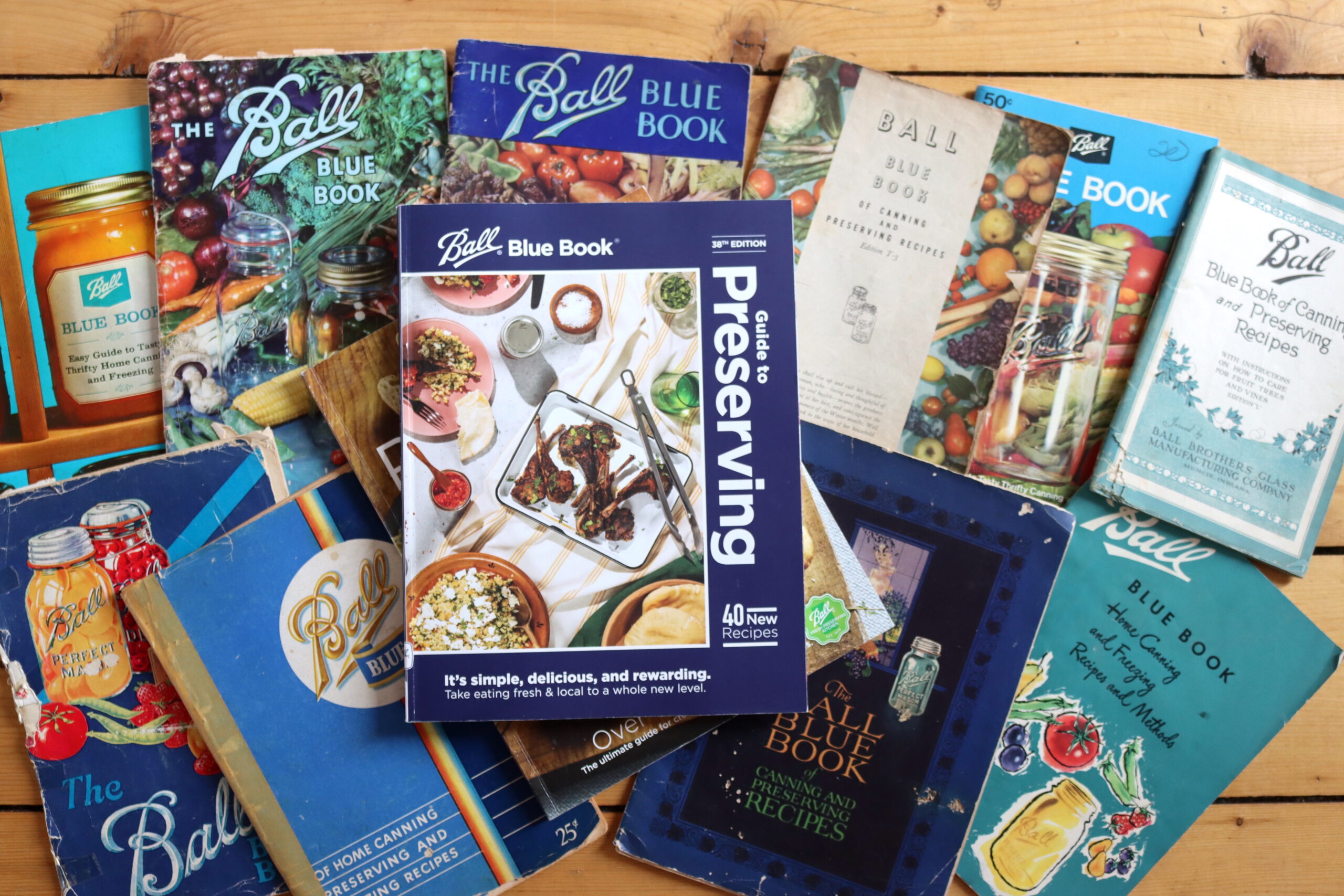
First released in 1909, The Ball Blue Book of Preserving was one of the first canning books available to the general public. It’s still one of the most trusted sources for modern, up-to-date canning information.
Modern editions of the Ball Blue Book of Preserving are available here.
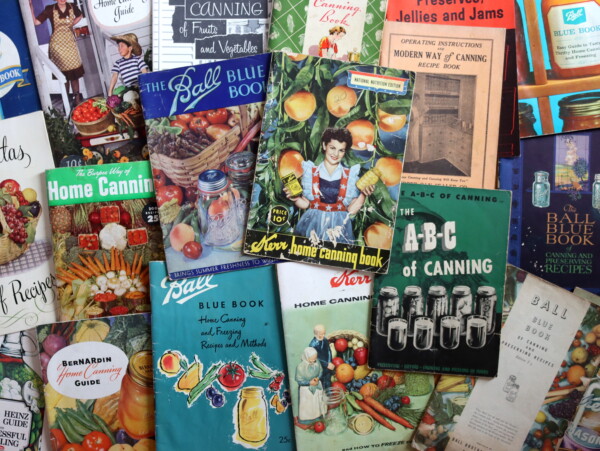
Historical editions are popular on eBay, and most of the common editions going back to the 1930s can be found there. Wartime editions from the early 1940s are the most common, as more were printed during that time.
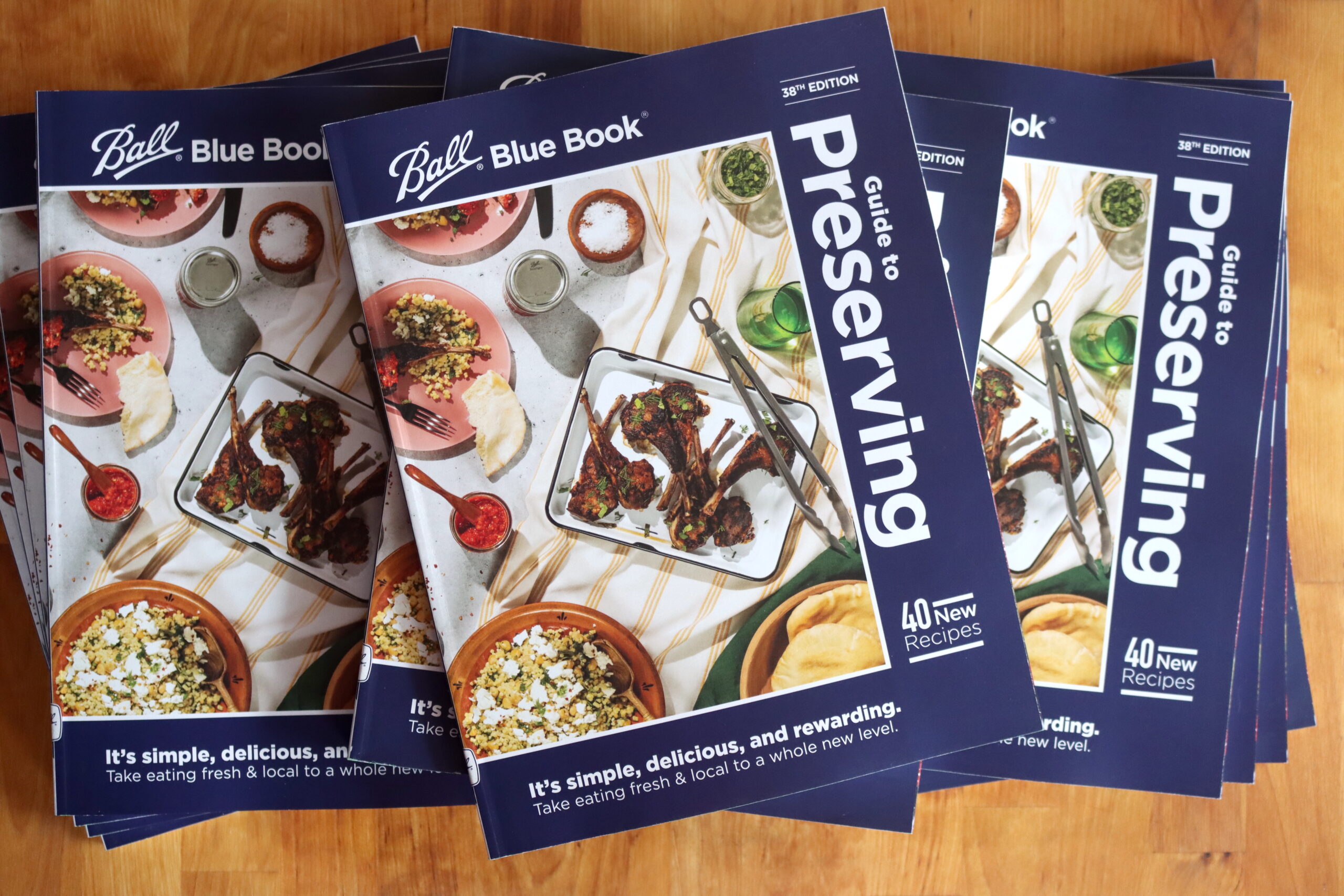
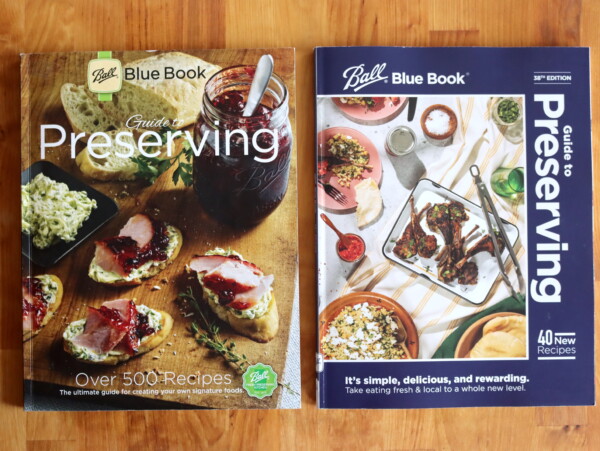
Modern Editions of The Ball Blue Book
According to Penn State University Extension, “Canning books published prior to 1994 will not have safe processing times and/or methods.” That applies to the Ball Book, given that new information about canning safety was developed at that time.
All new editions of the Ball Blue Book supersede earlier editions, but that doesn’t necessarily mean that earlier editions are incorrect. Some editions have dramatic changes, but most new editions often have very few changes and repeat all the recipes exactly as they were in previous editions.
The most current Ball Blue Book is the 38th Edition, released in February 2024.
This most recent edition includes 40 new recipes, and updated guidance on acidification of apples for canning. I’ve written up a complete list of the changes and new recipes in the most recent edition, and here’s where you can see what’s new in the 38th edition of the Ball Blue Book of Canning.
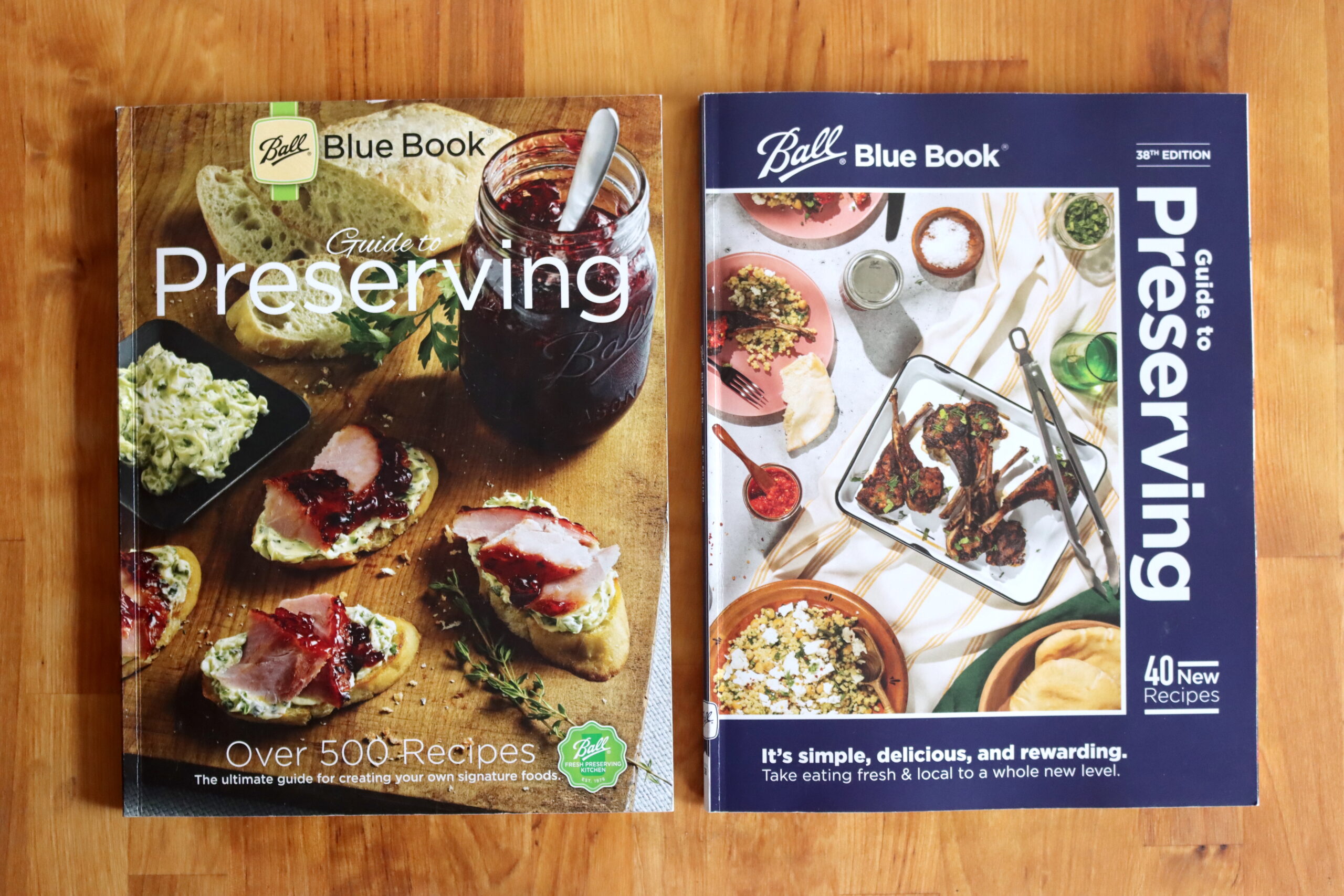
Criticisms of the Ball Blue Book
The Ball Blue Book has long been criticized for not providing precise measurements in many of it’s recipes. Some of them are vague, and say things like “One medium head of cabbage” which can vary widely in total volume (or weight).
Most recipes do have more precise measurements, and where measurements are vague, they aren’t critical to canning safety. (A relish, for example, can have a mix of vegetables, and the exact proportions aren’t that critical, provided you use the required and carefully measured amount of vinegar.)
The other main criticism is of Ball Canning in general, as they don’t make their recipe testing data public, and in the past, they have made serious errors.
For example, they assumed that elderberries are acidic…rather than actually testing them. When they were tested, the results showed that they have a pH of 5 on average, which is too alkaline for safe water bath canning. Even once those results were known, it took years for those corrections to show up in print editions of the Ball Blue Book.
(The modern 2024 edition is the first to reflect this change.)
History of the Ball Blue Book
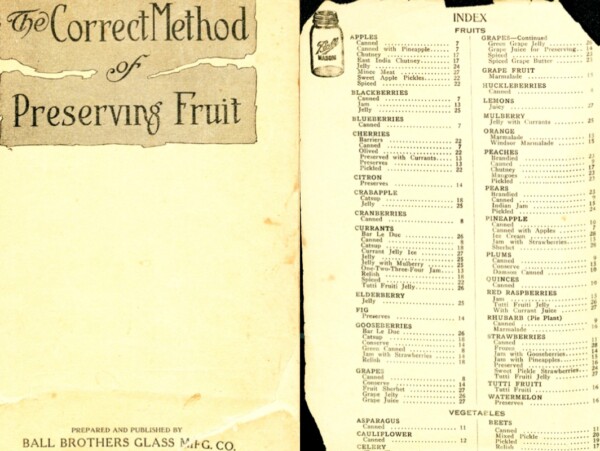
The first edition of the Ball Blue Book of Canning was actually called “The Correct Method for Preserving Fruits,” and it was written by George Ball and his wife, Frances Woodworth Ball.
With just 30 pages, it was more of a pamphlet than a book.
It was incredibly popular, and they continued issuing it yearly, with updates each year for the next few years. Every year, readers sent in handwritten notes with recipes they loved, asking for them to be included in the next edition.
The recipes were tested, and if they passed muster, they were added to the next edition.
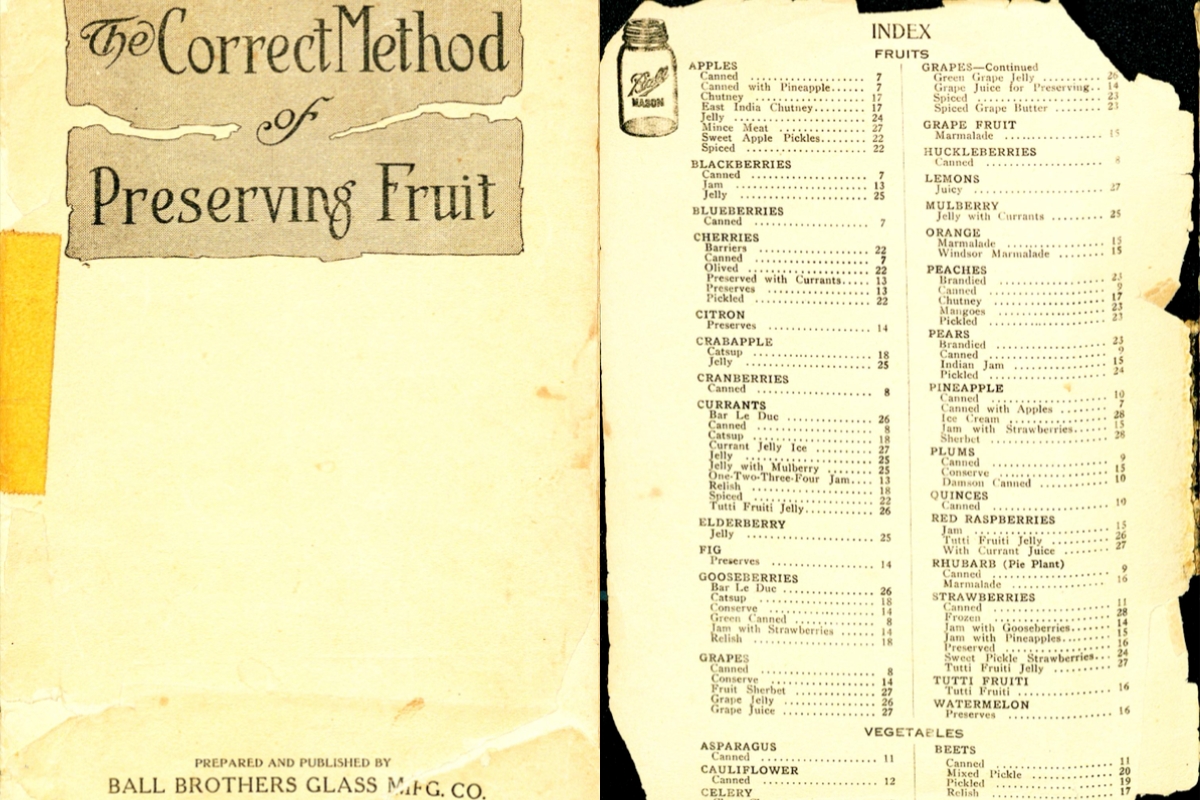
It was pretty informal, and many sources say that no known copies of the original 1909 edition have survived to this day. I actually found a copy of the original 1909 version in the Archives of the University of Iowa (special thanks to reference librarian Olivia Garrison for her help in digitizing this first edition).
In the early days, none of the editions were formally copyrighted, and they were more of an informal pamphlet put out to help people use the canning jars produced by Ball.
In 1916, the name was changed to “The Ball Blue Book of Home Preserving,” and the first copyright was issued.
The early editions were marked by edition letters, and the earliest edition that I’ve found is labeled “Edition J,” and that may be the original 1916 edition, as they could be considering the earlier pamphlet editions in the naming system. (Update: I now have an “Edition H” and it’s dated 1915.)
It’s tricky though, as copies are labeled with the edition letter, but there is no date anywhere in the actual publication.
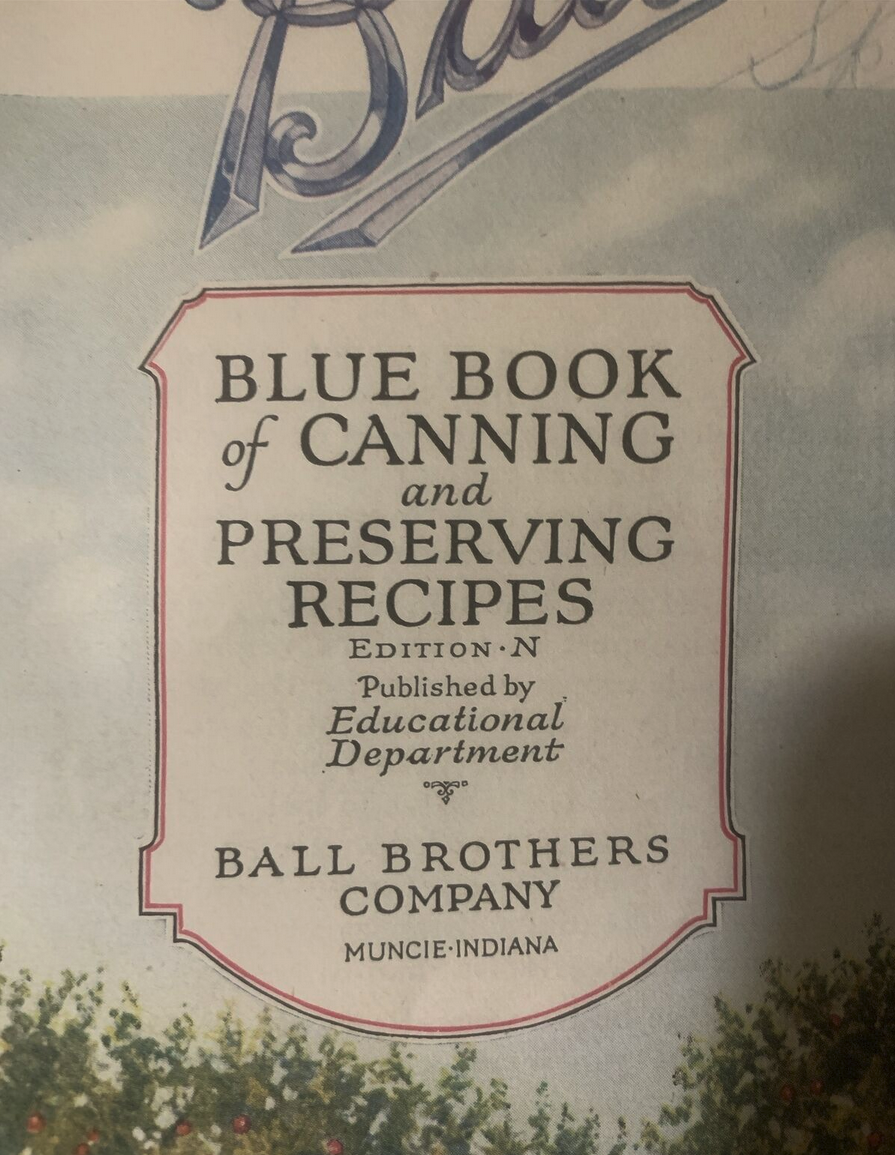
For a while, the oldest dated edition I could find was “Edition N,” which was copyrighted in 1926. I’ve since found a few others with actual dates from 1915 and 1916, but most printings before the mid-1920’s just leave off the date altogether.
The earliest copy that is publically available (digitized by the University of Iowa) under the title, The Ball Blue Book of Preserving, is Ball Blue Book Edition M from the 1920s, and due to contextual cues, I’ve been able to date it to some time between the end of WWI in 1919 and when Ball Canning changed their name in 1922. It’s actually undated, as recipe pamphlets commonly were at that time.
Early Ball Blue Books and Public Domain Status
Many of the earliest editions of the Ball Blue Book are now part of the public domain in the United States. Copyright law has changed several times since Ball first began publishing its home canning guide in the early 1900s, but the result is that most editions printed before February 7, 1949 are no longer under copyright protection.
At the time, U.S. copyright law required publishers to renew a copyright 28 years after publication. If a renewal wasn’t filed, the work automatically entered the public domain. Ball Corporation renewed the copyright only for the 1949 edition (on July 2, 1976, under renewal number R636026), which means that earlier editions—spanning the 1910s, 1920s, 1930s, and 1940s—were never renewed and have since expired.
The 1949 edition is labeled “Edition Y,” so to the best of my knowledge, any edition before that date is public domain. The latest freely available copy I can find is Edition V from 1943, available scanned online through the Hathitrust. This is one of the most widely printed historical copies because they were in high demand due to WWII in the early 1940’s. They also now have a 1916 Edition M scanned as well.
In practical terms, that means you can freely access, reproduce, and share these early Ball Blue Book editions. Their text, photos, and page layouts belong to the public domain, and many have been digitized by libraries and archives such as HathiTrust and the Internet Archive. Only editions published from 1949 onward remain protected by copyright, as Ball renewed that version and later works were covered automatically under newer copyright laws.
I’m not a copyright lawyer, so this information is provided for general reference only and shouldn’t be taken as legal advice.
Ball Blue Book Editions
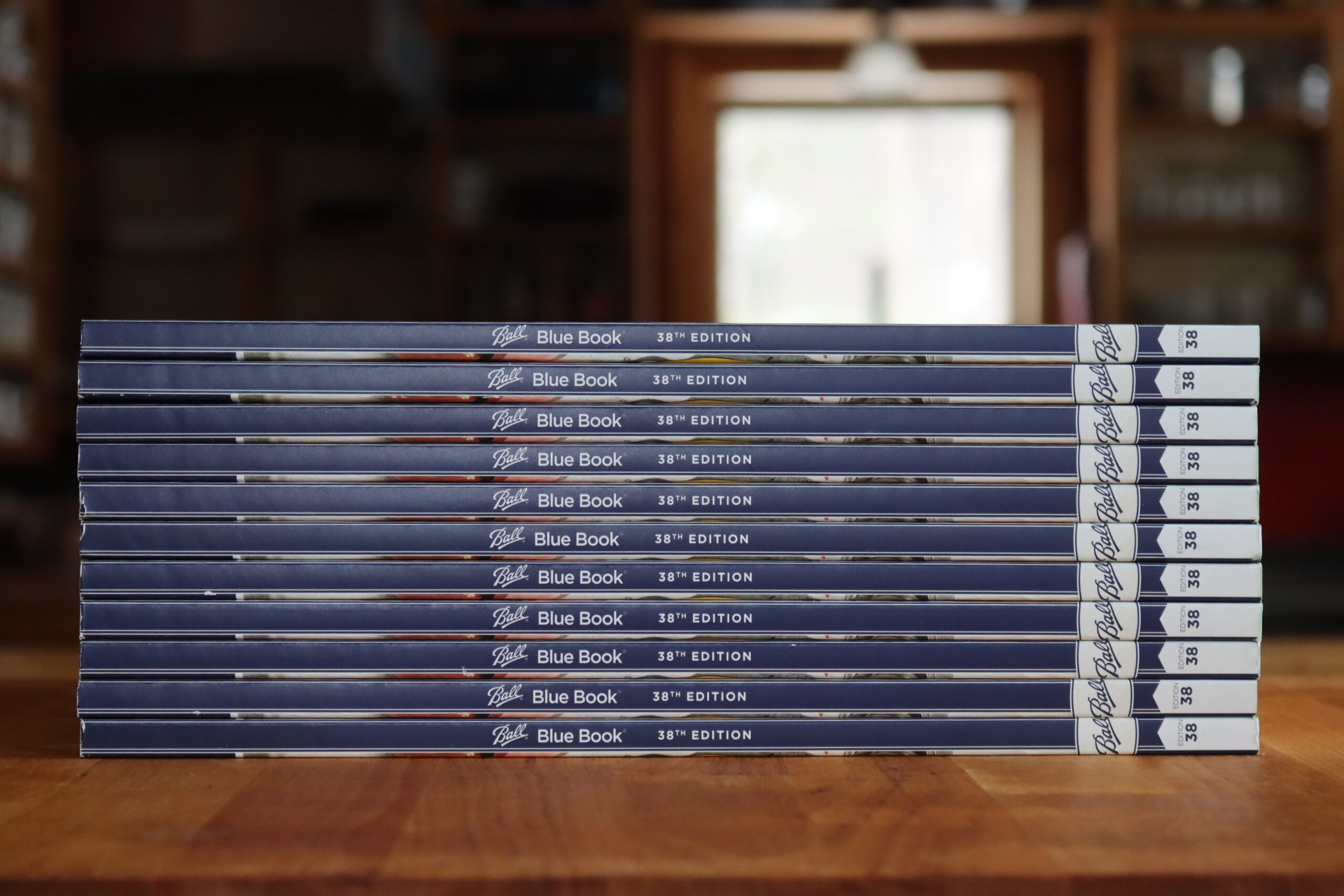
The current edition is labeled as the “38th Edition,” published in February 2024. The numbering system is actually a bit misleading, and there there are actually quite a few more “editions” than that if you look through historical documents.
Many lettered editions are actually multiple editions, and they’re updated and released as “Edition T-3,” separate from the original “Edition T.” Even once they switched to a numbering system, there are multiple “Editions” with the same number, even though the contents have changed.
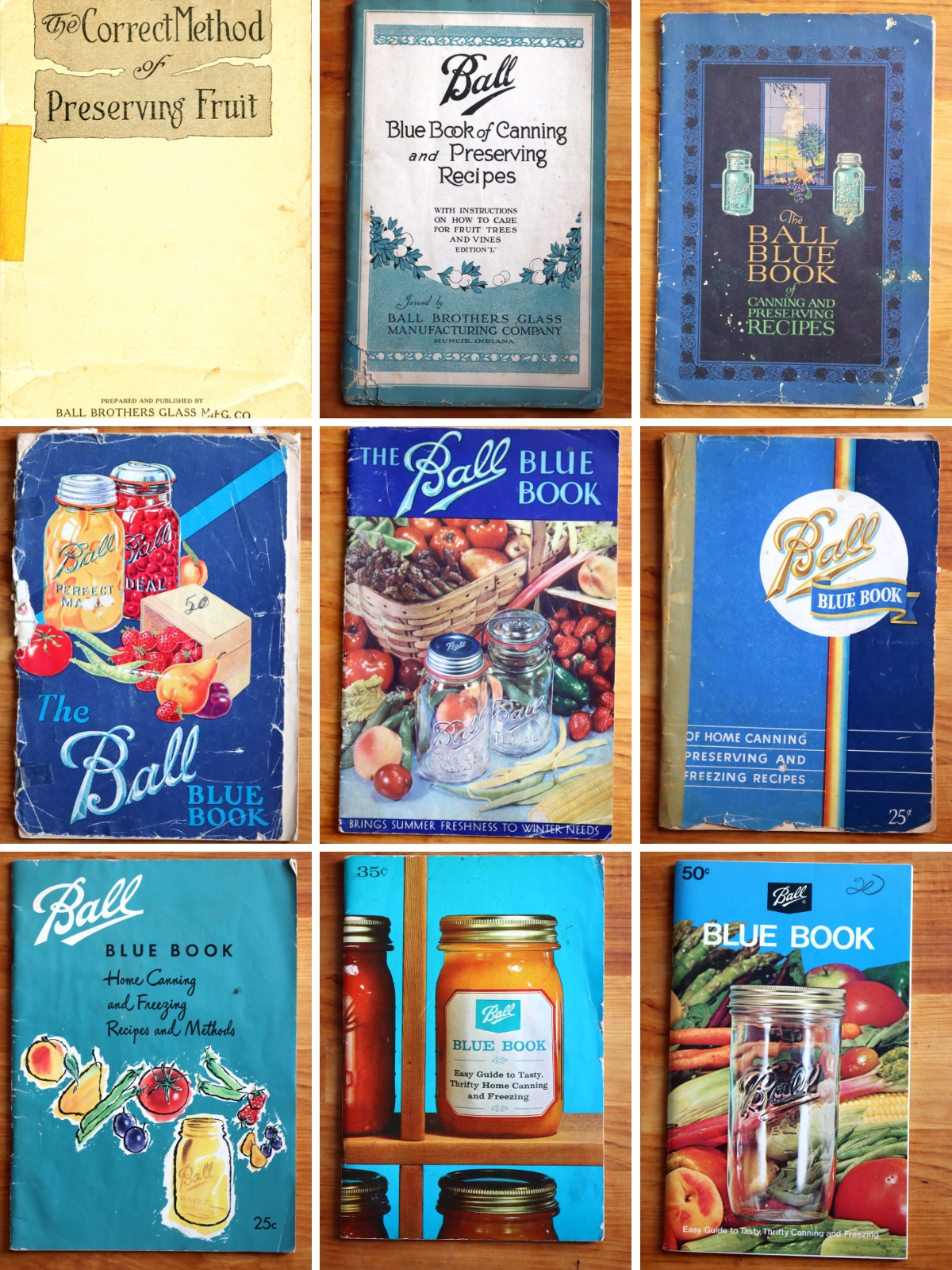
Below, you’ll find a list of all the editions of the Ball Blue Book that I can find evidence for anywhere online or in print. It may not be exhaustive, and if you have other editions, I’d love to hear about it (leave me a note in the comments).
(Editions marked with an asterisk* are ones I own and have in my personal collection. Most can be found online on eBay, with prices ranging from $8 to $250, depending on rarity. Wartime editions in the early 1940’s are the most common, as home canning was incredibly popular at that time.)
- The Correct Method of Preserving Fruit – Original 1909 edition.
- Ball Blue Book H* ~ 1915 (This one’s actually dated on the front cover, and it’s the earliest one in my possession.)
- Ball Blue Book I ~ (I actually haven’t seen any copies of this one, but given I have an H and K, I assume there’s an I in between circa 1915-1916 or so. Hoping to find this one!)
- Ball Blue Book Edition J ~ 1916 (Dated on the Title Page)
- Ball Blue Book Edition K* ~ 1916 – 22 (I’ve seen quite a few people claiming the J and K editions are both 1916, but there’s no specific date on the K edition that I own. Based on the context clues inside, they are sometime between 1916 and 1922.)
- Ball Blue Book Edition L* ~ Circa 1919 to 1922
- Ball Blue Book Edition M* ~ Early 1920s
- Ball Blue Book Edition N ~ 1926 (This is one of the first editions with a very clear copyright date. Any edition before “N” would be before 1926 at the very least.)
- Ball Blue Book Edition O* ~ 1930
- Ball Blue Book Edition P ~ 1932
- Ball Blue Book Edition Q ~ 1933
- Ball Blue Book Edition R ~ 1934
- Ball Blue Book Edition S ~ 1935
- Ball Blue Book Edition T* ~ 1936
- Ball Blue Book Edition T-3* ~ 1938
- Ball Blue Book Edition U ~ 1941
- Ball Blue Book Edition V* ~ 1943
- Ball Blue Book Edition X ~ 1947 (last out of copyright edition currently)
- Ball Blue Book Edition Y* ~ 1949
- Ball Blue Book Edition 26 ~ A 1953
- Ball Blue Book Edition 26 ~ B 1956
- Ball Blue Book Edition 26 ~ B 1959
- Ball Blue Book Edition 26* ~ C 1960
- Ball Blue Book Edition 27 ~ 1963
- Ball Blue Book Edition 28 ~ 1966
- Ball Blue Book Edition 28* ~ 1969 reprint
- Ball Blue Book Edition 29* ~ 1972
- Ball Blue Book Edition 29 ~ 1974 reprint
- Ball Blue Book Edition 30 ~ 1977 (dropped canning advice for broccoli, cauliflower, cabbage, celery, eggplant)
- Ball Blue Book Edition 30 ~ 1979 reprint
- Ball Blue Book Edition 30 ~ 1982 reprint
- Ball Blue Book Edition 30 ~ 1983 reprint
- Ball Blue Book Edition 31 ~ 1986
- Ball Blue Book Edition 32 ~ 1989
- Ball Blue Book Edition 32 ~ 1990
- Ball Blue Book Edition 33 ~ 1995
- Ball Blue Book Edition 34/35 ? ~ 1995 (with reprints in 1997, 1998 and 1999)
- Ball Blue Book Edition 36 ~ 2013
- Ball Blue Book Edition 37 ~ 2014
- Ball Blue Book Edition 37* ~ 2018
- Ball Blue Book Edition 37 ~ 2020
- Ball Blue Book Edition 38 ~ February 2024
If you’re curious about what’s changed in the newest 38th edition, I’ve compiled a complete list of changes between the 37th and 38th editions of the Ball Blue Book.
(Thanks to Healthy Canning, the Minnetrista Museum, and The University of Iowa Special Collections for their research into this, as they were incredibly valuable resources.)
Historical Canning Resources
Looking for more deep dives into canning books and history?
- What’s New In the 38th Edition of the Ball Blue Book?
- 100+ Vintage Canning Books (Full Text Free Online)

I have, which I purchased when first released, the 1972, 1986, and 1999 editions of the Ball Blue Book. All three books very much worn due to continued use and also contains personal handwritten notes. I’ve recommended to friends and family throughout the years, Also, made several purchases for gifts. I am sending the latest edition to granddaughter now. Obviously, I am not a novice canner but still keep Ball Blue Book close by for reference when canning.
Me too! I always have this one on hand.
You can find old editions of the Ball Blue book on Archive.org to check out for an hour. They have the 1963, 1979, 1990, 1992, 1994. 1995, 1997, and 2003 editions. Some kind of after market reprint of an old Blue Book reprinted in 2010 donated by the Britich Library is also there.
That’s wonderful! Thanks for letting me know, I didn’t know that!
What about the 100th anniversary edition from 2009?