This post may contain affiliate links. Please see our disclosure policy.
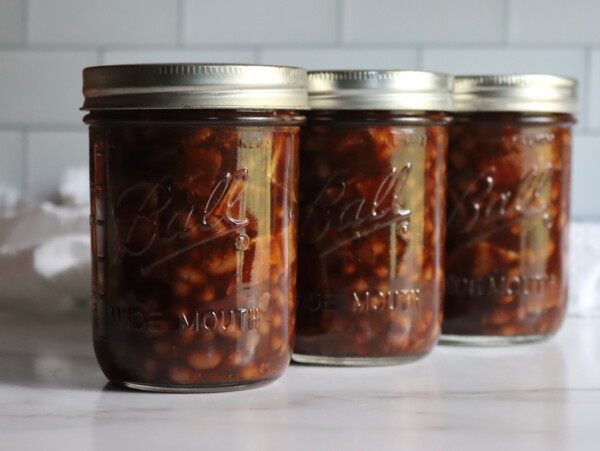
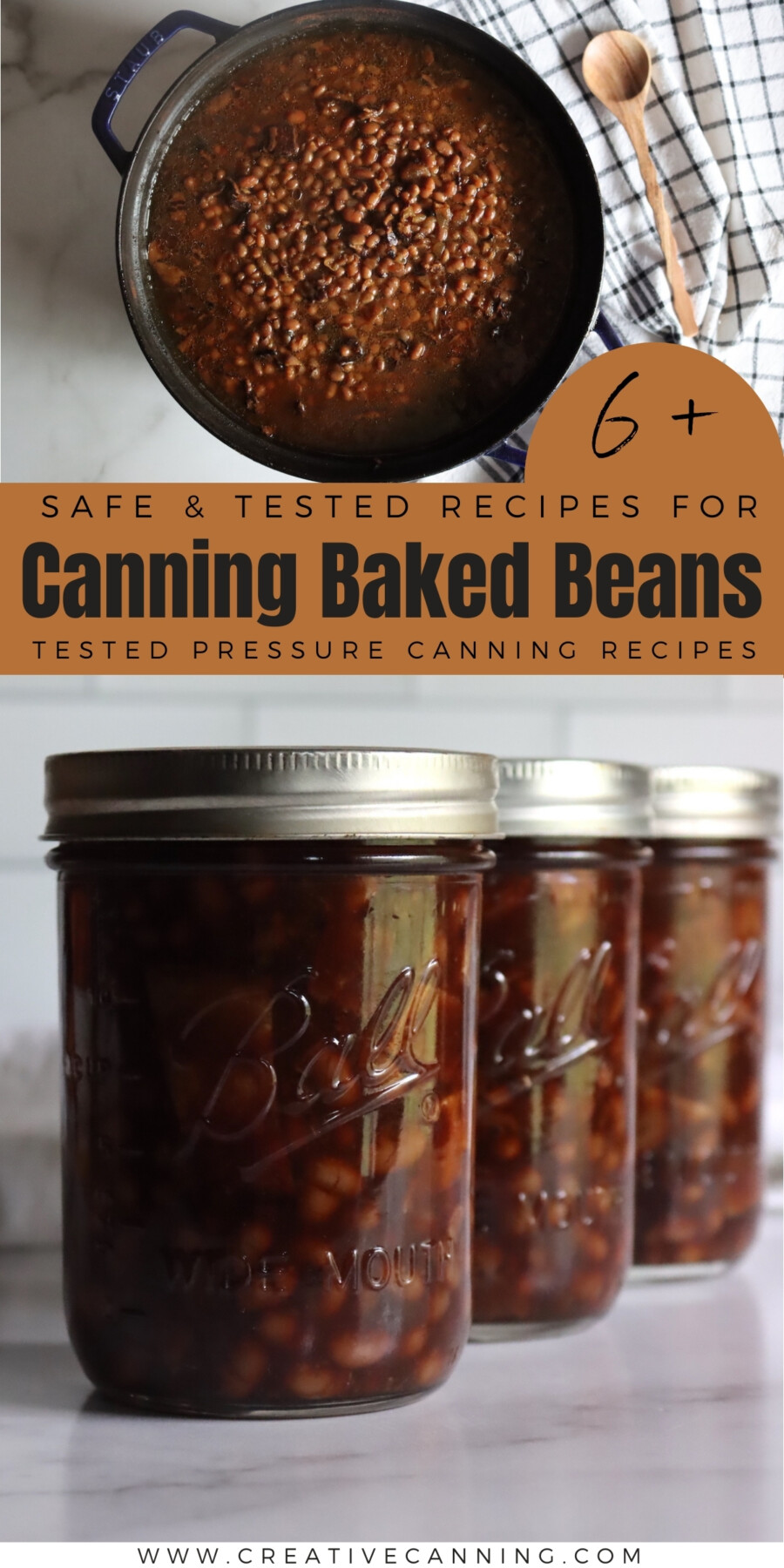
Canning baked beans is a delicious way to preserve a home-cooked meal right on the pantry shelf. Everyone likes their baked beans a bit different, but no worries, there are plenty of safe, tested baked bean canning recipes to satisfy any taste.
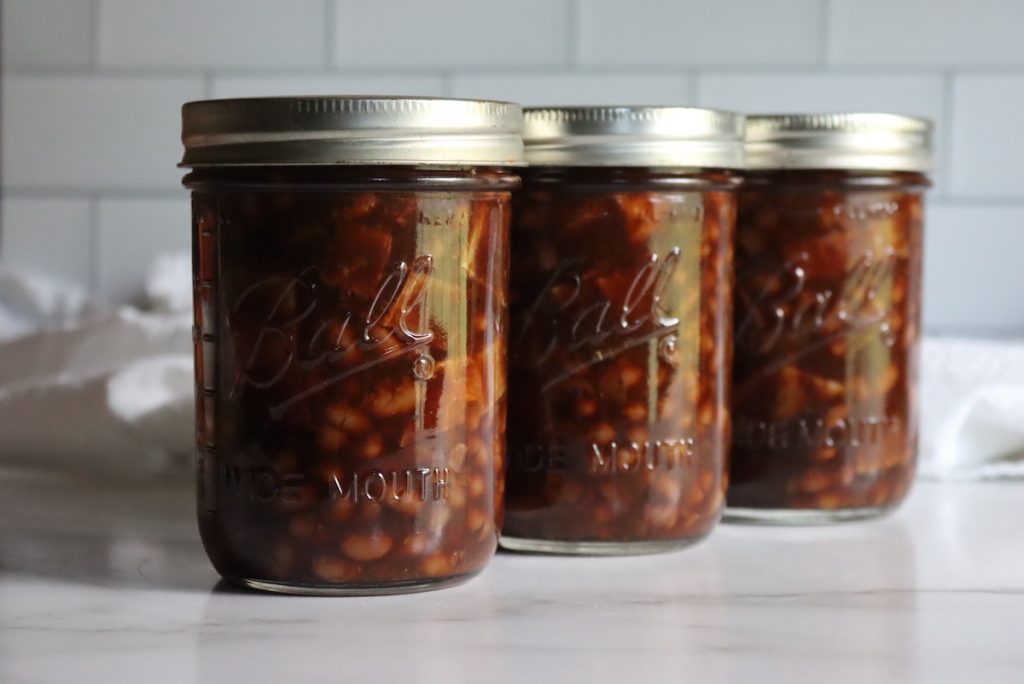
These days, baked beans are classic summer barbeque fare, and you’ll find them right alongside ribs and deviled eggs at gatherings for Memorial Day, Father’s Day, the Fourth of July, and more. We see them as hot weather food, but it hasn’t always been that way.
Traditionally, baked beans were a slow-cooked winter food, and they’d bake all day in a Dutch oven on the warmth of the wood stove.
How on earth did a hearty, slow-cooked meal become a summer side dish when it’s way too hot to bake beans all day in July?
Canning is the answer.
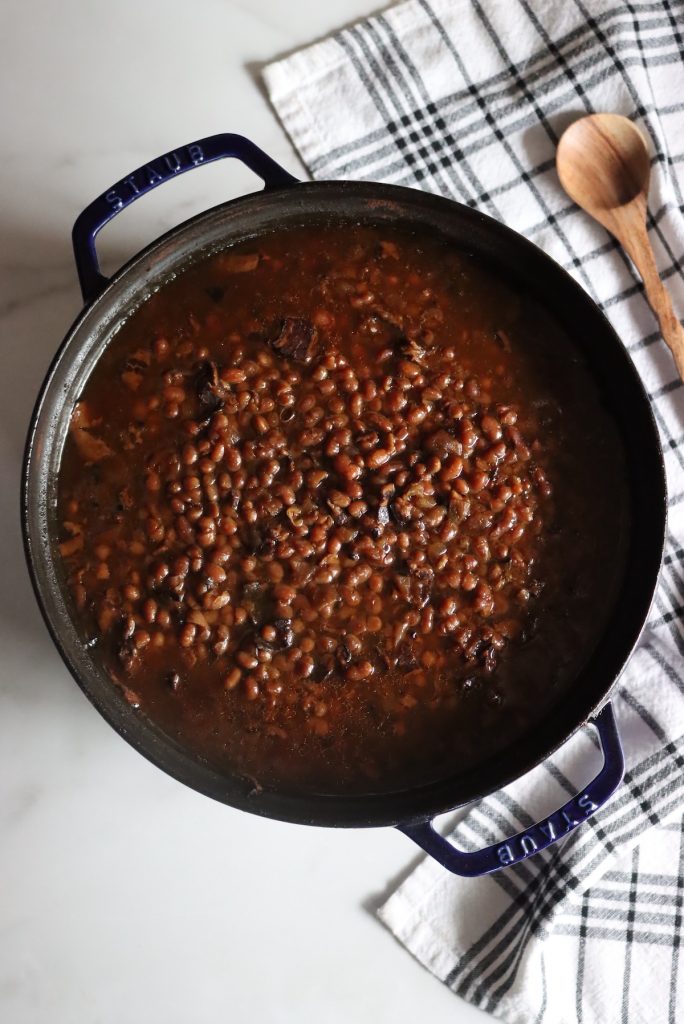
These days, canned baked beans take the work out of enjoying this delicious traditional meal, and save you the effort of heating up the kitchen in the middle of the summer. While you can purchase canned baked beans at the store, they never taste quite as good as homemade (and most of the time they’re loaded with corn syrup).
Canning baked beans at home means you can enjoy the incredible flavor of baked beans, warming your house in the winter cooking them all day long and then canning them up for summertime eating.
All while adjusting the recipe to suit your family’s tastes.
Why There Are So Many “Right” Ways to Make Baked Beans
Everyone’s version of “classic” baked beans is shaped by what they grew up with. New England-style baked beans lean heavily on molasses and brown sugar. Some families swear by salt pork, others insist bacon is the only acceptable choice. Down South, you’ll often see more barbecue influence, with ketchup, mustard, and vinegar bringing a tangy edge.
Even the texture people expect is different. Some like beans swimming in sauce, others want them thick and clingy. Some want a sweet pot of beans, others want savory and smoky.
The good news is that pressure-canning-friendly baked bean recipes cover all of those styles, as long as you’re starting from a tested recipe that keeps the bean-to-liquid ratio in a safe range.
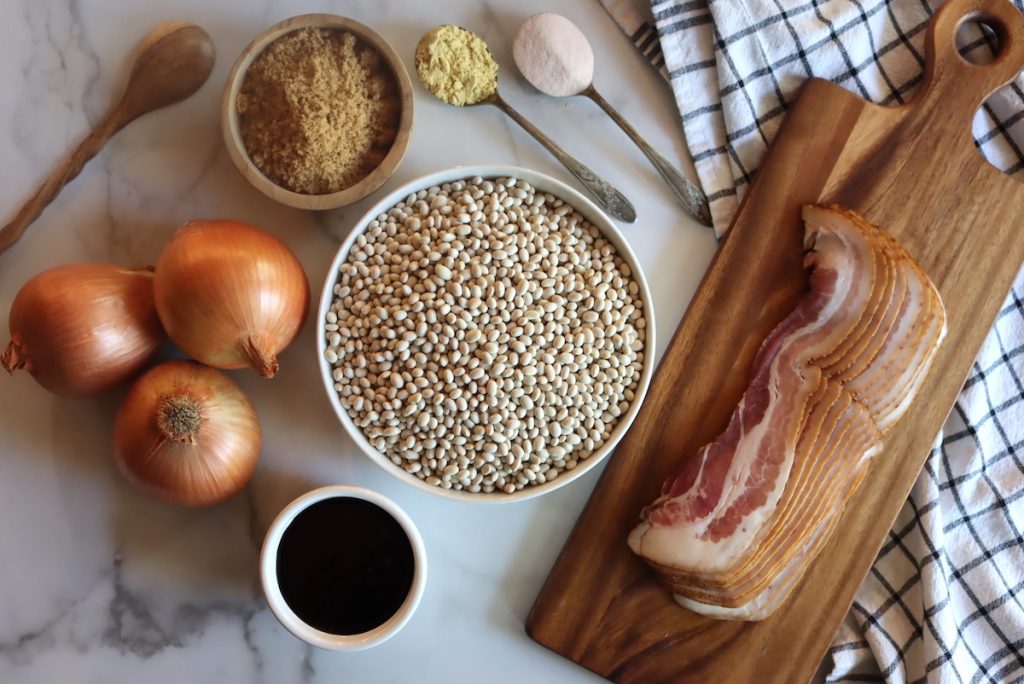
Canning Instructions for Baked Beans
No matter which baked bean recipe you choose, the canning method is essentially the same because beans are a low-acid food. Baked beans must be pressure canned. A boiling water bath canner is not safe for beans, even when they’re in a tomato-based sauce.
Be sure to follow a tested recipe, but in general, most baked bean canning recipes are processed for at least 60 minutes for pints and 75 minutes for quarts. Some recipes call for as long as 80 minutes for pints and 95 minutes for quarts. It depends on the tested recipe and the exact ingredients, as some make a thicker baked bean than others.
Be sure your recipe falls somewhere in that range, as there aren’t any bean canning recipes (baked or otherwise) that are processed less than 60 minutes per pint.
And, of course, be sure to adjust your pressure canner’s pressure to your altitude (see below).
Pressure Canning Altitude Adjustments
With pressure canning, the processing times stay the same at higher altitudes, but the pressures change. Here are the altitude adjustments for pressure canning:
For dial gauge pressure canners:
- 0 to 2,000 feet in elevation – 11 lbs pressure
- 2,001 to 4,000 feet in elevation – 12 lbs pressure
- 4,001 to 6,000 feet in elevation – 13 lbs pressure
- 6,001 to 8,000 feet in elevation – 14 lbs pressure
For weighted gauge pressure canners:
- 0 to 1,000 feet in elevation – 10 lbs pressure
- Above 1,000 feet – 15 lbs pressure
Safety Tips
No thickeners. Don’t add flour, cornstarch, Clear Jel, or anything that makes the sauce “gravy thick.” Thickness slows heat penetration.
Keep the beans in plenty of liquid. Baked beans can look “done” before they’re actually safe to can if they’re too dry going into jars. Tested recipes keep them saucy for a reason.
Jar size matters. If a recipe is written for pints, don’t automatically assume quarts are allowed (and vice versa). When in doubt, stick to the jar sizes listed in the tested recipe.
Meat changes are not a free-for-all. If the recipe includes salt pork/ham/bacon, follow the tested amount and prep method. If it’s vegetarian, don’t add meat unless you’re using a tested variation that was written with meat.
Making Baked Beans for Canning
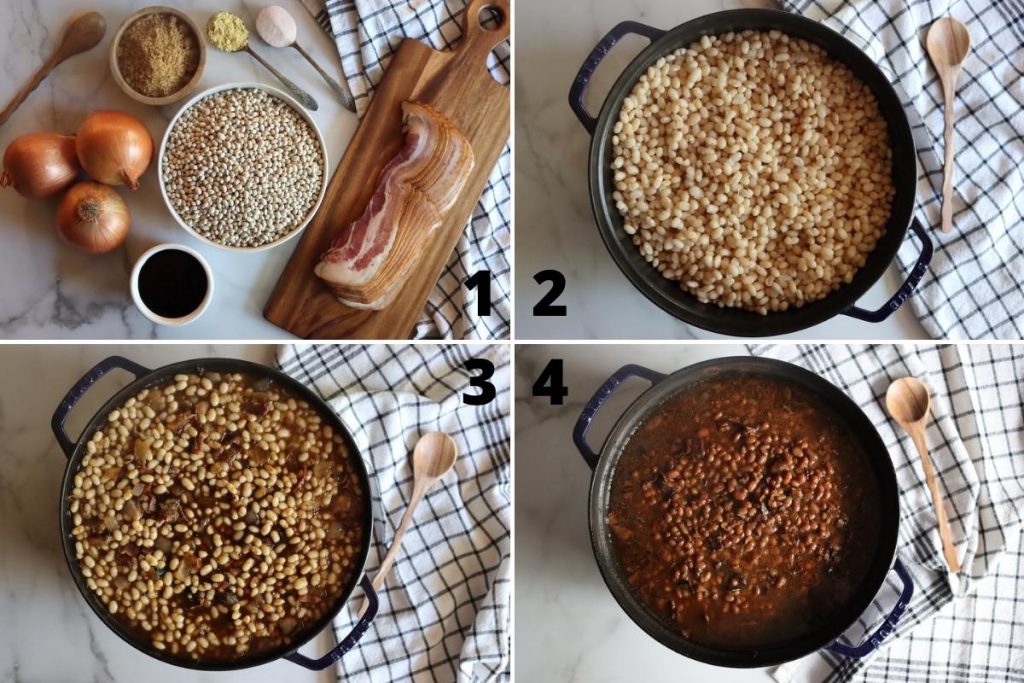
This is the part that surprises people the first time: you’re not canning dry beans. Every tested canning recipe starts with fully hydrated beans, and most have you partially cook them before they ever go into jars.
Here’s the general flow you’ll see in nearly every tested baked bean recipe:
- Sort and rinse beans.
- Soak (either overnight soak or quick-soak, depending on the recipe).
- Pre-cook the beans until they’re heated through and starting to soften (but not falling apart).
- Make the sauce (molasses-based, tomato-based, BBQ-style, etc.).
- Combine beans + sauce and simmer briefly so everything is evenly hot.
- Hot pack into jars leaving 1-inch headspace, then pressure can using the times above.
Some recipes call themselves “baked beans” because the flavor profile is classic baked beans, even though you’re not literally baking them in the oven before canning. Others do have an oven-bake step to concentrate flavor before jarring. Either can be safe, as long as you’re following a tested process and still packing the beans hot with enough liquid.
Baked Bean Canning Recipes
Below are some of the most common tested styles you’ll see across Ball, NCHFP/USDA-style publications, and reputable pressure canning cookbooks.
Boston Baked Beans
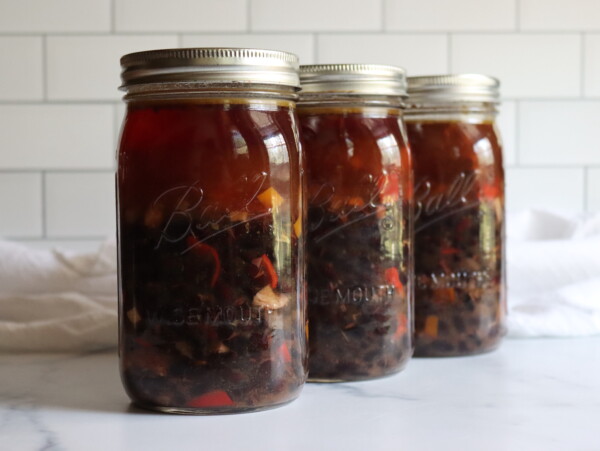
If you grew up with sweet, dark, glossy baked beans, this is probably what you’re picturing. Boston baked beans are all about molasses and brown sugar, usually with salt pork (or sometimes bacon/ham) for that unmistakable smoky-salty backbone.
If you’re canning for a crowd who expects that traditional New England taste, start here.
Simple Baked Beans
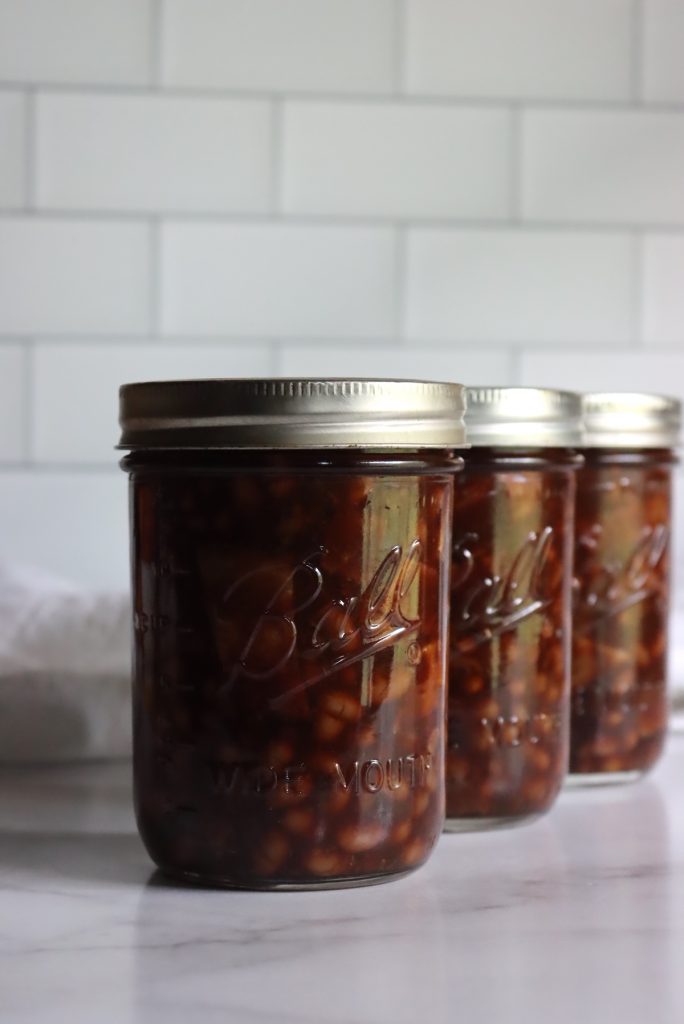
Some pressure canning cookbooks include a “simple baked beans” option that’s still rooted in the classic sweet baked beans flavor, but simpler, with minimal seasoning. They’re not heavy on tomato sauce or molasses like other recipes, they’re just simple baked beans without a lot of distractions.
This style is my pick when I want baked beans that taste homemade, but aren’t over the top in any one direction. Boston Baked beans can sometimes feel heavy and smokey, but these are a bit lighter and more versatile.
Baked Beans with Molasses Sauce (USDA-style)
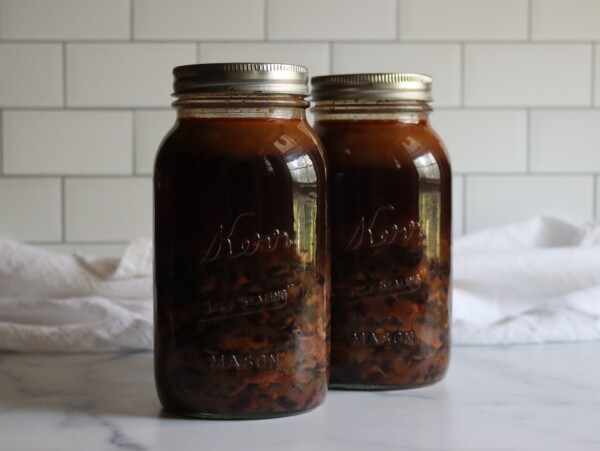
This is the “straight down the middle” baked-bean flavor profile, often written in a very standardized way in older USDA-style directions. The sauce is simple and predictable, which makes it a great base recipe if you’re cooking for picky eaters.
Made with molasses and dry mustard as the primary seasoning, it’s sweet and richly brown in color. It’s not aggressively sweet, but it’s unmistakably “baked beans.”
Seasoned Baked Beans
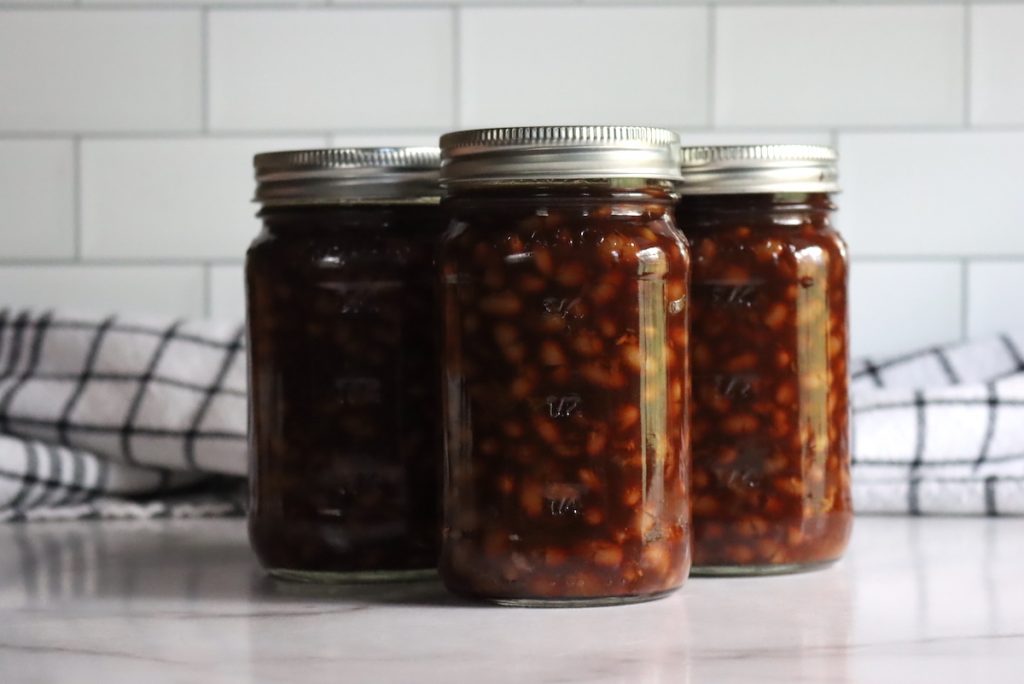
Some tested recipes break this into two options: a basic molasses sauce and a slightly more seasoned version. The “seasoned” variation usually means more onion, a bit more mustard presence, and sometimes a warmer spice note.
This is a good reminder that small changes in dry seasonings are usually where you get the most flexibility without messing with safety. If you want “your family’s beans” to taste like your family’s beans, the safest place to tweak is typically the spice cabinet, not the thickness, not the bean-to-liquid ratio, and not wild changes to the meat.
This recipe comes from Healthy Canning, and they’ve adapted a NCHFP recipe, changing the seasoning to make it taste more like classic baked beans.
Baked Beans with Tomato Sauce (English-style)
If you love canned “British beans,” this is the direction you’re after. It’s tomato-forward, mildly sweet, and often includes warm spices that feel a little old-fashioned (in a good way).
There are two tested versions from the NCHFP:
Tomato Sauce – Version 1: Mix 1 quart tomato juice, 3 Tbsp sugar, 2 tsp salt, 1 Tbsp chopped onion, and 1/4 tsp each ground cloves, allspice, mace, and cayenne. Heat to boiling.
Tomato Sauce – Version 2: Mix 1 cup tomato ketchup with 3 cups bean cooking liquid. Heat to boiling.
The tomato juice version tastes more like a from-scratch pantry sauce. The ketchup version is quicker and usually a bit more familiar to kids, because it lands closer to the flavor of commercially canned beans.
Both are explained in detail here:
Pork and Beans
Pork and beans are basically baked beans’ practical cousin. They’re usually less sweet, often less heavily spiced, and more of a savory tomato-and-pork pantry staple than a “special occasion” side dish.
A lot of us grew up calling any can of beans in tomato sauce “pork and beans,” and honestly, that’s not far off. If you want a jar that can pull double duty, this is the style: it works as a side dish, but it also works as a building block for quick meals (think bean soups, skillet dinners, and pantry casseroles).
Tips for Choosing the Right Recipe for Your Pantry
If you’re trying to decide what to can first, here’s how I’d think about it:
- For classic potluck beans: Boston baked beans or a simple baked bean recipe with molasses and brown sugar.
- For everyday pantry versatility: pork and beans, or a less-sweet molasses sauce version.
- For kids who like store-bought beans: English-style tomato sauce beans, especially the ketchup-based version.
Pantry Stocking Recipes
Looking for more ways to stock your pantry with shelf stable meals?