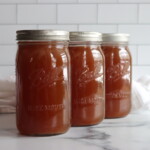
Canning Pork Bone Broth
This pressure canned pork bone broth is made from roasted pork bones simmered with aromatics for a rich, flavorful stock. Following NCHFP guidelines for meat stock, it processes in 20 minutes for pints and 25 minutes for quarts and keeps on the shelf for up to 18 months.
Servings: 4 quarts (approximately 3 to 5 quarts depending on bones and simmer time)
Equipment
- Large stockpot
- Cheesecloth
Ingredients
- 3 to 5 lbs pork bones 3 to 5 lbs — neck bones, spine, knuckles, or any saved bones from roasts and ribs
- 1 large onion quartered, skins can be left on
- 2 ribs celery roughly chopped
- 1 medium leek halved and thoroughly washed
- 4 cloves garlic peeled
- 20 whole black peppercorns
- 2-3 whole bay leaves
- 6 qts cold water approximately, enough to cover bones by 2 inches. Top up as needed during simmer.
Instructions
- Preheat oven to 400 to 450 degrees F. Arrange bones in a single layer in a large roasting pan. Roast 30 to 45 minutes, turning once halfway, until deeply browned and fragrant.
- Transfer roasted bones to a large stockpot. Deglaze the roasting pan with 1 to 2 cups of water, scraping up the browned bits, and add to the pot. Add remaining ingredients. Cover with cold water by at least 2 inches. Bring to a boil, skimming any foam that rises in the first 20 to 30 minutes.
- Reduce heat to a gentle simmer. Set a slightly askew lid on top. Simmer for 3 to 4 hours minimum, or up to 10 to 18 hours for a richer result. Keep the heat low enough that the broth barely bubbles. Add water as needed to keep bones submerged.
- Strain broth through a colander lined with several layers of cheesecloth into a clean stockpot. Do not press or squeeze. Skim fat from the surface. For the clearest result, refrigerate overnight and lift off the solidified fat layer before canning. Add salt if using, adjust to taste, see notes.
- Prepare your pressure canner, jars, lids, and bands. Reheat broth to a full boil. Ladle into hot jars leaving 1 inch headspace. Wipe rims, apply lids and bands to fingertip tight. Load into the preheated canner, vent 10 minutes, bring to pressure, and process pints for 20 minutes and quarts for 25 minutes, adjusting for altitude. Depressurize naturally. Cool 12 to 24 hours, check seals, label, and store.
Notes
Bones: Raw bones produce a richer, more gelatinous broth than cooked bones. Cooked leftover bones work well too — keep a bag in the freezer and use once you have enough.
Roasting: Not strictly required but strongly recommended. Roasted bones produce a noticeably deeper flavor. With cooked leftover bones, roasting is optional.
Fat: Skim excess fat before canning. Too much fat can prevent proper jar sealing during pressure canning.
Yield: Approximately 3 to 5 quarts depending on bone quantity and simmer length. Longer simmers reduce the liquid but concentrate the flavor.
Salt: Optional. Has no effect on canning safety. Add just enough to bring the flavor forward, keeping in mind you will season individual dishes when using the broth. I generally can my broth without added salt so I can adjust at serving time. General guidance is about 1/8 tsp per quart of stock, so about 1/2 tsp for this batch.
Ingredients are flexible: As long as the finished product is strained pure liquid with no solids, you can adjust the vegetable and herb mix to your preference. Do not add dairy, flour, or thickeners before canning.
Storage: Store sealed jars in a cool, dark pantry for up to 18 months. Refrigerate after opening.
Altitude Adjustments
For dial gauge pressure canners:
- 0 to 2,000 feet: 11 lbs pressure
- 2,001 to 4,000 feet: 12 lbs pressure
- 4,001 to 6,000 feet: 13 lbs pressure
- 6,001 to 8,000 feet: 14 lbs pressure
- 0 to 1,000 feet: 10 lbs pressure
- Above 1,000 feet: 15 lbs pressure
Nutrition
Calories: 48kcal | Carbohydrates: 11g | Protein: 2g | Fat: 0.3g | Saturated Fat: 0.1g | Polyunsaturated Fat: 0.1g | Monounsaturated Fat: 0.1g | Sodium: 23mg | Potassium: 225mg | Fiber: 3g | Sugar: 3g | Vitamin A: 489IU | Vitamin C: 7mg | Calcium: 57mg | Iron: 1mg